
Aug. 01, 2025

The College of Sciences is pleased to announce the launch of the AI4Science Center. The center will promote research and collaboration focused on using state-of-the-art artificial intelligence (AI) and machine learning (ML) techniques to address complex scientific challenges.
“AI and ML have the potential to revolutionize scientific discovery, but there is a clear need for foundational research centered on AI/ML methodologies and application to scientific problems,” says Dimitrios Psaltis, professor in the School of Physics.
Psaltis will co-lead the center with Molei Tao, professor in the School of Mathematics, and Audrey Sederberg, assistant professor in the School of Psychology.
The new center will combine expertise and resources from various disciplines to foster the creation of robust, reusable tools and methods that can be used across scientific domains. Specifically, the center will organize seminars and an annual conference in addition to providing seed funding for collaborative projects across units.
Nearly 40 faculty members from the College’s six schools have already agreed to participate in activities proposed by the center; additional faculty involvement is expected from across the Institute.
The center builds upon initiatives such as Tech AI, the Machine Learning Center, and the Institute for Data Engineering and Science, which seek to boost Georgia Tech’s leadership in cutting-edge, AI/ML-powered interdisciplinary research and education.
The College’s seed grant program will sponsor the center for three years, starting in fiscal year 2026. Created in 2024, this program funds new centers that seek to increase the College’s research impact and advance its strategic goal of excellence in research through a focus on novel interdisciplinary areas or discipline-specific topics of high impact. The AI4Science Center is the third initiative to be seeded by this program, following the funding of the Center for Sustainable and Decarbonized Critical Energy Mineral Solutions and the Center for Research and Education in Navigation in 2024.
“The AI4Science Center was selected for its approach, timeliness, organization, and strong support from all six of the College’s schools,” says Laura Cadonati, associate dean for Research and professor in the School of Physics. “Faculty enthusiasm about this initiative reflects the growing importance of AI/ML tools in research today and the desire for more interdisciplinary collaboration in this space at the College and beyond.”
News Contact
Writer: Lindsay C. Vidal
Apr. 24, 2025
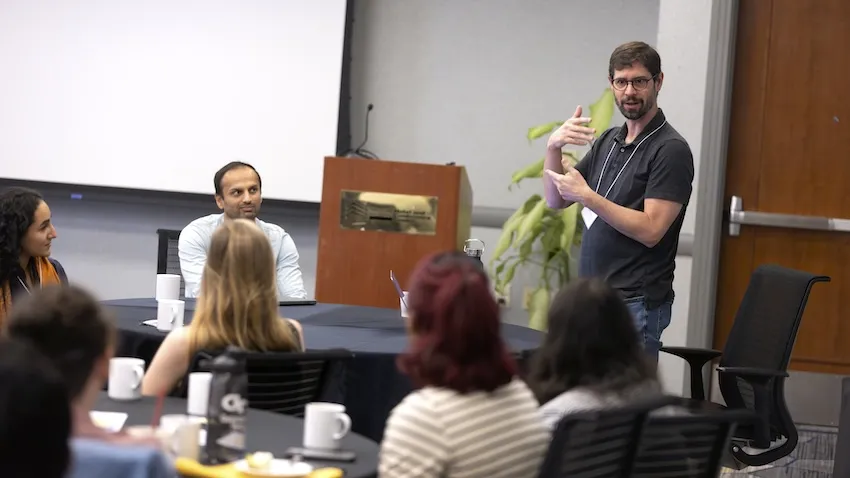
Interactive Computing Professor Mark Riedl co-organized the 2024 Summit on Responsible Computing, AI, and Society, where AI literacy was a key topic. Photo by Terence Rushon/College of Computing
If you’re worried about artificial intelligence (AI) taking your job, Georgia Tech’s Mark Riedl says that probably won’t happen. However, losing your job to someone who knows how to leverage AI tools in the workplace is something to be concerned about.
To help people beyond campus understand what AI tools are available and how to use them effectively, Riedl recently co-taught an online course by CNBC Make It titled How to Use AI to Be More Successful at Work.
“The running joke right now is that AI will not replace people, but people who use AI will replace people who do not use AI,” said Riedl, professor in the School of Interactive Computing.
The 90-minute course offers tips and hacks to users who are:
- Inexperienced in using AI tools in the workplace and are looking to grow in professional development
- Small business owners who are overwhelmed with administrative tasks, marketing, industry research, and data analysis
- Job seekers looking to stand out from the crowd
- People seeking to improve their work-life balance
Riedl, whose research focuses on human-centered and explainable AI, taught sections of the course on the foundation of AI. One of the biggest sections of the course covers large-language models (LLMs).
“When large language models were put forward as chatbots, this was the first time that any person out in the world could naturally interact with an AI system without having to learn to program or write code,” Riedl said.
For less than $100, the on-demand course includes a detailed workbook that helps users consider each aspect of their jobs and daily lives and how AI can improve them.
The Big Picture
CNBC’s use of Riedl’s expertise is one of many examples of how College of Computing faculty are leading the way in teaching AI literacy.
David Joyner, executive director of online education, said Georgia Tech’s Online Master of Science in Computer Science (OMSCS) program continues to innovate with AI literacy in mind.
[RELATED: Experts Say Life-long Learning is a Must to Keep Pace with Generative AI]
He said companies and employees alike are learning to navigate AI. Companies are considering AI from a general perspective, focusing on how it can make their businesses more efficient, while employees are using it to become more versatile and valuable workers.
“It’s an interesting dichotomy,” Joyner said. “If companies are trying to figure out how to operate more efficiently, and you have people using these tools to be more productive, at what point does the company need to prioritize using these tools instead of letting their use be organic? We’re still in this experimental phase.”
In a conversation with former College of Computing interim dean Alex Orso, Joyner discusses how OMSCS is staying at the forefront in equipping students with the latest technology skills they need to be successful in a fluctuating industry.
“We must figure out what generative AI can do well and properly leverage it so we’re not cutting out the foundation of a building and replacing it with sticks,” Joyner said.
The complete conversation between Joyner and Orso is available on the College's Youtube channel.
News Contact
Nathan Deen, Communications Officer
Georgia Tech School of Interactive Computing
nathan.deen@cc.gatech.edu
Mar. 14, 2025
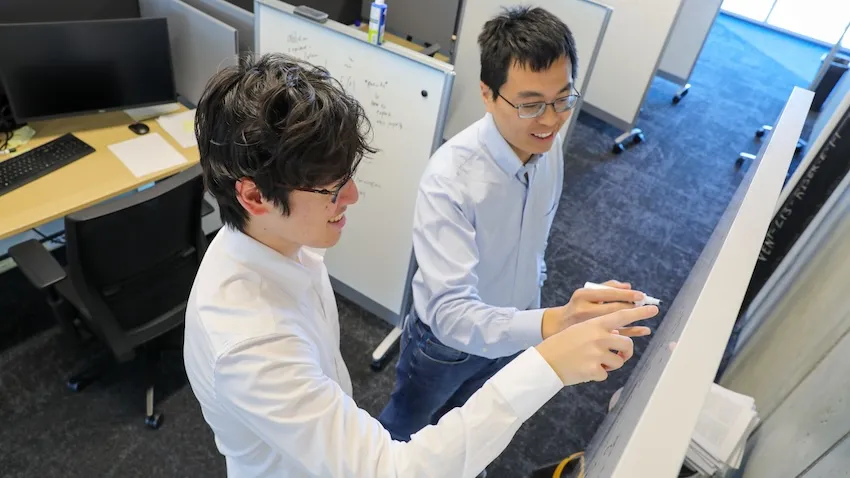
Successful test results of a new machine learning (ML) technique developed at Georgia Tech could help communities prepare for extreme weather and coastal flooding. The approach could also be applied to other models that predict how natural systems impact society.
Ph.D. student Phillip Si and Assistant Professor Peng Chen developed Latent-EnSF, a technique that improves how ML models assimilate data to make predictions.
In experiments predicting medium-range weather forecasting and shallow water wave propagation, Latent-EnSF demonstrated higher accuracy, faster convergence, and greater efficiency than existing methods for sparse data assimilation.
“We are currently involved in an NSF-funded project aimed at providing real-time information on extreme flooding events in Pinellas County, Florida,” said Si, who studies computational science and engineering (CSE).
“We're actively working on integrating Latent-EnSF into the system, which will facilitate accurate and synchronized modeling of natural disasters. This initiative aims to enhance community preparedness and safety measures in response to flooding risks.”
Latent-EnSF outperformed three comparable models in assimilation speed, accuracy, and efficiency in shallow water wave propagation experiments. These tests show models can make better and faster predictions of coastal flood waves, tides, and tsunamis.
In experiments on medium-range weather forecasting, Latent-EnSF surpassed the same three control models in accuracy, convergence, and time. Additionally, this test demonstrated Latent-EnSF's scalability compared to other methods.
These promising results support using ML models to simulate climate, weather, and other complex systems.
Traditionally, such studies require employment of large, energy-intensive supercomputers. However, advances like Latent-EnSF are making smaller, more efficient ML models feasible for these purposes.
The Georgia Tech team mentioned this comparison in its paper. It takes hours for the European Center for Medium-Range Weather Forecasts computer to run its simulations. Conversely, the ML model FourCastNet calculated the same forecast in seconds.
“Resolution, complexity, and data-diversity will continue to increase into the future,” said Chen, an assistant professor in the School of CSE.
“To keep pace with this trend, we believe that ML models and ML-based data assimilation methods will become indispensable for studying large-scale complex systems.”
Data assimilation is the process by which models continuously ingest new, real-world data to update predictions. This data is often sparse, meaning it is limited, incomplete, or unevenly distributed over time.
Latent-EnSF builds on the Ensemble Filter Scores (EnSF) model developed by Florida State University and Oak Ridge National Laboratory researchers.
EnSF’s strength is that it assimilates data with many features and unpredictable relationships between data points. However, integrating sparse data leads to lost information and knowledge gaps in the model. Also, such large models may stop learning entirely from small amounts of sparse data.
The Georgia Tech researchers employ two variational autoencoders (VAEs) in Latent-EnSF to help ML models integrate and use real-world data. The VAEs encode sparse data and predictive models together in the same space to assimilate data more accurately and efficiently.
Integrating models with new methods, like Latent-EnSF, accelerates data assimilation. Producing accurate predictions more quickly during real-world crises could save lives and property for communities.
To share Latent-EnSF to the broader research community, Chen and Si presented their paper at the SIAM Conference on Computational Science and Engineering (CSE25). The Society of Industrial and Applied Mathematics (SIAM) organized CSE25, held March 3-7 in Fort Worth, Texas.
Chen was one of ten School of CSE faculty members who presented research at CSE25, representing one-third of the School’s faculty body. Latent-EnSF was one of 15 papers by School of CSE authors and one of 23 Georgia Tech papers presented at the conference.
The pair will also present Latent-EnSF at the upcoming International Conference on Learning Representations (ICLR 2025). Occurring April 24-28 in Singapore, ICLR is one of the world’s most prestigious conferences dedicated to artificial intelligence research.
“We hope to bring attention to experts and domain scientists the exciting area of ML-based data assimilation by presenting our paper,” Chen said. “Our work offers a new solution to address some of the key shortcomings in the area for broader applications.”
News Contact
Bryant Wine, Communications Officer
bryant.wine@cc.gatech.edu
Dec. 03, 2024
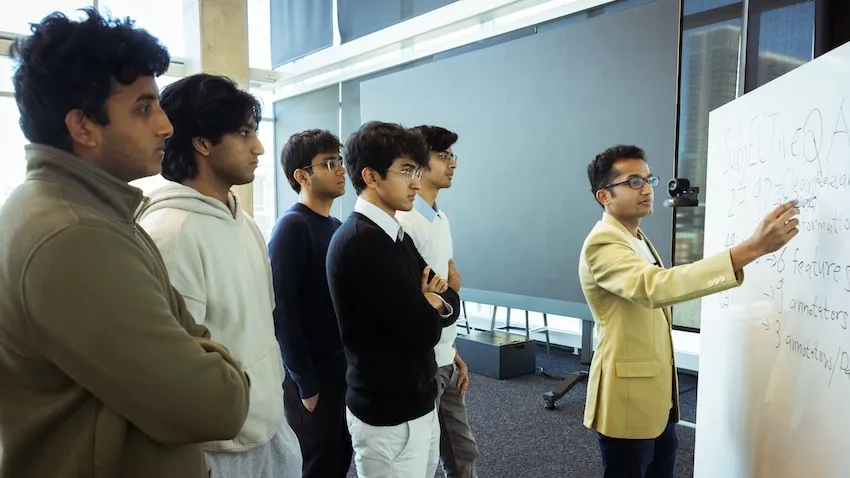
Georgia Tech researchers have created a dataset that trains computer models to understand nuances in human speech during financial earnings calls. The dataset provides a new resource to study how public correspondence affects businesses and markets.
SubjECTive-QA is the first human-curated dataset on question-answer pairs from earnings call transcripts (ECTs). The dataset teaches models to identify subjective features in ECTs, like clarity and cautiousness.
The dataset lays the foundation for a new approach to identifying disinformation and misinformation caused by nuances in speech. While ECT responses can be technically true, unclear or irrelevant information can misinform stakeholders and affect their decision-making.
Tests on White House press briefings showed that the dataset applies to other sectors with frequent question-and-answer encounters, notably politics, journalism, and sports. This increases the odds of effectively informing audiences and improving transparency across public spheres.
The intersecting work between natural language processing and finance earned the paper acceptance to NeurIPS 2024, the 38th Annual Conference on Neural Information Processing Systems. NeurIPS is one of the world’s most prestigious conferences on artificial intelligence (AI) and machine learning (ML) research.
"SubjECTive-QA has the potential to revolutionize nowcasting predictions with enhanced clarity and relevance,” said Agam Shah, the project’s lead researcher.
“Its nuanced analysis of qualities in executive responses, like optimism and cautiousness, deepens our understanding of economic forecasts and financial transparency."
[MICROSITE: Georgia Tech at NeurIPS 2024]
SubjECTive-QA offers a new means to evaluate financial discourse by characterizing language's subjective and multifaceted nature. This improves on traditional datasets that quantify sentiment or verify claims from financial statements.
The dataset consists of 2,747 Q&A pairs taken from 120 ECTs from companies listed on the New York Stock Exchange from 2007 to 2021. The Georgia Tech researchers annotated each response by hand based on six features for a total of 49,446 annotations.
The group evaluated answers on:
- Relevance: the speaker answered the question with appropriate details.
- Clarity: the speaker was transparent in the answer and the message conveyed.
- Optimism: the speaker answered with a positive outlook regarding future outcomes.
- Specificity: the speaker included sufficient and technical details in their answer.
- Cautiousness: the speaker answered using a conservative, risk-averse approach.
- Assertiveness: the speaker answered with certainty about the company’s events and outcomes.
The Georgia Tech group validated their dataset by training eight computer models to detect and score these six features. Test models comprised of three BERT-based pre-trained language models (PLMs), and five popular large language models (LLMs) including Llama and ChatGPT.
All eight models scored the highest on the relevance and clarity features. This is attributed to domain-specific pretraining that enables the models to identify pertinent and understandable material.
The PLMs achieved higher scores on the clear, optimistic, specific, and cautious categories. The LLMs scored higher in assertiveness and relevance.
In another experiment to test transferability, a PLM trained with SubjECTive-QA evaluated 65 Q&A pairs from White House press briefings and gaggles. Scores across all six features indicated models trained on the dataset could succeed in other fields outside of finance.
"Building on these promising results, the next step for SubjECTive-QA is to enhance customer service technologies, like chatbots,” said Shah, a Ph.D. candidate studying machine learning.
“We want to make these platforms more responsive and accurate by integrating our analysis techniques from SubjECTive-QA."
SubjECTive-QA culminated from two semesters of work through Georgia Tech’s Vertically Integrated Projects (VIP) Program. The VIP Program is an approach to higher education where undergraduate and graduate students work together on long-term project teams led by faculty.
Undergraduate students earn academic credit and receive hands-on experience through VIP projects. The extra help advances ongoing research and gives graduate students mentorship experience.
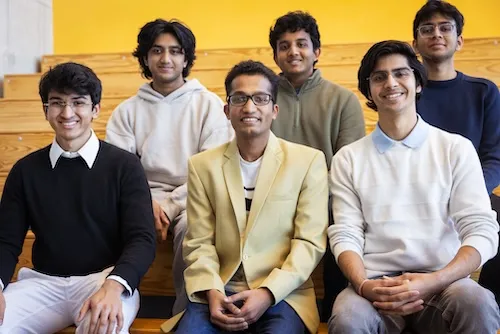
Computer science major Huzaifa Pardawala and mathematics major Siddhant Sukhani co-led the SubjECTive-QA project with Shah.
Fellow collaborators included Veer Kejriwal, Abhishek Pillai, Rohan Bhasin, Andrew DiBiasio, Tarun Mandapati, and Dhruv Adha. All six researchers are undergraduate students studying computer science.
Sudheer Chava co-advises Shah and is the faculty lead of SubjECTive-QA. Chava is a professor in the Scheller College of Business and director of the M.S. in Quantitative and Computational Finance (QCF) program.
Chava is also an adjunct faculty member in the College of Computing’s School of Computational Science and Engineering (CSE).
"Leading undergraduate students through the VIP Program taught me the powerful impact of balancing freedom with guidance,” Shah said.
“Allowing students to take the helm not only fosters their leadership skills but also enhances my own approach to mentoring, thus creating a mutually enriching educational experience.”
Presenting SubjECTive-QA at NeurIPS 2024 exposes the dataset for further use and refinement. NeurIPS is one of three primary international conferences on high-impact research in AI and ML. The conference occurs Dec. 10-15.
The SubjECTive-QA team is among the 162 Georgia Tech researchers presenting over 80 papers at NeurIPS 2024. The Georgia Tech contingent includes 46 faculty members, like Chava. These faculty represent Georgia Tech’s Colleges of Business, Computing, Engineering, and Sciences, underscoring the pertinence of AI research across domains.
"Presenting SubjECTive-QA at prestigious venues like NeurIPS propels our research into the spotlight, drawing the attention of key players in finance and tech,” Shah said.
“The feedback we receive from this community of experts validates our approach and opens new avenues for future innovation, setting the stage for transformative applications in industry and academia.”
News Contact
Bryant Wine, Communications Officer
bryant.wine@cc.gatech.edu
Dec. 03, 2024
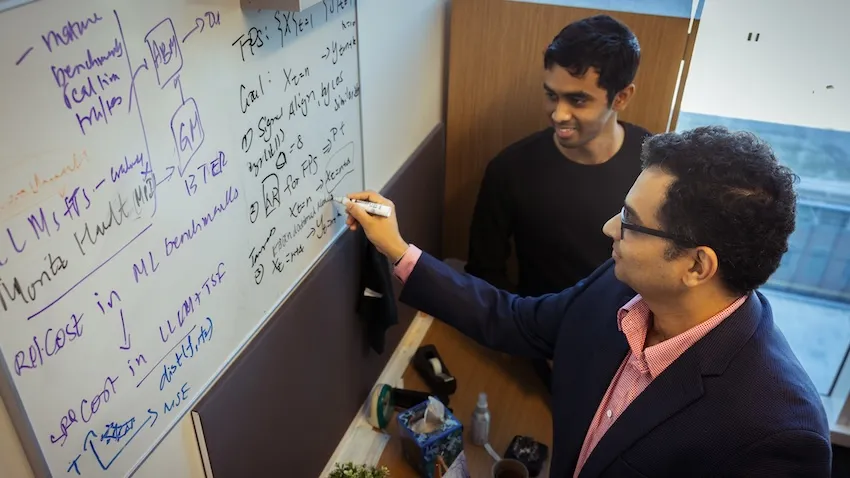
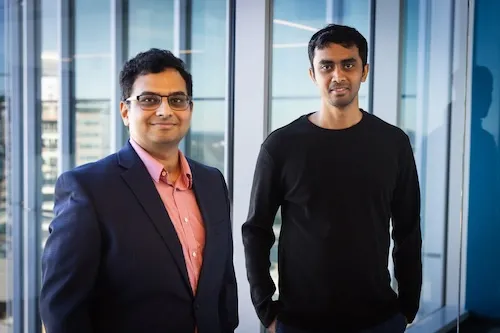
A new machine learning (ML) model from Georgia Tech could protect communities from diseases, better manage electricity consumption in cities, and promote business growth, all at the same time.
Researchers from the School of Computational Science and Engineering (CSE) created the Large Pre-Trained Time-Series Model (LPTM) framework. LPTM is a single foundational model that completes forecasting tasks across a broad range of domains.
Along with performing as well or better than models purpose-built for their applications, LPTM requires 40% less data and 50% less training time than current baselines. In some cases, LPTM can be deployed without any training data.
The key to LPTM is that it is pre-trained on datasets from different industries like healthcare, transportation, and energy. The Georgia Tech group created an adaptive segmentation module to make effective use of these vastly different datasets.
The Georgia Tech researchers will present LPTM in Vancouver, British Columbia, Canada, at the 2024 Conference on Neural Information Processing Systems (NeurIPS 2024). NeurIPS is one of the world’s most prestigious conferences on artificial intelligence (AI) and ML research.
“The foundational model paradigm started with text and image, but people haven’t explored time-series tasks yet because those were considered too diverse across domains,” said B. Aditya Prakash, one of LPTM’s developers.
“Our work is a pioneer in this new area of exploration where only few attempts have been made so far.”
[MICROSITE: Georgia Tech at NeurIPS 2024]
Foundational models are trained with data from different fields, making them powerful tools when assigned tasks. Foundational models drive GPT, DALL-E, and other popular generative AI platforms used today. LPTM is different though because it is geared toward time-series, not text and image generation.
The Georgia Tech researchers trained LPTM on data ranging from epidemics, macroeconomics, power consumption, traffic and transportation, stock markets, and human motion and behavioral datasets.
After training, the group pitted LPTM against 17 other models to make forecasts as close to nine real-case benchmarks. LPTM performed the best on five datasets and placed second on the other four.
The nine benchmarks contained data from real-world collections. These included the spread of influenza in the U.S. and Japan, electricity, traffic, and taxi demand in New York, and financial markets.
The competitor models were purpose-built for their fields. While each model performed well on one or two benchmarks closest to its designed purpose, the models ranked in the middle or bottom on others.
In another experiment, the Georgia Tech group tested LPTM against seven baseline models on the same nine benchmarks in zero-shot forecasting tasks. Zero-shot means the model is used out of the box and not given any specific guidance during training. LPTM outperformed every model across all benchmarks in this trial.
LPTM performed consistently as a top-runner on all nine benchmarks, demonstrating the model’s potential to achieve superior forecasting results across multiple applications with less and resources.
“Our model also goes beyond forecasting and helps accomplish other tasks,” said Prakash, an associate professor in the School of CSE.
“Classification is a useful time-series task that allows us to understand the nature of the time-series and label whether that time-series is something we understand or is new.”
One reason traditional models are custom-built to their purpose is that fields differ in reporting frequency and trends.
For example, epidemic data is often reported weekly and goes through seasonal peaks with occasional outbreaks. Economic data is captured quarterly and typically remains consistent and monotone over time.
LPTM’s adaptive segmentation module allows it to overcome these timing differences across datasets. When LPTM receives a dataset, the module breaks data into segments of different sizes. Then, it scores all possible ways to segment data and chooses the easiest segment from which to learn useful patterns.
LPTM’s performance, enhanced through the innovation of adaptive segmentation, earned the model acceptance to NeurIPS 2024 for presentation. NeurIPS is one of three primary international conferences on high-impact research in AI and ML. NeurIPS 2024 occurs Dec. 10-15.
Ph.D. student Harshavardhan Kamarthi partnered with Prakash, his advisor, on LPTM. The duo are among the 162 Georgia Tech researchers presenting over 80 papers at the conference.
Prakash is one of 46 Georgia Tech faculty with research accepted at NeurIPS 2024. Nine School of CSE faculty members, nearly one-third of the body, are authors or co-authors of 17 papers accepted at the conference.
Along with sharing their research at NeurIPS 2024, Prakash and Kamarthi released an open-source library of foundational time-series modules that data scientists can use in their applications.
“Given the interest in AI from all walks of life, including business, social, and research and development sectors, a lot of work has been done and thousands of strong papers are submitted to the main AI conferences,” Prakash said.
“Acceptance of our paper speaks to the quality of the work and its potential to advance foundational methodology, and we hope to share that with a larger audience.”
News Contact
Bryant Wine, Communications Officer
bryant.wine@cc.gatech.edu
Nov. 07, 2024
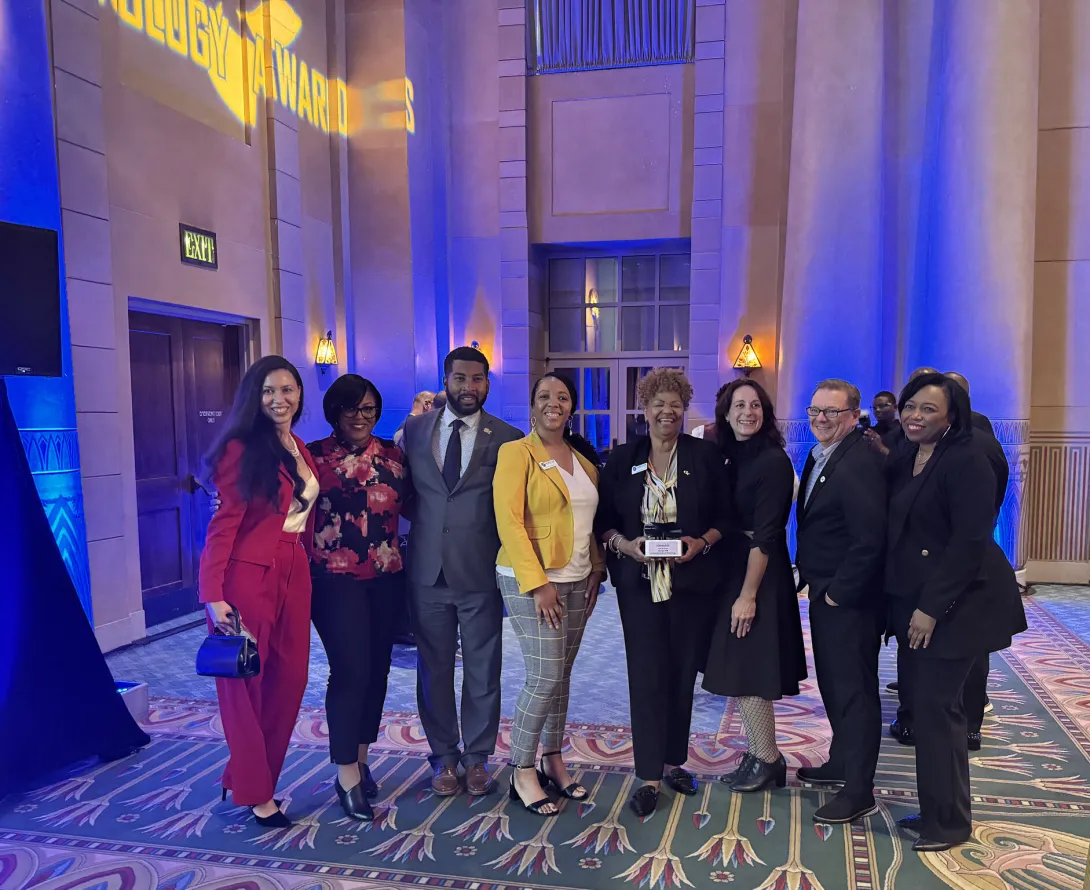
Members of Georgia AIM’s governance team stand for a photo with Cassia Baker, a cybersecurity expert with the Georgia Manufacturing Extension Partnership (left), and David Bridges, executive vice president of Georgia Tech’s Enterprise Innovation Institute (second from right), which oversees the projects.
Georgia AIM (Artificial Intelligence in Manufacturing) was recently awarded the 'Tech for Good' award from the Technology Association of Georgia (TAG), the state’s largest tech organization.
The accolade was presented at the annual TAG Technology Awards ceremony on Nov. 6 at Atlanta’s Fox Theatre. The TAG Technology Awards promote inclusive technology throughout Georgia, and any state company, organization, or leader is eligible to apply.
Tech for Good, one of TAG’s five award categories, honors a program or project that uses technology to promote inclusiveness and equity by serving Georgia communities and individuals who are underrepresented in the tech space.
Georgia AIM is comprised of 16 projects across the state that connect smart technology to manufacturing through K-12 education, workforce development, and manufacturer outreach. The federally funded program is a collaborative project administered through Georgia Tech’s Enterprise Innovation Institute and the Georgia Tech Manufacturing Institute.
TAG is a Georgia AIM partner and provides workforce development programs that train people and assist them in making successful transitions into tech careers.
Donna Ennis, Georgia AIM’s co-director, accepted the award on behalf of the organization.
“Georgia AIM’s mission is to equitably develop and deploy talent and innovation for AI in manufacturing, and the Tech for Good Award reinforces our focus on revolutionizing the manufacturing economy for Georgia and the entire country,” Ennis said in her acceptance speech.
She cited the organization’s many coalition members across the state: the Technical College System of Georgia; Spelman College; the Georgia AIM Mobile Studio team at the Russell Innovation Center for Entrepreneurs and the University of Georgia; the Southwest Georgia Regional Commission; the Georgia Cyber Innovation & Training Center; and TAG and Georgia AIM’s partners in the Middle Georgia Innovation corridor, including 21st Century Partnership and the Houston Development Authority.
Ennis also acknowledged the U.S. Economic Development Administration for funding the project and helping to bring it to fruition. “But most of all,” she said, “I want to thank our manufacturers and communities across Georgia who are at the forefront of creating a new economy through AI in manufacturing. It is a privilege to assist you on this journey of technology and discovery.”
News Contact
Nov. 12, 2024
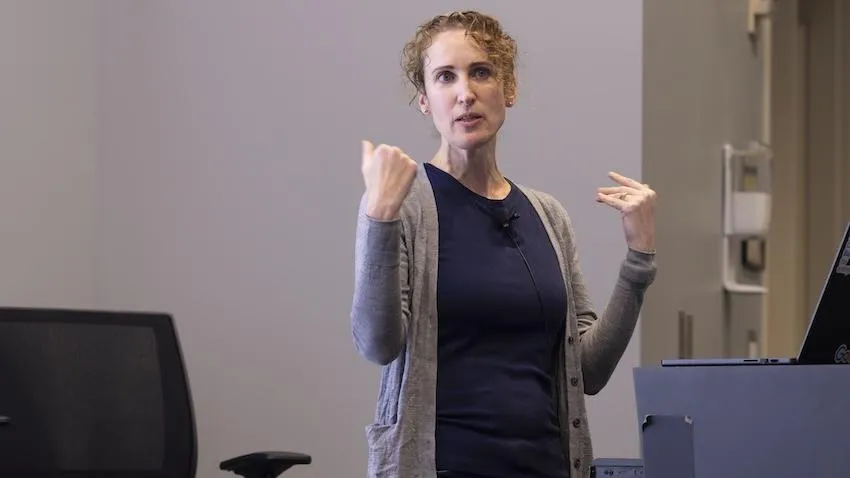
School of IC's Josiah Hester (left) and Cindy Lin discuss AI's future impact on sustainability. Photo by Terence Rushin/College of Computing.
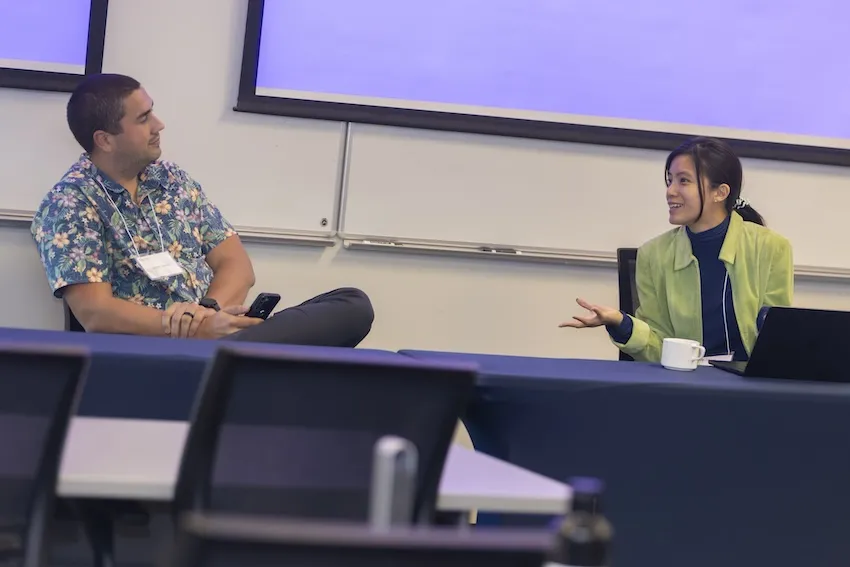
This month, the future of artificial intelligence (AI) was spotlighted as more than 120 academic and industry researchers participated in the Georgia Tech School of Interactive Computing’s inaugural Summit on Responsible Computing, AI, and Society.
With looming questions about AI's growing roles and consequences in nearly every facet of modern life, School of IC organizers felt the time was right to diverge from traditional conferences that focus on past work and published research.
“Presenting papers is about disseminating work that has already been completed. Who gets to be in the room is determined by whose paper gets accepted,” said Mark Riedl, School of IC professor.
“Instead, we wanted the summit talks to speculate on future directions and what challenges we as a community should be thinking about going forward.”
The two-day summit, held at Tech’s Global Learning Center Oct. 28-30, convened to discuss consequential questions like:
- Is society ready to accept more responsibility as greater advancements in technologies like AI are made?
- Should society stop to think about potential consequences before these advancements are implemented on its behalf, and what could those consequences be?
- What policies should be enacted for these technologies to mitigate harms and augment societal benefits?
A highlight of the summit’s opening day was Meredith Ringel Morris's keynote address. As director of human-AI interaction research at Google DeepMind, she presented a possible future in which humans could use AI to create a digital afterlife.
In her remarks, Morris discussed AI clones, which are AI avatars of specific human beings with high autonomy and task-performing capabilities. Someone could leave such an agent behind as a memory for loved ones to enjoy once they are gone, and future generations could access it to learn more about an ancestor.
On the other hand, it could easily lead to loved ones experiencing extended grief because they have trouble moving on from losing a family member.
These AI capabilities are in development and will soon be publicly available. As industry and academic researchers continue to develop them, the public needs to learn about their eminent impacts.
“There’s a lot that needs to be done in educating people,” Morris said. “It’s hard for well-intentioned and thoughtful system designers to anticipate all the harm. We must be prepared some people are going to use AI in ways we don’t anticipate, and some of those ways are going to be undesirable. What legal and education structures can we create that will help?”
In addition to Morris’s keynote, the summit’s first day included 20 talks about future and emerging technologies in AI, sustainability, healthcare, and other fields.
The second day featured eight talks on translating interventions and safeguards into policy.
Day-two speakers included:
- Orly Lobel, Warren Distinguished Professor of Law and director of the Center for Employment and Labor Policy at the University of California-San Diego. Lobel worked on President Obama’s policy team on innovation and labor market competition, and she advises the Federal Trade Commission (FTC).
- Sorelle Friedler, Shibulal Family Professor of Computer Science at Haverford College. She worked in the Office of Science and Technology Policy (OSTP) under the Biden-Harris Administration and helped draft the AI Bill of Rights.
- Jake Metcalf, researcher and program director for AI on the Ground at the think tank Data & Society. The organization produces reports on data science and equity for the US Government.
- Divyansh Kaushik, Vice President of Beacon Global Strategies, has given testimony to the US Senate on AI research and development.
Kaushik earned a Ph.D. in machine learning from Carnegie Mellon University before beginning his career in policy. He highlighted the importance of policymakers fostering relationships with academic researchers.
“Policymakers think about what could go wrong,” Kaushik said. “Academia can offer evidence-based answers.”
The summit also hosted a doctoral consortium, which allowed advanced Ph.D. students to present their research to experts and receive feedback and mentoring.
“Being an interdisciplinary researcher is challenging,” said Shaowen Bardzell, School of IC chair.
“We wanted the next generation to be in the room listening to the experts share their visions and also to provide our own experiences when possible on how to navigate the challenges and rewards of doing work in the intersection of AI, healthcare, sustainability, and policy.”
News Contact
Nathan Deen
Georgia Tech School of Interactive Computing
Communications Officer
nathan.deen@cc.gatech.edu
Oct. 16, 2024
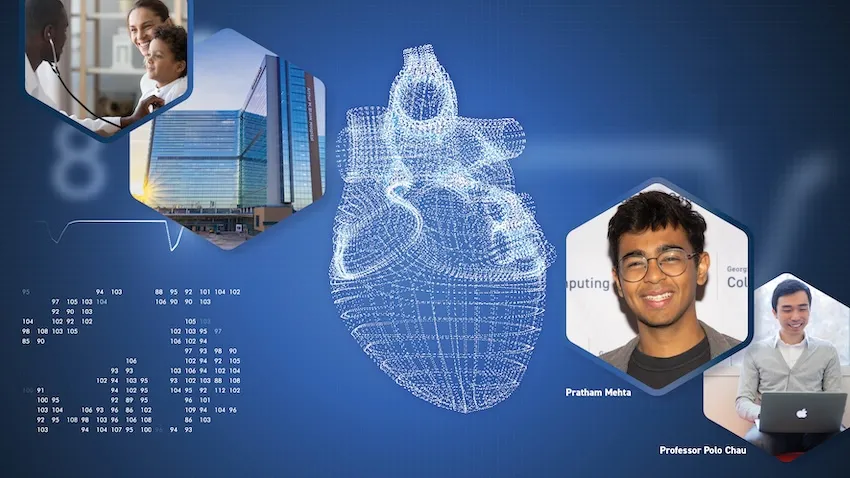
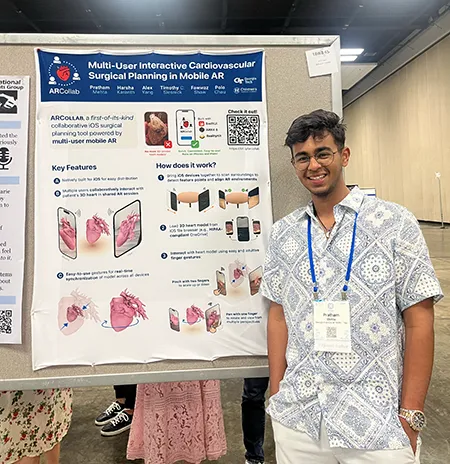
A new surgery planning tool powered by augmented reality (AR) is in development for doctors who need closer collaboration when planning heart operations. Promising results from a recent usability test have moved the platform one step closer to everyday use in hospitals worldwide.
Georgia Tech researchers partnered with medical experts from Children’s Healthcare of Atlanta (CHOA) to develop and test ARCollab. The iOS-based app leverages advanced AR technologies to let doctors collaborate together and interact with a patient’s 3D heart model when planning surgeries.
The usability evaluation demonstrates the app’s effectiveness, finding that ARCollab is easy to use and understand, fosters collaboration, and improves surgical planning.
“This tool is a step toward easier collaborative surgical planning. ARCollab could reduce the reliance on physical heart models, saving hours and even days of time while maintaining the collaborative nature of surgical planning,” said M.S. student Pratham Mehta, the app’s lead researcher.
“Not only can it benefit doctors when planning for surgery, it may also serve as a teaching tool to explain heart deformities and problems to patients.”
Two cardiologists and three cardiothoracic surgeons from CHOA tested ARCollab. The two-day study ended with the doctors taking a 14-question survey assessing the app’s usability. The survey also solicited general feedback and top features.
The Georgia Tech group determined from the open-ended feedback that:
- ARCollab enables new collaboration capabilities that are easy to use and facilitate surgical planning.
- Anchoring the model to a physical space is important for better interaction.
- Portability and real-time interaction are crucial for collaborative surgical planning.
Users rated each of the 14 questions on a 7-point Likert scale, with one being “strongly disagree” and seven being “strongly agree.” The 14 questions were organized into five categories: overall, multi-user, model viewing, model slicing, and saving and loading models.
The multi-user category attained the highest rating with an average of 6.65. This included a unanimous 7.0 rating that it was easy to identify who was controlling the heart model in ARCollab. The scores also showed it was easy for users to connect with devices, switch between viewing and slicing, and view other users’ interactions.
The model slicing category received the lowest, but formidable, average of 5.5. These questions assessed ease of use and understanding of finger gestures and usefulness to toggle slice direction.
Based on feedback, the researchers will explore adding support for remote collaboration. This would assist doctors in collaborating when not in a shared physical space. Another improvement is extending the save feature to support multiple states.
“The surgeons and cardiologists found it extremely beneficial for multiple people to be able to view the model and collaboratively interact with it in real-time,” Mehta said.
The user study took place in a CHOA classroom. CHOA also provided a 3D heart model for the test using anonymous medical imaging data. Georgia Tech’s Institutional Review Board (IRB) approved the study and the group collected data in accordance with Institute policies.
The five test participants regularly perform cardiovascular surgical procedures and are employed by CHOA.
The Georgia Tech group provided each participant with an iPad Pro with the latest iOS version and the ARCollab app installed. Using commercial devices and software meets the group’s intentions to make the tool universally available and deployable.
“We plan to continue iterating ARCollab based on the feedback from the users,” Mehta said.
“The participants suggested the addition of a ‘distance collaboration’ mode, enabling doctors to collaborate even if they are not in the same physical environment. This allows them to facilitate surgical planning sessions from home or otherwise.”
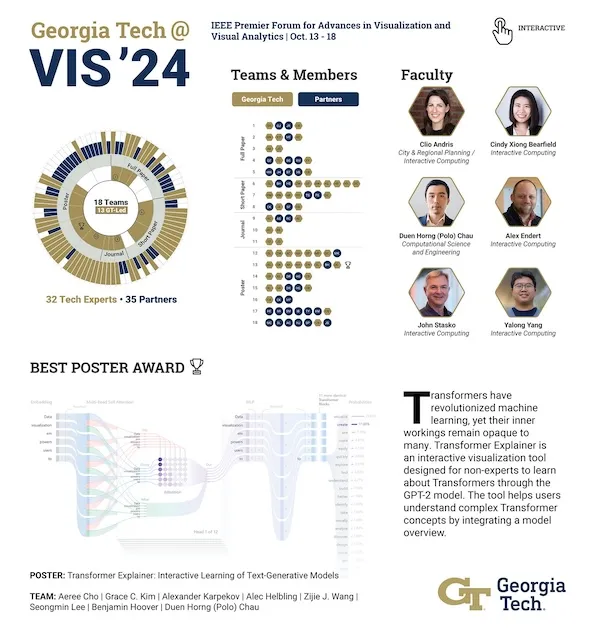
The Georgia Tech researchers are presenting ARCollab and the user study results at IEEE VIS 2024, the Institute of Electrical and Electronics Engineers (IEEE) visualization conference.
IEEE VIS is the world’s most prestigious conference for visualization research and the second-highest rated conference for computer graphics. It takes place virtually Oct. 13-18, moved from its venue in St. Pete Beach, Florida, due to Hurricane Milton.
The ARCollab research group's presentation at IEEE VIS comes months after they shared their work at the Conference on Human Factors in Computing Systems (CHI 2024).
Undergraduate student Rahul Narayanan and alumni Harsha Karanth (M.S. CS 2024) and Haoyang (Alex) Yang (CS 2022, M.S. CS 2023) co-authored the paper with Mehta. They study under Polo Chau, a professor in the School of Computational Science and Engineering.
The Georgia Tech group partnered with Dr. Timothy Slesnick and Dr. Fawwaz Shaw from CHOA on ARCollab’s development and user testing.
"I'm grateful for these opportunities since I get to showcase the team's hard work," Mehta said.
“I can meet other like-minded researchers and students who share these interests in visualization and human-computer interaction. There is no better form of learning.”
News Contact
Bryant Wine, Communications Officer
bryant.wine@cc.gatech.edu
Jun. 20, 2024
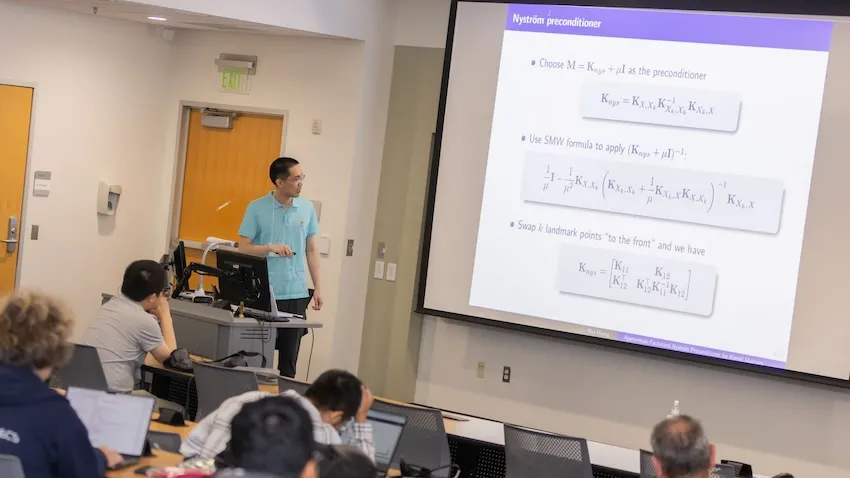
From weather prediction to drug discovery, math powers the models used in computer simulations. To help these vital tools with their calculations, global experts recently met at Georgia Tech to share ways to make math easier for computers.
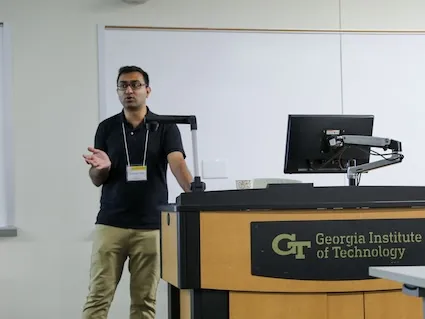
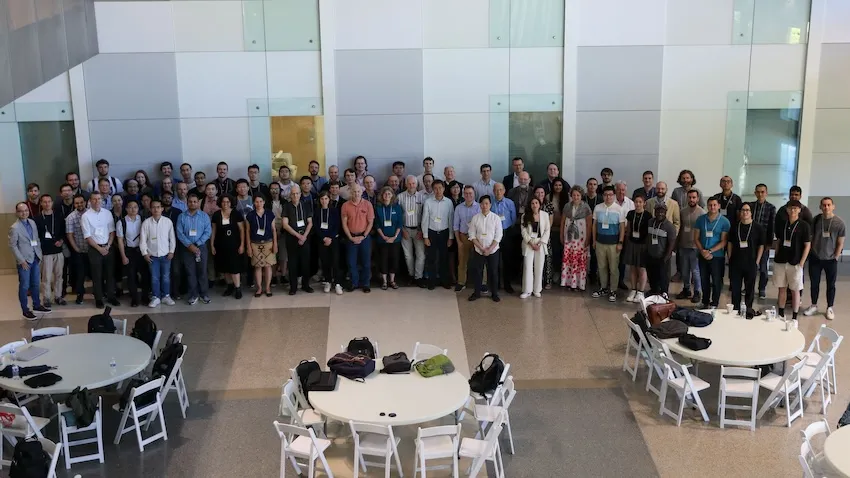
Tech hosted the 2024 International Conference on Preconditioning Techniques for Scientific and Industrial Applications (Precond 24), June 10-12.
Preconditioning accelerates matrix computations, a kind of math used in most large-scale models. These computer models become faster, more efficient, and more accessible with help from preconditioned equations.
“Preconditioning transforms complex numerical problems into more easily solved ones,” said Edmond Chow, a professor at Georgia Tech and co-chair of Precond 24’s local organization and program committees.
“The new problem wields a better condition number, giving rise to the name preconditioning.”
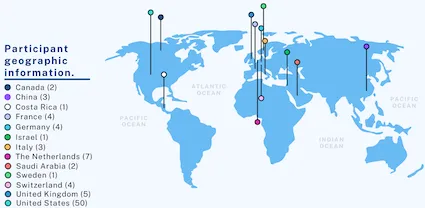
Researchers from 13 countries presented their work through 20 mini-symposia and seven invited talks at Precond 24. Their work showcased the practicality of preconditioners.
Vandana Dwarka, an assistant professor at Delft University of Technology, shared newly developed preconditioners for electromagnetic simulations. This technology can be used in further applications ranging from imaging to designing nuclear fusion devices.
Xiaozhe Hu presented a physics-based preconditioner that simulates biophysical processes in the brain, such as blood flow and metabolic waste clearance. Hu brought this research from Tufts University, where he is an associate professor.
Tucker Hartland, a postdoctoral researcher at Lawrence Livermore National Laboratory, discussed preconditioning in contact mechanics. This work improves the modeling of interactions between physical objects that touch each other. Many fields stand to benefit from Hartland’s study, including mechanical engineering, civil engineering, and materials science.
A unique aspect of this year’s conference was an emphasis on machine learning (ML). Between a panel discussion, tutorial, and several talks, experts detailed how to employ ML for preconditioning and how preconditioning can train ML models.
Precond 24 invited seven speakers from institutions around the world to share their research with conference attendees. The presenters were:
- Monica Dessole, CERN, Switzerland
- Selime Gurol, CERFACS, France
- Alexander Heinlein, Delft University of Technology, Netherlands
- Rui Peng Li, Lawrence Livermore National Laboratory, USA
- Will Pazner, Portland State University, USA
- Tyrone Rees, Science and Technology Facilities Council, UK
- Jacob B. Schroder, University of New Mexico, USA
Along with hosting Precond 24, several Georgia Tech researchers participated in the conference through presentations.
Ph.D. students Hua Huang and Shikhar Shah each presented a paper on the conference’s first day. Alumnus Srinivas Eswar (Ph.D. CS 2022) returned to Atlanta to share research from his current role at Argonne National Laboratory. Chow chaired the ML panel and a symposium on preconditioners for matrices.
“It was an engaging and rewarding experience meeting so many people from this very tight-knit community,” said Shah, who studies computational science and engineering (CSE). “Getting to see talks close to my research provided me with a lot of inspiration and direction for future work.”
Precond 2024 was the thirteenth meeting of the conference, which occurs every two years.
The conference returned to Atlanta this year for the first time since 2005. Atlanta joins Minneapolis as one of only two cities in the world to host Precond more than once. Precond 24 marked the sixth time the conference met in the U.S.
Georgia Tech and Emory University’s Department of Mathematics organized and sponsored Precond 24. The U.S. Department of Energy Office of Science co-sponsored the conference with Tech and Emory.
Georgia Tech entities swarmed together in support of Precond 24. The Office of the Associate Vice President for Research Operations and Infrastructure, College of Computing, and School of CSE co-sponsored the conference.
“The enthusiasm at the conference has been very gratifying. So many people organized sessions at the conference and contributed to the very strong attendance,” Chow said.
“This is a testament to the continued importance of preconditioning and related numerical methods in a rapidly changing technological world.”
News Contact
Bryant Wine, Communications Officer
bryant.wine@cc.gatech.edu
Jun. 21, 2024

Researchers at Georgia Tech are creating accessible museum exhibits that explain artificial intelligence (AI) to middle school students, including the LuminAI interactive AI-based dance partner developed by Regents' Professor Brian Magerko.
Ph.D. students Yasmine Belghith and Atefeh Mahdavi co-led a study in a museum setting that observed how middle schoolers interact with the popular AI chatbot ChatGPT.
“It’s important for museums, especially science museums, to start incorporating these kinds of exhibits about AI and about using AI so the general population can have that avenue to interact with it and transfer that knowledge to everyday tools,” Belghith said.
Belghith and Mahdavi conducted their study with nine focus groups of 24 students at Chicago’s Museum of Science and Industry. The team used the findings to inform their design of AI exhibits that the museum could display as early as 2025.
Belghith is a Ph.D. student in human-centered computing. Her advisor is Assistant Professor Jessica Roberts in the School of Interactive Computing. Magerko advises Mahdavi, a Ph.D. student in digital media in the School of Literature, Media, and Communication.
Belghith and Mahdavi presented a paper about their study in May at the Association for Computing Machinery (ACM) 2024 Conference on Human Factors in Computing Systems (CHI) in Honolulu, Hawaii.
Their work is part of a National Science Foundation (NSF) grant dedicated to fostering AI literacy among middle schoolers in informal environments.
Expanding Accessibility
While there are existing efforts to reach students in the classroom, the researchers believe AI education is most accessible in informal learning environments like museums.
“There’s a need today for everybody to have some sort of AI literacy,” Belghith said. “Many middle schoolers will not be taking computer science courses or pursuing computer science careers, so there needs to be interventions to teach them what they should know about AI.”
The researchers found that most of the middle schoolers interacted with ChatGPT to either test its knowledge by prompting it to answer questions or socialize with it by having human-like conversations.
Others fit the mold of “content explorers.” They did not engage with the AI aspect of ChatGPT and focused more on the content it produced.
Mahdavi said regardless of their approach, students would get “tunnel vision” in their interactions instead of exploring more of the AI’s capabilities.
“If they go in a certain direction, they will continue to explore that,” Mahdavi said. “One thing we can learn from this is to nudge kids and show them there are other things you can do with AI tools or get them to think about it another way.”
The researchers also paid attention to what was missing in the students’ responses, which Mahdavi said was just as important as what they did talk about.
“None of them mentioned anything about ethics or what could be problematic about AI,” she said. “That told us there’s something they aren’t thinking about but should be. We take that into account as we think about future exhibits.”
Making an Impact
The researchers visited the Museum of Science and Industry June 1-2 to conduct the first trial run of three AI-based exhibits they’ve created. One of them is LuminAI, which was developed in Magerko’s Expressive Machinery Lab.
LuminAI is an interactive art installation that allows people to engage in collaborative movement with an AI dance partner. Georgia Tech and Kennesaw State recently held the first performance of AI avatars dancing with human partners in front of a live audience.
Duri Long, a former Georgia Tech Ph.D. student who is now an assistant professor at Northwestern University, designed the second exhibit. KnowledgeNet is an interactive tabletop exhibit in which visitors build semantic networks by adding different characteristics to characters that interact together.
The third exhibit, Data Bites, prompts users to build datasets of pizzas and sandwiches. Their selections train a machine-learning classifier in real time.
Belghith said the exhibits fostered conversations about AI between parents and children.
“The exhibit prototypes successfully engaged children in creative activities,” she said. “Many parents had to pull their kids away to continue their museum tour because the kids wanted more time to try different creations or dance moves.”
News Contact
Nathan Deen
Communications Officer I
School of Interactive Computing