
May. 15, 2024
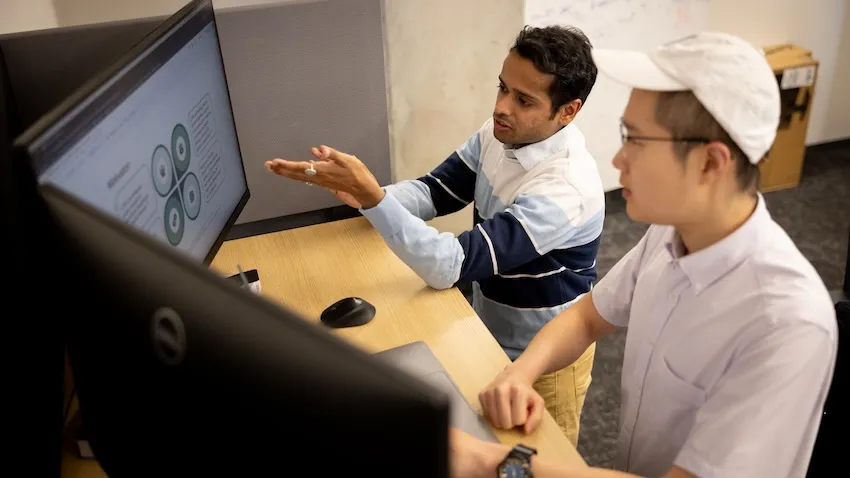
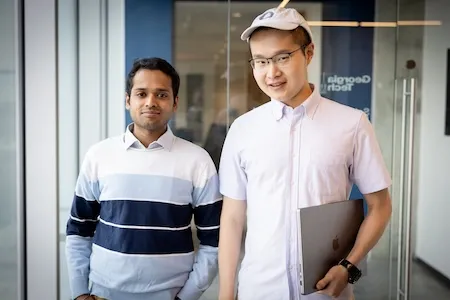
Georgia Tech researchers say non-English speakers shouldn’t rely on chatbots like ChatGPT to provide valuable healthcare advice.
A team of researchers from the College of Computing at Georgia Tech has developed a framework for assessing the capabilities of large language models (LLMs).
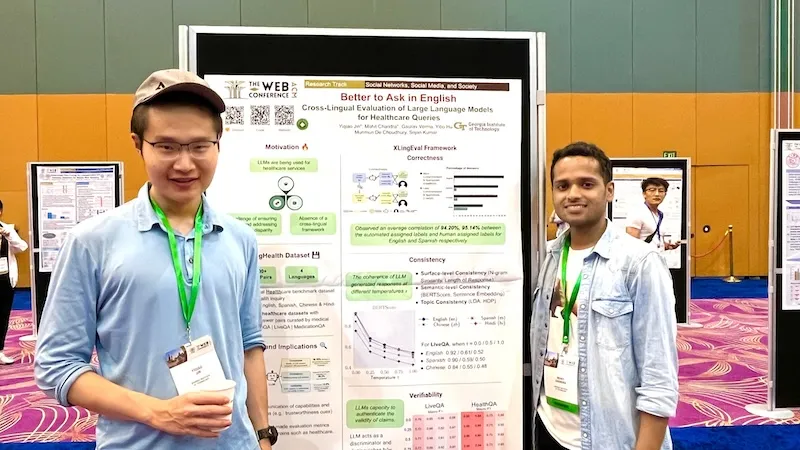
Ph.D. students Mohit Chandra and Yiqiao (Ahren) Jin are the co-lead authors of the paper Better to Ask in English: Cross-Lingual Evaluation of Large Language Models for Healthcare Queries.
Their paper’s findings reveal a gap between LLMs and their ability to answer health-related questions. Chandra and Jin point out the limitations of LLMs for users and developers but also highlight their potential.
Their XLingEval framework cautions non-English speakers from using chatbots as alternatives to doctors for advice. However, models can improve by deepening the data pool with multilingual source material such as their proposed XLingHealth benchmark.
“For users, our research supports what ChatGPT’s website already states: chatbots make a lot of mistakes, so we should not rely on them for critical decision-making or for information that requires high accuracy,” Jin said.
“Since we observed this language disparity in their performance, LLM developers should focus on improving accuracy, correctness, consistency, and reliability in other languages,” Jin said.
Using XLingEval, the researchers found chatbots are less accurate in Spanish, Chinese, and Hindi compared to English. By focusing on correctness, consistency, and verifiability, they discovered:
- Correctness decreased by 18% when the same questions were asked in Spanish, Chinese, and Hindi.
- Answers in non-English were 29% less consistent than their English counterparts.
- Non-English responses were 13% overall less verifiable.
XLingHealth contains question-answer pairs that chatbots can reference, which the group hopes will spark improvement within LLMs.
The HealthQA dataset uses specialized healthcare articles from the popular healthcare website Patient. It includes 1,134 health-related question-answer pairs as excerpts from original articles.
LiveQA is a second dataset containing 246 question-answer pairs constructed from frequently asked questions (FAQs) platforms associated with the U.S. National Institutes of Health (NIH).
For drug-related questions, the group built a MedicationQA component. This dataset contains 690 questions extracted from anonymous consumer queries submitted to MedlinePlus. The answers are sourced from medical references, such as MedlinePlus and DailyMed.
In their tests, the researchers asked over 2,000 medical-related questions to ChatGPT-3.5 and MedAlpaca. MedAlpaca is a healthcare question-answer chatbot trained in medical literature. Yet, more than 67% of its responses to non-English questions were irrelevant or contradictory.
“We see far worse performance in the case of MedAlpaca than ChatGPT,” Chandra said.
“The majority of the data for MedAlpaca is in English, so it struggled to answer queries in non-English languages. GPT also struggled, but it performed much better than MedAlpaca because it had some sort of training data in other languages.”
Ph.D. student Gaurav Verma and postdoctoral researcher Yibo Hu co-authored the paper.
Jin and Verma study under Srijan Kumar, an assistant professor in the School of Computational Science and Engineering, and Hu is a postdoc in Kumar’s lab. Chandra is advised by Munmun De Choudhury, an associate professor in the School of Interactive Computing.
The team will present their paper at The Web Conference, occurring May 13-17 in Singapore. The annual conference focuses on the future direction of the internet. The group’s presentation is a complimentary match, considering the conference's location.
English and Chinese are the most common languages in Singapore. The group tested Spanish, Chinese, and Hindi because they are the world’s most spoken languages after English. Personal curiosity and background played a part in inspiring the study.
“ChatGPT was very popular when it launched in 2022, especially for us computer science students who are always exploring new technology,” said Jin. “Non-native English speakers, like Mohit and I, noticed early on that chatbots underperformed in our native languages.”
School of Interactive Computing communications officer Nathan Deen and School of Computational Science and Engineering communications officer Bryant Wine contributed to this report.
News Contact
Bryant Wine, Communications Officer
bryant.wine@cc.gatech.edu
Nathan Deen, Communications Officer
ndeen6@cc.gatech.edu
May. 06, 2024

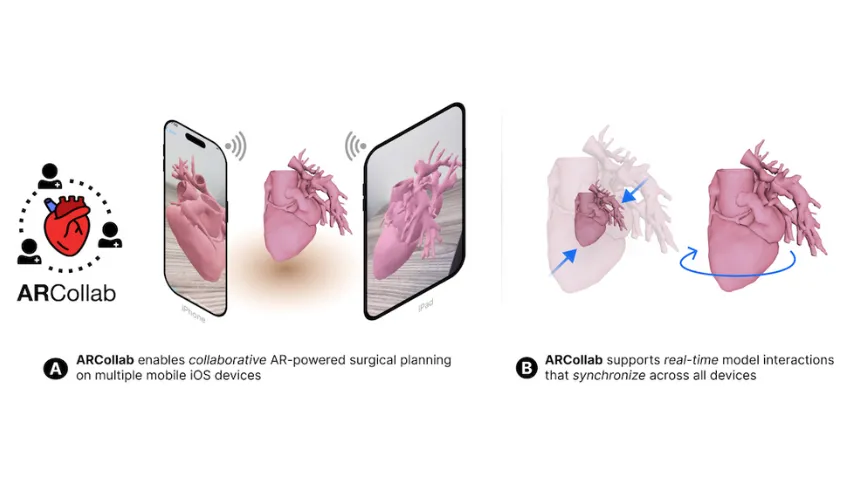
Cardiologists and surgeons could soon have a new mobile augmented reality (AR) tool to improve collaboration in surgical planning.
ARCollab is an iOS AR application designed for doctors to interact with patient-specific 3D heart models in a shared environment. It is the first surgical planning tool that uses multi-user mobile AR in iOS.
The application’s collaborative feature overcomes limitations in traditional surgical modeling and planning methods. This offers patients better, personalized care from doctors who plan and collaborate with the tool.
Georgia Tech researchers partnered with Children’s Healthcare of Atlanta (CHOA) in ARCollab’s development. Pratham Mehta, a computer science major, led the group’s research.
“We have conducted two trips to CHOA for usability evaluations with cardiologists and surgeons. The overall feedback from ARCollab users has been positive,” Mehta said.
“They all enjoyed experimenting with it and collaborating with other users. They also felt like it had the potential to be useful in surgical planning.”
ARCollab’s collaborative environment is the tool’s most novel feature. It allows surgical teams to study and plan together in a virtual workspace, regardless of location.
ARCollab supports a toolbox of features for doctors to inspect and interact with their patients' AR heart models. With a few finger gestures, users can scale and rotate, “slice” into the model, and modify a slicing plane to view omnidirectional cross-sections of the heart.
Developing ARCollab on iOS works twofold. This streamlines deployment and accessibility by making it available on the iOS App Store and Apple devices. Building ARCollab on Apple’s peer-to-peer network framework ensures the functionality of the AR components. It also lessens the learning curve, especially for experienced AR users.
ARCollab overcomes traditional surgical planning practices of using physical heart models. Producing physical models is time-consuming, resource-intensive, and irreversible compared to digital models. It is also difficult for surgical teams to plan together since they are limited to studying a single physical model.
Digital and AR modeling is growing as an alternative to physical models. CardiacAR is one such tool the group has already created.
However, digital platforms lack multi-user features essential for surgical teams to collaborate during planning. ARCollab’s multi-user workspace progresses the technology’s potential as a mass replacement for physical modeling.
“Over the past year and a half, we have been working on incorporating collaboration into our prior work with CardiacAR,” Mehta said.
“This involved completely changing the codebase, rebuilding the entire app and its features from the ground up in a newer AR framework that was better suited for collaboration and future development.”
Its interactive and visualization features, along with its novelty and innovation, led the Conference on Human Factors in Computing Systems (CHI 2024) to accept ARCollab for presentation. The conference occurs May 11-16 in Honolulu.
CHI is considered the most prestigious conference for human-computer interaction and one of the top-ranked conferences in computer science.
M.S. student Harsha Karanth and alumnus Alex Yang (CS 2022, M.S. CS 2023) co-authored the paper with Mehta. They study under Polo Chau, an associate professor in the School of Computational Science and Engineering.
The Georgia Tech group partnered with Timothy Slesnick and Fawwaz Shaw from CHOA on ARCollab’s development.
“Working with the doctors and having them test out versions of our application and give us feedback has been the most important part of the collaboration with CHOA,” Mehta said.
“These medical professionals are experts in their field. We want to make sure to have features that they want and need, and that would make their job easier.”
News Contact
Bryant Wine, Communications Officer
bryant.wine@cc.gatech.edu
Mar. 18, 2024
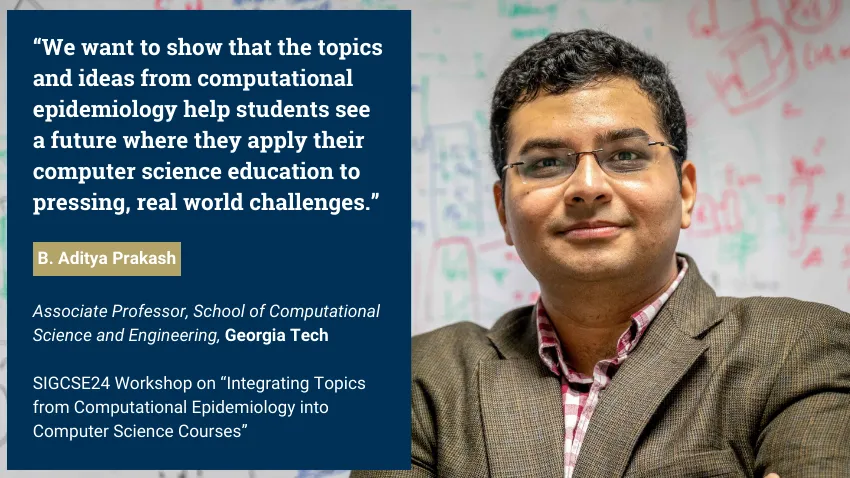
Computer science educators will soon gain valuable insights from computational epidemiology courses, like one offered at Georgia Tech.
B. Aditya Prakash is part of a research group that will host a workshop on how topics from computational epidemiology can enhance computer science classes.
These lessons would produce computer science graduates with improved skills in data science, modeling, simulation, artificial intelligence (AI), and machine learning (ML).
Because epidemics transcend the sphere of public health, these topics would groom computer scientists versed in issues from social, financial, and political domains.
The group’s virtual workshop takes place on March 20 at the technical symposium for the Special Interest Group on Computer Science Education (SIGCSE). SIGCSE is one of 38 special interest groups of the Association for Computing Machinery (ACM). ACM is the world’s largest scientific and educational computing society.
“We decided to do a tutorial at SIGCSE because we believe that computational epidemiology concepts would be very useful in general computer science courses,” said Prakash, an associate professor in the School of Computational Science and Engineering (CSE).
“We want to give an introduction to concepts, like what computational epidemiology is, and how topics, such as algorithms and simulations, can be integrated into computer science courses.”
Prakash kicks off the workshop with an overview of computational epidemiology. He will use examples from his CSE 8803: Data Science for Epidemiology course to introduce basic concepts.
This overview includes a survey of models used to describe behavior of diseases. Models serve as foundations that run simulations, ultimately testing hypotheses and making predictions regarding disease spread and impact.
Prakash will explain the different kinds of models used in epidemiology, such as traditional mechanistic models and more recent ML and AI based models.
Prakash’s discussion includes modeling used in recent epidemics like Covid-19, Zika, H1N1 bird flu, and Ebola. He will also cover examples from the 19th and 20th centuries to illustrate how epidemiology has advanced using data science and computation.
“I strongly believe that data and computation have a very important role to play in the future of epidemiology and public health is computational,” Prakash said.
“My course and these workshops give that viewpoint, and provide a broad framework of data science and computational thinking that can be useful.”
While humankind has studied disease transmission for millennia, computational epidemiology is a new approach to understanding how diseases can spread throughout communities.
The Covid-19 pandemic helped bring computational epidemiology to the forefront of public awareness. This exposure has led to greater demand for further application from computer science education.
Prakash joins Baltazar Espinoza and Natarajan Meghanathan in the workshop presentation. Espinoza is a research assistant professor at the University of Virginia. Meghanathan is a professor at Jackson State University.
The group is connected through Global Pervasive Computational Epidemiology (GPCE). GPCE is a partnership of 13 institutions aimed at advancing computational foundations, engineering principles, and technologies of computational epidemiology.
The National Science Foundation (NSF) supports GPCE through the Expeditions in Computing program. Prakash himself is principal investigator of other NSF-funded grants in which material from these projects appear in his workshop presentation.
[Related: Researchers to Lead Paradigm Shift in Pandemic Prevention with NSF Grant]
Outreach and broadening participation in computing are tenets of Prakash and GPCE because of how widely epidemics can reach. The SIGCSE workshop is one way that the group employs educational programs to train the next generation of scientists around the globe.
“Algorithms, machine learning, and other topics are fundamental graduate and undergraduate computer science courses nowadays,” Prakash said.
“Using examples like projects, homework questions, and data sets, we want to show that the topics and ideas from computational epidemiology help students see a future where they apply their computer science education to pressing, real world challenges.”
News Contact
Bryant Wine, Communications Officer
bryant.wine@cc.gatech.edu
Mar. 14, 2024
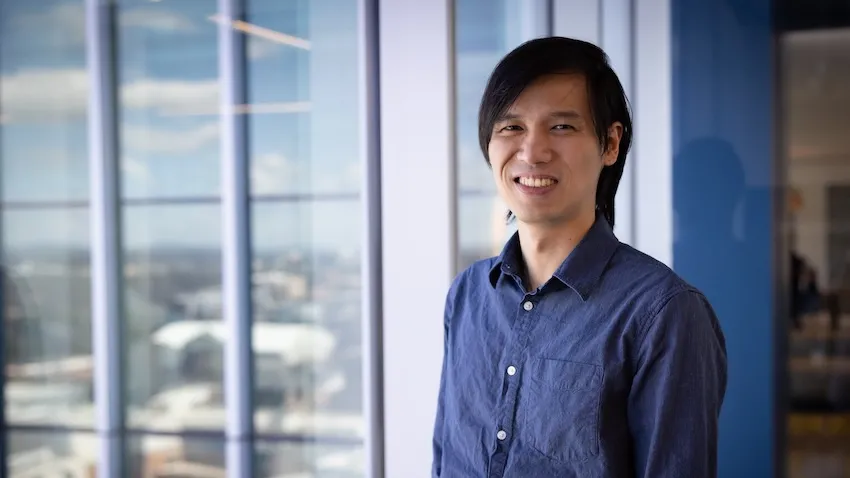
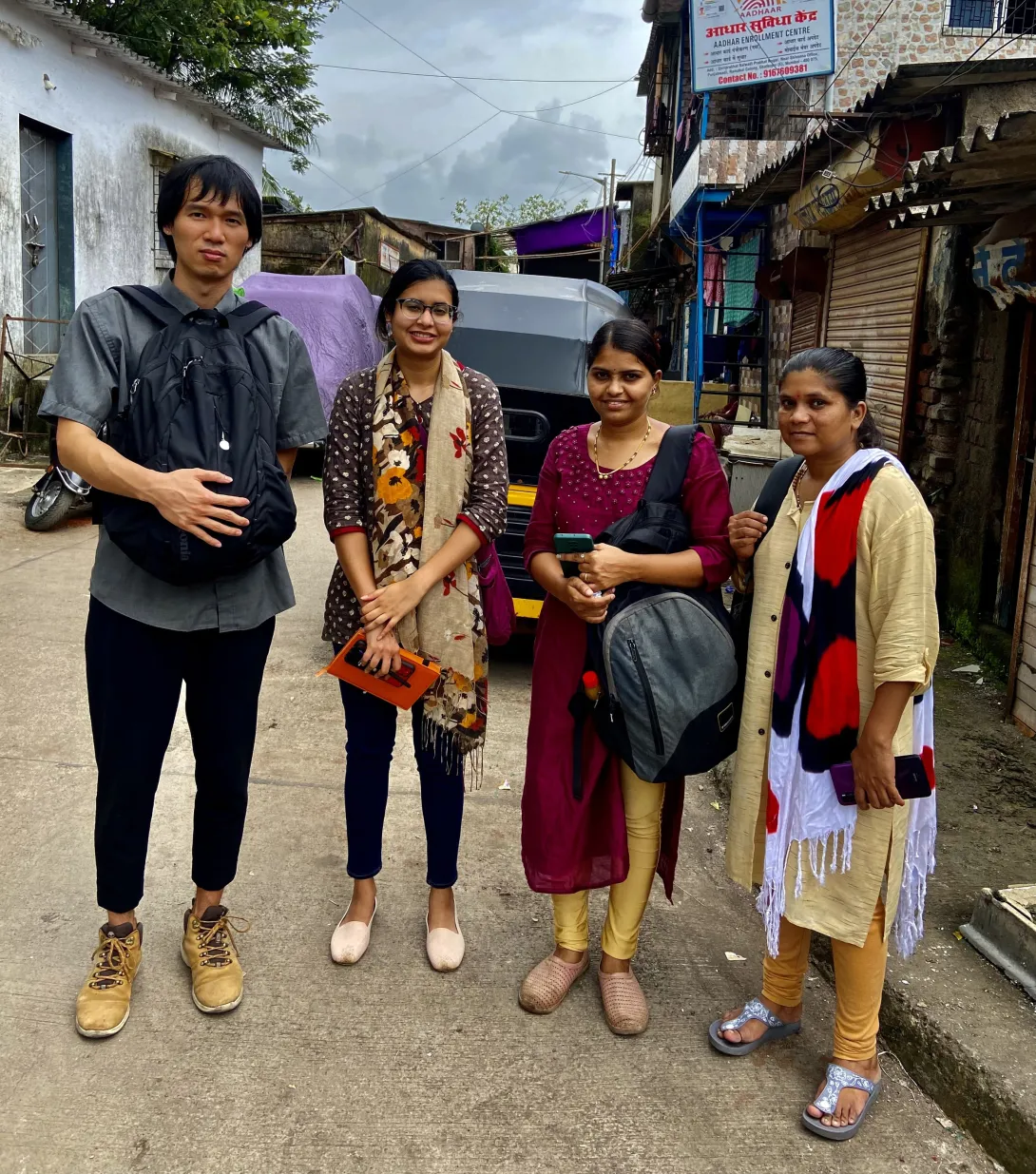
Schmidt Sciences has selected Kai Wang as one of 19 researchers to receive this year’s AI2050 Early Career Fellowship. In doing so, Wang becomes the first AI2050 fellow to represent Georgia Tech.
“I am excited about this fellowship because there are so many people at Georgia Tech using AI to create social impact,” said Wang, an assistant professor in the School of Computational Science and Engineering (CSE).
“I feel so fortunate to be part of this community and to help Georgia Tech bring more impact on society.”
AI2050 has allocated up to $5.5 million to support the cohort. Fellows receive up to $300,000 over two years and will join the Schmidt Sciences network of experts to advance their research in artificial intelligence (AI).
Wang’s AI2050 project centers on leveraging decision-focused AI to address challenges facing health and environmental sustainability. His goal is to strengthen and deploy decision-focused AI in collaboration with stakeholders to solve broad societal problems.
Wang’s method to decision-focused AI integrates machine learning with optimization to train models based on decision quality. These models borrow knowledge from decision-making processes in high-stakes domains to improve overall performance.
Part of Wang’s approach is to work closely with non-profit and non-governmental organizations. This collaboration helps Wang better understand problems at the point-of-need and gain knowledge from domain experts to custom-build AI models.
“It is very important to me to see my research impacting human lives and society,” Wang said. That reinforces my interest and motivation in using AI for social impact.”
[Related: Wang, New Faculty Bolster School’s Machine Learning Expertise]
This year’s cohort is only the second in the fellowship’s history. Wang joins a class that spans four countries, six disciplines, and seventeen institutions.
AI2050 commits $125 million over five years to identify and support talented individuals seeking solutions to ensure society benefits from AI. Last year’s AI2050 inaugural class of 15 early career fellows received $4 million.
The namesake of AI2050 comes from the central motivating question that fellows answer through their projects:
It’s 2050. AI has turned out to be hugely beneficial to society. What happened? What are the most important problems we solved and the opportunities and possibilities we realized to ensure this outcome?
AI2050 encourages young researchers to pursue bold and ambitious work on difficult challenges and promising opportunities in AI. These projects involve research that is multidisciplinary, risky, and hard to fund through traditional means.
Schmidt Sciences, LLC is a 501(c)3 non-profit organization supported by philanthropists Eric and Wendy Schmidt. Schmidt Sciences aims to accelerate and deepen understanding of the natural world and develop solutions to real-world challenges for public benefit.
Schmidt Sciences identify under-supported or unconventional areas of exploration and discovery with potential for high impact. Focus areas include AI and advanced computing, astrophysics and space, biosciences, climate, and cross-science.
“I am most grateful for the advice from my mentors, colleagues, and collaborators, and of course AI2050 for choosing me for this prestigious fellowship,” Wang said. “The School of CSE has given me so much support, including career advice from junior and senior level faculty.”
News Contact
Bryant Wine, Communications Officer
bryant.wine@cc.gatech.edu
Jan. 11, 2024

In 1950, Alan Turing asked, “Can machines think?” More than 70 years later, advancements in artificial intelligence are creating exciting possibilities and questions about its potential pitfalls.
A recent executive order issued by President Joe Biden seeks to establish "new standards for AI safety and security" while addressing consumer privacy concerns and promoting innovation. Georgia Tech experts have examined the key elements of the order and offer their thoughts on its scope and what comes next.
A Precautionary Tale
The order calls for the development of standards, tools, and tests to ensure the safe use of AI. From voice scams and phishing campaigns to larger-scale threats, the technology’s potential dangers have been widely documented. But Margaret Kosal, associate professor in the Ivan Allen College of Liberal Arts, says that additional context is often needed to dispel hysteria.
"No one is going to be hooking up AI to launch nuclear weapons, but AI capabilities may enable targeting, or enable the command and control and the decision-making time to be compressed,” she said.
The order will create an AI Safety and Security Board tasked with addressing critical threats. Companies developing foundation models that "pose a serious risk to national security, national economic security, or national public health and safety” will be required to notify the federal government when training the model and required to share the results of all red-team safety tests — a simulated cyberattack to test a system's defenses.
Since the launch of ChatGPT in 2022, a CNBC report details a 1,267% rise in phishing emails. Srijan Kumar, assistant professor in the College of Computing, attributes the increase to the technology's availability and an inability to rein in "bad actors."
He says these scams will only continue to get more sophisticated and personalized. They “can be created by knowing what you might be willing to fall prey to versus what I might fall prey to,” said Kumar, whose systems have influenced misinformation detection on sites like X (formerly Twitter) and Wikipedia. “AI is not going to autonomously do all of those bad things, but this order can ensure there are consequences for people who misuse it.”
A Delicate Balance
Building an AI platform requires large amounts of data regardless of its intended application. Two primary goals of the executive order are protecting privacy and advancing equity.
To protect personal data, the order tasks Congress with evaluating how agencies collect and use commercially available information and address algorithmic discrimination.
Acknowledging that everyone should be allowed to have their voice represented in the outputs of AI data sets, Deven Desai, associate professor in the Scheller College of Business, noted, "There are people who don't want to be part of data sets, which is their right, but this means their voices won't be reflected in the outputs.”
The order also includes sections to address intellectual property concerns among inventors and creators, though legal challenges will likely set new precedents in the years ahead.
When that time comes, Kosal says that defining “theft” in the context of AI becomes the true challenge and that, ultimately, money will play a significant role. "If you spit out a Harry Potter book and read it yourself, nobody will care. It's when you start selling it to make money, and you don't share proceeds with the original people, then it becomes an issue," she said.
What Does AI-Generated Mean?
The order instructs the Department of Commerce to develop guidelines for content authentication and watermarking to label AI-generated content. Desai questions what it means for something to be truly created by AI.
An important distinction lies between using AI to assist a writer in organizing their thoughts and using the technology to generate content. He likens the trend to the music industry in the 1980s.
"Synthesizers really changed people's ability to generate music and, for a while, people thought that was horrible. They can just program the music. They're not. I am still the human responsible for that music, or that article in this case, so what is the point of the label?" he asks.
As AI assistance becomes commonplace in content creation, trusting the source of information is increasingly important. Recently, articles published on Sports Illustrated's website featured AI-generated content provided by a third-party company that had used a machine to write the content and create fake bylines. Sports Illustrated, which may not have known of the problem, ran the material without disclosure to readers. CEO Ross Levinsohn was ousted shortly after the story broke.
“Perhaps if the third party had disclosed its use of AI software, SI would have been able to assess how much AI was used and then chosen not to run the material, or to run it with a disclaimer that AI helped write the material,” Desai said. "Of course, even if they label the content as AI-generated, a reader still won't know exactly how much of the content came from AI or a human.”
AI and the Workforce
As AI systems and models become more sophisticated, workers may become more concerned about being replaced. To counteract these concerns, the order calls for a study to examine AI’s potential impact on labor markets and investments in workforce training efforts.
Kumar compares the rise of AI to similar technological innovations throughout history and sees it as an opportunity for workers and industries to adapt. "It's less a matter of AI replacing workers and more of reskilling people to use the new technology. It's no different from when assembly lines in the auto industry were created."
Promoting Innovation and Competition
The power to harness the full potential of AI has initiated a race to the top. Desai believes that part of the executive order providing resources to smaller developers can help level the playing field.
"There is a possibility here for markets to open up. Current players using models that weren't built with transparency in mind might struggle, but maybe that's OK."
The issue of reliability and transparency comes into focus for Desai, especially as it relates to government usage of AI. The order calls on agencies to "acquire specified AI products and services faster, more cheaply, and more effectively through more rapid and efficient contracting."
When taxpayer dollars are at stake, government can’t afford to trust a technology it doesn’t fully understand — a topic Desai has explored elsewhere. "You can’t just say, ‘We don’t know how it works, but we trust it.’ That’s not going to work. So that’s where there may be a slowdown in the government’s ability to use private sector software if they can’t explain how the thing works and to show that it doesn’t have discriminatory issues.”
What's Next
Promoting and policing the safe use of AI cannot be done independently. Georgia Tech experts agree that participation on a global scale is necessary. To that end, the European Union will unveil its comprehensive EU AI Act, which includes a similar framework to the president's executive order.
Due to the evolving nature of AI, the executive order or the EU's actions will not be all-encompassing. Law often lags behind technology, but Kosal points out that it's crucial to think beyond what currently exists when crafting policy.
Experts also agree that AI cannot be regulated or governed through a single document and that this order is likely the first in a series of policymaking moves. Kosal sees tremendous opportunity with the innovation surrounding AI but hopes the growing fear of its rise does not usher in another AI winter, in which interest and research funding fade.
News Contact
Steven Gagliano - Institute Communications
Dec. 20, 2023
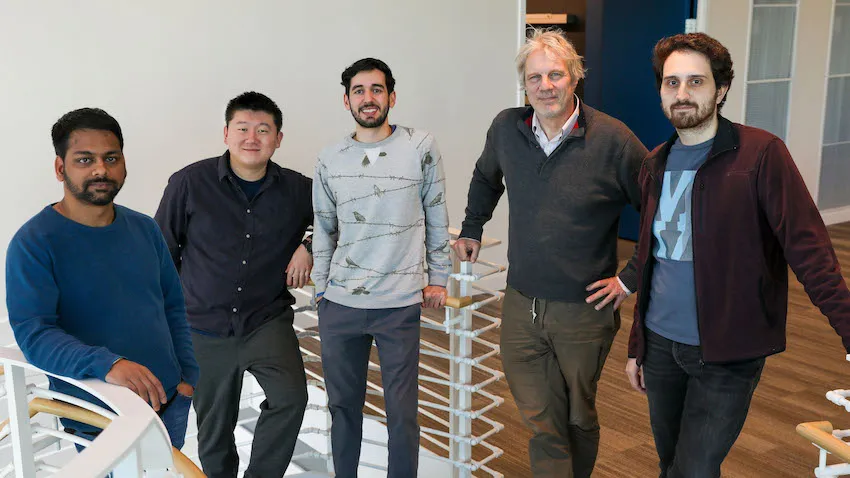
A new machine learning method could help engineers detect leaks in underground reservoirs earlier, mitigating risks associated with geological carbon storage (GCS). Further study could advance machine learning capabilities while improving safety and efficiency of GCS.
The feasibility study by Georgia Tech researchers explores using conditional normalizing flows (CNFs) to convert seismic data points into usable information and observable images. This potential ability could make monitoring underground storage sites more practical and studying the behavior of carbon dioxide plumes easier.
The 2023 Conference on Neural Information Processing Systems (NeurIPS 2023) accepted the group’s paper for presentation. They presented their study on Dec. 16 at the conference’s workshop on Tackling Climate Change with Machine Learning.
“One area where our group excels is that we care about realism in our simulations,” said Professor Felix Herrmann. “We worked on a real-sized setting with the complexities one would experience when working in real-life scenarios to understand the dynamics of carbon dioxide plumes.”
CNFs are generative models that use data to produce images. They can also fill in the blanks by making predictions to complete an image despite missing or noisy data. This functionality is ideal for this application because data streaming from GCS reservoirs are often noisy, meaning it’s incomplete, outdated, or unstructured data.
The group found in 36 test samples that CNFs could infer scenarios with and without leakage using seismic data. In simulations with leakage, the models generated images that were 96% similar to ground truths. CNFs further supported this by producing images 97% comparable to ground truths in cases with no leakage.
This CNF-based method also improves current techniques that struggle to provide accurate information on the spatial extent of leakage. Conditioning CNFs to samples that change over time allows it to describe and predict the behavior of carbon dioxide plumes.
This study is part of the group’s broader effort to produce digital twins for seismic monitoring of underground storage. A digital twin is a virtual model of a physical object. Digital twins are commonplace in manufacturing, healthcare, environmental monitoring, and other industries.
“There are very few digital twins in earth sciences, especially based on machine learning,” Herrmann explained. “This paper is just a prelude to building an uncertainty aware digital twin for geological carbon storage.”
Herrmann holds joint appointments in the Schools of Earth and Atmospheric Sciences (EAS), Electrical and Computer Engineering, and Computational Science and Engineering (CSE).
School of EAS Ph.D. student Abhinov Prakash Gahlot is the paper’s first author. Ting-Ying (Rosen) Yu (B.S. ECE 2023) started the research as an undergraduate group member. School of CSE Ph.D. students Huseyin Tuna Erdinc, Rafael Orozco, and Ziyi (Francis) Yin co-authored with Gahlot and Herrmann.
NeurIPS 2023 took place Dec. 10-16 in New Orleans. Occurring annually, it is one of the largest conferences in the world dedicated to machine learning.
Over 130 Georgia Tech researchers presented more than 60 papers and posters at NeurIPS 2023. One-third of CSE’s faculty represented the School at the conference. Along with Herrmann, these faculty included Ümit Çatalyürek, Polo Chau, Bo Dai, Srijan Kumar, Yunan Luo, Anqi Wu, and Chao Zhang.
“In the field of geophysics, inverse problems and statistical solutions of these problems are known, but no one has been able to characterize these statistics in a realistic way,” Herrmann said.
“That’s where these machine learning techniques come into play, and we can do things now that you could never do before.”
News Contact
Bryant Wine, Communications Officer
bryant.wine@cc.gatech.edu
Dec. 11, 2023

Crime rates have dropped following a collaboration between Georgia Tech and the city of Warner Robins, Georgia, that uses a mobile camera platform paired with data-driven, AI guided placement. This video shows how that project works.
Areas of a middle Georgia city have experienced a 20% reduction in crime after deploying a system of mobile cameras guided by an algorithm developed by Georgia Tech researchers.
The system is being piloted in Warner Robins, Georgia. It uses artificial intelligence to sift through years of historical crime data to predict where future crimes are likely to happen, and by placing cameras that can read license plates in those areas, a three-month test period shows the community has been able to prevent some of those crimes.
“The fact that we have our cameras in different areas in our city, that smart technology expands the footprint of our police department which helps us solve crime and also helps deter crime, which is even more beneficial,” said Warner Robins Mayor LaRhonda Patrick.
For cities and counties with limited resources, it’s a tool that could bring more impact with the money and equipment that is already being used to reduce crime.
Georgia Tech’s John Taylor, a professor in the School of Civil and Environmental Engineering, says, “When we were brought in, there was a general belief that crimes were really occurring in certain parts of the city, but as we looked at the crimes from week to week, we saw that they're actually moving around the city.”
The work is part of Georgia Tech’s Partnership for Inclusive Innovation, a public-private initiative that catalyzes innovation for shared economic prosperity. It invests in projects that join researchers with communities to bring advanced technologies to build local capacity and improve the human condition.
Over the three months, researchers saw a reduction in crimes such as assault and burglary. Georgia Tech is helping the city deploy a more equitable solution in using cameras to fight crime and helping extend the city’s budget and its police officers’ work to make their community safer.
News Contact
Blair Meeks
Nov. 29, 2023
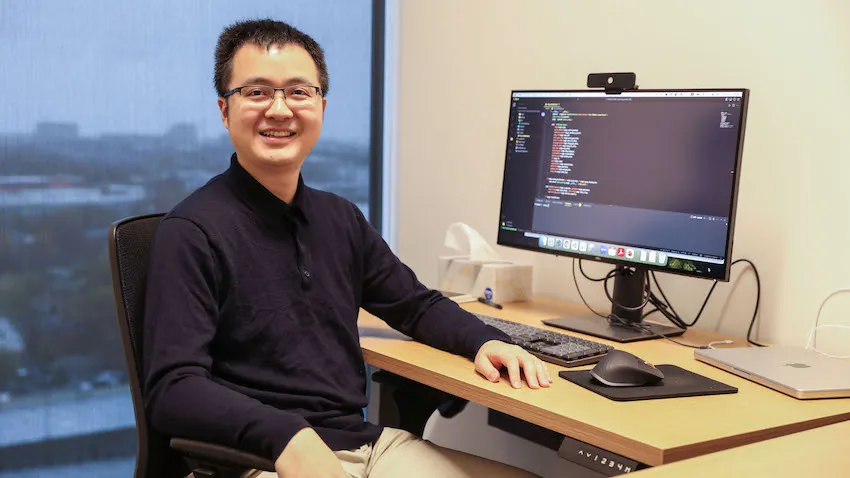
The National Institute of Health (NIH) has awarded Yunan Luo a grant for more than $1.8 million to use artificial intelligence (AI) to advance protein research.
New AI models produced through the grant will lead to new methods for the design and discovery of functional proteins. This could yield novel drugs and vaccines, personalized treatments against diseases, and other advances in biomedicine.
“This project provides a new paradigm to analyze proteins’ sequence-structure-function relationships using machine learning approaches,” said Luo, an assistant professor in Georgia Tech’s School of Computational Science and Engineering (CSE).
“We will develop new, ready-to-use computational models for domain scientists, like biologists and chemists. They can use our machine learning tools to guide scientific discovery in their research.”
Luo’s proposal improves on datasets spearheaded by AlphaFold and other recent breakthroughs. His AI algorithms would integrate these datasets and craft new models for practical application.
One of Luo’s goals is to develop machine learning methods that learn statistical representations from the data. This reveals relationships between proteins’ sequence, structure, and function. Scientists then could characterize how sequence and structure determine the function of a protein.
Next, Luo wants to make accurate and interpretable predictions about protein functions. His plan is to create biology-informed deep learning frameworks. These frameworks could make predictions about a protein’s function from knowledge of its sequence and structure. It can also account for variables like mutations.
In the end, Luo would have the data and tools to assist in the discovery of functional proteins. He will use these to build a computational platform of AI models, algorithms, and frameworks that ‘invent’ proteins. The platform figures the sequence and structure necessary to achieve a designed proteins desired functions and characteristics.
“My students play a very important part in this research because they are the driving force behind various aspects of this project at the intersection of computational science and protein biology,” Luo said.
“I think this project provides a unique opportunity to train our students in CSE to learn the real-world challenges facing scientific and engineering problems, and how to integrate computational methods to solve those problems.”
The $1.8 million grant is funded through the Maximizing Investigators’ Research Award (MIRA). The National Institute of General Medical Sciences (NIGMS) manages the MIRA program. NIGMS is one of 27 institutes and centers under NIH.
MIRA is oriented toward launching the research endeavors of young career faculty. The grant provides researchers with more stability and flexibility through five years of funding. This enhances scientific productivity and improves the chances for important breakthroughs.
Luo becomes the second School of CSE faculty to receive the MIRA grant. NIH awarded the grant to Xiuwei Zhang in 2021. Zhang is the J.Z. Liang Early-Career Assistant Professor in the School of CSE.
[Related: Award-winning Computer Models Propel Research in Cellular Differentiation]
“After NIH, of course, I first thanked my students because they laid the groundwork for what we seek to achieve in our grant proposal,” said Luo.
“I would like to thank my colleague, Xiuwei Zhang, for her mentorship in preparing the proposal. I also thank our school chair, Haesun Park, for her help and support while starting my career.”
News Contact
Bryant Wine, Communications Officer
bryant.wine@cc.gatech.edu
Apr. 05, 2023
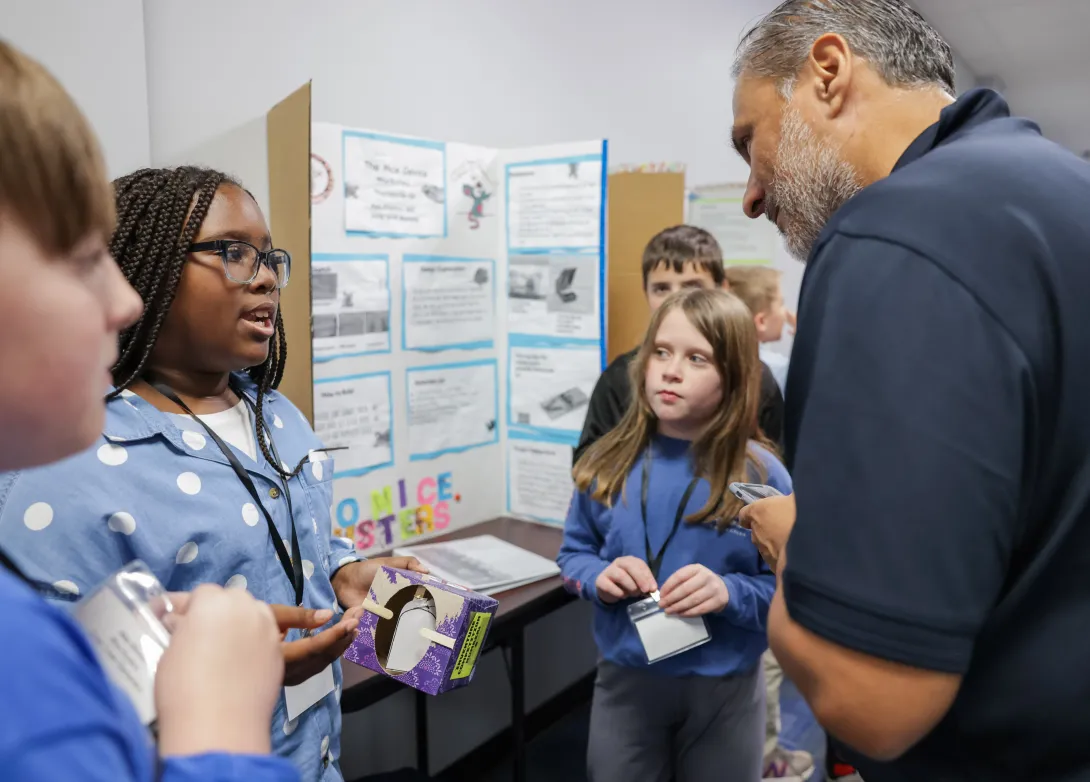
Students in Thomasville, Ga. explain their invention to a competition judge as a part of Georgia Tech’s expanding K-12 InVenture Prize program.
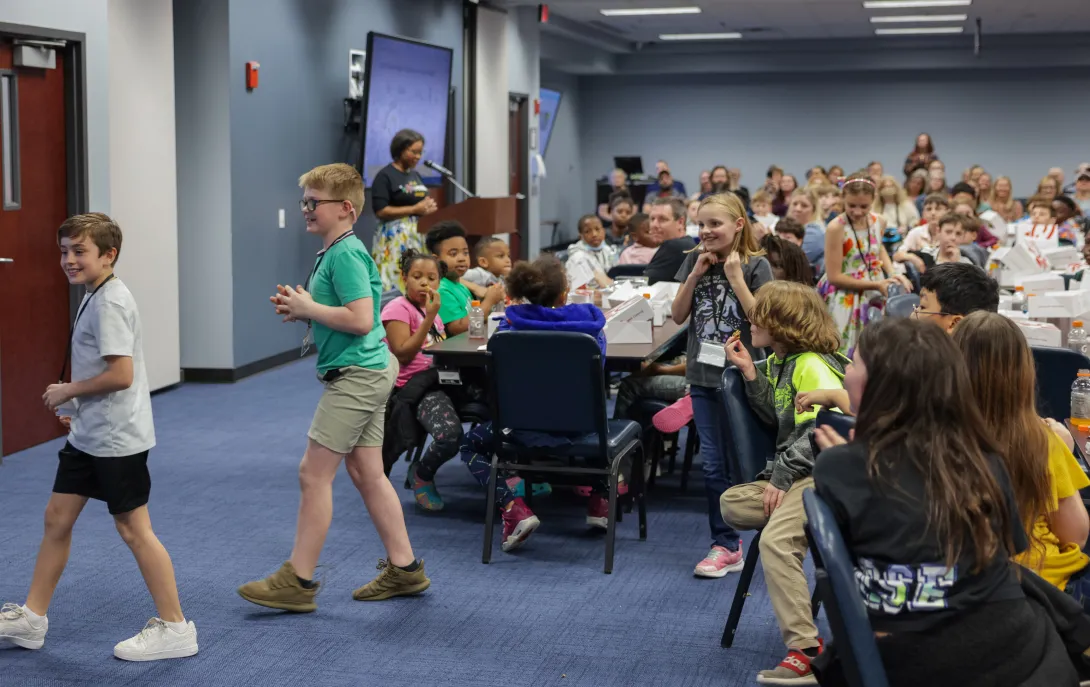
Students in Thomasville, Ga. present their own inventions as a part of Georgia Tech’s expanding K-12 InVenture Prize competition program.
Georgia Institute of Technology’s Center for Education Integrating Science, Mathematics, and Computing (CEISMC) is at the center of a new statewide initiative combining artificial intelligence and manufacturing innovations with transformational workforce development and K-12 outreach. The Georgia Artificial Intelligence Manufacturing Corridor project (Georgia AIM) is supported by a record-shattering $65 million grant Georgia Tech received in September 2022 from the U.S. Department of Commerce’s Economic Development Administration.
Georgia AIM will support a total of nine inter-related projects throughout the state and is designed to increase job and wage opportunities in distressed and rural communities and among historically underrepresented and underserved people. Georgia AIM targets rural residents, women, Black, Indigenous and People of Color (BIPOC), those living with disabilities, and veterans — groups historically underrepresented in manufacturing. Through innovation, collaboration, education, and participation, Georgia AIM will provide the tools and knowledge to empower these communities to participate fully in a diverse AI manufacturing workforce.
“Many people have preconceived notions about manufacturing and may not be able to see how they could possibly connect to it," said Roxanne Moore, Woodruff School of Mechanical Engineering’s senior research engineer and director of CEISMC’s K-12 InVenture Prize program. “What they may not realize is that manufacturing is what brings new ideas to life. AI is rapidly reshaping the manufacturing industry and changing the landscape for job opportunities. The work that we are doing will position Georgia to lead the nation into the future of AI and manufacturing.”
Moore explains that through Georgia AIM, CEISMC will expand its K-12 InVenture Prize invention and entrepreneurship program to collaborate with school districts and businesses in Southwest Georgia, Southeast Georgia and Northeast Georgia. The initiative will expand on existing partnerships Georgia Tech has established with technical colleges and minority-serving institutions.
The project will reach at least 1,000 K-12 students and 100 teachers from underserved areas, with a focus on rural communities via existing programs at Georgia Tech, other nonprofits, the Technical College System of Georgia, the Southwest Georgia Regional Commission, local manufacturers, and K-12 school leaders, Moore said.
“We need to illustrate the powerful relationships between innovation, entrepreneurship, and manufacturing so that students can see how ideas come to life and how they can improve their communities,” said Moore. “It is my hope that these regional ecosystems become a role model for how educational institutions can support each other in expanding access to high-quality STEM experiences for diverse students who typically are not empowered to create their futures.”
As part of Georgia AIM, CEISMC will also expand its offerings through partnerships with the institute’s GoSTEM program to better serve Latino populations. GoSTEM is a collaborative partnership at Georgia Tech between CEISMC and Institute Diversity, Equity and Inclusion (IDEI). Its mission is to promote STEM academic achievement and college attendance among Latino and other cultural and linguistic minority K-12 students. Plans include translating existing invention and entrepreneurship curriculum into Spanish, adding lessons to the curriculum on AI and manufacturing, assisting with the development of regionally focused curricula, and expanding training and events to make them more inclusive.
“Our goal is to make invention education accessible to everyone in the state, especially those who may have been previously left out of the conversation,” said Danyelle Larkin, educational outreach manager with CEISMC. “By going into more rural areas of the state and working to develop multi-lingual curricula that is focused on the needs of the region, we hope to serve as a national model for how to accelerate the transition to automation in manufacturing while diversifying the next generation of AI leadership.
Additional Georgia AIM expansion plans for CEISMC and K-12 InVenture Prize include supporting an existing high school entrepreneurship program in Fitzgerald and working with Albany State University to host teacher workshops, support local schools, and host regional competitions with a focus on inventiveness and the entrepreneurial mindset.
"The overall goal of Georgia AIM is to establish the United States as a leader in AI manufacturing while making sure that these systems complement rather than replace existing workers,” Larkin said. “The work that we are doing in CEISMC plays an integral role in Georgia AIM with our specific expertise in weaving invention education and entrepreneurship into K-12 classrooms and connecting with diverse communities. This huge grant gives us a chance to amplify our work and bring even more people into the AI conversation. It’s about building a better, more equitable future for the people of Georgia.”
—Randy Trammell, CEISMC Communications
Mar. 30, 2023

After five attempts and a corporate career stint, Richard Lee finally founded his own startup. He took advantage of the CREATE-X summer startup incubator, Startup Launch, as a student and can now call himself a successful entrepreneur.
His first company that came out of Startup Launch produced his pants-fitting software. That lasted four months. Then, he co-founded a company that was Google Photos before Google Photos was a thing. Then it became a thing.
Taking his failures as an opportunity to go another route, Lee co-founded a local travel guide app, a college community software for hackathons, and solo-preneur software. With each company, he learned a little more, following the Startup Launch spirit of producing quickly, risking failure, and then iterating until he built a startup that worked.
Together with fellow Georgia Tech graduate Timothy Min and former co-worker William King from the design firm Maven, Lee co-founded Supercopy. He said the idea came up as he and his fellow co-founders struggled with marketing. They weren't able to tailor their messaging effectively to specific audiences.
“If the messaging doesn’t resonate, it doesn’t matter,” he said. “We’re also guilty of this. We also write emails that nobody opens.”
The group has run Supercopy for the past eight months. Last year, they started using the OpenAI language model GPT-3 to prove out concepts. Doing so helped the team learn quickly about what works and doesn’t. One thing they learned was that AI would provide the answer you’re looking for, not necessarily what your audience is looking for.
“AI solves a lot of problems, but it also creates a lot of its own problems,” Lee said. “A majority of the market thinks that marketing is just creating content. If [people] don’t like you and you keep on sending them stuff, and it’s more stuff that they don’t like, you’re just creating a negative feedback loop.”
Now Lee and his co-founders are using their company to help marketers sit down and think deeply about who their audience is, then craft copy.
“We want to make content that makes sense for your audience,” he said. “We want 100% personalized content, so that when people read it, they feel listened to.”
At Georgia Tech, Lee studied electrical and computer engineering but spent his free time in the entrepreneurship spaces on campus. He got involved in GT Startup Exchange and the Student Innovation Design Collaborative. He took Startup Lab to learn more about creating a business and Idea to Prototype to create a product. He also attended CREATE-X workshops. Then, in the summer of 2015, Lee became part of the second cohort of Startup Launch.
“I think everyone came with the same focus,” Lee said. “How do startups work? Do I see a future in it? If things didn’t work, then what can I improve?”
In the program, Lee said he built confidence. The fact that CREATE-X invested actual dollars was a big factor, since it helped them buy things they needed. In the program, teams create viable startups during 12 weeks in the summer. They receive $5,000 in seed funding and $30,000 of in-kind services such as legal support and credits between Stripe, Notion, and AWS. In addition, he and his team members had coaches who guided them to think deeply in the process.
Lee found the experience so inspiring that he applied for a second time, participated in it for the 2021 cohort, and then came back to coach in the 2022 program after he graduated. Talking to other founders also kept his passion ignited, as they pursued startups even when their livelihoods were secure.
“I think that was a big incentive for me,” said Lee “The more value I give, the more I feel like I’m getting out of it.”
Lee keeps in contact with his cohort.They give each other advice and swap stories, commiserating on the struggles and celebrating the successes of the startup journey. Some are even his fellow coaches in Startup Launch.
“It’s interesting to see how we evolved as startup founders over the last few years. Later on, those are essentially your friends in the community, people you can talk to about difficult things,” Lee said.
So far, things are looking good for Supercopy. Auburn University became its first enterprise customer and CREATE-X will also use Supercopy software. The company is continuing to expand, with more opportunities coming in the future.
Looking back on his CREATE-X experience, Lee wishes he’d mocked up his product more quickly and started selling earlier but also thinks it was great to start in college. There were fewer obligations, he learned the landscape of creating startups, and he became a part of a community of founders. Ultimately, he says, CREATE-X gave him the support to try.
Rahul Saxena, director of CREATE-X, said that the organization was happy to support Lee in his journey of trial and error.
“Richard and his team exemplify what we encourage students to do in Launch,” said Saxena. “They kept trying. They found a problem to solve, went out to ask people about it, and made a product that serves customers what they need. I’m happy Richard came back to coach new cohorts in doing the same.”
News Contact
Breanna Durham
CREATE-X Marketing Strategist