
Dec. 11, 2025
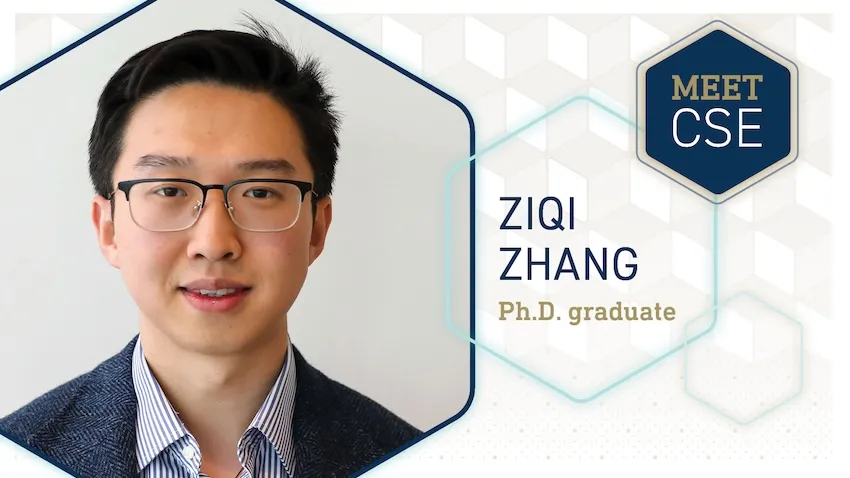
Ph.D. student Ziqi Zhang has built a career blending machine learning with single-cell biology. His work helps scientists study cellular mechanisms that advance disease research and drug development.
Though decorated with awards and appearances in leading journals, Zhang will achieve his greatest accomplishment tonight at McCamish Pavilion. He will join the Class of 2025 in walking across the stage, receiving diplomas, and graduating from Georgia Tech.
Before he “gets out” of Georgia Tech, we interviewed Zhang to learn more about his Ph.D. journey and where his degree will take him next.
Graduate: Ziqi Zhang
Research Interests: Machine learning, foundational models, cellular mechanisms, single-cell gene sequencing, gene regulatory networks
Education: Ph.D. in Computational Science and Engineering
Faculty Advisor: School of CSE J.Z. Liang Early-Career Associate Professor Xiuwei Zhang
What persuaded you to study at Georgia Tech?
I chose Georgia Tech because it is one of the top engineering institutions in the United States, known for its strength in machine learning and data science. The university offers exceptional research resources and the opportunity to work with leading scholars in my field. Georgia Tech also has very good research infrastructure. The Coda Building is one of the most well-designed and productive research environments I have experienced. Having access to such a space has been a genuine privilege.
How has working on your CSE degree helped you so far in your career?
Working toward my CSE degree has been instrumental in my career development. As an interdisciplinary program, CSE has equipped me with strong computational skills while also deepening my understanding of key application domains. This breadth of training has opened more opportunities during my job and internship searches. In addition, CSE community events, such as HotCSE, the weekly coffee hour, and faculty recruiting activities, have helped me strengthen my scientific communication skills, which are essential for my long-term career growth.
What research project from Georgia Tech are you most proud of?
My favorite research project was scMoMaT, a matrix tri-factorization algorithm for single-cell data integration. I invested a significant amount of time and effort into this work, iterating on the model many times. I’m very proud that it ultimately evolved into a clean, robust, and elegant algorithm.
What advice would you give someone interested in graduate school?
It is important to find an advisor who is supportive and genuinely invested in your career development. A Ph.D. is not an easy journey, and you will inevitably encounter challenges along the way. Having an advisor who can provide thoughtful guidance and dedicated mentorship is one of the most crucial factors in helping you navigate those difficulties.
What is your most favorite memory from Georgia Tech?
CSE’s new student campus visit day every year was one of my favorite times of the year. It was always fun to meet new people, have good food, and enjoy the beautiful view from the Coda rooftop.
What are your plans after graduation?
I plan to keep working in academia after graduation. I’m on the job hunt, currently applying for positions and preparing for interviews.
News Contact
Bryant Wine, Communications Officer
bryant.wine@cc.gatech.edu
Dec. 10, 2025

Proteins, including antibodies, hemoglobin, and insulin, power nearly every vital aspect of life. Breakthroughs in protein research are producing vaccines, resilient crops, bioenergy sources, and other innovative technologies.
Despite their importance, most of what scientists know about proteins only comes from a small sample size. This stands in the way of fully understanding how most proteins work and unlocking their full potential.
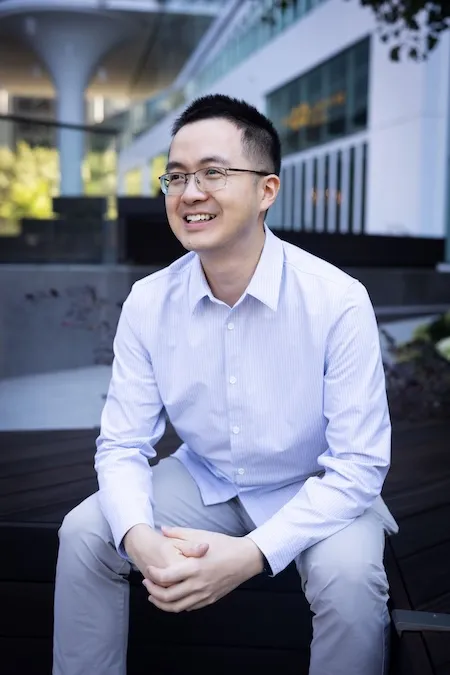
Georgia Tech’s Yunan Luo believes artificial intelligence (AI) could fill this knowledge gap. The National Science Foundation agrees. Luo is the recipient of an NSF Faculty Early Career Development (CAREER) award.
“So much of biology depends on knowing what proteins do, but decades of research have concentrated on a relatively small set of well-studied proteins. This imbalance in scientific attention leads to a distorted view of the biological landscape that quietly shapes our data and our algorithms,” Luo said.
“My group’s goal is to build machine learning (ML) models that actively close this gap by generating trustworthy function predictions for the many proteins that remain understudied.”
[Related: Yunan Luo to use AI for Protein Design and Discovery with Support of $1.8 Million NIH Grant]
In his proposal to NSF, Luo coined this rich-get-richer effect “annotation inequality.”
One problem of annotation inequality is that it slows progress in disease prognosis, drug discovery, and other critical biomedical areas. It is challenging to innovate the few proteins that scientists already know so much about.
A cascading effect of annotation inequality is that it diminishes the effectiveness of studying proteins with AI.
AI methods learn from existing experimental data. Datasets skewed toward well-known proteins propagate and become entrenched in models. Over time, this makes it harder for computers to research understudied proteins.
“Protein annotation inequality creates an effect analogous to a vast library where 95% of patrons only read the top 5% popular books, leaving the rest of the collection to gather dust,” Luo said.
“This has resulted in knowledge disparities across proteins in current literature and databases, biasing our understanding of protein functions.”
The NSF CAREER award will fund Luo with over $770,000 for the next five years to tackle head-on the problem of protein annotation inequality.
Luo will use the grant to build an accurate, unbiased protein function prediction framework at scale. His project aims to:
- Reveal how annotation inequality affects protein function prediction systems
- Create ML techniques suited for biological data, which is often noisy, incomplete, and imbalanced
- Integrate data and ML models into a scalable framework to accelerate discoveries involving understudied proteins
More enduring than the ML framework, Luo will leverage the NSF award to support educational and outreach programs. His goal is to groom the next generation of researchers to study other challenges in computational biology, not just the annotation inequality problem.
Luo teaches graduate and undergraduate courses focused on computational biology and ML. Problems and methods developed through the CAREER project can be used as course material in his classes.
Luo also championed collaboration with Georgia Tech’s Center for Education Integrating Science, Mathematics, and Computing (CEISMC) in his proposal.
Through this partnership, local high school teachers and students would gain access to his data and models. This promotes deeper learning of biology and data science through hands-on experience with real-world tools.
Luo sees reaching students and the community as a way of paying forward the support he received from Georgia Tech colleagues.
“I am incredibly grateful for this recognition from the NSF,” said Luo, an assistant professor in the School of Computational Science and Engineering (CSE).
“This would not have been possible without my students and collaborators, whose hard work laid the groundwork for this proposal.”
Luo praised CSE faculty members B. Aditya Prakash, Xiuwei Zhang, and Chao Zhang for their guidance. All three study machine learning and computational bioscience, two of CSE’s five core research areas.
Luo also thanked Haesun Park for her support and recommendation for the CAREER award. Park is a Regents’ Professor and the chair of the School of CSE.
News Contact
Bryant Wine, Communications Officer
bryant.wine@cc.gatech.edu
Nov. 21, 2025

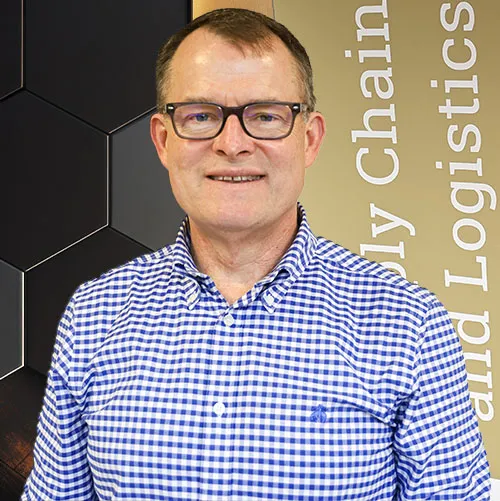
By Chris Gaffney, Managing Director, Georgia Tech Supply Chain and Logistics Institute | Supply Chain Advisor | Former Executive at Frito-Lay, AJC International, and Coca-Cola
In today's supply chain environment, the pace and scale of change are no longer episodic — they are constant. Network redesigns, automation investments, digital transformation, new product and business models, shifting customer expectations, cost pressure, and talent dynamics all converge at once.
Here is the most direct insight I can offer — and one I have come to believe deeply through experience:
“If you want your organization, automation, or Digital/AI investments to pay off, change management is not optional. It is the highest-leverage point of failure or success.”
Despite decades of innovation, the uncomfortable truth is that most large-scale supply chain transformations still fall short. According to a recent Bain survey, 70% of major transformations fail to meet their objectives — a number that has remained stubbornly consistent over time. The reasons vary, but the most common root cause is not the technology — it’s the people side of the change.
This is why change management must be treated as a leadership discipline at the center of supply chain excellence. And it is why this topic continues to rise in conversations I have with industry partners, consulting clients, and the students entering the field.
Where I First Learned the Power of Change Leadership
This isn’t an abstract subject for me — it is something I experienced in my career. When I worked at The Coca-Cola Company, the business went through multiple waves of transformation over a 10–15 year period: acquisitions and integrations, major information-system deployments, shifts in the beverage portfolio, and cultural changes as carbonated soft drink growth slowed.
As the company diversified into new beverage categories, the economics shifted and productivity expectations rose. The technical challenges were significant, but what stood out to me was this:
“The difference between transformations that succeeded and those that stalled was how effectively people were brought into the change — how well they understood it, aligned with it, and adapted to it.”
Strong technical designs struggled if people weren’t aligned. But “good enough” solutions thrived when the organization invested in communication, role clarity, and capability-building.
Later in my career, during my time as President of Coca-Cola Supply, we made one of the most durable leadership investments I’ve ever seen: certifying the entire organization in the Coca-Cola change model. Many of those leaders still apply the same principles today — 15 to 20 years later — because the skills became part of how they led, not something they had to remember.
That experience shaped how I see change leadership today.
What Today’s Supply Chain Landscape Is Telling Us
Across industries — and especially across complex supply chains — the same patterns repeat.
WMS and automation vendors now budget change management into implementation plans. They’ve learned that even well-designed systems fail if associates fear job loss or can’t visualize the “after” state of their work.
Consulting firms see adoption challenges as the biggest barrier to client success. A firm we taught recently added change management to their executive education curriculum because their teams saw change gaps in almost every engagement. Months later, that module remains the highest-value part of the course.
Network design firms observe cultural resistance across geographies. Even optimized solutions don’t transfer cleanly from one region to another. Culture, norms, and expectations matter — often more than the math.
Robotics and automation projects fail for people reasons, not engineering reasons. At the recent RoboGeorgia Forum, the keynote emphasized that a surprising percentage of large automation investments fail because of unclear roles, resistance, weak communication, and fear — not limitations in the technology.
AI adoption mirrors these challenges. According to a recent McKinsey Global AI survey, only one-third say they are scaling AI enterprise-wide, and just 39% report measurable EBIT impact. The survey reinforces that even when technology works, the real barrier is organizational readiness — leadership alignment, redesigned processes, clear governance, and a reskilled workforce — not model performance.
There is also strong evidence showing that when change leadership is done well, project outcomes dramatically improve. In a benchmarking study of more than 2,600 initiatives, Prosci found that 88% of projects with excellent change management met or exceeded their objectives, compared with only 13% of those with poor change management. Projects with excellent change management were also 5 times more likely to stay on or ahead of schedule and 1.5 times more likely to stay on or under budget. These findings reinforce a simple truth: effective change leadership is directly correlated with higher performance, better adoption, and faster time to value.
Put simply:
“Technical innovation moves faster than organizational adoption — and the gap costs time, money, and credibility.”
Why We Still Struggle With Change, Even Though We “Know Better”
Here's where a critical-thinking lens helps:
- We have 50 years of research on how change works.
- We have widely used models.
- We have entire consulting practices devoted to change.
- And most leaders have lived through multiple transformations.
So why does the gap persist?
Leaders confuse technical readiness with organizational readiness. A strong design doesn’t guarantee strong adoption.
Self-interest is underestimated. Logic rarely moves people. Personal impact does.
Urgency pressures force shortcuts. Go-live dates push leaders to cut corners on communication, training, and role clarity — the exact things that prevent failure.
Leaders assume operations teams “will adjust.” This is the most common miscalculation. Operational excellence does not automatically translate to change readiness.
These points explain the paradox: even experienced leaders underestimate the work of leading people through change.
The Two Leading Change Management Models: Kotter and ADKAR
Dozens of frameworks exist, but two stand clearly above the rest in terms of use, validation, and practical effectiveness in modern supply chain and technology environments: Kotter’s 8-Step Process and the Prosci ADKAR model.
Frameworks like Kotter and ADKAR are powerful, but they don't replace judgment. Real change leadership requires applying these tools with situational awareness, not following them mechanically.
Kotter’s 8 Steps focus on organization-wide transformation:
- Create a sense of urgency: Show why change is necessary and the potential consequences of not changing.
- Build a guiding coalition: Assemble a team with enough power and influence to lead the change effort and encourage teamwork.
- Form a strategic vision: Develop a clear vision for the future and strategies to achieve it, making it clear how things will be different.
- Communicate the change vision: Widely and often communicate the vision to get buy-in and inspire action from others.
- Empower broad-based action: Remove obstacles and barriers, such as outdated processes or resistant individuals, to enable employees to act on the vision.
- Generate short-term wins: Plan for and celebrate early successes to build momentum and prove that progress is being made.
- Consolidate gains and build on the change: Use the credibility from initial wins to tackle larger, more complex changes, and don't declare victory too early.
- Anchor new approaches in the culture: Reinforce the new behaviors, processes, and practices until they become a permanent part of the organization's culture.
ADKAR focuses on individual adoption:
- Awareness – Of the need for change
- Desire – To Participate and support the change
- Knowledge – On how to change
- Ability – To implement required skills and behaviors
- Reinforcement – To sustain the change
The synthesis:
Kotter shows leaders how to orchestrate change.
ADKAR shows leaders how to scale it through people.
Supply chain leaders benefit from understanding both.
What Supply Chain Leaders Can Do on Monday
A practical call to action for building your own change leadership muscle:
1. Run a 15-minute clarity check with your team.
Ask:
- What change is coming?
- Why is it happening?
- Who will feel it most?
- What might they fear losing?
2. Identify the two individuals most affected by the change.
Ask:
- What will their new day actually look like?
- What one action can support them?
3. Choose one communication habit and make it consistent.
Options include:
- A Friday “What’s coming next” email
- A weekly dashboard
- A Monday 10-minute huddle
4. Map one current project against Kotter or ADKAR.
- Pick a project already underway.
- Identify the missing step.
- Strengthen it.
5. Model the behaviors you want to see.
- Be the first adopter.
- Be transparent.
- Be steady.
A Personal Reflection (Full Circle)
Looking back at my time at Coca-Cola Supply, the decision to certify the entire organization in change leadership stands out as one of the smartest investments we made. It gave us a shared language and a shared discipline for supporting people through transformation.
Fifteen to twenty years later, I still see those leaders applying those principles instinctively. That’s what happens when change management becomes part of a leadership culture — a natural reflex, not a task.
My hope is that every supply chain professional, whether student or senior leader, will build this capability. Because:
“Technology will keep evolving. People will remain the center of every transformation.”
Final Thought: “Says Easy, Does Hard” — But Always Worth It
Supply chains do not succeed because of perfect plans or flawless systems. They succeed because the people who operate them understand the change, believe in it, and are supported through it.
This is a muscle worth building. And it’s one that lasts.
If You Need Support — We’re Here to Help
If your organization is navigating a transformation and wants support building these capabilities, please reach out to us at the Georgia Tech Supply Chain and Logistics Institute (SCL). We are actively working with companies across Georgia and beyond, sharing what we’ve learned and offering short, practical workshops on change leadership for supply chain teams. We’re always happy to help organizations strengthen this essential muscle.
Oct. 27, 2025

By Chris Gaffney, Managing Director, Georgia Tech Supply Chain and Logistics Institute | Supply Chain Advisor | Former Executive at Frito-Lay, AJC International, and Coca-Cola
The Moment That Changed How I Listen
When I chaired the National Product Supply Group at Coca-Cola, one of our most respected board members was Jeff Edwards. Jeff had decades of experience and commanded respect without ever seeking attention. In a four-hour meeting, Jeff might speak two or three times—never more. But when he did, everyone stopped to listen.
What made Jeff so impactful wasn’t the number of words he used—it was the care behind them. He listened intently, gathered information, built context, and added value only when his perspective would move the conversation forward. His real skill was not speaking—it was listening with purpose.
That experience stayed with me, especially because earlier in my own career, I had a very different experience. While working at AJC International, I attended a leadership program at the Center for Creative Leadership. Early in the program, a cohort of about twenty of us sat in a facilitated discussion. What we didn’t know was that we were being filmed.
Later that day, each of us reviewed our videos one-on-one with an instructor. Watching myself was humbling. I saw a young professional trying too hard to prove himself—talking far too much, jumping in before others, and dominating the conversation. It was uncomfortable to watch, but invaluable. It forced me to face how insecurity can manifest as over-talking and how much more powerful restraint and self-awareness can be. I’ve been on a "less is more" journey ever since.
Why Communication Is a Supply Chain Differentiator
We often talk about supply chain as end-to-end, but that phrase means something deeper than process visibility—it implies constant collaboration. Supply chain professionals must connect with suppliers, customers, and internal stakeholders across every function.
That means communication is the connective tissue of our profession.
- Upstream and downstream, we are translators—interpreting complex data, system logic, and network realities for people who make decisions.
- Inside organizations, we act as bridges between technical teams and commercial leaders.
- Across tiers, we negotiate, influence, and build trust with partners who don’t see what we see every day.
Even as automation expands, supply chains remain messy, human, and physical. Systems can handle the routine, but edge cases, disruptions, and exceptions still rely on judgment—and judgment relies on communication. The ability to see, listen, and convey context in real time is what keeps operations resilient when variability strikes.
In our earlier SCL articles, we wrote that skills that survive AI are the ones that emphasize human discernment—and that critical thinking is about interpreting and questioning rather than accepting data at face value. Communication is where these two intersect. It is how human understanding flows across the supply chain network.
When Communication Breaks Down
I once worked with a technically gifted colleague—let’s call him Forrest—who had deep analytical capability but struggled to speak up in group settings. His insights were sharp, but his inability to communicate them left him isolated. Eventually, he left the organization. It was a tough reminder that technical strength without communication is unrealized potential.
In a global supply chain, it’s not enough to know the answer. You have to make others understand why it’s the answer—and what to do with it. Communication is how insight becomes action.
The Many Dimensions of Communication
We tend to equate communication with speaking, but it’s much broader. Great communicators master four dimensions:
- Speaking – Conveying information clearly, concisely, and confidently.
- Writing – Capturing ideas and decisions in a way that travels across teams and time zones.
- Listening – Absorbing context before contributing, and letting others be heard.
- Observing – Seeing what others miss and using that insight to guide action.
The fourth one—observing—is often overlooked.
Recently, while reading with my granddaughter, she picked out a children’s book titled Bud Finds Her Gift. It’s about discovering one's special ability, and Bud's gift turned out to be observation—simply noticing things others missed. Watching her read that story reminded me how powerful observation really is.
I thought of my former colleague, Tim Harville, with whom I worked at Coregistics. Tim often walked the warehouse with new supervisors, teaching them to "see the operation"—to notice what looks good, what's out of place, and where waste or opportunity hides in plain sight. His goal wasn't to test them—it was to train their eyes. Observation, in that sense, is a key communication skill. You can't describe, explain, or improve what you haven't first seen clearly.
Can Communication Be Taught? Absolutely.
I’ve seen it done.
At Frito-Lay, we invested in communication training for new managers—everything from eliminating filler words to using purposeful body language and structuring messages with intent. At Coca-Cola, Toastmasters chapters gave leaders a safe space to practice public speaking, storytelling, and feedback.
And beyond formal training, there's practice in the everyday moments—taking notes in meetings, volunteering to summarize a discussion, representing a project team, or offering to speak at a class or event. Every repetition builds comfort and clarity.
My own Center for Creative Leadership experience was the beginning of that practice for me. Decades later, I still catch myself needing to slow down, listen, and wait for the right moment. The lesson never stops.
Painting the Picture: When It Works and When It’s Missing
When communication works, credibility follows. Jeff Edwards didn’t have to compete for airtime; his credibility made his words count. When it's missing, even talented people like Forrest can struggle to influence or grow.
Both extremes teach the same lesson: communication isn't about more or less—it's about meaning. It's knowing when to speak, what to say, and how to connect it to the needs of others.
Practical Ways to Build Communication Strength
- Listen to learn. Take notes, paraphrase what you've heard, and confirm understanding
- Translate technical into practical. Explain what data means for the business, not just what it shows.
- Observe before you act. Practice "seeing" your operation or process with fresh eyes.
- Simplify your writing. Clarity beats cleverness every time.
- Seek feedback. Ask trusted peers to tell you how your communication lands.
- Prepare with intent. Know your audience, outcome, and key message before you speak.
Reflection Questions
- Where in my current role does communication make or break outcomes?
- When was the last time I adjusted how I communicate to fit my audience?
- Do I listen more than I speak—and what might I learn if I did?
- How can I model communication that builds understanding rather than winning airtime?
Closing Thought
Technical skills and analytics may earn you a seat at the table, but communication determines whether your ideas move the organization forward.
In a world of AI, automation, and constant change, the ability to listen, observe, and translate context into action remains our most human—and most valuable—differentiator.
Oct. 06, 2025
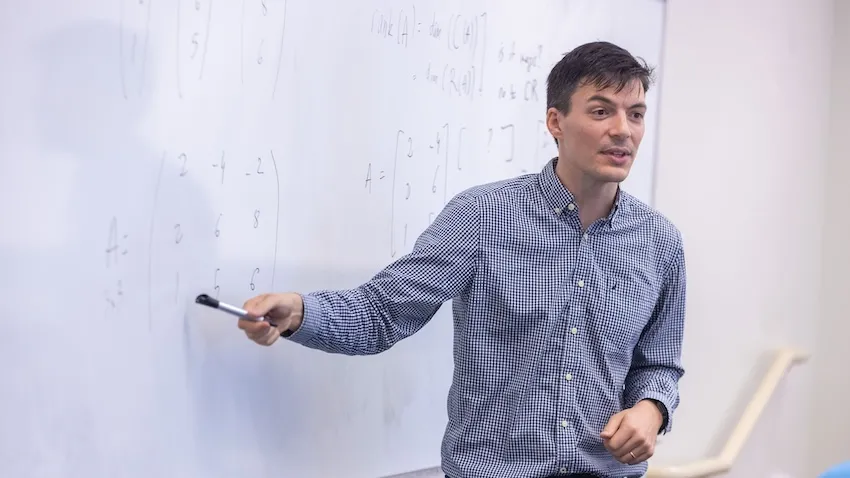
Students in machine learning and linear algebra courses this semester are learning from one of Georgia Tech’s most celebrated instructors.
Raphaël Pestourie has earned back-to-back selections to the Institute’s Course Instructor Opinion Survey (CIOS) honor roll, placing him among the top-ranked teachers for Fall 2024 and Spring 2025.
By returning to the classroom this semester to teach two more courses, Pestourie continues to leverage proven experience to mentor the next generation of researchers in his field.
“Students played a very important part in the survey process, and I thank them for making the classes great,” said Pestourie, an assistant professor in the School of Computational Science and Engineering (CSE).
“I'm incredibly grateful that students shared their feedback so that I could go the extra mile to not only apply my expertise to teach in ways that I think work, but transform my instruction to reach students in the most impactful way I can.”
CIOS honor rolls recognize instructors for outstanding teaching and educational impact, based on student feedback provided through end-of-course surveys.
Student praise of Pestourie’s CSE 8803: Scientific Machine Learning class placed him on the Fall 2024 CIOS honor roll. He earned selection to the Spring 2025 honor roll for his instruction of CX 4230: Computer Simulation.
CSE 8803 is a graduate-level, special topics class that Pestourie created around his field of expertise. Scientific machine learning involves merging two traditionally distinct fields: scientific computing and machine learning.
In scientific computing, researchers build and use models based on established physical laws. Machine learning differs in that it employs data-driven models to find patterns without prior assumptions. Combining the two fields opens new ways to analyze data and solve challenging problems in science and engineering.
Pestourie organized student-focused scientific machine learning symposiums in Fall 2023 and 2024. CSE 8803 students work on projects throughout the course and present their work at these symposiums. Pestourie will use the same approach this semester.
Compared to CSE 8803, CX 4230 is an undergraduate course that teaches students how to create computer models of complex systems. A complex system has many interacting entities that influence each other’s behaviors and patterns. Disease spread in a human network is one example of a complex system.
CX 4230 is a required course for computer science students studying the Modeling & Simulation thread. It is also an elective course in the Scientific and Engineering Computing minor.
“I see 8803 as my educational baby. Being acknowledged for it with a CIOS honor roll felt great,” Pestourie said.
“In a way, I'm prouder of CX 4230 because it was a large, undergraduate regular offering that I was teaching for the first time. The honor roll selection came almost as a surprise.”
To be eligible for the honor roll recognition, instructors must have a minimum CIOS response rate of 70%. Composite scores for three CIOS items are then used to rank instructors. Those items are:
- Instructor’s respect and concern for students
- Instructor’s level of enthusiasm about the course
- Instructor’s ability to stimulate interest in the subject matter
Georgia Tech’s Center for Teaching and Learning (CTL) and the Office of Academic Effectiveness present the CIOS Honor Rolls. CTL recognizes honor roll recipients at its Celebrating Teaching Day events, held annually in March.
CTL offers the Class of 1969 Teaching Fellowship, in which Pestourie participated in the 2024-2025 cohort. The program aims to broaden perspectives with insight into evidence-based best practices and exposure to new and innovative teaching methods.
The fellowship offers one-on-one consultations with a teaching and learning specialist. Cohorts meet weekly in the fall semester and monthly in the spring semester for instruction seminars.
The fellowship facilitates peer observations where instructors visit other classrooms, exchange feedback, and learn effective techniques to try in their own classes.
“I'm very grateful for the Class of 1969 fellowship program and to Karen Franklin, who coordinates it,” Pestourie said. “The honor roll is not just a one-person award. Support from the Institute and other people in the program made it happen.”
Like in Fall 2023 and 2024, Pestourie is teaching CSE 8803: Scientific Machine Learning again this semester. Additionally, he teaches CSE 8801: Linear Algebra, Probability, and Statistics.
Linear algebra and applied probability are among the fundamental subjects in modern data science. Like his scientific machine learning class, Pestourie created CSE 8801. This semester marks the second time Pestourie is teaching the course since Fall 2024.
Pestourie designed CSE 8801 as a refresher course for newer graduate students. This addresses a point of need to help students get off to a good start at Georgia Tech. By offering guidance early in their graduate careers, Pestourie’s work in the classroom also aims to cultivate future collaborators and serve his academic community.
“I see teaching as our one shot at making a good first impression as a research field and a community,” he said.
“I see my work as a teacher as training my future colleagues, and I see it as my duty to our community to do my best in attracting the best talent toward our research field.”
News Contact
Bryant Wine, Communications Officer
bryant.wine@cc.gatech.edu
Sep. 25, 2025

By Chris Gaffney, Managing Director, Georgia Tech Supply Chain and Logistics Institute | Supply Chain Advisor | Former Executive at Frito-Lay, AJC International, and Coca-Cola
Introduction
This year has felt like a lifetime in the Generative AI (GenAI) world. Tools, capabilities, and best practices are shifting monthly, sometimes weekly. For supply chain professionals, the message is clear: ongoing development is not optional. Like lean, analytics, or S&OP in prior decades, GenAI proficiency is quickly becoming a differentiator. The question is not if you’ll integrate GenAI into your workflow, but how quickly and effectively.
The Evolution of GenAI in 2025
When we look back to January, it’s striking how much progress has been made in less than a year. Early in 2025, the conversation centered on agentic AI and larger models. GPT-5 and Claude 4 improved reasoning and context windows, while OpenAI introduced ChatGPT Agent in preview, able to carry out bounded multi-step tasks like retrieving files, browsing the web, and drafting structured outputs. In supply chain, this translated into early experiments with automating shipment steps or running contract reviews in a single query — tasks that were pilot-level at best in January.
By mid-year, multimodal capabilities and enterprise copilots began shifting from concept to daily use. Users could combine text, image, and voice inputs to detect defects or summarize complex documents, and copilots became embedded inside SAP, Oracle, Microsoft, and Google platforms. For the first time, GenAI wasn’t just a tool "off to the side" but something integrated directly into the systems supply chain professionals rely on.
In the second half of the year, new capabilities started layering on: memory, specialized small models, and synthetic data with digital twins. Memory allowed copilots to recall context from prior chats or S&OP cycles, reducing rework. Domain-tuned models made GenAI lighter, cheaper, and faster for logistics, procurement, and planning tasks. And digital twin integration allowed organizations to stress-test networks under disruption scenarios, from weather to labor shortages.
Enterprises also moved closer to operations with AI at the edge, using IoT data for predictive maintenance or real-time routing. At the same time, guardrails and compliance became a central topic, with more organizations creating clear "green/yellow/red" tiers for safe use. And in Q4, collaboration AI and hybrid architectures came to the forefront — copilots that can negotiate contracts in multiple languages, and architectures that blend closed and open-source models to balance sovereignty, cost, and security.
For mainstream individual users, the picture is simpler but still powerful. Anyone with ChatGPT Plus or Copilot today can take advantage of:
- Memory and custom instructions to save preferences and formats across sessions.
- Project-only memory (rolling out) to organize work by context.
- Agent previews like Operator to see how automation might work on bounded tasks.
- Connectors and file uploads to bring internal data into conversations.
For leaders, the focus is on policy, safe pilots, and scaling. They are:
- Sponsoring agent experiments in low-risk domains (like supplier alerts).
- Embedding copilots in enterprise systems for daily planning and reporting.
- Formalizing AI use policies so employees know what’s encouraged, conditional, and off-limits.
The net result: what started in January as experimentation has, by October, become a layered landscape. Individual users now have practical tools to reclaim time, while leaders are piloting more ambitious integrations and building the governance to make adoption sustainable.
1. Action Planning is Critical
The pace of change makes a one-and-done training activity insufficient. Think of GenAI skills like fitness: it requires steady reps over time. Professionals who set quarterly development goals — experimenting with new tools, building prompt libraries, testing workflows — will not only stay current but pull ahead.
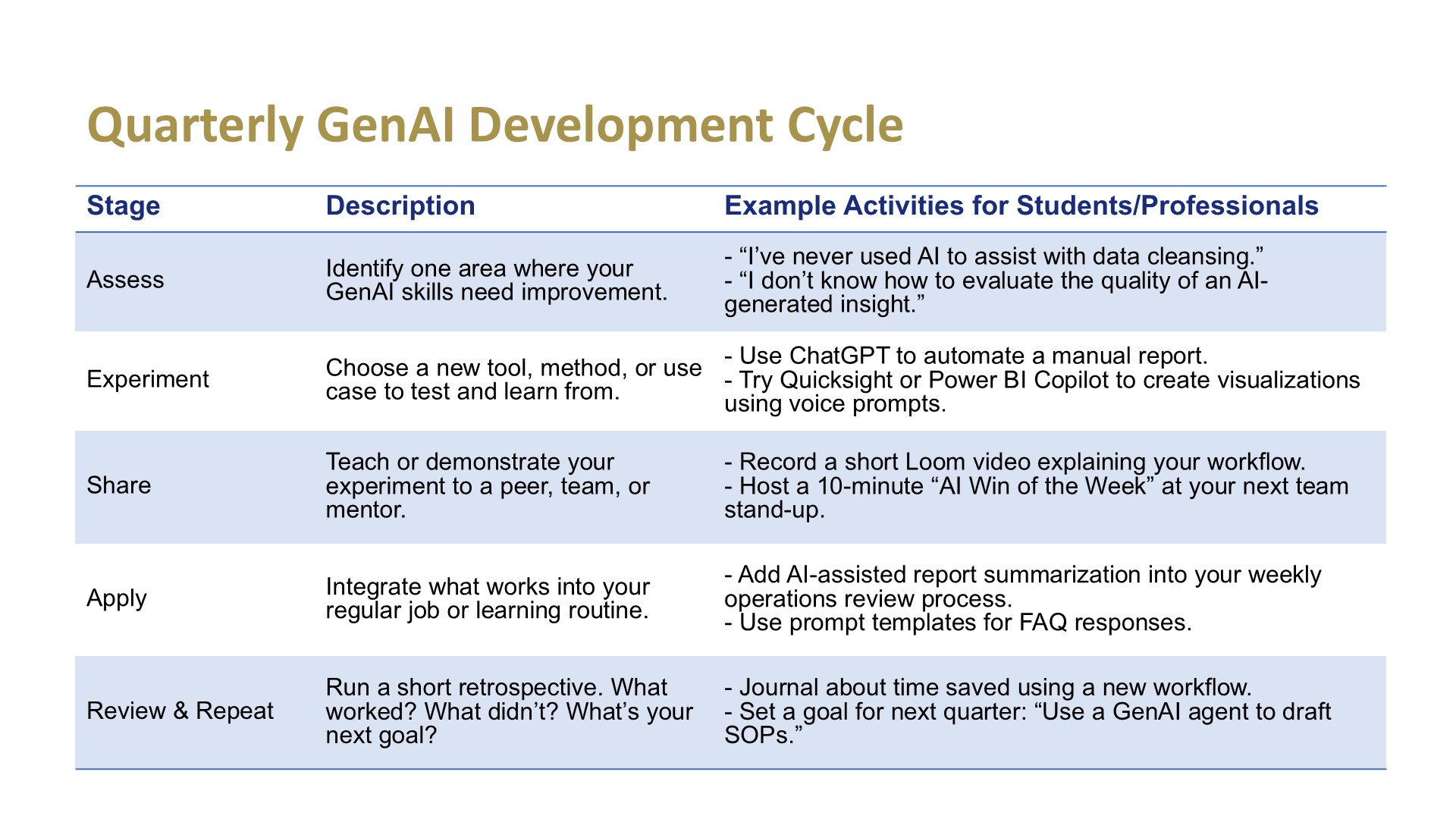
💡 Try This Quarter:
- Build a custom prompt library for routine tasks (e.g., supplier follow-ups, KPI summaries).
- Test one open-source tool such as LangChain or Haystack.
- Use AI to summarize two recent meetings and validate output with your notes.
2. Prompt Maturity is the New Literacy
I’ve personally learned the most about prompting by asking ChatGPT to critique my style against a 12-step framework. The feedback gave me a process improvement plan I still use today. Prompt maturity isn’t abstract — it’s a measurable, improvable skill.
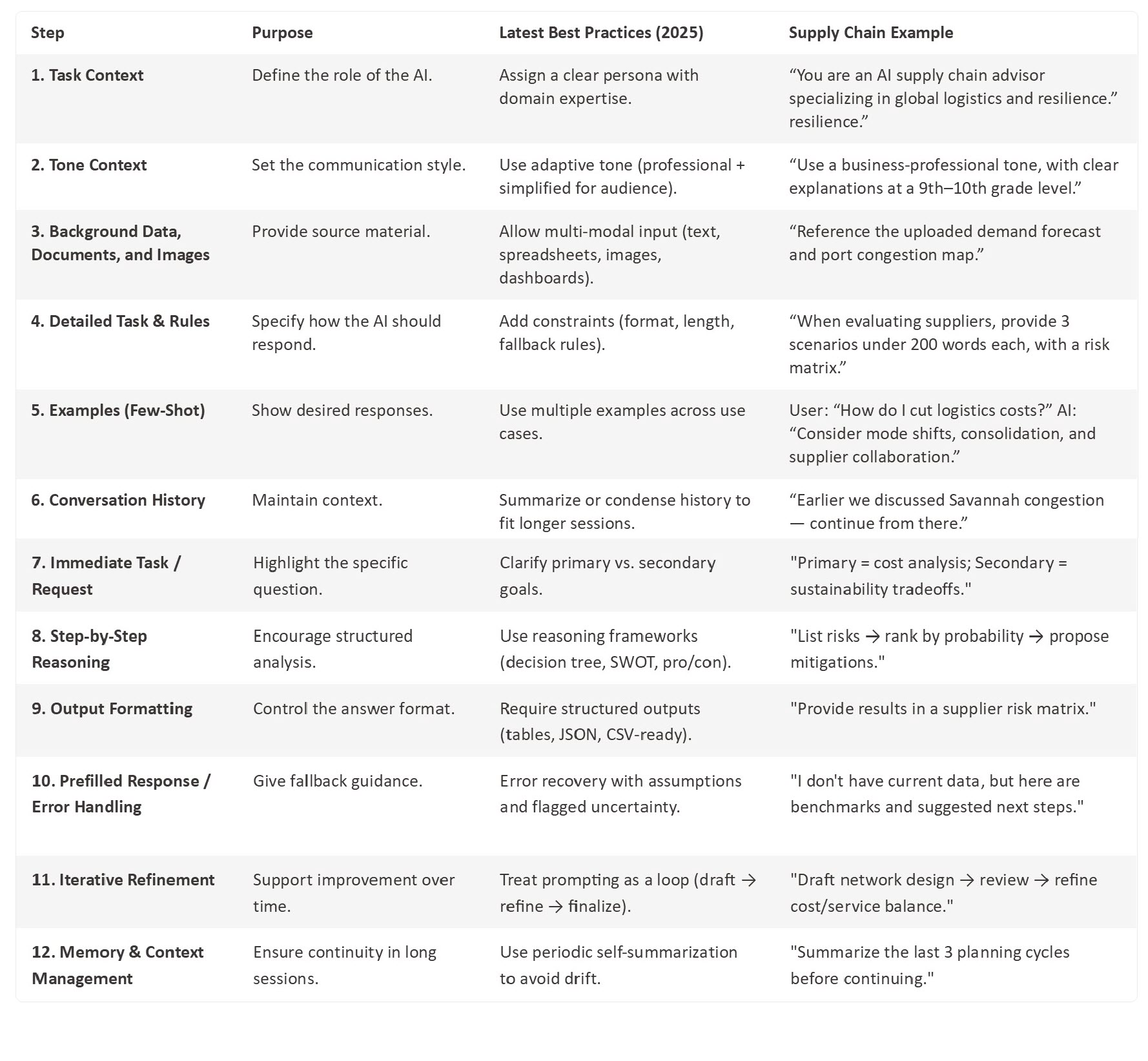
💡 Applied step: Rewrite one work prompt per week by climbing the ladder.
3. Unlocking Personal Productivity
One of the fastest returns from GenAI comes from personal productivity. In our short courses this year, I’ve seen learners gain comfort and lower stress as they practice more with the tools. Many reclaimed time by using GenAI for emails, presentations, meeting notes, and data prep.
While the list of GenAI time-saving strategies is broad, some uses are already mainstream and validated by thousands of professionals. The table below organizes these strategies into categories, provides guidance on how to accomplish them, and highlights common watch-outs to ensure they deliver value without risk.

💡 Try this week: Track one workflow where AI saved time and estimate the hours reclaimed.
4. Critical Thinking: Ironically More Important than Ever
We wrote about critical thinking and added it to our curriculum after studies raised concerns about overreliance on AI. The smarter the tools become, the more important it is to validate their outputs.

💡 Applied step: Take one AI output this week and run it through the checklist — you’ll see both strengths and blind spots.
5. Advocating for Strategy and Guardrails
We’ve seen firsthand how AI policies can evolve. One major retailer shifted in less than a year from a rigid “only data scientists experiment” model to encouraging all employees to try safe versions of multiple LLMs. This shift shows why professionals should advocate for strategy and guardrails that evolve with the technology.
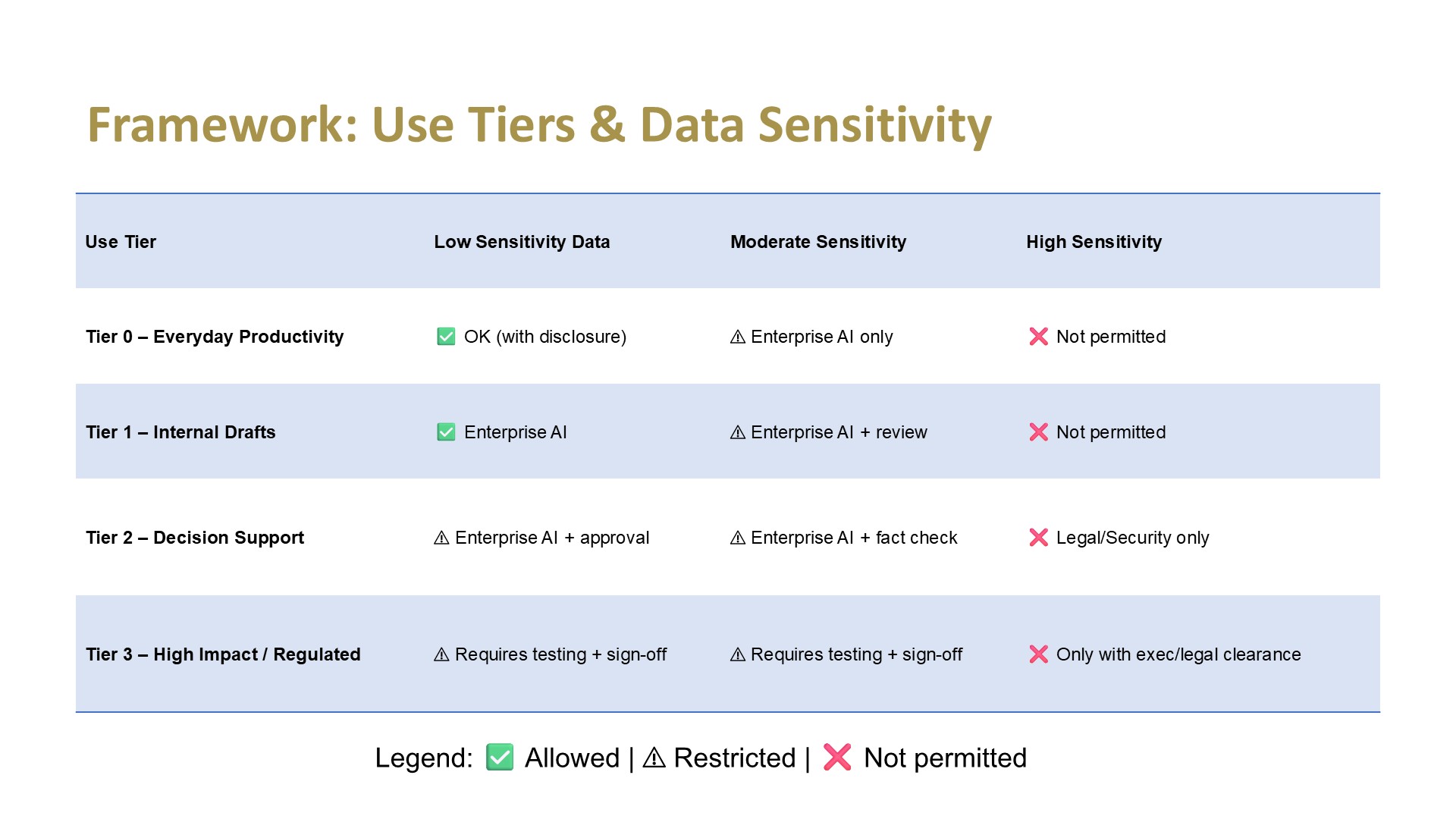
💡 Ask your manager: Which of our daily tasks fall into green, yellow, and red today?
6. Agents: Early but Essential
Many industry partners are actively testing agents. Our software partners are hitting singles and doubles now, with bigger “home run” opportunities still developing. Agents aren’t fully reliable yet, but they are advancing quickly and will increasingly appear in ERP, TMS, and WMS platforms.
In practice, most organizations today sit between Level 1 (Exploratory) and Level 2 (Task-Specific Agents), with early pilots pushing into Level 3 (Augmented Workflows). Tech-forward enterprises — particularly in retail, e-commerce, and global manufacturing — are building domain-specific agents for forecasting, procurement support, and transportation planning, often embedded inside ERP or planning platforms. These companies are experimenting with multi-agent coordination but keep humans firmly in the loop. By contrast, mainstream companies are still largely in the exploratory stage: individuals using general copilots for drafting documents or ad hoc analysis, without enterprise integration, security controls, or governance. The gap is widening — forward-leaning firms are developing playbooks for orchestrated workflows, while many organizations are just beginning to set policies and figure out where AI fits safely into their operations.

Looking ahead, Level 4 (Collaborative Automation) is where the near-term breakthroughs will happen. In the next 3–5 years, we can expect multi-agent orchestration to become a practical tool for managing recurring disruptions — think transportation rerouting during weather events or automated supplier alerts when delivery milestones are missed. Early adoption will occur in large, tech-forward enterprises with strong governance and secure infrastructure. Level 5 (Autonomous Resilience) remains aspirational: while the vision of end-to-end supply chain automation is compelling, regulatory hurdles, trust, and explainability challenges mean human oversight will remain essential. The more realistic trajectory is that enterprises will selectively automate narrow disruption scenarios while maintaining tight human control, with broader autonomy coming only as governance, standards, and trust mechanisms mature.
💡 Applied step: Identify one repetitive process in your work that could be a candidate for an agent.
7. Human in the Loop: Non-Negotiable
Competition has improved model quality this year — but hallucinations and memory issues remain. That’s why “human in the loop” is not just a principle; it’s operational reality. AI is still an assistant, not a replacement.
💡 Applied step: Write down one checkpoint you always apply before sharing AI outputs.
Conclusion
These observations — from teaching courses, updating curriculum, and watching partners experiment — motivated this article. GenAI is evolving at extraordinary speed, and our profession must evolve with it. Build your plan, refine your prompts, reclaim time, apply critical thinking, advocate for strategy, explore agents, and always keep the human in the loop. Those who do will thrive in 2026 and beyond.
Sep. 16, 2025
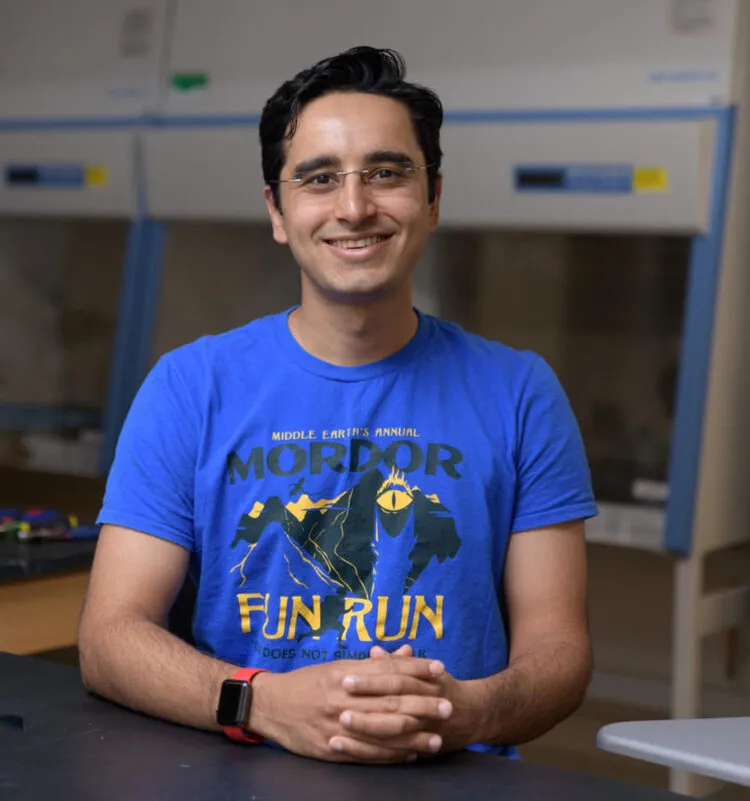
Saad Bhamla of Georgia Tech’s School of Chemical and Biomolecular Engineering (ChBE) is a member of a global cohort of eight scientists and engineers who were named Schmidt Polymaths. They will each receive up to $2.5 million over five years to pursue research in new disciplines or using new methodologies, Schmidt Sciences announced today.
As Schmidt Polymaths, the researchers pursue new approaches compared to previous work. The new cohort of polymaths will answer questions like how to expand access to healthcare with low-cost technologies, what happens to our chromosomes when we age and how to create more accurate computer simulations of climate.
Bhamla, associate professor in ChBE@GT, is the first Schmidt Polymath from Georgia Tech. He will develop low-cost technologies to tackle planetary-scale challenges, including AI-enabled point-of-care diagnostics in low-resource environments, and he will also engineer autonomous morphing machines that adapt, evolve and learn like living systems.
The eight selected scientists represent the fifth cohort of the highly selective Schmidt Polymaths program. Awardees must have been tenured—or achieved similar status—within the previous three years. Previous cohorts have used the award to design new sensor devices, perform experiments at atomic resolutions, analyze trees of life with faster and more efficient algorithms, discover new mathematical formulas assisted by AI, and more.
Drawn from universities worldwide and selected through a competitive application process, Schmidt Polymaths are required to demonstrate past ability and future potential to pursue early-stage, novel research that would otherwise be challenging to fund—even without the current dramatic declines in U.S. funding for science.
“Our world is one deeply interconnected system---but to study it more deeply, we’ve divided it into increasingly narrow categories,” said Wendy Schmidt, who co-founded Schmidt Sciences with her husband Eric. “Schmidt Polymaths see the bigger picture, pursue answers beyond boundaries and expand the edges of what’s possible. Their work can help steer us all toward a healthier future, for people and the planet.”
About Schmidt Sciences
Schmidt Sciences is a nonprofit organization founded in 2024 by Eric and Wendy Schmidt that works to accelerate scientific knowledge and breakthroughs with the most promising, advanced tools to support a thriving planet. The organization prioritizes research in areas poised for impact including AI and advanced computing, astrophysics, biosciences, climate, and space—as well as supporting researchers in a variety of disciplines through its science systems program.
RELATED: Forbes featured Bhamla in the article: Saad Bhamla Is A Polymath
News Contact
Brad Dixon, braddixon@gatech.edu
Jul. 16, 2025
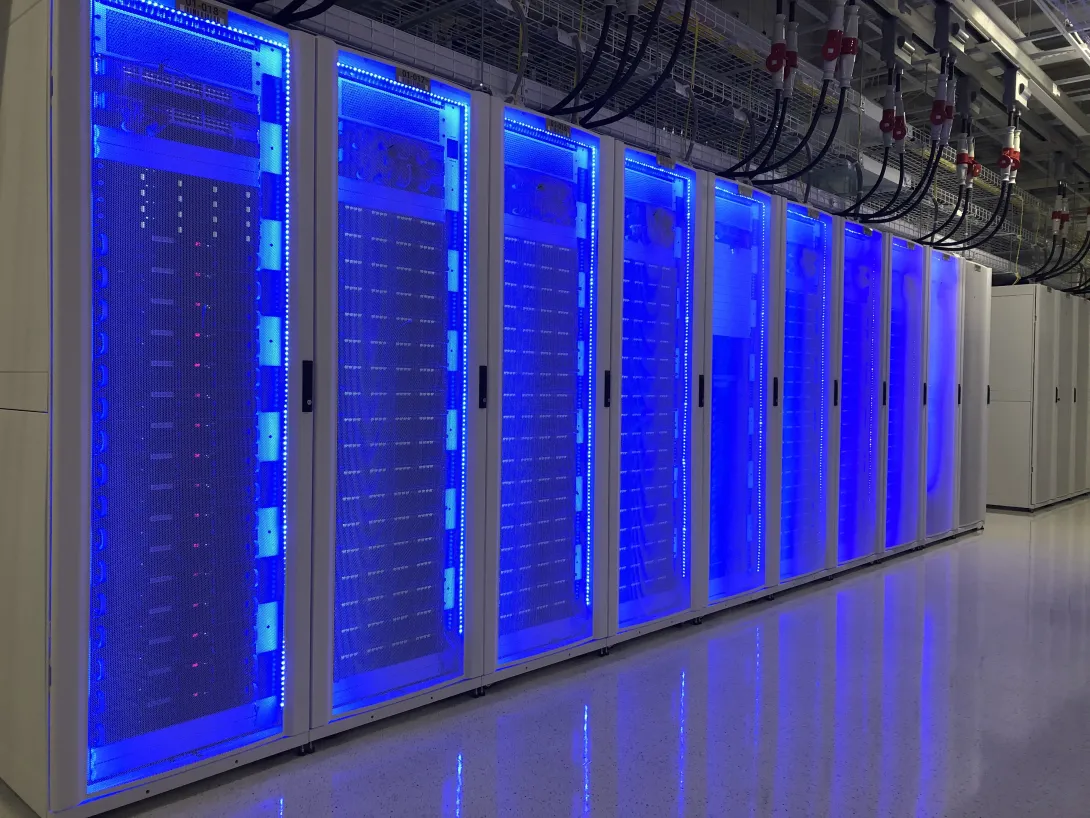
Georgia Tech is also a host to the PACE Hive Gateway supercomputer (above). Nexus will use AI to accelerate scientific breakthroughs.
The National Science Foundation (NSF) has awarded Georgia Tech and its partners $20 million to build a powerful new supercomputer that will use artificial intelligence (AI) to accelerate scientific breakthroughs.
Called Nexus, the system will be one of the most advanced AI-focused research tools in the U.S. Nexus will help scientists tackle urgent challenges such as developing new medicines, advancing clean energy, understanding how the brain works, and driving manufacturing innovations.
“Georgia Tech is proud to be one of the nation’s leading sources of the AI talent and technologies that are powering a revolution in our economy,” said Ángel Cabrera, president of Georgia Tech. “It’s fitting we’ve been selected to host this new supercomputer, which will support a new wave of AI-centered innovation across the nation. We’re grateful to the NSF, and we are excited to get to work.”
Designed from the ground up for AI, Nexus will give researchers across the country access to advanced computing tools through a simple, user-friendly interface. It will support work in many fields, including climate science, health, aerospace, and robotics.
“The Nexus system's novel approach combining support for persistent scientific services with more traditional high-performance computing will enable new science and AI workflows that will accelerate the time to scientific discovery,” said Katie Antypas, National Science Foundation director of the Office of Advanced Cyberinfrastructure. “We look forward to adding Nexus to NSF's portfolio of advanced computing capabilities for the research community.”
Nexus Supercomputer — In Simple Terms
- Built for the future of science: Nexus is designed to power the most demanding AI research — from curing diseases, to understanding how the brain works, to engineering quantum materials.
- Blazing fast: Nexus can crank out over 400 quadrillion operations per second — the equivalent of everyone in the world continuously performing 50 million calculations every second.
- Massive brain plus memory: Nexus combines the power of AI and high-performance computing with 330 trillion bytes of memory to handle complex problems and giant datasets.
- Storage: Nexus will feature 10 quadrillion bytes of flash storage, equivalent to about 10 billion reams of paper. Stacked, that’s a column reaching 500,000 km high — enough to stretch from Earth to the moon and a third of the way back.
- Supercharged connections: Nexus will have lightning-fast connections to move data almost instantaneously, so researchers do not waste time waiting.
- Open to U.S. researchers: Scientists from any U.S. institution can apply to use Nexus.
Why Now?
AI is rapidly changing how science is investigated. Researchers use AI to analyze massive datasets, model complex systems, and test ideas faster than ever before. But these tools require powerful computing resources that — until now — have been inaccessible to many institutions.
This is where Nexus comes in. It will make state-of-the-art AI infrastructure available to scientists all across the country, not just those at top tech hubs.
“This supercomputer will help level the playing field,” said Suresh Marru, principal investigator of the Nexus project and director of Georgia Tech’s new Center for AI in Science and Engineering (ARTISAN). “It’s designed to make powerful AI tools easier to use and available to more researchers in more places.”
Srinivas Aluru, Regents’ Professor and senior associate dean in the College of Computing, said, “With Nexus, Georgia Tech joins the league of academic supercomputing centers. This is the culmination of years of planning, including building the state-of-the-art CODA data center and Nexus’ precursor supercomputer project, HIVE."
Like Nexus, HIVE was supported by NSF funding. Both Nexus and HIVE are supported by a partnership between Georgia Tech’s research and information technology units.
A National Collaboration
Georgia Tech is building Nexus in partnership with the National Center for Supercomputing Applications at the University of Illinois Urbana-Champaign, which runs several of the country’s top academic supercomputers. The two institutions will link their systems through a new high-speed network, creating a national research infrastructure.
“Nexus is more than a supercomputer — it’s a symbol of what’s possible when leading institutions work together to advance science,” said Charles Isbell, chancellor of the University of Illinois and former dean of Georgia Tech’s College of Computing. “I'm proud that my two academic homes have partnered on this project that will move science, and society, forward.”
What’s Next
Georgia Tech will begin building Nexus this year, with its expected completion in spring 2026. Once Nexus is finished, researchers can apply for access through an NSF review process. Georgia Tech will manage the system, provide support, and reserve up to 10% of its capacity for its own campus research.
“This is a big step for Georgia Tech and for the scientific community,” said Vivek Sarkar, the John P. Imlay Dean of Computing. “Nexus will help researchers make faster progress on today’s toughest problems — and open the door to discoveries we haven’t even imagined yet.”
News Contact
Siobhan Rodriguez
Senior Media Relations Representative
Institute Communications
Jul. 15, 2025
Georgia Tech is also a host to the PACE Hive Gateway supercomputer (above). Nexus will use AI to accelerate scientific breakthroughs.
The National Science Foundation (NSF) has awarded Georgia Tech and its partners $20 million to build a powerful new supercomputer that will use artificial intelligence (AI) to accelerate scientific breakthroughs.
Called Nexus, the system will be one of the most advanced AI-focused research tools in the U.S. Nexus will help scientists tackle urgent challenges such as developing new medicines, advancing clean energy, understanding how the brain works, and driving manufacturing innovations.
“Georgia Tech is proud to be one of the nation’s leading sources of the AI talent and technologies that are powering a revolution in our economy,” said Ángel Cabrera, president of Georgia Tech. “It’s fitting we’ve been selected to host this new supercomputer, which will support a new wave of AI-centered innovation across the nation. We’re grateful to the NSF, and we are excited to get to work.”
Designed from the ground up for AI, Nexus will give researchers across the country access to advanced computing tools through a simple, user-friendly interface. It will support work in many fields, including climate science, health, aerospace, and robotics.
“The Nexus system's novel approach combining support for persistent scientific services with more traditional high-performance computing will enable new science and AI workflows that will accelerate the time to scientific discovery,” said Katie Antypas, National Science Foundation director of the Office of Advanced Cyberinfrastructure. “We look forward to adding Nexus to NSF's portfolio of advanced computing capabilities for the research community.”
Nexus Supercomputer — In Simple Terms
- Built for the future of science: Nexus is designed to power the most demanding AI research — from curing diseases, to understanding how the brain works, to engineering quantum materials.
- Blazing fast: Nexus can crank out over 400 quadrillion operations per second — the equivalent of everyone in the world continuously performing 50 million calculations every second.
- Massive brain plus memory: Nexus combines the power of AI and high-performance computing with 330 trillion bytes of memory to handle complex problems and giant datasets.
- Storage: Nexus will feature 10 quadrillion bytes of flash storage, equivalent to about 10 billion reams of paper. Stacked, that’s a column reaching 500,000 km high — enough to stretch from Earth to the moon and a third of the way back.
- Supercharged connections: Nexus will have lightning-fast connections to move data almost instantaneously, so researchers do not waste time waiting.
- Open to U.S. researchers: Scientists from any U.S. institution can apply to use Nexus.
Why Now?
AI is rapidly changing how science is investigated. Researchers use AI to analyze massive datasets, model complex systems, and test ideas faster than ever before. But these tools require powerful computing resources that — until now — have been inaccessible to many institutions.
This is where Nexus comes in. It will make state-of-the-art AI infrastructure available to scientists all across the country, not just those at top tech hubs.
“This supercomputer will help level the playing field,” said Suresh Marru, principal investigator of the Nexus project and director of Georgia Tech’s new Center for AI in Science and Engineering (ARTISAN). “It’s designed to make powerful AI tools easier to use and available to more researchers in more places.”
Srinivas Aluru, Regents’ Professor and senior associate dean in the College of Computing, said, “With Nexus, Georgia Tech joins the league of academic supercomputing centers. This is the culmination of years of planning, including building the state-of-the-art CODA data center and Nexus’ precursor supercomputer project, HIVE."
Like Nexus, HIVE was supported by NSF funding. Both Nexus and HIVE are supported by a partnership between Georgia Tech’s research and information technology units.
A National Collaboration
Georgia Tech is building Nexus in partnership with the National Center for Supercomputing Applications at the University of Illinois Urbana-Champaign, which runs several of the country’s top academic supercomputers. The two institutions will link their systems through a new high-speed network, creating a national research infrastructure.
“Nexus is more than a supercomputer — it’s a symbol of what’s possible when leading institutions work together to advance science,” said Charles Isbell, chancellor of the University of Illinois and former dean of Georgia Tech’s College of Computing. “I'm proud that my two academic homes have partnered on this project that will move science, and society, forward.”
What’s Next
Georgia Tech will begin building Nexus this year, with its expected completion in spring 2026. Once Nexus is finished, researchers can apply for access through an NSF review process. Georgia Tech will manage the system, provide support, and reserve up to 10% of its capacity for its own campus research.
“This is a big step for Georgia Tech and for the scientific community,” said Vivek Sarkar, the John P. Imlay Dean of Computing. “Nexus will help researchers make faster progress on today’s toughest problems — and open the door to discoveries we haven’t even imagined yet.”
News Contact
Siobhan Rodriguez
Senior Media Relations Representative
Institute Communications
Jun. 27, 2025

An Adobe Stock image of a woman using a wheelchair and wearing a grey business suit meets with work colleagues.
A team of Georgia Tech graduate students is using artificial intelligence (AI) to help people with disabilities find their dream jobs.
Searching for the right job is stressful for most, but it can be overwhelming for people with disabilities. However, using an innovative approach, the student entrepreneurs created a customizable AI-powered "job coach" that connects people with accessible employment opportunities.
OMSCS students George Gomez, Ariel Magyar, Zachary Patrignani, and Maheer Sayeed created Interstellar Jobs as their entry for the March 2025 Microsoft Azure Innovation Challenge. The team beat over 70 international entries to secure first place and $10,000.
Interstellar Jobs uses information about job seekers' disabilities, job preferences, and other personal details to provide detailed coaching tips for specific jobs. The tips let job seekers know if they're a good fit for the position, what challenges they can expect, and what they can do to manage these challenges successfully.
The challenge, co-sponsored by TechBridge, required teams to create a functional proof of concept within a tight timeframe using AI, analytics, networking, and other Microsoft Azure Web Services.
Selecting which services to use was the starting point for most teams. In fact, Sayeed says most of the competition tried to use as many Azure services as possible for their projects.
"We didn't do that. We kept it simple," said Sayeed.
"Our mindset going into the challenge was that we'd find the problem first, and then we would look at the services we would use."
Their entrepreneurial approach led the team to develop Interstellar Jobs using just three Azure services. As an example of their approach, the team faced the challenge of addressing specific disabilities in relation to thousands of job listings.
Developers usually depend on drop-down menus when presenting an extensive list of options. However, this method might not cover all disabilities or could use outdated or overly broad language. It also wouldn't account for people with multiple or nuanced disabilities that don't fit neatly into a single category.
The Interstellar Jobs team opted for a blank field for users to list their disabilities.
"We kept it very open-ended for our users," said Sayeed.
The team used OpenAI Service to 'clean' entries on the backend, regardless of what users wrote in the blank field. This method ensures that users can always get a structured and actionable response from Interstellar Jobs.
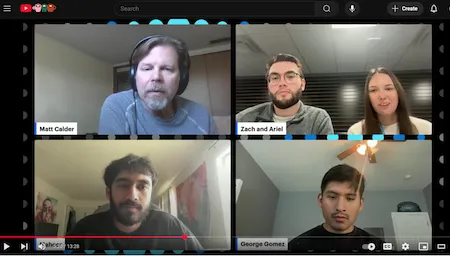
"As a user, not having to pick from a drop-down menu just feels good," said Matt Calder, senior product marketing manager at Microsoft.
Calder hosts Microsoft DevRadio and recently interviewed the Interstellar Jobs team. "I like how your approach changes how people interact with the whole system. If you make something really usable, it's going to be accessible as well," said Calder.
Despite its success, the team has no immediate plans to expand Interstellar Jobs. Each member balances a full-time job and their studies in Georgia Tech's Online Master of Science in Computer Science (OMSCS) program.
"We gained so much about cloud development and Azure Web Services from the experience," said Sayeed. "We also learned the value of AI in these applications."
News Contact
Ben Snedeker, Communications Manager II
Georgia Tech College of Computing