
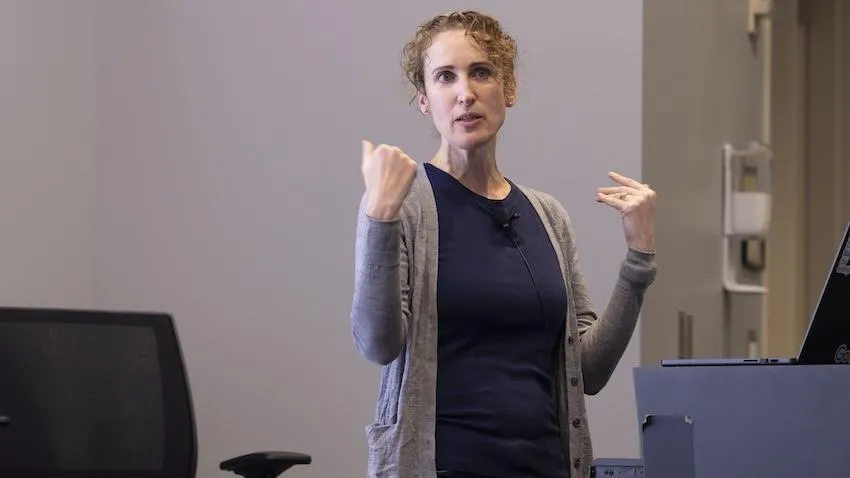
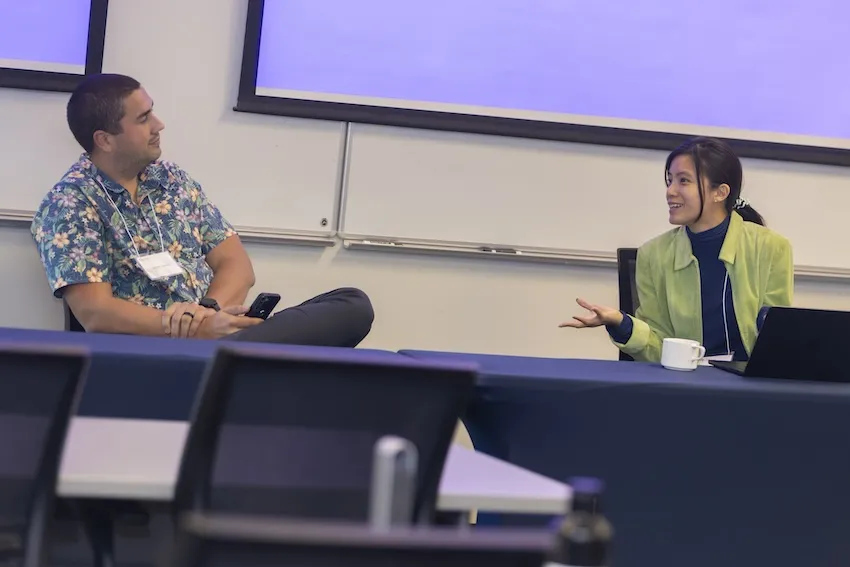
School of IC's Josiah Hester (left) and Cindy Lin discuss AI's future impact on sustainability. Photo by Terence Rushin/College of Computing.
This month, the future of artificial intelligence (AI) was spotlighted as more than 120 academic and industry researchers participated in the Georgia Tech School of Interactive Computing’s inaugural Summit on Responsible Computing, AI, and Society.
With looming questions about AI's growing roles and consequences in nearly every facet of modern life, School of IC organizers felt the time was right to diverge from traditional conferences that focus on past work and published research.
“Presenting papers is about disseminating work that has already been completed. Who gets to be in the room is determined by whose paper gets accepted,” said Mark Riedl, School of IC professor.
“Instead, we wanted the summit talks to speculate on future directions and what challenges we as a community should be thinking about going forward.”
The two-day summit, held at Tech’s Global Learning Center Oct. 28-30, convened to discuss consequential questions like:
- Is society ready to accept more responsibility as greater advancements in technologies like AI are made?
- Should society stop to think about potential consequences before these advancements are implemented on its behalf, and what could those consequences be?
- What policies should be enacted for these technologies to mitigate harms and augment societal benefits?
A highlight of the summit’s opening day was Meredith Ringel Morris's keynote address. As director of human-AI interaction research at Google DeepMind, she presented a possible future in which humans could use AI to create a digital afterlife.
In her remarks, Morris discussed AI clones, which are AI avatars of specific human beings with high autonomy and task-performing capabilities. Someone could leave such an agent behind as a memory for loved ones to enjoy once they are gone, and future generations could access it to learn more about an ancestor.
On the other hand, it could easily lead to loved ones experiencing extended grief because they have trouble moving on from losing a family member.
These AI capabilities are in development and will soon be publicly available. As industry and academic researchers continue to develop them, the public needs to learn about their eminent impacts.
“There’s a lot that needs to be done in educating people,” Morris said. “It’s hard for well-intentioned and thoughtful system designers to anticipate all the harm. We must be prepared some people are going to use AI in ways we don’t anticipate, and some of those ways are going to be undesirable. What legal and education structures can we create that will help?”
In addition to Morris’s keynote, the summit’s first day included 20 talks about future and emerging technologies in AI, sustainability, healthcare, and other fields.
The second day featured eight talks on translating interventions and safeguards into policy.
Day-two speakers included:
- Orly Lobel, Warren Distinguished Professor of Law and director of the Center for Employment and Labor Policy at the University of California-San Diego. Lobel worked on President Obama’s policy team on innovation and labor market competition, and she advises the Federal Trade Commission (FTC).
- Sorelle Friedler, Shibulal Family Professor of Computer Science at Haverford College. She worked in the Office of Science and Technology Policy (OSTP) under the Biden-Harris Administration and helped draft the AI Bill of Rights.
- Jake Metcalf, researcher and program director for AI on the Ground at the think tank Data & Society. The organization produces reports on data science and equity for the US Government.
- Divyansh Kaushik, Vice President of Beacon Global Strategies, has given testimony to the US Senate on AI research and development.
Kaushik earned a Ph.D. in machine learning from Carnegie Mellon University before beginning his career in policy. He highlighted the importance of policymakers fostering relationships with academic researchers.
“Policymakers think about what could go wrong,” Kaushik said. “Academia can offer evidence-based answers.”
The summit also hosted a doctoral consortium, which allowed advanced Ph.D. students to present their research to experts and receive feedback and mentoring.
“Being an interdisciplinary researcher is challenging,” said Shaowen Bardzell, School of IC chair.
“We wanted the next generation to be in the room listening to the experts share their visions and also to provide our own experiences when possible on how to navigate the challenges and rewards of doing work in the intersection of AI, healthcare, sustainability, and policy.”
News Contact
Nathan Deen
Georgia Tech School of Interactive Computing
Communications Officer
nathan.deen@cc.gatech.edu
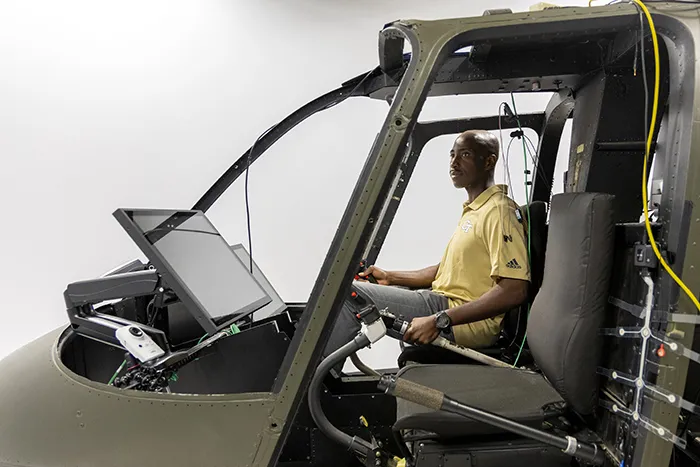
Richard Agbeyibor, Flight Test Engineer, U.S. Air Force, sitting in a space exploration simulator.
Many people dream of flying into space for NASA, but few achieve it. Georgia Tech has produced 14 astronauts, inspiring current students to pursue this challenging path. Despite long odds, aspiring astronauts apply repeatedly, driven by passion and determination. Their journey, whether successful or not, pushes them to excel and grow personally and professionally.


A first-of-its-kind algorithm developed at Georgia Tech is helping scientists study interactions between electrons. This innovation in modeling technology can lead to discoveries in physics, chemistry, materials science, and other fields.
The new algorithm is faster than existing methods while remaining highly accurate. The solver surpasses the limits of current models by demonstrating scalability across chemical system sizes ranging from large to small.
Computer scientists and engineers benefit from the algorithm’s ability to balance processor loads. This work allows researchers to tackle larger, more complex problems without the prohibitive costs associated with previous methods.
Its ability to solve block linear systems drives the algorithm’s ingenuity. According to the researchers, their approach is the first known use of a block linear system solver to calculate electronic correlation energy.
The Georgia Tech team won’t need to travel far to share their findings with the broader high-performance computing community. They will present their work in Atlanta at the 2024 International Conference for High Performance Computing, Networking, Storage and Analysis (SC24).
[MICROSITE: Georgia Tech at SC24]
“The combination of solving large problems with high accuracy can enable density functional theory simulation to tackle new problems in science and engineering,” said Edmond Chow, professor and associate chair of Georgia Tech’s School of Computational Science and Engineering (CSE).
Density functional theory (DFT) is a modeling method for studying electronic structure in many-body systems, such as atoms and molecules.
An important concept DFT models is electronic correlation, the interaction between electrons in a quantum system. Electron correlation energy is the measure of how much the movement of one electron is influenced by presence of all other electrons.
Random phase approximation (RPA) is used to calculate electron correlation energy. While RPA is very accurate, it becomes computationally more expensive as the size of the system being calculated increases.
Georgia Tech’s algorithm enhances electronic correlation energy computations within the RPA framework. The approach circumvents inefficiencies and achieves faster solution times, even for small-scale chemical systems.
The group integrated the algorithm into existing work on SPARC, a real-space electronic structure software package for accurate, efficient, and scalable solutions of DFT equations. School of Civil and Environmental Engineering Professor Phanish Suryanarayana is SPARC’s lead researcher.
The group tested the algorithm on small chemical systems of silicon crystals numbering as few as eight atoms. The method achieved faster calculation times and scaled to larger system sizes than direct approaches.
“This algorithm will enable SPARC to perform electronic structure calculations for realistic systems with a level of accuracy that is the gold standard in chemical and materials science research,” said Suryanarayana.
RPA is expensive because it relies on quartic scaling. When the size of a chemical system is doubled, the computational cost increases by a factor of 16.
Instead, Georgia Tech’s algorithm scales cubically by solving block linear systems. This capability makes it feasible to solve larger problems at less expense.
Solving block linear systems presents a challenging trade-off in solving different block sizes. While larger blocks help reduce the number of steps of the solver, using them demands higher computational cost per step on computer processors.
Tech’s solution is a dynamic block size selection solver. The solver allows each processor to independently select block sizes to calculate. This solution further assists in scaling, and improves processor load balancing and parallel efficiency.
“The new algorithm has many forms of parallelism, making it suitable for immense numbers of processors,” Chow said. “The algorithm works in a real-space, finite-difference DFT code. Such a code can scale efficiently on the largest supercomputers.”
Georgia Tech alumni Shikhar Shah (Ph.D. CSE 2024), Hua Huang (Ph.D. CSE 2024), and Ph.D. student Boqin Zhang led the algorithm’s development. The project was the culmination of work for Shah and Huang, who completed their degrees this summer. John E. Pask, a physicist at Lawrence Livermore National Laboratory, joined the Tech researchers on the work.
Shah, Huang, Zhang, Suryanarayana, and Chow are among more than 50 students, faculty, research scientists, and alumni affiliated with Georgia Tech who are scheduled to give more than 30 presentations at SC24. The experts will present their research through papers, posters, panels, and workshops.
SC24 takes place Nov. 17-22 at the Georgia World Congress Center in Atlanta.
“The project’s success came from combining expertise from people with diverse backgrounds ranging from numerical methods to chemistry and materials science to high-performance computing,” Chow said.
“We could not have achieved this as individual teams working alone.”
News Contact
Bryant Wine, Communications Officer
bryant.wine@cc.gatech.edu
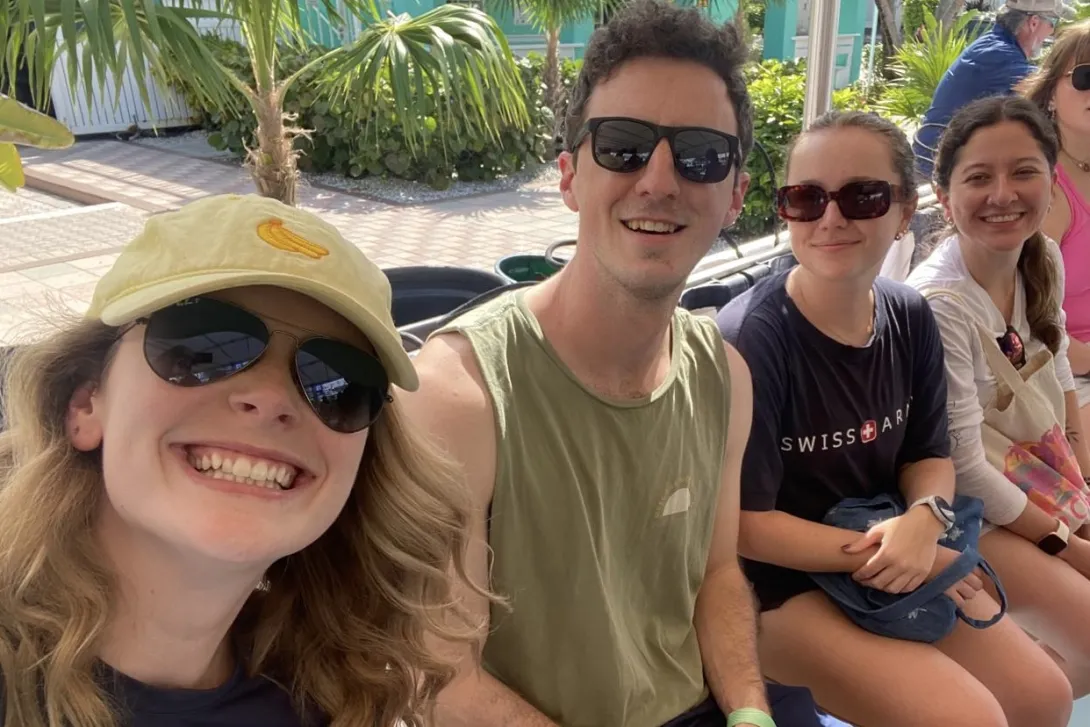
Ocean science and engineering Ph.D. students, left to right, Kelly Lumpkin, David Clark, Skylar Lama, Luisa Lopera developed a system to cool the water around coral by drawing up and circulating colder water from 150 meters below the ocean's surface. They were one of four teams invited to devise a cooling system and present their idea to the National Marine Sanctuary Foundation. (Photo Courtesy: Skylar Lama)
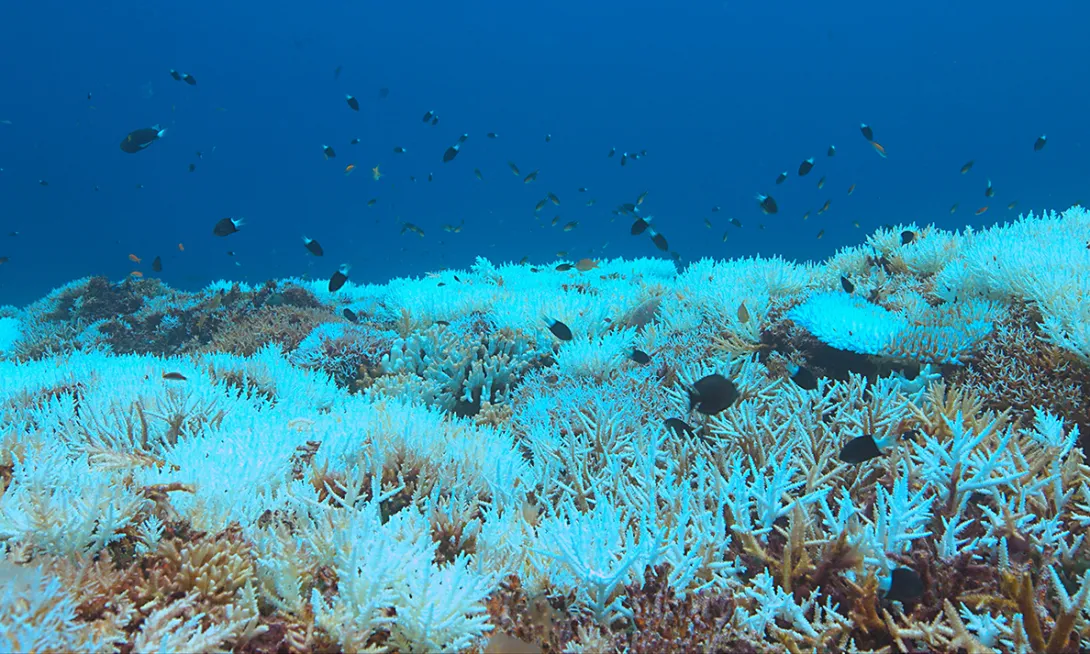
Coral reefs are home to about a quarter of all marine life. They support millions of jobs around the world and protect coastal communities from storms. Scientists report they’re also in the midst of a crisis, with a fourth mass bleaching event spreading around the world.
Bleaching happens when ocean waters heat up, causing corals to expel the colorful algae that live in their tissues. It can lead to disease and death for coral, wiping out critical and complex marine ecosystems.
Four Georgia Tech Ocean Science and Engineering (OSE) Ph.D. students have spent the last few months working on creative ways to prevent bleaching by cooling the water around coral reefs. They presented their ideas in late October to marine biologists and conservations in the Florida Keys as part of the National Marine Sanctuary Foundation’s Coral Reef Thermal Stress Design Thinking Challenge & Workshop.
Read about the team's coral-cooling solution on the College of Engineering website.
News Contact
Writer: Dhanesh Amin
Contact: Joshua Stewart
College of Engineering
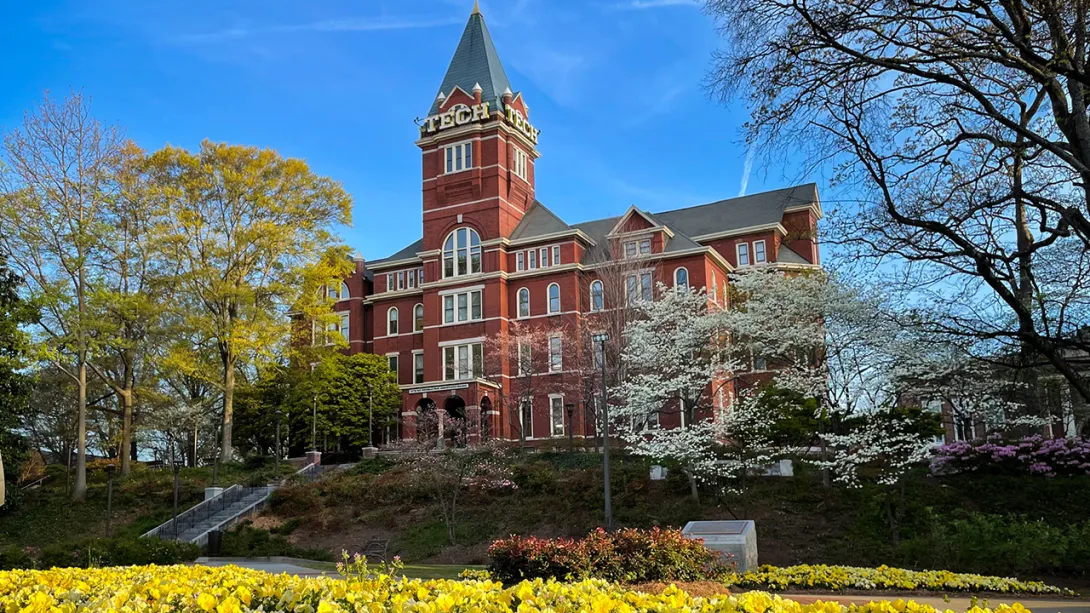
Y Combinator, known for launching over 5,000 startups including Airbnb, Coinbase, DoorDash, Dropbox, and Zapier, is coming to Georgia Tech’s campus on Tuesday, Nov. 12, at 5 p.m. in the John Lewis Student Center’s Walter G. Ehmer Theater for a panel event hosted by CREATE-X. The panel will feature Y Combinator Group Partner Brad Flora and the founders of Greptile, all Georgia Tech alumni, who will discuss their experiences with the startup accelerator.
Since tickets are limited, students are encouraged to RSVP for Y Combinator @ Georgia Tech. As a part of the event, students can apply for Office Hours With Flora, which will be held earlier in the day, by answering optional questions in the RSVP form. Y Combinator will notify selected students. The sessions enable students to discuss side projects or startups, startup idea development, finding co-founders, and monetizing products. Confirmed RSVPs are required to attend the event and office hours.
Y Combinator offers an intensive, three-month program designed to help startups succeed. It provides startups with seed funding, mentorship, and access to a network of investors, industry experts, and alumni.
In 2022, Daksh Gupta and SooHoon Choi participated in CREATE-X Startup Launch and developed Tabnam, which became Greptile after several iterations. Initially, the startup was promoted as an AI shopping assistant that scrapes the internet to tell users what people think about their product.
In 2023, after they graduated from Georgia Tech, Choi, Gupta, and Vaishant Kameswaran launched the latest version of the startup. Now the AI platform focuses on entire codebases and allows users to query via an API. Through the platform, users chat with their codebases, generate descriptions for tickets, automate PR reviews, and build custom internal tools and automations on top of the API. Over 800 software teams, including Wombo, Metamask, Warp, Exa AI, Bland, and Leya, use Greptile. In June, it had a $4 million seed round. Greptile was part of Y Combinator’s Winter 2024 cohort.
For those inspired by Greptile’s success and interested in launching their own startup, CREATE-X is currently accepting applications for Summer 2025 Startup Launch. The priority deadline is Sunday, Nov. 17. Early applicants have a higher chance of acceptance, the opportunity for more feedback, and more opportunities to apply if one idea isn’t accepted.
Startup Launch provides mentorship, $5,000 in optional funding, and $150,000 in services to help Georgia Tech students, alumni, faculty, and researchers launch businesses over 12 weeks in the summer. Teams can be interdisciplinary, made up of co-founders even outside of Georgia Tech, and solopreneurs. CREATE-X, as a whole, has had more than 34,000 participants, launched 560 startups, and has generated a total startup portfolio valuation exceeding $2 billion.
News Contact
Breanna Durham
Marketing Strategist
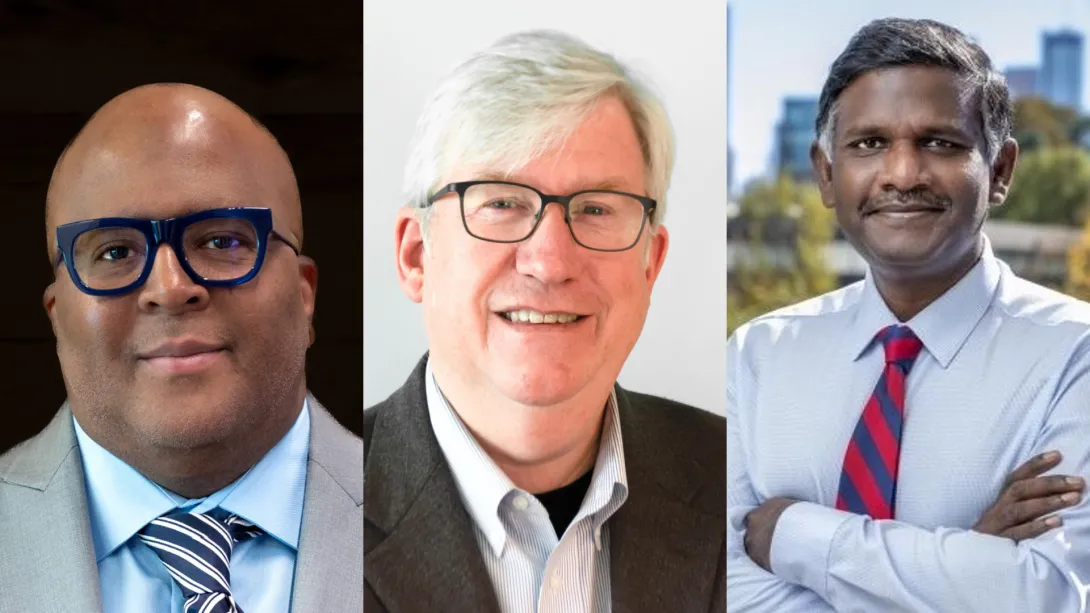
From left, Georgia Tech's Nakia Melecio, Keith McGreggor, and Raghupathy "Siva" Sivakumar, are the NSF I-Corps Southeast Hub director, faculty lead, and principal investigator, respectively.
The National Science Foundation (NSF) awarded a syndicate of eight Southeast universities — with Georgia Tech as the lead — a $15 million grant to support the development of a regional innovation ecosystem that addresses underrepresentation and increases entrepreneurship and technology-oriented workforce development.
The NSF Innovation Corps (I-Corps) Southeast Hub is a five-year project based on the I-Corps model, which assists academics in moving their research from the lab to the market.
Led by Georgia Tech’s Office of Commercialization and Enterprise Innovation Institute, the NSF I-Corps Southeast Hub encompasses four states — Georgia, Florida, South Carolina, and Alabama.
Its member schools include:
- Clemson University
- Morehouse College
- University of Alabama
- University of Central Florida
- University of Florida
- University of Miami
- University of South Florida
In January 2025, when the NSF I-Corps Southeast Hub officially launches, the consortium of schools will expand to include the University of Puerto Rico. Additionally, through Morehouse College’s activation, Spelman College and the Morehouse School of Medicine will also participate in supporting the project.
With a combined economic output of more than $3.2 trillion, the NSF I-Corps Southeast Hub region represents more than 11% of the entire U.S. economy. As a region, those states and Puerto Rico have a larger economic output than France, Italy, or Canada.
“This is a great opportunity for us to engage in regional collaboration to drive innovation across the Southeast to strengthen our regional economy and that of Puerto Rico,” said the Enterprise Innovation Institute’s Nakia Melecio, director of the NSF I-Corps Southeast Hub. As director, Melecio will oversee strategic management, data collection, and overall operations.
Additionally, Melecio serves as a national faculty instructor for the NSF I-Corps program.
“This also allows us to collectively tackle some of the common challenges all four of our states face, especially when it comes to being intentionally inclusive in reaching out to communities that historically haven’t always been invited to participate,” he said.
That means bringing solutions to market that not only solve problems but are intentional about including researchers from Black and Hispanic-serving institutions, Melecio said.
Keith McGreggor, director of Georgia Tech’s VentureLab, is the faculty lead charged with designing the curriculum and instruction for the NSF I-Corps Southeast Hub’s partners.
McGreggor has extensive I-Corps experience. In 2012, Georgia Tech was among the first institutions in the country selected to teach the I-Corps curriculum, which aims to further research commercialization. McGreggor served as the lead instructor for I-Corps-related efforts and led training efforts across the Southeast, as well as for teams in Puerto Rico, Mexico, and the Republic of Ireland.
Raghupathy “Siva” Sivakumar, Georgia Tech’s vice president of Commercialization and chief commercialization officer, is the project’s principal investigator.
The NSF I-Corps Southeast Hub is one of three announced by the NSF. The others are in the Northwest and New England regions, led by the University of California, Berkeley, and the Massachusetts Institute of Technology, respectively. The three I-Corps Hubs are part of the NSF’s planned expansion of its National Innovation Network, which now includes 128 colleges and universities across 48 states.
As designed, the NSF I-Corps Southeast Hub will leverage its partner institutions’ strengths to break down barriers to researchers’ pace of lab-to-market commercialization.
"Our Hub member institutions have successfully commercialized transformative technologies across critical sectors, including advanced manufacturing, renewable energy, cybersecurity, and biomedical fields,” said Sivakumar. “We aim to achieve two key objectives: first, to establish and expand a scalable model that effectively translates research into viable commercial ventures; and second, to address pressing societal needs.
"This includes not only delivering innovative solutions but also cultivating a diverse pipeline of researchers and innovators, thereby enhancing interest in STEM fields — science, technology, engineering, and mathematics.”
U.S. Rep. Nikema Williams, D-Atlanta, is a proponent of the Hub’s STEM component.
“As a biology major-turned-congresswoman, I know firsthand that STEM education and research open doors far beyond the lab or classroom.,” Williams said. “This National Science Foundation grant means Georgia Tech will be leading the way in equipping researchers and grad students to turn their discoveries into real-world impact — as innovators, entrepreneurs, and business leaders.
“I’m especially excited about the partnership with Morehouse College and other minority-serving institutions through this Hub, expanding pathways to innovation and entrepreneurship for historically marginalized communities and creating one more tool to close the racial wealth gap.”
That STEM aspect, coupled with supporting the growth of a regional ecosystem, will speed commercialization, increase higher education-industry collaborations, and boost the network of diverse entrepreneurs and startup founders, said David Bridges, vice president of the Enterprise Innovation Institute.
“This multi-university, regional approach is a successful model because it has been proven that bringing a diversity of stakeholders together leads to unique solutions to very difficult problems,” he said. “And while the Southeast faces different challenges that vary from state to state and Puerto Rico has its own needs, they call for a more comprehensive approach to solving them. Adopting a region-oriented focus allows us to understand what these needs are, customize tailored solutions, and keep not just our hub but our nation economically competitive.”
News Contact
Péralte C. Paul
peralte@gatech.edu
404.316.1210

The U.S. Department of Energy (DOE) has awarded Georgia Tech researchers a $4.6 million grant to develop improved cybersecurity protection for renewable energy technologies.
Associate Professor Saman Zonouz will lead the project and leverage the latest artificial technology (AI) to create Phorensics. The new tool will anticipate cyberattacks on critical infrastructure and provide analysts with an accurate reading of what vulnerabilities were exploited.
“This grant enables us to tackle one of the crucial challenges facing national security today: our critical infrastructure resilience and post-incident diagnostics to restore normal operations in a timely manner,” said Zonouz.
“Together with our amazing team, we will focus on cyber-physical data recovery and post-mortem forensics analysis after cybersecurity incidents in emerging renewable energy systems.”
As the integration of renewable energy technology into national power grids increases, so does their vulnerability to cyberattacks. These threats put energy infrastructure at risk and pose a significant danger to public safety and economic stability. The AI behind Phorensics will allow analysts and technicians to scale security efforts to keep up with a growing power grid that is becoming more complex.
This effort is part of the Security of Engineering Systems (SES) initiative at Georgia Tech’s School of Cybersecurity and Privacy (SCP). SES has three pillars: research, education, and testbeds, with multiple ongoing large, sponsored efforts.
“We had a successful hiring season for SES last year and will continue filling several open tenure-track faculty positions this upcoming cycle,” said Zonouz.
“With top-notch cybersecurity and engineering schools at Georgia Tech, we have begun the SES journey with a dedicated passion to pursue building real-world solutions to protect our critical infrastructures, national security, and public safety.”
Zonouz is the director of the Cyber-Physical Systems Security Laboratory (CPSec) and is jointly appointed by Georgia Tech’s School of Cybersecurity and Privacy (SCP) and the School of Electrical and Computer Engineering (ECE).
The three Georgia Tech researchers joining him on this project are Brendan Saltaformaggio, associate professor in SCP and ECE; Taesoo Kim, jointly appointed professor in SCP and the School of Computer Science; and Animesh Chhotaray, research scientist in SCP.
Katherine Davis, associate professor at the Texas A&M University Department of Electrical and Computer Engineering, has partnered with the team to develop Phorensics. The team will also collaborate with the NREL National Lab, and industry partners for technology transfer and commercialization initiatives.
The Energy Department defines renewable energy as energy from unlimited, naturally replenished resources, such as the sun, tides, and wind. Renewable energy can be used for electricity generation, space and water heating and cooling, and transportation.
News Contact
John Popham
Communications Officer II
College of Computing | School of Cybersecurity and Privacy
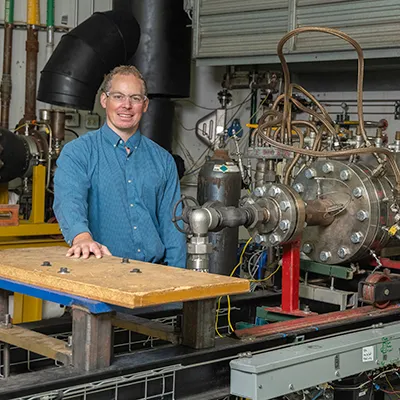
Lieuwen and his research group are developing a new type of all-purpose combustor that can use any type of fuel while still maintaining low emission standards. Their non-premixed, rich, relaxation, lean (NRRL) combustor works just as well as current mixed-fuel type combustors — but without instability.
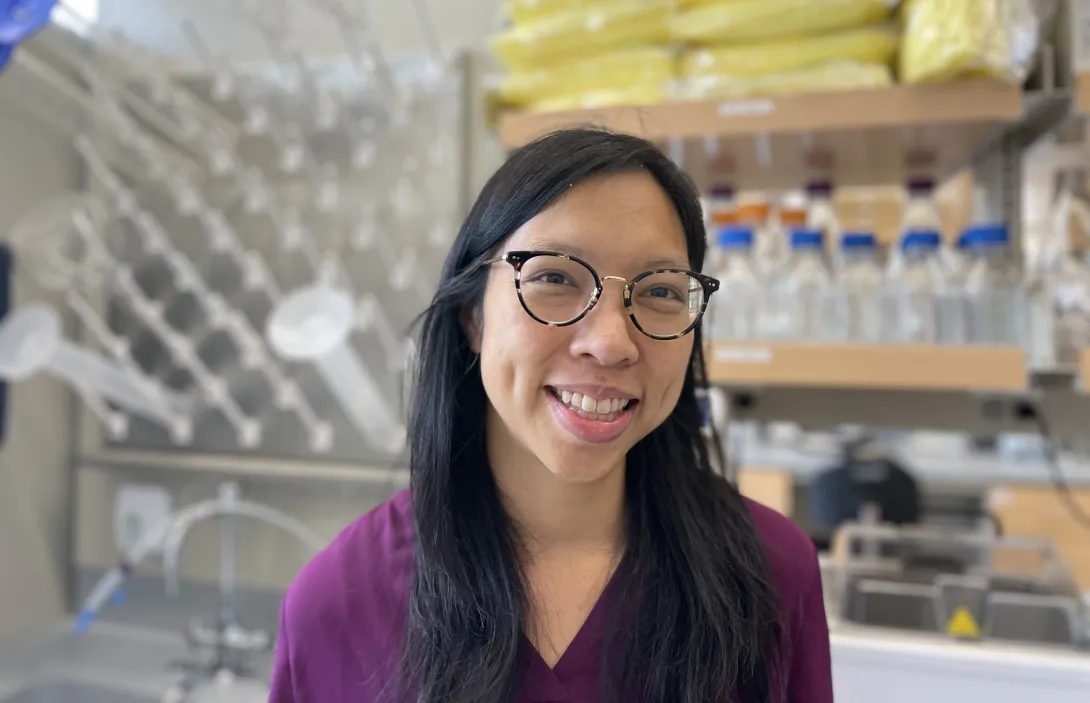
When we lose one sense, like vision, do our other senses get stronger? Ming-fai Fong is using her NSF CAREER Award to find out. Photo by Jerry Grillo
Ming-fai Fong has always been interested in what she thinks of as the existential struggle embedded in her research; this notion of focusing simultaneously on the science and the people it can impact.
It turns out, the struggle is more like a loop, with the research impacting the people, and the people impacting the direction of the research.
“I’m interested in how things work, in the science, in exploring and researching. But I always ask myself, ‘what or who am I doing this for?’ So, I try my best to stay connected with the community, with the people whose health and wellbeing we’re ultimately working to improve,” said Fong, assistant professor in the Wallace H. Coulter Department of Biomedical Engineering at Georgia Tech and Emory University.
Fong’s desire to stay connected to communities through her work manifested while she was an undergraduate mechanical engineering student at M.I.T. She wanted to make assistive devices for individuals with disabilities. So, she moved to northwestern Mexico for a fellowship designing wheelchairs for people who had been impacted by drug violence in the region.
That experience indirectly led her to the Coulter Department, where the Fong lab studies how activity and experience shape brain circuits, with the goal of developing treatments for neurological disorders. Currently, her team is investigating the central visual pathway and visual impairments.
And when they aren’t working on research, Fong and the students in her lab volunteer with the Center for the Visually Impaired and Georgia Blind Sports Association. And whether they are repairing specialized typewriters called Braillers or working with athletes and coaches at a goalball match, those activities are helping to guide the research. It’s all part of the existential loop.
“Our latest research proposal really grew out of our interactions with the blind and visually impaired community in Atlanta,” said Fong, who recently won a National Science Foundation CAREER Award, and will use the funding to support her lab’s study of plasticity — the ability to adapt and learn — in the adult brain.
“We were inspired by the residual sensory abilities of many people we’ve interacted with,” Fong added. “For example, some visually impaired people may develop a heightened sense of hearing. Motivated by a lack of accommodations and infrastructure for this community, we want to study how these enhanced sensory capacities emerge in people with irreversible visual impairment."
Plasticity City
While Fong is referring to a lack of real-world infrastructure suitable for blind and visually impaired people, the concept is an appropriate metaphor when explaining the brain and plasticity.
Think of the brain as a growing city when we’re young, constantly under construction, new infrastructure rapidly emerging everywhere. This is known as the “critical period.” When we’re children, that’s a period time when the brain is very adaptable and capable of easily learning new things. As our brains age (or the city grows), development slows down — because neuroplasticity decreases as we get older.
When you experience vision loss, it’s kind of like what happens when a major road closes and the city has to work quickly to find other routes to keep traffic moving. When vision is lost, the flexible brain reconfigures itself to adapt, finding new ways to process information through other senses, like hearing.
But it’s a matter of timing, a window of opportunity that Fong and her team want to keep open, if possible.
“We want to understand the critical period, and how this reconfiguration process works,” said Fong. “Ultimately, we think that by depriving the brain of one sense, like vision, we can reopen the critical period, making the brain more adaptable again, even in adulthood.”
To test their ideas, Fong’s team will observe how the brains of mice change when vision is impaired, paying close attention to areas of the brain responsible for hearing.
“Hopefully, we can reveal new ways to help people with sensory impairments by making their brains more adaptable, like they were in childhood,” said Fong, who is quick to point out a common misconception: losing your vision does not automatically improve your audition, or sense of hearing.
Yes, there are people with vision loss who learn to expertly use echolocation — making sounds and listening to the echoes — to navigate their surroundings. But that may be the exception, particularly when thinking of people who lose their vision as adults.
“For every one of those stories, there are 100 others in which someone can’t tell you what direction a sound is coming from,” said Fong.
In addition to studying ways to identify and leverage the critical period of plasticity, Fong will use the CAREER Award to help support her lab’s education initiatives targeting blind and visually impaired youth. With hands-on Brailler repair workshops and multi-sensory teaching tools, the program seeks to create inclusive learning environments for all non-visual learners, while promoting broader diversity in STEM fields.
Beyond the lab and the research, Fong is considering her initial motivation for the work, “the lack of inclusive infrastructure for individuals with disabilities. One long term goal we have is to provide a neuro-scientific basis for advocating for improved accommodations,” she said. “If our work can help make it possible for this remarkable community to participate in and contribute to society more broadly, that would be huge.”
News Contact
Jerry Grillo
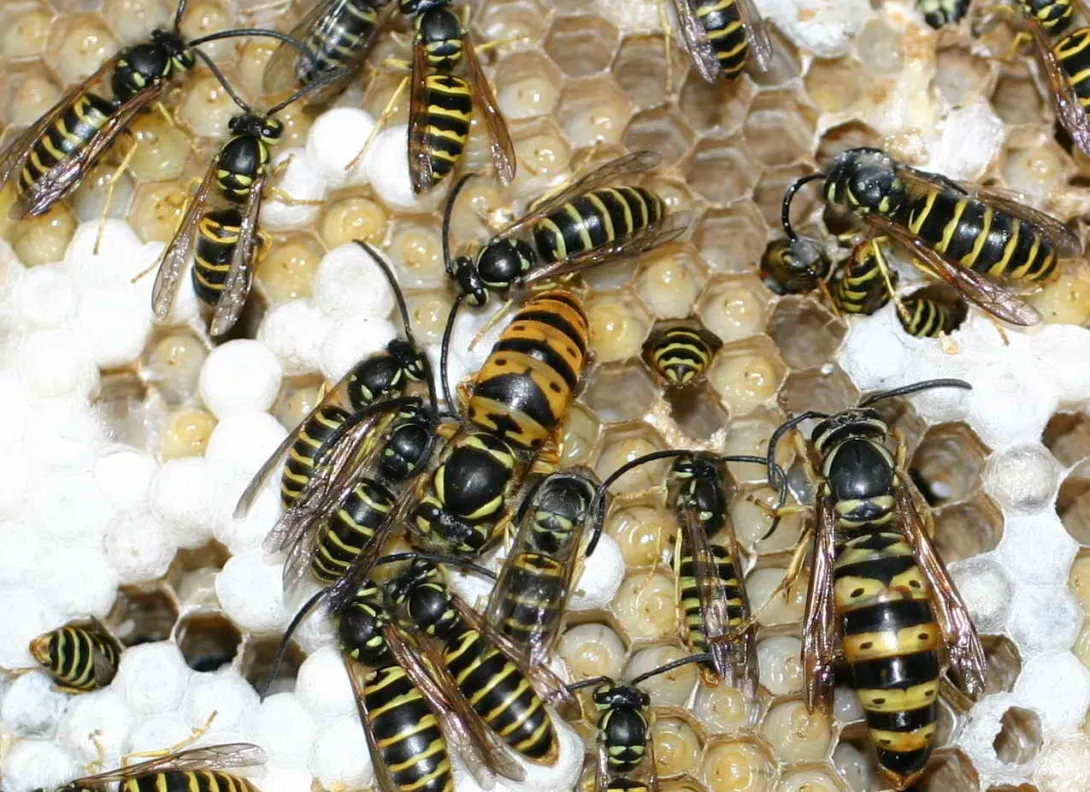
Photo courtesy of Goodisman Research Group.
The most recognizable yellow jacket at Georgia Tech is made of fabric and foam, but Professor Mike Goodisman and a team of researchers revealed a far more complex cellular structure by successfully sequencing the genome of two local species of yellow jacket wasps — Vespula squamosa (the southern yellow jacket) and Vespula maculifrons (the eastern yellow jacket).
Having the genome sequences of yellow jacket wasps expands biologists' understanding of the behaviors and evolution of social insects, including the intricacies of the caste system made up of queens, males, and workers.
"The genome is fundamental for a lot of questions that we ask," Goodisman said.
The research, published in Annals of the Entomological Society of America, identifies rates of gene evolution among the different species, which Goodisman says could offer explanations for the various roles each wasp plays in their colonies as well as their ability to adapt and thrive in different environments. Variations in the genomes will also help scientists dissect the interactions between the two local species.
Southern and eastern yellow jacket queens produce all caste members in the colony, and while mated queens from both species hibernate in the winter following the decline of their colonies, V. squamosa will stay in hibernation slightly longer. Southern queens then actively seek out established eastern yellow jacket nests, kill the resident queen, and take over her colony. Goodisman and his research team hope the genome provides insight into the southern queens’ parasitic behavior.
The typical colony will survive six to eight months, but in certain climates, colonies can outlast the winter months to become "supercolonies." These larger colonies take on multiple queens as they grow to the size of a couch or a car. Goodisman's team will use the genome to look for clues as to how these supercolonies thrive for multiple years and how natural selection operates in the two species.
Throughout the study, Goodisman relied on the Georgia Tech community's shared interest in the social insect to gather the necessary samples. Through ads in The Whistle and other campus publications, he collected yellow jacket wasps’ nests from faculty, staff, and alumni, in addition to samples from around the region. DNA was extracted from individual wasp samples and then sent to the University of Georgia for DNA sequencing. The resulting genomes, which are about 200 million base pairs in length, were then jointly analyzed by scientists at Georgia Tech and the University of Georgia.
“When you get the data back, you get these long sequences of the building blocks of DNA. Part of the game is putting that together like a puzzle, and then we analyze the sequence to figure out what it means,” he said.
With the genome sequenced, the team can then compare the local species to each other and all species of yellow jacket wasps worldwide. Unlike honeybees, yellow jacket wasps are not considered significant pollinators, but because their diet consists of insects and carrion, Goodisman explains that understanding their place in the ecosystems they inhabit is equally important.
He is enthused to be on a campus that shares his interest in the group of social insects known as Hymenoptera. That interest led him to study insects like fruit flies at Cornell University and fire ants at the University of Georgia before beginning his postdoctoral research on other members of the Hymenoptera order.
Now, when discussing his research with members of the Georgia Tech community, he finds himself answering one question more than any other. His response is always the same. "Because of the stinger, Buzz is anatomically female."
And while he can't definitively say which species of yellow jacket the mascot would be, Goodisman said Buzz's feisty nature would lean toward the more aggressive and charismatic southern yellow jacket, V. squamosa.
News Contact
Steven Gagliano - Institute Communications