
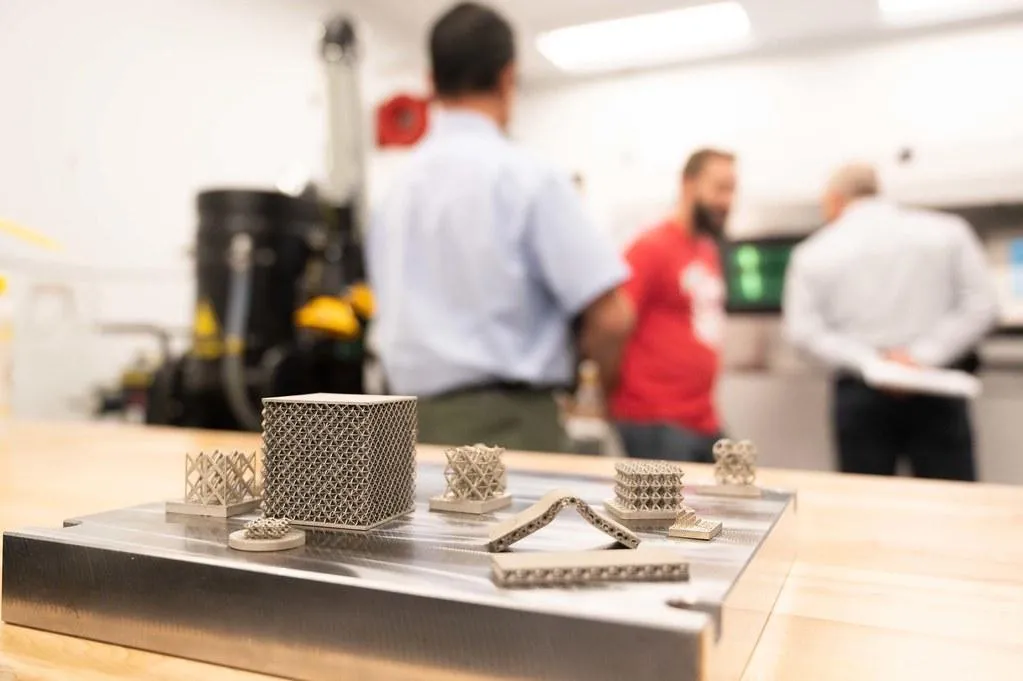
High-performance parts used in aerospace and defense systems need to be precise and durable, even with complex geometries. Advanced manufacturing methods enable the production of complicated parts that traditional machining can't achieve, like those seen here at GTMI's Advanced Manufacturing Pilot Facility. (Photo by Georgia Tech)

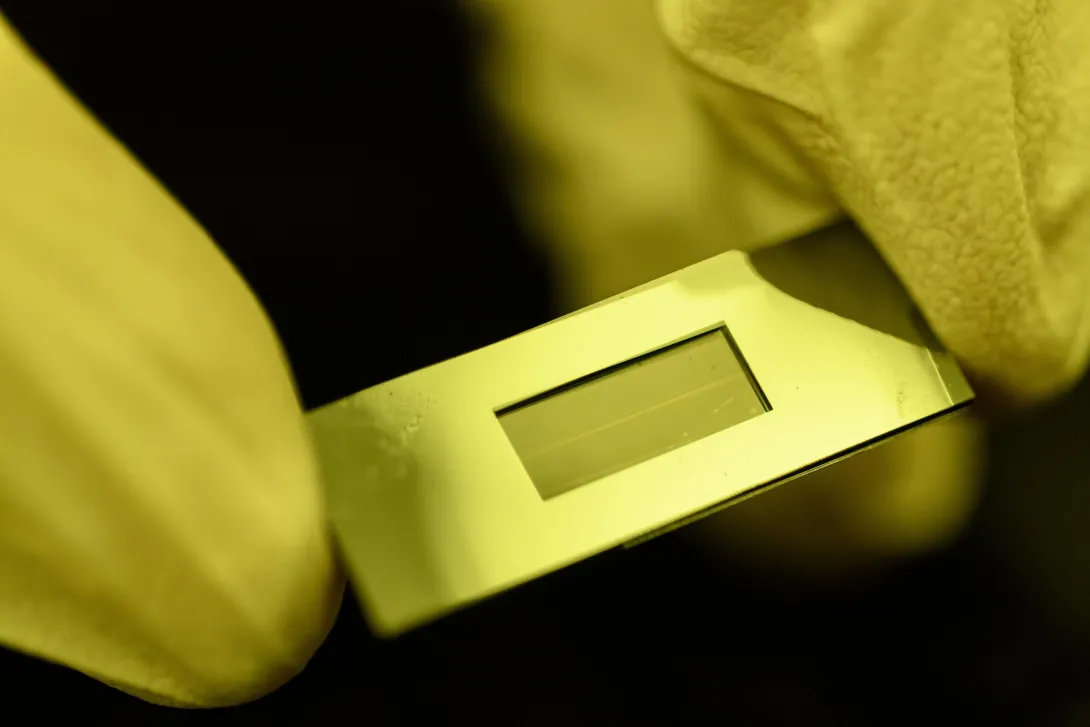
Collaborative research at the Georgia Tech Manufacturing Institute teamed is working to improve the finishing processes for hard to machine metals like tungsten. (Photo via Halocarbon)
From fighter jets to medical devices, today’s most advanced machines depend on parts as intricate as their missions. These components aren’t just geometrically complex — they’re made from specialized metals engineered to withstand extreme heat, friction, and wear. But that strength comes with a challenge. How do you shape metals tough enough to survive the heat of a jet engine?
One solution is to start with a more moldable form of these super-metals: powder. In a specialized form of additive manufacturing (like 3D printing), manufacturers start with fine metal powders and fuse them, layer by layer, using focused energy. Known as powder bed fusion (PBF), this method enables highly complex shapes and reduces the amount of finishing work needed. Still, when a micron of extra material can make or break the final product, even near-perfect parts require precise finishing touches.
“The introduction of new, exotic materials produced through additive manufacturing has brought unique challenges, especially for applications in space and missile systems,” says David Antonuccio, business development director at Halocarbon, a Georgia-based company producing advanced chemical solutions used in manufacturing and other fields. “While these materials offer distinct properties, they are notoriously difficult to machine.”
That’s where the Georgia Tech Manufacturing Institute (GTMI) comes in. Through its Manufacturing 4.0 Consortium, GTMI connects industry manufacturers like Halocarbon with researchers and innovators to tackle real production challenges like this. Membership includes access to GTMI’s Advanced Manufacturing Pilot Facility (AMPF), where companies can test ideas and collaborate on new solutions.
Halocarbon recently teamed up with Freemelt, a leader in producing PBF systems and a fellow consortium member, to address this bottleneck. Their goal: to determine whether Halocarbon’s specialized metalworking fluids could enhance the finishing process for PBF-manufactured parts made from tungsten and molybdenum, two high-temperature, hard-to-machine metals.
“The future of manufacturing depends on how well we integrate talent, technology, and collaboration,” says Steven Ferguson, interim director of Research Operations at GTMI and managing director of the consortium. “By bringing companies together around shared challenges, we’re closing critical gaps and strengthening the nation’s advanced manufacturing capability.”
Solving the Post-Processing Bottleneck
Even with advanced methods like electron beam powder bed fusion (E-PBF), which uses an electron beam to fuse metal powders inside a vacuum chamber, finishing remains a critical hurdle. “Surface finish in powder bed fusion is fundamentally tied to the particle size of the metal powder,” says Ian Crawford, a materials and application engineer at Freemelt. “Post-processing will almost always be part of the equation for high-performance components.”
In traditional machining, coolants and cutting fluids used in these finishing steps are often overlooked, and the methods haven’t changed much in decades. Halocarbon’s metalworking fluid aims to bring these fluids into a new era, using innovative polymer chemistry to extend tool life, improve surface quality, and boost efficiency when machining these challenging alloys.
The two companies initiated their joint project during their free AMPF equipment use time, which comes with the full level of consortium membership. From there, GTMI designed and executed controlled studies comparing the use of Halocarbon’s fluids to two standard finishing methods, dry machining and EDM-based finishing. The results showed a 6% improvement in side milling and a 26% improvement in end milling versus dry machining, with even greater gains over EDM. These improvements translate into higher-quality parts, tighter specifications, lower scrap rates, extended tool life, and reduced downstream costs — exactly what aerospace and defense suppliers need to meet stringent requirements.
The findings were shared at the 2025 National Space & Missile Materials Symposium, reinforcing the value of industry-academic collaboration.
“Industry keeps pushing materials to handle more heat and stress, but that makes post-processing harder,” says Matt Carroll, one of the GTMI researchers on the project. “By bringing equipment makers and chemistry innovators into the same experiment, we were able to prove where the gains really are and give manufacturers data they can act on.”
“No single manufacturing method solves every challenge,” says Crawford. “To achieve the performance and cost targets that aerospace and defense applications demand, we need to bring together the right combination of technologies, and collaborations like this show what's possible when we do.”
News Contact
Writer: Audra Davidson
Research Communications Program Manager
Georgia Tech Manufacturing Institute
Contact: Belinda Vogel
Research Engagement Manager
Georgia Tech Manufacturing Institute
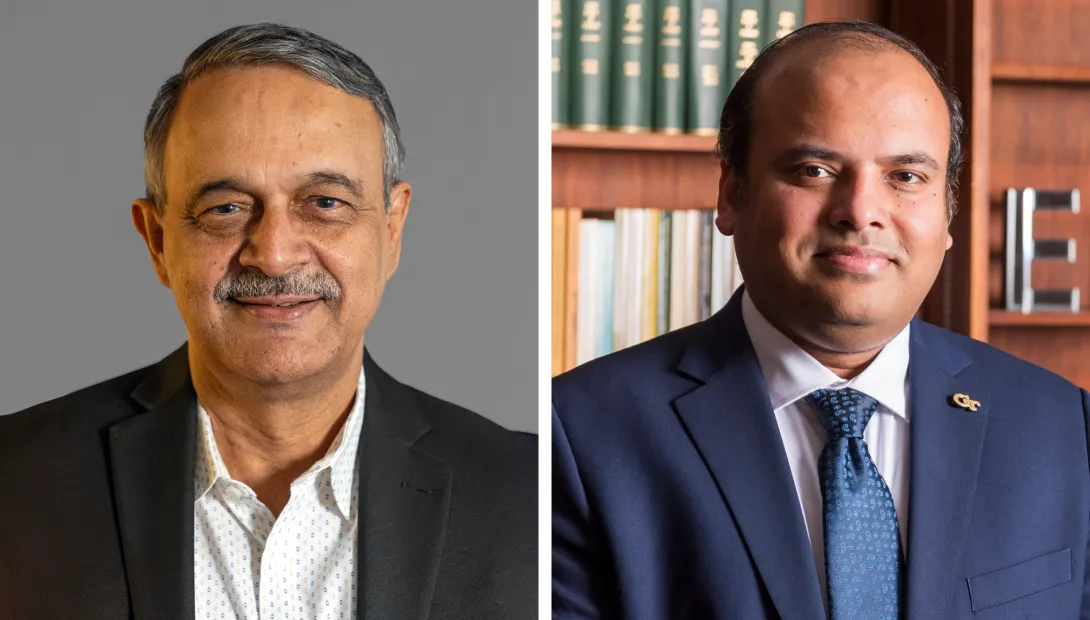
The National Academy of Inventors is honoring two Georgia Tech faculty members for their contributions to technology and society: Deepakraj “Deepak” Divan and Arijit Raychowdhury. Both are in the School of Electrical and Computer Engineering.
Raychowdhury is a semiconductor pioneer whose patented circuit and system-on-chip designs have advanced computing efficiency and commercialization. Divan is a global leader in power electronics and grid modernization, whose innovations and ventures have transformed how electricity is delivered and managed worldwide.
“Congratulations to Deepakraj and Arijit on earning one of the most esteemed accolades in technology and discovery. Their groundbreaking work, with nearly 100 patents between them, advances solutions to global challenges,” said Raghupathy “Siva” Sivakumar, chief commercialization officer at Georgia Tech. “Their success exemplifies how research commercialization drives real-world impact, and we’re proud to see them honored as academy fellows.”
Election to NAI is the highest professional distinction specifically awarded to inventors. With this recognition, Georgia Tech’s roster of NAI Fellows grows to 24. Divan and Raychowdhury join a 2025 class of 169 new fellows representing university, government, and nonprofit organizations worldwide. They will be inducted at the NAI 15th Annual Conference on June 4, 2026, in Los Angeles.
Deepakraj “Deepak” Divan
Professor Emeritus (2004-2025)
Georgia Research Alliance Eminent Scholar
School of Electrical and Computer Engineering
Founder, Georgia Tech Center for Distributed Energy
Deepakraj “Deepak” Divan is a globally recognized innovator in power electronics and grid transformation. He was awarded the IEEE Medal in Power Engineering in 2024.
He holds over 85 U.S. and international patents and has authored 400 refereed publications. His pioneering work on soft‑switching converters—integral for efficient energy storage, EV charging, and industrial controls—has spurred a global $70 billion power electronics industry.
Divan laid the groundwork for grid‑forming inverter control, enabling high-renewables integration. He is the co-author of Energy 2040: Aligning Innovation, Economics and Decarbonization, named by Forbes as one of the “10 Essential Books and Podcasts Every Leader Needs in 2025”.
“Being named an NAI Fellow is a tremendous honor,” said Divan. “It reflects years of effort to rethink how electricity is delivered and managed to solve real problems and to drive practical innovations that matter.”
As the founder of Georgia Tech’s Center for Distributed Energy, he led research that transforms electricity delivery through analytics, monitoring, and optimization.
An entrepreneur, Divan co-founded Varentec (backed by Bill Gates and Khosla Ventures) and seeded ventures including GridBlock, Soft Switching Technologies, Innovolt, and Smart Wires—raising over $500 million. A National Academy of Engineering member and IEEE Fellow, he champions scalable energy-access solutions worldwide.
Arijit Raychowdhury
Professor and Steve W. Chaddick School Chair
School of Electrical and Computer Engineering
Director, Center for the Co-Design of Cognitive Systems
Arijit Raychowdhury has been the Steve W. Chaddick School Chair of ECE since 2021. He is a leading innovator in semiconductor technologies, holding more than 27 U.S. and international patents and authoring over 350 publications.
His work spans low-power circuits, specialized accelerators, and system-on-chip design, with breakthroughs widely adopted in industry.
“This recognition reflects the collective effort of students, colleagues, and partners who share a vision for advancing microelectronics,” said Raychowdhury. “I am honored that NAI champions the same mission to lead through research, education, and innovation."
At Texas Instruments, he developed the world’s first adaptive echo-cancellation network for integrated Digital Subscriber Lines (DSL)—a patented technology that enabled high-speed internet over traditional phone lines that received the EDN Innovation of the Year award. At Intel, he developed and incorporated foundational memory and logic technologies that shaped commercial products across global markets for more than a decade.
His research on fine-grain power management of systems-on-chip at Georgia Tech has been licensed and widely adopted by the semiconductor industry.
He directs Georgia Tech’s Center for the Co-Design of Cognitive Systems and leads initiatives to advance microelectronics design with applications to AI. Over the years, he has served as a founding advisor and board member to multiple startups in the areas of edge-computing and low power design.
Raychowdhury’s research bridges invention and real-world impact, earning him numerous honors, including IEEE Fellow, Semiconductor Research Corporation Technical Excellence Award, and multiple industry awards. Through pioneering designs and mentorship, he continues to drive innovation in computing systems, influencing both academic research and industrial commercialization.
News Contact
Dan Watson
Proteins, including antibodies, hemoglobin, and insulin, power nearly every vital aspect of life. Breakthroughs in protein research are producing vaccines, resilient crops, bioenergy sources, and other innovative technologies.
Despite their importance, most of what scientists know about proteins only comes from a small sample size. This stands in the way of fully understanding how most proteins work and unlocking their full potential.
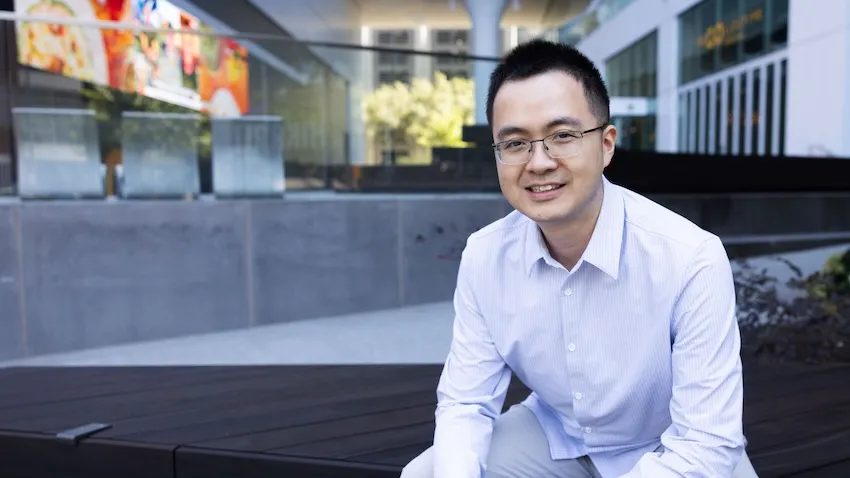
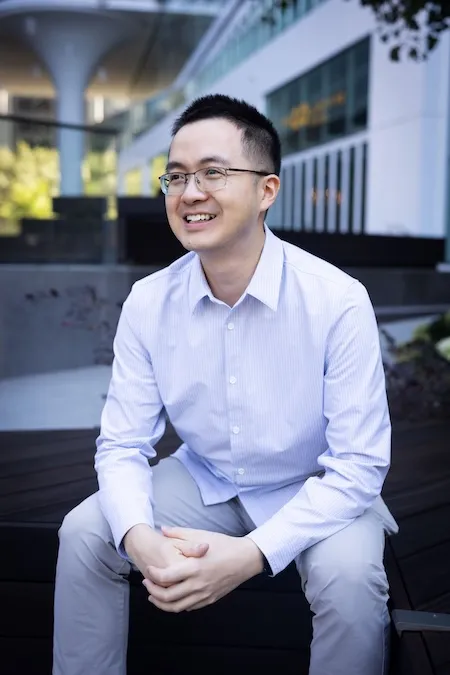
Georgia Tech’s Yunan Luo believes artificial intelligence (AI) could fill this knowledge gap. The National Science Foundation agrees. Luo is the recipient of an NSF Faculty Early Career Development (CAREER) award.
“So much of biology depends on knowing what proteins do, but decades of research have concentrated on a relatively small set of well-studied proteins. This imbalance in scientific attention leads to a distorted view of the biological landscape that quietly shapes our data and our algorithms,” Luo said.
“My group’s goal is to build machine learning (ML) models that actively close this gap by generating trustworthy function predictions for the many proteins that remain understudied.”
[Related: Yunan Luo to use AI for Protein Design and Discovery with Support of $1.8 Million NIH Grant]
In his proposal to NSF, Luo coined this rich-get-richer effect “annotation inequality.”
One problem of annotation inequality is that it slows progress in disease prognosis, drug discovery, and other critical biomedical areas. It is challenging to innovate the few proteins that scientists already know so much about.
A cascading effect of annotation inequality is that it diminishes the effectiveness of studying proteins with AI.
AI methods learn from existing experimental data. Datasets skewed toward well-known proteins propagate and become entrenched in models. Over time, this makes it harder for computers to research understudied proteins.
“Protein annotation inequality creates an effect analogous to a vast library where 95% of patrons only read the top 5% popular books, leaving the rest of the collection to gather dust,” Luo said.
“This has resulted in knowledge disparities across proteins in current literature and databases, biasing our understanding of protein functions.”
The NSF CAREER award will fund Luo with over $770,000 for the next five years to tackle head-on the problem of protein annotation inequality.
Luo will use the grant to build an accurate, unbiased protein function prediction framework at scale. His project aims to:
- Reveal how annotation inequality affects protein function prediction systems
- Create ML techniques suited for biological data, which is often noisy, incomplete, and imbalanced
- Integrate data and ML models into a scalable framework to accelerate discoveries involving understudied proteins
More enduring than the ML framework, Luo will leverage the NSF award to support educational and outreach programs. His goal is to groom the next generation of researchers to study other challenges in computational biology, not just the annotation inequality problem.
Luo teaches graduate and undergraduate courses focused on computational biology and ML. Problems and methods developed through the CAREER project can be used as course material in his classes.
Luo also championed collaboration with Georgia Tech’s Center for Education Integrating Science, Mathematics, and Computing (CEISMC) in his proposal.
Through this partnership, local high school teachers and students would gain access to his data and models. This promotes deeper learning of biology and data science through hands-on experience with real-world tools.
Luo sees reaching students and the community as a way of paying forward the support he received from Georgia Tech colleagues.
“I am incredibly grateful for this recognition from the NSF,” said Luo, an assistant professor in the School of Computational Science and Engineering (CSE).
“This would not have been possible without my students and collaborators, whose hard work laid the groundwork for this proposal.”
Luo praised CSE faculty members B. Aditya Prakash, Xiuwei Zhang, and Chao Zhang for their guidance. All three study machine learning and computational bioscience, two of CSE’s five core research areas.
Luo also thanked Haesun Park for her support and recommendation for the CAREER award. Park is a Regents’ Professor and the chair of the School of CSE.
News Contact
Bryant Wine, Communications Officer
bryant.wine@cc.gatech.edu

Most breakthroughs in space don’t begin as fully formed missions. They begin as questions that are still early, exploratory or simply too uncertain and interdisciplinary for traditional funding paths.
At Georgia Tech, the Space Research Institute (SRI) brings together space research efforts across campus to answer those questions.
This year, SRI announced the inaugural recipients of its new Centers, Programs and Initiatives (CPI) seed grant program, with awards to fund 17 research centers, programs and initiatives spanning five colleges and 11 schools across Georgia Tech.
“This first cohort represents the breadth and ambition of space research at Georgia Tech,” said Jud Ready, executive director of the Space Research Institute. “Our goal is to support researchers across the whole arc, from pressure-testing early ideas to helping more mature efforts reach the next stage of technology readiness and development.”
Structured across three progressive tiers—Centers, Programs, and Initiatives—the CPI Seed Grant program is open to all faculty and staff from any Georgia Tech college or affiliated organization, including the Georgia Tech Research Institute (GTRI) and the Enterprise Innovation Institute (EI²). Launched this year and planned as an annual program across all three tiers, it is designed to meet teams where they are and to help promising ideas gain the collaboration networks needed to scale into major research efforts.
This year’s awardees explore topics across the spectrum of modern space research, covering satellite-based cloud computing, analog space missions, supermassive black hole binaries, radar-equipped rovers for lunar exploration, climate sensing, human performance beyond Earth, and a dozen other space-related research areas at Georgia Tech.
Together, the projects map onto SRI’s core themes: making space more accessible; living beyond Earth; assured access to space; how space helps us understand our place in the universe; policy, international affairs, and commercialization.
During their funding period, CPI teams are expected to demonstrate excellence across three core areas: advancing scientific and technological innovation, developing talent, and pursuing work with clear societal or economic relevance. That may take many forms, from publications, prototypes, and interdisciplinary mentorship opportunities to training students and postdocs in space-related skills, to laying the groundwork for commercialization, or addressing challenges such as climate change or disaster mitigation.
Each team will use its funding differently—supporting workshops on campus, conference travel, prototyping, experimentation, or visits with collaborators or sponsors —but all share a common trajectory. The CPI program is designed to nurture teams into viable, externally funded, multi-investigator research efforts, providing the momentum needed to compete for major national and international awards.
With these 17 seed grants, SRI is creating pathways for ideas that begin on campus to shape missions, technologies, and scientific discoveries beyond it.
Faculty and staff interested in getting involved can attend the January 28 SRI luncheon, where each awardee will briefly present their work and recruit collaborators.
The Fall 2025 SRI CPI Seed Grant recipients are:
Research Centers
Research Programs
Compartments in Biological Systems: From Condensates to Communities | Frank Rosenzweig, School of Biological Sciences
Research Initiatives
Using Art to Highlight Failure as Progress in Space Exploration | Joyce Shi Sim, School of Earth and Atmospheric Sciences
Flow Instabilities and Fluid Dynamics for Space Applications | Suhas S. Jain, George W. Woodruff School of Mechanical Engineering; Mohammad Mohaghar, School of Civil and Environmental Engineering; and Don Webster, School of Civil and Environmental Engineering
Extreme-Environment Autonomous Microsystems | John Cressler, Farrokh Ayazi, Nima Ghalichechian, and Jane Gu, School of Electrical and Computer Engineering; and Joshua Kovitz, Georgia Tech Research Institute
Southeast Analog Initiative at Georgia Tech | Christopher Carr, Daniel Guggenheim School of Aerospace Engineering
RESCUE: Remote Environmental Sensing for Climate, Urban, and Ecological Systems | Lilian Dove, School of Earth and Atmospheric Sciences; and Rounaq Basu, School of City and Regional Planning
SPRITE: Building a MIDEX Astrophysics Mission at Georgia Tech | Feryal Özel, School of Physics
Bioastronautics Initiative | Christopher E. Carr, School of Aerospace Engineering, School of Earth and Atmospheric Sciences; Thom Orlando, School of Chemistry and Biochemistry; and Álvaro Romero-Calvo, School of Aerospace Engineering
Toward a Georgia Tech NSF Expedition on Computing in Space | Ada Gavrilovska, School of Computer Science; and Saman Zonouz, School of Cybersecurity and Privacy
FulminoSat: A CubeSat Formation Concept for Ionospheric Measurement through Multi-Modal Transient Signal Detection | Michael Peterson, Megan Birch, and Levi Boggs, Georgia Tech Research Institute; and Morris Cohen, School of Electrical and Computer Engineering
Precise Characterization of Dust Grains for Lunar Surface Operations | Álvaro Romero-Calvo, School of Aerospace Engineering; and Michael Chapman, School of Physics
Space Domain Awareness Research and Education | Douglas Hope, Georgia Tech Research Institute (GTRI)
Development of a Radar Payload for Exploring Lunar and Martian Surfaces Using Rovers and Quadrotors | Indujaa Ganesh, School of Earth and Atmospheric Sciences; and Yashwanth Kumar Nakka, Daniel Guggenheim School of Aerospace Engineering
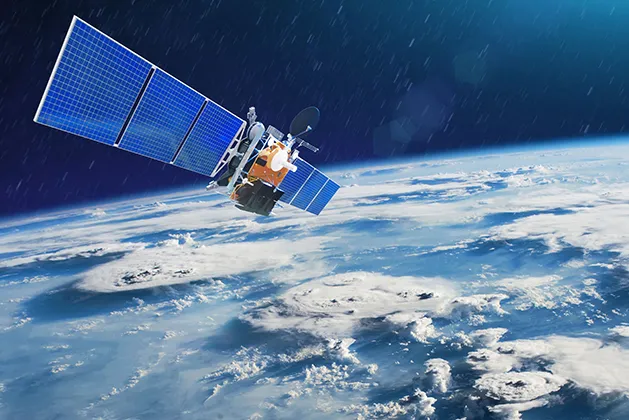
Satellites keep our world connected — enabling everything from accurate weather forecasts to seamless video calls. At Georgia Tech’s Space Research Institute, researchers are advancing the science and shaping global policies that ensure these vital systems remain safely in orbit.
When we check the weather forecast, that information comes from satellites. When we FaceTime a friend, that call could come via satellites. From cellphone networks to national security systems, satellites are vital to our connected globe. Yet regulating how satellites function across borders is almost as complicated as the technology that launches them into space. Researchers in Georgia Tech’s Space Research Institute are shaping how satellites operate, both scientifically and politically.
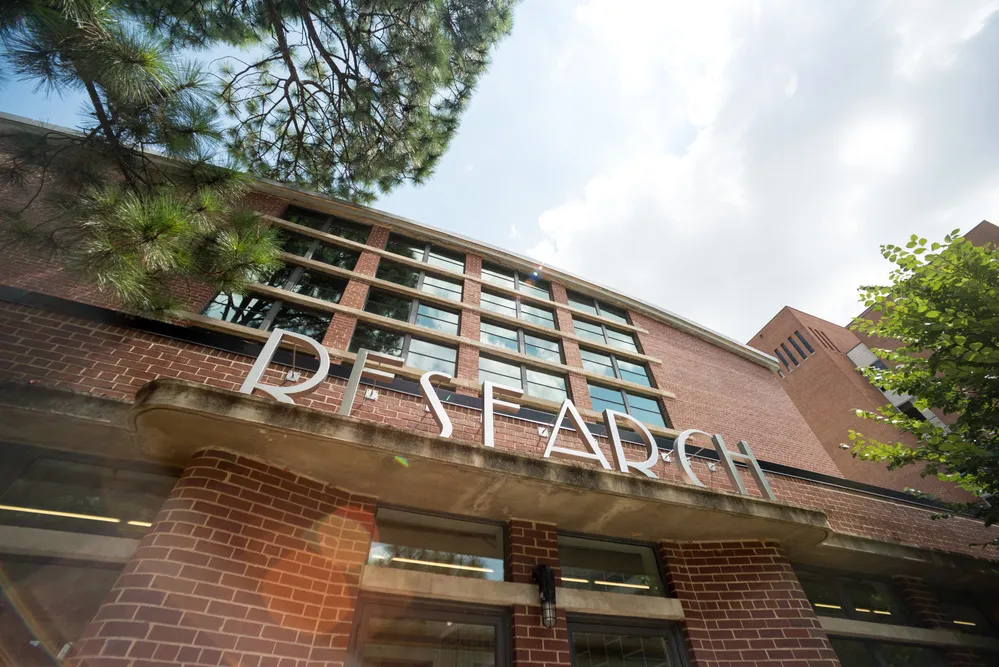
Georgia Tech proudly announces its faculty who have been named to the Clarivate Highly Cited Researchers 2025 list. This list is a global recognition of scholars with work among the top 1% most cited within their fields. This distinction demonstrates Georgia Tech’s leadership in advancing research with broad and lasting impact.
The Institute’s highly cited researchers include:
- Ian F. Akyildiz - retired professor, Electrical and Computer Engineering
- Antonio Facchetti – professor, Hightower Chair, Materials Science and Engineering
- Maohong Fan – adjunct professor, Civil and Environmental Engineering
- Konstantinos Konstantinidis – professor, Environmental Engineering
- Nian Liu – associate professor and Robert G. Miller Faculty Fellow, Chemical and Biomolecular Engineering
- Anant Madabhushi – professor, Biomedical Engineering
- H. Jerry Qi – Woodruff Professor, Mechanical Engineering
- Rampi Ramprasad – Regents’ Entrepreneur, Materials Science and Engineering
- Rodney J. Weber – professor, Earth and Atmospheric Sciences
- C.P. Wong – Charles Smithgall Institute Endowed Chair and Regents’ Professor, Materials Science and Engineering
“Our faculty’s recognition among the world’s most highly cited demonstrates Georgia Tech’s commitment to pioneering discoveries and solving complex global challenges through research,” said Tim Lieuwen, executive vice president for Research. “Congratulations to each of them on this impressive achievement.”
Clarivate’s annual list identifies researchers whose published work demonstrates exceptional influence, based on citation data from the Web of Science Core Collection over the past 11 years. These scholars have authored multiple Highly Cited Papers, which are publications consistently ranked in the top 1% by citations in their respective fields.
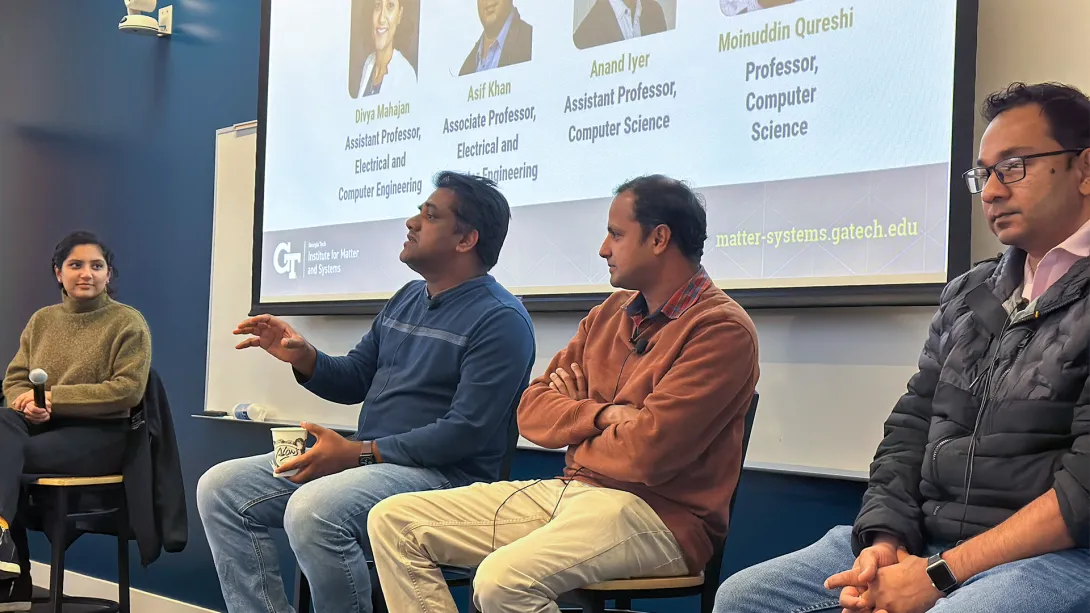
The Institute for Matter and Systems (IMS) hosted the inaugural Boundaries and Breakthroughs panel on Nov. 11, setting the stage for a new era of interdisciplinary dialogue at Georgia Tech. The event, held in the Marcus Nanotechnology building, brought together experts in electrical engineering, computer architecture, and computer systems design to tackle one of today’s pressing challenges: artificial intelligence (AI) scalability and sustainable high-performance computing.
As one of Georgia Tech’s 11 interdisciplinary research institutes, IMS is designed to break down silos between traditional academic units. By operating core user facilities and fostering collaborative research, IMS creates a unique ecosystem where device-level innovation meets systems-level design. This event personified that mission by connecting researchers who typically work on different ends of the stack.
“We’re looking for opportunities to bring people together to have discussions that are both informative and potentially create a little bit of friction in the best possible way around trending topics in science and engineering,” said Mike Filler, IMS deputy director, during opening remarks.
The panel was moderated by Divya Mahajan, assistant professor in the School of Electrical and Computer Engineering, and featured Moinuddin Qureshi, professor of computer science; Anand Iyer, assistant professor of computer science; and Asif Khan, associate professor in electrical and computer engineering.
The discussion explored the dynamics between compute abundance and energy constraints. As AI models scale up, power consumption has become a societal issue, driving up energy demands and even influencing political conversations. The panelists agreed that the bottleneck isn’t compute — a computer’s ability to process and execute tasks — but data movement. Moving data uses 100 to 1,000 times more energy than computation, making memory systems the critical frontier.
The conversation highlighted how breakthroughs in compute must occur at every layer — from individual devices to full computer systems. At the device level, Khan mentioned emerging memory technologies and “beyond CMOS” approaches such as embedding compute within memory and exploring bio-inspired architectures.
From a computer architecture level, Qureshi advocated rethinking interfaces and creating designs optimized for the future of computing. AI needs regular patterns to work optimally, and current patterns are not set up for that.
“If you want efficiency, design systems that make sense for AI,” Qureshi said. “Develop new interfaces, develop new modules, architectures, and organization that make for a specific pattern.”
At the systems level, Iyer stressed practical strategies like near-memory compute and energy-aware scheduling while acknowledging the need for co-design between hardware and software.
“Now in terms of brains or bio-inspired computing, my conjecture is that there is currently no hardware that is capable of doing it,” Khan said. He also noted that right now, there is no computer or algorithm that has the scale of computing comparable to human brain power.
The panelists didn’t shy away from provocative ideas — such as whether graphic processing units are the final solution for AI and whether matrix multiplication alone can lead to artificial general intelligence. While opinions varied, all agreed that organizations like IMS are key to bringing together diverse expertise to tackle these questions collaboratively.
The Boundaries and Breakthroughs series continues in January with a panel on bioelectronics and medical technologies, reinforcing IMS’s commitment to fostering dialogue that spans the full spectrum of innovation.
News Contact
Amelia Neumeister | Research Communications Program Manager
The Institute for Matter and Systems
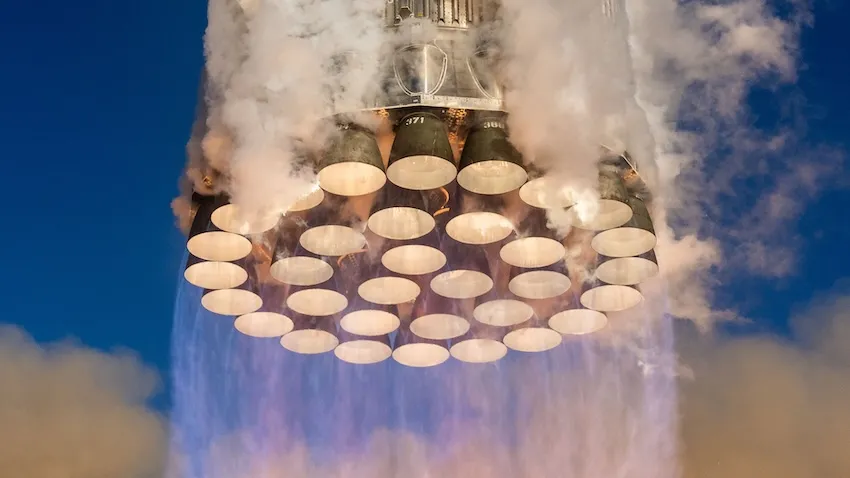
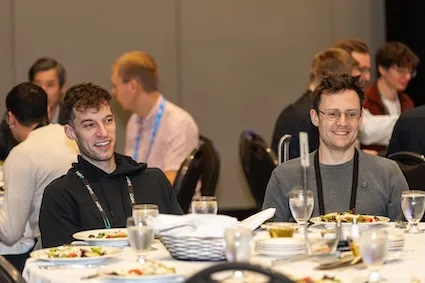
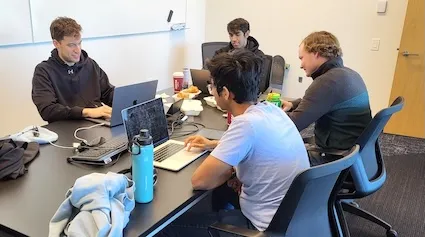
Spaceflight is becoming safer, more frequent, and more sustainable thanks to the largest computational fluid flow simulation ever ran on Earth.
Inspired by SpaceX’s Super Heavy booster, a team led by Georgia Tech’s Spencer Bryngelson and New York University’s Florian Schäfer modeled the turbulent interactions of a 33-engine rocket. Their experiment set new records, running the largest ever fluid dynamics simulation by a factor of 20 and the fastest by over a factor of four.
The team ran its custom software on the world’s two fastest supercomputers, as well as the eighth fastest, to construct such a massive model.
Applications from the simulation reach beyond rocket science. The same computing methods can model fluid mechanics in aerospace, medicine, energy, and other fields. At the same time, the work advances understanding of the current limits and future potential of computing.
The team finished as runners-up for the 2025 Gordon Bell Prize for its impactful, multi-domain research. Referred to as the Nobel Prize of supercomputing, the award was presented at the world’s top conference for high-performance computing (HPC) research.
“Fluid dynamics problems of this style, with shocks, turbulence, different interacting fluids, and so on, are a scientific mainstay that marshals our largest supercomputers,” said Bryngelson, an assistant professor with the School of Computational Science and Engineering (CSE).
“Larger and faster simulations that enable solutions to long-standing scientific problems, like the rocket propulsion problem, are always needed. With our work, perhaps we took a big dent out of that issue.”
The Super Heavy booster reflects the space industry’s move toward reusable multi-engine first-stage rockets that are easier to transport and more economical overall.
However, this shift creates research and testing challenges for new designs.
Each of Super Heavy’s 33 thrusters expels propellant at ten times the speed of sound. As individual engines reach extreme temperatures, pressures, and densities, their combined interactions with the airframe make such violent physics even more unpredictable.
Frequent physical experiments would be expensive and risky, so scientists rely on computer models to supplement the engineering process.
Bryngelson’s flagship Multicomponent Flow Code (MFC) software anchored the experiment. MFC is an open-source computer program that simulates fluid dynamic models. Bryngelson’s lab has been modifying MFC since 2022 to run on more powerful computers and solve larger problems.
In computing terms, this MFC-enhanced model simulated fluid flow resolution at 200 trillion grid points and one quadrillion degrees of freedom. These metrics exceeded previous record-setting benchmarks that tallied 10 trillion and 30 trillion grid points.
This means MFC simulations provide greater detail and capture smaller-scale features than previous approaches. The rocket simulation also ran four times faster and achieved 5.7 times the energy efficiency of comparable methods.
Integrating information geometric regularization (IGR) into MFC played a key role in attaining these results. This new approach improved the simulation’s computational efficiency and overcame the challenge of shock dynamics.
In fluid mechanics, shock waves occur when objects move faster than the speed of sound. Along with hampering the performance of airframes and propulsion systems, shocks have historically been difficult to simulate.
Computational scientists have used empirical models based on artificial viscosity to account for shocks. Although these approaches mimic the physical effects of shock waves at the microscopic scale, they struggle to effectively capture the large-scale features of the flow.
Information geometry uses curved spaces to study concepts of statistics and information. IGR uses these tools to modify the underlying geometry in fluid dynamics equations. When traveling in the modified geometry, fluid in the model preserves the shocks in a more natural way.
“When regularizing shocks to much larger scales relevant in these numerical simulations, conventional methods smear out important fine-scale details,” said Schäfer, an assistant professor at NYU’s Courant Institute of Mathematical Sciences.
“IGR introduces ideas from abstract math to CFD that allow creating modified paths that approach the singularity without ever reaching it. In the resulting fluid flow, shocks never become too spiky in simulations, but the fine-scale details do not smear out either.”
Simulating a model this large required the Georgia Tech researchers to run MFC on El Capitan and Frontier, the world's two fastest supercomputers.
The systems are two of four exascale machines in existence. This means they can solve at least one quintillion (“1” followed by 18 zeros) calculations per second. If a person completed a simple math calculation every second, it would take that person about 30 billion years to reach one quintillion operations.
Frontier is housed at Oak Ridge National Laboratory and debuted as the world’s first exascale supercomputer in 2022. El Capitan surpassed Frontier when Lawrence Livermore National Laboratory launched it in 2024.
To prepare MFC for performance on these machines, Bryngelson’s lab followed a methodical approach spanning years of hardware acquisition and software engineering.
In 2022, Bryngelson attained an AMD MI210 GPU accelerator. Optimizing MFC on the component played a critical step toward preparing the software for exascale machines.
AMD hardware underpins both El Capitan and Frontier. The MI300A GPU powers El Capitan while Frontier uses the MI250X GPU.
After configuring MFC on the MI210 GPU, Bryngelson’s lab ran the software on Frontier for the first time during a 2023 hackathon. This confirmed the code was ready for full-scale deployment on exascale supercomputers based on AMD hardware.
In addition to El Capitan and Frontier, the simulation ran on Alps, the world’s eight-fastest supercomputer based at the Swiss National Supercomputing Centre. It is the largest available system that features the NVIDIA GH200 Grace Hopper Superchip.
Like with AMD GPUs, Bryngelson acquired four GH200s in 2024 and began configuring MFC to the latest hardware innovation powering New Age supercomputers. Later that year, the Jülich Research Centre accepted Bryngelson’s group into an early access program to test JUPITER, a developing supercomputer based on the NVIDIA superchip.
The group earned a certificate for scaling efficiency and node performance on the way toward validating that their code worked on the GH200. The early access project proved successful for JUPITER, which launched in 2025 as Europe’s fastest supercomputer and fourth fastest in the world.
“Getting the level of hands-on experience with world-leading supercomputers and computing resources at Georgia Tech through this project has been a fantastic opportunity for a grad student,” said CSE Ph.D. student Ben Wilfong.
“To leverage these machines, I learned more advanced programming techniques that I’m glad to have in my tool belt for future projects. I also enjoyed the opportunity to work closely with and learn from industry experts from NVIDIA, AMD, and HPE/Cray.”
El Capitan, Frontier, JUPITER, and Alps maintained their rankings at the 2025 International Conference for High Performance Computing Networking, Storage and Analysis (SC25). Of note, the TOP500 announced at SC25 that JUPITER surpassed the exaflop threshold.
The SC Conference Series is one of two venues where the TOP500 announces updated supercomputer rankings every June and November. The TOP500 ranks and details the 500 most powerful supercomputers in the world.
The SC Conference Series serves as the venue where the Association for Computing Machinery (ACM) presents the Gordon Bell Prize. The annual award recognizes achievement in HPC research and application. The Tech-led team was among eight finalists for this year’s award.
Along with Bryngelson, Georgia Tech members included Ph.D. students Anand Radhakrishnan and Wilfong, postdoctoral researcher Daniel Vickers, alumnus Henry Le Berre (CS 2025), and undergraduate student Tanush Prathi.
Schäfer’s partnership with the group stems from his previous role as an assistant professor at Georgia Tech from 2021 to 2025.
Collaborators on the project included Nikolaos Tselepidis and Benedikt Dorschner from NVIDIA, Reuben Budiardja from ORNL, Brian Cornille from AMD, and Stephen Abbot from HPE. All were co-authors of the paper and named finalists for the Gordon Bell Prize.
“I’m elated that we have been nominated for such a prestigious award. It wouldn't have been possible without the combined and diligent efforts of our team,” Radhakrishnan said.
“I’m looking forward to presenting our work at SC25 and connecting with other researchers and fellow finalists while showcasing seminal work in the field of computing.”
News Contact
Bryant Wine, Communications Officer
bryant.wine@cc.gatech.edu
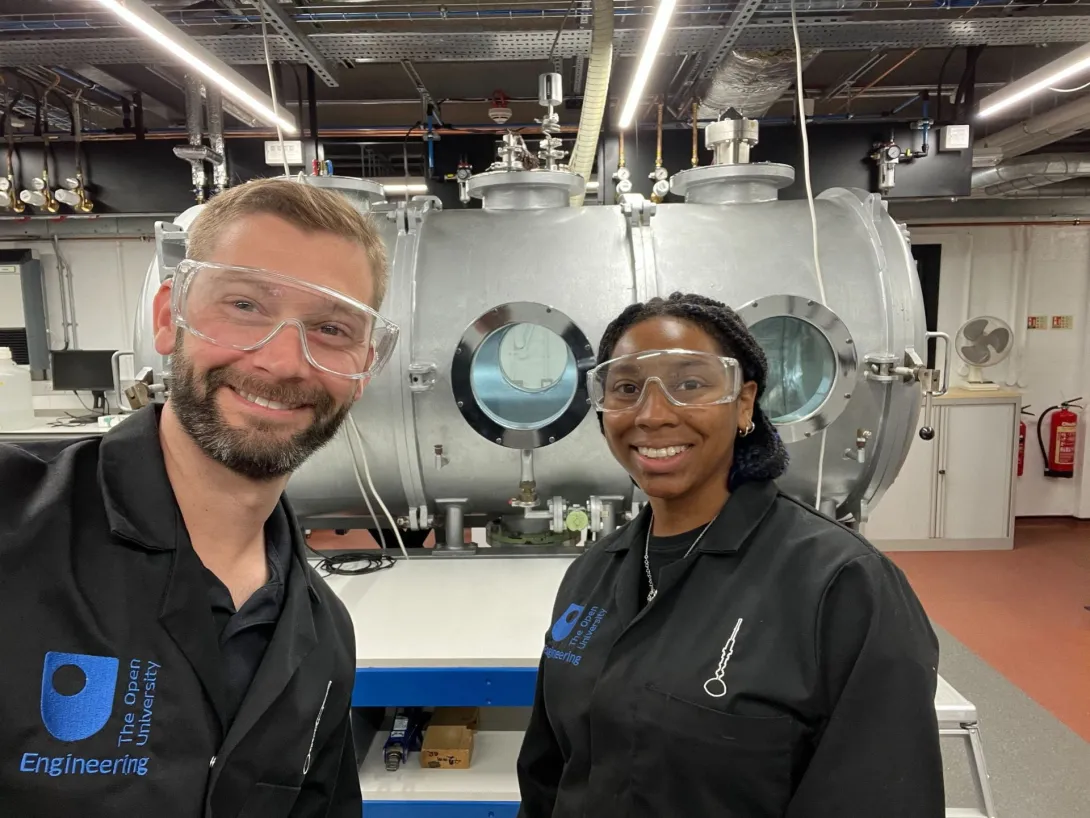
Jacob Adler (left) and Sharissa Thompson (right) conducting research.
This research is shared jointly with the Arizona State University newsroom.
The surface and atmosphere of Mars have seen many changes over its 4.5-billion-year history. While the planet's current atmosphere is very thin (about 0.6% of Earth's), it was once thick enough to sustain liquid water.
According to new research published in Communications Earth & Environment, these atmospheric changes could play a key role in how we interpret sediment deposits on the planet.
“We found that the changing pressure resulting from atmospheric changes would have produced sediment-rich water flows with varying shapes over time,” says co-author and Georgia Tech Assistant Professor Frances Rivera-Hernández, adding that since Mars’ present-day atmosphere is very thin, the associated low pressures would produce behaviors not seen on Earth.
“Earth’s thicker atmosphere means that there are higher pressures on our planet, which produce very different behaviors,” she explains. “This means that Earth analogs may not be reliable for interpreting some Martian sedimentary landscapes.”
“At low present-day pressures, Mars mud would boil and levitate if the surface temperature was warm, or freeze and flow more like lava if the temperature was cold,” adds study lead Jacob Adler, who began working on the project while a postdoctoral researcher in Rivera-Hernández’s PLANETAS Lab at Georgia Tech, and continued the study in his current role as an assistant research professor in Arizona State University's School of Earth and Space Exploration.
The team also included Georgia Tech Ph.D. student and current PLANETAS Lab member Sharissa Thompson, along with researchers from the Open University and Czech Academy of Sciences.
“This study adds a critical layer of nuance to analogue research,” says Rivera-Hernández. “By comparing our lab results to real Martian landforms, we can better reconstruct Mars’ past climate — leading to increasingly successful research in the future.”
Making Martian mud
In order to recreate past conditions on the red planet, the team conducted over 70 experiments in a Mars simulation chamber, testing how flowing water-sediment mixtures would be affected by the varying pressures and temperatures throughout the planet’s history.
Thompson, who specializes in understanding these types of mixtures, played a key role in interpreting the results. “As part of my Ph.D. work at Georgia Tech, I uncover how and why flow shapes evolve as pressure changes, which helped us understand how these flows could have shifted with changing pressures on Mars over time,” she says. “I’m thrilled to have contributed to the innovative flow experiments this study conducted.”
The experiments revealed that at higher atmospheric pressures, water and mud would have similar flow physics (rheology) as on Earth, indicating that some of the oldest sedimentary features on the surface should appear similar to Earth environments. In these scenarios, surface conditions may also have been more habitable for life.
On the other hand, as Mars started to lose most of its atmosphere, the dominant physics in sediment flow experiments changed to freezing and boiling. The team found that at the lower pressures Mars has experienced after the Noachian, the rheology and deposit shapes (morphology) were not at all Earth-like.
“When we mapped out where on Mars, we would expect this different behavior, we found that this opposite behavior could happen at the same time at different locations on the planet,” Adler shares. “The small-scale climate variations across Mars’ topography are enough to see these opposing effects.”
Decoding Mars' past
The research suggests that studying the specific shapes of features like sediment flows, debris flows and mudflows could help scientists better estimate climate conditions. It also highlights how laboratory experiments are a critical part of planetary science activities, as they can help scientists better interpret remote sensing and modeling results.
"By finding matching morphologies of what we see on Mars and what we see in these lab experiments, we might be able to better time-stamp the paleoclimate record,” Adler explains.
"We’ve sent rover missions to Mars largely because we find compelling remote sensing evidence of deposits formed by water or mud that could indicate a habitable environment,” he adds. “We are often eager to compare what we find to Earth analogs, but these are not always suitable for comparison. This study shows there is still much we can learn about Mars by conducting experiments under Mars conditions.”
Funding: NASA

Tim Lieuwen and Chris King

Andrés J. García
John Peroni
The Dynamic Mass Spectrometry Probe developed to monitor the health of living cell cultures (photo credit: Rob Felt)

Sarah Farmer
If you’ve lived in Georgia long enough, you’ve almost certainly heard the friendly jabs tossed across divided Thanksgiving tables. On one side, a smirk and a mention of the “North Avenue Trade School.” On the other, a pointed retort: “To hell with Georgia.”
Few rivalries run deeper than the one known as “Clean, Old-Fashioned Hate,” the annual showdown between Georgia Tech and the University of Georgia (UGA). On Friday afternoon, November 28, the two will face off in one of the most anticipated matchups in years. These teams don’t like each other, and for a few hours every year, neither do friends, families, and even significant others.
Off the field, however, the schools are proving that collaboration, not competition, is the schools’ true strength.
For more than a century, Georgia’s flagship universities have united around complementary strengths, tackling the state’s biggest challenges together. That starts with making Georgians healthier.
“When Georgia Tech and UGA combine their strengths, together we create solutions that neither institution could achieve alone,” said Tim Lieuwen, executive vice president for Research at Georgia Tech. “These collaborations accelerate innovation in healthcare, improve lives across our state, and demonstrate that partnership — not rivalry — is Georgia’s most powerful tradition."
“The common denominator between these two great institutions is the populations they serve,” said Chris King, interim vice president for Research at UGA. “We have a duty to find solutions that help improve the quality of life for all Georgians, and that’s what these partnerships are all about.”
From programs like the Georgia Clinical and Translational Science Alliance (Georgia CTSA) to the National Science Foundation’s Engineering Research Center for Cell Manufacturing Technologies (CMaT), researchers at UGA and Georgia Tech are setting rivalries aside to build lasting partnerships that fuel innovation and expand the workforce to meet the state’s needs.
Pushing Cell Therapy Across the Goal Line
CMaT is an NSF-funded consortium of more than seven universities and 40 member companies. At Georgia Tech and UGA, teams are conducting many early stage translational projects to improve manufacturing of cell-based therapeutics.
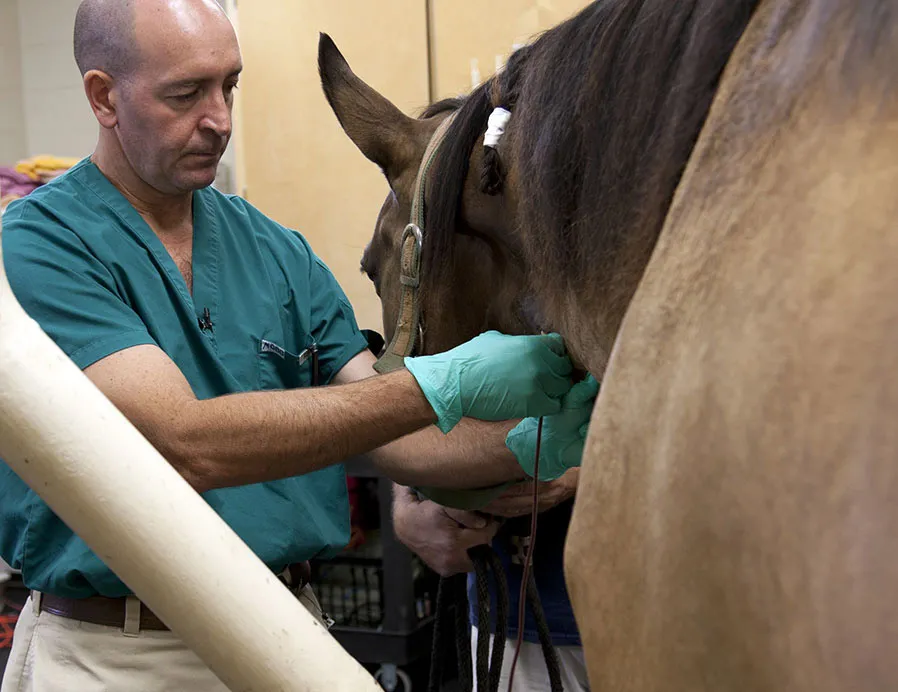
One joint project between Andrés García, executive director of Georgia Tech’s Parker H. Petit Institute for Bioengineering & Bioscience, and John Peroni, the Dr. Steeve Giguere Memorial Professor in Large Animal Medicine in UGA’s College of Veterinary Medicine, addresses treatment of bacterial infections that can follow bone repair surgeries.
Bone fractures and non-union defects often require surgical implants, but 1-5% are compromised by bacterial infection, costing hospitals more than $1.9 billion annually. Current treatments are limited to sustained, high doses of antibiotics, which are less effective and can generate antibiotic-resistant bacteria. García and Peroni are engineering synthetic biomaterials that locally deliver antimicrobial agents to eliminate infections and promote bone repair.
Steven Stice, D.W. Brooks Distinguished Professor and Georgia Research Alliance Eminent Scholar at UGA’s Regenerative Bioscience Center, is also working with Georgia Tech’s Andrei Fedorov, professor and Rae S. and Frank H. Neely Chair in the George W. Woodruff School of Mechanical Engineering, to improve the quality and control of producing natural, cell-derived healing materials for regenerative medicine.
Adult cells secrete tiny, bubble-like vesicles that help other cells heal and regenerate tissue. Stice developed methods to boost vesicle production, while Fedorov created a probe that accelerates the process.
“Cells simply don’t secrete these healing vesicles in the quantities needed for scalable, clinical-grade treatments,” said Stice, UGA lead and co-principal investigator for CMaT. “Our collaborative work changes that, accelerating production in a way that finally makes large-scale regenerative therapies feasible.”
“Georgia Tech and UGA's collective commitment to advancing science and technology exceeds the intensity of our athletic rivalry,” Fedorov said. “Together, we’re advancing cell and therapy biomanufacturing to develop lifesaving treatments for the most devastating diseases.”
Georgia Tech’s Francisco Robles and UGA’s Lohitash Karumbaiah are using manufactured T cells to target cancer. Robles, who leads the Optical Imaging and Spectroscopy Lab in the Wallace H. Coulter Department of Biomedical Engineering, developed quantitative Oblique Back-illumination Microscopy (qOBM) to monitor tumor growth in real time. The method allows scientists to visualize patient-derived glioblastoma cell clusters generated in the Karumbaiah Lab, tracking tumor structure and behavior at various stages.
“Assessing therapeutic potency is often complex, costly, and ineffective for solid tumors,” Karumbaiah said. “qOBM simplifies the process by providing real-time, label-free monitoring of therapeutic efficacy against 3D solid tumors.”
The work could help doctors personalize cancer treatments by providing early, detailed signs of whether a therapy is working.
“This technique is more compact and affordable and lets us watch T cells attack cell cultures in real time,” Robles said. “This breakthrough could transform how we study disease and screen new treatments.”
A Playbook for Local Healthcare
Created in 2007 by the National Institutes of Health, Georgia CTSA is one of several NIH-funded national partnerships advancing new health therapeutics and practices. Since 2017, it has comprised UGA, Georgia Tech, Emory, and the Morehouse School of Medicine. The alliance’s reach extends far beyond campus borders, bringing together researchers, clinicians, professional societies, and community and industry partners to identify local health challenges and translate research into practical solutions.
And out of this alliance have come many collaborative studies among CTSA’s members.
One, the Georgia Health Landscape Dashboard, is a tool to identify local health gaps and connect regional health professionals or policymakers with the researchers who can best address their community’s challenges. UGA College of Family and Consumer Sciences Associate Professors Alison Berg and Dee Warmath, along with community health engagement coordinator Courtney Still Brown, are working with Georgia Tech’s Jon Duke, director of the Center for Health Analytics and Informatics at the Georgia Tech Research Institute and a principal research scientist in the School of Interactive Computing.
The dashboard has already helped match researchers with communities by combining epidemiological data with “community voice” insights through surveys of residents and local leaders.
For example, when examining diabetes data, the dashboard indicates Randolph County has the state’s highest prevalence, despite declining by about 8% between 2021-24. Meanwhile, Treutlen County’s rate increased 29.2% during the same period. Perhaps Treutlen’s need for diabetic care is a growing concern, while Randolph’s is being addressed. And perhaps Hancock County, which ranks diabetes its top priority in the community voice category, is in search of immediate solutions.
“The Landscape Dashboard is a fantastic example of how the unique expertise found at Georgia Tech and UGA can be brought together to create something truly valuable for all Georgia,” Duke said. “By bringing together a range of data sources and health analytics approaches, this collaboration has created a tool that delivers novel insights into health, community, and policy across the state.”
Supported by UGA Cooperative Extension and the Biomedical and Translational Sciences Institute, the project leverages a network of agents in every county across the state. Warmath said the project’s strength lies in its ability to connect research with real-world needs.
“To build a community-responsive ecosystem for biomedical research, scientists must recognize local needs, share progress with communities to foster trust and acceptance, recruit clinicians and industry partners, and strengthen the relationships between patient and caregiver,” Warmath said.
Teaming Up for Maternal Health
Warmath and a team of researchers at UGA, Georgia Tech, and Emory are also collaborating on an NIH-funded project uniting experts in maternal health, biostatistics, and consumer science to explore how wearable technologies could improve delivery-room care.
During childbirth, clinicians monitor countless maternal and fetal vitals — contractions, heart rates, oxygen levels, kidney function, and more. What new insights, the researchers asked, could advanced wearable technologies offer in the delivery room, and what barriers might prevent their use?
Using nationwide surveys and focus groups, the team gathered information from a representative sample of pregnant, postpartum, and reproductive-age women, as well as healthcare professionals, to examine acceptance of wearable health technologies during labor and delivery. In their analysis of this rich data source, the team is identifying key variables that reveal gaps in technology acceptance and the unique needs of diverse maternal populations.
Each partner institution brings unique expertise. At Emory, principal investigator Suchitra Chandrasekaran contributes clinical insights from direct patient care. At UGA, Warmath applies her knowledge in consumer science to analyze end-user motivation, attitudes, and behaviors. At Georgia Tech, experts like Sarah Farmer in the Center for Advanced Communications Policy’s Home Lab facilitate large-scale data collection.
With data collection now complete, the team is analyzing results to inform future design and deployment of wearable technologies.
“Each school has a different perspective,” Farmer said. “It’s not as simple as one school does this but doesn’t do that. Each has their expertise, but they offer different perspectives and different resources that, when pooled, can make our research that much more effective.”
Whether advancing maternal health, mapping Georgia’s health needs, or engineering next-generation therapies, UGA and Georgia Tech continue to prove that collaboration is Georgia’s strongest tradition. Further, the undergraduate and graduate students who work in these labs and others represent the state’s highly skilled workforce of tomorrow.
“When our institutions work together, Georgia wins,” Warmath said.
— By David Mitchell
News Contact
For media inquiries:
Angela Bajaras Prendiville
Director of Media Relations
media@gatech.edu