
Jun. 12, 2025
In a unanimous vote on June 2, the Atlanta City Council approved a significant ordinance requiring all new and replacement roofs to be built with light-colored, reflective materials, commonly known as “cool roofs.” The ordinance, set to take effect in one year, is part of a growing effort to reduce the city’s vulnerability to extreme heat.
Georgia Tech researchers say the new policy marks a major step forward in climate adaptation, especially for heat-vulnerable communities, and could help position Atlanta as a national leader in urban resilience.
How Cool Roofs Can Help Hotlanta
”On any given summer afternoon, temperatures in Atlanta’s intown neighborhoods can be as much as 15 degrees Fahrenheit higher than in the city’s most forested areas,” said Brian Stone, professor in the School of City and Regional Planning and associate director of Georgia Tech’s Center for Urban Resilience and Analytics.
That spike is partly due to the urban heat island effect — a phenomenon driven by heat-trapping materials like concrete, asphalt, and dark rooftops, combined with the loss of trees and natural landscapes. The impacts are not just uncomfortable — they’re dangerous. Extreme heat is now one of the deadliest forms of weather in the U.S., with disproportionate effects on low-income communities, elderly residents, and those without access to air conditioning.
According to Patrick Kastner, assistant professor in the School of Architecture, rooftops are key contributors. “A major driver [of heat buildup] is dark, heat-absorbing material that stores solar energy during the day and then re-radiates it at night. If you look at a satellite image, for most of the day rooftops have more exposure to the sun than building facades — so the material choice there matters a lot.”
The Power of Reflective Roofs — and Trees
Stone and his students conducted modeling that found that widespread adoption of cool roofs across Atlanta could lower summer afternoon temperatures by more than 2 degrees Fahrenheit in many neighborhoods. That’s comparable to findings in other global cities like London, where cool roofs have reduced average temperatures by up to 2 degrees Celsius (3.6 F).
But cool roofs are only one part of a broader urban cooling strategy. In the same study, Stone’s team showed that planting trees in just half of Atlanta’s available planting zones could yield an even more dramatic effect, reducing temperatures by 4 F or more in some areas.
“Cool roofs are highly effective, but pairing them with increased urban tree cover would multiply the benefits, especially for neighborhoods currently lacking shade,” Stone said.
Equity and Energy Impacts
Atlanta’s ordinance requires cool roofing materials on new commercial construction and when existing commercial roofs are replaced. While that may sound like a technical design tweak, Stone emphasized its equity implications.
“Residents in South and West Atlanta, where tree canopy is sparse, and energy costs take up a larger share of household income, stand to gain the most,” Stone said. “When a cool roof is installed as part of a required roof replacement, those households will see meaningful reductions in cooling costs month after month.”
Kastner added that cool roofs could ease pressure on the electrical grid, lowering peak energy demand required for cooling during extreme heat and possibly reduce the risk of outages.
Durability, Maintenance, and Design Trade-offs
Stone noted that cool roofs tend to extend the life of roofing materials by limiting thermal degradation. However, he and Kastner also flagged some trade-offs.
For example, highly reflective coatings can create glare, especially on sloped roofs near neighboring buildings. The ordinance accounts for this by setting different standards for flat and pitched roofs. Maintenance is another consideration: over time, reflective coatings may degrade or become dirty, requiring periodic cleaning to maintain performance.
“Aesthetics and material compatibility may also challenge adoption when it comes to historic buildings or for roofs already outfitted with solar panels,” Kastner said. “But advancements in roofing technology, including high-performance materials that aren’t plain white, offer more flexible options than ever before.”
A Cool Roof Policy With National Impact
While cities like New York and Chicago have implemented cool roof programs for over a decade, Atlanta’s proposed ordinance is one of the most comprehensive in the country — applying to all roof types, not just flat industrial ones.
“Atlanta is steadily emerging as one of the most climate-resilient cities in the U.S.,” said Stone, pointing to the city’s urban forest and growing network of floodable parks as complementary resilience strategies. “Adding a best-in-class cool roofing ordinance to that portfolio is a bold step forward.”
And it could spark innovation across the region.
“Georgia Tech is uniquely positioned to help advance climate-resilient design,” Kastner said. “From research on advanced coatings to urban planning tools that target the most heat-vulnerable areas, we’re bringing science and policy together to shape cooler, healthier cities.”
News Contact
Ayana Isles
Senior Media Relations Representative
Institute Communications
Jun. 12, 2025
As the planet warms, changing weather patterns are only one effect. Warming air is often more toxic, leading to asthma and even heart attacks. A better understanding of these air quality changes can help society mitigate their consequences. Georgia Tech researchers are innovating ways to study air quality — beginning with prehistoric insights and zooming all the way to satellites in our orbit.
Jun. 11, 2025
Electing to have invasive brain surgery isn’t something most people have done. Ian Burkhart isn’t most people.
“When I finished rehabilitation, my doctors and therapist and, most importantly, the insurance company said, ‘For someone with your condition, we feel like you've made all the improvement that you will, have a nice life,’” said Burkhart, who was left with limited feeling and mobility below the neck after a 2010 diving accident injured his spinal cord. “That didn't sit well with me.”
Hoping even a fraction of hand mobility would increase his independence, Burkhart turned to a clinical research trial on a brain-computer interface (BCI) designed to detect movement signals in the brain and send them to a computer to stimulate the arm muscles, bypassing the spinal cord in the hopes of restoring movement.
“I had had four and a half years of never thinking my hand was going to move again,” he recalled. When testing to see if he qualified for the study, researchers stimulated his hand muscles. “I saw my hand move, and that was all I needed to know — I was ready to risk it all for something that may or may not work.”
Burkhart’s story is one of many that reveal the deeply personal side of neurotechnology research. Centering lived experiences like his is central to the mission of the Institute for Neuroscience, Neurotechnology, and Society (INNS), a new Interdisciplinary Research Institute launching this July at Georgia Tech.
“If we want to build neurotechnology that truly serves people, their voices should be part of the scientific process from the very beginning,” said Chris Rozell, a professor in the School of Electrical and Computer Engineering and one of the many researchers at Georgia Tech working to understand and advance BCIs. “Hearing from individuals who live with these devices helps guide more ethical, inclusive, and effective research. The entire field benefits from inclusive conversations like these.”
Life With a Brain Implant
Burkhart and three others recently shared their stories live on the Ferst Center stage at “Wired Lives: Personal Stories of Brain-Computer Interfaces, an event organized by Georgia Tech’s Neuro Next Initiative. Their stories gave over 200 attendees a rare, honest glimpse into the realities of neurological conditions and the path to brain-computer interface research.
“I was at a crossroads in my life at 47 years old,” said Brandan Mehaffie, who told his story of living with early-onset Parkinson’s disease. “I was trying to figure out, do I continue with the status quo and watch my career dwindle into nothing? Watch my life with my family, my kids, not being able to go on hikes or family vacations?”
Mehaffie eventually qualified for deep brain stimulation (DBS) treatment, a procedure where a pacemaker-like device is implanted into the brain to provide electrical stimulation. “It changed my life for the better in ways that I can't even tell you.”
When former U.S. Air Force Sgt. Jennifer Walden’s doctor told her about a clinical trial testing DBS as an epilepsy treatment, she jumped at the chance. “The 48 hours after those seizures are 48 hours where you don't want to live anymore.” Walden explained that her response to medication had dwindled after years of traditional treatment, increasing the frequency and severity of her seizures. “I feared suicide. It's something I didn't want to do, but if something happened in those 48 hours to end my life, I didn't care,” she said.
“I am now probably 99% seizure-free,” she beamed as she recalled her response to DBS on stage. “I don't know how I got so lucky in life, but I don't take it for granted.”
Common themes in their stories were resilience, hope, and a deep desire to give back.
“When I joined the study, it had no physical benefit to me, but that's not why I joined it,” said Scott Imbrie, who experienced a major spinal cord injury and participates in a clinical BCI study at the University of Chicago. “I decided to have invasive brain surgery and have electrodes implanted on my brain to help other people.”
A New Approach to Interdisciplinary Research
Timed alongside the InterfaceNeuro conference at Georgia Tech, the gathering offered a rare opportunity for scientists, engineers, and clinicians to engage directly with the lived experiences of individuals using brain-computer interfaces — a perspective often missing from traditional research settings.
“It makes you think about how we ethically conduct research and how we recruit and interface with patients,” said Eric Cole, a postdoctoral researcher at Emory University, who was reminded that many patients participating in BCI research have been on a long, difficult journey before interacting with researchers. “We should remember to take their experiences seriously and respect them. They're giving up something for research — that part we should always remember.”
“Wired Lives” was one in a series of events highlighting the lived experience of individuals with neurological conditions organized by the Neuro Next Initiative, which has served as the precursor to INNS.
“A core mission of INNS is to consider how neuroscience and neurotechnology impact people’s lives,” said Jennifer Singh, associate professor in the School of History and Sociology, a member of NNI’s executive committee, and a co-organizer of the event. “Their stories matter when it comes to the types of science and technology we pursue and how they benefit the human condition. Many scientists and engineers may never encounter people living with neurological conditions outside of events like this. That will be a priority for INNS — to bring the expertise of lived experiences to the research process.”
Ian Burkhart’s lived experience reminded the audience that not every clinical trial has a happy ending. His BCI was ultimately removed after seven years as research funding ran short, taking his newly improved hand mobility with it. Despite this, Burkhart remained positive.
“I'm so glad I was able to take that risk and have that voluntary brain surgery and participate in this type of research because it's defined my life.” Burkhart went on to found the BCI Pioneers Coalition and his own nonprofit because of his research participation. “It gave me a lot of hope for the future, and a lot of hope that these types of devices are going to be able to help people and improve their quality of life.”
This event was produced in partnership with The Story Collider and made possible through support from Blackrock Neurotech and Medtronic.
News Contact
Audra Davidson
Research Communications Program Manager
Neuro Next Initiative
Jun. 11, 2025
An algorithmic breakthrough from School of Interactive Computing researchers that earned a Meta partnershipdrew more attention at the IEEE International Conference on Robotics and Automation (ICRA).
Meta announced in February its partnership with the labs of professors Danfei Xu and Judy Hoffman on a novel computer vision-based algorithm called EgoMimic. It enables robots to learn new skills by imitating human tasks from first-person video footage captured by Meta’s Aria smart glasses.
Xu’s Robot Learning and Reasoning Lab (RL2) displayed EgoMimic in action at ICRA May 19-23 at the World Congress Center in Atlanta.
Lawrence Zhu, Pranav Kuppili, and Patcharapong “Elmo” Aphiwetsa — students from Xu’s lab — used Egomimic to compete in a robot teleoperation contest at ICRA. The team finished second in the event titled What Bimanual Teleoperation and Learning from Demonstration Can Do Today, earning a $10,000 cash prize.
Teams were challenged to perform tasks by remotely controlling a robot gripper. The robot had to fold a tablecloth, open a vacuum-sealed container, place an object into the container, and then reseal it in succession without any errors.
Teams completed the tasks as many times as possible in 30 minutes, earning points for each successful attempt.
The competition also offered different challenge levels that increased the points awarded. Teams could directly operate the robot with a full workstation view and receive one point for each task completion. Or, as the RL2 team chose, teams could opt for the second challenge level.
The second level required an operator to control the task with no view of the workstation except for what was provided to through a video feed. The RL2 team completed the task seven times and received double points for the challenge level.
The third challenge level required teams to operate remotely from another location. At this level, teams could earn four times the number of points for each successful task completed. The fourth level challenged teams to deploy an algorithm for task performance and awarded eight points for each completion.
Using two of Meta’s Quest wireless controllers, Zhu controlled the robot under the direction of Aphiwetsa, while Kuppili monitored the coding from his laptop.
“It’s physically difficult to teleoperate for half an hour,” Zhu said. “My hands were shaking from holding the controllers in the air for that long.”
Being in constant communication with Aphiwetsa helped him stay focused throughout the contest.
“I helped him strategize the teleoperation and noticed he could skip some of the steps in the folding,” Aphiwetsa said. “There were many ways to do it, so I just told him what he could fix and how to do it faster.”
Zhu said he and his team had intended to tackle the fourth challenge level with the EgoMimic algorithm. However, due to unexpected time constraints, they decided to switch to the second level the day before the competition due to unexpected time constraints.
“I think we realized the day before the competition training the robot on our model would take a huge amount of time,” Zhu said. “We decided to go for the teleoperation and started practicing.”
He said the team wants to tackle the highest challenge level and use a training model for next year’s ICRA competition in Vienna, Austria.
ICRA is the world’s largest robotics conference, and Atlanta hosted the event for the third time in its history, drawing a record-breaking attendance of over 7,000.
Jun. 10, 2025
A new mission strives to take black hole imaging to space. Scientists from the Georgia Institute of Technology, the Georgia Tech Research Institute (GTRI), the National Aeronautics and Space Administration (NASA), and 12 universities from around the world recently convened for a three-day workshop to plan the launch of the Space-based Precision Millimeter Interferometry Telescope (SPRITE) project. The proposed NASA Medium-Class Explorer mission aims to revolutionize the understanding of black holes through space-based imaging.
From Earth to orbit: The next step
SPRITE builds on the groundbreaking achievements of the Event Horizon Telescope (EHT), a network of ground-based telescopes able to synchronize observations from around the globe. EHT is most well-known for capturing the first images of black holes, M87* and Sagittarius A*.
“We’ve done what we can from the ground; we’ve run out of Earth,” says Professor and Chair of the School of Physics Feryal Özel, SPRITE’s principal investigator and a well-known astrophysicist instrumental in EHT’s success and development. “SPRITE will send two telescopes into orbit – achieving better imaging than a dozen telescopes on the ground.”
By sending the telescopes into space, the mission will be able to overcome the limitations of Earth’s atmosphere, which blocks certain wavelengths of light and produces turbulence that can degrade image quality. Unlike Earth-based telescopes, which rely on the planet’s rotation to change viewing angles, SPRITE’s telescopes will rotate independently across the vastness of space with data continuously transmitted from the satellites to ground stations.
“I like to think of it as an MRI machine rotating around a patient,” explains Özel. “In space, our telescopes can perform this orbital dance from great distances – giving us multiple perspectives of a black hole and allowing us to build a much more complete image.”
Mission goals
SPRITE’s objectives are ambitious and far-reaching, specifically to:
- Create more images of previously unseen black holes at resolutions better than M87* and Sagittarius A*;
- Confirm the presence of binary black holes through visual imagery; and
- Study the hot gas dynamics around black holes.
This class of mission requires a three-year operational lifetime to achieve its main science goals – although planners estimate the project will be able to operate considerably longer.
Preparing for launch
SPRITE is being organized to reflect Georgia Tech’s commitment to advancing space science through interdisciplinary collaboration and innovation, and will work closely with the Institute’s new Space Research Initiative. Locating SPRITE at Georgia Tech allows the mission to benefit from the knowledge of leading experts from the Colleges of Sciences, Engineering, and Computing; and GTRI.
The recent kickoff meeting marked SPRITE’s first large-scale gathering of contributors from around the world.
“We had smaller meetings before, but this was the first time the full team came together to share expertise and collaboratively shape the mission,” says Özel. “Most importantly, this meeting showed us that we have a strong scientific case for our mission and its design.”
Over the next two to three years, the team will work to validate key technologies and prepare a compelling proposal for NASA. If selected, SPRITE is expected to launch in the mid-2030s, marking the beginning of a new era in space imaging.
News Contact
Laura S. Smith, writer
Jun. 05, 2025
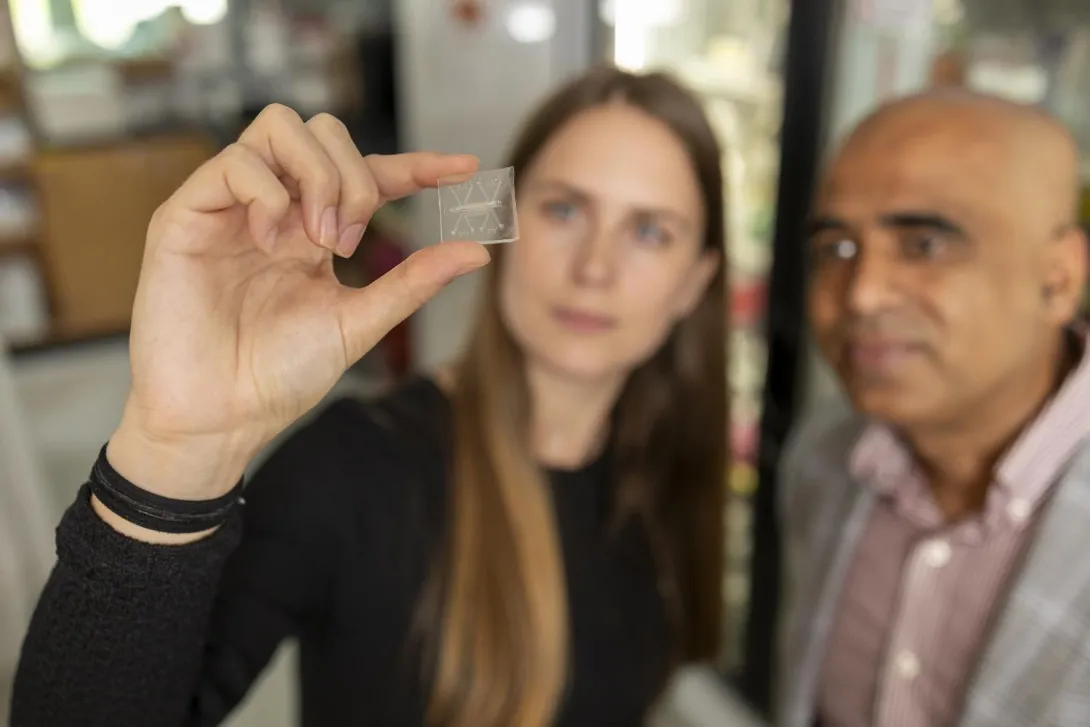
Lithium-ion batteries power everything from electric cars to laptops to leaf blowers. Despite their widespread adoption, lithium-ion batteries carry limited amounts of energy, and rare overheating can lead to safety concerns. Consequently, for decades, researchers have sought a more reliable battery.
Solid-state batteries are less flammable and can hold more energy, but they often require intense pressure to function. This requirement has made them difficult to use in applications, but new research from Georgia Tech could change that.
The research group of Matthew McDowell, professor and Carter N. Paden Jr. Distinguished Chair in the George W. Woodruff School of Mechanical Engineering and the School of Materials Science and Engineering, has designed a new metal for solid-state batteries that enables operation at lower pressures. While lithium metal is often used in these batteries, McDowell’s group discovered that combining lithium with softer sodium metal results in improved performance and novel behavior.
McDowell and his collaborators presented their findings in the paper, “Interface Morphogenesis with a Deformable Secondary Phase in Solid-State Lithium Batteries,” published in Science on June 5.
Stackable Solution
Lithium-ion batteries have been the industry standard because they combine compact size, reliability, and longevity. However, they contain a liquid “electrolyte,” which helps lithium ions move in the battery but is also flammable. In solid-state batteries, this electrolyte is a solid material that is less flammable. The challenge is that when the battery is used, the lithium metal in the battery changes its shape, potentially losing contact with the solid electrolyte, which degrades performance. A common way to ensure the metal doesn’t lose contact is to apply high pressure to these batteries.
“A solid-state battery usually requires metal plates to apply this high pressure, and those plates can be bigger than the battery itself,” McDowell said. “This makes the battery too heavy and bulky to be effective.”
The researchers, led by Georgia Tech research scientist Sun Geun Yoon, sought a solution. The solid-state batteries would still require some pressure to function, but they found that by also using a softer metal, less pressure is required. The researchers decided to pair the commonly used lithium metal with a surprising element: sodium.
“Adding sodium metal is the breakthrough,” McDowell noted. “It seems counterintuitive because sodium is not active in the battery system, but it’s very soft, which helps improve the performance of the lithium.”
How soft can sodium be? In a controlled environment, a person could stick their gloved finger into sodium metal and leave an imprint.
From Biology to Battery
To understand the enhanced performance of their battery, the researchers borrowed a concept from biology called morphogenesis. This concept explains how tissues or other biological structures evolve based on local stimuli. Morphogenesis is rarely seen in materials science, but the researchers found that the combination of lithium and sodium behaves according to this concept.
McDowell’s research group has been working on applying morphogenesis to battery materials as part of a project funded by the Defense Advanced Research Projects Agency in collaboration with several other universities. Their battery is among the first viable demonstrations of this concept — effectively, the sodium deforms readily at the low pressures needed for solid-state batteries to function.
Battery Boon
The possibilities of a viable, smaller solid-state battery are vast. Imagine a phone battery that could last much longer or an electric vehicle that could drive 500 miles between charges. With this in mind, McDowell and his team have filed for a patent for this battery system.
While solid-state batteries still have some way to go before commercial use, results like these could mean that solid-state batteries can compete with lithium-ion. McDowell’s lab continues to experiment with other materials to further improve performance.
Funding from the Defense Advanced Research Projects Agency.
News Contact
Tess Malone, Senior Research Writer/Editor
tess.malone@gatech.edu
Jun. 05, 2025
Aluminum scrap is one of the most common materials found on military bases and aircraft carriers worldwide. Now, the U.S. Army has tapped Georgia Tech to help turn that waste into power that can be generated off the grid and on demand.
The Army Research Office awarded Georgia Tech and its partners $20 million to develop scalable, efficient methods for transforming aluminum into hydrogen energy. The project could lead to a new, low-cost, clean, and efficient energy source powered by discarded materials.
Aaron Stebner, professor and Eugene C. Gwaltney Jr. Chair in Manufacturing in the George W. Woodruff School of Mechanical Engineering and professor in the School of Materials Science and Engineering, will oversee the multi-year effort at Georgia Tech together with Scott McWhorter, lead for Federal Initiatives at the Strategic Energy Institute.
In addition to several team members from Georgia Tech and the Georgia Tech Research Institute, the project includes researchers from Fort Valley State University, the 21st Century Partnership, MatSys, and Drexel University.
“Aluminum already reacts with water — even wastewater and floodwater — to create hydrogen gas, power, and thermal energy,” McWhorter said. “If aluminum can be efficiently upcycled into stored energy, it could be a game-changer.”
The team’s goal is to experiment with aluminum’s material properties so it can be inexpensively manufactured to create a highly effective reaction that produces low-cost, clean hydrogen.
“Having this ability would allow military bases to be less dependent on the use of a foreign country’s electrical grids,” said Stebner, who is also co-director of Georgia Artificial Intelligence in Manufacturing and faculty at the Georgia Tech Manufacturing Institute.
Manufacturing Aluminum
Several years ago, the Army Research Lab discovered and patented the basic technology for recycling aluminum to produce hydrogen gas. However, current manufacturing methods require too much energy for the amount of hydrogen energy produced.
To make the technology viable and effective, Stebner and his colleagues will research alternate manufacturing processes and then develop automated methods for safely producing and storing stable aluminum. They also plan to optimize these processes using digital twin technologies.
Currently, manufacturers use large machines to grind up and tumble the aluminum in very controlled environments, because stray aluminum powder can be explosive. These methods are very costly.
Stebner and the team are looking into small, modular technologies that could allow for convenient, onsite energy generation. According to Stebner, they are interested in determining how these smaller machines could be so efficient that they could be powered using solar panels.
Stebner envisions that a field of solar panels could power the aluminum-processing modules — the aluminum recycling could be done while the sun shines and produce power 24/7.
Sustainable Impact
Once they have developed the manufacturing techniques and processes, the team plans to test their efficacy by generating power for rural Georgia communities. Success here would prove the technology could be viable for military deployments and other off-grid scenarios.
“The Deep South — especially middle and southern Georgia, Alabama, Mississippi, and Louisiana — often has enormous energy disruptions during hurricanes or power outages due to flooding and severe rains,” Stebner said. “Manufacturers can be hesitant to build big plants there, because the grids aren’t as stable. This same technology that the Army plans to use for remote military bases could be a game-changer in rural Georgia.”
If power is unexpectedly cut in those areas, floodwater could then be used to make hydrogen gas. While hydrogen has not yet had its day in the sun, it has great potential as an alternative to fossil fuels, Stebner says.
“From a sustainability perspective, any time you can take something that’s already waste — like scrap aluminum and wastewater — and turn it into a high-value product that can be used to power communities, that is a huge win.”
Funding: Army Research Office
Jun. 05, 2025
Georgia Tech scientists have uncovered evidence that a mountain on the rim of Jezero Crater — where NASA’s Perseverance Rover is currently collecting samples for possible return to Earth — is likely a volcano. Called Jezero Mons, it is nearly half the size of the crater itself and could add critical clues to the habitability and volcanism of Mars, transforming how we understand Mars’ geologic history.
The study, “Evidence for a composite volcano on the rim of Jezero crater on Mars,” was published this May in the Nature-family journal Communications Earth & Environment, and underscores how much we have left to learn about one of the most well-studied regions of Mars.
Lead author Sara C. Cuevas-Quiñones completed the research as an undergraduate during a summer program at Georgia Tech; she is now a graduate student at Brown University. The team also included corresponding author Professor James J. Wray (School of Earth and Atmospheric Sciences), Assistant Professor Frances Rivera-Hernández (School of Earth and Atmospheric Sciences), and Jacob Adler, then a postdoctoral fellow at Georgia Tech and now an assistant research professor at Arizona State University.
“Volcanism on Mars is intriguing for a number of reasons — from the implications it has on habitability, to better constraining the geologic history,” Wray says. “Jezero Crater is one of the best studied sites on Mars. If we are just now identifying a volcano here, imagine how many more could be on Mars. Volcanoes may be even more widespread across Mars than we thought.”
A mountain in the margins
Wray first noticed the mountain in 2007, while considering Jezero Crater as a graduate student.
“I was looking at low-resolution photos of the area and noticed a mountain on the crater’s rim,” he recalls. “To me, it looked like a volcano, but it was difficult to get additional images.” At the time, Jezero Crater was newly discovered, and imaging focused almost entirely on its intriguing water history, which is on the opposite side of the 28-mile-wide crater.
Then, Jezero Crater, due to these lake-like sedimentary deposits, was selected as the landing spot for the 2020 Perseverance Rover — an ongoing NASA mission seeking signs of ancient Martian life and collecting rock samples for possible return to Earth.
However, after landing, some of the first rocks Perseverance encountered were not the sedimentary deposits one might expect from a previously-flooded area — they were volcanic. Wray suspected he might know the origin of these rocks, but to make a case for it, he would need to show that the mountain on the edge of Jezero Crater could indeed be a volcano.
A new researcher — and old data
The opportunity presented itself several months after Perseverance landed when Cuevas-Quiñones applied to a Summer Research Experience for Undergraduates (REU) program hosted by the School of Earth and Atmospheric Sciences to work with Wray.
“A previous study led by Briony Horgan (professor of planetary science at Purdue University) had also suggested that Jezero Mons could be volcanic,” Cuevas-Quiñones says. “I began wondering if there was a way to home in on these suspicions.”
The team partnered with study coauthor Rivera-Hernández, who specializes in characterizing the surface of planets and their habitability. They decided to use datasets gathered from spacecraft orbiting Mars to compare the properties of Jezero Mons to other, known, volcanoes. “We can’t visit Mars and definitively prove that Jezero Mons is a volcano, but we can show that it shares the same properties with existing volcanoes — both here on Earth and Mars,” Wray explains.
“We used data from the Mars Odyssey Orbiter, Mars Reconnaissance Orbiter, ExoMars Trace Gas Orbiter, and Perseverance Rover, all in combination to puzzle this out,” he adds. “I think this shows that these older spacecraft can be extremely valuable long after their initial missions end — these old spacecraft can still make important discoveries and help us answer tricky questions.”
For Cuevas-Quiñones, it also underscores the importance of REU programs and opportunities for undergraduates. “I was an undergraduate student at the time, and this was my first time conducting research,” she says. “It was fascinating to learn how different data sets could be used to decode the origin of a landscape. After Jezero Mons, it became clear to me that I would continue to study Mars and other planetary bodies.”
The search for life — and determining Mars’ age
The discovery makes the crater even more intriguing in the search for past life on Mars. A volcano so close to watery Jezero Crater could add a critical source of heat on an otherwise cold planet, including the potential for hydrothermal activity — energy that life could use to thrive.
This type of system also holds interest for Mars as a whole. “The coalescence of these two types of systems makes Jezero more interesting than ever,” shares Wray. “We have samples of incredible sedimentary rocks that could be from a habitable region alongside igneous rocks with important scientific value.” If returned to Earth, igneous rocks can be radioisotope dated to know their age very precisely. Dating the Jezero Crater samples could be used to calibrate age estimates, providing an unprecedented window into the geologic history of the planet.
The take home message? “Mars is the best place we have to look in our solar system for signs of life, and thanks to the Perseverance Rover collecting samples in Jezero, the United States has samples from the best rocks in the best place on Mars,” Wray says. “If these samples are returned to Earth, we can do incredible, groundbreaking science with them.”
DOI: https://doi.org/10.1038/s43247-025-02329-7
Funding: Cuevas-Quiñones was supported by Georgia Tech’s 2021 Research Experience for Undergraduates program sponsored by NSF and 3M corporation. Wray was supported by NASA funding for Co-Investigators on HiRISE and CaSSIS. CaSSIS is a project of the University of Bern and funded through the Swiss Space Office via ESA’s PRODEX program. The instrument hardware development was also supported by the Italian Space Agency (ASI) (ASI-INAF agreement 2020-17-HH.0), INAF/Astronomical Observatory of Padova, and the Space Research Center (CBK) in Warsaw. Support from SGF (Budapest), the University of Arizona Lunar and Planetary Lab, and NASA are also gratefully acknowledged. Operation support from the UK Space Agency is also acknowledged.
News Contact
Written by Selena Langner
May. 30, 2025
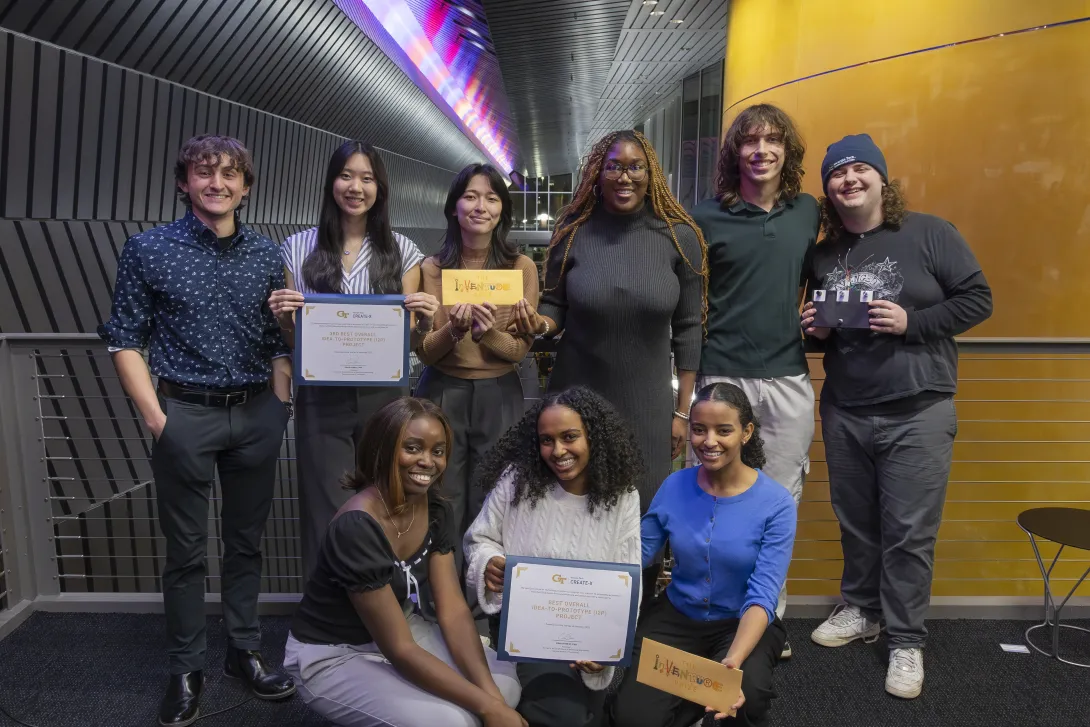
CREATE-X, Georgia Tech’s premier entrepreneurship program, kicked off its 12th Startup Launch cohort this month with a record-breaking 137 student teams and 25 faculty and research teams — totaling 318 founders. The summer-long accelerator, known for turning ideas into real-world ventures, is once again positioning Georgia Tech as a national leader in invention and startup creation.
This year’s cohort spans a wide range of industries, including artificial intelligence, defense, healthcare, gaming, sustainability, media management, agriculture tech, fashion tech, education, and more.
“These founders are in the messy middle and that's a beautiful place to be. There’s a lot of freedom in that,” said Margaret Weniger, director of Startup Launch. “We’re all going to be in this together. It's a safe space to try new things. It’s OK if it doesn't work out because what we want founders to learn is an entrepreneurial mindset and entrepreneurial spirit — something you take with you no matter what you do after this.”
Over the next 12 weeks, teams will validate ideas, build products, and acquire customers with the help of dedicated coaches, a robust founder community, and a network of mentors and alumni.
Raghupathy "Siva" Sivakumar, Georgia Tech’s inaugural vice president of Commercialization and the faculty founder of CREATE-X, spoke about the core of CREATE-X and what it would take for founders to succeed.
“Startup Launch is not about Georgia Tech gaining from your success. We are here just for one reason, which is to make you successful,” he said. “You need to hold yourself accountable. You need to be ambitious in terms of how big a problem you solve. You need to be emphatic that the customer matters. The successful teams are 100% behind what's going to make the lives of customers easier and better.”
In 2014, CREATE-X was co-founded by Sivakumar, Steve McLaughlin(who is now the president of The Cooper Union for the Advancement of Science and Art), and other Georgia Tech faculty, including Ray Vito, Craig Forest, and Ravi Bellamkonda (who is now the executive vice president and provost of The Ohio State University). The program received its initial major philanthropic support from Chris Klaus, a Georgia Tech alumnus and tech entrepreneur, whose gift helped launch the initiative, and , played a key role in building out the program's maker courses. Over the years, CREATE-X has continued to grow, thanks largely to the philanthropic support of alumni and foundations who believe in its mission.
In the last decade, the program has produced over 650 startups, $2.4 billion in portfolio valuation, and had eight founders named to Forbes’ 30 Under 30. Wagner shared stories of past teams who pivoted dramatically — from a glucose-monitoring pillow to a sobriety app now valued at over $350 million, and from a camping gear delivery service to a billion-dollar logistics platform.
“We don’t know which ideas will become the next unicorns,” Weniger said. “But we’re betting on you.”
At the kickoff event, McLaughlin and Klaus were honored for their contributions to Georgia Tech’s entrepreneurial ecosystem. McLaughlin encouraged the founders through the story of CREATE-X.
“From the very beginning, we challenged CREATE-X to be a startup as well. To this day, CREATE-X has raised its own money to do this. It's a reminder of what it takes to make this happen,” he said. “This is the most difficult challenge you have ever taken. I think at the time, we were probably skeptical about whether students could do it. Now we know that you can.”
Georgia Tech President Ángel Cabrera reflected on the impact of McLaughlin, Klaus, and others who saw the vision of Georgia Tech being an entrepreneurial campus.
“Ten years ago, this was a crazy, absurd idea,” he said. “Now, 150 teams are working on their own crazy ideas. Even though sometimes there's this idea of the entrepreneur as a loner, what you learn very quickly is entrepreneurship is a team sport.”
Klaus spoke about people collaborating and helping solve problems together.
“I'm especially inspired by Georgia with its complex history,” he said. “It continues to be a place where peace can be envisioned and pursued. I think this recognition strengthens my commitment to building bridges, resolving conflict, and lifting up voices that seek unity. As you build your businesses, you'll be building collaborations and partnerships, and hopefully make the world a better place.”
As the summer progresses, founders will be guided by CREATE-X’s core values: experiential education, entrepreneurial confidence, and real-world impact. Weniger encouraged teams to “show up uncomfortable” and “leverage every single resource” available.
The journey will culminate at Demo Day, where teams will showcase their startups to investors, industry leaders, and the broader community. The event is free, open to the public, and promises a front-row seat to the next wave of Georgia Tech-born innovation.
Demo Day 2025 will take place on Thursday, Aug. 28, at 5 p.m., in the Exhibition Hall. For more information and to RSVP, visit the CREATE-X Demo Day Eventbrite.
News Contact
Breanna Durham
Marketing Strategist
May. 28, 2025
Thomasville, Georgia, is a hub of training and talent for local manufacturers. But Mason Miller could tell there was something missing.
“We didn't have any training for advanced manufacturing in our area,” said Miller, vice president of Academic Affairs at Southern Regional Technical College (SRTC), which offers education and training programs in technical and manufacturing fields. “Companies had to go out and recruit people from Michigan to run their machines. That's when we said, ‘We don’t want that to happen — we need to be doing that right here.’”
That’s where the Georgia Tech Manufacturing Institute (GTMI) stepped in. Working with partner program Georgia Artificial Intelligence in Manufacturing (Georgia AIM), GTMI helped connect SRTC with the resources and expertise needed to develop a robust training program tailored to the needs of local manufacturers.
Miller said at first, he was skeptical. “When GTMI said they wanted to be partners, I thought, ‘OK, this is another situation where we're going to talk for a minute, everybody says things and then goes away — and that’s it,’” said Miller. “That's not how it's been at all.”
Rather, it’s been a true partnership driven by SRTC, with curriculum focused on automation and robotics developed by the Technical College System of Georgia and GTMI. The curriculum is also shaped by local industry input to directly address workforce gaps in the region’s manufacturing sector.
“As a state institution, we're here to serve you,” said Steven Sheffield, senior assistant director of Research Operations at GTMI and a point person of the partnership. “Tell us the problem, and we will work hard to try to solve it with you.”
Filling the Workforce Gap
Miller was committed to giving SRTC students the advanced manufacturing skills needed to stand out in the workforce. Yet the evolving manufacturing landscape and the needs of local manufacturers revealed gaps in SRTC’s curriculum, particularly in AI, automation, and robotics.
With GTMI and Georgia AIM researchers contributing key expertise to the expanded smart manufacturing curriculum, Miller noted the partnership is “opening our eyes to what we can do with AI. We're going to start integrating that into our programs.”
Beyond AI and robotics, SRTC leadership identified a crucial gap in their program: training in precision machining, a skill that local manufacturers like Check-Mate Industries sorely needed.
“If we want to attract new business and industry to Georgia, we need to be able to show them we can provide a skilled workforce,” said Miller.
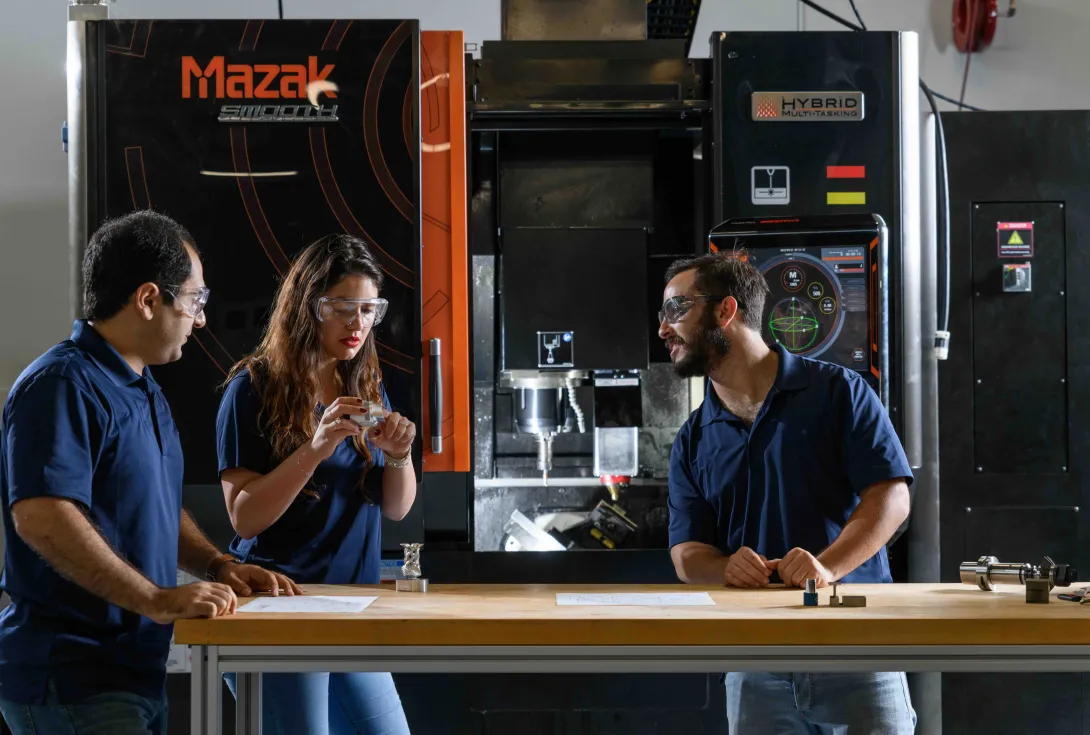
To address this missing piece, GTMI and Georgia AIM helped procure funding to acquire and refurbish precision-machining equipment from longtime partner Makino. Georgia AIM also supported the renovation and outfitting of two SRTC lab spaces with additional updated equipment.
Last fall, SRTC launched its new Precision Manufacturing & Engineering and Manufacturing Engineering Technology programs, with instructors trained by GTMI faculty in precision manufacturing. The new program at SRTC is one example of the ways GTMI experts are working with communities across the state to expand access to training and new technology.
“Not a lot of technical colleges have this type of machinery,” said Marvin Bannister, SRTC precision machining and manufacturing program chair. Instructors like Bannister received specialized training at GTMI’s Advanced Manufacturing Pilot Facility to ensure they felt confident teaching students how to operate the machinery. “Not only is it something else to add to my skill set, but the most important thing is that I'll be able to train other students who desire to learn on a machine like this.”
Because of SRTC’s expanded offerings, the technical college has strengthened partnerships and developed new internship programs with local manufacturers. “We all want the same thing,” said Miller, “which is to grow industry partnerships and to create a talent pipeline for our state.”
GTMI and Georgia AIM also support STEM programs with Thomasville area schools and internship programs for K-12 teachers with local manufacturers such as Check-Mate. These efforts deepen the connections between students and manufacturers, opening doors to future careers in the sector.
“We’re here to connect the dots and enable these types of partnerships,” says Steven Ferguson, a principal research scientist with GTMI and co-director of Georgia AIM. “When teams and their networks come together to solve a challenge for just one manufacturer, the impact can reach across an entire region.”
News Contact
Audra Davidson
Research Communications Program Manager
Georgia Tech Manufacturing Institute
Pagination
- Previous page
- Page 31
- Next page