
Aug. 27, 2025


J. Cole Faggert, a Ph.D. student in the School of Physics, has received a NASA FINESST (Future Investigators in NASA Earth and Space Science and Technology) Award to study supermassive black holes and the physics of their plasma flows. His research proposal was one of 24 selected from more than 450 astrophysics submissions this year.
“It’s amazing to be recognized for this research,” says Faggert. “I am grateful to my research group for helping me prepare the proposal and inspiring my ideas.”
Through the FINESST program, NASA’s Science Mission Directorate provides three-year grants for “graduate student-designed and performed research projects that contribute to its science, technology, and exploration goals,” according to the program’s website.
Faggert will serve as the future investigator of the award and will be advised by Feryal Özel, chair and professor in the School of Physics.
“I am very proud that Cole has been selected for the FINESST Fellowship, one of the most competitive graduate awards in the country,” says Özel, who is the principal investigator of the research. “This fellowship will support groundbreaking research on multi-wavelength imaging of black holes — an area central to advancing our understanding of black holes and galaxies. It is especially exciting that this work also contributes directly to the development of our space-based mission at Georgia Tech.”
A key aspect of Faggert’s proposal is its multi-frequency approach, which generates and analyzes images of supermassive black holes using different radio wavelengths. When combined and compared, these multi-frequency observations allow scientists to learn about black holes and explore fundamental physical concepts such as gravity and plasma behavior.
“One of the coolest things about studying cosmic objects like black holes is that you have to work with the information you have,” explains Faggert. “But when you combine several avenues of information, like in multi-frequency radio imaging, you can gain a better understanding of phenomena and under conditions that can’t be replicated on Earth.”
This research aligns with current trends in astrophysics that focus on advanced imaging techniques to broaden the data available on the structure, formation, and behavior of black holes and other celestial objects. According to Faggert, this information can then be contrasted with theoretical simulations, providing insights into fundamental physics and the nature of the universe.
Receiving the FINESST Award is particularly meaningful for Faggert, given his longstanding interest in space and his previous exposure to NASA’s Wallops Flight Facility and Langley Research Center through the Virginia Aerospace Science and Technology Scholars program.
“Being associated with NASA holds a special place in my heart. Over the years, my focus has shifted from designing space missions to studying the science those missions make possible. It is definitely rewarding to come full circle and be recognized by NASA for this research,” he adds.
Aug. 25, 2025
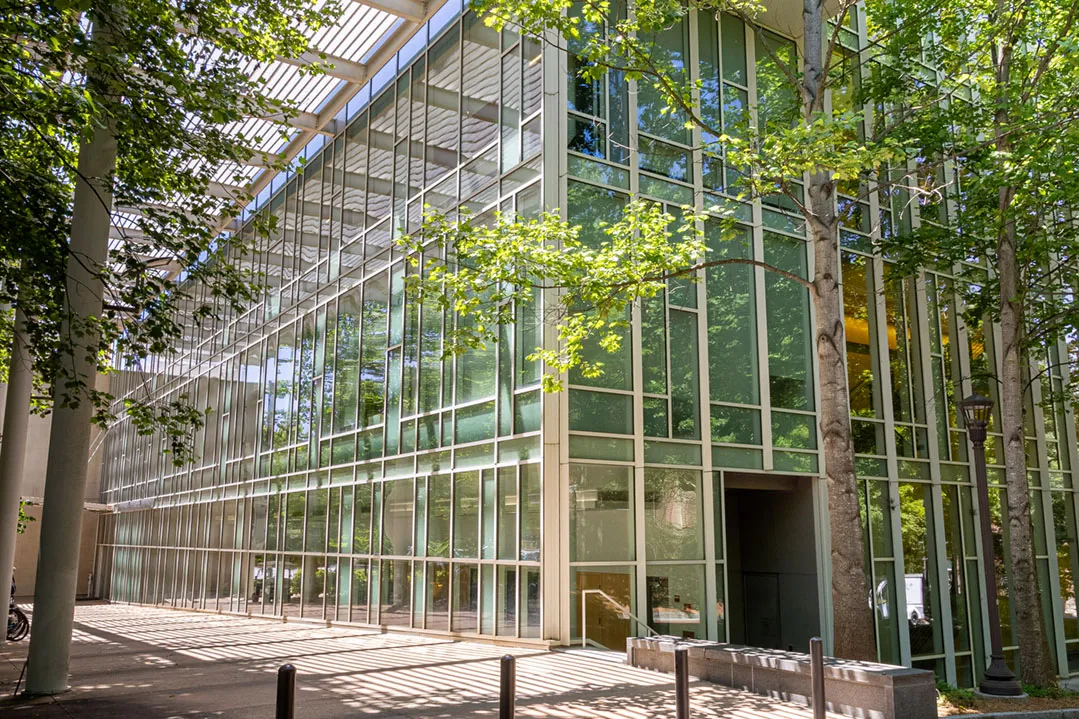
The Institute for Matter and Systems (IMS) has selected six interdisciplinary research projects to receive funding including four new research initiatives and two new programs. This funding is part of a larger IMS effort to identify and support visionary leaders driving groundbreaking research and innovation.
IMS focuses on transformational technological and societal systems that arise where innovative materials, devices, and processes converge.
“Interdisciplinary research often struggles to find a home,” said Michael Filler, IMS deputy director. “IMS aims to fill that gap—through programs like the CPI, we provide a place where unconventional collaborations from across Georgia Tech and beyond can take root, grow, and ultimately redefine what’s possible.
The funded initiatives come from four colleges and 11 schools across the Institute, and from GTRI. These research projects were selected based on their innovative approaches, potential impact, and alignment with IMS’ mission to push the boundaries of science and technology. They will receive funding, access to state-of-the-art facilities, and other support from IMS to bring their projects to life.
IMS supports interdisciplinary research both in nationally recognized areas of need and those just emerging. It scaffolds research from the ground up, from seed funding for new initiatives to infrastructure support for research programs and embedded support for research centers. The four newly announced initiatives are funded at the lowest level of IMS’ three-tiered model.
The two new research programs were previous IMS research initiatives that have been elevated to the program level. The successful elevation to research program highlights the funding pipeline and its design to support novel interdisciplinary research. As initiatives, these researchers were given seed funding and support for workshops, visioning and team nucleation, they demonstrated dedication to their research and team building. As IMS research programs, these projects will have the opportunity to expand their operations including with support for team expansions, proposals, and some staff support.
“The IMS funding pipeline is about giving researchers a ladder where none exists—support to take the first step with a new idea, and the structure to keep climbing as their work matures,” said Filler. “By providing that scaffold, we enable bold, interdisciplinary teams to turn early sparks of discovery into thriving research programs with real-world impact.”
The new research initiatives and programs:
Research Initiatives
Multifunctional Materials for Efficient Buildings | Akanksha Menon, George W. Woodruff School of Mechanical Engineering
Adaptive Biomacromolecular and Cellular Networks | Anant Paravastu, School of Chemical and Biomolecular Engineering; Vinayak Agarwal, School of Chemistry and Biochemistry; Andrew McShan, School of Chemistry and Biochemistry; and Itamar Kolvin, School of Physics
Precision Agriculture in Controlled Environments | Antonio Facchetti, School of Materials Science and Engineering; Yongsheng Cheng, School of Civil and Environmental Engineering; Anju Toor, School of Materials Science and Engineering
Electrochemical Manufacturing of Materials and Resource Recovery | Hailong Chen, George W. Woodruff School of Mechanical Engineering
Research Programs
Autonomous Research for Materials | Mark Losego, School of Materials Science and Engineering; Shreyas Kousik, George W. Woodruff School of Mechanical Engineering; Animesh Garg, School of Interactive Computing
Magnetometry and Spectrum-Based Quantum Sensing Platforms| Zhigang Jiang, School of Physics; Martin Mourigal, School of Physics; Yan Wang, George W. Woodruff School of Mechanical Engineering
News Contact
Amelia Neumeister | Research Communications Program Manager
The Institute for Matter and Systems
Jul. 15, 2025
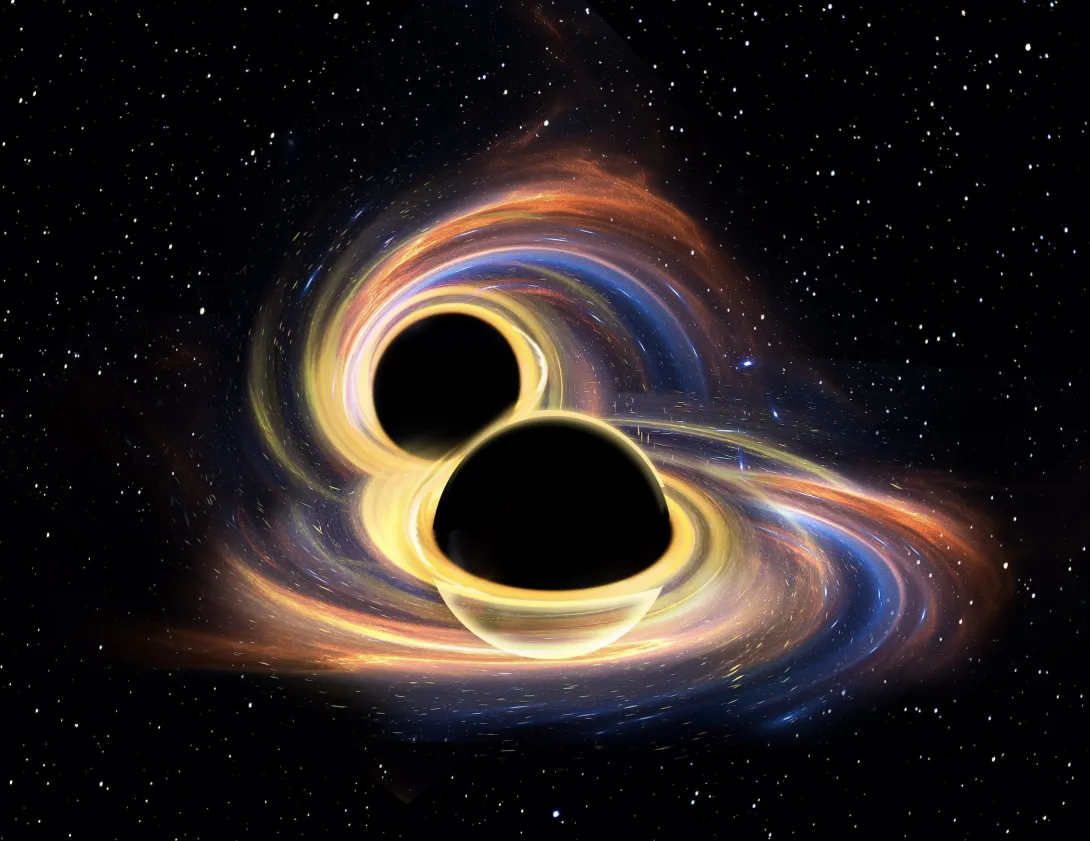
The Laser Interferometer Gravitational-Wave Observatory (LIGO)’s LIGO-Virgo-KAGRA (LVK) collaboration has detected an extremely unusual binary black hole merger — a phenomenon that occurs when two black holes are pulled into each other's orbit and combine. Announced yesterday in a California Institute of Technology press release, the binary black hole merger, GW231123, is the largest ever detected with gravitational waves.
Before merging, both black holes were spinning exceptionally fast, and their masses fell into a range that should be very rare — or impossible.
“Most models don't predict black holes this big can be made by supernovas, and our data indicates that they were spinning at a rate close to the limit of what’s theoretically possible,” says Margaret Millhouse, a research scientist in the School of Physics who played a key role in the research. “Where could they have come from? It raises interesting questions.”
A binary black hole merger absorbs characteristics from both of the contributors, she adds. “As a result, this is not only the most massive binary black hole ever seen but also the fastest-spinning binary black hole confidently detected with gravitational waves.”
“GW231123 is a record-breaking event,” says School of Physics Professor Laura Cadonati, who has been a member of the LIGO Scientific Collaboration since 2002. “LIGO has been observing the cosmos for 10 years now. This discovery underscores that there is still so much that this instrument can help us learn.”
A Cosmic View
The findings challenge current theories on how smaller black holes form, says School of Physics Assistant Professor and LIGO collaborator Surabhi Sachdev. Smaller black holes are the result of supernovae: dying and collapsing stars. During that collapse, explosions can tear apart or eject part of the star’s mass — limiting the size of the black hole that forms.
“Black holes from supernovae can weigh up to about 60 times the mass of our Sun,” she says. “The black holes in this merger were likely the mass of hundreds of suns.”
Because of its size, GW231123 also allowed the team to study the merger in unprecedented detail. “LIGO has observed scores of black hole mergers,” says Cadonati. “Of these, GW231123 has provided us with the clearest view of the ‘grand finale’ of a merger thus far. This adds a new clue to solve the puzzle that are black holes, including their origins and properties.”
“While we saw that our expectations matched the data, the extreme nature of this event pushed our models to their limits,” Millhouse adds. “A massive, highly spinning system like this will be of interest to researchers who study how binary black holes form.”
Decoding a Split-Second Signal
Millhouse and School of Physics Postdoctoral Fellow Prathamesh Joshi used Einstein’s equations for general relativity to confirm LIGO’s detections.
To find black holes, LIGO measures distortions in spacetime — ripples that are created when two black holes collide. These patterns in gravitational waves can be used to find the signature signal of black hole collisions.
“In this case, the signal lasted for just one-tenth of a second, but it was very clear,” says Joshi. "Previously, we designed a special study to detect these interesting signals, which accounted for all the unusual properties of such massive systems — and it paid off!”
“To ensure it wasn’t noise, the Georgia Tech team first reconstructed the signal in a model-agnostic way,” Millhouse adds. “We then compared those reconstructions to a model that uses Einstein's equations of general relativity, and both reconstructions looked very similar, which helped confirm that this highly unusual phenomenon was a genuine detection.”
Sachdev says that seeing the signal at both LIGO Observatories — placed in Hanford, Washington and Livingston, Louisiana — was also critical. “These short signals are very hard to detect, and this signal is so unlike any of the other binary black holes that we've seen before,” she says. “Without both detectors, we would have missed it.”
A Decade of Discovery
While the team has yet to determine how the original black holes formed, one theory is that they may have resulted from mergers themselves. “This could have been a chain of mergers,” Sachdev explains. “This tells us that they could have existed in a very dense environment like a nuclear star cluster or an active galactic nucleus.” Their spins provide another clue as spinning is a characteristic usually seen in black holes resulting from a merge.
The team adds that GW231123 could provide clues on how larger black holes are formed — including the mysterious supermassive black holes at the center of galaxies.
“Gravitational wave science is almost a decade old, and we're still making fundamental discoveries,” says Millhouse. “It’s exciting that LIGO is continuing to detect new phenomena, and this is at the edge of what we've seen thus far. There's still so much we can learn.”
The team expects to update their catalogue of black holes in August 2025, which will provide another window into how this exceptionally heavy black hole might fit into the universe, and what we can continue to learn from it.
Funding: The LIGO Laboratory is supported by the U.S. National Science Foundation and operated jointly by Caltech and MIT.
Jun. 10, 2025
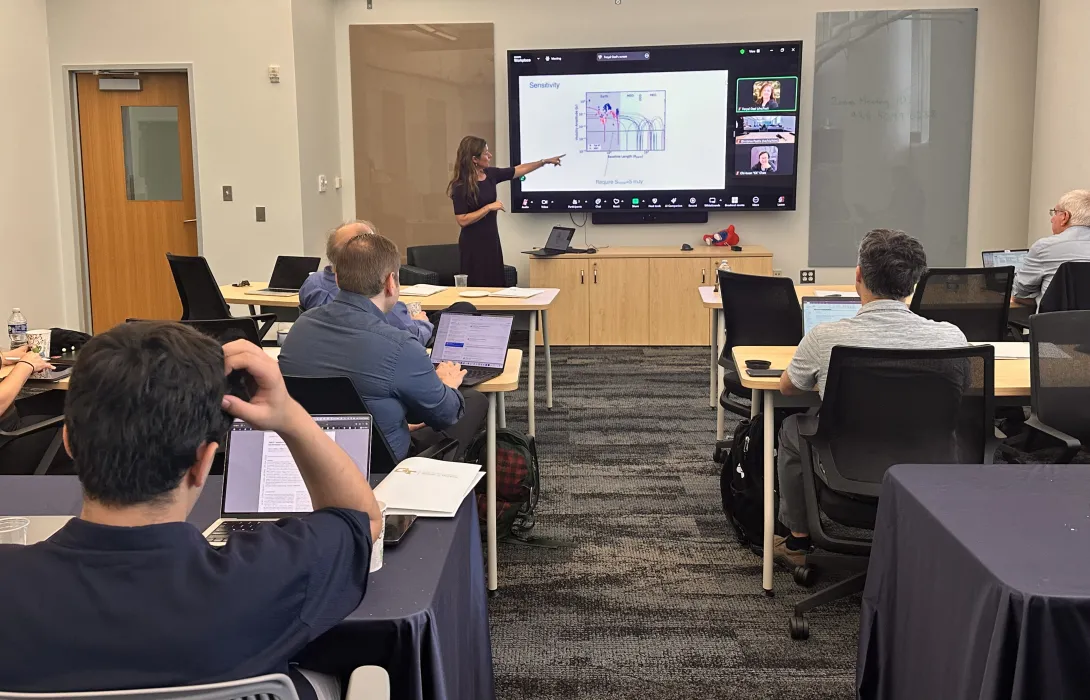
The kickoff meeting marked the first time that a large group of team members came together in person. Team members shared what they will bring to the mission and spent time refining the goals and requirements of the mission.

A new mission strives to take black hole imaging to space. Scientists from the Georgia Institute of Technology, the Georgia Tech Research Institute (GTRI), the National Aeronautics and Space Administration (NASA), and 12 universities from around the world recently convened for a three-day workshop to plan the launch of the Space-based Precision Millimeter Interferometry Telescope (SPRITE) project. The proposed NASA Medium-Class Explorer mission aims to revolutionize the understanding of black holes through space-based imaging.
From Earth to orbit: The next step
SPRITE builds on the groundbreaking achievements of the Event Horizon Telescope (EHT), a network of ground-based telescopes able to synchronize observations from around the globe. EHT is most well-known for capturing the first images of black holes, M87* and Sagittarius A*.
“We’ve done what we can from the ground; we’ve run out of Earth,” says Professor and Chair of the School of Physics Feryal Özel, SPRITE’s principal investigator and a well-known astrophysicist instrumental in EHT’s success and development. “SPRITE will send two telescopes into orbit – achieving better imaging than a dozen telescopes on the ground.”
By sending the telescopes into space, the mission will be able to overcome the limitations of Earth’s atmosphere, which blocks certain wavelengths of light and produces turbulence that can degrade image quality. Unlike Earth-based telescopes, which rely on the planet’s rotation to change viewing angles, SPRITE’s telescopes will rotate independently across the vastness of space with data continuously transmitted from the satellites to ground stations.
“I like to think of it as an MRI machine rotating around a patient,” explains Özel. “In space, our telescopes can perform this orbital dance from great distances – giving us multiple perspectives of a black hole and allowing us to build a much more complete image.”
Mission goals
SPRITE’s objectives are ambitious and far-reaching, specifically to:
- Create more images of previously unseen black holes at resolutions better than M87* and Sagittarius A*;
- Confirm the presence of binary black holes through visual imagery; and
- Study the hot gas dynamics around black holes.
This class of mission requires a three-year operational lifetime to achieve its main science goals – although planners estimate the project will be able to operate considerably longer.
Preparing for launch
SPRITE is being organized to reflect Georgia Tech’s commitment to advancing space science through interdisciplinary collaboration and innovation, and will work closely with the Institute’s new Space Research Initiative. Locating SPRITE at Georgia Tech allows the mission to benefit from the knowledge of leading experts from the Colleges of Sciences, Engineering, and Computing; and GTRI.
The recent kickoff meeting marked SPRITE’s first large-scale gathering of contributors from around the world.
“We had smaller meetings before, but this was the first time the full team came together to share expertise and collaboratively shape the mission,” says Özel. “Most importantly, this meeting showed us that we have a strong scientific case for our mission and its design.”
Over the next two to three years, the team will work to validate key technologies and prepare a compelling proposal for NASA. If selected, SPRITE is expected to launch in the mid-2030s, marking the beginning of a new era in space imaging.
News Contact
Laura S. Smith, writer
May. 01, 2025
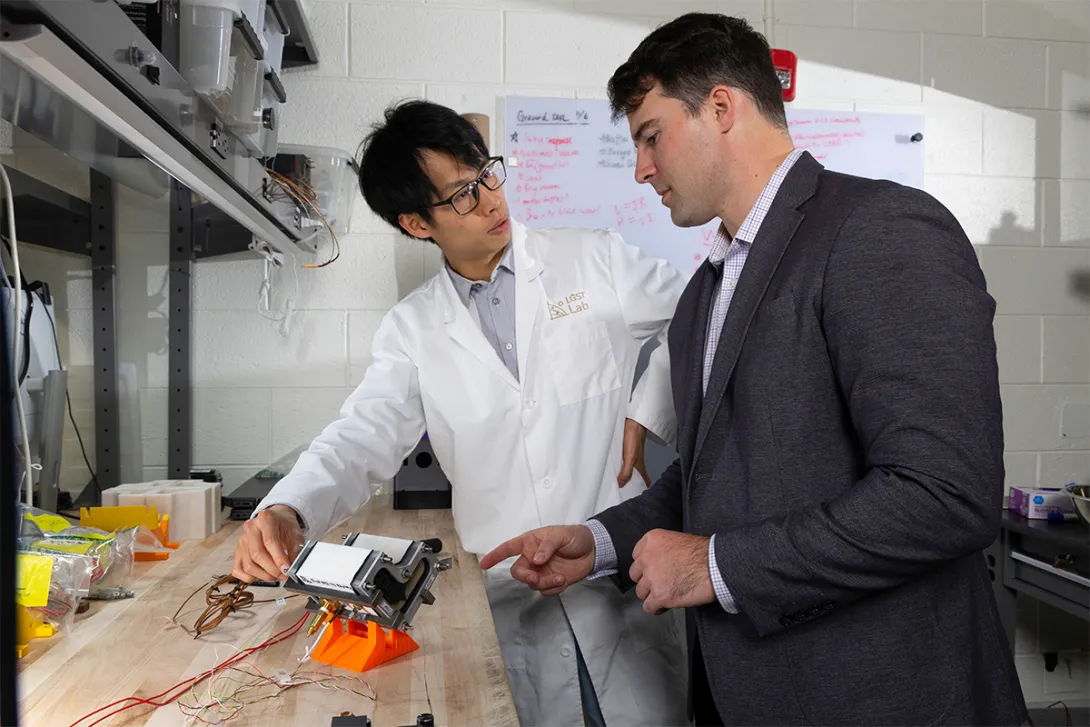
Early on, Georgia Tech graduate students William Trenton Gantt and Hugh (Ka Yui) Chen imagined working in the space industry.
“When I was 14, I dreamed about being in space one day,” recalls Chen, 22, a native of Hong Kong and a Ph.D. student in aerospace engineering. “I think the industry has been making space more accessible to everyone. Commercialization is a big part of enabling this.”
Gantt, an engineer and former U.S. Army veteran graduating with an MBA from the Scheller College of Business this spring, remembered seeing the space shuttle retire and companies begin privatizing space as he entered young adulthood.
“I’ve always been interested in space, and a lot of it comes from the challenge of going to space,” he observes. “Seeing how hard it is to get to space and seeing it become achievable — that to me was the most attractive thing about it.”
For Gantt, the feeling always brings to mind John F. Kennedy’s famous line that spelled out America’s space ambitions: “We choose to go to the moon in this decade and do the other things, not because they are easy, but because they are hard.”
Recognizing Georgia Tech’s aerospace strengths, Gantt didn’t waste time building bridges within Scheller and in other parts of Georgia Tech. He founded the Scheller MBA Space Club, a first at the College, to track the industry as it grows and develops.
“I came from a military background, so I had my eye on the defense industry going into the MBA program. Georgia Tech, being the No. 2 aerospace engineering undergraduate school in the nation, I knew they already had strong industry connections. Making connections was a big goal coming into this program.”
Assessing Early-Stage Space Tech
He took part in the Entrepreneurship Assistants Program (EAP), which pairs a Scheller MBA student with a faculty or student inventor to evaluate early-stage technology for potential commercialization. He evaluated two space-related technologies, one with Chen’s support.
“The EAs conduct technology commercialization assessments and develop a business model canvas. By applying an entrepreneurial strategy compass, they predict potential go-to-market strategies for new technology,” says Paul Joseph, principal in the Office of Commercialization’s Quadrant-i unit, who created the EAP.
(See sidebar to read more about the EAP and the specific technologies assessed.)
Tapping Into a Nearly $2T Industry
According to McKinsey & Co., the space technology market, fueled by advancements in satellite technology, commercial space travel, and 5G networks, is projected to reach $1.8 trillion by 2035.
“We're seeing an industry shifting from a multibillion-dollar market cap to a multitrillion-dollar market cap in less than a decade. If you look at this from a business perspective, this is a massive addressable market for entrepreneurs," says Gantt.
From its Center for Space Technology and Research to the new Center for Space Policy and International Relations and labs like the Space Systems Design Lab, which focuses on areas such as CubeSat propulsion, lunar research, and hypersonic flight, Georgia Tech excels in space research across disciplines. In July, Georgia Tech will launch the Space Research Institute (SRI), one of its newest Interdisciplinary Research Institutes (IRI), to foster additional collaboration in this growing field.
“At Georgia Tech, there are competencies across every single College that will help to augment our understanding of space,” says Alex Oettl, professor of strategy and innovation in Scheller College, whose interest in the new space economy spans the last 20 years. “When you look at the technologies coming from Georgia Tech, they can impact this future trillion-dollar industry.”
An economist by training, Oettl led Georgia Tech’s involvement in the Creative Destruction Lab-Atlanta, a multi-university program that helped commercialize early-stage scientific technologies.
Leveraging Affordable Launch
The emergence of affordable launch, spurred by SpaceX’s introduction of the Falcon 9 rocket using reusable rocket technology, has made space much more accessible, from biomedical companies to academic institutions.
“Because there has been a drop in the cost of accessing space, it allows experimentation to flourish,” says Oettl.
He recalls Mark Costello, former chair of the Daniel Guggenheim School of Aerospace Engineering, explaining how he could launch a CubeSat into Low Earth Orbit out of his research budget, whereas before it would have been cost-prohibitive.
Today, Georgia Tech students and researchers are poised to capitalize on the new space economy stack — from new launch capabilities to new development in propellants and in-space operations and maintenance to more powerful sensors on Earth-observation satellites.
“I’ve seen firsthand the traction occurring on the commercial side. There are a lot of social scientists waking up to the opportunity that exists and thinking about business dynamics that will emerge as a result of this great opportunity,” he says.
Georgia Tech, an interdisciplinary, tech-focused university, brings significant capabilities across its Colleges to drive new and emerging technologies that have implications for space.
“Space hits on all the strengths that exist at the various Colleges,” Oettl explains. “Faculty at Georgia Tech are pushing the boundary and showing our students innovations that will emerge in the space economy that are not immediately obvious — such as in adjacent industries.”
Oettl calls these first-order and spillover impacts of new technology. By first-order impacts, he means businesses can take advantage of these opportunities and create new products on top of the original innovation. By spillovers, he cites as an example an Earth-observation satellite enabling other industries to take advantage of data from the ground. For instance, insurance companies are one of the largest users of space technology by way of satellite imagery.
Bringing Capabilities Together Through New Space IRI
The SRI will bring together the best in engineering, computer science, policy, and business research across Georgia Tech. Along the way, it could help engineers and computer scientists think with a more business-minded approach to pitch their innovations to the commercial space sector.
“You don’t see a lot of engineers having that inherent ability,” notes Gantt. “The Space IRI can shine by fostering collaboration between business students and engineers, enabling them to develop innovative go-to-market strategies and clearly define the unique value propositions these technologies offer to end users. You can bring these people together and create some forward momentum in the space industry.”
Apr. 28, 2025

By unlocking a new type of origami-inspired folding, a recent physics study could lead to advances in everything from heart stents to airplane wings. (Adobe Stock)
Origami — the Japanese art of folding paper — could be at the next frontier in innovative materials.
Practiced in Japan since the early 1600s, origami involves combining simple folding techniques to create intricate designs. Now, Georgia Tech researchers are leveraging the technique as the foundation for next-generation materials that can both act as a solid and predictably deform, “folding” under the right forces. The research could lead to innovations in everything from heart stents to airplane wings and running shoes.
Recently published in Nature Communications, the study, “Coarse-grained fundamental forms for characterizing isometries of trapezoid-based origami metamaterials,” was led by first author James McInerney, who is now a NRC Research Associate at the Air Force Research Laboratory. McInerney, who completed the research while a postdoctoral student at the University of Michigan, was previously a doctoral student at Georgia Tech in the group of study co-author Zeb Rocklin. The team also includes Glaucio Paulino (Princeton University), Xiaoming Mao (University of Michigan), and Diego Misseroni (University of Trento).
“Origami has received a lot of attention over the past decade due to its ability to deploy or transform structures,” McInerney says. “Our team wondered how different types of folds could be used to control how a material deforms when different forces and pressures are applied to it” — like a creased piece of cardboard folding more predictably than one that might crumple without any creases.
The applications of that type of control are vast. “There are a variety of scenarios ranging from the design of buildings, aircraft, and naval vessels to the packaging and shipping of goods where there tends to be a trade-off between enhancing the load-bearing capabilities and increasing the total weight,” McInerney explains. “Our end goal is to enhance load-bearing designs by adding origami-inspired creases — without adding weight.”
The challenge, Rocklin adds, is using physics to find a way to predictably model what creases to use and when to achieve the best results.
Deformable solids
Rocklin, a theoretical physicist and associate professor in the School of Physics at Georgia Tech, emphasizes the complex nature of these types of materials. “If I tug on either end of a sheet of paper, it's solid — it doesn’t separate,” he explains. “But it's also flexible — it can crumple and wave depending on how I move it. That’s a very different behavior than what we might see in a conventional solid, and a very useful one.”
But while flexible solids are uniquely useful, they are also very hard to characterize, he says. “With these materials, it is often difficult to predict what is going to happen — how the material will deform under pressure because they can deform in many different ways. Conventional physics techniques can't solve this type of problem, which is why we're still coming up with new ways to characterize structures in the 21st century.”
When considering origami-inspired materials, physicists start with a flat sheet that's carefully creased to create a specific three-dimensional shape; these folds determine how the material behaves. But the method is limited: only parallelogram-based origami folding, which uses shapes like squares and rectangles, had previously been modeled, allowing for limited types of deformation.
“Our goal was to expand on this research to include trapezoid faces,” McInerney says. Parallelograms have two sets of parallel sides, but trapezoids only need to have one set of parallel sides. Introducing these more variable shapes makes this type of creasing more difficult to model, but potentially more versatile.
Breathing and shearing
“From our models and physical tests, we found that trapezoid faces have an entirely different class of responses,” McInerney shares. In other words — using trapezoids leads to new behavior.
The designs had the ability to change their shape in two distinct ways: "breathing" by expanding and contracting evenly, and “shearing" by deforming in a twisting motion. “We learned that we can use trapezoid faces in origami to constrain the system from bending in certain directions, which provides different functionality than parallelogram faces,” McInerney adds.
Surprisingly, the team also found that some of the behavior in parallelogram-based origami carried over to their trapezoidal origami, hinting at some features that might be universal across designs.
“While our research is theoretical, these insights could give us more opportunities for how we might deploy these structures and use them,” Rocklin shares.
Future folding
“We still have a lot of work to do,” McInerney says, sharing that there are two separate avenues of research to pursue. “The first is moving from trapezoids to more general quadrilateral faces, and trying to develop an effective model of the material behavior — similar to the way this study moved from parallelograms to trapezoids.” Those new models could help predict how creased materials might deform under different circumstances, and help researchers compare those results to sheets without any creases at all. “This will essentially let us assess the improvement our designs provide,” he explains.
“The second avenue is to start thinking deeply about how our designs might integrate into a real system,” McInerney continues. “That requires understanding where our models start to break down, whether it is due to the loading conditions or the fabrication process, as well as establishing effective manufacturing and testing protocols.”
“It’s a very challenging problem, but biology and nature are full of smart solids — including our own bodies — that deform in specific, useful ways when needed,” Rocklin says. “That’s what we’re trying to replicate with origami.”
This research was funded by the Office of Naval Research, European Union, Army Research Office, and National Science Foundation.
Apr. 04, 2025
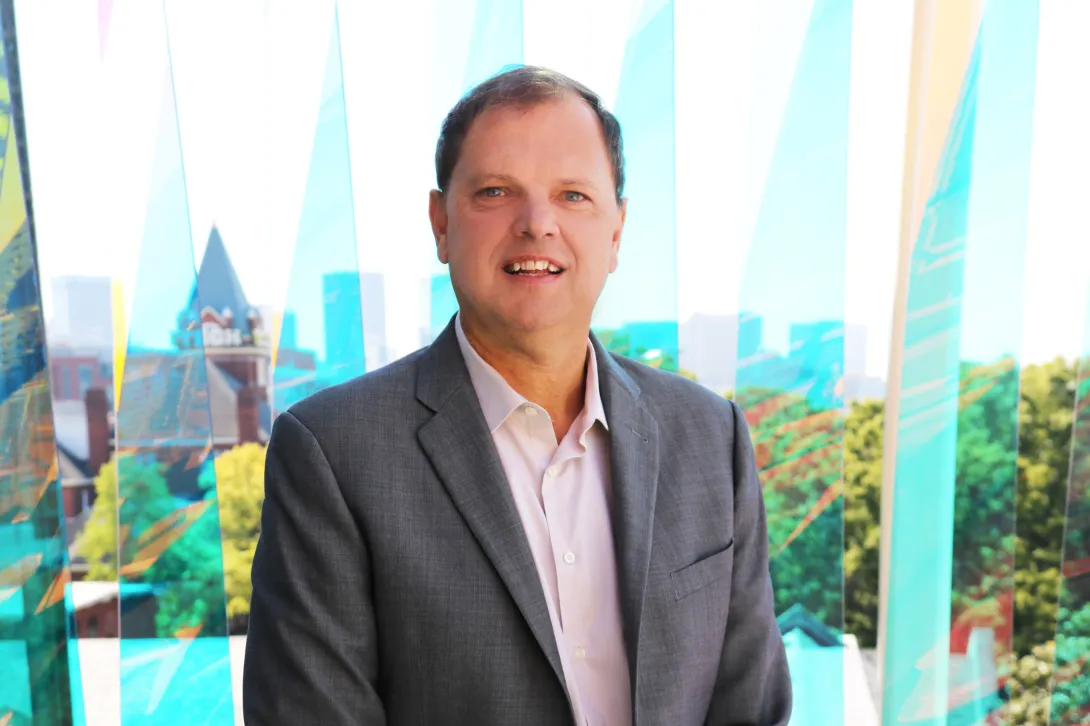
The College of Sciences has named Professor Joel Kostka the inaugural faculty director of Georgia Tech for Georgia's Tomorrow. The new center, announced by the College in December 2024, will drive research aimed at improving life across the state of Georgia.
“Joel is perfectly suited to lead this new initiative, especially since his research for a number of years has focused on Georgia and the vulnerability of both humans and ecosystems to climate change,” says Susan Lozier, dean of the College of Sciences, Betsy Middleton and John Clark Sutherland Chair, and professor in the School of Earth and Atmospheric Sciences. “I look forward to seeing how Science for Georgia’s Tomorrow takes shape and evolves under his thoughtful leadership.”
“I believe that my experience in research administration and in leading multidisciplinary research programs, along with the focus of my research on the vulnerability of Georgia’s communities to climate change, have prepared me well for this role,” says Kostka, who is the Tom and Marie Patton Distinguished Professor and associate chair for Research in the School of Biological Sciences with a joint appointment in the School of Earth and Atmospheric Sciences. “I am excited about the opportunity to lead the center as its inaugural director.”
Kostka’s appointment will begin on May 1, 2025.
Championing science in Georgia
Georgia's Tomorrow was created to foster research related to the health and resilience of Georgia’s people, ecosystems, and communities. Specifically, it will serve to boost research collaboration across the Institute, pave the way for public-private partnerships, and expand opportunities for Georgia students and communities to engage with Institute research.
Among Kostka’s first tasks as faculty director will be the development of the center’s strategic plan and the completion of two dedicated cluster hires from within the College of Sciences’ six schools.
Meet Joel Kostka
Kostka is known for bridging biogeochemistry and microbiology to elucidate the role of microorganisms in ecosystem function. He has emerged as an international leader in ecosystem biogeoscience, providing a quantitative predictive understanding of how ecosystems function as well as determining the mechanisms by which climate change alters ecosystem resilience. He partners with a variety of stakeholders to conduct research on the restoration and adaptive management of coastal ecosystems in Georgia.
Kostka has also served as the PI of a range of multidisciplinary research projects focused on environmental change as well as scientific advisory boards including Georgia Tech’s Strategic Energy Institute, the NSF-funded Plum Island Estuary Long-term Ecological Research program, and the Johnston Center for Coastal Sustainability on Bald Head Island.
Kostka received a B.S. in Biology from Western Illinois University and a Ph.D. in Marine Science from the University of Delaware. Prior to joining Georgia Tech in 2011, he was a professor at the Department of Oceanography and Associate Director of the Institute of Energy Systems, Economics, and Sustainability at Florida State University.
Initial support for Georgia Tech for Georgia’s Tomorrow is generously provided by the College of Sciences Betsy Middleton and John Clark Sutherland Dean's Chair fund. Cluster hire funding has been awarded by Provost Steven W. McLaughlin. The initiative will also seek funding from state, national and international organizations, private foundations, and government agencies to expand impact. Philanthropic support will also be sought in the form of professorships, programmatic support for the center, and seed funding.
Georgia Tech for Georgia's Tomorrow initially launched under the working name Science for Georgia's Tomorrow (Sci4GT).
News Contact
Writer: Lindsay C. Vidal
Feb. 28, 2025
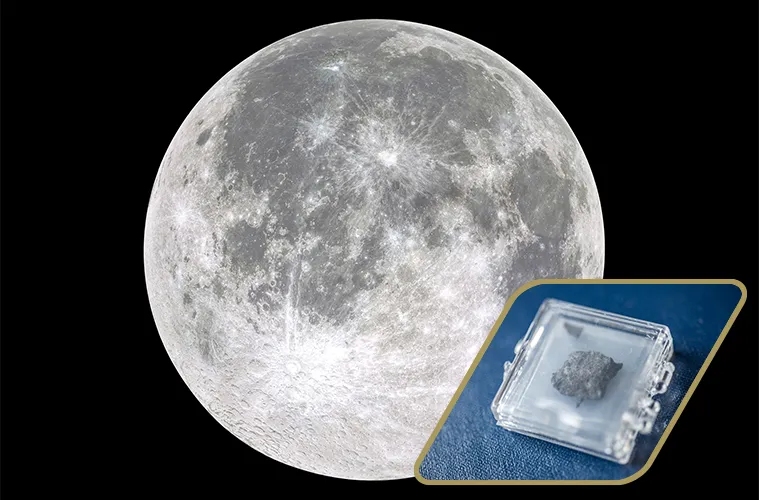
Dust and rocks residing on the surface of the moon take a beating in space. Without a protective magnetosphere and atmosphere like Earth’s, the lunar surface faces continual particle bombardment from solar wind, cosmic rays, and micrometeoroids. This constant assault leads to space weathering.
New NASA-funded research by Georgia Tech offers fresh insights into the phenomenon of space weathering. Examining Apollo lunar samples at the nanoscale, Tech researchers have revealed risks to human space missions and the possible role of space weathering in forming some of the water on the moon.
Most previous studies of the moon involved instruments mapping it from orbit. In contrast, this study allowed researchers to spatially map a nanoscale sample while simultaneously analyzing optical signatures of Apollo lunar samples from different regions of the lunar surface — and to extract information about the chemical composition of the lunar surface and radiation history.
The researchers recently published their findings in Scientific Reports.
“The presence of water on the moon is critical for the Artemis program. It’s necessary for sustaining any human presence and it’s a particularly important source for oxygen and hydrogen, the molecules derived from splitting water,” said Thomas Orlando, Regents’ Professor in the School of Chemistry and Biochemistry, co-founder and former director of the Georgia Tech Center for Space Technology and Research, and principal investigator of Georgia Tech’s Center for Lunar Environment and Volatile Exploration Research (CLEVER).
Building on a Decade of Lunar Science Research
As a NASA SSERVI (Solar System Exploration Research Virtual Institute), CLEVER is an approved NASA laboratory for analysis of lunar samples and includes investigators from multiple institutes and universities across the U.S. and Europe. Research areas include how solar wind and micrometeorites produce volatiles, such as water, molecular oxygen, methane, and hydrogen, which are all crucial to supporting human activity on the moon.
Georgia Tech has built a large portfolio in human exploration and lunar science over the last decade with two NASA Solar System Exploration Research Virtual Institutes: CLEVER and its predecessor, REVEALS (Radiation Effects on Volatiles and Exploration of Asteroids and Lunar Surfaces).
Studying Moon Samples at the Nanoscale Level
Georgia Tech’s labs are world-renowned, particularly for analyzing surfaces and semiconductor materials. For this work, the Georgia Tech team also tapped the University of Georgia (UGA) Nano-Optics Laboratory run by Professor Yohannes Abate in the Department of Physics and Astronomy. While UGA is a member of CLEVER, its nano-FTIR spectroscopy and nanoscale imaging equipment was historically used for semiconductor physics, not space science.
“This is the first time these tools have been applied to space-weathered lunar samples, and it’s the first we’ve been able to see good signatures of space weathering at the nanoscale,” says Orlando.
Normal spectrometers are at a much larger scale, with the ability to see more bulk properties of the soil, explains Phillip Stancil, professor and head of the UGA physics department.
The UGA equipment enabled the study of samples “in tens of nanometers.” To illustrate how small nanoscale is, Stancil says a hydrogen atom is .05 nanometers, so 1 nm is the size of 20 atoms if placed side by side. The spectrometers provide high-resolution details of the lunar grains down to hundreds of atoms.
“We can look at an almost atomistic level to understand how this rock was formed, its history, and how it was processed in space,” Stancil says.
“You can learn a lot about how the atom positions change and how they are disrupted due to radiation by looking at the tiny sample at an atomistic level,” says Orlando, noting that a lot of damage is done at the nanoscale level. They can determine if the culprit is space weathering or from a process left over during the rock’s formation and crystallization.
Finding Radioactive Damage, Evidence of Water
The researchers found damage on the rock samples, including changes in the optical signatures. That insight helped them understand how the lunar surface formed and evolved but also provided “a really good idea of the rocks’ chemical composition and how they changed when irradiated,” says Orlando.
Some of the optical signatures also showed trapped electron states, which are typically missing atoms and vacancies in the atomic lattice. When the grains are irradiated, some atoms are removed, and the electrons get trapped. The types of traps and how deep they are, in terms of energy, can help determine the radiation history of the moon. The trapped electrons can also lead to charging, which can generate an electrostatic spark. On the moon, this could be a problem for astronauts, exploration vehicles, and equipment.
“There is also a difference in the chemical signatures. Certain areas had more neodymium (a chemical element also found in the Earth’s crust) or chromium (an essential trace mineral), which are made by radioactive decay,” Orlando says. The relative amounts and locations of these atoms imply an external source like micrometeorites.
Translating Research to Human Risks on the Moon
Radiation and its effects on the dust and lunar surface pose dangers to people, and the main protection is the spacesuit.
Orlando sees three key risks. First, the dust could interfere with spacesuits’ seals. Second, micrometeorites could puncture a spacesuit. These high-velocity particles form after breaking off from larger chunks of debris. Like solar storms, they are hard to predict, and they’re dangerous because they come in at high-impact velocities of 5 kilometers per second or higher. “Those are bullets, so they will penetrate the spacesuits,” Orlando says. Third, astronauts could breathe in dust left on the suits, causing respiratory issues. NASA is studying many approaches for dust removal and mitigation.
Mapping the Moon: Going from Nanoscale to Macroscale
The next research phase will involve combining the UGA analysis tools with a new tool from Georgia Tech that will be used to analyze Apollo lunar samples that have been in storage for over 50 years.
“We will combine two very sophisticated analysis tools to look at these samples in a level of detail that I don’t think has been done before,” Orlando says.
The goal is to build models that can feed into orbital maps of the moon. To get there, the Georgia Tech and UGA team will need to go from nanoscale to the full macro scale to show what’s happening on the lunar surface and the location of water and other key resources, including methane, needed to support humanity’s moon and deep-space exploration goals.
Jul. 09, 2024
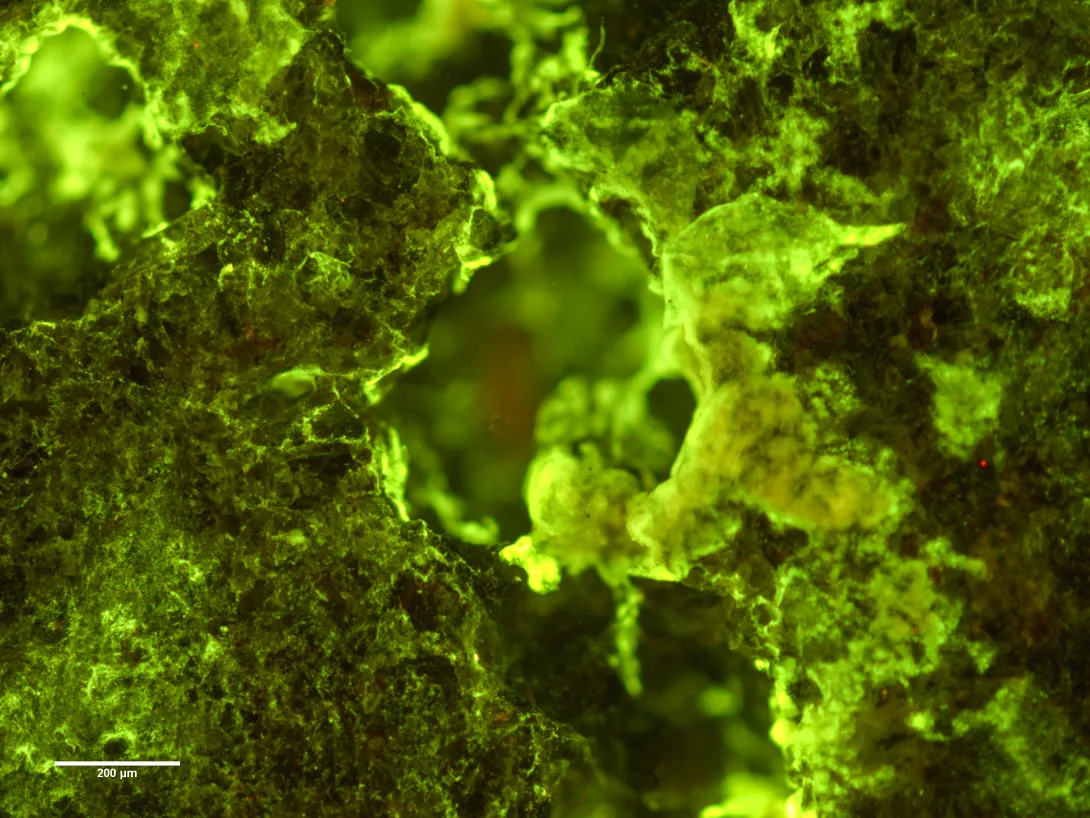
From plaque sticking to teeth to scum on a pond, biofilms can be found nearly everywhere. These colonies of bacteria grow on implanted medical devices, our skin, contact lenses, and in our guts and lungs. They can be found in sewers and drainage systems, on the surface of plants, and even in the ocean.
“Some research says that 80% of infections in human bodies can be attributed to the bacteria growing in biofilms,” Aawaz Pokhrel says, lead author of a groundbreaking new study that uses physics to investigate how these biofilms grow.
The paper, “The Biophysical Basis of Bacterial Colony Growth,” was published in Nature Physics this week, and it shows that the fitness of a biofilm — its ability to grow, expand, and absorb nutrients from the medium or the substrate — is largely impacted by the contact angle that the biofilm’s edge makes with the substrate. The study also found that this geometry has a bigger influence on fitness than anything else, including the rate at which the cells can reproduce.
“That was the big surprise for us,” says corresponding author Peter Yunker, an associate professor in Georgia Tech’s School of Physics. “We expected that the geometry would play an important role, and we thought that figuring out exactly what the geometry is would be important for understanding why the range expansion rate, for example, [the rate at which the biofilm spreads across the surface over time] is constant. But we didn't start the project thinking that geometry would be the single most important factor.”
Understanding how biofilms grow — and what factors contribute to their growth rate — could lead to critical insights on controlling them, with applications for human health, like slowing the spread of infection or creating cleaner surfaces. “What got me excited was this opportunity to use physics to learn about complex biological systems,” Pokhrel, who is also a Ph.D. student in Yunker’s lab, adds. “Especially on a project that has so many applications. The combination of the importance for human health and exciting research was really intriguing for me.”
A new method
While biofilms are ubiquitous in nature, studying them has proven difficult. Because these “cities of microorganisms” are comprised of tiny individuals, scientists have struggled to image them successfully.
That changed in 2015, when Yunker began wondering if interferometry, a commonly used imaging technique in physics and materials science, could be applied to biofilms. “Given my background in physics, I was familiar with its use in materials applications,” Yunker recalls. “I thought applying this technique more broadly might be interesting, because we know from decades of physics that surface interfaces contain a lot of information about the processes that create them.”
The technique proved to be simple, effective, and time-efficient, providing nanometer-scale resolution of bacterial colonies. “It allows us to essentially get a picture of the topography — the shape of the surface of the bacterial population — with super-resolution,” Yunker adds.
Leveraging interferometry, the team began conducting new biofilm experiments, investigating how colonies’ shapes changed over time. Co-first author Gabi Steinbach, formerly a postdoctoral scholar in Yunker’s lab and now a scientific research coordinator at the University of Maryland, noticed that every colony had a specific shape when it was small: a spherical cap, like a slice from the top of a sphere, or a droplet of water. It’s a shape that shows up often in physics, and that sparked the team’s interest.
“A spherical cap in physics is very interesting, because it is a surface-minimizing shape,” Pokhrel adds. “I was curious why a biological material was growing in this shape, and we started wondering if there was some physics to it – perhaps geometry was involved. And that made us think that maybe we could develop a model. And that got me really excited.”
A mathematical mystery
However, the researchers soon hit a roadblock. “While we could see that the colonies were spherical caps at first, they would deviate from that shape as they grew,” Pokhrel says. “And the shape that they grew into was difficult to describe with existing spherical cap geometry.”
“The middle didn’t grow as quickly as it should to keep the spherical cap shape, and we wanted to connect all of this to the range expansion [the rate at which the colony spread across a surface],” Yunker adds. “But we knew that somehow, geometry was playing a very important role.”
Finally, Thomas Day, a former graduate student in Yunker’s lab, now a postdoctoral fellow at the University of Southern California, and one of the authors of the paper, suggested a quirky problem of geometry called the napkin ring problem.
“As soon as we started to think about the napkin ring problem, we were able to start developing a mathematical toolkit,” Yunker says, though the solution wasn’t effortless. “We couldn't find anyone who had ever looked at a spherical cap napkin ring before, because the application is very rare.”
Pokhrel, alongside two co-authors, was responsible for working out the geometry. He discovered that the cells grew exponentially at the edge of the shape, expanding further onto the medium, while the cells in the middle grew upward, creating a shape not unlike an egg in a frying pan — if the egg white was expanding outwards, while the yolk was only growing taller.
This was the breakthrough discovery: Because the cells at the middle were only contributing to the biofilm’s height, the team only needed to account for how many cells were at the edge of the biofilm, and the shape they needed to be in to grow and spread.
After incorporating their findings into a mathematical model, the team found that the contact angle was the most important factor: the angle that the very edge of the biofilm made when it touched the surface it was growing on. That single geometric quality is even more important to a biofilm’s growth than the rate at which it can reproduce cells.
The physics-biology connection
Overall, the project took more than three years, from conception to publication. “Aawaz really made an incredible effort seeing this work through,” Yunker says. “It was many years and many, many experiments. But the finished product is 100% worth it.”
The team hopes the research will pave the way for future studies, which could lead to applications like controlling biofilm growth to help prevent infections.
“Going forward, there are still a lot of research avenues,” Pokhrel says. “For example, looking at competition experiments between biofilms — do taller colonies change their contact angle so that they can spread faster? What role does this geometry play in competition?”
“Biology is complex,” Yunker adds. In nature, the surface a biofilm grows on may not be as consistent as a laboratory surface, and colonies may have different mutations or may consist of more than one species. And while the model is based on how biofilms behave in a controlled lab environment, it’s a critical first step in understanding how they may behave in nature.
Citation: Pokhrel, A.R., Steinbach, G., Krueger, A. et al. The biophysical basis of bacterial colony growth. Nat. Phys. (2024). https://doi.org/10.1038/s41567-024-02572-3
Funding information: This research was funded by the NIH National Institute of General Medical Sciences and NSF Biomaterials
News Contact
Written by Selena Langner
Jun. 03, 2024
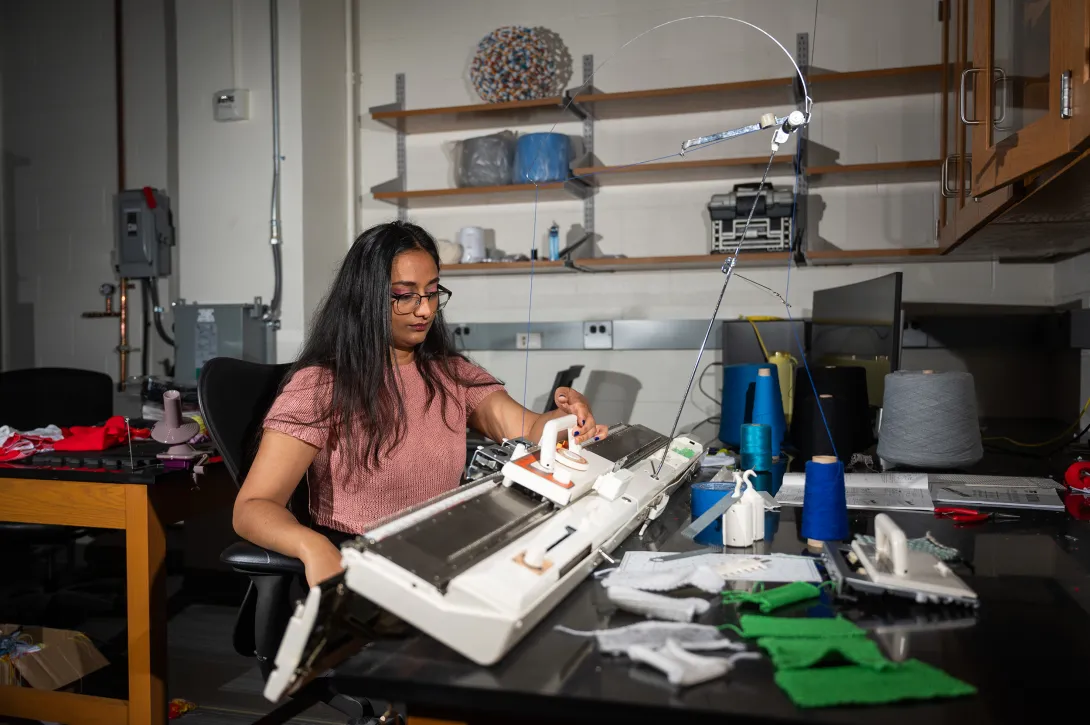
Krishma Singal operates the knitting machine she used to create fabric samples for the study. Singal, the first author of the study, recently graduated from Georgia Tech with her Ph.D. Credit: Allison Carter.
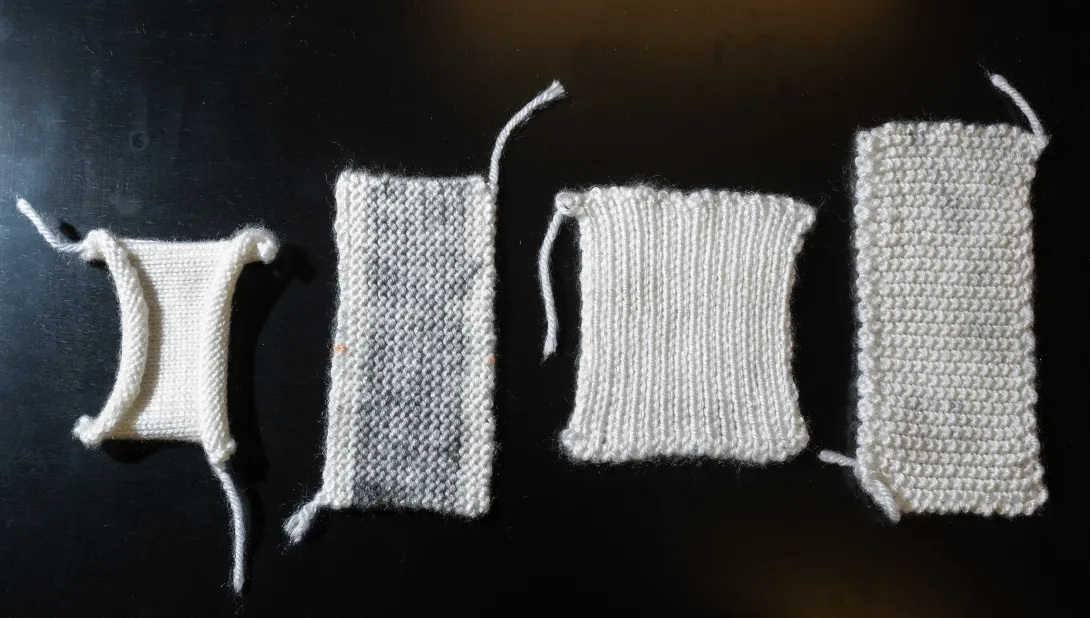
The team created their own fabric samples using a variety of stitch patterns. From left to right, the fabrics are stockinette, garter, rib, and seed. Each sample has the same number of stitch rows and columns, showing how stitch patterns can profoundly impact behavior, elasticity, and shape. Credit: Allison Carter
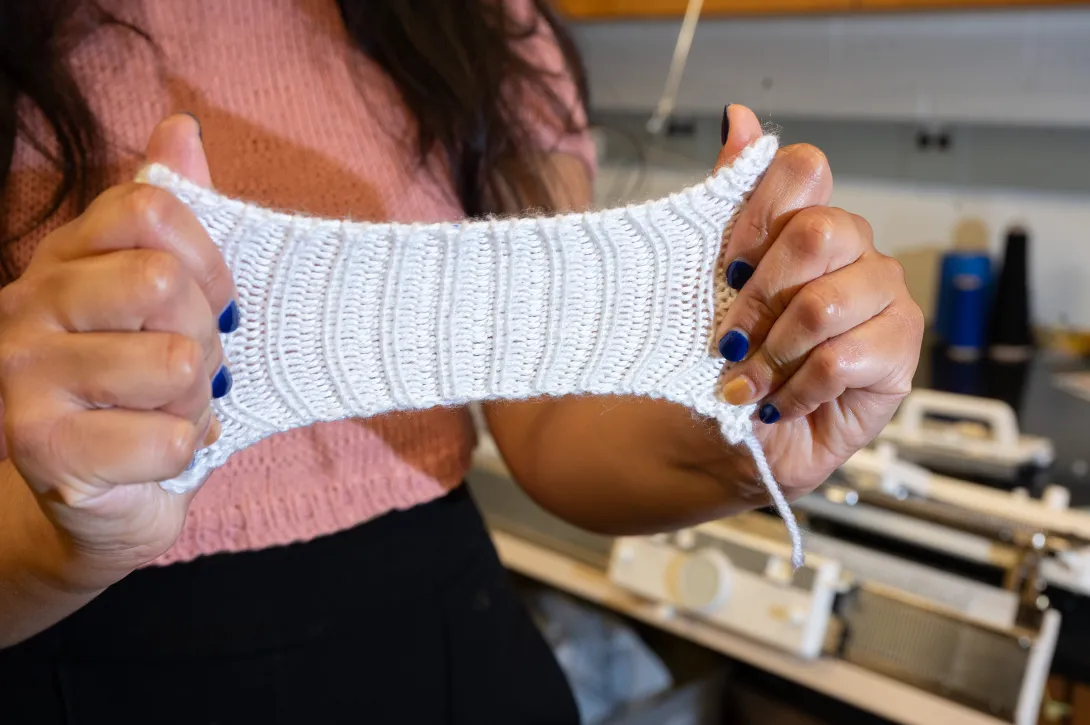
Many types of yarn are not very stretchy, yet once knit into a fabric, the fabric exhibits emergent elastic behavior. Credit: Allison Carter
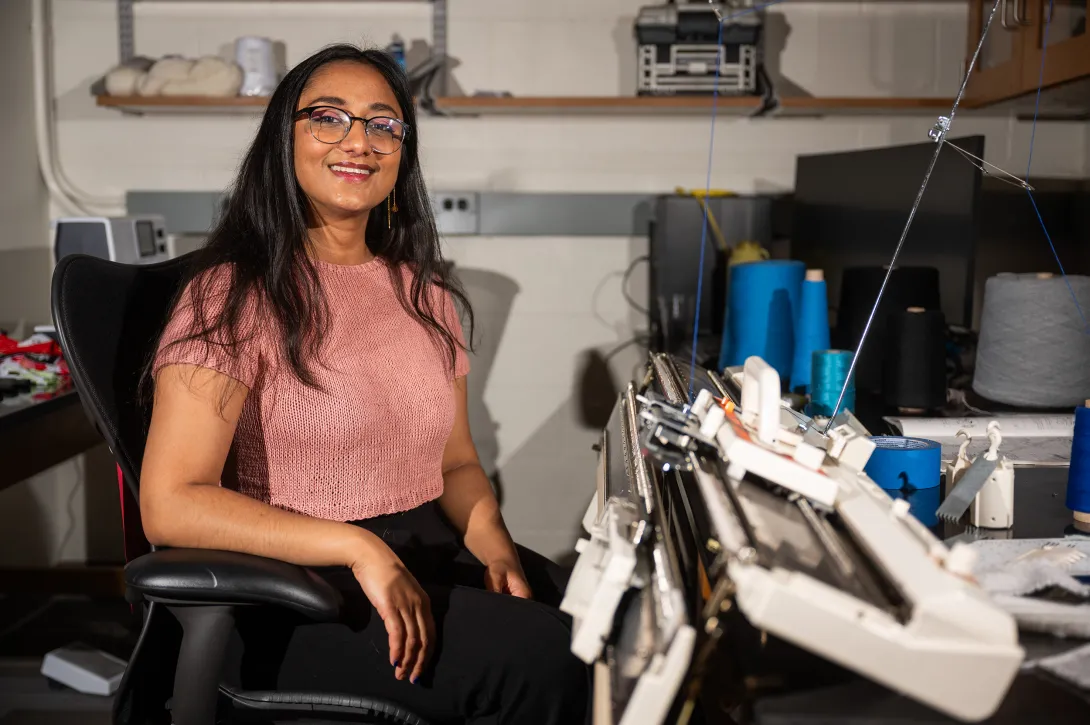
Krishma Singal with the knitting machine she used to create fabric samples for the study. Credit: Allison Carter.
Knitting, the age-old craft of looping and stitching natural fibers into fabrics, has received renewed attention for its potential applications in advanced manufacturing. Far beyond their use for garments, knitted textiles are ideal for designing and fabricating emerging technologies like wearable electronics or soft robotics — structures that need to move and bend.
Knitting transforms one-dimensional yarn into two-dimensional fabrics that are flexible, durable, and highly customizable in shape and elasticity. But to create smart textile design techniques that engineers can use, understanding the mechanics behind knitted materials is crucial.
Physicists from the Georgia Institute of Technology have taken the technical know-how of knitting and added mathematical backing to it. In a study led by Elisabetta Matsumoto, associate professor in the School of Physics, and Krishma Singal, a graduate researcher in Matsumoto’s lab, the team used experiments and simulations to quantify and predict how knit fabric response can be programmed. By establishing a mathematical theory of knitted materials, the researchers hope that knitting — and textiles in general — can be incorporated into more engineering applications.
Their research paper, “Programming Mechanics in Knitted Materials, Stitch by Stitch,” was published in the journal Nature Communications.
“For centuries, hand knitters have used different types of stitches and stitch combinations to specify the geometry and ‘stretchiness’ of garments, and much of the technical knowledge surrounding knitting has been handed down by word of mouth,” said Matsumoto.
But while knitting has often been dismissed as unskilled, poorly paid “women’s work,” the properties of knits can be more complex than traditional engineering materials like rubbers or metals.
For this project, the team wanted to decode the underlying principles that direct the elastic behavior of knitted fabrics. These principles are governed by the nuanced interplay of stitch patterns, geometry, and yarn topology — the undercrossings or overcrossings in a knot or stitch. "A lot of yarn isn’t very stretchy, yet once knit into a fabric, the fabric exhibits emergent elastic behavior," Singal said.
“Experienced knitters can identify which fabrics are stretchier than others and have an intuition for its best application,” she added. “But by understanding how these fabrics can be programmed and how they behave, we can expand knitting’s application into a variety of fields beyond clothing.”
Through a combination of experiments and simulations, Matsumoto and Singal explored the relationships among yarn manipulation, stitch patterns, and fabric elasticity, and how these factors work together to affect bulk fabric behavior. They began with physical yarn and fabric stretching experiments to identify main parameters, such as how bendable or fluffy the yarn is, and the length and radius of yarn in a given stitch.
They then used the experiment results to design simulations to examine the yarn inside a stitch, similar to an X-ray. It is difficult to see inside stitches during the physical measurements, so the simulations are used to see what parts of the yarn have interacted with other parts. The simulations are used to recreate the physical measurements as accurately as possible.
Through these experiments and simulations, Singal and Matsumoto showed the profound impact that design variations can have on fabric response and uncovered the remarkable programmability of knitting. "We discovered that by using simple adjustments in how you design a fabric pattern, you can change how stretchy or stiff the bulk fabric is," Singal said. "How the yarn is manipulated, what stitches are formed, and how the stitches are patterned completely alter the response of the final fabric."
Matsumoto envisions that the insights gleaned from their research will enable knitted textile design to become more commonly used in manufacturing and product design. Their discovery that simple stitch patterning can alter a fabric’s elasticity points to knitting’s potential for cutting-edge interactive technologies like soft robotics, wearables, and haptics.
“We think of knitting as an additive manufacturing technique — like 3D printing, and you can change the material properties just by picking the right stitch pattern,” Singal said.
Matsumoto and Singal plan to push the boundaries of knitted fabric science even further, as there are still numerous questions about knitted fabrics to be answered.
"Textiles are ubiquitous and we use them everywhere in our lives," Matsumoto said. "Right now, the hard part is that designing them for specific properties relies on having a lot of experience and technical intuition. We hope our research helps make textiles a versatile tool for engineers and scientists too."
Note: Sarah Gonzalez (Georgia Tech) and Michael Dimitriyev (Texas A&M) are also co-first authors of the study.
Citation: Singal, K., Dimitriyev, M.S., Gonzalez, S.E. et al. Programming mechanics in knitted materials, stitch by stitch. Nat Commun 15, 2622 (2024).
DOI: https://doi.org/10.1038/s41467-024-46498-z
Funding: Research Corporation for Science Advancement, National Science Foundation, and the Alfred P. Sloan Foundation
News Contact
Catherine Barzler, Senior Research Writer/Editor
Institute Communications