

Apr. 28, 2026
A man wearing a surgical mask and white coat examines a black and white chicken.

Georgia Tech researchers are working on an oral bird flu vaccine that could transform poultry vaccination. (Credit: Adobe Stock)

The United States Department of Agriculture (USDA) has awarded $2 million to a team of Georgia Tech and Georgia Tech Research Institute (GTRI) researchers to develop a first-of-its-kind vaccine pill for bird flu.

For decades, bird flu was uncommon in the U.S., but that has changed. In the past several years, epidemics have threatened poultry and dairy cattle operations across the country. Higher egg prices, driven largely by bird flu-related supply disruptions, have cost American consumers billions of dollars in losses.

“The H5N1 strain of the bird flu, which has driven recent and current outbreaks, is a highly lethal virus that kills domestic chickens and other bird species in droves,” said David Pattie, GTRI research scientist and branch chief. “It can easily jump from birds to other animal species — and sometimes to humans.”

The research team will leverage artificial intelligence (AI) to design and test a probiotic avian flu vaccine that, if successful, could be served to chickens in their feed. Currently, vaccinating a flock means individually injecting every bird. 

“We’re focusing on live bacterial vaccines, which means the vaccine comes from living bacteria you swallow, instead of an injection,” said Mike Farrell, GTRI principal research scientist and the project’s lead investigator. 

“These probiotic vaccines would help protect birds and livestock from flu-like infections and lower the risk of those viruses spreading to humans,” he added.

In addition to Farrell and Pattie, the team includes researchers from an array of disciplines across the Institute: Faramarz Fekri, professor and John Pippin Chair in the School of Electrical and Computer Engineering; JC Gumbart, Dunn Family Professor in the School of Physics; Brian Hammer, associate professor in the School of  Biological Sciences; and Anton Bryksin, director of the Molecular Evolution Core at the Parker H. Petit Institute for Bioengineering and Bioscience

Building on Human Influenza Research 

The project builds on Farrell’s ongoing research into developing probiotic vaccine adjuvants for human influenza. The goal is to use probiotic bacteria — the “good bacteria” found in foods like yogurt — to help create immunity for the flu vaccine.

If the researchers can get probiotic bacteria to display pieces of the flu virus (called antigens) on their surface, then they could be swallowed like a normal probiotic pill.

“The gut is a great place for building immunity. When these bacteria reach the gut, your body would recognize the virus pieces on the bacteria and start building flu antibodies,” Farrell explained. “That way, when the chickens get exposed to flu, their immune system would already be prepared to fight it.”

Putting AI to the Test

“The idea behind this oral bird flu vaccine is to leverage artificial intelligence and the vast historical database for H5N1 available to us, because it's a very well-studied virus,” Farrell said. “There is a ton of structural data out there.” 

Gumbart is an expert in protein modeling and simulation. Part of his role is figuring out the best design for a viral protein piece (antigen) — one that looks and behaves like the real virus protein, so it triggers the right immune response. To do this, he will combine Fekri’s AI-generated predictions with computer modeling. 

“That’s where my team adds real value,” Gumbart said. “We use simulations to test how stable and realistic these protein designs are, which allows us to choose the best ones for lab experiments.”

AI has already identified new medicines and antibiotics by studying chemical databases. If the team can use AI to help design virus proteins for vaccines, it could transform how vaccines are made. 

Pattie says that any viral infectious disease with a high mortality rate has the potential to become a national security threat. “At that point, developing countermeasures becomes exceedingly important from a national security perspective,” he said.  

This is the first time several of the team members are working on poultry research. For Gumbart, the project is a full-circle moment.

“I grew up in rural Illinois, and as a kid, one of my daily chores was to take care of chickens, and I kind of hated it,” he said. “It is some sort of universal irony that I am back to taking care of chickens again.”

News Contact

Catherine Barzler, Senior Research Writer/Editor

catherine.barzler@gatech.edu

Apr. 06, 2026
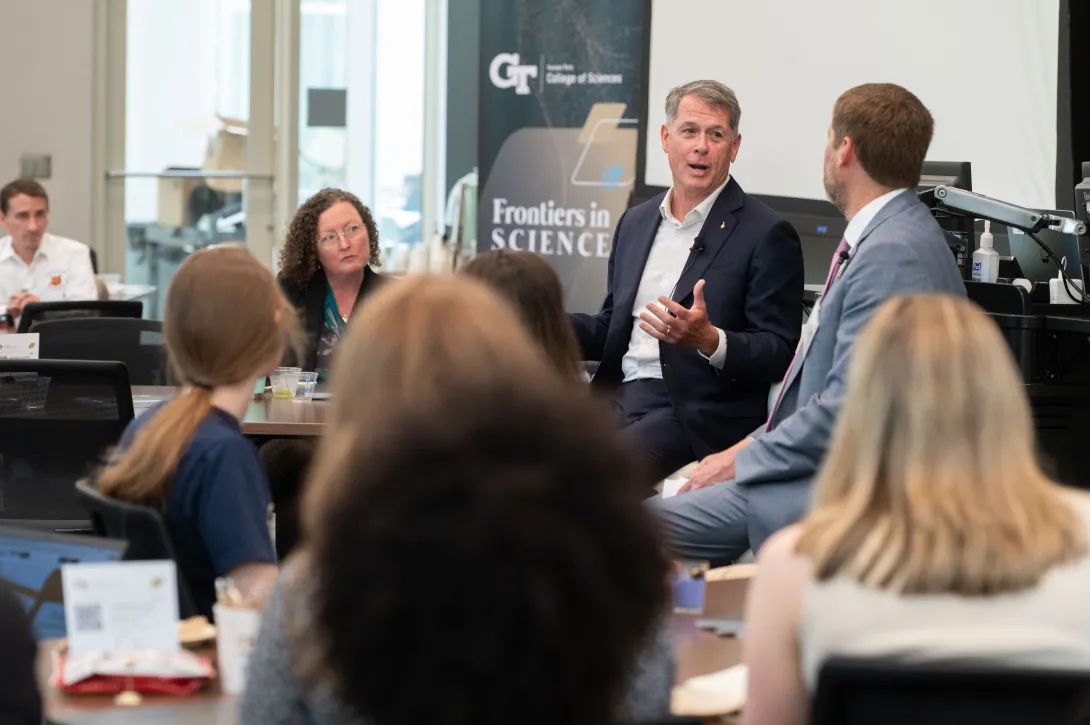
R. Shane Kimbrough speaks in front of room of people during a fireside chat
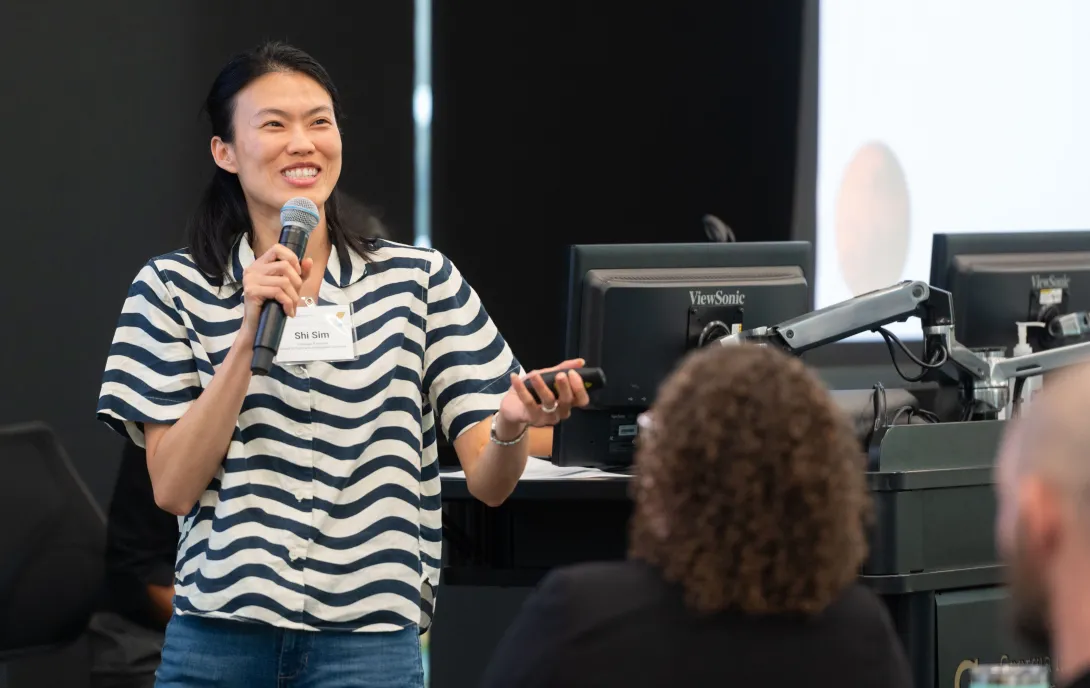
Joyce Shi Sim holds a microphone and laser pointer while presenting to room of people
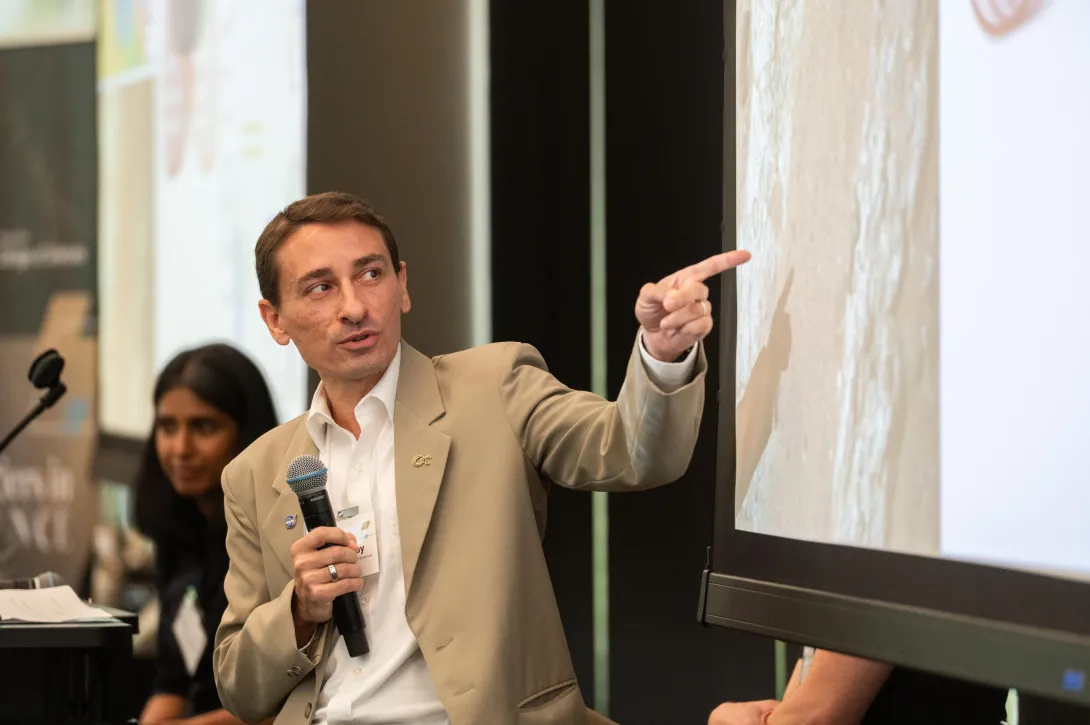
Professor James Wray holds microphone and points to powerpoint slide during his presentation
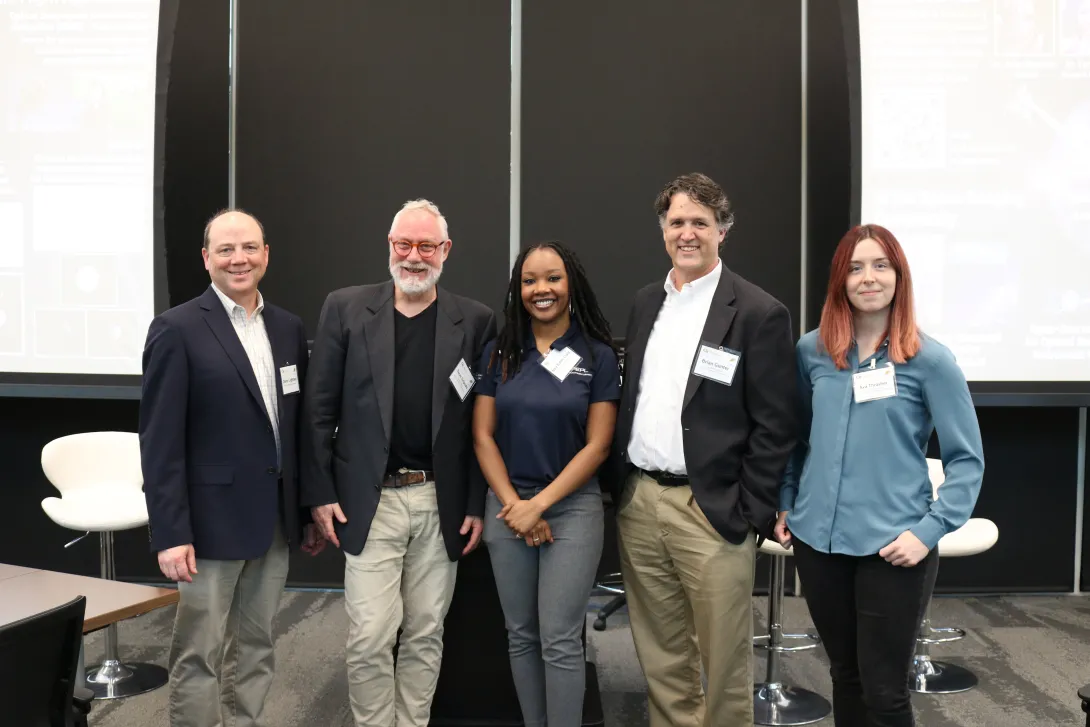
Group photo of five people, including Georgia Tech faculty
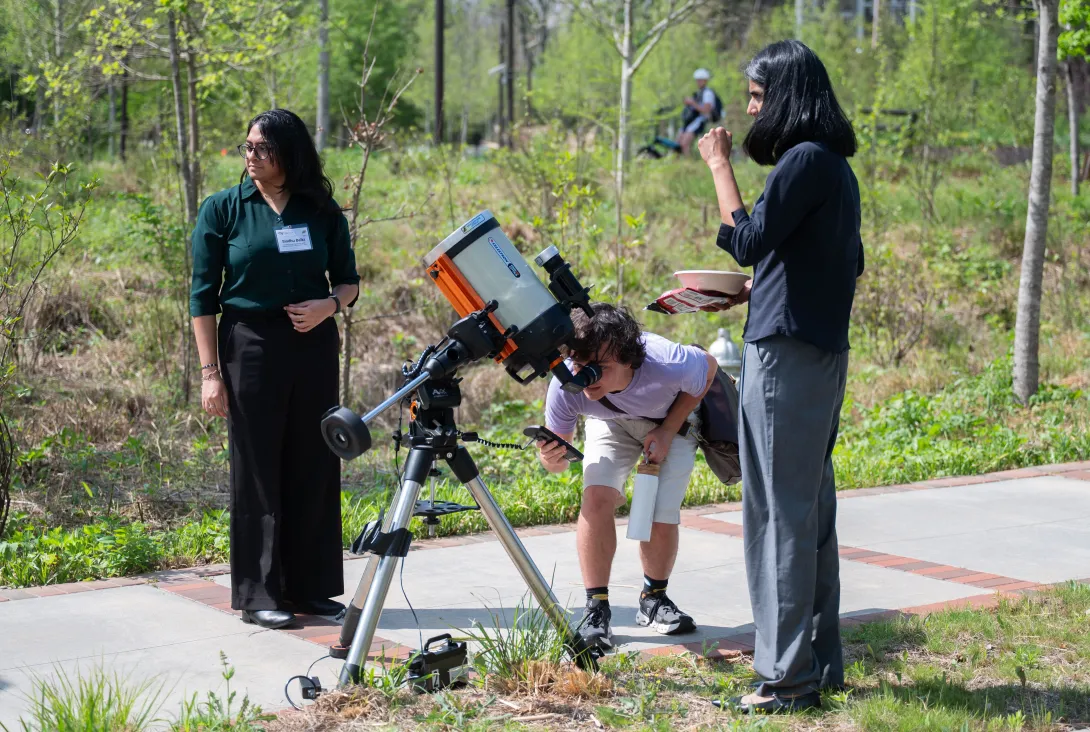
Three people stand outdoors with one person looking at the sun through a telescope
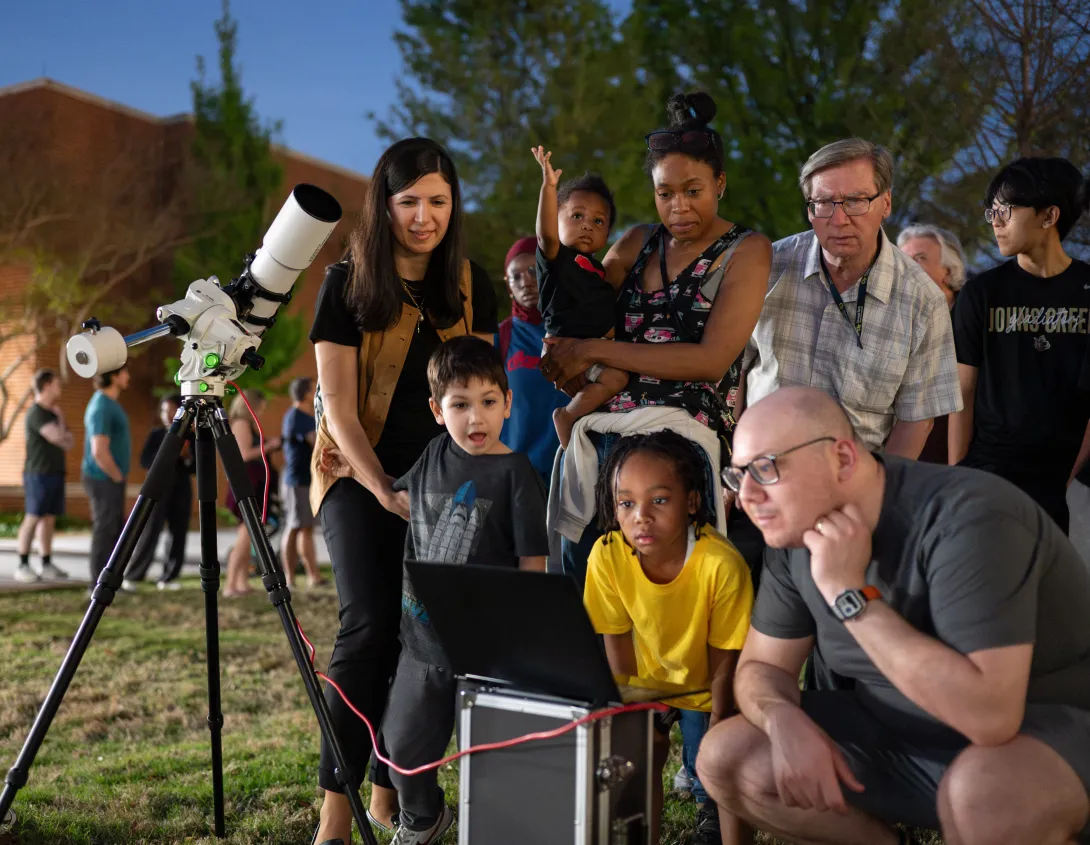
Adults and children observing the night sky through a computer that is connected to a telescope

One day after the historic Artemis II launch, the College of Sciences welcomed more than 150 researchers, students, and community members to its signature Frontiers in Science conference. Held on April 2, the full-day event focused on space research guiding discovery and innovation.

As during previous editions, this year’s conference featured more than two dozen scientists, engineers, policy experts, and thought leaders from Georgia Tech and beyond, illustrating how collaboration across fields – from science and engineering to public policy and international affairs – helps to advance strategic research priorities. 

“Frontiers is about discovery and connections across disciplines and generations,” says Susan Lozier, dean of the College of Sciences and Betsy Middleton and John Clark Sutherland Chair. “This edition provided an inspiring glimpse into the future of space exploration and the many ways Georgia Tech is contributing to research and missions seeking answers to what lies beyond our planet.” 

Commitment to Space

Space research is a key institutional priority at Georgia Tech, which is home to numerous academic and research programs in planetary sciences, robotics, mission design, space policy, and other areas. 

The recently established Space Research Institute (SRI) serves as the central hub connecting the broad range of space-related research across campus. Led by Jud Ready, who also serves as principal research engineer at the Georgia Tech Research Institute, SRI has expanded support for space research and commercialization through initiatives such as the CreationsVC Space Fellows Program and Centers, Programs, and Initiatives seed grant program.

SRI’s efforts are in line with Georgia Tech’s long-standing contribution to space exploration. Hundreds of Yellow Jacket alumni work in the space sector, including several graduates who are playing key roles in the Artemis program. To date, more than a dozen Georgia Tech alumni have traveled to space.

Exploring the Final Frontier

The conference featured a series of panels and discussions led by faculty and researchers from the Colleges of Sciences and Engineering as well as the Ivan Allen College of Liberal Arts. 

Sessions explored how researchers are studying the processes and conditions that support planetary habitability, seeking to answer one of humanity’s greatest questions: Does life exist beyond Earth? Speakers also examined how analog fieldwork in Earth’s extreme environments can inform space exploration, and how space research, in turn, can deepen our understanding of our own world.

Additional conversations centered on building better space missions through improved understanding of team and individual resilience, data collection, navigation, and the development of advanced technologies like the robots developed through the NASA LASSIE Project

Frontiers also highlighted Georgia Tech’s commitment to preparing the next generation of space scientists, engineers, and leaders. Student training and engagement were recurring themes throughout the day, with speakers emphasizing opportunities for student-led and student-run missions and research. A panel of Georgia Tech alumni shared their own STEM career journeys, challenging the idea of “one right path” to success — and acknowledging the resources and opportunities available at the Institute. 

A highlight of the conference was a fireside chat with Atlanta-native, retired U.S. Army Colonel and NASA Astronaut R. Shane Kimbrough (M.S. Operations Research 1998). Kimbrough, who spent a total of 388 days in space and performed nine spacewalks across three missions, reflected on his career and the evolution of spaceflight. He emphasized the expanding role of public-private and international partnerships in advancing ambitious goals, such as creating a permanent human outpost on the Moon. 

Policy and Public

The conference also explored how policy influences space discovery and innovation, with discussions touching on such issues as space security, access, governance, sustainability — and the influence of technology and science fiction on public perception and policy. 

Panelists described current policy frameworks governing outer space as struggling to keep pace with rapidly advancing technologies and expanding activities. According to these experts, increasing tensions among commercial, research, and recreational uses of space call for greater coordination among private and government entities to balance competing priorities while maximizing opportunities for innovation and exploration. 

The conference was punctuated by a networking lunch connecting attendees with Atlanta’s public astronomy community – including partners at several universities and the Georgia Tech Astronomy Club, which set up telescopes for attendees to safely observe the sun. Later that evening, the Georgia Tech Observatory hosted its Public Night, welcoming the broader Atlanta community to campus for telescope views of Jupiter, the Orion Nebula, and other celestial bodies. 

The Observatory Night was a fitting conclusion to a full day focused on Georgia Tech’s commitment and contributions to inspiring future generations of space explorers through research, education, and outreach. 

Experience the Frontiers conference in pictures on the College of Sciences’ Flickr account.

News Contact

Writer: Lindsay C. Vidal

Mar. 27, 2026
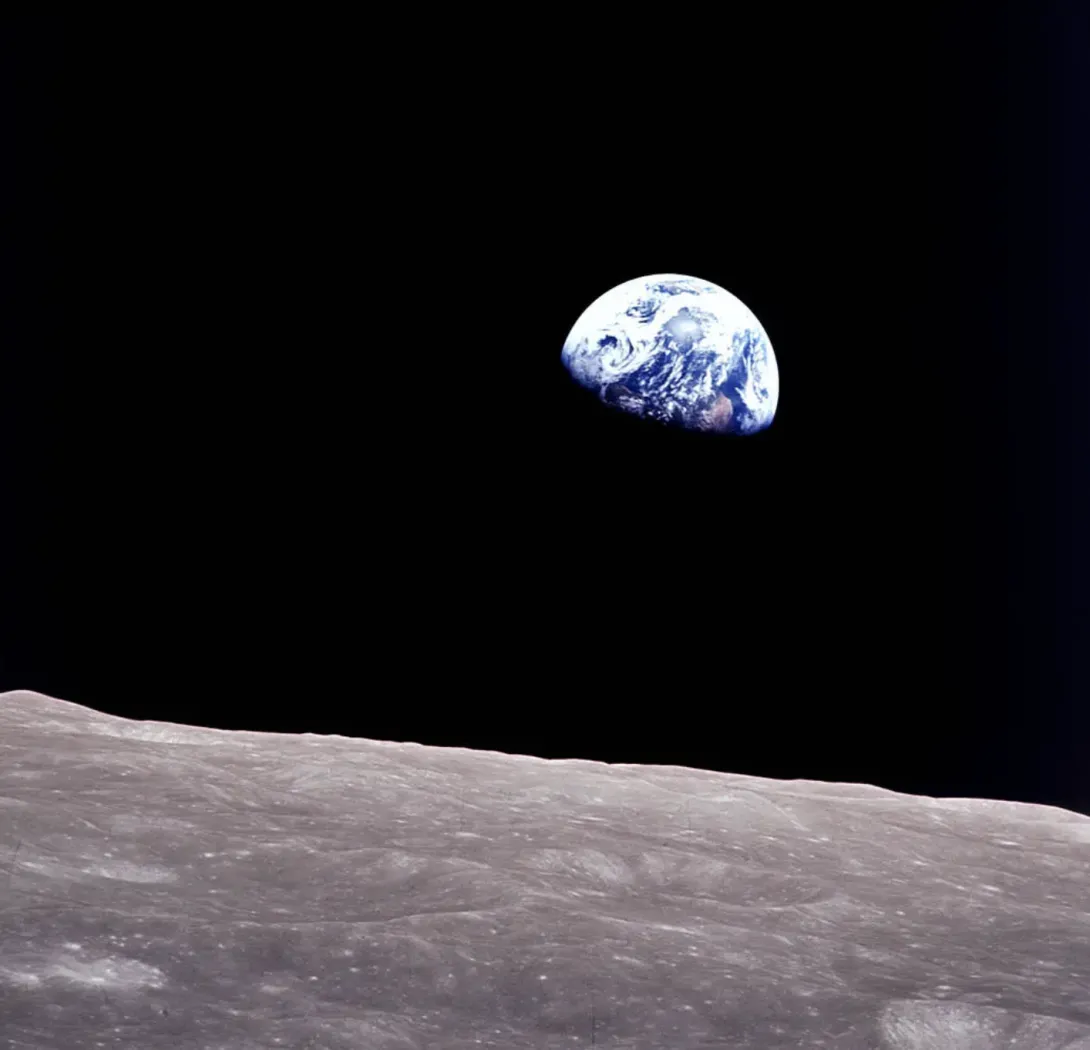
Earth peeking out from beyond the lunar surface.

Taken aboard Apollo 8 by Bill Anders, this iconic picture shows Earth peeking out from beyond the lunar surface as the first crewed spacecraft circumnavigated the Moon, with astronauts Anders, Frank Borman, and Jim Lovell aboard. (Credit: NASA)

Advik Vira. He is wearing a colorful science-print button up.

Advik Vira

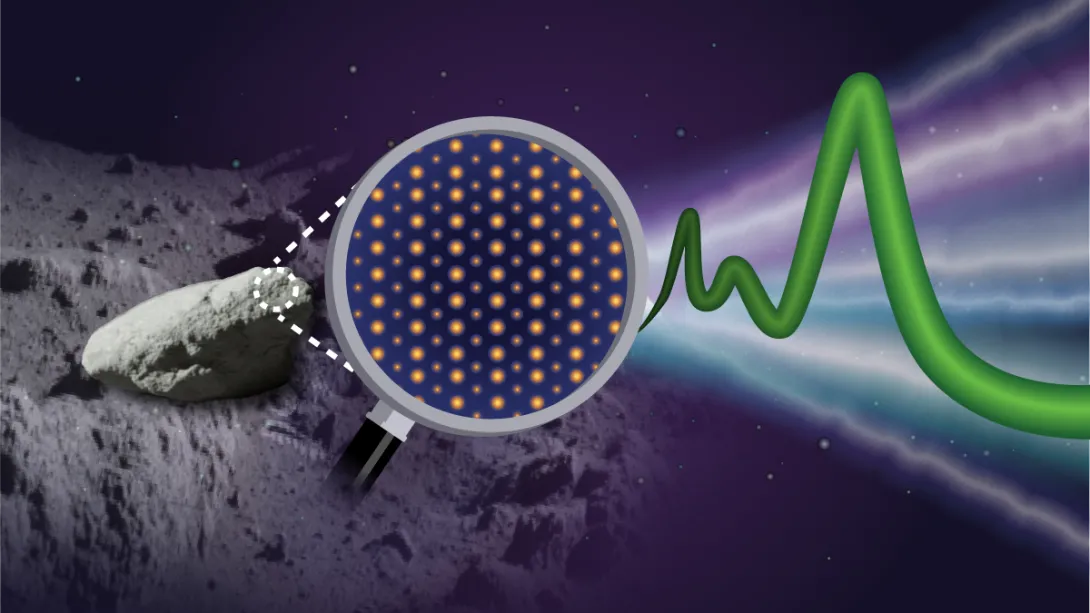
A figure showing moon rocks, a magnifying glass showing the internal structure, with a green wavy line emitting from the rock.

An illustration of the Apollo rock 75035 on the Moon, an atomic image of the sample, and its spectral signature. (Credit: August Davis)

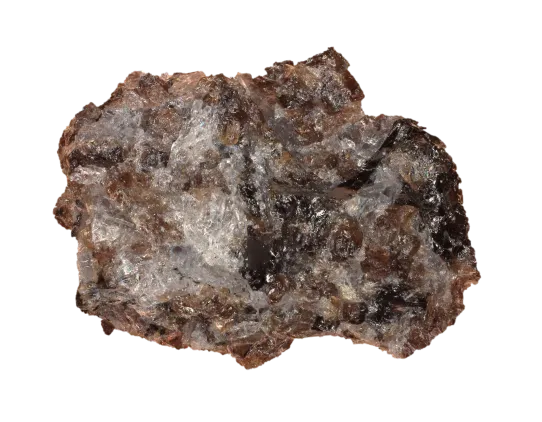
A chip of the lunar sample.

An optical image of the chip from the lunar rock the team investigated.

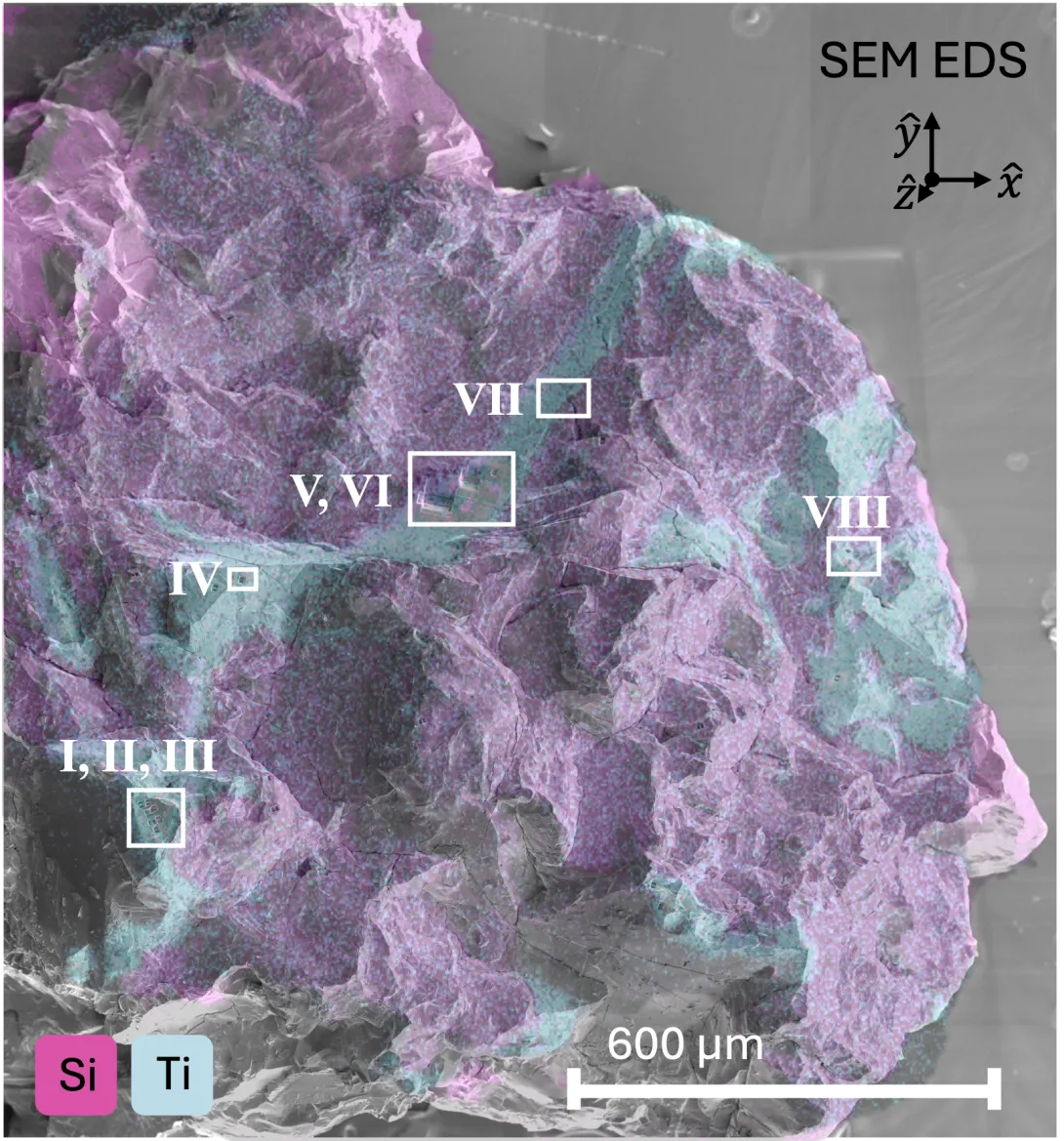
The chip, colored in large areas with purple, with blue ribbons of color. There are a total of five white rectangles on the blue areas.

An image of the chip from the sample, imaged using scanning electron microscopy. Titanium is shown in light blue, and white boxes show areas where samples were extracted to analyze the ilmenite crystal.

A chemical signature hidden in a 3.8‑billion‑year‑old lunar rock is offering new insights into the availability of oxygen within the young Moon.

Published today in the journal Nature Communications, the paper “Trivalent Titanium in High-Titanium Lunar Ilmenite” confirms titanium in a reduced, trivalent state in a black, metal-rich lunar mineral called ilmenite. It’s a state only possible in low-oxygen environments, conditions researchers refer to as “reducing.”

“Models have suggested that these reducing conditions may have varied at different locations and times across the surface of the Moon,” says lead author Advik Vira, a graduate student in the School of Physics who recently earned his doctoral degree. “We hope our microscopy technique can be a valuable step in mapping and understanding the Moon’s 4.5-billion-year history.”

The team anticipates that their technique could be used on many of the lunar samples collected more than 50 years ago by the Apollo missions in addition to the Apollo Next Generation Samples — a group of lunar samples that have been stored under pristine conditions — and new samples from the planned Artemis missions, with Artemis II slated for launch this spring. The technique might also be applicable to samples collected from the far side of the Moon and returned in 2024 by the Chang’e-6 mission.

“The Moon holds clues not only to its own past, but also to the earliest eras of Earth’s evolution — history that has long since been erased from our planet,” Vira says. “This study is a step toward understanding the history of both and a reminder that there is still so much left to learn from the lunar rocks we’ve brought back to Earth.”

The School of Physics research team included corresponding authors Vira and Professor Phillip First; in addition to graduate student Roshan Trivedi; undergraduate students Gabriella Dotson, Keyes EamesDean Kim, and Emma Livernois; and Professor Zhigang Jiang, along with Institute for Matter and Systems Materials Characterization Facility Senior Research Scientist Mengkun TianSchool of Chemistry and Biochemistry Senior Research Scientist Brant Jones and Thom OrlandoRegents' Professor in the School of Chemistry and Biochemistry with a joint appointment in the School of Physics. 

The Georgia Tech team was joined by Addis Energy Senior Geochemist Katherine Burgess; Macalester College Assistant Professor of Geology Emily First; along with Lawrence Berkeley National Laboratory Research Scientist Harrison Lisabeth, Senior Scientist Nobumichi Tamuraand Postdoctoral Fellow Tyler Farr, who recently earned a Ph.D. from Georgia Tech’s George W. Woodruff School of Mechanical Engineering.

CLEVER research

The investigation began with a dark gray rock called a lunar basalt. Formed when ancient magma erupted on the Moon’s surface, minerals crystallized as it cooled — preserving key information in their structures. Billions of years later, the rock was brought to Earth by the 1972 Apollo 17 mission, where a small piece is now stored at Georgia Tech’s Center for Lunar Environment and Volatile Exploration Research (CLEVER), a NASA Solar System Exploration Research Virtual Institute (SSERVI) center led by Orlando.

As a NASA virtual institute, CLEVER supports researchers exploring lunar conditions and developing tools for the upcoming crewed Artemis missions, and provided the lunar samples for this research. The SSERVI also plays a critical role in training the next generation of planetary researchers: both Vira and Farr earned their Ph.D.s while on the CLEVER team.

“At CLEVER, we are very interested in understanding the impacts of space weathering,” Vira says. “We implemented modern sample preparation and advanced microscopy techniques to image samples at the atomic level, and were curious to apply it more broadly to the collection of Apollo rocks in the Orlando Lab. This sample caught our attention.”

“When we imaged an ilmenite crystal from the lunar basalt, what struck us first was how uniform and perfect the crystal structure was,” he recalls. “We found no defects from space weathering and instead saw an undamaged, pristine crystal — undisturbed for 3.8 billion years.”

To investigate further, the team analyzed small chips of the rock with Burgess, a member of the RISE2 SSERVI team and then a geologist at the U.S. Naval Research Laboratory. Using state-of-the-art electron microscopy and spectroscopy techniques, Vira determined the oxidation state of the elements in the ilmenite present. 

In spectroscopy measurements, each element leaves a distinct ‘signature,’ Vira explains. “When we brought our results back to Georgia Tech’s Materials Characterization Facility, Mengkun (Tian) noticed something unusual: the signature showed titanium might be present in the trivalent state.”

The presence of trivalent titanium had long been suspected in this lunar mineral. The team was intrigued. 

A new window into old rocks

With funding from Georgia Tech’s Center for Space Technology and Research (CSTAR), Vira returned to the U.S. Naval Research Laboratory to analyze additional samples. The results confirmed that more titanium was present than the mineral’s formula (FeTiO₃) predicts — indicating a portion of the titanium present was trivalent.

“That led me to place our measurements in terms of the broader geological context,” Vira shares. Working with First, Vira explored how ilmenite with trivalent titanium could help reconstruct the nature of ancient magmas from the Moon, especially the chemical availability of oxygen.

“Because its location on the Moon was noted during the Apollo mission, we know exactly where this rock is from, and we can determine how old the rock is,” he explains. “When coupled with our trivalent titanium measurements, we can use that information to estimate the reducing conditions for this specific region at the specific time our rock formed.”

If the upcoming Artemis missions return samples suitable for the team’s technique, these rocks could provide a new window into ancient lunar geology. The research also highlights that many lunar samples already on Earth could be reexamined to look for trivalent titanium.

“There is still so much to learn from the lunar samples we have already brought to Earth,” Vira says. “It’s a testament to the long-term value of each sample return mission. As technology continues to advance, this type of work will continue to give us critical insights into our planet and our place in the universe for years to come.”


DOI: 10.1038/s41467-026-69770-w

Funding: This work was directly supported by the NASA SSERVI under CLEVER. Researchers were also supported by the NASA RISE2 SSERVI and the Heising-Simons Foundation. Funding for collaborations between the U.S. Naval Research Laboratory and Georgia Tech for the investigation of lunar minerals was provided by the Georgia Tech Center for Space Technology and Research. Sample preparation was performed at the Georgia Tech Institute for Matter and Systems, which is supported by the National Science Foundation. This work utilized the resources of the Advanced Light Source, a user facility supported by the U.S. Department of Energy, Office of Science, Office of Basic Energy Sciences, and was supported in part by previous breakthroughs obtained through the Laboratory Direct.

News Contact

Written by:

Selena Langner
College of Sciences
Georgia Institute of Technology

Feb. 16, 2026
A crack in a building wall.

“Cracks are complex — they interact with the material, change shape, and respond dynamically," says Kolvin. "All of this affects the overall toughness, and that impacts safety.” (Adobe Stock)

Itamar Kolvin

Itamar Kolvin

Imagine a material cracking — now imagine what happens if there are small inclusions in the material. Do they create an obstacle course for the crack to navigate, slowing it down? Or do they act as weak points, helping the crack spread faster?

Historically, most engineers believed the former, using heterogeneities, or differences, in materials to make materials stronger and more resilient. However, research from Georgia Tech is showing that, in some cases, heterogeneities make materials weaker and can even accelerate cracks. 

Led by School of Physics Assistant Professor Itamar Kolvin, the study, “Dual Role for Heterogeneity in Dynamic Fracture,” was published in Physical Review Letters this fall. 

While Kolvin’s work is theoretical, the results of the research are widely applicable. “Predicting this type of toughening effect helps engineers decide how much reinforcement to add to a material, and the best way to do so,” he says. “Cracks are complex — they interact with the material, change shape, and respond dynamically. All of this affects the overall toughness, which impacts safety.”

Building Strong Materials

The study found that the key to crack behavior starts at the microscopic level where the material’s microscopic structure influences how it resists cracks running at different speeds.

“Cracks propagate by breaking bonds, and that costs energy,” he explains. “On top of this, materials experience extreme deformations close to where the crack runs, which costs additional energy. In some materials, the amount of this energy cost can depend on the crack’s speed because of microscopic friction between molecules.”

Other materials, like window glass, are mostly indifferent to the crack speed. These materials are made of simple molecules, allowing a crack to propagate slowly or quickly using the same amount of energy. The researchers found that including heterogeneities can help strengthen these materials.

Materials made of more complex molecules, like polymer plastics and gels, on the other hand, are velocity dependent: it takes more energy for a crack to propagate faster. In these materials, heterogeneities are less effective at toughening, and if the crack is fast enough, heterogeneities could help it advance. “That’s something we didn’t expect when we started,” Kolvin says.

Disorder Versus Design

After discovering which types of materials can benefit from heterogeneities, Kolvin wanted to investigate the best way to add them. “Natural materials like rocks are usually very messy and disordered,” he explains, “but in engineering, heterogenous materials tend to be patterned.” For example, imagine a manufactured material: heterogeneities may be added in a grid-like or other patterned way. Now, contrast that with the irregular freckles and inclusions you might see in a rock found in a streambed.

Kolvin’s question was simple: which material was stronger? The results, again, were surprising. The disordered case — similar to what is found in nature — created the toughest material. 

Among the patterned materials the team tested, only one was as tough as the disordered case — and every other pattern tested made the material weaker.

From Lab to Landscape

At Georgia Tech, Kolvin’s lab focuses on the mechanics of materials — both solid and fluid. “We are using our expertise in physics to explore questions across different fields,” he says. “A common concept is treating materials as continua — zooming out from molecular detail to look at how materials deform and flow at the large scale.”

This current research follows suit with applications ranging from investigating the smallest material microstructures to predicting earthquake fractures. “Earthquake faults are highly disordered, and simulating these ruptures is a major challenge, usually requiring supercomputers to solve crack propagation in three dimensions,” Kolvin says. “But with the tools our study has developed, we can simulate similar conditions and large systems using just a desktop computer.”

“This opens the doors for scientists, engineers, physicists, and geologists to explore problems right from their own computer, allowing more researchers access to more tools,” he adds. “And new tools often lead to new discoveries.”


DOI: https://doi.org/10.1103/j4vb-y1ng

News Contact

Written by Selena Langner
College of Sciences
Georgia Institute of Technology

Feb. 02, 2026
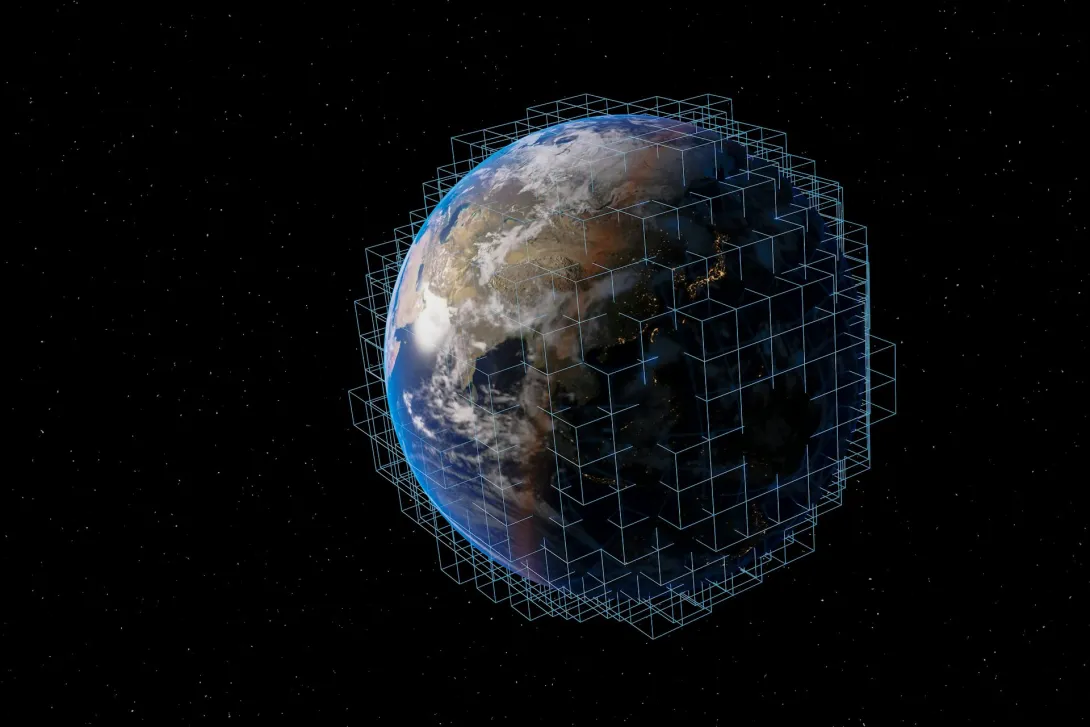
Could the Earth and everything on it – and even the whole universe – be a simulation running on a giant computer? OsakaWayne Studios/Moment via Getty Images

Could the Earth and everything on it – and even the whole universe – be a simulation running on a giant computer? OsakaWayne Studios/Moment via Getty Images

Is the whole universe just a simulation? – Moumita B., age 13, Dhaka, Bangladesh


How do you know anything is real? Some things you can see directly, like your fingers. Other things, like your chin, you need a mirror or a camera to see. Other things can’t be seen, but you believe in them because a parent or a teacher told you, or you read it in a book.

As a physicist, I use sensitive scientific instruments and complicated math to try to figure out what’s real and what’s not. But none of these sources of information is entirely reliable: Scientific measurements can be wrong, my calculations can have errors, even your eyes can deceive you, like the dress that broke the internet because nobody could agree on what colors it was.

Because every source of information – even your teachers – can trick you some of the time, some people have always wondered whether we can ever trust any information.

If you can’t trust anything, are you sure you’re awake? Thousands of years ago, Chinese philosopher Zhuangzi dreamed he was a butterfly and realized that he might actually be a butterfly dreaming he was a human. Plato wondered whether all we see could just be shadows of true objects. Maybe the world we live in our whole lives inside isn’t the real one, maybe it’s more like a big video game, or the movie “The Matrix.”

screenshot of a landscape in a cartoonish video game

Are we living in a very sophisticated version of Minecraft? Tofli IV/Wikimedia Commons, CC BY-SA

The Simulation Hypothesis

The simulation hypothesis is a modern attempt to use logic and observations about technology to finally answer these questions and prove that we’re probably living in something like a giant video game. Twenty years ago, a philosopher named Nick Bostrom made such an argument based on the fact that video games, virtual reality and artificial intelligence were improving rapidly. That trend has continued, so that today people can jump into immersive virtual reality or talk to seemingly conscious artificial beings.

Bostrom projected these technological trends into the future and imagined a world in which we’d be able to realistically simulate trillions of human beings. He also suggested that if someone could create a simulation of you that seemed just like you from the outside, it would feel just like you inside, with all of your thoughts and feelings.

Suppose that’s right. Suppose that sometime in, say, the 31st century, humanity will be able to simulate whatever they want. Some of them will probably be fans of the 21st century and will run many different simulations of our world so that they can learn about us, or just be amused.

Here’s Bostrom’s shocking logical argument: If the 21st century planet Earth only ever existed one time, but it will eventually get simulated trillions of times, and if the simulations are so good that the people in the simulation feel just like real people, then you’re probably living on one of the trillions of simulations of the Earth, not on the one original Earth.

This argument would be even more convincing if you actually could run powerful simulations today, but as long as you believe that people will run those simulations someday, then you logically should believe that you’re probably living in one today.

Scientist Neil deGrasse Tyson explains the simulation hypothesis and why he thinks the odds are about 50-50 we’re part of a virtual reality.

Signs We’re Living in a Simulation …Or Not

If we are living in a simulation, does that explain anything? Maybe the simulation has glitches, and that’s why your phone wasn’t where you were sure you left it, or how you knew something was going to happen before it did, or why that dress on the internet looked so weird.

There are more fundamental ways in which our world resembles a simulation. There is a particular length, much smaller than an atom, beyond which physicists’ theories about the universe break down. And we can’t see anything more than about 50 billion light-years away because the light hasn’t had time to reach us since the Big Bang. That sounds suspiciously like a computer game where you can’t see anything smaller than a pixel or anything beyond the edge of the screen.

Of course, there are other explanations for all of that stuff. Let’s face it: You might have misremembered where you put your phone. But Bostrom’s argument doesn’t require any scientific proof. It’s logically true as long as you really believe that many powerful simulations will exist in the future. That’s why famous scientists like Neil deGrasse Tyson and tech titans like Elon Musk have been convinced of it, though Tyson now puts the odds at 50-50.

Others of us are more skeptical. The technology required to run such large and realistic simulations is so powerful that Bostrom describes such simulators as godlike, and he admits that humanity may never get that good at simulations. Even though it is far from being resolved, the simulation hypothesis is an impressive logical and philosophical argument that has challenged our fundamental notions of reality and captured the imaginations of millions.


Hello, curious kids! Do you have a question you’d like an expert to answer? Ask an adult to send your question to CuriousKidsUS@theconversation.com. Please tell us your name, age and the city where you live.

And since curiosity has no age limit – adults, let us know what you’re wondering, too. We won’t be able to answer every question, but we will do our best.The Conversation


This article is republished from The Conversation under a Creative Commons license. Read the original article.
News Contact

Author:

Zeb Rocklin, Associate Professor of Physics, Georgia Institute of Technology

Media Contact:

Shelley Wunder-Smith
shelley.wunder-smith@research.gatech.edu

Dec. 16, 2025
Tech Tower (Rob Felt/Georgia Tech)

The AI4Science Center has announced the first recipients of its semiannual seed grant competition. Supported by the Schools of Chemistry and Biochemistry, Physics, and Psychology, the seed grant aims to support the development of research projects centered on innovation and collaboration. 

“The selection committee received more than a dozen proposals that push the boundaries of AI-enabled science and encourage collaboration across units. I look forward to seeing the great science, strong results, and successful future external funding enabled by these seed grants,” says Dimitrios Psaltis, professor in the School of Physics and director of the AI4Science Center. 

Launched earlier this semester, the center promotes cross-disciplinary research on AI tools that address scientific challenges. The following three proposals were selected by the center based on their scientific goals, extent of interdisciplinary collaboration, and potential for outside funding: 

Spring 2026 AI4Science Center Seed Grant Recipients  


Graph Foundation Models for Protein Conformational Dynamics | School of Chemistry and Biochemistry 

  • PIs: Professor Peter Kasson, School of Chemistry and Biochemistry; Professor JC Gumbart, School of Physics; Assistant Professor Amirali Aghazadeh, School of Electrical and Computer Engineering
  • Graduate student: Jeffy Jeffy
  • Team statement: “The AI4Science Center’s seed funding will allow us to complete and test a prototype of our new deep learning architecture for protein dynamics. We're super excited about the project and happy that this gives us support to pursue our new idea.”

Combinations of Verified AI and Domain Knowledge for New Insights in Theoretical Physics | School of Physics

  • PIs: Assistant Professor Aishik Ghosh, School of Physics; Professor Vijay Ganesh, School of Computer Science
  • Graduate student: Piyush Jha
  • Team statement: “This seed funding gives us an opportunity to connect two fields in a way that could transform our approach to certain problems in theoretical physics.”

Harnessing the Manifold Geometry of Neural Representations for Robust LLM Safety | School of Psychology 

  • PIs: Assistant Professor Audrey Sederberg, School of Psychology; Assistant Professor Pan Li, School of Electrical and Computer Engineering
  • Graduate student: Ruixuan Deng
  • Team statement: “Our project injects insights from human neuroscience directly into AI safety algorithm design, allowing us to move beyond black-box approaches toward more interpretable and principled safety mechanisms. By closing the loop, these computational models will also provide new feedback and insights for neuroscience.”

News Contact

Writer: Lindsay C. Vidal

Nov. 26, 2025
Alexander Cachine

Alexander Cachine

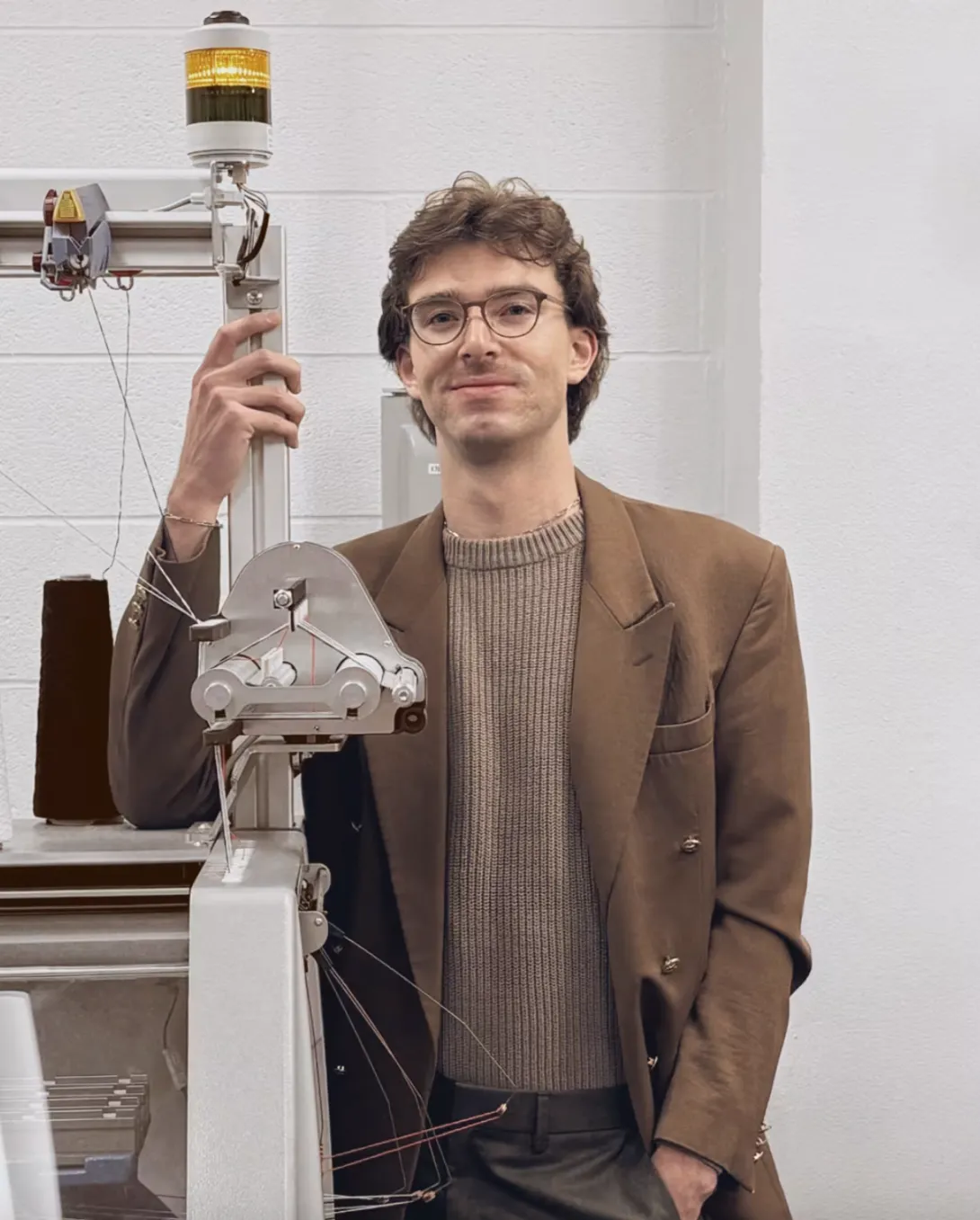
School of Physics Ph.D. student Alexander Cachine has been selected as a 2025 recipient of the prestigious Steve Jobs Archive (SJA) Fellowship for his work in solving modern medical challenges using ancient textile techniques. 

“This fellowship with the Archive is a fantastic opportunity for me as a physicist. There is an incredible community of creatives that I get to be a part of and draw inspiration from,” he says. “It’s also very validating that an organization with as much prestige as the SJA finds value in the work we’re doing here in the lab. I’m so grateful that people believe in me and the work that we’re doing.”

Cachine is one of just eight individuals selected this year from a nationwide pool. The one-year fellowship supports work at the intersection of technology and the liberal arts, and will provide essential support for his creative trajectory, including a stipend, mentoring, and a robust community of peers.

At Georgia Tech, Cachine is the lab manager and lead experimentalist for the Matsumoto Group where he works alongside his advisor, School of Physics Associate Professor Elisabetta Matsumoto

“As a physicist who studies craft, I often see that this is an overlooked area of research, especially in women’s health,” Cachine says. “I hope that beyond building a pathway to improved patient outcomes, my work this year will show people that crafting traditions are incredible technological feats — they are entire knowledge systems waiting to be explored.  There is so much we can learn from craft.”

News Contact

Written by Selena Langner

Oct. 29, 2025
Paul Sell of the School of Physics (Photo: Benjamin Zhao/Georgia Tech)
Public Nights at the Georgia Tech Observatory are held most months, weather permitting. (Photo: Rob Felt/Georgia Tech)

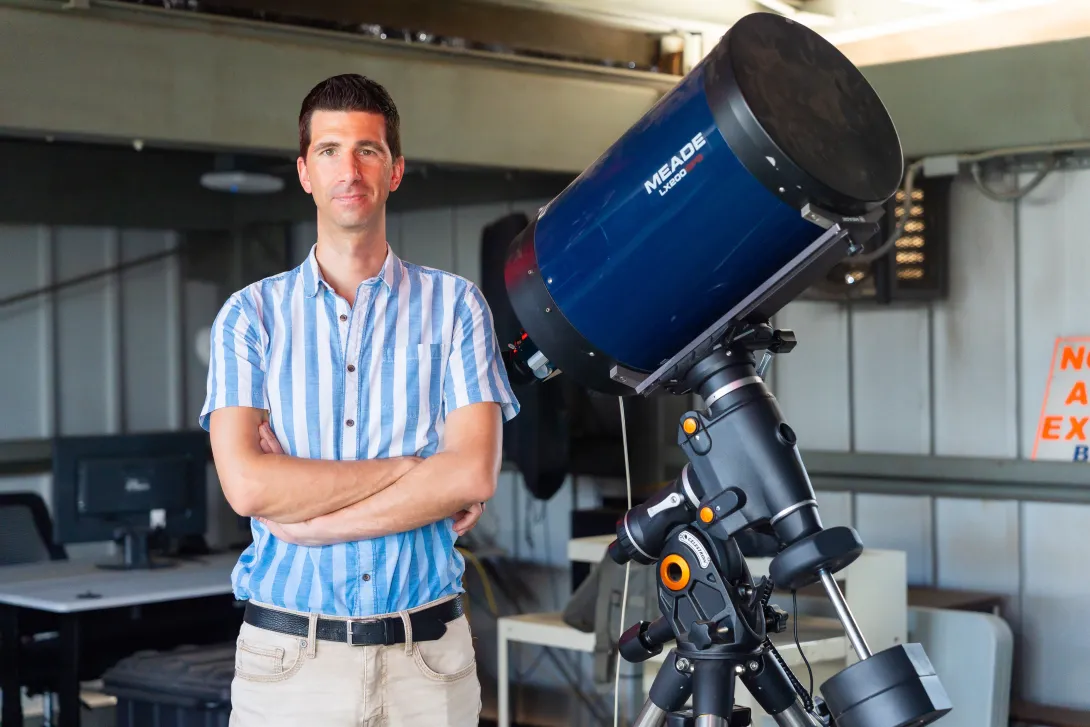
The College of Sciences has named Paul Sell as the new director of the Georgia Tech Observatory. Sell joined the Institute in Fall 2025 as a senior academic professional in the School of Physics. He also serves as advisor of the new B.S. in Astrophysics degree program.

“Paul Sell is a wonderful addition to our College of Sciences community,” says Susan Lozier, dean of the College of Sciences, Betsy Middleton and John Clark Sutherland Chair, and professor in the School of Earth and Atmospheric Sciences. “His leadership brings renewed energy to the Georgia Tech Observatory, and I look forward to seeing how he expands its impact across campus and in the broader community.”

Observing the cosmos from campus

The Georgia Tech Observatory was established nearly two decades ago at a time when the Institute’s astronomy and astrophysics research and teaching ecosystem was in its infancy. 

School of Physics Principal Academic Professional Emeritus Jim Sowell created the facility on the roof of the Howey Physics Building in 2007 and served as its director until his retirement in 2024. 

“The Observatory — and its numerous variety of telescopes — makes it possible for Georgia Tech students and Atlanta-area visitors to see with their own eyes some of the best, awe-inspiring celestial delights, including craters on the Moon, Jupiter’s Red Spot, Saturn’s rings, and many other objects,” says Sowell.

The Observatory’s primary instrument is a 20-inch diameter telescope by Officina Stellare. Known as the Georgia Tech’s Space Object Research Telescope (GT-SORT), this Raven-class space surveillance telescope is used by researchers in the Daniel Guggenheim School of Aerospace Engineering to monitor man-made spacecraft.

“What’s unique about the Georgia Tech Observatory is that it’s right on campus, offering a meaningful, hands-on experience to everyone,” explains Sell. “It can be readily integrated into experiential learning projects on campus all year round.”

Sell’s upper-level astronomy lab, which combines lectures with experiences at the Observatory, highlights the facility’s academic importance.

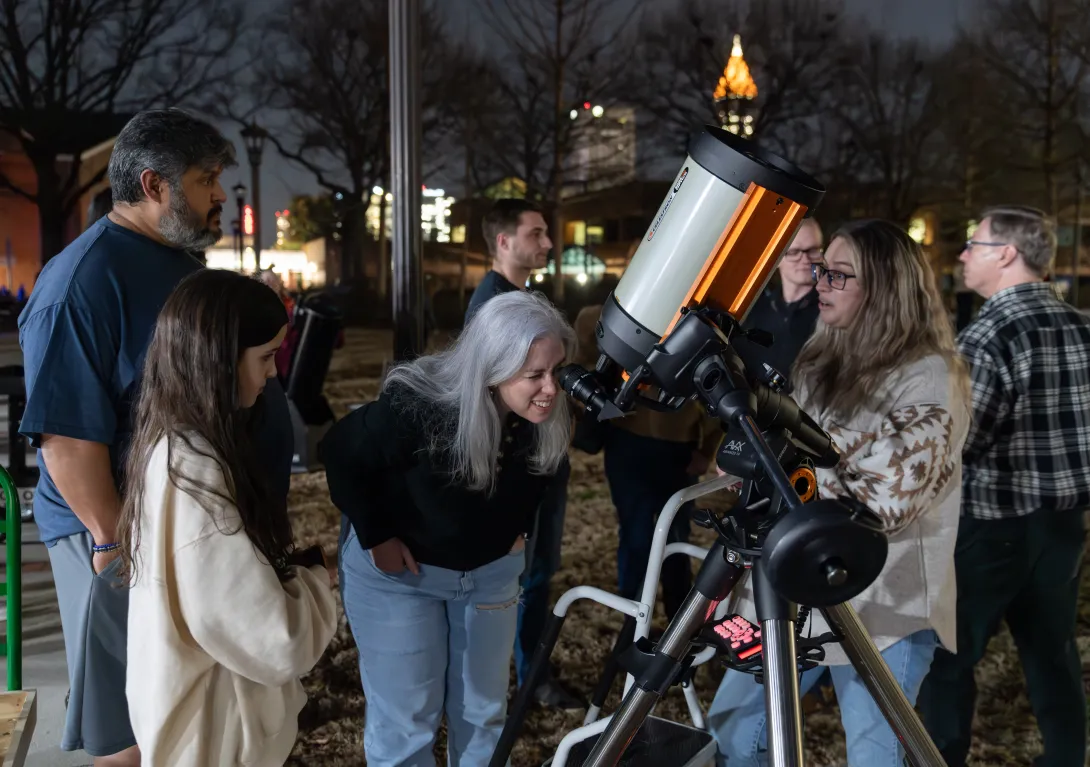
Yet, the Observatory’s impact extends beyond the classroom, thanks to free community events like “Public Nights at the Observatory,” which offer attendees the opportunity to explore the night sky. 

Held most months, weather permitting, this event features telescopes stationed outside the Howey Physics Building, allowing astronomy enthusiasts from Georgia Tech and beyond to view the Moon, Jupiter, Saturn, and other cosmic wonders. These gatherings typically draw more than 100 stargazers.

Specialized groups are also hosted at the Observatory. For example, the Georgia Tech Astronomy Club uses the facility during its weekly meetings.

“The Observatory is a haven where students can step outside for a moment and get lost in the stars,” says AJ Chadha, club president and fourth-year computer science major. “With one of the largest telescopes in Georgia, the on-campus 20-inch GT-SORT, we weave astronomy directly into student life.”

Under Sell’s leadership, the Observatory will continue to strengthen partnerships with student organizations, campus units, and community groups.

“I'm excited to explore additional ways we can use this resource for outreach and academic purposes that benefit both Georgia Tech and the Atlanta community,” Sell adds.

A passion for astronomy

Before joining Georgia Tech, Sell served as senior lecturer, astronomy undergraduate coordinator, and interim director of the teaching observatory at the University of Florida. 

His passion for astronomy began at an early age, sparked by a gift from his parents: an Orion refracting lens telescope.

“I remember taking out that telescope, even in freezing cold Ohio winters, simply because the observing conditions were better,” he recalls.

Sell nurtured his interest in astronomy through his university studies and extracurricular activities, which included working in planetaria as an undergraduate at the University of Toledo. He later obtained a Ph.D. in Astronomy from the University of Wisconsin-Madison.

“I am grateful for the opportunity to share my passion for astronomy, not only with our physics students but with the larger Georgia Tech community — through classroom lectures, student advising, and Observatory outreach,” Sell says.

News Contact

Writer: Lindsay C. Vidal

Oct. 27, 2025
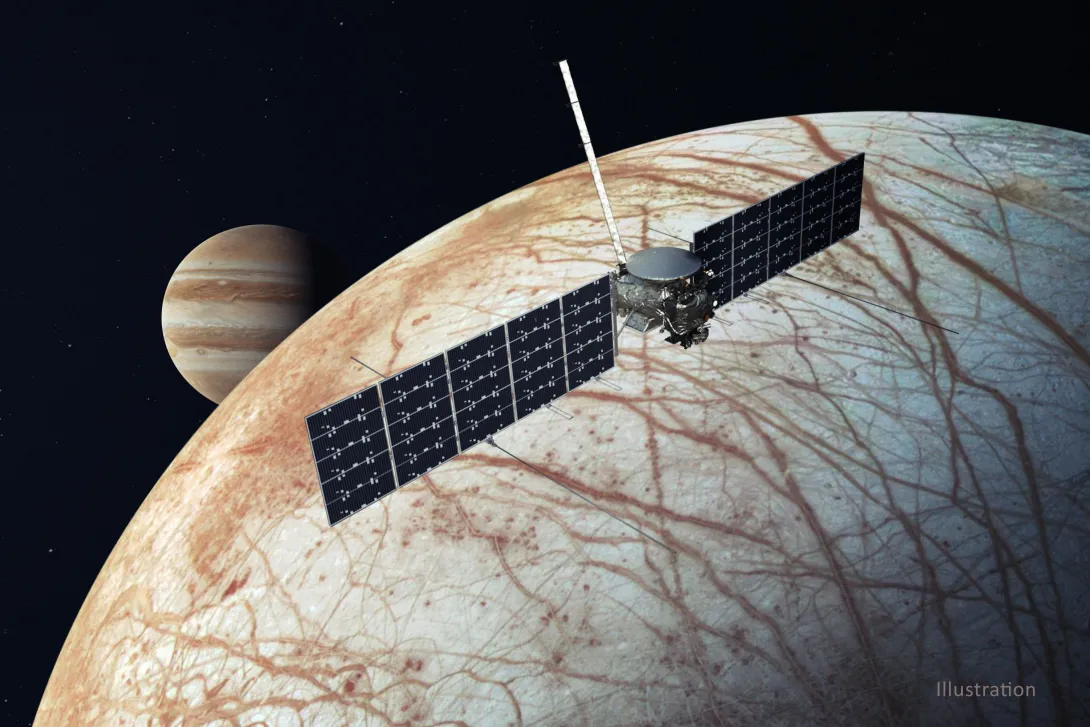
Illustration of NASA's Europa Clipper spacecraft with Jupiter and its icy moon Europa in the background (Credit: NASA/JPL-Caltech)
Professor Sven Simon

In four years, National Aeronautics and Space Administration (NASA)’s Europa Clipper mission will arrive in Jupiter’s orbit to investigate whether the planet’s icy moon, Europa, could support life. In the interim, researchers like Sven Simon, a professor in the Schools of Earth and Atmospheric Sciences and Physics, are working to uncover critical information to support the rapid analysis of measurements from the mission.

Simon’s research team has been awarded $1.4 million through NASA’s Precursor Science Investigations for Europa (PSI-E) program. Their project is one of seven selected to provide essential insights that, according to the program announcement, “will maximize the science return during the radiation-limited lifetime of the Europa Clipper.” 

Simon also serves as the institutional lead co-investigator of a second $1.4 million project, led by researchers at the University of California, Berkeley, which seeks to decipher how Europa's atmosphere and ionosphere contribute to the magnetic field near the moon. This project was selected during the same call for proposals.

“The research award is a fantastic opportunity to contribute to a mission centered on Europa’s complex plasma and electromagnetic environment,” says Simon, referencing the Georgia-Tech led proposal. “Our project combines foundational plasma physics from our School of Physics and geophysical knowledge from our School of Earth and Atmospheric Sciences to understand how the magnetic field near Europa is affected by the plasma populating Jupiter’s environment.”

The research team includes Earth and Atmospheric Sciences Ph.D. students Ariel Tello Fallau and Charles Michael HaynesNeil Baker, a Ph.D. student in the School of Physics, is contributing to the Berkeley-led PSI-E project that also includes Georgia Tech alumnus Lucas Liuzzo (Ph.D. EAS 2018), now an assistant research scientist at the University of California, Berkeley’s Space Sciences Laboratory. 

Groundwork for discovery

With a radius of only 1,560 kilometers, Europa is one of Jupiter’s four largest moons, known as the Galilean moons, discovered by Italian astronomer Galileo Galilei in the 1600s.

More than two decades ago, data from NASA’s Galileo mission — specifically magnetic field measurements collected far above Europa’s surface — pointed to the existence of a global subsurface ocean. This ocean, which may contain more liquid water than all of the Earth’s oceans combined, has made Europa a prime candidate in the search for life beyond Planet Earth.

“Finding evidence of a saltwater ocean lurking beneath Europa’s surface was a serendipitous discovery during the Galileo mission,” Simon explains. “NASA’s Europa Clipper mission picks up where the Galileo mission left off.” 

Launched in October 2024, the Europa Clipper space probe is expected to reach Jupiter’s orbit in 2030. That gives Simon and his team only a few years to complete their analysis. 

“Our research is doing the preparatory work to determine what and where we can measure further magnetic evidence of the ocean beneath Europa’s surface,” says Simon. “When the spacecraft arrives, we will find out whether our predictions are correct.”

Using advanced computer simulations, the team aims to better understand the magnetic fields near Europa. Part of these fields is generated by electric currents in the moon’s saltwater ocean; the other part is created by fast-moving flows of plasma — ionized matter that fills much of space — as it interacts with Europa’s atmosphere and surface.  

“Our project focuses on how the magnetic fields from plasma flow patterns compete with the magnetic signal from Europa’s ocean,” says Simon. “We want to determine which part of the magnetic field near Europa originates from the ocean and which part is a disruptive effect from the plasma.”

Deciphering these magnetic signals will provide essential context for interpreting Europa Clipper’s measurements, helping to not only confirm the ocean’s existence but also reveal details about its structure.

News Contact

Writer: Lindsay C. Vidal

Sep. 11, 2025
Graphic Representation of networked system: Adobe Stock

Graphic Representation of networked system: Adobe Stock

A recently awarded $20 million NSF Nexus Supercomputer grant to Georgia Tech and partner institutes promises to bring incredible computing power to the CODA building. But what makes this supercomputer different and how will it impact research in labs on campus, across disciplinary units, and across institutions? 

Purpose Built for AI Discovery

Nexus is Georgia Tech’s next-generation supercomputer, replacing the HIVE. Most operational high-performance computing systems utilized for research were designed before the explosion in Machine Learning and AI. This revolution has already shown successes for scientific research and data analysis in many domains, but the compute power, complex connectivity, and data storage needs for these systems have limited their access to the academic research community. The Nexus supercomputer design process retained a robust HPC system as a base while integrating artificial intelligence, machine learning and large-scale data science analysis from the ground up.

Expert Support for Faculty and Researchers 

The Institute for Data Engineering and Science (IDEaS) and the College of Computing house the Center for Artificial Intelligence in Science and Engineering (ARTISAN) group. This team has collective experience in working with national computational, cloud, commercial and institutional resources for computational activities, and decades of experience in scientific tools that aid in assisting both teaching and research faculty. Nexus is the next logical step, bringing together everything they’ve learned to build a national resource optimized for the future of AI-driven science.

Principal Research Scientist for the ARTISAN team, Suresh Marru, highlighted the need for this new resource, “AI is a core part of the Nexus vision. Today, researchers often spend more time setting up experiments, managing data, or figuring out how to run jobs on remote clusters than doing science. With Nexus, we’re flipping that script. By embedding AI into the platform, we help automate routine tasks, suggest optimal ways to run simulations, and even assist in generating input or analyzing results. This means researchers can move faster from question to insight. Instead of wrestling with infrastructure, they can focus on discovery.”

An Accessible AI Resource for GT & US Scientific Research

90% of Nexus capacity will be made available to the national research community through the NSF Advanced Computing Systems & Services (ACSS) program. Researchers from across the country, at universities, labs, and institutions of all sizes, will have access to this next-generation AI-ready supercomputer. For Georgia Tech research faculty and staff, the new system has multiple benefits:

  • 10% of the time on the machine will be available for use by Georgia Tech researchers
  • Nexus will allow GT researchers a chance to try out the latest hardware for AI computing
  • Thanks to cyberinfrastructure tools from the ARTISAN group, Nexus will be easier to access than previous NSF supercomputers


Interim Executive Director of IDEaS and Regents' Professor David Sherrill notes, "Nexus brings Georgia Tech's leadership in research computing to a whole new level. It will be the first NSF Category I Supercomputer hosted on Georgia Tech's campus. The Nexus hardware and software will boost research in the foundations of AI, and applications of AI in science and engineering."

Subscribe to School of Physics