
Mar. 14, 2024

In January, Georgia Tech researchers were awarded three grants as a part of the Department of Energy’s Industrial Efficiency and Decarbonization multi-topic funding. The awards include 49 high-impact, applied research, development, and pilot-scale technology validation and demonstration projects that will reduce energy usage and greenhouse gas emissions in conjunction with cross-sector industrial decarbonization approaches.
The Georgia Tech funding includes a project, in the topic area of Decarbonizing Forest Products, on innovative refining, paper forming, and drying to eliminate CO2 emissions from paper machines. Funded at $3.1 million, the project is led by Carson Meredith, professor and James Harris Faculty Fellow in the School of Chemical and Biomolecular Engineering and executive director of the Renewable Bioproducts Institute (RBI). Collaborators include co-PI Cyrus Aidun, professor of mechanical engineering; Patritsia Stathatou, research scientist at RBI; and Aruna Weerasakura, senior research engineer. External collaborators include Fort Valley State University, the National Renewable Energy Laboratory, and several RBI member companies.
Meredith’s project focuses on decarbonization in energy-intensive drying, paper forming, and pulping processes and will combine recent deflocculation breakthroughs in fiber refining with low-water, multiphase paper forming. The innovations will facilitate the cost-effective implementation of advanced electrical drying technologies in the paper industry. By taking advantage of the increasing fraction of non-fossil electricity in the U.S., electrified drying, if implemented partially (50%), has the potential to reduce the generation of non-biogenic emissions by over 10 million metric tons of CO2e annually.
"I am excited because the new project will utilize the multiphase forming laboratory that is under construction in the Paper Tricentennial Building, representing the first major expansion in lab space there since the 1990s,” said Meredith.
Valerie Thomas, the Anderson-Interface Chair of Natural Systems and professor of industrial and systems engineering and public policy, is a co-PI in a $1.45 million project titled “Mild Co-Solvent Pulping to Decarbonize the Paper and Forest Products Sector,“ led by the University of California, Riverside.
Thomas’ project, also under the topic area of Decarbonizing Forest Products, aims to enhance Co-solvent Enhanced Lignocellulosic Fractionation (CELF) technology into a more environmentally sustainable alternative to traditional kraft pulping. CELF technology will be applied to optimize the production of dissolving pulp used in the manufacturing of extruded textile fibers and will also produce dissolving lignin as a by-product that can serve as a natural resin binder or a renewable ingredient for producing industrial adhesives and binders. This technology has the potential to reduce carbon intensity by 50 – 75% and operating costs by 10 – 20%.
Tim Lieuwen, David S. Lewis Jr. Chair and professor in aerospace engineering and executive director of the Strategic Energy Institute, is co-PI along with Vishal Acharya, principal research engineer and Benjamin Emerson, principal research engineer at Georgia Tech in a $3.25 million project titled “Omnivore Combustion System,” led by GTI Energy, an Illinois-based technology company.
Lieuwen’s project, under the topic area of Low-Carbon Fuels Utilization R&D, will design and demonstrate a scaled, adaptable omnivore combustion system (OCS) that can accommodate a continuously varying blend of low-carbon fuels with ultra-low nitrous oxide emissions, including natural gas-hydrogen blends, syngas, and biogas. The project will demonstrate a full-scale OCS for at least 100 hours and will focus on three aspects — improving performance, operation stability and safety, and fuel flexibility — and can potentially be used for industrial furnace applications in high carbon-emitting industries.
“The industrial sector is large in both its significance for our economy and its negative climate impacts, and each of these projects addresses significant challenges for the decarbonization of this critical sector,” Lieuwen said.
The projects are part of DOE’s Technologies for Industrial Emissions Reduction Development (TIEReD) Program, which invests in fundamental science, research, development, and initial pilot-scale demonstrations projects to decarbonize the industrial sector — currently responsible for a third of the nation’s greenhouse gas emissions.
News Contact
Priya Devarajan || Research Programs Communications Manager || RBI || SEI
Nov. 27, 2023
The Renewable Bioproducts Institute (RBI) at Georgia Tech benefits from a substantial endowment that is invested to advance the evolving science and technology needs of the bioproducts industry and emerging bioeconomy through graduate research. The endowment over the years has supported more than 1,500 engineers and scientists and a leading body of scientific research. RBI has released the Request For Proposals (RFP) for the annual year 2024-25 fellowships. Proposals are due on Feb. 1, 2024. The RFP document describing the application process and several important changes for this year can be found at 2024-25 RFP Proposals.
The principal mission of RBI is to incubate and develop interdisciplinary teams of researchers that can establish thought leadership through new bioproduct research directions. Our focus is on pre-competitive, use-inspired research with a technical, economic, or policy focus. All supported work needs to address an aspect of bioproducts and the developing bioeconomy. The RBI Fellowship supports this mission by promoting two objectives:
(1) Helping teams of faculty to establish new concepts, publish early results, and develop competitive federal, industry, or foundation proposals in the future.
(2) Training a diverse group of graduate-level professionals who can support the evolving bioproducts R&D workforce.
***NEW PROGRAM CHANGES***
- Along with Graduate Research Assistant (GRA) stipend and tuition support, RBI will provide $1,000 of materials and supplies funding or a $1,000 credit toward the use of RBI’s analytical facilities.
- The fellowship was formerly called the PSE (Paper Science and Engineering Fellowship). It has been renamed as the RBI Fellowship.
- The fellowship minor requirement has been changed from 12 hours to nine hours. The minor will consist of two core courses and one elective, described here. For students outside of the College of Sciences or College of Engineering, an alternative set of courses can be considered.
- Awards can support GRAs from any school within Georgia Tech and can be advised by teams consisting of faculty from any Georgia Tech school, although the relevance of the disciplines included must be clear.
News Contact
Priya Devarajan || RBI Communications Program Manager
Nov. 09, 2023
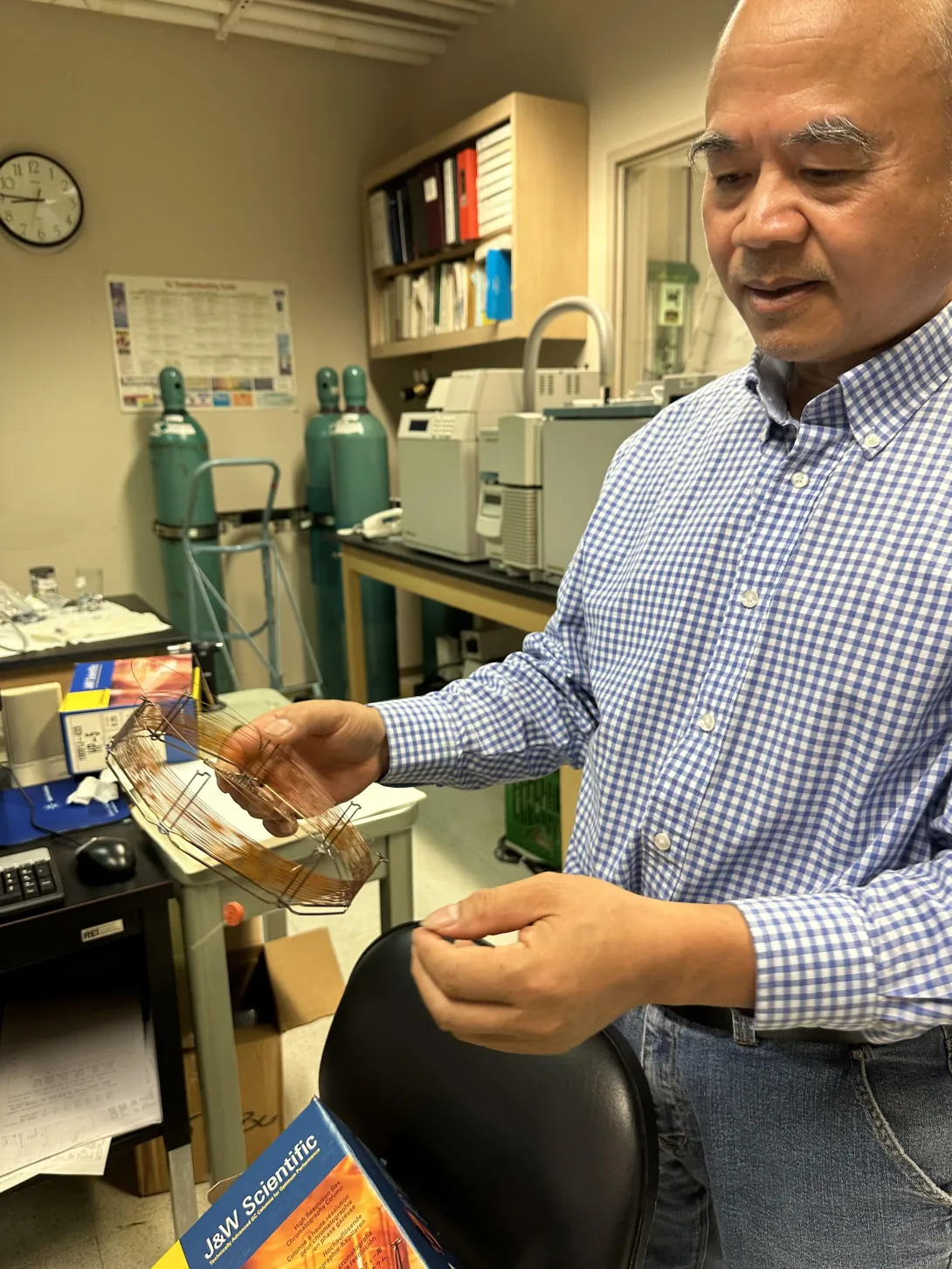
Rallming Yang, Senior Research Scientist and head of the Chemical Analysis Lab explains how FTIR Spectrometer works at the RBI Chemical Analysis Lab
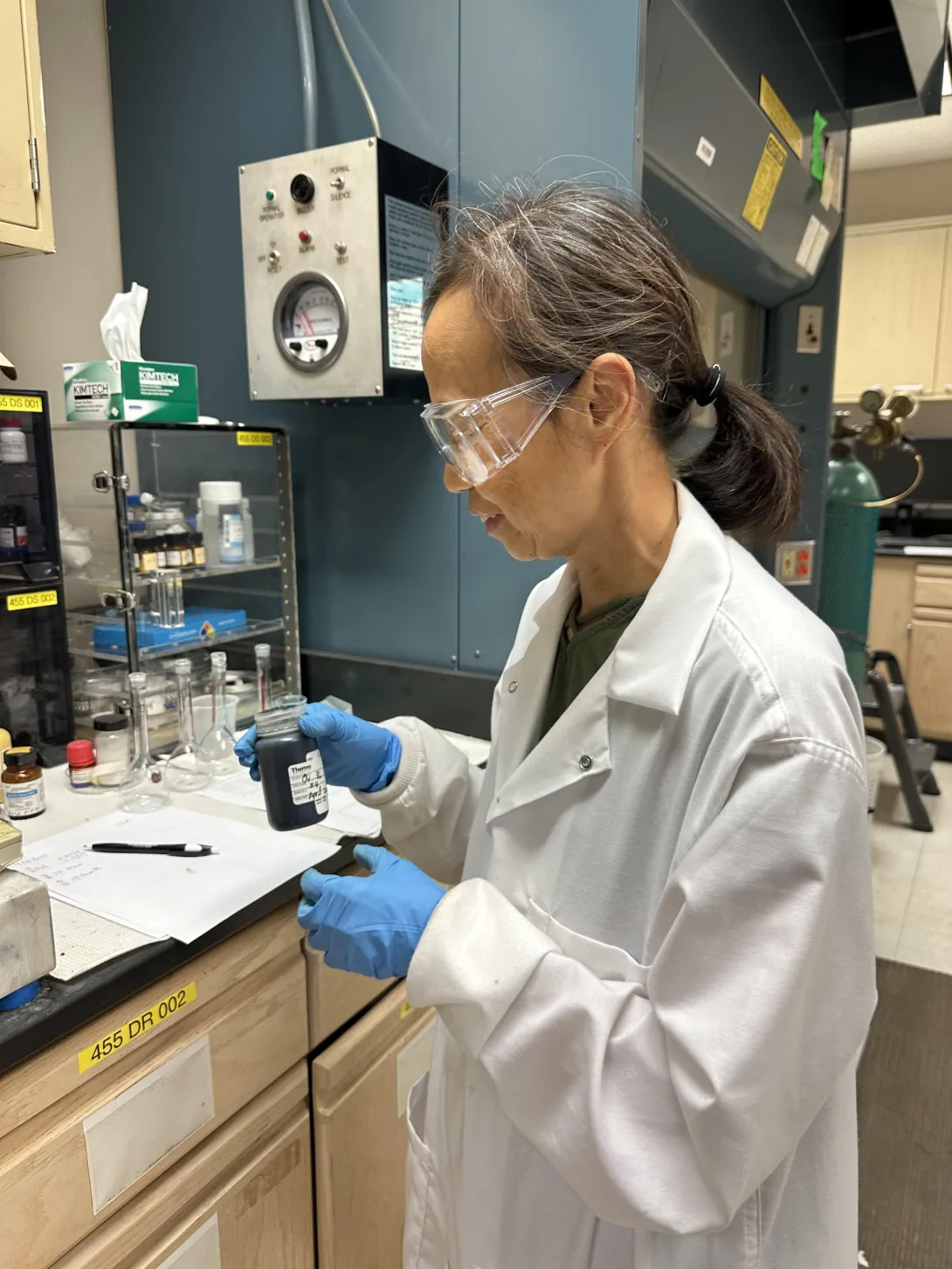
Xiaoyan Zeng, Research Scientist at RBI preparing black liquor for identifying anions
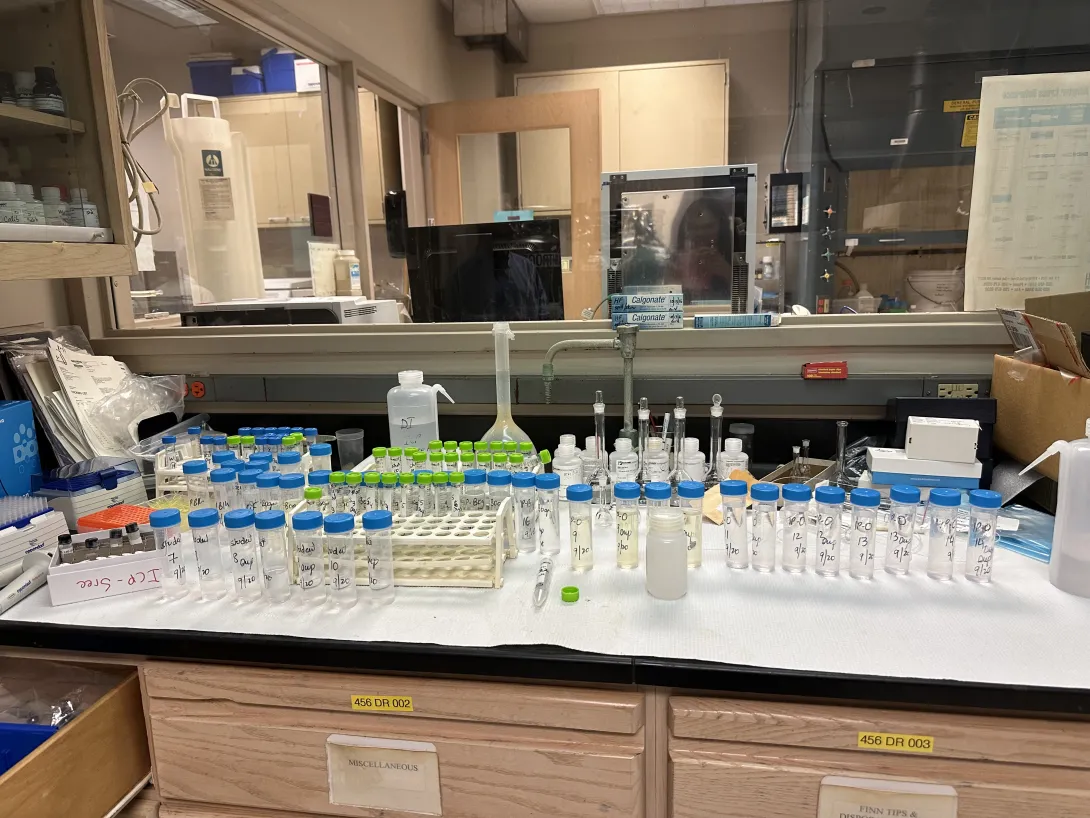
Diluted black liquor ready for testing
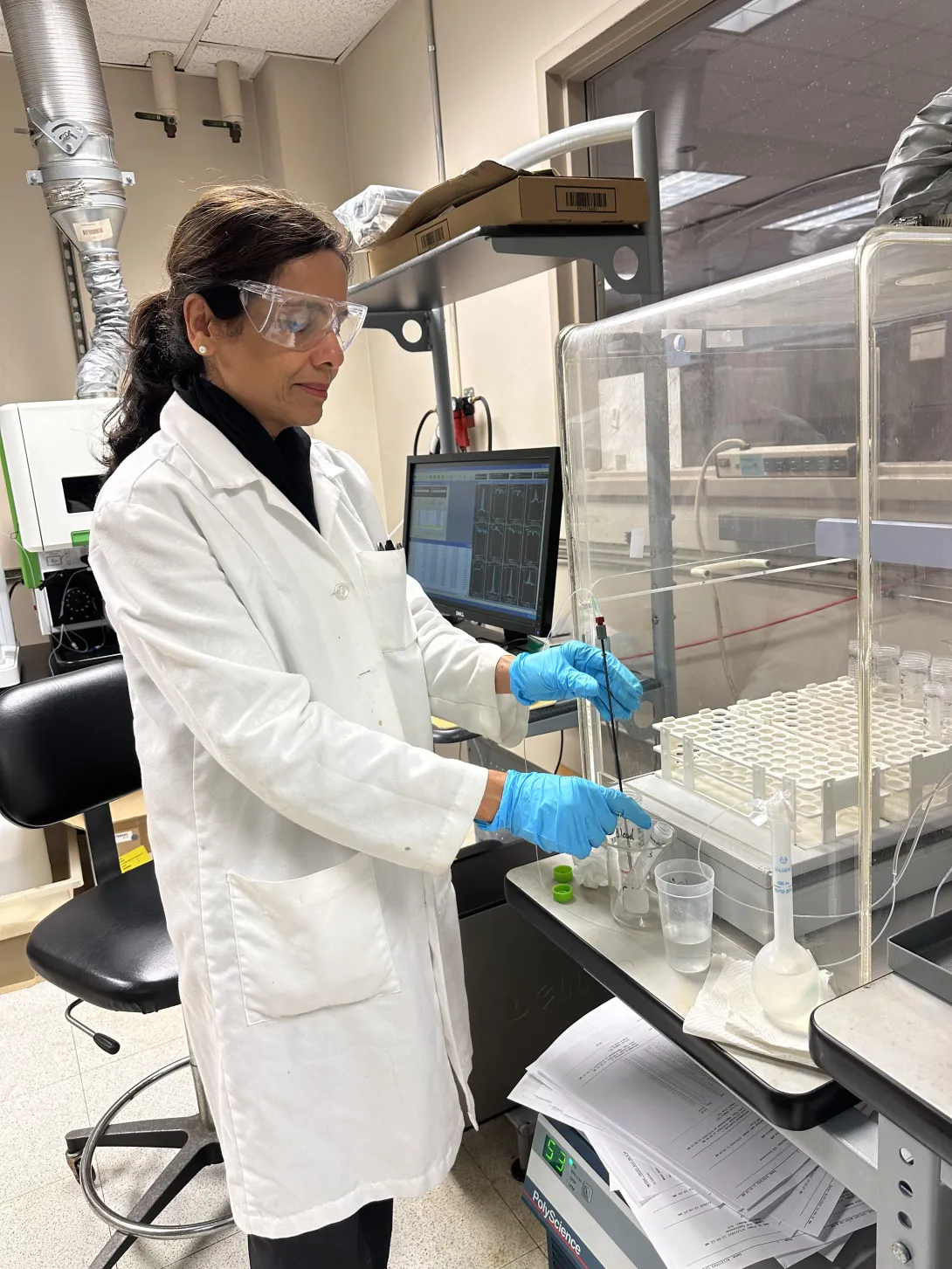
Tabassum Shah, Research Coordinator at RBI, testing black liquor using ICP Emission Spectrometer
Providing research testing services to both internal and external stakeholders is an integral function of the Renewable Bioproducts Institute (RBI). These services include chemical analysis; corrosion; paper, board and box testing; pulp analysis; and pulp recovery analysis. Established over 25 years ago, RBI’s testing services are well-known in the industry for their quality and customer service. RBI is one of the ten interdisciplinary research institutes at Georgia Tech that champions innovation in converting biomass into value-added products, developing advanced chemical and bio-based refining technologies, and advancing excellence in manufacturing processes.
The RBI research testing services is a team of professional scientists and engineers who work together to provide information and offer solutions required by a manufacturers and users of biomass products, as well as Georgia Tech faculty and students engaged in research on campus. The multidisciplinary capabilities of the team make them uniquely qualified to address customers' technical needs in the areas of process and product development, and quality control. Where appropriate, the team involves RBI faculty and other staff experts to arrive at the best possible solution for their customers and users.
In this article, we will focus on a day’s work with the chemical analysis team.Headed by Rallming Yang, senior research scientist in RBI, the team is equipped to follow the Technical Association of the Paper and Pulp industry (TAPPI) standard of testing, which only a small number of labs in the country can do, and has also developed some of its own internal protocols. Yang leads two specific characterization programs within RBI: (1) the pulping and bleaching analysis, paper recycling, and recovery lab, and (2) the chemical analysis lab.
The chemical analysis team is busy year-round with research projects and testing services. In addition, during the Spring semester, the team also provides support to a paper science laboratory course for undergraduate and graduate students. In the recent times, chemical analysis of black liquor from pulp mills has kept the team busy with more than 30 projects completed by the team over three months for various industry customers. Currently, black liquor analysis continues to account for over 50% of the workload of the lab.
Black liquor (BL) is a byproduct of a wood pulping and is released when cellulose fibers are separated from wood chips. BL contains lignin, which is used as a biofuel within the mill, and several other chemicals that are recovered and reused. In most pulp mills, nearly 50-70% of BL is converted into a convenient source of fuel or energy. Due to the important role played by black liquor in a paper mill, it needs to be tested regularly to ensure consistency in composition. The RBI chemical analysis lab gets BL samples from a pulp mill, who contact the lab by email to get their testing request into the queue. The process involved in the testing is very intense and has multiple steps that need to be carefully administered.
In the first step, inorganic elements in BL are identified by digesting it in a precise mixture of acids and filtering the mixture. The filtrate is introduced into an Inductively Coupled Plasma (ICP) Emission Spectrometer that can identify more than 70 different inorganic elements and compounds like sulfur, potassium, sodium, iron, calcium, etc. The next step involves identifying the proportion of anions like sulfate, chloride, thiosulfate. In this step, BL is diluted to a specific level and analyzed using a method called Capillary Ion Electrophoresis (CIE).
The next step involves analyzing BL for organic substances using two methods – gas chromatography mass spectrometry (GC/MS) and Fourier Transform Infrared Spectrometry (FTIR). For organic substances with a lower molecular weight of less than 600 Daltons (Da), GC/MS is employed where the gas chromatography separates the chemical mixture, and the mass spectrometry identifies each of the components.
The final step is to identify organic substances and polymers with higher molecular weights. For example, lignin is one of the main polymers in BL with a molecular weight higher than 600 Da. FTIR is used for testing during this step. Based on vibrations within each molecule, an FTIR spectrum allows identification of molecular groups within lignin. The equipment then uses a computer to identify the substances by comparing the sample spectrum with a built-in library. The RBI team provides detailed lab reports that is used by the pulp mill to adjust their operating parameters for trouble-free operations.
In addition to the chemical analysis of byproducts like black liquor and other chemical compounds, Rallming Yang’s team also conducts studies on pulping and bleaching, repulping, and fiber characterizations.
News Contact
Priya Devarajan || Research Communications Program Manager, RBI
May. 26, 2023
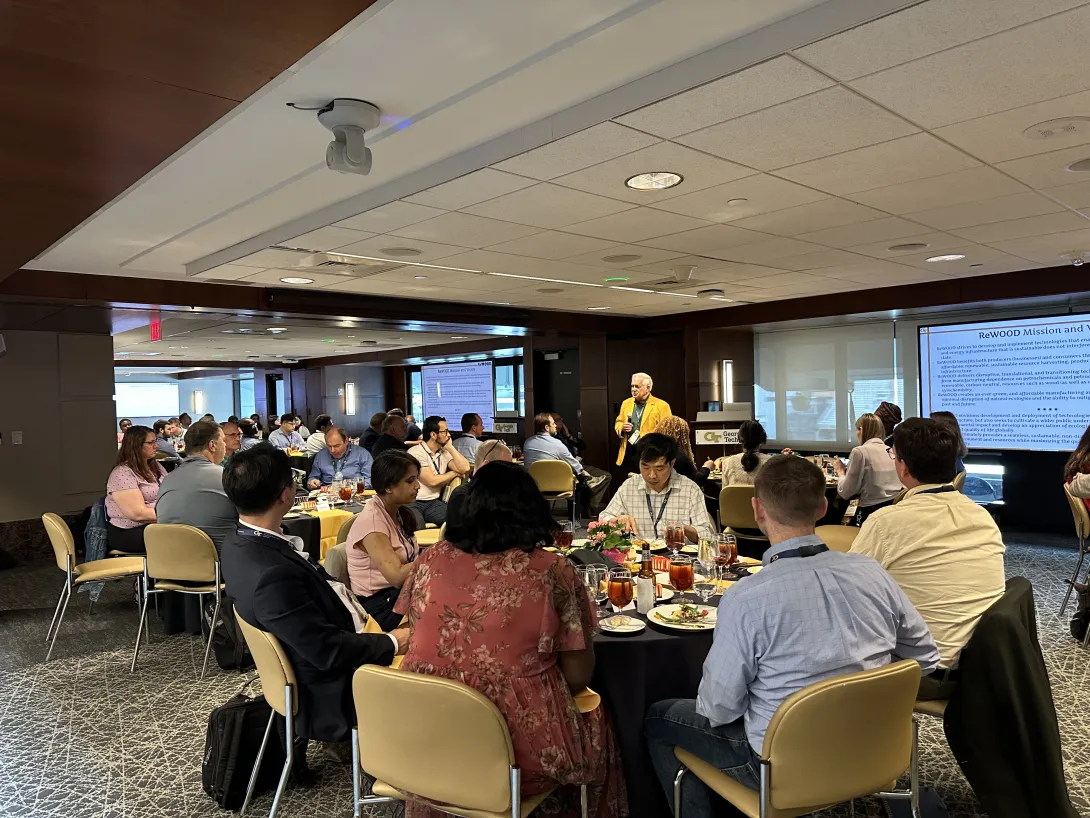
Keynote Presentation during the Spring2023 RBI Workshop on Packaging Innovation and the Circular Economy
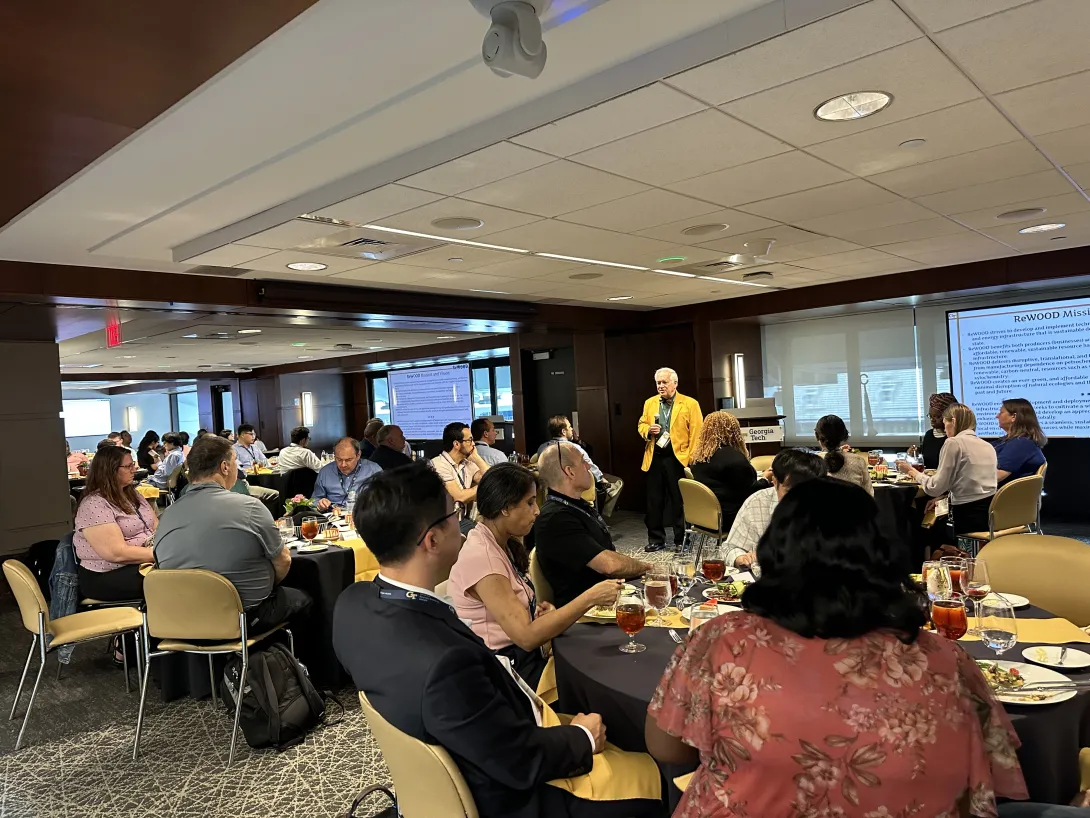
On Thursday, May 11, the Renewable Bioproducts Institute (RBI) of Georgia Tech hosted a workshop on “Packaging Innovation and the Circular Economy” at the Bill Moore Student Success Center on the Georgia Tech campus. More than 90 attendees from academia, national labs, and industry convened and discussed the cutting-edge research and industry developments happening across the world and got an opportunity to network with leading researchers and peers. This unique workshop featured speakers from the USDA Forest Products Laboratory, WestRock, Stora Enso, Georgia Tech, University of Maine, and many others.
The workshop started off with an introduction by Carson Meredith, executive director of RBI, who gave a perspective on the institute’s goals in promoting bioeconomy technology and innovation. Dr. Meredith emphasized RBI’s role in “catalyzing a community of researchers who focus on solving challenges in packaging by investing in team building across interdisciplinary boundaries.”
Research talks began with a presentation from Tequila Harris, professor in the George W. Woodruff School of Mechanical Engineering. Harris shared her team’s research on a continuous coating process of cellulose- and chitin-derived materials to create enhanced packaging barrier films. Meisha Shofner, associate professor and Faculty Fellow in the School of Material Science and Engineering shared her work on mechanical and thermal properties of single use packaging materials and paths to improving circularity.
Carson Meredith, professor in the School of Chemical & Biomolecular Engineering and executive director of RBI informed on renewable barriers from carbohydrates as viable alternatives to plastics and the research methods involved to get more promising results for circular functional barrier packaging materials. Joe Bozeman, assistant professor in the School of Civil and Environmental Engineering at Georgia Tech presented the Systemic Equity framework as it relates to circularity.
Mehdi Tajvidi, professor from the University of Maine, discussed his team’s research to produce particle board and other packaging materials using nanocellulose and the audience got an opportunity to look and get a feel for his research team’s samples.
Discussions from industry experts included material innovations to replace plastics, packaging requirements in the European Union and the United States and how brands drive innovation more than regulations, methods to optimize package size and packing speed for sustainability, paper-based packaging equipment and systems to replace plastics including plastic water bottles, dye choices and the influence of defect detection in waterborne barrier coated papers, and innovations in fiber-based cold chain packaging.
Ken Zwick from the U.S. Forest Products Laboratory discussed managing forests using methods like forest thinning such that the biomass prevents wildfires and what success looks like for his team – less plastic in packaging and less burning of wood. Their Madison building also houses the largest wood library in Wisconsin.
Participants had a chance to interact with Georgia Tech students and get to know their research at the student poster presentation. The dinner keynote was presented by researchers Bo Arduengo and Stefan France from the School of Chemistry and Biochemistry at Georgia Tech. The keynote provided an overview of RBI’s newly created ReWOOD research center. Abbreviated from “Renewables-based Economy from WOOD,” research at the center focuses on using sustainable plant-based raw materials to develop industrial products ranging from jet fuel to solvents to generic pharmaceutical additives and more. The presentation provided a glimpse on the expansion of ReWOOD since its launch through research affiliations from universities across the world. ReWOOD’s partnership list continues to grow as the center focuses on targeted research areas and funding proposals to develop technology and commercial opportunities.
“The workshop turned out to be a huge success with a highly engaged audience of faculty, students, national lab, and industry experts,“ said Carson Meredith, executive director of the Renewable Bioproducts Institute. “RBI will continue to host such events as we are committed to providing thought leadership and be a catalyst of cutting-edge research in the areas of circular materials; bioindustrial manufacturing; and paper, packaging, and tissue.”
News Contact
Priya Devarajan || RBI Communications Manager
May. 03, 2023
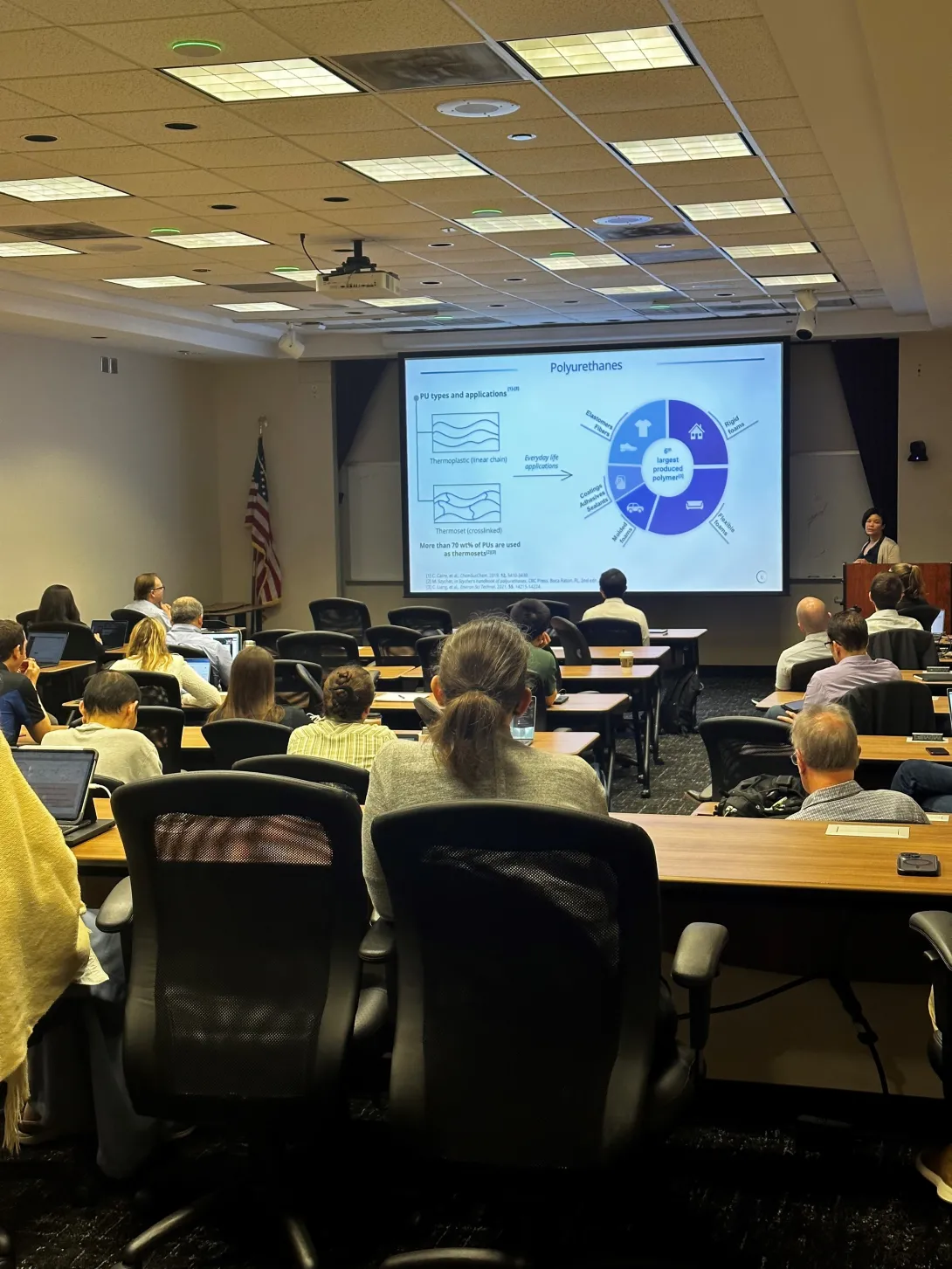
In early April, the Renewable Bioproducts Institute (RBI) along with the Student Polymer Network (SPN) hosted the ninth annual research symposium titled “The Visions for Sustainable Polymers.” The symposium also included SPN's annual poster session at the Molecular Science and Engineering Atrium.
Sustainable polymers are an important component of RBI's Circular Materials research theme. The workshop was planned by Blair Brettmann, assistant professor in the School of Chemical and Biomolecular Engineering, Natalie Stingelin, professor in the School of Chemical and Biomolecular Engineering, Will Gutekunst, associate professor in the School of Chemistry and Biochemistry and Carson Meredith, executive director of Renewable Bioproducts Institute and professor and James Harris Faculty Fellow in the School of Chemical and Biomolecular Engineering and was funded through a Moving Teams Forward seed grant from the EVPR office. The purpose of this seed grant is to develop a community of researchers on campus who focus on the development of new, more sustainable types of plastics and new ways to recycle or upcycle them at the end of life.
The workshop was the culminating event in the Moving Teams Forward seed grant program and involved invited speakers from inside and outside Georgia Tech. Industrial speakers and attendees (Dow, BASF), National Labs (NIST), and faculty from universities across the country participated in the symposium. The speakers represented key thought leaders to connect with and build stronger teams for advancing this field.
News Contact
Priya Devarajan | RBI Communications Manager
May. 02, 2023
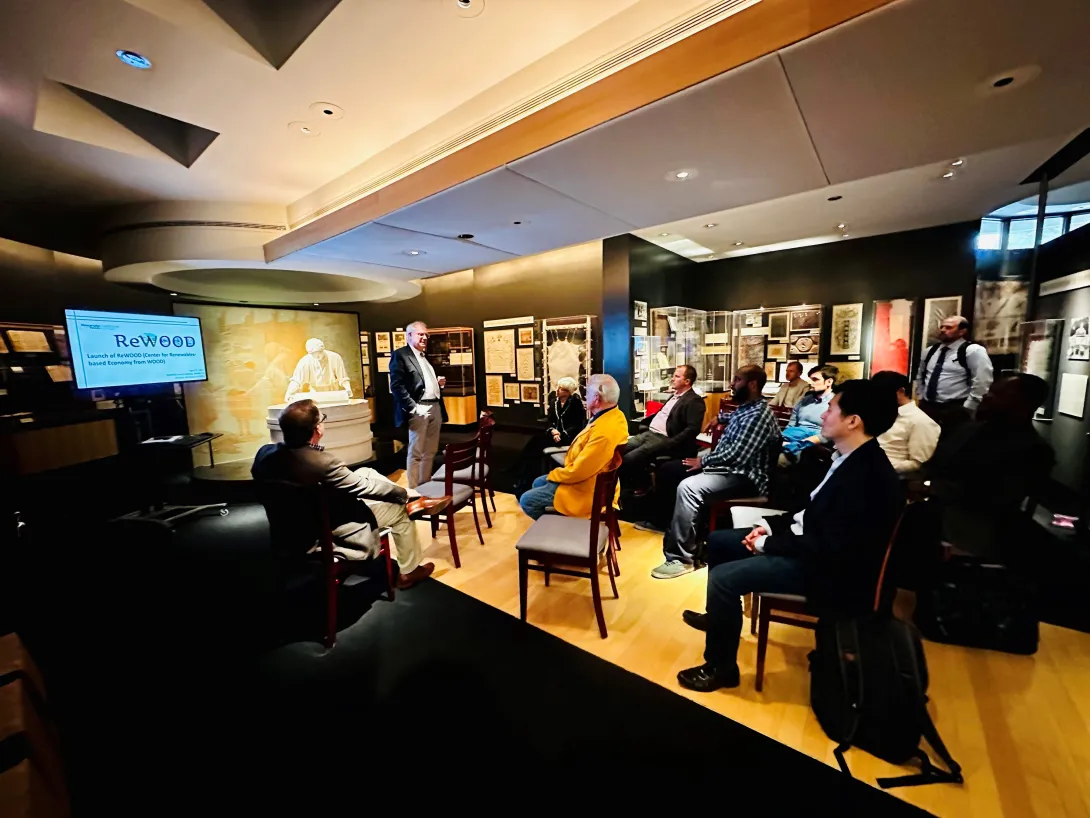
ReWOOD launch at the Renewable Bioproducts Institute on April 27, 2023
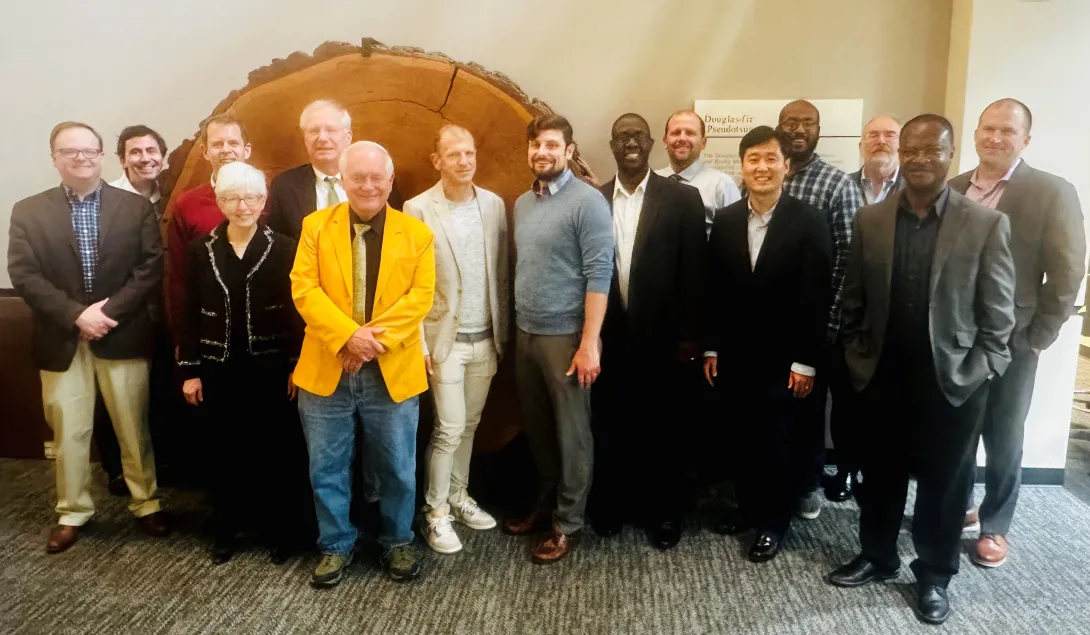
Team of ReWOOD research collaborators on the day of launch
Georgia Tech Launches Wood-Based Renewables Research Center
The Renewable Bioproducts Institute (RBI) at the Georgia Institute of Technology has launched a new science and technology research center called ReWOOD. The ReWOOD launch included a 2-day workshop involving faculty research partners from universities across the Southeast, as well as former Georgia Agriculture Commissioner Gary Black.
ReWOOD, abbreviated from “Renewables-based Economy from WOOD” will focus on a burgeoning field of science called Xylochemistry. Xylochemistry makes use of sustainable plant-based raw materials to develop industrial products ranging from jet fuel to industrial solvents to generic pharmaceutical additives and more. Right now, most of the world production of such materials comes from non-renewable fossil resources or petroleum products. Moving to a renewable source will not only aid in reducing the dependence on fossil fuels but will also help with reducing the overall carbon footprint. ReWOOD is sponsored by RBI through its endowment-funded fellowships and is developing a corporate affiliate program.
“The formation of this internal research center will drive regional momentum for producing carbon neutral chemicals and fuels from wood wastes deriving from the abundant and fast-growing wood in the Southeast,” said Carson Meredith, executive director of RBI. “In fact, the Southeast has a larger percentage of sustainably grown working forests than any other area in the U.S., and Georgia is the number one exporter of forest products in the nation.”
Research on chemical renewables via Xylochemistry has been ongoing at Georgia Tech under a consortium called GT-STANCE (Science & Technology for a Neutral Chemical Economy). GT-STANCE’s researchers have developed seed technologies that aid in the production of wood-based chemical intermediates with potential uses in consumer commodities like pharmaceuticals and plastics. In addition, RBI has made a significant investment of nearly $3 million in building research teams in the related area of lignin conversion in the last five years. The formation of a research center that will coalesce regional thought leadership is the logical next step, as a renewables-based economy has become a national priority with the bioeconomy, climate, and clean energy goals set by the Inflation Reduction Act and the Bipartisan Infrastructure Law.
Raw materials for Xylochemistry could also be sourced from any kind of non-treated wood. For example, wood from demolished construction sites like old homes and wooden buildings provide an excellent opportunity for a circular economy, since this wooden construction waste ends up in landfills now.
Currently ReWOOD has 11 university affiliates that are joining Georgia Tech. In January 2023, faculty from Georgia Tech, the University of Alabama at Tuscaloosa, and Alabama A&M University convened to discuss the plans for a research center on a renewables-based economy from wood to develop renewable biofuels, industrial solvents, pharmaceutical additives, and many other products that culminated in the formation of ReWOOD. Since then, the center has gained the interest of multiple other researchers from the University of Florida, Kennesaw State University, and Clark Atlanta University. In addition, the Mississippi State and Forestry Office and Sandia National Laboratory have become key collaborators within ReWOOD. This collection of expertise includes chemists, engineers, economists, and forest experts, covering a broad range of activities that will include technology, economic, and workforce development, as well as lifecycle and socio-economic analysis. This partnership list will continue to evolve and grow as ReWOOD focuses on specific target research areas and proposals for funding to develop technology and processes in the business sector.
About the Renewable Bioproducts Institute at Georgia Tech
Georgia Tech’s Renewable Bioproducts Institute is one of ten campus interdisciplinary research institutes. RBI champions innovation in converting biomass into value-added products, developing advanced chemical and bio-based refining technologies, and advancing excellence in manufacturing processes. Our three strategic thrusts are circular materials, bio industrial manufacturing, and paper, packaging, and tissue.
RBI serves as a campus conduit for industry-university partnerships and provides a portal to Georgia Tech core laboratories, faculty and students whose work and expertise is focused on biomass and bioproducts.
News Contact
Priya Devarajan | RBI Communications Program Manager
Jan. 06, 2023

Savannah River National Laboratory (SRNL) and Georgia Institute of Technology (Georgia Tech) recently selected Martha Grover, PhD, for a joint appointment.
Grover is a professor and the associate chair for graduate studies at Georgia Tech’s School of Chemical and Bimolecular Engineering. Her research interests include feedback control of colloidal crystallization for photonic materials; chemical evolution in the origins of life; modeling and control of pharmaceutical and nuclear waste crystallization; and process-structure-property relationships in polymer organic electronics.
SRNL intends to collaborate with Grover to utilize her expertise and experience to:
- Facilitate research and development activities pertaining to in-situ analysis of process streams for DOE tank waste treatment programs, including application of instruments and calibration techniques.
- Analyze SRNL data generated during testing of in-situ instruments in non-radioactive simulants of high-level waste.
- Expand and develop relationships within Georgia Tech to facilitate further collaboration
- Develop the next generation of outstanding engineering talent with interest to pursue research career opportunities in the national laboratory system
“Dr. Grover’s efforts contribute directly to SRNL’s strategic goal of providing applied science and engineering for the Department of Energy (DOE) Office of Environmental Management’s active cleanup sites and Office of Legacy Management’s post-closure management sites,” said SRNL Deputy Lab Director, Science and Technology, Sue Clark, PhD. “Dr. Grover will strengthen SRNL’s core competency of accelerating remediation, minimizing waste, and reducing risk by supporting process stream characterization associated with treatment of DOE tank waste.”
In addition to her primary research, Grover focuses on creating an even more inclusive community, exploring issues relevant to women, underrepresented minorities, and international students. She co-leads the GT-Equal (Graduate Training for Equality in Underrepresented Academic Leadership) Program and, in 2020, was named a National Science Foundation Organizational Change for Gender Equity in STEM Academic Professions (ADVANCE) Professor. Georgia Tech’s ADVANCE Program builds and sustains an inter-college network of professors who are world-class researchers and role models to support the community and advancement of women and minorities in academia. Georgia Tech’s School of Chemical and Biomolecular Engineering also was one of two institutions selected nationwide to be inaugural sites for the American Chemical Society’s Bridge Program, which aims to increase the number of underrepresented minority students who receive doctoral degrees in chemical sciences.
The Joint Appointment Program at SRNL provides university faculty opportunities to engage in the laboratory’s research and development that address the nation’s challenges in energy, science, national security, and environmental stewardship. Together, SRNL staff and joint appointees help ensure America’s security and prosperity through transformative science and technology solutions. Joint appointees serve as a bridge between their university, SRNL researchers and students.
Savannah River National Laboratory is a United States Department of Energy multi-program research and development center that’s managed and operated by Battelle Savannah River Alliance, LLC (BSRA). SRNL puts science to work to protect the nation by providing practical, cost-effective solutions to the nation’s environmental, nuclear security, nuclear materials management, and energy manufacturing challenges (https://srnl.doe.gov/).
Aug. 31, 2022
Georgia Tech’s School of Chemical and Biomolecular Engineering has been renewed by the U.S. Department of Energy (DOE) for a third round of funding ($13.2 million over four years) for its Energy Frontier Research Center (EFRC) to study materials used in clean energy technologies.
This multi-institution EFRC, known as the Center for Understanding & Controlling Accelerated and Gradual Evolution of Materials for Energy (UNCAGE-ME), has advanced understanding of how acid gases interact with energy-related materials since its inception in 2014. The Center, with Georgia Tech as the lead participating institution, was first renewed for four years of funding in 2018.
“The selection for a third phase of funding is unusual, and speaks to the impact of the research already reported by the center in its first two phases,” said Christopher Jones, the John F. Brock III School Chair in Chemical & Biomolecular Engineering. “I believe this is attributable to the strong leadership provided by our current and former directors, Ryan Lively and Krista Walton. An additional constant throughout all three phases of the center has been strong collaboration between Georgia Tech, Oak Ridge National Laboratory, Lehigh University, and the University of Alabama.”
In the next four-year phase, UNCAGE-ME will leverage capabilities developed over the last eight years to address basic science questions associated with the evolution of materials to be used in clean energy technologies, including systems designed to capture and convert CO2 from the air into useful chemicals.
“Two of the most basic commodity chemicals in the clean energy economy will be H2 and CO2. A special emphasis has been given to these two molecules with DOE’s Energy Earthshots that were announced in November 2021 – the Hydrogen Shot and the Carbon Negative Shot” said Ryan Lively, a professor in Georgia Tech’s School of Chemical and Biomolecular Engineering and the director of UNCAGE-ME.
“These are all-hands-on-deck calls for innovations in technologies and approaches that will reduce the cost of clean hydrogen by 80% to $1 per 1 kg in one decade and remove CO2 from the atmosphere and durably store it at meaningful scales for less than $100/net metric ton of CO2-equivalent,” said Krista Walton, professor in ChBE as well as the inaugural director of UNCAGE-ME. Walton is also a faculty member in the Renewable Bioproducts Institute at Georgia Tech.
To help reach these goals, UNCAGE-ME will employ an interdisciplinary, matrixed research structure that combines novel materials synthesis, in situ characterization techniques, molecular modeling, and data science approaches to achieve an unprecedented level of design, prediction, and control over (electro)catalysts, sorbents, and membranes.
From 2014 to 2022, the UNCAGE-ME’s research accomplishments (appearing in more than 200 publications) provided detailed descriptions of the impact of acid gas exposure on metal-oxides, metal-organic frameworks, carbons, supported amines, porous organic cages, and other materials. This fundamental knowledge base directly supports the mission of the DOE’s Basic Energy Sciences program to provide the foundational science to guide the development of new energy technologies under realistic process environments.
“The College of Engineering is proud to continue leading this important initiative for an additional four years,” said Raheem Beyah, dean of the College of Engineering and Southern Company Chair. “This second renewal from DOE is a testament to Krista and Ryan’s leadership, as well as the vision and innovation of a science team comprised of Georgia Tech researchers and our collaborators around the nation.”
In addition to Georgia Tech, the partner institutions for UNCAGE-ME include Oak Ridge National Laboratory, the University of Alabama, University of Florida, University of California Riverside, Lehigh University, Sandia National Laboratory, and the University of Michigan.
Julia Kubanek, professor and vice president for interdisciplinary research at Georgia tech, said it takes partnership across the Institute to support faculty in developing complex centers such as UNCAGE-ME.
“Research centers like this one benefit from collaborations among faculty experts and grants administrator staff in our schools and colleges, contracting officials in Research Administration, plus two other sets of critical partners: the Office of Research Development, which supports complex proposal preparation, and the interdisciplinary research institutes IRIs,” Kubanek said.
“The IRIs gather information from our Office of Federal Relations and host workshops to help faculty prepare and form teams. In this case, the Strategic Energy Institute, Institute for Materials, and Renewable Bioproducts Institute were all involved in ensuring that faculty had advance notice of this competition and could make the most of expert advice,” she said.
News Contact
Aug. 05, 2022
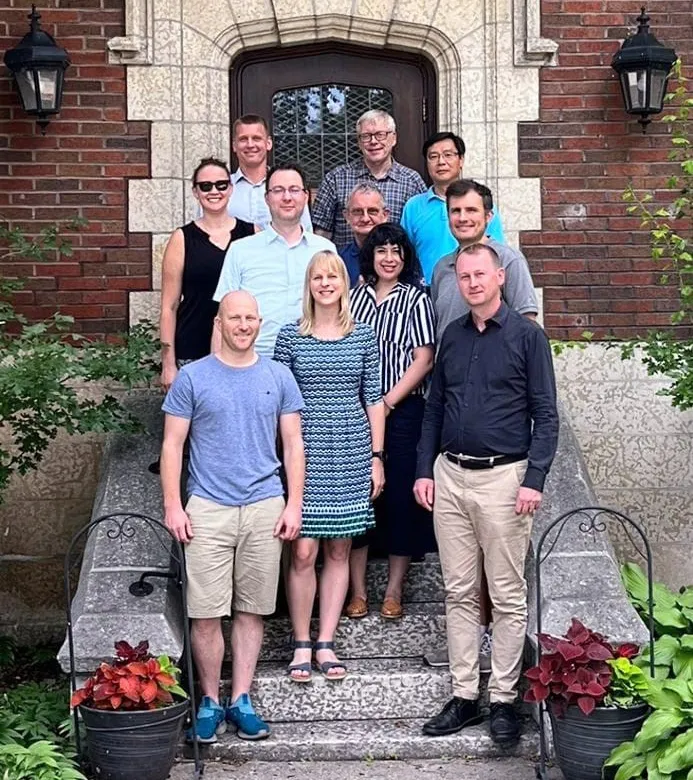
Blair Brettmann, faculty member of the Renewable Bioproducts Institute (pictured left in sunglasses), participated in the IUPAC (International Union of Pure and Applied Chemistry) Subcommittee on Polymer Terminology sessions in Winnipeg, Canada.
She is part of international teams working to define terminology and plan nomenclature recommendations in polymer science. These recommendations enable cross-culture communication, clarity in scientific publications and collaborations and specific language for use in policy, intellectual property, and other drivers in science.
Blair Brettman is an assistant professor in the School of Chemical and Biomolecular Engineering and School of Materials Science and Engineering at Georgia Tech.
News Contact
Jul. 29, 2022

The Renewable Bioproducts Institute (RBI) at Georgia Tech is excited to welcome three additions to its membership-based industrial advisory board: Pactiv Evergreen, Rayonier Advanced Materials, and Grasim Industries.
According to associate director Chris Luettgen, “these companies add to our board by providing expanded industrial expertise in laminated food packaging and dissolving pulp manufacturing.”
One of the companies joining recently is Pactiv Evergreen, a leading manufacturer of fresh food and beverage packaging in North America. Luettgen also facilitated the entry of RYAM (Rayonier Advanced Materials), who joined the advisory board in early spring semester 2022. RYAM produces high purity fluff and dissolving pulps for personal care and other products.
Finally, we welcome Grasim Industries, part of the India-based Aditya Birla Group of companies that also includes Novelis. Grasim is a leading producer of market and dissolving pulps as well as viscose and rayon. Grasim is joining the advisory board under a new trial membership program, which allows companies a 1-year period to experience the benefits of membership prior to making a longer-term commitment.
According to executive director Carson Meredith, “through this trial member program we hope to expand the range and breadth of participating companies.” RBI is excited to include these companies in guiding our research vision and programming. The full list of participating companies and member benefits can be found here: https://research.gatech.edu/rbi/members.