
Jul. 22, 2022
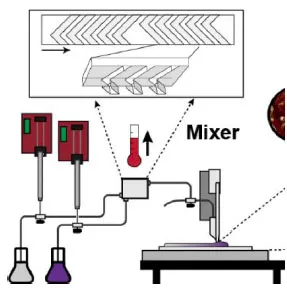
A team under Martha Grover, Elsa Reichmanis, and Carson Meredith recently published a paper in Chemistry of Materials titled "Composition Gradient High-Throughput Polymer Libraries Enabled by Passive Mixing and Elevated Temperature Operability." Grad student Aaron Liu (pictured) and Ezgi Dogan-Guner (Ph.D. 2021) are co-first authors, while RahulVenkatesh, Miguel Gonzalez, and Mike McBride (Ph.D. 2019) are also listed as co-authors.
ABSTRACT: The development of high-throughput experimentation (HTE) methods to efficiently screen multiparameter spaces is key to accelerating the discovery of high-performance multicomponent materials (e.g., polymer blends, colloids, etc.) for sensors, separations, energy, coatings, and other thin-film applications relevant to society. Although the generation and characterization of gradient thin-film library samples is a common approach to enable materials HTE, the ability to study many systems is impeded by the need to overcome unfavorable solubilities and viscosities among other processing challenges under ambient conditions. In this protocol, a solution coating system capable of operating temperatures over 110 degrees C is designed and demonstrated for the deposition of composition gradient polymer libraries. The system is equipped with a custom, solvent-resistant passive mixer module suitable for high-temperature mixing of polymer solutions at ambient pressure. Residence time distribution modeling was employed to predict the coating conditions necessary to generate composition gradient films using a poly(3-hexylthiophene) and poly(styrene) model system. Poly(propylene) and poly(styrene) blends were selected as a first demonstration of high-temperature gradient film coating: the blend represents a polymer system where gradient films are traditionally difficult to generate via existing coating approaches due to solubility constraints under ambient conditions. The methodology developed here is expected to widen the range of solution processed materials that can be explored via high-throughput laboratory sampling and provides an avenue for efficiently screening multiparameter materials spaces and/or populating the large data sets required to enable data-driven materials science.
The full paper can be found in July 14, 2022, Chemistry of Materials.
News Contact
Jun. 30, 2022
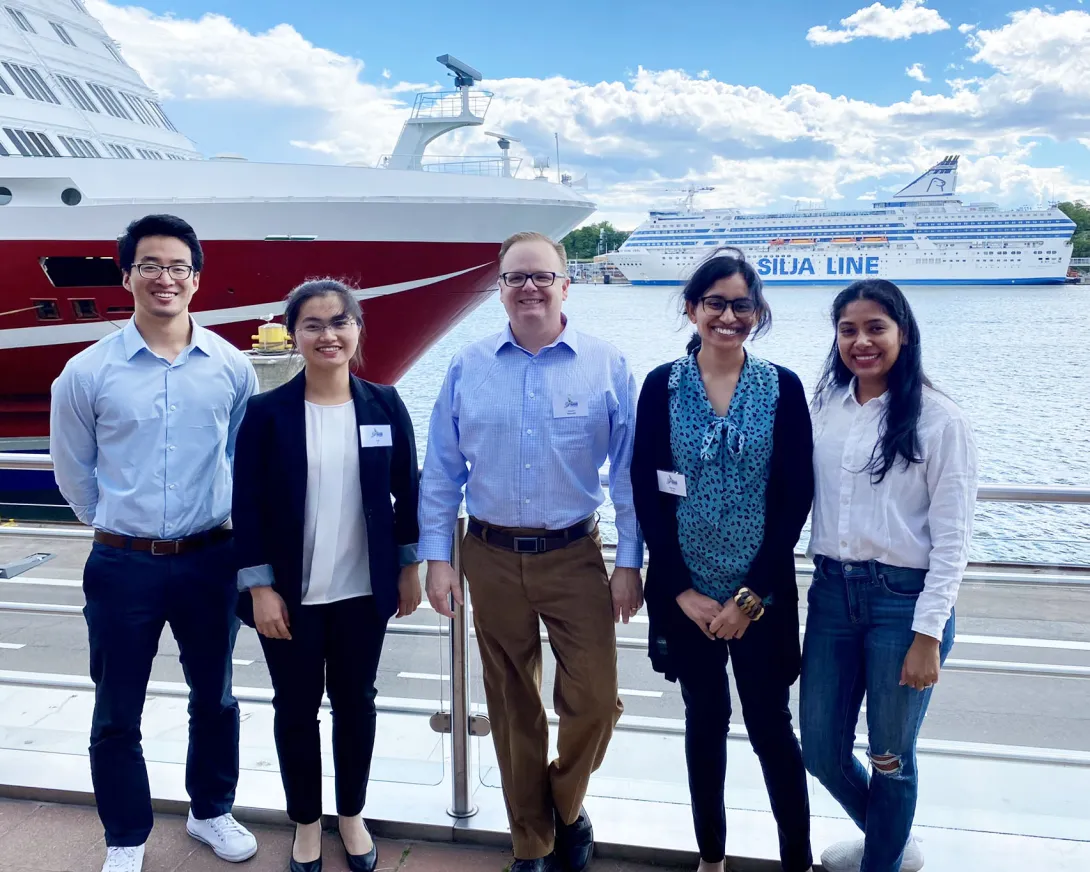
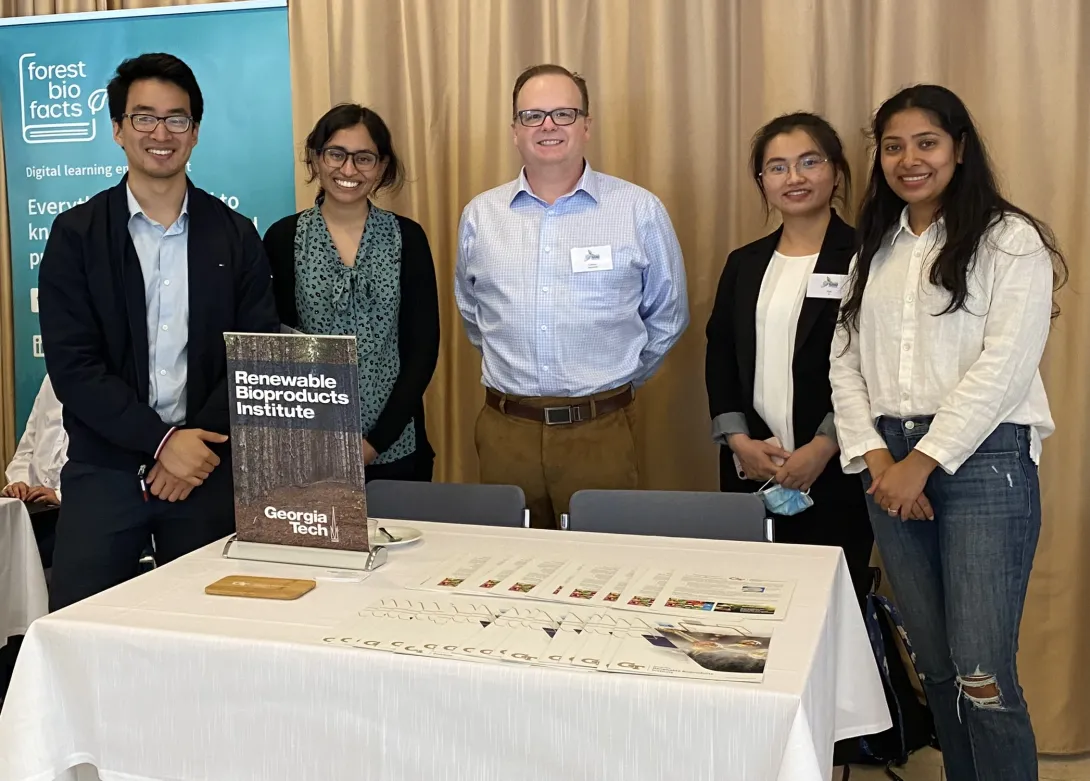
This summer, a faculty and student group from the Renewable Bioproducts Institute (RBI) at Georgia Tech attended TAPPI’s International Conference on Nanotechnology for Renewable Materials (TAPPI Nano) in Helsinki, Finland from June 13-17. This is a leading conference that attracts professionals, researchers, and corporations conducting research or using nanotechnology focused on renewable materials.
On average, the event draws more than 400 academics, industry leaders, and researchers from more than 25 countries around the world. This year's event featured more than 100 technical presentations, four keynote speakers, end-user panels, and poster presentations. The conference is designed to help attendees gain insights into the latest advancements in research and actual application in today’s newest renewable material products.
“Nanotechnologies are now being used commercially in renewable products in the paper and pulp industries,” said Carson Meredith, executive director of RBI. “In that industry, nanomaterials are being used mainly as an additive—such as for corrugated packaging. They are finding that small amounts of these additives can reduce the amount of fiber needed. New additives can also be used to acquire unique combinations of properties such as higher strength with less weight or help to color paper white with more environmentally friendly methods..”
Nanotechnology in the renewable bioproducts industry is enabling large-scale financial savings and helping to conserve resources when making paper products according to Meredith who is also a professor and the James Harris Faculty Fellow in the School of Chemical and Biomolecular Engineering.
Georgia Tech faculty and student presenters listed in the conference agenda included:
Talks at TAPPI Nano2022
- Session 12. Nanocellulose for Stronger or Lighter Glass Fiber Polyester Composites - Kyriaki Kalaitzidou
- Session 23. Consumer Gatekeeping in Sustainable Materials Streams - Nasreen Khan
- Session 25. Dewatering of Cellulose Nanofibrils Using Ultrasound - Udita Ringania
- Session 32. Minimizing Oxygen Permeability of Cellulose/Chitin Nanomaterials as Multilayer Coatings by Tuning Chitin Deacetylation - Yue Ji
Posters at TAPPI Nano2022
- Zero-angle Depolarized Dynamic Light Scattering for Characterization of Cellulose Nanomaterials - Li Zhang
- The Influence of Polyelectrolyte Complex Phase Behavior on Water Retention Values of Cellulose Nanofibers - Nasreen Khan
- Dewatering of Cellulose Nanofibrils Using Ultrasound - Udita Ringania
Kyriaki Kalaitzidou is an assistant professor in the Woodruff School of Mechanical Engineering and strategic coordinator for circular materials for RBI. The four doctoral students presenting included Yue Ji, Nasreen Khan, and Udita Ringania from the School of Chemical and Biomolecular Engineering; and Li Zhang from the School of Materials Science and Engineering.
TAPPI, formed in 1915, is the leading association for the worldwide pulp, paper, packaging, tissue, and converting industries.
News Contact
Walter Rich
May. 25, 2022
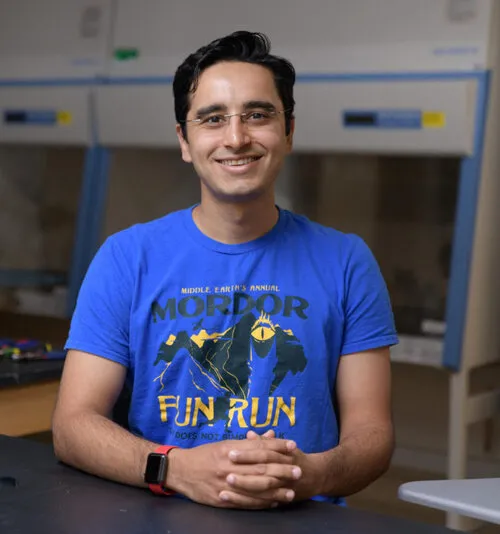
Abstract: Although cellulose nanomaterials have promising properties and performance in a wide application space, one hinderance to their wide scale industrial application has been associated with their economics of dewatering and drying and the ability to redisperse them back into suspension without introducing agglomerates or lose of yield. The present work investigates the dewatering of aqueous suspensions of cellulose nanofibrils (CNFs) using ultrasound as a potentially low-cost, non-thermal, and scalable alternative to traditional heat-based drying methods such as spray drying. Specifically, we use vibrating mesh transducers to develop a direct-contact mode ultrasonic dewatering platform to remove water from CNF suspensions in a continuous manner. We demonstrate that the degree of dewatering is modulated by the number of transducers, their spatial configuration, and the flow rate of the CNF suspension. Water removal of up to 72 wt.% is achieved, corresponding to a final CNF concentration of 11 wt.% in 30 min using a two-transducer configuration. To evaluate the redispersibility of the dewatered CNF material, we use a microscopic analysis to quantify the morphology of the redispersed CNF suspension. By developing a custom software pipeline to automate image analysis, we compare the histograms of the dimensions of the redispersed dewatered fibrils with the original CNF samples and observe no significant difference, suggesting that no agglomeration is induced due to ultrasonic dewatering. We also perform SEM analysis to evaluate the nanoscale morphology of these fibrils showing a width range of 20 nm–4 um. We estimate that this ultrasound dewatering technique is also energy-efficient, consuming up to 36% less energy than the enthalpy of evaporation per kilogram of water. Together with the inexpensive cost of transducers ( $1), the potential for scaling up in parallel flow configurations, and excellent redispersion of the dewatered CNFs, our work offers a proof-of-concept of a sustainable CNF dewatering system, that addresses the shortcomings of existing techniques.
The complete published paper can be found in the May 24 issue of Cellulose.
News Contact
Walter Rich
May. 02, 2022

Georgia Tech inventors (Carson Meredith, Sven Holger Behrens, and Yi Zhang) have identified a method that utilizes surfactant-free, oil-tolerant capillary foams consisting of a combination of colloidal particles, oil, water, and gas. This method allows the recovery of off-shore oil spills that allows the subsequent recovery of the oil.
A collection device allows the infusion of air and the addition of colloidal particles. As the oil and water is processed through the device, a capillary foam gel is formed. The foam cells are stabilized synergistically by oil and (readily available, inexpensive) solid particles of appropriate wettability, without the need for any surfactants. Networks of oil-bridged solid particles inside the aqueous lamella of capillary foams confer upon the foam a tunable viscosity. The accumulated foam can be mechanically removed from the water surface (either by skimming, scooping, or pumping), and transported to another location where a de-foaming agent can be added to “decompose” the capillary foam into its component parts (water, recovered oil, and stabilizing particles).
Read Full Feature
News Contact
Walter Rich
Apr. 25, 2022

Five faculty members in Georgia Tech’s School of Chemical and Biomolecular Engineering (ChBE) shared the 2022 Curriculum Innovation Award presented by Tech’s Center for Teaching and Learning for the development of the Online Graduate Certificate in Data Science for the Chemical Industry (DSCI).
The winning faculty team included ChBE Professors Fani Boukouvala, Martha Grover, Andrew J. Medford, Carson Meredith, and David Sholl. This award includes a prize of $3,000, which they will share.
Launched in Fall 2020, the Online Graduate Certificate in DSCI is the only credential of its kind, preparing chemical engineers with the skills and expertise they need for the future of work.
As chemical, energy, and manufacturing companies worldwide race to take advantage of big data trends in what has become known as Industry 4.0, a key need for that sector is strong domain knowledge in chemical engineering coupled with skills in data science.
Zak Kuiper, data scientist for the Mosaic Company, said that the DSCI program is “the first to the table in answering a need which most of the chemical industry is just now realizing they have. It has allowed me to develop as a professional significantly quicker than I would have otherwise and has shaped how our organization has focused on the area of Data Science.”
Designed to be completed in one-to-two years, the certificate (offered in partnership with Georgia Tech Professional Education) consists of six hours of core courses (Data Analytics for Chemical Engineers and Data-driven Process Systems Engineering) on foundational data science methods, with a strong emphasis on applications in the chemical process industry. An additional six hours of electives provide the opportunity to focus on a specific area of interest and can be selected from within Georgia Tech’s prestigious online master's degree in analytics.
Companies including 3M and Dow Chemical have partnered with Georgia Tech to enroll their employees in the DSCI program to provide skills in the emerging field of data science and data analytics. At the same time, the courses are also available to resident Georgia Tech graduate students, as well as senior undergraduate students, who take the courses for credit toward their degrees.
Writing in support of DSCI's nomination for the Curriculum Innovation Award, 3M officials Cristina Thomas and Chris Jacobs, said, "We value this program so highly that 3M Corporate R&D has granted full ‘internal’ scholarships to 11 employees to date and plan to award more for the coming school year with full support from their managers."
The certificate is built upon two core courses (Data Analytics for Chemical Engineers, and Data-driven Process Systems Engineering)
Christopher Jones, the John F. Brock III School Chair of ChBE, said the certificate program is “not only a fabulous educational innovation, it is also a crucial thought-leadership platform, one where we are far ahead of the curve, offering programmatic innovations that other institutions are just starting to imagine. I am tremendously proud of our DSCI team – we are fortunate to have them as members of our community.”
Jackson Dean, BS ChBE 2021, a data science associate (pharmaceutical supply chain) for GlaxoSmithKline, said, “I found success in these courses due to the thoughtful design of each course, which fostered a high level of engagement….The combination of lecture videos and instructor-created code demo notebooks to act as the primary course material meant that I had multiple ways of learning the material.”
Dean added: “The curriculum of this certificate program directly addresses this need of creating data-fluent chemical engineers – teaching skills such as data management/cleaning, building machine learning models, and data visualization.”
The application deadline for Fall 2022 is May 1, 2022. Learn more.
News Contact
Walter Rich
Apr. 29, 2022

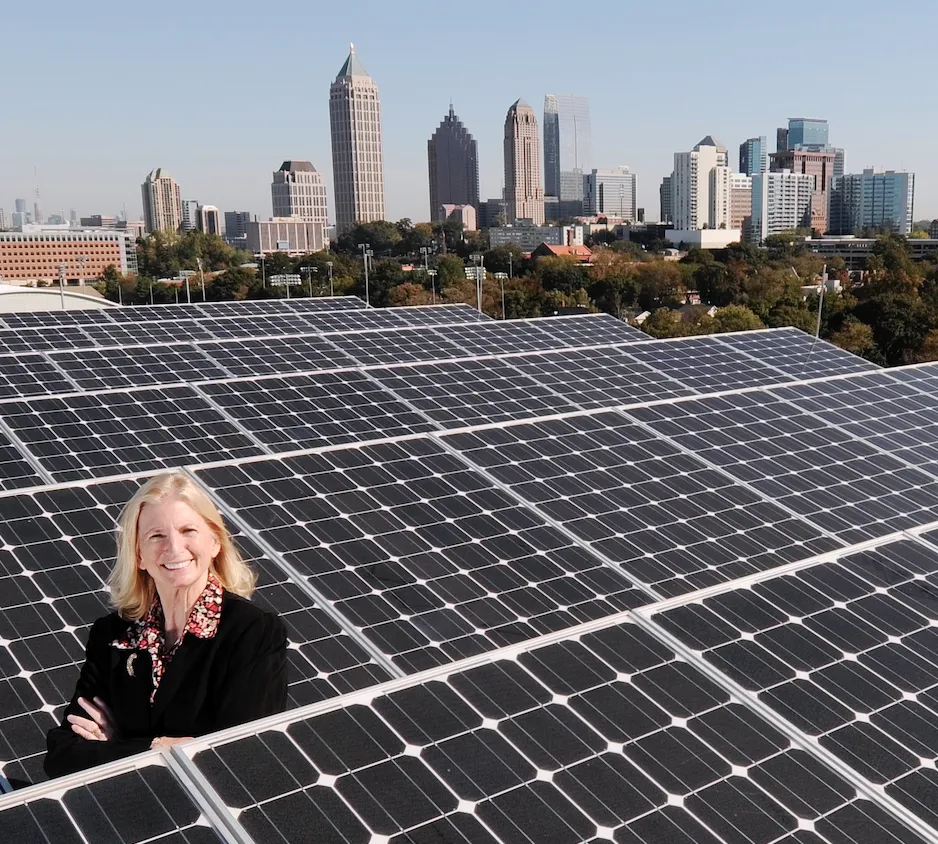
Marilyn Brown is a world-leading expert on renewable energy and energy efficiency, a transformative intellectual thinker, and one of the founders of the field of energy and climate policy.
Her research has shaped energy policy in the U.S. and globally. Over the past two years, she has been tapped for several prestigious honors, including being elected to both the U.S. National Academy of Engineering and the National Academy of Sciences, and receiving the 2021 World Citizen Prize in Environmental Performance. Now, she is the first woman to receive the Georgia Tech Class of 1934 Distinguished Professor Award in the 38 years of its existence. It is the highest honor given to a Georgia Tech professor. The award is presented to a professor who has made significant, long-term contributions to teaching, research, and public service.
Brown is the Regents and Brook Byers Professor of Sustainable Systems in the School of Public Policy. She joined Georgia Tech after 22 years at Oak Ridge National Laboratory, where she directed several national climate change mitigation studies and became a leader in the analysis and interpretation of energy futures.
At Oak Ridge National Laboratory, she was the joint highest-ranking female manager. Brown was attracted to Georgia Tech after working with a high-level group of scientists from Oak Ridge, the Imperial College of London, and Georgia Tech on a project involving next-generation energy, including advanced broadband. “I really liked the people from Tech who I worked with on the project,” said Brown. “They had a can-do attitude. At other universities, they might say, ‘That can’t be done.’ The people from Georgia Tech said, ‘We’ll find a way.’” In 2006, she was encouraged to apply for the position of — and was chosen as — a full professor in the School of Public Policy in Georgia Tech’s Ivan Allen College of Liberal Arts.
Throughout her career, Brown has been known for her transdisciplinary, action-based research and linking behavior to policy. “I started my career in the physical sciences at Rutgers. “From the beginning, I brought sciences into my work and have been quantitative. It has given me the ability to span sciences and related fields,” said Brown. “I tell my students they have to be quantitative in math and the physical sciences to be effective in energy.”
The focus of her research has been on the clean energy transition — bridging engineering, social and behavioral sciences, and policy studies to advance the design, adoption, and diffusion of clean energy technologies and policies. She is particularly interested in energy disparities and work to strengthen energy infrastructure, especially in areas of financial need. “It is all about the diffusion of innovation to the benefit of all,” she said.
Drawdown Georgia
Brown also leads the research program Drawdown Georgia, which she helped to create with the inspiration and funding of the Ray C. Anderson Foundation. Georgia Tech alumnus Ray C. Anderson was founder and chair of Interface Inc., and a pioneer in sustainability.
Drawdown Georgia was created and is being conducted in partnership with Emory University, the University of Georgia, and Georgia State University, as well as the Southface Institute, the Partnership for Southern Equity, and Greenlink Analytics.
Drawdown Georgia has identified a roadmap to significantly cut Georgia’s greenhouse gas emissions and achieve carbon neutrality. The Drawdown Georgia study, localized for Georgia’s urban and rural areas, was published in the Proceedings of the National Academy of Sciences in 2021. The plan identified technology and practices that could resonate with individuals, towns, and corporations throughout the state, including ways to bring more clean energy resources and technologies to rural Georgia and help people use limited resources more efficiently.
Through collaboration with the Scheller College of Business, 25 Georgia CEOs from throughout the state agreed to join Drawdown Georgia. The project includes a dashboard of emissions by Georgia’s 159 counties, tracked monthly. The next step will be to track implementation of the 20 solutions in the plan, measuring investments by counties, and the use of electric vehicles, rooftop solar systems, alternative transportation, recycling, composting, afforestation, and silvopasture — the integration of trees and livestock operations on the same land.
Sustainability as a Way of Life
When asked what she wishes people knew about sustainability, Brown said, “Sustainable technologies and behaviors are not costly. They can be good for your pocketbook. Consider the home refrigerator. Twenty-five years ago, it consumed 2,000 kilowatt hours a year. Today it requires less than 600 kWh, and they don’t cost any more than they used to. People just have to be smart about what they choose and pay attention to cradle-to-grave resource issues.”
Brown also lives her values. At her home, she grows vegetables and composts, has rooftop solar, a Tesla Powerwall battery, and uses heat pumps for water heating, air conditioning, and heat. Her family has an energy focus. Her husband, Frank Southworth, is an adjunct professor in the School of Civil and Environmental Engineering at Tech, and an accomplished transportation planner. Their daughter, Katie Southworth, is an attorney with Southface Energy Institute.
Working with Students
Brown created and co-leads the Climate and Energy Policy Lab in the School of Public Policy at Tech. She developed the Master of Sustainable Energy and Environmental Management degree. She has advised 19 Ph.D. students, many of whom have gone on to leading roles in government agencies, academia, and industry.
She is known as an excellent mentor, communicator, and educator, inside and outside of the classroom. She challenges students to expand their knowledge and excel in their project work while developing their confidence and leadership skills. She has been described as generous with her time in providing students with guidance on professional development. As she was one of very few women in her field when she began her career, she has been purposeful about mentoring women.
Background
Brown earned her Bachelor of Arts degree in political science from Rutgers University, and a Master of Regional Planning degree from the University of Massachusetts. She holds a Ph.D. from The Ohio State University in geography, with a minor in quantitative methods. Before joining Oak Ridge National Laboratory, she was an associate professor of geography at the University of Illinois, the first woman to earn tenure in geography there. Previously, she was a lecturer in the Department of Geography and Geology at Ohio Wesleyan University.
She has authored six books and more than 250 publications, and contributed to the United Nations 2007 Intergovernmental Panel on Climate Change (IPCC), a joint winner of the Nobel Peace Prize that year. Her work has had significant influence and visibility in the policy arena as evidenced by her impact on policies and programs, such as the Kyoto Protocol and the U.S. Department of Energy’s Weatherization Assistance Program, and briefings and testimonies before state legislative and regulatory bodies, committees of both the U.S. House of Representatives and Senate, and numerous international organizations.
Brown served two terms (2010-2017) as a presidential appointee and U.S. Senate-confirmed regulator on the board of directors of the Tennessee Valley Authority (TVA), the nation’s largest public power provider. At TVA, she contributed to reducing TVA’s CO2 emissions by 60% over a 15-year period. She also chaired for eight years the Nuclear Oversight Committee, which was responsible for bringing the most recent nuclear unit into commercial operation in the U.S., in 2016 at Watts Bar in Tennessee.
Reflecting her commitment to the role of demand-side management, Brown co-founded the Southeast Energy Efficiency Alliance (SEEA), chaired its board of directors for several years, hired its first executive director, and provided SEEA’s first office space at Georgia Tech.
Quotes from Colleagues and Former Students
“In her work, she conceptualizes the coevolution of technology and society, with an emphasis on how to change unsustainable systems for the provision of energy, food, mobility, water and other areas. Rather than adhering to a narrow interpretation and application of geography and economics, her disciplinary background, she uses sociotechnical insights to inform her research and sheds light on the complex processes of societal transformation needed for addressing the climate and biodiversity crises as well as steep inequalities. In short, she draws on science to make extremely compelling, insightful, and even beautiful contributions to addressing contemporary challenges.”
Benjamin Sovacool
University Distinguished Professor of Business and Social Sciences – Aarhus University, Denmark
Professor of Energy Policy, Science Policy Research Unit – University of Sussex Business School, United Kingdom
Professor of Earth and Environment – Boston University, United States
“Dr. Brown’s contributions to the school and Institute extend beyond her own record to also include those of her students, who are excelling and driving important work both in and out of academia. Her students have founded startups in the explosive new climate tech field, lead energy and climate policy for major corporations like Google, work at multiple energy commissions at the state and federal level in regulatory staff roles, lead new areas of research in economics and policy in research centers across the world, and recently, one of her students was appointed as a deputy assistant secretary at the U.S. Department of Energy. I don’t believe that it is a coincidence that this group of exceptional people all happened to emerge from the same lab at Georgia Tech. Dr. Brown played a formative role in helping develop the attitudes and thought processes that have enabled her students’ success and grown the influence of Georgia Tech around the globe.”
Matt Cox
CEO and Founder, Greenlink Analytics
“Marilyn challenges students to reflect on what can be done to show impact and relevance. She challenges students and collaborators to identify gaps in research that need to be addressed to advance science and discovery. Marilyn has had an exemplary career in teaching, research, and service, and her impact is significantly amplified by the hundreds of students and collaborators she has developed into the current and future generation of research and policy leaders and mentors.”
Melissa V. Lapsa
Building Technologies Program Manager
Energy Science and Technology Directorate
Oak Ridge National Laboratory
“Marilyn led by example as a Clean Energy and Education Empowerment (C3E) ambassador who sought to inspire the next generation of clean energy practitioners and researchers. I have always been impressed by the way Marilyn brought her intellectual acumen, strong moral compass, and sound judgement to bear on the deliberations and decision making with the wide range of different stakeholders involved in C3E. Moreover, Marilyn always made it a point to recognize the work of women researchers in academia and national laboratories in terms of the impact and importance of their contributions.”
Ellen Morris
Director, University Partnerships
NREL (a national laboratory of the U.S. Department of Energy)
“The regularly scheduled Friday meetings of students and faculty at Dr. Brown’s direction were among the most innovative and rigorous discussions of clean energy policy and economic analysis anywhere.”
“Through both her body of work and numerous former students who work at or with the [Georgia Public Service Commission], she has a major indirect influence on the direction of utility regulation in this state and around the country.”
Benjamin H. Deitchman
Utility Analyst, Georgia Public Service Commission
Georgia Tech, Ph.D. in Public Policy, 2014
News Contact
Patti Futrell
Faculty Communications Program Manager
Mar. 03, 2022
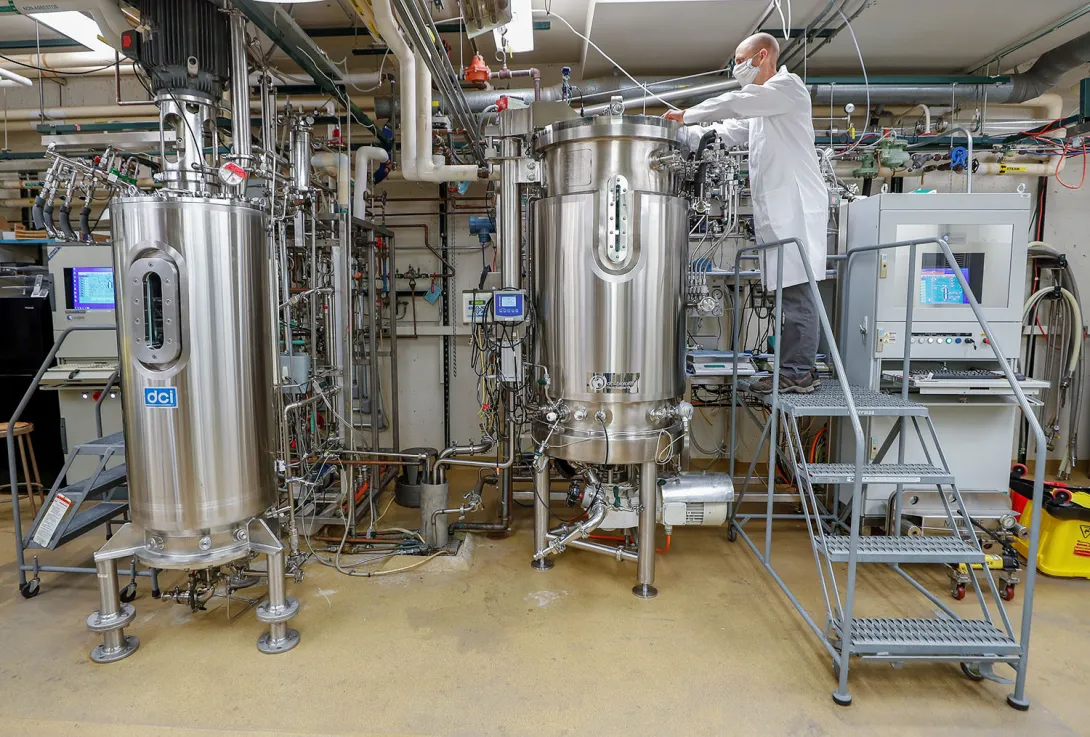
BioMADE, a Manufacturing Innovation Institute sponsored by the U.S. Department of Defense, has recently funded a research project at Georgia Tech entitled ‘Stress Testing Supply Chains and their Ecosystems for Levels of Trust, Security, Resilience, Agility, and Competitiveness’. Headed by faculty members Chip White, Kevin Wang, and Ben Wang, this project will design, develop, and validate a simulation platform to stress test end-to-end bioindustrial manufacturing facilities and supply chains resiliency over multiple risks with the intent of strengthening American competitiveness and creating more robust and resilient supply chains.
Bioindustrial manufacturing uses living organisms such as bacteria, yeast, and algae, to make new products or replacements for current products that are more sustainable and environmentally friendly than current processes.
The simulation platform will be a customizable decision support system that will target disruptions that may be faced by supply chains in the biomanufacturing industry. Understanding the impact on performance of each disruption can lead to supply chain design and operations changes that will produce improved levels of supply chain performance when disruptions occur.
“Although this project is initially focused on supply chain productivity at the product or firm level, it is also intended to provide insight into how investments in the bioindustrial ecosystem can improve bioindustrial supply chain supply chain performance while ensuring the Nation’s public health, defense, and economic security,” said White.
Understanding how performance at the product- and firm-level throughout the industry contributes to industry ecosystem performance, and vice versa, will help to inform both future product- and firm-level supply chain design and the development of the Nation’s bioindustrial ecosystem.
Chip White holds the Schneider National Chair of Transportation and Logistics and is a professor in the Stewart School of Industrial and Systems Engineering. Kan Wang, Ph.D., is a senior research engineer in the Georgia Tech Manufacturing Institute (GTMI). Ben Wang is executive director of GTMI, holds the Gwaltney Chair in Manufacturing Systems and is a professor in both the Stewart School of Industrial and Systems Engineering and the School of Materials Science and Engineering.
News Contact
Walter Rich