
Oct. 18, 2023
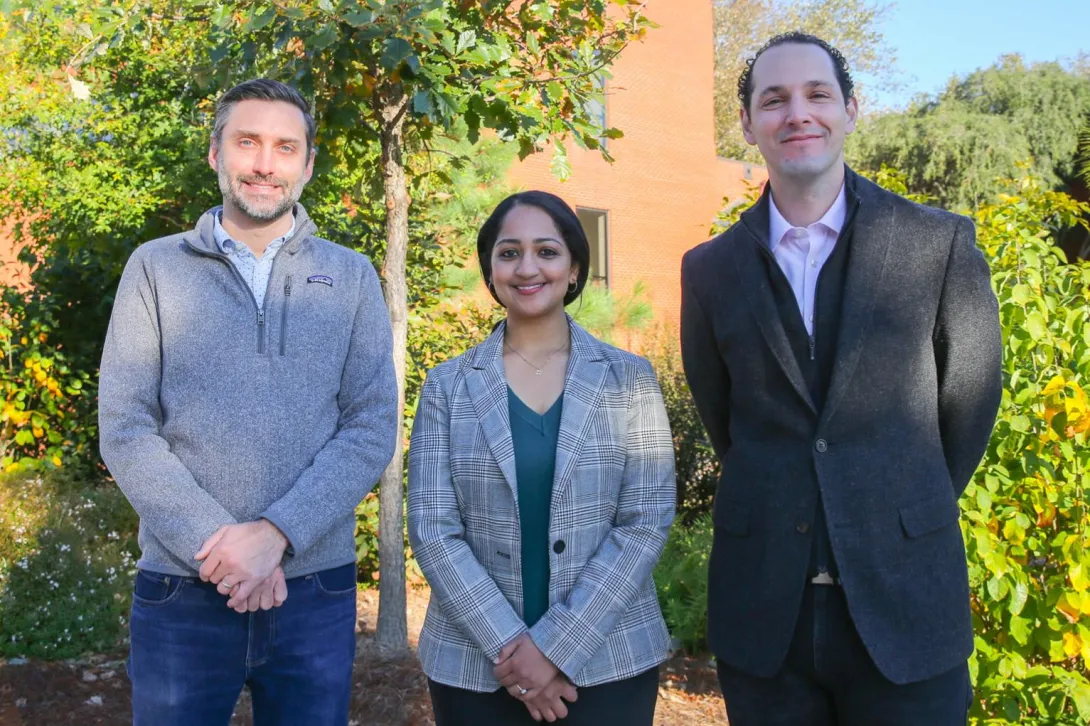
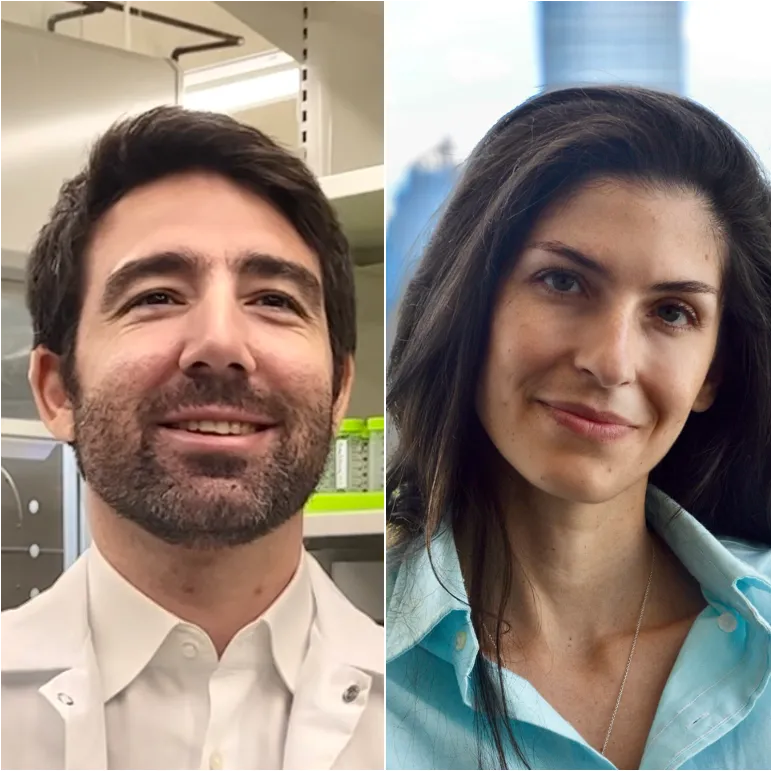
Pictured left to right: Associate Professor Matthew McDowell (ME), Assistant Professor Akanksha Menon (ME), and Assistant Professor Claudio Di Leo (AE).
Akanksha Menon, assistant professor in the George W. Woodruff School of Mechanical Engineering, has been awarded $3 million in funding from the Department of Energy (DOE) as part of their Energy Earthshots™ Initiative to advance clean energy technologies within the decade.
The initiative includes a total of $264 million in funding that will support 11 new Energy Earthshot Research Centers (EERCs) led by DOE National Laboratories and 18 university research teams addressing one or more of the specific Energy Earthshots™ that aim to accelerate affordable and reliable clean energy solutions to mitigate the climate crisis to reach a net-zero carbon goal in 2050.
Menon's project, titled Thermo-Chemo-Mechanical Transformations in Thermal Energy Storage Materials and Composites, will bring together Matthew McDowell, associate professor in the Woodruff School, Claudio Di Leo, assistant professor in the Daniel Guggenheim School of Aerospace Engineering, and Jeff Urban from the Lawrence Berkeley National Laboratory, to provide a fundamental understanding of the coupled thermo-chemo-mechanical phenomena in thermal energy storage (TES) materials that will enable low-cost and stable storage.
News Contact
Chloe Arrington
Jun. 04, 2024
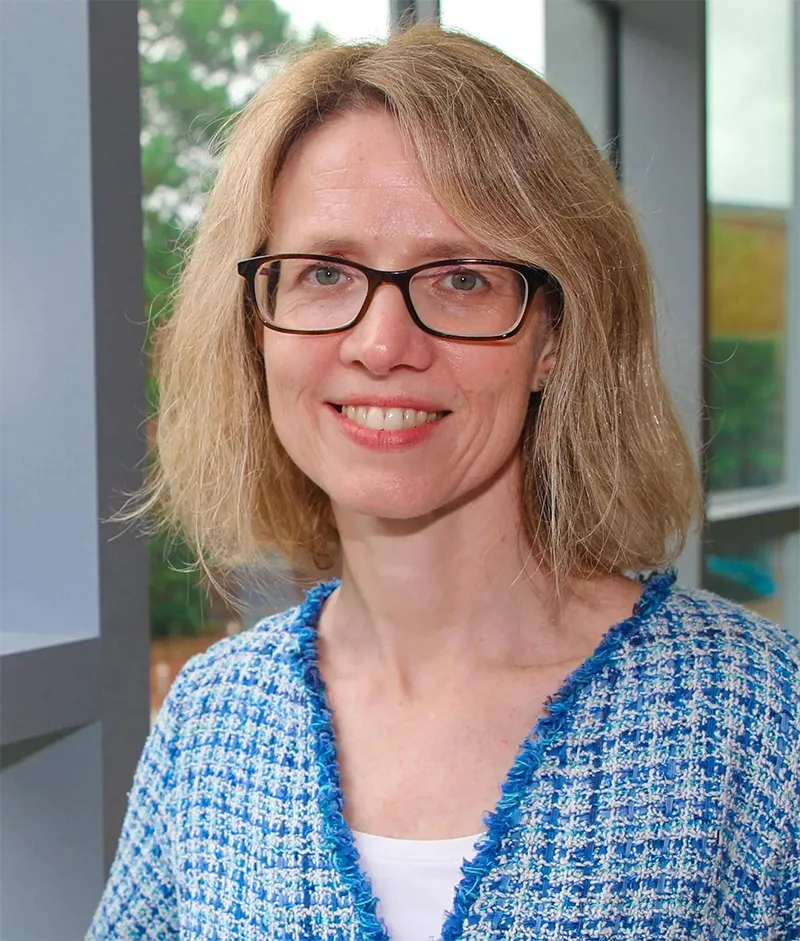
School of Chemical and Biomolecular Engineering (ChBE) faculty member Martha Grover has been named the College’s Thomas A. Fanning Chair in Equity Centered Engineering. Grover was selected for her efforts to educate engineers who approach their work with an intent to close societal gaps of wealth, power, and privilege by ensuring equitable access to opportunity.
The endowed position was established via the Southern Company Foundation by Southern Company, which has been regularly recognized for its efforts to promote an organizational culture that ensures representation of all groups. Fanning recently retired as chairman, president, and CEO.
Grover is a systems engineer whose work addresses the complexity of molecular organization and how it can solve complicated grand challenges. For instance, she has worked with the Department of Energy for 10 years to create processes for separation and immobilization of millions of gallons of liquid nuclear waste at the Hanford Site in Washington and the Savannah River Site in South Carolina. She’s developed real-time process monitoring of nuclear waste slurries to increase throughput and enhance safety.
Grover’s research also focuses on the origins of life and understanding the essential role of diversity and cooperation. Her other work includes modeling and engineering the self-assembly of atoms and small molecules to create larger scale structures and complex functionality.
News Contact
Jason Maderer (maderer@gatech.edu)
College of Engineering, Georgia Tech
Jul. 10, 2024
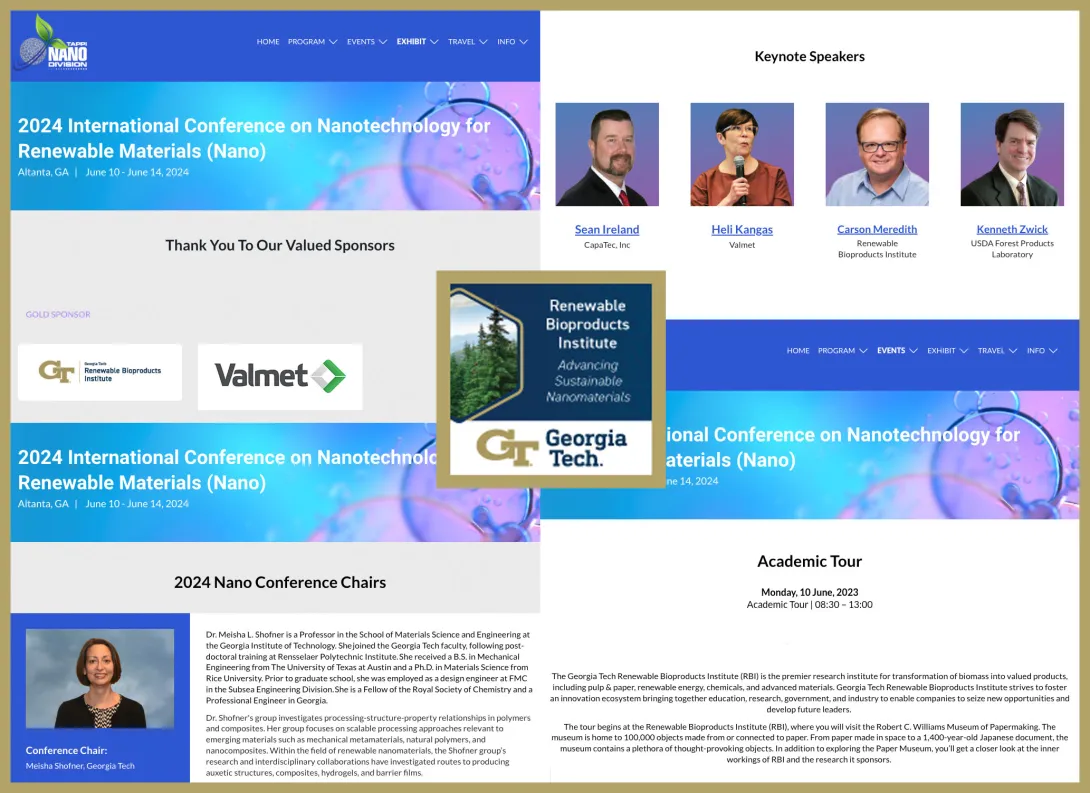
Faculty and students of the Georgia Tech Renewable Bioproducts Institute (RBI) were active participants at the TAPPINano 2024 conference held in Atlanta on June 10-14. The Renewable Bioproducts Institute was a gold sponsor of the annual event that focused on the topic - Building from the Bottom Up: Shaping a Sustainable World using Renewable Nanomaterials.
RBI’s Executive Director Carson Meredith was a keynote speaker at the conference and Meisha Shofner, professor in the School of Materials Science and Engineering served as the conference chair. Conference attendees had an opportunity to participate in an academic tour of RBI that included a tour of the Robert C. Williams Museum of Papermaking, located within the Renewable Bioproducts Institute.
During a session on water treatment and recovery, Zhaohui Tong, associate professor and RBI initiative lead for Waste Valorization in Food-Energy-Water and Yongsheng Chen, Bonnie W. and Charles W. Moorman IV professor in the School of Civil and Environmental Engineering participated and presented their work on nano-triboelectric cellulose membrane sensors for heavy metal ions removal and detection and next generation nano filtration membranes via machine learning-screened novel monomers respectively.
During the lunch presentation on June 11, Meredith presented his keynote on the topic “Cellulose nano materials at the Renewable Bioproducts Institute: Two decades of partnerships and progress.”
Xiaoqing Yu, graduate student at the Woodruff School presented her paper on de-wrinkling for papers coated with cellulose nanocrystal and modified celluloses.
Georgia Tech graduate students and RBI Fellows, Kim Anh Pham, Jonathan Rhone and Javaz Rolle participated in a session on cellulose based coatings, and presented their work on sustainable oxygen barrier coatings for paper based on anionic and cationic cellulose derived materials, cellulose nanocrystal coated glass fiber-epoxy composites: interfacial and tensile properties, and durable bio-based coatings for packaging applications.
Finally, during a session on CNF & MFC Sheets and Films, Fariha Rubaiya, RBI Fellow presented her work on out-of-plane auxecity in cellulose nanofibril films.
Here is a video shared by the TAPPINano 2024 organizers on the highlights of the conference.
News Contact
Priya Devarajan || RBI Communications Program Manager
Aug. 20, 2024
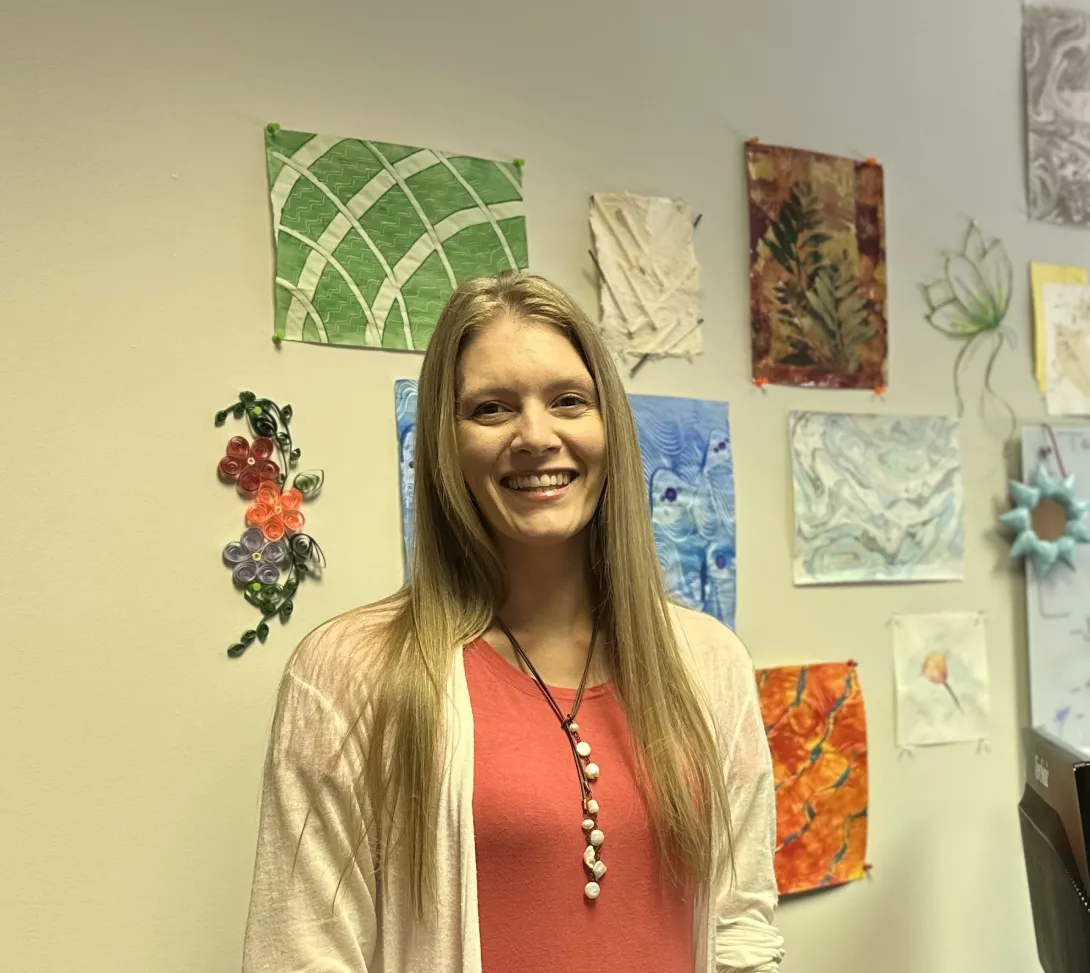
Anna Doll
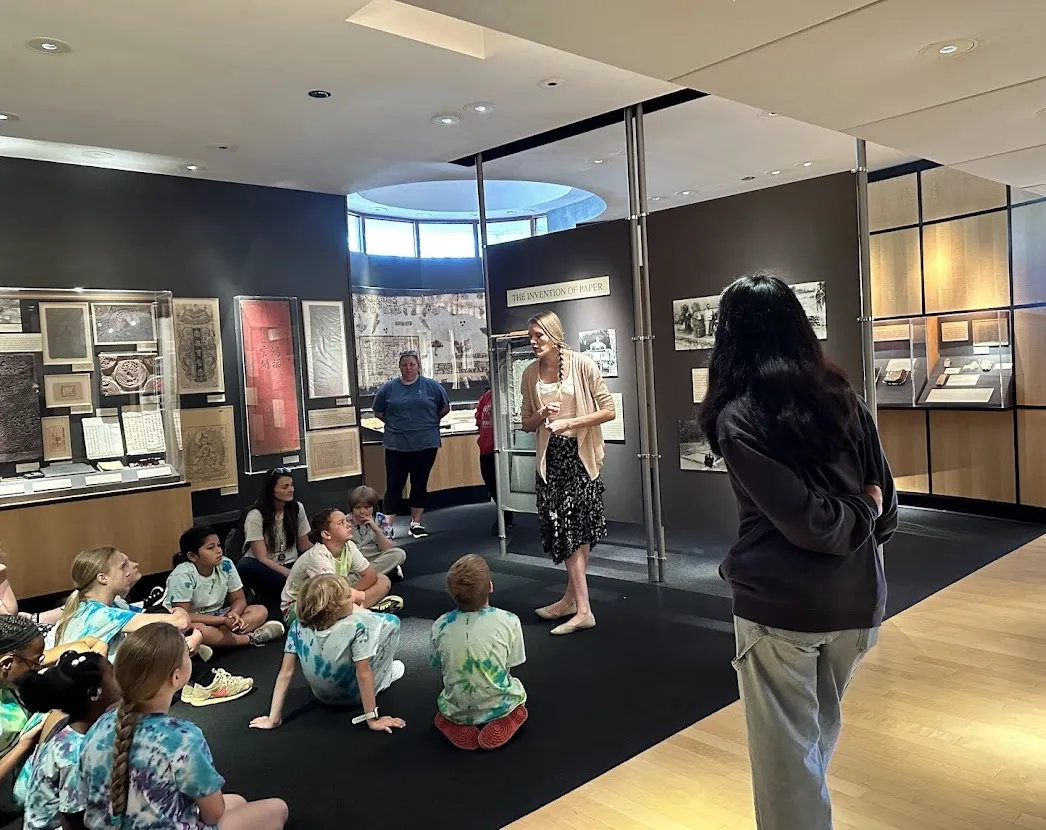
Doll giving a tour of the Robert C. Williams Museum of Papermaking to K-12 Students
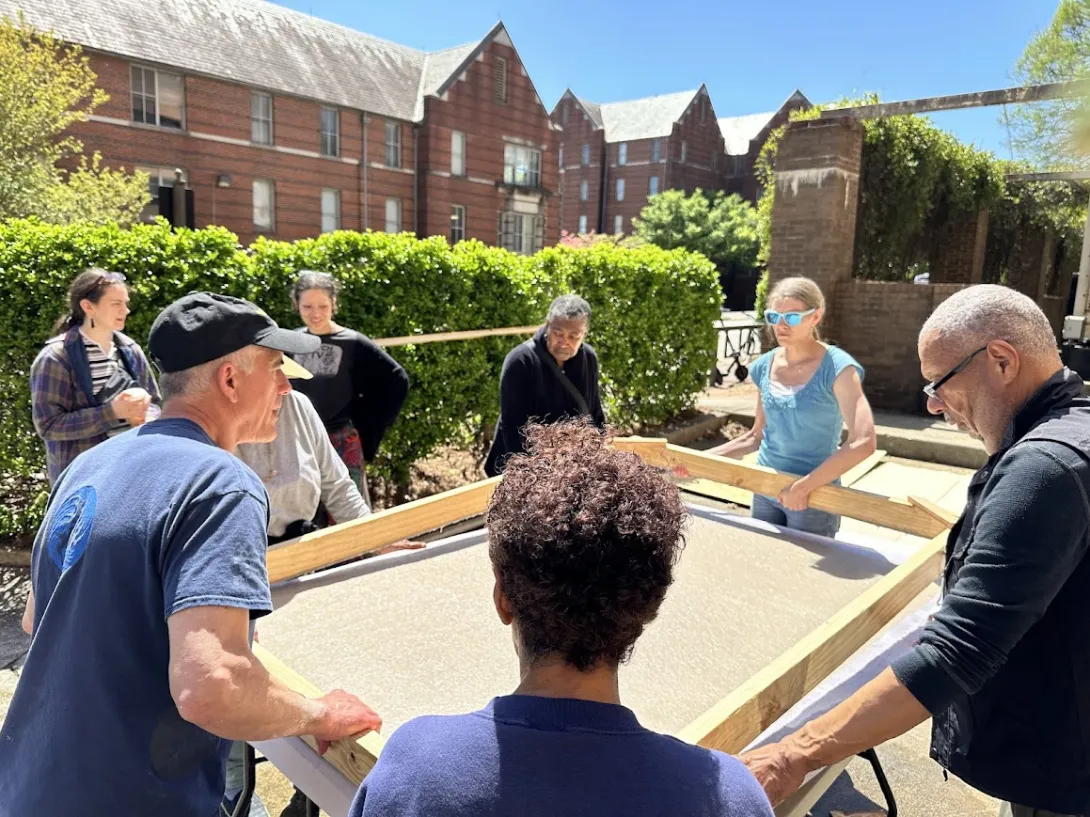
Anna Doll, Tom Balbo and workshop participants during the Big Paper Workshop
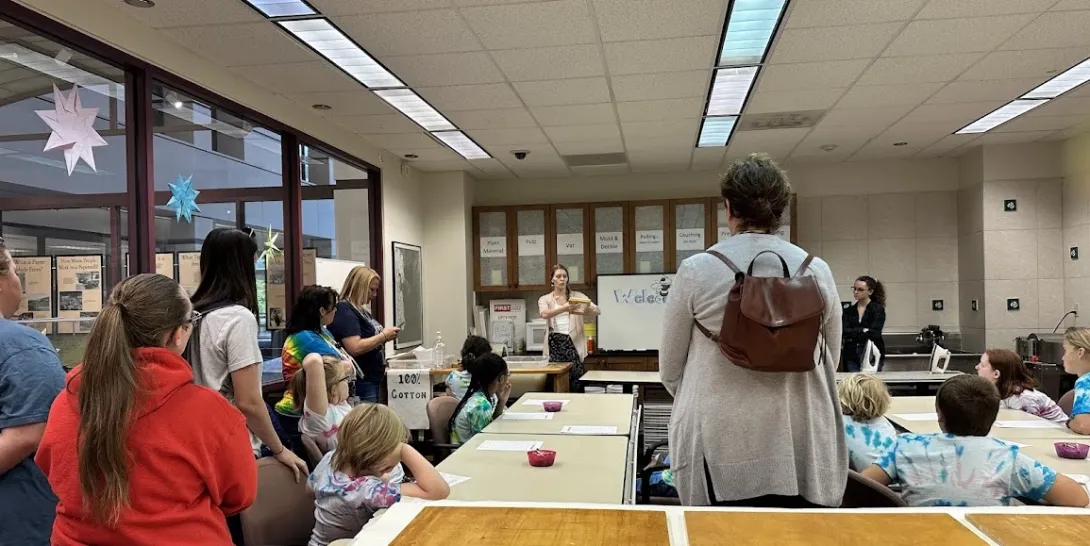
Doll during a paper-making session with K-12 Students
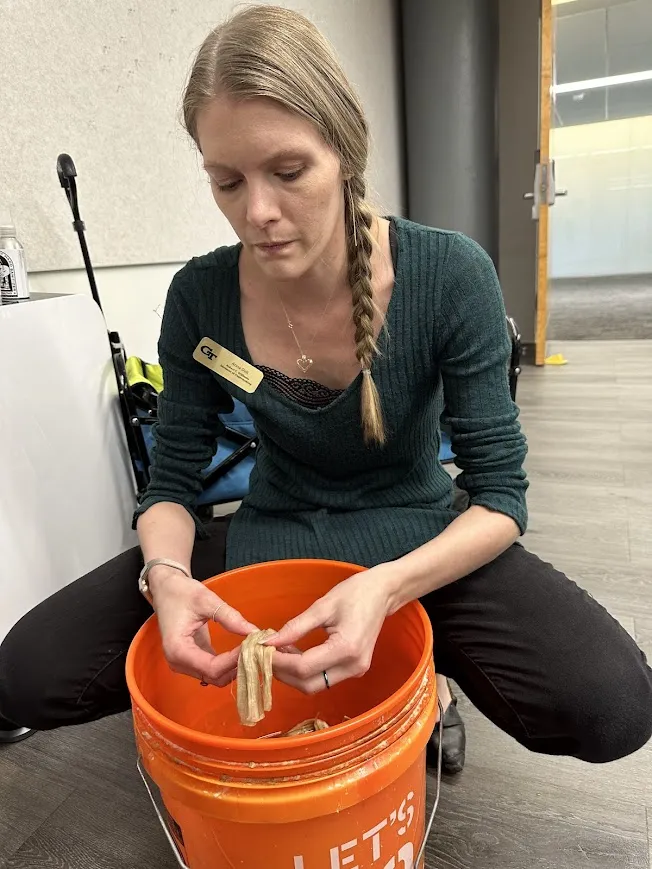
Doll prepping the fiber during Tech's Tactile Thursdays
Anna Doll is the education curator at the Robert C. Williams Museum of Papermaking, located in Georgia Tech’s Renewable Bioproducts Institute. Doll’s day-to-day responsibilities, and the many projects she handles at the museum, bring tremendous value not only to the Georgia Tech community, but also to the papermaking community around the world.
With a degree in art education and a minor in art history, Doll began her career as an elementary school art teacher in Pinellas County, Florida. She then became the director of Museums for the Folk Pottery Museum of Northeast Georgia and the Sautee Nacoochee Cultural Center History Museum and Heritage Site.
In 2019, Doll joined the Robert C. Williams Museum of Papermaking team as its education curator. At the museum, she creates and manages programs that include educational tours, private and public workshops on papermaking, specialized workshops through creative collaborations with artists, collaborations with other campus units for STEAM activities, and community events for kindergarten through senior adult audiences.
"I didn't know a whole lot about papermaking when I first started here," admits Doll, "but I knew how to be an education curator." Her ability to swiftly absorb the history and concept of papermaking and translate it into engaging educational experiences has been instrumental in her success. Below are a few highlights of Doll’s projects.
Museum Tours
Doll’s daily activities include educational tours of the papermaking museum for groups of all ages. The tours range from introducing the papermaking process to elementary and middle school students to sharing the history and heritage of papermaking with adults. In addition, she conducts virtual programs for groups interested in the history of paper and the technological advances of the papermaking process since its invention many centuries ago.
Workshops
Doll is the point of contact for public and private workshop bookings. She also develops the concepts for these sessions, catering to groups with various interests (e.g., Girl Scouts, Boy Scouts, people with disabilities, teachers, artists, college students, and public groups). This spring, Doll’s workshops included Suminagashi, Production Papermaking, Petal Fold Book, Paper Casting, and Magic Box: Jacob’s Ladder.
In addition to conceptualizing and conducting tours and workshops, she designs curricula and other resources involving paper art and science for K-12 teachers to integrate into their art classes.
Big Paper Workshop – Convening Artists, Educators, and Community Members for a Transformative Experience in Papermaking
This spring, Doll and her colleague Jerushia Graham created a communal workshop called “Big Paper.” Offered on multiple days, this project included five college groups from Georgia and Alabama and community groups from metro Atlanta who got to create a large sheet of paper from pulp. Participants beat plant material by hand to prepare the fiber and worked with Tom Balbo, founding director of the Morgan Conservatory, to create a huge 4’x6’ sheet of paper that was mailed back to them once it was dry.
Through her work at the museum, Doll has cultivated relationships with various artists, all of whom collaborate with the museum to conduct workshops and create and showcase art exhibits.
Additional Collaborations Across Campus
Doll partners with other units on campus to create programs. She collaborated with the Georgia Tech Library on a program called “Tech's Tactile Thursdays.” Hosted on the first Thursday of each month, it allows students, faculty, and staff to work on hands-on projects related to paper and provides an opportunity for the largely technology-focused participants to take a break from their routine, relax, and explore their creative side and enhance their well-being.
Doll also has been an active educator at Georgia Tech Science and Engineering Day, which is part of the Atlanta Science Festival. This year, more than 3,000 K-12 students and parents visited Georgia Tech’s campus to engage in hands-on STEAM activities. Representing the museum, Doll worked with families to make prints on a clamshell printing press featuring a custom-designed Buzz image (designed by Doll) on a postcard for the kids to take home. The activity showcased the rich history of the printing press and modern technology with a photopolymer printing plate.
Through these diverse projects and initiatives at the museum, Doll continues to make a difference in the world of papermaking. Looking ahead, she hopes to expand the museum’s educational initiatives as well as the education team and its resources, and she envisions broadening the museum’s reach and impact by offering free programs to schools through grants. She is also working with Georgia Tech faculty and researchers on museum research into the art of nano cellulose and plans to establish a paper and natural dye garden for teaching.
News Contact
Priya Devarajan | RBI Communications Program Manager
Jul. 30, 2024
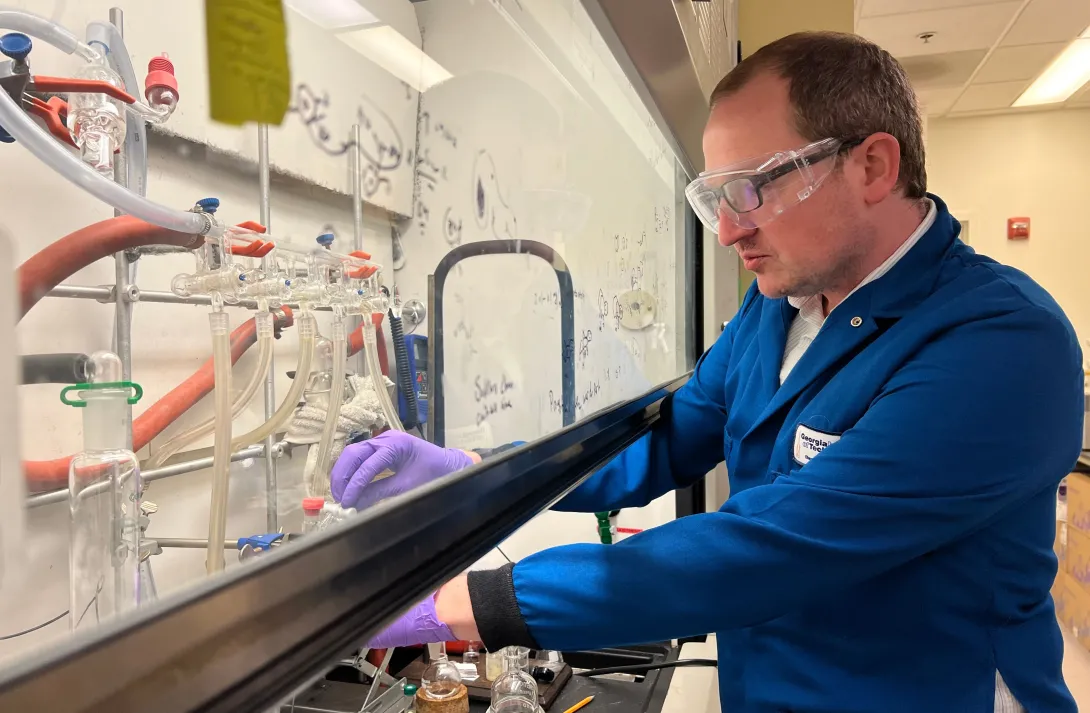
Will Gutekunst, associate professor in the School of Chemistry and Biochemistry at Georgia Tech, co-leads the interface of polymer science and wood-based materials initiative along with Blair Brettmann at the Renewable Bioproducts Institute (RBI). Gutekunst’s research explores the design of novel monomers for the design of recyclable polymers for a circular economy, fluxional materials, and 3D-printable ceramics.
Below is a brief Q&A with Gutekunst where he discusses his research focus areas and how they influence the interface of polymer science and wood-based materials initiative at Georgia Tech.
- What is your field of expertise and at what point in your life did you first become interested in this area?
My graduate training is in synthetic organic chemistry, and I focused on basic science problems at that time. Toward the end of my Ph.D., I became interested in applying my skill set to new research directions that could have a more direct impact on society. This led me to pursue postdoctoral research in polymer chemistry, which has been a source of inspiration ever since.
- What questions or challenges sparked your current renewable bioproducts research? What are the big issues facing your research area right now?
My first project in this space was initiated shortly after I arrived at Georgia Tech through RBI funding opportunities, and it has continued to be a theme ever since. One of the critical problems in my research is identifying monomers that can polymerize and depolymerize on command. This involves balancing the driving force of polymerization (enthalpy) with the unfavorable process of confining multiple monomers to a single chain (entropy). While we are making considerable progress in engineering appropriate polymerization enthalpies into monomers, the entropic side of the problem remains a significant challenge.
- What interests you the most in leading the research initiative on the interface of polymer science and wood-based materials? Why is your initiative important to the development of Georgia Tech’s renewable bioproducts research strategy?
The most exciting aspect of the initiative is the ability to bring together multiple strengths of Georgia Tech to work on a central goal. Solving problems at this interface involves the collaborative efforts of researchers in chemistry, processing, separations, and even data science. Identifying and gathering synergistic teams is critical to address this problem and additional goals in renewable bioproducts.
- What are the broader global and social benefits of the research you and your team conduct on the interface of polymer science and wood-based materials?
The goal of this research is to develop materials that are more recyclable and are derived from abundant feedstocks, which are two big problems rolled into one. The eventual product of this research will be access to materials that are more compatible with the environment while also drastically reducing the waste output of society.
- What are your plans for engaging a wider Georgia Tech faculty pool with the broader renewable bioproducts community?
Through the merger of the Georgia Tech Polymer Network with RBI, we can start to forge collaborations across a broader swath of the Georgia Tech community. This includes the organization of workshops, making connections between different student groups, and the development of center grants to tackle grand challenges in the field.
- What are your hobbies?
In my free time, I enjoy reading (non-science), pottery, and hiking.
- Who has influenced you the most?
My Ph.D. advisor (Phil Baran) and my postdoctoral advisor (Craig Hawker) both stand out in their impact on my scientific career. Through their guidance, I learned how to properly think about science and to always look ahead for the next big problem.
News Contact
Priya Devarajan | RBI Communications Manager
Jul. 23, 2024
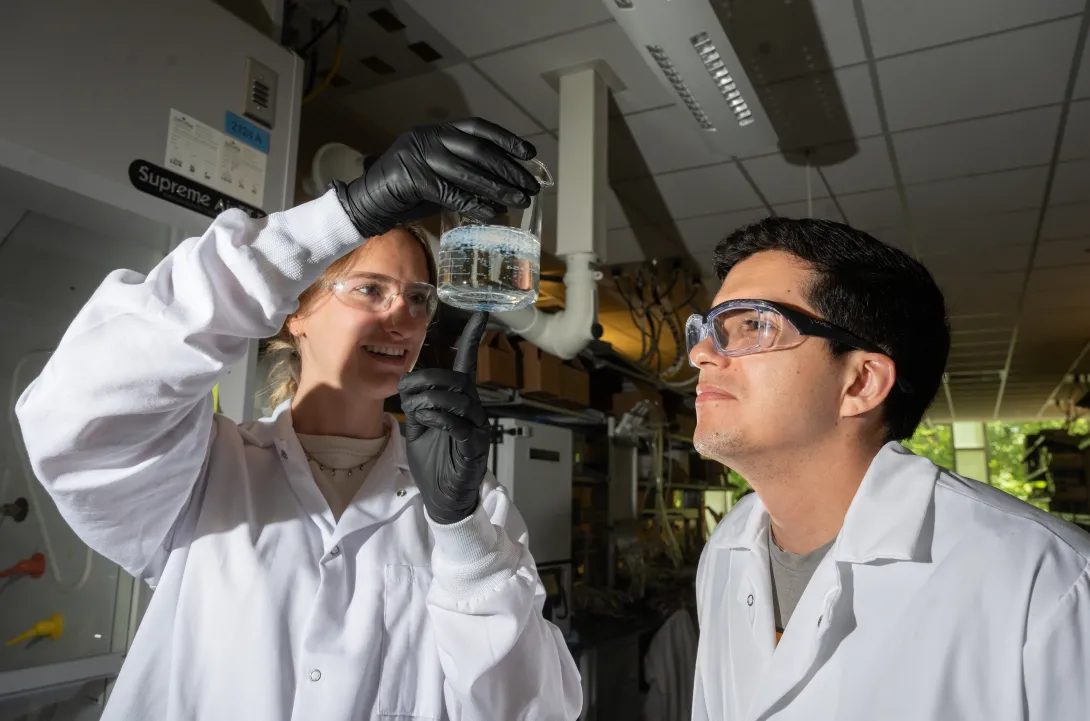
From keeping warm in the winter to doing laundry, heat is crucial to daily life. But as the world grapples with climate change, buildings’ increasing energy consumption is a critical problem. Currently, heat is produced by burning fossil fuels like coal, oil, and gas, but that will need to change as the world shifts to clean energy.
Georgia Tech researchers in the George W. Woodruff School of Mechanical Engineering (ME) are developing more efficient heating systems that don’t rely on fossil fuels. They demonstrated that combining two commonly found salts could help store clean energy as heat; this can be used for heating buildings or integrated with a heat pump for cooling buildings.
The researchers presented their research in “Thermochemical Energy Storage Using Salt Mixtures With Improved Hydration Kinetics and Cycling Stability,” in the Journal of Energy Storage.
Reaction Redux
The fundamental mechanics of heat storage are simple and can be achieved through many methods. A basic reversible chemical reaction is the foundation for their approach: A forward reaction absorbs heat and then stores it, while a reverse reaction releases the heat, enabling a building to use it.
ME Assistant Professor Akanksha Menon has been interested in thermal energy storage since she began working on her Ph.D. When she arrived at Georgia Tech and started the Water-Energy Research Lab (WERL), she became involved in not only developing storage technology and materials but also figuring out how to integrate them within a building. She thought understanding the fundamental material challenges could translate into creating better storage.
“I realized there are so many things that we don't understand, at a scientific level, about how these thermo-chemical materials work between the forward and reverse reactions,” she said.
The Superior Salt
The reactions Menon works with use salt. Each salt molecule can hold a certain number of water molecules within its structure. To instigate the chemical reaction, the researchers dehydrate the salt with heat, so it expels water vapor as a gas. To reverse the reaction, they hydrate the salt with water, forcing the salt structure’s expansion to accommodate those water molecules.
It sounds like a simple process, but as this expansion/contraction process happens, the salt gets more stressed and will eventually mechanically fail, the same way lithium-ion batteries only have so many charge-discharge cycles.
“You can start with something that's a nice spherical particle, but after it goes through a few of these dehydration-hydration cycles, it just breaks apart into tiny particles and completely pulverizes or it overhydrates and agglomerates into a block,” Menon explained.
These changes aren’t necessarily catastrophic, but they do make the salt ineffective for long-term heat storage as the storage capacity decreases over time.
Menon and her student, Erik Barbosa, a Ph.D. student in ME, began combining salts that react with water in different ways. After testing six salts over two years, they found two that complemented each other well. Magnesium chloride often fails because it absorbs too much water, whereas strontium chloride is very slow to hydrate. Together, their respective limitations can mutually benefit each other and lead to improved heat storage.
“We didn't plan to mix salts; it was just one of the experiments we tried,” Menon said. “Then we saw this interactive behavior and spent a whole year trying to understand why this was happening and if it was something we could generalize to use for thermal energy storage.”
The Energy Storage of the Future
Menon is just beginning with this research, which was supported by a National Science Foundation (NSF) CAREER Award. Her next step is developing the structures capable of containing these salts for heat storage, which is the focus of an Energy Earthshots project funded by the U.S. Department of Energy’s (DOE) Office of Basic Energy Sciences.
A system-level demonstration is also planned, where one solution is filling a drum with salts in a packed bed reactor. Then hot air would flow across the salts, dehydrating them and effectively charging the drum like a battery. To release that stored energy, humid air would be blown over the salts to rehydrate the crystals. The subsequently released heat can be used in a building instead of fossil fuels. While initiating the reaction needs electricity, this could come from off-peak (excess renewable electricity) and the stored thermal energy could be deployed at peak times. This is the focus of another ongoing project in the lab that is funded by the DOE’s Building Technologies Office.
Ultimately, this technology could lead to climate-friendly energy solutions. Plus, unlike many alternatives like lithium batteries, salt is a widely available and cost-effective material, meaning its implementation could be swift. Salt-based thermal energy storage can help reduce carbon emissions, a vital strategy in the fight against climate change.
“Our research spans the range from fundamental science to applied engineering thanks to funding from the NSF and DOE,” Menon said. “This positions Georgia Tech to make a significant impact toward decarbonizing heat and enabling a renewable future.”
News Contact
Tess Malone, Senior Research Writer/Editor
tess.malone@gatech.edu
May. 22, 2024
Students in the Pulp and Paper Certification Program at Georgia Tech had real-world experiences outside the classroom this spring. Over 30 students taking the Emerging Technologies in the Manufacture of Forest Bioproducts course (CHBE/ME 4730/8803) took field trips to Greif’s Austell location and GranBio’s Thomaston facility in Georgia. The course is taught by Chris Luettgen, professor of the practice and initiative lead for the process efficiency & intensification of pulp paper packaging & tissue manufacturing initiative at Georgia Tech's Renewable Bioproducts Institute.
At the Sweetwater Mill, one of Greif’s three paper mills in Austell, students saw the pressure cylinder machine, a pre-coater that smoothens the board for printability, and a curtain coater that makes value-added products such as one-sided chipboard packaging for retail displays. The mill runs 100% recycled fiber into stock cores, gypsum board liners, and chipboard packaging. The tour included converting the machine roll (called a parent roll) into smaller rolls that will be further converted at downstream customers’ locations.
At the GranBio’s facility in Thomaston, Tech students were able to see a biorefinery at work where a wide variety of lignocellulosic feedstocks, including wood chips, were getting converted into multiple bioproducts. They had a firsthand look at the SEW (sulfur dioxide, ethanol, and water) process, which was quite different from the traditional kraft pulping process. It creates a highly acidic mush, with a high pH, instead of fiber, which could then be used to make biofuels and other value-added products. In addition, they were able to discuss the recent DOE award to scale their process to a 100 ton/day biomass to Sustainable Aviation Fuel (SAF). The company explained that they were still in site selection and would be hiring engineers in the near future.
About the Pulp and Paper Certification
The College of Engineering at Georgia Tech offers a certificate program in pulp and paper. The certificate consists of 12 credit hours focused on forest bioproduct topics, including lecture- and laboratory-based courses. Since its inception in 1990, more than 100 students have completed their certification.
The foundational course in the program introduces students to the history of pulp and paper manufacturing from its origins and covers the forest bioeconomy, wood structure, chemistry, and fiber morphology, and goes through the unit operations utilized to transform lignocellulosic feedstocks into value-added products, including chemical and mechanical pulping, recycled fiber operations, chemical recovery, bleaching, stock preparation, and papermaking.
The emerging technologies course focuses on the future of bioproducts industries. Case studies on the use of biomass in the production of value-added products are covered. Included are fluff pulp and dissolving pulps, alternative fibers, specialty papers, packaging, and printed electronics, biorefining technologies, nanocellulose and bio composites, and renewable polymers.
The pulp and paper laboratory course introduces students to pulping operations, bleaching, hand sheet formation, pulp and paper physical properties, and recycled fiber. The final course allows students to pursue research on special problems under supervision from an RBI-affiliated faculty.
Students in the program can demonstrate their proficiency in pulp and paper science and engineering and are in high demand for their expertise.
News Contact
Priya Devarajan || RBI Communications Program Manager
May. 22, 2024
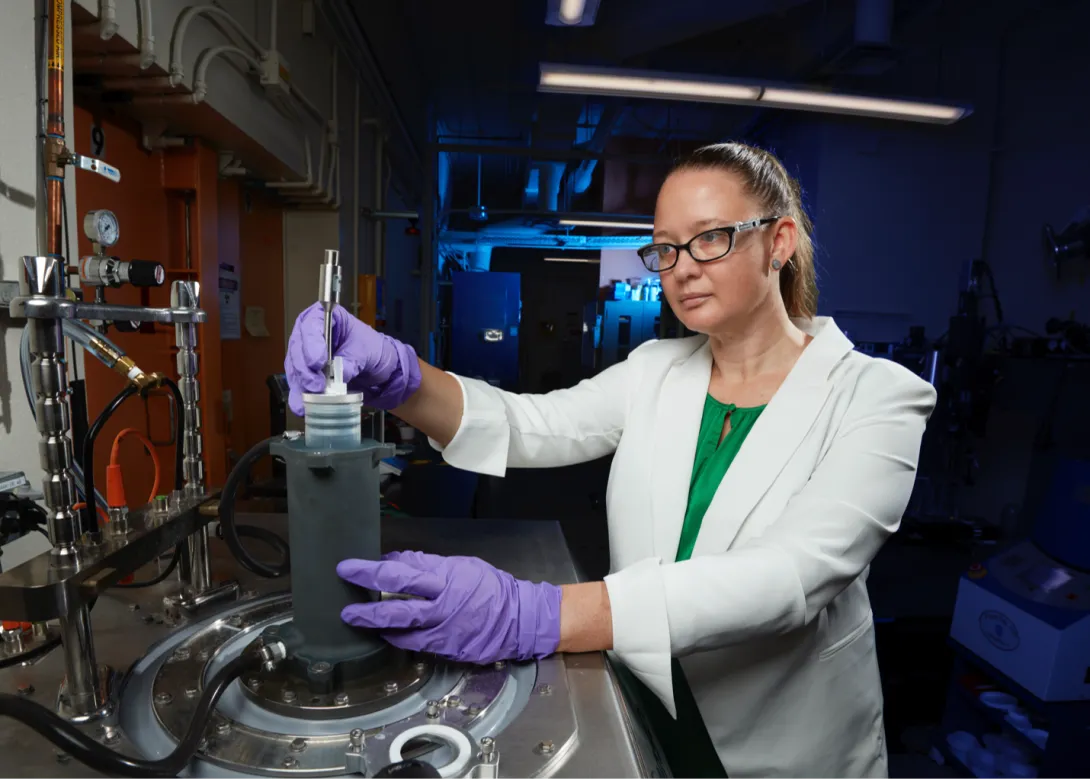
Blair Brettmann, Associate Professor at Georgia Tech (Photo credit: Garry McLeod/Lawrence Livermore National Lab)
Blair Brettmann, associate professor, Solvay Faculty Fellow, and Raymond and Stephanie Myers Faculty Fellow in the School of Chemical and Biomolecular Engineering, co-leads the interface of polymer science and wood-based materials initiative with Will Gutekunst at Georgia Tech’s Renewable Bioproducts Institute.
Brettmann’s current research focuses on developing technologies that enable multicomponent, rapidly customizable product design, with a specific focus on polymer systems.
Brettmann received her Ph.D. in chemical engineering at MIT in 2012 working with the Novartis-MIT Center for Continuous Manufacturing under Bernhardt Trout. Later, she worked on polymer-based wet coatings and dispersions for various applications at Saint-Gobain Ceramics and Plastics. She went on to serve as a postdoctoral researcher in the Institute for Molecular Engineering at the University of Chicago with Matthew Tirrell. Below is a brief Q&A with Brettmann in which she discusses her research focus areas and how they influence the interface of polymer science and wood-based materials research at Georgia Tech.
- What is your field of expertise and at what point in your life did you first become interested in this area?
My expertise is in polymer science and materials design for manufacturability. I got excited about this area after my Ph.D. when I worked for Saint-Gobain and saw firsthand the challenges of bringing new products to market, especially those made of complex mixtures of materials.
- What questions or challenges sparked your current renewable bioproducts research? What are the big issues facing your research area right now?
Sustainability of materials and process is a top priority right now across many industries, and renewable bioproducts research is helping to improve this. But it is still tough to design and scale up products made with these materials because of the heterogeneity of the raw bio-based materials and recycled materials that now serve as the raw materials. Engineers are essential to design systems that can be robust despite the heterogeneities and still produce consistent, high-quality products.
- What interests you the most in leading the research initiative on the interface of polymer science and wood-based materials? Why is your initiative important to the development of Georgia Tech’s Renewable Bioproducts research strategy?
One of the most promising directions to decrease the impact of plastics on the environment is to replace some of the synthetic plastic materials with natural products, such as cellulose from wood. My initiative aims to build better connections between polymer scientists working to design improved plastics and experts in bio-based materials to seed research that can work toward this goal. Polymers also serve as important tools to improve the properties of cellulose and wood-based products and can enable new materials with increased functionality that still have sustainable materials at their core.
- What are the broader global and social benefits of the research you and your team conduct on the interface of polymer science and wood-based materials?
We work to improve the sustainability of material products while addressing specific challenges related to manufacturing and scale-up, which can speed up the adoption of these more sustainable products in industry. We take a wide view of the problem and have even worked on a project to understand consumer choices in recycling: If people don’t recycle the material, our efforts to make recyclable products will not have an impact!
- What are your plans for engaging a wider Georgia Tech faculty pool with the broader renewable bioproducts community?
Using symposia, social events, and student-centered networking, I will bring the broad Georgia Tech Polymer Network community together with the RBI community.
- What are your hobbies?
Water polo and swimming. I train with the Atlanta Rainbow Trout, who practice at the Georgia Tech pool.
- Who has influenced you the most?
I’m constantly learning from people around me!
News Contact
Priya Devarajan || RBI Communications Program Manager
May. 15, 2024
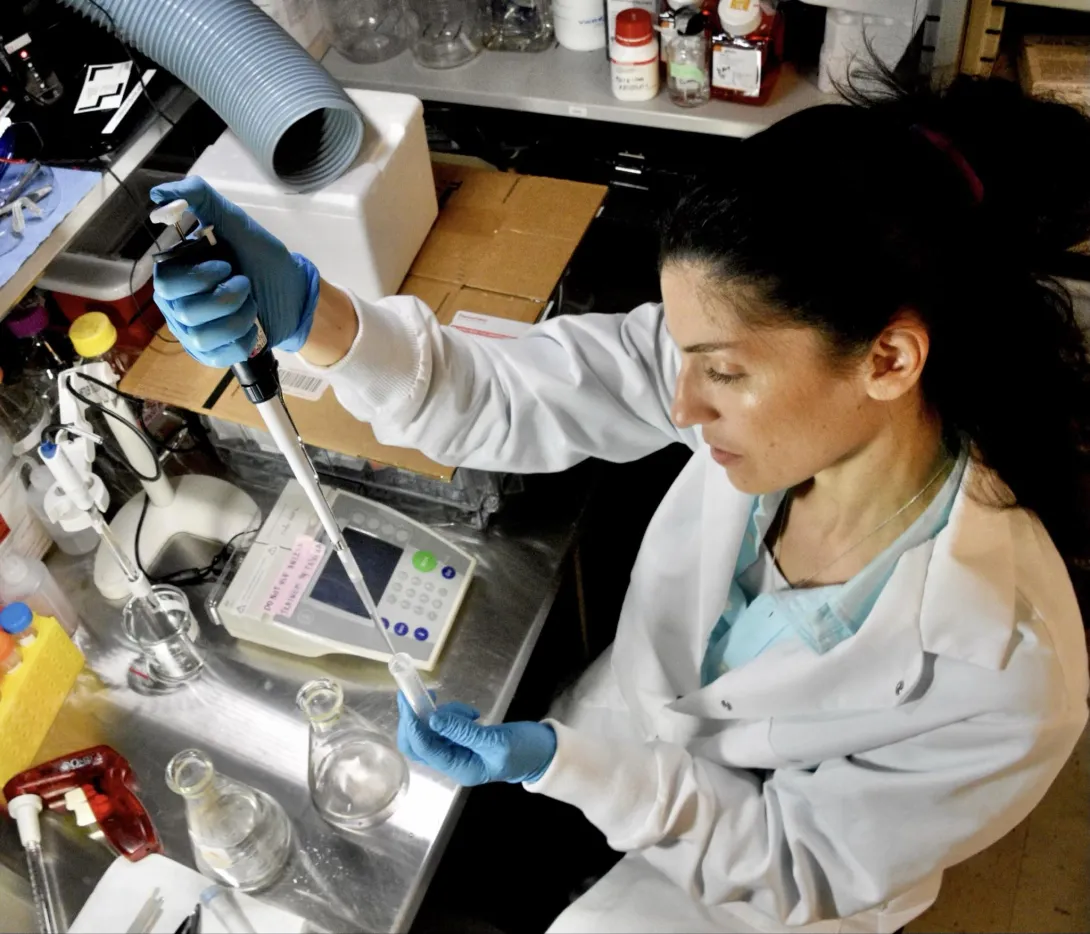
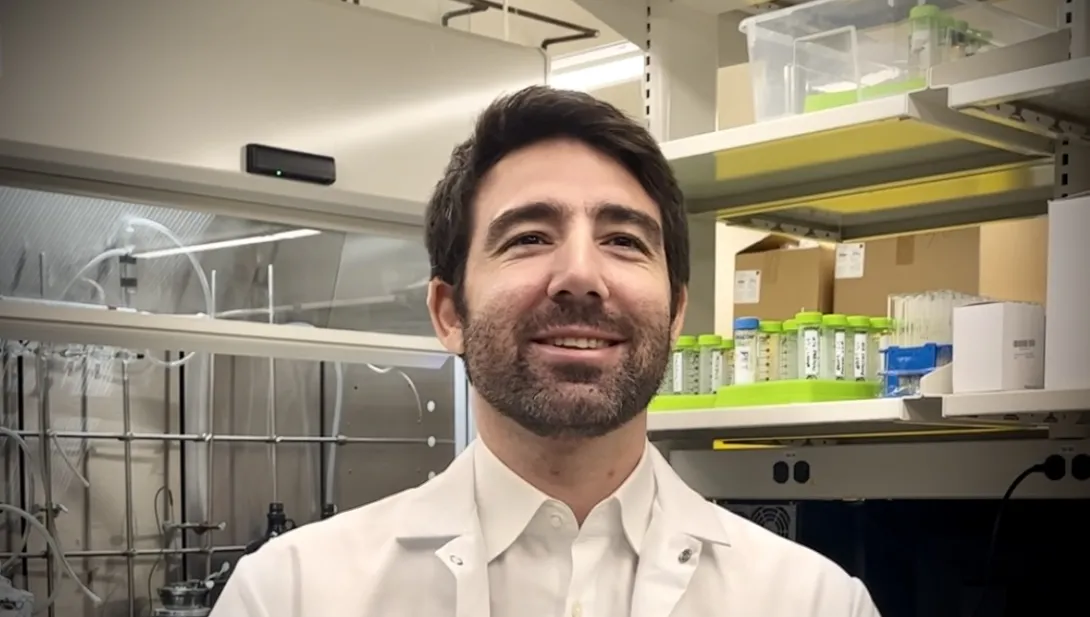

When looking for an environmentally friendly and cost-effective way to clean up contaminated water and soil, Georgia Tech researchers Patricia Stathatou and Christos Athanasiou turned to yeast. A cheap byproduct from fermentation processes — e.g., something your local brewery discards in mass quantities after making a batch of beer — yeast is widely known as an effective biosorbent. Biosorption is a mass transfer process by which an ion or molecule binds to inactive biological materials through physicochemical interactions.
When they initially studied this process, Stathatou and Athanasiou found that yeast can effectively and rapidly remove trace lead — at challenging initial concentrations below one part per million — from drinking water. Conventional water treatment methods either fail to eliminate lead at these low levels or result in high financial and environmental costs to do so. In a paper published today in RSC Sustainability, the researchers show how this process can be scaled.
“If you put yeast directly into water to clean it, you will need an additional treatment step to remove the yeast from the water afterward,” said Stathatou, a research scientist at the Renewable Bioproducts Institute and an incoming assistant professor at the School of Chemical and Biomolecular Engineering. “To implement this process at scale without requiring additional separation steps, the yeast cells need a housing.”
“Additionally, because yeast is abundant— in some cases, brewers even pay companies to haul it away as a waste byproduct — this process gives the yeast a second life,” said Athanasiou, an assistant professor in the Daniel Guggenheim School of Aerospace Engineering. “It’s a plentiful low, or even negative, value resource, making this purification process inexpensive and scalable.”
To develop a housing for the yeast, Stathatou and Athanasiou partnered with MIT chemical engineers Devashish Gokhale and Patrick S. Doyle. Gokhale and Stathatou are the lead authors of this new study that demonstrates the yeast water purification process’s scalability.
“We decided to make these hollow capsules— analogous to a multivitamin pill — but instead of filling them up with vitamins, we fill them up with yeast cells,” Gokhale said. “These capsules are porous, so the water can go into the capsules and the yeast are able to bind all of that lead, but the yeast themselves can’t escape into the water.”
The yeast-laden capsules are sufficiently large, about half a millimeter in diameter, for easy separation from water by gravity. This means they can be used to make packed-bed bioreactors or biofilters, with contaminated water flowing through these hydrogel-encased yeast cells and coming out clean.
Stathatou and Athanasiou envision using these hydrogel yeast capsules in small biofilters consumers can put on their kitchen faucets, or biofilters large enough to fit municipal or industrial wastewater treatment systems. But to enable such scalability, the yeast-laden capsules’ ability to withstand the force generated by water flowing inside such systems needed to be studied as well.
To determine this, Athanasiou tested the capsules’ mechanical robustness, which is how strong and sturdy they are in the presence of waterflow forces. He found they can withstand forces like those generated by water running from a faucet, or even flows like those in water treatment plants that serve a few hundred homes. “In previous attempts to scale up biosorption with similar approaches, lack of mechanical robustness has been a common cause of failure,” Athanasiou said. “We wanted to make sure our work addressed this issue from the very beginning to ensure scalability.”
“After assessing the mechanical robustness of the yeast-laden capsules, we made a prototype biofilter using a 10-ml syringe,” Stathatou explained. “The initial lead concentration of water entering the biofilter was 100 parts per billion; we demonstrated that the biofilter could treat the contaminated water, meeting EPA drinking water guidelines, while operating continuously for 12 days.”
The researchers hope to identify ways to isolate and collect specific contaminants left behind in the filtering yeast, so those too can be used for other purposes.
“Apart from lead, which is widely used in systems for energy generation and storage, this process could be used to remove and recover other metals and rare earth elements as well,” Athanasiou said. “This process could even be useful in space mining or other space applications.”
They also would like to find a way to keep reusing the yeast. “But even if we can’t reuse yeast indefinitely, it is biodegradable,” Stathatou noted. “It doesn’t need to be put into an industrial composter or sent to a landfill. It can be left on the ground, and the yeast will naturally decompose over time, contributing to nutrient cycling.”
This circular approach aims to reduce waste and environmental impact, while also creating economic opportunities in local communities. Despite numerous lead contamination incidents across the U.S., the team’s successful biosorption method notably could benefit low-income areas historically burdened by pollution and limited access to clean water, offering a cost-effective remediation solution. “We think there’s an interesting environmental justice aspect to this, especially when you start with something as low-cost and sustainable as yeast, which is essentially available anywhere,” Gokhale says.
Moving forward, Stathatou and Athanasiou are exploring other uses for their hydrogel-yeast purification method. The researchers are optimistic that, with modifications, this process can be used to remove additional inorganic and organic contaminants of emerging concern, such as PFAS — or “forever” chemicals — from the water or the ground.
Citation: Devashish Gokhale, Patritsia M. Stathatou, Christos E. Athanasiou, and Patrick S. Doyle, “Yeast-laden Hydrogel Capsules for Scalable Trace Lead Removal from Water,” RSC Sustainability. DOI:
Funding: Patricia Stathatou was supported by funding from the Renewable Bioproducts Institute at Georgia Tech. Devashish Gokhale was supported by the Rasikbhai L. Meswani Fellowship for Water Solutions and the MIT Abdul Latif Jameel Water and Food Systems Lab (J-WAFS).
News Contact
Shelley Wunder-Smith
Director of Research Communications
Georgia Institute of Technology
Apr. 11, 2024
Faculty Fellow Sofia Perez-Guzman (third from right) joins SCoRE staff on a site visit to the ArtsXchange in East Point to explore mutual interests related to community resiliency (April 5, 2024)
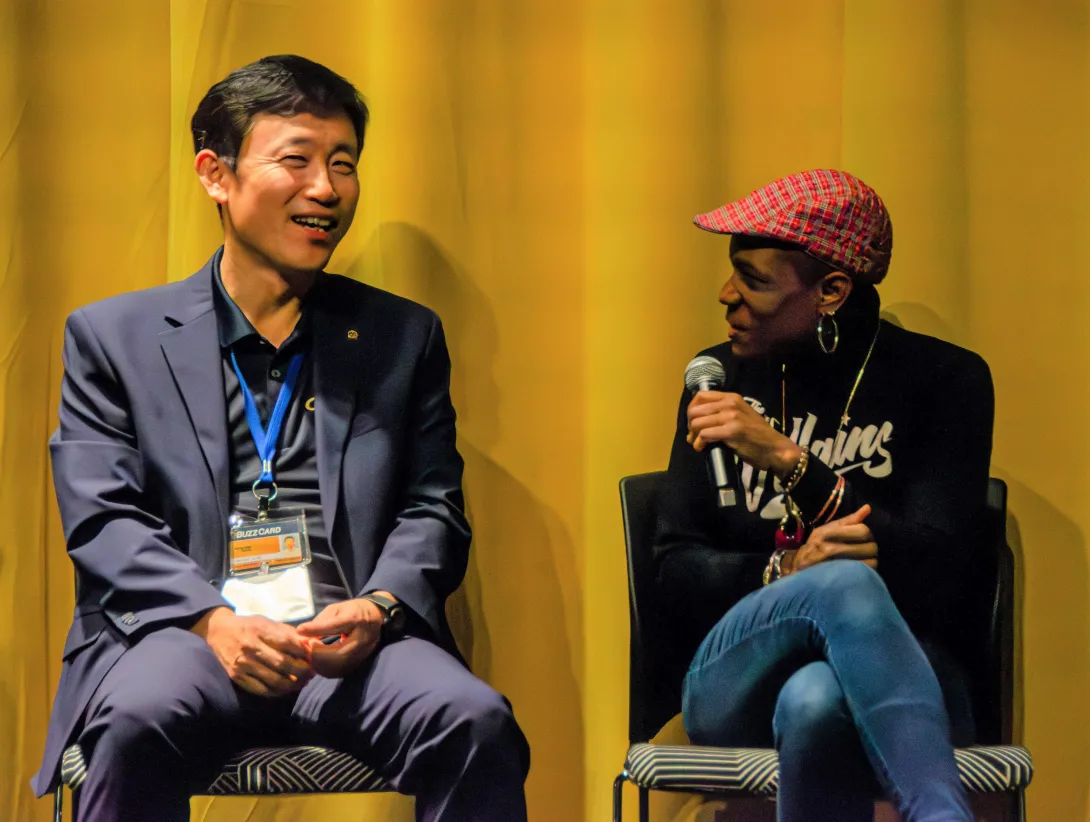
Jung-ho (John) Lewe (left) of the Georgia Tech Aerospace Systems Design Laboratory at Georgia Tech and Erica Holloman-Hill (right), a SCoRE adviser and chief envisioning officer/chief scientific officer of Ayika Solutions, a family-run environmental consulting firm that uplifts community-based climate change strategies, discuss their new partnership at the Georgia Tech Sustainability Showcase (March 2024) in a panel focused on community-engaged research, curated by the Faculty Fellows Program.
The Center for Sustainable Communities Research and Education (SCoRE — formerly SLS), in collaboration with the Strategic Energy Institute (SEI), the Brook Byers Institute for Sustainable Systems (BBISS), the Renewable Bioproducts Institute (RBI), and the Social Equity and Environmental Engineering Lab (SEEEL), launched the Energy Equity, Environmental Justice, and Community Engagement Faculty Fellows Program in November 2023. In this program, Georgia Tech faculty learn how to work with communities, bringing together their academic knowledge and the local expertise of communities that has been developed through lived experience and long-standing social action.
The inaugural fellows include 24 Georgia Tech faculty from five Colleges, as well as a faculty colleague from Georgia Gwinnett College and a partner from the Southeast Energy Efficiency Alliance, who are building relationships with each other and with community partners in the areas of energy equity and environmental justice. Since the launch, they have engaged in a wide array of events, including community benefit and development workshops, site visits to community-based organizations across the Atlanta region, and university-community gatherings and symposia.
The program is expected to result in both collective and individual deliverables. Collective deliverables include the development of network mapping tools to facilitate collaborations inside and outside Georgia Tech, a set of principles for conducting community-engaged research, a reflective essay on faculty training for community-engaged research, and ideas for future activities to facilitate university-community and interdisciplinary team formation. Fellows individually determine their deliverables, which run the gamut from exploring partnerships for a specific research project to writing a societal impact statement for a tenure package.
More broadly, the program aims to grow Georgia Tech’s collaborative expertise in community-engaged research by forming a supportive network of faculty interested in community-engaged sustainability research and education.
Faculty Affiliate: Patritsia Stathatou, Research Scientist, Renewable Bioproducts Institute, Georgia Tech
Sustainable energy sources and environmental justice go hand in hand. Although such technologies aim to minimize environmental impacts of modern societies, without considering issues of environmental justice and energy equity, these solutions can inadvertently perpetuate disparities by disproportionately benefiting certain communities while harming others. Bridging the gap between technological advancements and community benefits is paramount to creating an equitable energy future for all.
This program provides a unique opportunity to explore these interconnections, enhancing my knowledge in integrating community values and concerns into my research on alternative fuels and renewable energy sources. I am particularly excited about the hands-on approach of the program, which emphasizes listening sessions and workshops, allowing fellows to gain direct insights from various stakeholders. I hope that, through active participation in these sessions, I can further my understanding of the challenges faced by local communities and incorporate these insights into actionable solutions in my research.
In my project, I'm in a group crafting a reflective essay about our experiences with Community Engaged Research training. Our goal is to translate the insights gained from this pilot program into a publishable piece. Additionally, I'm acquiring valuable insights into the development of Broader Impact Statements and Community Benefits Plans, crucial parts of proposals for securing federal funding from NSF and DoE, respectively.
Faculty Affiliate: Sofia Perez-Guzman, Assistant Professor, School of Civil and Environmental Engineering, Georgia Tech
The fellowship program has been a fantastic experience. I never imagined how much I would learn from this program about properly engaging with communities. As researchers, we might think we want to hear the needs that communities face to provide them with solutions. That is different than the way community-driven research should work. I’ve learned that researchers need to gain the communities’ trust, be present and participate in their events, and, more importantly, work at their pace and for their interests rather than push our research agendas for our professional benefit. I know there is still a lot more I must continue learning, but what I’ve learned so far has been an eye-opener that is making me rethink how to approach my research and its social aspect.
My project focuses on the social performance of supply chains, and I am seeking to put more emphasis on the “social” part of my research by making it more community-driven. That is why I applied for the fellowship. I am advancing two current projects as part of the fellowship. One relates to increasing food accessibility to vulnerable populations via community-driven freight transportation solutions. I want to bring food closer to people and do it by co-designing solutions with the communities. The second project relates to forming a team to pursue research on enhancing community resilience to extreme weather events for the mobility of people and goods. The fellowship and a Sustainability Next seed grant from BBISS are helping me move forward with this project.
News Contact
Priya Devarajan
Research Communications Program Manager || SEI | RBI