
As another semester wraps up at Georgia Tech, new alumni will soon take the next step in their professional journeys.
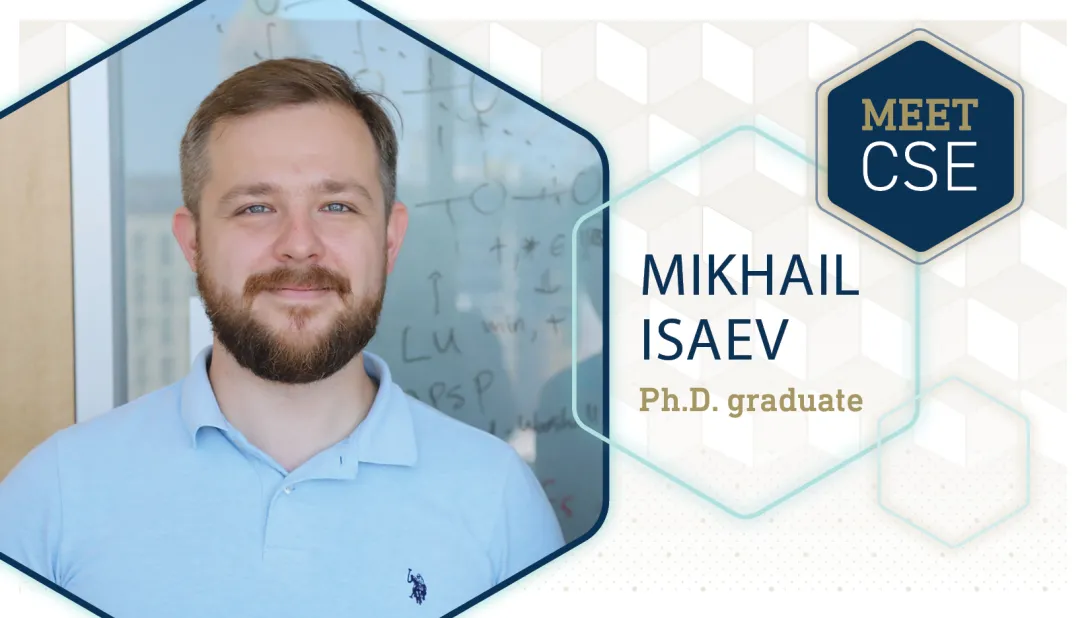
One of those graduates is Mikhail (Michael) Isaev, who earned a Ph.D. in computer science from the School of Computational Science and Engineering (CSE). After he walks across the stage and accepts his diploma at McCamish Pavilion on May 2, Isaev’s next move is to work at NVIDIA Research as a research scientist.
Advised by School of CSE Professor Rich Vuduc, Isaev’s research interests lie at the intersection of computer architecture, high-performance computing (HPC), and deep learning. He focuses on deep learning workload analysis and software/hardware co-design of large-scale deep learning systems.
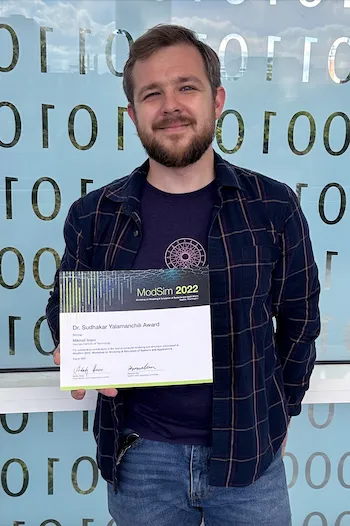
Isaev received notable recognition for his co-design research at ModSim’22, where he won the Dr. Sudhakar Yalamanchili Award. He earned the “Sudha” Award for his research on ParaGraph.
ParaGraph provides an automated way to emulate application software in ways that a network simulator can understand. The tool makes co-design a bilateral process, facilitating better supercomputing applications and closing the gap for hardware and software experts.
While the award recognizes researchers for their contributions to the computer modeling and simulation field, it carried much more sentimental meaning to Isaev. Yalamanchili was a Georgia Tech faculty member who died in 2019. Isaev and his collaborators personally knew and worked with Yalamanchili.
“I felt very honored to receive the award,” Isaev said. “I had the pleasure to meet and talk to Sudha, so it felt great to bring home this award in his name and, in a way, give back to Georgia Tech.”
Another meaningful project Isaev worked on was Calculon, a tool for co-design optimization of large language models (LLMs).
Calculon analyzes large co-design spaces of hardware and software configurations. This ability progresses the discovery of new, and sometimes surprising, configurations that might outperform current methods.
By focusing specifically on LLMs, Calculon modeled more aspects of performance optimization at greater accuracy and speeds several orders of magnitude faster than ParaGraph.
As tech companies train and retrain LLMs on tens of thousands of graphics processing units (GPUs), search spaces grow larger and become more vast as larger systems are introduced.
Isaev’s work on Calculon is timely since there was no open-source tool that could quickly navigate this space and determine the best configurations. Calculon is a simple, yet effective, tool that can do the job fast and efficiently, sparking interest from many companies and research community
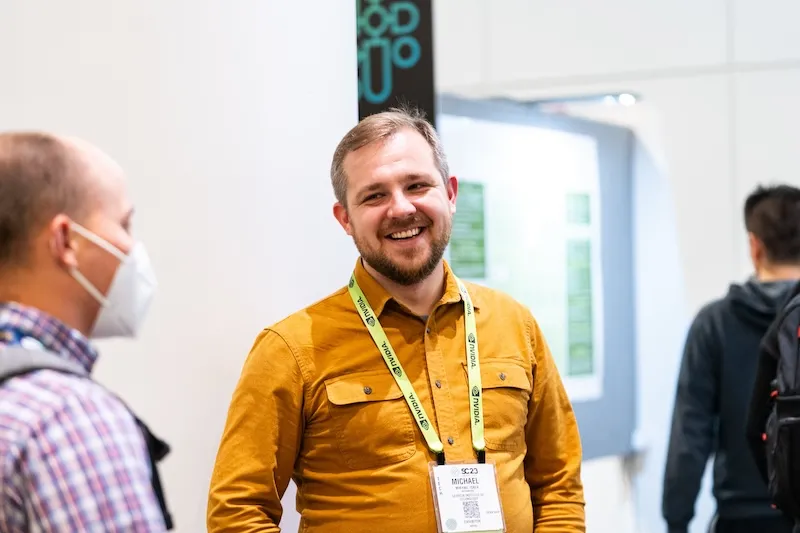
Isaev presented Calculon at conferences like Supercomputing 2023, ModSim’23, and the ASSYST workshop at ISCA 2023. He also gave talks at NVIDIA, Google, Microsoft, IBM, and the Department of Energy to share his research.
The talks at NVIDIA, Google, and Microsoft were notable since Isaev interned as a Ph.D. student at the companies. He has also interned at HP Labs and Meta.
Isaev interned at NVIDIA four times, three with the company’s Network Research Group. That is where he worked on ParaGraph and Calculon under one of his mentors, Nic McDonald.
“While Calculon won no award, I feel it was more well-received and got better traction with the HPC community,” Isaev said.
“This is partly due to Calculon being a product of collaboration between my internships and conference presentations. It truly is a tool created by HPC researchers for HPC research.”
News Contact
Bryant Wine, Communications Officer
bryant.wine@cc.gatech.edu
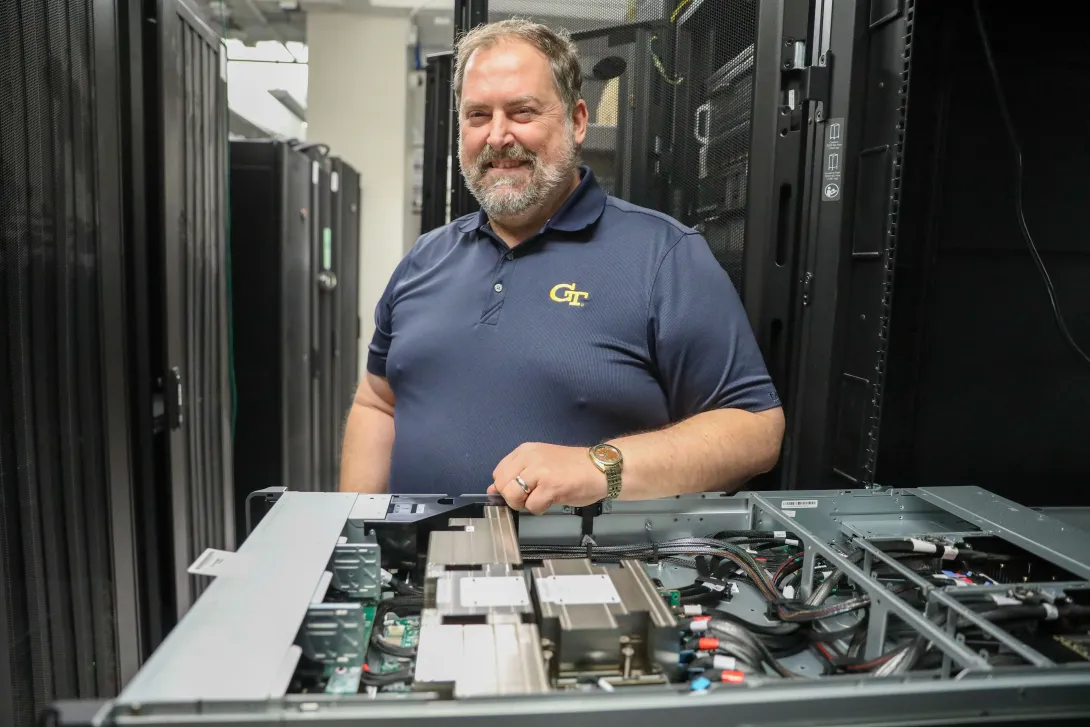
Computing research at Georgia Tech is getting faster thanks to a new state-of-the-art processing chip named after a female computer programming pioneer.
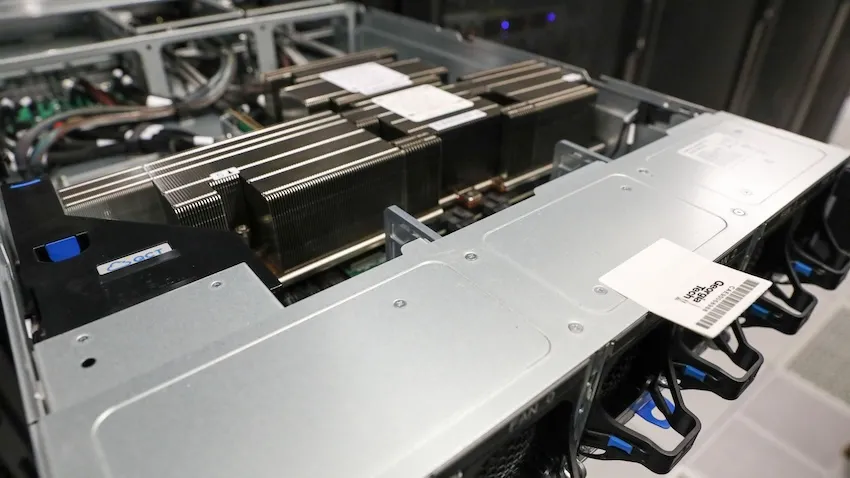
Tech is one of the first research universities in the country to receive the GH200 Grace Hopper Superchip from NVIDIA for testing, study, and research.
Designed for large-scale artificial intelligence (AI) and high-performance computing applications, the GH200 is intended for large language model (LLM) training, recommender systems, graph neural networks, and other tasks.
Alexey Tumanov and Tushar Krishna procured Georgia Tech’s first pair of Grace Hopper chips. Spencer Bryngelson attained four more GH200s, which will arrive later this month.
“We are excited about this new design that puts everything onto one chip and accessible to both processors,” said Will Powell, a College of Computing research technologist.
“The Superchip’s design increases computation efficiency where data doesn’t have to move as much and all the memory is on the chip.”
A key feature of the new processing chip is that the central processing unit (CPU) and graphics processing unit (GPU) are on the same board.
NVIDIA’s NVLink Chip-2-Chip (C2C) interconnect joins the two units together. C2C delivers up to 900 gigabytes per second of total bandwidth, seven times faster than PCIe Gen5 connections used in newer accelerated systems.
As a result, the two components share memory and process data with more speed and better power efficiency. This feature is one that the Georgia Tech researchers want to explore most.
Tumanov, an assistant professor in the School of Computer Science, and his Ph.D. student Amey Agrawal, are testing machine learning (ML) and LLM workloads on the chip. Their work with the GH200 could lead to more sustainable computing methods that keep up with the exponential growth of LLMs.
The advent of household LLMs, like ChatGPT and Gemini, pushes the limit of current architectures based on GPUs. The chip’s design overcomes known CPU-GPU bandwidth limitations. Tumanov’s group will put that design to the test through their studies.
Krishna is an associate professor in the School of Electrical and Computer Engineering and associate director of the Center for Research into Novel Computing Hierarchies (CRNCH).
His research focuses on optimizing data movement in modern computing platforms, including AI/ML accelerator systems. Ph.D. student Hao Kang uses the GH200 to analyze LLMs exceeding 30 billion parameters. This study will enable labs to explore deep learning optimizations with the new chip.
Bryngelson, an assistant professor in the School of Computational Science and Engineering, will use the chip to compute and simulate fluid and solid mechanics phenomena. His lab can use the CPU to reorder memory and perform disk writes while the GPU does parallel work. This capability is expected to significantly reduce the computational burden for some applications.
“Traditional CPU to GPU communication is slower and introduces latency issues because data passes back and forth over a PCIe bus,” Powell said. “Since they can access each other’s memory and share in one hop, the Superchip’s architecture boosts speed and efficiency.”
Grace Hopper is the inspirational namesake for the chip. She pioneered many developments in computer science that formed the foundation of the field today.
Hopper invented the first compiler, a program that translates computer source code into a target language. She also wrote the earliest programming languages, including COBOL, which is still used today in data processing.
Hopper joined the U.S. Navy Reserve during World War II, tasked with programming the Mark I computer. She retired as a rear admiral in August 1986 after 42 years of military service.
Georgia Tech researchers hope to preserve Hopper’s legacy using the technology that bears her name and spirit for innovation to make new discoveries.
“NVIDIA and other vendors show no sign of slowing down refinement of this kind of design, so it is important that our students understand how to get the most out of this architecture,” said Powell.
“Just having all these technologies isn’t enough. People must know how to build applications in their coding that actually benefit from these new architectures. That is the skill.”
News Contact
Bryant Wine, Communications Officer
bryant.wine@cc.gatech.edu
Computer science educators will soon gain valuable insights from computational epidemiology courses, like one offered at Georgia Tech.
B. Aditya Prakash is part of a research group that will host a workshop on how topics from computational epidemiology can enhance computer science classes.
These lessons would produce computer science graduates with improved skills in data science, modeling, simulation, artificial intelligence (AI), and machine learning (ML).
Because epidemics transcend the sphere of public health, these topics would groom computer scientists versed in issues from social, financial, and political domains.
The group’s virtual workshop takes place on March 20 at the technical symposium for the Special Interest Group on Computer Science Education (SIGCSE). SIGCSE is one of 38 special interest groups of the Association for Computing Machinery (ACM). ACM is the world’s largest scientific and educational computing society.
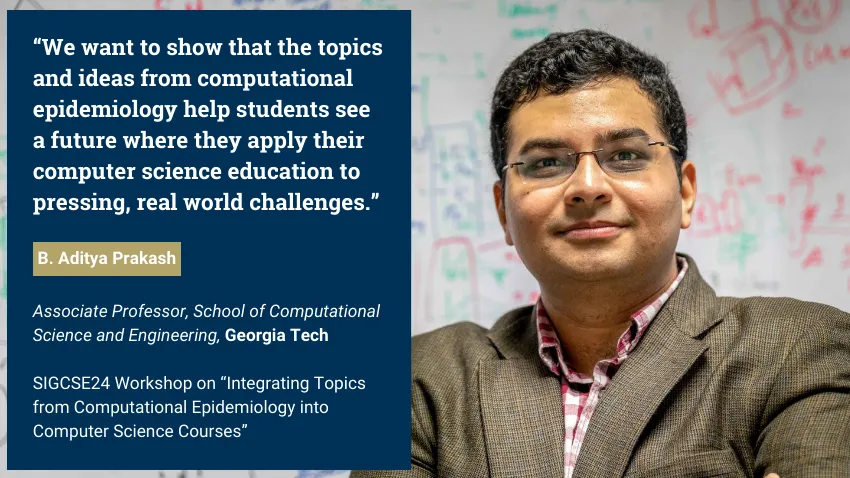
“We decided to do a tutorial at SIGCSE because we believe that computational epidemiology concepts would be very useful in general computer science courses,” said Prakash, an associate professor in the School of Computational Science and Engineering (CSE).
“We want to give an introduction to concepts, like what computational epidemiology is, and how topics, such as algorithms and simulations, can be integrated into computer science courses.”
Prakash kicks off the workshop with an overview of computational epidemiology. He will use examples from his CSE 8803: Data Science for Epidemiology course to introduce basic concepts.
This overview includes a survey of models used to describe behavior of diseases. Models serve as foundations that run simulations, ultimately testing hypotheses and making predictions regarding disease spread and impact.
Prakash will explain the different kinds of models used in epidemiology, such as traditional mechanistic models and more recent ML and AI based models.
Prakash’s discussion includes modeling used in recent epidemics like Covid-19, Zika, H1N1 bird flu, and Ebola. He will also cover examples from the 19th and 20th centuries to illustrate how epidemiology has advanced using data science and computation.
“I strongly believe that data and computation have a very important role to play in the future of epidemiology and public health is computational,” Prakash said.
“My course and these workshops give that viewpoint, and provide a broad framework of data science and computational thinking that can be useful.”
While humankind has studied disease transmission for millennia, computational epidemiology is a new approach to understanding how diseases can spread throughout communities.
The Covid-19 pandemic helped bring computational epidemiology to the forefront of public awareness. This exposure has led to greater demand for further application from computer science education.
Prakash joins Baltazar Espinoza and Natarajan Meghanathan in the workshop presentation. Espinoza is a research assistant professor at the University of Virginia. Meghanathan is a professor at Jackson State University.
The group is connected through Global Pervasive Computational Epidemiology (GPCE). GPCE is a partnership of 13 institutions aimed at advancing computational foundations, engineering principles, and technologies of computational epidemiology.
The National Science Foundation (NSF) supports GPCE through the Expeditions in Computing program. Prakash himself is principal investigator of other NSF-funded grants in which material from these projects appear in his workshop presentation.
[Related: Researchers to Lead Paradigm Shift in Pandemic Prevention with NSF Grant]
Outreach and broadening participation in computing are tenets of Prakash and GPCE because of how widely epidemics can reach. The SIGCSE workshop is one way that the group employs educational programs to train the next generation of scientists around the globe.
“Algorithms, machine learning, and other topics are fundamental graduate and undergraduate computer science courses nowadays,” Prakash said.
“Using examples like projects, homework questions, and data sets, we want to show that the topics and ideas from computational epidemiology help students see a future where they apply their computer science education to pressing, real world challenges.”
News Contact
Bryant Wine, Communications Officer
bryant.wine@cc.gatech.edu
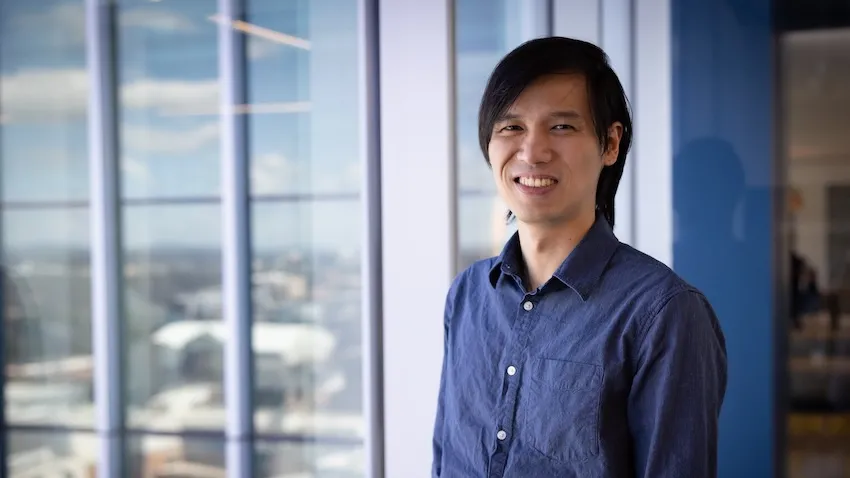
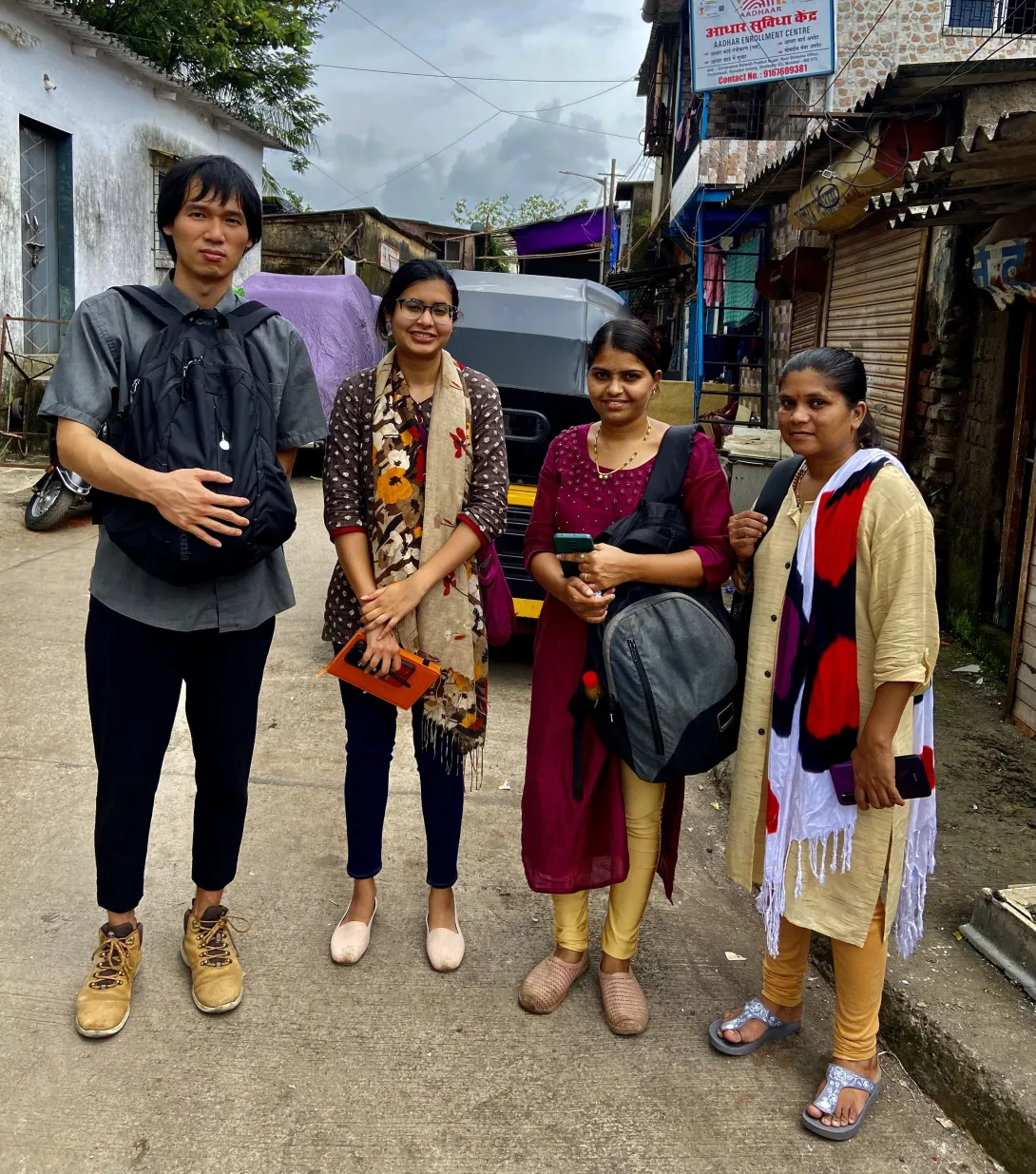
Schmidt Sciences has selected Kai Wang as one of 19 researchers to receive this year’s AI2050 Early Career Fellowship. In doing so, Wang becomes the first AI2050 fellow to represent Georgia Tech.
“I am excited about this fellowship because there are so many people at Georgia Tech using AI to create social impact,” said Wang, an assistant professor in the School of Computational Science and Engineering (CSE).
“I feel so fortunate to be part of this community and to help Georgia Tech bring more impact on society.”
AI2050 has allocated up to $5.5 million to support the cohort. Fellows receive up to $300,000 over two years and will join the Schmidt Sciences network of experts to advance their research in artificial intelligence (AI).
Wang’s AI2050 project centers on leveraging decision-focused AI to address challenges facing health and environmental sustainability. His goal is to strengthen and deploy decision-focused AI in collaboration with stakeholders to solve broad societal problems.
Wang’s method to decision-focused AI integrates machine learning with optimization to train models based on decision quality. These models borrow knowledge from decision-making processes in high-stakes domains to improve overall performance.
Part of Wang’s approach is to work closely with non-profit and non-governmental organizations. This collaboration helps Wang better understand problems at the point-of-need and gain knowledge from domain experts to custom-build AI models.
“It is very important to me to see my research impacting human lives and society,” Wang said. That reinforces my interest and motivation in using AI for social impact.”
[Related: Wang, New Faculty Bolster School’s Machine Learning Expertise]
This year’s cohort is only the second in the fellowship’s history. Wang joins a class that spans four countries, six disciplines, and seventeen institutions.
AI2050 commits $125 million over five years to identify and support talented individuals seeking solutions to ensure society benefits from AI. Last year’s AI2050 inaugural class of 15 early career fellows received $4 million.
The namesake of AI2050 comes from the central motivating question that fellows answer through their projects:
It’s 2050. AI has turned out to be hugely beneficial to society. What happened? What are the most important problems we solved and the opportunities and possibilities we realized to ensure this outcome?
AI2050 encourages young researchers to pursue bold and ambitious work on difficult challenges and promising opportunities in AI. These projects involve research that is multidisciplinary, risky, and hard to fund through traditional means.
Schmidt Sciences, LLC is a 501(c)3 non-profit organization supported by philanthropists Eric and Wendy Schmidt. Schmidt Sciences aims to accelerate and deepen understanding of the natural world and develop solutions to real-world challenges for public benefit.
Schmidt Sciences identify under-supported or unconventional areas of exploration and discovery with potential for high impact. Focus areas include AI and advanced computing, astrophysics and space, biosciences, climate, and cross-science.
“I am most grateful for the advice from my mentors, colleagues, and collaborators, and of course AI2050 for choosing me for this prestigious fellowship,” Wang said. “The School of CSE has given me so much support, including career advice from junior and senior level faculty.”
News Contact
Bryant Wine, Communications Officer
bryant.wine@cc.gatech.edu
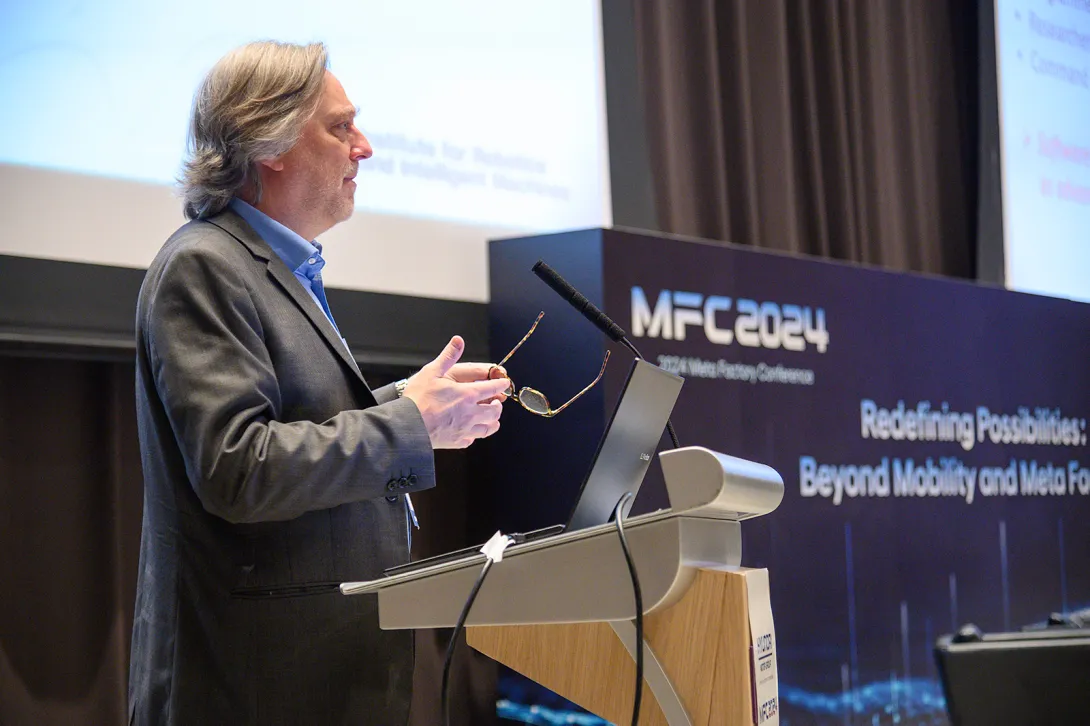
IRIM Director Seth Hutchinson at Hyundai Meta Factory Conference Delivering Keynote
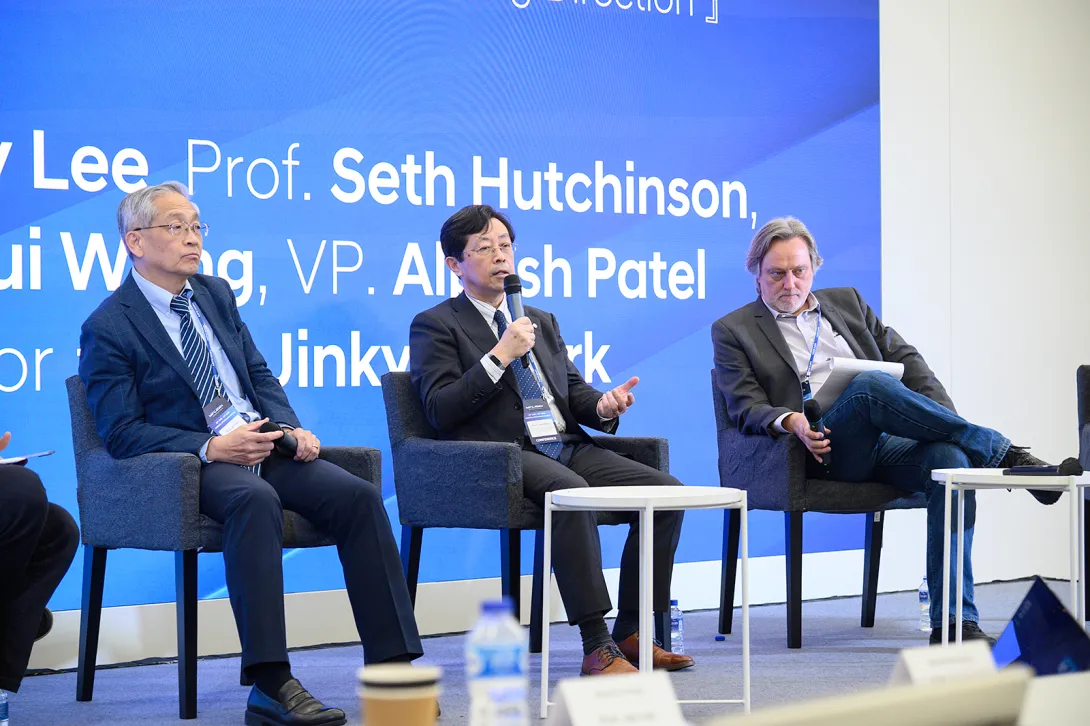
IRIM Director Seth Hutchinson at Hyundai Meta Factory Conference on Panel Discussion
Hyundai Motor Group Innovation Center Singapore hosted the Meta-Factory Conference Jan. 23 – 24. It brought together academic leaders, industry experts, and manufacturing companies to discuss technology and the next generation of integrated manufacturing facilities.
Seth Hutchinson, executive director of the Institute for Robotics and Intelligent Machines at Georgia Tech, delivered a keynote lecture on “The Impacts of Today’s Robotics Innovation on the Relationship Between Robots and Their Human Co-Workers in Manufacturing Applications” — an overview of current state-of-the-art robotic technologies and future research trends for developing robotics aimed at interactions with human workers in manufacturing.
In addition to the keynote, Hutchinson also participated in the Hyundai Motor Group's Smart Factory Executive Technology Advisory Committee (E-TAC) panel on comprehensive future manufacturing directions and toured the new Hyundai Meta-Factory to observe how digital-twin technology is being applied in their human-robot collaborative manufacturing environment.
Hutchinson is a professor in the School of Interactive Computing. He received his Ph.D. from Purdue University in 1988, and in 1990 joined the University of Illinois Urbana-Champaign, where he was professor of electrical and computer engineering until 2017 and is currently professor emeritus. He has served on the Hyundai Motor Group's Smart Factory E-TAC since 2022.
Hyundai Motor Group Innovation Center Singapore is Hyundai Motor Group’s open innovation hub to support research and development of human-centered smart manufacturing processes using advanced technologies such as artificial intelligence, the Internet of Things, and robotics.
- Christa M. Ernst
Related Links
- Hyundai Newsroom Article: Link
- Event Link: https://mfc2024.com/
- Keynote Speakers: https://mfc2024.com/keynotes/
News Contact
Christa M. Ernst - Research Communications Program Manager
christa.ernst@research.gatech.edu
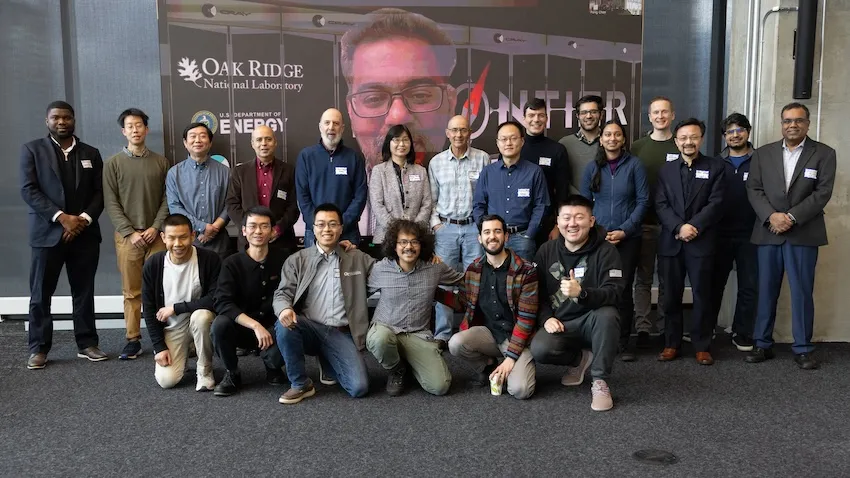
Scientists are always looking for better computer models that simulate the complex systems that define our world. To meet this need, a Georgia Tech workshop held Jan. 16 illustrated how new artificial intelligence (AI) research could usher the next generation of scientific computing.
The workshop focused AI technology toward optimization of complex systems. Presentations of climatological and electromagnetic simulations showed these techniques resulted in more efficient and accurate computer modeling. The workshop also progressed AI research itself since AI models typically are not well-suited for optimization tasks.
The School of Computational Science and Engineering (CSE) and Institute for Data Engineering and Science jointly sponsored the workshop.
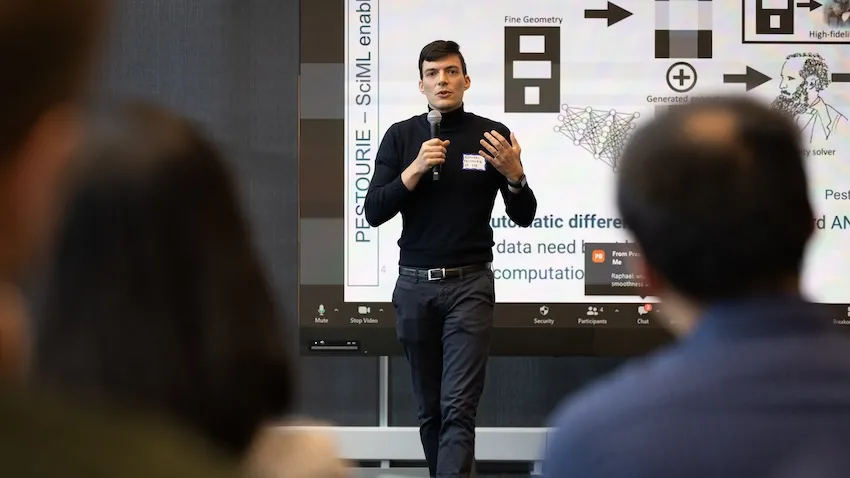
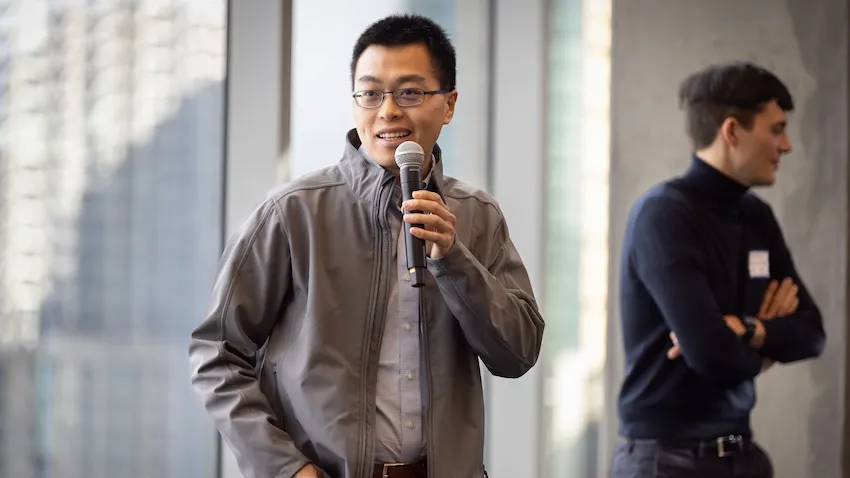
School of CSE Assistant Professors Peng Chen and Raphaël Pestourie led the workshop’s organizing committee and moderated the workshop’s two panel discussions. The duo also pitched their own research, highlighting potential of scientific AI.
Chen shared his work on derivative-informed neural operators (DINOs). DINOs are a class of neural networks that use derivative information to approximate solutions of partial differential equations. The derivative enhancement results in neural operators that are more accurate and efficient.
During his talk, Chen showed how DINOs makes better predictions with reliable derivatives. These have potential to solve data assimilation problems in weather and flooding prediction. Other applications include allocating sensors for early tsunami warnings and designing new self-assembly materials.
All these models contain elements of uncertainty where data is unknown, noisy, or changes over time. Not only is DINOs a powerful tool to quantify uncertainty, but it also requires little training data to become functional.
“Recent advances in AI tools have become critical in enhancing societal resilience and quality, particularly through their scientific uses in environmental, climatic, material, and energy domains,” Chen said.
“These tools are instrumental in driving innovation and efficiency in these and many other vital sectors.”
[Related: Machine Learning Key to Proposed App that Could Help Flood-prone Communities]
One challenge in studying complex systems is that it requires many simulations to generate enough data to learn from and make better predictions. But with limited data on hand, it is costly to run enough simulations to produce new data.
At the workshop, Pestourie presented his physics-enhanced deep surrogates (PEDS) as a solution to this optimization problem.
PEDS employs scientific AI to make efficient use of available data while demanding less computational resources. PEDS demonstrated to be up to three times more accurate than models using neural networks while needing less training data by at least a factor of 100.
PEDS yielded these results in tests on diffusion, reaction-diffusion, and electromagnetic scattering models. PEDS performed well in these experiments geared toward physics-based applications because it combines a physics simulator with a neural network generator.
“Scientific AI makes it possible to systematically leverage models and data simultaneously,” Pestourie said. “The more adoption of scientific AI there will be by domain scientists, the more knowledge will be created for society.”
[Related: Technique Could Efficiently Solve Partial Differential Equations for Numerous Applications]
Study and development of AI applications at these scales require use of the most powerful computers available. The workshop invited speakers from national laboratories who showcased supercomputing capabilities available at their facilities. These included Oak Ridge National Laboratory, Sandia National Laboratories, and Pacific Northwest National Laboratory.
The workshop hosted Georgia Tech faculty who represented the Colleges of Computing, Design, Engineering, and Sciences. Among these were workshop co-organizers Yan Wang and Ebeneser Fanijo. Wang is a professor in the George W. Woodruff School of Mechanical Engineering and Fanjio is an assistant professor in the School of Building Construction.
The workshop welcomed academics outside of Georgia Tech to share research occurring at their institutions. These speakers hailed from Emory University, Clemson University, and the University of California, Berkeley.
News Contact
Bryant Wine, Communications Officer
bryant.wine@cc.gatech.edu
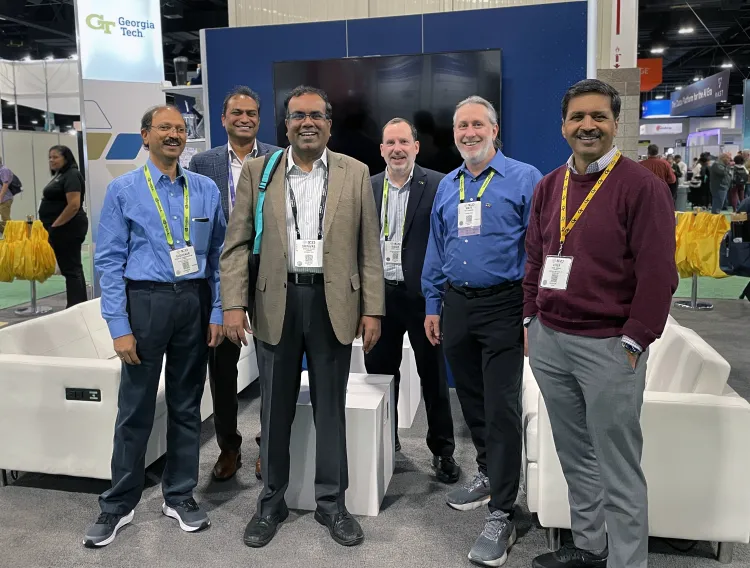
The International Conference for High Performance Computing, Networking, Storage, and Analytics, or “Supercomputing” (SC) for short, was held in Denver from November 12-17 and hosted nearly 14,000 attendees. SC is the premier event for advances in algorithms, applications, architectures and networks, clouds and distributed computing, data analytics and visualization, machine learning and HPC, programming systems, system software, and state of the practice in large-scale data storage, deployment and integration. Each year, SC provides a unique opportunity to meet leaders in the field of high-performance computing, including researchers at universities and government labs, and hardware vendors like Intel, AMD, NVIDIA, and Penguin Computing.
The theme for this year’s event was “I am HPC; Impact and Future Direction,” focusing on the ways in which HPC impacts society as well as the community of researchers in HPC. An interdisciplinary cohort comprised of Georgia Tech researchers from the Partnership for an Advanced Computing Environment, the Center for High-Performance Computing, the School of Computational Science and Engineering, the Center for Research into Novel Computing Hierarchies, the Institute for Data Engineering and Science, and the School of Computer Science at various levels of their career were in attendance to present technical talks, participate in workshops and promote HPC research at Georgia Tech with a booth in the exhibit hall.
Georgia Tech teams were well represented across the research themes, including presentations on; large graph analytics, new methods for high-performance data-intensive workloads, challenges presented by the exascale computing, and Large Language Models (LLMs) applications in codesign. Jeffrey Young and Richard Vuduc were feature speakers in the tutorial “Leveraging SmartNICs for HPC Applications” that offered attendees an in-depth exploration of the state-of-the-art for SmartNICs and the emerging software ecosystems supporting them. Georgia Tech was also represented in the Birds of a Feather Co-Hort Panel Discussions on “Software Testing for Scientific Computing in HPC” and “Scientific Software and the People Who Make It Happen: Building Communities of Practice”. Of special mention is the Special Topic Workshop on “Machine Learning with Graphs in High Performance Computing Environments” organized by Richard Vuduc of Georgia Tech as well as Seung-Hwan Lim, Catherine Schuman, and Jose Moreira.
Georgia Tech researchers had numerous discussions with potential collaborators and new partners for initiatives in high performance computing, including conference attendees from universities, government labs, and industry. The team also had a great opportunity to reconnect with numerous alumni, who stopped by the GT booth to tell us about their careers since graduation. Georgia Tech graduates are doing some amazing things in computing hardware, algorithms, and software, with applications across a wide range of engineering and science problems.
News Contact
Christa M. Ernst - Research Communications Program Manager
christa.ernst@research.gatech.edu
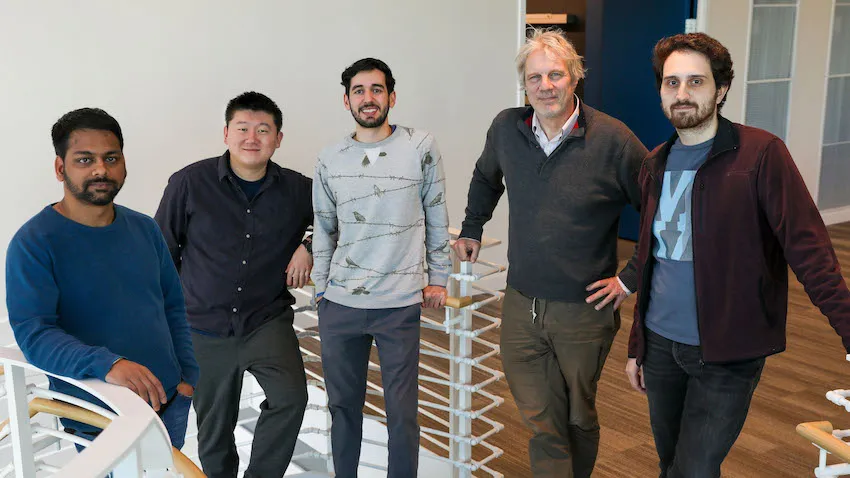
A new machine learning method could help engineers detect leaks in underground reservoirs earlier, mitigating risks associated with geological carbon storage (GCS). Further study could advance machine learning capabilities while improving safety and efficiency of GCS.
The feasibility study by Georgia Tech researchers explores using conditional normalizing flows (CNFs) to convert seismic data points into usable information and observable images. This potential ability could make monitoring underground storage sites more practical and studying the behavior of carbon dioxide plumes easier.
The 2023 Conference on Neural Information Processing Systems (NeurIPS 2023) accepted the group’s paper for presentation. They presented their study on Dec. 16 at the conference’s workshop on Tackling Climate Change with Machine Learning.
“One area where our group excels is that we care about realism in our simulations,” said Professor Felix Herrmann. “We worked on a real-sized setting with the complexities one would experience when working in real-life scenarios to understand the dynamics of carbon dioxide plumes.”
CNFs are generative models that use data to produce images. They can also fill in the blanks by making predictions to complete an image despite missing or noisy data. This functionality is ideal for this application because data streaming from GCS reservoirs are often noisy, meaning it’s incomplete, outdated, or unstructured data.
The group found in 36 test samples that CNFs could infer scenarios with and without leakage using seismic data. In simulations with leakage, the models generated images that were 96% similar to ground truths. CNFs further supported this by producing images 97% comparable to ground truths in cases with no leakage.
This CNF-based method also improves current techniques that struggle to provide accurate information on the spatial extent of leakage. Conditioning CNFs to samples that change over time allows it to describe and predict the behavior of carbon dioxide plumes.
This study is part of the group’s broader effort to produce digital twins for seismic monitoring of underground storage. A digital twin is a virtual model of a physical object. Digital twins are commonplace in manufacturing, healthcare, environmental monitoring, and other industries.
“There are very few digital twins in earth sciences, especially based on machine learning,” Herrmann explained. “This paper is just a prelude to building an uncertainty aware digital twin for geological carbon storage.”
Herrmann holds joint appointments in the Schools of Earth and Atmospheric Sciences (EAS), Electrical and Computer Engineering, and Computational Science and Engineering (CSE).
School of EAS Ph.D. student Abhinov Prakash Gahlot is the paper’s first author. Ting-Ying (Rosen) Yu (B.S. ECE 2023) started the research as an undergraduate group member. School of CSE Ph.D. students Huseyin Tuna Erdinc, Rafael Orozco, and Ziyi (Francis) Yin co-authored with Gahlot and Herrmann.
NeurIPS 2023 took place Dec. 10-16 in New Orleans. Occurring annually, it is one of the largest conferences in the world dedicated to machine learning.
Over 130 Georgia Tech researchers presented more than 60 papers and posters at NeurIPS 2023. One-third of CSE’s faculty represented the School at the conference. Along with Herrmann, these faculty included Ümit Çatalyürek, Polo Chau, Bo Dai, Srijan Kumar, Yunan Luo, Anqi Wu, and Chao Zhang.
“In the field of geophysics, inverse problems and statistical solutions of these problems are known, but no one has been able to characterize these statistics in a realistic way,” Herrmann said.
“That’s where these machine learning techniques come into play, and we can do things now that you could never do before.”
News Contact
Bryant Wine, Communications Officer
bryant.wine@cc.gatech.edu
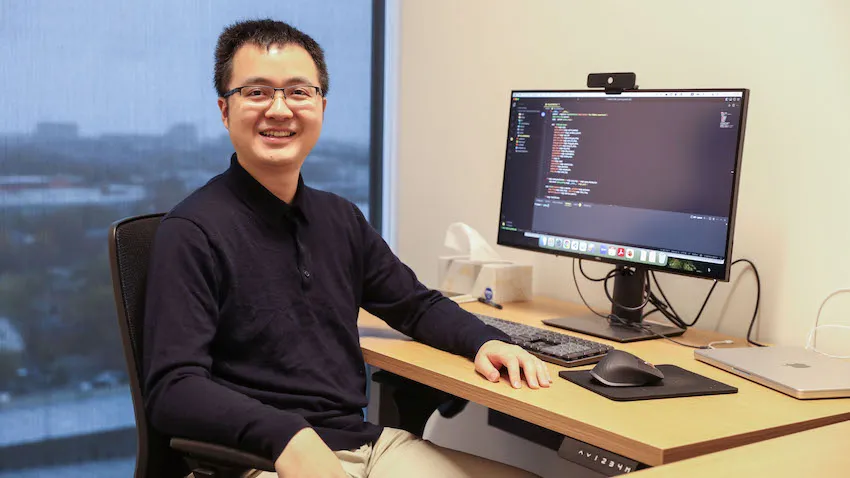
The National Institute of Health (NIH) has awarded Yunan Luo a grant for more than $1.8 million to use artificial intelligence (AI) to advance protein research.
New AI models produced through the grant will lead to new methods for the design and discovery of functional proteins. This could yield novel drugs and vaccines, personalized treatments against diseases, and other advances in biomedicine.
“This project provides a new paradigm to analyze proteins’ sequence-structure-function relationships using machine learning approaches,” said Luo, an assistant professor in Georgia Tech’s School of Computational Science and Engineering (CSE).
“We will develop new, ready-to-use computational models for domain scientists, like biologists and chemists. They can use our machine learning tools to guide scientific discovery in their research.”
Luo’s proposal improves on datasets spearheaded by AlphaFold and other recent breakthroughs. His AI algorithms would integrate these datasets and craft new models for practical application.
One of Luo’s goals is to develop machine learning methods that learn statistical representations from the data. This reveals relationships between proteins’ sequence, structure, and function. Scientists then could characterize how sequence and structure determine the function of a protein.
Next, Luo wants to make accurate and interpretable predictions about protein functions. His plan is to create biology-informed deep learning frameworks. These frameworks could make predictions about a protein’s function from knowledge of its sequence and structure. It can also account for variables like mutations.
In the end, Luo would have the data and tools to assist in the discovery of functional proteins. He will use these to build a computational platform of AI models, algorithms, and frameworks that ‘invent’ proteins. The platform figures the sequence and structure necessary to achieve a designed proteins desired functions and characteristics.
“My students play a very important part in this research because they are the driving force behind various aspects of this project at the intersection of computational science and protein biology,” Luo said.
“I think this project provides a unique opportunity to train our students in CSE to learn the real-world challenges facing scientific and engineering problems, and how to integrate computational methods to solve those problems.”
The $1.8 million grant is funded through the Maximizing Investigators’ Research Award (MIRA). The National Institute of General Medical Sciences (NIGMS) manages the MIRA program. NIGMS is one of 27 institutes and centers under NIH.
MIRA is oriented toward launching the research endeavors of young career faculty. The grant provides researchers with more stability and flexibility through five years of funding. This enhances scientific productivity and improves the chances for important breakthroughs.
Luo becomes the second School of CSE faculty to receive the MIRA grant. NIH awarded the grant to Xiuwei Zhang in 2021. Zhang is the J.Z. Liang Early-Career Assistant Professor in the School of CSE.
[Related: Award-winning Computer Models Propel Research in Cellular Differentiation]
“After NIH, of course, I first thanked my students because they laid the groundwork for what we seek to achieve in our grant proposal,” said Luo.
“I would like to thank my colleague, Xiuwei Zhang, for her mentorship in preparing the proposal. I also thank our school chair, Haesun Park, for her help and support while starting my career.”
News Contact
Bryant Wine, Communications Officer
bryant.wine@cc.gatech.edu
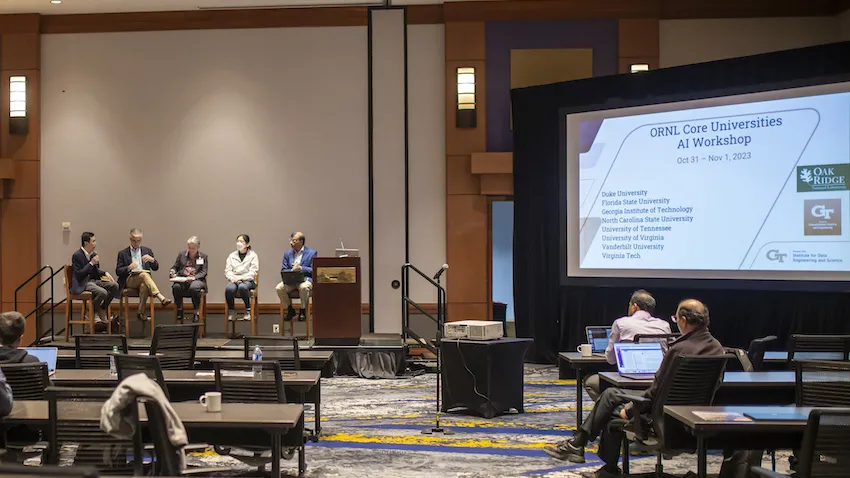
The Southeast’s leading scientific artificial intelligence (AI) researchers met in Atlanta for a two-day workshop to address challenges facing the field, including trust and reliability of the technology.
Oak Ridge National Laboratory (ORNL) held its annual Core Universities AI Workshop at Georgia Tech Oct. 31 – Nov. 1. The workshop hosted AI experts from eight research universities, plus ORNL and the Department of Energy, to present new research and trends relevant to the field.
Georgia Tech’s School of Computational Science and Engineering (CSE) and Institute for Data Engineering and Science (IDEaS) jointly sponsored this year’s workshop. The workshop host rotates every year among ORNL core universities.
“Participants gained insights into state-of-the-art AI models and methods that prioritize safety, trustworthiness, and energy efficiency,” said Ramki Kannan (Ph.D. CS 2016), a research scientist at ORNL who helped organize the workshop.
“They also learned how to apply these models and algorithms to scientific applications, including the utilization of recent FAIR datasets and relevant policies.”
[RELATED: Biomedical Analytics Research Earns Team Gordon Bell Prize Nomination]
The workshop dealt with topics related to the large-scale application of AI. It included 12 research presentations, three keynote speeches, and two panel discussions.
The workshop began a day after release of President Joe Biden’s executive order calling for safe development and use of AI. Attendees seized the moment to discuss AI safety, trustworthiness, and privacy throughout the workshop. Three talks and one of the panels focused on these topics, and speakers referenced the subjects throughout their presentations.
Other talks focused on the application of AI as a tool to overcome today’s most pressing scientific challenges.
Two researchers discussed using AI to overcome climate change. Chris Reberg-Horton of North Carolina State University talked about optimizing AI for plant science. David Sholl of ORNL discussed how AI can solve decarbonization challenges.
“The fields of AI and various science and engineering disciplines have been experiencing rapid growth independently. However, the true potential lies in the synergy between these fields, which can translate into significant societal impact,” said Kannan, a Georgia Tech alumnus who studied under School of CSE Regents’ Professor and Chair Haesun Park.
“The future workforce across disciplines will require scientists and engineers proficient in the using AI tools to enhance productivity and achieve substantial impact.”
Networking served a vital function at the workshop and collaboration was a common discussion point during and in between presentations.
President Biden's executive order emphasizes united AI research efforts, bringing together the private sector, academia, national labs, and the government. Several speakers at the workshop echoed this collaborative approach.
ORNL’s annual AI workshop is one way that national laboratories and research universities are answering that call.
ORNL maintains formal partnerships with academic institutions, which the lab refers to as its core universities. These partnerships help universities understand and address the educational needs of national laboratories and the government in training the next generation of scientists.
ORNL’s core universities include Duke University, Florida State University, Georgia Tech, North Carolina State University, University of Tennessee, Vanderbilt University, University of Virginia, and Virginia Tech.
“Recent times have witnessed the profound impact of interdisciplinary research, which is often nurtured through collaborations,” said Kannan, who leads ORNL’s Discrete Algorithms Group.
“Scientists, researchers, and academicians participating in this workshop will leverage the connections made here to shape their research and publication agendas for the coming years.”
News Contact
Bryant Wine, Communications Officer
bryant.wine@cc.gatech.edu