
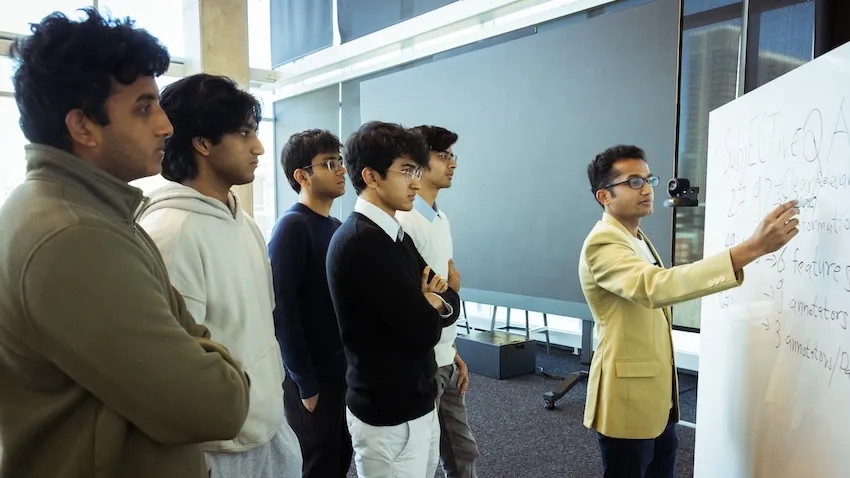
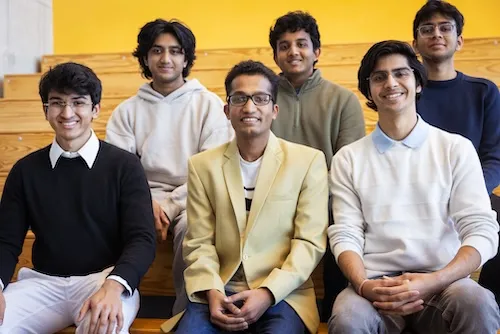
Georgia Tech researchers have created a dataset that trains computer models to understand nuances in human speech during financial earnings calls. The dataset provides a new resource to study how public correspondence affects businesses and markets.
SubjECTive-QA is the first human-curated dataset on question-answer pairs from earnings call transcripts (ECTs). The dataset teaches models to identify subjective features in ECTs, like clarity and cautiousness.
The dataset lays the foundation for a new approach to identifying disinformation and misinformation caused by nuances in speech. While ECT responses can be technically true, unclear or irrelevant information can misinform stakeholders and affect their decision-making.
Tests on White House press briefings showed that the dataset applies to other sectors with frequent question-and-answer encounters, notably politics, journalism, and sports. This increases the odds of effectively informing audiences and improving transparency across public spheres.
The intersecting work between natural language processing and finance earned the paper acceptance to NeurIPS 2024, the 38th Annual Conference on Neural Information Processing Systems. NeurIPS is one of the world’s most prestigious conferences on artificial intelligence (AI) and machine learning (ML) research.
"SubjECTive-QA has the potential to revolutionize nowcasting predictions with enhanced clarity and relevance,” said Agam Shah, the project’s lead researcher.
“Its nuanced analysis of qualities in executive responses, like optimism and cautiousness, deepens our understanding of economic forecasts and financial transparency."
[MICROSITE: Georgia Tech at NeurIPS 2024]
SubjECTive-QA offers a new means to evaluate financial discourse by characterizing language's subjective and multifaceted nature. This improves on traditional datasets that quantify sentiment or verify claims from financial statements.
The dataset consists of 2,747 Q&A pairs taken from 120 ECTs from companies listed on the New York Stock Exchange from 2007 to 2021. The Georgia Tech researchers annotated each response by hand based on six features for a total of 49,446 annotations.
The group evaluated answers on:
- Relevance: the speaker answered the question with appropriate details.
- Clarity: the speaker was transparent in the answer and the message conveyed.
- Optimism: the speaker answered with a positive outlook regarding future outcomes.
- Specificity: the speaker included sufficient and technical details in their answer.
- Cautiousness: the speaker answered using a conservative, risk-averse approach.
- Assertiveness: the speaker answered with certainty about the company’s events and outcomes.
The Georgia Tech group validated their dataset by training eight computer models to detect and score these six features. Test models comprised of three BERT-based pre-trained language models (PLMs), and five popular large language models (LLMs) including Llama and ChatGPT.
All eight models scored the highest on the relevance and clarity features. This is attributed to domain-specific pretraining that enables the models to identify pertinent and understandable material.
The PLMs achieved higher scores on the clear, optimistic, specific, and cautious categories. The LLMs scored higher in assertiveness and relevance.
In another experiment to test transferability, a PLM trained with SubjECTive-QA evaluated 65 Q&A pairs from White House press briefings and gaggles. Scores across all six features indicated models trained on the dataset could succeed in other fields outside of finance.
"Building on these promising results, the next step for SubjECTive-QA is to enhance customer service technologies, like chatbots,” said Shah, a Ph.D. candidate studying machine learning.
“We want to make these platforms more responsive and accurate by integrating our analysis techniques from SubjECTive-QA."
SubjECTive-QA culminated from two semesters of work through Georgia Tech’s Vertically Integrated Projects (VIP) Program. The VIP Program is an approach to higher education where undergraduate and graduate students work together on long-term project teams led by faculty.
Undergraduate students earn academic credit and receive hands-on experience through VIP projects. The extra help advances ongoing research and gives graduate students mentorship experience.
Computer science major Huzaifa Pardawala and mathematics major Siddhant Sukhani co-led the SubjECTive-QA project with Shah.
Fellow collaborators included Veer Kejriwal, Abhishek Pillai, Rohan Bhasin, Andrew DiBiasio, Tarun Mandapati, and Dhruv Adha. All six researchers are undergraduate students studying computer science.
Sudheer Chava co-advises Shah and is the faculty lead of SubjECTive-QA. Chava is a professor in the Scheller College of Business and director of the M.S. in Quantitative and Computational Finance (QCF) program.
Chava is also an adjunct faculty member in the College of Computing’s School of Computational Science and Engineering (CSE).
"Leading undergraduate students through the VIP Program taught me the powerful impact of balancing freedom with guidance,” Shah said.
“Allowing students to take the helm not only fosters their leadership skills but also enhances my own approach to mentoring, thus creating a mutually enriching educational experience.”
Presenting SubjECTive-QA at NeurIPS 2024 exposes the dataset for further use and refinement. NeurIPS is one of three primary international conferences on high-impact research in AI and ML. The conference occurs Dec. 10-15.
The SubjECTive-QA team is among the 162 Georgia Tech researchers presenting over 80 papers at NeurIPS 2024. The Georgia Tech contingent includes 46 faculty members, like Chava. These faculty represent Georgia Tech’s Colleges of Business, Computing, Engineering, and Sciences, underscoring the pertinence of AI research across domains.
"Presenting SubjECTive-QA at prestigious venues like NeurIPS propels our research into the spotlight, drawing the attention of key players in finance and tech,” Shah said.
“The feedback we receive from this community of experts validates our approach and opens new avenues for future innovation, setting the stage for transformative applications in industry and academia.”
News Contact
Bryant Wine, Communications Officer
bryant.wine@cc.gatech.edu
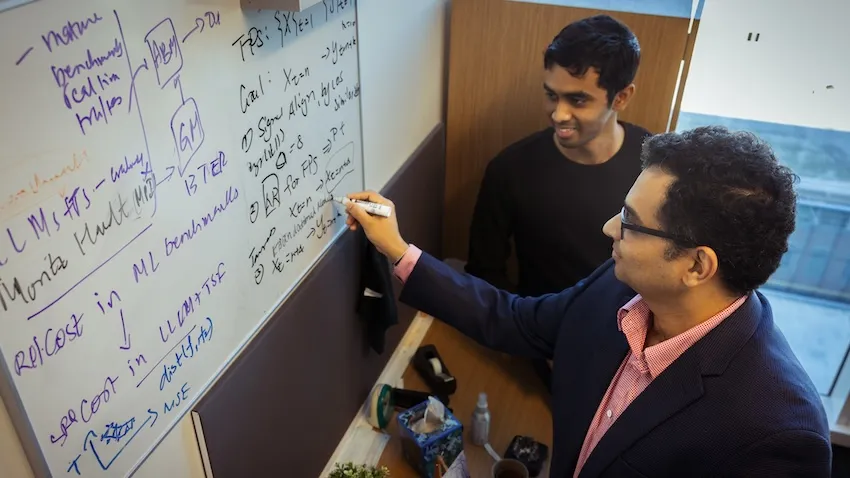
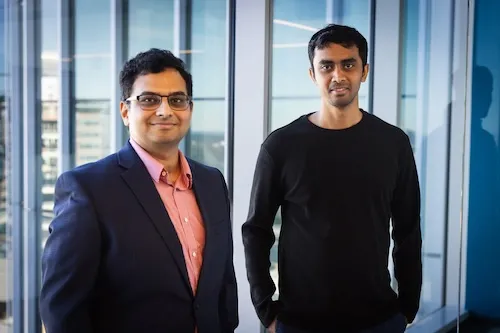
A new machine learning (ML) model from Georgia Tech could protect communities from diseases, better manage electricity consumption in cities, and promote business growth, all at the same time.
Researchers from the School of Computational Science and Engineering (CSE) created the Large Pre-Trained Time-Series Model (LPTM) framework. LPTM is a single foundational model that completes forecasting tasks across a broad range of domains.
Along with performing as well or better than models purpose-built for their applications, LPTM requires 40% less data and 50% less training time than current baselines. In some cases, LPTM can be deployed without any training data.
The key to LPTM is that it is pre-trained on datasets from different industries like healthcare, transportation, and energy. The Georgia Tech group created an adaptive segmentation module to make effective use of these vastly different datasets.
The Georgia Tech researchers will present LPTM in Vancouver, British Columbia, Canada, at the 2024 Conference on Neural Information Processing Systems (NeurIPS 2024). NeurIPS is one of the world’s most prestigious conferences on artificial intelligence (AI) and ML research.
“The foundational model paradigm started with text and image, but people haven’t explored time-series tasks yet because those were considered too diverse across domains,” said B. Aditya Prakash, one of LPTM’s developers.
“Our work is a pioneer in this new area of exploration where only few attempts have been made so far.”
[MICROSITE: Georgia Tech at NeurIPS 2024]
Foundational models are trained with data from different fields, making them powerful tools when assigned tasks. Foundational models drive GPT, DALL-E, and other popular generative AI platforms used today. LPTM is different though because it is geared toward time-series, not text and image generation.
The Georgia Tech researchers trained LPTM on data ranging from epidemics, macroeconomics, power consumption, traffic and transportation, stock markets, and human motion and behavioral datasets.
After training, the group pitted LPTM against 17 other models to make forecasts as close to nine real-case benchmarks. LPTM performed the best on five datasets and placed second on the other four.
The nine benchmarks contained data from real-world collections. These included the spread of influenza in the U.S. and Japan, electricity, traffic, and taxi demand in New York, and financial markets.
The competitor models were purpose-built for their fields. While each model performed well on one or two benchmarks closest to its designed purpose, the models ranked in the middle or bottom on others.
In another experiment, the Georgia Tech group tested LPTM against seven baseline models on the same nine benchmarks in zero-shot forecasting tasks. Zero-shot means the model is used out of the box and not given any specific guidance during training. LPTM outperformed every model across all benchmarks in this trial.
LPTM performed consistently as a top-runner on all nine benchmarks, demonstrating the model’s potential to achieve superior forecasting results across multiple applications with less and resources.
“Our model also goes beyond forecasting and helps accomplish other tasks,” said Prakash, an associate professor in the School of CSE.
“Classification is a useful time-series task that allows us to understand the nature of the time-series and label whether that time-series is something we understand or is new.”
One reason traditional models are custom-built to their purpose is that fields differ in reporting frequency and trends.
For example, epidemic data is often reported weekly and goes through seasonal peaks with occasional outbreaks. Economic data is captured quarterly and typically remains consistent and monotone over time.
LPTM’s adaptive segmentation module allows it to overcome these timing differences across datasets. When LPTM receives a dataset, the module breaks data into segments of different sizes. Then, it scores all possible ways to segment data and chooses the easiest segment from which to learn useful patterns.
LPTM’s performance, enhanced through the innovation of adaptive segmentation, earned the model acceptance to NeurIPS 2024 for presentation. NeurIPS is one of three primary international conferences on high-impact research in AI and ML. NeurIPS 2024 occurs Dec. 10-15.
Ph.D. student Harshavardhan Kamarthi partnered with Prakash, his advisor, on LPTM. The duo are among the 162 Georgia Tech researchers presenting over 80 papers at the conference.
Prakash is one of 46 Georgia Tech faculty with research accepted at NeurIPS 2024. Nine School of CSE faculty members, nearly one-third of the body, are authors or co-authors of 17 papers accepted at the conference.
Along with sharing their research at NeurIPS 2024, Prakash and Kamarthi released an open-source library of foundational time-series modules that data scientists can use in their applications.
“Given the interest in AI from all walks of life, including business, social, and research and development sectors, a lot of work has been done and thousands of strong papers are submitted to the main AI conferences,” Prakash said.
“Acceptance of our paper speaks to the quality of the work and its potential to advance foundational methodology, and we hope to share that with a larger audience.”
News Contact
Bryant Wine, Communications Officer
bryant.wine@cc.gatech.edu

A first-of-its-kind algorithm developed at Georgia Tech is helping scientists study interactions between electrons. This innovation in modeling technology can lead to discoveries in physics, chemistry, materials science, and other fields.
The new algorithm is faster than existing methods while remaining highly accurate. The solver surpasses the limits of current models by demonstrating scalability across chemical system sizes ranging from large to small.
Computer scientists and engineers benefit from the algorithm’s ability to balance processor loads. This work allows researchers to tackle larger, more complex problems without the prohibitive costs associated with previous methods.
Its ability to solve block linear systems drives the algorithm’s ingenuity. According to the researchers, their approach is the first known use of a block linear system solver to calculate electronic correlation energy.
The Georgia Tech team won’t need to travel far to share their findings with the broader high-performance computing community. They will present their work in Atlanta at the 2024 International Conference for High Performance Computing, Networking, Storage and Analysis (SC24).
[MICROSITE: Georgia Tech at SC24]
“The combination of solving large problems with high accuracy can enable density functional theory simulation to tackle new problems in science and engineering,” said Edmond Chow, professor and associate chair of Georgia Tech’s School of Computational Science and Engineering (CSE).
Density functional theory (DFT) is a modeling method for studying electronic structure in many-body systems, such as atoms and molecules.
An important concept DFT models is electronic correlation, the interaction between electrons in a quantum system. Electron correlation energy is the measure of how much the movement of one electron is influenced by presence of all other electrons.
Random phase approximation (RPA) is used to calculate electron correlation energy. While RPA is very accurate, it becomes computationally more expensive as the size of the system being calculated increases.
Georgia Tech’s algorithm enhances electronic correlation energy computations within the RPA framework. The approach circumvents inefficiencies and achieves faster solution times, even for small-scale chemical systems.
The group integrated the algorithm into existing work on SPARC, a real-space electronic structure software package for accurate, efficient, and scalable solutions of DFT equations. School of Civil and Environmental Engineering Professor Phanish Suryanarayana is SPARC’s lead researcher.
The group tested the algorithm on small chemical systems of silicon crystals numbering as few as eight atoms. The method achieved faster calculation times and scaled to larger system sizes than direct approaches.
“This algorithm will enable SPARC to perform electronic structure calculations for realistic systems with a level of accuracy that is the gold standard in chemical and materials science research,” said Suryanarayana.
RPA is expensive because it relies on quartic scaling. When the size of a chemical system is doubled, the computational cost increases by a factor of 16.
Instead, Georgia Tech’s algorithm scales cubically by solving block linear systems. This capability makes it feasible to solve larger problems at less expense.
Solving block linear systems presents a challenging trade-off in solving different block sizes. While larger blocks help reduce the number of steps of the solver, using them demands higher computational cost per step on computer processors.
Tech’s solution is a dynamic block size selection solver. The solver allows each processor to independently select block sizes to calculate. This solution further assists in scaling, and improves processor load balancing and parallel efficiency.
“The new algorithm has many forms of parallelism, making it suitable for immense numbers of processors,” Chow said. “The algorithm works in a real-space, finite-difference DFT code. Such a code can scale efficiently on the largest supercomputers.”
Georgia Tech alumni Shikhar Shah (Ph.D. CSE 2024), Hua Huang (Ph.D. CSE 2024), and Ph.D. student Boqin Zhang led the algorithm’s development. The project was the culmination of work for Shah and Huang, who completed their degrees this summer. John E. Pask, a physicist at Lawrence Livermore National Laboratory, joined the Tech researchers on the work.
Shah, Huang, Zhang, Suryanarayana, and Chow are among more than 50 students, faculty, research scientists, and alumni affiliated with Georgia Tech who are scheduled to give more than 30 presentations at SC24. The experts will present their research through papers, posters, panels, and workshops.
SC24 takes place Nov. 17-22 at the Georgia World Congress Center in Atlanta.
“The project’s success came from combining expertise from people with diverse backgrounds ranging from numerical methods to chemistry and materials science to high-performance computing,” Chow said.
“We could not have achieved this as individual teams working alone.”
News Contact
Bryant Wine, Communications Officer
bryant.wine@cc.gatech.edu
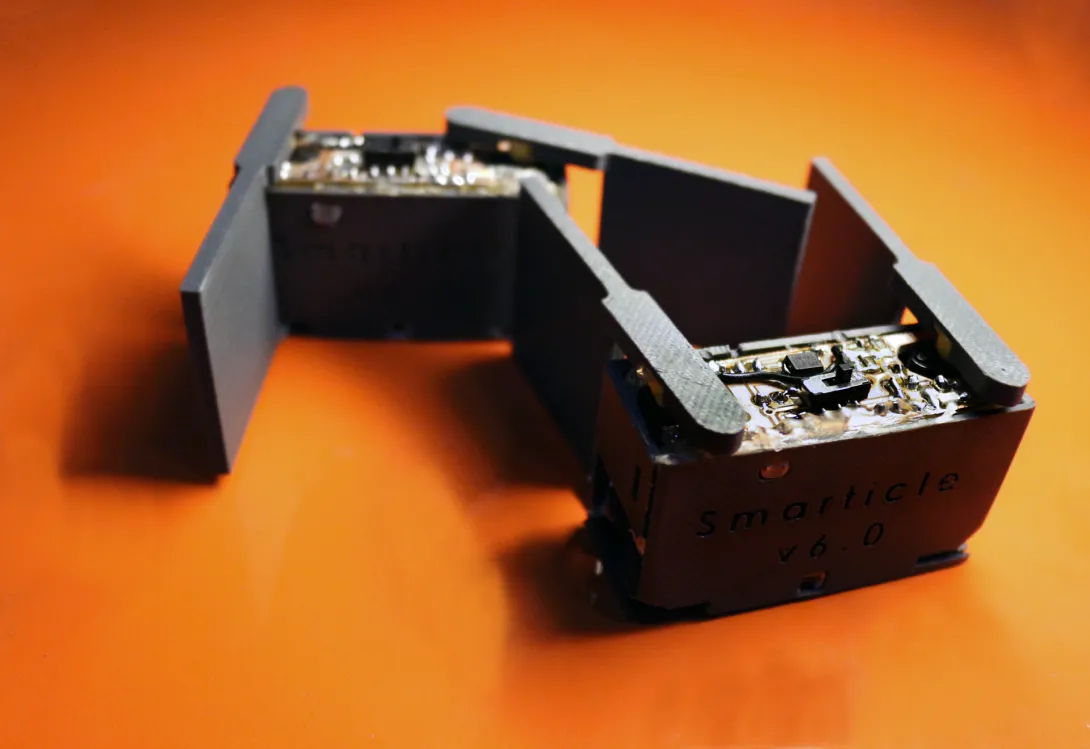
A pair of Smarticle robots from the lab of Prof. Dan Goldman. Earlier research from his group observed the arise of order in active matter from the physics of low rattling. (Photo Credit: Christa M. Ernst)
If you’ve ever watched a large flock of birds on the wing, moving across the sky like a cloud with various shapes and directional changes appearing from seeming chaos, or the maneuvers of an ant colony forming bridges and rafts to escape floods, you’ve been observing what scientists call self-organization. What may not be as obvious is that self-organization occurs throughout the natural world, including bacterial colonies, protein complexes, and hybrid materials. Understanding and predicting self-organization, especially in systems that are out of equilibrium, like living things, is an enduring goal of statistical physics.
This goal is the motivation behind a recently introduced principle of physics called rattling, which posits that systems with sufficiently “messy” dynamics organize into what researchers refer to as low rattling states. Although the principle has proved accurate for systems of robot swarms, it has been too vague to be more broadly tested, and it has been unclear exactly why it works and to what other systems it should apply.
Dana Randall, a professor in the School of Computer Science, and Jacob Calvert, a postdoctoral fellow at the Institute for Data Engineering and Science, have formulated a theory of rattling that answers these fundamental questions. Their paper, “A Local-Global Principle for Nonequilibrium Steady States,” published last week in Proceedings of the National Academy of Sciences, characterizes how rattling is related to the amount of time that a system spends in a state. Their theory further identifies the classes of systems for which rattling explains self-organization.
When we first heard about rattling from physicists, it was very hard to believe it could be true. Our work grew out of a desire to understand it ourselves. We found that the idea at its core is surprisingly simple and holds even more broadly than the physicists guessed.
Dana Randall Professor, School of Computer Science & Adjunct Professor, School of Mathematics
Georgia Institute of Technology
Beyond its basic scientific importance, the work can be put to immediate use to analyze models of phenomena across scientific domains. Additionally, experimentalists seeking organization within a nonequilibrium system may be able to induce low rattling states to achieve their desired goal. The duo thinks the work will be valuable in designing microparticles, robotic swarms, and new materials. It may also provide new ways to analyze and predict collective behaviors in biological systems at the micro and nanoscale.
The preceding material is based on work supported by the Army Research Office under award ARO MURI Award W911NF-19-1-0233 and by the National Science Foundation under grant CCF-2106687. Any opinions, findings, and conclusions or recommendations expressed in this material are those of the authors and do not necessarily reflect the views of the sponsoring agencies.
Jacob Calvert and Dana Randall. A local-global principle for nonequilibrium steady states. Proceedings of the National Academy of Sciences, 121(42):e2411731121, 2024.
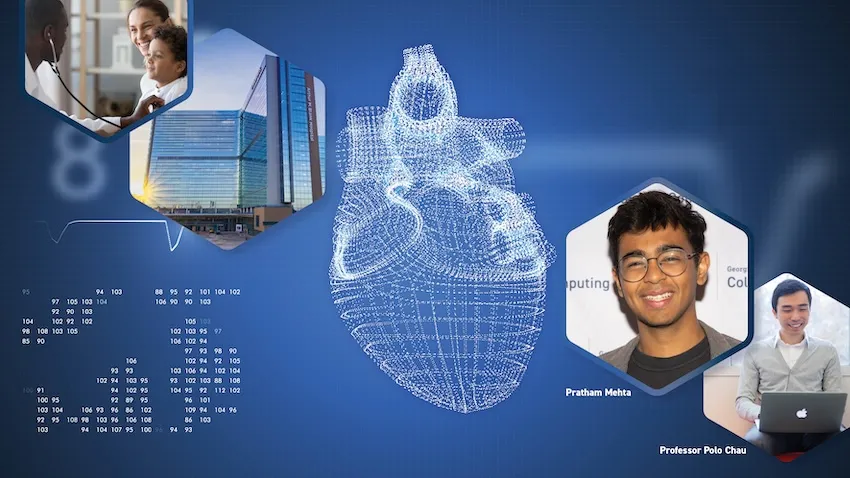
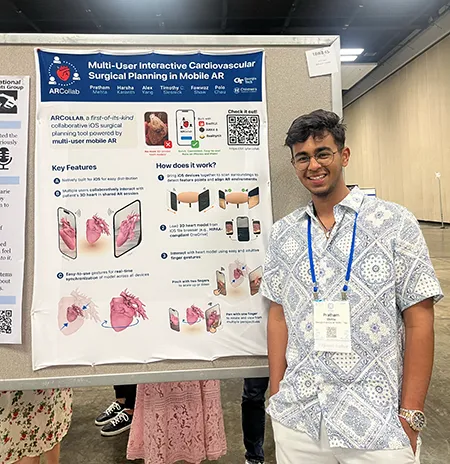
A new surgery planning tool powered by augmented reality (AR) is in development for doctors who need closer collaboration when planning heart operations. Promising results from a recent usability test have moved the platform one step closer to everyday use in hospitals worldwide.
Georgia Tech researchers partnered with medical experts from Children’s Healthcare of Atlanta (CHOA) to develop and test ARCollab. The iOS-based app leverages advanced AR technologies to let doctors collaborate together and interact with a patient’s 3D heart model when planning surgeries.
The usability evaluation demonstrates the app’s effectiveness, finding that ARCollab is easy to use and understand, fosters collaboration, and improves surgical planning.
“This tool is a step toward easier collaborative surgical planning. ARCollab could reduce the reliance on physical heart models, saving hours and even days of time while maintaining the collaborative nature of surgical planning,” said M.S. student Pratham Mehta, the app’s lead researcher.
“Not only can it benefit doctors when planning for surgery, it may also serve as a teaching tool to explain heart deformities and problems to patients.”
Two cardiologists and three cardiothoracic surgeons from CHOA tested ARCollab. The two-day study ended with the doctors taking a 14-question survey assessing the app’s usability. The survey also solicited general feedback and top features.
The Georgia Tech group determined from the open-ended feedback that:
- ARCollab enables new collaboration capabilities that are easy to use and facilitate surgical planning.
- Anchoring the model to a physical space is important for better interaction.
- Portability and real-time interaction are crucial for collaborative surgical planning.
Users rated each of the 14 questions on a 7-point Likert scale, with one being “strongly disagree” and seven being “strongly agree.” The 14 questions were organized into five categories: overall, multi-user, model viewing, model slicing, and saving and loading models.
The multi-user category attained the highest rating with an average of 6.65. This included a unanimous 7.0 rating that it was easy to identify who was controlling the heart model in ARCollab. The scores also showed it was easy for users to connect with devices, switch between viewing and slicing, and view other users’ interactions.
The model slicing category received the lowest, but formidable, average of 5.5. These questions assessed ease of use and understanding of finger gestures and usefulness to toggle slice direction.
Based on feedback, the researchers will explore adding support for remote collaboration. This would assist doctors in collaborating when not in a shared physical space. Another improvement is extending the save feature to support multiple states.
“The surgeons and cardiologists found it extremely beneficial for multiple people to be able to view the model and collaboratively interact with it in real-time,” Mehta said.
The user study took place in a CHOA classroom. CHOA also provided a 3D heart model for the test using anonymous medical imaging data. Georgia Tech’s Institutional Review Board (IRB) approved the study and the group collected data in accordance with Institute policies.
The five test participants regularly perform cardiovascular surgical procedures and are employed by CHOA.
The Georgia Tech group provided each participant with an iPad Pro with the latest iOS version and the ARCollab app installed. Using commercial devices and software meets the group’s intentions to make the tool universally available and deployable.
“We plan to continue iterating ARCollab based on the feedback from the users,” Mehta said.
“The participants suggested the addition of a ‘distance collaboration’ mode, enabling doctors to collaborate even if they are not in the same physical environment. This allows them to facilitate surgical planning sessions from home or otherwise.”
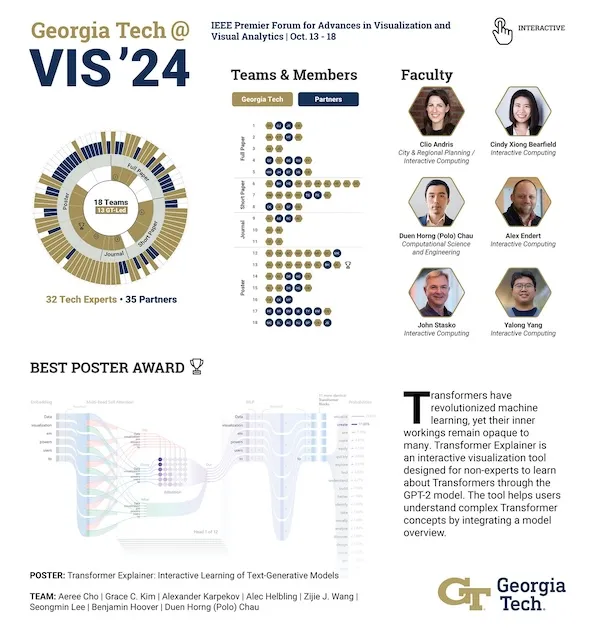
The Georgia Tech researchers are presenting ARCollab and the user study results at IEEE VIS 2024, the Institute of Electrical and Electronics Engineers (IEEE) visualization conference.
IEEE VIS is the world’s most prestigious conference for visualization research and the second-highest rated conference for computer graphics. It takes place virtually Oct. 13-18, moved from its venue in St. Pete Beach, Florida, due to Hurricane Milton.
The ARCollab research group's presentation at IEEE VIS comes months after they shared their work at the Conference on Human Factors in Computing Systems (CHI 2024).
Undergraduate student Rahul Narayanan and alumni Harsha Karanth (M.S. CS 2024) and Haoyang (Alex) Yang (CS 2022, M.S. CS 2023) co-authored the paper with Mehta. They study under Polo Chau, a professor in the School of Computational Science and Engineering.
The Georgia Tech group partnered with Dr. Timothy Slesnick and Dr. Fawwaz Shaw from CHOA on ARCollab’s development and user testing.
"I'm grateful for these opportunities since I get to showcase the team's hard work," Mehta said.
“I can meet other like-minded researchers and students who share these interests in visualization and human-computer interaction. There is no better form of learning.”
News Contact
Bryant Wine, Communications Officer
bryant.wine@cc.gatech.edu
A new algorithm tested on NASA’s Perseverance Rover on Mars may lead to better forecasting of hurricanes, wildfires, and other extreme weather events that impact millions globally.
Georgia Tech Ph.D. student Austin P. Wright is first author of a paper that introduces Nested Fusion. The new algorithm improves scientists’ ability to search for past signs of life on the Martian surface.
In addition to supporting NASA’s Mars 2020 mission, scientists from other fields working with large, overlapping datasets can use Nested Fusion’s methods toward their studies.
Wright presented Nested Fusion at the 2024 International Conference on Knowledge Discovery and Data Mining (KDD 2024) where it was a runner-up for the best paper award. KDD is widely considered the world's most prestigious conference for knowledge discovery and data mining research.
“Nested Fusion is really useful for researchers in many different domains, not just NASA scientists,” said Wright. “The method visualizes complex datasets that can be difficult to get an overall view of during the initial exploratory stages of analysis.”
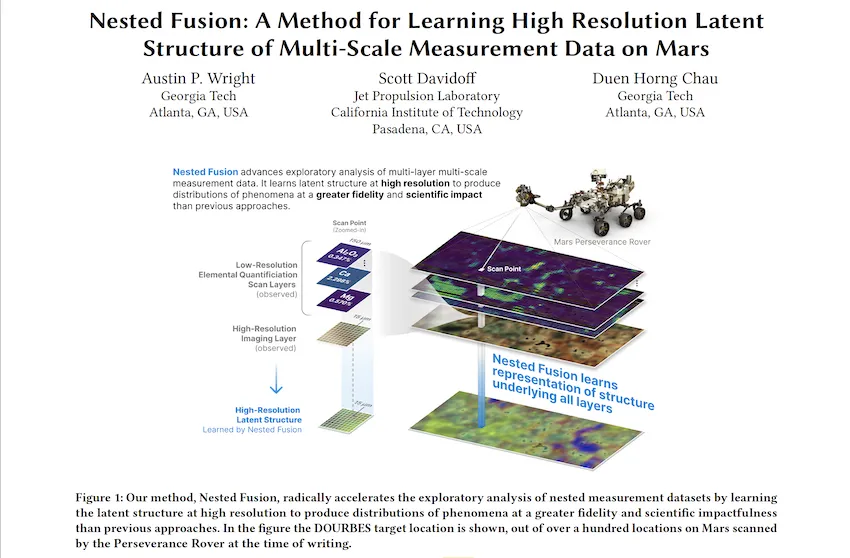
Nested Fusion combines datasets with different resolutions to produce a single, high-resolution visual distribution. Using this method, NASA scientists can more easily analyze multiple datasets from various sources at the same time. This can lead to faster studies of Mars’ surface composition to find clues of previous life.
The algorithm demonstrates how data science impacts traditional scientific fields like chemistry, biology, and geology.
Even further, Wright is developing Nested Fusion applications to model shifting climate patterns, plant and animal life, and other concepts in the earth sciences. The same method can combine overlapping datasets from satellite imagery, biomarkers, and climate data.
“Users have extended Nested Fusion and similar algorithms toward earth science contexts, which we have received very positive feedback,” said Wright, who studies machine learning (ML) at Georgia Tech.
“Cross-correlational analysis takes a long time to do and is not done in the initial stages of research when patterns appear and form new hypotheses. Nested Fusion enables people to discover these patterns much earlier.”
Wright is the data science and ML lead for PIXLISE, the software that NASA JPL scientists use to study data from the Mars Perseverance Rover.
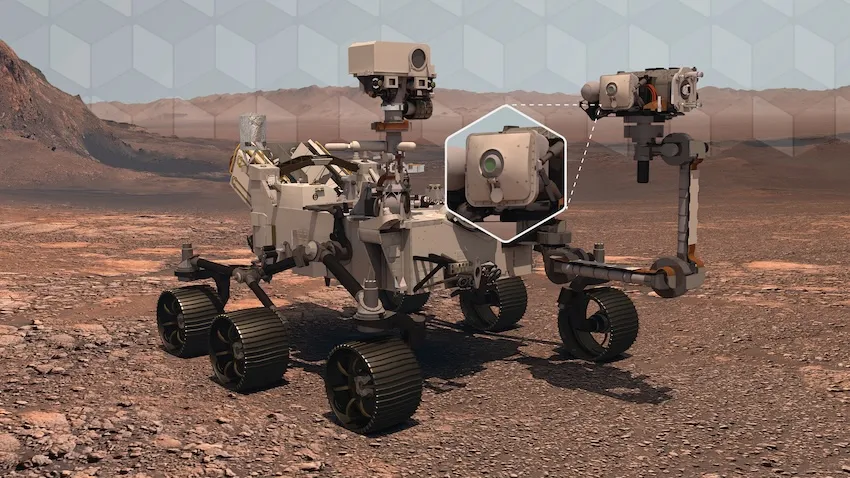
Perseverance uses its Planetary Instrument for X-ray Lithochemistry (PIXL) to collect data on mineral composition of Mars’ surface. PIXL’s two main tools that accomplish this are its X-ray Fluorescence (XRF) Spectrometer and Multi-Context Camera (MCC).
When PIXL scans a target area, it creates two co-aligned datasets from the components. XRF collects a sample's fine-scale elemental composition. MCC produces images of a sample to gather visual and physical details like size and shape.
A single XRF spectrum corresponds to approximately 100 MCC imaging pixels for every scan point. Each tool’s unique resolution makes mapping between overlapping data layers challenging. However, Wright and his collaborators designed Nested Fusion to overcome this hurdle.
In addition to progressing data science, Nested Fusion improves NASA scientists' workflow. Using the method, a single scientist can form an initial estimate of a sample’s mineral composition in a matter of hours. Before Nested Fusion, the same task required days of collaboration between teams of experts on each different instrument.
“I think one of the biggest lessons I have taken from this work is that it is valuable to always ground my ML and data science problems in actual, concrete use cases of our collaborators,” Wright said.
“I learn from collaborators what parts of data analysis are important to them and the challenges they face. By understanding these issues, we can discover new ways of formalizing and framing problems in data science.”
Wright presented Nested Fusion at KDD 2024, held Aug. 25-29 in Barcelona, Spain. KDD is an official special interest group of the Association for Computing Machinery. The conference is one of the world’s leading forums for knowledge discovery and data mining research.
Nested Fusion won runner-up for the best paper in the applied data science track, which comprised of over 150 papers. Hundreds of other papers were presented at the conference’s research track, workshops, and tutorials.
Wright’s mentors, Scott Davidoff and Polo Chau, co-authored the Nested Fusion paper. Davidoff is a principal research scientist at the NASA Jet Propulsion Laboratory. Chau is a professor at the Georgia Tech School of Computational Science and Engineering (CSE).
“I was extremely happy that this work was recognized with the best paper runner-up award,” Wright said. “This kind of applied work can sometimes be hard to find the right academic home, so finding communities that appreciate this work is very encouraging.”
News Contact
Bryant Wine, Communications Officer
bryant.wine@cc.gatech.edu

Graphic of a circuit board with a set of interconnects leading to a cloud
The Cloud Hub, a key initiative of the Institute for Data Engineering and Science (IDEaS) at Georgia Tech, recently concluded a successful Call for Proposals focused on advancing the field of Generative Artificial Intelligence (GenAI). This initiative, made possible by a generous gift funding from Microsoft, aims to push the boundaries of GenAI research by supporting projects that explore both foundational aspects and innovative applications of this cutting-edge technology.
Call for Proposals: A Gateway to Innovation
Launched in early 2024, the Call for Proposals invited researchers from across Georgia Tech to submit their innovative ideas on GenAI. The scope was broad, encouraging proposals that spanned foundational research, system advancements, and novel applications in various disciplines, including arts, sciences, business, and engineering. A special emphasis was placed on projects that addressed responsible and ethical AI use.
The response from the Georgia Tech research community was overwhelming, with 76 proposals submitted by teams eager to explore this transformative technology. After a rigorous selection process, eight projects were selected for support. Each awarded team will also benefit from access to Microsoft’s Azure cloud resources..
Recognizing Microsoft’s Generous Contribution
This successful initiative was made possible through the generous support of Microsoft, whose contribution of research resources has empowered Georgia Tech researchers to explore new frontiers in GenAI. By providing access to Azure’s advanced tools and services, Microsoft has played a pivotal role in accelerating GenAI research at Georgia Tech, enabling researchers to tackle some of the most pressing challenges and opportunities in this rapidly evolving field.
Looking Ahead: Pioneering the Future of GenAI
The awarded projects, set to commence in Fall 2024, represent a diverse array of research directions, from improving the capabilities of large language models to innovative applications in data management and interdisciplinary collaborations. These projects are expected to make significant contributions to the body of knowledge in GenAI and are poised to have a lasting impact on the industry and beyond.
IDEaS and the Cloud Hub are committed to supporting these teams as they embark on their research journeys. The outcomes of these projects will be shared through publications and highlighted on the Cloud Hub web portal, ensuring visibility for the groundbreaking work enabled by this initiative.
Congratulations to the Fall 2024 Winners
- Annalisa Bracco | EAS "Modeling the Dispersal and Connectivity of Marine Larvae with GenAI Agents" [proposal co-funded with support from the Brook Byers Institute for Sustainable Systems]
- Yunan Luo | CSE “Designing New and Diverse Proteins with Generative AI”
- Kartik Goyal | IC “Generative AI for Greco-Roman Architectural Reconstruction: From Partial Unstructured Archaeological Descriptions to Structured Architectural Plans”
- Victor Fung | CSE “Intelligent LLM Agents for Materials Design and Automated Experimentation”
- Noura Howell | LMC “Applying Generative AI for STEM Education: Supporting AI literacy and community engagement with marginalized youth”
- Neha Kumar | IC “Towards Responsible Integration of Generative AI in Creative Game Development”
- Maureen Linden | Design “Best Practices in Generative AI Used in the Creation of Accessible Alternative Formats for People with Disabilities”
- Surya Kalidindi | ME & MSE “Accelerating Materials Development Through Generative AI Based Dimensionality Expansion Techniques”
- Tuo Zhao | ISyE “Adaptive and Robust Alignment of LLMs with Complex Rewards”
News Contact
Christa M. Ernst - Research Communications Program Manager
christa.ernst@research.gatech.edu
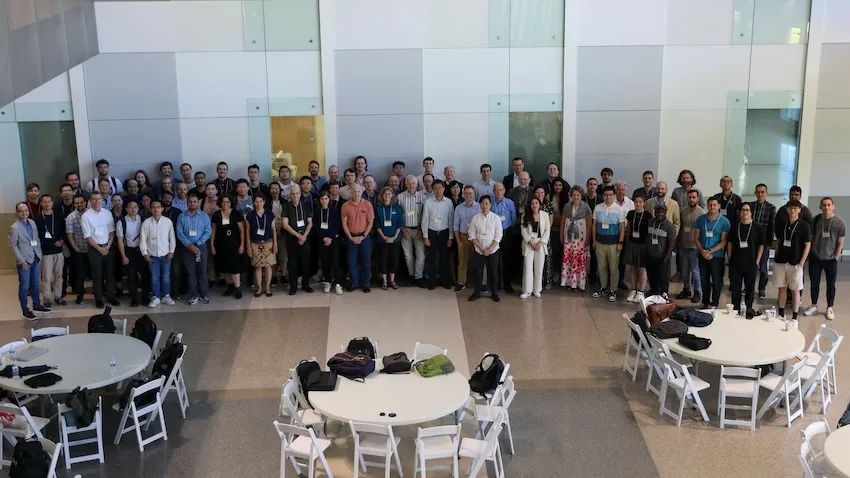
From weather prediction to drug discovery, math powers the models used in computer simulations. To help these vital tools with their calculations, global experts recently met at Georgia Tech to share ways to make math easier for computers.
Tech hosted the 2024 International Conference on Preconditioning Techniques for Scientific and Industrial Applications (Precond 24), June 10-12.
Preconditioning accelerates matrix computations, a kind of math used in most large-scale models. These computer models become faster, more efficient, and more accessible with help from preconditioned equations.
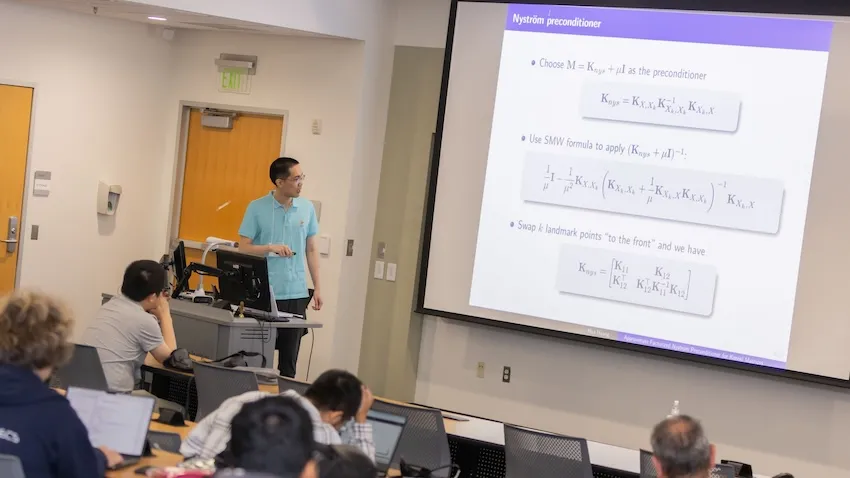
“Preconditioning transforms complex numerical problems into more easily solved ones,” said Edmond Chow, a professor at Georgia Tech and co-chair of Precond 24’s local organization and program committees.
“The new problem wields a better condition number, giving rise to the name preconditioning.”
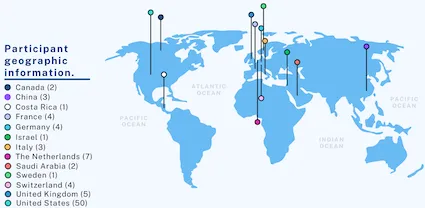
Researchers from 13 countries presented their work through 20 mini-symposia and seven invited talks at Precond 24. Their work showcased the practicality of preconditioners.
Vandana Dwarka, an assistant professor at Delft University of Technology, shared newly developed preconditioners for electromagnetic simulations. This technology can be used in further applications ranging from imaging to designing nuclear fusion devices.
Xiaozhe Hu presented a physics-based preconditioner that simulates biophysical processes in the brain, such as blood flow and metabolic waste clearance. Hu brought this research from Tufts University, where he is an associate professor.
Tucker Hartland, a postdoctoral researcher at Lawrence Livermore National Laboratory, discussed preconditioning in contact mechanics. This work improves the modeling of interactions between physical objects that touch each other. Many fields stand to benefit from Hartland’s study, including mechanical engineering, civil engineering, and materials science.
A unique aspect of this year’s conference was an emphasis on machine learning (ML). Between a panel discussion, tutorial, and several talks, experts detailed how to employ ML for preconditioning and how preconditioning can train ML models.
Precond 24 invited seven speakers from institutions around the world to share their research with conference attendees. The presenters were:
- Monica Dessole, CERN, Switzerland
- Selime Gurol, CERFACS, France
- Alexander Heinlein, Delft University of Technology, Netherlands
- Rui Peng Li, Lawrence Livermore National Laboratory, USA
- Will Pazner, Portland State University, USA
- Tyrone Rees, Science and Technology Facilities Council, UK
- Jacob B. Schroder, University of New Mexico, USA
Along with hosting Precond 24, several Georgia Tech researchers participated in the conference through presentations.
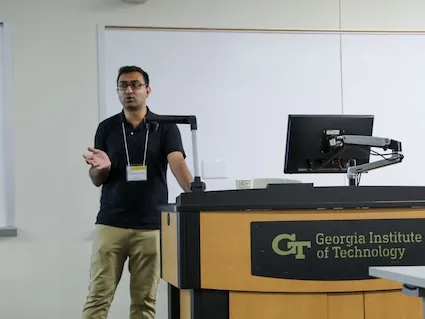
Ph.D. students Hua Huang and Shikhar Shah each presented a paper on the conference’s first day. Alumnus Srinivas Eswar (Ph.D. CS 2022) returned to Atlanta to share research from his current role at Argonne National Laboratory. Chow chaired the ML panel and a symposium on preconditioners for matrices.
“It was an engaging and rewarding experience meeting so many people from this very tight-knit community,” said Shah, who studies computational science and engineering (CSE). “Getting to see talks close to my research provided me with a lot of inspiration and direction for future work.”
Precond 2024 was the thirteenth meeting of the conference, which occurs every two years.
The conference returned to Atlanta this year for the first time since 2005. Atlanta joins Minneapolis as one of only two cities in the world to host Precond more than once. Precond 24 marked the sixth time the conference met in the U.S.
Georgia Tech and Emory University’s Department of Mathematics organized and sponsored Precond 24. The U.S. Department of Energy Office of Science co-sponsored the conference with Tech and Emory.
Georgia Tech entities swarmed together in support of Precond 24. The Office of the Associate Vice President for Research Operations and Infrastructure, College of Computing, and School of CSE co-sponsored the conference.
“The enthusiasm at the conference has been very gratifying. So many people organized sessions at the conference and contributed to the very strong attendance,” Chow said.
“This is a testament to the continued importance of preconditioning and related numerical methods in a rapidly changing technological world.”
News Contact
Bryant Wine, Communications Officer
bryant.wine@cc.gatech.edu
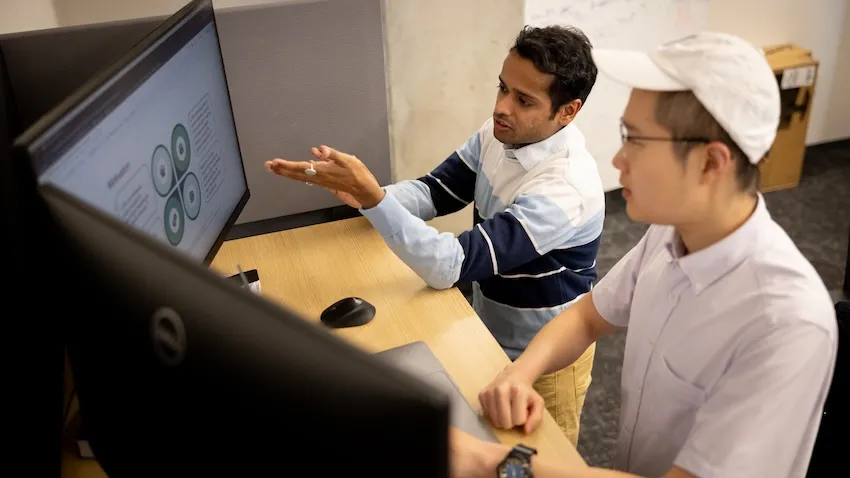
Georgia Tech researchers say non-English speakers shouldn’t rely on chatbots like ChatGPT to provide valuable healthcare advice.
A team of researchers from the College of Computing at Georgia Tech has developed a framework for assessing the capabilities of large language models (LLMs).
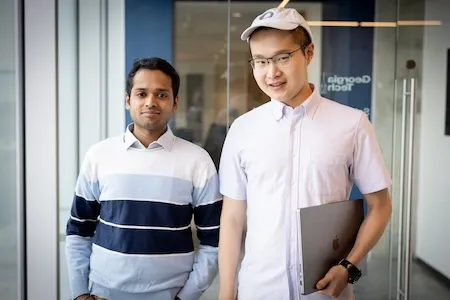
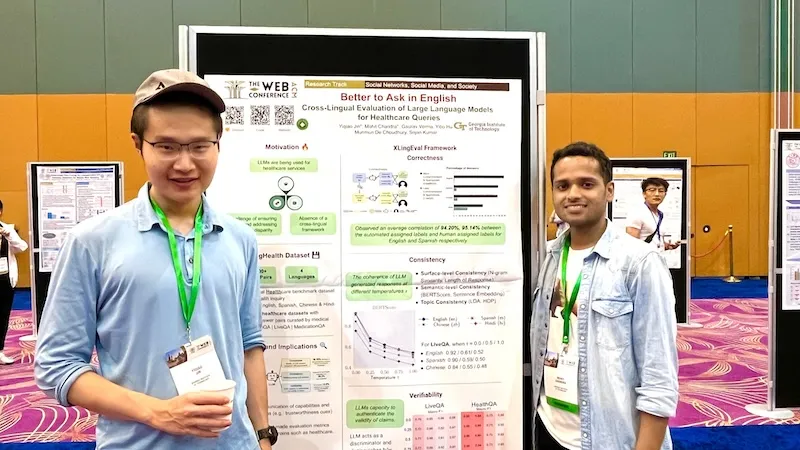
Ph.D. students Mohit Chandra and Yiqiao (Ahren) Jin are the co-lead authors of the paper Better to Ask in English: Cross-Lingual Evaluation of Large Language Models for Healthcare Queries.
Their paper’s findings reveal a gap between LLMs and their ability to answer health-related questions. Chandra and Jin point out the limitations of LLMs for users and developers but also highlight their potential.
Their XLingEval framework cautions non-English speakers from using chatbots as alternatives to doctors for advice. However, models can improve by deepening the data pool with multilingual source material such as their proposed XLingHealth benchmark.
“For users, our research supports what ChatGPT’s website already states: chatbots make a lot of mistakes, so we should not rely on them for critical decision-making or for information that requires high accuracy,” Jin said.
“Since we observed this language disparity in their performance, LLM developers should focus on improving accuracy, correctness, consistency, and reliability in other languages,” Jin said.
Using XLingEval, the researchers found chatbots are less accurate in Spanish, Chinese, and Hindi compared to English. By focusing on correctness, consistency, and verifiability, they discovered:
- Correctness decreased by 18% when the same questions were asked in Spanish, Chinese, and Hindi.
- Answers in non-English were 29% less consistent than their English counterparts.
- Non-English responses were 13% overall less verifiable.
XLingHealth contains question-answer pairs that chatbots can reference, which the group hopes will spark improvement within LLMs.
The HealthQA dataset uses specialized healthcare articles from the popular healthcare website Patient. It includes 1,134 health-related question-answer pairs as excerpts from original articles.
LiveQA is a second dataset containing 246 question-answer pairs constructed from frequently asked questions (FAQs) platforms associated with the U.S. National Institutes of Health (NIH).
For drug-related questions, the group built a MedicationQA component. This dataset contains 690 questions extracted from anonymous consumer queries submitted to MedlinePlus. The answers are sourced from medical references, such as MedlinePlus and DailyMed.
In their tests, the researchers asked over 2,000 medical-related questions to ChatGPT-3.5 and MedAlpaca. MedAlpaca is a healthcare question-answer chatbot trained in medical literature. Yet, more than 67% of its responses to non-English questions were irrelevant or contradictory.
“We see far worse performance in the case of MedAlpaca than ChatGPT,” Chandra said.
“The majority of the data for MedAlpaca is in English, so it struggled to answer queries in non-English languages. GPT also struggled, but it performed much better than MedAlpaca because it had some sort of training data in other languages.”
Ph.D. student Gaurav Verma and postdoctoral researcher Yibo Hu co-authored the paper.
Jin and Verma study under Srijan Kumar, an assistant professor in the School of Computational Science and Engineering, and Hu is a postdoc in Kumar’s lab. Chandra is advised by Munmun De Choudhury, an associate professor in the School of Interactive Computing.
The team will present their paper at The Web Conference, occurring May 13-17 in Singapore. The annual conference focuses on the future direction of the internet. The group’s presentation is a complimentary match, considering the conference's location.
English and Chinese are the most common languages in Singapore. The group tested Spanish, Chinese, and Hindi because they are the world’s most spoken languages after English. Personal curiosity and background played a part in inspiring the study.
“ChatGPT was very popular when it launched in 2022, especially for us computer science students who are always exploring new technology,” said Jin. “Non-native English speakers, like Mohit and I, noticed early on that chatbots underperformed in our native languages.”
School of Interactive Computing communications officer Nathan Deen and School of Computational Science and Engineering communications officer Bryant Wine contributed to this report.
News Contact
Bryant Wine, Communications Officer
bryant.wine@cc.gatech.edu
Nathan Deen, Communications Officer
ndeen6@cc.gatech.edu

An Adobe Stock image of a pediatrician listening to a young patient's heartbeat with a stethoscope.
Cardiologists and surgeons could soon have a new mobile augmented reality (AR) tool to improve collaboration in surgical planning.
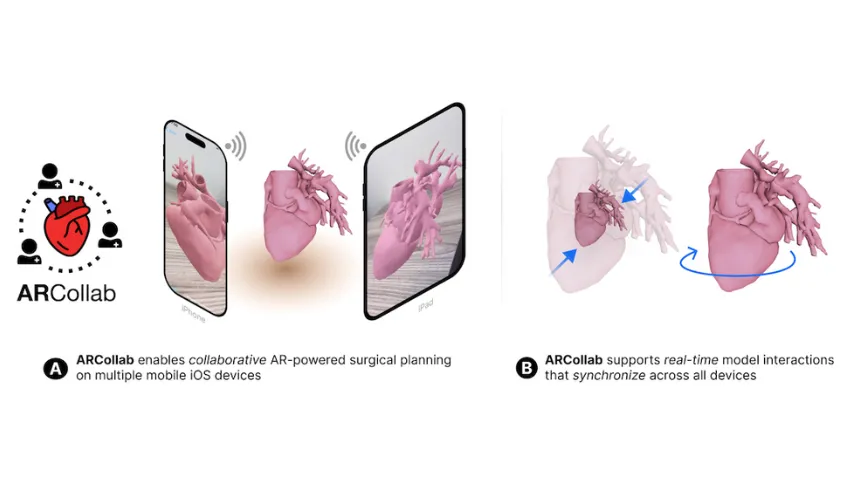
ARCollab is an iOS AR application designed for doctors to interact with patient-specific 3D heart models in a shared environment. It is the first surgical planning tool that uses multi-user mobile AR in iOS.
The application’s collaborative feature overcomes limitations in traditional surgical modeling and planning methods. This offers patients better, personalized care from doctors who plan and collaborate with the tool.
Georgia Tech researchers partnered with Children’s Healthcare of Atlanta (CHOA) in ARCollab’s development. Pratham Mehta, a computer science major, led the group’s research.
“We have conducted two trips to CHOA for usability evaluations with cardiologists and surgeons. The overall feedback from ARCollab users has been positive,” Mehta said.
“They all enjoyed experimenting with it and collaborating with other users. They also felt like it had the potential to be useful in surgical planning.”
ARCollab’s collaborative environment is the tool’s most novel feature. It allows surgical teams to study and plan together in a virtual workspace, regardless of location.
ARCollab supports a toolbox of features for doctors to inspect and interact with their patients' AR heart models. With a few finger gestures, users can scale and rotate, “slice” into the model, and modify a slicing plane to view omnidirectional cross-sections of the heart.
Developing ARCollab on iOS works twofold. This streamlines deployment and accessibility by making it available on the iOS App Store and Apple devices. Building ARCollab on Apple’s peer-to-peer network framework ensures the functionality of the AR components. It also lessens the learning curve, especially for experienced AR users.
ARCollab overcomes traditional surgical planning practices of using physical heart models. Producing physical models is time-consuming, resource-intensive, and irreversible compared to digital models. It is also difficult for surgical teams to plan together since they are limited to studying a single physical model.
Digital and AR modeling is growing as an alternative to physical models. CardiacAR is one such tool the group has already created.
However, digital platforms lack multi-user features essential for surgical teams to collaborate during planning. ARCollab’s multi-user workspace progresses the technology’s potential as a mass replacement for physical modeling.
“Over the past year and a half, we have been working on incorporating collaboration into our prior work with CardiacAR,” Mehta said.
“This involved completely changing the codebase, rebuilding the entire app and its features from the ground up in a newer AR framework that was better suited for collaboration and future development.”
Its interactive and visualization features, along with its novelty and innovation, led the Conference on Human Factors in Computing Systems (CHI 2024) to accept ARCollab for presentation. The conference occurs May 11-16 in Honolulu.
CHI is considered the most prestigious conference for human-computer interaction and one of the top-ranked conferences in computer science.
M.S. student Harsha Karanth and alumnus Alex Yang (CS 2022, M.S. CS 2023) co-authored the paper with Mehta. They study under Polo Chau, an associate professor in the School of Computational Science and Engineering.
The Georgia Tech group partnered with Timothy Slesnick and Fawwaz Shaw from CHOA on ARCollab’s development.
“Working with the doctors and having them test out versions of our application and give us feedback has been the most important part of the collaboration with CHOA,” Mehta said.
“These medical professionals are experts in their field. We want to make sure to have features that they want and need, and that would make their job easier.”
News Contact
Bryant Wine, Communications Officer
bryant.wine@cc.gatech.edu