
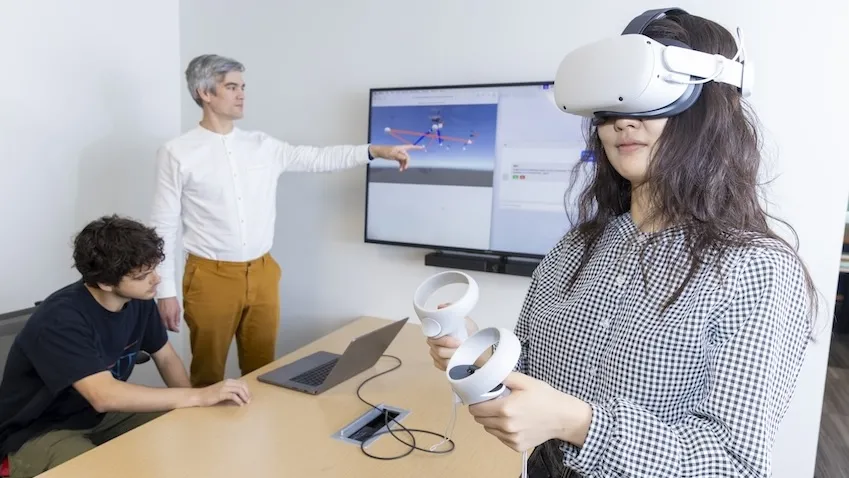
A team’s success in any competitive environment often hinges on how well each member can anticipate the actions of their teammates.
Assistant Professor Christopher MacLellan thinks teachable artificial intelligence (AI) agents are uniquely suited for this role and make ideal teammates for video gamers.
With the help of funding from the U.S. Department of Defense, MacLellan hopes to prove his theory with a conversational, task-performing agent he co-engineered called the Verbal Apprentice Learner (VAL).
“You need the ability to adapt to what your teammates are doing to be an effective teammate,” MacLellan said. “We’re exploring this capability for AI agents in the context of video games.”
Unlike generative AI chatbots like ChatGPT, VAL uses an interactive task-learning approach.
“VAL learns how you do things in the way you want them done,” MacLellan said. “When you tell it to do something, it will do it the way you taught it instead of some generic random way from the internet.”
A key difference between VAL and a chatbot is that VAL can perceive and act within the gaming world. A chatbot, like ChatGPT, only perceives and acts within the chat dialog.
MacLellan immersed VAL into an open-sourced, simplified version of the popular Nintendo cooperative video game Overcooked to discover how well the agent can function as a teammate. In Overcooked, up to four players work together to prepare dishes in a kitchen while earning points for every completed order.
How Fast Can Val Learn?
In a study with 12 participants, MacLellan found that users could often correctly teach VAL new tasks with only a few examples.
First, the user must teach VAL how to play the game. Knowing that a single human error could compromise results, MacLellan designed three precautionary features:
- When VAL receives a command such as "cook an onion," it asks clarifying questions to understand and confirm its task. As VAL continues to learn, clarification prompts decrease.
- An “undo” button to ensure users can reverse an errant command.
- VAL contains GPT subcomponents to interpret user input, allowing it to adapt to ambiguous commands and typos. The GPT subcomponents drive changes in VAL’s task knowledge, which it uses to perform tasks without additional guidance.
The participants in MacLellan’s study used these features to ensure VAL learned the tasks correctly.
The high volume of prompts creates a more tedious experience. Still, MacLellan said it provides detailed data on system performance and user experience. That insight should make designing a more seamless experience in future versions of VAL possible.
The prompts also require the AI to be explainable.
“When VAL learns something, it uses the language model to label each node in the task knowledge graph that the system constructs,” MacLellan said. “You can see what it learned and how it breaks tasks down into actions.”
Beyond Gaming
MacLellan’s Teachable AI Lab is devoted to developing AI that inexperienced users can train.
“We are trying to come up with a more usable system where anyone, including people with limited expertise, could come in and interact with the agent and be able to teach it within just five minutes of interacting with it for the first time,” he said.
His work caught the attention of the Department of Defense, which awarded MacLellan multiple grants to fund several of his projects, including VAL. The possibilities of how the DoD could use VAL, on and off the battlefield, are innumerable.
“(The DoD) envisions a future in which people and AI agents jointly work together to solve problems,” MacLellan said. “You need the ability to adapt to what your teammates are doing to be an effective teammate.
“We look at the dynamics of different teaming circumstances and consider what are the right ways to team AI agents with people. The key hypothesis for our project is agents that can learn on the fly and adapt to their users will make better teammates than those that are pre-trained like GPT.”
Design Your Own Agent
MacLellan is co-organizing a gaming agent design competition sponsored by the Institute of Electrical and Electronic Engineers (IEEE) 2024 Conference on Games in Milan, Italy.
The Dice Adventure Competition invites participants to design their own AI agent to play a multi-player, turn-based dungeon crawling game or to play the game as a human teammate. The competition this month and in July offers $1,000 in prizes for players and agent developers in the top three teams.
News Contact
Nathan Deen
Communications Officer
School of Interactive Computing

Researchers at Georgia Tech are creating accessible museum exhibits that explain artificial intelligence (AI) to middle school students, including the LuminAI interactive AI-based dance partner developed by Regents' Professor Brian Magerko.
Ph.D. students Yasmine Belghith and Atefeh Mahdavi co-led a study in a museum setting that observed how middle schoolers interact with the popular AI chatbot ChatGPT.
“It’s important for museums, especially science museums, to start incorporating these kinds of exhibits about AI and about using AI so the general population can have that avenue to interact with it and transfer that knowledge to everyday tools,” Belghith said.
Belghith and Mahdavi conducted their study with nine focus groups of 24 students at Chicago’s Museum of Science and Industry. The team used the findings to inform their design of AI exhibits that the museum could display as early as 2025.
Belghith is a Ph.D. student in human-centered computing. Her advisor is Assistant Professor Jessica Roberts in the School of Interactive Computing. Magerko advises Mahdavi, a Ph.D. student in digital media in the School of Literature, Media, and Communication.
Belghith and Mahdavi presented a paper about their study in May at the Association for Computing Machinery (ACM) 2024 Conference on Human Factors in Computing Systems (CHI) in Honolulu, Hawaii.
Their work is part of a National Science Foundation (NSF) grant dedicated to fostering AI literacy among middle schoolers in informal environments.
Expanding Accessibility
While there are existing efforts to reach students in the classroom, the researchers believe AI education is most accessible in informal learning environments like museums.
“There’s a need today for everybody to have some sort of AI literacy,” Belghith said. “Many middle schoolers will not be taking computer science courses or pursuing computer science careers, so there needs to be interventions to teach them what they should know about AI.”
The researchers found that most of the middle schoolers interacted with ChatGPT to either test its knowledge by prompting it to answer questions or socialize with it by having human-like conversations.
Others fit the mold of “content explorers.” They did not engage with the AI aspect of ChatGPT and focused more on the content it produced.
Mahdavi said regardless of their approach, students would get “tunnel vision” in their interactions instead of exploring more of the AI’s capabilities.
“If they go in a certain direction, they will continue to explore that,” Mahdavi said. “One thing we can learn from this is to nudge kids and show them there are other things you can do with AI tools or get them to think about it another way.”
The researchers also paid attention to what was missing in the students’ responses, which Mahdavi said was just as important as what they did talk about.
“None of them mentioned anything about ethics or what could be problematic about AI,” she said. “That told us there’s something they aren’t thinking about but should be. We take that into account as we think about future exhibits.”
Making an Impact
The researchers visited the Museum of Science and Industry June 1-2 to conduct the first trial run of three AI-based exhibits they’ve created. One of them is LuminAI, which was developed in Magerko’s Expressive Machinery Lab.
LuminAI is an interactive art installation that allows people to engage in collaborative movement with an AI dance partner. Georgia Tech and Kennesaw State recently held the first performance of AI avatars dancing with human partners in front of a live audience.
Duri Long, a former Georgia Tech Ph.D. student who is now an assistant professor at Northwestern University, designed the second exhibit. KnowledgeNet is an interactive tabletop exhibit in which visitors build semantic networks by adding different characteristics to characters that interact together.
The third exhibit, Data Bites, prompts users to build datasets of pizzas and sandwiches. Their selections train a machine-learning classifier in real time.
Belghith said the exhibits fostered conversations about AI between parents and children.
“The exhibit prototypes successfully engaged children in creative activities,” she said. “Many parents had to pull their kids away to continue their museum tour because the kids wanted more time to try different creations or dance moves.”
News Contact
Nathan Deen
Communications Officer I
School of Interactive Computing
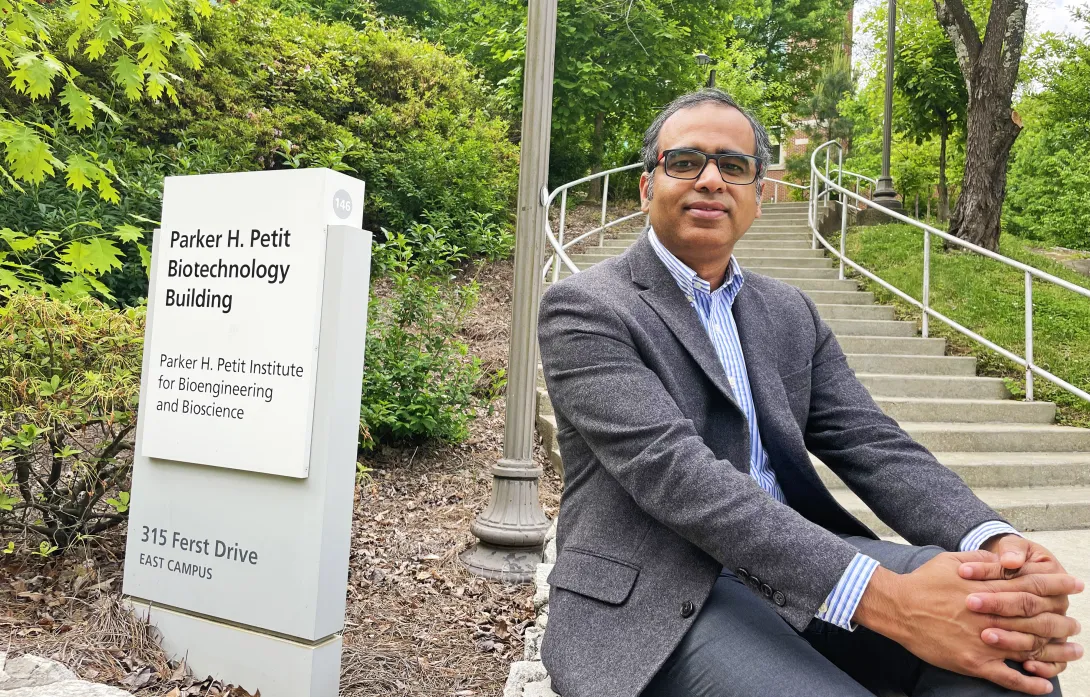
Ankur Singh has developed a new way of programming T cells that retains their naïve state, making them better fighters. — Photo by Jerry Grillo
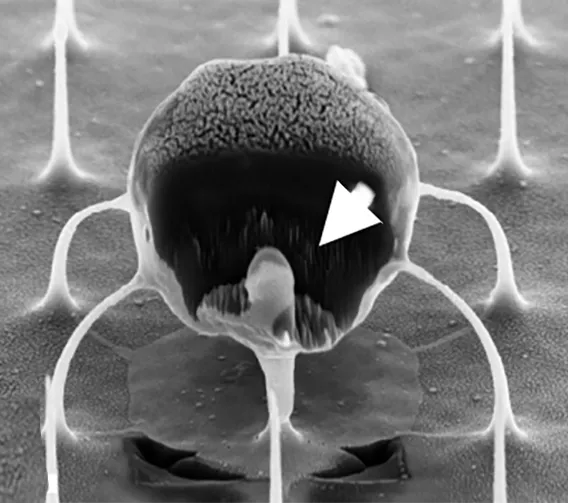
This is an image of a T cell on a nanowire array. The arrow indicates where a nanowire has penetrated the cell, delivering therapeutic miRNA.
Adoptive T-cell therapy has revolutionized medicine. A patient’s T-cells — a type of white blood cell that is part of the body’s immune system — are extracted and modified in a lab and then infused back into the body, to seek and destroy infection, or cancer cells.
Now Georgia Tech bioengineer Ankur Singh and his research team have developed a method to improve this pioneering immunotherapy.
Their solution involves using nanowires to deliver therapeutic miRNA to T-cells. This new modification process retains the cells’ naïve state, which means they’ll be even better disease fighters when they’re infused back into a patient.
“By delivering miRNA in naïve T cells, we have basically prepared an infantry, ready to deploy,” Singh said. “And when these naïve cells are stimulated and activated in the presence of disease, it’s like they’ve been converted into samurais.”
Lean and Mean
Currently in adoptive T-cell therapy, the cells become stimulated and preactivated in the lab when they are modified, losing their naïve state. Singh’s new technique overcomes this limitation. The approach is described in a new study published in the journal Nature Nanotechnology.
“Naïve T-cells are more useful for immunotherapy because they have not yet been preactivated, which means they can be more easily manipulated to adopt desired therapeutic functions,” said Singh, the Carl Ring Family Professor in the Woodruff School of Mechanical Engineering and the Wallace H. Coulter Department of Biomedical Engineering.
The raw recruits of the immune system, naïve T-cells are white blood cells that haven’t been tested in battle yet. But these cellular recruits are robust, impressionable, and adaptable — ready and eager for programming.
“This process creates a well-programmed naïve T-cell ideal for enhancing immune responses against specific targets, such as tumors or pathogens,” said Singh.
The precise programming naïve T-cells receive sets the foundational stage for a more successful disease fighting future, as compared to preactivated cells.
Giving Fighter Cells a Boost
Within the body, naïve T-cells become activated when they receive a danger signal from antigens, which are part of disease-causing pathogens, but they send a signal to T-cells that activate the immune system.
Adoptive T-cell therapy is used against aggressive diseases that overwhelm the body’s defense system. Scientists give the patient’s T-cells a therapeutic boost in the lab, loading them up with additional medicine and chemically preactivating them.
That’s when the cells lose their naïve state. When infused back into the patient, these modified T-cells are an effective infantry against disease — but they are prone to becoming exhausted. They aren’t samurai. Naïve T-cells, though, being the young, programmable recruits that they are, could be.
The question for Singh and his team was: How do we give cells that therapeutic boost without preactivating them, thereby losing that pristine, highly suggestable naïve state? Their answer: Nanowires.
NanoPrecision: The Pointed Solution
Singh wanted to enhance naïve T-cells with a dose of miRNA. miRNA is a molecule that, when used as a therapeutic, works as a kind of volume knob for genes, turning their activity up or down to keep infection and cancer in check. The miRNA for this study was developed in part by the study’s co-author, Andrew Grimson of Cornell University.
“If we could find a way to forcibly enter the cells without damaging them, we could achieve our goal to deliver the miRNA into naïve T cells without preactivating them,” Singh explained.
Traditional modification in the lab involves binding immune receptors to T-cells, enabling the uptake of miRNA or any genetic material (which results in loss of the naïve state). “But nanowires do not engage receptors and thus do not activate cells, so they retain their naïve state,” Singh said.
The nanowires, silicon wafers made with specialized tools at Georgia Tech’s Institute for Electronics and Nanotechnology, form a fine needle bed. Cells are placed on the nanowires, which easily penetrate the cells and deliver their miRNA over several hours. Then the cells with miRNA are flushed out from the tops of the nanowires, activated, eventually infused back into the patient. These programmed cells can kill enemies efficiently over an extended time period.
“We believe this approach will be a real gamechanger for adoptive immunotherapies, because we now have the ability to produce T-cells with predictable fates,” says Brian Rudd, a professor of immunology at Cornell University, and co-senior author of the study with Singh.
The researchers tested their work in two separate infectious disease animal models at Cornell for this study, and Singh described the results as “a robust performance in infection control.”
In the next phase of study, the researchers will up the ante, moving from infectious disease to test their cellular super soldiers against cancer and move toward translation to the clinical setting. New funding from the Georgia Clinical & Translational Science Alliance is supporting Singh’s research.
CITATION: Kristel J. Yee Mon, Sungwoong Kim, Zhonghao Dai, Jessica D. West, Hongya Zhu5, Ritika Jain, Andrew Grimson, Brian D. Rudd, Ankur Singh. “Functionalized nanowires for miRNA-mediated therapeutic programming of naïve T cells,” Nature Nanotechnology.
FUNDING: Curci Foundation, NSF (EEC-1648035, ECCS-2025462, ECCS-1542081), NIH (5R01AI132738-06, 1R01CA266052-01, 1R01CA238745-01A1, U01CA280984-01, R01AI110613 and U01AI131348).
News Contact
Jerry Grillo

Ocean shipping, the backbone of international trade, is significantly more energy efficient than air or land transport. However, cutting down on ocean freight carbon emissions will require a great deal of collaboration and effort.

Valerie Thomas, the Anderson-Interface Chair of Natural Systems Professor in the H. Milton Stewart School of Industrial and Systems Engineering, and in the School of Public Policy. (Credit: Camille C. Henriquez)
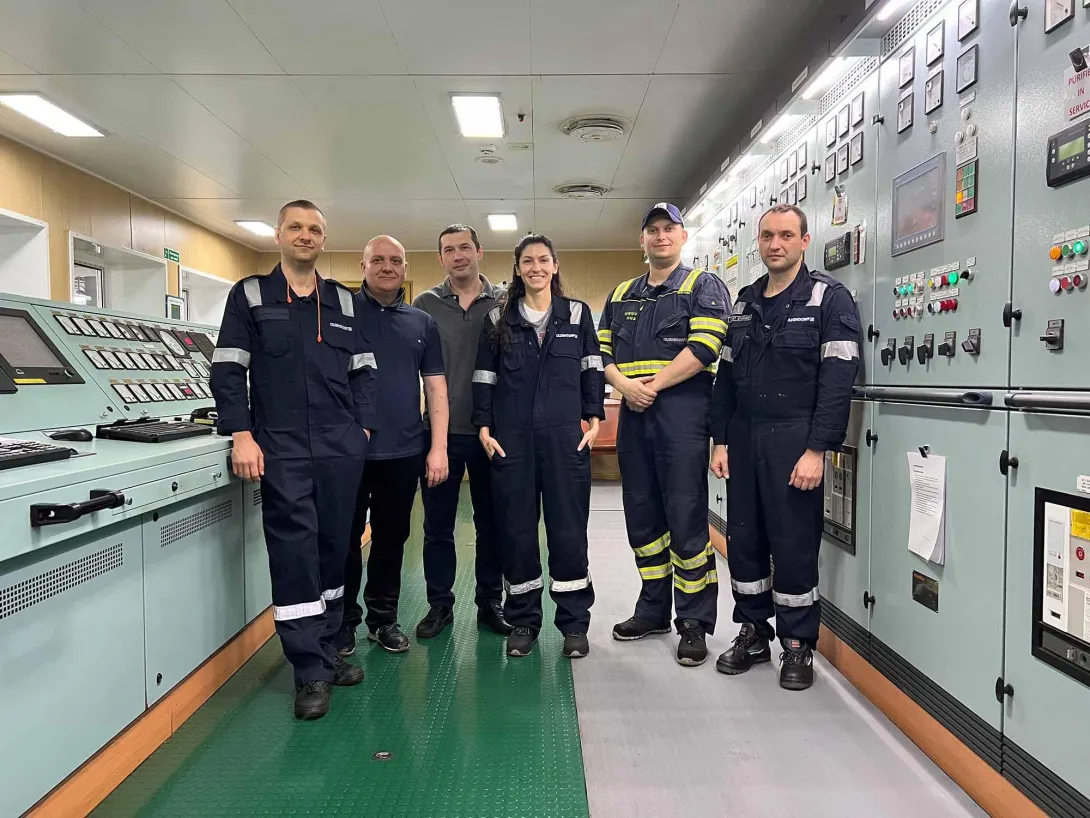
Patricia Stathatou (third from right), a researcher at the Renewable Bioproducts Institute, with the carrier vessel's crew members. (Credit: Patricia Stathatou)
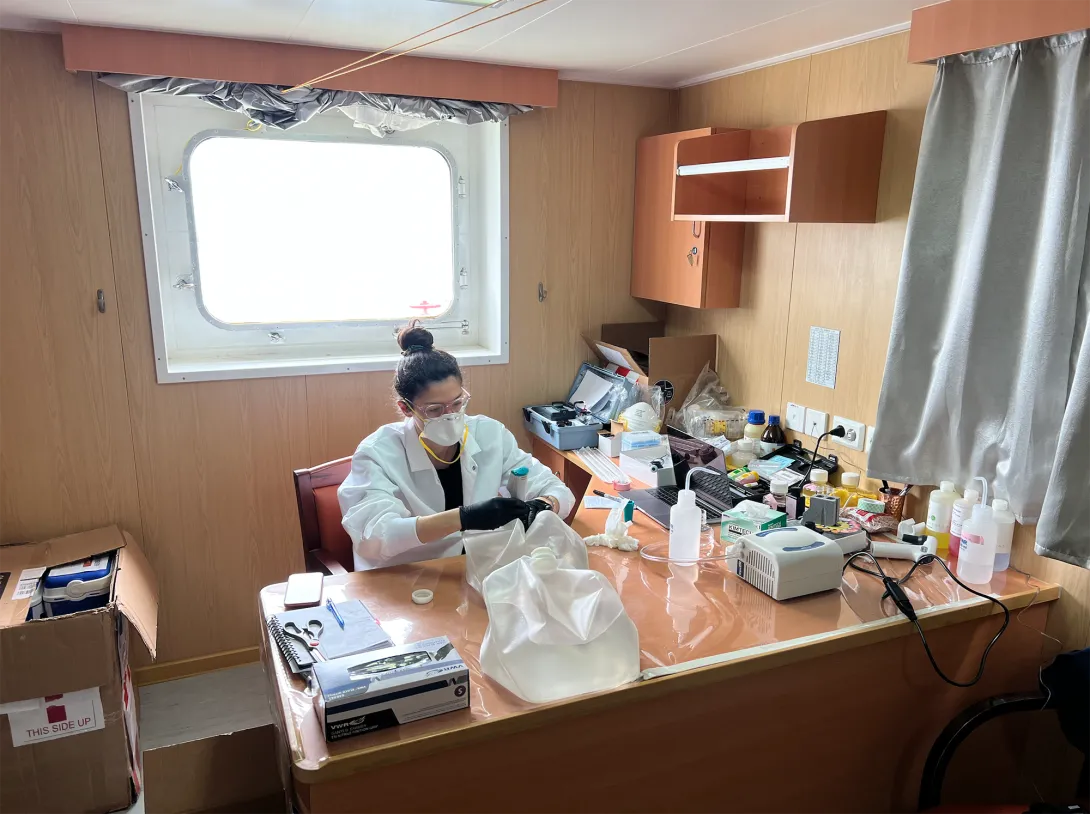
Stathatou preserving water and washwater samples from the vessel's scrubber so they can be stored and analyzed later in the lab. (Credit: Patricia Stathatou)
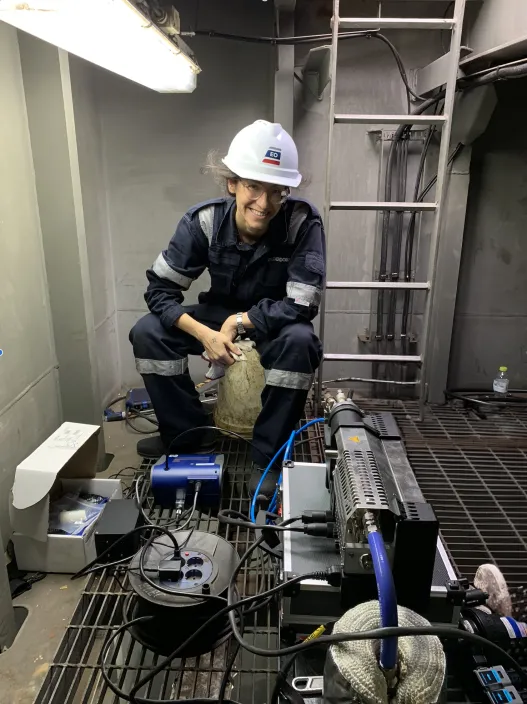
Stathatou prepares to measure particulate matter emissions in the vessel's funnel — a very windy area of the ship. (Credit: Patricia Stathatou)
When people think of greenhouse gas emissions from transportation, what often comes to mind are airplanes and land vehicles like cars or trucks. But as efforts to slow climate change are ramping up, the spotlight is on another form of transport: ships.
The U.N.’s International Maritime Organization (IMO) has set targets to reduce shipping greenhouse gas emissions by at least 40% by 2030 and 70% by 2040, aiming for net-zero by 2050. Shipping currently accounts for about 3% of global annual greenhouse gas emissions, and the pressure is on shipping companies to meet these ambitious goals.
Across Georgia Tech, researchers are working toward a sustainable future for ocean shipping. This includes Valerie Thomas, the Anderson-Interface Chair of Natural Systems Professor in the H. Milton Stewart School of Industrial and Systems Engineering, and in the School of Public Policy. She is scholar of energy systems, sustainability, assessment, and low-carbon transportation fuels, and her work touches many aspects of the maritime industry.
Finding Sustainable Solutions
“Today, we ship a lot of goods by ocean freight, and there is certainly an environmental impact with shipping,” Thomas said. “But the emissions from shipping a product from East Asia to the U.S. on a bulk carrier vessel are significantly lower than trucking a product across the U.S. When ships are filled to the brim with cargo and are moving slowly across oceans, this is energy efficient, fuel efficient, and even cost efficient per ton of ‘stuff’ transported.”
While ocean shipping is significantly more energy efficient than air or land transport and contributes far fewer emissions, Thomas says cutting down on ocean freight emissions will require a great deal more effort. One way is to find more eco-friendly fuels.
“I look at big systems, and one of those areas is investigating alternative fuels,” Thomas said. “I’m often trying to figure out how much greenhouse gas various fuels emit, what other types of emissions or matter are coming out, and how to compare different fuel options.”
Thomas is a leading expert in life-cycle assessment. It is a method used to evaluate a fuel or technology's environmental impact throughout its entire cycle — from raw materials extraction, processing, manufacturing, distribution, and ultimately, use. Right now, basically all ships use petroleum fuels, which emit carbon dioxide and particulate matter into the air.
Finding fuel alternatives is not a simple task: Just because a fuel might initially seem like a promising low-carbon option, that is not always the case in the end. Thomas’s expertise in life-cycle assessments helps her figure out whether these possible fuels are truly environmentally friendly.
“One such example is hydrogen: It doesn’t emit carbon dioxide when burned,” Thomas said. “But the manufacturing of hydrogen can emit carbon dioxide, and therefore, hydrogen is not always a low-carbon fuel on a lifecycle basis.”
Helping the Shipping Industry Cut Carbon
Patricia Stathatou, a researcher at Georgia Tech’s Renewable Bioproducts Institute, specializes in sustainability assessment of chemical engineering processes and products, which includes lifecycle assessments and techno-economic assessments, evaluating both the environmental impacts and the economic viability of products and processes. Stathatou, who will join the School of Chemical and Biomolecular Engineering as an assistant professor in January 2025, also conducts experiments to support these assessments and guide the development of new technologies.
“My contribution to the lifecycle assessment field is that I support assessments with in-field emission monitoring, taking samples, and performing chemical analyses,” Stathatou said. “This helps identify specific pollutants that might be emitted into the air or be present in water, wastewater, or solid waste streams.”
But as maritime shipping companies rise to the challenge of cutting emissions, they often do not know where to start. This is where Stathatou’s experience comes in.
During her postdoctoral research at MIT, a major shipping company reached out to Stathatou and her colleagues asking for help in cutting emissions. They wanted to increase the energy efficiency of their fleet and investigate different strategies and technologies to eventually reach the IMO’s emissions goals.
Because of Stathatou’s expertise in alternative fuels, biofuels, and sustainable energy sources, she investigated potential solutions for the company, which included a six-day research trip monitoring emissions aboard one of the company’s bulk carrier vessels in East Asia. Her work involves designing experiments, measuring emissions, and evaluating the environmental impact of different fuels onboard bulk carrier vessels.
“Ten years ago, there weren't rigorous goals or guidelines for reducing emissions in the shipping industry — and not much scientific collaboration in the process,” Stathatou said. “If we are to make a difference in the industry in regard to climate, we need partnerships with shipping companies to help guide their efforts.”
Stathatou plans to continue her collaborations with shipping companies and expects to carry out more on-ship evaluations soon.
The Big Picture
According to Thomas, a holistic approach is needed to make shipping more sustainable. "It's not just about the fuels we use; it's about optimizing supply chains, reducing empty freight, and leveraging multimodal transportation options," Thomas said. "By embracing net-zero freight initiatives and maximizing efficiency in logistics, we can achieve meaningful reductions in emissions while meeting the demands of global trade."
Encouraging shifts to ocean freight is another means of reducing emissions. For example, if a company wants to transport goods from Miami to Baltimore, they don’t need to go by road or rail. “You can ship your freight on the ocean along the coast, and that could be more environmentally efficient,” Thomas said.
The work Thomas and Stathatou do is part of a broad portfolio of shipping sustainability research at Georgia Tech, which also includes the Georgia Tech Supply Chain and Logistics Institute, the Panama Logistics and Innovation Research Center, and the Net Zero Freight Systems Program, which Thomas co-leads. These partnerships aim to enhance the efficiency and sustainability of global supply chains, leveraging innovative research and practical applications.
“The work of evaluating different fuels, technologies, and strategies is not trivial, and figuring out these new methods does not happen quickly,” Thomas said. “These are difficult technologies, and it takes a long time to put them in place. That is why we need to do this work now.”
Stathatou envisions that, with more shipping companies now looking to curb their emissions, there will be significant adoption of new fuels and technologies within the next decade.
“Ocean shipping is a transportation sector that we cannot go without, and so decarbonizing it is very important,” Stathatou said. “I believe the ability to perform these assessments and guide the development of future solutions will have a tremendous impact on humanity.”
News Contact
Catherine Barzler, Senior Research Writer/Editor
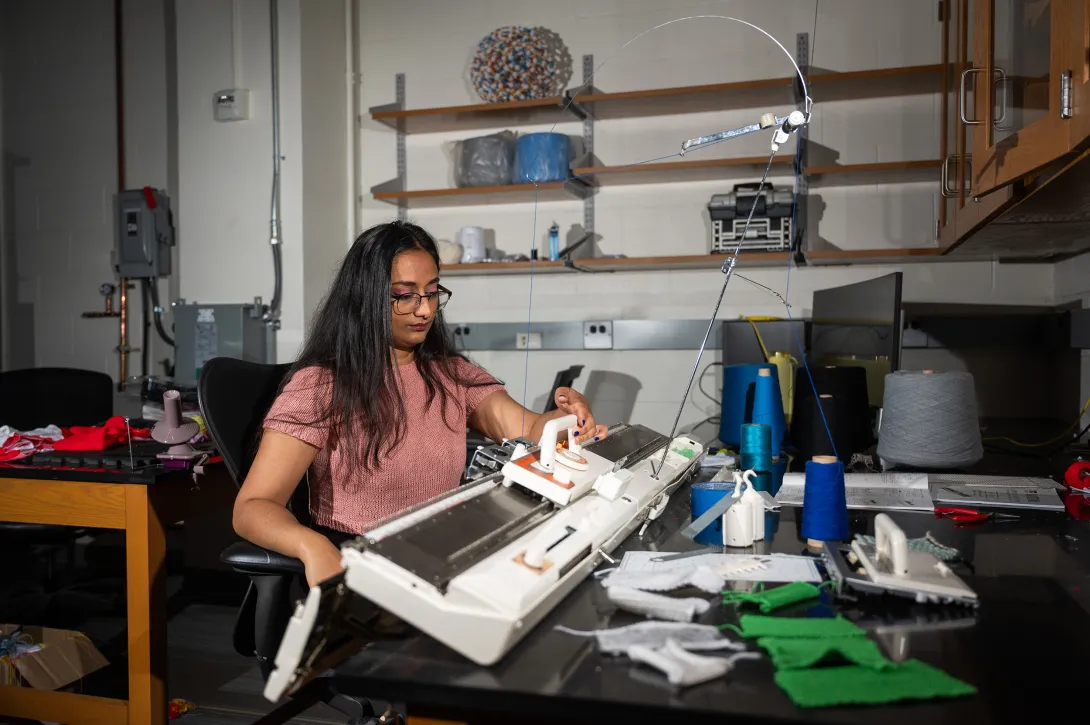
Krishma Singal operates the knitting machine she used to create fabric samples for the study. Singal, the first author of the study, recently graduated from Georgia Tech with her Ph.D. Credit: Allison Carter.
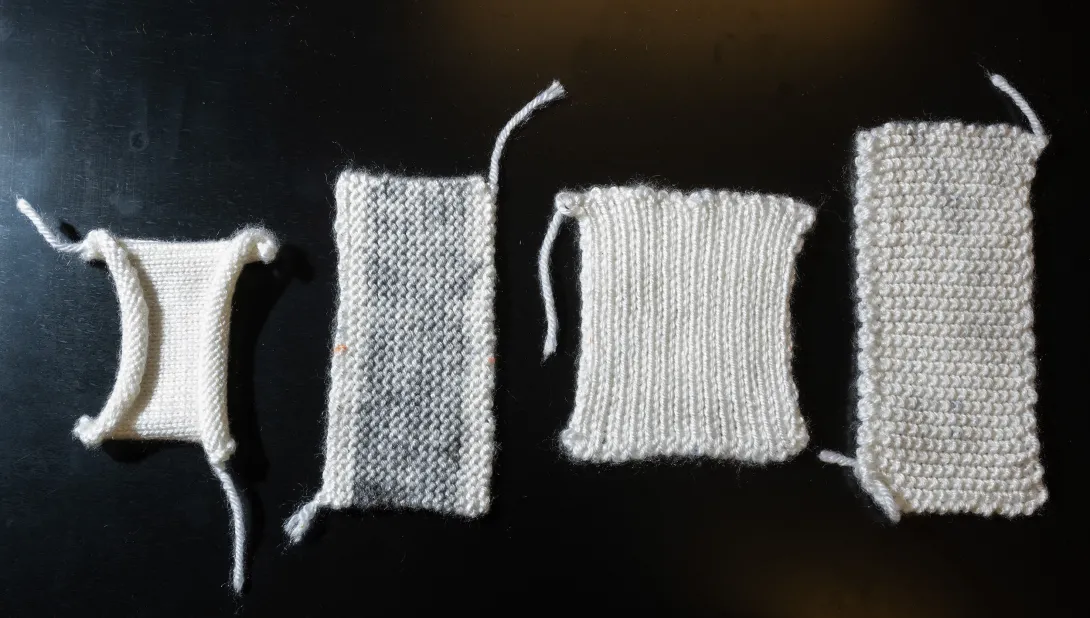
The team created their own fabric samples using a variety of stitch patterns. From left to right, the fabrics are stockinette, garter, rib, and seed. Each sample has the same number of stitch rows and columns, showing how stitch patterns can profoundly impact behavior, elasticity, and shape. Credit: Allison Carter
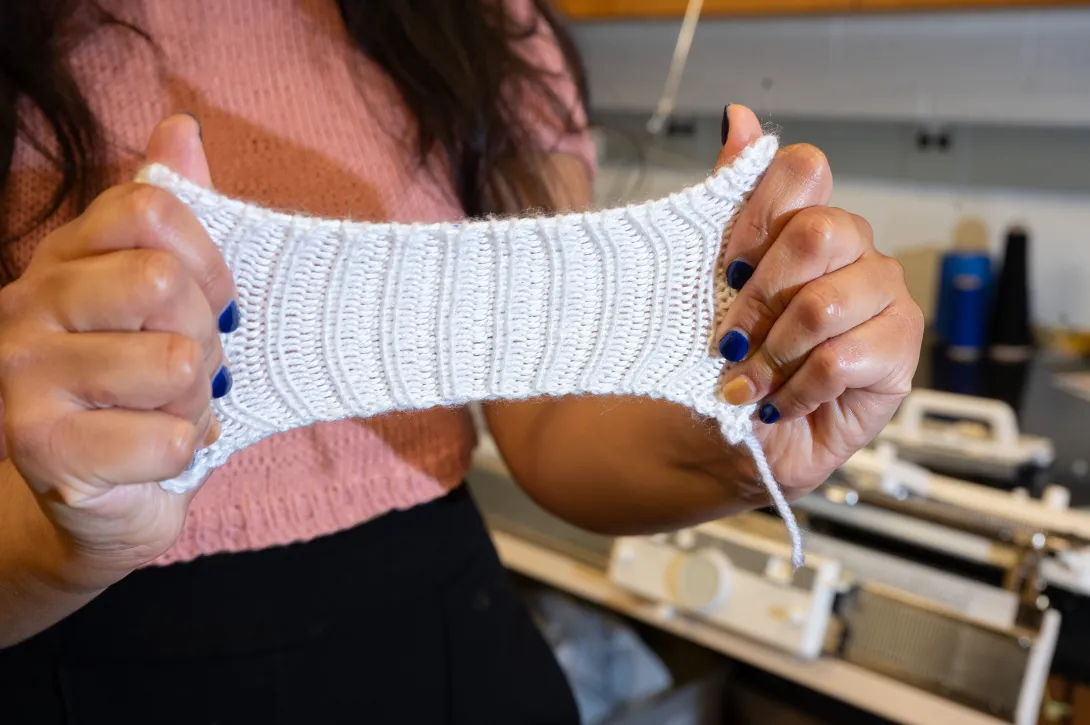
Many types of yarn are not very stretchy, yet once knit into a fabric, the fabric exhibits emergent elastic behavior. Credit: Allison Carter
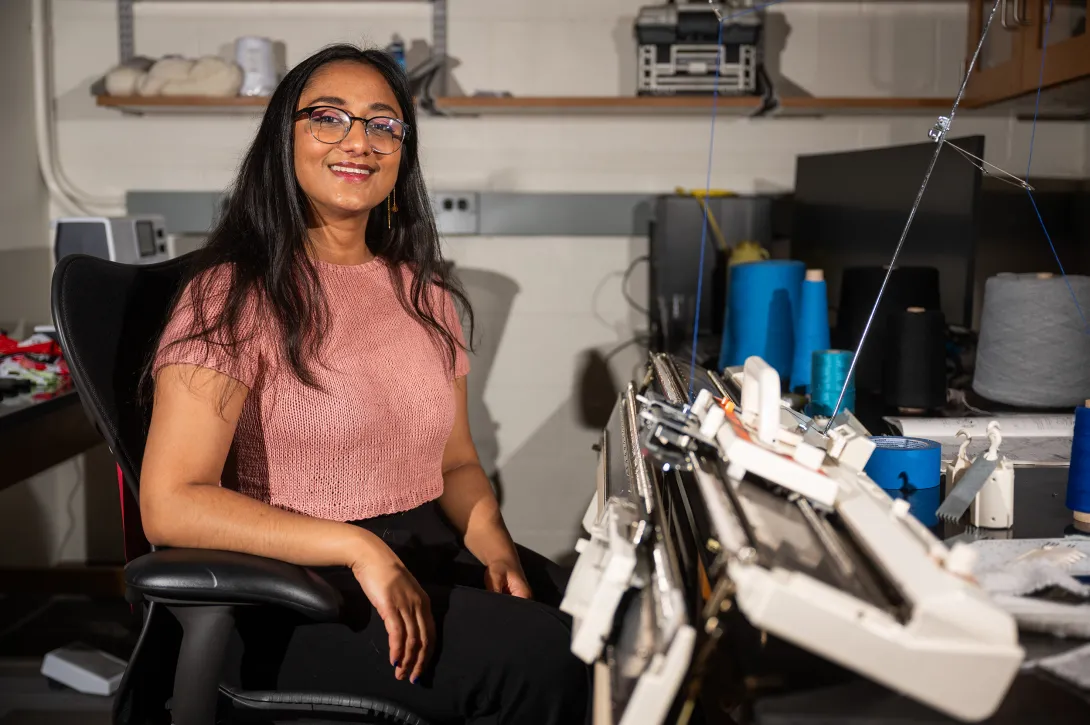
Krishma Singal with the knitting machine she used to create fabric samples for the study. Credit: Allison Carter.
Knitting, the age-old craft of looping and stitching natural fibers into fabrics, has received renewed attention for its potential applications in advanced manufacturing. Far beyond their use for garments, knitted textiles are ideal for designing and fabricating emerging technologies like wearable electronics or soft robotics — structures that need to move and bend.
Knitting transforms one-dimensional yarn into two-dimensional fabrics that are flexible, durable, and highly customizable in shape and elasticity. But to create smart textile design techniques that engineers can use, understanding the mechanics behind knitted materials is crucial.
Physicists from the Georgia Institute of Technology have taken the technical know-how of knitting and added mathematical backing to it. In a study led by Elisabetta Matsumoto, associate professor in the School of Physics, and Krishma Singal, a graduate researcher in Matsumoto’s lab, the team used experiments and simulations to quantify and predict how knit fabric response can be programmed. By establishing a mathematical theory of knitted materials, the researchers hope that knitting — and textiles in general — can be incorporated into more engineering applications.
Their research paper, “Programming Mechanics in Knitted Materials, Stitch by Stitch,” was published in the journal Nature Communications.
“For centuries, hand knitters have used different types of stitches and stitch combinations to specify the geometry and ‘stretchiness’ of garments, and much of the technical knowledge surrounding knitting has been handed down by word of mouth,” said Matsumoto.
But while knitting has often been dismissed as unskilled, poorly paid “women’s work,” the properties of knits can be more complex than traditional engineering materials like rubbers or metals.
For this project, the team wanted to decode the underlying principles that direct the elastic behavior of knitted fabrics. These principles are governed by the nuanced interplay of stitch patterns, geometry, and yarn topology — the undercrossings or overcrossings in a knot or stitch. "A lot of yarn isn’t very stretchy, yet once knit into a fabric, the fabric exhibits emergent elastic behavior," Singal said.
“Experienced knitters can identify which fabrics are stretchier than others and have an intuition for its best application,” she added. “But by understanding how these fabrics can be programmed and how they behave, we can expand knitting’s application into a variety of fields beyond clothing.”
Through a combination of experiments and simulations, Matsumoto and Singal explored the relationships among yarn manipulation, stitch patterns, and fabric elasticity, and how these factors work together to affect bulk fabric behavior. They began with physical yarn and fabric stretching experiments to identify main parameters, such as how bendable or fluffy the yarn is, and the length and radius of yarn in a given stitch.
They then used the experiment results to design simulations to examine the yarn inside a stitch, similar to an X-ray. It is difficult to see inside stitches during the physical measurements, so the simulations are used to see what parts of the yarn have interacted with other parts. The simulations are used to recreate the physical measurements as accurately as possible.
Through these experiments and simulations, Singal and Matsumoto showed the profound impact that design variations can have on fabric response and uncovered the remarkable programmability of knitting. "We discovered that by using simple adjustments in how you design a fabric pattern, you can change how stretchy or stiff the bulk fabric is," Singal said. "How the yarn is manipulated, what stitches are formed, and how the stitches are patterned completely alter the response of the final fabric."
Matsumoto envisions that the insights gleaned from their research will enable knitted textile design to become more commonly used in manufacturing and product design. Their discovery that simple stitch patterning can alter a fabric’s elasticity points to knitting’s potential for cutting-edge interactive technologies like soft robotics, wearables, and haptics.
“We think of knitting as an additive manufacturing technique — like 3D printing, and you can change the material properties just by picking the right stitch pattern,” Singal said.
Matsumoto and Singal plan to push the boundaries of knitted fabric science even further, as there are still numerous questions about knitted fabrics to be answered.
"Textiles are ubiquitous and we use them everywhere in our lives," Matsumoto said. "Right now, the hard part is that designing them for specific properties relies on having a lot of experience and technical intuition. We hope our research helps make textiles a versatile tool for engineers and scientists too."
Note: Sarah Gonzalez (Georgia Tech) and Michael Dimitriyev (Texas A&M) are also co-first authors of the study.
Citation: Singal, K., Dimitriyev, M.S., Gonzalez, S.E. et al. Programming mechanics in knitted materials, stitch by stitch. Nat Commun 15, 2622 (2024).
DOI: https://doi.org/10.1038/s41467-024-46498-z
Funding: Research Corporation for Science Advancement, National Science Foundation, and the Alfred P. Sloan Foundation
News Contact
Catherine Barzler, Senior Research Writer/Editor
Institute Communications

A new in-depth analysis shows that users who reply to misinformation about the Covid-19 vaccine on X, formerly known as Twitter, with a positive attitude, politeness, and strong evidence are more likely to encourage others to disbelieve the incorrect information.
Researchers from three Georgia Tech schools found the most effective way to confront vaccine misinformation on the X platform.
They also created a predictive tool to show users whether their reply will succeed in changing minds or backfire and reinforce the misinformation. It can also pinpoint well-meaning replies meant to contradict misinformation but that interfere with social correction.
A research paper with the full findings will be presented this week at the ACM Web Science Conference in Stuttgart, Germany.
Like white blood cells attacking a virus, social media users have been known to band together and debunk online misinformation being spread online in a phenomenon researchers call social correction.
The success rate of social correction on most social media sites has not been determined. However, researchers now have a clearer picture of how successful user input can be on X.
Their method uses a blend of artificial intelligence with a dataset of 1.5 million tweets containing misinformation about the Covid-19 vaccine. The researchers then studied user replies to misinformation as well as the consequences of those replies.
In the paper, the researchers write that their data set pre-dates the rollout of X’s community notes feature, which allows users to submit corrections to posts on the platform. They point out that this system restricts users from responding to fact-checking text and labels and does not reflect the large flow of information on the site.
As one of the first taxonomies of user social correction on the X platform, the researchers hope will aid future fact-checking efforts. While the paper only focused on text posts in the English language, it is a framework that can be expanded to address the growing threat of misinformation online.
Corrective or Backfire: Characterizing and Predicting User Response to Social Correction was co-authored by Ph.D. students Bing He and Yingchen (Eric) Ma and their advisors Regents’ Entrepreneur Mustaque Ahamad, a professor with joint appointments in the School of Cybersecurity and Privacy and the School of Computer Science, and School of Computational Science and Engineering Assistant Professor Srijan Kumar.
News Contact
JP Popham, Communications Officer
Georgia Tech
School of Cybersecurity and Privacy

Yongsheng Chen, Bonnie W. and Charles W. Moorman IV Professor in Georgia Tech's School of Civil and Environmental Engineering, has been awarded a $300,000 National Science Foundation (NSF) grant to spearhead efforts to enhance sustainable agriculture practices using innovative AI solutions.
The collaborative project, named EAGER: AI4OPT-AG: Advancing Quad Collaboration via Digital Agriculture and Optimization, is a joint effort initiated by Georgia Tech in partnership with esteemed institutions in Japan, Australia, and India. The project aims to drive advancements in digital agriculture and optimization, ultimately supporting food security for future generations.
Chen, who also leads the Urban Sustainability and Resilience Thrust for the NSF Artificial Intelligence Research Institute for Advances in Optimization (AI4OPT), is excited about this new opportunity. "I am thrilled to lead this initiative, which marks a significant step forward in harnessing artificial intelligence (AI) to address pressing issues in sustainable agriculture," he said.
Highlighting the importance of AI in revolutionizing agriculture, Chen explained, "AI enables swift, accurate, and non-destructive assessments of plant productivity, optimizes nutritional content, and enhances fertilizer usage efficiency. These advancements are crucial for mitigating agriculture-related greenhouse gas emissions and solving climate change challenges."
To read the full agreement, click here.
News Contact
Breon Martin
AI Research Communications Manager
Georgia Tech
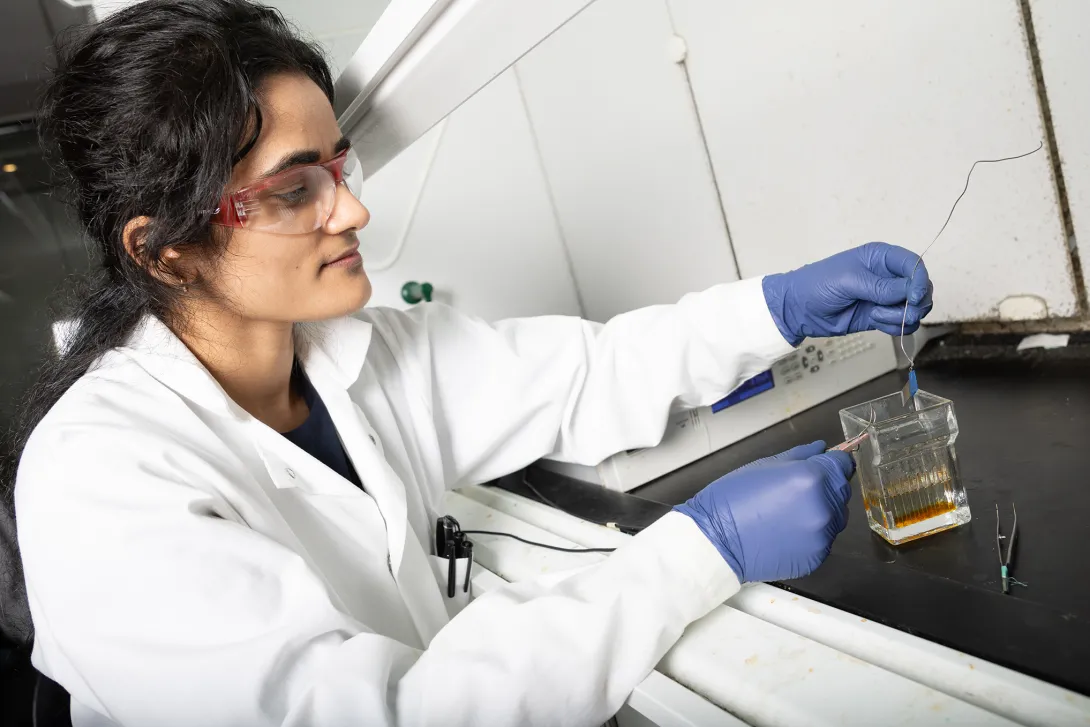
Postdoctoral scholar Anuja Tripathi examines a small sample of stainless steel after an electrochemical etching process she designed to create nano-scale needle-like structures on its surface. A second process deposits copper ions on the surface to create a dual antibacterial material. (Photo: Candler Hobbs)
An electrochemical process developed at Georgia Tech could offer new protection against bacterial infections without contributing to growing antibiotic resistance.
The approach capitalizes on the natural antibacterial properties of copper and creates incredibly small needle-like structures on the surface of stainless steel to kill harmful bacteria like E. coli and Staphylococcus. It’s convenient and inexpensive, and it could reduce the need for chemicals and antibiotics in hospitals, kitchens, and other settings where surface contamination can lead to serious illness.
It also could save lives: A global study of drug-resistant infections found they directly killed 1.27 million people in 2019 and contributed to nearly 5 million other deaths — making these infections one of the leading causes of death for every age group.
Researchers described the copper-stainless steel and its effectiveness May 20 in the journal Small.
News Contact
Joshua Stewart
College of Engineering
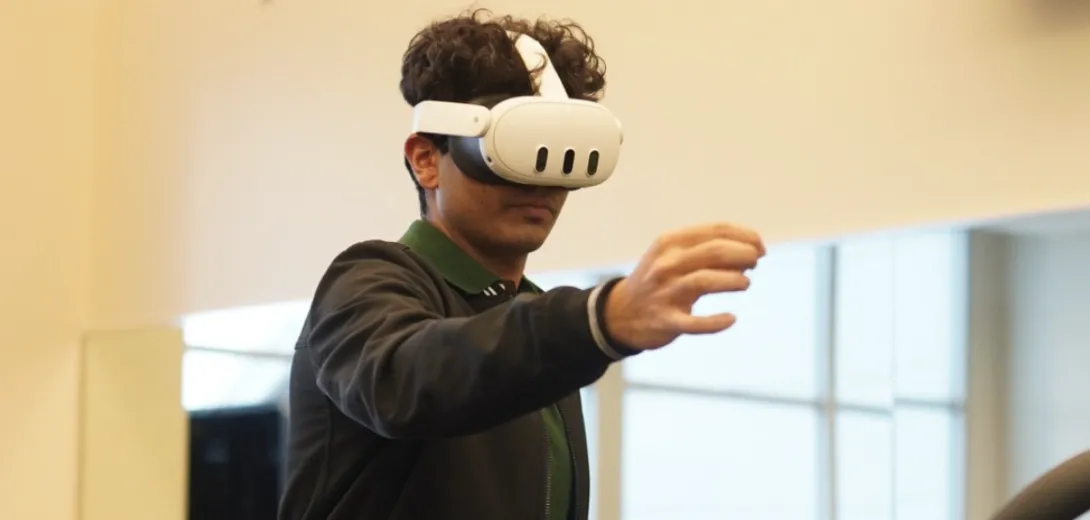
Parth Arora is the founder of Third Dimension Fitness, a platform for gamified cardio through mixed reality, which was recently acquired by Elbo, an education-focused company based in Singapore. He began his company as a project in the summer of 2022. Since then, it has gained thousands of users and made thousands in revenue each month. Arora is a senior in computer science. He participated in the Spring 2024 Startup Launch, the first cohort to be held outside of the summer program. Below is a Q&A with Arora.
Did you always want to be an entrepreneur?
I always did. I had my first company, an educational technology app, when I was 16, which ran for about two years. I ended it in my first year of college. I'm from India originally and the vision was to provide resources to the larger mass market of India for extracurricular activities. But, we realized there wasn't a business model. When we tried to make money, we started serving the rich kids. When we tried to serve the market, we didn't make money, which doesn't make investors happy, though we did end up making enough money to repay them.
That didn't stop me; it just gave me more lessons.
What other experience in entrepreneurship have you had?
I've been involved in entrepreneurship communities at Georgia Tech forever. I was co-director of Startup Exchange, which is where I met a lot of really driven people. I got a chance to build their fellowship program and initiate their first pitch competition, which is now called Summit. I've collaborated with CREATE-X for different events, and I try to attend any event hosted by CREATE-X, Startup Exchange, or ATDC.
Why did you choose to join the spring cohort of Startup Launch this year?
CREATE-X provides everything you need, like legal support, financial support, sales support, mentors, and an introduction to VCs, which is why I decided to join the Launch program. I think all of that boosted our startup’s growth.
Why did you feel like acquisition was the way to go for your company?
I think because I always knew this wasn’t “the” thing I was going to do. This summer I'll be starting to work for Apple on their VisionPro team, and it has a direct conflict-of-interest. They wanted me to stop working on this for a while. So, I felt like this might be a good time to explore the acquisition. We had really rich content, which had proven to work. We had curated that content after hundreds of customer interviews, and we had advisors from Nike, Disney, and Netflix. I knew that was a strong point, so that's why I knew that acquisition would be a good exit.
What support have you had in taking the acquisition path?
Seth [Radman, who has had multiple exits himself and is a Startup Launch alumnus] has been guiding me professionally for a while. I met him at previous events through Startup Exchange, but then he recently came to a CREATE-X event. Rahul [Saxena, CREATE-X director], has also been a great support for me since day one. He was the one who suggested Startup Launch to me.
In December of last year, we started monetizing. We were testing different things. It was helpful to share the numbers and the data points with Rahul, mentors, and other people in my cohort so that I was not blindsided, and I could take actions based on the educated analysis of a database. It helped me drive down our customer acquisition cost, increase our customer lifetime value, and didn't keep me in my own bubble.
How were you okay with letting that product go?
It was a tough decision; it was my baby. I'd been working on it 10 to 15 hours a day, at least for the last few months. Rahul and Seth convinced me that if this is not the thing you want to do long-term and you know the market isn't big enough, you should move on to the next thing and put your time and energy there.
I had to use my brain, and not my heart.
What's the biggest piece of advice that you've received as you developed your company?
Try to never lie to yourself, which is harder than it seems. I've built two companies and worked with several others, and I still lie to myself. When you love your product so much, it's very easy to lie to yourself about how there is a market for it, or people are using it. I think even in the future, I’ll probably be caught doing that, but the best way I've found to overcome that is to surround yourself with people who can tell you when you are doing it and help you see your company the way it is instead of the way you want it to be.
How has this decision affected you so far?
My lifestyle has completely changed, from looking at a dashboard every 10 to 15 minutes, seeing how the product is doing, and burning so many fires every 30 minutes, to being pretty chill. Like, what am I supposed to think about before I go to bed? What am I supposed to do now? Who are the customers I am supposed to be thinking about? It's been interesting, but I think this gives me space to now work on that next venture and have more time to think about what I want to do next.
Do you think you'll want to return to entrepreneurship in the future?
Yes, for sure. All the money I received from the acquisition will also fuel my next venture. My main goal is to grow in this industry. I'm an entrepreneur at heart, so I will be returning to the space soon or building products that people like.
How are you celebrating this win?
I did celebrate it on our last day with Rahul, my amazing mentor, Margaret [Weniger, who founded Rising Tide], and the other cohort members. I will be celebrating it with a few of my friends because my 21st birthday is coming around, so I'll be celebrating these occasions together.
But I don't want to take the money out from the company or for anything else, because it’s for my next venture. It shouldn't change my lifestyle at all, so I've kept all that money in a separate place.
What encouragement would you give to students interested in pursuing a startup?
Relative to other colleges, we have a cushion, a sense of security that we will get good jobs. Entrepreneurship is a riskier and more unpredictable path, which I've seen, and I'm personally experiencing right now having to choose between Big Tech versus entrepreneurship. But once you start building it and when you hear from your first customer how you affected the way they live, then there's no going back. Statistically, you'll probably fail, but you won't know until you start building; and if you do fail, it’ll teach you so many valuable lessons that are applicable in whatever career path you choose.
CREATE-X will launch its 12th cohort of Startup Launch on Aug. 29 at 5 p.m. in the Georgia Tech Exhibition Hall. Register today to secure your spot.
Interested in becoming a CREATE-X supporter? Startup Launch is made possible by contributions to Transforming Tomorrow, a $2 billion comprehensive campaign designed to secure resources that will advance the Institute and its impact, and by the continued engagement of our entrepreneurial ecosystem. Learn more about philanthropy at Georgia Tech and donate by visiting transformingtomorrow.gatech.edu.
To become a mentor in CREATE-X, visit the CREATE-X mentorship page. Any other inquiry may be sent to create-x@groups.gatech.edu. We appreciate your help and commitment to supporting our students in research and innovation.
News Contact
Breanna Durham
Marketing Strategist
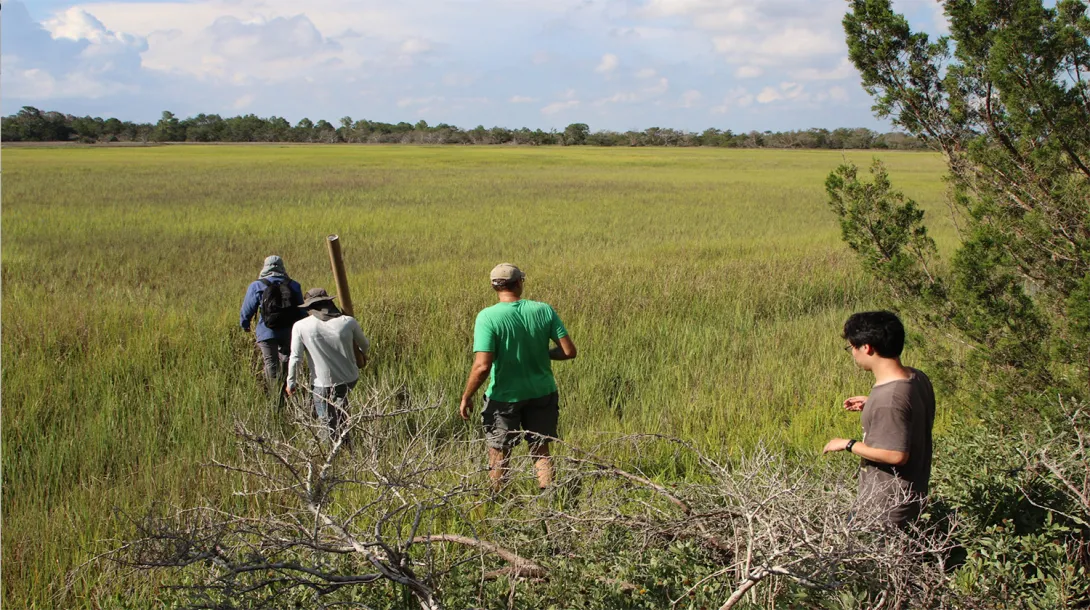
Georgia Tech researchers surveying field sites in the salt marshes of Sapelo Island, Georgia.
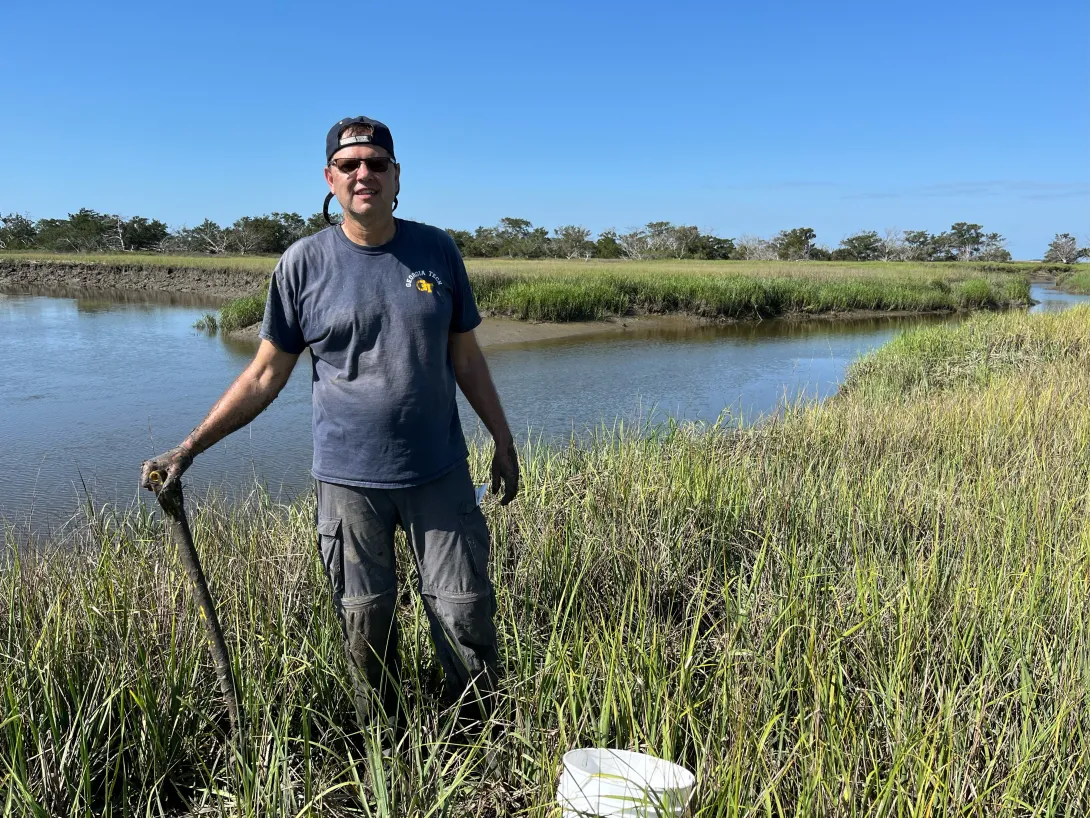
Joel Kostka, the Tom and Marie Patton Distinguished Professor and associate chair for Research in the School of Biological Sciences.
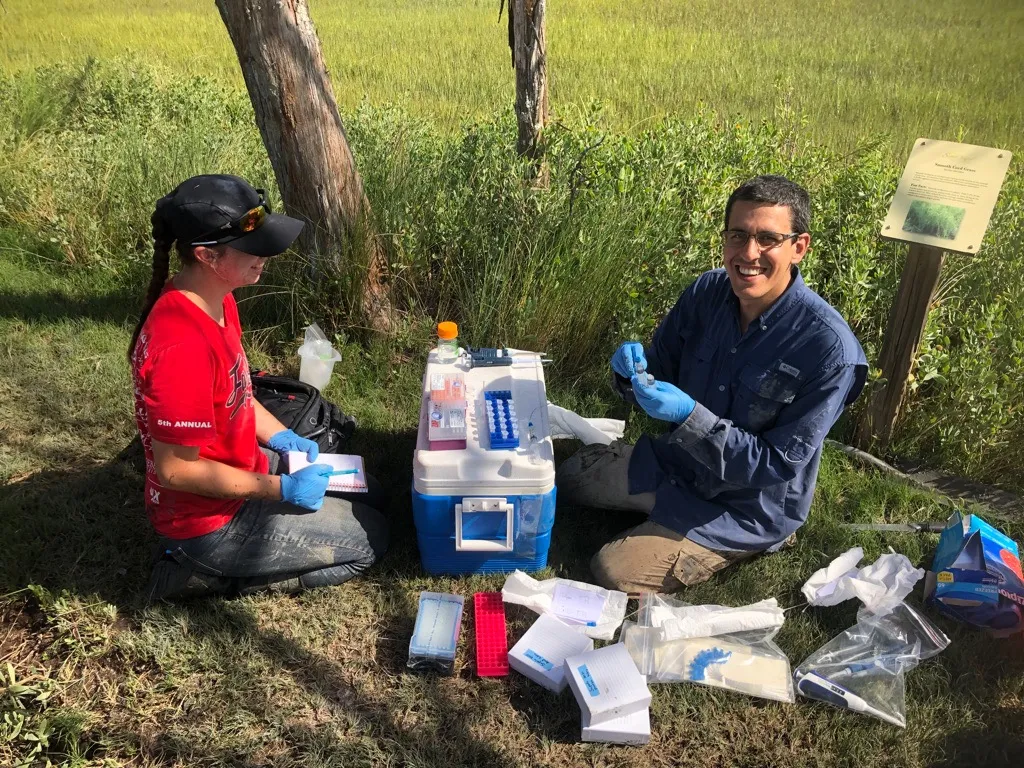
Georgia Tech postdoctoral fellow Jose Rolando (right) and graduate student Gabrielle Krueger prepare samples for chemical analysis in the field at Sapelo Island, Georgia.
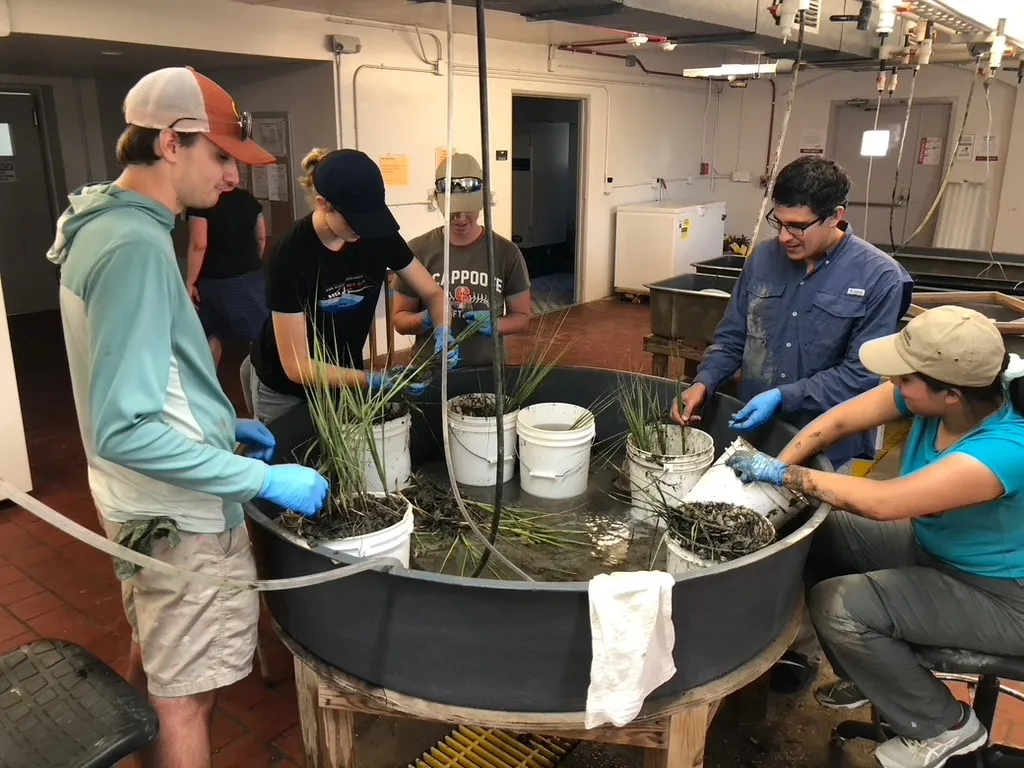
Researchers washing cordgrass roots for microbial analysis.
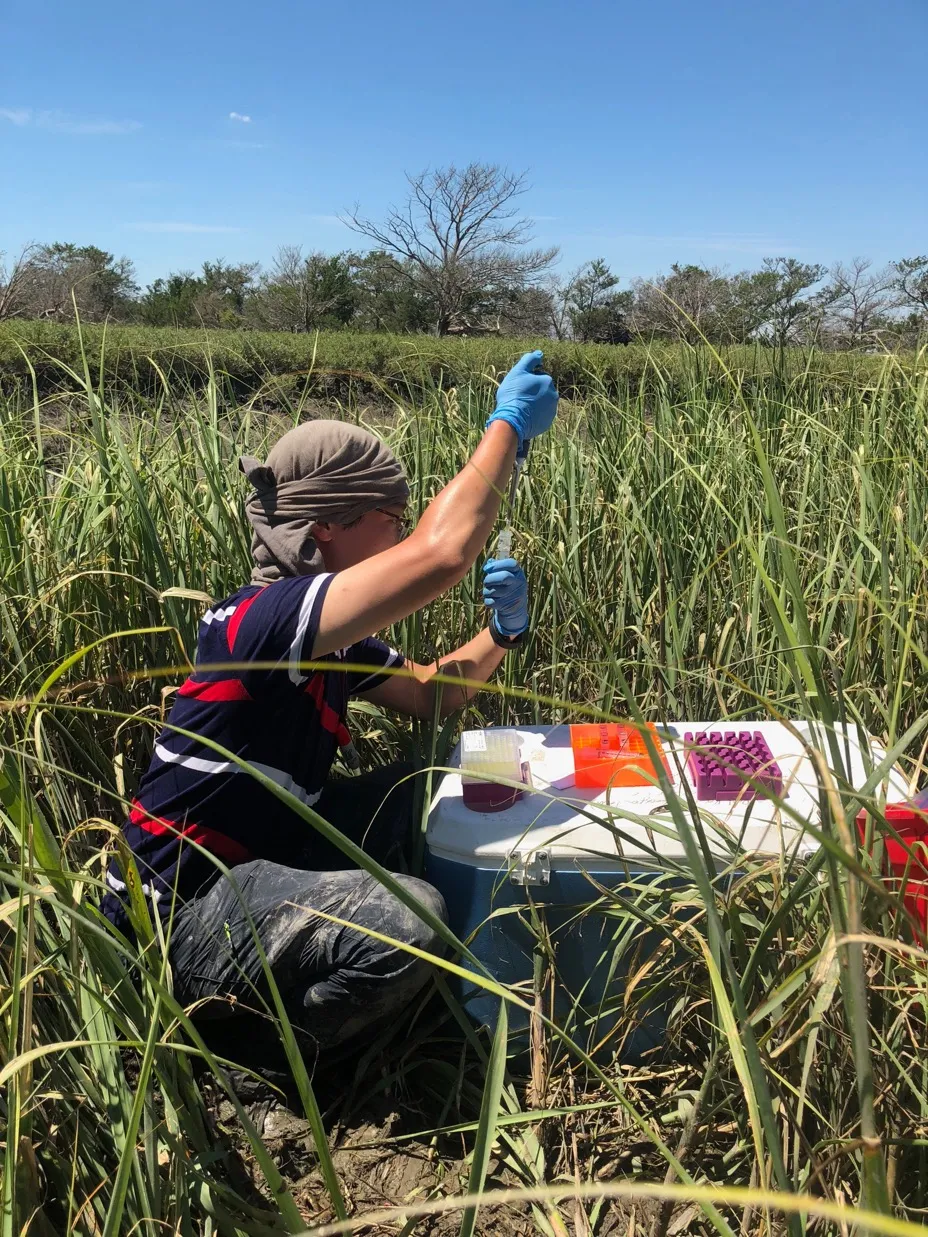
Georgia Tech graduate student Tianze Song collects porewater samples for chemical analysis in the marsh on Sapelo Island, Georgia.
Georgia’s saltwater marshes — living where the land meets the ocean — stretch along the state’s entire 100-mile coastline. These rich ecosystems are largely dominated by just one plant: grass.
Known as cordgrass, the plant is an ecosystem engineer, providing habitats for wildlife, naturally cleaning water as it moves from inland to the sea, and holding the shoreline together so it doesn’t collapse. Cordgrass even protects human communities from tidal surges.
Understanding how these plants stay healthy is of crucial ecological importance. For example, one known plant stressor prevalent in marsh soils is the dissolved sulfur compound, sulfide, which is produced and consumed by bacteria. But while the Georgia coastline boasts a rich tradition of ecological research, understanding the nuanced ways bacteria interact with plants in these ecosystems has been elusive. Thanks to recent advances in genomic technology, Georgia Tech biologists have begun to reveal never-before-seen ecological processes.
The team’s work was published in Nature Communications.
Joel Kostka, the Tom and Marie Patton Distinguished Professor and associate chair for Research in the School of Biological Sciences, and Jose Luis Rolando, a postdoctoral fellow, set out to investigate the relationship between the cordgrass Spartina alterniflora and the microbial communities that inhabit their roots, identifying the bacteria and their roles.
“Just like humans have gut microbes that keep us healthy, plants depend on microbes in their tissues for health, immunity, metabolism, and nutrient uptake,” Kostka said. “While we’ve known about the reactions that drive nutrient and carbon cycling in the marsh for a long time, there’s not as much data on the role of microbes in ecosystem functioning.”
Out in the Marsh
A major way that plants get their nutrients is through nitrogen fixation, a process in which bacteria convert nitrogen into a form that plants can use. In marshes, this role has mostly been attributed to heterotrophs, or bacteria that grow and get their energy from organic carbon. Bacteria that consume the plant toxin sulfide are chemoautotrophs, using energy from sulfide oxidation to fuel the uptake of carbon dioxide to make their own organic carbon for growth.
“Through previous work, we knew that Spartina alterniflora has sulfur bacteria in its roots and that there are two types: sulfur-oxidizing bacteria, which use sulfide as an energy source, and sulfate reducers, which respire sulfate and produce sulfide, a known toxin for plants,” Rolando said. “We wanted to know more about the role these different sulfur bacteria play in the nitrogen cycle.”
Kostka and Rolando headed to Sapelo Island, Georgia, where they have regularly conducted fieldwork in the salt marshes. Wading into the marsh, shovels and buckets in hand, the researchers and their students collected cordgrass along with the muddy sediment samples that cling to their roots. Back at the field lab, the team gathered around a basin filled with creek water and carefully washed the grass, gently separating the plant roots.
Next, they used a special technique involving heavier versions of chemical elements that occur in nature as tracers to track the microbial processes. They also analyzed the DNA and RNA of the microbes living in different compartments of the plants.
Using a sequencing technology known as shotgun metagenomics, they were able to retrieve the DNA from the whole microbial community and reconstruct genomes from newly discovered organisms. Similarly, untargeted RNA sequencing of the microbial community allowed them to assess which microbial species and specific functions were active in close association with plant roots.
Using this combination of techniques, they found that chemoautotrophic sulfur-oxidizing bacteria were also involved in nitrogen fixation. Not only did these bacteria help plants by detoxifying the root zone, but they also played a crucial role in providing nitrogen to the plants. This dual role of the bacteria in sulfur cycling and nitrogen fixation highlights their importance in coastal ecosystems and their contribution to plant health and growth.
"Plants growing in areas with high levels of sulfide accumulation tend to be smaller and less healthy," said Rolando. "However, we found that the microbial communities within Spartina roots help to detoxify the sulfide, enhancing plant health and resilience."
Local to Global Significance
Cordgrasses aren’t just the main player in Georgia marshes; they also dominate marsh landscapes across the entire Southeast, including the Carolinas and the Gulf Coast. Moreover, the researchers found that the same bacteria are associated with cordgrass, mangrove, and seagrass roots in coastal ecosystems across the planet.
"Much of the shoreline in tropical and temperate climates is covered by coastal wetlands,” Rolando said. “These areas likely harbor similar microbial symbioses, which means that these interactions impact ecosystem functioning on a global scale."
Looking ahead, the researchers plan to further explore the details of how marsh plants and microbes exchange nitrogen and carbon, using state-of-the-art microscopy techniques coupled with ultra-high-resolution mass spectrometry to confirm their findings at the single-cell level.
"Science follows technology, and we were excited to use the latest genomic methods to see which types of bacteria were there and active,” Kostka said. “There's still much to learn about the intricate relationships between plants and microbes in coastal ecosystems, and we are beginning to uncover the extent of the microbial complexity that keeps marshes healthy.”
Citation: Rolando, J.L., Kolton, M., Song, T. et al. Sulfur oxidation and reduction are coupled to nitrogen fixation in the roots of the salt marsh foundation plant Spartina alterniflora. Nat Commun 15, 3607 (2024).
DOI: https://doi.org/10.1038/s41467-024-47646-1
Funding: This work was supported in part by an institutional grant (NA18OAR4170084) to the Georgia Sea Grant College Program from the National Sea Grant Office, National Oceanic and Atmospheric Administration, US Department of Commerce, and by a grant from the National Science Foundation (DEB 1754756).