
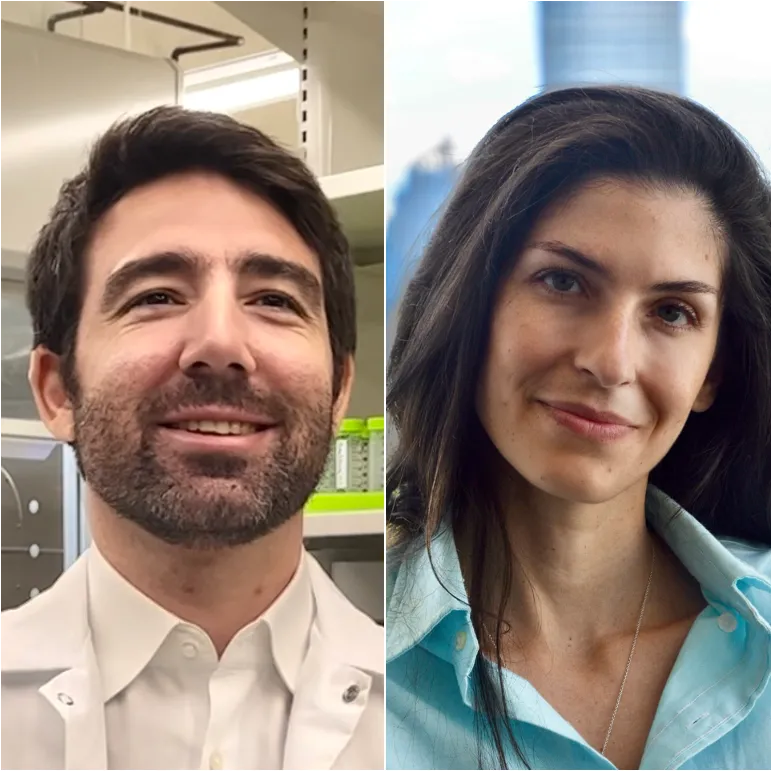
Patricia Stathatou and Christos Athanasiou at Georgia Tech
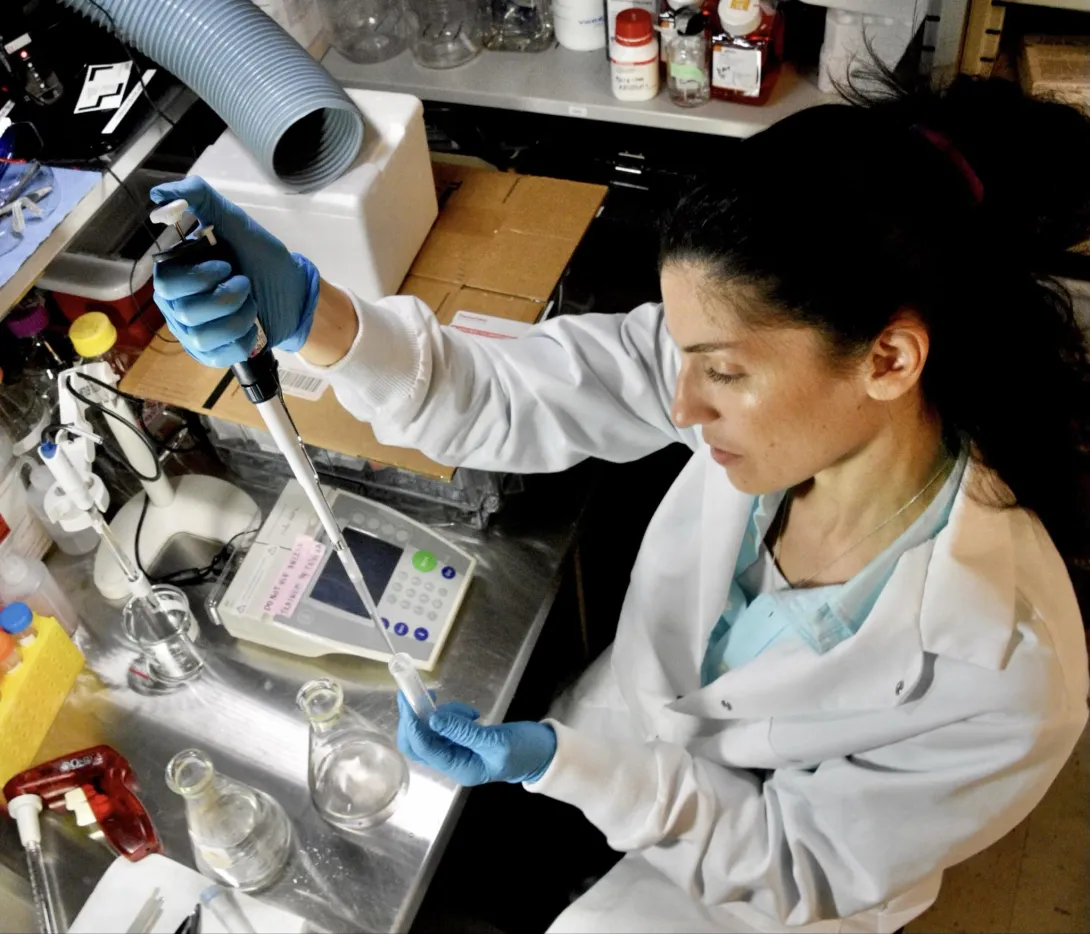
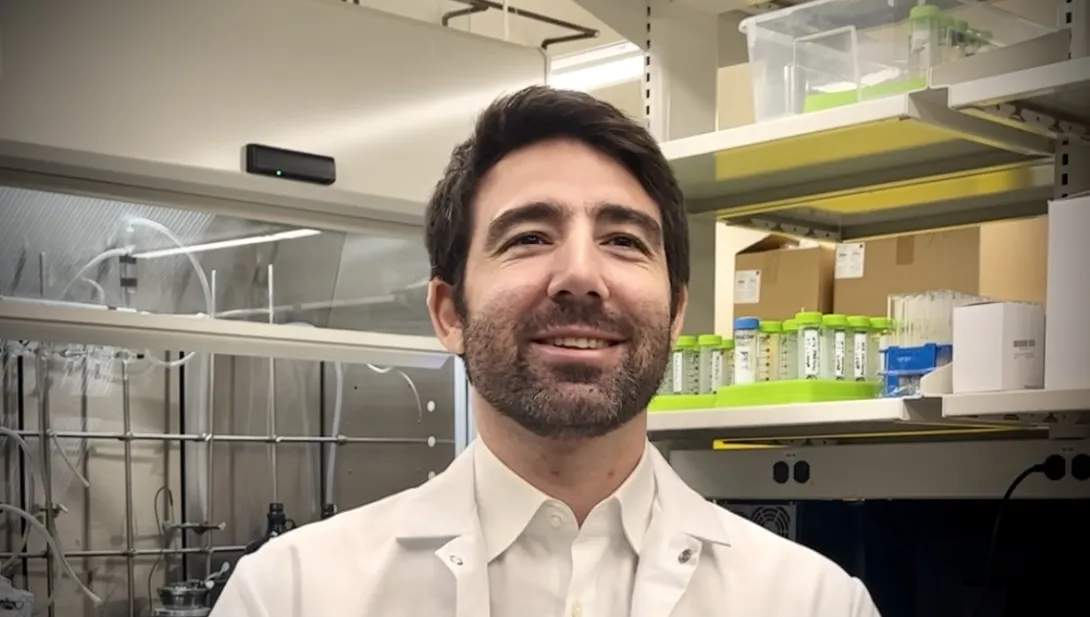

When looking for an environmentally friendly and cost-effective way to clean up contaminated water and soil, Georgia Tech researchers Patricia Stathatou and Christos Athanasiou turned to yeast. A cheap byproduct from fermentation processes — e.g., something your local brewery discards in mass quantities after making a batch of beer — yeast is widely known as an effective biosorbent. Biosorption is a mass transfer process by which an ion or molecule binds to inactive biological materials through physicochemical interactions.
When they initially studied this process, Stathatou and Athanasiou found that yeast can effectively and rapidly remove trace lead — at challenging initial concentrations below one part per million — from drinking water. Conventional water treatment methods either fail to eliminate lead at these low levels or result in high financial and environmental costs to do so. In a paper published today in RSC Sustainability, the researchers show how this process can be scaled.
“If you put yeast directly into water to clean it, you will need an additional treatment step to remove the yeast from the water afterward,” said Stathatou, a research scientist at the Renewable Bioproducts Institute and an incoming assistant professor at the School of Chemical and Biomolecular Engineering. “To implement this process at scale without requiring additional separation steps, the yeast cells need a housing.”
“Additionally, because yeast is abundant— in some cases, brewers even pay companies to haul it away as a waste byproduct — this process gives the yeast a second life,” said Athanasiou, an assistant professor in the Daniel Guggenheim School of Aerospace Engineering. “It’s a plentiful low, or even negative, value resource, making this purification process inexpensive and scalable.”
To develop a housing for the yeast, Stathatou and Athanasiou partnered with MIT chemical engineers Devashish Gokhale and Patrick S. Doyle. Gokhale and Stathatou are the lead authors of this new study that demonstrates the yeast water purification process’s scalability.
“We decided to make these hollow capsules— analogous to a multivitamin pill — but instead of filling them up with vitamins, we fill them up with yeast cells,” Gokhale said. “These capsules are porous, so the water can go into the capsules and the yeast are able to bind all of that lead, but the yeast themselves can’t escape into the water.”
The yeast-laden capsules are sufficiently large, about half a millimeter in diameter, for easy separation from water by gravity. This means they can be used to make packed-bed bioreactors or biofilters, with contaminated water flowing through these hydrogel-encased yeast cells and coming out clean.
Stathatou and Athanasiou envision using these hydrogel yeast capsules in small biofilters consumers can put on their kitchen faucets, or biofilters large enough to fit municipal or industrial wastewater treatment systems. But to enable such scalability, the yeast-laden capsules’ ability to withstand the force generated by water flowing inside such systems needed to be studied as well.
To determine this, Athanasiou tested the capsules’ mechanical robustness, which is how strong and sturdy they are in the presence of waterflow forces. He found they can withstand forces like those generated by water running from a faucet, or even flows like those in water treatment plants that serve a few hundred homes. “In previous attempts to scale up biosorption with similar approaches, lack of mechanical robustness has been a common cause of failure,” Athanasiou said. “We wanted to make sure our work addressed this issue from the very beginning to ensure scalability.”
“After assessing the mechanical robustness of the yeast-laden capsules, we made a prototype biofilter using a 10-ml syringe,” Stathatou explained. “The initial lead concentration of water entering the biofilter was 100 parts per billion; we demonstrated that the biofilter could treat the contaminated water, meeting EPA drinking water guidelines, while operating continuously for 12 days.”
The researchers hope to identify ways to isolate and collect specific contaminants left behind in the filtering yeast, so those too can be used for other purposes.
“Apart from lead, which is widely used in systems for energy generation and storage, this process could be used to remove and recover other metals and rare earth elements as well,” Athanasiou said. “This process could even be useful in space mining or other space applications.”
They also would like to find a way to keep reusing the yeast. “But even if we can’t reuse yeast indefinitely, it is biodegradable,” Stathatou noted. “It doesn’t need to be put into an industrial composter or sent to a landfill. It can be left on the ground, and the yeast will naturally decompose over time, contributing to nutrient cycling.”
This circular approach aims to reduce waste and environmental impact, while also creating economic opportunities in local communities. Despite numerous lead contamination incidents across the U.S., the team’s successful biosorption method notably could benefit low-income areas historically burdened by pollution and limited access to clean water, offering a cost-effective remediation solution. “We think there’s an interesting environmental justice aspect to this, especially when you start with something as low-cost and sustainable as yeast, which is essentially available anywhere,” Gokhale says.
Moving forward, Stathatou and Athanasiou are exploring other uses for their hydrogel-yeast purification method. The researchers are optimistic that, with modifications, this process can be used to remove additional inorganic and organic contaminants of emerging concern, such as PFAS — or “forever” chemicals — from the water or the ground.
Citation: Devashish Gokhale, Patritsia M. Stathatou, Christos E. Athanasiou, and Patrick S. Doyle, “Yeast-laden Hydrogel Capsules for Scalable Trace Lead Removal from Water,” RSC Sustainability. DOI:
Funding: Patricia Stathatou was supported by funding from the Renewable Bioproducts Institute at Georgia Tech. Devashish Gokhale was supported by the Rasikbhai L. Meswani Fellowship for Water Solutions and the MIT Abdul Latif Jameel Water and Food Systems Lab (J-WAFS).
News Contact
Shelley Wunder-Smith
Director of Research Communications
Georgia Institute of Technology

When he was in college, Hong Yeo's father died in his sleep from a heart attack, and Yeo changed his academic and research efforts as a result. Now, he and his research collaborators have developed a device that monitors vital signs during sleep, and it's the type of thing that may have helped doctors intervene in his father's illness if it had been available. This Sleep Scan device is a type of mask you can easily take on and off, and it has now been tested with human subjects and is close to being available commercially.
Hong Yeo’s father, Yonghyun Yeo, with his mother in Korea.
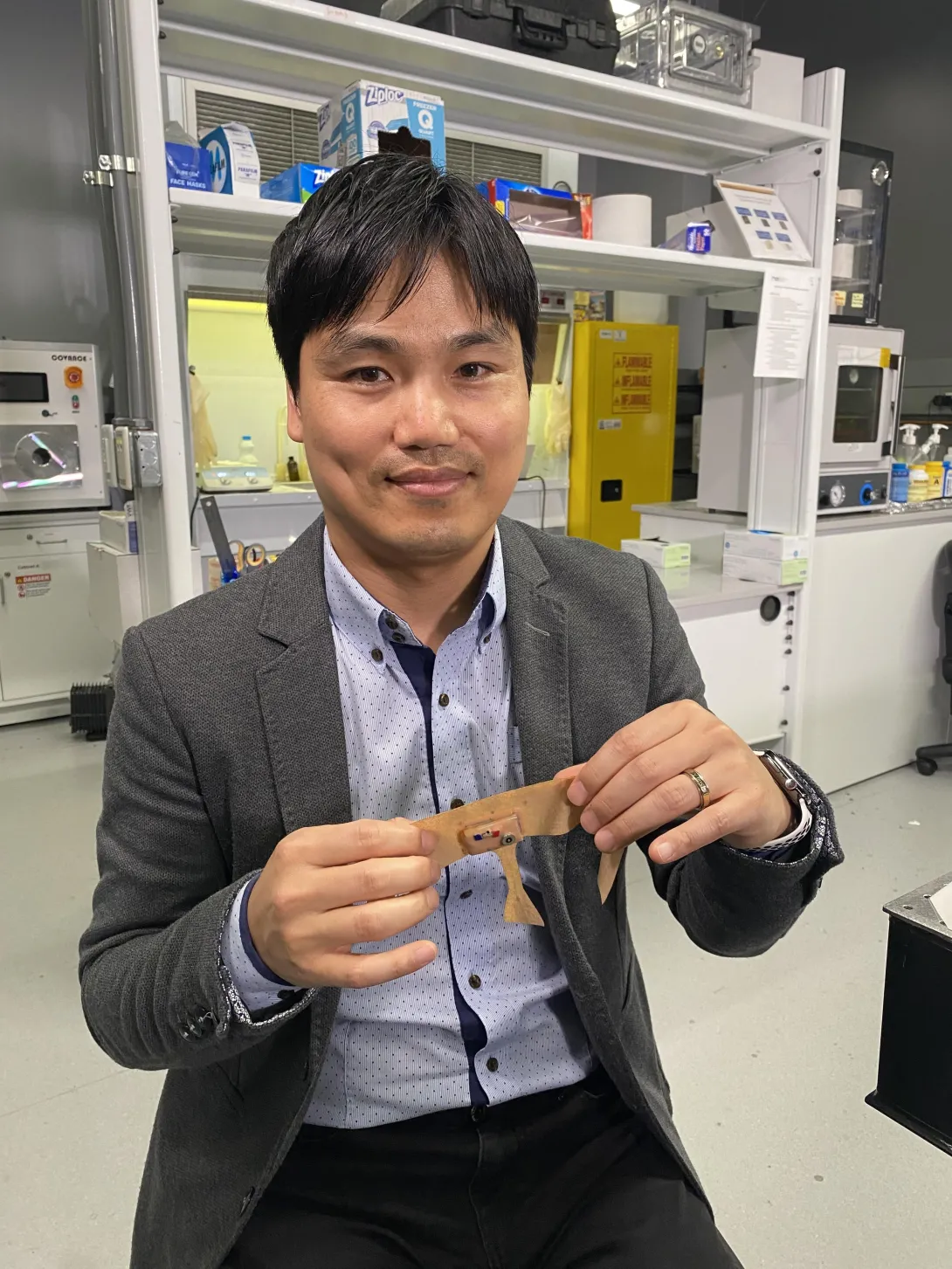
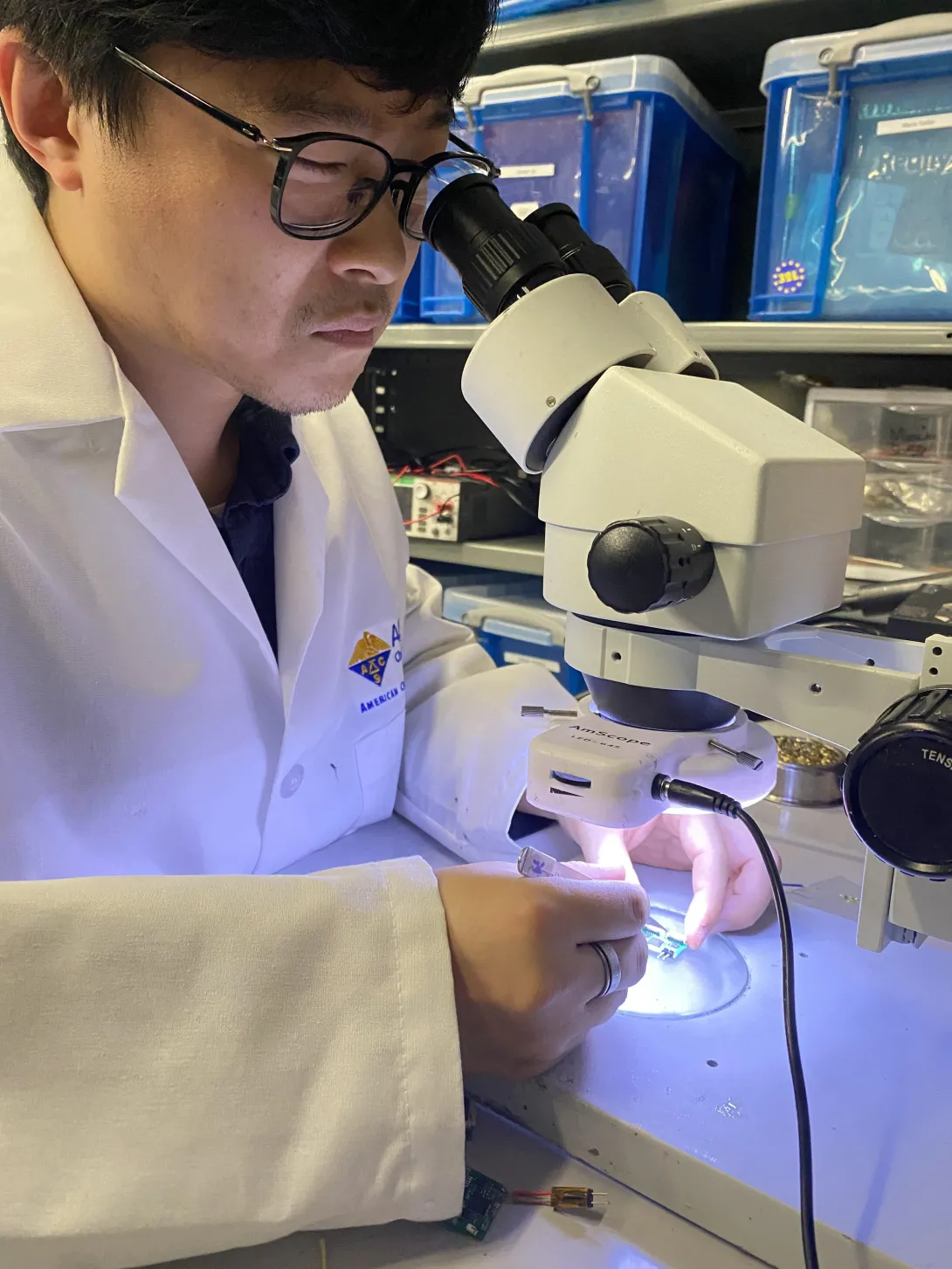
Taewoog Kang, a post-doctoral student in mechanical engineering, works to repair a tiny circuit in Hong Yeo’s lab on Georgia Tech’s campus.
The call from his mom is still vivid 20 years later. Moments this big and this devastating can define lives, and for Hong Yeo, today a Georgia Tech mechanical engineer, this call certainly did. Yeo was a 21-year-old in college studying car design when his mom called to tell him his father had died in his sleep. A heart attack claimed the life of the 49-year-old high school English teacher who had no history of heart trouble and no signs of his growing health threat. For the family, it was a crushing blow that altered each of their paths.
“It was an uncertain time for all of us,” said Yeo. “This loss changed my focus.”
For Yeo, thoughts and dreams of designing cars for Hyundai in Korea turned instead toward medicine. The shock of his father going from no signs of illness to gone forever developed into a quest for medical answers that might keep other families from experiencing the pain and loss his family did — or at least making it less likely to happen.
Yeo’s own research and schooling in college pointed out a big problem when it comes to issues with sleep and how our bodies’ systems perform — data. He became determined to invent a way to give medical doctors better information that would allow them to spot a problem like his father’s before it became life-threatening.
His answer: a type of wearable sleep data system. Now very close to being commercially available, Yeo’s device comes after years of working on the materials and electronics for an easy-to-wear, comfortable mask that can gather data about sleep over multiple days or even weeks, allowing doctors to catch sporadic heart problems or other issues. Different from some of the bulky devices with straps and cords currently available for at-home heart monitoring, it offers the bonuses of ease of use and comfort, ensuring little to no alteration to users’ bedtime routine or wear. This means researchers can collect data from sleep patterns that are as close to normal sleep as possible.
“Most of the time now, gathering sleep data means the patient must come to a lab or hospital for sleep monitoring. Of course, it’s less comfortable than home, and the devices patients must wear make it even less so. Also, the process is expensive, so it’s rare to get multiple nights of data,” says Audrey Duarte, University of Texas human memory researcher.
Duarte has been working with Yeo on this system for more than 10 years. She says there are so many mental and physical health outcomes tied to sleep that good, long-term data has the potential to have tremendous impact.
“The results we’ve seen are incredibly encouraging, related to many things —from heart issues to areas I study more closely like memory and Alzheimer’s,” said Duarte.
Yeo’s device may not have caught the arrhythmia that caused his father’s heart attack, but nights or weeks of data would have made effective medical intervention much more likely.
Inspired by his own family’s loss, Yeo’s life’s work has become a tool of hope for others.
News Contact
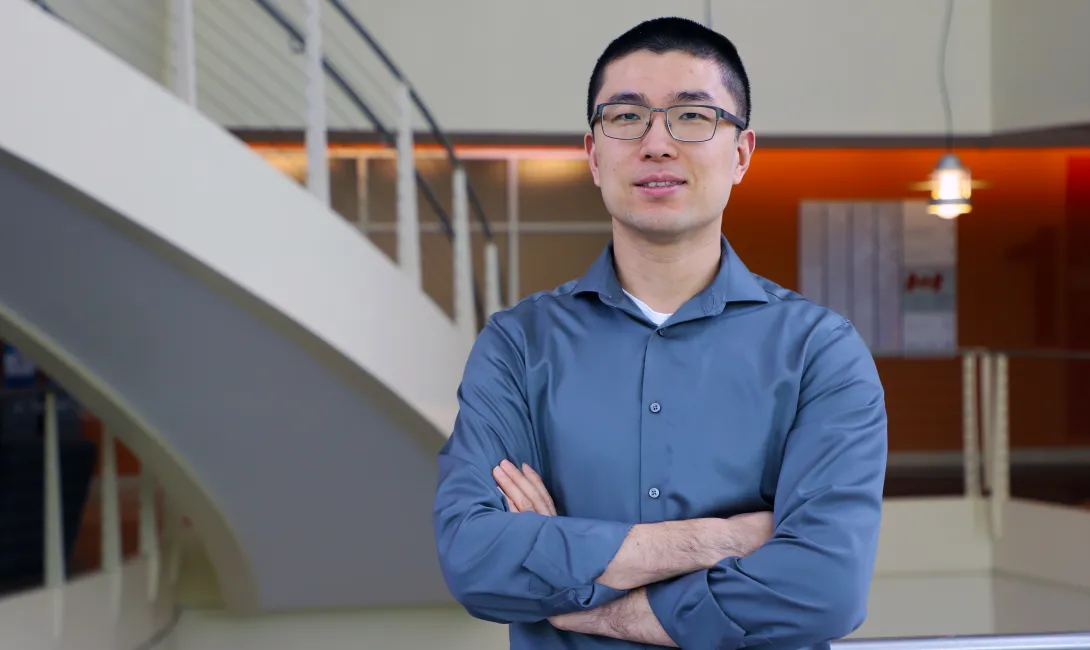
Jie He, assistant professor in the School of Earth and Atmospheric Sciences, wants to predict how rainfall will change in the presence of continuing climate change. — Photo by Jerry Grillo
Georgia Tech researcher Jie He set out to predict how rainfall will change as Earth’s atmosphere continues to heat up. In the process, he made some unexpected discoveries that might explain how greenhouse gas emissions will impact tropical oceans, affecting climate on a global scale.
“This is not a story with just one punch line,” said He, assistant professor in Georgia Tech’s School of Earth and Atmospheric Sciences, whose most recent work appeared in the journal Nature Climate Change. “I didn’t really expect to find anything this interesting—there were a few surprises.”
He is principal investigator of the Climate Modeling and Dynamics Group, which combines expertise in physics, mathematics, and computer science to study climate change. The team’s latest study, a collaboration with Mississippi State University and Princeton University, examines hydrological sensitivity in the planet’s three tropical basins: the central portions of both the Pacific and Atlantic oceans and most of the Indian Ocean, an equatorial belt girding the Earth between the Tropic of Cancer (north) and Tropic of Capricorn (south).
Hydrological sensitivity (HS) refers to the precipitation change per degree of surface warming. Hydrological sensitivity is a key metric researchers use in evaluating or predicting how rainfall will respond to future climate change. Positive HS indicates a wetter climate, while negative HS indicates a drier climate.
“The projection of hydrological sensitivity and future precipitation has been widely investigated, but most studies look at global averages — nobody had yet looked closely at each individual basin,” He said. “And the real impact on global climate change will come from the regional scale.”
In other words, what happens in tropical waters has far-reaching effects.
Long Reach of the Tropics
He wanted to specifically examine the tropical basins because they already have a well-known influence on remote locations: El Niños and La Niñas. These weather patterns that shift every couple of years are examples of tropical oceanic precipitation changes that have a global impact.
“These precipitation changes create heating and cooling in the atmosphere that set off atmospheric waves affecting remote climates across the globe,” He said. During El Niño winters, for example, the southeastern U.S. typically gets more precipitation than usual.
But El Niños and La Niñas are naturally occurring, whereas the tropical precipitation changes He identified are projected as outcomes of human-induced global warming — a simulation, part of a climate model.
Climate models are an essential tool for He and other researchers, who use them to simulate possible future scenarios. These are computer programs that rely on complex math equations to project the atmospheric interactions of energy and matter likely to occur across the planet.
What surprised He was the substantial difference in HS between tropical basins. Essentially, in He’s model the Pacific tropical basin has an HS more than twice as large as the Indian basin, with the Atlantic basin projected as a negative value.
“It was surprising because these differences can’t be explained by the mainstream theories on tropical precipitation changes,” He said. “In other words, none of the theories we knew would have predicted it.”
Modeling the Sensitive Future
The effects of such diverging hydrological sensitivity would be widespread, according to He. For example, his experiments suggest that the continental U.S. will get wetter, and the Amazon will become drier.
“If these model projections are true, these effects will materialize as the climate continues to warm,” said He, who can’t predict exactly how long it will be before these effects can be detected in actual observations of our three-dimensional world.
That’s because they only have reliable observations of oceanic tropical precipitation since 1979. Precipitation changes over decades are strongly affected by internal climate variability — that is, climate change that isn’t caused by humans. When human-induced precipitation changes are significantly greater than internal climate variability, we should be able to detect the wide-ranging effects of diverging hydrological sensitivity.
But the challenges of continuing climate change do not allow the luxury of waiting until every aspect of climate projection becomes a reality, He noted, adding, “We are relying on climate projections to some extent to guide our adaptation and mitigation plans. Therefore, it is important to study and understand the climate projections.”
Based on the scenario projected by climate models used in He’s research, the effects of El Niños and La Niñas on remote climates will become stronger.
“What we can imply is that this strengthening would be partly due to the diverging HS among tropical basins,” He concluded.
While the future effects of HS on El Niños and La Niñas weren’t discussed in this study, He believes it would make a very interesting research subject going forward.
News Contact
When Amy Bonecutter-Leonard was a second-semester undergraduate at the Georgia Institute of Technology, she applied for a work-study job in the cleanroom at the Microelectronics Research Center (MiRC). There, she learned process techniques for making the same type of electronic chips used in cellphones.
With this new knowledge, she could train and help other students with their research. At the time, Bonecutter-Leonard was a chemical engineering major with no plans to go into microelectronics. Working in the cleanroom changed that.
“I fell in love with microelectronics through exposure to the research and development work performed in the cleanroom,” she said.
What started as a student job led to her taking microelectronics classes — and eventually to a career in the field. “My work-study prepared me with hands-on technical skills I would have never learned from just being in a classroom,” she said. Now, Bonecutter-Leonard works as a microelectronics business chief engineer at defense contractor L3Harris Technologies.
Her story is one of many from the Institute for Electronics and Nanotechnology (IEN, the successor to MiRC), which has been training students from kindergarten to graduate school to be leaders in the microelectronics and nanotechnology space. The goal of IEN’s outreach is to make nanotechnology and microelectronics — such as computer chips and sensors — as accessible as any other science. Ultimately, these efforts will build up the U.S. workforce in the field, ensuring the country remains at the forefront of the technology that powers Americans’ everyday lives.
Building the Workforce
Bolstering the number of workers in the microelectronics industry is imperative to keep the U.S. globally competitive. Right now, 40% of the industry's labor force is older than 50, with practitioners aging out of their careers at a pace new talent cannot match. Additionally, heavy educational barriers to entry, including required degrees and specialized training, prevent more people from pursuing careers in the field. Without dedicated efforts, the entire sector — and the nation — will fall behind.
IEN is working to solve this pipeline problem.
“With the national semiconductor workforce aging, it is important now more than ever that we educate the next generation to move into these jobs,” said Michael Filler, IEN’s interim executive director. “IEN is proud to support the semiconductor industry by providing students with the interdisciplinary skills and hands-on technical training essential for success in this fast-paced, global field.”
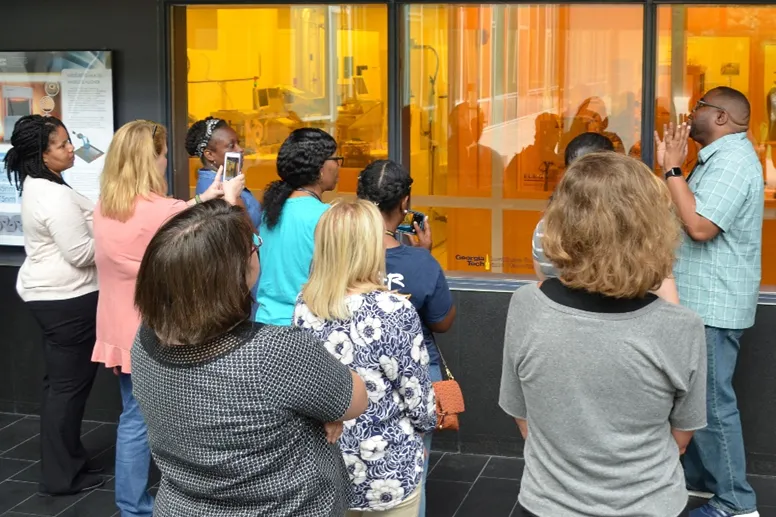
Georgia Tech is uniquely positioned to lead this charge with its 28,500 square feet of academic cleanroom space, the largest in the Southeast and among the largest in the U.S. From micro-electro-mechanical systems to electronics fabrication, workers have 100 bays in which to conduct leading-edge research. These cleanrooms are also key teaching and training facilities.
IEN invites anyone from around the world, whether affiliated with the Institute or not, to become a core user of the cleanroom facilities. The center also regularly hosts short courses for external partners — academic, industry, and government — in microfabrication and soft lithography for microfluidics. Over the past three years, more than 700 people went through new-user orientation, and 193 enrolled in the short courses.
Teaching the Next Generation
Making nanotechnology — of which microelectronics is an example — educationally accessible begins before college. Each semester, more than 800 K-12 students participate in IEN’s Introduction to Nanotechnology virtual lesson. Associate Director for Education and Outreach Mikkel Thomas begins his presentations by asking a simple question: What do you know about nanotechnology?
“About 99% of the time, they say that’s what makes Ironman’s suit work,” said Thomas. “That means they’ve learned the wrong lesson — that nanotechnology is a futuristic tech and that you have to be as smart as Tony Stark to work in the field.
“But most people interact with nanotechnology multiple times throughout their day, and they have no idea they're doing it.”
Thomas also emphasizes there is a career path for everyone, even if they don’t plan to get a traditional four-year degree. Part of IEN’s workforce development initiative is to build up the entire pipeline from industry and research lab technicians at the certificate level to postdoctoral researchers.
“It’s important for us to reach kids who don’t know what career options are available in nanotechnology,” Thomas said. “We want them to know that whatever they're interested in, there is a pathway for them.”
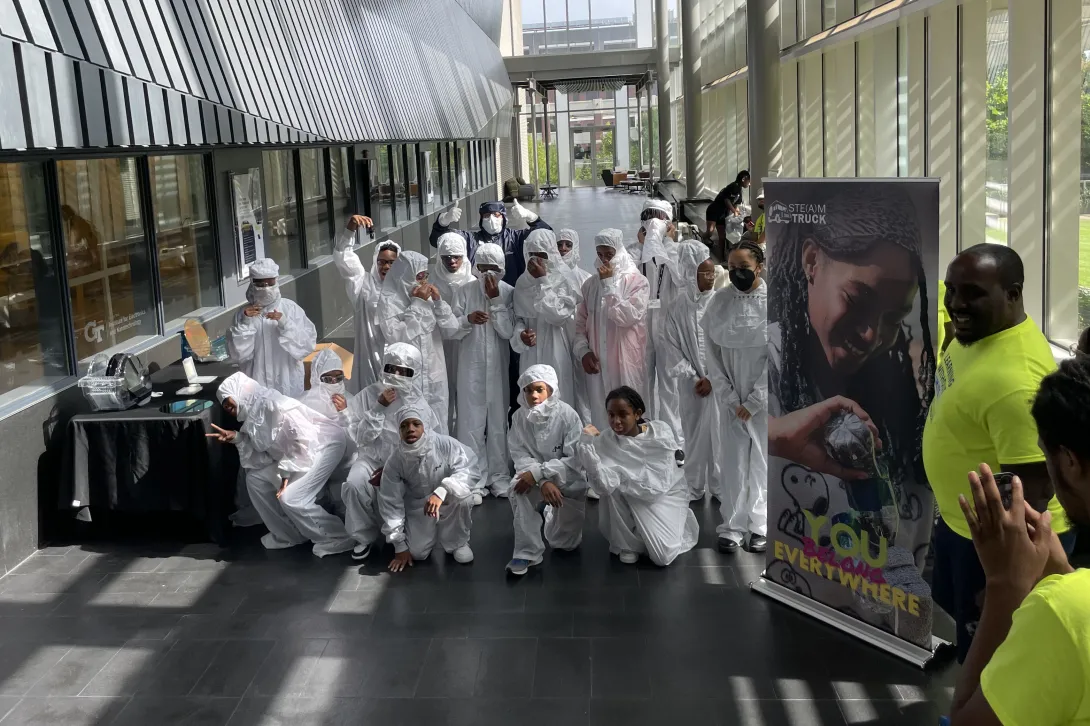
Sixth- through eighth-grade students sparked by this conversation can attend Chip Camp, a three-day STEM summer camp sponsored by Micron. They begin with a day at IEN to learn about thin films, magic sands, ferrofluids, and measuring their height in nanometers. The rest of the camp features hands-on visits to the Materials Characterization Facility (MCF) and the IEN cleanroom, where they can try on the white “bunny suits” technicians wear in the lab.
To further their reach, IEN’s workforce development team collaborates with teachers to bring nanotechnology into classrooms. During the summer, IEN offers the Research Experience for Teachers, a training program for public school and community college teachers to conduct nanotechnology research and learn how to incorporate it into their lessons. Middle school teachers have similar opportunities through the Nanoscience Summer Institute for Middle School Teachers.
Training the Workforce
When these students get to a university like Georgia Tech, IEN hires them for work-study jobs like the one Bonecutter-Leonard had. The hands-on cleanroom training is also vital to graduate students pursuing advanced degrees.
Katie Young earned her Ph.D. in materials science and engineering at Georgia Tech. Learning her way around the IEN cleanroom was essential for her graduate studies.
“My dissertation research involved synthesizing two-dimensional materials — only a single atom thick — for permeation barriers,” she explained. “I often used the cleanroom’s vacuum systems to synthesize and process 2D materials.” Now a research scientist at the Georgia Tech Research Institute, Young still works in the cleanroom on semiconductor device fabrication, building prototype quantum and biological sensors.
IEN opportunities are not limited to graduate research. Annually, about 150 Georgia Tech undergraduate students take microelectronics packaging and devices classes, with labs taught by IEN staff in the teaching cleanroom. These courses include Integrated Circuit Fabrication (ECE 4452), in which students learn to fabricate circuit elements, and the Science and Engineering of Microelectronic Fabrication (ChBE 4050/6050, open to graduate students as well), for students interested in semiconductor materials and fabrication.
Students don’t need to enroll at Georgia Tech to benefit from training, courses, and other opportunities. IEN’s internship program provides technical college students with training to become microelectronics technicians, either through work in the Biocleanroom or in the MCF.
Empowering Future Innovators
IEN also participates in the National Science Foundation Research Experiences for Undergraduates (REU), which provides opportunities for students from underrepresented groups or who attend schools without similar facilities. While enrolled at another university, John Mark Page was introduced to Georgia Tech’s cleanroom through an REU.
“That was my first exposure to any facility of this kind, and it felt like I was looking at the future. Being in a facility that can fabricate devices at or near the atomic level — it was hard to fathom,” Page said. “I had never thought that participating in microelectronics and nanotechnology as a student, especially as an undergraduate, was something I could do.”
As a result of his REU, Page transferred to Georgia Tech — he will graduate this summer with a bachelor’s degree in electrical engineering. He also completed a second REU at the University of North Carolina at Chapel Hill, worked as a student assistant in the IEN cleanroom, and participated in a Vertically Integrated Project (VIP), Chip Scale Power and Energy.
“I was interested in the VIP because it allowed me to spend more time in the cleanroom, familiarizing myself with semiconductor fabrication methods and training on new fabrication equipment,” Page explained. His experiences inspired him to consider a future career in the semiconductor industry.
“It wasn’t only the 10-week experience of the REU that made a lasting impact on me,” he said. “It was also the relationships formed with the people of IEN. The staff there are exceptional representatives of Georgia Tech, and they make IEN a tremendous asset to the future of microelectronics and nanotechnology in the U.S.”
Biya Haile, an ECE Ph.D. student, had a similarly meaningful REU experience. Haile, whose research focuses on creating micro-electro-mechanical systems-based sensors (MEMS), described the REU as “immersive.”
“The REU project enabled me to study chemical micro-sensor technologies, as well as state-of-the-art additive nano-manufacturing techniques, which has contributed to my research,” he said. “I feel lucky that my academic journey has entailed developing new technologies that use nanoscience to solve big problems.”
While Haile is currently focused more on designing and testing rapid processes for fabricating MEMS-based devices, he still occasionally works in the cleanroom on fabrication. He plans to go into the microelectronics industry after graduating.
The Path Ahead
All of IEN’s training and educational offerings align with IEN’s mission to bolster and diversify the microelectronics workforce, according to George White, senior director of strategic partnerships for the Georgia Tech research enterprise. “IEN has been at the forefront of the CHIPS infrastructure buildout, particularly in the area of education and workforce development,” he noted.
IEN’s efforts impact not just Atlanta but the entire country. Georgia Tech’s leadership in microelectronics research trains the innovators and practitioners of the future everywhere and ensures that America stays at the forefront of leading-edge technology. As demand increases for microelectronics, IEN is moving to meet it.
Effective July 1, 2024, the Institute for Electronics and Nanotechnology and the Institute for Materials will evolve into the Institute for Matter and Systems (IMS). This strategic union aims to foster convergent research at Georgia Tech, focusing on the science, technology, and societal underpinnings of cutting-edge materials and devices. Eric Vogel will be the director of IMS, and Michael Filler will be the deputy director.
News Contact
Media Contact: Tess Malone, Senior Research Writer/Editor tess.malone@gatech.edu

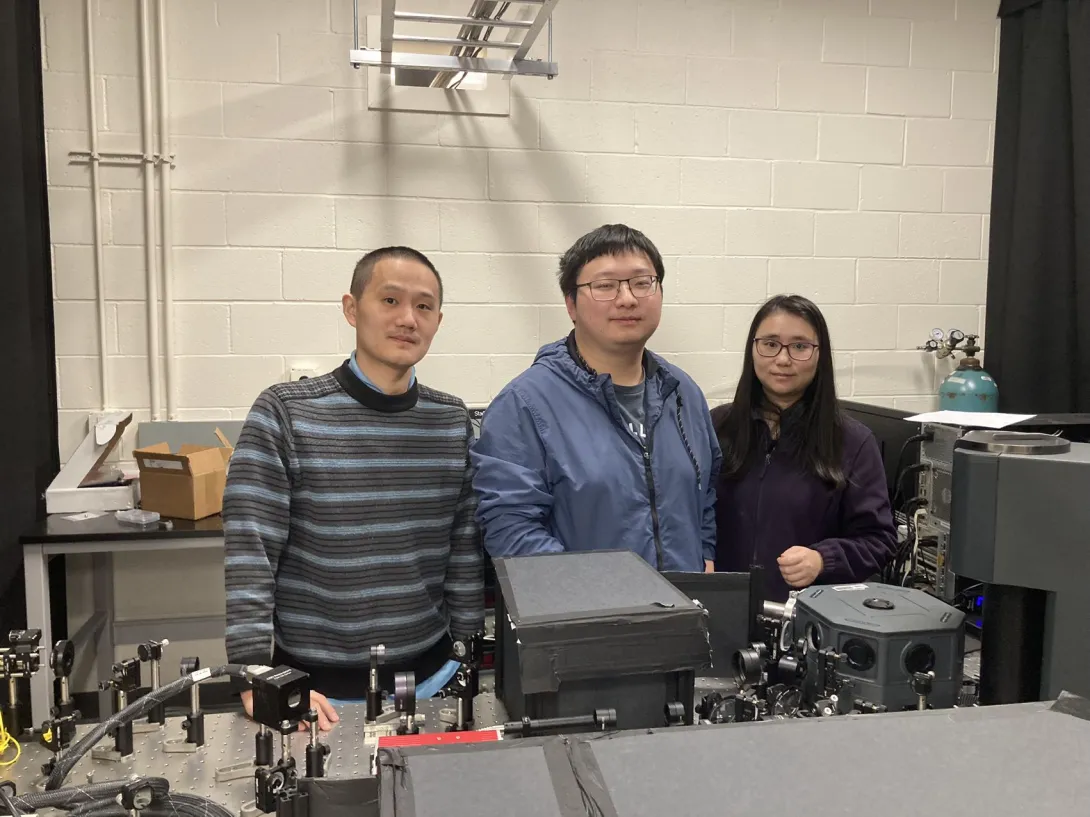
Quantum sensors detect the smallest of environmental changes — for example, an atom reacting to a magnetic field. As these sensors “read” the unique behaviors of subatomic particles, they also dramatically improve scientists’ ability to measure and detect changes in our wider environment.
Monitoring these tiny changes results in a wide range of applications — from improving navigation and natural disaster forecasting, to smarter medical imaging and detection of biomarkers of disease, gravitational wave detection, and even better quantum communication for secure data sharing.
Georgia Tech physicists are pioneering new quantum sensing platforms to aid in these efforts. The research team’s latest study, “Sensing Spin Wave Excitations by Spin Defects in Few-Layer Thick Hexagonal Boron Nitride” was published in Science Advances this week.
The research team includes School of Physics Assistant Professors Chunhui (Rita) Du and Hailong Wang (corresponding authors) alongside fellow Georgia Tech researchers Jingcheng Zhou, Mengqi Huang, Faris Al-matouq, Jiu Chang, Dziga Djugba, and Professor Zhigang Jiang and their collaborators.
An ultra-sensitive platform
The new research investigates quantum sensing by leveraging color centers — small defects within crystals (Du’s team uses diamonds and other 2D layered materials) that allow light to be absorbed and emitted, which also give the crystal unique electronic properties.
By embedding these color centers into a material called hexagonal boron nitride (hBN), the team hoped to create an extremely sensitive quantum sensor — a new resource for developing next-generation, transformative sensing devices.
For its part, hBN is particularly attractive for quantum sensing and computing because it could contain defects that can be manipulated with light — also known as "optically active spin qubits."
The quantum spin defects in hBN are also very magnetically sensitive, and allow scientists to “see” or “sense” in more detail than other conventional techniques. In addition, the sheet-like structure of hBN is compatible with ultra-sensitive tools like nanodevices, making it a particularly intriguing resource for investigation.
The team’s research has resulted in a critical breakthrough in sensing spin waves, Du says, explaining that “in this study, we were able to detect spin excitations that were simply unattainable in previous studies.”
Detecting spin waves is a fundamental component of quantum sensing, because these phenomena can travel for long distances, making them an ideal candidate for energy-efficient information control, communication, and processing.
The future of quantum
“For the first time, we experimentally demonstrated two-dimensional van der Waals quantum sensing — using few-layer thick hBN in a real-world environment,” Du explains, underscoring the potential the material holds for precise quantum sensing. “Further research could make it possible to sense electromagnetic features at the atomic scale using color centers in thin layers of hBN.”
Du also emphasizes the collaborative nature of the research, highlighting the diverse skill sets and resources of researchers within Georgia Tech.
“Within the School of Physics, Professor Zhigang Jiang's research group provided the team with high-quality hBN crystals. Jingcheng Zhou, who is a member of both Professor Hailong Wang’s and my research teams, performed the cutting-edge quantum sensing measurements,” she says. “Many incredible students also helped with this project.”
Du is a leading scientist in the field of quantum sensing — this year, she received a new grant from the U.S. Department of Energy, along with a Sloan Research Fellowship for her pioneering work on developing state-of-the-art quantum sensing techniques for quantum information technology applications. The prestigious Sloan award recognizes researchers whose “creativity, innovation, and research accomplishments make them stand out as the next-generation of leaders in the fields.”
This work is supported by the U. S. National Science Foundation (NSF) under award No. DMR-2342569, the Air Force Office of Scientific Research under award No. FA9550-20-1-0319 and its Young Investigator Program under award No. FA9550-21-1-0125, the Office of Naval Research (ONR) under grant No. N00014-23-1-2146, NASA-REVEALS SSERVI (CAN No. NNA17BF68A), and NASA-CLEVER SSERVI (CAN No. 80NSSC23M0229).
News Contact
Written by Selena Langner
Contact: Jess Hunt-Raston
Director of Communications
College of Sciences at Georgia Tech
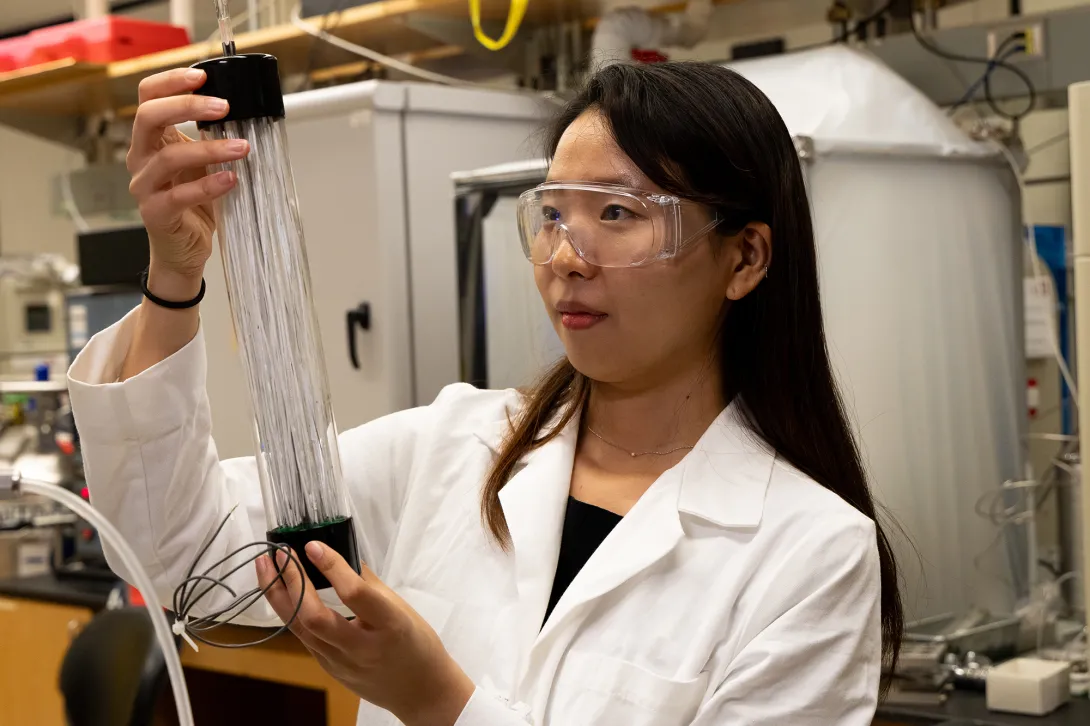
A Georgia Tech researcher examines a component of a direct air capture system that employs carbon fiber strands. Direct air capture systems require chemical materials that can grab carbon dioxide.
To avoid catastrophic climate impacts, excessive carbon emissions must be addressed. Direct air capture, a technology that pulls carbon dioxide out of ambient air, has great potential. There are great challenges, however. For direct air capture technology, every type of environment requires a uniquely specific design based on the humidity, temperature, and air flows of that place. Now, Georgia Tech and Meta have collaborated to produce a massive database, potentially making it easier and faster to design and implement direct air capture technologies. The open-source database can help designers identify materials that work best for a given direct air capture scenario. The dataset enabled the team to train an AI model that is orders of magnitude faster than existing chemistry simulations. The project, named OpenDAC, could accelerate climate solutions the planet desperately needs.
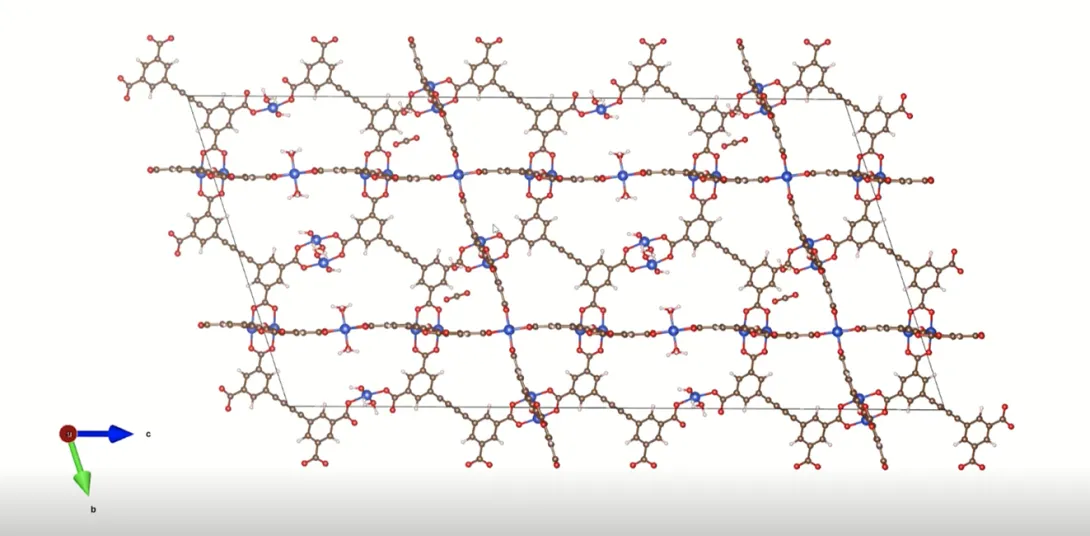
A visualization of a metal-organic framework. (Credit: Logan Brabson)
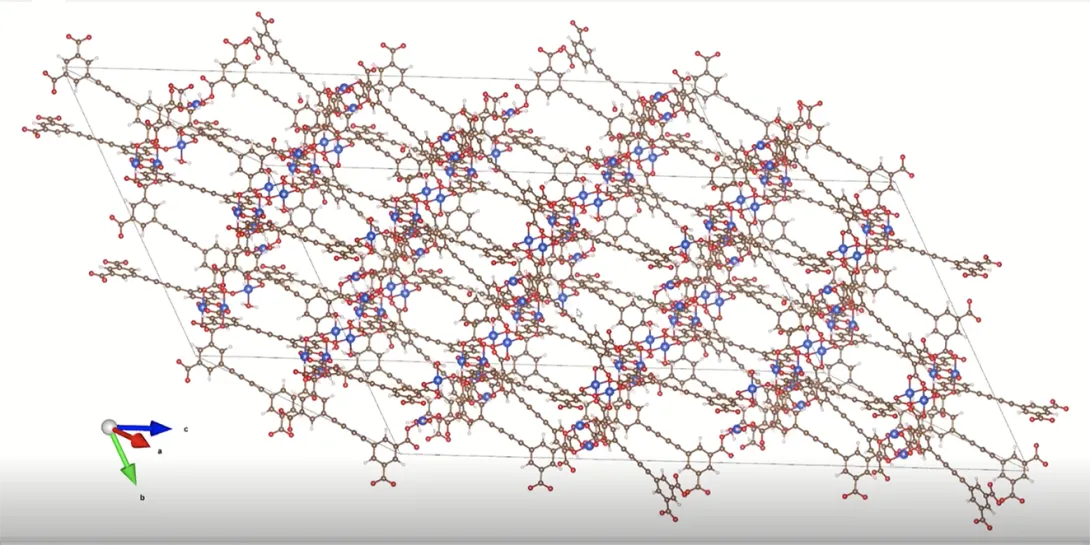
A visualization of the same metal-organic framework, which has been rotated to show porosity and dimension. (Credit: Logan Brabson)
Andrew J. Medford, associate professor in the School of Chemical and Biomolecular Engineering (ChBE).
To avoid catastrophic climate impacts, excessive carbon emissions must be addressed. At this point, cutting emissions isn’t enough. Direct air capture, a technology that pulls carbon dioxide out of ambient air, has great potential to help solve the problem.
But there’s a big challenge. For direct air capture technology, every type of environment and location requires a uniquely specific design. A direct air capture configuration in Texas, for example, would necessarily be different from one in Iceland. These systems must be designed with exact parameters for humidity, temperature, and air flows for each place.
Now, Georgia Tech and Meta have collaborated to produce a massive database, potentially making it easier and faster to design and implement direct air capture technologies. The open-source database enabled the team to train an AI model that is orders of magnitude faster than existing chemistry simulations. The project, named OpenDAC, could accelerate climate solutions the planet desperately needs.
The team’s research was published in ACS Central Science, a journal of the American Chemical Society.
“For direct air capture, there are many ideas about how best to take advantage of the air flows and temperature swings of a given environment,” said Andrew J. Medford, associate professor in the School of Chemical and Biomolecular Engineering (ChBE) and a lead author of the paper. “But a major problem is finding a material that can capture carbon efficiently under each environment’s specific conditions.”
Their idea was to “create a database and a set of tools to help engineers broadly, who need to find the right material that can work,” Medford said. “We wanted to use computing to take them from not knowing where to start to giving them a robust list of materials to synthesize and try.”
Containing reaction data for 8,400 different materials and powered by nearly 40 million quantum mechanics calculations, the team believes it’s the largest and most robust dataset of its kind.
Building a Partnership (and a Database)
Researchers with Meta’s Fundamental AI Research (FAIR) team were looking for ways to harness their machine learning prowess to address climate change. They landed on direct air capture as a promising technology and needed to find a partner with expertise in materials chemistry as it relates to carbon capture. They went straight to Georgia Tech.
David Sholl, ChBE professor, Cecile L. and David I.J. Wang Faculty Fellow, and director of Oak Ridge National Laboratory’s Transformational Decarbonization Initiative, is one of the world’s top experts in metal-organic frameworks (MOFs). These are a class of materials promising for direct air capture because of their cagelike structure and proven ability to attract and trap carbon dioxide. Sholl brought Medford, who specializes in applying machine learning models to atomistic and quantum mechanical simulations as they relate to chemistry, into the project.
Sholl, Medford, and their students provided all the inputs for the database. Because the database predicts the MOF interactions and the energy output of those interactions, considerable information was required.
They needed to know the structure of nearly every known MOF — both the MOF structure by itself and the structure of the MOF interacting with carbon dioxide and water molecules.
“To predict what a material might do, you need to know where every single atom is and what its chemical element is,” Medford said. “Figuring out the inputs for the database was half of the problem, and that’s where our Georgia Tech team brought the core expertise.”
The team took advantage of large collections of MOF structures that Sholl and his collaborators had previously developed. They also created a large collection of structures that included imperfections found in practical materials.
The Power of Machine Learning
Anuroop Sriram, research engineering lead at FAIR and first author on the paper, generated the database by running quantum chemistry computations on the inputs provided by the Georgia Tech team. These calculations used about 400 million CPU hours, which is hundreds of times more computing than the average academic computing lab can do in a year.
FAIR also trained machine learning models on the database. Once trained on the 40 million calculations, the machine learning models were able to accurately predict how the thousands of MOFs would interact with carbon dioxide.
The team demonstrated that their AI models are powerful new tools for material discovery, offering comparable accuracy to traditional quantum chemistry calculations while being much faster. These features will allow other researchers to extend the work to explore many other MOFs in the future.
“Our goal was to look at the set of all known MOFs and find those that most strongly attract carbon dioxide while not attracting other air components like water vapor, and using these highly accurate quantum computations to do so,” Sriram said. “To our knowledge, this is something no other carbon capture database has been able to do.”
Putting their own database to use, the Georgia Tech and Meta teams identified about 241 MOFs of exceptionally high potential for direct air capture.
Moving Forward With Impact
“According to the UN and most industrialized countries, we need to get to net-zero carbon dioxide emissions by 2050,” said Matt Uyttendaele, director of Meta’s FAIR chemistry team and a co-author on the paper. “Most of that must happen by outright stopping carbon emissions, but we must also address historical carbon emissions and sectors of the economy that are very hard to decarbonize — such as aviation and heavy industry. That’s why CO2 removal technologies like direct air capture must come online in the next 25 years."
While direct air capture is still a nascent field, the researchers say it’s crucial that groundbreaking tools — like the OpenDAC database made available in the team’s paper — are in development now.
“There is not going to be one solution that will get us to net-zero emissions,” Sriram said. “Direct air capture has great potential but needs to be scaled up significantly before we can make a real impact. I think the only way we can get there is by finding better materials.”
The researchers from both teams hope the scientific community will join the search for suitable materials. The entire OpenDAC dataset project is open source, from the data to the models to the algorithms.
“I hope this accelerates the development of negative-emission technologies like direct air capture that may not have been possible otherwise,” Medford said. “As a species, we must solve this problem at some point. I hope this work can contribute to getting us there, and I think it has a real shot at doing that.”
Note: Georgia Tech ChBE graduate students Sihoon Choi, Logan Brabson, and Xiaohan Yu made major contributions and are co-authors of the paper.
Citation: A. Sriram et al, The Open DAC 2023 Dataset and Challenges for Sorbent Discovery in Direct Air Capture, ACS Central Science (2024).
News Contact
Catherine Barzler, Senior Research Writer/Editor
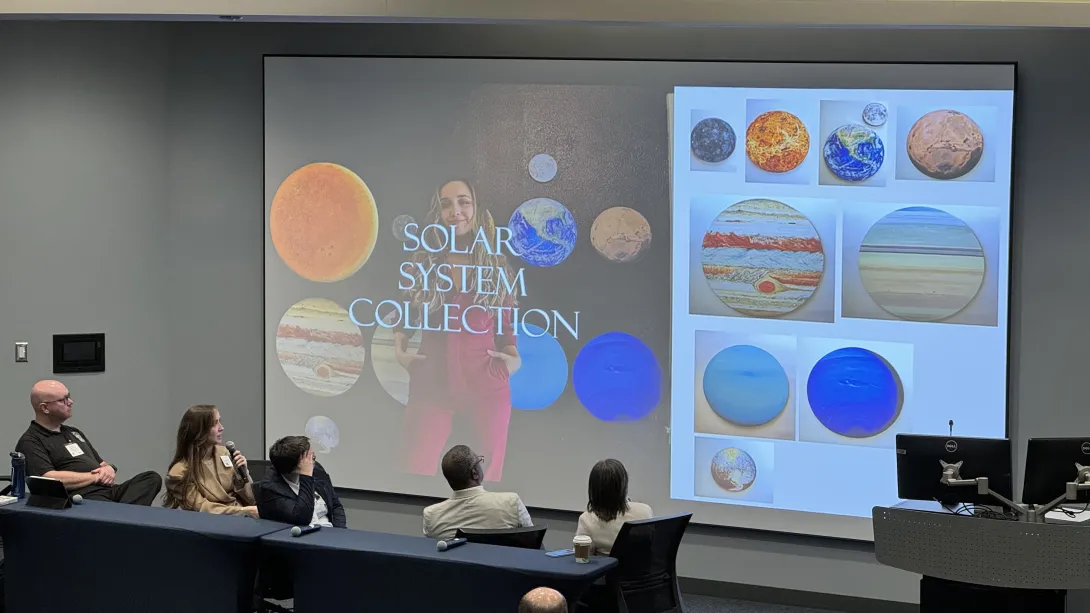
April 12 is a significant date in the history of exploration, as it marks the first space flight of a human, Yuri Gagarin, in 1961. This year on April 12, the Georgia Tech Space Research Initiative (Space RI) hosted an event highlighting the Institute’s interdisciplinary space research. The Yuri’s Day Symposium was Space RI’s first public event.
A multidisciplinary initiative, the Space RI brings together faculty, researchers, and students from across campus who share a passion for space exploration. Their combined research explores a broad array of space-related topics, all considered from a human perspective.
“Launching Georgia Tech’s Space Research Initiative reinforces our commitment to advancing our understanding of space and our universe,” said Executive Vice President for Research Chaouki Abdallah. “It is also a testament to Georgia Tech's unwavering dedication to pushing the limits of what is possible and to fostering innovations that benefit humankind.”
The symposium was organized by Glenn Lightsey, interim executive director of the Space RI, and the Space RI steering committee, which consists of representatives from the Georgia Tech Research Institute (GTRI) and the Colleges of Engineering, Computing, and Sciences, the Ivan Allen College of Liberal Arts, and the Scheller College of Business. The day began with remarks from Research leadership and an overview of the Space RI and its mission. “This is an exciting time for space exploration at Georgia Tech and across the world,” Lightsey said. “Space research is a critical part of solving our world’s most challenging problems and improving life for everyone on Earth.”
Space research and exploration yield many societal benefits that improve life on Earth and even foster economic growth. These advances include rapidly evolving technologies, improvements in medicine, and the development of enhanced materials — such as self-healing materials and those designed for extreme environments. Additionally, space research provides essential tools, data, and insights for climate scientists.
Sessions and panels throughout the day covered space science, space media, NASA’s Moon to Mars program, GTRI’s space research program, commercial space initiatives, and space in popular culture. A.C. Charania, NASA’s chief technologist and a Georgia Tech alumnus, delivered the keynote address. He shared insights into his work at NASA and Moon to Mars.
Following the symposium, the Space RI hosted a “star party” at the Georgia Tech Observatory. People of all ages gathered at the event, where they could use the observatory’s telescope to observe the moon, Jupiter, and the Orion Nebula, an immense cloud of dust and gas from which new stars are born.
“It was a clear night, and we were able to view the lunar terminator — the boundary where the sun is setting on the moon — which accentuates craters and mountains,” said Lightsey. “It was exciting to officially launch our initiative on a day when the world celebrated space exploration and the star party was a fantastic way to end our event.”
In July 2025, the Space RI will transition into one of Georgia Tech’s Interdisciplinary Research Institutes. Learn more about the initiative at space.gatech.edu.
Sign up to receive space news and event updates from the Space RI.
News Contact
Laurie Haigh
Research Communications
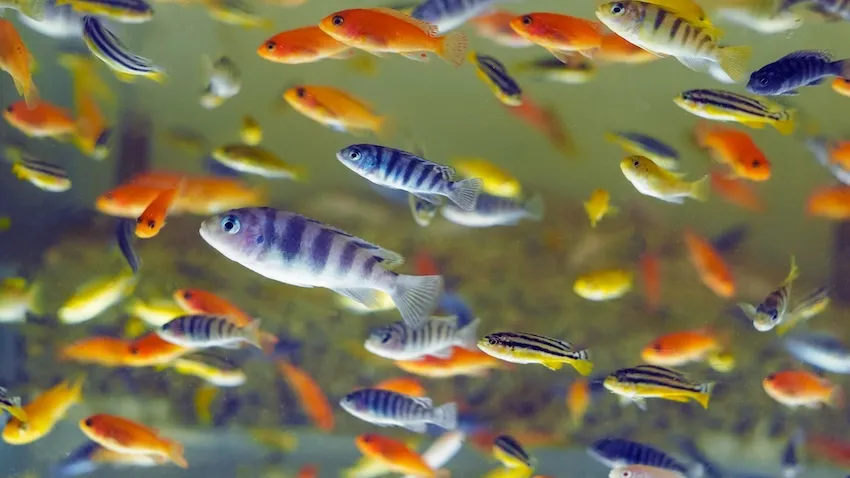
An Adobe Stock image of a variety of brightly colored Lake Malawi cichlids sharing a freshwater aquarium.

Georgia Tech OMSCS student Jasmine Tata volunteers with the campus research group FishStalkers

From her home more than 800 miles away, Georgia Tech online master's student Jasmine Tata is monitoring fish in aquariums at Georgia Tech.
Tata is a New York-based QA analyst and project manager. She started the Online Master of Science in Computer Science (OMSCS) program in Fall 2022 and joined FishStalkers last year.
The student-led research program is part of the School of Biological Sciences' McGrath Lab. Its researchers use machine learning, computer vision, and other technologies to better understand the evolution of animal behaviors.
One of the lab's research projects studies Lake Malawi cichlids to explore connections between observed behavior and brain function.
The FishStalkers are vital to the project. They collect video, depth, and other data from individual fish using Raspberry Pi single-board computers. This information, coupled with open-source code they developed, allows the group to track, monitor, and classify the behaviors of a fish as it builds and maintains its bower, which is a sand structure these cichlids use to attract mates.
Along with monitoring the research tanks, Tata's contributions include improving the automated collection and analysis of data streaming from the Pis. She's also helping to adapt the data pipeline to work with yellow-head, orange-cap, and other cichlid species.
[RELATED: Georgia Tech's OMSCS Program Celebrates 10th Anniversary]
"I've enjoyed learning more about new problems in a relatively unfamiliar field. In a pure computer science-focused lab, I never would experience the frustrations of data collection that come with biological subjects," said Tata.
"The fish builds bowers on its own schedule, and data collection must accurately capture this, regardless of weekends or holidays."
Tata says her experience with FishStalkers has given her new ideas about presenting data to non-technical team members. The team uses a spreadsheet integrated with data collection scripts running on the Raspberry Pis. The spreadsheet allows someone without technical knowledge to pause, upload data, or start new trials simply by toggling a dropdown.
"This has given me a lot of ideas about how to meet people where they are in terms of technical skills when it comes to user interface design and has encouraged me to learn more about human-computer interaction," said Tata.
Tata learned about the FishStalkers research group when its founder, Breanna Shi, reached out through the OMSCS Slack study channel. Shi developed the group through Georgia Tech's Vertically Integrated Projects (VIP) program as a mentorship program.
"Given their real-world computer science experience, I wanted to see if there were OMSCS students interested in collaborating on FishStalkers projects and assisting in the mentorship of undergraduate researchers," said Shi.
Shi is a third-year Ph.D. student studying bioinformatics with minors in machine learning and higher education. She created FishStalkers as a mentorship program because she recognized that undergraduate and masters-level students could feel less valued or isolated in research environments.
"The FishStalkers model empowers all its researchers with the respect and responsibility as a full team member. Whether it's your first week as a FishStalker or your last, you will complete tasks that benefit the research team and yourself," said Shi.
[RELATED: Women-Centered Mentorship Provides Empowerment to Conquer Ph.D.]
Tata's experience in the business world made her a good fit for the FishStalkers program. Shi says Tata contributes valuable insight to the group as a mentor because most students approach the program from a purely academic viewpoint.
"Jasmine, like other OMSCS students, works full-time and attends the OMSCS program part-time. Her roles as a project manager and a software QA analyst allow her to contribute a unique perspective to the FishStalkers group," said Shi.
In addition to sharing her experience mentoring two OMSCS students this semester, Tata has helped Shi overcome some of the inherent challenges of long-distance collaboration. These include creating a sense of interpersonal connection among in-person and remote research team members.
Group meetings host a virtual link to enhance the online research experience. Every member provides progress updates during the sessions. The researchers also virtually check in and out of their research hours in a shared group chat and describe the work completed during their check-out.
"FishStalkers also runs a monthly lab-buddy program where a researcher is paired with a new buddy each month to schedule a 30-minute meeting to chat and learn about each other's work," said Shi.
"These strategies benefit OMSCS students in our group and provide a positive research environment for junior researchers. We seek to incorporate innovative strategies to create an accessible research environment for all students interested in participating in our research," said Shi.
FishStalkers has been such a success that Shi is expanding the model. This fall, Shi will work with OMSCS Executive Director David Joyner and OMSCS Associate Director of Research Nick Lytle to connect OMSCS students with interdisciplinary research projects in labs across campus.
"My role will be to establish relationships between data collectors and data analyzers to provide a service to non-technical labs across campus and a valuable research experience for OMSCS students," said Shi.
"We will be building from my existing work in image processing in the McGrath Lab and expanding to other labs with data analysis needs. I am very excited to have the experience of growing as a collaborator."
News Contact
Ben Snedeker, Communications Manager
Georgia Tech College of Computing
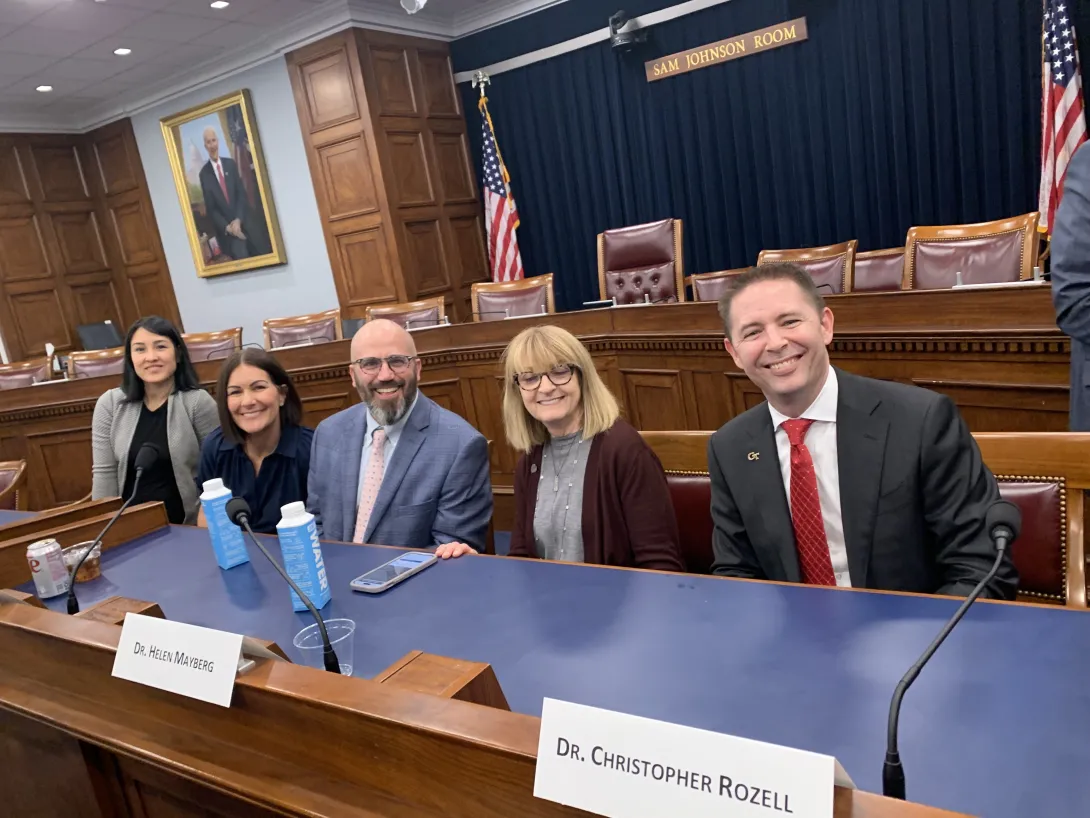
Rozell was joined by BRAIN Initiative Director John J. Ngai, clinical collaborators, and a family whose lives have been transformed by this work.
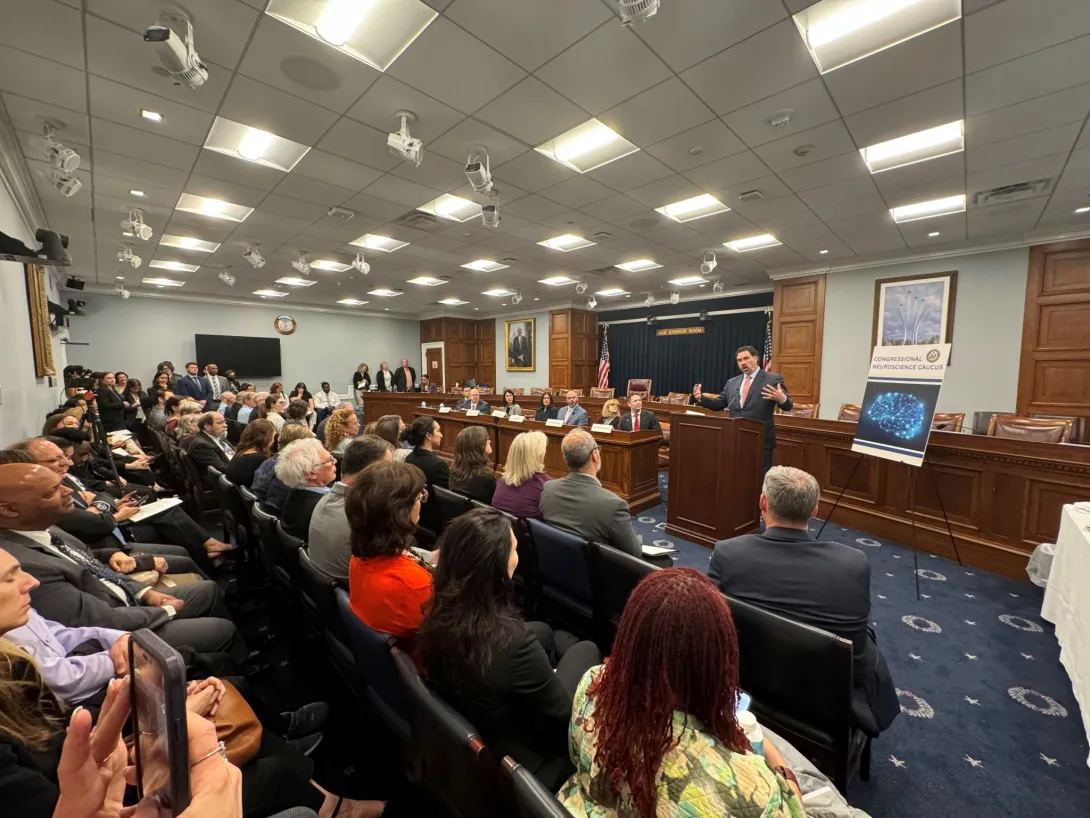
Rozell presented to members of U.S. Congress as well as local representatives during his visit.
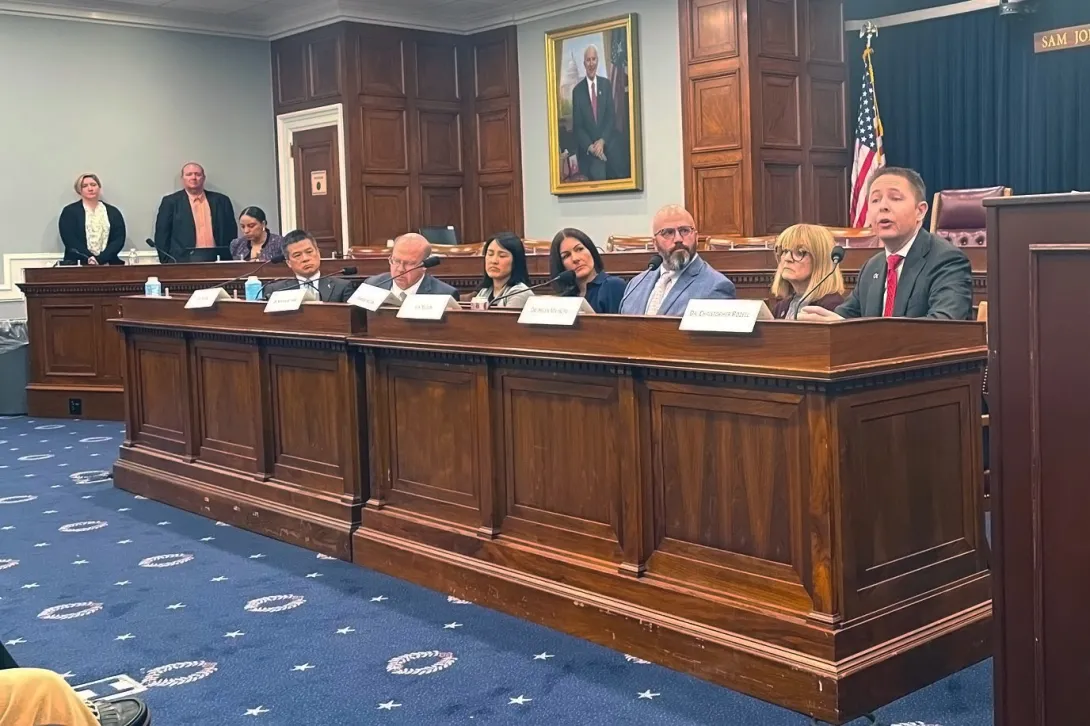
Georgia Tech Engineering Professor Chris Rozell shared his research and the impacts of the past decade of brain research funded by the NIH BRAIN Initiative with Congress.
For the past 10 years, the National Institutes of Health have led an unprecedented effort to revolutionize our understanding of the human brain. The aptly named BRAIN (Brain Research Through Advancing Neurotechnologies) Initiative has led to remarkable technological advancements, insights into the structure and function of the brain, and budding therapies.
Recently, School of Electrical and Computer Engineering (ECE) Professor Chris Rozell traveled to Washington, D.C. to share the impact of his BRAIN Initiative research with U.S. Congressional offices — and offer insights on how critical this program is to society. The briefing took on a particular urgency because BRAIN Initiative funding was cut over 40% this year, and future funding appears to be in jeopardy in the current federal budget climate.
“The millions of patients suffering with intractable neurologic disorders and mental illness deserve a moonshot to develop new solutions for their conditions,” said Rozell, who also holds the Julian T. Hightower Chair in ECE and serves on the executive committee for Georgia Tech’s Neuro Next Initiative. “You can't get to the moon with a paper plane, and you can’t get there without a map. The BRAIN Initiative is a vital program because it's one of the few places that brings together interdisciplinary teams that include the scientists who have been building maps of brain circuits and the engineers who have been building rockets to understand and intervene with those circuits.
“I'm proud to have had the chance to represent not only our own research, but the incredible community here at Georgia Tech and around the country working to understand many different aspects of the brain, developing new neurotechnologies, and advancing therapies for neurologic disorders.”
Interdisciplinary impacts
“The main message we presented to Congress is that the interdisciplinary combination of rigorous science and technical innovation can have enormous societal impact over the next few decades,” said Rozell.
A stark example of that impact was published in Nature this past fall. In this research, Rozell and his collaborators at the Icahn School of Medicine at Mount Sinai and Emory University School of Medicine identified the first known biomarker of disease recovery with deep brain stimulation in treatment-resistant depression.
“The fact that an engineer can advance clinical therapies is a testament to the new era we're in,” says Rozell, “where disciplinary boundaries are fading, and technological innovation accelerates our scientific and translational breakthroughs.”
This research served as a focal point of the congressional briefing, where Rozell presented with BRAIN Initiative Director John J. Ngai, clinical collaborators, and a family whose lives have been transformed by this work.
“Events like last week are dream come true,” shared Jon Nelson, who was treated with deep brain stimulation as part of the study and presented with Rozell in D.C. After living through 10 years of debilitating, treatment-resistant depression, Nelson says “remission of depression still doesn't feel real. It's been a year and a half, and I still am in awe every single day.
“The fact that I have come out of this study and found that the disease is purely an electrical deficiency in my brain has fueled me to completely pulverize the stigma of mental illness,” Nelson explained. “When you have an opportunity to go speak to Congress — that’s about as great of a platform as you can get for that. Being able to put a face to what the BRAIN Initiative funding can do for people was just amazing.”
When meeting with local representatives, Rozell also relayed his work as co-executive leader of the Neuro Next Initiative, a budding Interdisciplinary Research Institute at Georgia Tech.
“I was thrilled to highlight that Georgia Tech is leading the charge with the Neuro Next Initiative, which will evolve into a full Interdisciplinary Research Institute in 2025,” said Rozell. “Georgia Tech has the ingredients to become a leading center for modern technology-driven interdisciplinary brain research and workforce development.
“This visit was a reminder to me that research funding is not guaranteed and it’s important to keep communicating the critical value that research plays in advancing our understanding, training our workforce, fueling our economy, and ultimately making a better tomorrow for society.”
News Contact
Audra Davidson
Research Communications Program Manager
Neuro Next Initiative

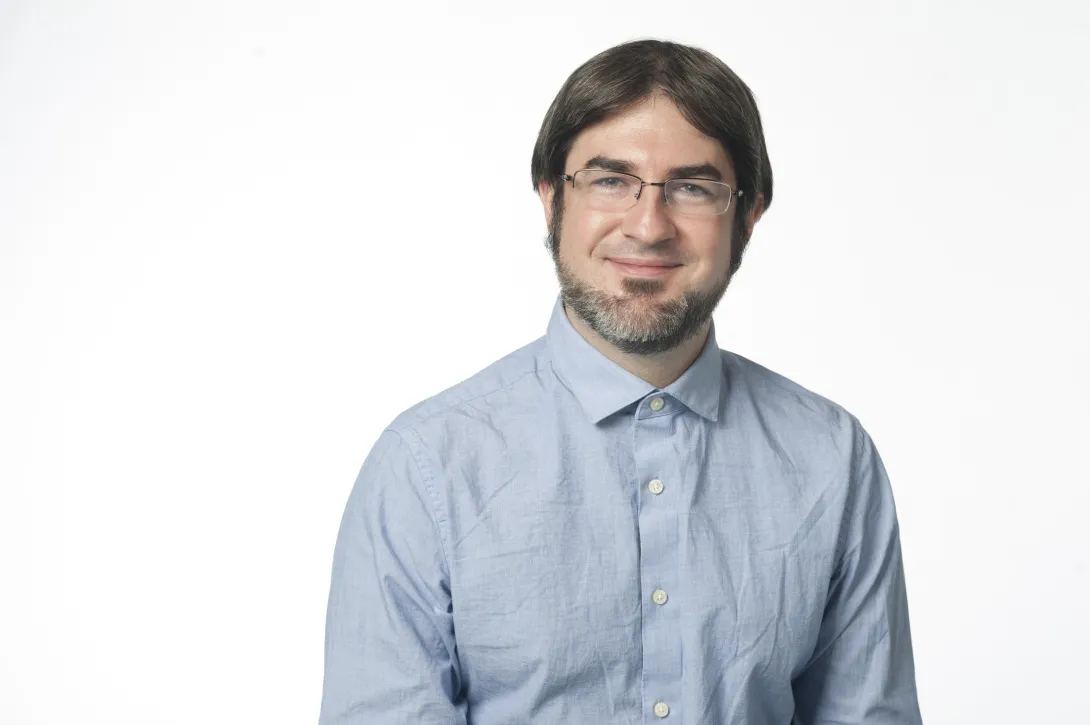
The College of Sciences is funding two research centers through a new seed grant program.
Selected from a finalist pool of nine proposals, Associate Professors Yuanzhi Tang and Thackery Brown’s ideas were chosen for their high potential for novel interdisciplinary research and impact.
Tang’s center will focus on sustainable mineral research, and Brown’s on spatial computation and navigation. Applications for the research will span the development of more sustainable batteries, as well as seeking to improve human health and well-being.
“Improving the human condition, fostering community, and pursuing research excellence are at the forefront of Georgia Tech’s mission, and these new centers will play a critical role in furthering that goal,” says Laura Cadonati, associate dean for Research in the College of Sciences and a professor in the School of Physics. “The College of Sciences is thrilled to support these new initiatives, and is excited to continue to develop the seed grant program.”
A second call for research center proposals is planned for January 2025, with funding to start in July 2025.
The new Center for Sustainable and Decarbonized Critical Energy Mineral Solutions (CEMS), to be led by Yuanzhi Tang, an associate professor in the School of Earth and Atmospheric Sciences, will serve as a hub for sustainable procurement solutions for critical energy mineral resources, including rare earth elements and metals used for battery production.
Thackery Brown, an associate professor in the School of Psychology, will lead the second center, the Center for Research and Education in Navigation (CRaNE). CRaNE will investigate problems related to spatial computation, cognition, and navigation — which has implications for human health, animal conservation, smart architecture and urban design.
“This generous support from the College of Sciences will enable us to host a conference on spatial cognition, computation, design, and navigation; to provide collaborative multi-lab seed grants; and to establish the first of a series of explicitly co-mentored, interdisciplinary graduate student Fellowships,” Brown says. “Collectively, these are the seeds of a high-impact and self-sustaining center.”
About the Center for Sustainable and Decarbonized Critical Energy Mineral Solutions (CEMS)
Yuanzhi Tang, School of Earth and Atmospheric Sciences
Co-sponsored by the College of Sciences, Strategic Energy Institute (SEI), Brook Byers Institute for Sustainable Systems (BBISS), Institute for Electronics and Nanotechnology (IEN), and Institute for Materials (iMat), CEMS began as a joint BBISS-SEI initiative lead project that has since grown into a joint center focused on critical elements and materials for sustainable energy.
Sustainably sourcing these materials provides a critical foundation for both high-tech industry and green economy. “Rare earth elements and battery metals like lithium, copper, and nickel are in high demand, but low domestic resources and production have resulted in a heavy reliance on imports,” Tang explains. “How can we domestically produce these resources, and how can we do this sustainably?
Georgia Tech and the College of Sciences are at a unique position for developing a large regional research umbrella to connect these dots.”
CEMS will leverage on three key pillars: science and technology development, strengthening collaboration among the University System of Georgia (USG) universities, and developing regional resources and economy, Tang says. “By leveraging collaboration among Georgia universities, and fostering engagement with regional industries, the Center will develop new science and technology, leading the way in research on how to procure these ‘essential vitamins’ for clean energy transition in a sustainable and decarbonized manner.”
About the Center for Research and Education in Navigation (CRaNE)
Thackery Brown, School of Psychology
CRaNE will focus on solving problems related to spatial computation, cognition, and navigation. “How do we treat catastrophic loss of one’s ability to get from A to B in Alzheimer's disease? How do we build smarter cities that are easier and more carbon efficient to navigate? How can we develop robots,” Brown says, “which navigate with the flexibility and efficiency of our own minds? CRaNE will bring together experts from many different fields to help address these problems with truly creative and integrative scientific and technological solutions.”
CRaNE will support interdisciplinary collaborative research, including developing a graduate student fellowship program, and conducting K-12 outreach.
“Our goal for CRaNE is to position the College of Sciences, Georgia Tech, and our extended network of collaborator institutions as a center of gravity for cutting-edge work on how the mind, brain, and artificial systems process space — how they can be made better at it, and how we can engineer our world around us in ways that support the humans and animals that need to navigate it to survive,” Brown says.
Emphasizing the collaborative nature of CRaNE, Brown adds that “by targeting collaborative grants, research, and education, and by promoting outreach and education earlier in the STEM pipeline, we hope to accelerate progress at the frontiers of these fields — and to invest in future science that cannot be easily addressed by a single lab or discipline.”
News Contact
Written by Selena Langner
Contact:
Jess Hunt-Ralston
Director of Communications
College of Sciences
Georgia Tech