
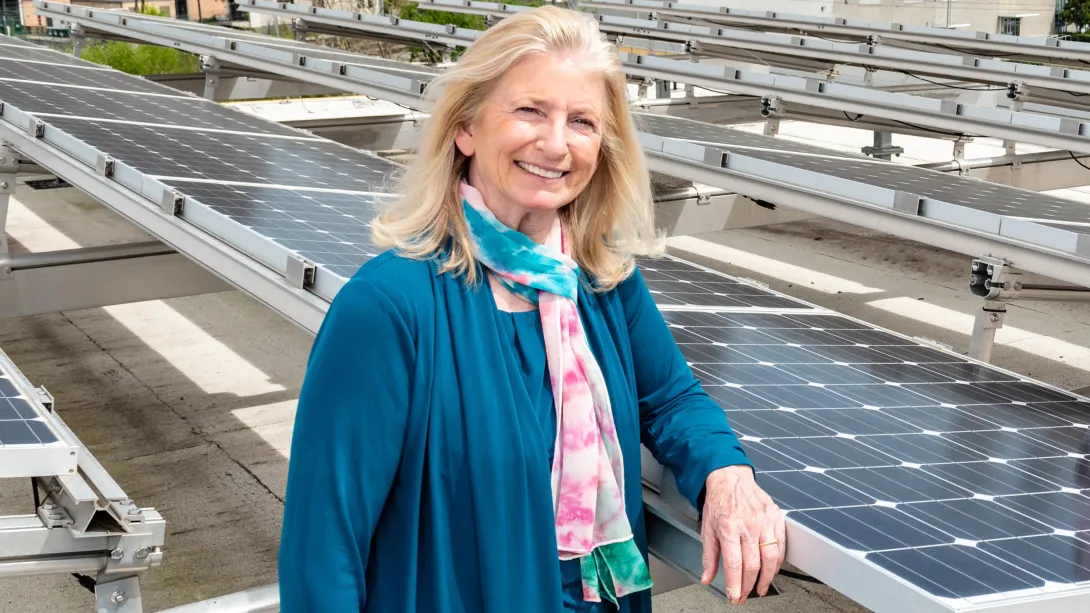
Marilyn Brown, Regents’ and Brook Byers Professor of Sustainable Systems in Georgia Tech’s School of Public Policy

Shan Zhou, assistant professor at Purdue University and Georgia Tech Ph.D. alumna
While the U.S. federal government has clean energy targets, they are not binding. Most economically developed countries have mandatory policies designed to bolster renewable electricity production. Because the U.S. lacks an enforceable federal mandate for renewable electricity, individual states are left to develop their own regulations.
Marilyn Brown, Regents’ and Brook Byers Professor of Sustainable Systems in Georgia Tech’s School of Public Policy; Shan Zhou, an assistant professor at Purdue University and Georgia Tech Ph.D. alumna; and Barry Solomon, a professor emeritus of environmental policy at Michigan Technological University, investigated how clean electricity policies affect not only the states that adopt them, but neighboring states as well. Using data-driven comparisons, the researchers found that the impact of these subnational clean energy policies is far greater — and more nuanced — than previously known.
Their research was recently published in the journal Proceedings of the National Academy of Sciences.
“Analysts are asking if the U.S. should have a federal renewable mandate to put the whole country on the same page, or if individual state policies are sufficient,” Brown said. “To answer that question, it is useful to know if states with renewable energy policies are influencing those without them.”
Brown, Solomon, and Zhou examined a common clean energy policy tool: the Renewable Portfolio Standard (RPS). Adopted by more than half of U.S. states, RPSs are regulations requiring a state’s utility providers to generate a certain percentage of their electricity from renewable resources, such as wind or solar. Many of these standards are mandatory, with utility companies facing fines if they fail to reach targets within a given time.
To investigate the influence of these policies across state lines, the researchers first created a dataset that included 31 years (1991-2021) of annual renewable electricity generation data for 48 U.S. states and the District of Columbia. They then used the dataset to generate pairs of states linking each state to its geographic neighbors or electricity trading partners, allowing them to examine the influence of the RPS policy adopted by one of the pair on the renewable energy generation of the other — a total of 1,519 paired comparisons.
“By only looking at the pairs, we can see if an RPS in one state directly affects renewable electricity generation in another state, and, if that’s the case, whether it is because they are geographic neighbors or if it’s because they are participating in the same wholesale electricity market,” Zhou said.
Looking into the electricity market is important, because states often purchase electricity from other states through wholesale markets rather than exclusively producing their own power, and the purchased power can be generated from renewables. Utilities in some states may be allowed to meet their own RPS requirements by purchasing renewable energy credits based on the renewable electricity generated in other states.
In their analyses, the team also considered the concept of “policy stringency.” A stringency measure evaluates a state’s renewable electricity targets relative to the amount currently produced in the state. For example, if a state requires electric utilities to generate 30% of their electricity from renewable sources by 2030 and the state already has 25%, it isn’t a very stringent policy. On the other hand, if a state has a 30% target and only uses 10% renewables currently, it has a more ambitious and stringent RPS.
Though policy experts have used the metric in related work for over a decade, the research team improved the design.
“Our stringency variable includes interim targets as well as the existing share of renewable energy generation,” Solomon said.
The team found that the amount of renewable electricity generation in a state is not only influenced by whether that state has its own RPS, but also by the RPS policies of neighboring states.
“We also learned that the stronger a neighboring state’s RPS policy is, the more likely a given state is to generate more renewable electricity,” Brown said. “It’s all a very interactive web with many co-benefits.”
The authors were surprised to find that a given state’s electricity trading partners did not hold the most influence over renewable generation, but rather the geographical proximity to RPS states. They suggest that past RPS policy research focusing on within-state impacts likely underestimated an RPS’s full impact. While the researchers have not yet identified all factors that can cause spillover effects, they plan to investigate this further.
“The spillover effect is very significant and should not be overlooked by future research, especially for states without RPSs,” Zhou said. “For states without policies, their renewable electricity generation is very heavily influenced by their neighbors.”
Citation: Shan Zhou, Barry D. Solomon, and Marilyn A. Brown, “The spillover effect of mandatory renewable portfolio standards.” PNAS (June 2024).
DOI: https://doi.org/10.1073/pnas.2313193121
News Contact
Catherine Barzler, Senior Research Writer/Editor
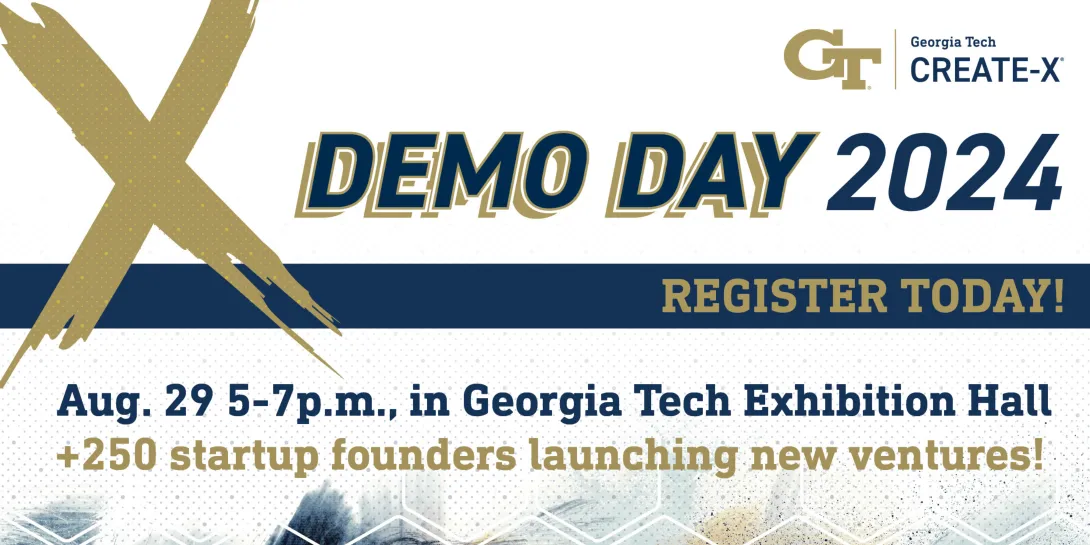
On Aug. 29, CREATE-X will celebrate its 10th anniversary at Demo Day, showcasing over 100 startups and more than 250 founders.
On Aug. 29 in the Exhibition Hall from 5 to 7p.m, CREATE-X will celebrate its 10th year of supporting entrepreneurship at Georgia Tech by introducing its next cohort of startup founders at Demo Day. This free event, attracting more than 1,500 people annually, allows the public to explore products from over 100 newly minted startups, ranging from consumer apps to deep tech. It also provides a chance to engage with more than 250 founders thanks to its no-pitch format.
Since its inception in 2014, CREATE-X has worked to infuse a spirit of entrepreneurship at Georgia Tech. From supporting eight teams in its inaugural cohort, the program has grown to support the launch of over 100 startups this summer, bringing the total to 560 startup teams boasting a total portfolio valuation of over $2 billion. In the last year, the program has expanded internationally and looks to continue building opportunities for its students.
“Our mission is to instill entrepreneurial confidence. We believe that entrepreneurship is a life skill,” says Rahul Saxena, CREATE-X director. “Georgia Tech students are capable of creating startups. We’re just giving them the tools and resources to do it. We want every Tech student to have this advantage when starting their business.”
At the kickoff for Startup Launch, the program’s summer startup accelerator, CREATE-X co-founder Chris Klaus spoke on the landscape of startups. “The secret sauce for unicorns is colleges. The number of unicorns is increasing, and I expect that trend to continue. This is the perfect place to build a startup,” he said.
Startup Launch has concluded for the summer, and the founders are preparing to showcase their solutions at Demo Day.
Register Now
“We invite you to become part of shaping what comes next. Support these founders as they creatively solve real-world issues. See future industry leaders be born. Join us for the culmination of these founders’ hard work, passion, and ingenuity at Demo Day,” Rahul said.
Demo Day 2024 registration is open. Tickets are free but limited. Don’t miss this chance to witness the future of innovation and entrepreneurship. For more information, visit the CREATE-X website.
News Contact
Breanna Durham
Marketing Strategist
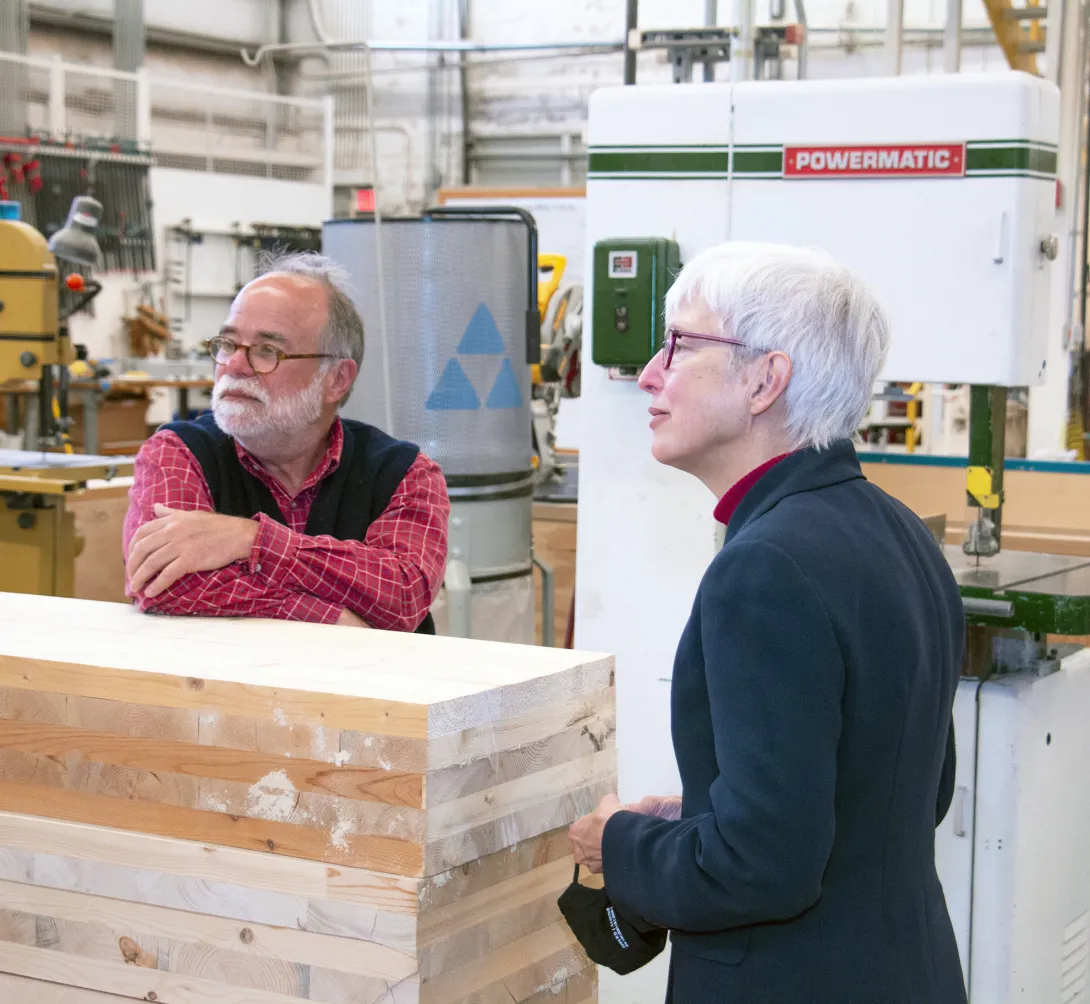
Russell Gentry and Valerie Thomas are working in a lab. They both hold joint appointments.
Interdisciplinary collaboration drives innovation at Georgia Tech. Researchers with joint appointments across the Institute's six colleges discuss how blending diverse fields helps them create more sustainable, technologically advanced, and socially viable solutions to some of our planet’s biggest problems. Learn more
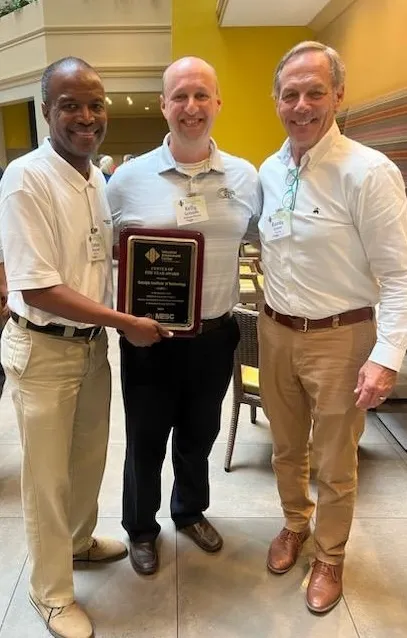
From left: Comas Haynes, Kelly Grissom, and Randy Green display the award for 2024’s top IAC.
The federally funded IAC program provides small to mid-sized industrial facilities in the region with free assessments for energy, productivity, and waste, while also supporting workforce development, recruitment, and training.
“This IAC is a great example of the ways in which Georgia Tech is serving all of Georgia and the Southeast,” said Tim Lieuwen, executive director of Georgia Tech’s Strategic Energy Institute (SEI) and Regents’ Professor and holder of the David S. Lewis, Jr. Chair in the Daniel Guggenheim School of Aerospace Engineering.
“We support numerous small and medium-sized enterprises in rural, suburban, and urban areas, bringing the technical expertise of Georgia Tech to bear in solving real-world problems faced by our small businesses.”
Georgia Tech’s IAC, which serves Georgia, South Carolina, and North Florida, is administered jointly by the George W. Woodruff School of Mechanical Engineering and the Georgia Manufacturing Extension Partnership (GaMEP), part of the Enterprise Innovation Institute (EI2). The organization has performed thousands of assessments since its inception in the 1980s – usually at the rate of 15 to 20 per year – and typically identifies upwards of 10% in energy savings for clients.
The assessment team, overseen by IAC associate director Kelly Grissom, comprises faculty and student engineers from Georgia Tech and the Florida A&M University/Florida State University College of Engineering.
In addition, Georgia Tech leads the Southeastern IACs Center of Excellence, which partners the institution with fellow University System of Georgia (USG) entity Kennesaw State University, local HBCU Clark Atlanta University, and neighboring state capital HBCU Florida A&M University.
Although mechanical engineering has historically been the chief area of concentration for IAC’s interns, the program currently accepts students across a range of disciplines. “Increased diversity from that standpoint enriches the potential of the recommendations we can make,” said Grissom.
Students are integral to the program, as is Grissom’s role in facilitating their experiences with client engagement and technical recommendations.
“Kelly is the reason our program has been recognized,” said Randy Green, energy and sustainability services group manager at GaMEP. “He works tirelessly to ensure that assessments are accomplished with success for our manufacturers and students.”
“We also recognize our partnership with the Woodruff School of Mechanical Engineering and with IAC program lead Comas Haynes, Ph.D., who works diligently to keep us on track and connected with our sponsors at the U.S. Department of Energy,” Green added.
The DoE accolade represents “a ‘one Georgia Tech’ win,” symbolic of the synergistic relationships forged across the Institute, said Haynes, who also serves as the Hydrogen Initiative Lead at Georgia Tech’s Strategic Energy Institute (SEI) and Energy branch head in the Intelligent Sustainable Technologies Division at the Georgia Tech Research Institute. Haynes specifically cited Green’s “technical prowess and managerial oversight” as another key to the IAC program’s success.
Said Devesh Ranjan, Eugene C. Gwaltney, Jr. School Chair and professor in the George W. Woodruff School of Mechanical Engineering, “It is truly an honor for Georgia Tech to be named the Department of Energy Industrial (Training and) Assessment Center of the Year. Clean energy and manufacturing have been a focus for the Institute and the Woodruff School for a long time, and GTRI, EI2, and SEI have collaboratively done phenomenal work in helping manufacturers save energy, improve productivity, and reduce waste.”
To check eligibility and apply for assistance from Georgia Tech’s IAC, click here.
News Contact
Eve Tolpa
eve.tolpa@innovate.gatech.edu


A research group is calling for internet and social media moderators to strengthen their detection and intervention protocols for violent speech.
Their study of language detection software found that algorithms struggle to differentiate anti-Asian violence-provoking speech from general hate speech. Left unchecked, threats of violence online can go unnoticed and turn into real-world attacks.
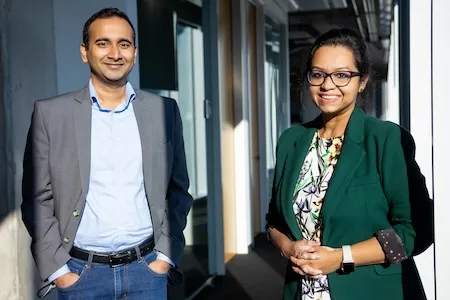
Researchers from Georgia Tech and the Anti-Defamation League (ADL) teamed together in the study. They made their discovery while testing natural language processing (NLP) models trained on data they crowdsourced from Asian communities.
“The Covid-19 pandemic brought attention to how dangerous violence-provoking speech can be. There was a clear increase in reports of anti-Asian violence and hate crimes,” said Gaurav Verma, a Georgia Tech Ph.D. candidate who led the study.
“Such speech is often amplified on social platforms, which in turn fuels anti-Asian sentiments and attacks.”
Violence-provoking speech differs from more commonly studied forms of harmful speech, like hate speech. While hate speech denigrates or insults a group, violence-provoking speech implicitly or explicitly encourages violence against targeted communities.
Humans can define and characterize violent speech as a subset of hateful speech. However, computer models struggle to tell the difference due to subtle cues and implications in language.
The researchers tested five different NLP classifiers and analyzed their F1 score, which measures a model's performance. The classifiers reported a 0.89 score for detecting hate speech, while detecting violence-provoking speech was only 0.69. This contrast highlights the notable gap between these tools and their accuracy and reliability.
The study stresses the importance of developing more refined methods for detecting violence-provoking speech. Internet misinformation and inflammatory rhetoric escalate tensions that lead to real-world violence.
The Covid-19 pandemic exemplified how public health crises intensify this behavior, helping inspire the study. The group cited that anti-Asian crime across the U.S. increased by 339% in 2021 due to malicious content blaming Asians for the virus.
The researchers believe their findings show the effectiveness of community-centric approaches to problems dealing with harmful speech. These approaches would enable informed decision-making between policymakers, targeted communities, and developers of online platforms.
Along with stronger models for detecting violence-provoking speech, the group discusses a direct solution: a tiered penalty system on online platforms. Tiered systems align penalties with severity of offenses, acting as both deterrent and intervention to different levels of harmful speech.
“We believe that we cannot tackle a problem that affects a community without involving people who are directly impacted,” said Jiawei Zhou, a Ph.D. student who studies human-centered computing at Georgia Tech.
“By collaborating with experts and community members, we ensure our research builds on front-line efforts to combat violence-provoking speech while remaining rooted in real experiences and needs of the targeted community.”
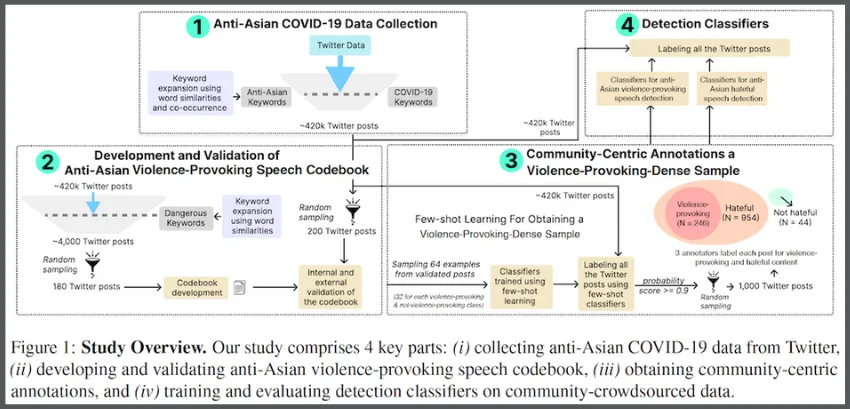
The researchers trained their tested NLP classifiers on a dataset crowdsourced from a survey of 120 participants who self-identified as Asian community members. In the survey, the participants labeled 1,000 posts from X (formerly Twitter) as containing either violence-provoking speech, hateful speech, or neither.
Since characterizing violence-provoking speech is not universal, the researchers created a specialized codebook for survey participants. The participants studied the codebook before their survey and used an abridged version while labeling.
To create the codebook, the group used an initial set of anti-Asian keywords to scan posts on X from January 2020 to February 2023. This tactic yielded 420,000 posts containing harmful, anti-Asian language.
The researchers then filtered the batch through new keywords and phrases. This refined the sample to 4,000 posts that potentially contained violence-provoking content. Keywords and phrases were added to the codebook while the filtered posts were used in the labeling survey.
The team used discussion and pilot testing to validate its codebook. During trial testing, pilots labeled 100 Twitter posts to ensure the sound design of the Asian community survey. The group also sent the codebook to the ADL for review and incorporated the organization’s feedback.
“One of the major challenges in studying violence-provoking content online is effective data collection and funneling down because most platforms actively moderate and remove overtly hateful and violent material,” said Tech alumnus Rynaa Grover (M.S. CS 2024).
“To address the complexities of this data, we developed an innovative pipeline that deals with the scale of this data in a community-aware manner.”
Emphasis on community input extended into collaboration within Georgia Tech’s College of Computing. Faculty members Srijan Kumar and Munmun De Choudhury oversaw the research that their students spearheaded.
Kumar, an assistant professor in the School of Computational Science and Engineering, advises Verma and Grover. His expertise is in artificial intelligence, data mining, and online safety.
De Choudhury is an associate professor in the School of Interactive Computing and advises Zhou. Their research connects societal mental health and social media interactions.
The Georgia Tech researchers partnered with the ADL, a leading non-governmental organization that combats real-world hate and extremism. ADL researchers Binny Mathew and Jordan Kraemer co-authored the paper.
The group will present its paper at the 62nd Annual Meeting of the Association for Computational Linguistics (ACL 2024), which takes place in Bangkok, Thailand, Aug. 11-16
ACL 2024 accepted 40 papers written by Georgia Tech researchers. Of the 12 Georgia Tech faculty who authored papers accepted at the conference, nine are from the College of Computing, including Kumar and De Choudhury.
“It is great to see that the peers and research community recognize the importance of community-centric work that provides grounded insights about the capabilities of leading language models,” Verma said.
“We hope the platform encourages more work that presents community-centered perspectives on important societal problems.”
Visit https://sites.gatech.edu/research/acl-2024/ for news and coverage of Georgia Tech research presented at ACL 2024.
News Contact
Bryant Wine, Communications Officer
bryant.wine@cc.gatech.edu

A Georgia Tech researcher will continue to mitigate harmful post-deployment effects created by artificial intelligence (AI) as he joins the 2024-2025 cohort of fellows selected by the Berkman-Klein Center (BKC) for Internet and Society at Harvard University.
Upol Ehsan is the first Georgia Tech graduate selected by BKC. As a fellow, he will contribute to its mission of exploring and understanding cyberspace, focusing on AI, social media, and university discourse.
Entering its 25th year, the BKC Harvard fellowship program addresses pressing issues and produces impactful research that influences academia and public policy. It offers a global perspective, a vibrant intellectual community, and significant funding and resources that attract top scholars and leaders.
The program is highly competitive and sought after by early career candidates and veteran academic and industry professionals. Cohorts hail from numerous backgrounds, including law, computer science, sociology, political science, neuroscience, philosophy, and media studies.
“Having the opportunity to join such a talented group of people and working with them is a treat,” Ehsan said. “I’m looking forward to adding to the prismatic network of BKC Harvard and learning from the cohesively diverse community.”
While at Georgia Tech, Ehsan expanded the field of explainable AI (XAI) and pioneered a subcategory he labeled human-centered explainable AI (HCXAI). Several of his papers introduced novel and foundational concepts into that subcategory of XAI.
Ehsan works with Professor Mark Riedl in the School of Interactive Computing and the Human-centered AI and Entertainment Intelligence Lab.
Ehsan says he will continue to work on research he introduced in his 2022 paper The Algorithmic Imprint, which shows how the potential harm from algorithms can linger even after an algorithm is no longer used. His research has informed the United Nations’ algorithmic reparations policies and has been incorporated into the National Institute of Standards and Technology AI Risk Management Framework.
“It’s a massive honor to receive this recognition of my work,” Ehsan said. “The Algorithmic Imprint remains a globally applicable Responsible AI concept developed entirely from the Global South. This recognition is dedicated to the participants who made this work possible. I want to take their stories even further."
While at BKC Harvard, Ehsan will develop a taxonomy of potentially harmful AI effects after a model is no longer used. He will also design a process to anticipate these effects and create interventions. He said his work addresses an “accountability blindspot” in responsible AI, which tends to focus on potential harmful effects created during AI deployment.
News Contact
Nathan Deen
Communications Officer
School of Interactive Computing

Timothy Lieuwen has been appointed interim executive vice president for Research (EVPR) by Georgia Tech President Ángel Cabrera, effective September 10.
Lieuwen is a Regents’ Professor, the David S. Lewis, Jr. Chair in the Daniel Guggenheim School of Aerospace Engineering, and executive director of the Strategic Energy Institute. His research interests range from clean energy and propulsion systems to energy policy, national security, and regional economic development. He works closely with industry and government to address fundamental problems and identify solutions in the development of clean energy systems and alternative fuels.
A proud Georgia Tech alumnus, Lieuwen (M.S. ME 1997, Ph.D. ME 1999) has had a remarkable academic career. He is a member of the National Academy of Engineering and is a fellow of the American Society of Mechanical Engineers, the American Institute of Aeronautics and Astronautics, the American Physical Society, the Combustion Institute, and the Indian National Academy of Engineering (foreign fellow). He has received numerous awards, including the ASME George Westinghouse Gold Medal and the AIAA Pendray Award. He serves on governing or advisory boards of three Department of Energy national labs: Oak Ridge National Laboratory, Pacific Northwest National Laboratory, and the National Renewable Energy Laboratory and was appointed by the U.S. Secretary of Energy to the National Petroleum Council.
Lieuwen has authored or edited four books on combustion and over 400 scientific publications. He also holds nine patents, several of which are licensed to industry, and is founder of an energy analytics company, Turbine Logic, where he acts as chief technology officer.
In Lieuwen’s appointment announcement, President Cabrera said, “Tim’s extensive experience and knowledge of Georgia Tech makes him uniquely suited to lead our research enterprise as we search for a permanent EVPR. I am grateful for his willingness to serve the Institute during this period of remarkable growth, and I look forward to working with him and the rest of the team.”
News Contact
Shelley Wunder-Smith
Director of Research Communications
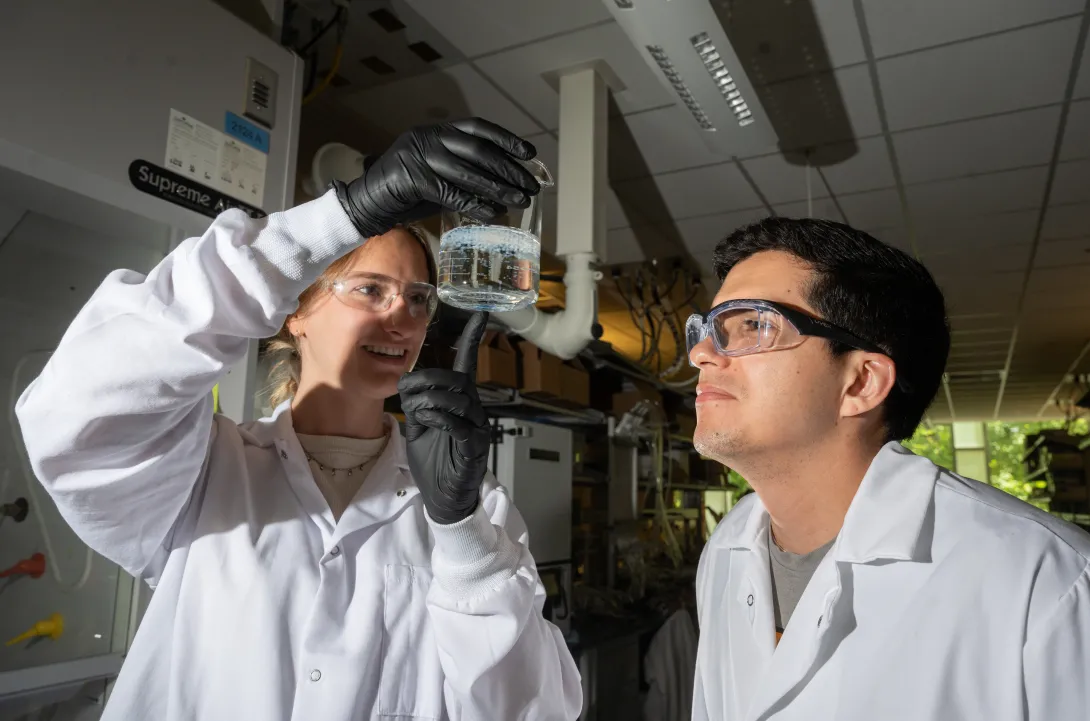
Erik Barbosa and Madeline Morrell examine salt beads. Photo by: Allison Carter
From keeping warm in the winter to doing laundry, heat is crucial to daily life. But as the world grapples with climate change, buildings’ increasing energy consumption is a critical problem. Currently, heat is produced by burning fossil fuels like coal, oil, and gas, but that will need to change as the world shifts to clean energy.
Georgia Tech researchers in the George W. Woodruff School of Mechanical Engineering (ME) are developing more efficient heating systems that don’t rely on fossil fuels. They demonstrated that combining two commonly found salts could help store clean energy as heat; this can be used for heating buildings or integrated with a heat pump for cooling buildings.
The researchers presented their research in “Thermochemical Energy Storage Using Salt Mixtures With Improved Hydration Kinetics and Cycling Stability,” in the Journal of Energy Storage.
Reaction Redux
The fundamental mechanics of heat storage are simple and can be achieved through many methods. A basic reversible chemical reaction is the foundation for their approach: A forward reaction absorbs heat and then stores it, while a reverse reaction releases the heat, enabling a building to use it.
ME Assistant Professor Akanksha Menon has been interested in thermal energy storage since she began working on her Ph.D. When she arrived at Georgia Tech and started the Water-Energy Research Lab (WERL), she became involved in not only developing storage technology and materials but also figuring out how to integrate them within a building. She thought understanding the fundamental material challenges could translate into creating better storage.
“I realized there are so many things that we don't understand, at a scientific level, about how these thermo-chemical materials work between the forward and reverse reactions,” she said.
The Superior Salt
The reactions Menon works with use salt. Each salt molecule can hold a certain number of water molecules within its structure. To instigate the chemical reaction, the researchers dehydrate the salt with heat, so it expels water vapor as a gas. To reverse the reaction, they hydrate the salt with water, forcing the salt structure’s expansion to accommodate those water molecules.
It sounds like a simple process, but as this expansion/contraction process happens, the salt gets more stressed and will eventually mechanically fail, the same way lithium-ion batteries only have so many charge-discharge cycles.
“You can start with something that's a nice spherical particle, but after it goes through a few of these dehydration-hydration cycles, it just breaks apart into tiny particles and completely pulverizes or it overhydrates and agglomerates into a block,” Menon explained.
These changes aren’t necessarily catastrophic, but they do make the salt ineffective for long-term heat storage as the storage capacity decreases over time.
Menon and her student, Erik Barbosa, a Ph.D. student in ME, began combining salts that react with water in different ways. After testing six salts over two years, they found two that complemented each other well. Magnesium chloride often fails because it absorbs too much water, whereas strontium chloride is very slow to hydrate. Together, their respective limitations can mutually benefit each other and lead to improved heat storage.
“We didn't plan to mix salts; it was just one of the experiments we tried,” Menon said. “Then we saw this interactive behavior and spent a whole year trying to understand why this was happening and if it was something we could generalize to use for thermal energy storage.”
The Energy Storage of the Future
Menon is just beginning with this research, which was supported by a National Science Foundation (NSF) CAREER Award. Her next step is developing the structures capable of containing these salts for heat storage, which is the focus of an Energy Earthshots project funded by the U.S. Department of Energy’s (DOE) Office of Basic Energy Sciences.
A system-level demonstration is also planned, where one solution is filling a drum with salts in a packed bed reactor. Then hot air would flow across the salts, dehydrating them and effectively charging the drum like a battery. To release that stored energy, humid air would be blown over the salts to rehydrate the crystals. The subsequently released heat can be used in a building instead of fossil fuels. While initiating the reaction needs electricity, this could come from off-peak (excess renewable electricity) and the stored thermal energy could be deployed at peak times. This is the focus of another ongoing project in the lab that is funded by the DOE’s Building Technologies Office.
Ultimately, this technology could lead to climate-friendly energy solutions. Plus, unlike many alternatives like lithium batteries, salt is a widely available and cost-effective material, meaning its implementation could be swift. Salt-based thermal energy storage can help reduce carbon emissions, a vital strategy in the fight against climate change.
“Our research spans the range from fundamental science to applied engineering thanks to funding from the NSF and DOE,” Menon said. “This positions Georgia Tech to make a significant impact toward decarbonizing heat and enabling a renewable future.”
News Contact
Tess Malone, Senior Research Writer/Editor
tess.malone@gatech.edu
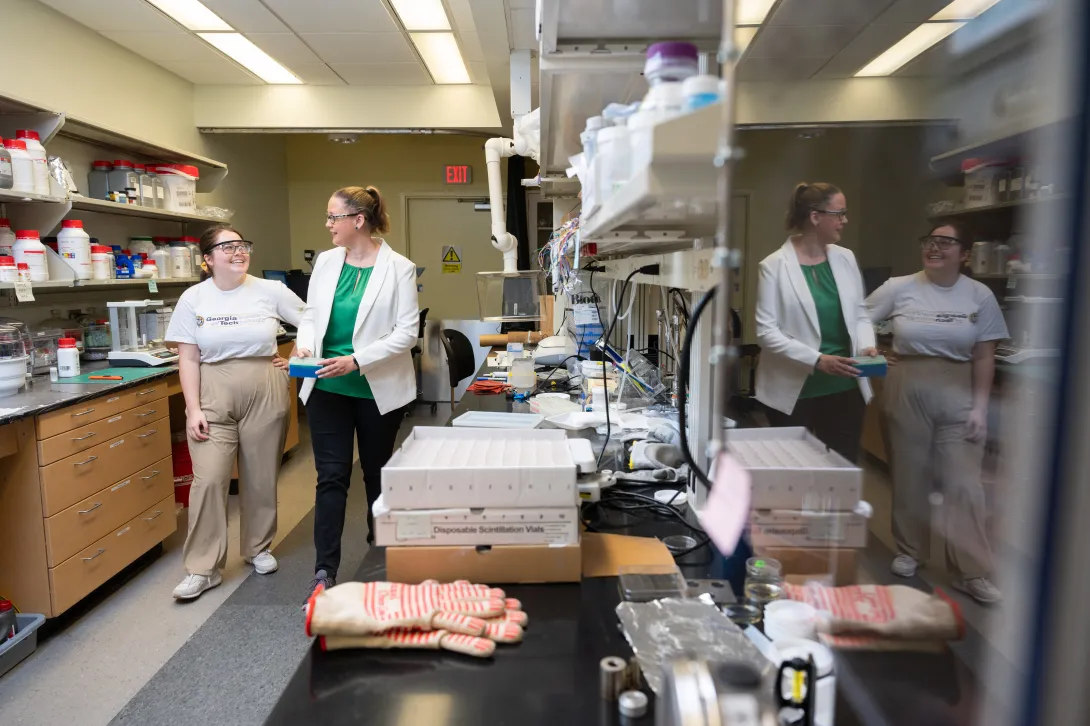
Marissa Moore and Blair Brettmann in the lab. Credit: Allison Carter
When Blair Brettmann was a sophomore at the University of Texas at Austin, her advisor told her about the National Science Foundation’s Research Experience for Undergraduates (REU) program. The summer program enables undergraduates to conduct research at top institutions across the country. Brettmann spent the summer of 2005 at Cornell working in a national nanotechnology program — a defining experience that led to her current research in molecular engineering for integrated product development.
“I didn't know for sure if I wanted to attend grad school until after the REU experience,” Brettmann said. “Through it, I went to high-level seminars for the first time, and working in a cleanroom was super cool.”
Her experience was so positive that the following summer, Brettmann completed a second REU at the Massachusetts Institute of Technology, where she eventually earned her Ph.D. Now an associate professor in Georgia Tech’s School of Chemical and Biomolecular Engineering and School of Materials Science and Engineering and an Institute for Matter and Systems faculty member, Brettmann is an REU mentor for the current iteration of the nanotechnology program — now taking place at Georgia Tech.
Brettmann’s mentee this summer, Marissa Moore, is having a similarly positive experience. A rising senior in chemical engineering at the University of Missouri-Columbia (Mizzou), Moore was already familiar with Georgia Tech because her father received his chemical engineering Ph.D. from the Institute; she hopes to do the same. Her passion for research began as she grew up with her sister, who had cerebral palsy and epilepsy.
“We spent a lot of time in hospitals trying out new devices and looking for different medications that would help her, so I knew I wanted to make a difference in this area,” she said.
But Moore wasn’t interested in being a doctor. Instead, she wanted to develop the materials that could be a solution for someone like her sister. Her undergraduate research focuses on materials and biomaterials for medical applications, and Georgia Tech is enabling her to deep-dive into pure materials science.
“What I'm working on at both universities is biodegradable polymers, but at Mizzou I’m developing that polymer from the ground up, and at Tech I’m using the properties of the polymer and finding how to make them,” she explained.
Having the opportunity to work in nanotechnology through the Institute for Materials and use Georgia Tech’s famous cleanroom made this REU stand out for Moore.
“I had never been in the cleanroom before, so that was one of the most eye-opening experiences,” she said. “It was cool to gown up and learn all of the safety precautions.”
For Brettmann, hands-on research experiences like this make the REU program unique — and crucial — for potential graduate students.
“Having your experiments fail, or even having things not turn out as you expect them to is an important part of the graduate research experience,” she said. “One of the best things about REU is it can be a first experience for people and help them decide what to do in grad school later on.”
News Contact
Tess Malone, Senior Research Writer/Editor
tess.malone@gatech.edu

Like the track laid down at Georgia Tech before the 1996 Olympic Games, the Mondo track in Paris was engineered to produce fast times. Yellow Jacket Men's Track and Field Coach Grover Hinsdale and Principal Research Engineer Jud Ready explain the science of the surface.
Every millisecond will matter when the world's best athletes gather in Paris for the Summer Olympics, and track and field athletes will compete on a surface designed to produce record-breaking performances.
Mondo athletic tracks have been underneath the feet of Olympians since 1972. In that time, 300 records were broken on surfaces designed and constructed in Alba, Italy, including 15 at the Centennial Olympic Games in Atlanta.
Consistency Is Key
Georgia Tech’s George C. Griffin Track and Field Facility was outfitted with a Mondo track before the 1996 Games to serve as the workout track for the Olympic Village, and the material has been a staple at the facility ever since. Yellow Jacket Track and Field Coach Grover Hinsdale, a coach to three Olympic gold medalists, explains that the consistency in Mondo's construction sets it apart from all other tracks.
"A Mondo track is made in a climate-controlled factory, processed from the raw rubber to the finished product. So, every square inch of Mondo is the same — same durometer, same thickness, everything is the same. All other rubberized track surfaces are poured on-site, so variables like temperature and humidity affect the result, and you may end up with lanes that don't set uniformly,” he said.
Hinsdale likened the installation process to laying carpet. It will take more than 2,800 glue pots to set the 13,000 square meters of track inside Stade de France. Jud Ready, a principal research engineer in the School of Materials Science and Engineering, says the evolution of the company’s technology has also contributed to producing faster tracks.
"They're able to alter the rubber track's energy return mechanism by changing the shape of the particulate and the compressibility of it," Ready said. "Longevity is less of a concern for the Paris track, so they can tune it to emphasize speed."
Maximizing Performance
Each layer of the track surface plays a different role in helping athletes achieve peak performance. Hinsdale describes how those layers come together with each step.
"When your foot strikes down on an asphalt surface or you're running down a sidewalk, there's virtually no give other than what's taking place in the muscles and joints of your body. The surface is giving nothing back. When your foot strikes a Mondo surface, it'll sink in slightly, and the surface gives energy back. This pushes your foot back off that track quicker, putting the foot back into the cycle to complete another stride,” he said.
Because of the energy given back by the thin and firm surface of the Mondo track, Hinsdale says, sprinters and distance runners will run faster with the same effort they normally exert on any other surface.
Athletes look for every edge to get ahead of the competition. Ready's course, Materials Science and Engineering of Sports, examines how that advantage can be found at the scientific level.
"All sports are so heavily driven by material advancements these days,” he said. “Yes, we use the mechanical properties we've used since the Egyptians started racing chariots, but as material scientists, we keep trying to make things better.”
Viewers will notice the unique purple hue of the Paris track when the games begin, but Ready and Hinsdale don't expect the striking color to affect performance.
News Contact
Steven Gagliano - Institute Communications