
Many communities rely on insights from computer-based models and simulations. This week, a nest of Georgia Tech experts are swarming an international conference to present their latest advancements in these tools, which offer solutions to pressing challenges in science and engineering.
Students and faculty from the School of Computational Science and Engineering (CSE) are leading the Georgia Tech contingent at the SIAM Conference on Computational Science and Engineering (CSE25). The Society of Industrial and Applied Mathematics (SIAM) organizes CSE25, occurring March 3-7 in Fort Worth, Texas.
At CSE25, the School of CSE researchers are presenting papers that apply computing approaches to varying fields, including:
- Experiment designs to accelerate the discovery of material properties
- Machine learning approaches to model and predict weather forecasting and coastal flooding
- Virtual models that replicate subsurface geological formations used to store captured carbon dioxide
- Optimizing systems for imaging and optical chemistry
- Plasma physics during nuclear fusion reactions
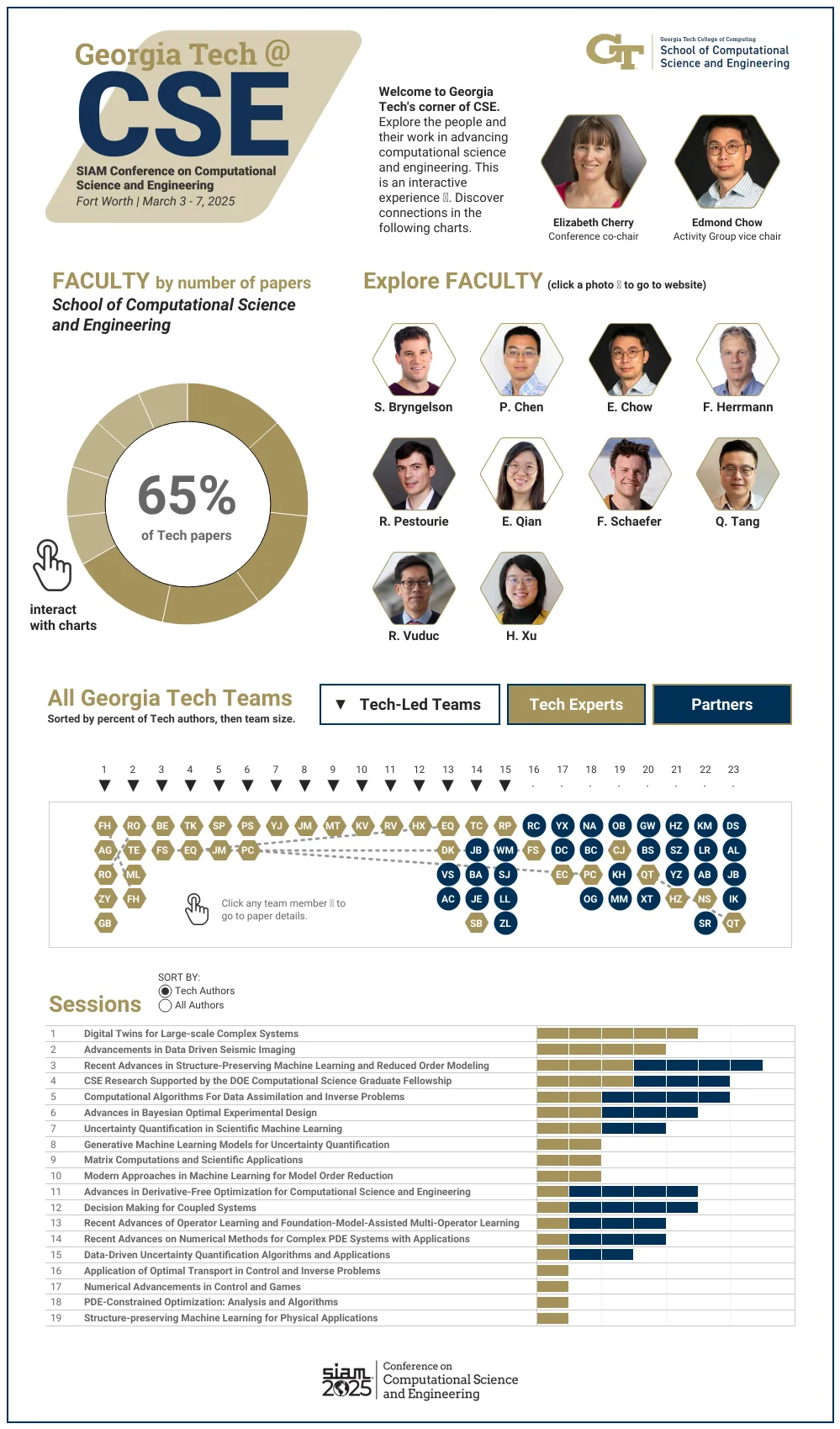
[Related: GT CSE at SIAM CSE25 Interactive Graphic]
“In CSE, researchers from different disciplines work together to develop new computational methods that we could not have developed alone,” said School of CSE Professor Edmond Chow.
“These methods enable new science and engineering to be performed using computation.”
CSE is a discipline dedicated to advancing computational techniques to study and analyze scientific and engineering systems. CSE complements theory and experimentation as modes of scientific discovery.
Held every other year, CSE25 is the primary conference for the SIAM Activity Group on Computational Science and Engineering (SIAG CSE). School of CSE faculty serve in key roles in leading the group and preparing for the conference.
In December, SIAG CSE members elected Chow to a two-year term as the group’s vice chair. This election comes after Chow completed a term as the SIAG CSE program director.
School of CSE Associate Professor Elizabeth Cherry has co-chaired the CSE25 organizing committee since the last conference in 2023. Later that year, SIAM members reelected Cherry to a second, three-year term as a council member at large.
At Georgia Tech, Chow serves as the associate chair of the School of CSE. Cherry, who recently became the associate dean for graduate education of the College of Computing, continues as the director of CSE programs.
“With our strong emphasis on developing and applying computational tools and techniques to solve real-world problems, researchers in the School of CSE are well positioned to serve as leaders in computational science and engineering both within Georgia Tech and in the broader professional community,” Cherry said.
Georgia Tech’s School of CSE was first organized as a division in 2005, becoming one of the world’s first academic departments devoted to the discipline. The division reorganized as a school in 2010 after establishing the flagship CSE Ph.D. and M.S. programs, hiring nine faculty members, and attaining substantial research funding.
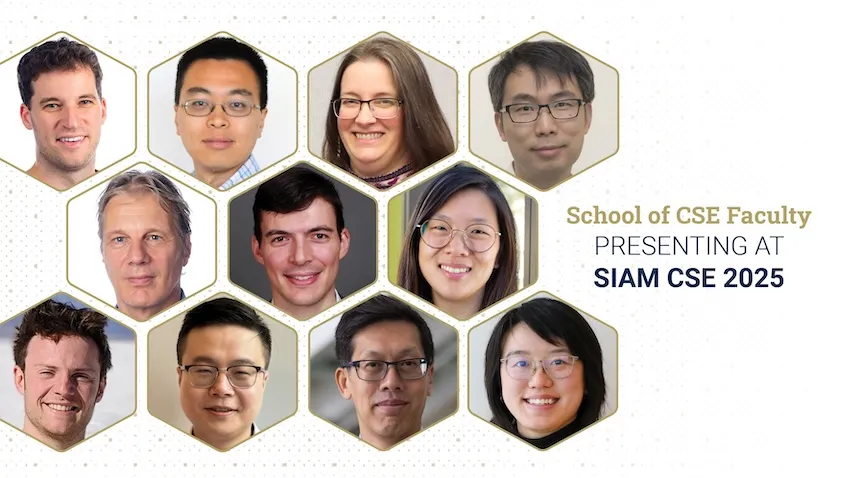
Ten School of CSE faculty members are presenting research at CSE25, representing one-third of the School’s faculty body. Of the 23 accepted papers written by Georgia Tech researchers, 15 originate from School of CSE authors.
The list of School of CSE researchers, paper titles, and abstracts includes:
Bayesian Optimal Design Accelerates Discovery of Material Properties from Bubble Dynamics
Postdoctoral Fellow Tianyi Chu, Joseph Beckett, Bachir Abeid, and Jonathan Estrada (University of Michigan), Assistant Professor Spencer Bryngelson
[Abstract]
Latent-EnSF: A Latent Ensemble Score Filter for High-Dimensional Data Assimilation with Sparse Observation Data
Ph.D. student Phillip Si, Assistant Professor Peng Chen
[Abstract]
A Goal-Oriented Quadratic Latent Dynamic Network Surrogate Model for Parameterized Systems
Yuhang Li, Stefan Henneking, Omar Ghattas (University of Texas at Austin), Assistant Professor Peng Chen
[Abstract]
Posterior Covariance Structures in Gaussian Processes
Yuanzhe Xi (Emory University), Difeng Cai (Southern Methodist University), Professor Edmond Chow
[Abstract]
Robust Digital Twin for Geological Carbon Storage
Professor Felix Herrmann, Ph.D. student Abhinav Gahlot, alumnus Rafael Orozco (Ph.D. CSE-CSE 2024), alumnus Ziyi (Francis) Yin (Ph.D. CSE-CSE 2024), and Ph.D. candidate Grant Bruer
[Abstract]
Industry-Scale Uncertainty-Aware Full Waveform Inference with Generative Models
Rafael Orozco, Ph.D. student Tuna Erdinc, alumnus Mathias Louboutin (Ph.D. CS-CSE 2020), and Professor Felix Herrmann
[Abstract]
Optimizing Coupled Systems: Insights from Co-Design Imaging and Optical Chemistry
Assistant Professor Raphaël Pestourie, Wenchao Ma and Steven Johnson (MIT), Lu Lu (Yale University), Zin Lin (Virginia Tech)
[Abstract]
Multifidelity Linear Regression for Scientific Machine Learning from Scarce Data
Assistant Professor Elizabeth Qian, Ph.D. student Dayoung Kang, Vignesh Sella, Anirban Chaudhuri and Anirban Chaudhuri (University of Texas at Austin)
[Abstract]
LyapInf: Data-Driven Estimation of Stability Guarantees for Nonlinear Dynamical Systems
Ph.D. candidate Tomoki Koike and Assistant Professor Elizabeth Qian
[Abstract]
The Information Geometric Regularization of the Euler Equation
Alumnus Ruijia Cao (B.S. CS 2024), Assistant Professor Florian Schäfer
[Abstract]
Maximum Likelihood Discretization of the Transport Equation
Ph.D. student Brook Eyob, Assistant Professor Florian Schäfer
[Abstract]
Intelligent Attractors for Singularly Perturbed Dynamical Systems
Daniel A. Serino (Los Alamos National Laboratory), Allen Alvarez Loya (University of Colorado Boulder), Joshua W. Burby, Ioannis G. Kevrekidis (Johns Hopkins University), Assistant Professor Qi Tang (Session Co-Organizer)
[Abstract]
Accurate Discretizations and Efficient AMG Solvers for Extremely Anisotropic Diffusion Via Hyperbolic Operators
Golo Wimmer, Ben Southworth, Xianzhu Tang (LANL), Assistant Professor Qi Tang
[Abstract]
Randomized Linear Algebra for Problems in Graph Analytics
Professor Rich Vuduc
[Abstract]
Improving Spgemm Performance Through Reordering and Cluster-Wise Computation
Assistant Professor Helen Xu
[Abstract]
News Contact
Bryant Wine, Communications Officer
bryant.wine@cc.gatech.edu
Georgia Tech researchers recently proposed a method for generating quantum entanglement between photons. This method constitutes a breakthrough that has potentially transformative consequences for the future of photonics-based quantum computing.
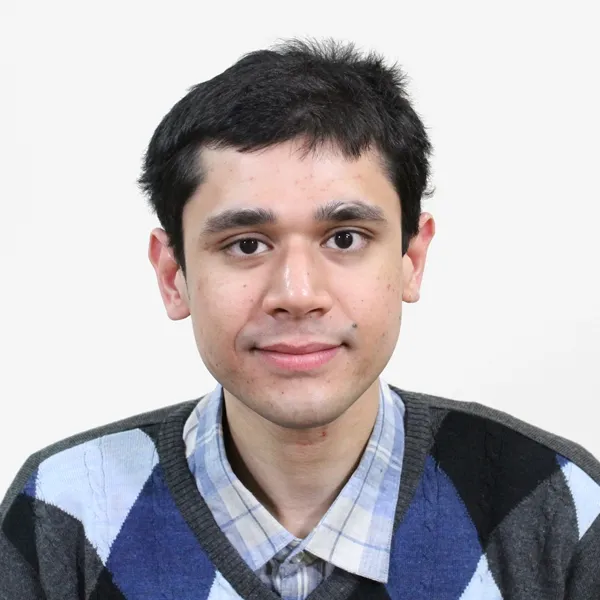
“Our results point to the possibility of building quantum computers using light by taking advantage of this entanglement,” said Chandra Raman, a professor in the School of Physics.
Quantum computers have the potential to outperform their conventional counterparts, becoming the fastest programmable machines in existence. Entanglement is the key resource for building these quantum computers.
Light has always been seen as ideal for quantum computing, but it presents challenges. Photons don’t interact with each other. “If I have two or more photons, it's extremely difficult to make them interact; they fly right by each other,” said postdoctoral researcher Aniruddha Bhattacharya. “The key discovery here is we can entangle photons in a useful, controllable, and deterministic way.”
The researchers devised a protocol to create entanglement consistently. Their protocol makes use of a mathematical geometric structure known as non-Abelian quantum holonomy, which can entangle photons without requiring quantum measurements. Holonomy can be implemented with on-chip photonic devices, suggesting this protocol could be used to create scalable and integrable photonic quantum computers.
The research’s implications are staggering for the future of quantum computing. Photonic quantum computers work well at room temperature, are portable, and are more easily integrated with existent quantum communication systems and links. Quantum computing is the future of not just computing but innovation, and photons could unlock new frontiers. This research was published in Physical Review Letters.
News Contact
Tess Malone, Senior Research Writer/Editor
tess.malone@gatech.edu
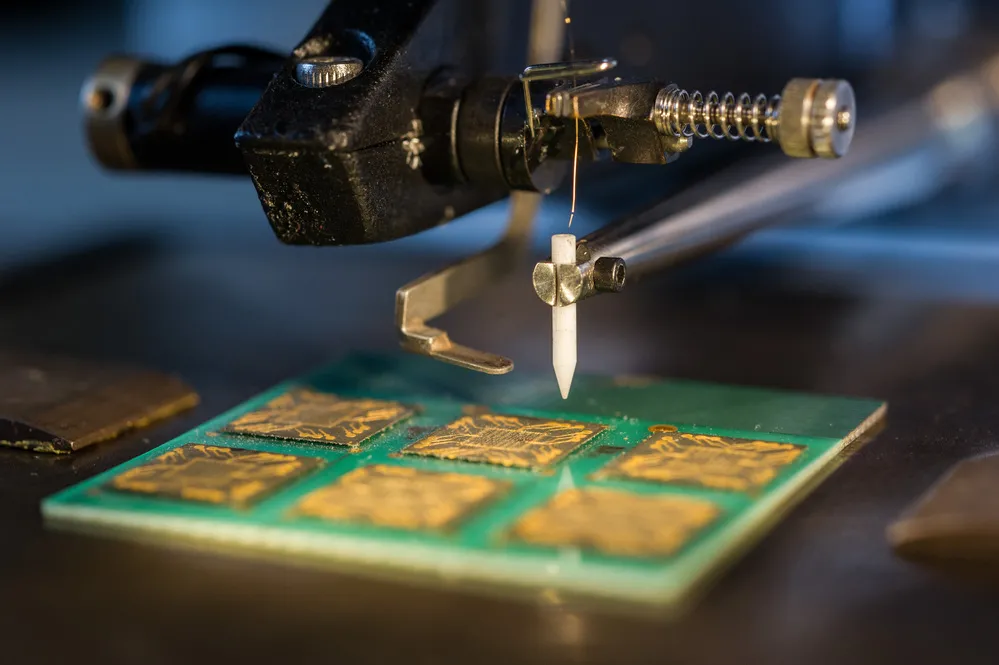
The Georgia Institute of Technology recently joined the National Semiconductor Technology Center (NSTC), a public-private consortium dedicated to supporting and extending U.S. leadership in semiconductor research, design, engineering, and advanced manufacturing. This collaboration aligns with Georgia Tech's commitment to fostering innovation and driving economic growth through cutting-edge research and development.
"Joining the NSTC is a significant milestone for Georgia Tech," said George White, senior director for strategic partnerships. "This partnership will enable us to collaborate with leading experts in the semiconductor field, drive groundbreaking research, and contribute to the advancement of semiconductor technology in the U.S."
The NSTC is operated by Natcast (National Center for the Advancement of Semiconductor Technology) and supported by the Department of Commerce through the CHIPS and Science Act. NSTC brings together key stakeholders from academia, industry, and government to create a robust semiconductor ecosystem. As a member, Georgia Tech will have access to a wide range of benefits, including research grant opportunities, participation in NSTC-led research projects, and access to state-of-the-art facilities and resources.
Georgia Tech's involvement in the NSTC will focus on several key areas, including workforce development, research and development initiatives, and fostering collaboration between academia and industry. By participating in the NSTC, Georgia Tech aims to enhance its research capabilities, support the growth of the semiconductor industry, and contribute to national economic and security goals.
Learn more about CHIPS initiatives at Georgia Tech:
$100M Investment Will Propel Absolics Inc., Georgia Tech’s Advanced Packaging Research
Georgia Tech Joins $840M DoD Project to Develop and Manufacture Next-gen Semiconductor Microsystems
Semiconductor Research Corp. and Georgia Tech Secure $285M SMART USA Institute
News Contact
Amelia Neumeister | Research Communications Program Manager
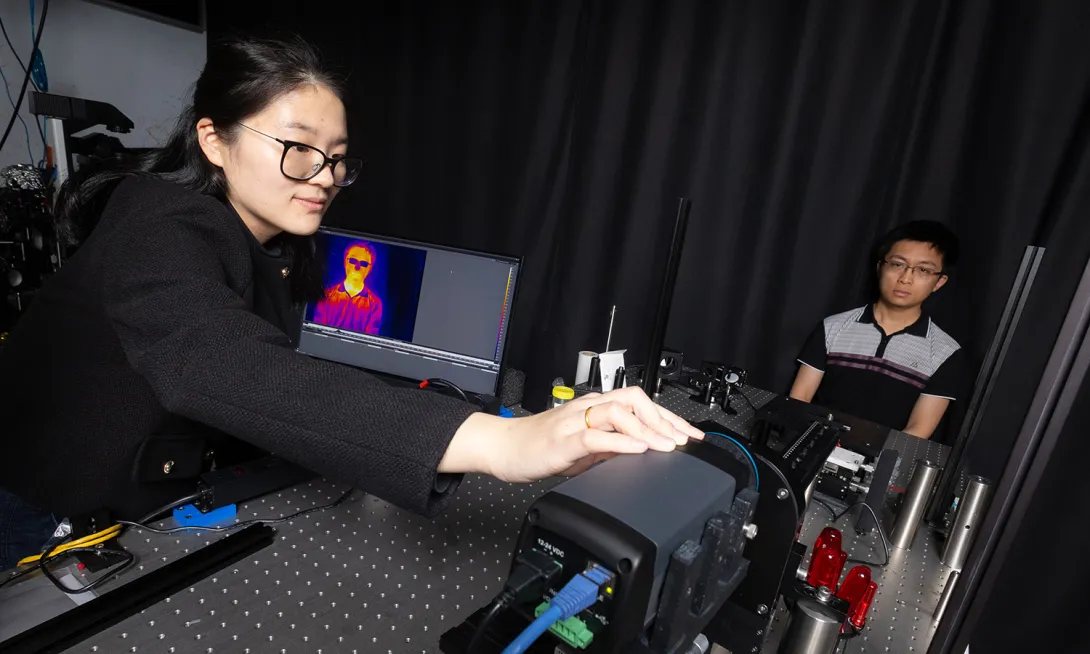
Postdoctoral scholar Dingding Han adjusts a thermal camera capturing an image of Ph.D. student Corey Zheng. Using an advanced processing technique on the raw thermal image, Han, Zheng, and their collaborators can accurately measure body temperature, heart rate, and respiration rate. Their noncontact technology could open new possibilities for vital sign monitoring and early disease detection. (Photo: Candler Hobbs)
Biomedical engineers at Georgia Tech have developed a system for collecting and processing thermal images that allows for reliable, detailed measurement of vital signs such as respiration and heart rate or body temperature.
Their monitoring approach is passive and requires no contact. The system could one day lead to early detection for cancer or other diseases by flagging subtle changes in body tissues.
The researchers have overcome the spectral ambiguity inherent in conventional thermal imaging, sharpening the texture and detail they can extract from images and removing the effects of heat from the environment surrounding a subject. They published details of their work March 19 in the journal Cell Reports Physical Science.
News Contact
Joshua Stewart
College of Engineering
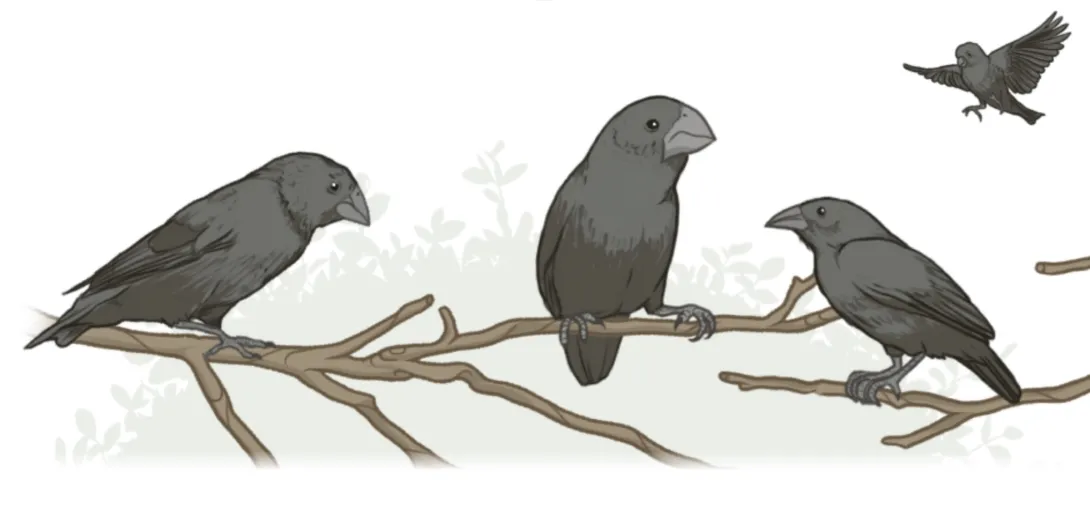
A 40-year field study of Galápagos ground finches (Geospiza sp.) has provided unparalleled insights into how natural selection operates in the wild and how new species might form. (Illustration: Mark Belan/ArtSciStudios)
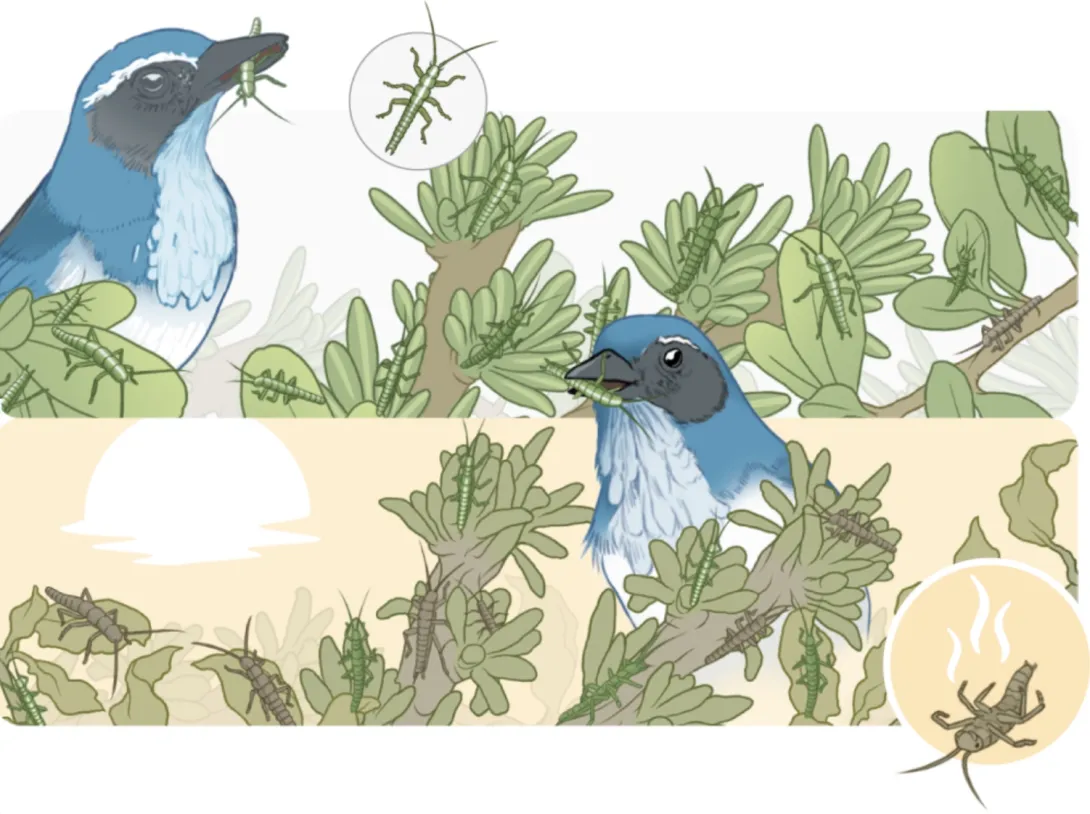
A long-term field study of Californian stick insects (Timema cristinae) reveals how competing selection pressures shape their evolution. While brown-colored stick insects experience lower predation rates from Californian scrub jays (Aphelocoma californica) than their green counterparts during hot, dry years when bright green leaves are scarce, they face higher mortality due to reduced heat tolerance. This trade-off demonstrates how climate and predation simultaneously drive evolutionary adaptation in natural populations, and this case study has been used to develop statistical models that predict future evolutionary outcomes. (Illustration: Mark Belan/ArtSciStudios)
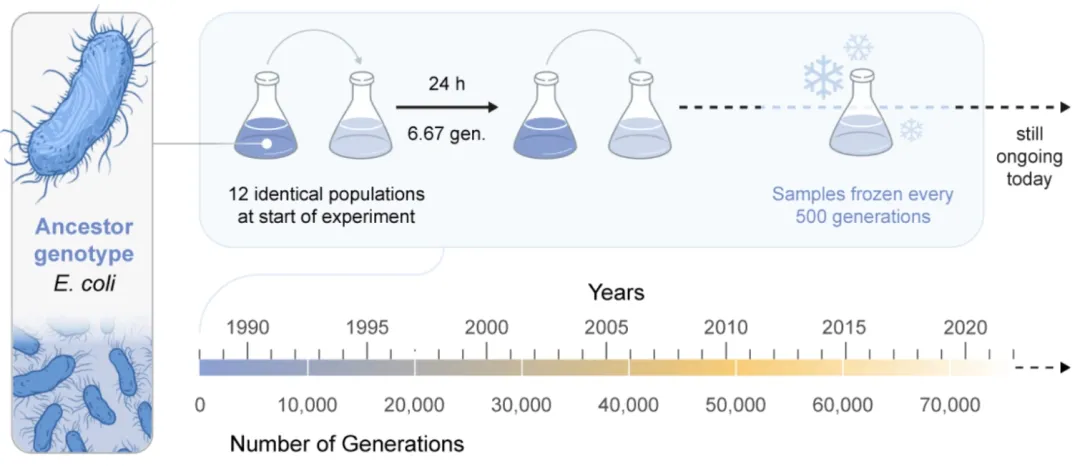
Founded in 1988, the Long-Term Evolution Experiment (LTEE) is the world’s longest-running ongoing evolution experiment now spanning 75,000 generations. Twelve genetically identical populations of the bacterium Escherichia coli have been allowed to evolve under constant conditions, and have uncovered general principles of evolutionary dynamics, such as how evolutionary novelties arise. (Illustration: Mark Belan/ArtSciStudios)
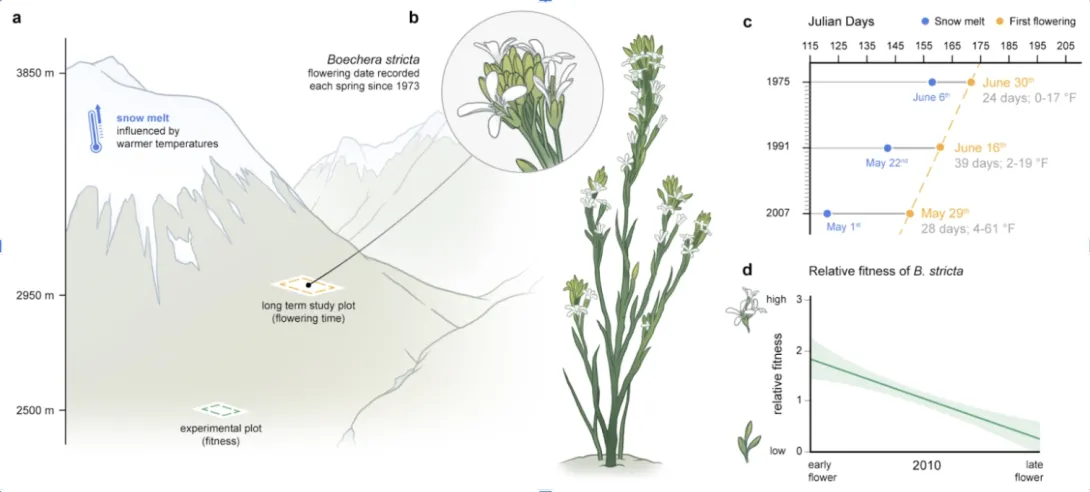
Long-term studies at the Rocky Mountain Biological Laboratory in Colorado, USA, reveal that Drummond’s rockcress (Boechera stricta), a North American wildflower, now bloom almost 4 days earlier each decade since the 1970s, responding to earlier snowmelt in the region. Long-term field studies are the key to understanding how species in the wild are evolving in response to climate change. (Illustration: Mark Belan/ArtSciStudios)
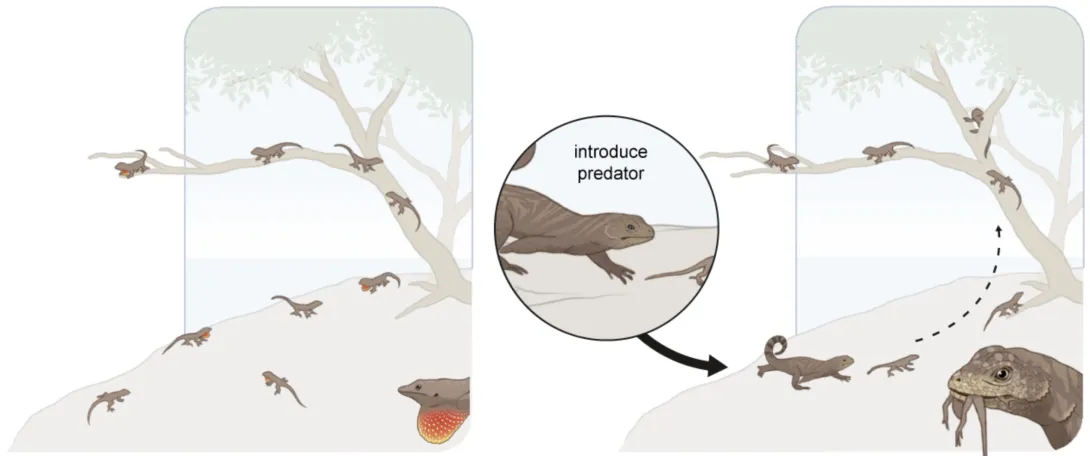
A series of experiment spanning 40 years on small islands in the Bahamas have revealed how prey species, like small brown anole lizards (Anolis sagrei), evolve in response to predators, like the larger curly-tailed lizard (Leiocepahlus carinatus). Importantly, due to the long-term nature of this research, scientists were able to track ecosystem changes in response to this predator-driven rapid evolution. (Illustration: Mark Belan/ArtSciStudios)
Georgia Tech scientists are revealing how decades-long research programs have transformed our understanding of evolution, from laboratory petri dishes to tropical islands — along the way uncovering secrets that would remain hidden in shorter studies.
Through a new review paper published in Nature, the researchers underscore how long-term studies have captured evolution's most elusive processes, including the real-time formation of new species and the emergence of biological innovations.
"Evolution isn't just about change over millions of years in fossils — it's happening all around us, right now," says James Stroud, the paper’s lead author and an Elizabeth Smithgall Watts Early Career Assistant Professor in the School of Biological Sciences at Georgia Tech. "However, to understand evolution, we need to watch it unfold in real time, often over many generations. Long-term studies allow us to do that by giving us a front-row seat to evolution in action."
The paper, “Long-term studies provide unique insights into evolution,” is the first-ever comprehensive analysis of these types of long-term evolutionary studies, and examines some of the longest-running evolutionary experiments and field studies to date, highlighting how they provide new perspectives on evolution. For example, in the Galápagos, a 40-year field study of Darwin’s finches — songbirds named after evolutionary biology’s famous founder — documented the formation of a new species through hybridization. In the lab, a study spanning 75,000 generations of bacteria showed populations unexpectedly evolving completely new metabolic abilities.
“These remarkable evolutionary events were only caught because of the long-term nature of the research programs,” Stroud says. “Even if short-term studies captured similar events, their evolutionary significance would be hard to assess without the historical context that long-term research provides.”
“The most fascinating results from long-term evolution studies are often completely unexpected — they're serendipitous discoveries that couldn't have been predicted at the start,” explains the paper’s co-author, Will Ratcliff, Sutherland Professor in the School of Biological Sciences and co-director of the Interdisciplinary Ph.D. in Quantitative Biosciences at Georgia Tech.
“While we can accelerate many aspects of scientific research today, evolution still moves at its own pace,” Ratcliff adds. “There's no technological shortcut for watching species adapt across generations.”
Decades of discovery — from labs to islands
The new paper also highlights a growing challenge in modern science: the critical importance of supporting long-term research in an academic landscape that increasingly favors quick results and short-term funding. Yet, they say, some of biology's most profound insights emerge only through multi-decadal efforts.
Those challenges and rewards are familiar to Stroud and Ratcliff, who operate their own long-term evolutionary research programs at Georgia Tech.
In South Florida, Stroud’s ‘Lizard Island’ is helping document evolution in action across the football field-sized island’s 1,000-lizard population. By studying a community of five species, his research is providing unique insights into how evolution maintains species’ differences, and how species evolve when new competitors arrive. Now operating for a decade, it is one of the world’s longest-running active evolutionary studies of its kind.
In his lab at Georgia Tech, Ratcliff studies the origin of complex life — specifically, how single-celled organisms become multicellular. His Multicellularity Long Term Evolution Experiment (MuLTEE) on snowflake yeast has run for more than 9,000 generations, with aims to continue for the next 25 years. The work has shown how key steps in the evolutionary transition from single-celled organisms to multi-celled organisms occur far more easily than previously understood.
Important work in a changing world
Stroud says that the insights from these types of studies, and this review paper, are arriving at a crucial moment. “The world is rapidly changing, which poses unprecedented challenges to Earth's biodiversity,” he explains. “It has never been more important to understand how organisms adapt to changing environments over time.”
“Long-term studies provide our best window into achieving this,” he adds. “We can document, in real time, both short-term and long-term evolutionary responses of species to changes in their environment like climate change and habitat modification."
By drawing together evolution's longest-running experiments and field studies for the first time, Stroud and Ratcliff offer key insights into studying this fundamental process, suggesting that understanding life's past — and predicting its future — requires not just advanced technology or new methods, but also the simple power of time.
Funding: The US National Institutes of Health and the NSF Division of Environmental Biology
News Contact
Written by Selena Langner
Contact: Jess Hunt-Ralston
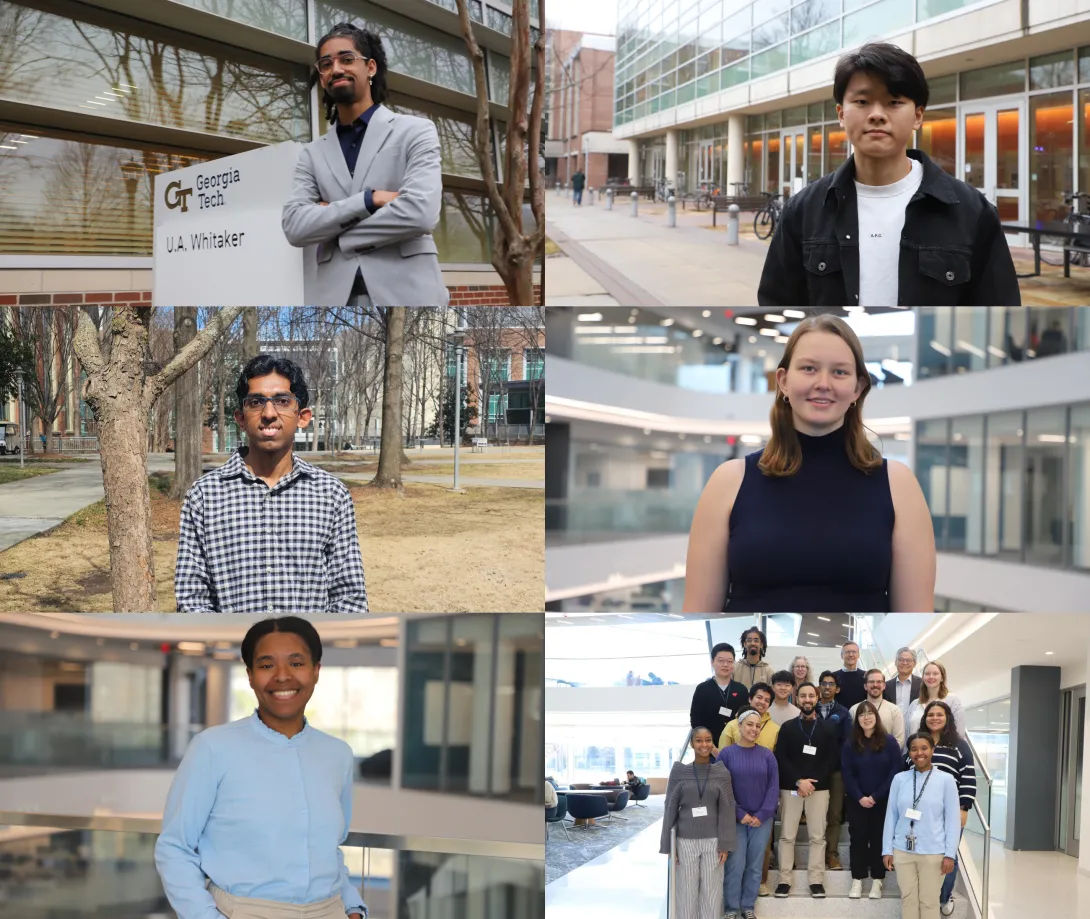
Clockwise from top left: Yohannes Akiel, Leandro Choi, Isabel Wallgren, Deborah Wood, the entire current cohort of Fellows, Deborah Wood, and Aniket Venkatesh.
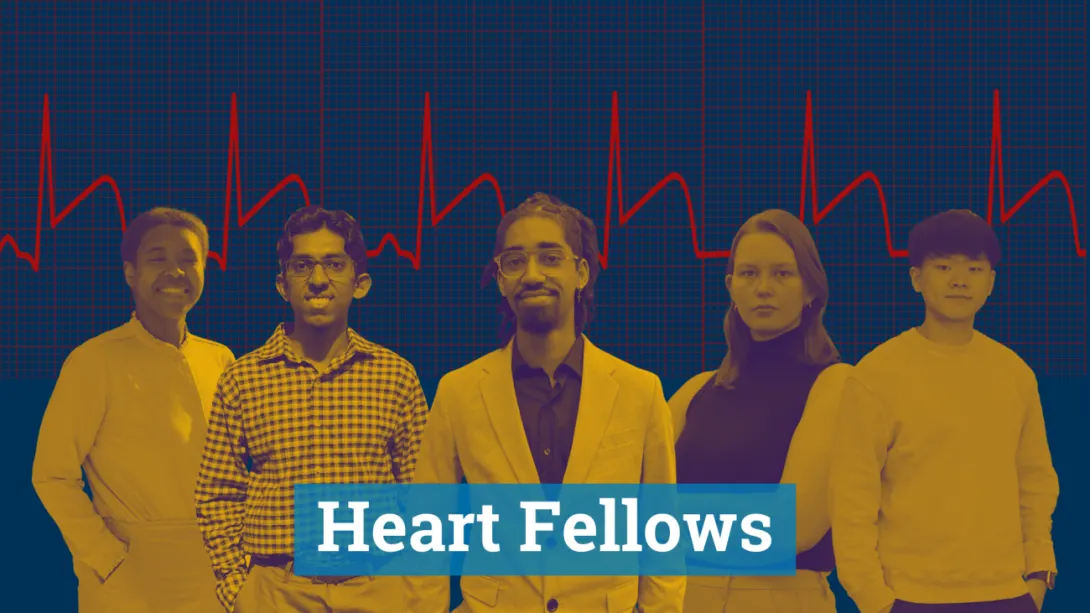
In 2023 the Wallace H. Coulter Department of Biomedical Engineering launched a new program designed to train the next generation of leaders in cardiovascular research. Five first-year graduate students formed the first cohort that fall.
Currently, there are nine students in the Cardiovascular Biomechanics Graduate Training Program at Emory and Georgia Tech (CBT@EmTech). The program offers two years of training in an assortment of disciplines, including cardiovascular biomechanics, mechanobiology, medical imaging, computational modeling, medical devices, therapeutics discovery and delivery, and data science.
“The goal of the program is to stimulate interdisciplinary training,” so we expose the students to multiple areas of research,” says Hanjoong Jo, CBT@EmTech director, Wallace H. Coulter Distinguished Professor.
“And we have a very diverse group of trainees interested in various aspects of cardiovascular research and medicine,” Jo added. “Four out of five students from our first cohort already have secured prestigious fellowships, demonstrating the caliber of the trainees in the program.”
The students from that cohort brought a wide range of experiences, interests, and ambitions to the program. Now in their final months as CBT@EmTech trainees, they took time to share their stories.
Yohannes Akiel
Principal Investigator: Michael Davis
Campus: Emory
Undergraduate: University of Texas-San Antonio
I've always had a passion for helping people and I feel that I’m doing this through my research on aortic valve tissue engineering for pediatric patients. Aortic valve disease is found in 1-2% of live births, because of congenital heart defects or infections. Current valve replacements are limited — for one thing, they’re incapable of growing and remodeling with the patient. This presents a need for a new tissue-engineered valve that can address these challenges. In the Davis lab, we’re working on a tissue engineered heart valve to provide a better, long-term solution.
Throughout my time in the CBT@EmTech program, I've gained a range of knowledge in the cardiovascular space, learning about atherosclerosis, peripheral artery disease, valve disease, as well as computational and imaging techniques to help solve some of these problems. As part of the program, we are also required to take an Advanced Seminar class in the cardiovascular area.
Through this class, I was able to participate in some interesting clinical observations in the Emory University Hospital cardiology department. For example, I watched a cardiologist perform a transesophageal echocardiogram. The doctor was checking for heart blockages on a patient who had atrial fibrillation. This procedure was followed by a cardioversion to restore a normal heart rhythm. This was a profound demonstration of biomedical technology in action that left a lasting impression on me.
Leandro Choi
Principal Investigator: Hanjoong Jo
Campus: Emory
Undergraduate: Duke University
As a PhD student in the Jo Lab, I am studying how disturbed flow influences transcriptional regulation in endothelial cell reprogramming and atherosclerosis. Our goal is to identify and develop therapeutics that target non-lipid residual pathways contributing to this widespread and deadly disease.
I initially became interested in this line of research due to a family history of cardiovascular disease. As an undergraduate, I worked in a tissue engineering lab where I employed stem cell and tissue engineering methods to model the circulatory system. A desire to further explore the role of mechanosensitive genes and proteins in cardiovascular disease led me to pursue a PhD in this field.
One of the most valuable aspects of the CBT@EmTech program has been the opportunity to connect with a network of students and faculty who are leaders in cardiovascular research. Through monthly meetings, we share our work and gain insights into the diverse engineering applications our interdisciplinary program brings to the field, with the common goal of improving cardiovascular health.
Aniket Venkatesh
Principal Investigator: Lakshmi Prasad
Campus: Georgia Tech
Undergraduate: Georgia Tech
October 2024 marked the three-year anniversary of my uncle’s passing due to complications from a mild heart attack. His angiogram showed 30% vessel blockage, leading to heart surgery. Sadly, he suffered a brain stroke days later, resulting in deteriorating speech, muscle movement, and eventually death at 48. This personal tragedy brought urgency to my research questions: Can the risk of complications following cardiovascular treatments be predicted? Can underlying cardiovascular pathology be treated before it progresses to a heart attack or stroke? Was my uncle’s death preventable? These questions drive my cardiovascular research, focused on predicting post-procedural heart valve outcomes through computational modeling.
Being part of the prestigious CBT@EmTech program at Emory and Georgia Tech has significantly advanced my research journey. Learning from fellow trainees, presenting my research, and attending academia-focused workshops (like one about grant writing) have helped me stand out in heart valve computational modeling. The program, along with my PI, Dr. Lakshmi Prasad Dasi, and co-PI, Dr. John Oshinski, has provided the resources needed to translate my research from the lab to the clinic through regular meetings with clinicians and data transfer to and from hospitals. I am grateful for the opportunity to pursue my long-term goal of predicting risks of complications before cardiovascular treatments and helping prevent adverse clinical outcomes like those experienced by my uncle.
Isabel Wallgren
Principal Investigator: Simone Douglas-Green
Campus: Georgia Tech
Undergraduate Degree: University of Virginia
Peripheral artery disease (PAD) occurs when atherosclerotic plaque accumulates in limb arteries, blocking blood flow. Current interventions limit disease progression, but surgery is often needed to prevent critical limb ischemia. A less invasive approach promotes angiogenesis and arteriogenesis to strengthen collateral vessels and bypass blockages. The Hansen Lab studies satellite cells (SCs), which repair muscle fibers and release growth factors, as a potential PAD therapy.
My research focuses on improving the delivery of SCs using a special fibrin scaffold in a mouse model of blocked blood flow in the legs. By adjusting the properties of the fibrin scaffold, we can create an environment that helps these cells grow and renew themselves. We study how quickly the fibrin forms to ensure the cells stay where we inject them and how it breaks down to keep a steady supply of renewing SCs. We believe that with fibrin, the cells will move into the damaged tissue, repair muscle fibers, and release growth factors to encourage new blood vessel growth.
The goal is to create alternative treatments for PAD that prevent disease progression and improve patients' quality of life.
The CBT@EmTech program has given me a supportive network of peers and mentors, enhancing my growth as a researcher. The program chairs have tailored the curriculum to our needs and allowed us to shape it. For example, I’ve had the privilege of co-planning our biannual retreat. We recruited guests for two panels and invited a guest speaker for a storytelling workshop. This retreat shows how the program imparts knowledge beyond research, aiming to improve our scientific storytelling and self-presentation skills, valuable for any career.
Deborah Wood
Principal Investigator: Simone Douglas-Green
Campus: Georgia Tech
Undergraduate Degree: University of Virginia
As a researcher, I am challenged to explore the unknown. Moreover, my role as an engineer is rooted in using knowledge that has already been conceptualized. Combining these perspectives as a biomedical engineer has led me to pursue research with an emphasis on improving human health.
Today, cardiovascular diseases represent the global leading cause of death. While this glaring statistic indicates the egregious burden of cardiovascular diseases, my parents' lived experiences with cardiovascular diseases is what drives me to use my life’s work to address critical challenges at the intersection of the cardiovascular field and biomedical engineering.
My research seeks to alleviate cardiovascular diseases by using nanoparticles to target endothelial cells, which line the innermost layer of blood vessels and contribute to blood vessel function. The Cardiovascular Biomechanics and Mechanobiology Program at Emory (CBT@EmTech) has given me an avenue to pursue this research.
Through my CBT@EmTech co-mentorship, I have developed a foundation in endothelial cell biology and atherosclerosis. I have also been challenged to think critically about how my research benefits both science and society through my exposure to prominent cardiovascular researchers. My experiences with CBT@EmTech have made me eager to use my training to pursue a postdoc in the and eventually lead a lab answering critical questions in cardiovascular research.
News Contact
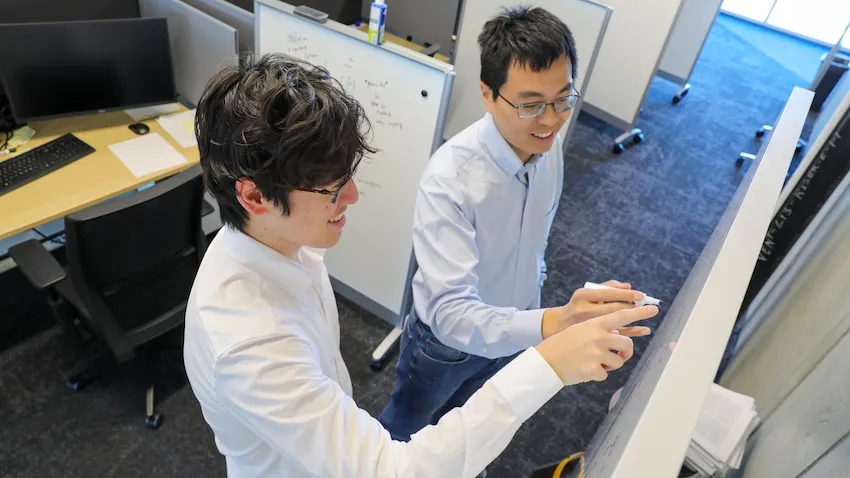
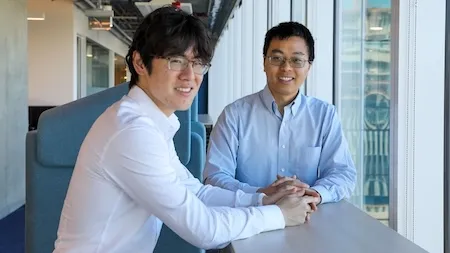
Successful test results of a new machine learning (ML) technique developed at Georgia Tech could help communities prepare for extreme weather and coastal flooding. The approach could also be applied to other models that predict how natural systems impact society.
Ph.D. student Phillip Si and Assistant Professor Peng Chen developed Latent-EnSF, a technique that improves how ML models assimilate data to make predictions.
In experiments predicting medium-range weather forecasting and shallow water wave propagation, Latent-EnSF demonstrated higher accuracy, faster convergence, and greater efficiency than existing methods for sparse data assimilation.
“We are currently involved in an NSF-funded project aimed at providing real-time information on extreme flooding events in Pinellas County, Florida,” said Si, who studies computational science and engineering (CSE).
“We're actively working on integrating Latent-EnSF into the system, which will facilitate accurate and synchronized modeling of natural disasters. This initiative aims to enhance community preparedness and safety measures in response to flooding risks.”
Latent-EnSF outperformed three comparable models in assimilation speed, accuracy, and efficiency in shallow water wave propagation experiments. These tests show models can make better and faster predictions of coastal flood waves, tides, and tsunamis.
In experiments on medium-range weather forecasting, Latent-EnSF surpassed the same three control models in accuracy, convergence, and time. Additionally, this test demonstrated Latent-EnSF's scalability compared to other methods.
These promising results support using ML models to simulate climate, weather, and other complex systems.
Traditionally, such studies require employment of large, energy-intensive supercomputers. However, advances like Latent-EnSF are making smaller, more efficient ML models feasible for these purposes.
The Georgia Tech team mentioned this comparison in its paper. It takes hours for the European Center for Medium-Range Weather Forecasts computer to run its simulations. Conversely, the ML model FourCastNet calculated the same forecast in seconds.
“Resolution, complexity, and data-diversity will continue to increase into the future,” said Chen, an assistant professor in the School of CSE.
“To keep pace with this trend, we believe that ML models and ML-based data assimilation methods will become indispensable for studying large-scale complex systems.”
Data assimilation is the process by which models continuously ingest new, real-world data to update predictions. This data is often sparse, meaning it is limited, incomplete, or unevenly distributed over time.
Latent-EnSF builds on the Ensemble Filter Scores (EnSF) model developed by Florida State University and Oak Ridge National Laboratory researchers.
EnSF’s strength is that it assimilates data with many features and unpredictable relationships between data points. However, integrating sparse data leads to lost information and knowledge gaps in the model. Also, such large models may stop learning entirely from small amounts of sparse data.
The Georgia Tech researchers employ two variational autoencoders (VAEs) in Latent-EnSF to help ML models integrate and use real-world data. The VAEs encode sparse data and predictive models together in the same space to assimilate data more accurately and efficiently.
Integrating models with new methods, like Latent-EnSF, accelerates data assimilation. Producing accurate predictions more quickly during real-world crises could save lives and property for communities.
To share Latent-EnSF to the broader research community, Chen and Si presented their paper at the SIAM Conference on Computational Science and Engineering (CSE25). The Society of Industrial and Applied Mathematics (SIAM) organized CSE25, held March 3-7 in Fort Worth, Texas.
Chen was one of ten School of CSE faculty members who presented research at CSE25, representing one-third of the School’s faculty body. Latent-EnSF was one of 15 papers by School of CSE authors and one of 23 Georgia Tech papers presented at the conference.
The pair will also present Latent-EnSF at the upcoming International Conference on Learning Representations (ICLR 2025). Occurring April 24-28 in Singapore, ICLR is one of the world’s most prestigious conferences dedicated to artificial intelligence research.
“We hope to bring attention to experts and domain scientists the exciting area of ML-based data assimilation by presenting our paper,” Chen said. “Our work offers a new solution to address some of the key shortcomings in the area for broader applications.”
News Contact
Bryant Wine, Communications Officer
bryant.wine@cc.gatech.edu
Many communities rely on insights from computer-based models and simulations. This week, a nest of Georgia Tech experts are swarming an international conference to present their latest advancements in these tools, which offer solutions to pressing challenges in science and engineering.
Students and faculty from the School of Computational Science and Engineering (CSE) are leading the Georgia Tech contingent at the SIAM Conference on Computational Science and Engineering (CSE25). The Society of Industrial and Applied Mathematics (SIAM) organizes CSE25, occurring March 3-7 in Fort Worth, Texas.
At CSE25, the School of CSE researchers are presenting papers that apply computing approaches to varying fields, including:
- Experiment designs to accelerate the discovery of material properties
- Machine learning approaches to model and predict weather forecasting and coastal flooding
- Virtual models that replicate subsurface geological formations used to store captured carbon dioxide
- Optimizing systems for imaging and optical chemistry
- Plasma physics during nuclear fusion reactions
[Related: GT CSE at SIAM CSE25 Interactive Graphic]
“In CSE, researchers from different disciplines work together to develop new computational methods that we could not have developed alone,” said School of CSE Professor Edmond Chow.
“These methods enable new science and engineering to be performed using computation.”
CSE is a discipline dedicated to advancing computational techniques to study and analyze scientific and engineering systems. CSE complements theory and experimentation as modes of scientific discovery.
Held every other year, CSE25 is the primary conference for the SIAM Activity Group on Computational Science and Engineering (SIAG CSE). School of CSE faculty serve in key roles in leading the group and preparing for the conference.
In December, SIAG CSE members elected Chow to a two-year term as the group’s vice chair. This election comes after Chow completed a term as the SIAG CSE program director.
School of CSE Associate Professor Elizabeth Cherry has co-chaired the CSE25 organizing committee since the last conference in 2023. Later that year, SIAM members reelected Cherry to a second, three-year term as a council member at large.
At Georgia Tech, Chow serves as the associate chair of the School of CSE. Cherry, who recently became the associate dean for graduate education of the College of Computing, continues as the director of CSE programs.
“With our strong emphasis on developing and applying computational tools and techniques to solve real-world problems, researchers in the School of CSE are well positioned to serve as leaders in computational science and engineering both within Georgia Tech and in the broader professional community,” Cherry said.
Georgia Tech’s School of CSE was first organized as a division in 2005, becoming one of the world’s first academic departments devoted to the discipline. The division reorganized as a school in 2010 after establishing the flagship CSE Ph.D. and M.S. programs, hiring nine faculty members, and attaining substantial research funding.
Ten School of CSE faculty members are presenting research at CSE25, representing one-third of the School’s faculty body. Of the 23 accepted papers written by Georgia Tech researchers, 15 originate from School of CSE authors.
The list of School of CSE researchers, paper titles, and abstracts includes:
Bayesian Optimal Design Accelerates Discovery of Material Properties from Bubble Dynamics
Postdoctoral Fellow Tianyi Chu, Joseph Beckett, Bachir Abeid, and Jonathan Estrada (University of Michigan), Assistant Professor Spencer Bryngelson
[Abstract]
Latent-EnSF: A Latent Ensemble Score Filter for High-Dimensional Data Assimilation with Sparse Observation Data
Ph.D. student Phillip Si, Assistant Professor Peng Chen
[Abstract]
A Goal-Oriented Quadratic Latent Dynamic Network Surrogate Model for Parameterized Systems
Yuhang Li, Stefan Henneking, Omar Ghattas (University of Texas at Austin), Assistant Professor Peng Chen
[Abstract]
Posterior Covariance Structures in Gaussian Processes
Yuanzhe Xi (Emory University), Difeng Cai (Southern Methodist University), Professor Edmond Chow
[Abstract]
Robust Digital Twin for Geological Carbon Storage
Professor Felix Herrmann, Ph.D. student Abhinav Gahlot, alumnus Rafael Orozco (Ph.D. CSE-CSE 2024), alumnus Ziyi (Francis) Yin (Ph.D. CSE-CSE 2024), and Ph.D. candidate Grant Bruer
[Abstract]
Industry-Scale Uncertainty-Aware Full Waveform Inference with Generative Models
Rafael Orozco, Ph.D. student Tuna Erdinc, alumnus Mathias Louboutin (Ph.D. CS-CSE 2020), and Professor Felix Herrmann
[Abstract]
Optimizing Coupled Systems: Insights from Co-Design Imaging and Optical Chemistry
Assistant Professor Raphaël Pestourie, Wenchao Ma and Steven Johnson (MIT), Lu Lu (Yale University), Zin Lin (Virginia Tech)
[Abstract]
Multifidelity Linear Regression for Scientific Machine Learning from Scarce Data
Assistant Professor Elizabeth Qian, Ph.D. student Dayoung Kang, Vignesh Sella, Anirban Chaudhuri and Anirban Chaudhuri (University of Texas at Austin)
[Abstract]
LyapInf: Data-Driven Estimation of Stability Guarantees for Nonlinear Dynamical Systems
Ph.D. candidate Tomoki Koike and Assistant Professor Elizabeth Qian
[Abstract]
The Information Geometric Regularization of the Euler Equation
Alumnus Ruijia Cao (B.S. CS 2024), Assistant Professor Florian Schäfer
[Abstract]
Maximum Likelihood Discretization of the Transport Equation
Ph.D. student Brook Eyob, Assistant Professor Florian Schäfer
[Abstract]
Intelligent Attractors for Singularly Perturbed Dynamical Systems
Daniel A. Serino (Los Alamos National Laboratory), Allen Alvarez Loya (University of Colorado Boulder), Joshua W. Burby, Ioannis G. Kevrekidis (Johns Hopkins University), Assistant Professor Qi Tang (Session Co-Organizer)
[Abstract]
Accurate Discretizations and Efficient AMG Solvers for Extremely Anisotropic Diffusion Via Hyperbolic Operators
Golo Wimmer, Ben Southworth, Xianzhu Tang (LANL), Assistant Professor Qi Tang
[Abstract]
Randomized Linear Algebra for Problems in Graph Analytics
Professor Rich Vuduc
[Abstract]
Improving Spgemm Performance Through Reordering and Cluster-Wise Computation
Assistant Professor Helen Xu
[Abstract]
News Contact
Bryant Wine, Communications Officer
bryant.wine@cc.gatech.edu

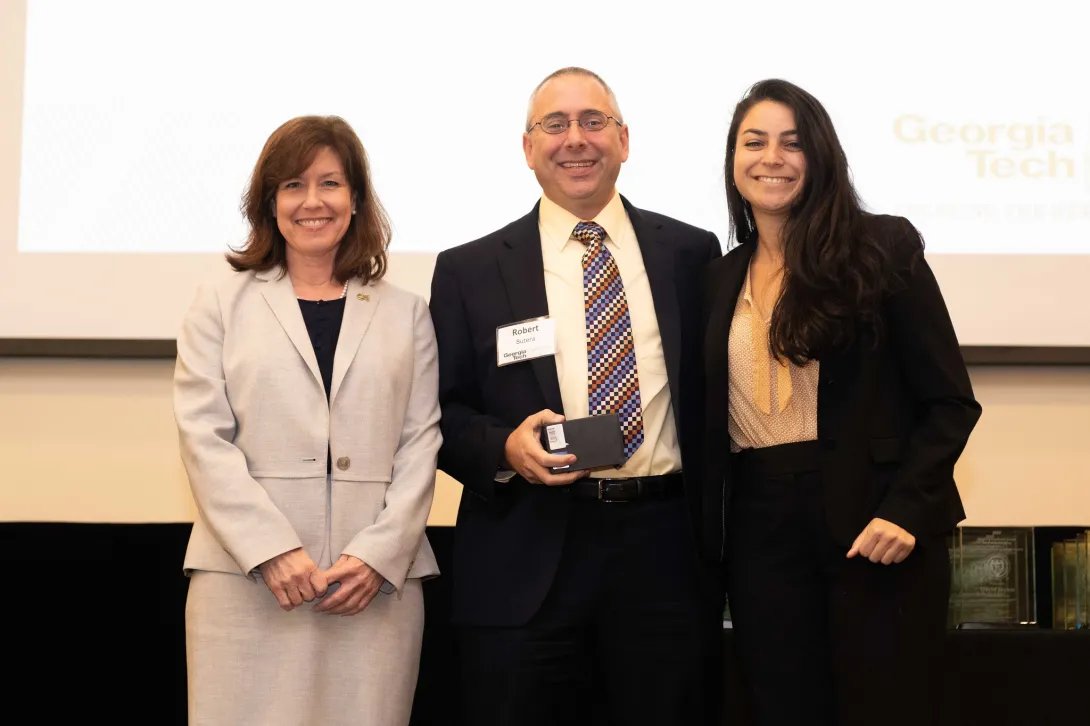

Celebrating the Remarkable Career of Robert Butera
Bill Dracos Appointed Interim Chief Research Operations Officer as Rob Butera Announces His Retirement
It is with immense gratitude and admiration that we announce the retirement of Robert Butera, who has served Georgia Tech with the highest dedication and excellence. As the chief research operations officer (CROO), Butera has facilitated the Institute’s research activities, overseeing research integrity assurance, research administration, research operations/infrastructure, and research development. His leadership and vision have left an indelible mark on Georgia Tech's research enterprise.
Butera’s journey at Georgia Tech began long before his role as CROO. He received his undergraduate degree in electrical engineering from Georgia Tech in 1991. He joined the Institute’s faculty in 1999, after earning his Ph.D. from Rice University and spending several years as a postdoctoral researcher at the National Institutes of Health. Over the years, Butera has held numerous pivotal roles, including vice president for research development and operations, associate dean for research in the College of Engineering, and director of the Neural Engineering Center. Prior to joining Georgia Tech’s research leadership, Butera directed the interdisciplinary bioengineering graduate program, then co-founded the Grand Challenges Living Learning Community.
As a professor, Butera graduated 15 Ph.D. students and mentored over 100 undergraduates, for which he received Georgia Tech’s Senior Faculty Outstanding Undergraduate Research Mentor Award in 2016. He also mentored several postdocs and master’s students.
Butera’s accolades are numerous, including the prestigious Georgia Tech ANAK award and election as a Fellow to both the American Association for the Advancement of Science and the American Institute of Medical and Biological Engineering. He held significant leadership roles within the IEEE Engineering in Medicine and Biology Society. These honors reflect his impact on the field of biomedical engineering and his dedication to advancing scientific knowledge.
Beyond his professional achievements, Butera’s personal passions have also enriched the larger Georgia Tech community. His love for whitewater kayaking, which he discovered through Outdoor Recreation Georgia Tech (ORGT), led to a decade of volunteering as an instructor and trip leader. This commitment to adventure and leadership development has inspired many students and colleagues alike.
"Rob's unwavering commitment to excellence and his visionary leadership have been instrumental in advancing Georgia Tech's research mission. His contributions have not only elevated our institution but have also profoundly impacted the broader scientific community. We are deeply grateful for his service and wish him all the best in his well-deserved retirement,” said Tim Lieuwen, executive vice president for Research.
Andrés J. García, executive director of the Parker H. Petit Institute for Bioengineering and Bioscience, shared these heartfelt words: "Rob, the ultimate Yellow Jacket, has been a tireless champion to improve research, educational, and operational processes at Georgia Tech. He has had tremendous positive impact in Georgia Tech, the state, and the nation. We will miss his deep knowledge and expertise, exceptional problem solving, practical perspective, and genuine care for faculty, staff, and students, and we wish him continued success in his next chapter."
Lena Ting, McCamish Foundation Distinguished Chair in Biomedical Engineering in the Walter H. Coulter Department of Biomedical Engineering, said, “Rob’s heart has a huge ‘GT’ stamped on it: He has always been engaged in all aspects of Georgia Tech life. I’m always amazed to hear about his undergrad teaching and mentoring, kayaking with ORGT, and advising his fraternity. At the same time, he worked tirelessly to enhance interdisciplinary research and solve challenges affecting faculty research, all while conducting his own innovative research. Rob is a GT nexus, always in the know about what is going on around campus and – more importantly – how and why it got to be that way. He is a great friend and colleague who is always available for a beer, and I’ll miss him dearly.”
As we bid farewell to Rob, we also extend a warm welcome to Bill Dracos, who will serve as the interim chief research operations officer, effective immediately. Bill brings a wealth of experience from his role as Deputy Chief Operating Officer at the Georgia Tech Research Institute and his previous leadership positions at George Mason University, Emory University, and PricewaterhouseCoopers. We are confident Bill will continue to build on Rob's legacy of excellence and innovation.
Thank you, Rob, for your years of service, your unwavering commitment to Georgia Tech, and your inspiring leadership. We wish you all the best in your retirement and look forward to seeing the new adventures you will undoubtedly embark upon.
Georgia Tech is conducting a national search for the next Chief Research Operations Officer. Learn more about the open position.
Assistant Professor Glen Chou is launching research initiatives to develop algorithms enabling autonomous systems to learn and adapt while acting with safety and security assurances. Photo by Terence Rushin, College of Computing
Every year, people in California risk their lives battling wildfires, but in the future, machines powered by artificial intelligence will be on the front lines, not firefighters.
However, this new generation of self-thinking robots will need security protocols to ensure they aren’t susceptible to hackers. To integrate such robots into society, they must come with assurances that they will behave safely around humans.
It begs the question: can you guarantee the safety of something that doesn’t exist yet? It’s something Assistant Professor Glen Chou hopes to accomplish by developing algorithms that will enable autonomous systems to learn and adapt while acting with safety and security assurances.
He plans to launch research initiatives, in collaboration with the School of Cybersecurity and Privacy and the Daniel Guggenheim School of Aerospace Engineering, to secure this new technological frontier as it develops.
“To operate in uncertain real-world environments, robots and other autonomous systems need to leverage and adapt a complex network of perception and control algorithms to turn sensor data into actions,” he said. “To obtain realistic assurances, we must do a joint safety and security analysis on these sensors and algorithms simultaneously, rather than one at a time.”
This end-to-end method would proactively look for flaws in the robot’s systems rather than wait for them to be exploited. This would lead to intrinsically robust robotic systems that can recover from failures.
[RELATED: New Algorithm Teaches Robots Through Human Perspective]
Chou said this research will be helpful in other domains, including advanced space exploration. If a space rover is sent to one of Saturn’s moons, for example, it needs to be able to act and think independently of scientists on Earth.
Aside from fighting fires and exploring space, this technology could perform maintenance in nuclear reactors, automatically maintain the power grid, and make autonomous surgery safer. It could also bring assistive robots into the home, enabling higher standards of care.
This is a challenging domain where safety, security, and privacy concerns are paramount due to frequent, close contact with humans.
This will start in the newly established Trustworthy Robotics Lab at Georgia Tech, which Chou directs. He and his Ph.D. students will design principled algorithms that enable general-purpose robots and autonomous systems to operate capably, safely, and securely with humans while remaining resilient to real-world failures and uncertainty.
Chou earned dual bachelor’s degrees in electrical engineering and computer sciences as well as mechanical engineering from the University of California, Berkeley, in 2017, a master’s and Ph.D. in electrical and computer engineering from the University of Michigan in 2019 and 2022, respectively.
He was a postdoc at the Massachusetts Institute of Technology Computer Science & Artificial Intelligence Laboratory before joining Georgia Tech in November 2024. He received the National Defense Science and Engineering Graduate fellowship program, NSF Graduate Research fellowships, and was named a Robotics: Science and Systems Pioneer in 2022.
News Contact
J.P. Popham, Communications Officer
Georgia Tech
School of Cybersecurity & Privacy
john.popham@cc.gatech.edu