
Sep. 06, 2024
New research shows that an effort to improve wintertime air quality in Fairbanks, Alaska — particularly in frigid conditions around 40 below zero Fahrenheit — may not be as effective as intended.
Led by a team of University of Alaska Fairbanks and Georgia Tech researchers that includes School of Earth and Atmospheric Sciences Professor Rodney Weber, the researchers' latest findings are published in Science Advances.
In the study, the team leveraged state-of-the-art thermodynamic tools used in global air quality models, with an aim to better understand how reducing the amount of primary sulfate in the atmosphere might affect sub-zero air quality conditions.
The project stems from the 2022 Alaskan Layered Pollution and Chemical Analysis project, or ALPACA, an international project funded by the National Science Foundation, the National Oceanic and Atmospheric Administration and European sources. It is part of an international air quality effort called Pollution in the Arctic: Climate Environment and Societies.
Read the full story in the University of Alaska Fairbanks newsroom.
News Contact
Jess Hunt-Ralston
Director of Communications
College of Sciences
Georgia Institute of Technology
Rod Boyce
University of Alaska Fairbanks
Sep. 04, 2024
James T. Stroud, Elizabeth Smithgall Watts Early Career Assistant Professor in the School of Biological Sciences at Georgia Tech, has been awarded the prestigious Founder's Prize by the British Ecological Society (BES), the largest scientific society for ecologists in Europe.
Commemorating the enthusiasm and vision of the organization’s founders, the Founder's Prize is awarded to an outstanding early career ecologist who is beginning to make a significant contribution to the science of ecology.
Stroud is being recognized for his groundbreaking research as an integrative evolutionary ecologist, investigating how ecological and evolutionary processes may underlie patterns of biological diversity at the macro-scale.
Earlier this year, Stroud was also named an Early Career Fellow by the Ecological Society of America (ESA). He is the first person to win both seminal early career researcher awards from ESA and BES — the two largest and most influential ecological societies in the world — in the same year.
“The British Ecological Society could not have selected a more deserving recipient of this prestigious award,” says David Collard, senior associate dean in the College of Sciences and professor in the School of Chemistry and Biochemistry. “James is a model of faculty excellence in his innovative research, commitment to education, and leadership in the field. We look forward to his continued impact in driving forward the field of ecology.”
Stroud's highly multidisciplinary research combines field studies with macro-ecological and evolutionary comparative analyses, primarily studying lizards. His current interests focus on measuring natural selection in the wild, often leveraging non-native lizards as natural experiments in ecology and evolution.
"I am completely overwhelmed and honored to receive this award,” Stroud says, “and especially from a society very close to my heart. My first ever scientific conference was a BES meeting.”
Stroud will be presented with an honorarium prize during a ceremony at the BES Annual Meeting in Liverpool this December. The meeting brings together over 1,000 ecologists to discuss the latest advances in ecological research. For more than a century, the BES has been championing ecology through its journals, meetings, grants, education, and policy work.
“This award really symbolizes the amazing support and guidance I have received throughout my career from an incredible network of mentors and colleagues,” Stroud adds, “and now, the amazing people I get to work with in my own research group, as well.”
###
About the British Ecological Society
The British Ecological Society (BES), founded in 1913, is the oldest ecological society in the world, championing the study of ecology for over a century. With over 7,000 members in more than 120 countries, the BES is the largest scientific society for ecologists in Europe and promotes the study of ecology through its six academic journals, conferences, grants, education initiatives and policy work.
About Georgia Tech
The Georgia Institute of Technology, or Georgia Tech, is one of the top public research universities in the U.S., developing leaders who advance technology and improve the human condition. The Institute offers business, computing, design, engineering, liberal arts, and sciences degrees. Its more than 47,000 undergraduate and graduate students represent 54 U.S. states and territories and more than 143 countries. They study at the main campus in Atlanta, at instructional sites around the world, or through distance and online learning. As a leading technological university, Georgia Tech is an engine of economic development for Georgia, the Southeast, and the nation, conducting more than $1 billion in research annually for government, industry, and society.
News Contact
Jess Hunt-Ralston
Director of Communications
College of Sciences
Georgia Institute of Technology
Davy Falkner
Media Relations Officer
British Ecological Society
Sep. 03, 2024
Across Georgia Tech, researchers are exploring the universe — its origins, possible futures, and humanity and Earth’s place in it. These investigations are the efforts of hundreds of astrobiologists, astrophysicists, aerospace engineers, astronomers, and experts in space policy and science fiction — and all of this work is brought together under the Institute’s new Space Research Initiative (SRI).
The SRI is the hub of all things space-related at Georgia Tech. It connects research institutes, labs, facilities, Schools, and Colleges to foster the conversation about space across Georgia and beyond. As a budding Interdisciplinary Research Institute (IRI), the SRI currently encompasses three core centers that contribute distinct interdisciplinary perspectives to space exploration.
Center for Space Technology and Research
The Center for Space Technology and Research (CSTAR) is a hub dedicated to furthering the expansion of Georgia’s aerospace industry, which is already the state’s No. 1 economic driver. The center's team at Georgia Tech conducts cutting-edge research in fields such as astrophysics, Earth science, planetary science, robotics, space policy, space technology, materials science, and space systems engineering.
CSTAR boasts a collaborative network of more than 100 Georgia Tech faculty members and research staff, supported by annual funding exceeding $20 million. Its contribution to space research is highlighted by its active multiyear research grants totaling over $100 million. Each year, CSTAR also contributes to the academic community with around 100 peer-reviewed journal articles and provides mentorship to dozens of graduate and undergraduate students, shaping the next generation of space research.
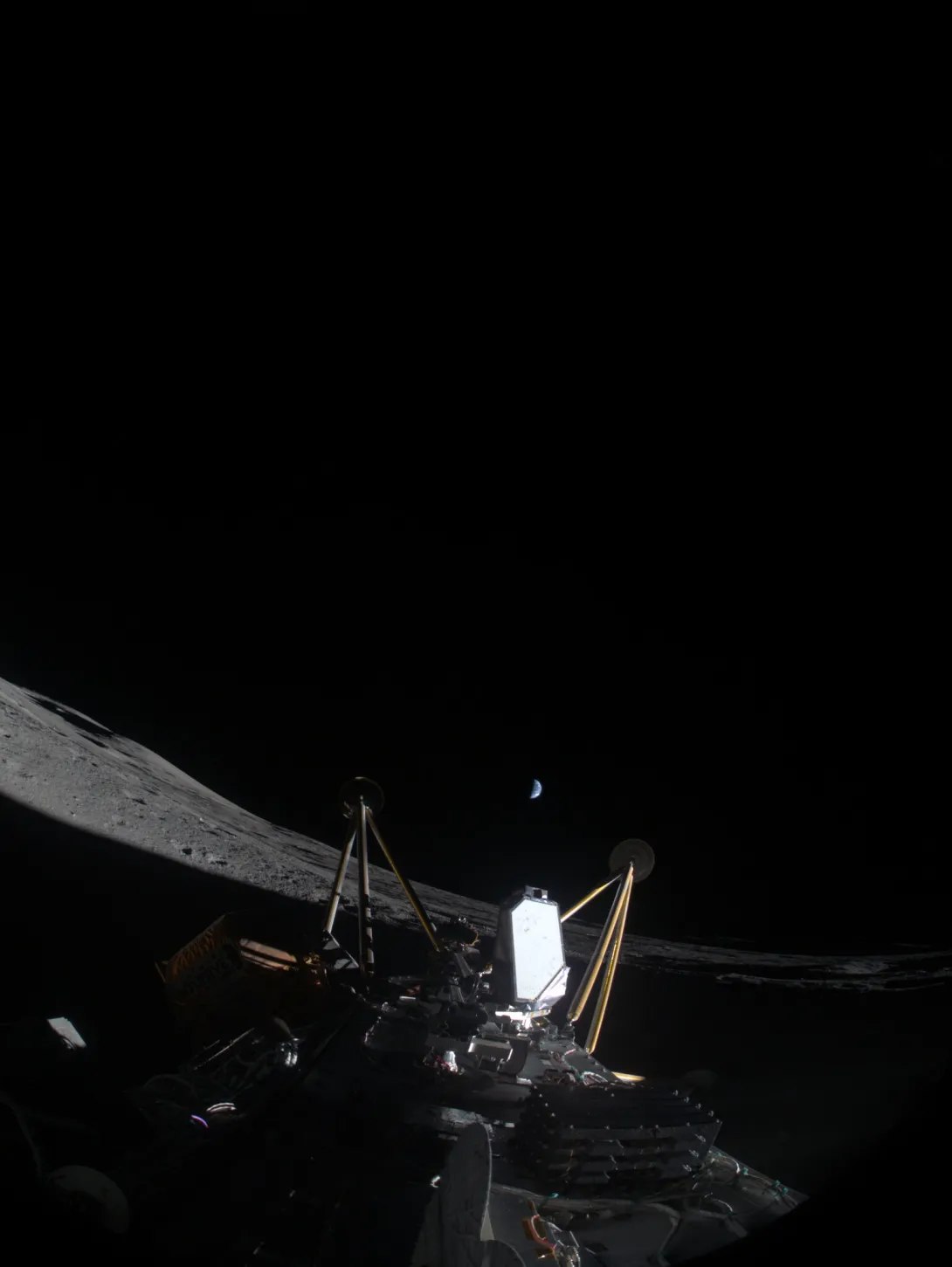
Members of CSTAR have contributed to a variety of spaceflight projects, from observing the atmosphere of Jupiter, to creating carbon nanotube-based technology on CubeSats, to building an innovative, dual-use antenna that is simultaneously a critical life-saving handrail and a radio emitter inside an airlock on the International Space Station. Several examples of this research will soon be part of a new permanent display in the National Air and Space Museum in Washington, D.C.
“The work done by the Georgia Tech research community in space is phenomenal,” said CSTAR Director Jud Ready. “We have worked on the International Space Station, launched numerous free-flying CubeSats in low Earth orbit, as well as our current crowning achievement, the Lunar Flashlight CubeSat, which is the world’s only heliocentric spacecraft currently owned and operated by an academic institution that recently demonstrated planetary optical navigation techniques for the first time, by any organization — including NASA.” Future missions include materials demonstrations on a lunar lander, as well as additional orbital activities of both the Earth and moon.
“The SRI will increase our reach and impact over and above these prior activities by at least an order of magnitude,” he said. “I am excited for what the future holds for Georgia Tech students, faculty, and research partners as a result of this new organization.”
Director: Jud Ready
Associate Directors: Morris Cohen and Jennifer Glass
Center for Relativistic Astrophysics
The Center for Relativistic Astrophysics (CRA) is housed within the College of Sciences’ School of Physics. The center’s mission is to provide students with education and training in the key research areas of astroparticle physics, theoretical astrophysics, and gravitational wave astrophysics.
CRA researchers study the breadth of space, ranging from the early universe’s large-scale structure to particle interactions. They also study black holes and the merger of compact objects, the potential outcome of the evolution of stellar binary systems, and — closer to home — exoplanets and stars found in the Milky Way. Of particular strength are computational astrophysics and multi-messenger astrophysical studies with neutrinos, photons, and gravitational waves.
In addition, CRA researchers actively participate in major international collaborations, such as the operations and development of existing and future detectors, including the IceCube Neutrino Observatory, the LIGO and LISA gravitational wave observatories, X-ray observatories NuSTAR and Athena, and gamma-ray detectors VERITAS and CTA.
“Bringing together all space research under a single umbrella will be a huge boon to the CRA’s research efforts and visibility,” said John Wise, CRA director. “I am excited about the opportunities the SRI will bring forth within such a collaborative environment, especially the prospect of Georgia Tech leading a space mission that can test the theoretical work performed within the CRA.”
Director: John Wise
Associate Director: Tamara Bogdanović
Astrobiology research at Georgia Tech, which includes experts in biochemistry, physics, aerospace engineering, planetary science, and astronomy, as well as others, seeks to answer these age-old questions: What is the origin of life? Does life exist on other worlds?
Georgia Tech’s astrobiology community includes students, staff, and faculty across campus, the educational curriculum, the Exploring Origins student-run group, an astrobiology fellows program, and keystone events.
Many globally recognized researchers in this field are at Georgia Tech, and their recent discoveries hint at the potential for life on Mars and ocean worlds like Europa. Astrobiology at Tech brings together these faculty with scholars in the humanities and social sciences to share their research with the public and give it a broader cultural context.
The Georgia Tech Astrobiology Graduate Certificate Program, an interdisciplinary initiative across several Schools and Colleges, is designed to broaden student participation in astrobiology. An undergraduate minor is in development. The purpose of these programs is to expand opportunities for both undergraduate and graduate students in the interdisciplinary field of astrobiology.
“One of the main reasons I came to Georgia Tech in 2020 is its vibrant astrobiology program,” said Christopher E. Carr, co-director of Georgia Tech Astrobiology. “It’s a true pleasure to have such amazing colleagues.”
Co-directors: Frances Rivera Hernández and Christopher E. Carr
News Contact
Laurie Haigh
Research Communications
Aug. 30, 2024
Georgia Tech researcher W. Hong Yeo has been awarded a $3 million grant to help develop a new generation of engineers and scientists in the field of sustainable medical devices.
“The workforce that will emerge from this program will tackle a global challenge through sustainable innovations in device design and manufacturing,” said Yeo, Woodruff Faculty Fellow and associate professor in the George W. Woodruff School of Mechanical Engineering and the Wallace H. Coulter Department of Biomedical Engineering at Georgia Tech and Emory University.
The funding, from the National Science Foundation (NSF) Research Training (NRT) program, will address the environmental impacts resulting from the mass production of medical devices, including the increase in material waste and greenhouse gas emissions.
Under Yeo’s leadership, the Georgia Tech team comprises multidisciplinary faculty: Andrés García (bioengineering), HyunJoo Oh (industrial design and interactive computing), Lewis Wheaton (biology), and Josiah Hester (sustainable computing). Together, they’ll train 100 graduate students, including 25 NSF-funded trainees, who will develop reuseable, reliable medical devices for a range of uses.
“We plan to educate students on how to develop medical devices using biocompatible and biodegradable materials and green manufacturing processes using low-cost printing technologies,” said Yeo. “These wearable and implantable devices will enhance disease diagnosis, therapeutics, rehabilitation, and health monitoring.”
Students in the program will be challenged by a comprehensive, multidisciplinary curriculum, with deep dives into bioengineering, public policy, physiology, industrial design, interactive computing, and medicine. And they’ll get real-world experience through collaborations with clinicians and medical product developers, working to create devices that meet the needs of patients and care providers.
The Georgia Tech NRT program aims to attract students from various backgrounds, fostering a diverse, inclusive environment in the classroom — and ultimately in the workforce.
The program will also introduce a new Ph.D. concentration in smart medical devices as part of Georgia Tech's bioengineering program, and a new M.S. program in the sustainable development of medical devices. Yeo also envisions an academic impact that extends beyond the Tech campus.
“Collectively, this NRT program's curriculum, combining methods from multiple domains, will help establish best practices in many higher education institutions for developing reliable and personalized medical devices for healthcare,” he said. “We’d like to broaden students' perspectives, move past the current technology-first mindset, and reflect the needs of patients and healthcare providers through sustainable technological solutions.”
News Contact
Jerry Grillo
Aug. 27, 2024
From commercialization to community engagement to partnerships with national labs and corporations, Georgia Tech leads in the development and use of direct air capture technologies.
News Contact
Shelley Wunder-Smith
shelley.wunder-smith@research.gatech.edu
Aug. 15, 2024
While the U.S. federal government has clean energy targets, they are not binding. Most economically developed countries have mandatory policies designed to bolster renewable electricity production. Because the U.S. lacks an enforceable federal mandate for renewable electricity, individual states are left to develop their own regulations.
Marilyn Brown, Regents’ and Brook Byers Professor of Sustainable Systems in Georgia Tech’s School of Public Policy; Shan Zhou, an assistant professor at Purdue University and Georgia Tech Ph.D. alumna; and Barry Solomon, a professor emeritus of environmental policy at Michigan Technological University, investigated how clean electricity policies affect not only the states that adopt them, but neighboring states as well. Using data-driven comparisons, the researchers found that the impact of these subnational clean energy policies is far greater — and more nuanced — than previously known.
Their research was recently published in the journal Proceedings of the National Academy of Sciences.
“Analysts are asking if the U.S. should have a federal renewable mandate to put the whole country on the same page, or if individual state policies are sufficient,” Brown said. “To answer that question, it is useful to know if states with renewable energy policies are influencing those without them.”
Brown, Solomon, and Zhou examined a common clean energy policy tool: the Renewable Portfolio Standard (RPS). Adopted by more than half of U.S. states, RPSs are regulations requiring a state’s utility providers to generate a certain percentage of their electricity from renewable resources, such as wind or solar. Many of these standards are mandatory, with utility companies facing fines if they fail to reach targets within a given time.
To investigate the influence of these policies across state lines, the researchers first created a dataset that included 31 years (1991-2021) of annual renewable electricity generation data for 48 U.S. states and the District of Columbia. They then used the dataset to generate pairs of states linking each state to its geographic neighbors or electricity trading partners, allowing them to examine the influence of the RPS policy adopted by one of the pair on the renewable energy generation of the other — a total of 1,519 paired comparisons.
“By only looking at the pairs, we can see if an RPS in one state directly affects renewable electricity generation in another state, and, if that’s the case, whether it is because they are geographic neighbors or if it’s because they are participating in the same wholesale electricity market,” Zhou said.
Looking into the electricity market is important, because states often purchase electricity from other states through wholesale markets rather than exclusively producing their own power, and the purchased power can be generated from renewables. Utilities in some states may be allowed to meet their own RPS requirements by purchasing renewable energy credits based on the renewable electricity generated in other states.
In their analyses, the team also considered the concept of “policy stringency.” A stringency measure evaluates a state’s renewable electricity targets relative to the amount currently produced in the state. For example, if a state requires electric utilities to generate 30% of their electricity from renewable sources by 2030 and the state already has 25%, it isn’t a very stringent policy. On the other hand, if a state has a 30% target and only uses 10% renewables currently, it has a more ambitious and stringent RPS.
Though policy experts have used the metric in related work for over a decade, the research team improved the design.
“Our stringency variable includes interim targets as well as the existing share of renewable energy generation,” Solomon said.
The team found that the amount of renewable electricity generation in a state is not only influenced by whether that state has its own RPS, but also by the RPS policies of neighboring states.
“We also learned that the stronger a neighboring state’s RPS policy is, the more likely a given state is to generate more renewable electricity,” Brown said. “It’s all a very interactive web with many co-benefits.”
The authors were surprised to find that a given state’s electricity trading partners did not hold the most influence over renewable generation, but rather the geographical proximity to RPS states. They suggest that past RPS policy research focusing on within-state impacts likely underestimated an RPS’s full impact. While the researchers have not yet identified all factors that can cause spillover effects, they plan to investigate this further.
“The spillover effect is very significant and should not be overlooked by future research, especially for states without RPSs,” Zhou said. “For states without policies, their renewable electricity generation is very heavily influenced by their neighbors.”
Citation: Shan Zhou, Barry D. Solomon, and Marilyn A. Brown, “The spillover effect of mandatory renewable portfolio standards.” PNAS (June 2024).
DOI: https://doi.org/10.1073/pnas.2313193121
Aug. 14, 2024
On Aug. 29 in the Exhibition Hall from 5 to 7p.m, CREATE-X will celebrate its 10th year of supporting entrepreneurship at Georgia Tech by introducing its next cohort of startup founders at Demo Day. This free event, attracting more than 1,500 people annually, allows the public to explore products from over 100 newly minted startups, ranging from consumer apps to deep tech. It also provides a chance to engage with more than 250 founders thanks to its no-pitch format.
Since its inception in 2014, CREATE-X has worked to infuse a spirit of entrepreneurship at Georgia Tech. From supporting eight teams in its inaugural cohort, the program has grown to support the launch of over 100 startups this summer, bringing the total to 560 startup teams boasting a total portfolio valuation of over $2 billion. In the last year, the program has expanded internationally and looks to continue building opportunities for its students.
“Our mission is to instill entrepreneurial confidence. We believe that entrepreneurship is a life skill,” says Rahul Saxena, CREATE-X director. “Georgia Tech students are capable of creating startups. We’re just giving them the tools and resources to do it. We want every Tech student to have this advantage when starting their business.”
At the kickoff for Startup Launch, the program’s summer startup accelerator, CREATE-X co-founder Chris Klaus spoke on the landscape of startups. “The secret sauce for unicorns is colleges. The number of unicorns is increasing, and I expect that trend to continue. This is the perfect place to build a startup,” he said.
Startup Launch has concluded for the summer, and the founders are preparing to showcase their solutions at Demo Day.
Register Now
“We invite you to become part of shaping what comes next. Support these founders as they creatively solve real-world issues. See future industry leaders be born. Join us for the culmination of these founders’ hard work, passion, and ingenuity at Demo Day,” Rahul said.
Demo Day 2024 registration is open. Tickets are free but limited. Don’t miss this chance to witness the future of innovation and entrepreneurship. For more information, visit the CREATE-X website.
News Contact
Breanna Durham
Marketing Strategist
Aug. 12, 2024
Interdisciplinary collaboration drives innovation at Georgia Tech. Researchers with joint appointments across the Institute's six colleges discuss how blending diverse fields helps them create more sustainable, technologically advanced, and socially viable solutions to some of our planet’s biggest problems. Learn more
Aug. 09, 2024
The federally funded IAC program provides small to mid-sized industrial facilities in the region with free assessments for energy, productivity, and waste, while also supporting workforce development, recruitment, and training.
“This IAC is a great example of the ways in which Georgia Tech is serving all of Georgia and the Southeast,” said Tim Lieuwen, executive director of Georgia Tech’s Strategic Energy Institute (SEI) and Regents’ Professor and holder of the David S. Lewis, Jr. Chair in the Daniel Guggenheim School of Aerospace Engineering.
“We support numerous small and medium-sized enterprises in rural, suburban, and urban areas, bringing the technical expertise of Georgia Tech to bear in solving real-world problems faced by our small businesses.”
Georgia Tech’s IAC, which serves Georgia, South Carolina, and North Florida, is administered jointly by the George W. Woodruff School of Mechanical Engineering and the Georgia Manufacturing Extension Partnership (GaMEP), part of the Enterprise Innovation Institute (EI2). The organization has performed thousands of assessments since its inception in the 1980s – usually at the rate of 15 to 20 per year – and typically identifies upwards of 10% in energy savings for clients.
The assessment team, overseen by IAC associate director Kelly Grissom, comprises faculty and student engineers from Georgia Tech and the Florida A&M University/Florida State University College of Engineering.
In addition, Georgia Tech leads the Southeastern IACs Center of Excellence, which partners the institution with fellow University System of Georgia (USG) entity Kennesaw State University, local HBCU Clark Atlanta University, and neighboring state capital HBCU Florida A&M University.
Although mechanical engineering has historically been the chief area of concentration for IAC’s interns, the program currently accepts students across a range of disciplines. “Increased diversity from that standpoint enriches the potential of the recommendations we can make,” said Grissom.
Students are integral to the program, as is Grissom’s role in facilitating their experiences with client engagement and technical recommendations.
“Kelly is the reason our program has been recognized,” said Randy Green, energy and sustainability services group manager at GaMEP. “He works tirelessly to ensure that assessments are accomplished with success for our manufacturers and students.”
“We also recognize our partnership with the Woodruff School of Mechanical Engineering and with IAC program lead Comas Haynes, Ph.D., who works diligently to keep us on track and connected with our sponsors at the U.S. Department of Energy,” Green added.
The DoE accolade represents “a ‘one Georgia Tech’ win,” symbolic of the synergistic relationships forged across the Institute, said Haynes, who also serves as the Hydrogen Initiative Lead at Georgia Tech’s Strategic Energy Institute (SEI) and Energy branch head in the Intelligent Sustainable Technologies Division at the Georgia Tech Research Institute. Haynes specifically cited Green’s “technical prowess and managerial oversight” as another key to the IAC program’s success.
Said Devesh Ranjan, Eugene C. Gwaltney, Jr. School Chair and professor in the George W. Woodruff School of Mechanical Engineering, “It is truly an honor for Georgia Tech to be named the Department of Energy Industrial (Training and) Assessment Center of the Year. Clean energy and manufacturing have been a focus for the Institute and the Woodruff School for a long time, and GTRI, EI2, and SEI have collaboratively done phenomenal work in helping manufacturers save energy, improve productivity, and reduce waste.”
To check eligibility and apply for assistance from Georgia Tech’s IAC, click here.
News Contact
Eve Tolpa
eve.tolpa@innovate.gatech.edu
Aug. 07, 2024
A research group is calling for internet and social media moderators to strengthen their detection and intervention protocols for violent speech.
Their study of language detection software found that algorithms struggle to differentiate anti-Asian violence-provoking speech from general hate speech. Left unchecked, threats of violence online can go unnoticed and turn into real-world attacks.
Researchers from Georgia Tech and the Anti-Defamation League (ADL) teamed together in the study. They made their discovery while testing natural language processing (NLP) models trained on data they crowdsourced from Asian communities.
“The Covid-19 pandemic brought attention to how dangerous violence-provoking speech can be. There was a clear increase in reports of anti-Asian violence and hate crimes,” said Gaurav Verma, a Georgia Tech Ph.D. candidate who led the study.
“Such speech is often amplified on social platforms, which in turn fuels anti-Asian sentiments and attacks.”
Violence-provoking speech differs from more commonly studied forms of harmful speech, like hate speech. While hate speech denigrates or insults a group, violence-provoking speech implicitly or explicitly encourages violence against targeted communities.
Humans can define and characterize violent speech as a subset of hateful speech. However, computer models struggle to tell the difference due to subtle cues and implications in language.
The researchers tested five different NLP classifiers and analyzed their F1 score, which measures a model's performance. The classifiers reported a 0.89 score for detecting hate speech, while detecting violence-provoking speech was only 0.69. This contrast highlights the notable gap between these tools and their accuracy and reliability.
The study stresses the importance of developing more refined methods for detecting violence-provoking speech. Internet misinformation and inflammatory rhetoric escalate tensions that lead to real-world violence.
The Covid-19 pandemic exemplified how public health crises intensify this behavior, helping inspire the study. The group cited that anti-Asian crime across the U.S. increased by 339% in 2021 due to malicious content blaming Asians for the virus.
The researchers believe their findings show the effectiveness of community-centric approaches to problems dealing with harmful speech. These approaches would enable informed decision-making between policymakers, targeted communities, and developers of online platforms.
Along with stronger models for detecting violence-provoking speech, the group discusses a direct solution: a tiered penalty system on online platforms. Tiered systems align penalties with severity of offenses, acting as both deterrent and intervention to different levels of harmful speech.
“We believe that we cannot tackle a problem that affects a community without involving people who are directly impacted,” said Jiawei Zhou, a Ph.D. student who studies human-centered computing at Georgia Tech.
“By collaborating with experts and community members, we ensure our research builds on front-line efforts to combat violence-provoking speech while remaining rooted in real experiences and needs of the targeted community.”
The researchers trained their tested NLP classifiers on a dataset crowdsourced from a survey of 120 participants who self-identified as Asian community members. In the survey, the participants labeled 1,000 posts from X (formerly Twitter) as containing either violence-provoking speech, hateful speech, or neither.
Since characterizing violence-provoking speech is not universal, the researchers created a specialized codebook for survey participants. The participants studied the codebook before their survey and used an abridged version while labeling.
To create the codebook, the group used an initial set of anti-Asian keywords to scan posts on X from January 2020 to February 2023. This tactic yielded 420,000 posts containing harmful, anti-Asian language.
The researchers then filtered the batch through new keywords and phrases. This refined the sample to 4,000 posts that potentially contained violence-provoking content. Keywords and phrases were added to the codebook while the filtered posts were used in the labeling survey.
The team used discussion and pilot testing to validate its codebook. During trial testing, pilots labeled 100 Twitter posts to ensure the sound design of the Asian community survey. The group also sent the codebook to the ADL for review and incorporated the organization’s feedback.
“One of the major challenges in studying violence-provoking content online is effective data collection and funneling down because most platforms actively moderate and remove overtly hateful and violent material,” said Tech alumnus Rynaa Grover (M.S. CS 2024).
“To address the complexities of this data, we developed an innovative pipeline that deals with the scale of this data in a community-aware manner.”
Emphasis on community input extended into collaboration within Georgia Tech’s College of Computing. Faculty members Srijan Kumar and Munmun De Choudhury oversaw the research that their students spearheaded.
Kumar, an assistant professor in the School of Computational Science and Engineering, advises Verma and Grover. His expertise is in artificial intelligence, data mining, and online safety.
De Choudhury is an associate professor in the School of Interactive Computing and advises Zhou. Their research connects societal mental health and social media interactions.
The Georgia Tech researchers partnered with the ADL, a leading non-governmental organization that combats real-world hate and extremism. ADL researchers Binny Mathew and Jordan Kraemer co-authored the paper.
The group will present its paper at the 62nd Annual Meeting of the Association for Computational Linguistics (ACL 2024), which takes place in Bangkok, Thailand, Aug. 11-16
ACL 2024 accepted 40 papers written by Georgia Tech researchers. Of the 12 Georgia Tech faculty who authored papers accepted at the conference, nine are from the College of Computing, including Kumar and De Choudhury.
“It is great to see that the peers and research community recognize the importance of community-centric work that provides grounded insights about the capabilities of leading language models,” Verma said.
“We hope the platform encourages more work that presents community-centered perspectives on important societal problems.”
Visit https://sites.gatech.edu/research/acl-2024/ for news and coverage of Georgia Tech research presented at ACL 2024.
News Contact
Bryant Wine, Communications Officer
bryant.wine@cc.gatech.edu
Pagination
- Previous page
- Page 45
- Next page