
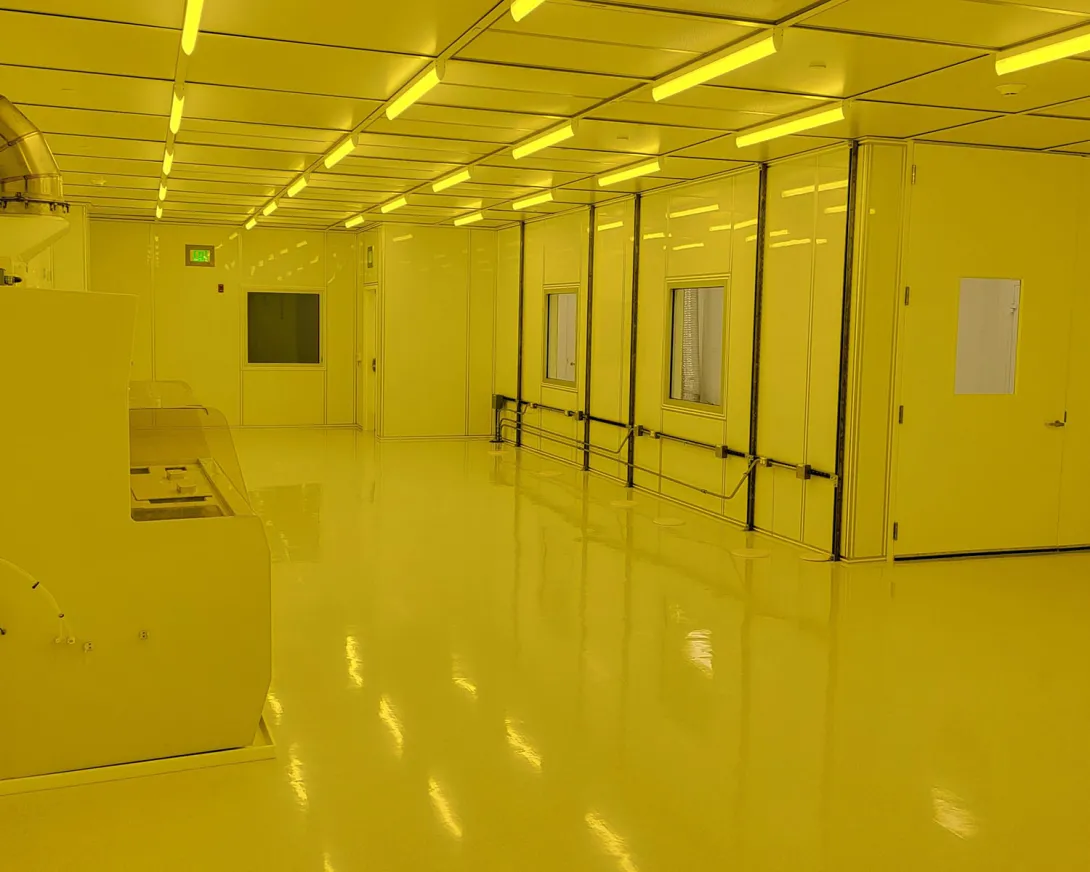
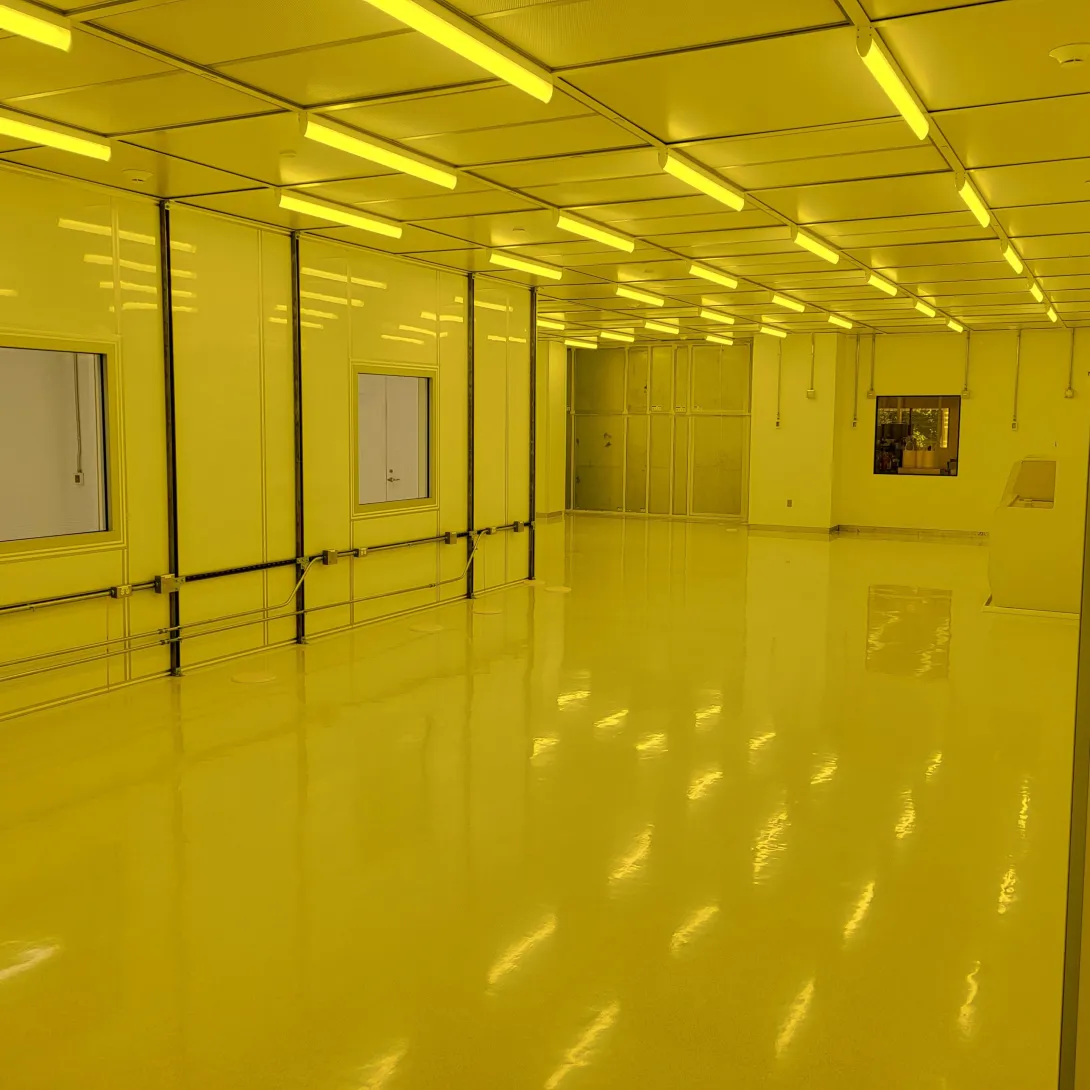
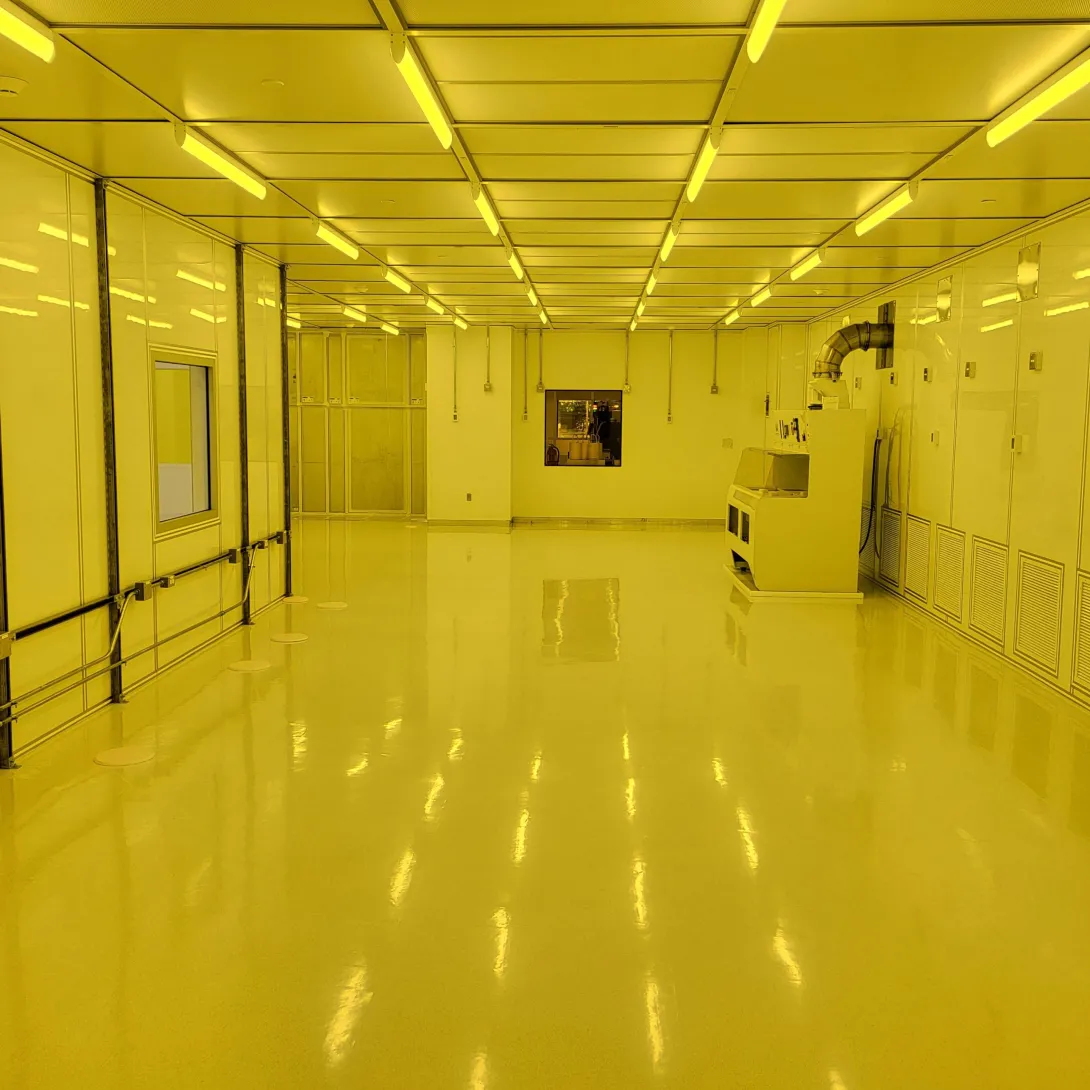
The Institute for Matter and Systems (IMS) has completed a major expansion of its cleanroom facilities, which now totals more than 23,000 square feet – solidifying its position as the largest academic cleanroom in the Southeast.
The expansion includes a newly constructed 2,000-square-foot ISO 6 cleanroom, designed to house an advanced packaging and 3D heterogeneous integration (3DHI) facility.
“As demand for cleanroom facilities continues to rise across academia and industry, this expansion strategically positions Georgia Tech to support national initiatives and advance global leadership in semiconductor packaging technologies,” said Gary Spinner, associate director of cleanroom and fabrication facilities at IMS.
This state-of-the-art space will be equipped with next-generation processing and inspection capabilities that represent the next generation of semiconductor manufacturing technology.
“The new facility, in conjunction with our existing Marcus facilities, will provide the campus community and our industry and government partners with the tools and capabilities to pursue revolutionary technologies in advanced packaging and 3D heterogeneous integration,” said Muhannad Bakir, Dan Fielder Professor in the School of Electrical and Computer Engineering and director of the 3D Systems Packaging Research Center (PRC). “These innovations will include developing radical advanced packaging and 3D stack architectures that seamlessly integrate electronics, photonics, power delivery, and thermal technologies.”
The PRC will use the new facility for advanced packaging research supported by multiple national programs and industry partnerships.
This robust infrastructure will support emerging applications in artificial intelligence, high-performance computing, and advanced mm-wave and photonic communications systems. By enabling the dense integration of multiple specialized chips within substrates and chip stacks, the pursued advanced packaging research will deliver more scalable, powerful and energy efficient systems at lower cost and shorter design cycles.
News Contact
Amelia Neumeister | Research Communications Program Manager
The Institute for Matter and Systems
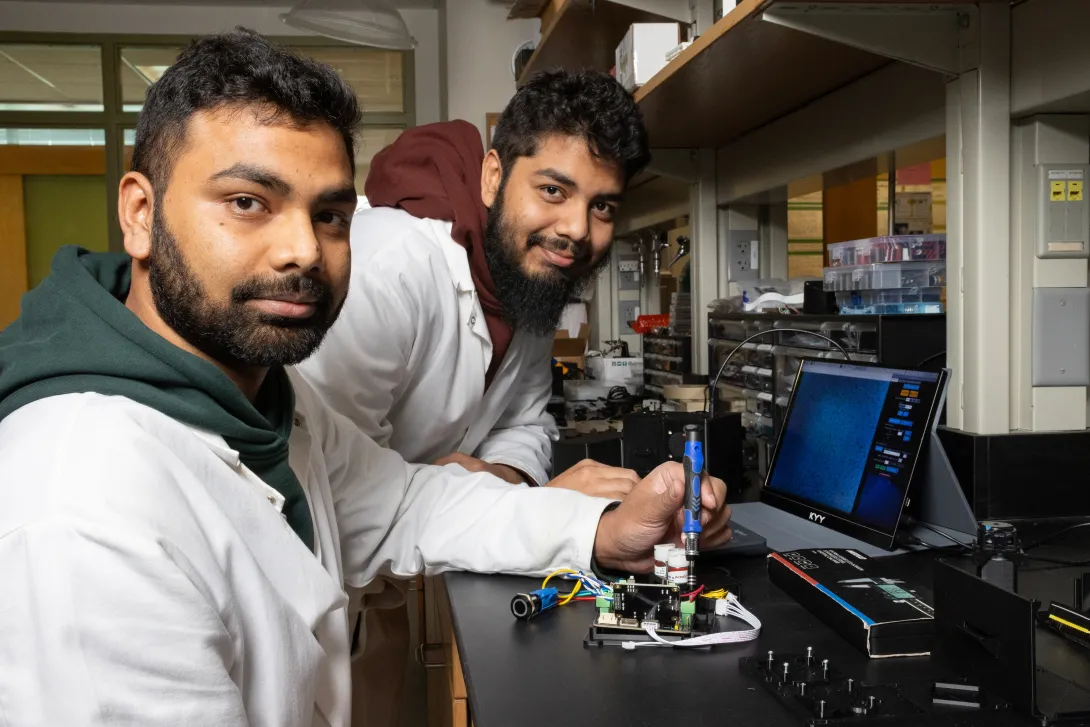
Environmental Engineering graduate students Farhan Khan and Farshid Khan are passionate about providing access to clean water.
They have a lot in common—starting with the fact that they are brothers. Farhan Khan came to Georgia Tech from Bangladesh to begin his Ph.D. studies in 2021. Farshid Khan followed in 2024, beginning his first semester assisting a doctoral student in the very same lab as his older brother.
“Georgia Tech undoubtedly has one of the best programs in this field,” Farshid Khan said. “Also because of the fact that my brother is here, when I got the admission offer, it was the perfect place to come.”
Their journey to Georgia Tech is deeply rooted in their experience growing up in Bangladesh.
“One of the major problems in Bangladesh is textile effluent pollution,” Farshid Khan said. “It is one of the largest textile exporters in the world. But the problem with the textile industry is they do not treat the water well. All of their effluents come into our rivers and they are highly polluted.
“I always wanted to work on that, and it is still my plan after going back to Bangladesh to work on that.”
Read more about their story on the School of Civil and Environmental Engineering website.
News Contact
Melissa Fralick
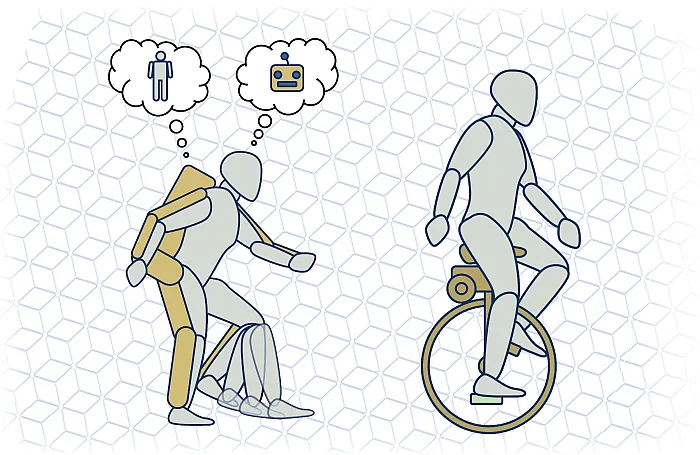
Research into tailored assistive and rehabilitative devices has seen recent advancements but the goal remains out of reach due to the sparsity of data on how humans learn complex balance tasks. To address this gap, a collaborating team of interdisciplinary faculty from Florida State University and Georgia Tech have been awarded ~$798,000 by the NSF to launch a study to better understand human motor learning as well as gain greater understanding into human robot interaction dynamics during the learning process.
Led by PI: Taylor Higgins, Assistant Professor, FAMU-FSU Department of Mechanical Engineering, partnering with Co-PIs Shreyas Kousik, Assistant Professor, Georgia Tech, George W. Woodruff School of Mechanical Engineering, and Brady DeCouto, Assistant Professor, FSU Anne Spencer Daves College of Education, Health, and Human Sciences, the research will use the acquisition of unicycle riding skill by participants to gain a better grasp on human motor learning in tasks requiring balance and complex movement in space. Although it might sound a bit odd, the fact that most people don’t know how to ride a unicycle, and the fact that it requires balance, mean that the data will cover the learning process from novice to skilled across the participant pool.
Using data acquired from human participants, the team will develop a “robotics assistive unicycle” that will be used in the training of the next pool of novice unicycle riders. This is to gauge if, and how rapidly, human motor learning outcomes improve with the assistive unicycle. The participants that engage with the robotic unicycle will also give valuable insight into developing effective human-robot collaboration strategies.
The fact that deciding to get on a unicycle requires a bit of bravery might not be great for the participants, but it’s great for the research team. The project will also allow exploration into the interconnection between anxiety and human motor learning to discover possible alleviation strategies, thus increasing the likelihood of positive outcomes for future patients and consumers of these devices.
Author
-Christa M. Ernst
This Article Refers to NSF Award # 2449160
News Contact
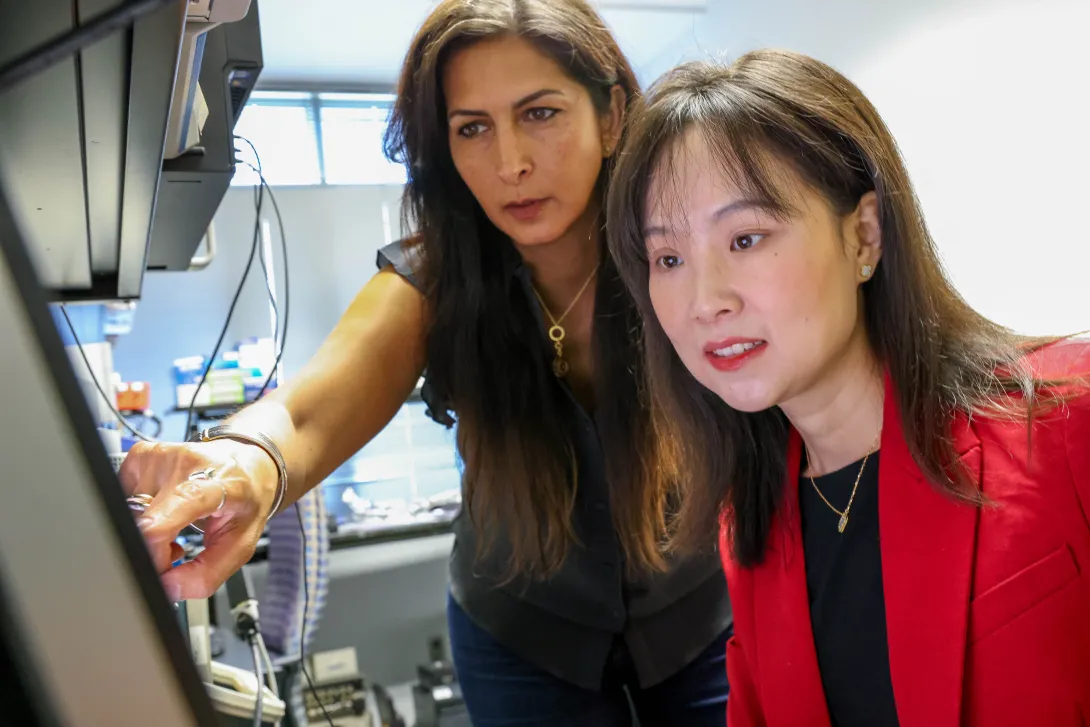
Nazanin Bassiri-Gharb, Harris Saunders, Jr. Chair and Professor in the Woodruff School and MSE, and Yao Xie, Coca-Cola Foundation Chair and Professor in ISyE.
In the world of nanotechnology, seeing clearly isn’t easy. It’s even harder when you’re trying to understand how a material’s properties relate to its structure at the nanoscale. Tools like piezoresponse force microscopy (PFM) help scientists peer into the nanoscale functionality of materials, revealing how they respond to electric fields. But those signals are often buried in noise, especially in instances where the most interesting physics happens.
Now, researchers at Georgia Tech have developed a powerful new method to extract meaningful information from even the noisiest data, or when, alternatively, the response of the material is the smallest. Their approach, which combines physical modeling with advanced statistical reconstruction, could significantly improve the accuracy and confidence of nanoscale measurement properties.
The team’s findings, led by Nazanin Bassiri-Gharb, Harris Saunders, Jr. Chair and Professor in the George W. Woodruff School of Mechanical Engineering and School of Materials Science and Engineering (MSE), are reported in Small Methods.
Co-lead authors Kerisha Williams, a former MSE Ph.D. student, and Henry Shaowu Yuchi, a former Ph.D. student in the H. Milton Stewart School of Industrial and Systems Engineering (ISyE), spearheaded the study. Other collaborators include Kevin Ligonde, a Ph.D. student in the Woodruff School; Mathew Repasky, a former Ph.D. student in ISyE; and Yao Xie, Coca-Cola Foundation Chair and Professor in ISyE.
This research was initiated through Georgia Tech’s Forming Teams and Moving Teams Forward seed grant program, launched by the Office of the Executive Vice President for Research in 2021. Designed to support cross-disciplinary collaboration, the program helps build research teams that align with the growing national emphasis on large-scale, team-based projects. The grant supported early work by Bassiri-Gharb, Xie, and Juan-Pablo Correa-Baena, associate professor and Goizueta Early Career Faculty Chair in MSE.
Read the full story on the George W. Woodruff School of Mechanical Engineering website.
News Contact
Ashley Ritchie
George W. Woodruff School of Mechanical Engineering
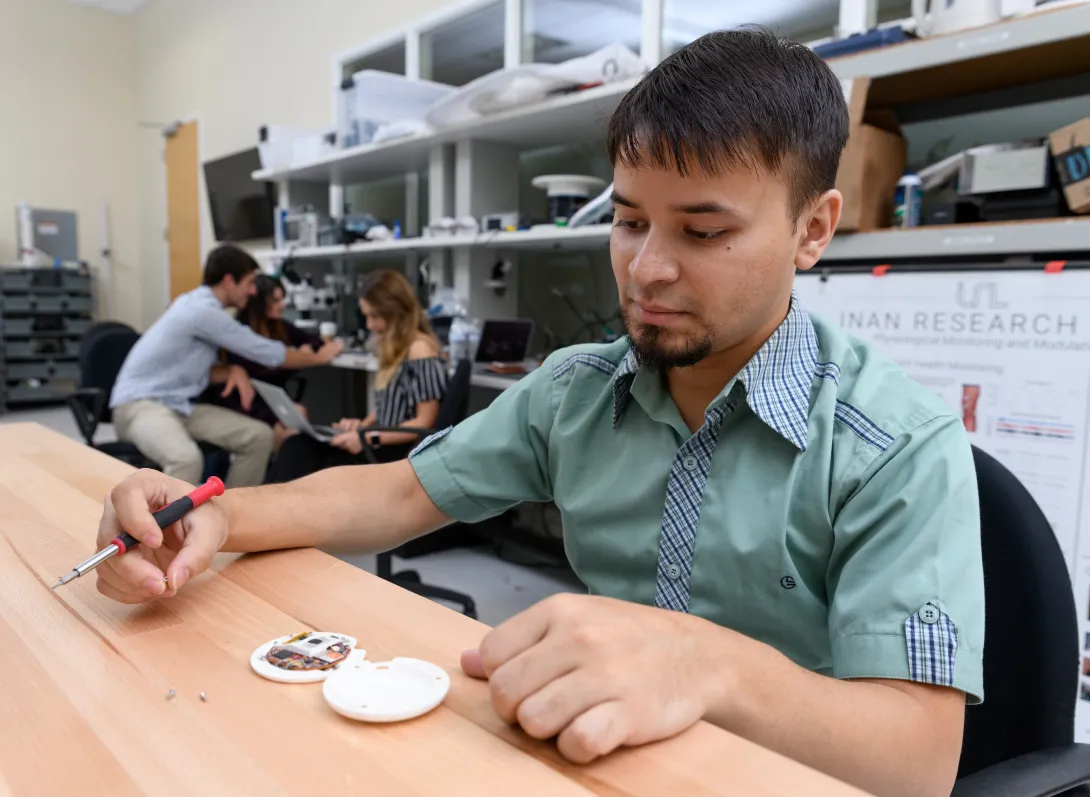
CardioTag, a device developed in Omer Inan’s lab, is now FDA-cleared and on the path to market through Cardiosense. Georgia Tech supported the technology’s transition from research to real-world application.
Georgia Tech has posted its strongest year ever in research commercialization, breaking multiple records for invention disclosures, issued patents, and licensed technologies — clear indicators of the Institute’s expanding role in delivering research-driven innovation to the marketplace.
“Invention is only the beginning. What sets Georgia Tech apart is our ability to move our ideas out of the lab and into the marketplace, where they can make a tangible impact on human life and contribute to our economy,” said Ángel Cabrera, president of Georgia Tech. “This year’s record results show that our researchers aren’t just pushing the boundaries of knowledge — they’re creating marketable solutions with the power to improve everyday lives.”
For fiscal year 2025, Georgia Tech reported:
- More than 460 new invention disclosures — a 30% increase over the previous year and the highest ever recorded by the Institute.
- 70 invention disclosures for the Georgia Tech Research Institute, marking a 70% increase year over year.
- A 210% increase in technologies licensed, and 140% in total licenses executed, reflecting unprecedented industry interest, with 65 licenses in total.
- 124 U.S. patents were issued, representing a 20% increase compared to the prior year.
- According to the most recent rankings from the National Academy of Inventors, Georgia Tech is in the top 15 public universities for U.S. utility patents filed.
This momentum strengthens Atlanta’s position as one of the nation’s fastest-growing innovation economies. Georgia Tech plays a leading role in advancing the region’s ambition to become a top 5 tech hub by connecting world-class research with industry, supporting a thriving startup ecosystem, and fueling talent pipelines that serve emerging sectors like AI, cybersecurity, and clean energy.
Omer Inan, a Georgia Tech researcher and faculty member, has launched multiple companies with the support of the Institute’s commercialization resources. Cardiosense is a medical AI company that leverages sensors to provide better management of cardiovascular disease. Having just achieved FDA 501(k) clearance, its latest device — CardioTag — is the first multimodal, wearable sensor that simultaneously captures three cardio signals to provide noninvasive solutions for heart health.
"The med tech research I conduct at Georgia Tech delivers new technologies to keep patients with heart failure out of the hospital and enables them to monitor their health status at home,” said Inan. “Now, we are commercializing the technology our lab helped develop, so that this dream of improving the quality of care and life for millions of Americans with heart failure can one day become reality."
“As we look to solidify Georgia Tech’s status as a national innovation hub, we are moving research into the marketplace so it can truly make a difference in people’s lives,” said Raghupathy “Siva” Sivakumar, vice president of Commercialization and chief commercialization officer at Georgia Tech. “We are at a pivotal moment to put Atlanta on the map as a leader in research commercialization and have an opportunity to capitalize on our $1.4 billion in research expenditures that drive meaningful inventions, IP, and industry partnerships.”
To learn more about the licensing and commercialization process at Georgia Tech, visit licensing.research.gatech.edu.
Available for Media Interviews
Raghupathy "Siva" Sivakumar
Vice President of Commercialization and
Chief Commercialization Officer
Georgia Tech
Omer Inan
Professor and Regents’ Entrepreneur
School of Electrical and Computer Engineering at Georgia Tech
Media Contact:
Lauren Schiffman
PressFriendly
lauren@pressfriendly.com
Angela Barajas Prendiville
Director of Media Relations
Georgia Institute of Technology
aprendiville@gatech.edu

The idea of people experiencing their favorite mobile apps as immersive 3D environments took a step closer to reality with a new Google-funded research iniative at Georgia Tech.
A new approach proposed by Tech researcher Yalong Yang uses generative artificial intelligence (GenAI) technologies to convert almost any mobile or web-based app into a 3D environment.
That includes application software programs from Microsoft and Adobe as well as any social media (Tiktok), entertainment (Spotify), banking (PayPal), or food service app (Uber Eats) and everything in between.
Yang aims to make the 3D environments compatible with augmented and virtual reality (AR/VR) headsets and smart glasses. He believes his research could be a breakthrough in spatial computing and change how humans interact with their favorite apps and computer systems in general.
“We’ll be able to turn around and see things we want, and we can grab them and put them together,” said Yang, an assistant professor in the School of Interactive Computing. “We’ll no longer use a mouse to scroll or the keyboard to type, but we can do more things like physical navigation.”
Yang’s proposal recently earned him recognition as a 2025 Google Research Scholar. Along with converting popular social apps, his platform will be able to instantly render Photoshop, MS Office, and other workplace applications in 3D for AR/VR devices.
“We have so many applications installed in our machines to complete all the various types of work we do,” he said. “We use Photoshop for photo editing, Premiere Pro for video editing, Word for writing documents. We want to create an AR/VR ecosystem that has all these things available in one interface with all apps working cohesively to support multitasking.”
Filling The Gap With AI
Just as Google’s Veo and Open AI’s Sora use generative-AI to create video clips, Yang believes it can be used to create interactive, immersive environments for any Android or Apple app.
“A critical gap in AR/VR is that we do not have all those existing applications, and redesigning all those apps will take forever,” he said. “It’s urgent that we have a complete ecosystem in VR to enable us to do the work we need to do. Instead of recreating everything from scratch, we need a way to convert these applications into immersive formats.”
The Google Play Store boasts 3.5 million apps for Android devices, while the Apple Store includes 1.8 million apps for iOS users.
Meanwhile, there are fewer than 10,000 apps available on the latest Meta Quest 3 headset, leaving a gap of millions of apps that will need 3D conversion.
“We envision a one-click app, and the (Android Package Kit) file output will be a Meta APK that you can install on your MetaQuest 3,” he said.
Yang said major tech companies like Apple have the resources to redesign their apps into 3D formats. However, small- to mid-sized companies that have created apps either do not have that ability or would take years to do so.
That’s where generative-AI can help. Yang plans to use it to convert source code from web-based and mobile apps into WebXR.
WebXR is a set of application programming interfaces (APIs) that enables developers to create AR/VR experiences within web browsers.
“We start with web-based content,” he said. “A lot of things are already based on the web, so we want to convert that user interface into Web XR.”
Building New Worlds
The process for converting mobile apps would be similar.
“Android uses an XML description file to define its user-interface (UI) elements. It’s very much like HTML on a web page. We believe we can use that as our input and map the elements to their desired location in a 3D environment. AI is great at translating one language to another — JavaScript to C-sharp, for example — so that can help us in this process.”
If generative-AI can create environments, the next step would be to create a seamless user experience.
“In a normal desktop or mobile application, we can only see one thing at a time, and it’s the same for a lot of VR headsets with one application occupying everything. To live in a multi-task environment, we can’t just focus on one thing because we need to keep switching our tasks, so how do we break all the elements down and let them float around and create a spatial view of them surrounding the user?”
Along with Assistant Professor Cindy Xiong, Yang is one of two researchers in the School of IC to be named a 2025 Google Research Scholar.
Four researchers from the College of Competing have received the award. The other two are Ryan Shandler from the School of Cybersecurity and Privacy and Victor Fung from the School of Computational Science and Engineering.
Reent Storie
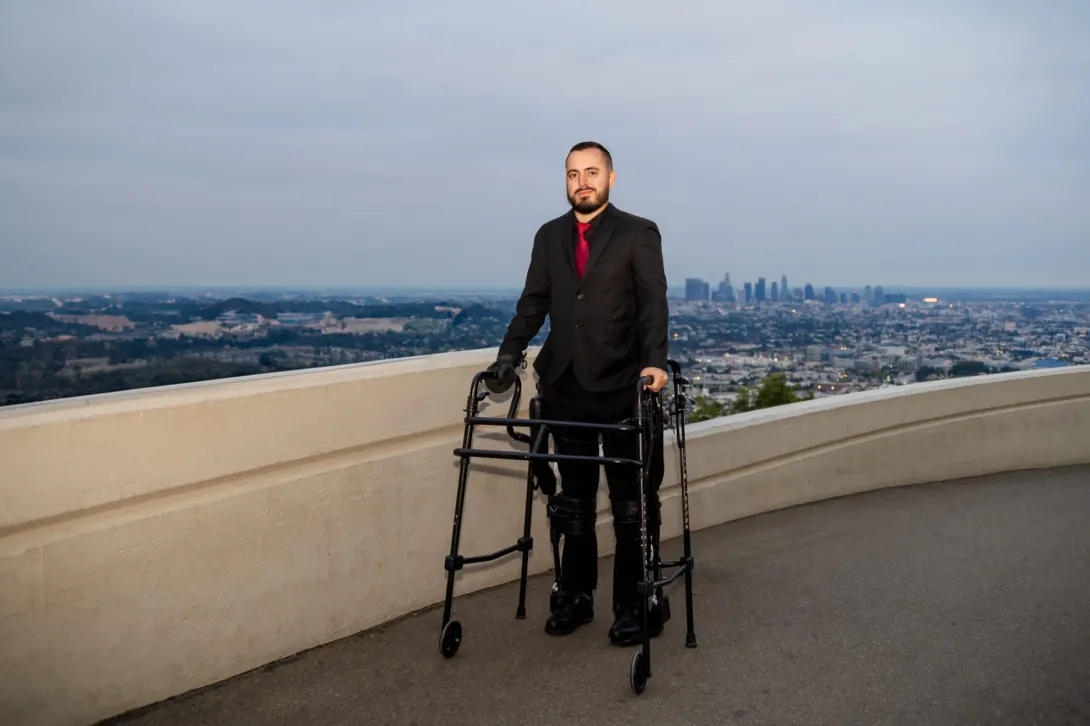
Ignacio Montoya was on a flight from Los Angeles to Atlanta in 2024 with a serendipitous seatmate. The biomedical engineer was seated next to Georgia Tech President Àngel Cabrera, and the two had a conversation about Montoya’s personal story and career aspirations.
Cabrera introduced Montoya to a professor who could take his work to the next level — Cassie Mitchell, an associate professor in the Wallace H. Coulter Department of Biomedical Engineering (BME). Montoya’s research uses AI to study how robotic exoskeletons and spinal cord stimulation can reawaken dormant neural circuits and help people with paralysis regain sensation, mobility, autonomy, and vital physiological functions once thought permanently lost. Drawing on his experience in leading-edge clinical research, he aims to turn scientific discoveries into real-world solutions that improve independence, quality of life, and health for those with spinal cord injuries.
It’s not only a curiosity for him, though. In 2012, Montoya was about to graduate from Georgia Tech and become a fighter pilot in the Air Force. Then, one night, he got into a motorcycle accident that left him paralyzed from the chest down.
Ever since, he has worked to better understand his injury and his options. After earning a master’s in biomedical engineering from Georgia Tech in 2018, Montoya moved to Los Angeles and joined a prestigious neurophysiology and neurorehabilitation lab at UCLA known for pioneering spinal stimulation and activity-based training to restore movement after paralysis. Now he’s taking everything he’s learned back to Georgia Tech.
Mitchell, also a faculty member in the Institute for Neuroscience, Neurotechnology, and Society, applies AI to data science to parse and predict complex medical research. She is also quadriplegic and personally understands the value of spinal cord research. At first, Mitchell mentored Montoya through the BME Ph.D. application process. Now she is his advisor. Montoya starts the program this fall — and he hopes to bring his personal injury recovery insights to the entire spinal cord injury survivor community.
“My experience as a research participant gives me a unique perspective as I transition into a doctoral researcher,” he said. “It helps me bridge the gap between understanding the science and translating it into real-world clinical practice.”
From Complete Paralysis to Possibility
Montoya nearly died in the accident. It left him with a complete spinal cord injury and severe peripheral nerve damage in his right arm.
“The doctor told me my spinal cord was like a banana — and mine had been crushed in the middle,” he recalled. “He said I had a 1% chance of regaining any mobility, function, or sensation.”
But Montoya’s life has always been about beating the odds. At 6, he and his father immigrated to the U.S. from Cuba. Years later, he earned a rated pilot slot in the Air Force — a distinction achieved by fewer than 1% of cadets. Then came the motorcycle crash. He flatlined for 15 minutes — a medical event with less than a 1% chance of survival, and even lower odds of returning with full brain function. If anyone was going to defy that prognosis, it was Montoya. He set out not just to walk again, but to rebuild his life and transform his recovery into a blueprint for others to follow.
Exoskeleton Endeavors
After finishing his master’s at Tech, Montoya went to work with Reggie Egerton, a pioneering neurobiologist at UCLA. With Egerton’s guidance, Montoya experimented with neuromodulation — using electrodes to stimulate the spinal cord. The stimulus helps to excite the neurons below the injury that no longer communicate with the brain.
While wearing electrodes, Montoya trained in a robotic exoskeleton that progressively reduced its robotic assistance. This encouraged him to contribute increasing effort through each step. Over time, the device provided less support during the swing and stance phases of walking, requiring more active participation. Beyond stepping, Montoya performed standing and weight-shifting exercises, all demanding maximum effort to retrain his nervous system through repetitive, weight-bearing sensory input.
“Neuromodulation creates a bridge of signals that helps the remaining intact nerve fibers below the injury communicate with each other, enhancing neuroplasticity within the system,” he said.
If the neuromodulation works as intended, it can effectively remodel the nervous system. Through this process and two nerve transfers, Montoya has regained some function in his paralyzed right arm. He has also reversed many common medical complications from paralysis: temperature regulation, body awareness, sexual function, bone density, muscle mass, and digestive health.
“My injury is no longer considered complete, and I believe I’m the first person to achieve that through a combination of spinal stimulation, intensive training, and daily weight-bearing rehabilitation,” Montoya said. “I’m constantly out of my wheelchair — standing, moving, and training. That consistency has been the key. Every day, I walk in an exoskeleton.”
Returning to Georgia Tech
What was supposed to be a 12-month clinical research study turned into the next five years of Montoya’s life. He also wanted to better understand human physiology and how locomotor training worked, so he did a master’s in kinesiology from California State University, Los Angeles. Despite the progress Montoya had made with advancing the field of spinal cord injury and his own mobility, he wanted to bring all his expertise together. That’s when he happened to board a flight to Atlanta in the spring of 2024 with Cabrera.
Initially, Montoya and Mitchell connected so she could help guide him through the Ph.D. application process, but they quickly realized their research was complementary. Montoya is an expert in clinical trials, and Mitchell is an expert in taking clinical trial data and using AI to gather insights.
“Ignacio wants to diversify his skill set and take his research career further, and data science is what he needs to do that,” Mitchell said. “We will look at his exoskeleton data and try to optimize the exoskeleton to the patient using AI.”
For the start of his Ph.D., Montoya will remain in Los Angeles to continue his exoskeleton experiments in Edgerton’s lab, which has been collecting terabytes of data he’s never been able to analyze in full. Mitchell’s lab will analyze all that data and pull predictive insights that can feed back to Egerton’s lab and improve the patient experience.
“AI can identify patterns the human eye wouldn't be able to detect,” Mitchell noted. “AI can help us better understand how and why an exoskeleton paired with spinal stimulation could help with spinal cord injury and function or quality of life.”
Montoya will travel between both coasts to conduct each element of the research before returning to Atlanta full-time. In the process, he’ll build a better knowledge base and exoskeleton training protocol.
This may not have been the path Montoya expected to take when he left Georgia Tech that night in 2012, but it’s a full circle.
“I’m back where my journey paused — this time to push the boundaries of what we believe the human body and spirit can achieve,” he said. “I’m not just walking again. I’m building a future where no one is beyond recovery.”
News Contact
Tess Malone, Senior Research Writer/Editor
tess.malone@gatech.edu
Walk into any room Aleksandra Teng Ma’s been working in this summer, and you’ll probably hear a mix of experimental sounds, snippets of Amy Winehouse vocals, and the occasional Animal Crossing tune playing in the background. That’s just how her brain works—blending tech, artistry, and everyday play into something entirely her own.
Aleksandra is a master’s student in Music Technology at Georgia Tech, but “student” barely scratches the surface. This summer, she’s been everywhere—physically in Massachusetts and intellectually somewhere between a Pride performance and a human-AI jam session at MIT.
“I’m always with my microphone and MIDI keyboard,” she says, like it’s just second nature. “I love singing and coming up with tunes.”
Live from MIT — It’s Human + AI Jamming
Forget dusty textbooks and silent labs—Aleksandra’s research life is about real-time musical interactions between humans and AI. As a visiting researcher at MIT this summer, she’s digging into what it looks like when musicians "jam" with intelligent systems. Think futuristic band practice, but with algorithms joining in.
“It’s giving me a lot of exposure to co-design methodologies,” she explains, “and letting me observe how musicians respond to each other—and to AI.”
It’s not just code and theory, either. The insights come alive when she brings them to the stage. This summer, Aleksandra’s band performed at The Music Porch in Reading, MA for Pride Month. Their cover of Pink Pony Club turned into a moment she won’t forget.
“It was so fun seeing people—especially teenagers—singing and dancing together,” she says. “That’s one of those moments where I just thought, yep, this is why I picked music tech.”
From Winehouse Covers to Ableton Experiments
Despite her research chops, Aleksandra hasn’t lost touch with the joy of just making music. She sings and plays keyboard in a band, covers Amy Winehouse songs, and occasionally writes music just for fun. (Her dream studio partner? You guessed it: Amy herself.)
She’s also been expanding her technical toolkit this summer, diving deeper into sound design with Ableton and Serum.
“Still learning,” she says, “but I’m using them for sound design in songs—and loving it.”
And then there are the unexpected “whoa” moments. Like when she built a vocal patch for the Pixies’ Where Is My Mind? to use live during a performance.
“It was haunting,” she says. “And it worked so well live.”
Dream Tech and Georgia Tech
Ask Aleksandra what she’d invent if she could mash up two instruments, and she already has an idea:
“Automatic vocal effects through a microphone with a built-in amplifier,” she says, laughing. “Honestly, someone probably already made this, but I want it anyway.”
That kind of thinking is exactly what her time at Georgia Tech has sparked. Before the program, she saw music mostly through the lens of conventional instruments. Now? She’s all about how software and hardware can expand what music even is.
Her Summer, in Sound
If Aleksandra’s summer had a vibe, it’d be:
- A creek bubbling in the background
- A long, ghostly reverb trail on a siren vocal
- And the ever-cozy tones of Animal Crossing
Not exactly your typical lab soundtrack—but that’s the beauty of it.
This fall, she’s heading back to Georgia Tech after a gap year at Bose, ready to jump into research on multimodal music source separation (AKA teaching machines to pick apart and understand layers in music the way humans do).
And yes, she’ll still be singing.
Hits with Aleksandra
- Current summer jams: Rosebud by Oklou & the new Lorde album
- What people don’t “get” about her work: “How music signals work on a granular level”
Aleksandra Ma doesn’t just study music tech—she lives it. Whether she’s tweaking reverb patches, performing under porch lights, or teaching AI how to groove, she’s showing what it really means to be a 21st-century musician.
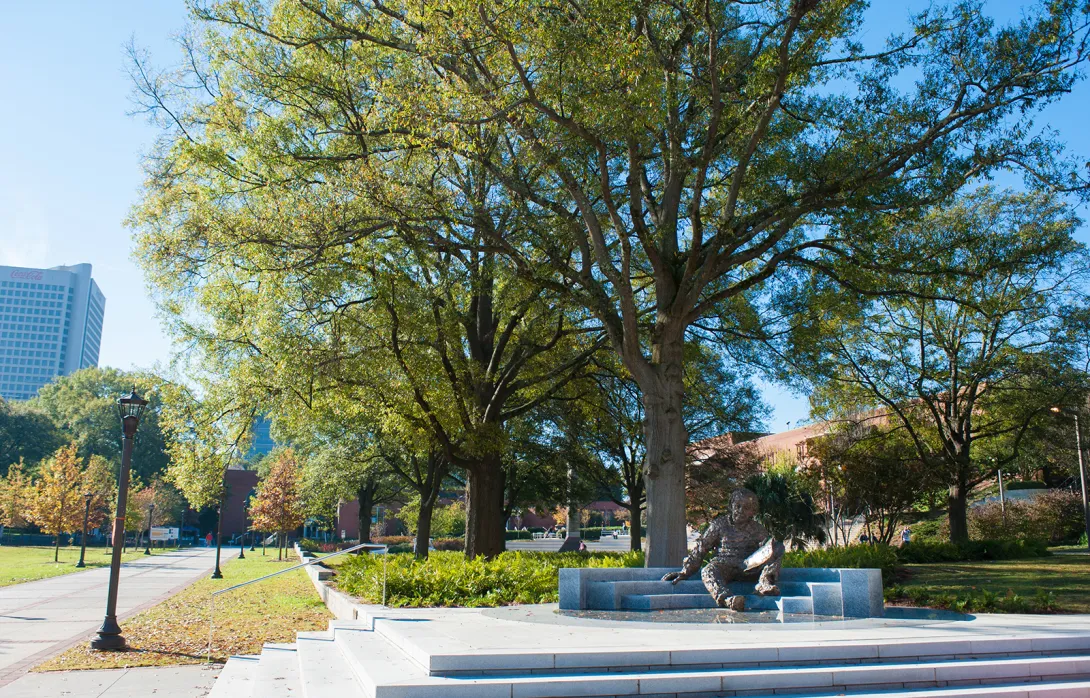
For more than 15 years, Georgia Tech has provided the City of Atlanta with the foundational data and insight that shape how the city tracks, understands, and plans for changes in its tree canopy. The latest cycle of this research — delivered through the Center for Urban Resilience and Analytics (CURA) — continues that legacy by offering a high-resolution, citywide canopy assessment using satellite imagery and field validation.
The assessment, funded by the city’s Tree Recompense Fund, uses advanced remote sensing tools such as WorldView-2 satellite data and a random forest classification model to categorize land into three land cover types. These include tree canopy, non-tree vegetation (grass, shrubs, and low lying vegetation) and non-vegetation (water, pervious surface). The methodology delivers a detailed spatial picture of land cover across the city.
“This is simply a tool in their planning arsenal,” said Anthony Giarrusso, who has led every canopy study since 2008. “Before they did any of this work in 2008, everything was anecdotal. It was reactionary.”
The new study is not advocacy — it’s information. Giarrusso emphasized that while researchers stay neutral in the politics of urban growth and conservation, their work equips city leaders with science-based knowledge to make more effective zoning and planning decisions.
In addition to mapping existing conditions, the Georgia Tech team developed the Potential Planting Index (PPI), a scalable tool that identifies where tree planting is physically possible based on current land cover. The tool quantifies the difference between tree canopy and non-tree vegetation, indicating zones with restoration potential.
Another key insight is the challenge of interpreting canopy change without understanding land use patterns. “It gives you a false sense of stability if you don’t understand the underlying land use,” said Giarrusso. “You might see canopy regrowth on paper, but that land could be cleared again tomorrow.” He explained that this false signal is particularly common in stalled development sites: “We saw a lot of properties where trees had regrown after initial clearing, but it was temporary and monoculture, low quality canopy. Several of those areas were cleared again for construction later.”
Giarrusso pointed to these “loss-gain-loss” cycles as one of the more misleading aspects of tree canopy analysis without strong land use context. “Some of them were pipe farms — land cleared for development with infrastructure like water and sewer lines installed, but then construction never happened. So trees grow back, and you get a canopy gain that doesn’t last and is nowhere near the quality of the trees originally cleared.”
He stressed that policymakers need to consider the permanence of canopy when using the data. “If it’s just going to be cleared again in two years, it’s not really a gain. That’s why long-term tracking and land use analysis together are so important.”
The city has incorporated these tools into broader planning efforts, including zoning reform and tree ordinance revisions. The research supports recommendations such as restricting full lot clearing in certain zoning categories and adjusting setback or lot coverage limits to better preserve existing canopy.
Giarrusso underscored the urgency of protecting larger, intact forested tracts. “If you can see it from space and it’s still forest — save it,” he said. “Once it’s cleared, you don’t get it back.”
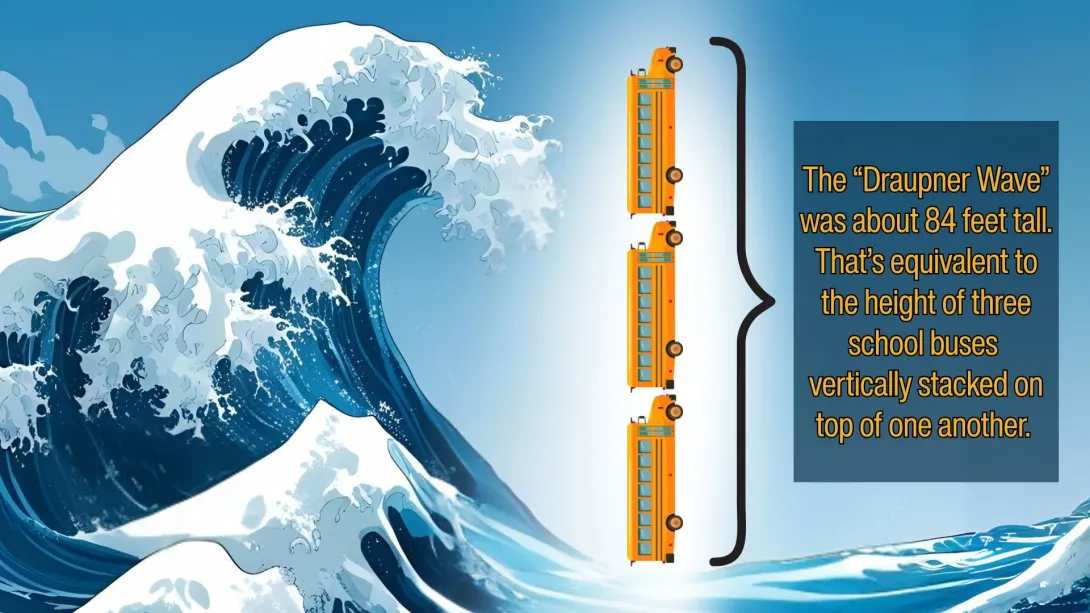
A size comparison of the "Draupner Wave" to 3 school busses stacked horizontally on top of one another.
From Maritime Myth to Measured Reality
On New Year’s Day 1995, a monstrous 80-foot wave in the North Sea slammed into the Draupner oil platform. The wall of water crumpled steel railings and flung heavy equipment across the deck — but its biggest impact was what it left behind: hard data. It was the first time a rogue wave had ever been measured in the open ocean.
“It confirmed what seafarers had described for centuries,” said Francesco Fedele, associate professor Georgia Tech’s School of Civil and Environmental Engineering. “They always talked about these waves that appear suddenly and are very large — but for a long time, we thought this was just a myth.”
Rethinking Rogues
No longer the stuff of legend, that single wave stunned scientists and launched decades of debate over how rogue waves form.
Fedele — a longtime skeptic of the conventional explanations — led an international team to investigate rogue wave origins. The results, published in Nature’s Scientific Reports, underscore the significance of their findings. The team analyzed 27,500 wave records collected over 18 years in the North Sea. It was the most comprehensive dataset of its kind.
Each record captured 30 minutes of detailed wave activity: height, frequency, and direction. Their findings challenged long-held assumptions. To occur, these towering waves don’t require “exotic” forces — just the right alignment of familiar ones.
Fedele explained, “Rogue waves follow the natural orders of the ocean — not exceptions to them. This is the most definitive, real-world evidence to date.”
Extraordinary Waves, Ordinary Physics
The dominant theory about rogue wave formation has been a phenomenon called modulational instability, a process where small changes in timing and spacing between waves cause energy to concentrate into a single wave. Instead of staying evenly distributed, the wave pattern shifts, causing one wave to suddenly grow much larger than the rest.
Fedele pointed out that modulational instability “is mainly accurate when the waves are confined within channels, like in lab experiments, where energy can only flow in one direction. In the open ocean, though, energy can spread in multiple directions.”
A Deep Dive Into the Data
When Fedele and his team analyzed the North Sea data, they found no evidence of modulational instability in rogue waves. Instead, they discovered the biggest waves appear to be a product of two simpler effects:
1. Linear focusing — when waves traveling at different speeds and directions that happen to align at the same time and place. They stack together to form a much taller crest than usual.
2. Second-order bound nonlinearities — natural wave effects that stretch the shape of a wave, making the crest steeper and taller while flattening the trough. This distortion makes big waves even taller by 15-20%.
Fedele explained that when these two standard wave behaviors align, the result is a much larger wave. The nonlinear nature of ocean waves provides an extra boost, pushing them to expand further.
From Failure to Forecast
Fedele stressed that this research has real-world urgency. Rogue waves aren’t just theoretical, they are real, powerful, and a danger to ships and offshore structures. Fedele said many forecasting models still treat rogue waves as unpredictable flukes. “They’re extreme, but they’re explainable.” he said.
Updating those models, he added, is critical. “It’s fundamental for the safety of ship navigation, coastal structures, and oil platforms,” Fedele explained. “They have to be designed to endure these extreme events.”
Fedele’s research is already informing how others think about ocean risk. The National Oceanic and Atmospheric Administration and energy company Chevron use his models to forecast when and where rogue waves are most likely to strike.
Fedele is now using machine learning to comb through decades of wave data, training algorithms to detect the subtle combinations — height, direction, timing — that precede extreme waves. The goal is to give forecasters more accurate tools that predict when a rogue wave could strike.
The lesson from this study is simple: Rogue waves aren’t exceptions to the rules — they’re the result of them. Nature doesn’t need to break its own laws to surprise us. It just needs time, and a rare moment where everything lines up just wrong.
Although ocean waves may seem random, extreme waves like rogues follow a natural recognizable pattern. Each rogue wave carries a kind of “fingerprint” — a structured wave group before and after the peak that reveals how it formed.
“Rogue waves are, simply, a bad day at sea,” Fedele said. “They are extreme events, but they’re part of the ocean’s language. We’re just finally learning how to listen.”
News Contact
Michelle Azriel
Research Writer/Editor