

A new study explains how tiny water bugs use fan-like propellers to zip across streams at speeds up to 120 body lengths per second. The researchers then created a similar fan structure and used it to propel and maneuver an insect-sized robot.
The discovery offers new possibilities for designing small machines that could operate during floods or other challenging situations.
Instead of relying on their muscles, the insects about the size of a grain of rice use the water’s surface tension and elastic forces to morph the ribbon-shaped fans on the end of their legs to slice the water surface and change directions.
Once they understood the mechanism, the team built a self-deployable, one-milligram fan and installed it into an insect-sized robot capable of accelerating, braking, and maneuvering right and left.
The study is featured on the cover of the journal Science.
Read the entire story and see the robot in action on the College of Engineering website.
News Contact
Jason Maderer
College of Engineering
maderer@gatech.edu
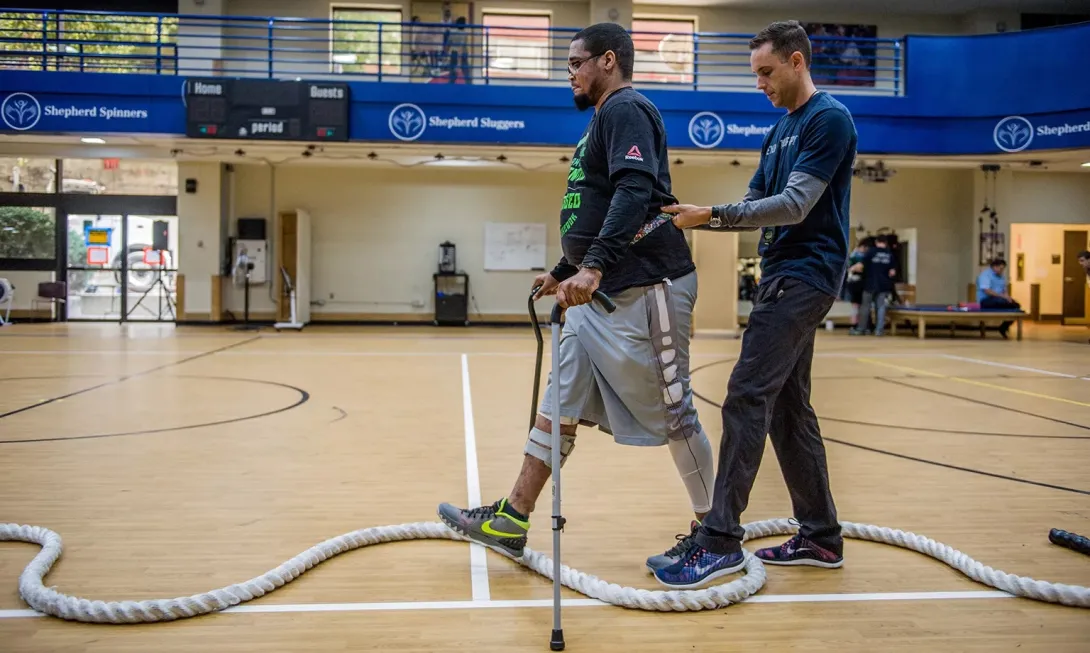
The seed grants will fund projects focused on enhancing wheelchair seating surfaces, supporting stroke patients as they transition home from rehabilitation, assessing lower limb exoskeleton technologies, and exploring the use of AI in remote rehab settings. Photo: Shepherd Center.
Georgia Tech and Shepherd Center recently awarded four seed grants totaling nearly $200,000 to researchers focusing on projects that will advance discoveries in neurorehabilitation, including acquired brain injury, spinal cord injury, multiple sclerosis, chronic pain, and other neurological conditions.
The Georgia Tech-Shepherd Center Seed Grant Program is part of an ongoing partnership between the two institutions that started in 2023 with the goal of advancing rehabilitative patient care and research.
“The seed grant program is intended to stimulate new interdisciplinary research collaborations by providing seed funding to obtain preliminary data or prototypes necessary for the submission of an external grant or industry opportunities,” says Deborah Backus, vice president of Research and Innovation at Shepherd Center. “As two leading research institutions, we know the potential for advancing rehabilitation therapies is even greater when we work together. We look forward to the solutions, treatments, and therapies that emerge from these initial seed grants.”
Experts from both institutions evaluated and scored seed grant applications based on the research’s innovation, approach, and potential for training opportunities, as well as its anticipated impact, prospects for commercial translation, and strategy for securing continued funding. This year, each awardee team received close to $50,000.
“We are very excited to launch this new seed grant program, which will spur ideas and propel research forward,” said Michelle LaPlaca, professor in the Coulter Department of Biomedical Engineering and the Georgia Tech lead of the Collaborative. “The complementary expertise of Georgia Tech and Shepherd Center researchers, combined with the motivation to find solutions for individuals with neurological injury and disability, is a winning formula for innovation.”
"Offering new hope for neurorehabilitation patients requires bringing together interdisciplinary researchers to explore new and creative ideas,” adds Chris Rozell, Julian T. Hightower Chaired professor in the School of Electrical and Computer Engineering and the inaugural executive director of the Institute of Neuroscience, Neurotechnology, and Society (INNS) at Georgia Tech. “I'm excited to see the talent at these world class institutions coming together to develop new solutions for these complex problems."
This year’s seed grants were awarded to the following projects:
- Proof of Concept Development of the Recovery Cushion – Stephen Sprigle, professor, School of Industrial Design and School of Mechanical Engineering, Georgia Tech; Jennifer Cowhig, research physical therapist, Shepherd Center.
- Paving a Smooth Path from Hospital to Home: A Feasibility Study of an Integrated Smart Transitional Home Lab to Support Stroke Rehabilitation Patients’ Transition to Home – John Morris, senior clinical research scientist, Shepherd Center; Hui Cai, professor in the School of Architecture, executive director of the SimTigrate Design Center, Georgia Tech.
- A Comparative Analysis of Lower-Limb Exoskeleton Technology for Non-Ambulatory Individuals with Spinal Cord Injury – Maegan Tucker, assistant professor, School of Electrical and Computer Engineering and School of Mechanical Engineering, Georgia Tech; Nicholas Evans (AP 2023), clinical research scientist, Shepherd Center.
- Improving Accessibility and Precision in Neurorehabilitation at the Point of Care with AI-Driven Remote Therapeutic Monitoring Solutions – Brad Willingham, clinical research scientist, director of Multiple Sclerosis Research, Shepherd Center; May Dongmei Wang, professor, Wallace H. Coulter Department of Biomedical Engineering, Georgia Tech.
News Contact
Kerry Ludlam
Director of Communications
Shepherd Center
Audra Davidson
Research Communications Program Manager
Institute for Neuroscience, Neurotechnology, and Society
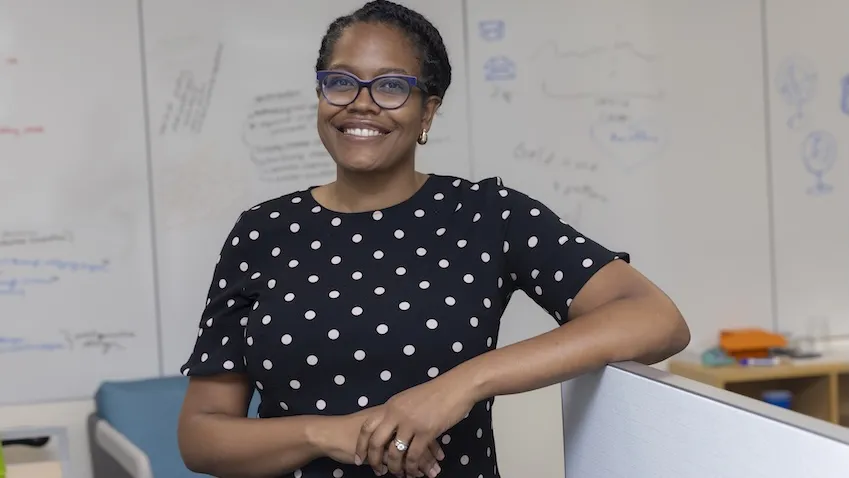
Young people in Atlanta and Boston will be able to lead efforts to improve their communities through new civic technologies supported by Georgia Tech, Northeastern University, and Massachusetts Institute of Technology researchers.
With the help of a $1.25 million grant from the National Science Foundation, the three institutions seek to increase youth input into policymaking and encourage youth-led community organizing.
Youth-designed civic technologies are an effective way to engage youth with their communities, said Andrea Parker, an associate professor in Georgia Tech’s School of Interactive Computing.
Examples of civic technologies are public data initiatives, citizen science projects, public issue reporting platforms, and digital voting platforms. Parker said the perspectives of young people are often neglected in the design of such technologies.
“We don’t know much about what community issues are important to youth because we haven’t asked them,” she said. “What is their vision for community well-being, and what do they want to address through civic technology?”
Parker is the lead principal investigator (PI) on the project that will engage youth from low socio-economic communities in Atlanta and Boston. She said the youth will decide what technologies will be created, but they could include a mobile app or a publicly accessible platform.
“We’re interested in studying how technologies can help youth become more civically engaged in their communities and build social connection, trust, and belonging amongst neighbors,” she said.
“Youth in lower-income neighborhoods face increased threats to their mental health. Socially cohesive communities can counteract those barriers and are essential for youth well-being.”
Parker added that impoverished communities often have less social cohesion compare to wealthier areas. Higher-income neighborhoods often have more access to resources that support social cohesion and civic engagement.
Backed by Data
Brooke Foucault Welles, co-PI, professor, and interim dean at Northeastern’s College of Media, Arts and Design, said she’s interested in seeing which issues the youths from both Atlanta and Boston will address through their design process. Studying and working with youth across these geographic settings will help the team identify how civic technology can best support youth in varied neighborhood contexts.
The project will also advance data literacy among young people as they collect and study data to support the new technologies. Welles said data-centered advocacy increases young people’s chances of being heard by elder community members.
“Empowering young people to use data when they’re making their arguments about what matters to them and to their communities is the point of this project,” she said. “It makes their arguments more compelling if they can present data to the adult members of their communities about what’s going on.”
The project’s reach could expand beyond Atlanta and Boston.
Once the technologies are designed, the researchers will package them and make them publicly available as a toolkit.
If successful, the project could drive a movement toward more collective organizing to ensure the youth perspective gets factored into community decision-making.
“They’re a vital part of our communities, and they’re the ones for whom our decisions have the biggest impact,” Welles said. “These are the times when they’re forming their own civic identities, so engaging them in civic life has long ripple effects. We create more active and thoughtful citizens when we engage young people with civic life.”
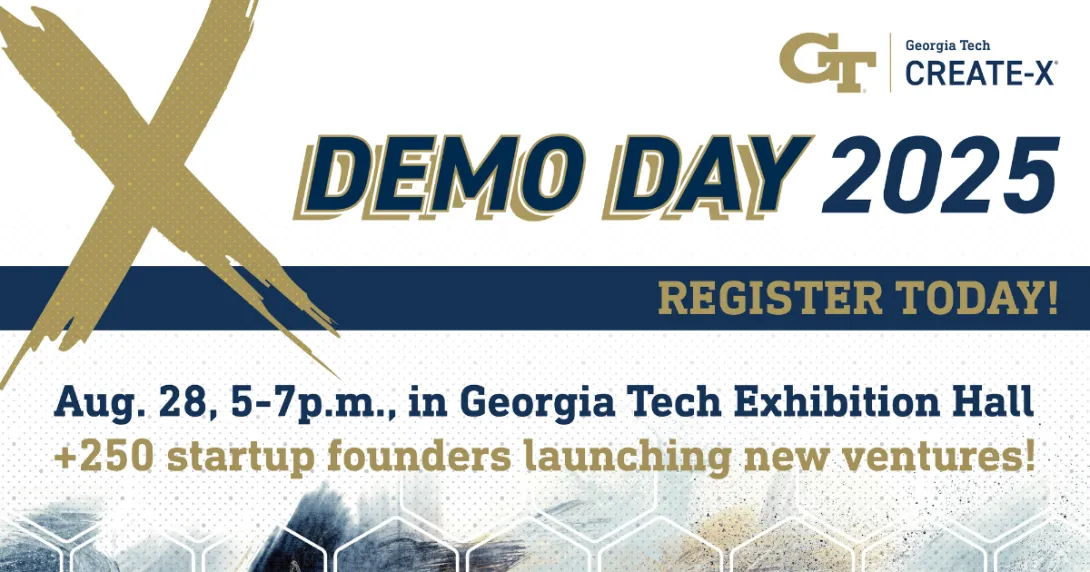
Demo Day 2025, Aug. 28, Exhibition Hall, +250 Startup Founders Launching New Ventures
What does the future look like? On Aug. 28, from 5 – 7 p.m., more than 1,500 attendees will gather at Georgia Tech’s Exhibition Hall to find out at Demo Day, where CREATE-X will showcase over 100 startups coming out of Georgia Tech. Tickets are free but limited — early registration is strongly encouraged.
At Demo Day, founders bring solutions that tackle some of today’s most urgent challenges across industries. Expect to see startups tackling global challenges with bold new solutions, such as: providing mRNA therapies that could transform vaccine access, using ultra-efficient AI chips that run on a fraction of the power, and building innovative inspection tools that are already helping companies like Tesla catch defects in seconds. Demo Day provides attendees an opportunity to gain hands-on experience with new products, meet the founders behind them, and experience the momentum of a startup ecosystem in full swing.
Donnie Beamer, the City of Atlanta’s senior technology advisor, attended the last Demo Day and spoke about moments that impressed him most.
“The founders of NeuroChamp had a headband that reads brainwaves. It makes me call into question what I was doing in college!” Beamer said.
Founders showcasing at Demo Day have spent 12 weeks working on their startups during the CREATE-X accelerator, Startup Launch.
“Every founder in that room will have spent the summer chasing the right problem and building a solution to solve it,” Rahul Saxena, director of CREATE-X, said. “Demo Day is proof that entrepreneurship can be taught and developed, from ideation to customer discovery.”
Beamer said that the program pushes people to be creative.
“Georgia Tech is a safe place to try and fail and innovate, which is invaluable. Instead of just telling students to do X and expecting them to execute on it, CREATE-X allows for creativity and discovery,” Beamer said. “That can be transformative for students, the Institute, and the city of Atlanta.”
Unlike other startup exhibitions, there are no on-stage pitches — just direct connection in a casual, interactive format. Attendees and investors can test the tech out themselves. Past Demo Days have led to venture funding, strategic partnerships, media coverage, and more. It’s an energetic atmosphere with the exchange of ideas, an opening of doors, and a community building the future together.
“There are a few kinds of naysayers; for example, some who think Atlanta doesn’t have much entrepreneurial activity and others who feel isolated from communities like this one,” Beamer said. “Demo Day lets them look behind the curtain and see the vibrant, innovative ecosystem that they can be a part of in our city as we look to become a top-five tech hub in the nation. Georgia Tech is a huge part of that.”
Register for Demo Day today! The future is waiting for you to discover it.
News Contact
Breanna Durham
Marketing Strategist

A tractor applying lime to mitigate acidity in the soil. [Adobe Stock]
Overly acidic soils can mean the difference between feeding a region and famine. Each crop needs the right soil pH to thrive, and acidic conditions, produced primarily by industrial emissions and application of fertilizers, can harm growing conditions. It has recently been estimated that sub-Saharan Africa, for example, loses billions of dollars annually in crop yield because of poor agricultural conditions. But there is a possible solution — and it could even help the Earth’s climate.
For centuries, farmers have neutralized soil acidity with a practice called liming. It involves mixing crushed calcium- or magnesium-rich rocks, known as limestone, into the soil to balance pH. But liming has long been an assumed tradeoff in which removing acid also meant increasing carbon emissions into the atmosphere.
New research from Georgia Tech shows that the opposite may be true. Agricultural liming can actually reduce atmospheric carbon dioxide and improve crop yield.
“The current thinking about liming is that farmers must choose between doing something that could benefit them economically or reducing their greenhouse gas emissions,” said Chris Reinhard, an associate professor in the School of Earth and Atmospheric Sciences. “But this is often a false choice. They can do both.”
The researchers published a new framework for the potential role of liming in food security and greenhouse gas mitigation in August in the paper, “Using Carbonates for Carbon Removal,” in Nature Water.
Collecting Carbon Data
The framework is based in part on ongoing work Reinhard and his collaborators are pursuing on the impacts of agricultural liming in the Upper Midwest’s Corn Belt for a Department of Energy study. With funding from the Grantham Foundation, they’re now turning their attention to local farms in southern Georgia and North Carolina.
For each farm, the researchers measure data that most farmers would collect already, like soil pH and nutrients. But the team also tracks more specialized measurements, including trace elements and greenhouse gas fluxes in the soil. All this data is matched to a high-resolution, machine learning grid of the farm’s geography to determine exactly which crops might benefit.
The researchers are using the data to build a computer model that predicts how carbon dioxide and other greenhouse gases will move through any particular soil system. Liming won’t universally absorb carbon dioxide — or if it does, there may be an occasional time delay between carbon emissions and absorption — which is why the researchers factor soil, crop rotation, climate, and other management practices into their calculations.
“Our goal is to develop a way that farmers can monitor and plan cheaply, and largely through techniques they are already using, so we don't have to send out a whole team to gather data,” Reinhard said. “We are trying to develop a predictive model architecture for planning agricultural practice across scales, but it’s important that the techniques required on the field are actually feasible for farmers.”
This data could be pivotal for farmers, and it could also help policymakers as they address farming subsidies and foreign aid funding. Globally, food-insecure regions like sub-Saharan Africa could become more self-sufficient with more liming. Farmers in parts of the U.S. could also improve their yields and, in effect, their profits, if they limed more fields.
The added benefit of lowering carbon could get even more farmers on board, and there is extensive exploration and implementation of agricultural practices already on voluntary and governmental carbon markets. Carbon dioxide is only one greenhouse gas that liming can lower; researchers are also exploring how liming can reduce methane and nitrous oxide — the latter of which is a key climate impact of human agriculture and is often considered a “hard-to-abate” emission.
Liming may be a centuries-old practice, but its applications are potentially much wider than initially believed. In the future, farming may be part of the answer to reducing carbon emissions, instead of part of the problem.
News Contact
Tess Malone, Senior Research Writer/Editor
tess.malone@gatech.edu

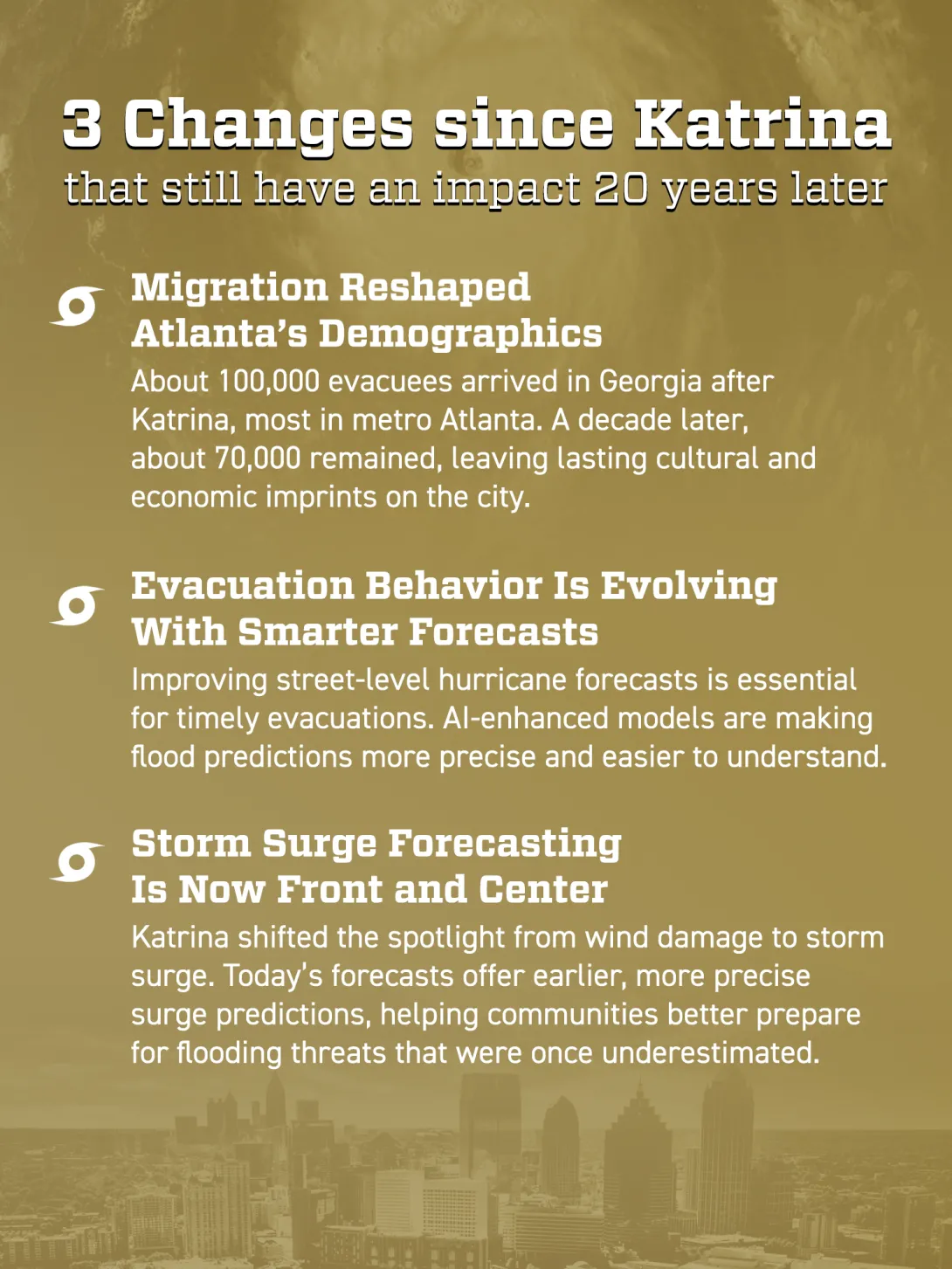
When Hurricane Katrina struck in 2005, it wasn’t just another storm — it was one of the deadliest hurricanes in U.S. history. Entire neighborhoods disappeared, families were scattered, and lives were split into “before” and “after.” Nearly 20 years later, the haunting images of submerged rooftops and boat rescues remain vivid.
The Surge That Shattered New Orleans
On Aug. 29, 2005, early reports claimed New Orleans had “dodged the bullet.” But offshore winds funneled water into the city’s canals, triggering multiple catastrophic levee failures. The Lower Ninth Ward, where most fatalities occurred, was devastated as many residents, misled by comparisons to Hurricane Camille, chose not to evacuate.
“Katrina’s storm surge was exceptional,” says Hermann Fritz, a civil engineering professor at Georgia Tech. “In some areas, we saw water levels over 27 feet — that’s like a three-story building.”
While much attention focused on New Orleans’ levee failures, Fritz points out that the surge’s sheer height and energy would have overwhelmed even more robust defenses in some areas. “Katrina showed us that nature can produce forces beyond our engineering designs,” he says.
A Disaster of Inequality
The storm didn’t strike evenly; it exposed and deepened existing social and economic inequalities. “The disaster hit lower-income Black neighborhoods hardest,” says Allen Hyde, associate professor of history and sociology. He notes how years of segregation, disinvestment, and discriminatory housing policies left these communities uniquely vulnerable. Hyde continues, “Many homes were in low-lying, flood-prone areas, and residents often lacked access to reliable transportation, making evacuation difficult or impossible.”
Georgia’s Changing Landscape: Migration and Impact
Katrina displaced hundreds of thousands and claimed a staggering toll of more than 1,800 lives. Georgia quickly absorbed many evacuees, reshaping its demographics and infrastructure. “Hurricane Katrina led to one of the largest displacements of people due to a natural disaster,” says Shatakshee Dhongde, a professor of economics. “It changed the demographics of Georgia in measurable ways, from school enrollment to the labor market.”
The U.S. Census Bureau tracked this migration, noting spikes in Louisiana-born residents in metro Atlanta. Local school districts enrolled hundreds of new students almost overnight, while housing markets saw increased demand from families looking for permanent homes. The arrival of so many displaced residents didn’t just strain schools and housing — it reshaped the state’s economy. Dhongde notes that evacuees often brought new skills, business ideas, and networks. At the same time, the state and local governments faced the financial burden of expanding social services, healthcare, and housing assistance.
Dhongde adds, “The impact of a disaster doesn’t stop at the water’s edge. It travels with people, and those effects can last for years.” While the influx strained services, it also enriched Georgia’s cultural and economic fabric.
Hyde notes, “Gentrification made many neighborhoods unaffordable for former residents,” and adds that many Black evacuees didn’t return to New Orleans due to economic barriers and post-Katrina gentrification. Cultural communities scattered across cities like Atlanta, Houston, and Baton Rouge.
Lessons the Levees Still Teach
For Fritz, Katrina remains a wake-up call for coastal preparedness. “We can’t stop hurricanes,” he says, “but we can improve how we design and maintain our defenses, and how we evacuate people before it’s too late.” He warns that climate change, with its potential to intensify storms, makes those improvements even more urgent.
Dhongde sees a parallel need for social and economic planning. “Disaster preparedness isn’t just about sandbags and levees,” she says. “It’s also about ensuring the communities receiving evacuees have the resources and support systems to integrate them successfully.”
Finally, Hyde stresses the importance of engaging youth and communities in preparedness efforts. “Youth advocacy programs, like those we’re piloting in Georgia, empower young people in marginalized neighborhoods with knowledge and agency to build long-term resilience. Disaster planning must be a community effort, inclusive and forward-looking.”
News Contact

AI rendering of a fast-charging battery.
Fast charging a battery is supposed to be risky — a shortcut that leads to battery breakdown. But for a Georgia Tech team studying zinc-ion batteries, fast charging led to a breakthrough: It made the battery stronger. This result could revolutionize how we power homes, hospitals, and the grid.
By flipping a foundational belief in battery design, Hailong Chen, an associate professor in the George W. Woodruff School of Mechanical Engineering, and his team found that charging zinc-ion batteries at higher currents can make them last longer. The surprising result, recently published in Nature Communications, challenges core assumptions and offers a path toward safer, more affordable alternatives to lithium-ion technology.
Why Zinc-Ion Batteries?
Zinc-ion batteries have several key advantages over lithium-ion batteries, the most commonly used rechargeable battery technology:
- Abundant: Zinc is one of the most abundant metals on Earth, and it’s mined in many countries.
- Low cost: Zinc is significantly cheaper than lithium and doesn’t rely on scarce materials.
- Nonflammable: Unlike lithium, zinc batteries won’t catch fire — a critical safety benefit.
- Environmentally safer: Zinc is less toxic and easier to recycle than lithium-based materials.
However, until Chen’s discovery, zinc-ion batteries had one major drawback. The growth of dendrites, the sharp metal deposits that form during charging, can eventually short-circuit the battery.
“We found that using faster charging actually suppressed dendrite formation instead of accelerating it,” Chen said. “It’s a very different behavior than what we see in lithium-ion batteries.”
With this approach, the zinc doesn’t build up into dendrites. Instead, it settles into smooth, compact layers — more like neatly stacked books than splintered shards — a structure that not only avoids short circuits but also helps the battery last longer.
“It goes against the conventional thinking that fast charging shortens battery life,” Chen said. “What we found expands people’s understanding of fast charging that could rewrite how we think about battery design and where they can be used.
Solving Half of the Problem
Even breakthroughs have limits. Chen was quick to point out that while his discovery solves a major issue, it only fixes one half of the battery.
A battery has two main ends, the anode and the cathode. Chen’s team made the anode last much longer. Now, the cathode must catch up. He is working to improve the cathode so the whole battery performs reliably over time. His team is also experimenting with mixing zinc with other materials to make zinc-ion batteries even more durable.
Testing Everything at Once
Chen’s team didn’t just stumble on these results. They built a novel tool that allowed them to watch how zinc behaved under different charging rates in real time, studying many samples simultaneously.
That real-time, side-by-side view was important. Traditional battery experiments usually test one variable at a time. But this novel approach allowed researchers to test hundreds of conditions at the same time, speeding up discovery and revealing patterns that would have been easy to miss.
“We weren’t just seeing whether the battery worked or not; we were watching the structure of the material evolve as it charged,” Chen noted. Using their new tool, he and his team uncovered for the first time why fast charging makes zinc settle into smooth, tightly packed layers instead of dangerous, needle-like spikes. No one had ever experimentally mapped out this process before.
It’s an approach that combines efficiency with insight.
Charging Into the Future
Chen’s team didn’t reinvent the battery. They challenged the status quo — and the data took them somewhere no one imagined. That unexpected result could redefine battery science.
“You can imagine these zinc-ion batteries being used to store solar energy in homes, or for grid stabilization,” Chen said. “Anywhere you need reliable, affordable backup power.”
With growing demand for clean energy, unstable lithium supply chains, and safety concerns over flammable batteries, the need for alternatives has never been more urgent.
If all goes well, Chen hopes zinc-ion batteries could be ready for everyday use in about five years.
Chen’s research was supported by Yifan Ma, ME 2024; Josh Kasher, associate professor in the School of Materials Science and Engineering; and the U.S Department of Energy National Laboratories. The study was funded by Novelis through the Novelis–Georgia Tech Research Hub, with additional funding from the National Science Foundation. Two Novelis researchers, Minju Kang and John Carsley, are co-authors on the paper.
News Contact
Michelle Azriel, Sr. Writer-Editor
mazriel3@gatech.edu
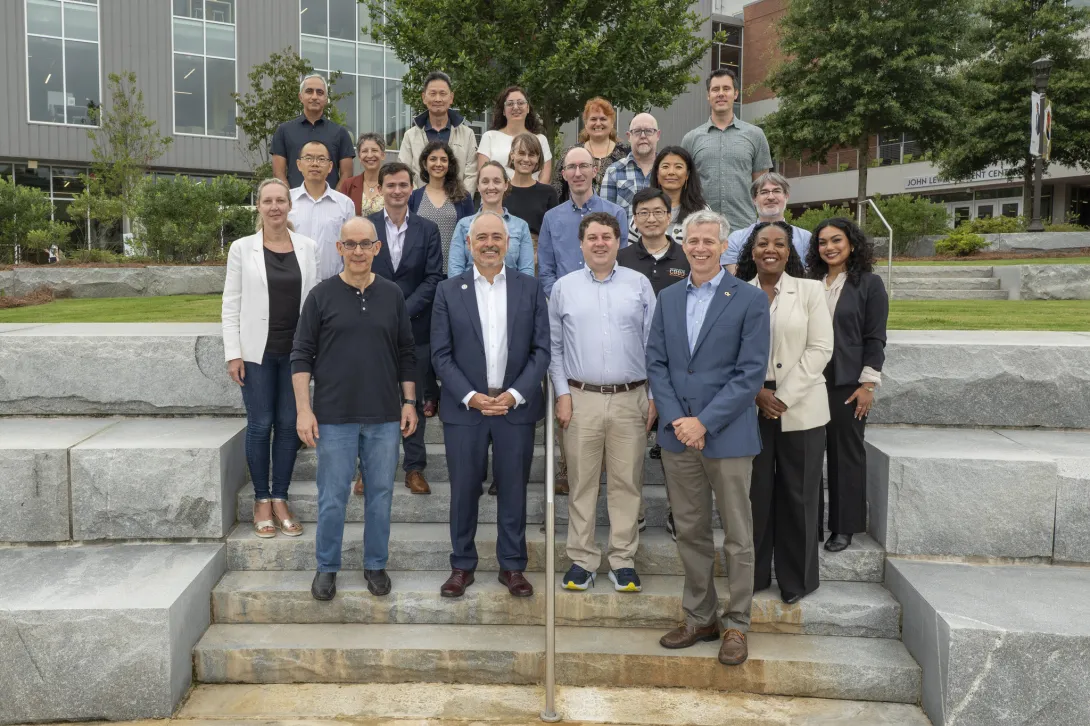
The inaugural cohort of Georgia Tech’s Research Leadership Academy (RLA), a distinguished group of researchers selected from a highly competitive pool of applicants across campus, has been announced.
These outstanding faculty members were chosen for their exceptional research accomplishments, demonstrated leadership, and ability to drive high-impact, interdisciplinary initiatives. Representing a wide range of academic disciplines, they embody the depth, innovation, and collaborative spirit that define Georgia Tech’s research community.
Over the next year, this inaugural cohort will engage in a dynamic, immersive program designed to cultivate strategic research leadership through mentorship, experiential learning, and cross-campus dialogue. Their work through the RLA will not only strengthen Georgia Tech’s research enterprise but also help shape its trajectory for years to come.
Please join us in celebrating and congratulating these remarkable scholars as they embark on this exciting journey.
- Steve Diggle – Institute for Bioengineering and Bioscience; School of Biological Sciences
- Marta Hatzell – Institute for Matter and Systems; Renewable Bioproducts Institute; Strategic Energy Institute; George W. Woodruff School of Mechanical Engineering
- Ada Gavrilovska - Institute for Data Engineering and Science; School of Computer Science
- Margaret Kosal – Institute for Bioengineering and Bioscience; Strategic Energy Institute; Institute for Matter and Systems; Sam Nunn School of International Affairs
- Sheng Dai – Institute for Bioengineering and Bioscience; Strategic Energy Institute; School of Civil and Environmental Engineering
- Yuguo Tao – George W. Woodruff School of Mechanical Engineering; Nuclear and Radiological Engineering; and Medical Physics
- Chris Wiese – Institute for Bioengineering and Bioscience; Institute for Data Engineering and Science; Institute for People and Technology; School of Psychology
- Mathieu Dahan – Institute for People and Technology, H. Milton Stewart School of Industrial and Systems Engineering
- Thackery Brown – School of Psychology
- Charlotte Alexander – Tech AI, Scheller College of Business; Law and Ethics
- Jeff Young – Institute for Data Engineering and Science; Partnership for Advanced Computing Environments; Office of Information Technology
- Meltem Alemdar – Center for Education Integrating Science, Mathematics, and Computing
- Kamran Paynabar – Georgia Tech Manufacturing Institute; Institute for Data Engineering and Science; Renewable Bioproducts Institute; H. Milton Stewart School of Industrial and Systems Engineering
- John A. Christian – Daniel Guggenheim School of Aerospace Engineering
- Farzaneh Najafi – Institute for Bioengineering and Bioscience; School of Biological Sciences
- Dave Flaherty – Strategic Energy Institute; School of Chemical and Biomolecular Engineering
- Eunhwa Yang - Institute for Matter and Systems; Strategic Energy Institute; School of Building Construction
- James Tsai – Strategic Energy Institute; School of Civil and Environmental Engineering
- Jennifer Hirsch – Brook Byers Institute for Sustainable Systems; Center for Sustainable Communities Research and Education; Strategic Energy Institute
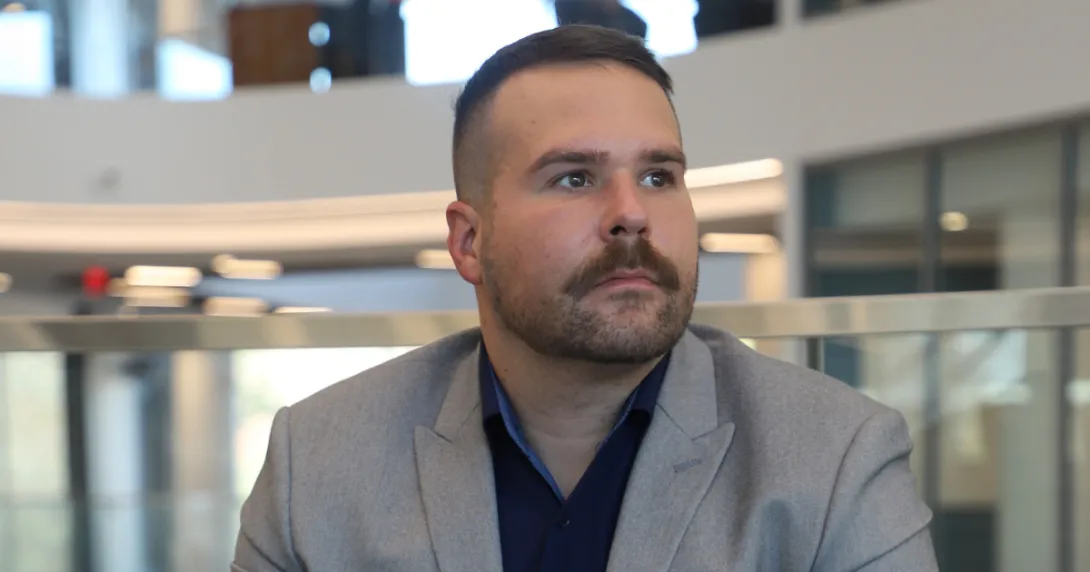
Adam-MacCallum, Jim Pope Fellow and translational research advocate in Georgia Tech’s Wallace H. Coulter Department of Biomedical Engineering
Epilepsy, Parkinson’s, Alzheimer’s, Huntington’s disease — as a Jim Pope Fellow, Adam McCallum is dedicated to helping students search for solutions to these and other devastating diseases. McCallum is a translational research advocate in the Wallace H. Coulter Department of Biomedical Engineering at Georgia Tech and Emory University, currently ranked No. 2 in the nation by U.S. News & World Report. He hopes to accelerate the commercialization of the most promising biotech advances.
When McCallum learned about the Jim Pope Fellowship, he saw it as a tremendous opportunity. “Biomedical engineering research has so much potential to be translated into products and solutions that tackle unmet clinical needs, that could be shaped to enhance society in general,” he says. “It’s a collaboration between biology, medicine, and engineering. The Pope Fellowship is a unique opportunity to explore new projects dedicated to entrepreneurship.”
McCallum is one of five faculty members to receive the Jim Pope Fellowship, which supports faculty in becoming entrepreneurial instructors and mentors in CREATE-X. He hopes to leverage this fellowship to instill entrepreneurial confidence in biomedical engineering graduate students and faculty and help them translate their research into IP and healthcare-focused products to be used in and out of the clinic.
Since being named a fellow, McCallum has applied the funding to attend conferences to learn more about new methods for teaching commercialization and entrepreneurship, develop programming to enhance the student experience, increase student understanding and interest in entrepreneurship, and explore creative new projects he has envisioned while at Georgia Tech.
Establishing a New Commercialization Course
Beginning in the fall, he will teach a new course, Fundamentals of Biotechnology Commercialization, targeting BME graduate students. McCallum developed the curriculum, which begins with an overview of technology commercialization and the commercialization process, followed by modules on IP — how to protect one’s inventions; financing, with a focus on early-stage commercialization funding opportunities; and choosing a commercialization path.
“In the second part of the course, students will simulate a patent filing,” says McCallum. “It’s a really important step in the commercialization process. In future iterations of the course, I would love to have students file real disclosures and provisional patent applications with our Tech Transfer Office and have a licensing associate talk to them about managing the IP.”
BME Innovations Pivotal to Georgia Tech’s IP Ecosystem
McCallum sees Georgia Tech BME researchers as an important driver of innovation, and the Institute’s patent track record reflects their critical role: More than 21% of U.S.-issued patents to Georgia Tech have at least one BME inventor listed, according to the Office of Commercialization.
In the past year, he has already seen the value of infusing an entrepreneurial spirit into his curriculum. Annabelle Singer (BME) and Levi Wood (ME) were mentored by McCallum while they were developing an audiovisual device to help stimulate brain activity in patients with Alzheimer’s disease and epilepsy. Through this mentorship, Singer and Wood recognized possible use cases and commercialization pathways for their technology.
“Their device has potential applications in a wide range of other neurological conditions — to lessen the impact of these disorders on people in their everyday life,” says McCallum, adding, “I’m excited about Georgia Tech and Emory’s commitment to developing programs to enhance neuroscience and neural engineering research. There’s so much potential in that space, especially for being able to significantly impact diseases like Alzheimer’s, Parkinson’s, and Huntington’s disease, as well as strokes and epilepsy. We are moving in the right direction with being able to improve the efficacy of the modalities to diagnose and treat these conditions.”
According to McCallum, his close connection to CREATE-X has given him a unique opportunity to see the impact of the program on the entrepreneurial endeavors of students and even faculty members.
“Previous fellows have been very successful with developing new educational programs and courses, as well as creating new spaces to spawn innovation, to instill entrepreneurial confidence in undergraduate students, and I want to use those successes as inspiration to make an impact on graduate student entrepreneurial confidence in BME, with much more to come,” he said.
As one of President Ángel Cabrera's four Big Bets, the drive for entrepreneurial education and opportunities has accelerated at Georgia Tech. In 2023, over a third of all Georgia Tech applicants selected entrepreneurship as an interest. Pope Fellows have a unique opportunity to help students tap into entrepreneurial pathways with CREATE-X, access an abundance of resources, and solve real-world problems. For faculty interested in joining, applications are open for the 2025 Jim Pope Fellowship until Sept. 2. For more information, visit https://create-x.gatech.edu/faculty/jim-pope-fellowship.
News Contact
Written by Anne Wainscott-Sargent
Internal Contact
Breanna Durham
Marketing Strategist
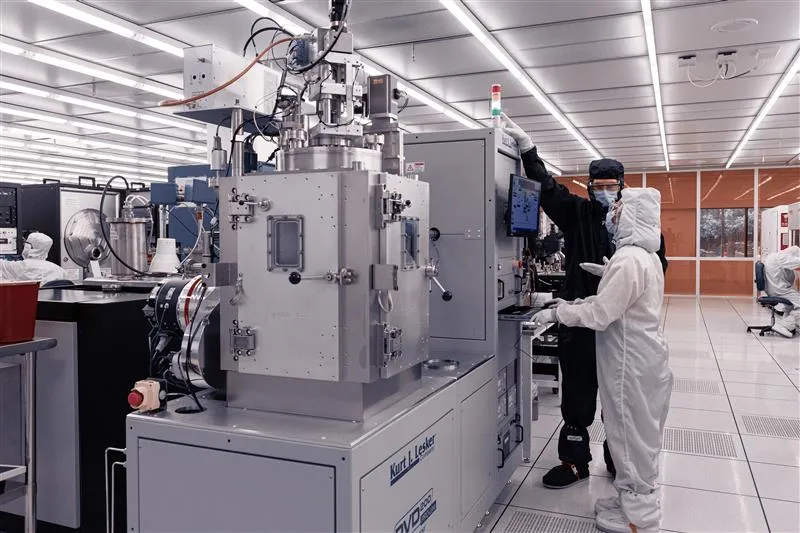
Beginning this fall, The Institute for Matter and Systems (IMS) will offer graduate students immersive, hands-on experience in its world-class core facilities, and the opportunity to work alongside leading scientists and engineers through the new IMS Graduate Apprenticeship Program for Georgia Tech graduate students.
“This unique program is designed to support graduate students in their education while equipping them with valuable skills necessary for the workforce,” said Eric Vogel, IMS executive director.
The IMS Graduate Apprenticeship Program offers a structured, hands-on research apprenticeship in the IMS fabrication and characterization core facilities. Students will gain in-depth training with advanced instrumentation and tools for materials analysis, micro/nanoscale fabrication, spectroscopy, manufacturing, and process development — skills and experience that can directly transfer to their own research projects.
This initiative aims to cultivate the next generation of scientific leaders by integrating rigorous academic coursework with practical, systems-level problem-solving. Apprentices will contribute to cutting-edge projects in materials science, complex systems, and emerging technologies, gaining valuable skills and mentorship along the way.
Applications are now open for the inaugural cohort of the IMS Graduate Apprenticeship Program. Applications are due August 31st.
News Contact
Amelia Neumeister | Research Communications Program Manager
The Institute for Matter and Systems