

Georgia Tech’s Office of Commercialization announces a gift from CreationsVC of $375,000 to accelerate the development of space-related and space-adjacent startup companies based on Georgia Tech intellectual property.
Georgia Tech’s Office of Commercialization’s new Quadrant-i unit focuses on the commercialization of Georgia Tech intellectual property. In combination with Georgia Tech’s consistently top-ranked Daniel Guggenheim School of Aerospace Engineering and its newly formed interdisciplinary Space Research Institute (SRI), Quadrant-i is positioned to dramatically boost the output of space-related spin-offs into a burgeoning Atlanta startup ecosystem. A strategic gift from CreationsVC will support these efforts by creating a pilot program that provides funding for the startup projects of five CreationsVC Fellows per year for three years.
CreationsVC is a venture capital firm that specializes in investing in space tech, AI, and related technologies. CreationsVC sponsors Creation-Space, an Israeli-based global innovation hub that is fostering innovation to enable humanity’s expansion beyond Earth. Steve Braverman, who heads CreationsVC, said the gift is focused on "identifying innovative technologies that support research on life in space, combined with a focus on climate efficiency. This will help improve both expansion of space-centric industry as well as efforts that address challenges on Earth.”
Braverman said he was attracted to Georgia Tech’s focus on entrepreneurship and its track record in aerospace innovation. “I am impressed with the depth and breadth of technical expertise and energized by the passionate commitment of faculty and students to see their innovations have real-world impact. This gift is intended to supercharge efforts over the next three years to launch several startups that can grow quickly and have impact in Atlanta and Israel.”
Quadrant-i has worked closely with the SRI in its formation and made space commercialization an important and embedded pillar of the new activity. “We are thrilled to work with Steve and the CreationsVC team in identifying and accelerating nascent technologies that will have dual-use value propositions in space, climate, and AI applications,” said Quadrant-i’s director Jonathan Goldman. “We have a fantastic well of innovation from our faculty and graduate students and an amazing fountain of entrepreneurial talent from our CREATE-X program for our undergrads. We are excited to see this relationship blossom.”
News Contact
Anne Stanford
anne.stanford@dev.gatech.edu
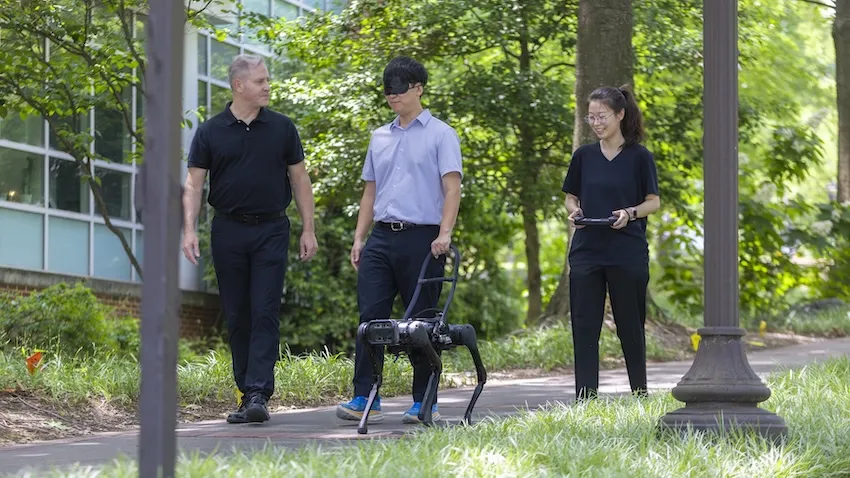
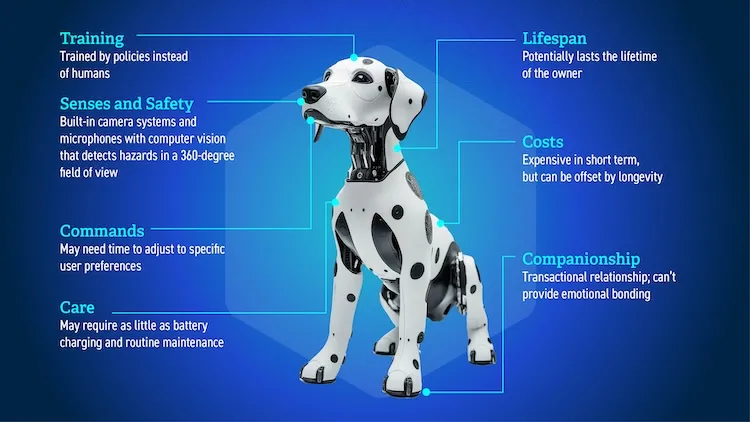
People who are visually impaired and cannot afford or care for service animals might have a practical alternative in a robotic guide dog being developed at Georgia Tech.
Before launching its prototype, a research team within Georgia Tech’s School of Interactive Computing, led by Professor Bruce Walker and Assistant Professor Sehoon Ha, is working to improve its methods and designs based on research within blind and visually impaired (BVI) communities.
“There’s been research on the technical aspects and functionality of robotic guide dogs, but not a lot of emphasis on the aesthetics or form factors,” said Avery Gong, a recent master’s graduate who worked in Walker’s lab. “We wanted to fill this gap.”
Training a guide dog can cost up to $50,000, and while there are nonprofit organizations that can cover these costs for potential owners, there is still a gap between the amount of available guide dogs and BVI individuals who need them. Not all BVI individuals are able to care for a dog and feed it. The dog also has fewer than 10 working years before it needs replacement.
Gong co-authored a paper on the design implications of the robotic guide dog that was presented at the 2025 International Conference on Robotics and Automation (ICRA) in Atlanta in May.
The consensus among the study’s participants indicates they prefer a robotic guide dog that:
- resembles a real dog and appears approachable
- has a clear identifier of being a guide dog, such as a vest
- has built-in GPS and Bluetooth connectivity
- has control options such as voice command
- has soft textures without feeling furry
- has long battery life and self-charging capability
“A lot of people said they didn’t want the dog to look too cute or appealing because it would draw too much attention,” said Aviv Cohav, another lead author of the paper and recent master’s graduate.
“Many people have issues with taking their guide dog to places, whether it’s little kids wanting to play with the dog or people not liking dogs or people being scared of them, and that reflects on the owners themselves. We wanted to look at what would be a good balance between having a functional robot that wouldn’t scare people away or be a distraction.”
The researchers also had to consider the perspectives of sighted individuals and how society at large might view a robotic guide dog.
An example of this is the amount of noise the dog makes while walking. The owner needs to hear the dog is active, but the clanky sound many off-the-shelf robots make could create disturbances in indoor spaces that amplify sounds. To offset the noise, the team developed algorithms that allow the robot to move more quietly.
Walker and his lab have examined similar scenarios that must take public perception into account.
“We like to think of Georgia Tech as going the extra mile,” Walker said. “Let’s not just make a robot, but a robot that’s going to fit into society.
“To have impact, the technologies we produce must be produced with society in mind. This is a holistic design that considers the users and all the people with whom the users interact.”
Taery Kim, a computer science Ph.D. student, began working on the concept of a robotic guide dog when she came to Georgia Tech in 2022. She and Ha, her advisor, have authored papers on building the robot’s navigation and safety components.
“When I started, I thought it would be as simple as giving the guide dog a command to take me to Starbucks or the grocery store, and it would just take me,” Kim said. “But the user must give waypoint directions — ‘go left here,’ ‘turn right,’ ‘go forward,’ ‘stop.’ Detailed commands must be delivered to the dog.”
While a real dog has naturally enhanced senses of hearing and smell that can’t be replicated, technology can provide interconnected safety features during an emergency. The researchers envision a camera system equipped with a 360-degree field of view, computer vision algorithms that detect obstacles or hazards, and voice recognition that recognizes calls for help. An SOS function could automatically call 911 at the owner’s request or if the owner is unresponsive.
Kim said the robot should also have explainability features to enhance communication with the owner. For example, if the robot suddenly stops or ignores an owner’s commands, it should tell the owner that it’s detecting a hazard in their path.
Manufacturing a robot at scale would initially be expensive, but the researchers believe the cost would eventually be offset because of its longevity. BVI individuals may only need to purchase one during their lifetime.
To introduce a prototype, the multidisciplinary research team recognizes that it needs to enlist experts from other fields to adequately address the various implications and research gaps inherent in the project.
Walker said the teams welcome additional partners who are keen to tackle challenges ranging from design and engineering to battery life to human-robot interaction.
Team member J. Taery Kim was supported by the National Science Foundation's Graduate Research Fellowship Program (NSF GRFP) under Grant No. DGE-2039655.
News Contact
Nathan Deen, Communications Officer
School of Interactive Computing
nathan.deen@cc.gatech.edu

Headshots of Michael McDowell and Ryan Lively
Two Georgia Tech researchers in the College of Engineering have been named finalists for the 2025 Blavatnik National Awards for Young Scientists. Their discoveries, which could create cleaner industrial processes and safer, more reliable batteries, have important potential impacts for daily life.
The Blavatnik Awards are presented by the Blavatnik Family Foundation and are administered by the New York Academy of Sciences. They honor the most promising early-career researchers in the U.S., across life sciences, chemistry, and physical sciences, and engineering. The awards are among the most prestigious and competitive in science.
This dual recognition underscores Georgia Tech’s growing national leadership in high-impact, interdisciplinary research.
Ryan Lively, Thomas C. DeLoach Jr. Endowed Professor in the School of Chemical and Biomolecular Engineering, is recognized in the Chemical Sciences category for pioneering scalable technologies that will reduce industrial carbon emissions and energy use. He develops new materials that can capture carbon and separate chemicals, using much less energy than conventional methods. His innovations could make industry cleaner and play a key role in addressing climate change.
Matthew McDowell, Carter N. Paden Jr. Distinguished Chair in the George W. Woodruff School of Mechanical Engineering holds a joint appointment in the School of Materials Science and Engineering. Recognized in the Physical Sciences and Engineering category for groundbreaking battery research, he and his team develop new materials to make batteries last longer and store more energy. He has discovered ways to visualize how battery materials change during use — insights that help improve the performance and safety of future energy technologies.
This year’s 18 finalists were selected from 310 nominees. On Oct. 7, 2025, three laureates will be announced at a gala at New York City’s American Museum of Natural History. Each laureate will receive $250,000, the largest unrestricted scientific prize for early-career researchers in the U.S.
News Contact
Shelley Wunder-Smith shelley.wunder-smith@research.gatech.edu
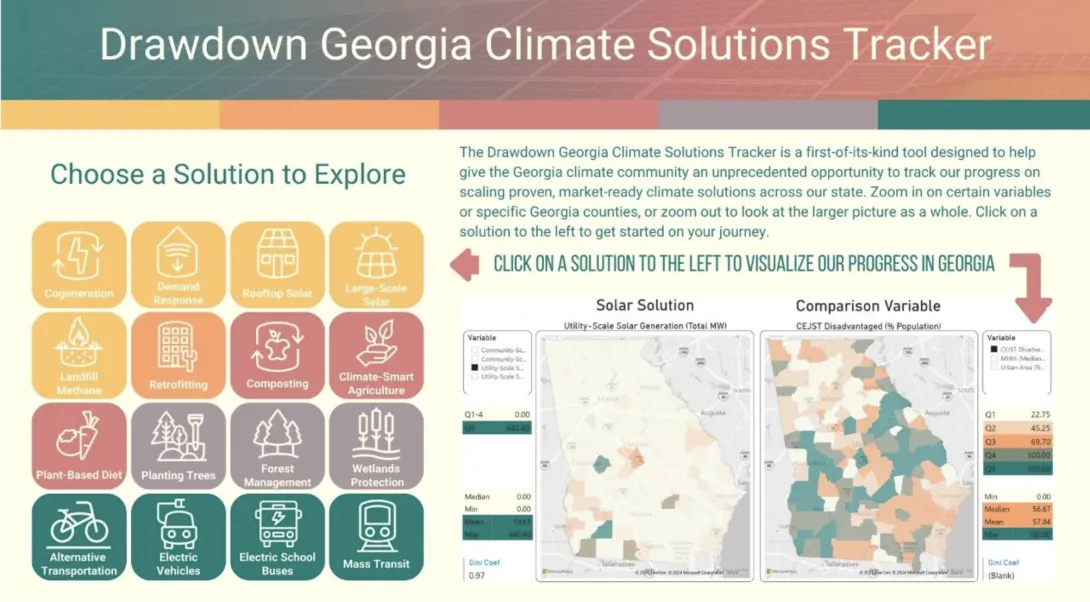
Electric vehicles. Rooftop solar. Cycling to work. Knowing where to start when reducing your personal carbon footprint can be daunting. But a new tool from Georgia Tech makes it easier for anyone to figure out how they can help address climate change.
The Drawdown Georgia Solutions Tracker is a digital dashboard that enables everyday Georgians to see how effective various technologies could be for each county. The tracker analyzes public data for 16 solutions — from planting trees to public transit — that can lower greenhouse gas emissions. The tracker is equally essential for policymakers and business leaders, enabling them to identify opportunities to propose legislation or adjust operations to reduce carbon emissions.
To use the tracker, viewers click on a solution to see its impact. Then, they specify a particular county, and the data is tailored to the most relevant metric. For example, if someone picks “plant-based diet” as a solution, they can see how many vegan restaurants are already in their county. The tracker also contrasts the climate solution with a relevant area that might benefit if the solution is implemented. For the plant-based example, the tracker compares it to urban density.
This tracker is one of the many initiatives of Drawdown Georgia, one of the Ray C. Anderson Foundation’s key funding initiatives based on research conducted by Georgia Tech, Georgia State University, the University of Georgia, and Emory University. Drawdown Georgia's goal is to reduce Georgia’s carbon impact by 57% by 2030 and to accelerate Georgia’s progress toward net-zero greenhouse emissions.
Drawdown Georgia also developed a carbon emissions tracker that shows carbon emission levels by county. The dashboard was a success, but the Drawdown Georgia team wanted to create a more proactive tool. The Solutions Tracker was designed so that anyone could make smalldaily changes to improve the climate — not just track it.
“We began the Drawdown Georgia project with the goal of cutting state pollution significantly,” said Marilyn Brown, Regents' Professor and the Brook Byers Professor of Sustainable Systems in the Jimmy and Rosalynn Carter School of Public Policy. "To get Georgians involved, we decided to focus on local and regional opportunities to reduce emissions.”
Drawdown Data
The data combines federal and state sources from the U.S. Energy Information Administration, the National Renewable Energy Laboratory, and the Department of Agriculture. Some solutions may seem obvious, like planting trees, but others are more niche. For example, decomposing trash often produces methane gas, which means that landfills contribute to greenhouse gas emissions — important information for policymakers to consider when developing carbon reduction strategies.
The researchers hope everyone will use the tracker. Politicians and policymakers can find new ideas for legislation or the adoption of these solutions. Business leaders can find opportunities to hit their decarbonization goals. Georgians can use the tracker to figure out which solutions are most sustainable for their lives. Even scientists can learn which methods to home in on for their research. Since the tracker is available via Creative Commons, anyone can use the data to build their own tools or models.
The tracker is already having a real-world impact. Brown and the Drawdown Georgia team have collaborated with the state of Georgia and the 29-county metro Atlanta area on their carbon action plans. They’ve also partnered with 75 businesses on carbon action plans and other solutions through the Drawdown Georgia Business Compact, managed by the Ray C. Anderson Center for Sustainable Business in the Scheller College of Business. As these stakeholders ask questions about different climate solution impacts, the team has expanded the tracker accordingly. They’ve also recently redesigned the user interface to make it even more accessible for everyday users.
From improved public health to business opportunities, the state requires reduced greenhouse gases, and Georgia Tech is not only tracking emissions but helping to fix the problem, too.
News Contact
Tess Malone, Senior Research Writer/Editor
tess.malone@gatech.edu

Georgia Tech’s Georgia Manufacturing Extension Partnership (GaMEP) helped transform The Chai Box—a family‑run business born in Marietta—into a nationally recognized brand by guiding them through rigorous food safety audits for retailers like Costco, streamlining production, and boosting their revenue by 20 %. This collaboration not only enabled larger scale success and a feature in Forbes, but vividly illustrated how applied research can turn cultural legacy into commercial opportunities.
Learn more.
Georgia Tech’s Georgia Manufacturing Extension Partnership (GaMEP) helped transform The Chai Box—a family‑run business born in Marietta—into a nationally recognized brand by guiding them through rigorous food safety audits for retailers like Costco, streamlining production, and boosting their revenue by 20 %. This collaboration not only enabled larger scale success and a feature in Forbes, but vividly illustrated how applied research can turn cultural legacy into commercial opportunities.
Learn more.

An illustration representing a doctor working with an AI-powered health device.
In the morning, before you even open your eyes, your wearable device has already checked your vitals. By the time you brush your teeth, it has scanned your sleep patterns, flagged a slight irregularity, and adjusted your health plan. As you take your first sip of coffee, it’s already predicted your risks for the week ahead.
Georgia Tech researchers warn that this version of AI healthcare imagines a patient who is "affluent, able-bodied, tech-savvy, and always available." Those who don’t fit that mold, they argue, risk becoming invisible in the healthcare system.
The Ideal Future
In their study, published in the Proceedings of the ACM Conference on Human Factors in Computing Systems, the researchers analyzed 21 AI-driven health tools, ranging from fertility apps and wearable devices to diagnostic platforms and chatbots. They used sociological theory to understand the vision of the future these tools promote — and the patients they leave out.
“These systems envision care that is seamless, automatic, and always on,” said Catherine Wieczorek, a Ph.D. student in human-centered computing in the School of Interactive Computing and lead author of the study. “But they also flatten the messy realities of illness, disability, and socioeconomic complexity.”
Four Futures, One Narrow Lens
During their analysis, the researchers discovered four recurring narratives in AI-powered healthcare:
- Care that never sleeps. Devices track your heart rate, glucose levels, and fertility signals — all in real time. You are always being watched, because that’s framed as “care.”
- Efficiency as empathy. AI is faster, more objective, and more accurate. Unlike humans, it doesn’t get tired or biased. This pitch downplays the value of human judgment and connection.
- Prevention as perfection. A world where illness is avoided through early detection if you have the right sensors, the right app, and the right lifestyle.
- The optimized body. You’re not just healthy, you’re high-performing. The tech isn’t just treating you; it’s upgrading you.
“It’s like healthcare is becoming a productivity tool,” Wieczorek said. “You’re not just a patient anymore. You’re a project.”
Not Just a Tool, But a Teammate
This study also points to a critical transformation in which AI is no longer just a diagnostic tool; it’s a decision-maker. Described by the researchers as “both an agent and a gatekeeper,” AI now plays an active role in how care is delivered.
In some cases, AI systems are even named and personified, like Chloe, an IVF decision-support tool. “Chloe equips clinicians with the power of AI to work better and faster,” its promotional materials state. By framing AI this way — as a collaborator rather than just software — these systems subtly redefine who, or what, gets to be treated.
“When you give AI names, personalities, or decision-making roles, you’re doing more than programming. You’re shifting accountability and agency. That has consequences,” said Shaowen Bardzell, chair of Georgia Tech’s School of Interactive Computing and co-author of the study.
“It blurs the boundaries,” Wieczorek noted. “When AI takes on these roles, it’s reshaping how decisions are made and who holds authority in care.”
Calculated Care
Many AI tools promise early detection, hyper-efficiency, and optimized outcomes. But the study found that these systems risk sidelining patients with chronic illness, disabilities, or complex medical needs — the very people who rely most on healthcare.
“These technologies are selling worldviews,” Wieczorek explained. “They’re quietly defining who healthcare is for, and who it isn’t.”
By prioritizing predictive algorithms and automation, AI can strip away the context and humanity that real-world care requires.
“Algorithms don’t see nuance. It’s difficult for a model to understand how a patient might be juggling multiple diagnoses or understand what it means to manage illness, while also navigating other important concerns like financial insecurity or caregiving. They are predetermined inputs and outputs,” Wieczorek said. “While these systems claim to streamline care, they are also encoding assumptions about who matters and how care should work. And when those assumptions go unchallenged, the most vulnerable patients are often the ones left out.”
AI for ALL
The researchers argue that future AI systems must be developed in collaboration with those who don’t fit in the vision of a “perfect patient.”
“Innovation without ethics risks reinforcing existing inequalities. It’s about better tech and better outcomes for real people,” Bardzell said. “We’re not anti-innovation. But technological progress isn’t just about what we can do. It’s about what we should do — and for whom.”
Wieczorek and Bardzell aren’t trying to stop AI from entering healthcare. They’re asking AI developers to understand who they’re really serving.
Funding:
This work was supported by the National Science Foundation (Grant #2418059).
News Contact
Michelle Azriel, Sr. Writer-Editor

Bigfoot vlogs are an example of AI-generated content that has gained attention for its use of hyperrealistic storytelling and digital personas in online media.

From Bigfoot vlogs to algorithmically created personas, hyperrealistic AI content is redefining the boundaries of digital creators. These influencers are entirely virtual personas created using generative AI tools that simulate human features, voices, and behaviors. They post lifestyle content, interact with followers, and even secure brand endorsements — all without existing in the physical world. As these technologies grow more widely available and their results more believable, specialists caution that we are moving into a new age where the line separating fiction from reality is becoming increasingly blurred.
The Rise of Synthetic Creativity
Experts at Georgia Tech say the surge in AI hyperrealism — content that mimics human emotion, speech, and appearance with uncanny precision — is both a technological marvel and a societal challenge.
“AI does not have emotions as we understand them in humans, but it knows how to mimic emotional speech,” said Mark Riedl, professor in the School of Interactive Computing. “Once we understand that AI is mimicking us, it is easy to understand how they can create believable outputs that sound authentic.”
Riedl points to the democratization of video creation as a major shift. “AI video generation tools and the ability to bypass traditional content channels and post directly to social media have opened up the floodgates,” he said.
Recent examples include synthetic influencers such as Nobody Sausage, a digitally animated character that has attracted over 30 million followers across multiple social media platforms through short-form dance videos and brand collaborations. On platforms like Character.AI, users engage with millions of virtual personas designed to simulate conversation and personality traits. These AI-generated figures are reshaping how audiences interact with content, marketing, and identity across Instagram, TikTok, and other social media channels.
Mental Health and the Reality Gap
Munmun De Choudhury, professor in the School of Interactive Computing, warns that hyperreal AI content can distort users’ perception of reality, especially among vulnerable populations.
“This distortion can fuel anxiety, exacerbate body image and self-comparison issues, and contribute to a broader erosion of epistemic trust — our basic belief in what others present as true,” she said.
Her research shows that social media already blurs the line between authentic self-expression and performative identity. Hyperreal AI content — from deepfakes to emotionally resonant synthetic personas — further complicates users’ ability to evaluate what is real or trustworthy. Adolescents and those facing mental health challenges may be especially susceptible.
“Individuals experiencing stress or social isolation may be more prone to believe deepfakes,” De Choudhury explained. “Such content often reinforces existing beliefs or fills gaps in social connection.”
The AI content challenges our understanding of authenticity, trust, and digital identity. It also raises questions about consent, misinformation, and the psychological effects of interacting with synthetic personas. Gen Z users, she notes, often judge AI content by emotional resonance rather than factual accuracy, while older users may struggle to detect synthetic cues altogether.
Platforms, Persuasion, and Misinformation
Riedl emphasizes that AI storytelling tools can be used to sway public opinion through “narrative transportation,” a psychological phenomenon in which audiences become immersed in a story and are less likely to question its truth.
“Storytelling is a means of persuasive communication,” he said. “Our brains are attuned to stories in a way that can bypass critical thinking.”
Recent incidents highlight the changing landscape. Deepfakes of public figures such as Taylor Swift and Tom Hanks have surged in 2025, with over 179 incidents in the first four months of the year alone — surpassing all of 2024. These deepfakes range from humorous impersonations to fraudulent and explicit content, raising ethical and legal concerns about identity misuse and misinformation. Riedl notes that video misinformation has historically been harder to produce but is now easier and more likely to be tailored to niche audiences.
Social media companies face mounting pressure to take action. De Choudhury argues that labeling AI-generated content is necessary but insufficient. “Platforms must invest in user-centered design, digital literacy interventions, and transparency about how algorithms surface such content,” she said.
The stakes are especially high in mental health communities, where authenticity and lived experience are critical. “Users often feel overwhelmed or deceived when they encounter synthetic content without clear cues of its artificial origin,” she added.
Governance in a Globalized AI Era
Milton Mueller, professor in the Jimmy and Rosalynn Carter School of Public Policy, argues that regulation may be ineffective or even counterproductive in a decentralized digital ecosystem.
“Generative AI is part of a globalized and distributed digital ecosystem,” Mueller said. “So, which regulatory authority are you talking about, and how does it gain the leverage needed to control the outputs?”
While the EU’s AI Act mandates labeling and imposes steep fines, U.S. efforts remain fragmented. The Federal Communications Commission has made AI-generated voices in robocalls illegal, with entities facing fines, and several states are pushing for watermarking and criminal penalties for political deepfakes. But experts warn that First Amendment protections complicate enforcement.
Mueller cautions that governments are already using AI as a geopolitical tool, which could undermine global cooperation and lead to strategic escalation. “Instead of freely trading data and establishing common rules, governments are asserting digital sovereignty,” he said.
He advocates for addressing AI-generated misinformation through decentralized governance, public debate, and media literacy, rather than centralized regulation or automated controls, emphasizing that content moderation should be guided by open processes and existing legal remedies applied after the fact.
As AI-generated content becomes more sophisticated and widespread, researchers say the challenge lies not only in technological safeguards but in how society adapts. Experts at Georgia Tech emphasize the need for transparency, interdisciplinary collaboration, and public engagement. The future of hyperreal media, they say, will depend on how well platforms, policymakers, and users navigate its risks and possibilities.
News Contact
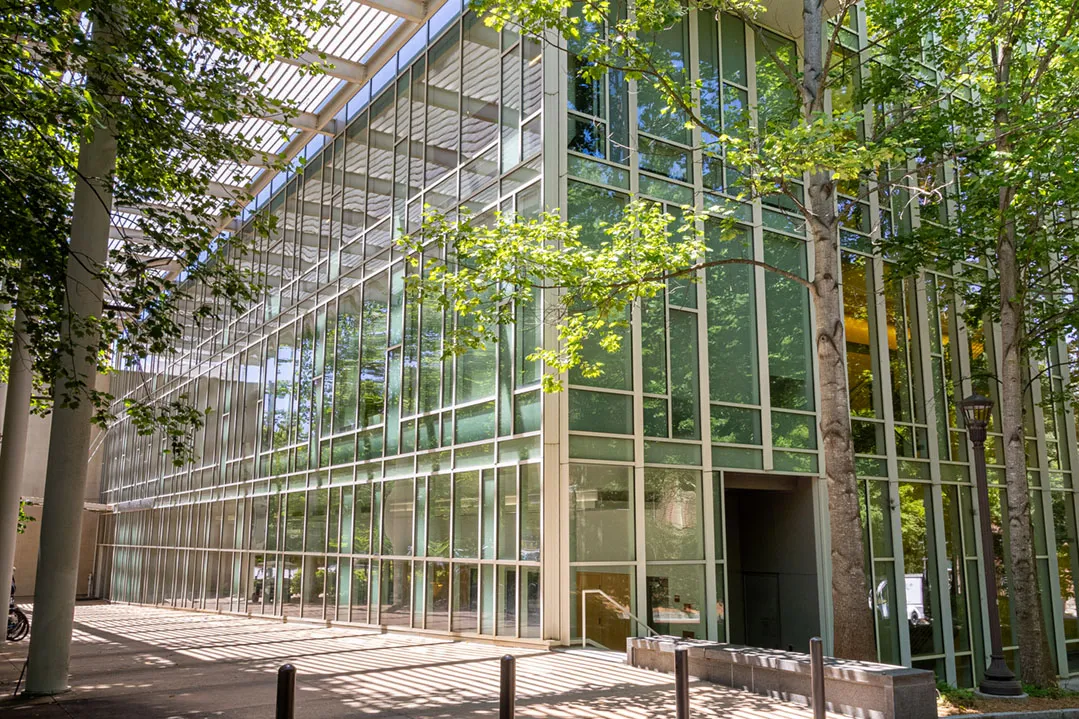
The Institute for Matter and Systems (IMS) has selected six interdisciplinary research projects to receive funding including four new research initiatives and two new programs. This funding is part of a larger IMS effort to identify and support visionary leaders driving groundbreaking research and innovation.
IMS focuses on transformational technological and societal systems that arise where innovative materials, devices, and processes converge.
“Interdisciplinary research often struggles to find a home,” said Michael Filler, IMS deputy director. “IMS aims to fill that gap—through programs like the CPI, we provide a place where unconventional collaborations from across Georgia Tech and beyond can take root, grow, and ultimately redefine what’s possible.
The funded initiatives come from four colleges and 11 schools across the Institute, and from GTRI. These research projects were selected based on their innovative approaches, potential impact, and alignment with IMS’ mission to push the boundaries of science and technology. They will receive funding, access to state-of-the-art facilities, and other support from IMS to bring their projects to life.
IMS supports interdisciplinary research both in nationally recognized areas of need and those just emerging. It scaffolds research from the ground up, from seed funding for new initiatives to infrastructure support for research programs and embedded support for research centers. The four newly announced initiatives are funded at the lowest level of IMS’ three-tiered model.
The two new research programs were previous IMS research initiatives that have been elevated to the program level. The successful elevation to research program highlights the funding pipeline and its design to support novel interdisciplinary research. As initiatives, these researchers were given seed funding and support for workshops, visioning and team nucleation, they demonstrated dedication to their research and team building. As IMS research programs, these projects will have the opportunity to expand their operations including with support for team expansions, proposals, and some staff support.
“The IMS funding pipeline is about giving researchers a ladder where none exists—support to take the first step with a new idea, and the structure to keep climbing as their work matures,” said Filler. “By providing that scaffold, we enable bold, interdisciplinary teams to turn early sparks of discovery into thriving research programs with real-world impact.”
The new research initiatives and programs:
Research Initiatives
Multifunctional Materials for Efficient Buildings | Akanksha Menon, George W. Woodruff School of Mechanical Engineering
Adaptive Biomacromolecular and Cellular Networks | Anant Paravastu, School of Chemical and Biomolecular Engineering; Vinayak Agarwal, School of Chemistry and Biochemistry; Andrew McShan, School of Chemistry and Biochemistry; and Itamar Kolvin, School of Physics
Precision Agriculture in Controlled Environments | Antonio Facchetti, School of Materials Science and Engineering; Yongsheng Cheng, School of Civil and Environmental Engineering; Anju Toor, School of Materials Science and Engineering
Electrochemical Manufacturing of Materials and Resource Recovery | Hailong Chen, George W. Woodruff School of Mechanical Engineering
Research Programs
Autonomous Research for Materials | Mark Losego, School of Materials Science and Engineering; Shreyas Kousik, George W. Woodruff School of Mechanical Engineering; Animesh Garg, School of Interactive Computing
Magnetometry and Spectrum-Based Quantum Sensing Platforms| Zhigang Jiang, School of Physics; Martin Mourigal, School of Physics; Yan Wang, George W. Woodruff School of Mechanical Engineering
News Contact
Amelia Neumeister | Research Communications Program Manager
The Institute for Matter and Systems

Scientists used pharmaceutical waste to create a new material with interesting properties. Mitrija/iStock via Getty Images
Today, approximately 1,800,000 acres of land in the United States is used for landfill waste disposal. In terms of volume, the U.S alone generated over 290 million tons of solid waste in 2018, an amount equivalent to about 235,000 Olympic-size swimming pools, assuming an average solid waste density of a half ton per cubic meter.
Roughly 9% — about 26 million tons — of this waste is made up of iron and steel. These are resources with a stable market value used in various civil infrastructure projects. As a team of environmental engineers, we wanted to know whether we could use iron-rich waste to produce iron oxide nanoparticles — a useful tool for combating water pollution and building engineering hardware.
All About Nanoparticles
Iron oxide nanoparticles consist of iron and oxygen atoms and, because of their size, they exhibit unique physical and chemical properties. They are extremely small, typically at the nanoscale — one-billionth of a meter — in diameter.
The iron oxide nanoparticles we synthesized were a distinctive group called magnetite and maghemite. Initial studies have shown that nanoparticles in this group could help drugs get to the right part of the body, make batteries in electric vehicles more efficient and improve sensors for detecting toxic gas, as well as sound and motion.
Because these nanoparticles are made of iron, they’re both magnetic and stable. Their tiny size gives them a large surface area relative to their volume, allowing them to grab pollutants in water. Additionally, their magnetic nature makes them ideal for building extremely small and thin electrical components.
In our work, we wanted to find a new way to produce them using waste materials. In our newest study, published in the RSC Sustainability journal, we developed an eco-friendly method to synthesize iron oxide nanoparticles from expired over-the-counter iron supplements. This approach not only gives value to discarded products but also supports a more sustainable and circular method of production.
The Research Process
To conduct our study, we used a method called hydrothermal carbonization to produce these magnetic nanoparticles. We were able to source a large amount of expired iron supplements from a local health care center.
The hydrothermal carbonization process uses a turbocharged version of the kind of pressure cooker you might have in your kitchen. For our recipe, we combined 20 grams each of expired iron supplements and water in a specialized pressure reactor. We then cooked the mixture at 527 degrees Fahrenheit (275 degrees Celsius) for six to 12 hours. Under this intense temperature and pressure, the supplements broke down, which produced tiny — 10- to 11-nanometer — particles.
The end product included a solid charcoal-like material called hydrochar, which made up about 20% to 22% of the product. The hydrochar consisted of the iron oxide nanoparticles and graphite, a carbon-rich material that gave the hydrochar its charcoal-like look. The rest became gas and a dark, tarlike liquid separate from the hydrochar.
Hydrothermal carbonization is not the only method used to make iron oxide nanoparticles. There are other conventional methods such as coprecipitation, which involves mixing chemicals to form solids. Another method is pyrolysis, where materials are heated in the absence of oxygen. And finally, gasification, which heats materials in the presence of oxygen.
These methods usually require a higher energy input, around 1,292 to 1,832 degrees Fahrenheit (700 to 1,000 C), or harsh salt chemicals. In contrast, hydrothermal carbonization, the method we used, is water-based and can happen at a low temperature.

Initial research shows that nanoparticles created from iron clears some pollutants from wastewater. After creating the nanoparticles, researchers test them using a variety of scientific techniques. The nanoparticles have several potential future applications in the technology field. Ahmed Yunus
We compared our hydrothermal carbonization process’s energy use with other methods and found it had the lowest environmental impact.
From Polluted Water to Clean
The iron oxide nanoparticles we created are very useful for water treatment. They are particularly good at removing oil and heavy metals such as lead, cadmium, zinc and chromium from water. These are pollutants known to cause serious health issues, including cancer.
You can either mix them with polluted water or allow the water to pass through them, similar to a common household filter.
To test their performance, we mixed our iron oxide nanoparticles in wastewater samples containing methylene blue dye, a common pollutant in textile and manufacturing wastewater. We found they removed over 95% of the dye, and because the particles are magnetic, we could remove them from the treated water using a magnet so they didn’t contaminate the water.

Water polluted with methylene blue cleared up after treatment with iron oxide nanoparticles over 48 hours, and the nanoparticles attach to a magnet. Yunus et al., 2025
Depending on the type of pollutants in the water, iron oxide nanoparticles can sometimes be reused after they’re heated again.
Moving Forward
We produced a small amount of these nanoparticles in the lab for this study. However, large quantities of iron waste are sent to landfills. These include materials such as steel sludge and metal scraps. So in theory, many more of these nanoparticles could be produced in the future. If produced in large enough quantities, large water and wastewater plant filtration systems could use these particles to treat much larger amounts of water.
But landfill waste isn’t all one type of waste. Iron-rich waste may be contaminated with other materials, making its sourcing, sorting and recycling both resource-intensive and costly. To scale up this technology sustainably, researchers will need to first overcome these challenges.
On the bright side, economists predict that alternative metals, including iron oxide nanoparticles, may help meet production demands for future technologies and artificial intelligence. These nanoparticles can be used to manufacture high-performance computing components. These components include magnetic memory storage and semiconductors found in our everyday technologies.
Lots of the critical metals currently used are expensive, scarce or geopolitically sensitive: cobalt, nickel and lithium. As a result, our team is starting to explore how this hydrothermal carbonization-based method can be scaled and applied to other types of waste materials.
Our long-term goal is to expand the tool kit for sustainable nanoparticle production while continuing to address both environmental challenges and materials demands for future innovations.
This article is republished from The Conversation under a Creative Commons license. Read the original article.
News Contact
Authors:
Ahmed Ibrahim Yunus, Ph.D. Candidate in Environmental Engineering, Georgia Institute of Technology
Joe Frank Bozeman III, Assistant Professor of Civil and Environmental Engineering and Public Policy, Georgia Institute of Technology
Media Contact:
Shelley Wunder-Smith
shelley.wunder-smith@research.gatech.edu