
Feb. 24, 2025
Eye

Four million Americans suffer from glaucoma, an incurable eye disease that slowly degrades peripheral vision and eventually leads to blindness. Researchers at Georgia Tech have discovered a potential way to stop this degradation and possibly save people’s vision before it’s too late.

Raquel Lieberman, a professor in the School of Chemistry and Biochemistry and the Parker H. Petit Institute for Bioengineering and Bioscience, and her lab team have discovered two new antibodies with promise to treat glaucoma. The antibodies can break down the protein myocilin, which, when it malfunctions, can cause glaucoma.

Lieberman’s group recently published this research in the Proceedings of the National Academy of Sciences: Nexus.

Protein Problems

Myocilin is just one of hundreds of thousands of proteins that make up the human body. In the eye, an especially delicate balance of proteins and fluid enables sight. The aqueous humor, a clear fluid, bathes the lens that helps focus light into the retina. In a healthy eye, the fluid drains regularly, but if something prevents the fluid from circulating, it increases pressure.

“Your eyeball is kind of like a basketball,” explained Lieberman. “If you want it to work optimally, it has to be pressurized.” 

Lieberman’s team has learned that if myocilin mutates, it clumps up and prevents aqueous humor from draining, increasing eye pressure. If left unmanaged, glaucoma and — eventually — blindness will occur. 

Antibody Answer

Lieberman’s lab characterized two new antibodies that each, in their unique way, can destroy myocilin gone rogue. One binds in a way that does not prevent myocilin from clumping; the other prevents the protein from aggregating. Both effectively break down myocilin so it no longer blocks the aqueous humor from flowing. 

“These exciting results provide proof of concept that targeted antibodies for mutant myocilin aggregation could be therapeutic,” said Alice Ma, a Ph.D. graduate who worked on the research. “This represents a new paradigm for treating other diseases associated with protein clumping, like Alzheimer’s. These studies hold the potential to save the eyesight of millions of glaucoma patients.”

The findings have been the culmination of nearly two decades of research with Lieberman’s close collaborator, University of Texas at Austin chemical engineering Professor Jennifer Maynard, whose group helped discover the two antibodies that responded to the mutation. Lieberman’s group then worked to understand how the antibodies functioned, determining the two that most successfully broke down the protein. 

“This study builds on 10 years of work that explains how myocilin folds to how to break it down,” Lieberman said. “I am at a very fortunate place in my career where this fundamental research coalesces into what we could use clinically.”

Treatment Transformation

Lieberman hopes the antibodies can help treat glaucoma patients, particularly those with early onset glaucoma, often children. She now has a research collaboration with Rebecca Neustein, a physician at Emory University who treats these young patients. 

“She doesn't have much hope to give her patients for curing glaucoma,” Lieberman said. “So she was very excited that we could do some genotyping and figure out who these antibodies can help.”

Lieberman’s research offers a clearer future for millions suffering from glaucoma and those at risk of developing the disease. By leveraging antibodies to target and break down malfunctioning myocilin, this discovery not only paves the way for new treatments for glaucoma but also opens doors for addressing other protein-aggregation diseases like Alzheimer’s, Parkinson’s, and even Type 2 diabetes. 

Funding: National Institutes of Health

Animation by Raul Perez

News Contact

Tess Malone, Senior Research Writer/Editor

tess.malone@gatech.edu

Feb. 24, 2025
Bradford “Brad” Greer (bottom) and Kevin Ge (top), both 2023 graduates from the George W. Woodruff School of Mechanical Engineering, and founders of CADMUS Health Analytics. Left, Greer loading a stretcher after dropping a patient off.

Bradford “Brad” Greer (bottom) and Kevin Ge (top), both 2023 graduates from the George W. Woodruff School of Mechanical Engineering, and founders of CADMUS Health Analytics. Left, Greer loading a stretcher after dropping a patient off.

Bradford “Brad” Greer (bottom) and Kevin Ge (top), both 2023 graduates from the George W. Woodruff School of Mechanical Engineering, have taken their startup, CADMUS Health Analytics, from a classroom project to a promising health tech company. In 2023, CADMUS was accepted into the CREATE-X Startup Launch program. Over the 12-week accelerator, CADMUS made significant strides, and program mentors provided expert guidance, helping the team focus their direction based on real-world needs. Their partnership with Northeast Georgia Health System (NGHS) was a direct result of connections made at Startup Launch’s Demo Day.

How did you first hear about CREATE-X?

We did the CREATE-X Capstone with an initial team of seven people, later transitioning to Startup Launch in the summer. Capstone required a hardware product, but for several reasons, we pivoted to software. By that point, we already had a grasp on the problem that we were working on but didn't have the resources to start working on a large hardware product.

Why did you decide to pursue your startup?

One of our close buddies was an emergency medical technician (EMT), and we also had family connections to EMTs. When we were doing our customer interviews, we found out that Emergency Medical Services (EMS) had multiple problems that we thought we'd like to work on and that were more accessible than the broader medical technology industry. 

What was Startup Launch like for you?

Startup Launch seemed to transition pretty seamlessly from the Capstone course. We came to understand our customer base and technical development better, and the program also led us through the process of starting and running a company. I found it very interesting and learned a whole lot.

What was the most difficult challenge in Startup Launch?

Definitely customer interviews. We spent a lot of time on that in the Startup Launch classes. It's a difficult thing to have a good takeaway from a customer interview without getting the conversation confused and being misled. We didn't mention the product, or we tried to wait as long as possible before mentioning the product, so as to not bias or elicit general, positive messaging from interviewees. 

We're working in EMS, and the products we are building affect healthcare. EMS is a little informal and a little rough around the edges. Many times, people don't want to admit how bad their practices are, which can easily lead to us collecting bad data. 

What affected you the most from Startup Launch?

The resources at our fingertips. When we were running around, it was nice to be able to consult with our mentor. It's great having someone around with the know-how and who's been through it themselves. I revisit concepts a lot.

How did the partnership with NGHS come about?

During Demo Day, we met a Georgia state representative. He put us in touch with NGHS. They were looking for companies to work with through their venture arm, Northeast Georgia Health Ventures(NGHV), so we pitched our product to them. They liked it, and then we spent a long time banging out the details. We worked with John Lanza, who's a friend of CREATE-X. He helped us find a corporate lawyer to read over the stuff we were signing. It took a little back and forth to get everything in place, but in September of last year, we finally kicked it off.

What’s the partnership like?

We provide them a license to our product, have weekly meetings where experts give feedback on the performance of the system, and then we make incremental changes to align the product with customer needs. 

While we're in this developmental phase, we're kind of keeping it under wraps until we make sure it’s fully ready. Our focus is primarily on emergent capabilities that NGHS and other EMS agencies are really looking for. Right now, the pilot is set to be a year long, so we're aiming to be ready for a full rollout by the end of the year. 

How did you pivot into this other avenue for your product?

EMS does not have many resources. That makes it not a popular space as far as applying emerging technologies. There's only competition in this very one specific vein, which is this central type of software that we plug into, so we're not competing directly with anyone.

EMS agencies, EMTs, and paramedics - the care that they give has to be enabled by a medical doctor. There has to be a doctor linked to the practices that they engage in and the procedures that they do. With the product that we're making now, we want to provide a low-cost, plug-and-play product that'll do everything they need it to do to enable the improvement of patient care. 

How are you supporting yourself during this period? 

I was paying myself last year, but we're out of money for that, so we're not currently paying for any labor. It's all equity now, but our burn rate outside of that is very low. The revenue we have now easily covers the cost of operating our system. I'm also working part-time as an EMT now. This helps cover my own costs while also deepening my understanding of the problems we are working on.

How are you balancing your work?

It's hard to balance. There's always stuff to do. I just do what I can, and the pace of development is good enough for the pilot. Every week, and then every month, Kevin and I sit down and analyze the rate at which we're working and developing. Then we project out. We're confident that we're developing at a rate that'll have us in a good spot by September when the pilot ends.

What’s a short-term goal for your startup?

Kevin and I are trying to reach back out and see if there's anyone interested in joining and playing a major role. The timing would be such that they start working a little bit after the spring semester ends. I think most Georgia Tech students would meet the role requirements, but generally, JavaScript and Node experience as well as a diverse background would be good.

Where do you want your startup to be in the next five years?

I want to have a very well-designed system. Despite all the vectors I’m talking about for our products, everything should be part of the same system in place at EMS agencies anywhere. I just want it to be a resource that EMS can use broadly.

Another issue in EMS is standards. Even the standards that are in place now aren’t broadly accessible. I think that these new AI tools can do a lot to bridge the lack of understanding of documentation, measures, and standards and make all of that more accessible for the layperson.

What advice would you give students interested in entrepreneurship?

Make sure the idea that you're working on, and the business model, is something you enjoy outside of its immediate viability. I think that's really what's helped me persevere. It's my enjoyment of the project that's allowed me to continue and be motivated. So, start there and then work your way forward.

Are there any books, podcasts, or resources you would recommend to budding entrepreneurs?

 I’d recommend Influence to prepare for marketing. I have no background in marketing at all. Influence is a nice science-based primer for marketing.

 I reread How to Win Friends and Influence People. I am not sure how well I'm implementing the concepts day-to-day, but I think most of the main points of that book are solid.

I also read The Mom Test. It's a good reference, a short text on customer interviews.


Want to build your own startup?

Georgia Tech students, faculty, researchers, and alumni interested in developing their own startups are encouraged to apply to CREATE-X's Startup Launch, which provides $5,000 in optional seed funding and $150,000 in in-kind services, mentorship, entrepreneurial workshops, networking events, and resources to help build and scale startups. The program culminates in Demo Day, where teams present their startups to potential investors. The deadline to apply for Startup Launch is Monday, March 17. Spots are limited. Apply now.

News Contact

Breanna Durham

Marketing Strategist

Feb. 19, 2025
Default Image: Research at Georgia Tech

Small rocks and debris fly near Earth, many just passing by. Some, however, come too close to Earth, with a potential threat of collision. Defending Earth from these unwanted objects is a growing concern globally. Planetary defense explores threat characterization, risk mitigation, and policy to defend Earth. One mitigation approach is sending an impactor to collide with the target object to deflect its trajectory from the original course toward Earth. This approach, known as kinetic deflection, is practical for intruders with a diameter up to a few hundred meters.

NASA’s Double Asteroid Redirection Test (DART), led by Johns Hopkins University’s Applied Physics Laboratory, was the first full-scale kinetic deflection mission to test how kinetic deflection could effectively push an asteroid measuring 150 meters in diameter. The 580-kg spacecraft (impactor) collided with the target asteroid, Dimorphos, at a speed of 6.1 km/second on September 26, 2022, making the target’s speed 2.7 mm/s. This speed change could gradually make the course deviate from the original one. The more time that elapses after impact, the further it moves away from the Earth. Even though Dimorphos was not a threat before the impact, it was chosen as a test target for DART’s kinetic deflection test.

Georgia Tech Professor Masatoshi Hirabayashi’s critical contribution to DART was recently published in Nature Communications. The study, “Elliptical ejecta of asteroid Dimorphos is due to its surface curvature” analyzed the behavior of fragments coming out by the high-speed DART impact and their push of the asteroid. This work was in collaboration with Professor Fabio Ferrari from Politecnico di Milano, who jointly published the study, “Morphology of ejecta features from the impact on asteroid Dimorphos.”  

Imagine a cannonball flying through the air and hitting a concrete wall. The wall shutters and fragmented pieces disperse at high speeds. Those smaller fragments, called ejecta, are known to be a key factor in controlling the asteroid push.

The study found that the ejecta from the impact site on Dimorphos highly depends on the asteroid’s shape. As a rule of thumb, a cannonball hitting a flat concrete wall creates ejecta departing from the wall at an angle of about 45 degrees from the wall’s surface. The cloud of ejecta thus looks like a waffle cone. However, if the concrete wall’s surface is tilted against the impact direction, the fragment ejection changes, making the ejecta structure differ even if the impactor has the same mass and speed. 

“This changes the asteroid push dramatically. Dimorphos has a squashed round shape, like an M&M,” Hirabayashi explained, “If the impact is large, more ejecta fly out of the surface but are more affected by surface tilts. This process makes the ejecta deviate from the ideal direction, reducing the asteroid push.” 

For the DART impact on Dimorphos, the study identified the impact scale and the asteroid’s rounded surface lowered the asteroid push by 56% compared to when Dimorphos was tested as an entirely flat wall. Thus, sending a large impactor does not mean a big push, and considering how to send impactors strategically is necessary. One way to keep the asteroid push effective is to send multiple small impactors rather than a single large impactor. This way, each small impactor may avoid the target’s rounded shape, and the net asteroid push by multiple impacts can be more efficient than the single impactor.

“Sending multiple smaller impactors not only results in a higher asteroid push but also potentially saves operational cost and  increases tactical flexibility for deflection," Hirabayashi said.

Ferrari’s study offered crucial information for Hirabayashi’s conclusions. “We used Hubble Space Telescope’s images and numerical simulations to quantify a viable mechanism of the ejecta evolution and successfully estimated ejected particles’ mass, velocity, and size. We also found complex interactions of such particles with the asteroid system and solar radiation pressure, i.e., sunlight pushing ejecta particles,” Ferrari said. “Documenting how ejecta looks over time offers crucial insights into how the DART impact acted on ejecta, giving tight constraints on the target asteroid’s properties.”

NASA’s DART mission was a success, and Hirabayashi’s study discovered an innovative approach to kinetic deflection, offering new potential for its future demonstration in space. He is building a new capability of characterizing a target’s properties beneficial for planetary defense, such as mass, size, composition, etc., at limited observational conditions. This is aligned with the fast reconnaissance concept, a new community effort that develops planetary defense strategies to identify these properties within a limited time and resources. This work continues to evolve Georgia Tech into a key player in planetary defense, connecting international communities. 
 

News Contact

Monique Waddell

Feb. 28, 2025
Photo of the moon with a lunar sample

Dust and rocks residing on the surface of the moon take a beating in space. Without a protective magnetosphere and atmosphere like Earth’s, the lunar surface faces continual particle bombardment from solar wind, cosmic rays, and micrometeoroids. This constant assault leads to space weathering. 

New NASA-funded research by Georgia Tech offers fresh insights into the phenomenon of space weathering. Examining Apollo lunar samples at the nanoscale, Tech researchers have revealed risks to human space missions and the possible role of space weathering in forming some of the water on the moon. 

Most previous studies of the moon involved instruments mapping it from orbit. In contrast, this study allowed researchers to spatially map a nanoscale sample while simultaneously analyzing optical signatures of Apollo lunar samples from different regions of the lunar surface — and to extract information about the chemical composition of the lunar surface and radiation history. 

The researchers recently published their findings in Scientific Reports

“The presence of water on the moon is critical for the Artemis program. It’s necessary for sustaining any human presence and it’s a particularly important source for oxygen and hydrogen, the molecules derived from splitting water,” said Thomas Orlando, Regents’ Professor in the School of Chemistry and Biochemistry, co-founder and former director of the Georgia Tech Center for Space Technology and Research, and principal investigator of Georgia Tech’s Center for Lunar Environment and Volatile Exploration Research (CLEVER).

Building on a Decade of Lunar Science Research 

As a NASA SSERVI (Solar System Exploration Research Virtual Institute), CLEVER is an approved NASA laboratory for analysis of lunar samples and includes investigators from multiple institutes and universities across the U.S. and Europe. Research areas include how solar wind and micrometeorites produce volatiles, such as water, molecular oxygen, methane, and hydrogen, which are all crucial to supporting human activity on the moon. 

Georgia Tech has built a large portfolio in human exploration and lunar science over the last decade with two NASA Solar System Exploration Research Virtual Institutes: CLEVER and its predecessor, REVEALS (Radiation Effects on Volatiles and Exploration of Asteroids and Lunar Surfaces). 

Studying Moon Samples at the Nanoscale Level 

Georgia Tech’s labs are world-renowned, particularly for analyzing surfaces and semiconductor materials. For this work, the Georgia Tech team also tapped the University of Georgia (UGA) Nano-Optics Laboratory run by Professor Yohannes Abate in the Department of Physics and Astronomy. While UGA is a member of CLEVER, its nano-FTIR spectroscopy and nanoscale imaging equipment was historically used for semiconductor physics, not space science. 

“This is the first time these tools have been applied to space-weathered lunar samples, and it’s the first we’ve been able to see good signatures of space weathering at the nanoscale,” says Orlando. 

Normal spectrometers are at a much larger scale, with the ability to see more bulk properties of the soil, explains Phillip Stancil, professor and head of the UGA physics department. 

The UGA equipment enabled the study of samples “in tens of nanometers.” To illustrate how small nanoscale is, Stancil says a hydrogen atom is .05 nanometers, so 1 nm is the size of 20 atoms if placed side by side. The spectrometers provide high-resolution details of the lunar grains down to hundreds of atoms. 

“We can look at an almost atomistic level to understand how this rock was formed, its history, and how it was processed in space,” Stancil says. 

“You can learn a lot about how the atom positions change and how they are disrupted due to radiation by looking at the tiny sample at an atomistic level,” says Orlando, noting that a lot of damage is done at the nanoscale level. They can determine if the culprit is space weathering or from a process left over during the rock’s formation and crystallization. 

Finding Radioactive Damage, Evidence of Water 

The researchers found damage on the rock samples, including changes in the optical signatures. That insight helped them understand how the lunar surface formed and evolved but also provided “a really good idea of the rocks’ chemical composition and how they changed when irradiated,” says Orlando. 

Some of the optical signatures also showed trapped electron states, which are typically missing atoms and vacancies in the atomic lattice. When the grains are irradiated, some atoms are removed, and the electrons get trapped. The types of traps and how deep they are, in terms of energy, can help determine the radiation history of the moon. The trapped electrons can also lead to charging, which can generate an electrostatic spark. On the moon, this could be a problem for astronauts, exploration vehicles, and equipment. 

“There is also a difference in the chemical signatures. Certain areas had more neodymium (a chemical element also found in the Earth’s crust) or chromium (an essential trace mineral), which are made by radioactive decay,” Orlando says. The relative amounts and locations of these atoms imply an external source like micrometeorites. 

Translating Research to Human Risks on the Moon 

Radiation and its effects on the dust and lunar surface pose dangers to people, and the main protection is the spacesuit. 

Orlando sees three key risks. First, the dust could interfere with spacesuits’ seals. Second, micrometeorites could puncture a spacesuit. These high-velocity particles form after breaking off from larger chunks of debris. Like solar storms, they are hard to predict, and they’re dangerous because they come in at high-impact velocities of 5 kilometers per second or higher. “Those are bullets, so they will penetrate the spacesuits,” Orlando says. Third, astronauts could breathe in dust left on the suits, causing respiratory issues. NASA is studying many approaches for dust removal and mitigation. 

Mapping the Moon: Going from Nanoscale to Macroscale 

The next research phase will involve combining the UGA analysis tools with a new tool from Georgia Tech that will be used to analyze Apollo lunar samples that have been in storage for over 50 years. 

“We will combine two very sophisticated analysis tools to look at these samples in a level of detail that I don’t think has been done before,” Orlando says. 

The goal is to build models that can feed into orbital maps of the moon. To get there, the Georgia Tech and UGA team will need to go from nanoscale to the full macro scale to show what’s happening on the lunar surface and the location of water and other key resources, including methane, needed to support humanity’s moon and deep-space exploration goals.

News Contact

Laurie Haigh

Writer: Anne Wainscott-Sargent

Feb. 20, 2025
Tim Lieuwen, Executive Vice President for Research

Tim Lieuwen, Executive Vice President for Research

Following a nationwide search, Georgia Tech President Ángel Cabrera has named Timothy Lieuwen the Executive Vice President for Research (EVPR). Lieuwen has served as interim EVPR since September 10, 2024. 

“Tim’s ability to bridge academia, industry, and government has been instrumental in driving innovation and positioning Georgia Tech as a critical partner in tackling complex global challenges,” said Cabrera. “With his leadership, I am confident Georgia Tech will continue to expand its impact, strengthen its strategic collaborations, and further solidify its reputation as a world leader in research and innovation.” 

A proud Georgia Tech alumnus (M.S. ME 1997, Ph.D. ME 1999), Lieuwen has spent more than 25 years at the Institute. He is a Regents’ Professor and holds the David S. Lewis, Jr. Chair in the Daniel Guggenheim School of Aerospace Engineering. Prior to the interim EVPR role, Lieuwen served as executive director of the Strategic Energy Institute for 12 years. His expertise spans energy, propulsion, energy policy, and national security, and he has worked closely with industry and government to develop new knowledge and see its implementation in the field. 

Lieuwen has been widely recognized for his contributions to research and innovation. He is a member of the National Academy of Engineering, as well as a fellow of multiple other professional organizations. Recently, he was elected an International Fellow of the U.K.’s Royal Academy of Engineering, one of only three U.S. engineers in 2024 to receive this prestigious commendation. The honor acknowledges Lieuwen’s contributions to engineering and his efforts to advance research, education initiatives, and industry collaborations.  

He has authored or edited four books, published over 400 scientific articles, and holds nine patents — several of which are licensed to industry. He also founded TurbineLogic, an analytics firm working in the energy industry. Additionally, Lieuwen serves on governing and advisory boards for three Department of Energy national labs and was appointed by the U.S. Secretary of Energy to the National Petroleum Council.  

The EVPR is the Institute’s chief research officer and directs Georgia Tech’s $1.37 billion portfolio of research, development, and sponsored activities. This includes leadership of the Georgia Tech Research Institute, the Enterprise Innovation Institute, nine Interdisciplinary Research Institutes and numerous associated research centers, and related research administrative support units: commercialization, corporate engagement, research development and operations, and research administration.  

“I am honored to step into this role at a time when research and innovation have never been more critical,” Lieuwen said. “Georgia Tech’s research enterprise is built on collaboration — across disciplines, across industries, and across communities. Our strength lies not just in the breakthroughs we achieve, but in how we translate them into real-world impact.  

“My priority is to put people first — empowering our researchers, students, and partners to push boundaries, scale our efforts, and deepen our engagement across Georgia and beyond. Together, we will expand our reach, accelerate discovery, and ensure that Georgia Tech remains a driving force for progress and service.” 


News Contact

Shelley Wunder-Smith | Director of Research Communications
shelley.wunder-smith@research.gatech.edu

Feb. 24, 2025
male researcher wearing a black glove holds a solar cell prototype

For years, Juan-Pablo Correa-Baena’s research group has explored using perovskite crystals as an alternative to silicon. A promising and prevalent replacement, perovskite is made of iodine atoms, lead, and organic elements. It is also as efficient as silicon.

Solar power as an electricity source is growing in the United States, with 7% of Americans using it to run their homes. But scientists are still trying to make the solar panel production process more efficient.

Read more »

Feb. 18, 2025
Tech Tower

Georgia Tech strives to cultivate thought leaders, advance knowledge, and solve societal challenges by embracing various aspects of the research ecosystem. Through the HBCU/MSI Research Initiative, Georgia Tech seeks to capture data surrounding its research impact in the Georgia Tech-HBCU Research Collaboration Data Dashboard. The dashboard allows users to see information regarding joint funding, publications, hubs, and awards won by the HBCU CHIPS Network, which is co-led by Georgia Tech. 

“The data dashboard will represent a key resource for both Georgia Tech and HBCU researchers seeking to enhance research collaboration while substantiating Georgia Tech’s commitment as a valued partner,” said George White, senior director for strategic partnerships.

The Georgia Tech-HBCU Research Collaboration Data Dashboard will serve as a point of reference for faculty and staff in the various departments and colleges to identify opportunities of mutual benefits for collaboration and partnership.

To view the dashboard, visit https://hbcumsi.research.gatech.edu/data-dashboard

News Contact

Taiesha Smith
Sr. Program Manager, HBCU-MSI Research Partnerships

Feb. 18, 2025
AMPF

AMPF facility

When Air Force veteran Michael Trigger began looking for a new career in 2022, he became fascinated by artificial intelligence (AI). Trigger, who left the military in 1989 and then worked in telecommunications, corrections, and professional trucking, learned about an AI-enhanced robotics manufacturing program at the VECTR Center. This training facility in Warner Robins, Georgia, helps veterans transition into new careers. In 2024, he enrolled and learned how to program and operate robots.

As part of the class, Trigger made several trips to the Georgia Tech Manufacturing Institute (GTMI). When the faculty asked if anyone wanted an internship, Trigger raised his hand. 

“Coming to Georgia Tech allowed me to clarify what I wanted to do,” he said. “I’ve always been in service-based jobs, but I was interested in additive manufacturing,” or 3D printing.

For five months every weekday, Trigger drove from his home in Macon to Georgia Tech’s campus for his internship. The paid internship took place at Tech’s Advanced Manufacturing Pilot Facility (AMPF). This 20,000-square-foot, reconfigurable facility serves as the research and development arm of GTMI, functioning as a teaching laboratory, technology test bed, and workforce development space for manufacturing innovations.

During his time there, Trigger focused on computer-aided manufacturing and met with faculty and students to learn about their research. The internship wasn’t convenient, but it was worth it. 

“From our campus visits, I understood the mission of AMPF, so the fact they offered me this opportunity was huge for me,” he said. “The internship had a big impact on my life in terms of the technical and soft skills I gained.”

Building the Workforce

Launching new careers is just one of AMPF’s goals in testing new manufacturing and growing the future U.S. workforce. Since 2022, AMPF has improved the manufacturing process at all parts of the talent pipeline — from giving corporate researchers space to test and adopt AI automation technologies to training and upskilling their employees. Collectively, GTMI and AMPF’s efforts have led to a stronger, bigger network of manufacturers that other companies and the U.S. government can rely on. 

“We are going to need to manufacture more in the U.S. — from computer chips to cars — so we want to create jobs and fill them,” said Tom Kurfess, GTMI’s executive director. “We need more people working in the manufacturing sector, and we've got to make these jobs better and make people more efficient in them.” 

AI is one way to boost efficiency, but artificial intelligence won’t cut humans out of the process entirely. Rather, people will be integral to monitoring the systems and advancing them. As AI becomes more widely adopted, a college degree won’t necessarily be required to work in the AI field.

“Our workforce is going to need the next generation of employees to be amenable to retraining as the technology updates,” said Aaron Stebner, a co-director of the Georgia Artificial Intelligence Manufacturing program (AIM). A statewide program, Georgia AIM helps fund AMPF and sponsored Trigger’s internship. “Education is going to be more of a lifelong learning process, and Georgia Tech can be at the forefront of that.”

While GTMI already integrates AI into many processes, it remains committed to staying ahead of the curve with the latest technologies that could boost manufacturing. The facility is in the process of an expansion that will nearly triple its size and make AMPF the leading facility for demonstrating what a hyperconnected and AI-driven manufacturing enterprise looks like. This will enable GTMI to build and sustain these educational pipelines, which is key to its work.

“We’re developing the workforce for the future, not of the future,” explained Donna Ennis, a co-director of Georgia AIM. “It’s AI today, but it could be something else five years from now. We are focused on creating a highly skilled, resilient workforce.”

Part of Georgia AIM’s role is creating the pipelines that people like Trigger can follow. From bringing a mobile lab to technical colleges to hosting robotics competitions at schools, these efforts span the state of Georgia and touch populations from “K to gray.” 

“Kids don’t say they want to be a manufacturer when they grow up, but that’s because they don’t know it’s a viable career path,” Ennis said. “We’re making manufacturing cool again.”

Creating Corporate Connection

To create these job opportunities, GTMI is also partnering with corporations. Companies can join a consortium to access the AMPF research facilities and collaborate with researchers. Any size or type of company can take advantage of AMPF facilities — from corporations including AT&T and Siemens to small startups like Alegna, which licenses and commercializes Navy research.

“The ability to manufacture domestically is critical, not only for national security purposes, but also to keep the U.S. economically competitive,” said Steven Ferguson, a principal research scientist and executive director for the GT Manufacturing 4.0 Consortium. “Having the AMPF puts Georgia Tech within the innovation epicenter for these areas and will help us reshore manufacturing.”

The benefit of such an arrangement is twofold. Companies can work with the newest manufacturing technologies and make their own advances, and Georgia Tech builds a network of manufacturers across the state and world that students can work with. For example, AT&T uses the AMPF to test sensors for expanding personal 5G networks, and George W. Woodruff School of Mechanical Engineering Professor Carolyn Seepersad has Ph.D. students funded by a Siemens partnership through AMPF.

Trigger was able to connect and collaborate with some of these corporations and researchers during his internship. “I told them about my interest in machine learning because I wanted to see how they were integrating machine learning into their research projects,” he said. “All of them invited me to come by to observe and be part of the research.”

Starting a New Path

Because of his research collaborations during his AMPF internship, Trigger now has a new focus. “The internship clarified for me that AI is where everybody is going,” he explained. He wants to be at the forefront of AI manufacturing and hopes to pursue a certificate in machine learning next.

While he knows he still has much to learn, AMPF gave Trigger a foot in the door and confidence about the future. He — and other veterans like him — will help build the workforce that propels America forward in manufacturing.

News Contact

Tess Malone, Senior Research Writer/Editor

tess.malone@gatech.edu

Feb. 14, 2025
Man writing on glass with a marker

Men and women in California put their lives on the line when battling wildfires every year, but there is a future where machines powered by artificial intelligence are on the front lines, not firefighters.

However, this new generation of self-thinking robots would need security protocols to ensure they aren’t susceptible to hackers. To integrate such robots into society, they must come with assurances that they will behave safely around humans.

It begs the question: can you guarantee the safety of something that doesn’t exist yet? It’s something Assistant Professor Glen Chou hopes to accomplish by developing algorithms that will enable autonomous systems to learn and adapt while acting with safety and security assurances. 

He plans to launch research initiatives, in collaboration with the School of Cybersecurity and Privacy and the Daniel Guggenheim School of Aerospace Engineering, to secure this new technological frontier as it develops. 

“To operate in uncertain real-world environments, robots and other autonomous systems need to leverage and adapt a complex network of perception and control algorithms to turn sensor data into actions,” he said. “To obtain realistic assurances, we must do a joint safety and security analysis on these sensors and algorithms simultaneously, rather than one at a time.”

This end-to-end method would proactively look for flaws in the robot’s systems rather than wait for them to be exploited. This would lead to intrinsically robust robotic systems that can recover from failures.

Chou said this research will be useful in other domains, including advanced space exploration. If a space rover is sent to one of Saturn’s moons, for example, it needs to be able to act and think independently of scientists on Earth. 

Aside from fighting fires and exploring space, this technology could perform maintenance in nuclear reactors, automatically maintain the power grid, and make autonomous surgery safer. It could also bring assistive robots into the home, enabling higher standards of care. 

This is a challenging domain where safety, security, and privacy concerns are paramount due to frequent, close contact with humans.

This will start in the newly established Trustworthy Robotics Lab at Georgia Tech, which Chou directs. He and his Ph.D. students will design principled algorithms that enable general-purpose robots and autonomous systems to operate capably, safely, and securely with humans while remaining resilient to real-world failures and uncertainty.

Chou earned dual bachelor’s degrees in electrical engineering and computer sciences as well as mechanical engineering from University of California Berkeley in 2017, a master’s and Ph.D. in electrical and computer engineering from the University of Michigan in 2019 and 2022, respectively. He was a postdoc at MIT Computer Science & Artificial Intelligence Laboratory prior to joining Georgia Tech in November 2024. He is a recipient of the National Defense Science and Engineering Graduate fellowship program, NSF Graduate Research fellowships, and was named a Robotics: Science and Systems Pioneer in 2022.

News Contact

John (JP) Popham 
Communications Officer II 
College of Computing | School of Cybersecurity and Privacy

Feb. 16, 2025
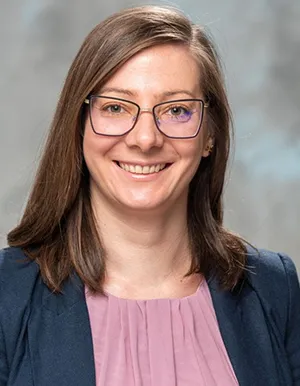
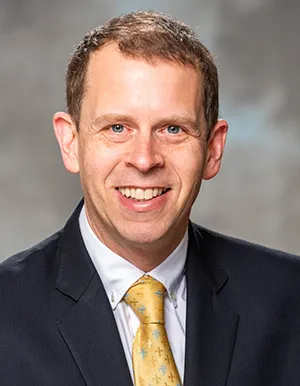
Yongsheng Chen

Yongsheng Chen, Bonnie W. and Charles W. Moorman IV Professor in environmental engineering at Georgia Tech

Ying Li

Ying Li, associate professor of mechanical engineering at University of Wisconsin-Madison

Tiezheng Tong

Tiezheng Tong, associate professor of environmental engineering at Arizona State University

Someday, your drinking water could be completely free of toxic “forever chemicals.” 

These chemicals, called PFAS (per- and polyfluoroalkyl substances), are found in common household items like makeup, nonstick cookware, dental floss, batteries, and food packaging. PFAS permeate the soil, water, food, and air, and they can remain in the environment for millennia. Once inside the human body, PFAS can persist for years, suppressing the immune system and increasing cancer risk.  

Georgia Tech researchers, armed with a cutting-edge machine learning (ML) model, are spearheading a multi-university initiative. Their goal? To design a better membrane that efficiently removes PFAS from drinking water, a significant source of human exposure. 

“More than 200 million Americans in all 50 states are affected by PFAS in drinking water, with 1,400 communities having levels above health experts’ safety thresholds,” noted the study’s principal investigator Yongsheng Chen, Bonnie W. and Charles W. Moorman IV Professor in Georgia Tech’s School of Civil and Environmental Engineering. Chen also directs the Nutrients, Energy, and Water Center for Agriculture Technology, or NEW Center. “Our research aims to provide a scalable, efficient, and sustainable solution for mitigating these toxic chemicals’ impact on human health and the environment.”  

The resulting work, funded with over $10 million in multiyear grants from the U.S. Department of Agriculture (USDA), the National Science Foundation, and the Environmental Protection Agency (EPA), was recently published in Nature Communications.   

Sewage Treatment Limitations
Conventional water treatment processes are ineffective at removing PFAS. Too often, traditional cleansing methods, such as using chlorine to kill pathogens in water, create harmful byproducts. 

“Solving one problem creates another problem,” said Chen. 

He has already used ML and artificial intelligence in precision agriculture to monitor nutrient levels in plants and insists that tackling PFAS removal similarly requires new approaches. Rather than treating an entire body of water, Chen’s team first separated PFAS from the water stream. Success depended on finding the right membrane material to isolate the chemicals in the water.  

Chen relied on a team of 10 Ph.D. students and nine research scientists to perform the ML modeling. In addition to Georgia Tech, two other schools contributed people and laboratory expertise. The University of Wisconsin-Madison (UWM) validated the model with molecular simulations, while Arizona State University (ASU) trained it using data from scientific literature and their lab. 

“Applying machine learning to membrane separation represents an exciting frontier for environmental engineering,” said Tiezheng Tong, an associate professor of environmental engineering in ASU’s School of Sustainable Engineering and the Built Environment. 

This is another step in tackling PFAS pollution, a widespread problem that has recently received significant public attention due to PFAS’ toxic nature and the recent EPA ruling on PFAS in drinking water, he said. 

“By integrating with molecular simulation tools, we can better understand PFAS transport across nanofiltration and reverse osmosis membranes, pushing the boundary of fundamental science relating to membrane separation,” Tong said.

ML Accelerates Membrane-Material Discoveries
Using ML modeling significantly sped up the discovery process. For instance, one Ph.D. student in Chen’s lab used trial and error over two years to pinpoint one promising membrane. Machine learning modeling allowed the team to find eight membrane candidates 10 to 20 times faster, reducing discovery time from years to a few months. 

“Our molecular dynamics simulations reveal that electrostatic interactions, size exclusion, and dehydration play critical roles in governing the transport of PFAS molecules across polyamide membranes,” Ying Li explained. Li is an associate professor of mechanical engineering at UWM. “These calculations indicate that electrostatic interactions dominate PFAS rejection, with charged functional groups significantly influencing transport behavior. The simulation results provide fundamental insights that align with ML predictions, highlighting the key molecular determinants of PFAS removal efficiency.” 
 
Addressing PFAS Exposure in Agriculture
By addressing PFAS contamination, this research could also benefit the agriculture industry, which depends on fertilizer sourced from water treatment plants. Wastewater biosolids are processed into fertilizer, offering farmers and ranchers a cheaper alternative to chemical fertilizers. Unfortunately, PFAS-tainted fertilizers from sewage sludge have contaminated significant amounts of land and livestock. Industry groups estimate that almost 70 million acres of U.S. farmland could be contaminated by these forever chemicals.  

By funding this research, the USDA hopes that an effective membrane will help the United States reclaim this crucial resource.  

“Synthesizing a very smart membrane to get rid of PFAS also allows us to recover the fertilizer from municipal wastewater treatment plants,” Chen said. “Such a membrane could enable us to get rid of things we don’t want and keep the things we need, so we can keep the water for irrigation or other applications.”  

Eliminating PFAS in fertilizers also could help address the mismatch of food and water demand in urban versus rural areas since 80% of the demand resides in cities. PFAS removal could directly support urban area resource recovery and food production.   

“Our goal is achieving a circular economy where materials never become waste, and nature is regenerated,” Chen said.   

What’s Next
The team will fine-tune the model and add more data to improve its training features. Chen will synthesize membranes in his lab to further test the model's PFAS removal predictions. 

Today, scientists have found ways to remove long chains of PFAS, but the shorter chains of these chemicals persist, explained Chen. 

“If we can better understand the mechanism, we’ll be able to design a good material membrane to get rid of all PFAS. That could be game-changing.” 

— By Anne Wainscott-Sargent

Funding
This work is partially supported by the NSF (Award Nos. 2112533, 2427299, 2345543, Y.C.; 2448130, T.T.; and 2345542, Y.L.).  

Y.C. acknowledges the financial support by the USDA (Award No.2018−68011-28371), NSF-USDA (Award No. 2020-67021-31526), and EPA (Award No. 840080010).  

T.T. acknowledges the support of the USDA National Institute of Food and Agriculture (Hatch Project COL00799, accession 1022591).  

Y.L. acknowledges the financial support by the National Alliance for Water Innovation (NAWI), funded by the US DOE, Office of Energy Efficiency and Renewable Energy (EERE), Advanced Manufacturing Office, under Funding Opportunity announcement Number DE-FOA-0001905, through a subcontract to the University of Wisconsin-Madison. 

News Contact

Shelley Wunder-Smith | Director of Research Communications
shelley.wunder-smith@research.gatech.edu

Subscribe to Research Horizons