
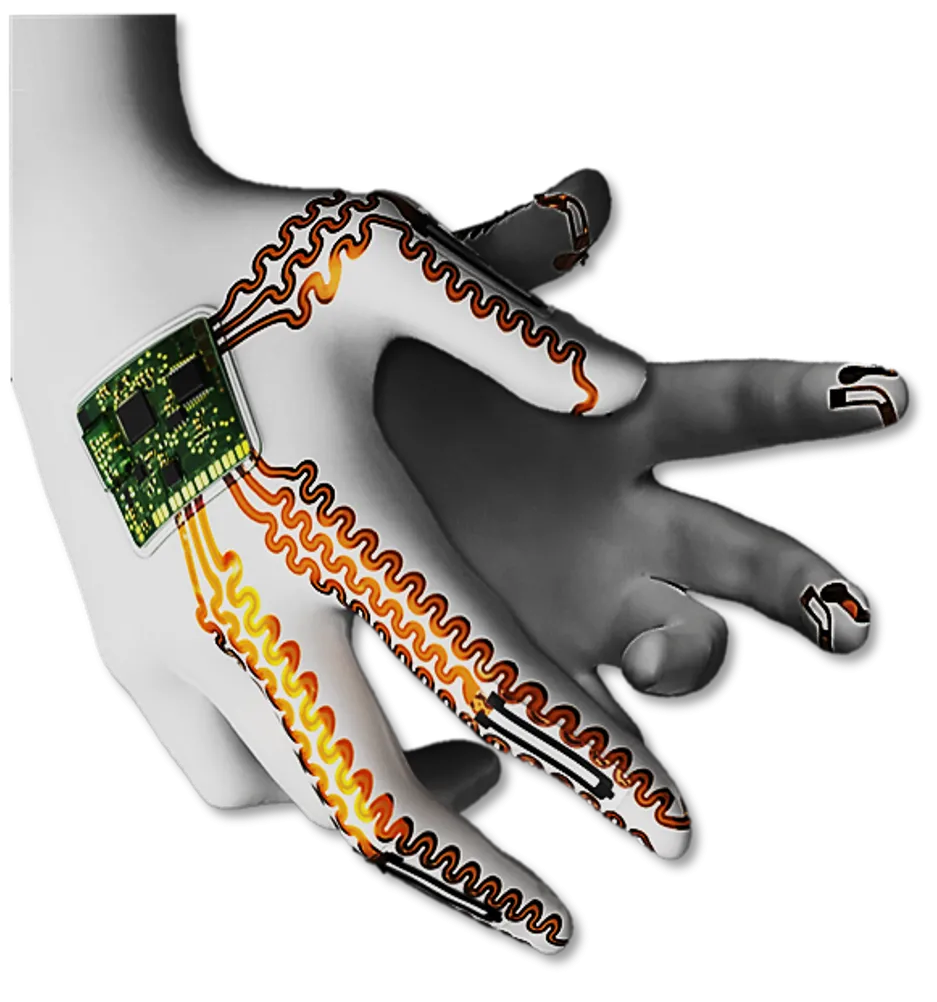
A mock-up of an AI-powered glove with muscles made from lifelike materials paired with intelligent control systems. The technology learns from the body and adapts in real time, creating motion that feels natural, responsive, and safe enough to support recovery.
Pop culture has often depicted robots as cold, metallic, and menacing, built for domination, not compassion. But at Georgia Tech, the future of robotics is softer, smarter, and designed to help.
“When people think of robots, they usually imagine something like The Terminator or RoboCop: big, rigid, and made of metal,” said Hong Yeo, the G.P. “Bud” Peterson and Valerie H. Peterson Professor in the George W. Woodruff School of Mechanical Engineering. “But what we’re developing is the opposite. These artificial muscles are soft, flexible, and responsive — more like human tissue than machine.”
Yeo’s latest study, published in Materials Horizons, explores AI-powered muscles made from lifelike materials paired with intelligent control systems. The technology learns from the body and adapts in real time, creating motion that feels natural, responsive, and safe enough to support recovery.
Muscles That Think, Materials That Feel
Traditional robotics relies on steel, wires, and motors, but rarely captures the nuances of human motion. Yeo’s research takes a different approach. He uses hierarchically structured fibers, which are flexible materials built in layers, much like muscle and tendon. They can sense, adapt, and even “remember” how they’ve moved before.
Yeo trains machine learning algorithms to adjust those pliable materials in real time with the right amount of force or flexibility for each task.
“These muscles don’t only respond to commands,” Yeo said. “They learn from experience. They can adapt and self-correct, which makes motion smoother and more natural.”
The result of that research is deeply human. For someone recovering from a stroke or limb loss, each deliberate movement rebuilds not just strength — it rebuilds confidence, independence, and a sense of self.
A Glove That Gives Freedom Back
One of the first real-world applications is a prosthetic glove powered by artificial muscles (published in ACS Nano, 2025), a device that behaves more like a helping hand than a mechanical tool. Traditional prosthetics rely on rigid motors and preset motions, but Yeo’s design mirrors the natural give-and-take of real muscle.
Inside the glove, thin layers of stretchable fibers and sensors contract, twist, and flex in sync with the wearer’s intent. The glove can fine-tune grip strength, reduce tremors, and respond instantly to the user’s movements, bringing dexterity back to everyday life.
That kind of precision matters most in the smallest tasks: fastening a button, lifting a glass, holding a child’s hand.
“These aren’t just movements,” Yeo said. “They’re freedoms.”
For Yeo, the idea of restoring freedom through movement has driven his research from the very beginning.
A Mission Rooted in Loss
Yeo's work is deeply personal. His path to biomedical engineering began with loss — the sudden death of his father while Yeo was still in college. That moment reshaped his sense of purpose, redirecting his focus from machines that move to technologies that heal.
“Initially, I was thinking about designing cars,” he said. “But after my father’s death, I kind of woke up. Maybe I could do something that helps save someone’s life.”
That purpose continues to guide his lab’s work today, building technologies that help people recover what they’ve lost.
Achieving that vision, however, means tackling some of engineering’s toughest challenges.
Soft Machines, Hard Problems
Creating lifelike muscles isn’t easy. They need to be soft but strong, responsive but safe. And they must avoid triggering the body’s immune system. That means building materials that can survive inside the body — and learn to belong there.
“We always think about not only function, but adaptability,” Yeo said. “If it’s going to be part of someone’s body, it has to work with them, not against them.”
His team calibrates these synthetic fibers like precision instruments — tested, adjusted, and re-tuned until they operate in sync with the body’s natural movements. Over time, they develop a kind of “muscle memory,” adapting fluidly to changing conditions. That dynamic adaptability, Yeo explained, is what separates a machine from a prosthetic that truly feels alive.
From Collaboration to Innovation
Solving problems this complex requires more than one discipline. It takes an entire ecosystem of collaboration. Yeo’s lab brings together experts in mechanical engineering, materials science, medicine, and computer science to design smarter, safer devices.
“You can’t solve this kind of problem in isolation,” he said. “We need all of it — polymers, artificial intelligence, biomechanics — working together.”
That collaborative model is supported by the National Science Foundation (NSF), the National Institutes of Health, and Georgia Tech’s Institute for Matter and Systems. In 2023, Yeo received a $3 million NSF grant to train the next generation of engineers building smart medical technology.
His team now works closely with healthcare providers and industry partners to bring these devices out of the lab and into patients’ lives.
The Future You Can Feel
The future of robotics, according to Yeo, won’t be defined by power or complexity but by feel.
“If it feels foreign, people won’t use it,” he said. “But if it feels like part of you, that’s when it can truly change lives.”
It’s the opposite of The Terminator, where machines replace us. Yeo is designing these machines to help us reclaim ourselves.
News Contact
Michelle Azriel Writer/Editor, Research Communications
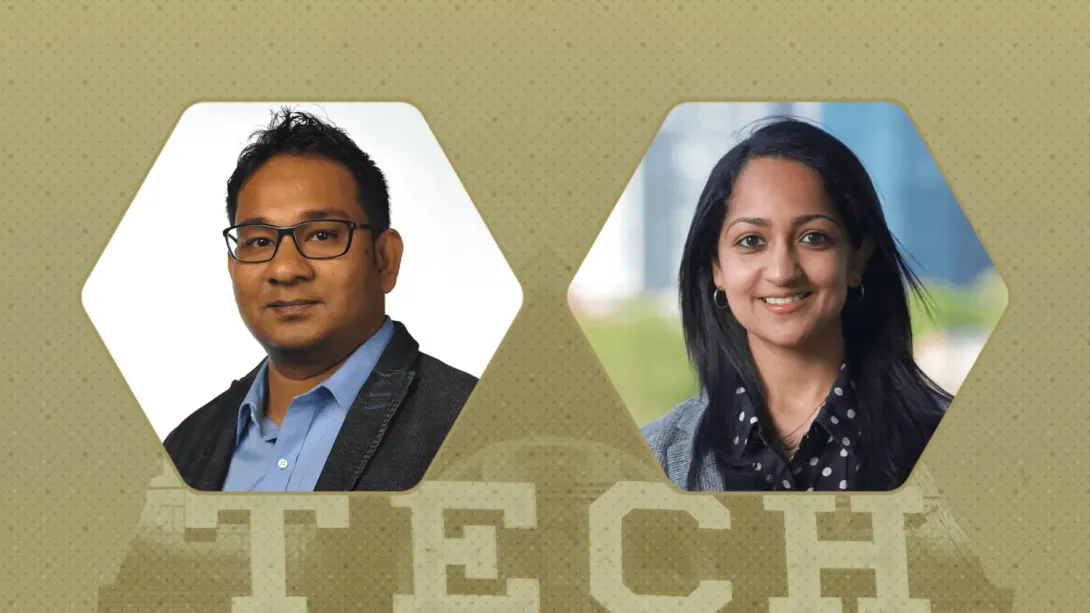
Asif Khan and Akanksha Menon have been selected to participate in the 2025 EU-US Frontiers of Engineering (FOE) Symposium, taking place October 20-23 in Bordeaux, France.
Hosted by the National Academy of Engineering in partnership with the European Council of Academies of Applied Sciences, Technologies and Engineering (Euro-CASE), and supported by The Grainger Foundation, the symposium is an invitation-only gathering of approximately 60 early- to mid-career engineers from the United States and Europe. The program is designed to foster interdisciplinary collaboration and explore emerging engineering challenges.
Participation in the EU-U.S. FOE Symposium is considered one of the most prestigious honors for mid-career engineers and is often regarded as a catalyst for future leadership roles in the field, with many past participants going on to achieve high professional distinction.
Read the full story by the School of Electrical and Computer Engineering
News Contact
Dan Watson | Communications Manager
School of Electrical and Computer Engineering
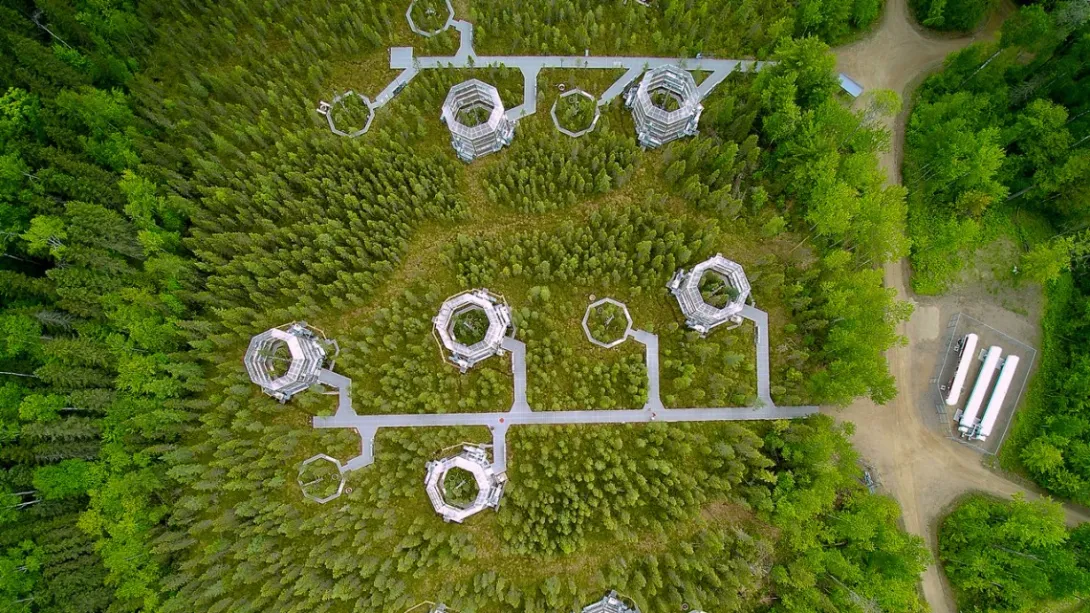
This story by Caitlin Hayes is shared jointly with the Cornell Chronicle newsroom.
Study co-author Joel E. Kostka is the Tom and Marie Patton Distinguished Professor and associate chair for Research in the School of Biological Sciences with a joint appointment in the School of Earth and Atmospheric Sciences. He also serves as faculty director of Georgia Tech for Georgia's Tomorrow.
The Kostka Lab works in peatland ecosystems to quantify changes in microbial communities brought on by climate change drivers. In particular, next generation gene sequencing and omics approaches are employed to investigate the microbial groups that mediate organic matter degradation and the release of greenhouse gases.
Peatlands make up just 3% of the earth’s land surface but store more than 30% of the world’s soil carbon, preserving organic matter and sequestering its carbon for tens of thousands of years. A new study sounds the alarm that an extreme drought event could quadruple peatland carbon loss in a warming climate.
In the study, published October 23 in Science, researchers find that, under conditions that mimic a future climate (with warmer temperatures and elevated carbon dioxide), extreme drought dramatically increases the release of carbon in peatlands by nearly three times. This means that droughts in future climate conditions could turn a valuable carbon sink into a carbon source, erasing between 90 and 250 years of carbon stores in a matter of months.
“As temperatures increase, drought events become more frequent and severe, making peatlands more vulnerable than before,” said Yiqi Luo, senior author and the Liberty Hyde Bailey Professor in the School of Integrative Plant Science’s Soil and Crop Sciences Section, in the College of Agriculture and Life Sciences (CALS) at Cornell University. “We add new evidence to show that with peatlands, the stakes are high. We observed that these extreme drought events can wipe out hundreds of years of accumulated carbon, so this has a huge implication.”
“To me, this study is striking in that it shows that around 10 to 100 years of carbon uptake by one of the most important global soil carbon stores can be erased by just two months of extreme drought,” adds Joel Kostka, Tom and Marie Patton Distinguished Professor in Biological Sciences at Georgia Tech.
It was already well-established that drought reduces ecosystem productivity and increases carbon release in peatlands, but this study is the first to examine how that carbon loss is exacerbated as the planet warms and more carbon dioxide enters the atmosphere. The Intergovernmental Panel on Climate Change estimates extreme drought will become 1.7 to 7.2 times more likely in the near future.
Read the full story in the Cornell newsroom.
###
Other co-authors include Cornell postdoctoral researchers Jian Zhou and Ning Wei; senior research associate Lifen Jiang; and researchers from Georgia Institute of Technology, Florida State University, the U.S. Department of Agriculture (USDA), ETH Zurich, Northern Arizona University, the Australian National University, the University of Western Ontario and Duke University.
Funding for the study came in part from the National Science Foundation, USDA, the New York State Department of Environmental Conservation and the New York State Department of Agriculture and Markets.
News Contact
Media contacts:
Jess Hunt-Ralston
Director of Communications
College of Sciences
Georgia Tech
Kaitlyn Serrao
Media Relations
Cornell University
Natalia Burgess
Media Assistant
ANU Communications and Engagement
The Australian National University
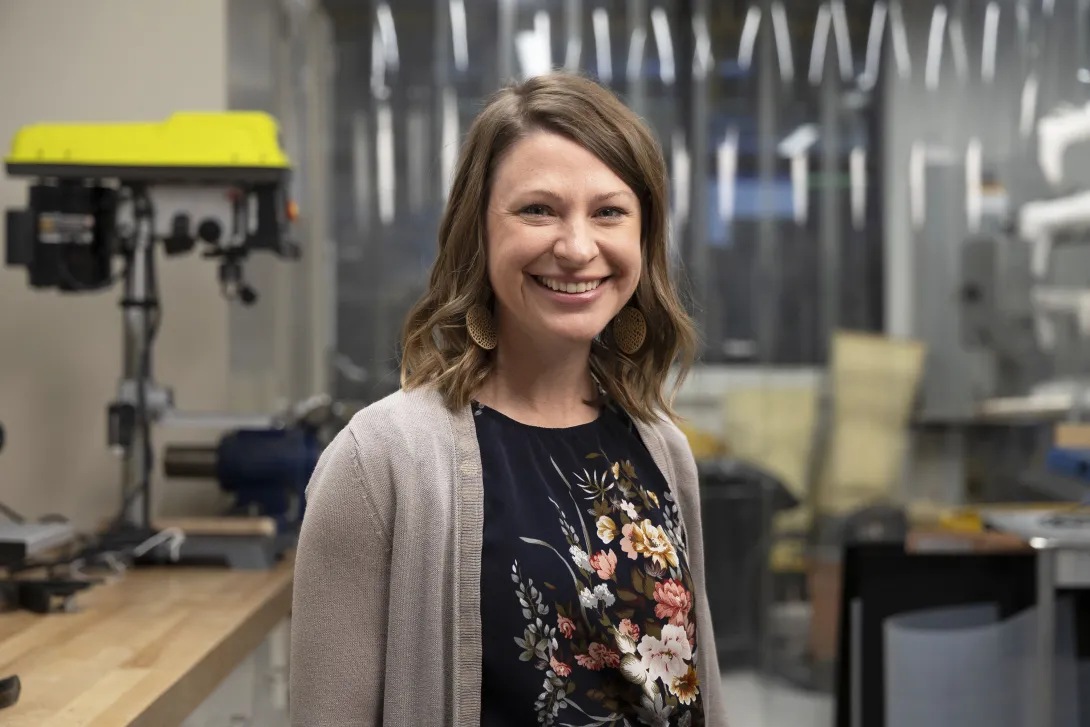
Kinsey Herrin is a principal research scientist in the George W. Woodruff School of Mechanical Engineering at Georgia Tech.
Growing up in rural southwest Georgia, Kinsey Herrin loved “making stuff.” She loved it so much that she regularly dug up muddy clay from her family’s property and the surrounding area to make ceramics. As a prosthetist/orthotist, she creates and tests devices that help patients improve or regain mobility — from prosthetic limbs to braces of all kinds. But Herrin’s role at the Institute is even more expansive. She’s at the epicenter of a research community where medical devices, studies, data, patients, clinicians, and students collide.
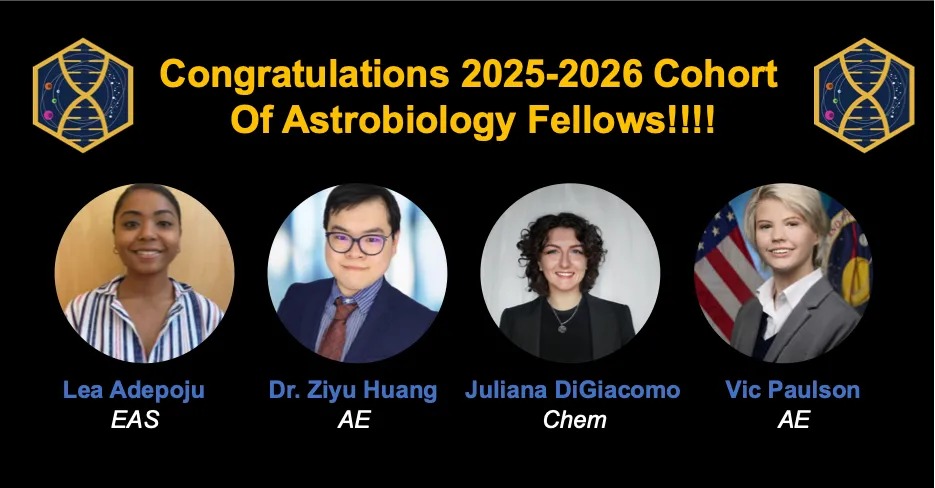
At Georgia Tech, four researchers are investigating the origin of life and where else it might exist from four very different perspectives. This fall, the astrobiology fellowship program named the 2025–26 astrobiology fellows to pursue this age-old debate: Lea Adepoju from the School of Earth and Atmospheric Sciences, Juliana DiGiacomo from the School of Chemistry and Biochemistry, and Ziyu Huang and Lauren Paulson from the Daniel Guggenheim School of Aerospace Engineering.
This year’s cohort reflects the interdisciplinary spirit at the heart of astrobiology. From atmospheric science to aerospace engineering to chemistry, each fellow brings a distinct perspective to two of astrobiology’s biggest questions: where life originated from and what it might look like beyond Earth.
“What drew me to apply is the opportunity to give back to the astrobiology community at Georgia Tech, while also promoting awareness of astrobiology in other fields and providing access to the latest findings,” said Adepoju.
Supported by the Georgia Tech College of Sciences Betsy Middleton and John Clark Sutherland Dean’s Chair, the astrobiology fellowship program recognizes graduate students and postdocs who demonstrate leadership, community-building, and a passion for astrobiology. Each fellow receives a $4,000 award and takes on the responsibility of organizing events and outreach that strengthen the astrobiology community at Tech.
For Ph.D. candidate Juliana DiGiacomo, the search begins with the Earth’s chemical origins. Working in Professor Loren Williams’ lab, she studies long-term chemical evolution: a process that may have catalyzed the earliest molecules of life into existence on prebiotic Earth, a period billions of years before life as we know it emerged.
DiGiacomo recreates the conditions of prebiotic Earth by cycling simple molecules through wet and dry phases, a daily rhythm that could have been common then. “We’ve seen how a simple ‘primordial soup’ can result in kinetic trapping of high-energy bonds relevant to life,” she said, describing her experiments.
Lea Adepoju, an earth and atmospheric sciences Ph.D. candidate, looks for traces of life in an entirely different direction: deep beneath the sea. She studies microbial communities in benthic basins, asking how they alter methane signatures. “The aim of this study is to elucidate the key signatures that would improve our understanding of methane-based biosignatures that might be found on ocean worlds,” she said.
If we can read these signals of life here, she suggests, perhaps we could have a better understanding of signals in other worlds where oceans hide beneath the surface. “I would like them to wonder where else life could have existed somewhere else in our solar system or beyond,” said Adepoju. “Could it really be possible that Earth was the only planet that ‘got lucky’?”
For aerospace engineering postdoctoral fellow Ziyu Huang, the question is what happens next. Once signals of life appear, can they sustain themselves long enough for life to evolve?
With a background in computational chemistry and space environment modeling, Huang studies how plasma, solar wind, and micrometeoroids affect the shape and chemistry of moons and exoplanets. These processes matter because they determine whether worlds can hold onto or lose important volatile elements like water and carbon, which are essential for life and habitability.
“You start to wonder what kinds of wild chemistry might be happening out there,” he said, pointing to planets like K2-18 b or the TRAPPIST-1 system. “Oceans hidden under thick skies, strange reactions recycling water and organics, or even entirely new pathways to habitability —thinking about these possibilities reminds us that life could thrive in ways and places far beyond what Earth has taught us to expect.”
For Lauren Paulson, a third-year Ph.D. student, the connection to astrobiology began unexpectedly. Early in her Ph.D., she was assigned to lead a student team designing a non-terrestrial aircraft, a vehicle meant to fly in the atmosphere of another world. “I knew the engineering, but not astrobiology,” Paulson said. “So, I signed up for the astrobiology seminar and started attending every ExplOrigins meeting I could. Those experiences opened up an entirely new way of thinking about exploration, one that united systems engineering with questions about the origin and persistence of life.”
Now just one class away from completing the astrobiology graduate certificate, Paulson focuses on sustainable space technologies and in-situ resource utilization, modeling how local materials, like lunar ice or Martian regolith, can support future missions and reduce reliance on Earth-based resupply. “It’s the engineering side of astrobiology,” she explained. “Designing the systems that make life detection — and eventually habitation — possible.”
Beyond the Lab
But for the fellows, the year ahead is not just about research, but also about leadership and community. “I’m most excited to help connect communities that don’t always realize how much they have in common, especially engineering students who might not yet see how their work relates to astrobiology,” said Paulson. “I’d love to organize events that make the field feel more accessible and interdisciplinary, and to highlight how systems thinking, mission design, and sustainability are deeply intertwined with the search for life beyond Earth.”
Over the coming year, Adepoju, Huang, DiGiacomo, and Paulson will co-organize the fall social event with an invited speaker and the spring ExplOrigins Colloquium. They will also design their own service project — whether it’s leading discussions, mentoring undergraduates, or outreach to high school teachers.
Beyond science, they also hope to spark curiosity by bringing more people into the astrobiology conversation. “Life on Earth emerged almost immediately after the planet cooled just enough to support it,” DiGiacomo said. “That fact alone suggests that life, given the right conditions, may not be rare at all; it might even be inevitable. I’d hope to inspire someone to wonder: If life could take hold so rapidly here, how many other worlds might be home to life as well?”
For more information about the Astrobiology program, visit the program’s site or reach out through their contact page.
News Contact
space@research.gatech.edu

A NASA-funded research team at Georgia Tech has developed a new method to extract water from the Moon’s icy polar regions using concentrated sunlight—turning one of the Moon’s biggest challenges into an energy advantage.
Led by Thom Orlando, with co-author Peter Loutzenhiser lending his solar energy expertise, the researchers are experimenting with heliostats—solar concentrating mirrors—to beam concentrated solar radiation down into the Moon’s shadowed craters. There, the heat can release water vapor from the frozen regolith, providing hydrogen and oxygen for propulsion fuels.
“We envision mounting these heliostats on the rim of the crater and then fixing them in such a way that they beam the solar irradiation down,” Loutzenhiser said. “The concentrations would be much greater than on Earth due to no attenuation, as the Moon has little to no atmosphere.”
The team’s experimental results, published in Acta Astronautica, offer a practical path toward sustainable lunar resource use and future space exploration.
Read the full article
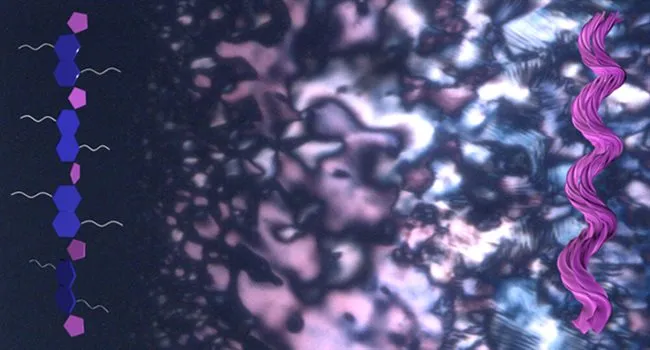
Certain materials can spontaneously form spiral-shaped structures, even when they start out without any 'handedness.' These tiny helices emerge during a phase separation process, offering clues about how life's building blocks may have first developed a preference for one 'handed' form over another. (Credit: Jong-Hoon Lee, Ziming Wang, Ying Diao)
This story is shared with the University of Illinois Urbana-Champaign newsroom. John R. Reynolds is a professor in the School of Chemistry and Biochemistry and School of Materials Science and Engineering at Georgia Tech. He served as founder of the Georgia Tech Polymer Network (GTPN) and is a member of the Center for Organic Photonics and Electronics (COPE).
Chirality, a property where structures have a distinct left- or right- “handedness,” allows natural semiconductors to move charge and convert energy with high efficiency by controlling electron spin and the angular momentum of light. A new study has revealed that many conjugated polymers, long considered structurally neutral, can spontaneously twist into chiral shapes. This surprising behavior, overlooked for decades, could pave the way for development of a new class of energy-efficient electronics inspired by nature.
The research, a collaborative project that included researchers from the University of Illinois Urbana-Champaign, Georgia Institute of Technology, University of North Carolina, and Purdue University was recently published in the Journal of the American Chemical Society.
“Many molecules essential to life are chiral,” said Ying Diao, professor of chemical and biomolecular engineering at Illinois, who led the project. “The question that has remained a really a big fascination across the field is how chiral symmetry breaking happens in the first place: that is how life selects one handedness over the other. Our work mainly focuses on the origin of chirality: why chirality spontaneously emerges in absence of any chiral sources.”
To answer this question, the team tested 34 different conjugated polymers. Each polymer was dissolved in a solvent, then the researchers gradually increased the polymer concentration to observe whether liquid–liquid phase separation (LLPS) occurred. When LLPS was detected, they used circular dichroism spectroscopy to analyze the samples, revealing a strong correlation between phase separation and the emergence of chirality. The researchers refer to this phenomenon as spontaneous chiral symmetry breaking.
They found that approximately two-thirds of the polymers spontaneously formed chiral structures when their concentration in the solution increased.
“That took our community by surprise, because conjugated polymers have been studied for half a century,” Diao said. “These new chiral helical states of matter have basically been hiding in plain sight.”
To understand why some of the polymers developed chirality while others did not, Illinois chemistry professor and senior co-author Nicholas E. Jackson applied machine learning to analyze molecular features across the polymer library. The analysis, later backed up by additional testing, revealed that polymers with longer molecular chains were more likely to form chiral assemblies. Unexpectedly, the researchers also found that the presence of oxygen atoms in the side chains was a strong predictor of chiral behavior.
“Machine learning uncovered hidden patterns across dozens of conjugated polymers, relating subtle chemical details to chiral phase formation,” Jackson said. “Such insights would have been very difficult to derive by human intuition alone.”
Diao noted that the discovery not only deepens our fundamental understanding of chiral emergence but also holds significant technological promise. In nature, chiral systems – such as those involved in photosynthesis – enable highly efficient electron transport. Looking ahead, Diao said that mimicking this behavior could lead to major performance gains in electronic devices and innovation of new device types.
“We are thinking about using chirality to control conductivity – for example, in transparent conductors for phones or in solar cells that could be more stable and efficient,” she said. “In our computers, electrons bounce around and heat is a big problem. But if we make chiral versions, we think charge transfer could be extremely efficient, just like in nature.”
“What’s nice about this is, this is not the end of the story,” said Georgia Institute of Technology chemistry professor John Reynolds, a senior co-author on the study. “This work provides guidance to polymer scientists in the field for studying the many, many conjugated polymers that have been synthesized over the years, and for designing new polymers with enhanced properties.”
This study was supported by the U.S. Office of Naval Research, the Air Force Office of Scientific Research, the Molecule Maker Lab Institute, and the National Science Foundation. Polymers for the study were provided by Reynolds, University of North Carolina chemistry professor Wei You, University of Illinois chemistry professor Jeff Moore, and Purdue University chemistry professor Jianguo Mei.
In addition to her appointment in Chemical & Biomolecular Engineering, Diao is a full-time faculty member at the Beckman Institute for Advanced Science and Technology, holds a faculty appointment with Chemistry in the College of Liberal Arts & Sciences, and is affiliated with Materials Science & Engineering in The Grainger College of Engineering. In addition to his appointment in Chemistry, Jackson is a group leader at the Beckman Institute and affiliate faculty member in the departments of Chemical & Biomolecular Engineering and Materials Science & Engineering.
The paper, "Ubiquitous Chiral Symmetry Breaking of Conjugated Polymers via Liquid Liquid Phase Separation," is available online at https://pubs.acs.org/doi/abs/10.1021/jacs.5c07995
News Contact
Jess Hunt-Ralston
Director of Communications
College of Sciences at Georgia Tech
To reach Ying Diao: yingdiao@illinois.edu

(Illustration: Sarah Collins)
When a Georgia Tech-led project received a contract award from the Advanced Research Projects Agency for Health (ARPA-H), it was for a bold idea with aggressive metrics. And it wasn’t guaranteed money. The team, led by biomedical engineer Gabe Kwong, had to deliver on its vision. Doing so could transform cancer screening and care, leading to one-size-fits-all tests that detect multiple cancers before they’re visible on CT or PET scans.
It’s a big goal, but that’s the point of ARPA-H. The agency funds staggeringly difficult healthcare innovation ideas that require major investment to succeed.
Two years into the $49.5 million project, Kwong and the team from Georgia Tech, Columbia University, and Mount Sinai Health System has crossed a critical threshold.
They’ve built the first tool able to measure enzyme activity around cancer tumors and healthy cells. And they’ve deployed it to understand the unique signatures for tumors from 14 different kinds of cancer.
That data is powering the first version of a cancer “atlas.” Like a geographical atlas, it will offer directions to each kind of tumor, allowing scientists to design sensors that follow the map and detect cancer tumors when they’re still small.
“If I want to deliver a sensor to a particular region inside the body, right now, there's no way of directing it. We give it systemically, and it basically infuses all tissues all the time,” said Kwong, Robert A. Milton Professor in the Wallace H. Coulter Department of Biomedical Engineering. “What's powerful is that we’re now defining tissue sites with a specific molecular ‘barcode.’ Then if a sensor is given systemically, it should only turn on when the barcode matches the local tissue.”
Read more about the project on the College of Engineering website.
News Contact
Joshua Stewart
College of Engineering
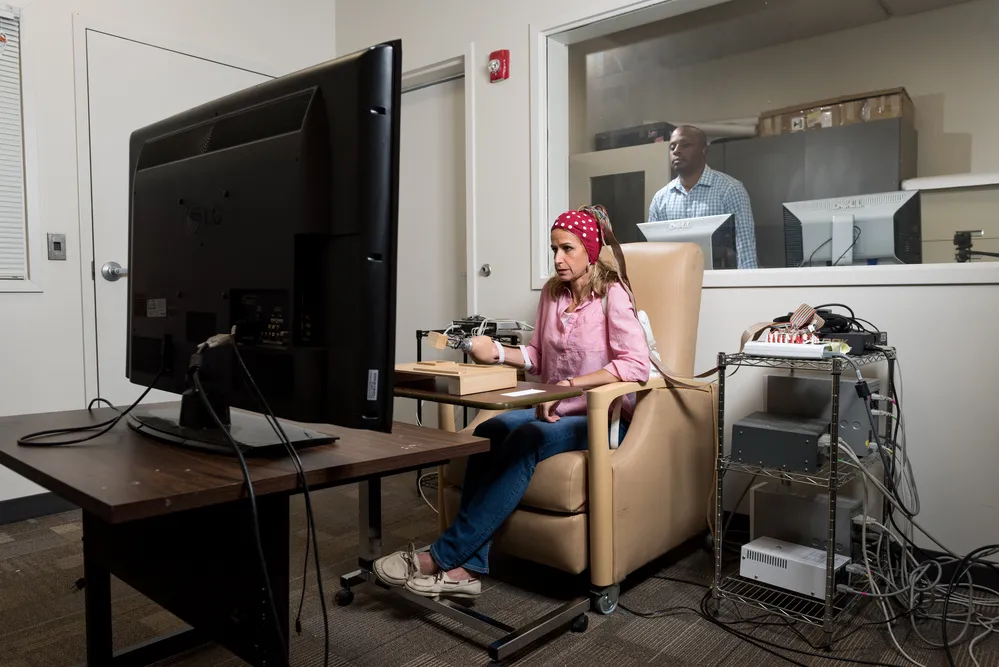
Lewis Wheaton (back) directs Georgia Tech’s Cognitive Motor Control Lab.
Neuroscience experts from across Georgia Tech will soon come together for a new interdisciplinary research institute, the Institute for Neuroscience, Neurotechnology, and Society (INNS), launched in July. Faculty in INNS are helping to solve some of neuroscience’s most pressing problems, and many have promising medical applications. One important aspect of studying the brain is understanding how the brain and the body work together. Meet the researchers who study brain-body interactions, from monitoring the neuron degradation that causes Alzheimer’s to enhancing mobility for stroke survivors, in an effort to improve the health and quality of life for millions of Americans.
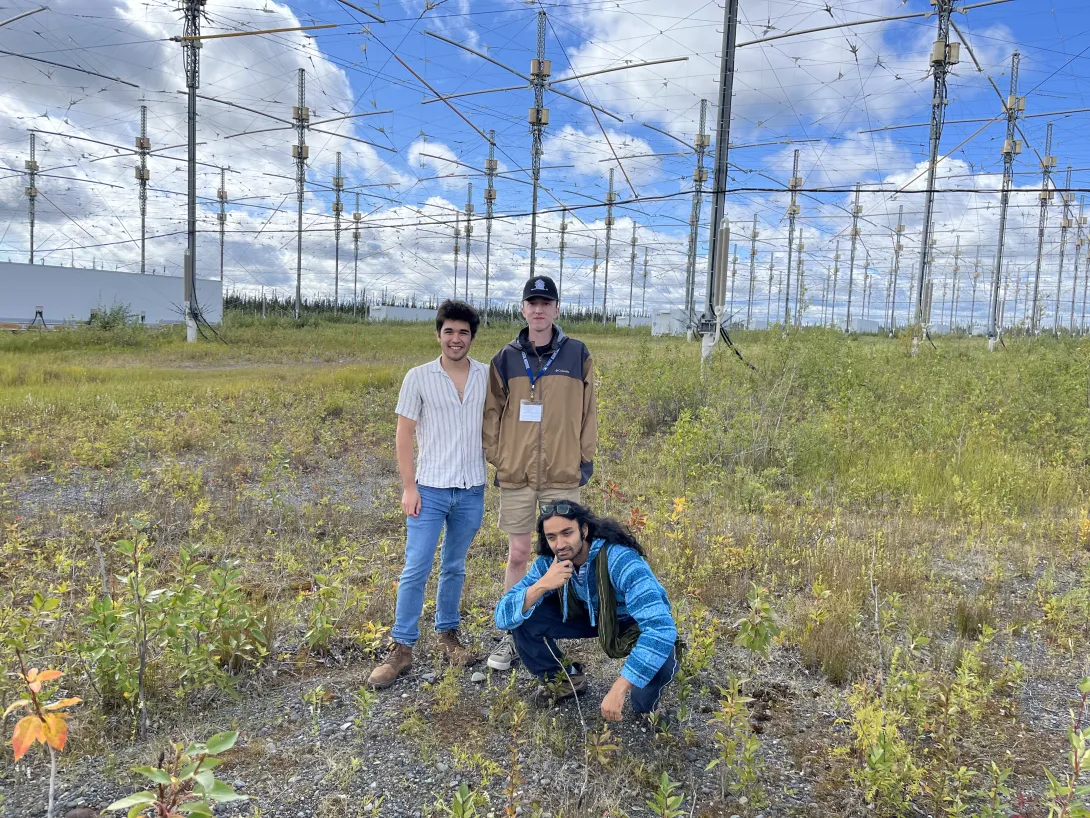
Home to some of the best geophysical research facilities in the country, Alaska is a premier destination for scientific exploration. It’s become a popular destination for Georgia Tech students and researchers, especially those in Professor Morris Cohen’s Low Frequency Radio Lab.
School of Electrical and Computer Engineering (ECE) Ph.D. students Gus Richter, Malhar Tamhane, and Felipe Sandoval are the latest to make the trip to the “Last Frontier” as they work to push the boundaries of atmospheric research. The trio participated in the 2025 Polar Aeronomy and Radio Science (PARS) summer school program held in August at the University of Alaska Fairbanks and the High-frequency Active Auroral Research Program (HAARP).
Read the full story on the School of Electrical and Computer Engineering's website.
News Contact
Zachary Winiecki