
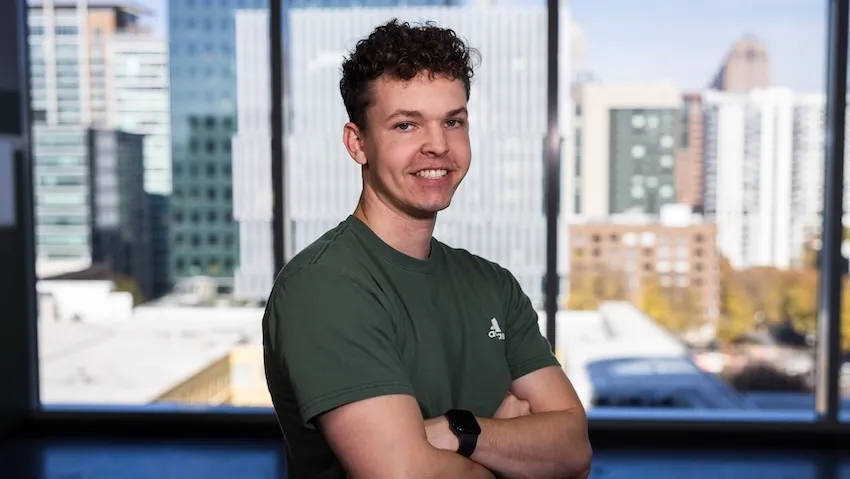
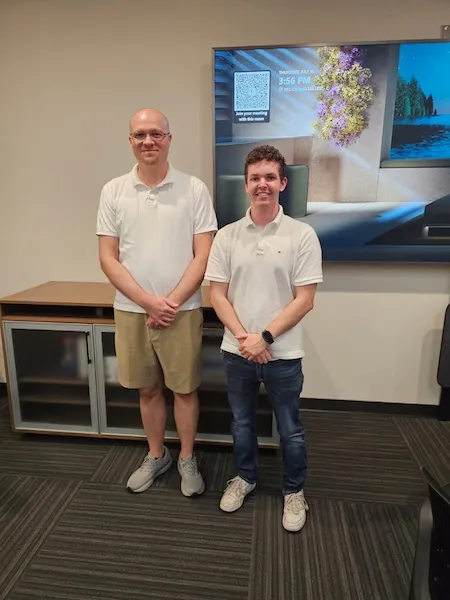
National laboratories play a critical role in advancing science, developing energy technologies, and ensuring national security. This summer, Ph.D. student Tage Burnett contributed to that mission firsthand during an internship at Oak Ridge National Laboratory (ORNL) in Tennessee.
The internship provided Burnett with valuable insight into national laboratory research and reinforced skills he developed through his studies at Georgia Tech. When he returned to campus, we asked Burnett to share more about his internship and what he learned.
Student: Tage Burnett
Research Interests: Fusion energy, computational plasma physics, high-performance computing, and structure-preserving machine learning
Degree Program: Ph.D. in Computational Science and Engineering
Faculty Advisor: School of CSE Assistant Professor Qi Tang
2026 Internship: Oak Ridge National Laboratory, Oak Ridge, Tennessee
Many people are unfamiliar with national laboratories, like ORNL. Could you explain the purpose of these institutions and why they are important?
The Department of Energy (DOE) national laboratories are responsible for moving forward science and technology in the United States and solving high-consequence challenges in science, energy, and national security. They work on both applied and theoretical research with both short-term and long-term returns. ORNL has eight core research areas: biology and environment, energy science, fusion and fission, isotopes, physical sciences, national security, neutron science, and supercomputing. I was an intern in the supercomputing division.
How well did coursework and experience at Georgia Tech prepare you for your ORNL internship?
My coursework at Georgia Tech was vital in my preparation for this internship. I wrote highly parallel code where I leaned heavily on what I learned in CSE 6220: High-Performance Computing. I also worked on numerical methods which required an understanding of partial differential equations and numerical linear algebra which I also learned at Georgia Tech from classes like CSE 6643: Numerical Linear Algebra and a space plasma physics course.
What did you work on while interning at ORNL?
At ORNL, I was a developer on the Adaptive Sparse Grid Discretization (ASGarD) codebase. The code uses adaptive sparse grids and the Discontinuous Galerkin method to beat the curse of dimensionality and solve high-dimensional partial differential equations (PDEs). The code is designed to simulate fully kinetic plasmas in up to 6-dimensional phase space. My project was to implement an iterative method to solve the efficiently solve the Poisson equation within the codebase. This project gave me hands on experience with linear algebra, numerical PDEs, parallel computing and software engineering which was invaluable to my development as a CSE researcher.
Do you have a favorite memory or remarkable achievement from your internship?
My favorite memory from my internship was spending time with the other ORNL interns outside of work. There was an amazing group of interns at ORNL, and it was great getting to know them. One particularly good memory was when we went out to a restaurant with live music and played laser tag during our last week of the internship to celebrate our time at ORNL. The achievement I am most proud of was getting a working, highly efficient version of the Poisson solver into ASGarD. The ASGarD codebase is open source, so I hope other plasma physics researchers will use the code and find it helpful for their research.
While interning, you were selected for a GEM Fellowship, which Georgia Tech and ORNL nominated you for. What does this fellowship mean to you and is there anything you would like to say to your supporters?
To me, receiving the GEM Fellowship indicates that other people recognize the hard work I am doing, and they believe in my ability to meaningfully contribute to the field. Having this support from GEM, ORNL, and Georgia Tech gives me greater confidence in myself and my potential and inspires me to put my all into my work. I would like all my supporters to know that I am so grateful for the opportunity you have given me to be a part of the excellent community of researchers within GEM, ORNL, and Georgia Tech. I will do my very best to make your support worthwhile!
Overall, how helpful was this internship toward your studies at Georgia Tech and career as an aspiring researcher?
The internship was extremely important to both my studies at Georgia Tech and my career as a researcher. The hands-on experience I gained is irreplaceable and it helped me to apply all the skills I have developed throughout my education. I am also optimistic that the internship will open doors for me when I am seeking a job post-graduation.
News Contact
Bryant Wine, Communications Officer
bryant.wine@cc.gatech.edu
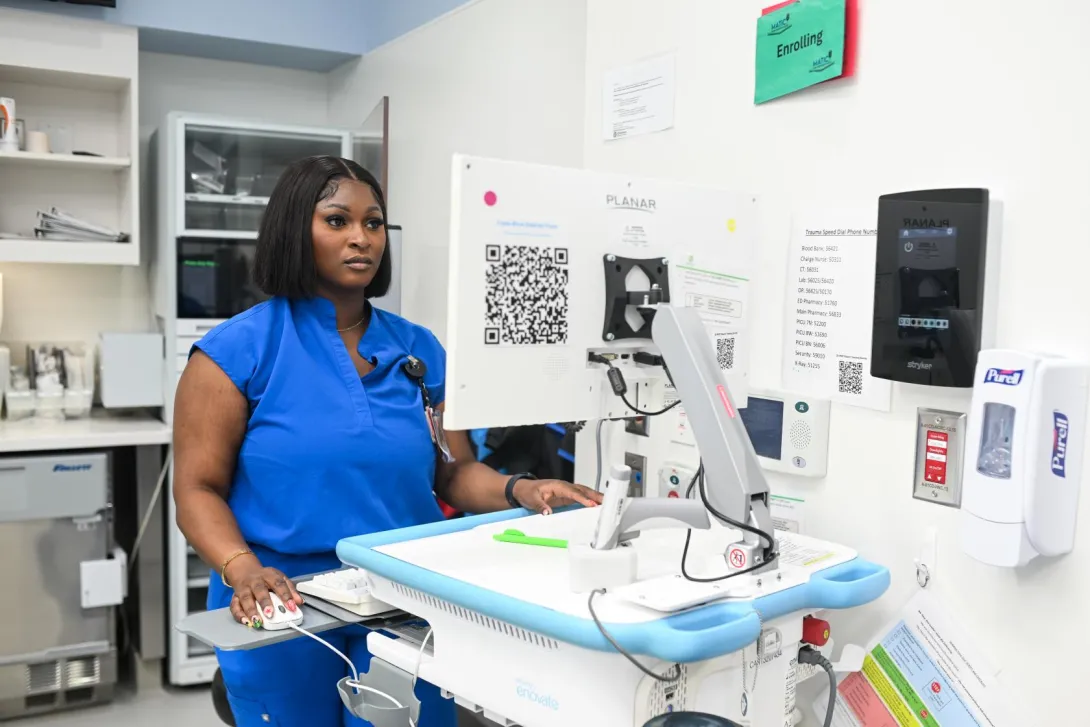
Pediatric healthcare professional reviewing electronic health record information at Children’s Healthcare of Atlanta Arthur M. Blank Hospital. (Photo courtesy of Children's Healthcare of Atlanta)
A child can be in the hospital and seemingly getting better. Then, suddenly, everything changes.
One moment they're playing games or watching television. The next, they experience breathing failure, shock, or neurological decline. If the warning signs aren't recognized early enough, the child may require emergency transfer to the intensive care unit (ICU), where interventions can include breathing tubes, blood pressure medications, and other lifesaving measures.
The phenomenon is called “emergent deterioration.”
"Kids will look fine, and then all of a sudden they'll fall off a cliff and rapidly deteriorate," said Dr. Mark Mai, a pediatric intensivist at Children’s Healthcare of Atlanta, who cares for critically ill children in the ICU. "When those kids go to the ICU and need emergency interventions, they have a much higher rate of death than kids we bring up to the ICU in a controlled fashion."
To help clinicians identify those high-risk patients sooner, researchers at Georgia Tech are partnering with Children's clinicians and technology teams to create an artificial intelligence-powered warning system. Known as Algorithm for Counteracting the Clinical Onset of Rapid Deterioration (ACCORD), the three-year project is one of the first funded projects focused on a software solution by the Children’s Healthcare of Atlanta Pediatric Technology Center at Georgia Tech (PTC). Project teams are working simultaneously on model development, app design, and user testing. And, unlike many healthcare AI projects that remain confined to research papers, ACCORD is being designed from the beginning for use in a real hospital. The ultimate goal is to help clinicians intervene before a child reaches a life-threatening emergency.
Teaching AI to Spot Trouble Earlier
Today, clinicians rely on an early warning score that combines measurements such as heart rate, blood pressure, and breathing rate into a single risk assessment. While helpful, the approach simplifies a complex clinical picture.
"The current system is a pretty basic rubric that sums up all the data points and then decides whether they are high-risk or low-risk, but from the data science and machine learning perspective it's not optimal," said Kai Wang, an assistant professor in the School of Computational Science and Engineering and project co-principal investigator with Mai.
Rather than evaluating patients through a fixed scoring system, ACCORD's AI model analyzes dozens of data streams, including vital signs, laboratory results, and clinical observations. The goal is to uncover subtle patterns that may signal deterioration hours before the physical warning signs become obvious to clinicians.
"We want to build a more sophisticated algorithm that can look into vitals, blood pressure, heart rate, and other measures to provide a more granular forecast of risk," Wang said.
Building that capability into an algorithm requires making sense of one of healthcare's biggest challenges: messy, incomplete, and constantly changing data. To develop the model, researchers are training and testing it using information pulled from Children's electronic health records. Some information, such as vital signs, is collected continuously. Other information may be recorded less frequently or at irregular intervals, such as nursing observations.
"That is both the most challenging and the most exciting part of this project," said Himadri Pandey, a machine learning Ph.D. student working on ACCORD. "We have to consider the realities of a healthcare setting. Data may be incomplete or delayed, staffing and resources may change, and any recommendation must be understandable and usable by clinicians."
"The goal is not simply to build a model that works mathematically," she added. "It's to build something that could genuinely support decision-making in a hospital."
Building Technology Nurses Will Use
For ACCORD to improve patient outcomes, the technology must fit naturally into clinicians' daily workflow. Most nurses care for multiple patients simultaneously and cannot continuously monitor a single child. Because episodes of emergent deterioration are relatively rare in a full day of care, opportunities to gain experience recognizing the earliest warning signs can be limited. Acknowledging that reality, project leaders involved frontline nurses from the beginning.
"We went straight to the nurses and said, 'This is what we're trying to do. You tell us what would make your job easier, how you need the flow, what it needs to look like, and we will build according to that,” said Christina Roberts, program manager for PTC and the Health Informatics Core at Children’s. "We brought them into the process very early and gave them a say in the development, so they know exactly what to expect when the tool comes to the floor."
The team plans to integrate ACCORD directly into the Children’s electronic health record system, where clinicians already access patient information. The application will combine vital signs, laboratory results, and other clinical data into a single dashboard that can automatically flag patients at elevated risk of deterioration.
Researchers and clinicians continue to meet regularly as the platform evolves.
"How do we distinguish what the algorithm finds important and what is just always there?" said Dr. Claire Stokes, a pediatric hematologist and oncologist with the Aflac Cancer and Blood Disorders Center at Children’s, who is involved in the project. "Because a clinician probably always wants to see the vital signs, even if they're not alert levels, for example."
Those conversations help ensure that the system provides useful information without overwhelming clinicians with additional data or alerts. The team hopes to begin testing the system in clinical settings by 2027 before broader deployment. For the researchers working on ACCORD, however, the project's success will ultimately be measured by the patients it helps.
"I know that one research project cannot solve every problem in healthcare," said Pandey, who has experienced the hospitalization of a close family member. "But being able to contribute, even in a small way, allows me to replace some of that earlier helplessness with purpose."
If successful, ACCORD could give clinicians something they rarely have when a child begins to decline — time.
News Contact
Tess Malone, Senior Research Writer/Editor
tess.malone@gatech.edu

Inside this lab-grown bone marrow, blood vessels (green and grey) thread through a network of supportive cells and proteins (magenta). Antibody-producing cells (blue) move through this landscape, finding the signals they need to survive and keep making antibodies.
The cells that keep vaccines working for decades have long remained a mystery deep within human bone marrow. A new study watched them move, settle, and survive in a living human tissue model, revealing a surprisingly dynamic world that could reshape how scientists think about immunity, aging, cancer, and vaccine protection.
For decades, immunologists have known that the body's most durable defenses depend on plasma cells, the antibody-producing cells responsible for long-term immune memory. Long after an infection has passed or a vaccine has been administered, these cells continue releasing protective antibodies, sometimes for decades.
Yet one of immunology's enduring mysteries has remained unsolved: scientists understand what plasma cells do, but not how they interact with their environment.
The challenge is simple. Plasma cells reside deep within bone marrow, one of the most difficult tissues in the human body to study. Encased in bone and inaccessible to direct live imaging, it has largely remained a black box. As a result, much of what scientists know comes from mouse studies or simplified laboratory systems that capture only fragments of the human environment.
Now, researchers at Georgia Tech and Vanderbilt University have opened an unprecedented window into this hidden world.
In a study published in Science Advances, the team developed a human bone marrow-on-a-chip with channels of the size of human hair that allowed fluids to flow through it. This enabled them to directly observe human antibody-secreting cells as they migrated, interacted, and settled within a three-dimensional tissue environment.
The platform recreates not only the cellular complexity of bone marrow but also its vascular architecture and specialized microenvironments.
“What we found was far more dynamic than the textbook view of plasma cells simply taking up residence and staying put,” said study co-senior author Ankur Singh, Carl Ring Family professor in the George W. Woodruff School of Mechanical Engineering and the Wallace H. Coulter Department of Biomedical Engineering at Georgia Tech and Emory University. Singh is also Director of the Center for Immunoengineering at Georgia Tech, part of the Parker H. Petit Institute for Bioengineering and Bioscience.
Building a Human Bone Marrow Model
Rather than creating a conventional cell culture, the researchers engineered a living microenvironment containing two major bone marrow neighborhoods: areas surrounding blood vessels, known as the perivascular niche, and a bone-like region lining internal bone surfaces, known as the endosteal niche.
The team then introduced human antibody-secreting cells generated from engineered lymphoid organoids, which are miniature immune tissues capable of producing large numbers of cells that develop into plasma.
What happened next surprised them.
Instead of dispersing throughout the tissue, the cells traveled through the vascular network and accumulated around blood vessels.
“These cellular gatherings were not random traffic jams,” said co-senior author Krishnendu Roy, the Bruce and Bridgitt Evans Dean of Engineering University Distinguished Professor at Vanderbilt University. “The cells appeared to congregate in regions rich in survival signals, suggesting that specialized perivascular neighborhoods serve as safe harbors for long-term immune memory.”
The collaboration between Roy and Singh began while Roy was a faculty member at Georgia Tech, where much of the work was initially conceived and launched. The Roy lab pioneered the bone marrow chip while the Singh lab pioneered the lymphoid organoids. Their joint findings provide strong evidence that human plasma cells actively seek supportive environments rather than simply becoming trapped where they are, as previously believed.
Not as Stationary as Once Believed
Perhaps the most striking discovery emerged when researchers tracked individual cells over time.
Rather than remaining fixed in place, a subset displayed a distinctive "stop-and-go" migration pattern.
“Classic immunology has often viewed plasma cells as largely sedentary,” said Singh. “We found that many cells paused for extended periods, moved, stopped again, and continued exploring their surroundings.”
The behavior suggests that plasma cells actively sample their environment, searching for the combinations of signals and support needed for long-term survival.
A Tale of Two Niches
The study also revealed that bone marrow's two major compartments perform distinct but complementary functions.
The perivascular niche attracts cells and provides key survival signals, while the neighboring endosteal niche influences how they migrate, persist and are retained.
Together, these compartments form a cooperative ecosystem that shapes plasma cell fate, challenging the idea of bone marrow as a single, uniform environment.
Why It Matters
The implications extend far beyond understanding where plasma cells live.
Bone marrow niches support the cells responsible for long-term antibody protection, placing them at the center of vaccine durability, immune aging, autoimmune disease, chronic infection, blood cancers, and cancer metastasis.
The new platform allows researchers to systematically manipulate components of the human bone marrow environment and observe the consequences in real time. It may help explain why immunity wanes with age, why some vaccines provide longer-lasting protection than others, and how disease disrupts the biological foundations of immune memory.
Most importantly, it offers a rare glimpse into one of the immune system's most inaccessible habitats. Though there is still much more to learn, their secrets are no longer quite so hidden.
News Contact
Written by: Ankur Singh, Professor
George W. Woodruff School of Mechanical Engineering, Wallace H. Coulter Department of Biomedical Engineering
Media Contact: Ashlie Bowman, Communications Manager
Parker H. Petit Institute for Bioengineering and Bioscience

Applying mechanical strain to semiconductor devices can improve the flow of electrons, enabling faster and more energy-efficient computing. Image above is not a depiction of an actual device or experimental result.
Every computer, from the large, clunky machines of the past to today's AI accelerators, depends on a physical phenomenon that can represent information. For decades, that role has been played by the controlled movement of electrical charge through billions of transistors etched onto a chip.
A Georgia Tech-led research team is exploring a different approach. Rather than relying on charge alone to perform logic operations, the researchers are investigating whether nanoscale mechanical strain can serve as a new way to represent and process information.
"Whether it's charge, light, magnetism, or strain, computing doesn't care how information is transported as long as it reliably represents a one and a zero," said School of Electrical and Computer Engineering Associate Professor Asif Khan. "Our approach explores a different path by blending multiple information-carrying modalities together."
Led by Khan, the effort has received $10.6 million from the Defense Advanced Research Projects Agency's (DARPA) Fast and Curious program, an initiative focused on developing logic circuits that are at least 100 times more energy efficient than today's state-of-the-art technologies.
News Contact
Dan Watson
School of Electrical and Computer Engineering

Alex Robel

Jill Gambill, executive director and senior research associate of the CEAR Hub, demonstrates a tide gate engineered to maintain storm sewer outflow capacity amidst rising sea levels to Georgia Tech students.
A new research project aims to empower coastal communities. Using advanced AI-based flood modeling, residents will be able to compare flood mitigation strategies and identify the potential solutions that best meet their needs.
The CHORUS (Community Hubs for Optimizing Resilience) project will collaborate with coastal communities in Georgia and New York and will be split into two pieces: technology development and community engagement.
“We’re not just building a simulator and hoping it fits the needs of coastal residents,” explains Alex Robel, project leader and Jean “Chris” Purvis Associate Professor in the School of Earth and Atmospheric Sciences. "By collaborating with community partners from the very beginning, we can ensure that what we ultimately develop will be effective because the people who will be using it are helping design it.”
Putting Flood Modeling in Residents' Hands
The technology development component will include faculty from the College of Sciences and the College of Computing. The College of Sciences team will develop an AI-based flood simulator and the College of Computing team led by Josiah Hester, associate professor and Catherine M. and James E. Allchin Early Career Professor, will create a web platform that allows users to visualize potential flood impacts.
Traditional flood models can take hours or days to generate results and often require specialized expertise and expensive computing resources. The CHORUS platform will be designed to provide easy-to-understand results in seconds, producing building-scale flood maps that show how water moves through streets, yards, and structures during a range of flooding scenarios. Researchers will use the model to test how specific interventions, such as seawalls, restored marshes, or improved stormwater infrastructure, could affect flooding.
Eventually, users will be able to test their own scenarios through the browser-based tool, enabling them to explore how different decisions could change flood impacts in their communities:
“Users will be able to go into a web browser and indicate where a sea wall could go or change a parking lot into a porous vegetated landscape, then click simulate. Within a few seconds, they’ll have a new flood map showing the impacts of these interventions,” says Robel.
A Community-Driven Approach
A collaborative effort with the New York Climate Exchange, the project will be funded by Georgia Sea Grant and IBM, with support from Georgia Tech for Georgia’s Tomorrow (GT2), Georgia Tech’s Coastal Equity and Resilience (CEAR) Hub, and the National Sea Grant College Program. The CHORUS project is an initiative of the New York Climate Exchange, where Georgia Tech is a core partner institution.
Community engagement in Georgia is being led by CEAR and the Pin Point Betterment Association, which represents descendants of the historic Gullah Geechee community near Savannah. In New York, the project team is partnering with the New York Climate Exchange and the Waterfront Alliance to work with communities surrounding Jamaica Bay.
“What makes this partnership meaningful is that it puts community voices at the center,” says Jasmine Smith, president of the Pin Point Betterment Association. “Too often, decisions are made to ‘better’ communities without actually involving the people who live there. We hope this partnership can serve as a blueprint for how communities are included in future sustainability projects from the very beginning.”
The project includes community advisory boards and technical advisory boards in both locations. Community members will help identify priority assets, select flood scenarios for analysis, and shape the design of the web-based tool. They’ll also test and offer feedback. Technical advisory boards made up of local officials, planners, and other experts will help evaluate the feasibility of proposed solutions.
“The aim is to blend information from both groups without allowing the technical perspective to override community priorities,” says Robel.
According to Robel, giving communities direct access to flood modeling tools can help close the gap between public input and infrastructure planning.
“We are putting decision making in the hands of the community. With a tool like this, the community can say: ‘We want to prevent flooding at this community center, this school, or this road,’” says Robel. “They can run the model, produce data, and present it to local governments or the Army Corps of Engineers — advocating for potential solutions themselves rather than relying on outside experts.”
Robel sees this project as just the beginning:
“Funded by two-year grants, CHORUS is meant to be a pilot for how this kind of community-centered project can be done. Once we understand some of the challenges and opportunities involved, it will hopefully make it easier for us to scale this work to additional community partners.”
About Community-Engaged Research at Georgia Tech
Georgia Tech is actively working to foster more projects that foster community engagement. Collaborative groups at Georgia Tech involved in the CHORUS project include:
- The CEAR Hub, part of the Institute for People and Technology (IPaT), and housed at the Georgia Tech Savannah campus, advances community-engaged research and planning throughout coastal Georgia, helping communities build resilience to environmental and climate challenges.
- The Center for Sustainable Communities Research and Education (SCoRE) trains faculty, students, and staff in best practices for conducting community-engaged research as well as facilitating connections directly with communities.
- The Brook Byers Institute for Sustainable Systems (BBISS) houses SCoRE and is Georgia Tech’s point of contact to the New York Climate Exchange. BBISS forms partnerships like these to fulfill its mission to expand the reach and impact of Georgia Tech’s sustainability research.
News Contact
Laura S. Smith, writer

Hardly anyone loves exercising in the festering crucible of a brutal summer heatwave. So it stands to reason that as global temperatures rise, the kind of physical activity that’s so crucial for our health and economic productivity could fall.
But recent research from Georgia Tech’s School of Economics in the Ivan Allen College of Liberal Arts suggests adding an asterisk to earlier research that makes that conclusion, saying previous studies failed to account for one simple fact: people adapt.
Georgia Tech economist Bobby Harris used a massive database of Fitbit step count data to measure how temperature shapes physical activity and found that extreme heat cuts step counts by 6% when compared to ideal weather. And while residents of the warmest regions cut their activity by an average of only 354 steps on days over 100 degrees, those living in the coldest regions cut theirs by 1,081, according to Harris’ analysis.
To be fair, cold bites, too. On days that stay below freezing, people take roughly 1,000 fewer steps. That’s a 12% drop, enough to pack on a pound over the course of a typical Madison, Wisconsin winter, Harris found.
But as the climate grows warmer, how humanity will respond to warmer temperatures remains a significant concern. In fact, earlier research projected that, by 2050, temperature-driven declines in physical activity could contribute to 500,000 premature deaths a year worldwide and annual productivity losses topping $2.4 billion.
Projections like those typically assume everyone responds to heat the same way, with no capacity to adapt, Harris said.
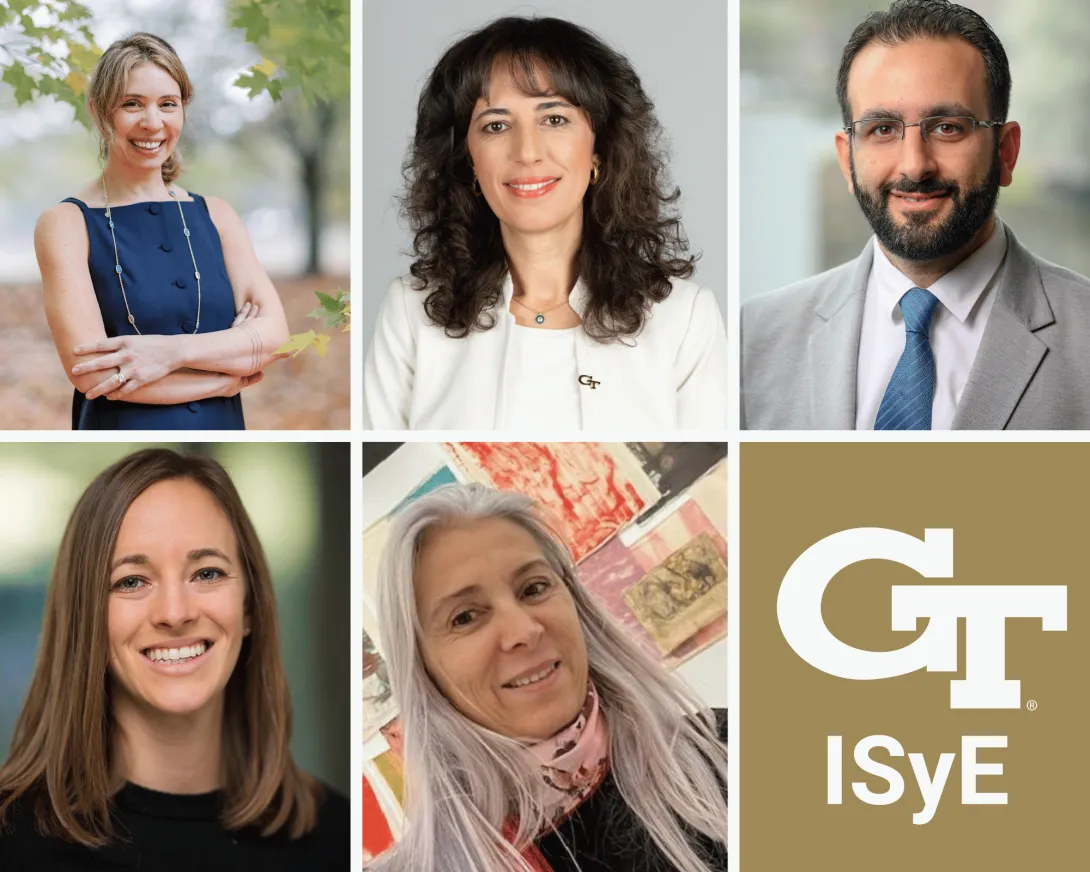
Georgia Tech's H. Milton Stewart School of Industrial and Systems Engineering (ISyE) is launching a new Minor in Health Systems this fall. The 15-credit-hour minor is listed in the 2026-2027 catalog and is open to undergraduates in every major.
The minor is designed to equip students to address complex challenges across healthcare delivery, public health, and health-related decision-making. Through coursework in analytics, optimization, policy, and systems engineering, students will learn how to improve access to care, strengthen healthcare operations, and make better use of limited resources.
A hospital decides how many operating rooms to staff on a specific day. A vaccine that works in a trial fails to reach the population that needs it. A single manufacturer’s plant shuts down due to a hurricane and a routine medical supply becomes unavailable nationwide. A public health agency has to decide whether limited resources will have greater impact through a screening program or a housing intervention.
These are the types of real-world challenges students in the Health Systems minor will learn to address. They are not purely medical questions. They are systems questions, and they are the kinds of challenges industrial and systems engineers are equipped to solve.
"Many of today’s health challenges are fundamentally systems challenges,” said Pinar Keskinocak, the H. Milton and Carolyn J. Stewart School Chair and professor in ISyE. “Improving health requires not only advances in medicine, but also better systems for prevention, access, care delivery, and decision-making."
The minor was developed by Professors Turgay Ayer, ISyE’s Virginia C. and Joseph C. Mello Chair and professor, and Nicoleta Serban, an ISyE professor, working with faculty across ISyE's health systems area.
“Health systems problems are complex because decisions made in one part of the system often have consequences elsewhere,” said Ayer. “We developed this minor to give students a systems-level understanding of healthcare systems, while equipping them with practical analytical and decision-making tools. Our goal is for students to leave the program prepared to translate data into better decisions and, ultimately, better health outcomes.”
“This minor grew out of years of health systems research and teaching across ISyE,” added Serban. “Through my work in health analytics, Medicaid policy, healthcare access, and health system complexity, and through teaching Public Health Systems, I saw both the breadth of faculty expertise in this area and strong student interest in engaging with it. The minor brings those strengths together in one pathway that enables students from across Georgia Tech to understand health systems and develop the analytical tools to improve them.”
What students take
The minor is 15 credit hours: a statistics foundation, two required health systems courses, and at least two electives.
Students begin with a statistics course, choosing from seven options across campus: ISYE 3770, ISYE 3030, BME 2400, ECE 3077, ECON 2250, MGT 2250, or PUBP 3120. This flexibility allows students from a variety of academic disciplines to enter the health systems core with a shared quantitative foundation.
Two ISyE courses form the core. Public Health Systems (ISYE 4510), designed by Serban and Keskinocak, works at the population scale. Many health challenges are shaped long before patients enter a hospital. The course examines factors that influence access to care, prevention, and population health, and explores how engineering and data-driven approaches can improve outcomes.
Students study healthcare access: how to measure it, how geography shapes it, and what epidemiology and spatial analysis reveal about who a system reaches.
The course also spends three weeks on prevention and wellbeing across infectious and non-infectious disease. The organizing theme is what Serban calls the three E's: equity, efficiency, and effectiveness, and the trade-offs among them when resources are finite. Students leave able to identify where quantitative methods can improve public health decision-making.
Intelligent Healthcare Delivery Systems (ISYE 4515) launches alongside the minor. The course was originally designed by Ayer and is being adapted for this minor by Dima Nazzal, ISyE’s associate chair for academic administration, and Lauren Steimle, the Harold R. and Mary Anne Nash Early Career Professor and assistant professor in ISyE. The course focuses on healthcare delivery: how patients move through clinics and hospitals, where care transitions break, and how to map a process well enough to identify where to change it. Students learn to evaluate a health system's performance and model improvements through process design and resource allocation, such as bed allocation, operating room block scheduling, and nurse staffing.
“Just as doctors diagnose and treat disease when patients present with symptoms, students in this class will learn engineering tools to diagnose and solve process problems that lead to symptoms such as delays in care, shortages of medical supplies, and provider burnout,” said Steimle. “With these skills, students will be prepared to help healthcare systems deliver the right care to the right people, in the right place, at the right time.”
The remaining six credit hours come from a slate of more than 25 electives in five categories: health systems analytics and modeling; health policy, economics, and management; environmental, public health, and bio-inspired systems; health systems modeling and optimization; and machine learning and data science for health. The courses come from Biomedical Engineering, the College of Computing, the Scheller College of Business, the Ivan Allen College of Liberal Arts, the College of Design, Civil and Environmental Engineering, and Electrical and Computer Engineering, as well as ISyE. Students are encouraged to choose from more than one category.
"A student can come into this from computing, from policy, from business, from design," said Nazzal. "We built the electives so that whatever quantitative preparation a student already has counts for something, and so that nobody has to leave their major behind to work on health. Health systems problems don't get solved by one discipline, and the curriculum shouldn't pretend otherwise."
Students may also complete an optional experiential component through a health-focused Senior Design capstone, undergraduate research, a Vertically Integrated Project, or a Serve-Learn-Sustain project. Students whose primary project isn't health-related complete a structured addendum connecting the work to health systems challenges.
For most students, courses count toward both major and minor requirements. Prerequisites and full requirements are in the catalog, and students should check them against their own program before declaring.
ISyE: A leader in health systems engineering
Georgia Tech is well known for health research. Less well known is the role industrial and systems engineering has played in advancing health systems research for decades.
ISyE's health systems footprint spans different kinds of problems. In healthcare operations, faculty and students work on patient flow, scheduling, capacity, and care coordination inside hospitals and clinics. In health systems and supply chains, they study how care, drugs, vaccines, and medical equipment move across networks of providers and suppliers. In AI and analytics for health, they address medical decision-making, disease modeling, and the role of algorithms in healthcare. In public health systems, they examine access, equity, and population-level resource allocation.
That work runs through a Master of Science in Health Systems, the Center for Health and Humanitarian Systems, and Senior Design projects that have been going into Georgia’s health systems for years. Research collaborators include the Centers for Disease Control and Prevention, Children's Healthcare of Atlanta, Emory University, and the Georgia Department of Public Health among many others. Senior Design sponsors have included Emory Healthcare, Wellstar, Grady Health System, Piedmont Healthcare, and Northside Hospital. These projects are not case studies: student teams work on real challenges brought by sponsors and deliver decision-support tools and other design solutions.
More than twenty ISyE faculty work in health and humanitarian systems, spanning patient-centered decision support, clinician guidance, healthcare operations, health network design, and policy evaluation. Their work is described on ISyE's Health and Humanitarian Systems page.
"ISyE has been a leader in health systems research, education, and practice for decades,” said Keskinocak. “This minor creates a clear pathway for undergraduate students from across Georgia Tech to apply analytics, AI, optimization, and systems thinking to some of society's most important challenges in healthcare and public health."
Full requirements are in the Georgia Tech Catalog and on the ISyE Health Systems minor page.
News Contact
By Dima Nazzal
ISyE Associate Chair for Academic Administration
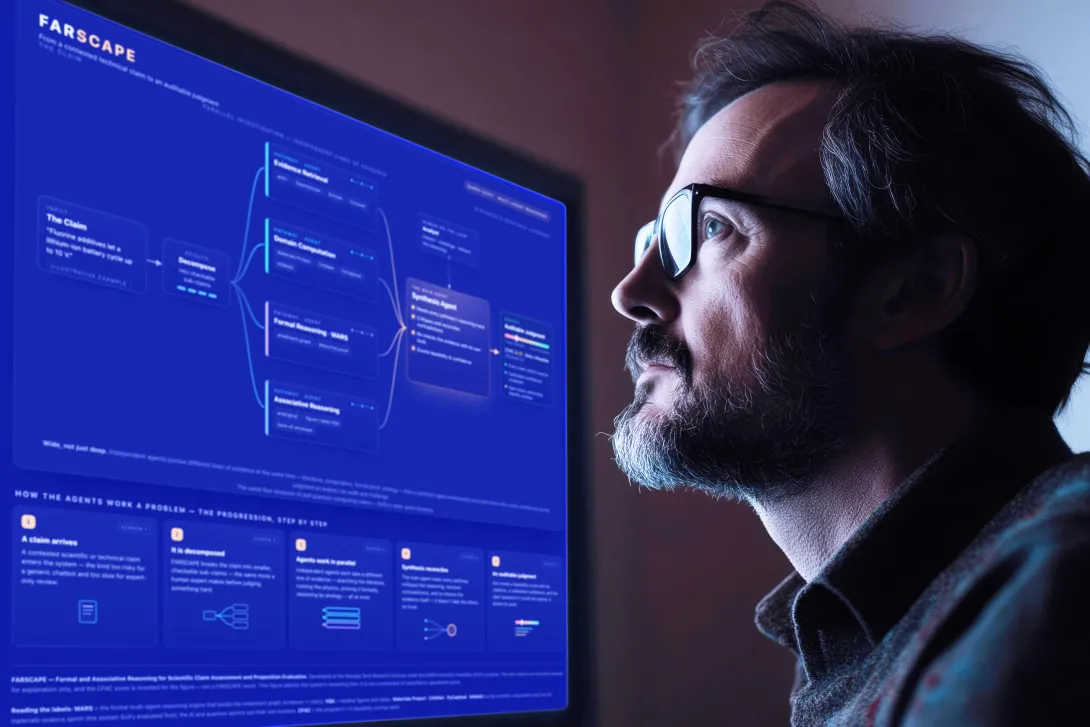
FARSCAPE provides a new way to evaluate a wide range of scientific and technical claims. The chart shows the step-by-step process.
Advances in materials science and drug discovery increasingly depend on robotic laboratories that synthesize and test candidate compounds without human intervention. Artificial intelligence models can now propose custom materials and potential drug molecules far faster than robotic labs can physically test them. The resulting pools of candidate materials dramatically outstrip the availability of experimental testing.
Deciding which candidates deserve scarce laboratory time is itself a hard problem. It requires weighing scientific plausibility against practical constraints — likely impact, expected effectiveness, and eventual manufacturability — considerations that are difficult to apply consistently across thousands of candidates.
An artificial intelligence (AI) program developed at the Georgia Tech Research Institute (GTRI) could provide a new way to narrow that hypothesis pool down to a rate that robotic laboratories can actually test, and more broadly, to evaluate a wide range of scientific and technical claims that would otherwise overwhelm human assessment.
Known as FARSCAPE, the program was developed to support a research project organized by the U.S. Defense Advanced Research Projects Agency (DARPA) to evaluate a broad range of feasibility questions. By breaking down challenging questions into smaller components that can be evaluated by a team of independent computer agents, FARSCAPE uses a “chain of thought” approach to provide answers in the form of probabilities. It then helps humans check the rationales for its assessment.
Read the full article on the Georgia Tech Research Institute news page
News Contact
gtri.media@gtri.gatech.edu
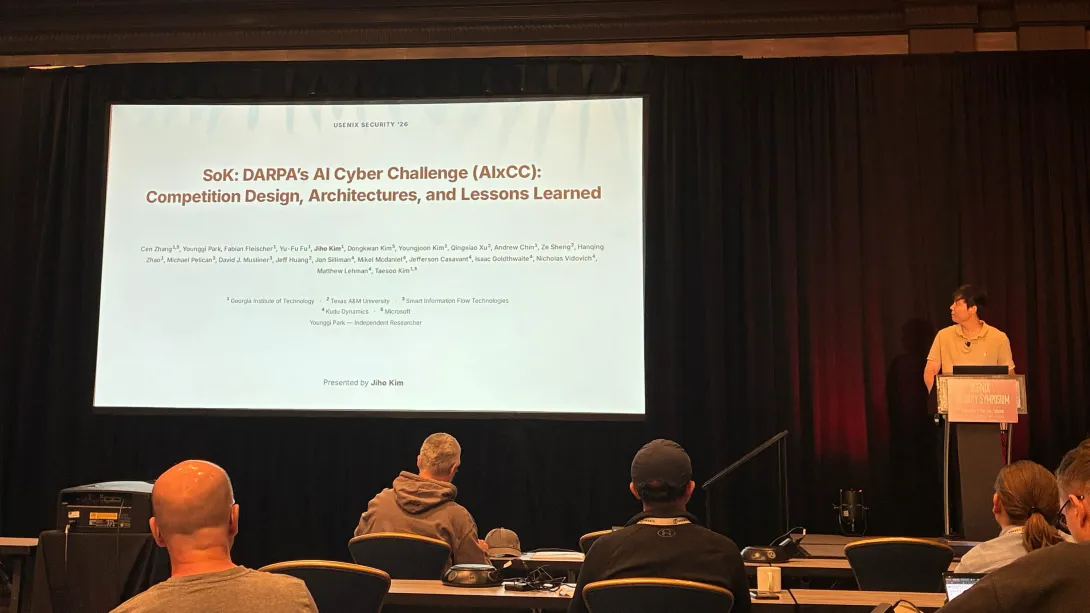
What can artificial intelligence (AI) do to protect software from cyberattacks?
Georgia Tech researchers spent two years helping to answer that question through DARPA’s AI Cyber Challenge (AIxCC), a competition designed to test whether AI could identify and fix security vulnerabilities in real-world software.
Now, they are sharing what they learned with the cybersecurity community.
Their paper, SoK: DARPA’s AI Cyber Challenge (AIxCC): Competition Design, Architectures, and Lessons Learned, was presented at USENIX Security 2026, one of the world's leading cybersecurity conferences. The paper was selected as a runner-up for the conference’s distinguished paper award, placing it among 36 recognized papers from 362 accepted papers out of 3,028 submissions.
The paper examines how the seven finalist teams approached the competition and what the results reveal about the future of AI-powered cybersecurity.
Putting AI to the Test
AIxCC challenged teams to build Cyber Reasoning Systems (CRSs) that could operate with minimal human assistance to identify software vulnerabilities, develop fixes, and determine whether security alerts were real threats.
The teams had 143 hours to analyze 53 software projects during the final competition.
Georgia Tech’s Team Atlanta, which won the competition, used an approach that combined multiple AI agents with traditional security tools. Other teams used different approaches, including applying AI for specific tasks or building highly autonomous AI agents.
The variety of systems provided researchers with a rare opportunity to compare different approaches to AI-powered cybersecurity.
Lesson from the Competition
One of the biggest lessons was that reliability matters as much as intelligence.
Some systems were highly capable but struggled to remain operational while analyzing large, complicated software projects. The strongest systems were often those that could work reliably throughout the competition.
The researchers also found that AI and traditional security tools have different strengths. Traditional tools were still effective at finding common bugs, while AI performed better at reasoning through more complex problems.
However, AI-generated fixes remain a major challenge.
Researchers found that 38% to 46% of AI-generated patches were semantically incorrect. This means a patch might stop a security problem but also break a feature or create another problem.
The results show that AI can play an important role in cybersecurity, but human experts are still needed to verify the safety of AI-generated fixes.
Sharing the Lessons
Cen Zhang, the paper’s first author, said the research offers a unique look at the competition by combining lessons from the finalist teams, organizers, and DARPA’s data.
“This paper provides a unique angle on how AIxCC was designed, the techniques teams used, and what the scores reveal and conceal,” Zhang said.
Jiho Kim presented the paper at USENIX Security 2026. He said the presentation was an opportunity to share lessons from two years of work with the broader cybersecurity community.
“Seeing the strong interest and thoughtful questions from the audience made the experience particularly rewarding,” Kim said.
The researchers say they hope the lessons from AIxCC will help guide the next generation of cybersecurity tools.
News Contact
John Popham
Communications Officer for the School of Cybersecurity and Privacy
Matthew McDowell, Professor in the School of Materials Science and Engineering and George W. Woodruff School of Mechanical Engineering and Co-director of Georgia Tech Advanced Battery Center
School of Materials Science and Engineering (MSE) professor Matthew McDowell has been appointed to a National Academies of Sciences, Engineering, and Medicine committee. The appointed committee will explore current and next-generation battery energy storage technologies for defense applications.
The committee, convened through the National Academies' project Future of Battery Technology Options for Defense Applications, will identify the strengths and weaknesses of future battery technologies, including an examination of performance, safety, and manufacturability across technology and manufacturing readiness levels. The committee will also identify gaps where research investments could potentially improve battery capabilities across technology and manufacturing readiness levels, creating opportunities to leverage commercially available technologies.
With a joint appointment in MSE and the George W. Woodruff School of Mechanical Engineering, McDowell is internationally recognized for his research on batteries and energy storage materials. His work focuses on understanding how materials change during battery operation and using that knowledge to develop safer, more efficient, and more sustainable energy storage systems. McDowell is also co-director of the Georgia Tech Advanced Battery Center. He leads research spanning solid-state batteries, lithium-ion and sodium-ion technologies, and next-generation energy storage materials. “I am very thankful to be selected, and I look forward to working with colleagues on developing recommendations to advance battery technologies in support of our country," said McDowell.