

As strange as it sounds, the key to understanding life’s origins might lie in artificial intelligence. At least, according to a new approached being pursued by researchers at Georgia Tech.
School of Electrical and Computer Engineering (ECE) Assistant Professor Amirali Aghazadeh and Ph.D. student Daniel Saeedi have developed AstroAgents, an AI system that analyzes mass spectrometry data — detailed chemical compositions from meteorites and Earth soil samples — to generate novel hypotheses about the origins of life on the planet.
What sets AstroAgents apart is its use of agentic AI. Unlike traditional AI systems that perform fixed tasks, this agentic system is designed to pursue a scientific goal. It draws from astrobiology literature, interprets complex data, and proposes original ideas that researchers can investigate further.
Their paper, recently featured in the journal Nature, is opening new possibilities for how scientists explore questions that have remained unanswered for decades.
In a special Q&A, Aghazadeh and Saeedi explain how AstroAgents analyzes space chemistry, what it’s revealing about the possible origins of life on Earth, and what they hope to explore next.
News Contact
Dan Watson
dwatson@ece.gatech.edu
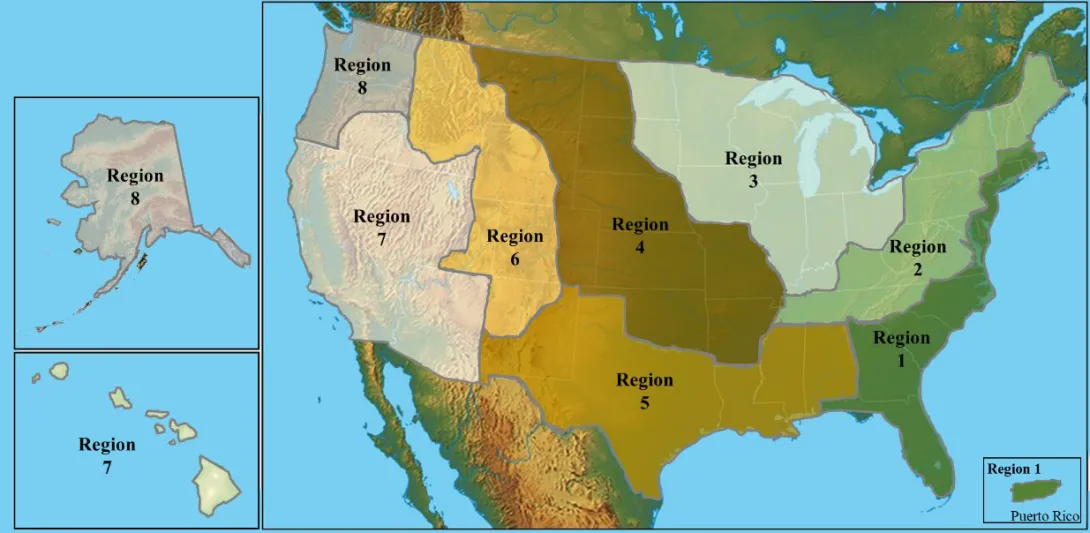
United States map showing the eight regions of the CORE-CM Initiative. Courtesy: Department of Energy Core-CM Initiative
A new Department of Energy award will help Georgia Tech lead a regional effort to identify, recover, and reuse materials essential to energy, manufacturing, and national security.
Critical minerals power the technologies that define modern life, from batteries and semiconductors to advanced manufacturing systems and defense applications. They are also essential to the nation’s energy future, manufacturing competitiveness, and national security.
Through a major investment from the U.S. Department of Energy (DOE), Georgia Tech is helping accelerate the development of domestic critical minerals from unconventional and secondary resources. The $7.5 million award positions the Institute to advance supply chain solutions that span resource discovery, processing, recycling, and circular materials management.
Selected by DOE’s Office of Critical Minerals and Energy Innovation, Georgia Tech will lead the Critical Minerals in the Atlantic Seaboard Plain (CM-MAP) project. The regional effort builds on DOE’s Carbon Ore, Rare Earth, and Critical Minerals (CORE-CM) initiative and will examine potential resources across the Atlantic coastal plain.
The CM-MAP project will focus on sedimentary deposits, including kaolin, bauxite, heavy mineral sands, and phosphates, as well as legacy mining residues, coal combustion byproducts, and other unconventional and secondary resources that could support future recycling and circular economy opportunities.
Drawing on existing infrastructure, regional assets, industry bases, and scientific expertise, CM-MAP will establish a regional innovation ecosystem that supports domestic critical mineral production, recycling, and advanced manufacturing, while fostering new economic opportunities throughout the Southeast.
“This is a powerful example of how Georgia Tech brings together leading research capabilities and partnerships from industry, government, nonprofits, and national labs to address complex national challenges,” said Tim Lieuwen, executive vice president for Research. “By identifying and domestically sourcing critical minerals, we are helping secure essential supply chains, while enabling the next generation of energy and materials technologies.”
The DOE award builds on a growing network of research, industry, regional, and international partnerships led by Georgia Tech to translate scientific discovery into real-world supply chain solutions, including:
- Research leadership — Founded in 2024, Georgia Tech’s Center for Critical Mineral Solutions serves as a hub for interdisciplinary research and technology development across the Institute.
- Regional partnerships —Through the Georgia Partnership for Essential Materials, a flagship regional collaboration platform, Georgia Tech, the University of Georgia, Georgia State University, and the Georgia Mining Association convene stakeholders from across the critical minerals sector. The partnership brings together industry, nonprofit organizations, regional economic development agencies, national labs, universities, and technical colleges to connect, collaborate, and stay engaged in the latest developments.
- International engagement — A U.K.-U.S. working group extends partnerships across the Southeastern United States and Southwest United Kingdom, connecting researchers, industry leaders, and government agencies working to strengthen global supply chains.
- Georgia Critical Mineral Supply Chain Manufacturing Demonstration Center — Supported through congressional funding, the center is developing capabilities and regional supply chain demonstrations that connect resource development, materials processing, recycling, and advanced manufacturing.
As part of CM-MAP, researchers will analyze materials collected from natural deposits and industrial sites throughout the Southeast to identify their critical mineral content. The resulting large datasets will be combined with artificial intelligence and machine learning approaches to better understand and predict where resources exist, optimize extraction pathways, and inform future recovery and recycling strategies.
“This project brings together a highly collaborative team from Georgia Tech, national labs, industry partners, and research institutions across the region,” said Yuanzhi Tang, the principal investigator and Georgia Power Professor in the School of Earth and Atmospheric Sciences, with a courtesy appointment in the School of Civil and Environmental Engineering.
Tang is also the founding director of the Center for Critical Mineral Solutions and executive director of the Strategic Energy Institute.
“Through this award, we are working to build secure and resilient critical materials supply chains, from resource discovery and characterization to processing, recovery, recycling, and advanced manufacturing, while also developing the skilled workforce needed to support these emerging industries,” Tang said. “Our vision is to create a regional innovation ecosystem that embraces both unconventional resources and circular economy approaches to maximize the value of materials already in use.”
Learn more about critical materials research and workforce development efforts at Georgia Tech by visiting the Center for Critical Mineral Solutions webpage.
News Contact
Media Contact: Shelley Wunder-Smith, Research Communications

Georgia Tech continues to strengthen its position as one of the nation’s leaders in research commercialization, earning top-10 rankings among U.S. higher education institutions in the 2025 AUTM Licensing Activity Survey. In two key measures of innovation performance, Georgia Tech came in at No. six for invention disclosures with 454 total disclosures, as well as No. 8 in new patent applications with 230 filings. Additionally, Georgia Tech came in No. 12 in the number of issued U.S. patents with 124 granted. The annual AUTM survey is widely regarded as the leading benchmark for academic technology transfer and commercialization activity in the U.S.
The latest rankings build on a record year for Georgia Tech commercialization. In 2025, the Institute reported advancing hundreds of technologies toward the marketplace, while achieving record levels of invention disclosures, issued patents, and licensed technologies. Those milestones underscore Georgia Tech’s expanding role in transforming research discoveries into products, companies, and partnerships that create economic and societal value.
“The strong performance reflects a commercialization strategy focused not only on protecting IP, but also on helping researchers translate discoveries into practical applications,” said Raghupathy “Siva” Sivakumar, chief commercialization officer at Georgia Tech. “Whether through licensing technologies, launching startups, or partnering with industry, we are building pathways that help researchers transform discoveries into real-world solutions.”
From advanced health technologies to environmental monitoring tools and next-generation aerospace ventures, Georgia Tech innovations are reaching users and markets in increasingly diverse ways. One example is Kinemo, a startup developed through Georgia Tech research that is helping people with limited mobility regain independence through wearable assistive technology. Founded by researchers from the College of Engineering, Kinemo uses physiological sensing and small intentional movements to enable users to control digital devices. The company works closely with clinicians and patients at Shepherd Center to refine the technology and expand accessibility for individuals living with spinal cord injuries and mobility limitations.
Another example is Skopii, a startup launched from research in the lab of environmental engineering professor Ameet Pinto. The company is commercializing portable imaging and artificial intelligence technology that enables users to rapidly analyze microorganisms in water and environmental systems, eliminating the need for lengthy laboratory testing. The technology has the potential to improve decision-making for water utilities, food production systems, and environmental monitoring efforts.
As research institutions face increasing pressure to demonstrate impact beyond publications and laboratory discoveries, Georgia Tech continues to show how world-class research can translate into technologies, startups, jobs, and solutions that improve lives. The latest AUTM rankings provide another measure of that success, highlighting an innovation ecosystem that consistently moves ideas from the lab to the marketplace.
Startups such as Kinemo and Skopii illustrate the broader commercialization approach reflected in Georgia Tech's AUTM rankings.
News Contact
Georgia Parmelee
Director of Communications
Georgia’s $41 billion forest products industry needs a transformation, and a Georgia Tech research team is reimagining how pulp mills use energy and what they can make from their byproduct streams.
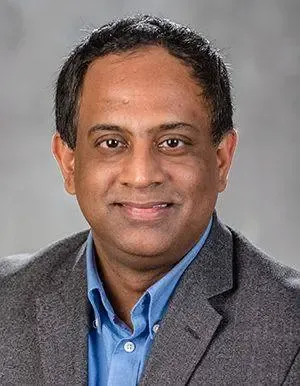
For nearly a decade, Sankar Nair, professor in the School of Chemical and Biomolecular Engineering and a longtime researcher with the Renewable Bioproducts Institute (RBI), has led a collaborative effort to develop technologies that can radically improve the efficiency and profitability of kraft pulp mills.
“What began as a project to save energy in pulp production has grown into a much broader vision,” Nair explains. “We’re not just trying to make mills more efficient. We’re working to turn the kraft pulp mill into a kraft-based biorefinery that produces multiple higher-value products.”
From Energy Savings to High-Value Products
Nair explains that traditional kraft mills use a highly energy-intensive “chemical recovery loop” to handle black liquor — the dark, viscous byproduct left after pulp is separated from wood chips. That loop relies on multistage evaporators and massive recovery boilers to remove water, burn the remaining organics for steam and electricity, and recycle inorganic chemicals back into the process.
“The original desire from our industry partners was to save energy,” Nair says. “Instead of evaporating the water in black liquor, we asked whether membranes could take on most of the dewatering and potentially cut that energy use in half.”
Over time, the team realized the opportunity went well beyond efficiency. “We use these membranes in such a way that they actually fractionate the black liquor, not just dewater it,” Nair says. “One stream is rich in lignin; another is rich in organic acids. From those, we can recover and purify components and turn them into entirely new products.”
Lignin is a complex organic polymer and one of the most abundant biological materials on Earth. It acts as nature’s “glue,” providing plants with structural rigidity and resistance to decay.
From lignin-rich fractions, the team has already demonstrated carbon materials that can be tailored for battery anodes and porous adsorbents used in environmental remediation and separations — today mostly made from fossil-based carbons. These lignin-derived carbons are of particular interest as a domestic alternative to graphite, a critical battery material that is currently dominated by overseas production.
On the organic acid side, Nair and Christopher Jones, a Georgia Tech catalysis and reaction engineering expert, have gone a step further, converting those acids into mixtures of much heavier molecules that could become high-performance industrial lubricants and additives.
“It’s exciting to do a new cascade of reactions to make products that we haven’t really made before,” says Jones, the John F. Brock III School Chair and professor in the School of Chemical and Biomolecular Engineering.
Jones explains that green lubricants derived from non-fossil sources have “both high demand and high value.” Georgia Tech has not yet compared the performance of these products to conventional lubricants, but the platform is in place to do so in the future.
“The products we are pursuing from lignin and organic acids have bulk demand and also can command significantly higher prices than traditional pulp-based outputs,” Nair notes. “That’s essential if the forest products industry is going to be profitable and competitive over the long term.”
The two researchers have collaborated on three papers, with two already published in ACS Sustainable Chemistry & Engineering (June 2024) and ACS Catalysis (February 2026).
Scaling Up: Continuous Manufacturing and Field Trials
A key hurdle in moving from lab concept to mill reality is scalable manufacturing of the membranes themselves. That’s where collaboration with Georgia Tech’s advanced manufacturing community comes in.
“In recent years, we’ve really focused on how we can manufacture these membranes at low cost and in a continuous, scalable way,” Nair says. “That’s involved close collaboration with colleagues in materials science, mechanical engineering, and Georgia Tech’s manufacturing institutes.”
Another Georgia Tech collaborator, Tequila Harris, a professor in the George W. Woodruff School of Mechanical Engineering, is leading the effort to move the current small-scale batch process into a continuous, industry-ready, roll-to-roll system that can produce long sheets of reduced graphene oxide membranes.
A key enabling step to shift from batch-mode production, says Harris, was integrating vacuum pressure into the manufacturing system to support high-throughput continuous production without the use of any volatile organic solvents that are commonly used in membrane production. Harris envisions “high-quality output at production speeds above 60 meters per minute,” which will “dramatically increase production volume while reducing solvent usage and waste, such as water,” says Harris.
The technology is now mature enough for field testing. The team is preparing to deploy membrane modules at a major pulp and paper mill near Savannah operated by Rayonier Advanced Materials (RYAM).
“We’re assembling full membrane modules and installing them in a test skid that will run on real kraft black liquor from the mill,” Nair says. “We’ll collect long-term performance and reliability data that feeds into detailed models of how best to deploy these membranes in a working kraft mill.”
RYAM leaders, including Larissa Fenn, Director of New Products and Chair of the External Advisory Board for Georgia Tech’s Center for a Renewables-Based Economy From Wood (ReWOOD), help ensure that cutting-edge research remains connected to real-world industry challenges and opportunities.
“Much of our internal research is focused on supporting current operations, customers, and product lines,” Fenn says. “Partnerships with universities allow us to look five to ten years ahead and engage in transformational research that can create entirely new opportunities for our business and the broader forest products industry.”
“The transition to more sustainable materials, chemicals, and fuels represents one of the greatest opportunities our industry has seen in decades,” she adds. “Continued innovation is essential not only for maintaining competitiveness, but also for creating new markets for renewable, wood-based resources and strengthening the long-term sustainability of the forestry sector.”
Fenn emphasized that the impact extends well beyond individual companies.
“The forestry economy is the backbone of many rural communities across Georgia and throughout the Southeast,” she says. “Advancing technologies that create new value from renewable resources helps support landowners, manufacturers, and the communities that depend on this industry.”
Fenn works at RYAM’s Jesup, Georgia facility, which employs more than 800 people and is the largest employer in the local community.
“Facilities like ours are deeply connected to the communities we serve,” Fenn says. “When we invest in innovation, we are investing in the future of manufacturing, forestry, and economic opportunity in rural America.”
Modular Pathways to a Bio-Based Future
Transforming an operating mill into a full biorefinery isn’t something that happens overnight, and Nair’s group is designing with that reality in mind.
“All of these technologies are modular and designed to be fully integrated with the kraft process,” he says. “You don’t have to spend billions of dollars up front to build an entirely new plant. You can gradually integrate membrane-based fractionation and stream upgrading technologies for new product streams into the existing kraft process, and each mill can follow its own transition path.”
That modular design also provides flexibility in how mills manage energy. Diverting black liquor into higher-value products means less organic material available as fuel for the recovery boiler. Still, the energy-efficiency gains from membrane dewatering reduce overall consumption, and mills can draw on grid electricity to make up the difference.
“The goal is not to save energy for its own sake,” Nair emphasizes. “It’s to use that energy more productively to create value-added outputs that support jobs, rural communities, and a more innovative and resilient bio-based economy in Georgia.”
The urgency of this work is underscored by the pressures facing the industry: Georgia’s forestry sector has seen paper mill closures since the 1990s, due to digitization and shifts in demand, with three major mill closures in 2025. The Georgia Forestry Commission estimates that mill closures erased the market for 8.3 million tons of timber, and reduced lumber usage, import tariffs, and labor shortages compounded the crisis, according to the 2026 Georgia AG Forecast. New revenue streams and efficiency gains may be essential for mills’ survival.
Beyond kraft mills, Georgia Tech researchers are already extending the membrane platform to agricultural biomass and municipal waste streams in collaboration with partners like the University of Tennessee, Knoxville, and Texas Tech University. They are also tapping into national initiatives, including the NSF Center for Advancing Sustainable and Distributed Fertilizer Production (CASFER)and the Biobased Rural Innovation for Domestic Growth and Economic Security (BRIDGES).
Lignin-Derived Materials for the Battery Supply Chain
Matthew McDowell, co-director of the Georgia Tech Advanced Battery Center, sees many cross-sector applications for lignin-derived carbon materials, including batteries, which are increasingly foundational to strategic sectors such as mobility, the power grid, and defense.
Lignin-derived carbons can serve as a domestic replacement for graphite in lithium-ion batteries — a critical material not widely produced in the U.S.
“Conventional synthetic graphite is derived from crude oil and requires very high temperatures, making it energy-intensive and polluting,” McDowell said, noting that their goal is to convert lignin and cellulose “to high-value battery materials that could enable the growth of a new battery supply chain here in the United States.” He envisions the work one day transitioning to the Advanced Battery Center, which is planning a new facility scheduled to open at the end of 2027 that will enable companies and academic researchers to “build and test full-scale battery cells for translational R&D.”
Life-cycle analysis carried out by the team has shown benefits in both lower costs and more efficient energy use when making these carbons from biomass sources.
Today, China leads the world in battery production, with Korea and Japan also long-established leaders. The U.S. is building more domestic capability for national security and economic reasons.
Researchers at Georgia Tech on the front lines of this work also include Jones, who also collaborated on the lubricants research; Valerie Thomas, Anderson Interface Chair of Natural Systems and professor in the H. Milton Stewart School of Industrial and Systems Engineering and the Jimmy and Rosalynn Carter School of Public Policy; and Meisha Shofner, professor in the School of Materials Science and Engineering.
Thomas is leading research on life-cycle and economic analyses of converting lignin to produce “carbonized lignin” anodes that can replace petroleum‑based synthetic graphite in batteries. She says that lignin‑based graphite can displace petroleum‑derived synthetic graphite, delivering 84% lower energy use, 92% lower greenhouse gas emissions, and lower emissions of other pollutants.
“This work establishes a supply chain for making batteries, which has really broader impacts throughout Georgia,” says Thomas, who believes lignin-based battery materials will lead to a stronger forest products economy and a more resilient battery supply chain in Georgia.
McDowell agrees. “Marrying the forest products industry and the battery industry makes a lot of sense for Georgia, because both of those industries are really big,” he says, and both are “key employers in the state.” In his view, innovations could benefit both simultaneously.
Scott Sinquefield, senior research engineer in RBI, sees the graphene-oxide membrane work as squarely within its charge to modernize the forest products sector that anchors Georgia’s rural economy.
“Part of our mission is to support this industry and advance it. This falls right under our umbrella,” he said, noting that RBI has been providing scientific support to mills for nearly a century, dating back to its origins as the Institute of Paper Chemistry in 1929.
The Georgia Tech team’s vision is clear, as Nair explains: “If we can do this right, kraft mills don’t just survive. They become hubs of advanced biomanufacturing that anchor a more resilient and sustainable forest-based economy for the state.”
News Contact
Writer: Anne Wainscott-Sargent
Media Contact: Jennifer Martin | jennifer.martin@research.gatech.edu
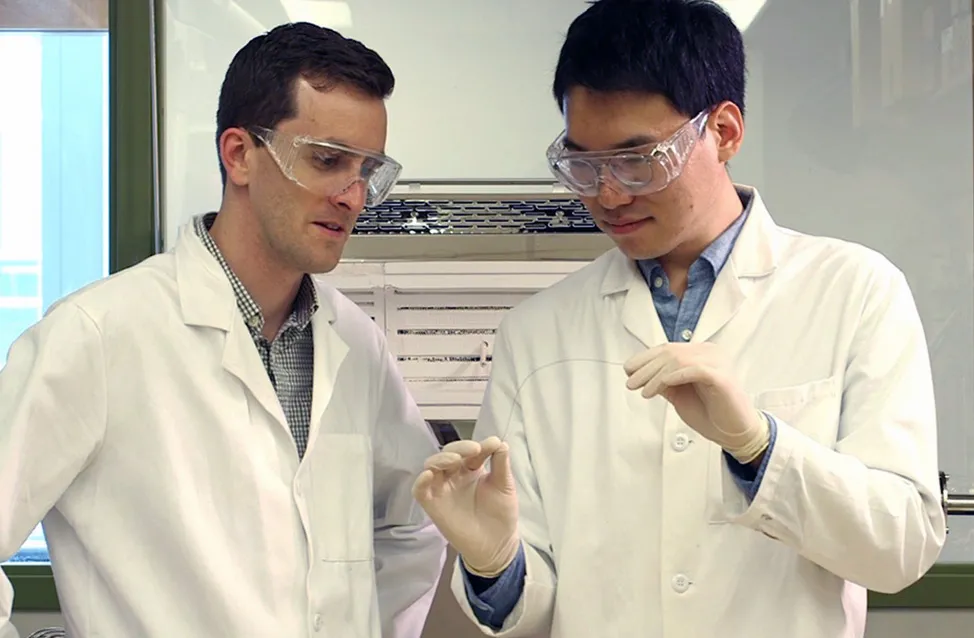
Professors Ryan Lively (Georgia Tech) and Dong-Yeun Koh (KAIST). Koh used to be postdoctoral researcher in the Lively Lab.
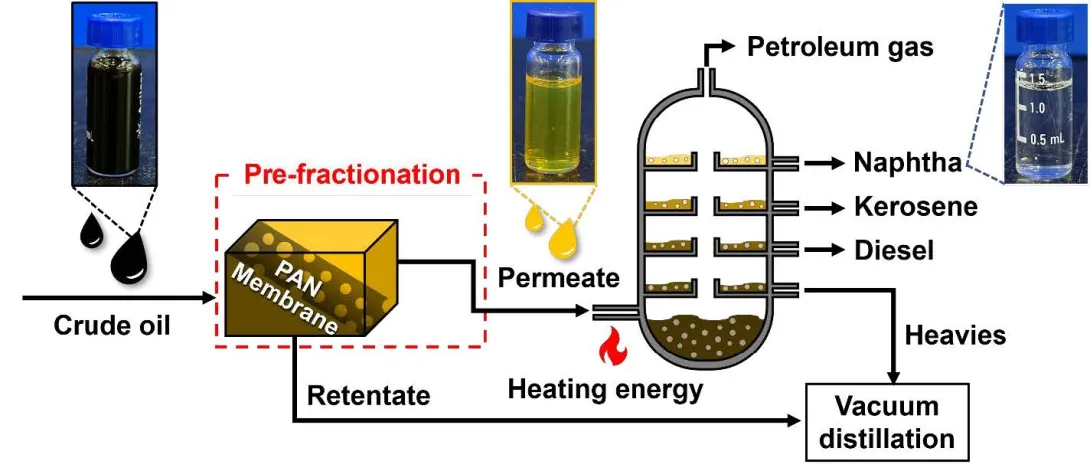
Schematic illustration of the membrane-based pre-fractionation process, showing the selective separation of light hydrocarbon fractions from crude oil feedstock to reduce energy requirements for subsequent atmospheric distillation.
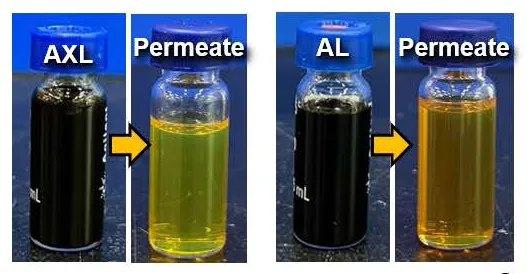
Photographs illustrating the distinct color change upon fractionation of crude oils via PAN membrane.
Refining crude oil into gasoline, jet fuel, and other everyday products requires enormous amounts of energy. The atmospheric and vacuum distillation processes used in refineries worldwide consume more than 1,100 terawatt-hours of energy annually — roughly enough to power 100 million U.S. homes for a year — while generating millions of tons of carbon dioxide emissions.
Six years after demonstrating that membranes could separate crude oil at the molecular level, Georgia Tech researcher Ryan Lively is part of an international team that has taken the concept a significant step further.
The team, including investigators at the Korea Advanced Institute of Science and Technology (KAIST), discovered that a membrane material widely believed to be non-selective for molecules as small as those found in crude can in fact selectively separate crude oil into lighter and heavier fractions in a way researchers did not expect.
Published in Nature, their findings suggest that using membranes to separate crude oil before distillation could significantly reduce the energy, water, and carbon footprint of petroleum refining.
Lively, the Thomas C. DeLoach Jr. Endowed Professor in Georgia Tech's School of Chemical and Biomolecular Engineering, served as an advisor and corresponding author on the study. Dong-Yeun Koh, an associate professor at KAIST and a former postdoc in the Lively Lab at Georgia Tech, led the study.
Building on Earlier Research
In the 2020 Science paper, Lively and collaborators demonstrated that specially designed membranes could separate crude oil into valuable fractions without relying solely on traditional heat-driven distillation. The work helped establish membrane-based crude oil fractionation as a promising alternative for reducing energy use in refining.
"This work grew directly out of the challenges we identified in our original findings in the 2020 article," Lively said. "One of the key challenges that the KAIST team set out to tackle was the very low oil productivities of the membrane units, which has limited the ability of this concept to leave the lab. Along the way, we not only increased the productivities, but we also uncovered a surprising new mechanism that could make membrane-based crude oil separations even more practical.”
The new study built on that foundation. The researchers investigated polyacrylonitrile (PAN) membranes, a material commonly used as a non-selective support layer in filtration systems. Because the material is porous, the team generally did not expect it to perform precise molecular separations on its own.
But what they found surprised them, Lively said. As crude oil flowed through the membrane, heavier hydrocarbon molecules accumulated within the membrane's pores. Instead of clogging the membrane, the buildup created a stable internal layer that gradually narrowed the pathways through which molecules could travel. Surprisingly, the molecules that caused the buildup in the first place were eventually excluded from entering the membrane, resulting in a steady production of higher quality oil through the narrow pathways that remained.
In effect, the membrane created its own molecular-scale filter. The result was a process that allowed lighter hydrocarbons to pass through while holding back heavier components.
The membrane enriched lighter fractions such as naphtha and kerosene while achieving crude oil flow rates more than 23 times higher those reported in the 2020 paper for whole crude oils
When Buildup Becomes an Asset
In most filtration systems, buildup inside a membrane (or fouling) is considered a problem because it reduces performance.
But according to the researchers, this study demonstrates that something different can happen under the right conditions.
Using a range of analytical techniques, the researchers found that long-chain hydrocarbon molecules accumulated inside the membrane and became an essential part of the separation process. The deposits effectively transformed larger pores into stable transport pathways measuring less than two nanometers across, they deduced based on available experimental evidence.
The membrane maintained consistent separation performance during four weeks of continuous operation, suggesting the filtration pathways remained stable over time.
“The findings challenge traditional assumptions about membrane fouling and may offer new opportunities for designing industrial separation systems that take advantage of similar behavior,” Lively said.
Potential Impact on Refining
Today's refineries heat entire streams of crude oil to separate them into useful products. By using membranes to remove a substantial portion of the lighter hydrocarbons before distillation, refineries could reduce the amount of material that must undergo energy-intensive heating. Alternatively, the refinery can use the membranes to incrementally increase refinery capacity, which is currently not possible using large-scale distillation equipment.
To evaluate the potential impacts of the membrane system, the researchers modeled a refinery process that incorporated a membrane separation step before conventional distillation.
“This study reveals a new scientific principle in which a membrane interacts with a complex mixture and spontaneously forms its own separation channels," Koh said. "Working with real crude oil supplied by HD Hyundai Oilbank allowed us to validate the technology under conditions relevant to industrial operation.”
The team's technoeconomic analysis showed that incorporating the membrane process could reduce distillation energy use by 30%, carbon dioxide emissions by 35%, and water consumption by 20%.
Applied across U.S. atmospheric crude distillation capacity — about 18 million barrels per day — those savings would be equivalent to powering roughly 2.2 million homes, removing about 3 million passenger vehicles from the road, and supplying enough water for approximately 660,000 people each year.
"Turning crude oil into useful products has relied on essentially the same basic approach for more than a century," Lively said. "Membranes offer a path toward achieving those separations with dramatically lower energy requirements and emissions."
The study's findings also suggest that the phenomenon may not be limited to a single membrane chemistry. Researchers observed similar behavior in a second membrane material, raising the possibility that the approach could be extended to other membrane systems.
"This is a terrific piece of research that rewards curiosity," said Andrew LIvington, vice president of research and innovation and professor at Queen Mary University of London, who was not involved with the study. "This work adds significantly to the field of membrane separations of crude oil streams as it tackles the first, hard to achieve separation of heavy hydrocarbons – most work to date has focused on lighter oils – and it uses a simple and readily available membrane."
CITATION:
Jihoon Choi, Hyeokjun Seo, Minyong Lee, Woong-Chul Shin, Jaemin Choi, Keonwoo Choi, Min-Jun Jang, Sung Gap Im, Jae W. Lee, Ryan P. Lively, and Dong-Yeun Koh, "Crude oil fractionation by means of mesoporous polyacrylonitrile membranes," Nature, 2026.
News Contact
Brad Dixon, braddixon@gatech.edu
Refining crude oil into gasoline, jet fuel, and other everyday products requires enormous amounts of energy. The atmospheric and vacuum distillation processes used in refineries worldwide consume more than 1,100 terawatt-hours of energy annually — roughly enough to power 100 million U.S. homes for a year — while generating millions of tons of carbon dioxide emissions.
Five years after helping demonstrate that membranes could separate crude oil at the molecular level, Georgia Tech researcher Ryan Lively is part of an international team that has taken the concept a significant step further.
The team, including investigators at the Korea Advanced Institute of Science and Technology (KAIST), discovered that a membrane material widely believed to be non-selective for molecules as small as those found in crude can in fact selectively separate crude oil into lighter and heavier fractions in a way researchers did not expect.
Published in Nature, their findings suggest that using membranes to separate crude oil before distillation could significantly reduce the energy, water, and carbon footprint of petroleum refining.
Lively, the Thomas C. DeLoach Jr. Endowed Professor in Georgia Tech's School of Chemical and Biomolecular Engineering, served as an advisor and corresponding author on the study. Dong-Yeun Koh, an associate professor at KAIST and a former postdoc in the Lively Lab at Georgia Tech, led the study.
Building on Earlier Research
In the 2020 Science paper, Lively and collaborators demonstrated that specially designed membranes could separate crude oil into valuable fractions without relying solely on traditional heat-driven distillation. The work helped establish membrane-based crude oil fractionation as a promising alternative for reducing energy use in refining.
"This work grew directly out of the challenges we identified in our original findings in the 2020 article," Lively said. "One of the key challenges that the KAIST team set out to tackle was the very low oil productivities of the membrane units, which has limited the ability of this concept to leave the lab. Along the way, we not only increased the productivities, but we also uncovered a surprising new mechanism that could make membrane-based crude oil separations even more practical.”
The new study built on that foundation. The researchers investigated polyacrylonitrile (PAN) membranes, a material commonly used as a non-selective support layer in filtration systems. Because the material is porous, the team generally did not expect it to perform precise molecular separations on its own.
But what they found surprised them, Lively said. As crude oil flowed through the membrane, heavier hydrocarbon molecules accumulated within the membrane's pores. Instead of clogging the membrane, the buildup created a stable internal layer that gradually narrowed the pathways through which molecules could travel. Surprisingly, the molecules that caused the buildup in the first place were eventually excluded from entering the membrane, resulting in a steady production of higher quality oil through the narrow pathways that remained.
In effect, the membrane created its own molecular-scale filter. The result was a process that allowed lighter hydrocarbons to pass through while holding back heavier components.
The membrane enriched lighter fractions such as naphtha and kerosene while achieving crude oil flow rates more than 23 times higher those reported in the 2020 paper for whole crude oils
When Buildup Becomes an Asset
In most filtration systems, buildup inside a membrane (or fouling) is considered a problem because it reduces performance.
But according to the researchers, this study demonstrates that something different can happen under the right conditions.
Using a range of analytical techniques, the researchers found that long-chain hydrocarbon molecules accumulated inside the membrane and became an essential part of the separation process. The deposits effectively transformed larger pores into stable transport pathways measuring less than two nanometers across, they deduced based on available experimental evidence.
The membrane maintained consistent separation performance during four weeks of continuous operation, suggesting the filtration pathways remained stable over time.
“The findings challenge traditional assumptions about membrane fouling and may offer new opportunities for designing industrial separation systems that take advantage of similar behavior,” Lively said.
Potential Impact on Refining
Today's refineries heat entire streams of crude oil to separate them into useful products. By using membranes to remove a substantial portion of the lighter hydrocarbons before distillation, refineries could reduce the amount of material that must undergo energy-intensive heating. Alternatively, the refinery can use the membranes to incrementally increase refinery capacity, which is currently not possible using large-scale distillation equipment.
To evaluate the potential impacts of the membrane system, the researchers modeled a refinery process that incorporated a membrane separation step before conventional distillation.
“This study reveals a new scientific principle in which a membrane interacts with a complex mixture and spontaneously forms its own separation channels," Koh said. "Working with real crude oil supplied by HD Hyundai Oilbank allowed us to validate the technology under conditions relevant to industrial operation.”
The team's technoeconomic analysis showed that incorporating the membrane process could reduce distillation energy use by 30%, carbon dioxide emissions by 35%, and water consumption by 20%.
Applied across U.S. atmospheric crude distillation capacity — about 18 million barrels per day — those savings would be equivalent to powering roughly 2.2 million homes, removing about 3 million passenger vehicles from the road, and supplying enough water for approximately 660,000 people each year.
"Turning crude oil into useful products has relied on essentially the same basic approach for more than a century," Lively said. "Membranes offer a path toward achieving those separations with dramatically lower energy requirements and emissions."
The study's findings also suggest that the phenomenon may not be limited to a single membrane chemistry. Researchers observed similar behavior in a second membrane material, raising the possibility that the approach could be extended to other membrane systems.
"This is a terrific piece of research that rewards curiosity," said Andrew LIvington, vice president of research and innovation and professor at Queen Mary University of London, who was not involved with the study. "This work adds significantly to the field of membrane separations of crude oil streams as it tackles the first, hard to achieve separation of heavy hydrocarbons – most work to date has focused on lighter oils – and, it uses a simple and readily available membrane.
CITATION:
Jihoon Choi, Hyeokjun Seo, Minyong Lee, Woong-Chul Shin, Jaemin Choi, Keonwoo Choi, Min-Jun Jang, Sung Gap Im, Jae W. Lee, Ryan P. Lively, and Dong-Yeun Koh, "Crude oil fractionation by means of mesoporous polyacrylonitrile membranes," Nature, 2026.
News Contact
Brad Dixon, braddixon@gatech.edu
Burak Sahin, a Ph.D. Candidate in Computer Science at the Georgia Institute of Technology, advised by Saman Zonouz (CPSec Lab) and co-advised by Brendan Saltaformaggio (CyFI Lab)

The factories, water utilities, and power systems that keep daily life running rest on the assumption that as long as no one breaks into the computers that run the equipment, the equipment stays safe.
Logically this makes sense and has been backed up by past security research. However, researchers at Georgia Tech have found hidden paths in cyber-physical systems that attackers can use to disrupt or even destroy them.
To find these hidden paths before an attacker does, the researchers built a testing tool called ICSFlux. This new tool leans on the physics used by the industrial process and maps out the system to find new threats that were once thought impossible.
ICSFlux was deployed across 11 different programmable logic controllers in six industrial sectors, including chemical manufacturing, water treatment, power grids, aircraft, desalination, and waste processing. The process uncovered twenty genuine safety violations.
In one case drawn from a chemical-plant simulation, an attack path uncovered by the tool drove a reactor past its safe pressure limit and into a simulated explosion. By using nothing but valid operator commands, the team took the reactor from a completely normal and stable state to critical territory.
Because the method relies only on the physics of a process and not on the details of any one controller, the same tool worked across all six sectors without being rebuilt, and it reduced the search space by roughly 50%.
Burak Sahin, a Ph.D. student at Georgia Tech and the study's lead author, found that by sending a series of perfectly normal, fully authorized commands, intruders can slowly nudge a physical process toward a dangerous state.
“These systems are usually judged safe as long as nobody hacks into them,'' Sahin said. “What we found is that an attacker who can send everyday commands, the same ones a normal operator sends, can patiently steer the process toward a failure. No single command looks wrong, which is exactly why the usual defenses miss it.''
Most existing tools assume an attacker can rewire the controller or change the software inside it. In the real world, those controllers are locked down and cannot be touched. ICSFlux takes the opposite and more realistic view. It treats the controller as a sealed box that cannot be opened and works only with the commands an operator is normally allowed to send.
Rather than measuring how much of a controller's software it has exercised, the usual yardstick for this kind of testing, ICSFlux measures how close the physical system is getting to an unsafe limit and steers its testing in that direction.
“Two different sensor readings can run through the exact same code and still send a reactor in completely different directions,'' Sahin said. “Looking only at the software tells you nothing about whether the physical system is safe. We had to follow the physics, not the code.''
One of the study's most important takeaways emerged when the researchers tightened the safety margins to see whether caution alone would help. Even when every command stayed within approved limits, the way the controller reacted to a steady stream of small adjustments could still cause pressure to overshoot and the reactor to fail. In other words, staying inside the rules was not always enough.
All of the team's experiments were carried out on secured, controlled test beds. The work was conducted with Georgia Tech's Cyber-Physical Systems Security Lab, whose research spans the security of cyber-physical systems from industrial programmable logic controllers to marine, automotive, and drone platforms. Georgia Tech's Cyber Forensics Innovation Laboratory, a team of researchers who work together to further the investigation of advanced cyber crimes and the analysis and prevention of next-generation malware attacks, also contributed to the paper.
The labs are a collaboration between the School of Cybersecurity and Privacy and the School of Electrical and Computer Engineering.
Fuzzing the Physical Space: Physics-Aware Testing of Black-Box Industrial Control Systems' was accepted to the 2026 IEEE Symposium on Security and Privacy. In addition to Sahin, the team includes Ph.D. students David Oygenblik, Mingxuan Yao, and Yizhi Huang as well as Associate Professors Brendan Saltaformaggio, and Saman Zonouz.
News Contact
John Popham
Communications Officer II at the School of Cybersecurity and Privacy

Photo by Sarah Orr
Bumblebees are only an inch long, but they help power the global food system. Roughly one-third of the food we grow depends on pollinators like bees — and those bees are regularly decimated by pesticides.
Modern pesticides have helped boost crop yields, but they can also harm the insects that make those yields possible. Sulfoxaflor, a next-generation pesticide introduced in 2013, kills sap-feeding pests like aphids in crops, including soybeans and corn. Sulfoxaflor is also known to be toxic to bees. Scientists are still working to understand how low-dose exposure affects bee reproduction at the molecular level.
Researchers at Georgia Tech have found that sulfoxaflor disrupts reproduction and gene expression. In a study funded by the U.S. Department of Agriculture, the team exposed groups of worker bumblebees to low doses of the pesticide and analyzed changes in gene activity. They found that ovarian tissues showed the most significant shifts in gene expression. These changes could contribute to reduced reproductive output and, over time, affect bee populations.
In the study, the researchers flash-froze bee tissues and analyzed RNA to track how gene activity shifted after pesticide exposure. The Georgia Tech team used computational models to pinpoint which biological systems were most affected.
“What makes this study exciting is that it connects molecular changes in gene expression to real-world consequences for individual bees and their colonies,” said Michael Goodisman, a professor in the School of Biological Sciences. “That type of connection is rare and gives us a much clearer picture of how pesticides affect bees.”
The implications of the study highlight a pressing challenge in agriculture.
“We need pesticides to control crop pests, but they can also harm essential non-target insects like bumblebees,” said Sarah Orr, who led the research as a postdoctoral fellow at Georgia Tech and now works as an assistant professor at the University of Tampa. “As a scientist, my goal is to identify practical solutions that support pest management while also protecting beneficial insects and the food systems that depend on them.”
That balance between pest control and pollinator protection is critical. “We need many bees for successful pollination,” Orr said. “If they’re not producing enough offspring, pollination will decline.”
Pesticides are only one of several threats facing bumblebees. Stressors like heatwaves also play a growing role. By better understanding how chemicals like sulfoxaflor affect bee biology, researchers hope to help farmers protect both their crops and the pollinators that sustain them.
Michael A. Catto, Jixiang Xu, Kayla A. Murray, Emma Leigh M. Bossard, Michael A.D. Goodisman, Sarah E. Orr, Integrative assessment of sulfoxaflor effects on gene expression, reproduction, and behavior in the bumblebee Bombus impatiens, Ecotoxicology and Environmental Safety, Volume 315, 15 April 2026, 120101, ISSN 0147-6513.
https://doi.org/10.1016/j.ecoenv.2026.120101
News Contact
Tess Malone, Senior Research Writer/Editor
tess.malone@gatech.edu
Suhas Jain, assistant professor in the George W. Woodruff School of Mechanical Engineering with a courtesy appointment in the Daniel Guggenheim School of Aerospace Engineering, has received a Faculty Early Career Development (CAREER) Award from the National Science Foundation's Division of Chemical, Bioengineering, Environmental, and Transport Systems.
The NSF CAREER Award, one of the foundation's most prestigious honors for early-career faculty, provides $548,708 over five years to support Jain's project to advance the understanding and prediction of gas-liquid flows, the complex interactions between liquids and gases that influence natural phenomena and critical engineering systems.
The award also supports summer research experiences for high school students, interdisciplinary research opportunities for undergraduates through Georgia Tech's Vertically Integrated Projects program, and advanced training for graduate students and postdoctoral researchers.
Read the full story on the George W. Woodruff School of Mechanical Engineering website.
News Contact
Tracie Troha
George W. Woodruff School of Mechanical Engineering
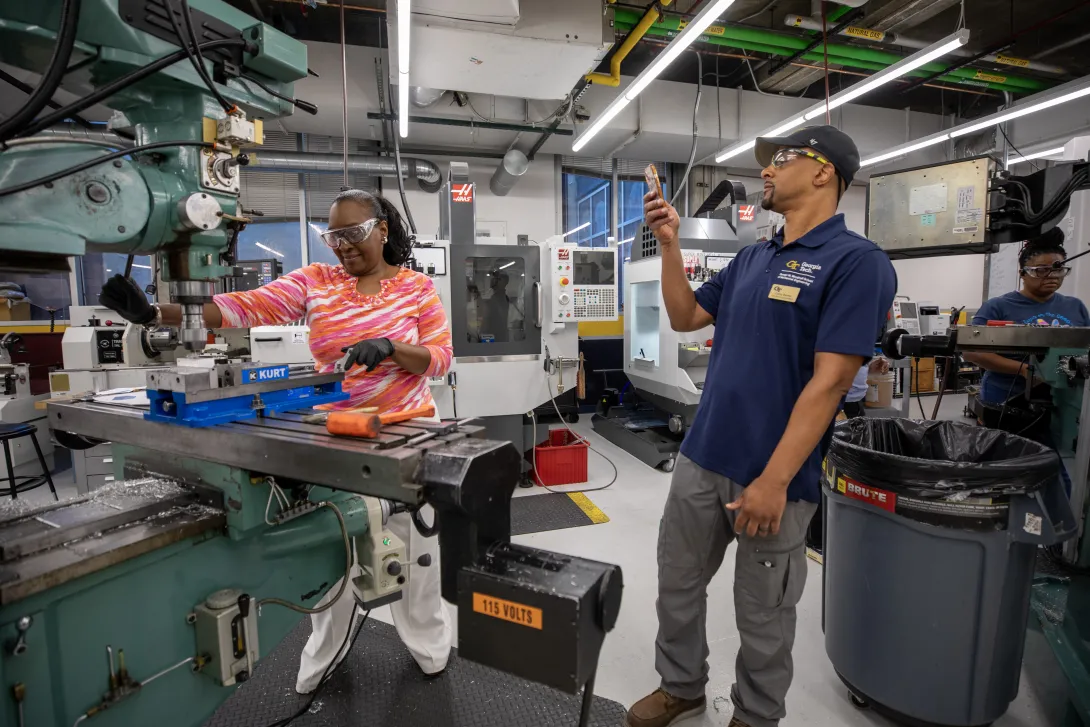
Juone Brown (left), a teacher at Dooly County High School in Vienna, Georgia, called the bootcamp well-paced and plans to bring what she learned back to her students this fall, many of whom prefer hands-on learning.
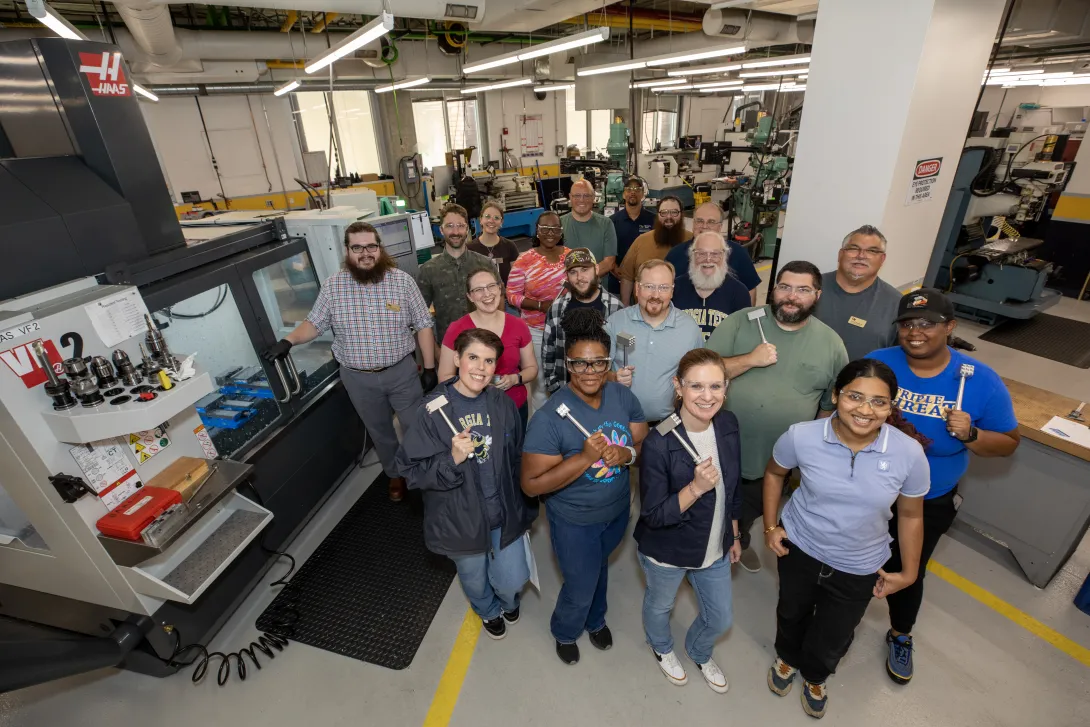
Rural Georgia teachers pose with the metal meat tenderizers they made during a machining workshop hosted by the Georgia Tech Manufacturing Institute (GTMI) and Georgia Tech Research Institute (GTRI) at the Montgomery Machining Mall.
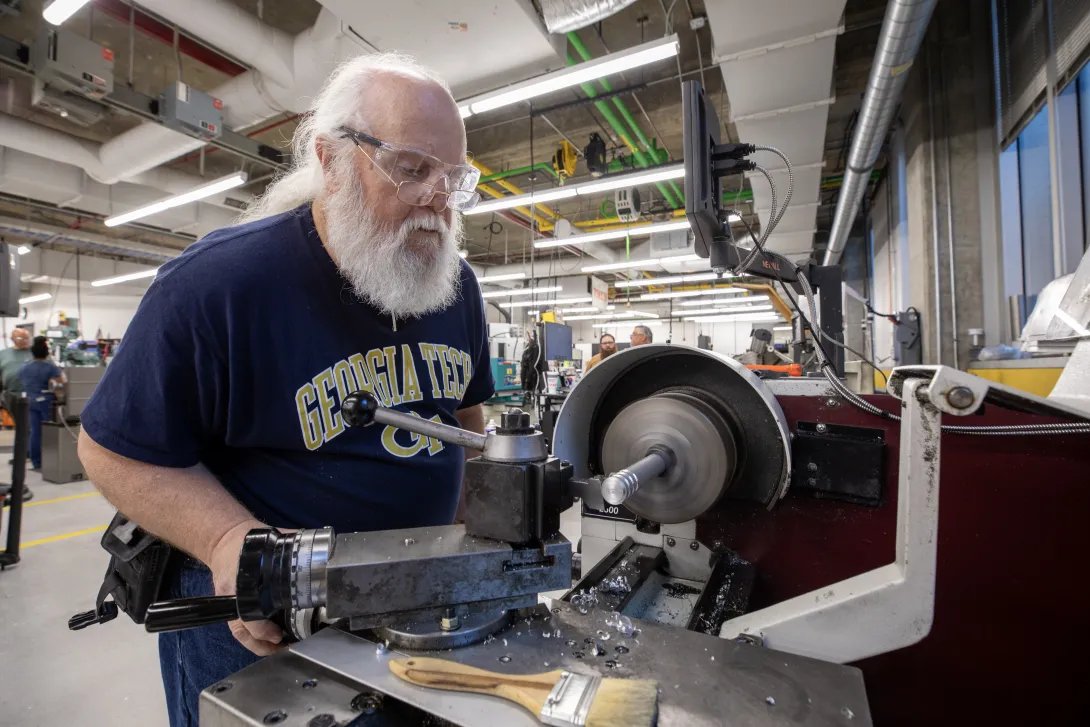
James Beveridge, a computer science teacher in the Chattahoochee County School District, said he is excited to take back new machining skills and physical items back to share with his students.
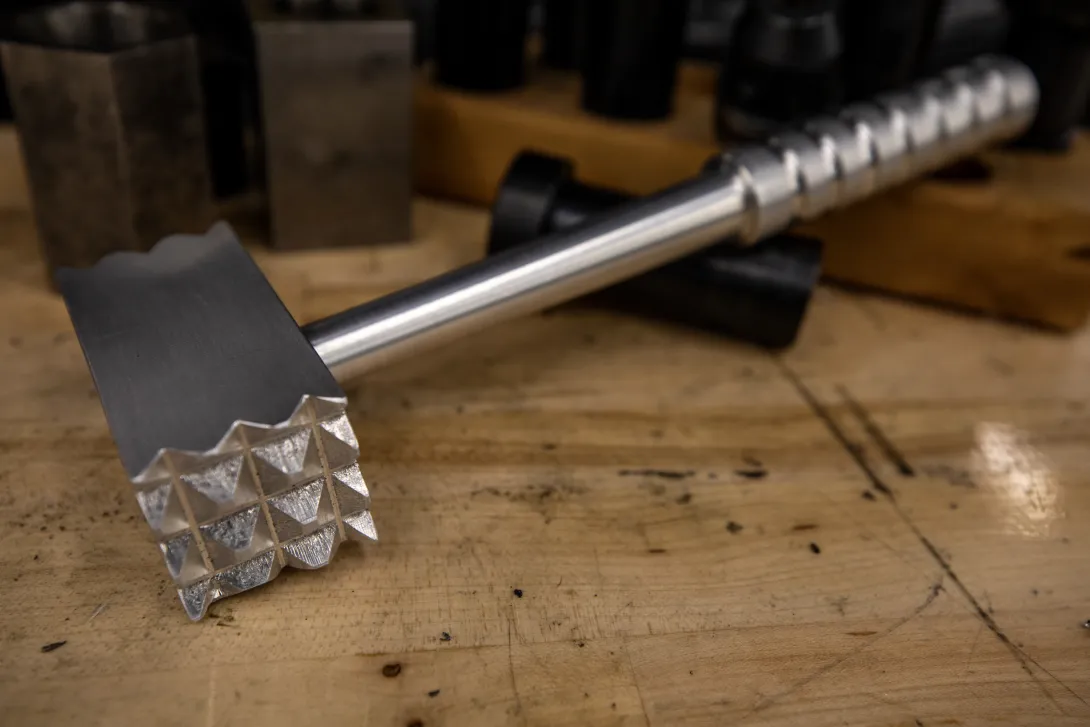
A metal meat tenderizer created by participants during the workshop.
For three days in June, a dozen middle and high school teachers from rural Georgia traded their classrooms for Georgia Tech’s Montgomery Machining Mall, a machine shop where students and researchers design and build custom parts. Instead of grading papers, they cut metal on bandsaws, lathes, and milling machines while learning skills they’ll take back to their students this fall.
The workshop is part of Georgia Tech’s Advanced Manufacturing Pathways (AMP) program, a collaboration between the Georgia Tech Manufacturing Institute (GTMI) and Georgia Tech Research Institute (GTRI), which connects rural educators with hands-on manufacturing training. This particular training was delivered through a partnership between GTMI, STEM@GTRI — GTRI’s K-12 outreach program — and the George W. Woodruff School of Mechanical Engineering, leveraging the facilities and expertise of the Montgomery Machining Mall to provide teachers with direct experience in modern manufacturing. Building on GTRI’s Rural Computer Science Initiative, the program expands access to high-skill, high-wage career pathways across rural communities. The initiative is supported through state funding.
The workshop comes at a time when demand for skilled manufacturing workers continues to grow nationwide, particularly in roles requiring precision, technical expertise, and problem-solving.
Inside the Machine Shop
The training took place June 3 – 5 in the Montgomery Machining Mall, where staff provided access to facilities, equipment, and technical expertise that made the immersive learning experience possible.
Teachers designed and manufactured a metal meat tenderizer and a metal coaster etched with both the Georgia Tech logo and their name. For many, this was their first exposure to advanced manufacturing tools and processes, and a glimpse into high-skill, high-wage careers within reach for their students.
“Many of these teachers have never been exposed to any advanced manufacturing,” said Sean Mulvanity, a program manager for STEM@GTRI and project lead for this workshop. “By the time they walk out of here, they’ve actually created and manufactured physical items they can take back to their students.” Unlike traditional professional development, the workshop places teachers directly in the machine shop, working on heavy equipment.
For AMP program leaders, this pilot was a way to build momentum for school districts that may add advanced manufacturing courses and to make the machine shop feel less intimidating in the process.
“One of the biggest misconceptions about modern manufacturing is that it is inaccessible or limited to specialized factory environments,” said GTMI Deputy Director Steven Ferguson. “Today’s manufacturing combines hands-on skills, digital technologies, AI, and problem-solving in ways that are relevant to students across many career pathways. By giving teachers direct experience in the machine shop, we help them bring that excitement back to their classrooms and show students that they can design, build, and innovate in their own communities.”
From the Shop Floor to the Classroom
One of the workshop participants is James Beveridge, who teaches computer science for grades 6-12 in the Chattahoochee County School District, a small, rural district south of Columbus. He has participated in multiple Georgia Tech-led training programs, and he runs a full computer science pathway for 450 middle and high school students. This fall will mark his third year in the Rural Computer Science Initiative and teaching computer science after two decades in industry.
Beveridge had some informal experience with tools growing up — his father taught him basic carpentry and welding — but he had never done formal machining work before the AMP workshop.
“Working with metal is different than working with wood, obviously, but it’s been really interesting to see the precision involved,” he said. “With wood, you can be off by a sixteenth of an inch, and nobody cares. When you’re machining metal parts, it has to be very, very precise. Learning to use the precision measuring tools has been eye-opening.”
For Beveridge, one of the biggest benefits of his ongoing work with Georgia Tech through the Rural Computer Science Initiative and related programs is that he never leaves empty-handed.
“Every time I come up here to learn something new, they send me home with the equipment to teach it with,” he said. “The first time, I left with a classroom set of robots so my students could learn to program. Another time, it was a more advanced humanoid robot with artificial intelligence. Now, I’m going back with new skills in machining and a physical project I can show my students.”
Another participant, Juone Brown, teaches high school computer science and AI to students at Dooly County High School in Vienna, Georgia. This is her second year in the rural computer science partnership and her fourth year teaching at Dooly. Previously, Brown was a professor for 25 years at Fort Valley State University.
Like Beveridge, Brown has no formal machining background but said the way workshop instructors broke down each step — especially the math behind the cuts — made the work feel approachable.
“It has been fantastic and really well-paced,” she said. “We all come from different backgrounds, but the way they present the information makes it click. We know the math, but when you’re on the machine, and they show you easier ways to get the cut you need, it’s very encouraging.”
She’s already thinking about how to translate that feeling for her students, many of whom prefer building things to writing code. “I’m always telling them that skills pay the bills,” Brown said. “A lot of my students are hands-on. Now I can connect what we’re doing in class to real parts and jobs.”
Bringing Advanced Manufacturing to More Georgia Classrooms
After the workshop, teachers are expected to integrate machining concepts into existing courses or help build new manufacturing pathways at their schools.
AMP program leaders intentionally kept this pilot cohort small. The team plans to repeat the workshop several times over the coming year, expanding to more schools and districts across Georgia, building local champions who can help launch advanced manufacturing programs in their communities.
About the Georgia Tech Manufacturing Institute (GTMI)
The Georgia Tech Manufacturing Institute (GTMI) convenes industry leaders, government partners, and top researchers to collaborate on the grand challenges facing manufacturing today: accelerating technology development and deployment; creating, maintaining, and filling quality jobs; ensuring global competitiveness; and advancing economic and environmental stability.
Our vision is to ensure rapid innovation that secures U.S. dominance in advanced manufacturing. Through the design and development of artificial intelligence systems, secure digital manufacturing, additive and subtractive processes, and large-scale production enterprises, GTMI stands at the forefront of manufacturing innovation — leveraging state-of-the-art facilities, including the Advanced Manufacturing Pilot Facility, to turn research breakthroughs into market-ready solutions.
About the Georgia Tech Research Institute (GTRI)
The Georgia Tech Research Institute (GTRI) is the nonprofit, applied research division of the Georgia Institute of Technology (Georgia Tech). Founded in 1934 as the Engineering Experiment Station, GTRI has grown to more than 3,000 employees, supporting eight laboratories across more than 20 locations nationwide and performing more than $919 million in problem-solving research annually for government and industry. GTRI's renowned researchers combine science, engineering, economics, policy, and technical expertise to solve complex problems for the U.S. federal government, state, and industry.
News Contact
Writer: Anna Akins
Media Contact: Jennifer Martin | jennifer.martin@research.gatech.edu
Photos: Sean McNeil
Copyediting: Stacy Braukman