
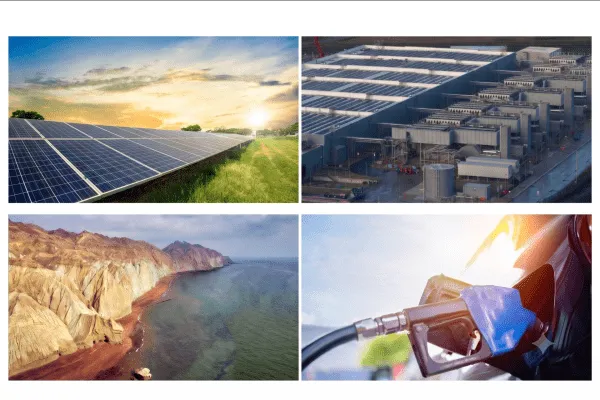
EPIcenter Faculty Affiliates have recently contributed to more than a dozen news broadcasts, public radio interviews, and national media conversations on energy price trends, the war in Iran, and what these mean for everyday Americans.
Communities across Georgia and the nation are navigating a range of economic and energy-related pressures. Gas prices, inflation, and the rapid growth of data centers are shaping the cost of goods and services, influencing everyday household financial decisions.
At the same time, ongoing geopolitical tensions are driving fluctuations in global oil markets and fuel prices. The expansion of AI data centers is also increasing demand for land, power, and water resources. And conflicts involving energy infrastructure in parts of the Middle East and Europe have affected supply stability.
Responding to these challenges requires careful analysis of emerging trends, supported by strong research in policy and economics. Faculty Affiliates of Georgia Tech’s Energy Policy and Innovation Center study these complex, interconnected issues affecting energy systems, costs, and access. They analyze emerging trends, evaluate policy options, and identify practical pathways forward.
News Contact
Priya Devarajan | SEI Communications Program Manager
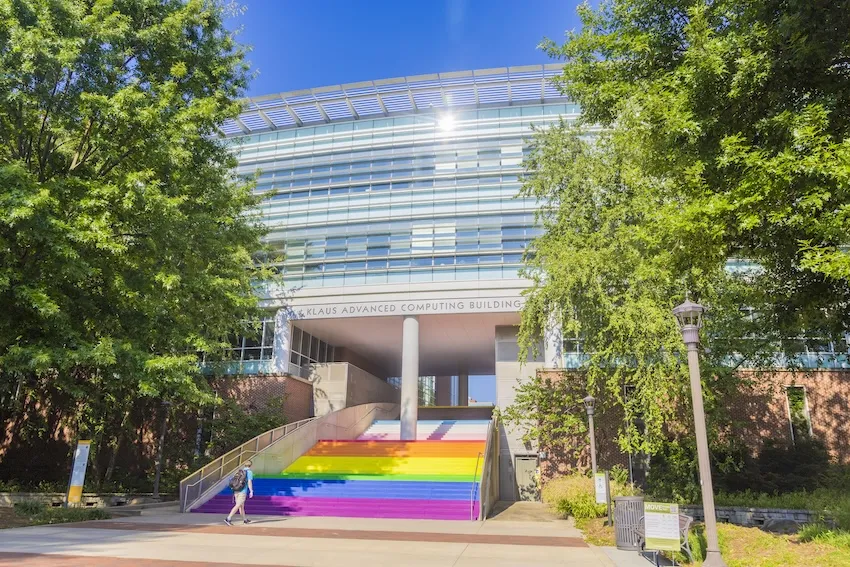
Two A.M. Turing Award Laureates are among global computing experts traveling to Atlanta this summer for the inaugural ACM AI Leadership Summit. The summit is the first event of its kind organized by ACM, the Association for Computing Machinery.
Registration is open for the inaugural ACM AI Leadership Summit, taking place Aug. 31 through Sept. 2 at the Hyatt Regency Atlanta Hotel.
Georgia Tech and Atlanta-area college students, faculty, and others from the tech community interested in AI are invited to attend the summit to explore:
- Emerging AI technologies and agentic systems
- Governance and ethics
- Workforce transformation
- Creative collaboration
In addition to welcoming a wide range of perspectives on AI and society, the summit will serve as a venue for knowledge exchange, cross-sector dialogue, and community building among academia, industry, government, and other AI stakeholders.
“Artificial intelligence is transforming every dimension of human knowledge, creativity, and collaboration,” said ACM President-Elect Elisa Bertino, co-chair of the summit’s organizing committee.
“The ACM AI Leadership Summit will be a milestone event where the global computing community taps into the excitement of the moment while exploring the AI era from a whole range of perspectives.”
GT Computing Helps Lead the Effort
Georgia Tech’s College of Computing plays a key role in the summit. Several faculty members serve on the organizing committee.
GT Computing faculty organizers include Neha Kumar, general organizing co-chair; Mark Riedl, program co-chair; and Naveena Karusala, communications co-chair. Dean of Computing Vivek Sarkar serves as the event’s sponsorship chair.
All are ACM members. Kumar, Riedl, and Karusala are faculty members in the School of Interactive Computing.
“Atlanta is home to one of the nation's most dynamic technology communities, making this summit an unprecedented opportunity for our students, researchers, academics, and technology leaders to help shape the future of AI,” said Kumar.
“By bringing together experts from academic, industry, and governance backgrounds, we're creating a space for exchanging ideas, forming partnerships, and engaging the next generation of AI leaders with the challenges and opportunities that will define the field for years to come.”
In addition to helping organize the summit, the College is hosting a reception on Aug. 30, following a daylong doctoral consortium titled Nurturing Future AI Leaders.
“The summit reflects the growing need for cross-sector collaboration as AI technologies become increasingly influential across every aspect of society,” said Sarkar.
“It is designed to foster dialogue, interdisciplinary collaboration, and practical action that advances AI for the public good.”
Turing Award Laureates and AI Visionaries Take the Stage
ACM A.M. Turing Award Laureates Andrew Barto and Yann LeCun are scheduled to participate in the summit. They’re joined by Regents’ Professor Ellen Zegura and several other distinguished speakers on the summit’s three-day main program.
The program also includes keynotes, panels, and interactive sessions examining frontier AI technologies, governance and ethics, and workforce transformation.
Scheduled sessions include:
- Rethinking the Future: Frontier Models and Technologies for a New Era of AI
- AI and Scientific Discovery
- Responsible and Ethical AI: Governance, Policy, Accountability, and Trust
- AI and the Creative Arts: Human–AI Co-Creation and Cultural Transformation
- AI and the Workforce: Augmentation, Reskilling, and the Future of Work
- AI in the Real World
- Agentic AI: Autonomous Systems that Plan, Reason, and Act
Additional programming will feature special-interest-group (SIG) tracks focusing on AI for infrastructure and systems, software development, societal impact, and education.
Showcasing Georgia Tech’s Expanding AI Leadership
The event coincides with the rapid expansion of AI research at Georgia Tech. College of Computing faculty and students are advancing work in trustworthy and responsible AI, robotics, computer vision, natural language processing, cybersecurity, healthcare applications, scientific discovery, and AI-driven education.
Researchers are also helping shape conversations about the societal implications of AI, including governance, ethics, transparency, and workforce development.
That breadth of expertise aligns with the summit’s mission to connect a spectrum of perspectives on the opportunities and challenges posed by AI.
“By convening experts from multiple disciplines and sectors, the summit aims to build a shared understanding of how AI can be developed and deployed responsibly while expanding human capability and strengthening society,” said Kumar.
News Contact
Ben Snedeker, Sr. Communications Mgr.
Georgia Tech College of Computing

Alexander Vlahos, assistant professor in the Wallace H. Coulter Department of Biomedical Engineering, has been awarded a five-year, research grant from Breakthrough T1D, the leading global type 1 diabetes (T1D) research and advocacy organization, to support pioneering work aimed at improving therapies for T1D. The award will support Vlahos’ project, “Rewiring Cellular Microenvironments with Synthetic Circuits for Subcutaneous Islet Transplantation,” through the Georgia Tech Research Corporation.
T1D is caused by the autoimmune destruction of insulin-producing pancreatic beta cells, requiring individuals to manage their blood glucose levels through lifelong insulin therapy. Transplanting pancreatic islets has long been investigated as a potential curative treatment, but long-lasting success in extrahepatic sites has been limited—particularly when islets are transplanted beneath the skin—due to poor blood vessel formation, immune rejection, and cellular stress following transplantation.
Vlahos’ research addresses these limitations by combining synthetic biology and tissue engineering in a new way: engineering cells to actively reshape their local environment after transplantation to make it more hospitable for the graft. Rather than relying solely on biomaterials or porous structures to support transplanted cells, the project focuses on programming the cells themselves to sense stress and respond dynamically.
News Contact
Kelly Petty | Communications Manager
Wallace H. Coulter Department of Biomedical Engineering
Written by Anne Wainscott-Sargent
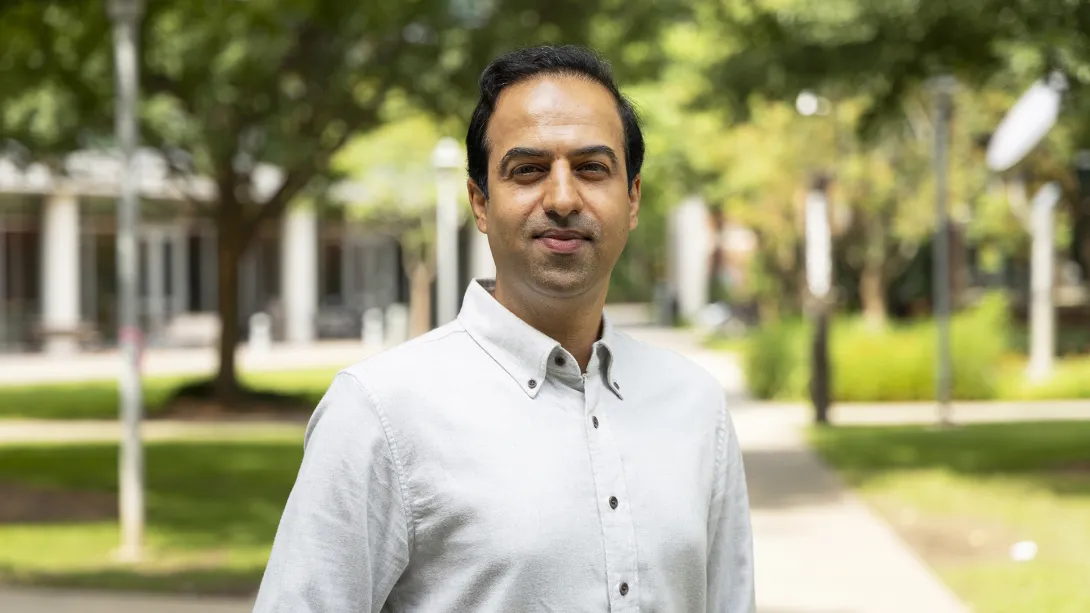
When most people think of hurricanes, they picture howling winds tearing off roofs and snapping trees. But for Ali Sarhadi, a Brook Byers Institute for Sustainable Systems (BBISS) Faculty Fellow, assistant professor in the School of Earth and Atmospheric Sciences, and director of the Climate Risk and Extreme Dynamics Lab, the real killer is often less visible. “People think that hurricanes are about wind, but sometimes that’s not the whole story,” he said. “The majority of fatalities are coming from the water, not the wind.”
Supported by two Sustainability Next Seed Grants, Sarhadi’s work draws on climate science, fluid physics, engineering, and artificial intelligence. He’s using AI-powered, physics-informed models to better anticipate water hazards that can cripple cities and power grids in both coastal and inland communities.
Rethinking Hurricane Risk
Sarhadi focuses on compound flooding, the dangerous interaction between storm surge, torrential rainfall, and river flooding that increasingly defines hurricanes. He points to Hurricane Mitch, which hit Central America in 1998, as a stark example, noting that more than 12,000 people died, “all from freshwater flooding — none from wind,” he said.
His work has shown how climate change and sea-level rise are reshaping flood risk from storms like Hurricane Sandy, which devastated New York and New Jersey in October 2012. In the current climate, a Sandy-level natural disaster has a recurrence period of roughly once every 150 years. But that is changing fast. “Because of climate change and sea-level rise, by the middle of this century, the same level of flooding is likely to occur once every 60 years. By the end of the century, that goes up to once every 30 years,” he says. “Hurricane Sandy caused about $70 billion in damage. Imagine experiencing that kind of destruction every 30 years.”
Since 1970, Sarhadi notes, damage from tropical cyclones has increased by about 380% globally, a trend driven by the combined effect of stronger storms and more people and infrastructure being located in harm’s way.
Physics-Informed AI: Street-Level Flood Warnings
While storm forecasting has improved dramatically in recent decades, Sarhadi argues, “We’re in good shape in terms of track forecasting, and we’re getting better at rapid intensification forecasting. But what is missing is the hazard part, and specifically the water part. That’s the number one killer.”
His lab is developing AI models tightly coupled with physics-based simulations to forecast hurricane-induced flooding at unprecedented resolution.
Using Hurricane Sandy as a test case, his team showed that by integrating physics-based surge and rainfall models with generative AI, they could forecast building-level flood depths three to five days before landfall. “We could predict that a storm was surge-dominant and estimate how much flooding could happen at the level of each building with an accuracy beyond 90%,” he says.
Those extra days, and that level of granularity, could give emergency managers and local leaders the information they need to order earlier evacuations, pre-stage resources, and protect critical infrastructure. “We hope by combining AI and physics-based models we can come up with faster, more accurate modeling, first, to save lives, and then to minimize the economic damage,” Sarhadi says.
Targeting Georgia’s Coastline
Although much of the public’s attention focuses on the Gulf Coast and megacities on the Eastern Seaboard, Georgia’s coastline is also highly vulnerable to surge and compound flooding. Sarhadi is collaborating with Georgia Tech for Georgia’s Tomorrow to model risk in places like Savannah and the surrounding coastal region. “We’re working to come up with good long-term solutions for protecting coastal communities and infrastructure,” he says.
Events like Hurricane Helene in 2024, which triggered extended blackouts in Georgia and lethal flooding in western North Carolina, underscore how far inland these risks can reach. “People think hurricanes are just a problem for coastal areas,” Sarhadi says. “But even if you are far from a coastline, you can be at risk when saturated soils, torrential rain, and river flooding combine.”
Building Climate-Resilient Power Grids and Cities
Sarhadi’s work doesn’t stop at forecasting. A central focus of his research is climate-resilient infrastructure, particularly the power grid. His team is exploring digital twin modeling — virtual replicas of energy and infrastructure systems. “When you have a digital twin of your grid, you can run that hurricane through it and identify which substations or power lines are more vulnerable,” he says, explaining that this knowledge could trigger utility crews to fix or reinforce power lines ahead of storms.
Looking decades ahead, these tools could help utilities and planners prioritize where to upgrade aging infrastructure as hurricanes intensify and water levels rise. “We know hurricanes are getting more intense, and our infrastructure is aging,” Sarhadi said. “By combining engineering, climate science, and AI, we’re trying to design better adaptation plans so our communities and power systems are more resilient in the future.”
News Contact
Brent Verrill, Research Communications Program Manager, BBISS
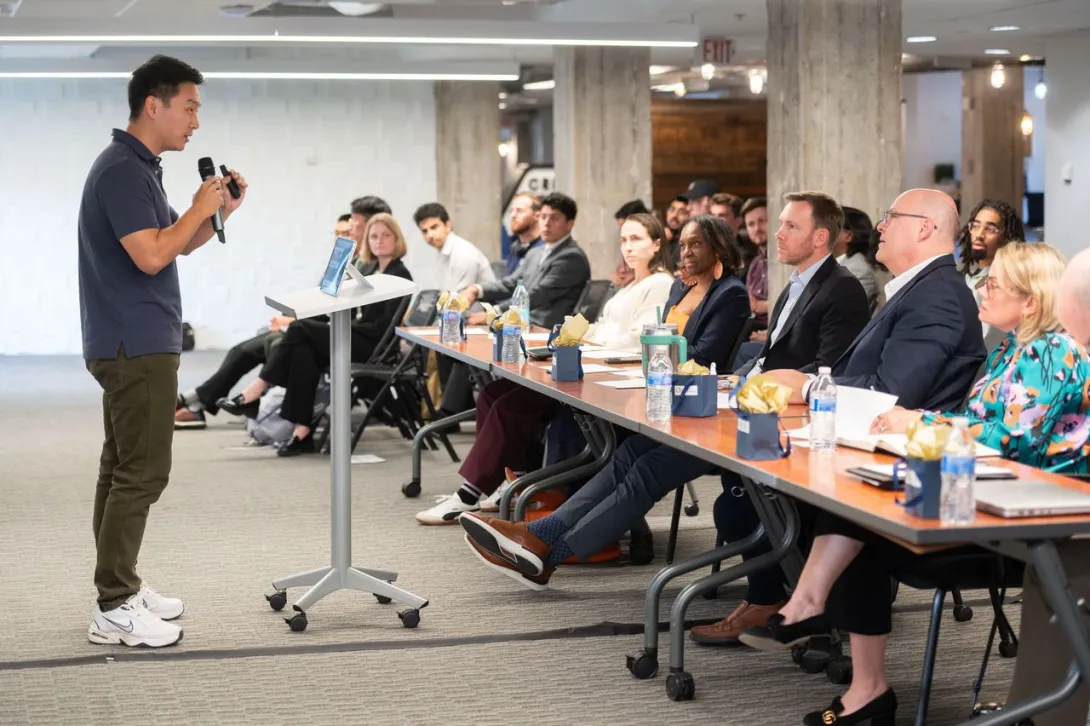
Storytelling is a vital soft skill for pitching investors. Students pitched at Quadrant-i & Creations VC Space Fellows Pitch Event this spring.
Chandra Raman is a physicist — and an avid beach volleyball player. In 25 years as a professor in Georgia Tech’s School of Physics, his sport never came up in the classroom. That changed when he joined Quadrant-i, a faculty startup engine, and realized volleyball could help him pitch his startup.
Raman’s company, 8Seven8, produces quantum chips for aircraft navigation and industrial automation. To explain it to investors, he drew on the sport he knows best. “The technology I'm working on needs precision, timing, and teamwork, so I compared that to volleyball,” he said. “You need precision to place the ball, timing to block, and teammates who support you.”
The metaphor helped investors grasp his company’s value, a skill Raman developed in Q-i’s first space-themed cohort, run with the Space Research Institute. The six faculty and student teams learned how to launch startups, from customer discovery to storytelling — soft skills essential to bringing research to market.
“Building a successful startup means recruiting a team, winning customers, and convincing investors, all of which require the ability to rally people behind a world-changing vision,” said Theo Williams III, general partner at Creations VC, a space venture capital firm that funded the cohort. “Soft skills turn brilliant researchers into the kind of leaders people want to follow.”
Sharing the Art of Storytelling
To help faculty connect with investors, Q-i brought in storytelling coaches from Creative Re/Frame, a Boston-based consultancy founded by academics Jen Guillemin and Wendy Swart Grossman. They led a workshop to refine pitches, then worked one-on-one with teams on everything from narrative to presentation.
The biggest hurdle: translating complex research for audiences who aren’t scientists. “We help faculty innovators translate deep knowledge and expertise into relatable human stories that solve real-world problems and create change,” they said.
Faculty quickly saw the payoff.
“Giving customers or investors the story behind a startup shows how invested you are in its success,” said Panagiotis Tsiotras, who leads Penumbra Autonomy, a spacecraft maneuvering startup.
The workshop also reshaped how some participants framed their work. James Read, founder of ferroelectric memory startup CIMTech.ai, said it shifted his focus beyond novelty. “As researchers, you focus on novelty, but you have to ground it in something anyone can understand,” he said. “Quadrant-i pushes you to focus on customer value, not just what’s publishable.”
Discovering the Customer
That focus starts with customer discovery: listening, asking questions, and validating problems before building solutions.
“In research and development, there is a natural tendency to lead with the solution: build something sophisticated and then look for a market that needs it. But customer discovery flips that instinct on its head,” said Mike Yan, whose startup OpenWerks streamlines supply chain management for space industries. “If you haven't validated that a problem is real, urgent, and worth solving from the customer's perspective, you risk building something technically impressive that no one actually needs. The soft skills of listening, empathy, and intellectual humility are what make genuine customer discovery possible.”
For Q-i director Jonathan Goldman, that mindset shift is the point.
“Faculty are best positioned to drive real-world impact by partnering with experienced entrepreneurs,” he said. “They also have to be the first salesperson before hiring one.”
The approach is already paying off. OpenWerks has secured funding from the Georgia Research Alliance and the Defense Logistics Agency and is prototyping with aerospace and defense manufacturers, validating both its technology and its market.
Programs like Q-i show that research doesn’t have to be paradigm-shifting to matter. Sometimes, the key to impact is simple: meeting people where they are with a story they understand.
News Contact
Tess Malone, Senior Research Writer/Editor
tess.malone@gatech.edu
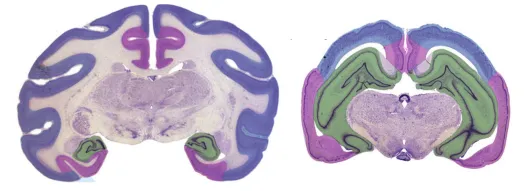
Cross-sections of a squirrel monkey brain (left) and a nine-banded armadillo brain (right) illustrate how different neural systems expand or shrink together across species. The highly visual squirrel monkey has a larger neocortex (blue), while the scent-reliant armadillo has a larger olfactory complex (purple) and memory center (green).
So many of life’s most pivotal decisions come down to one question: Should you listen to your logic or your emotions? Popular culture often frames this tension as a struggle between two minds — a “more evolved” rational layer built atop an ancient “lizard brain” driven by primal instincts.
This battle of the brains has also been playing out over the course of evolution, but not as a simple clash between old and new.
“There was a theory proposed in the ‘50s that the brain evolved in layers starting with basic bodily functions, to emotions in the reptilian brain, leading up to sophisticated reasoning in humans,” explains Nabil Imam, an assistant professor in the School of Computational Science and Engineering and a faculty member with Georgia Tech’s Institute for Neuroscience, Neurotechnology, and Society (INNS). “This is not how an evolutionary biologist would think about the problem.”
Instead of a “new” brain layered over an “ancient” one — or even a logical brain versus an emotional one — research published in Science Advances reveals that brain evolution may come down to wiring.
By studying the architecture of both biological and artificial brains, Imam’s team found that brain evolution is a strategic allocation of limited real estate. They propose a computational tug-of-war between two fundamentally different types of internal wiring — ones established even before birth.
This new understanding not only helps resolve a longstanding mystery in brain evolution but could also help us design more efficient AI systems.
The Problem With the “Lizard Brain”
When we refer to our “logical” or “lizard” brains, we’re really talking about different groups of brain regions. The logical brain is known as the neocortex, the brain’s outer layer responsible for vision, perception, reasoning, and other higher-level functions. For the lizard brain, the story gets a bit complicated.
“The limbic system, sometimes called the ‘reptilian brain,’ controls emotion broadly speaking — but it also has other components with distinct functions,” explains Imam. The system has separate regions for memory, smell, and navigation in addition to emotional regulation. “Why do people group all these different regions into one big system? There hasn’t been a good theory for what is common between these different circuits.”
To investigate, Imam’s team looked beyond individual regions to examine how these systems scale across species. Instead of comparing single areas based on function, the team analyzed how the limbic system and the neocortex change together across evolutionary history.
The result was remarkably consistent. When one component of the limbic system was larger, the others were also larger, while the neocortex was consistently smaller. These regions don’t vary independently. “Rather,” says Imam, “it’s a coordinated expansion of these regions across species.”
This reveals something new: The limbic system behaves not as a loose collection of functions, but as a unified network that expands and contracts as a group across evolution.
But what is driving this coordinated push and pull?
Maps Versus Barcodes
Imam argues that it comes down to how these different parts of the brain are wired before birth.
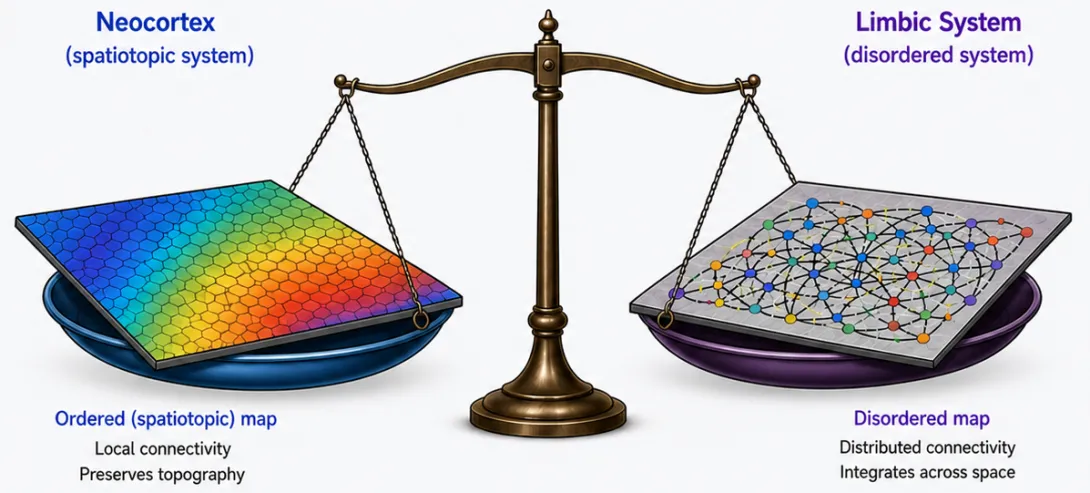
In the neocortex, neural circuits are organized as spatial maps. Areas that process touch in nearby parts of your body, like your index finger and thumb, are physically close to each other in the brain. The same is true for sight and sound.
Wires in the limbic system, however, are not spatially organized. They function more like a bar code, firing in unique, distributed patterns to represent specific scents or complex memories.
To test whether this was an innate trait or acquired through experience, the team developed AI models for different senses. They found that when they pre-wired an AI with localized, spatial connectivity, the network was naturally very good at processing vision, sound, and touch information. Conversely, distributed, “barcode-style” networks were essential for the AI to excel at scent recognition and memory.
The Evolutionary Tug-of-War
The final piece of the puzzle explains how the size of brain components changes predictably across species. Because resources like space and energy are limited, natural selection chooses which system to prioritize.
The team simulated evolution by creating a multimodal network where the spatial and distributed domains competed for “real estate.” When the environment rewarded smell, all areas of the distributed system expanded and the neocortex shrank. When vision was rewarded, the opposite occurred.
This explains why the nine-banded armadillo, which relies on scent, has a massive limbic system, while the highly visual squirrel monkey is dominated by its neocortex. Across the 182 species studied, the research shows that brain evolution is not about adding new layers of "logic," but about strategically reallocating space between different wiring systems to support survival.
By translating this biological architecture to AI systems, engineers could create machines that learn as efficiently as the human brain, requiring far less data and energy.
“Today's artificial neural networks are trained by vast amounts data — it’s about nurture,” says Imam. “But the brain is not a blank slate that gets trained by experience. It is a mix of nature and nurture, and the nature is that pre-wired architecture.”
“We could translate that architecture to AI systems to make it more brain-like, or make it learn or function as efficiently as the brain.”
This work was a collaboration with Cornell University and was supported by the National Science Foundation.
News Contact
Writer
Audra Davidson
Institute for Neuroscience, Neurotechnology, and Society
Media Contact
Bryant Wine
College of Computing
Scientists have shown that bacteria can learn from past experiences, store memories across generations and adapt their behavior to changing environments all without a brain or nervous system. The work could shape how scientists think about bacterial infections and antibiotic treatment.
In a study published in PRX Life, researchers tracked individual E. coli cells as nutrient conditions shifted between rich and poor environments. Instead of responding the same way every time, the bacteria adjusted their growth based on patterns they had experienced before. Cells exposed to rapidly changing conditions were able to adapt better than cells raised in more stable environments.
The findings suggest bacteria do more than just react to their surroundings. They appear to encode memories of past environments and use those memories to guide future behavior.
“For a long time, people assumed bacterial growth was determined only by the environment the cell is currently experiencing,” said Josiah Kratz, first author on the paper and a postdoctoral fellow in the School of Physics. “What we showed is that the history of past environments matters. The cells remember those experiences, and that memory changes how they behave.”
Kratz works in the lab of Shiladitya Banerjee, Associate Professor in the School of Physics at Georgia Tech and a co-author on the paper. Kratz completed most of the work as a Ph.D. student in the joint Computational Biology training program between Carnegie Mellon University and the University of Pittsburgh.
Read the full story in the Carnegie Mellon newsroom.
News Contact
By: Caroline Sheedy, Carnegie Mellon University
Media Contact:
Jess Hunt-Ralston
Director of Communications
College of Sciences at Georgia Tech
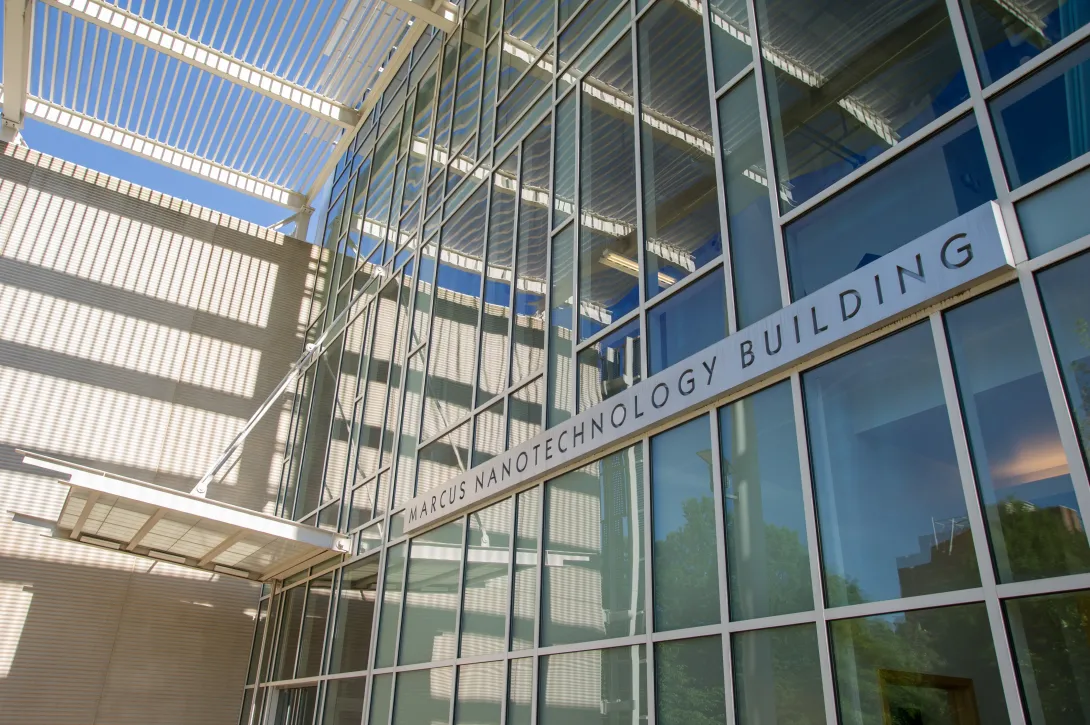
The Institute for Matter and Systems (IMS) at Georgia Tech has announced the Spring 2026 Core Facility Seed Grant recipients. The primary purpose of this program is to give graduate students in diverse disciplines working on original and unfunded research in micro- and nanoscale science and engineering the opportunity to access the most advanced academic cleanroom space in the Southeast. In addition to using the labs' state-of-the-art fabrication, lithography, and characterization tools, the awardees will have the opportunity to gain proficiency in cleanroom and tool methodology and access the consultation services provided by research staff members in IMS. Seed Grant awardees are also provided travel support to present their research at a scientific conference.
In addition to student research skill development, this biannual grant program gives faculty with novel research topics the ability to develop preliminary data to pursue follow-up funding sources. The Core Facility Seed Grant program is supported in part by the Southeastern Nanotechnology Infrastructure Corridor (SENIC), a member of the National Science Foundation’s National Nanotechnology Coordinated Infrastructure (NNCI).
The five winning projects were awarded IMS cleanroom and lab access time to be used over the next year.
The Spring 2026 IMS Core Facility Seed Grant recipients are:
Mineralogical and Microtextural Signatures of Lava-Water Interactions in a Paleo Lava Delta at Lake Tahoe: Implications for Volcanic-Hydrologic Processes on Mars
PI: Frances Rivera-Hernandez
Student: Tuhi Saumya
School of Earth and Atmospheric Sciences
Holistically Designing Robust 3D Mesoscale Networks of Organic Mixed Electronic and Ionic Conductors
PI: Erin Ratcliff
Student: Corey Roberts
School of Materials Science and Engineering, School of Chemistry and Biochemistry
Moisture-Based Energy Harvesting for Ingestible Electrical Stimulation Therapy
PI: Alex Abramson
Student: Julia Ding
The Wallace H. Coulter Department of Biomedical Engineering
Advanced Processing of Agro-waste and its Application in Building Construction
PIs: Kimberly Kurtis (CEE), Ebenezer Fanijo (BC), and Valerie Thomas (ISyE)
Student: Catelyn Chamblee
School of Civil and Environmental Engineering
Field-induced Second-order Nonlinearity in Silicon for Electro-optic Modulation
PI: Wenshan Cai
Student: Zeyu Pan
School of Electrical and Computer Engineering
News Contact
Amelia Neumeister | Communications Manager
The Institute for Matter and Systems
With an estimated 500,000 visitors coming to the eight games in Atlanta over the next two months, the 2026 World Cup will be one of the biggest sporting events to come to the city since the 1996 Summer Olympic Games.
FIFA President Gianni Infantino likened the scale of each game to that of a Super Bowl. The success of a tournament that large will rely heavily on technology, affecting everything from the players on the pitch, all the way to viewers at home.
On top of the state-of-the-art technology used at many large events, this World Cup will also see the debut of new technology. At the center of much of it will be electrical and computer engineering.
Experts from the Georgia Tech School of Electrical and Computer Engineering (ECE) weigh in on how the field is enabling the technology behind the world’s largest sporting event.
News Contact

As strange as it sounds, the key to understanding life’s origins might lie in artificial intelligence. At least, according to a new approached being pursued by researchers at Georgia Tech.
School of Electrical and Computer Engineering (ECE) Assistant Professor Amirali Aghazadeh and Ph.D. student Daniel Saeedi have developed AstroAgents, an AI system that analyzes mass spectrometry data — detailed chemical compositions from meteorites and Earth soil samples — to generate novel hypotheses about the origins of life on the planet.
What sets AstroAgents apart is its use of agentic AI. Unlike traditional AI systems that perform fixed tasks, this agentic system is designed to pursue a scientific goal. It draws from astrobiology literature, interprets complex data, and proposes original ideas that researchers can investigate further.
Their paper, recently featured in the journal Nature, is opening new possibilities for how scientists explore questions that have remained unanswered for decades.
In a special Q&A, Aghazadeh and Saeedi explain how AstroAgents analyzes space chemistry, what it’s revealing about the possible origins of life on Earth, and what they hope to explore next.
News Contact
Dan Watson
dwatson@ece.gatech.edu