

Artificial intelligence (AI) is becoming increasingly vital to the nation’s power grid. However, AI tools meant to help energy companies manage the grid, plan for future needs, and respond to problems also create new security and safety concerns.
Saman Zonouz, an associate professor in Georgia Tech’s School of Cybersecurity and Privacy and the School of Electrical and Computer Engineering, is helping address those concerns as a member of a planning committee for the National Academies of Sciences, Engineering, and Medicine.
Since May 2026, Zonouz has served on the planning committee for an upcoming public workshop on integrating AI into the electricity system. The workshop is scheduled for Oct. 26 and will convene experts to discuss how to safely and reliably use AI across the power grid.
The workshop will explore how AI is used today, the challenges of integrating AI into existing power systems, and how people and AI can work together. The event will also examine relationships between AI and cybersecurity, data centers, workforce development, and future research.
For Zonouz, cybersecurity and resilience are key parts of the conversation.
“AI is both a shield and a target for the grid,” Zonouz said.
Zonouz leads Georgia Tech’s Cyber-Physical Systems Security Research Laboratory. The lab’s research, much of it funded by the U.S. Department of Energy, investigates how AI can protect power systems from cyberattacks.
One recent initiative combines AI with detailed knowledge about power system operations to detect attacks in near real time. Another project sought to identify security weaknesses in solar inverters and other devices that connect energy sources, such as solar panels, to the power grid.
Regardless of the challenge, Zonouz and his lab work to identify and fix these weaknesses before attackers can exploit them. Despite their best efforts, however, Zonouz said that some AI tools meant to secure a system can create new ways for attackers to target a power grid.
The lab has demonstrated in several studies that AI systems can be tricked by false or manipulated data. Attackers can also target the software and systems that AI depends on. As AI becomes more advanced, some systems may even be able to modify grid operations.
This raises an important question: What happens if an AI system fails or is attacked?
“That is why the right frame is resilience,” Zonouz said.
For Zonouz, the goal is not to create an AI system that can never fail or be attacked. It’s to build a trustworthy power grid that can continue operating safely even if an AI system fails or is compromised.
Zonouz will bring his perspective to the National Academies workshop. In addition to helping organize the event, he will lead a session on cybersecurity and resilience. He will also help summarize the workshop’s key takeaways during the closing session. The workshop will be held virtually in late October.
“Lessons learned from the electricity grid can be applied to other critical infrastructure as AI monitoring and control tools continue to advance and become more common,” he said.
News Contact
John Popham
Communications Officer at the School of Cybersecurity and Privacy
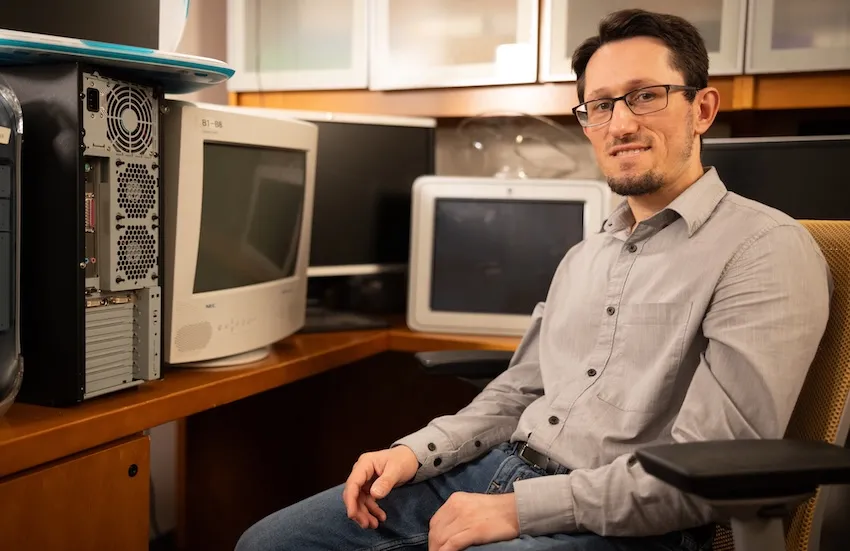
In-home assistive robots might be able to clean and organize your home, but if they can’t tell you where they put your keys or wallet, they can become a major inconvenience.
To improve robot performance and advance memory capabilities needed for reliable home use, Georgia Tech researchers have developed a new benchmark to evaluate the memory capabilities of vision-language models (VLMs).
That includes Gemini 2.0-flash and GPT-4o.
In-home assistive robots could clean and organize a home while the owner is away, but without enhanced memory capabilities, they could cause more problems than they solve.
They could, for example, cause a major inconvenience if they move important objects like wallets and keys but are unable to tell the owner where they put them.
A new benchmark created by Georgia Tech researchers tests the memory capability of vision-language models (VLMs), including Gemini 2.0-flash and GPT-4o, to determine whether they could improve robot performance.
Zsolt Kira, an associate professor in Tech’s School of Interactive Computing, said that most active VLMs can process only a few hundred images at a time before forgetting them.
“There wasn’t a benchmark that could test these specialized capabilities that we might want from a robot,” Kira said. “Our purpose in creating one is to spur research in this area so that others can develop methods to solve this problem.”
The team’s benchmark consists of memory evaluations based on 60 tasks that require continuous engagement and contextual and environmental awareness. Three task categories — spatial, temporal, and multi-goal — are highly difficult.
“You can chat with a language model like ChatGPT, and it remembers all the text from your previous conversations with it because the text data is small in terms of storage,” Kira said.
“Embodied agents and robots observe a lot of videos, and those tend to be a lot harder to recall. If you ask it where your diary is, it must efficiently store images of your diary and where it is.
“That’s just a few frames out of a million that it recorded since yesterday, and it must know where that is relative to the spatial layout of the house.”
Karmesh Yadav, a Ph.D. student in Kira’s lab, said users don’t want to repeat information about their preferences after deployment. They also expect the robot to maintain long-term memory.
“In reality, you would want it to have a memory of the entire time it has been in your house, whether that’s days or years,” Yadav said.
The team’s benchmark evaluates memory performance over an average one-day period. It challenges the models with commands like “navigate to an object you did not interact with yesterday” or “navigate to a room you did not visit yesterday.”
The results show that current state-of-the-art models have a long way to go before they can be used in embodied agents. The best model achieved roughly a 50% success rate on high-level difficulty tasks.
Surprisingly, this model wasn’t Gemini or GPT VLMs. It was an open-source reasoning model from Qwen.
“If you use an open-source reasoning model, even one that’s small in size, it can match the performance of closed-source non-reasoning models,” Yadav said. “Reasoning models can look at the video and translate it into text. It describes what’s going on in the video in words and determines the right frame to choose in its final output.”
Kira said that converting images into descriptive text that language models easily understand could be one way to circumvent the memory storage dilemma. Another way could be to assign a hierarchy that teaches the model to identify irrelevant or redundant images and erase them from storage.
Whatever future progress researchers make in those areas, Kira and his students are confident that their benchmark will remain relevant.
“This benchmark is scalable,” said Ph.D. student Yusuf Ali. “If two years from now, videos are easy for a model to understand and store, you can use the same infrastructure we propose and scale up the problem’s difficulty.”
Yadav and Ali are co-first authors of a paper on the benchmark, presented in early September at the 2026 European Conference on Computer Vision in Sweden.
For more information about the project, click here.
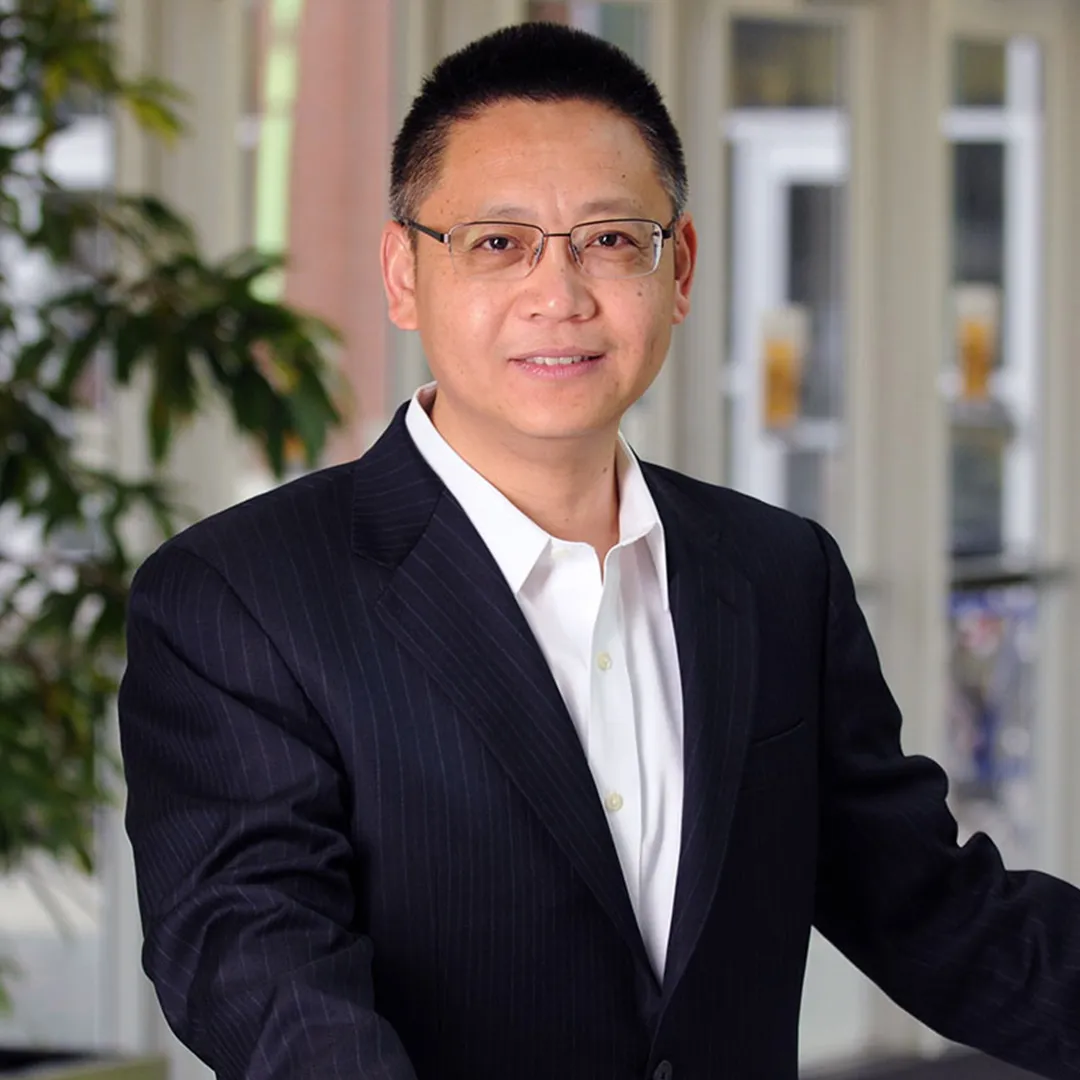
D.J. Wu, professor of Information Technology Management at the Scheller College of Business, smiles in a dark suit jacket and white collared shirt.
What if people's immediate reactions could reveal insights that surveys sometimes miss? Survey responses can be influenced by factors ranging from question wording to social pressure. D.J. Wu, professor of information technology management at Georgia Tech's Scheller College of Business, is exploring whether brain activity can provide another way to understand opinions.
His paper, “Brain Speaks Louder Than Words: Neurophysiological Opinion Inference via Cognitive Dissonance Triggers,” recently received the 2026 Dr. Hermann Zemlicka Award for the most visionary paper at the NeuroIS Retreat.
Wu discusses the research, its potential applications, and the ethical and privacy considerations it raises.
Q&A With D.J.
What was your reaction when you learned your paper received the 2026 Dr. Hermann Zemlicka Award for “most visionary” research?
The Dr. Hermann Zemlicka Award is presented annually at the NeuroIS Retreat to the paper selected as the year’s “most visionary.” I was surprised and deeply honored to receive it. The recognition was especially meaningful because it affirmed our vision of bringing neuroscience and information systems research together to explore a new way of understanding human opinions.
For readers unfamiliar with your research, what problem were you trying to solve?
We wanted to find a better way to understand people’s opinions in situations where traditional methods, like surveys or tracking behavior, may be biased, intrusive, slow, or difficult to use. Our research explores whether brief brain activity measured by electroencephalography (EEG) can reveal when a statement matches or conflicts with a person’s beliefs. If so, it could provide another way to understand opinions without relying only on what people say or how they behave.
Most people are used to answering surveys, reviews, and polls. What made you wonder if there might be a better way to understand what people really think?
Surveys are extremely useful, but they depend on people actively participating. Those answers can be shaped by factors such as memory, the way a question is worded, social pressure, or a person’s ability and willingness to respond. We wondered whether brain activity could offer another way to understand people’s opinions, especially in situations where those challenges come into play. We wanted to see whether we could capture an immediate reaction before a person has to translate it into words.
The paper title, “Brain Speaks Louder Than Words,” is interesting. Can you give an example of what that means in everyday life?
Imagine someone is asked to rate the statement, “I like this product or service.” Even if they feel pressure to give a positive answer, their brain may respond differently depending on whether the statement matches their experience. Our method looks for patterns of brain activity that occur when there is a mismatch between what a person truly believes and what they are evaluating. It is not mind-reading or lie detection. Instead, it uses the brain’s response to conflicting information as one signal that may help us understand whether a statement reflects someone’s genuine opinion.
Were there any findings that surprised you or challenged what you expected going into the project?
One finding was that cognitive conflict depended on more than whether a statement contradicted someone’s opinion. When a heuristic cue, a simple signal that offers a mental shortcut, was present, the brain response to a conflicting statement became weaker. Put intuitively, some contextual cues can soften our immediate sense that “this does not match what I believe,” even when our underlying opinion remains unchanged.
Privacy is a growing concern in today's digital world. Can you compare the privacy implication of the proposed approach versus the traditional methods?
Our approach could reduce the need to store information such as browsing histories, ratings, or written survey responses. Instead of continuously tracking a person’s behavior, it focuses on collecting a specific brain response during a defined interaction with the user’s consent.
At the same time, brain activity is sensitive biometric information and could reveal more than what is needed for a particular task. Any privacy benefits therefore depend on robust safeguards, including data minimization, meaningful informed consent, clearly defined limits on data use and retention, and strong data security through offline, locally controlled processing and calibration.
Our study offers some initial guidance on these issues, but more research is needed to fully understand the privacy implications of this approach.
How could this research change the way organizations understand customers, employees, or other stakeholders in real time?
In situations where surveys may not tell the whole story, receiving feedback is difficult, or past behavioral data are unavailable, our research could eventually help organizations better understand how people are reacting in near real time. For example, it could help identify whether stakeholders' immediate responses suggest agreement or disagreement with a message, product, digital experience, or decision.
These insights would not replace surveys. Instead, they could complement them by showing where people's immediate reactions align with, or differ from, what they later report. Any use at the individual level, however, would require informed consent, a clearly defined purpose, and strong privacy safeguards.
The paper points to opportunities for helping people who may have difficulty communicating through traditional methods. What possibilities do you see for making technology more inclusive?
Brain-computer interfaces have already shown promise in helping people with severe motor or communication impairments interact with technology. Our research explores one possible way to better understand a person's opinions or preferences through brain activity during specific tasks. Over time, this type of work could contribute to technologies that are more responsive to individual needs and more accessible for people who face challenges communicating through traditional methods.
For readers who haven’t thought about neuroscience or brain-computer interfaces before, what’s the one takeaway you hope they remember from this research?
Brain signals do not provide a direct window into a person's thoughts. They reflect many different processes happening in the brain and body, which means they can be difficult to interpret.
That is why theory and experimental design matter. Rather than searching brain data for patterns without a clear explanation, our research focuses on a specific mechanism: how people respond to information that conflicts with their beliefs. By testing that idea in a controlled setting and calibrating the approach for each individual, we can make the results more meaningful and easier to interpret.
Georgia Tech researchers have identified seven previously unknown security flaws in next-generation communication standards that connect in-vehicle computers. These flaws create vulnerabilities that could allow attackers to take control of key driver-assistance functions in personal vehicles.
The team also found that the new standard's core rules for sending messages and handling errors retain every known security weakness of older versions.
The vulnerabilities could allow an attacker who has already gained access to a vehicle's internal computer network to change or intercept messages, take individual vehicle computers offline, send different information to different systems, or disrupt network communication.
CAN Extra Long (CAN XL), the latest version of the controller area network (CAN), is designed for future cars and other vehicles that need to move large amounts of data between onboard computers. The technology is not yet widely deployed in production vehicles, giving manufacturers an opportunity to address security concerns before it becomes more common.
“Because it isn't widely deployed yet, we have a narrow window to get its security right,” said Associate Professor Saman Zonouz of the School of Cybersecurity and Privacy and the School of Electrical and Computer Engineering, one of the researchers on the project.
“Fixing a standard now is far easier than fixing it once it's built into the hardware of millions of cars that stay on the road for a decade or more.”
Zonouz said CAN XL is expected to become the primary version of CAN, the network that enables computers inside a vehicle to communicate. It is also expected to serve as the main network for driver-assistance systems in future vehicles.
The researchers confirmed the seven vulnerabilities in commercial CAN XL hardware and demonstrated attacks using a physical test setup that mimics a vehicle network.
Modern vehicles can have dozens of electronic control units that manage systems such as sensors, brakes, steering, and entertainment. These computers need to communicate quickly and reliably.
For decades, many vehicles have used CAN for this communication. However, the original version, known as classic CAN, was not designed to handle the volume of data generated by newer vehicle technologies.
CAN XL was developed to provide faster communication, larger messages, and new security features, but the researchers wanted to know whether the new standard’s basic rules were secure. Their testing revealed that they weren’t. They discovered that an attacker who controls one computer on the network could intercept and replace messages or take a targeted computer offline.
“These flaws are in the standard itself, so every device built to follow it inherits them,” Zonouz said. “With CAN XL, there's still time to fix these problems before they reach the road.”
The attacks would require an attacker to first gain control of a computer connected to the vehicle's internal network. The research does not show that CAN XL itself provides a means to break into a vehicle. Instead, it shows what an attacker could do after gaining access.
Several attacks were also faster and harder to detect than similar attacks against classic CAN, according to the authors.
The researchers proposed changes to the CAN XL rules to prevent several of the attacks. They also recommended additional security measures, including message authentication and systems that can detect unusual activity.
The team reported the vulnerabilities and informed the manufacturers of the commercial devices it tested about the bugs it found. One company has already released a fix. The researchers hope their findings will help manufacturers address security weaknesses before the technology becomes more widely used.
A Formal Security Analysis of CAN XL was published in the Proceedings of the 35th USENIX Security Symposium, held Aug. 12-14 in Baltimore, MD. The paper was also named a runner-up for a distinguished paper award.
The study was conducted by Georgia Tech Ph.D. student ZhaozhouTang, Professor Vijay Ganesh, Zonouz, and Provost and Executive Vice President for Academic Affairs Raheem Beyah, along with Khaled Serag of the Qatar Computing Research Institute and Z. Berkay Celik of Purdue University.
The paper and its findings result from projects sponsored by the Hyundai America Technical Center, the Georgia Department of Transportation, and the $7 million CHORUS Center through the National Science Foundation’s Cyber-Physical System Frontier Program.
News Contact
John Popham
Communications Officer for the School of Cybersecurity and Privacy
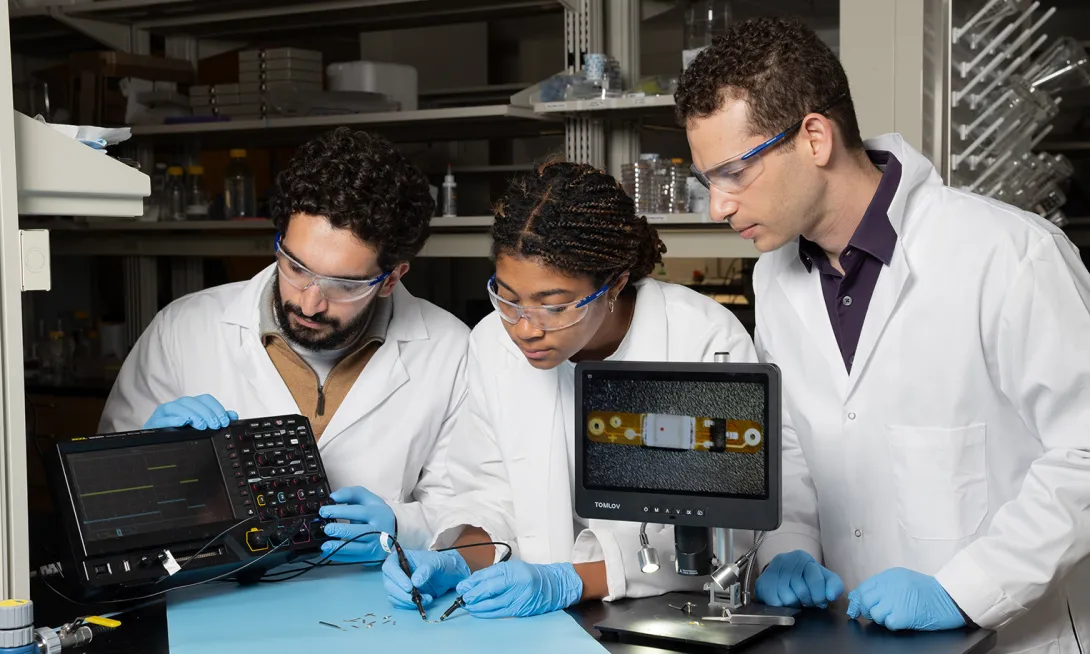
Lead study author Ramy Ghanim (left) and co-author Joy Jackson test an small implantable device alongside Assistant Professor Alex Abramson. In a new Science paper, they describe a networking system that connects therapeutic implants and wearable devices by using the body's natural conductivity to send tiny signals.
Using the human body to transmit signals, Georgia Tech engineers have created a wireless networking system that allows tiny implantable sensors and actuators to communicate with each other as well as wearable devices.
Their system means devices can work together like never before, sensing in one part of the body and triggering a therapeutic response elsewhere — perhaps releasing medicine or stimulating a nerve.
Described Sept. 24 in the journal Science, their communication method is expandable to include multiple interconnected devices across the body, even deep inside the stomach.
News Contact
Joshua Stewart
College of Engineering

For centuries, farmers have relied on simple minerals to balance soil pH and grow stronger crops. Only recently have scientists realized that this practice, known as liming, may in many cases remove more carbon dioxide than it releases. But proving that requires tracking carbon far beyond the field itself.
In a landmark study published in Nature, 11 researchers tracked the impacts on the carbon cycle across the Mississippi watershed and its 11 states after almost a century of liming. The results show that while liming can initially release carbon, it becomes a carbon sink after a few decades, effectively removing the greenhouse gas from the atmosphere.
“Farmers have been doing enhanced weathering in U.S. agriculture for a little over a half century,” said Chris Reinhard, an associate professor in the School of Earth and Atmospheric Sciences and an author on the paper. “This is a giant natural experiment that's been going on for decades that allows us to figure out how much carbon makes it all the way through the watershed system."
The study grew out of a U.S. Department of Energy Earthshot Initiative grant focused on understanding the role agricultural liming could play in long-term carbon removal.
Tracking Carbon
When limestone or other carbonate minerals are added to soil, the effects don't stop at the field's edge. The minerals’ reaction with the ground’s acidity results in chemical products that move through rivers and eventually reach the ocean. While carbon-related changes can be measured in the field, tracing them across an entire watershed is far more difficult.
But data from decades of agricultural lime applications, fertilizer usage numbers, and river alkalinity measurements at the mouth of the Mississippi helped researchers piece together the larger picture. By analyzing more than a century of agricultural and river records, the team found that liming in the Mississippi River Basin has acted as a net carbon sink.
The findings also challenge how liming's climate impacts are typically measured. Current carbon accounting often treats lime application itself as a source of emissions. But the researchers say this approach misses an important part of the picture: Fertilizers can make soils more acidic over time, creating the need for liming. When the team accounted for both processes, they found that liming removed carbon in the long term, but fertilizer causes acidity and drives emissions.
Modeling a Better Future
Reinhard and colleagues also created a model that captures the physics and chemistry of agricultural soils. The model can determine liming’s theoretical carbon-removal potential, testing its predictions against the historical data. In this case, about 90% of the carbon-removal benefit predicted from the model ultimately appeared in the records of river chemistry from the Mississippi River Basin.
“The long-term goal for the model is to develop a way for farmers to plan and be able to answer questions like, ‘How do I stagger the application of lime so I'm helping the crops while also emitting as little carbon as possible?’” Reinhard said.
Beyond its climate implications, liming could help strengthen the long-term resilience of the agricultural industry. The findings suggest that managing soil pH can improve soil health and crop yields, while simultaneously reducing net greenhouse gas emissions. If managed well, one of agriculture's oldest soil management practices may offer a rare double benefit: helping farmers grow healthier crops while reducing the industry's climate footprint.
CITATION : Suhrhoff, T.J., Reinhard, C.T., Kanzaki, Y. et al. Agricultural liming is a carbon sink in the Mississippi River Basin. Nature (2026). https://doi.org/10.1038/s41586-026-11040-2
News Contact
Tess Malone, Senior Research Writer/Editor
tess.malone@gatech.edu
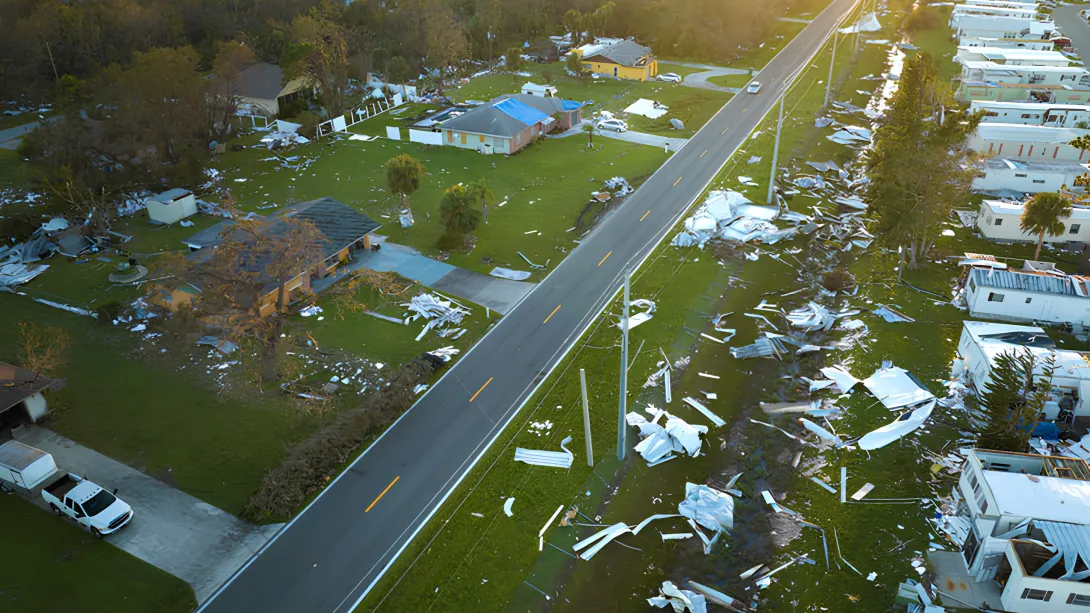
A Florida neighborhood destroyed in the aftermath of Hurricane Ian, 2002.
The storm ends, the fire goes out, floodwaters recede.
And, for some, the rent rises.
Long after a natural disaster fades from the headlines, economic aftershocks can still push people out of their communities, not because their homes were destroyed, but because they can no longer afford to remain there.
A new Georgia Tech-led study found that rents were 6.5% to 12.5% higher than expected four years after a disaster. Similar communities that weren’t hit did not see the same jump.
Brian An, an associate professor in the Jimmy and Rosalynn Carter School of Public Policy within the Ivan Allen College of Liberal Arts, and his team studied two decades of rental housing data and federal disaster records from California and Florida.
“We often think of housing as a market that will sort itself out,” An said. “But a natural disaster is not a normal market condition. Housing is destroyed. People are displaced. In those moments, renters can become especially vulnerable.”
After a disaster, the housing market’s usual rules no longer apply. Damaged apartment buildings mean reduced supply. Displaced homeowners enter the rental market while their homes are repaired or rebuilt. Construction, repairs, and insurance all get more expensive.
The largest rent increases followed hurricanes and wildfires more than earthquakes, flooding, and tornadoes. For communities hit repeatedly, each new storm or fire added more rent pressure.
More Demand, Less Room
“When rents go up after a disaster, we're not talking about a small segment of housing,” An said. “We're talking about the broader rental market. That means the effects reach far beyond the homes that were damaged.”
For renters, the consequences extend beyond monthly housing costs. Higher rents can make it harder for families to remain close to support networks. Children may have to change schools. Workers may face longer commutes. Longtime residents can find themselves priced out of communities they helped build.
The findings point to a central tension in disaster recovery: Rebuilding homes is not the same as keeping communities intact.
A Different Path Home
Not every community experienced the same outcome.
Areas that received federal support through Community Development Block Grant Disaster Recovery (CDBG-DR) funds saw smaller rent increases than similar communities that did not. The money can be used to build and preserve affordable rental housing, giving residents more options as their communities recover.
An said the study cannot prove that funding alone caused rents to rise more slowly. But the pattern suggests that recovery resources may shape who can afford to stay in a community once rebuilding begins.
Rebuilding Lives, Not Just Homes
As communities face repeated hurricanes, wildfires, and other disasters, An believes policymakers need to think differently about recovery. That could mean investing in more resilient housing, expanding affordable rental options, and strengthening protections for renters after disasters strike.
“Everyone needs a place to live,” An said. “As disasters become more frequent, housing can't be an afterthought in recovery.”
An’s research is published in The Russell Sage Foundation Journal of the Social Sciences.
News Contact
- Michelle Azriel
Senior Writer-Editor
Research Communications
mazriel3@gatech.edu
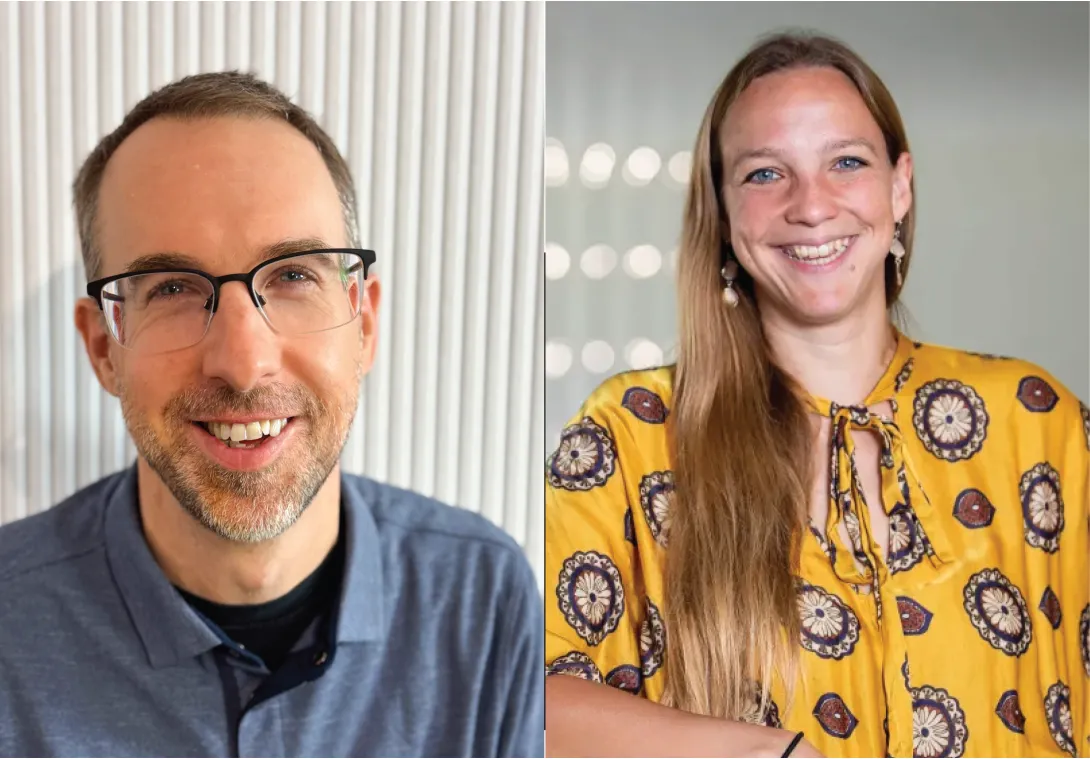
David Ballantyne, professor in Georgia Tech’s School of Physics, and Mariel Borowitz, associate professor in the Sam Nunn School of International Affairs, have been appointed associate directors of the Space Research Institute (SRI).
The Georgia Tech Space Research Institute (SRI) has appointed David Ballantyne and Mariel Borowitz as associate directors, expanding the institute's leadership team as it continues to strengthen Georgia Tech's position as a leader in space research, education, and engagement.
Since its launch in 2025, SRI has brought together researchers from across campus to advance interdisciplinary space initiatives and create new opportunities for collaboration. In their new roles, Ballantyne and Borowitz will help guide the institute's growth by strengthening both internal research connections and external partnerships across the broader space community.
“David and Mariel bring complementary strengths that will be invaluable as we continue building SRI,” said Jud Ready, executive director of SRI. “David has a deep understanding of the research enterprise at Georgia Tech and a passion for connecting people and ideas across disciplines. Mariel brings extensive experience working across government, industry, and the international space community. Together, they will help us strengthen Georgia Tech's space ecosystem and expand our impact far beyond campus.”
Strengthening Georgia Tech's Research Community
Since joining the Institute in 2008 as a founding faculty member of the Center for Relativistic Astrophysics, Ballantyne has helped advance both space science and academic leadership across campus.
A professor in the School of Physics, he studies the evolution of galaxies and their central black holes, as well as the physics of accretion disks around black holes and neutron stars. He has authored more than 140 peer-reviewed publications and served as associate chair of the School of Physics for nearly a decade.
As associate director, Ballantyne will focus on cultivating connections across Georgia Tech's space research community and identifying opportunities for new interdisciplinary collaborations.
“I view SRI as a catalyst — a mechanism to spark new and transformative areas of space research at Georgia Tech that will grow to national and international prominence,” Ballantyne said. “There is so much innovative space research happening across campus, and one of SRI's most important roles is helping researchers find the connections and collaborations that can spark new ideas and discoveries.”
Ballantyne says he is particularly interested in helping position Georgia Tech as a leader in understanding the opportunities and challenges presented by artificial intelligence in space systems.
“My goal is to be out in the community, learning about the breadth of space research happening across campus and identifying ways SRI can accelerate that work,” he said. “AI technologies are poised to transform space exploration, scientific discovery, national security, and commercial space operations. SRI is uniquely positioned to help Georgia Tech lead those conversations.”
Building Partnerships Beyond Campus
As space activities become increasingly interconnected across government, industry, and academia, strong partnerships are essential to translating research into real-world impact. That collaborative spirit is central to the work of Mariel Borowitz, an associate professor in the Sam Nunn School of International Affairs.
Borowitz, who also serves as director of Georgia Tech’s Center for Space Policy and International Relations, is widely recognized for her expertise in space policy, international cooperation, and the governance of emerging space activities. Her work has connected her with space agencies, private companies, and policymakers around the world, providing a valuable perspective on opportunities for Georgia Tech to expand its engagement with the broader space community.
In her role as associate director, Borowitz will focus on growing SRI's partnerships with industry, government, and the broader space community.
“My focus as associate director will be on building partnerships between Georgia Tech and the broader space community,” Borowitz said. “Georgia Tech has tremendous expertise across science, engineering, policy, economics, and international affairs. By working across those disciplines, we can help address the complex challenges facing the future of space development while creating new opportunities for collaboration and impact.”
Borowitz sees SRI as a powerful mechanism for connecting Georgia Tech's diverse strengths and amplifying their collective impact.
“Real-world challenges and opportunities are inherently interdisciplinary,” she said. “The Space Research Institute allows us to bring together expertise from across Georgia Tech to develop more complete solutions and create new possibilities for the future of space.”
Looking Ahead
Together, Ballantyne and Borowitz will help advance SRI's mission of connecting researchers, educators, students, industry leaders, and policymakers to address the most pressing opportunities and challenges in space.
“Space exploration has always challenged us to think bigger, work across boundaries, and pursue questions that no single discipline can answer alone,” said Ready, who also serves as a principal research engineer at the Georgia Tech Research Institute. “David and Mariel embody that spirit of collaboration, and their leadership will help us create new opportunities for discovery, innovation, and impact at Georgia Tech and beyond.”
News Contact
Audra Davidson
Research Communications Manager, Space Research Institute
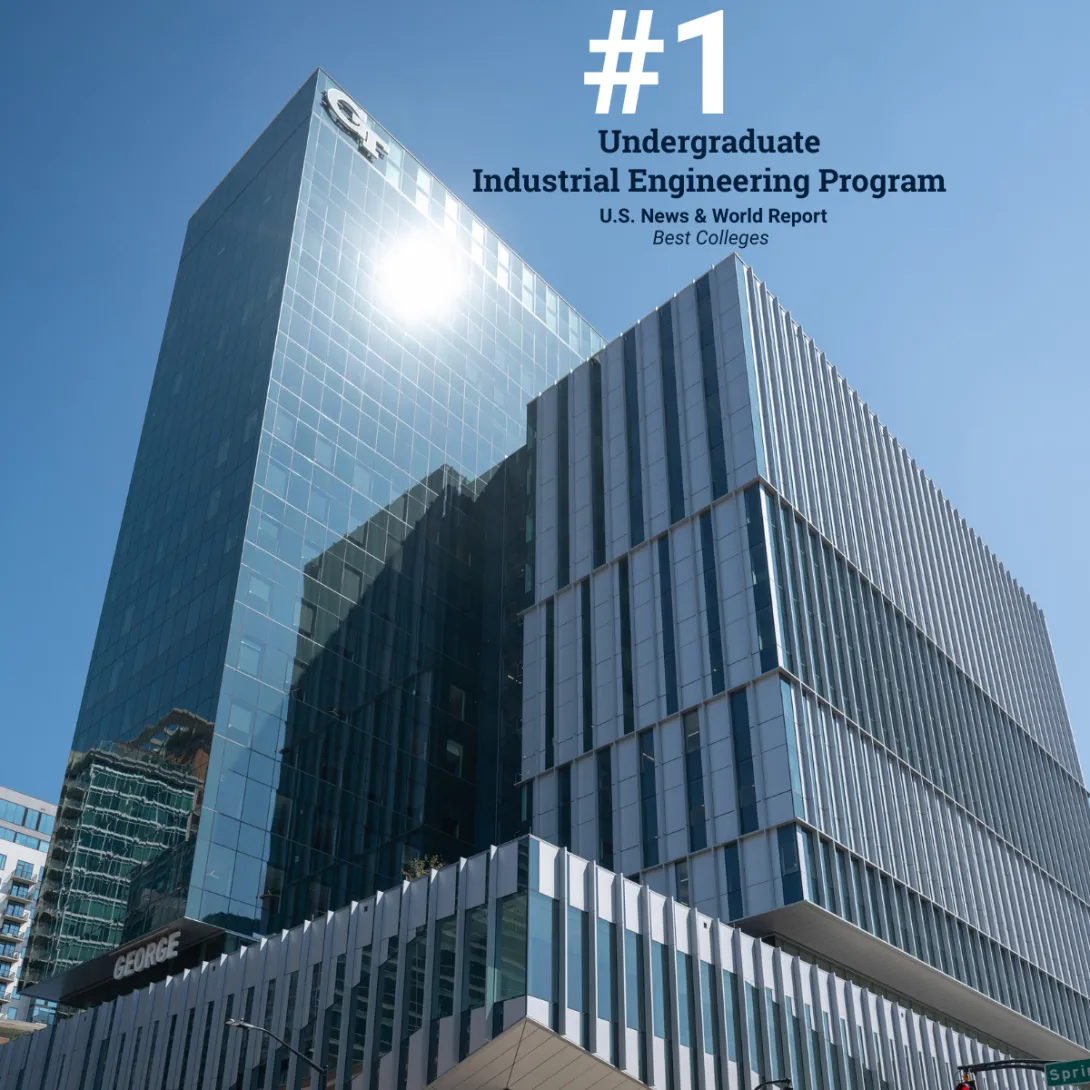
For the 26th consecutive year, Georgia Tech's H. Milton Stewart School of Industrial and Systems Engineering (ISyE) earned the No. 1 ranking among undergraduate industrial engineering programs in the latest U.S. News & World Report Best Colleges rankings.
The annual U.S. News & World Report Best Colleges rankings are based on assessments from academic leaders at peer institutions nationwide.
The recognition comes at a time of significant momentum for ISyE. This fall, the school moved into George Tower in Tech Square, a new home designed to support learning, collaboration, and innovation while creating new opportunities for engagement with students, alumni, industry partners, and the broader Georgia Tech community.
Demand for ISyE's undergraduate program continues to grow, with a record 1,536 students enrolled for the fall 2026 semester, a 10% increase from the previous year. ISyE graduates continue to find success after graduation, with a median starting salary of $90,000 for 2025-26 bachelor's degree recipients and 84% of job-seeking graduates receiving at least one job offer before graduation. Alumni pursue careers across consulting, logistics, finance, technology, manufacturing, and startups, with top employers including The Home Depot, Delta Air Lines, McKinsey & Company, Capital One, and PwC.
The College of Engineering also achieved a historic milestone in the latest U.S. News rankings, rising to No. 2 nationally. All 10 undergraduate engineering programs were ranked among the nation's top five.
News Contact
Anna Akins
Communications Manager I