
Feb. 23, 2023

This news release first appeared in the Chinese Academy of Sciences newsroom, and has been tailored for Georgia Tech readers.
Mycorrhizal symbiosis — a symbiotic relationship that can exist between fungi and plant roots — helps plants expand their root surface area, giving plants greater access to nutrients and water. Although the first and foremost role of mycorrhizal symbiosis is to facilitate plant nutrition, scientists have not been clear how mycorrhizal types mediate the nutrient acquisition and interactions of coexisting trees in forests.
To investigate this crucial relationship, Lingli Liu, a professor at the Institute of Botany of the Chinese Academy of Sciences (IBCAS) led an international, collaborative team, which included School of Biological Sciencesprofessor Lin Jiang. The team studied nutrient acquisition strategies of arbuscular mycorrhizae (AM) and ectomycorrhizal (EcM) trees in the Biodiversity–Ecosystem Functioning (BEF) experiment in a subtropical forest in China, where trees of the two mycorrhizal types were initially evenly planted in mixtures of two, four, eight, or 16 tree species.
The researchers found that as the diversity of species increased, the net primary production (NPP) of EcM trees rapidly decreased, but the NPP of AM trees progressively increased, leading to the sheer dominance (>90%) of AM trees in the highest diversity treatment.
The team's analyses further revealed that differences in mycorrhizal nutrient-acquisition strategies, both nutrient acquisition from soil and nutrient resorption within the plant, contribute to the competitive edge of AM trees over EcM ones.
In addition, analysis of soil microbial communities showed that EcM-tree monocultures have a high abundance of symbiotic fungi, whereas AM-tree monocultures were dominated by saprotrophic and pathogenic fungi.
According to the researchers, as tree richness increased, shifts in microbial communities, particularly a decrease in the relative abundance of Agaricomycetes (mainly EcM fungi), corresponded with a decrease in the NPP of EcM subcommunities, but had a relatively small impact on the NPP of AM subcommunities.
These findings suggest that more efficient nutrient-acquisition strategies, rather than microbial-mediated negative plant-soil feedback, drive the dominance of AM trees in high-diversity ecosystems.
This study, based on the world’s largest forest BEF experiment, provides novel data and an alternative mechanism for explaining why and how AM trees usually dominate in high-diversity subtropical forests.
These findings also have practical implications for species selection in tropical and subtropical reforestation—suggesting it is preferable to plant mixed AM trees, as they have a more efficient nutrient-acquisition strategy than EcM trees.
This study was published as an online cover article in Sciences Advances on Jan. 19 and was funded by the Strategic Priority Research Program of CAS and the National Natural Science Foundation of China.
News Contact
Georgia Tech Editor: Audra Davidson
Communications Officer II
College of Sciences
Feb. 23, 2023
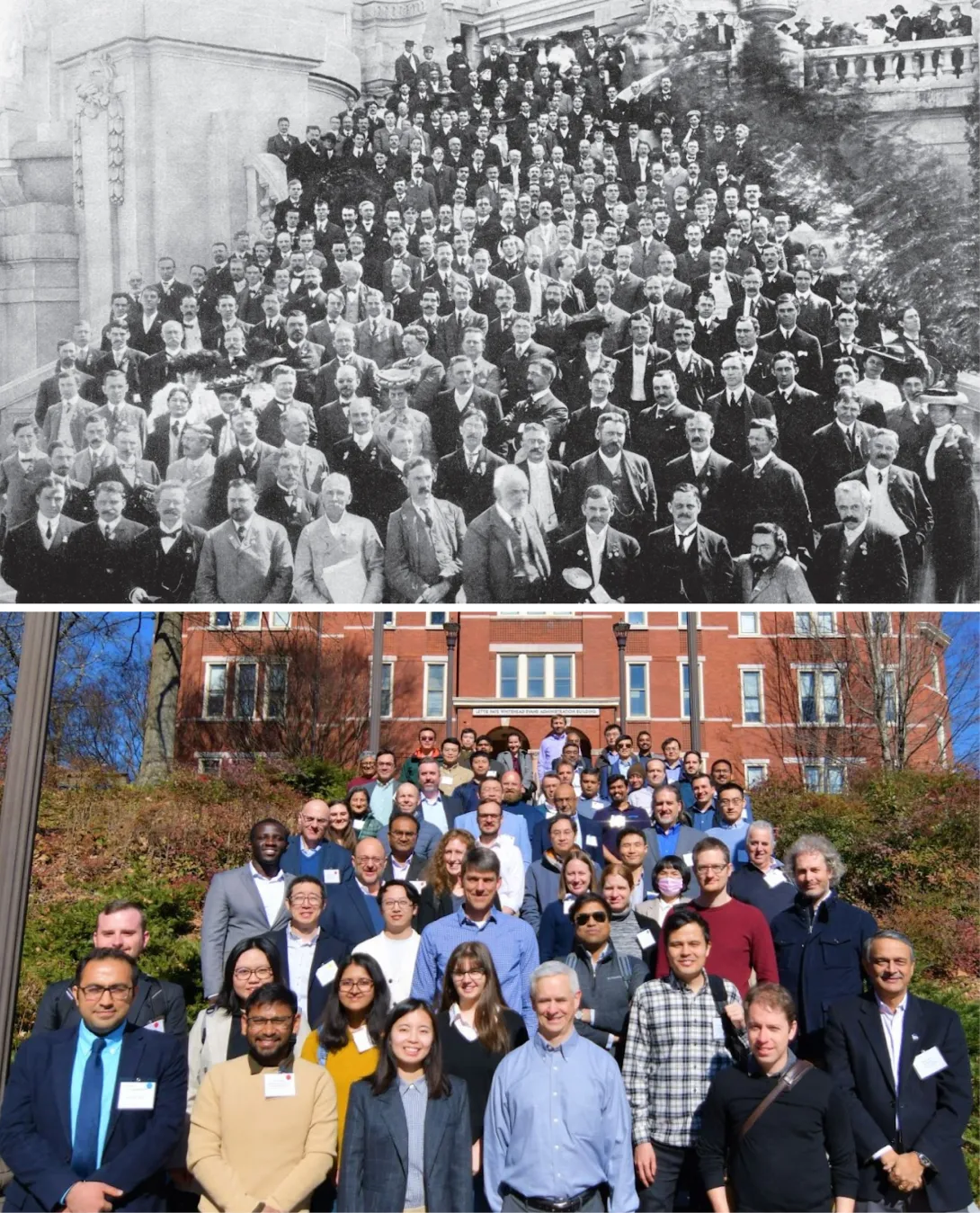
The North American power grid is undergoing a generational transformation. Amid this change, an interdisciplinary research team of engineers and historians seeks to uncover the untold stories behind the algorithms and power systems architecture that have shaped the complex technological and social history of this key infrastructure.
“You can’t connect the dots looking forward; you can only connect them looking backwards.” These words, famously attributed to Steve Jobs, address the broad truth that only through intentional reflection and examination can we learn from the past.
With this in mind, an interdisciplinary research team comprised of engineers and historians from the Georgia Institute of Technology, the University of Houston, and the University of Minnesota are hoping to shape the future of electric power grids by studying and cataloguing the field’s robust history during a two-year study funded by the Alfred P. Sloan Foundation.
“While electrical engineering is at the forefront of many of today’s technological advancements, a critical step in the process of innovative and cutting-edge research is working to understand the past,” said Dan Molzahn, assistant professor in the Georgia Tech School of Electrical and Computer Engineering and the project’s principal investigator.
The group’s project, "Algorithms and Power Systems Architecture: Using Historical Analysis to Envision a Sustainable Future", emerges out of the Sloan Foundation’s emphasis to award historical scholarship projects that look to understand the contemporary context of scientific research and inform current and future research and policy practices. The study will examine the relatively invisible, yet central, role of the algorithms 20th-century engineers developed to provide optimization and control of the electric power grid and the ways in which these algorithms might impact the cleaner grid of the future.
“Clarifying how invisible technologies [like algorithms] became established in large and complex power systems is the ultimate goal of the project,” said Molzahn. “As algorithms became thoroughly naturalized within power systems architecture, they set the boundaries and established the scope of possibility; this can restrict innovation across the technology spectrum.”
The research team — two historians and two engineers — represents an innovative alliance of technical, historical, and public policy approaches. In addition to Molzahn, the team includes Sairaj Dhople, associate professor of electrical and computer engineering at the University of Minnesota (UMN); Julie Cohn, a research historian at the Center for Public History at the University of Houston (UH); and Monica Perales, associate professor of history and director of the Center for Public History at UH.
The project comes at a time when power grids are in the throes of new demands and transformation. As a result of aging technology and regulatory structures that impede upgrades of essential power infrastructure, current grids are inadequate in integrating renewable energy sources at the scale the market requires. Energy providers and researchers are also looking for ways to guard power systems against cyber assaults, as well as against an increased risk of extreme weather events due to climate change — the average overall duration of power interruptions due to weather in the U.S. doubled since 2015, according to the U.S. Department of Energy.
“The opportunities and challenges of widespread electrification are front and center for the public. Debates about climate change, opposition to large-scale energy infrastructure, and periodic weather-related power outages appear in the news regularly,” said Cohn, who is an expert on the development of the North American electric power grid and author of the book “The Grid” on the topic.
A particularly important part of the project is collecting the oral history of individuals who were instrumental in the development, adoption, and application of algorithms in North America. The team will train history and engineering graduate students to conduct approximately 50 interviews with members of the National Academy of Engineering, IEEE Fellows, and prominent power systems engineers.
“The interviews themselves will be the best way to make this project relevant for a non-technical audience,” said Perales, an expert on oral history methods. “When you hear a person tell their story about why they became interested in working on the power system, it is often more than a ‘technical’ story. They offer insight into the ‘why’, which is always compelling.”
The interviews will be archived at UH and the IEEE History Center, and will eventually be made available to other researchers and the public. The team will use the interviews as important source information to produce a podcast that interprets the highly technical history of algorithms and power systems architecture for a broad audience, especially those interested in climate change and sustainability.
The completed history will then be leveraged in engineering courses taught by Molzahn at Tech and Dhople at the UM with the hope that other institutions will utilize the team’s findings to provide appropriate historical context in their power engineering courses.
__
LISTEN NOW!
Discovering Power in the Past: The Algorithms and Power Systems Architecture Project from the University of Houston's "Public Historians at Work" podcast.
News Contact
Dan Watson
dwatson@ece.gatech.edu
Feb. 20, 2023

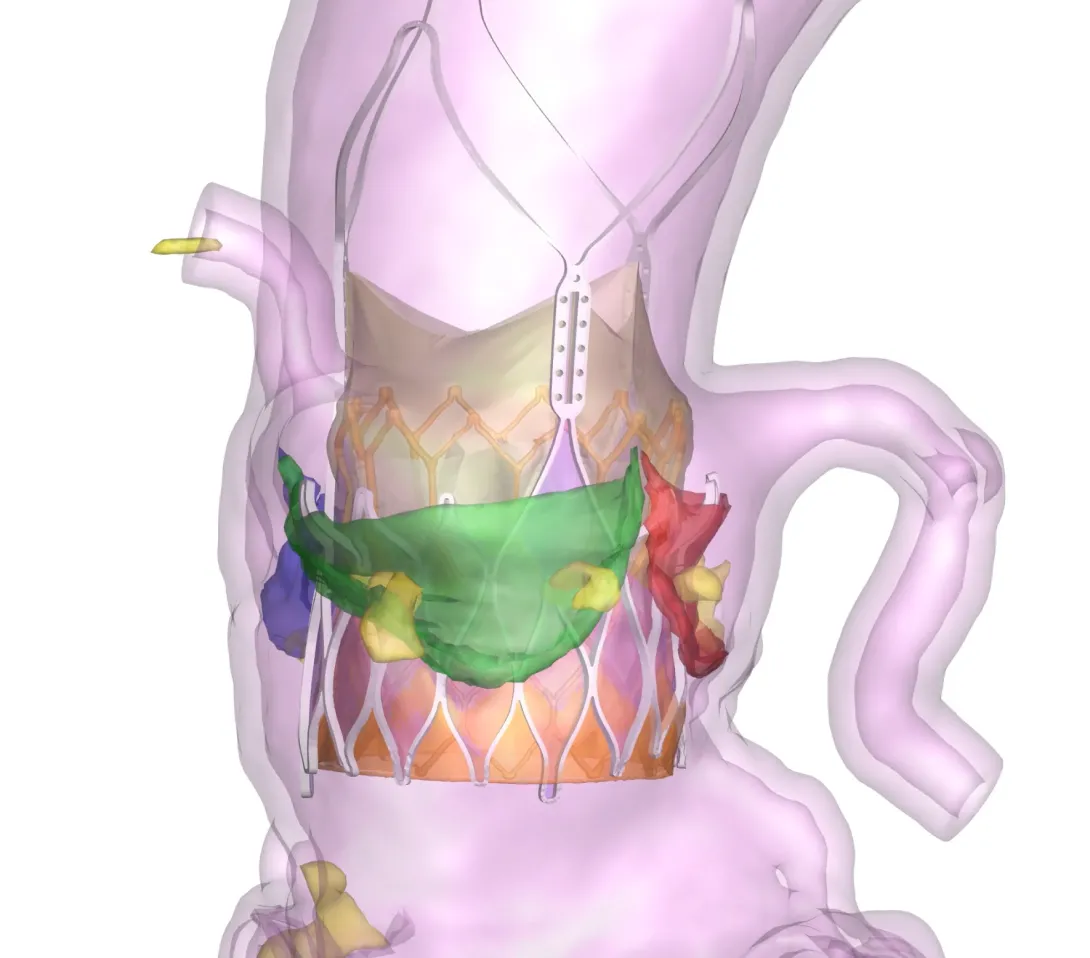
An innovative healthcare startup that just launched out of Georgia Tech uses artificial intelligence to predict how a patient’s heart will respond to a specific implant before the procedure beings.
The team’s groundbreaking research in cardiovascular engineering technology, led by Professor Prasad Dasi, is changing how the medical industry approaches heart care, giving a fresh perspective and a more successful outcome for heart surgeons and patients.
"The decisions that the cardiologists or surgeons make today can impact not only the immediate surgical procedure that they are going to have, but it will impact the rest of their patients’ lives" said Dasi, a professor and associate chair for undergraduate studies in the Coulter Department of Biomedical Engineering at Georgia Tech and Emory University. "Our technology helps doctors make a more informed decision on a patient-by-patient basis for the best possible outcome for those suffering from heart disease or needing a heart implant."
Choosing to Disclose the Heart Valve Technology
Through research commercialization, Dasi was able to license his technology and transform the way heart patients receive care. Dasi chose to take the innovative path and started his own company, Dasi Simulations, along with co-founder and CEO Teri Sirset, to commercialize and disclose the heart valve technology.
“After being able to secure some initial seed funding for our startup, it was time to acquire a licensing agreement from Georgia Tech,” Dasi recalled.
Dasi and Sirset realized that licensing this technology would be a crucial milestone in their journey of establishing a successful business, and they moved forward to disclose their invention to Georgia Tech’s Office of Technology Licensing (OTL).
Working with the Office of Technology Licensing
The Dasi Simulations heart valve technology was successfully licensed through the OTL in the summer of 2022. The licensing agreement was part of a larger inter-institutional agreement between Georgia Tech, Ohio State University, Piedmont Hospital, and Emory University. Dasi credits Raghupathy "Siva" Sivakumar, vice president of the Office of Commercialization at Georgia Tech, with providing great advice throughout the process, as well as the OTL team for creating a smooth licensing experience.
“I met with Siva, and he gave me so much good advice on navigating the aspects of getting into commercialization. He was a great mentor for me,” said Dasi. “I found working with the OTL to be pleasant and a relatively fast experience, and I would definitely encourage other professors and researchers to disclose their ideas. I think that is the first step and developing mentorships is also worthwhile and can lead to more successful advancements in technology.”
Seeing the Benefits of Licensing
As a result of becoming licensed, Dasi Simulations is already making waves in the medical industry with its game-changing heart valve technology. The product is in nearly 50 hospitals, and the device is expecting FDA clearance later this year. The startup currently employs 25 engineers, and a beta version of the product is generating revenue.
“I want to see this technology continue to become the standard of care because every patient deserves the best possible outcome,” said Dasi, reflecting on the next steps for the company now that it is officially licensed.
Dasi Simulation’s heart valve technology is accelerating the medical industry by increasing accessibility to better diagnostics and faster treatments. After years of hard work and dedication from Professor Dasi and Dasi Simulation, cardiovascular healthcare's future is brighter than ever.
“This is an exciting development for Dasi, Sirset, and Dasi Simulations LLC, and Georgia Tech. OTL is excited to have licensed this important research, and we all look forward to seeing how this new technology continues to evolve and help people with heart conditions,” said OTL Director Mary Albertson .
To learn more about Technology Licensing from Georgia Tech, please visit https://commercialization.gatech.edu/technology-licensing
News Contact
Lacey Cameron
lacey.cameron@gatech.edu
Feb. 09, 2023
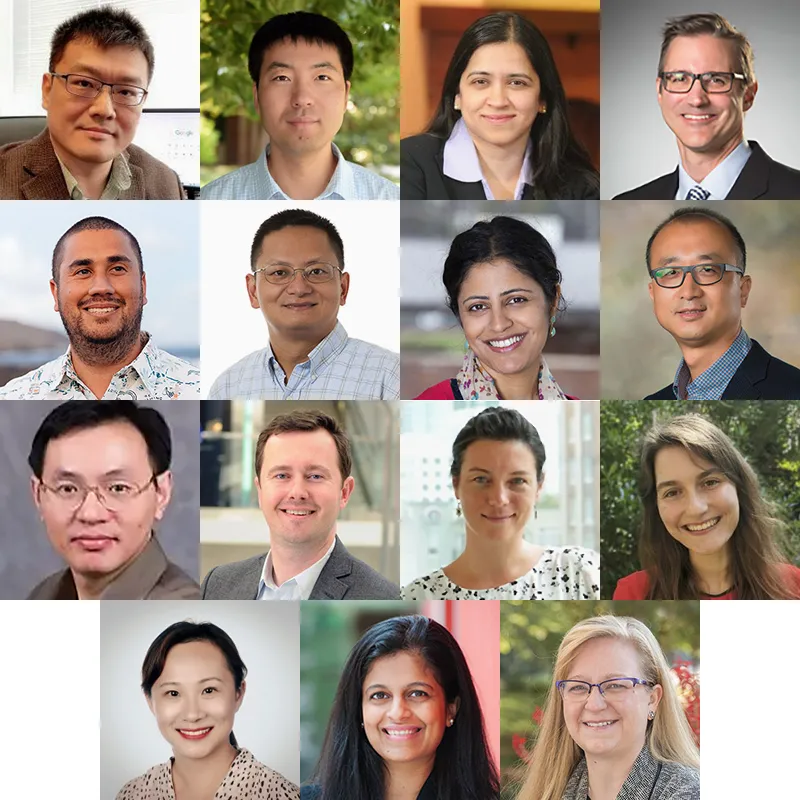
Ten projects have been chosen for the Brook Byers Institute for Sustainable Systems (BBISS) Initiative Leads program. Project themes include climate adaptation and mitigation solutions, innovation and social impact, computation and design approaches to sustainability, sustainable development, and conservation. BBISS Initiative Leads receive $10,000 in discretionary funds to advance their project.
The projects chosen involve 15 faculty members hailing from all 6 of the colleges at Georgia Tech. Several of the projects are also joint initiatives with other Georgia Tech Interdisciplinary Research Institutes (IDEAS, IPAT, and SEI), the Ray C. Anderson Center for Sustainable Business, or the Office of Sustainability.
The Initiative Leads and projects are:
- Michael Helms - ME, “Nature’s Voice: Amplifying the Narrative of Biologically Inspired Sustainable Design at Georgia Tech”
- Josiah Hester - Interactive Computing, “Computational Sustainability”
- Co-Leads Xiaoming Huo - ISYE, and Yi Deng – EAS, “Microclimate Monitoring and Prediction at Georgia Tech”
- Jian Luo - CEE, “Coastal Urban Flooding in a Changing Climate”
- Brigitte Stepanov - Modern Languages, “Energy Today, Tomorrow: Illuminating the Effect of Energy Power Dynamics on the Environment”
- Co-Leads Anjali Thomas – INTA, and Shatakshee Dhongde - ECON, “SEEDS (Southeast Exchange of Development Studies) 2023 Conference at Georgia Tech”
- Co-Leads Danielle Willkens - Arch, and Junshan Liu – Auburn University, “Sustainable Tourism, Petra”
- Co-Leads Yuanzhi Tang - EAS, and Hailong Chen – ME, “Sustainable Resources for Clean Energy”
- Co-Leads Dori Pap - Institute for Leadership and Social Impact, and Neha Kumar – Interactive Computing/INTA, “Collaborative Social Impact”
- Alex Oettl - COB, “A Sustainability-Focused Stream of the Creative Destruction Lab”
The Initiative Leads program has several overarching goals. BBISS aims to cultivate promising topics for future large-scale collaborative sustainability research, research translation, and/or high-impact outreach; to provide (mostly mid-career) faculty with leadership and community building opportunities; and to broaden and strengthen the BBISS sustainability community as a whole.
News Contact
Brent Verrill, Research Communications Program Manager, BBISS
Feb. 06, 2023
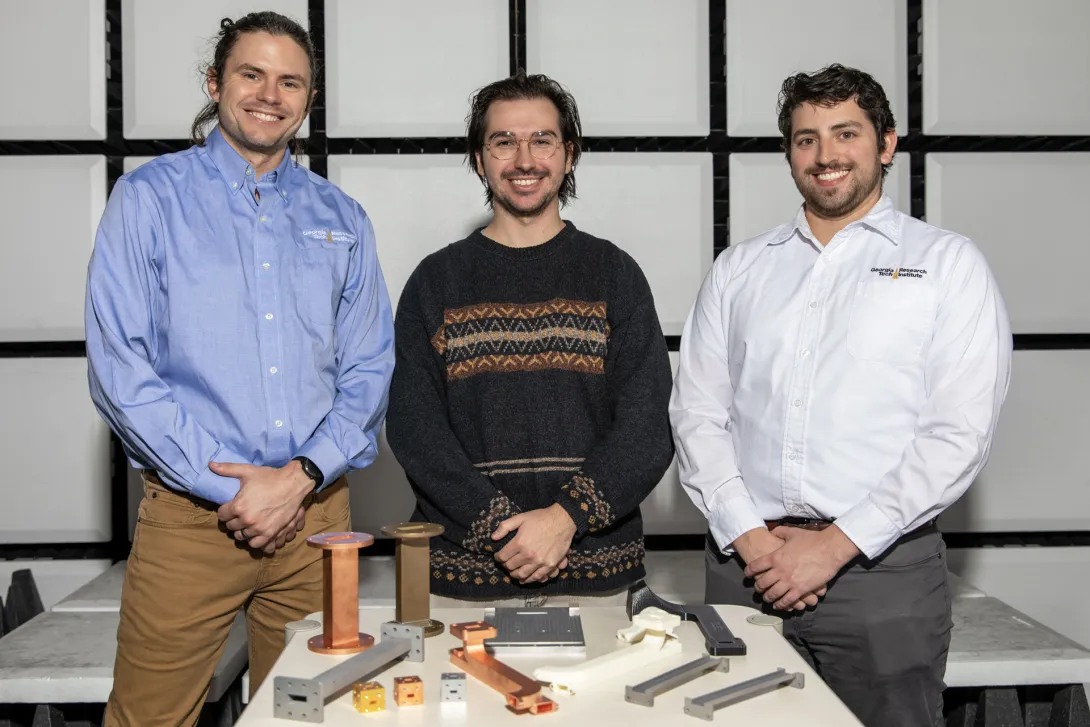
Researchers at the Georgia Tech Research Institute (GTRI) are using additive manufacturing techniques to create unique waveguide structures that would be difficult or impossible to make using conventional fabrication processes. The new techniques are especially useful for integrating updated components into equipment that might otherwise require significant design changes.
In high-powered millimeter wave and microwave radars and antennas, waveguides direct electromagnetic energy from one component to another inside the equipment. Until recently, the waveguides had been fabricated from extruded copper or aluminum tubing, but these traditional manufacturing techniques can’t always accommodate the complex configurations needed for optimal design with minimal energy transmission losses.
“To propagate electromagnetic waves efficiently, the waveguide must have a very precise internal geometry,” explained GTRI Senior Research Engineer Kyle Azevedo. “Yet, the waveguide must also be very smooth in terms of its internal surface finish. The cavity that transmits the energy has to be very well controlled to avoid significant losses. And the waveguides must also fit into confined spaces.”
Additive Techniques Offer Specific RF Advantages
To allow more complex designs, GTRI researchers are evaluating two alternative fabrication techniques: 3D-printed structures fabricated from metal and 3D-printed polymer components that are metal coated. Each has advantages and disadvantages and must be chosen for the specific application. The researchers are testing waveguides made using both techniques for mechanical performance in resisting fatigue damage, thermal performance in dissipating heat, electrical performance – and their RF energy loss.
Flexibility afforded by additive techniques can help designers accommodate waveguides within a crowded design that includes many other components. In one current project, the researchers found that they needed to move a radar’s feed horn several inches to accommodate other design considerations. But that complicated the waveguide design.
“That was a really big challenge, because we had to change some of the existing waveguides, and we couldn’t do that with traditional tubing pieces that were available without coming up with a whole new design,” Azevedo said. “But by using additive processes that allow more customization, we were able to make things smaller and optimize the design in a single iteration.”
In another project – in consideration for use on Army counter-battery radar – researchers at U.S. Army DEVCOM C5ISR Center used additive techniques to accommodate an updated component of a different size and shape than the original to improve RF performance. The researchers designed a 3D-printed waveguide that accommodated the existing connectors and integrated into its legacy systems, then worked with the Army’s Rock Island Arsenal to optimize fabrication and quality control. That new component was successfully tested at Tobyhanna Army Depot and Yuma Proving Ground, and is now being evaluated as an OEM alternative. This may allow additive manufacturing to augment the supply system.
In addition to facilitating designs that might otherwise have been more challenging, the GTRI researchers expect additive manufacturing will allow them to accelerate the iterative development of prototypes by moving some waveguide fabrication in-house.
Overcoming Challenges with New Fabrication Methods
For all-metal waveguides, additive manufacturing can have some disadvantages, but those may not be as significant as they might first appear. To limit transmission losses, inside surfaces of conventional waveguides are smooth, but because of the way metal 3D printing works, smooth internal surfaces can be difficult to fabricate. The design flexibility of additive processes can make up for that.
“In one of our designs, we found that even though we might have some limitations on the roughness of the surface finish, we could gain back the transmission losses by optimizing the waveguide shape,” Azevedo explained. “The final design would not have been possible using traditional waveguide fabrication techniques.”
Though applying metal coatings to waveguides produced from polymers or resins can provide smoother surfaces, this process comes with its own set of challenges.
“One of the issues we are tackling now is that a lot of the resins and polymers that have desirable properties for plating contain silica,” said Max Tannenbaum, a GTRI research engineer. “They are ceramic-like when cured, but when you remove the resin, a lot of the conventional solvents don’t remove the silica, and you end up with a chalky powder on the surface. If you can’t remove that before you try to plate it, the plating won’t adhere.”
Building a Knowledge Base for RF Applications of Additive Processes
To support expanded applications for waveguides fabricated using additive techniques, the researchers are using both simulation and experimentation to develop comprehensive design information.
“The traditional method for making waveguides has been around since World War II, when the original systems got up and running, and those techniques have been refined over the decades since then,” said Azevedo. “As a result, there’s a wealth of detailed data on what works, including the metallurgic properties. We want to develop a comparable depth of understanding for the new additive manufacturing techniques that offer so many advantages.” By putting together what they have learned, the research team plans to share their knowledge with other RF engineers who may be interested in the additive approaches.
“Our effort is focusing on two parallel paths: looking at the mechanical constraints involved with fabrication and the RF limitations,” said GTRI Research Engineer Austin Forgey. “We are merging the new experimental data we’re getting with RF simulations, and combining that with testing mechanical properties. That will give us a full design package that can be used by the designers who need it.”
Beyond waveguides, the GTRI researchers are working on other applications of additive manufacturing to RF design. With researchers in Georgia Tech’s School of Mechanical Engineering, they are fabricating cold plates that are 3D printed from aluminum and used to cool high-powered electronics. The 3D printing allows novel fluid flow in a single part, not possible with conventional fabrication.
Similarly, they are also looking at additive techniques to make shielding needed to protect components from electromagnetic interference.
While they expect to expand their use of additive fabrication approaches to provide new design options for RF applications, the researchers don’t see additive manufacturing doing away with conventional fabrication techniques any time soon.
“My opinion is that there will certainly be a mix because additive manufacturing techniques aren’t the answer for everything,” said Tannenbaum. “But they are solutions to a lot of specific problems that we encounter, allowing us to build parts that are cheaper, lighter, and available more quickly.”
Writer: John Toon
GTRI Communications
Georgia Tech Research Institute
Atlanta, Georgia USA
About GTRI: The Georgia Tech Research Institute (GTRI) is the nonprofit, applied research division of the Georgia Institute of Technology (Georgia Tech). Founded in 1934 as the Engineering Experiment Station, GTRI has grown to more than 2,800 employees, supporting eight laboratories in over 20 locations around the country and performing more than $700 million of problem-solving research annually for government and industry. GTRI's renowned researchers combine science, engineering, economics, policy, and technical expertise to solve complex problems for the U.S. federal government, the state, and industry. For more information, please visit www.gtri.gatech.edu.
News Contact
(Interim) Director of Communications
Michelle Gowdy
Michelle.Gowdy@gtri.gatech.edu
404-407-8060
Dec. 07, 2022

For marine scientist, climate activist, and Tech alumnus Albert George (MS HSTS 2009), the fight against climate change is also a fight for home.
Now, what started as a citizen science initiative led by George has turned into a $2.6 million National Fish and Wildlife Association effort to restore degraded salt marshes in Charleston, South Carolina. As part of the project, Joel Kostka, professor and associate chair of Research in the School of Biological Sciences, will lead a team of researchers to not only monitor these restoration efforts, but gain insights into why the marshes degraded in the first place — and how to prevent it from happening in the future.
Over the past three years, Kostka, who has a joint appointment in the School of Earth and Atmospheric Sciences, has worked with SCDNR and Robinson Design Engineers, a local firm co-led by Tech alum Joshua Robinson (CEE 2005), to develop engineering and design plans for the restoration of the salt marshes.
“That project went really well,” shared Kostka, “and now we have developed engineering and design plans for the actual restoration as we are moving forward with the next phase.”
Work for the current phase of the project is set to begin soon. Over the next four years, community volunteers will work to plant marsh grasses, restore oyster reefs, and excavate the tidal creeks that supply the marsh with sea water.
“Because if we don't do this work,” George shared, “then basically it means a place that I grew up in and a place that I call home will no longer exist.”
News Contact
Writer:
Audra Davidson, College of Sciences
Editor and Contact:
Jess Hunt-Ralston
Director of Communications
College of Sciences at Georgia Tech
Oct. 17, 2022
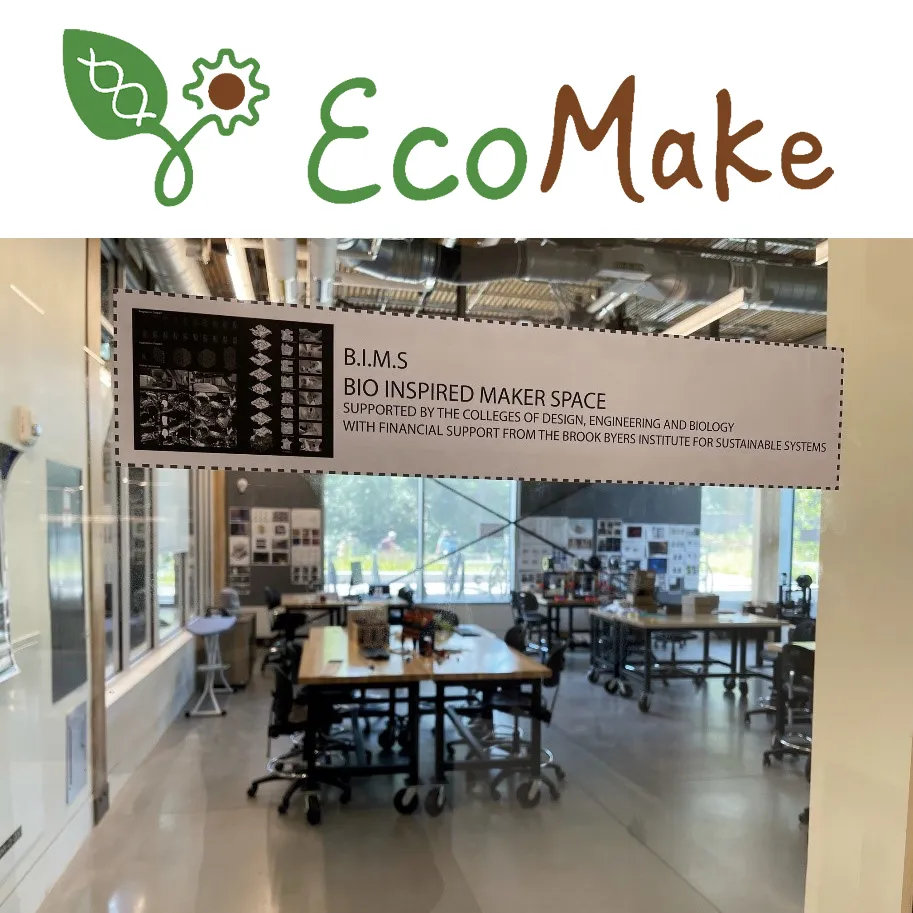
At first glance, the new maker space opening in the Kendeda Living Building for Innovative Sustainable Design might look like many others. However, the space, named EcoMake, has some important differences. Because it is housed in the Kendeda Building, there are strict standards for what types of materials and equipment can be used there in order to maintain its Living Building Certification. For example, you will find several 3-D printers there, like almost all maker spaces, but the plastic filament used in them is made from recycled plastic, perhaps recycled on-site with equipment in the lab itself.
Some might regard such restrictions as too limiting to their creativity or design goals. Viewed another way, this approach opens up a unique set of possibilities. Biologically Inspired and Green Design (BIG-D) is a field of study (sometimes referred to by different names, like “biomimicry”) that has demonstrated a lot of promise in the past few decades. This approach aims to translate the billions of years of knowledge and design wisdom embodied in our biological world into innovative green products. However, no matter how green the design of a product, they are often manufactured with traditional processes with limited consideration for energy, toxicity, water, or material use. Having a lab like EcoMake will help to usher in the field of study of Biologically Inspired and Green Manufacturing (BIG-M). BIG-M will require knowledge, equipment, and resources that are much different than traditional fabrication methods. Like natural systems, this new facility will operate within the means of nature, using no more energy or water than can be generated from its geometric footprint, and producing no more waste than it can assimilate on site.
EcoMake has the following tools and equipment (so far):
- 8 - Prusa I3S+ 3-D Printers
- 5 - Ender 3 Pro 3-D Printers
- EinScan-SP 3-D Object Scanner
- Mark-10 ESM303 Mechanical Tester
- 300-X Digital Microscope
- 3Devo Filament Extruder
- Shini SG-16N Plastic Granulator
- Plastic Chip Dryer
- Singer Heavy Duty 4423 Sewing Machine
- Complement of Standard Fabric Crafting Equipment
EcoMake, the bio-inspired maker space will be open to students from all disciplines. It is supported by the Colleges of Design, Engineering, and Biology, and the Brook Byers Institute for Sustainable Systems. Contact Michael Gamble for more information.
News Contact
Brent Verrill, Research Communications Program Manager, BBISS
Sep. 27, 2022
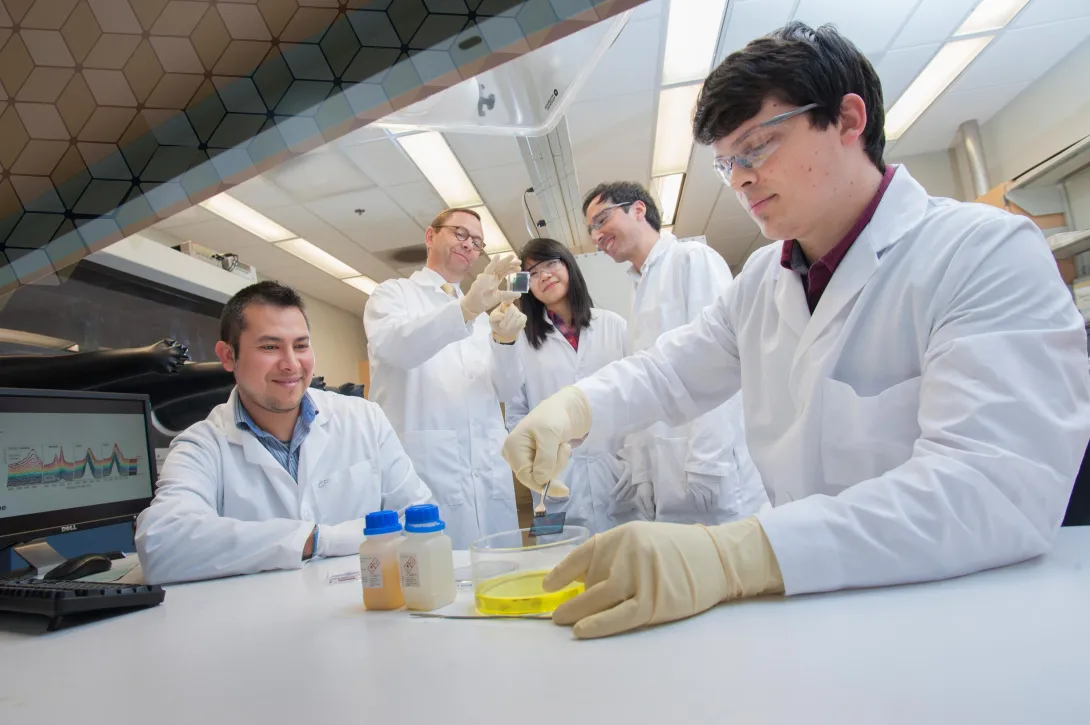
The Scalable Asymmetric Lifecycle Engagement Microelectronics Workforce Development program (SCALE) has announced the program will extend another five years and expand with $10.8 million additional Department of Defense (DoD) funding, with a ceiling of $99 million.
SCALE officials said this expansion of the nation’s preeminent program will further its goal to develop a next-generation workforce that can return the United States to prominence in global microelectronics manufacturing.
Georgia Tech participates in the partnership, which is led by Purdue University and managed by NSWC Crane. SCALE facilitates the training of highly skilled U.S. microelectronics engineers, hardware designers and manufacturing experts. SCALE brings together a public-private-academic partnership of 17 universities and 34 partners within the defense industry and government.
“This is an extremely exciting time in the country and at Tech for microchip design and manufacturing,” said Arijit Raychowdhury, the Steve W. Chaddick School Chair of Tech’s School of Electrical and Computer Engineering (ECE). “These newly announced funds for the SCALE program will help Georgia Tech recruit a new, diverse group of students ready to work in defense microelectronics. We’re thrilled to be a SCALE partner university and honored to be leading many of the project’s specialty areas.”
SCALE provides unique courses, mentoring, internship matching and targeted research projects for college students interested in five microelectronics specialty areas. Georgia Tech ECE faculty members will be the primary investigators for three of the areas:
- system on a chip will be led by Raychowdhury;
- radiation-hardening will be led by John Cressler;
- and heterogeneous integration/advanced packaging will be led by Madhavan Swaminathan.
The other two focus areas are embedded system security/trusted AI and supply chain awareness.
Industry and government partners regularly meet and update a list of knowledge, skills, and abilities important for new entrants to the workforce. The SCALE universities then update their curriculum to ensure the students are prepared for upcoming needs in the rapidly advancing microelectronics field.
Peter Bermel, SCALE director and the Elmore Associate Professor of Electrical and Computer Engineering at Purdue, said the United States will need 50,000 trained semiconductor engineers to meet overwhelming and rapidly growing demand.
“The United States is committed to expanding and strengthening its semiconductor industry and workforce rapidly over the next five years,” Bermel said. “SCALE takes a holistic approach to the microelectronics workforce gap by comprehensively addressing system challenges for workforce training and recruiting.”
Goals for the next five years include:
- Expanding student participation in SCALE fivefold to more than 1,000.
- Developing learning models for K-12 classrooms.
- Collaborating with community colleges nationwide to develop microelectronics classes.
The demand for microelectronics increased by 26.2% in 2021. But while the United States consumes about half of the chips produced worldwide, the country only manufactures about 12%, highlighting the pressing need for the U.S. to strengthen its domestic semiconductor supply chains and increase industrial capacity.
The funding announcement is the latest highlight in Georgia Tech’s leadership role in bolstering microelectronics and workforce development. Tech’s large engineering and science faculty bring a broad set of research expertise to strengthen the country’s semiconductor capacity. The Institute is uniquely positioned to train the microelectronics workforce, drive future microelectronics advances, and provide fabrication and packaging facilities for industry, academic and government partners to develop and test new solutions.
###
The Georgia Institute of Technology, or Georgia Tech, is a top 10 public research university developing leaders who advance technology and improve the human condition. The Institute offers business, computing, design, engineering, liberal arts, and sciences degrees. Its nearly 44,000 students, representing 50 states and 149 countries, study at the main campus in Atlanta, at campuses in France and China, and through distance and online learning. As a leading technological university, Georgia Tech is an engine of economic development for Georgia, the Southeast, and the nation, conducting more than $1 billion in research annually for government, industry, and society.
News Contact
Dan Watson
dwatson@ece.gatech.edu
Sep. 12, 2022
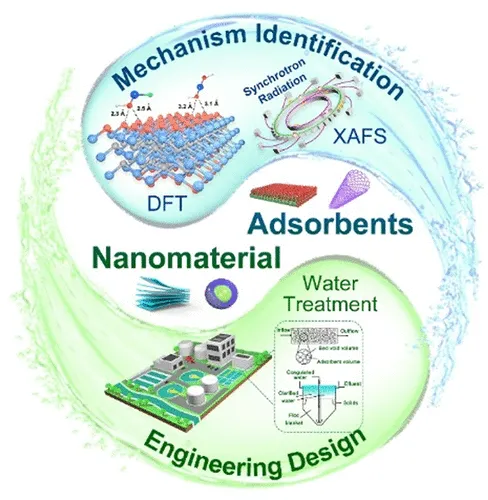
The American Chemical Society journal Environmental Science & Technology Engineering has announced that they are awarding a “Best Paper Award” for 2021 to John Crittenden and co-authors Jinming Luo, Deyou Yu, Kiril D. Hristovski, Kaixing Fu, Yanwen Shen, and Paul Westerhoff for their article “Review of Advances in Engineering Nanomaterial Adsorbents for Metal Removal and Recovery from Water: Synthesis and Microstructure Impacts.” The article was first published online on March 12, 2021 for the April 20th print edition of ACS ES&T.
The paper presents the possible approaches to create novel adsorbents that can be used to recover strategically important metals that are necessary for advancing technologies that contribute to the green economy. These strategic metals are key to the manufacturing of military, consumer, electronic, and industrial products including batteries, specialty alloys, electrical conductors, catalytic converters, lasers, lenses, LED lights, and magnets. The approach proposed in the paper is to recover strategic metals from aqueous sources, where they are often considered contaminants, and avoid the deleterious environmental impacts of traditional hard rock mining. Geopolitical complexity will also be avoided, since these materials are currently sourced from only a few places in the world.
The 2021 Best Paper Award will be formally announced on the front cover and in an editorial in the September 2022 issue of ACS ES&T Engineering, which will be published in the upcoming September, 2022 edition. The paper can be found here: https://doi.org/10.1021/acs.est.0c07936
News Contact
Brent Verrill, Research Communications Program Manager, BBISS
Sep. 01, 2022
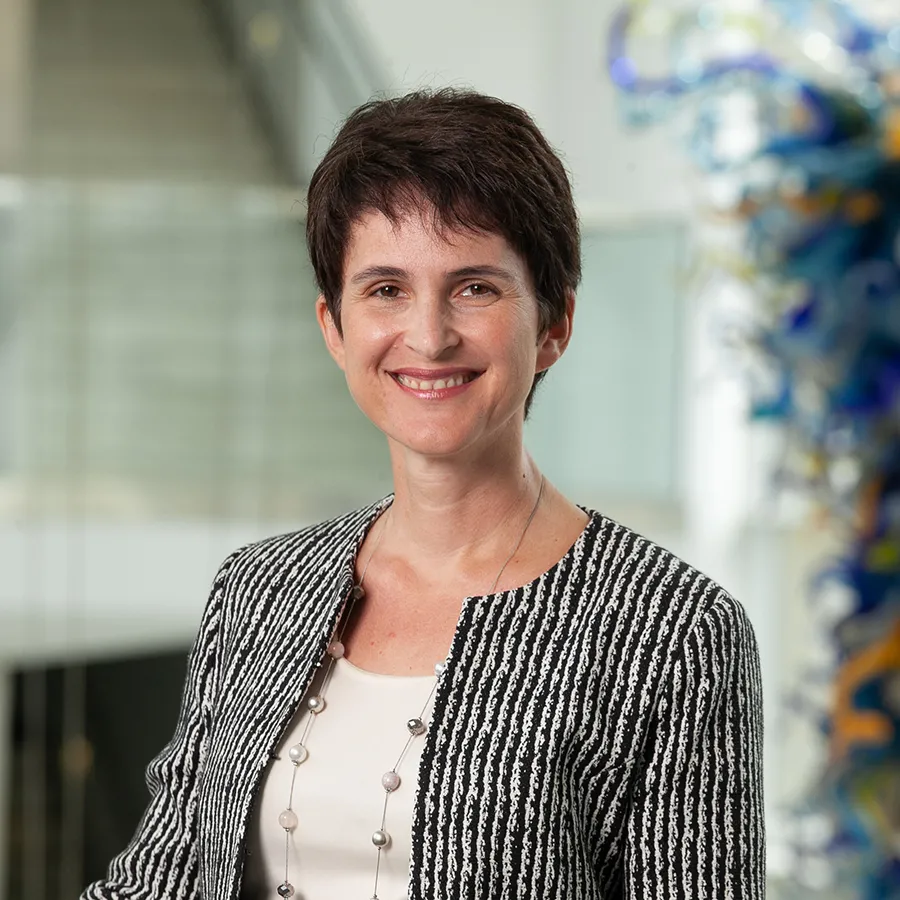
I am excited to step into the interim executive director position at the Brook Byers Institute for Sustainable Systems, with sincere gratitude to John for his pioneering leadership, to the Brook Byers Professors and Faculty Fellows for their high-profile contributions to sustainability research and education, and to Mr. Byers for his generous support of BBISS over the years.
I am also delighted to have the opportunity to work with a very committed team in Mike, Susan, Gay, and Brent, whose combined tenure with BBISS adds up to more than 40 years, not to mention Mike and Brent’s early involvement with defining Georgia Tech’s role in sustainability going back to the late 90s! I invite you all to engage with us over the next year: a small step is to sign up for the BBISS newsletter.
Some colleagues will remember that I had an office at ISTD, BBISS’ precursor, when I was on sabbatical at Georgia Tech from INSEAD about 20 years ago. I was introduced to the campus sustainability community by former executive directors and mentors Carol Carmichael and Bert Bras. When I moved to the Georgia Tech Scheller College of Business in 2005, I was excited to become part of this sustainability community, with whom I have since had many productive and enjoyable collaborations leading to the creation of the Ray C. Anderson Center for Sustainable Business, Serve-Learn-Sustain, the Carbon Reduction Challenge, and more. Rejoining BBISS on its leadership team is bringing things full circle for me and feels a bit like a homecoming.
Over the last year, I have had the privilege of working as co-chair of Sustainability Next, the Georgia Tech Strategic Plan 2020-2030 Implementation Task Force tasked with developing an Institute-wide implementation plan for sustainability cutting across all core missions of Georgia Tech and encompassing both environmental and social sustainability issues defined by UN Sustainable Development Goals. Many of you contributed through the task force, surveys, townhalls, and individual conversations, for which I am grateful. Through this work, I have come to appreciate not only the depth of the sustainability expertise at Georgia Tech but also the unique point at which we find ourselves in terms of the opportunity to have transformative impact in our city, region, nation, and globe.
Assets that collectively provide that opportunity include: the cutting-edge Georgia Tech sustainability research community spanning all six colleges and GTRI; successful sister IRIs, centers, and initiatives; a commitment to campus sustainability exemplified in flagship projects like the Kendeda Building; a student base that is eager to have positive societal impact in their careers; many strong industry partnerships including the Drawdown Georgia Business Compact focused on climate action; federal government and philanthropic dollars poised to invest in climate solutions with an emphasis on social justice; a state government working to bring “new economy” companies into Georgia; many city- and county-level sustainability and climate initiatives; GT-led regional and international sustainability networks including RCE Greater Atlanta and the University Global Coalition; a coalescence around taking Metro Atlanta and Georgia to the next level in entrepreneurial activity; and ELT-level support and resources for sustainability through Institute Strategic Plan funding and Transforming Tomorrow: The Campaign for Georgia Tech theme definition. There is also a set of challenges, of course, but things worth doing are never straightforward!
I look forward to working with you all to capitalize on these assets and the momentum of the present day. My hypotheses about what our priorities should be for this year are the following, and I look forward to hearing your input and suggestions as we finalize them together:
- Grow the community of faculty, students, and staff who see themselves as part of the BBISS family and strengthen ties within;
- Expand BBISS’ research foci to reflect the full richness of sustainability scholarship on campus (here I see a clear focus on climate that draws on all colleges and GTRI as a must);
- Advance BBISS’ capacity to support interdisciplinary grant writing and community-engaged research;
- Partner with schools and colleges to help grow sustainability and climate-related interdisciplinary academic program offerings;
- Accelerate commercialization and entrepreneurship activity in sustainability and climate solutions;
- Contribute to philanthropic success in sustainability both at BBISS and Georgia Tech-wide;
- Grow the visibility of Georgia Tech sustainability thought leadership.
I plan to hold “listening sessions” and a retreat to crystallize BBISS’ research foci and priority activities. To engage with this process and explore whether BBISS is a good “home” for you, please sign up for the BBISS newsletter.
I look forward to working with you all!
Beril
L. Beril Toktay
Professor of Operations Management and Brady Family Chairholder
Interim Executive Director, Brook Byers Institute for Sustainable Systems
Faculty Director, Ray C. Anderson Center for Sustainable Business
Scheller College of Business
Georgia Institute of Technology
News Contact
Brent Verrill, Research Communications Program Manager, BBISS