
Aug. 05, 2022
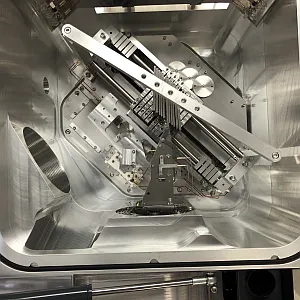
The Materials Characterization Facility (MCF) at Georgia Tech has installed a new inorganic m spectrometry facility. The facility includes two new inductively couple plasma mass spectrometry (ICP-MS) systems: a Thermo iCAP RQ quadrupole ICP-MS for streamlined and high-throughput determinations of elemental concentrations and a Thermo Neoma multicollector ICP-MS with collision cell technology for the precise determinations of isotope ratios within a given sample.
Each instrument can measure elemental variability in both dissolved aqueous samples as well as solids/minerals via laser ablation microsampling from a Teledyne Iridia laser ablation system. Together the system can measure isotopes at precision in elemental systems from Li and U.
Planned applications include: (1) high-resolution measurements of Ca, Sr, Ba, Mg, and B elemental and isotopic variability in seawater and marine and terrestrial carbonates for paleoclimate reconstructions, (2) (U-Th)/Pb dating and Hf isotope measurements to study the origin of critical mineral deposits, with a potential engineering application and the development of novel methods for increasing precision/accuracy and minimizing sample consumption during routine analyses of water quality and environmental contamination.
The MCF welcomes users interested in these and other potential applications of this new facility to their scientific and engineering research to contact David Tavakoli (atavakoli6@gatech.edu).
News Contact
David Tavakoli (atavakoli6@gatech.edu).
Jun. 30, 2022

“Thirty years ago not many folks were interested or thinking about sustainability. BBISS was. At Georgia Tech, we do cover many areas in sustainability, and right now after 30 years, BBISS has the history and the ability that can provide expertise to those that are seeking solutions.”
Chaouki Abdallah, Executive Vice President for Research
The Brook Byers Institute for Sustainable Systems (BBISS) is one of Georgia Tech’s 10 interdisciplinary research institutes.
News Contact
Brent Verrill, Research Communications Program Manager
Jun. 30, 2022

The second class of Brook Byers Institute for Sustainable Systems (BBISS) Graduate Fellows has been selected. The BBISS Graduate Fellows Program provides graduate students with enhanced training in sustainability, team science, and leadership in addition to their usual programs of study. Each two-year fellowship is funded by a generous gift from Brook and Shawn Byers and is additionally guided by a Faculty Advisory Board. The students apply their skills and talents, working directly with their peers, faculty, and external partners on long-term, large team, sustainability relevant projects. They are also afforded opportunities to organize and host seminar series, develop their professional networks, publish papers and draft proposals, and develop additional skills critical to their professional success and future careers leading research teams.
The 2022 class of Brook Byers Institute for Sustainable Systems Graduate Fellows are:
- Oliver Chapman - Ph.D. student, School of Public Policy, Ivan Allen College of Liberal Arts
- Megan Conville - Ph.D. student, School of City and Regional Planning, College of Design
- Carlos Fernandez - Ph.D. student, George W. Woodruff School of Mechanical Engineering, College of Engineering
- Sarah Roney - Ph.D. student, School of Biological Sciences
- Olianike Olaomo - Ph.D. student, School of History and Sociology, Ivan Allen College of Liberal Arts
- Vishal Sharma - Ph.D. student, School of Interactive Computing, College of Computing
The Faculty Advisory Board for the BBISS Graduate Fellows is composed of the faculty who submitted the students' nominations. Nominations for Class III of the BBISS Graduate Fellows program will open in the Spring 2023. It is expected that 6 to 8 scholars will be selected for next year’s group.
The Faculty Advisory Board for the inaugural class are:
Updates and outcomes will be posted to the BBISS website as the project progresses. Additional information is available at https://research.gatech.edu/sustainability/grad-fellows-program.
News Contact
Brent Verrill, Research Communications Program Manager
May. 26, 2022
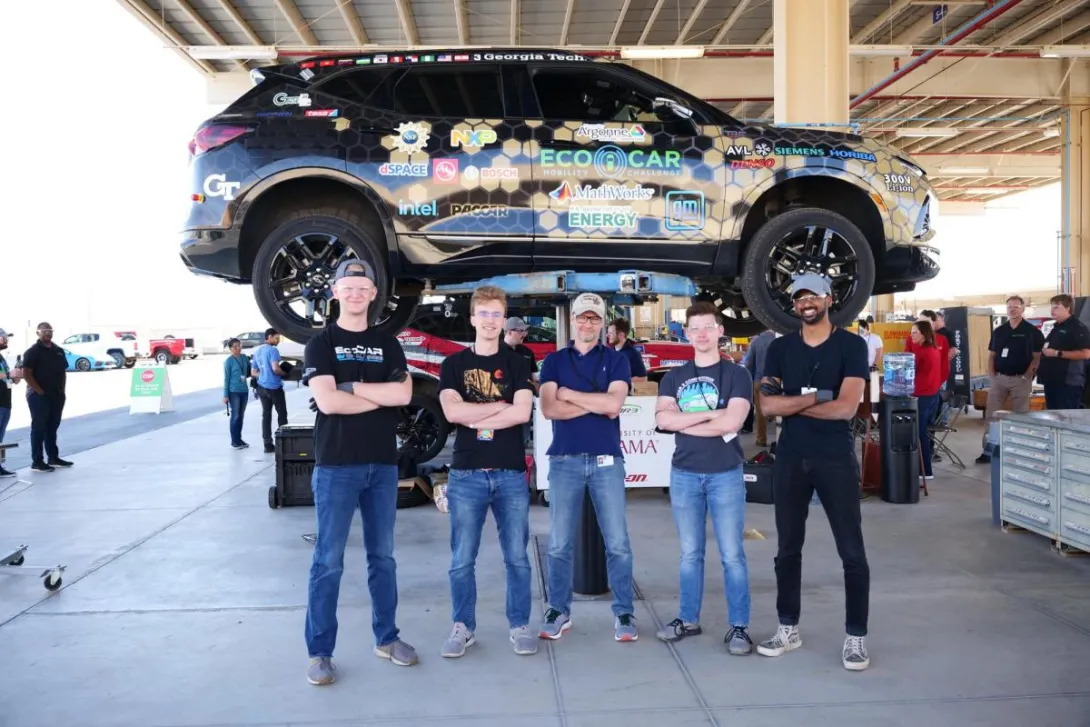

Multiple members of the School of Electrical and Computer Engineering (ECE) contributed to the four-year project.
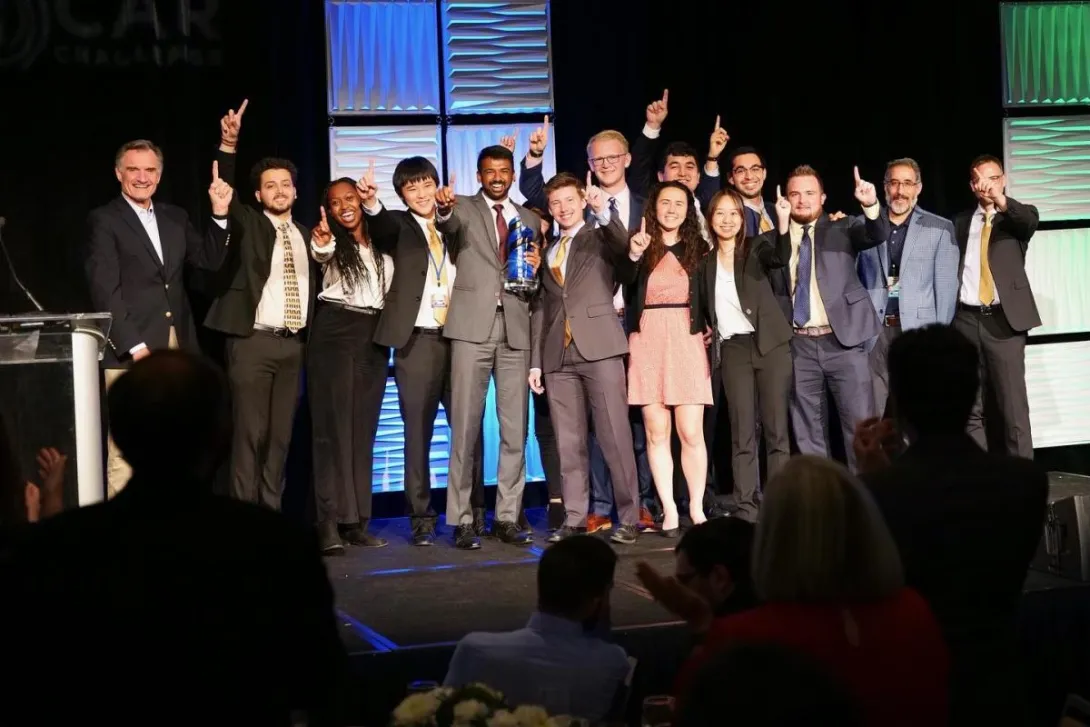
Georgia Institute of Technology has been named the EcoCAR Mobility Challenge Year Four champion by the U.S. Department of Energy (DOE). Tech’s award-winning interdisciplinary team consists of approximately 60 undergraduate and graduate students from the College of Engineering, College of Computing, Scheller College of Business, and Georgia State University.
Eleven North American university EcoCAR teams gathered for the final challenge in Arizona from May 9-20, 2022. The event marked the culmination of the competition, which tasked the universities with applying propulsion system electrification, autonomous driving control, and vehicle-to-infrastructure connectivity, to improve the energy efficiency of a 2019 Chevrolet Blazer while maintaining safety, utility, and consumer acceptability.
Over the four-year competition — sponsored by the DOE, General Motors (GM) and MathWorks — each team transformed its vehicle from a design concept into a reality. The final year of competition challenged teams to test, prove, and refine their work from the previous three years, mimicking a real-world automotive product development cycle.
ECE professor David Taylor is a faculty advisor for Georgia Tech’s EcoCAR team, along with professors Michael Leamy in the George W. Woodruff School of Mechanical Engineering (ME), and Thomas Fuller in the School of Chemical and Biomolecular Engineering (ChBE).
“The role of ECE in this competition is significant, ranging from powertrain electrification to driving automation. Our team’s vehicle excelled in these areas, winning the events concerned with energy consumption and autonomous operation,” said Taylor. “The EcoCAR program provides valuable experiences for ECE students because the real-world challenges of the project effectively supplement classroom learning.”
Georgia Tech’s EcoCAR team is a $1 million research program housed under Georgia Tech’s Vertically Integrated Projects (VIP) Program. VIP allows undergraduate and graduate students to participate in ambitious, long-term, multidisciplinary project teams that are led by faculty. The VIP program originated in ECE under the leadership of professor Edward Coyle.
ECE graduate research assistant (GRA) Nicholas Hummel played a key leadership role on the team along with fellow GRA Nishan Nekoo in ME. Both Hummel and Nekoo received their master’s degrees this spring. Hummel also gave the first-place presentation on Connected and Automated Vehicle Systems with recent ECE bachelor’s degree graduate Joyce Zhao.
“I've been on the team for the past two years, and have seen it come from a nearly fully virtual format at the beginning of the pandemic to the success we've achieved this year,” said Hummel, who led the team’s driving automation efforts. “If I had not joined this team, I would never have had the opportunity to grow so much as a leader and increase my passion for automation and robotics.”
Additionally, recent ECE bachelor’s degree graduate Braeden Dickson, along with recent ME bachelor’s degree graduate Anna Cobb, gave the first-place presentation on Propulsion Controls and Modeling. Braeden worked on powertrain controls to convert the conventional Chevy Blazer to a hybrid electric vehicle architecture. With his efforts, Georgia Tech vehicle was the only vehicle of the competition to improve energy consumption over the stock Blazer.
Read more about the award-winning team, view pictures from the finale, and learn about future plans.
News Contact
Dan Watson
dwatson@ece.gatech.edu
Apr. 20, 2022

The rising sea levels along Georgia’s Savannah coast and an uptick in more severe storms during hurricane season are bellwethers to looming ecological challenges stemming from climate change.
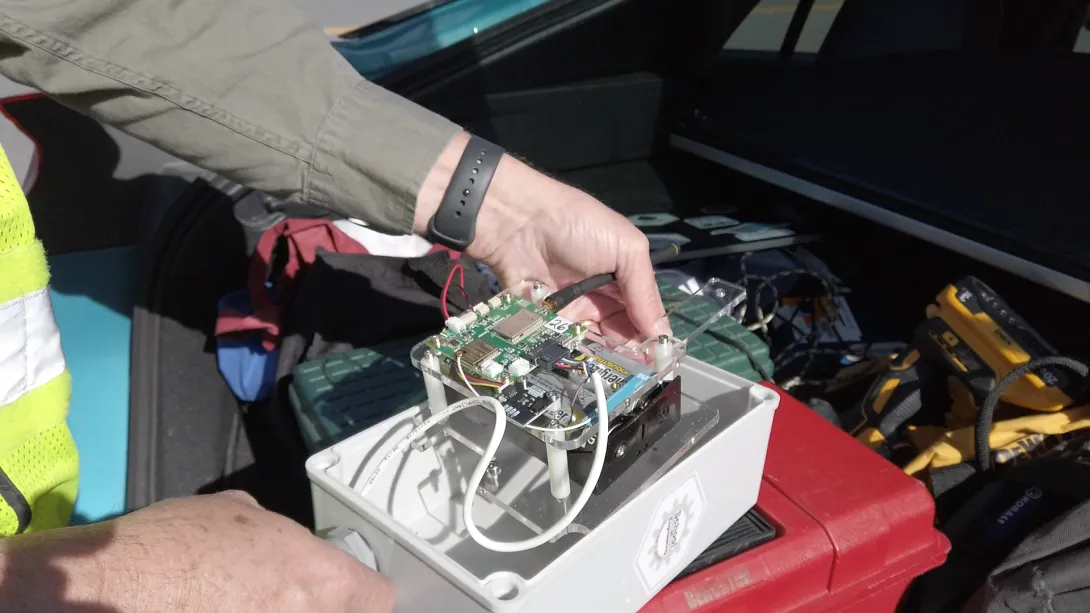
Ongoing research to study sea level rise led by Georgia Tech researchers, a coalition of universities, Savannah and Chatham County government leaders, and local community groups is creating what could be a national model for coastal regions across the country facing similar challenges.
Launched in 2018 with a Georgia Smart Communities Challenge Grant, the data collected from the sea level sensors is used to inform city and county planners and emergency responders on resource deployment following major weather events.
Now in its fourth year, the sea sensor project is now slated to receive $5 million from Congress. It is secured by U.S. Sens. Jon Ossoff and Raphael Warnock, and U.S. Rep. Earl L. “Buddy” Carter to expand the network of sensors — currently 50 are deployed off Chatham County’s coast — to blanket Georgia’s 11-county coastal region.
“With this new funding, we are recognizing a new phase of our project which has evolved,” said Kim Cobb, former director of Georgia Tech’s Global Change Program and a professor who studies climate, oceanography, and weather in the School of Earth and Atmospheric Sciences.
Cobb and Russell J. Clark, senior research scientist in the School of Computer Science at Georgia Tech’s College of Computing, co-lead the project. Allen Hyde, assistant professor in the School of History and Sociology in Georgia Tech’s Ivan Allen College of Liberal Arts, leads a National Science Foundation project focused on youth disaster resilience as part of the effort.
The funding will support expansion of building out more hyperlocal flood forecasting models, resilience planning tools for underserved communities, and further development of a K-12 education curriculum, paid internships, and other workforce development programs.
Georgia Tech and its partners — which includes Savannah State University, the University of Georgia, and the University of South Carolina — is using these low-cost sensors to gain real-time data that over time will help inform the policies on infrastructure design and retrofitting, Cobb said. It will also further expand first responders and emergency planners’ ability to forecast extreme rainfall and storm surge events on a neighborhood-by-neighborhood specific basis.
“It's going to translate into a saved lives and saved infrastructure,” Cobb said.
A National Model
Hub researchers say the data being collected from the sensors and additional information gleaned from the sensor expansion has immediate applications in terms of flood disasters and hurricanes. Those findings over the long-term could also help frame the national dialogue and help inform policy as leaders in Washington shape it to tackle rising sea levels and climate change.
The award is part of a broader federal push, including a $12 billion funding package, to help Georgia and other states along the Eastern Seaboard, as well as the West and Gulf coasts, develop resiliency and flooding plans and protocols to mitigate damage from future floods.
Cobb said this new funding allows the Hub to further efforts in its research that further expands education and workforce development — particularly in underserved minority communities — as components of the broader strategy.
“Our project started out anchored on the sensors and trying to provide real-time data to emergency planners and emergency response responders, but it’s no longer just a small team of people who are interested in sensors or physical scientists, engineers and researchers on the science and technology side,” she said, explaining the research team of some 30 people also includes policy and planning experts, along with community advocates.
“We're trying to think about solutions in the context of history, geography, — the history of people, cultures, and economies down on the coast,” Cobb said. “There’s no waving a magic wand and making this all right, especially for the most vulnerable communities.”
Community Voice
In broad terms, the project touches flooding, infrastructure, property, and pollution. But this newer phase brings in aspects that go beyond scientific modeling of risk, said Dean Hardy, an assistant professor in the University of South Carolina’s Department of Geography.
It’s what he calls the “human dimension” phase.
“There are disaster plans, there's resiliency plans, and there's community level thinking. But what we need is systemic change,” said Hardy, whose research expertise is in geography and integrative conservation, which marries preservation and social and community goals with public policy.
“So, what I hope partially comes out of this is not just a bunch of scientific publications or better scientific understanding of these issues, but capacity-building with community organizations that leads to the capacity for self-determination.”
That acknowledgement is important to marginalized communities, said Dawud Shabaka, interim director of Harambee House, in Savannah. The organization, which is involved in the sensor project, promotes and advocates for civic engagement from the coastal city’s Black residents and youth.
Shabaka noted that the engagement component, particularly local high school and middle school students working on the sensors and coding, has allowed the participants to see themselves not only as budding scientists, but as future community leaders.
“When you’re dealing with or managing or mitigating an issue that’s affecting society, it’s got to involve research and dialogue with the community. This project is allowing us to recognize that the community themselves are the subject matter experts,” said Shabaka. “Having the students involved at an early age, benefits society as a whole and lets them know that the work they’re doing is having a much wider impact. This is the type of community engagement that needs to happen to make people feel like they’re worthwhile.”
News Contact
Péralte C. Paul
peralte.paul@comm.gatech.edu
404.316.1210
Mar. 29, 2022
5G+ (5G/Beyond 5G) is the fastest-growing segment and the only significant opportunity for investment growth in the wireless network infrastructure market, according to the latest forecast by Gartner, Inc. But currently 5G+ technologies rely on large antenna arrays that are typically bulky and come only in very limited sizes, making them difficult to transport and expensive to customize.
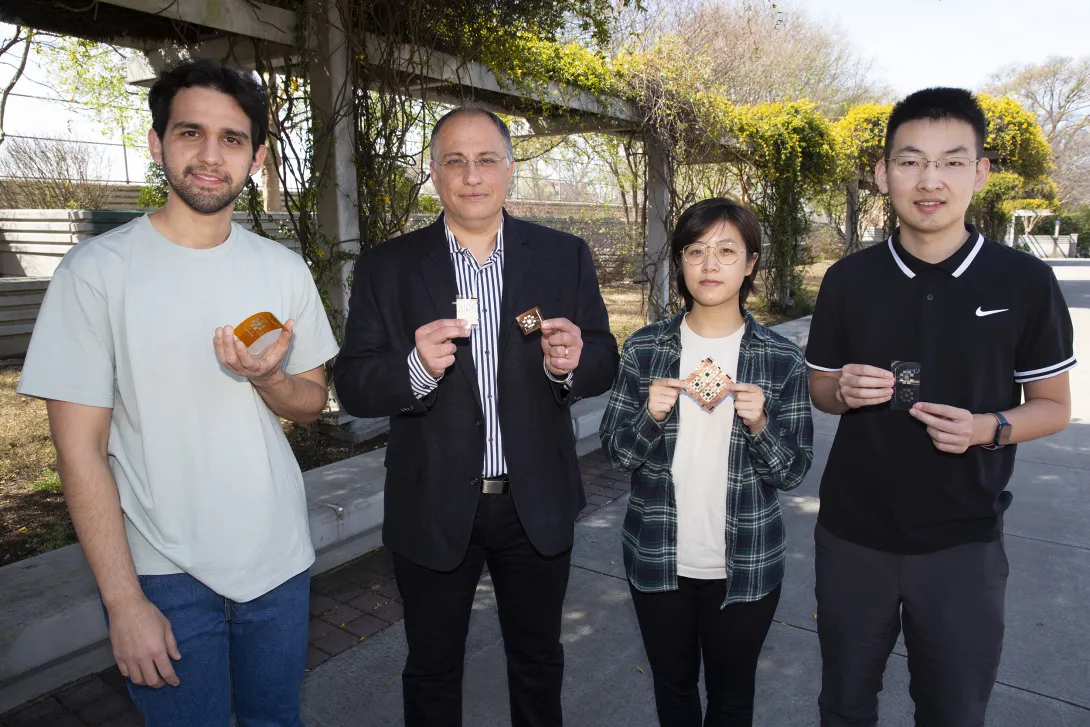
Researchers from Georgia Tech’s College of Engineering have developed a novel and flexible solution to address the problem. Their additively manufactured tile-based approach can construct on-demand, massively scalable arrays of 5G+ (5G/Beyond 5G)‐enabled smart skins with the potential to enable intelligence on nearly any surface or object. The study, recently published in Scientific Reports, describes the approach, which is not only much easier to scale and customize than current practices, but features no performance degradation whenever flexed or scaled to a very large number of tiles.
“Typically, there are a lot of smaller wireless network systems working together, but they are not scalable. With the current techniques, you can’t increase, decrease, or direct bandwidth, especially for very large areas,” said Manos Tentzeris, Ken Byers Professor in Flexible Electronics in the School of Electrical and Computer Engineering. “Being able to utilize and scale this novel tile-based approach makes this possible.”
Tentzeris says his team’s modular application equipped with 5G+ capability has the potential for immediate, large-scale impact as the telecommunications industry continues to rapidly transition to standards for faster, higher capacity, and lower latency communications.
BUILDING THE TILES
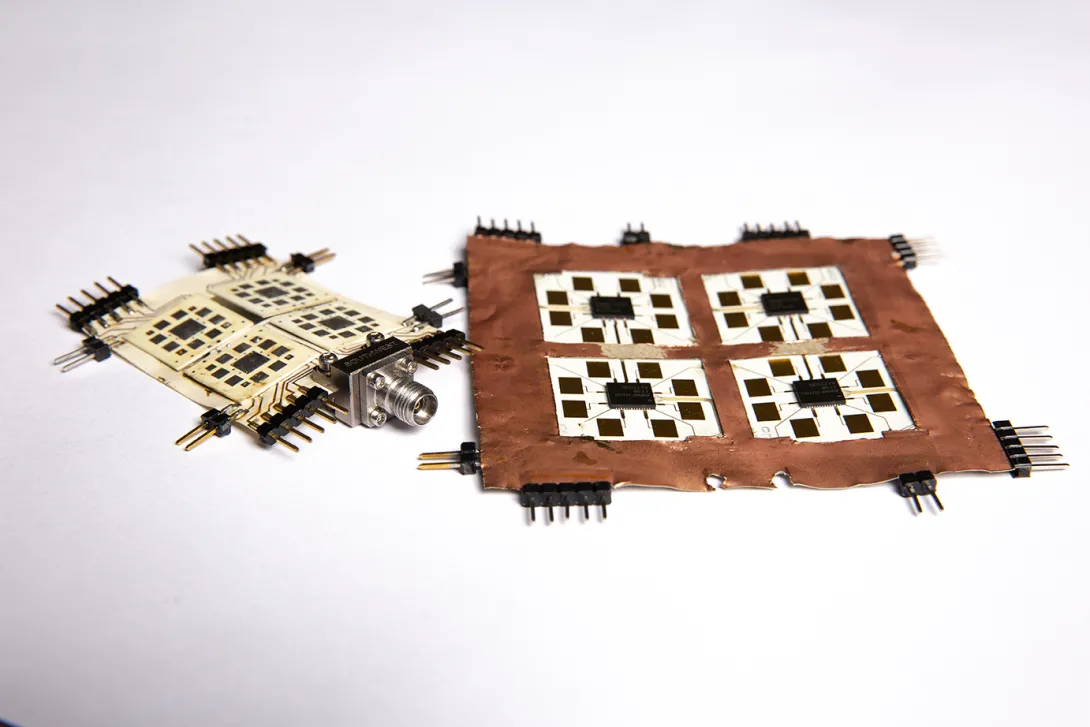
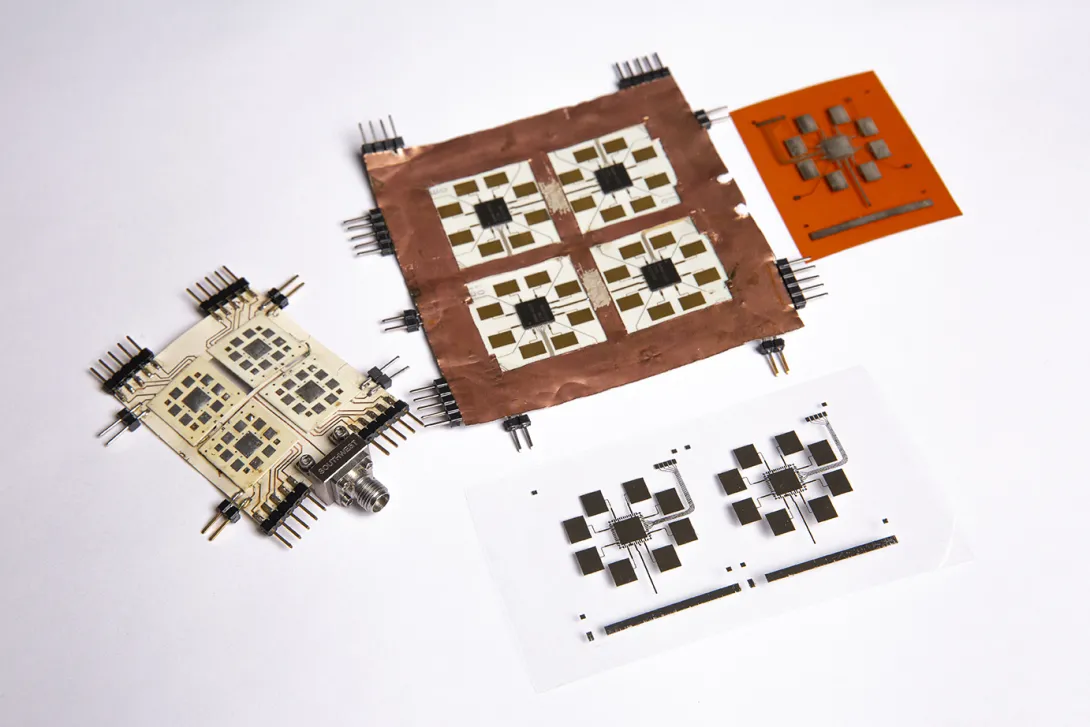
In Georgia Tech’s new approach, flexible and additively manufactured tiles are assembled onto a single, flexible underlying layer. This allows tile arrays to be attached to a multitude of surfaces. The architecture also allows for very large 5G+ phased/electronically steerable antenna array networks to be installed on-the-fly. According to Tentzeris, attaching a tile array to an unmanned aerial vehicle (UAV) is even a possibility to surge broadband capacity in low coverage areas.
In the study, the team fabricated a proof-of-concept, flexible 5×5-centimeter tile array and wrapped it around a 3.5-centimeter radius curvature. Each tile includes an antenna subarray and an integrated, beamforming integrated circuit on an underlying tiling layer to create a smart skin that can seamlessly interconnect the tiles into very large antenna arrays and massive multiple-input multiple-outputs (MIMOs) — the practice of housing two or more antennas within a single wireless device. Tile-based array architectures on rigid surfaces with single antenna elements have been researched before, but do not include the modularity, additive manufacturability, or flexible implementation of the Georgia Tech design.
The proposed modular tile approach means tiles of identical sizes can be manufactured in large quantities and are easily replaceable, reducing the cost of customization and repairs. Essentially, this approach combines removable elements, modularity, massive scalability, low cost, and flexibility into one system.
5G+ IS JUST THE BEGINNING
While the tiling architecture has demonstrated the ability to greatly enhance 5G+ technologies, its combination of flexible and conformal capabilities has the potential to be applied in numerous different environments, the Georgia Tech team says.
“The shape and features of each tile scale can be singular and can accommodate different frequency bands and power levels,” said Tentzeris. “One could have communications capabilities, another sensing capabilities, and another could be an energy harvester tile for solar, thermal, or ambient RF energy. The application of the tile framework is not limited to communications.”
Internet of Things, virtual reality, as well as smart manufacturing/Industry 4.0 — a technology-driven approach that utilizes internet-connected “intelligent” machinery to monitor and fully automate the production process — are additional areas of application the team is excited to explore.
“The tile-architecture’s mass scalability makes its applications particularly diverse and virtually ubiquitous. From structures the size of dams and buildings, to machinery or cars, down to individual health-monitoring wearables,” said Tentzeris. “We’re moving in a direction where everything will be covered in some type of a wireless conformal smart skin encompassing electronically steerable antenna arrays of widely diverse sizes that will allow for effective monitoring.”
The team now looks forward to testing the approach outside the lab on large, real-world structures. They are currently working on the fabrication of much larger, fully inkjet-printed tile arrays (256+ elements) that will be presented at the upcoming International Microwave Symposium (IEEE IMS 2022) – the flagship IEEE conference in RF and microwave engineering. The IMS presentation will introduce a new tile-based large-area architecture version that will allow assembly of customizable tile arrays in a rapid and low-cost fashion for numerous conformal platforms and 5G+ enabled applications.
****
The authors declare no competing interests.
This work was supported in part by the National Science Foundation.
CITATIONS: He, X., Cui, Y. & Tentzeris, M.M. Tile-based massively scalable MIMO and phased arrays for 5G/B5G-enabled smart skins and reconfigurable intelligent surfaces. Sci Rep 12, 2741 (2022). https://doi.org/10.1038/s41598-022-06096-9
K.Hu, G.S.V.Angulo, Y.Cui and M.M.Tentzeris, “Flexible and Scalable Additively Manufactured Tile-Based Phased Arrays for Satellite Communications and 5G mmWave Applications,” accepted for presentation at IEEE International Microwave Symposium (IMS) 2022, Denver, CO, June 2022.
News Contact
Dan Watson
dwatson@ece.gatech.edu

Since June, Lalith Polepeddi and Akhil Chavan have been using their skills in computer science and machine learning to help study biodiversity in Georgia Tech’s new EcoCommons.
Both research staff at the Georgia Tech Global Change Program, Polepeddi and Chavan teamed up to apply for a micro research grant from the Kendeda Living Building last summer. The grants empower research and innovation at a student, staff, and faculty level through small, accessible, amounts of seed funding.
Dec. 20, 2021
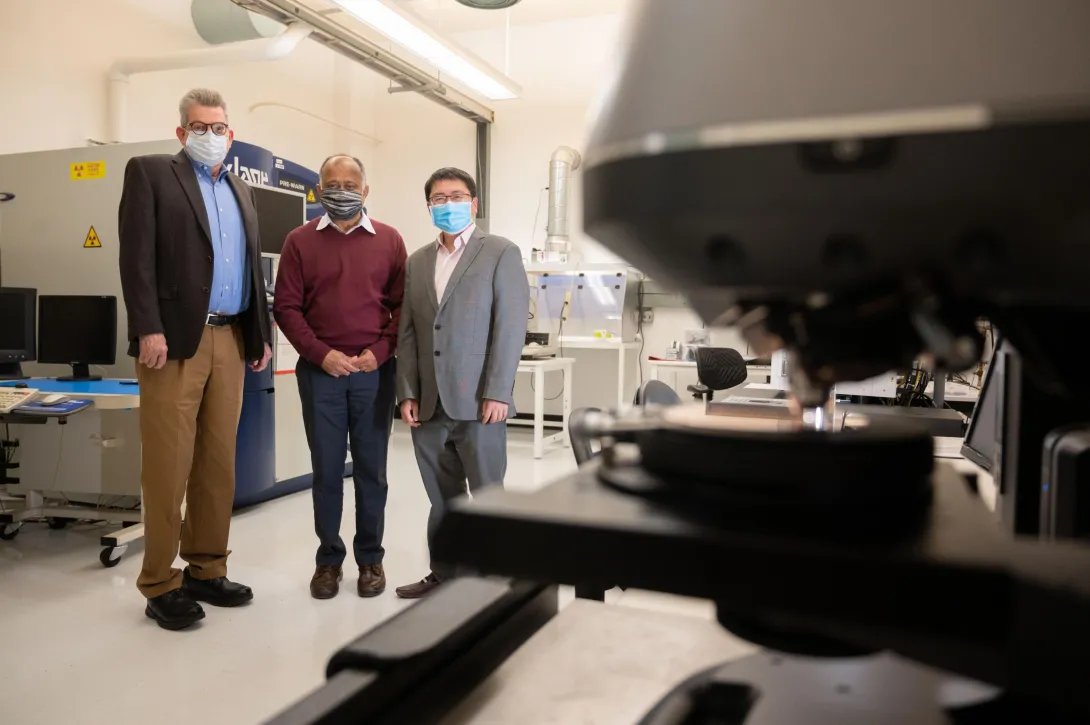
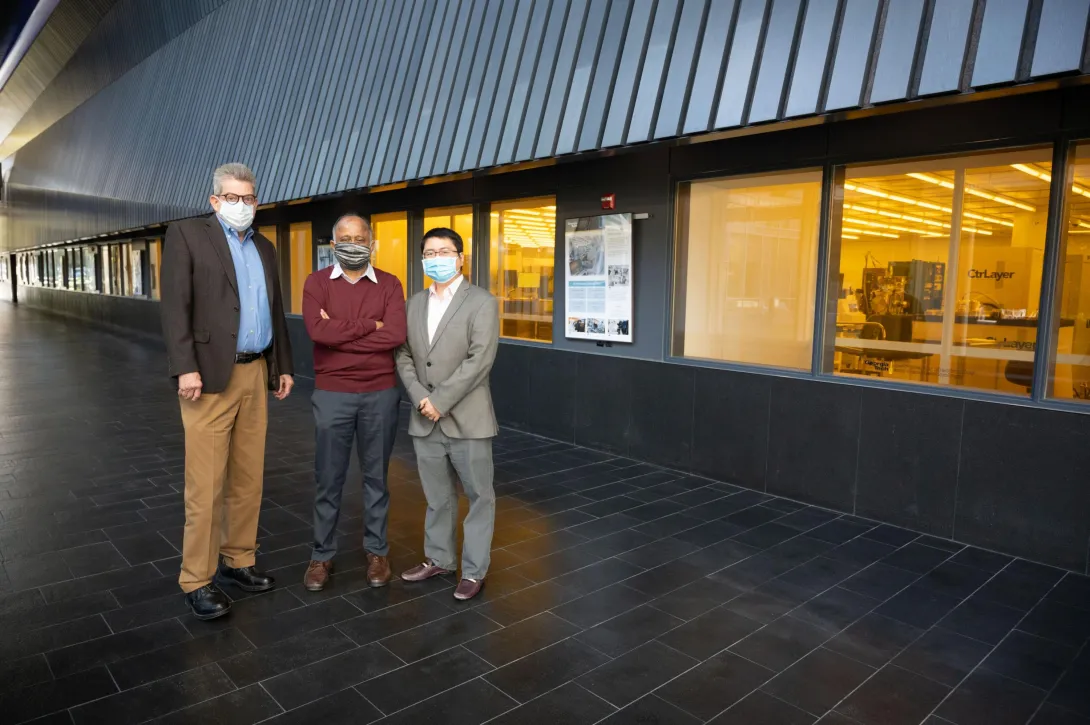
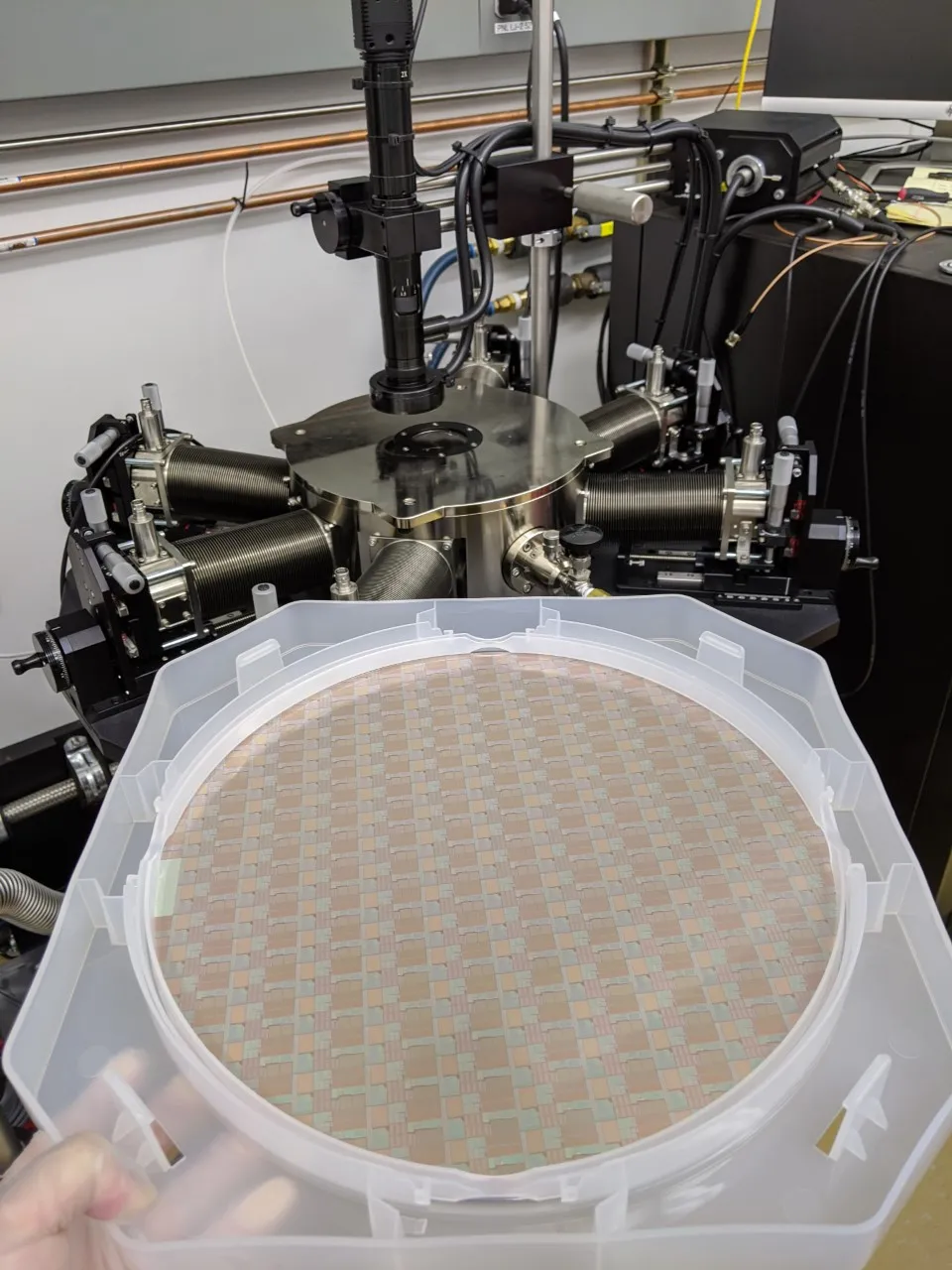
The world’s dependence on semiconductors came into sharp focus in 2021, when automotive manufacturing ground to a halt because of massive computer chip shortages – as Asian suppliers couldn’t keep up with demand for microelectronics – miniaturized electronic circuits and components that drive everything from smartphones to new vehicle components to hypersonics weapons systems.
The culprit was global supply chain disruptions caused by the Covid-19 pandemic. The crisis has highlighted the pressing need for the U.S. to bolster its domestic semiconductor supply chains and industrial capacity, after three decades of decline as a semiconductor producer. The U.S. share of global semiconductor fabrication has dropped to 12% today, compared to 37% in 1990, according to the Semiconductor Industry Association (SIA). In addition, the semiconductor industry today only accounts for 250,000 direct U.S. jobs.
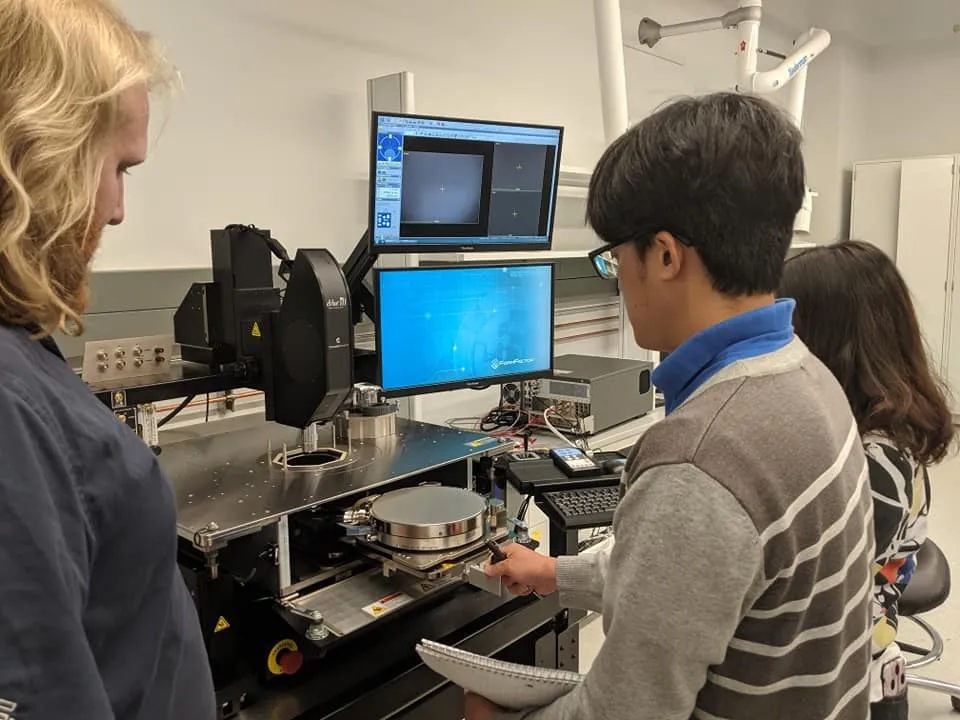
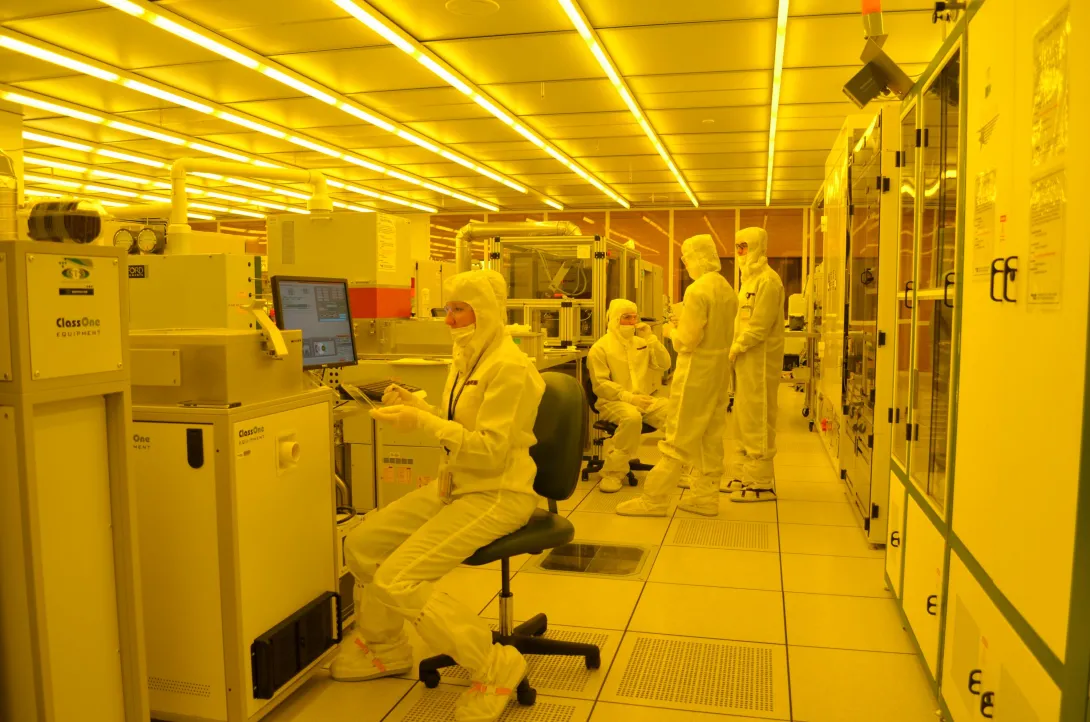
As the country rebuilds its semiconductor infrastructure at home, Georgia Tech serves as a vital partner – to train the microelectronics workforce, drive future microelectronics advances, and provide unique fabrication and packaging facilities for industry, academic and government partners to develop and test new solutions.
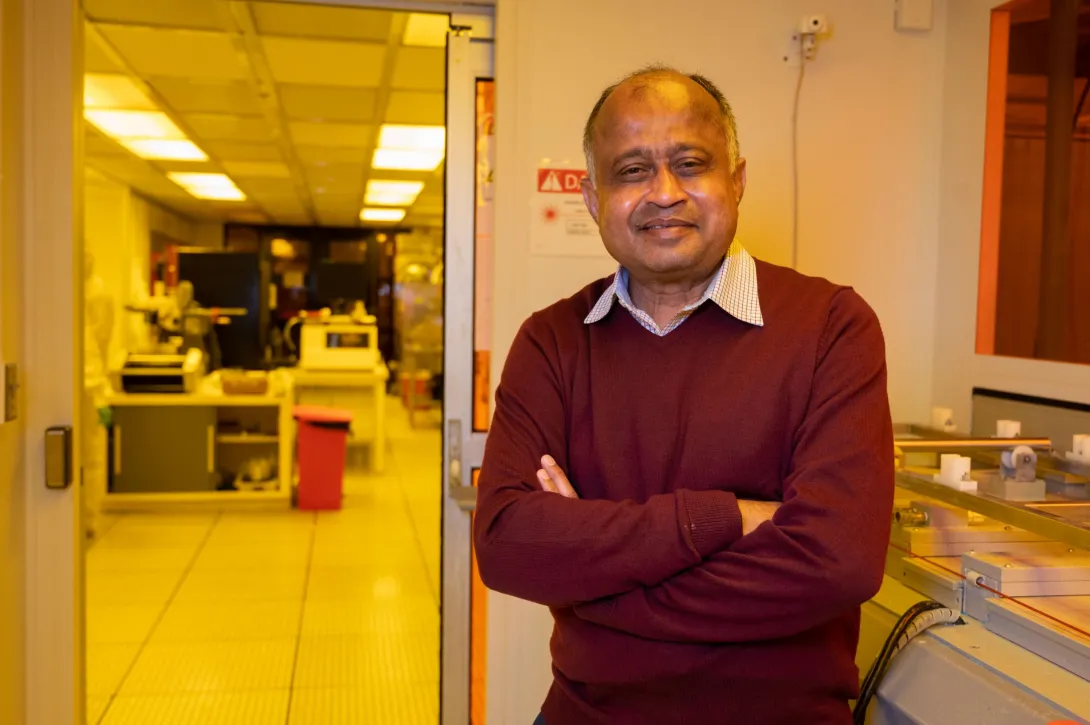
“We’re one of the only universities that can support the whole microelectronics stack – from new materials and devices to packaging and systems,” said Madhavan Swaminathan, the John Pippin Chair in Microsystems Packaging in the School of Electrical and Computer Engineering and director of the 3D Systems Packaging Research Center.
Dec. 16, 2021

The global supply chain has been rocked by disruptions triggered largely by the coronavirus pandemic, resulting in a cascade of shortages on a host of products ranging from computer chips to medications.
But supply chain disruptions also highlight the potential vulnerabilities in the U.S. manufacturing sector’s critical segments like defense.
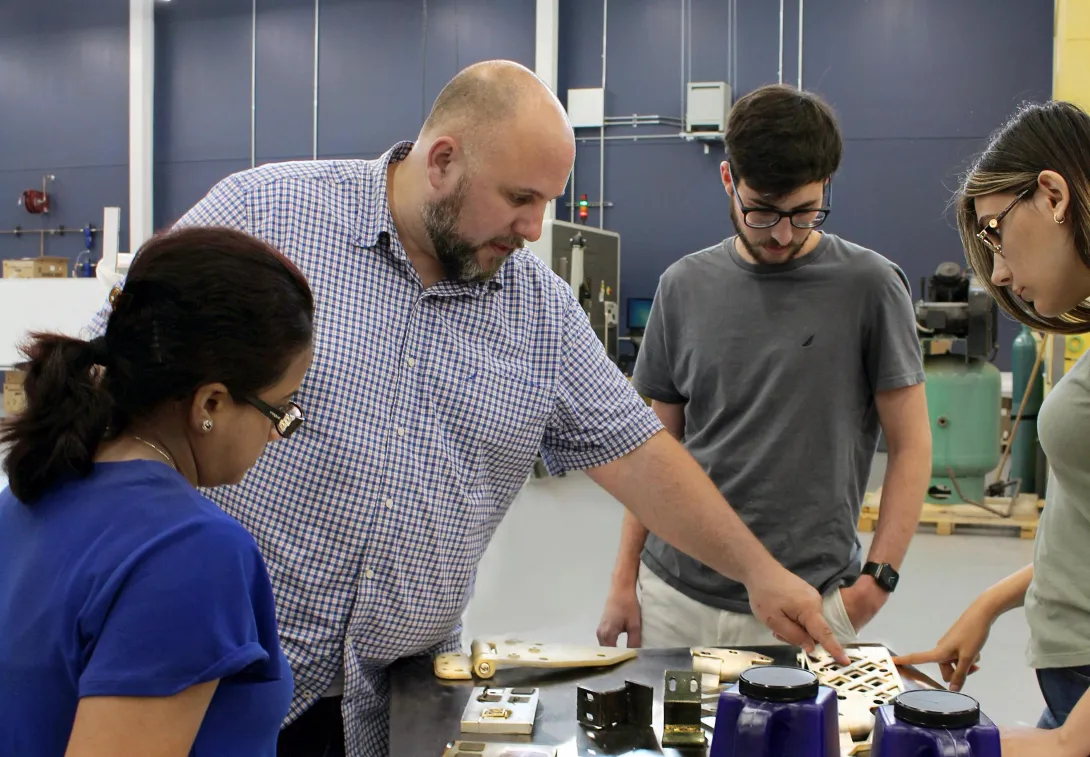
To help manufacturers across the state, the Georgia Institute of Technology has launched the Georgia Manufacturing 4.0 Consortium to work with those businesses in defense and related industries become more resilient and less susceptible to supply chain disruptions. The Consortium, which will begin accepting members in April 2022, will work with Georgia defense manufacturers to incorporate cybersecurity protocols, smart technologies such as sensor packs, machine learning, artificial intelligence, and other best practices under Industry 4.0 technology standards.
Led by Aaron Stebner, associate professor in the George W. Woodruff School of Mechanical Engineering and the School of Materials Science and Engineering, the Consortium is an 18-month pilot funded by a Department of Defense Office of Local Defense Community Cooperation (OLDCC) grant of nearly $1 million. Georgia Tech is working in partnership with Spelman College, the Technical College System of Georgia, and the Georgia Department of Economic Development, under the grant to develop workforce, training manuals, a curriculum, and to support businesses in adapting to economic and technological changes that emerge at a much more rapid pace today.
“It’s a cooperative effort that’s really focused on helping to get modern technologies to these Georgia manufacturers. This is about establishing a community of manufacturers who all want to move forward but don’t have the bandwidth or capabilities do it individually,” Stebner said.
The Consortium has three goals. The first is to increase the manufacturing defense supply chain’s resilience and diversification. That will allow those companies to pivot quickly in response to demand and let non-defense-related industries enter the supply chain at critical junctures. The second goal is to work with Georgia manufacturers in adopting new technologies and address challenges that put those businesses at risk.
Lastly, the Consortium is to be a conduit that helps small- and medium-sized manufacturers test out innovations using Georgia Tech resources such as the Advanced Manufacturing Pilot Facility, connect manufacturers with each other, and potentially unlock new markets and collaboration opportunities.
While the focus is on defense manufacturing, the Consortium is open to all manufacturers.
“We want to help as many manufacturers as we can, to grow a bigger pie that helps everybody, lowers risk, and allows companies to be part of building innovative solutions” Stebner said.
Manufacturing Supports Georgia Economy
National Association of Manufacturers data show that manufacturing accounts for $61.1 billion in economic activity, roughly 10% of Georgia’s total output. The industry includes more than 6,600 firms that employ nearly 400,000.
At $14 billion a year, Georgia is ranked 13th in federal defense spending. Roughly 1,200 manufacturers in the state are in defense or related industries. Those include information technology companies that support cybersecurity, wireless communications, and other innovations that are critically essential to Industry 4.0 in defense manufacturing.
University partners from the Technical College System of Georgia and Spelman College will look to take the Consortium findings and data from the work they do with member companies to create educational programming and workforce training.
Today, there is a need for more workers in machine learning and other aspects of advanced manufacturing, as well as a need to change perceptions of manufacturing, especially in rural parts of the state, Stebner explained.
To that end, the Technical College System of Georgia could develop programming for students within its two-year education curriculum. It also has a mobile manufacturing unit that could be taken to rural parts of the state and used as a tool to highlight opportunities in manufacturing and dispel misconceptions about the industry.
The all-women’s Spelman College, one of the nation’s premier historically black colleges and universities, launched an extended reality program in the fall of 2020. That program aims to integrate art, technology, and narrative on a gaming platform which is familiar and engaging for students. Those students will develop the technical skills to develop games, create immersive virtual experiences, and develop visual simulations for research, education, and training.
For Consortium members, Spelman’s extended reality program can be used to help turn research data gathered from them into workforce training and development modules.
“Spelman has a long history of graduating women in the natural sciences, and that history has recently led the Department of Defense to distinguish the College as a Center of Excellence for educating women in STEM,” said Jerry Volcy, a Spelman professor and co-director of the Spelman Innovation Lab.
The extended reality program furthers Spelman’s goal to increase the technological readiness of its graduates.
“Spelman has a long record of forging pathways for women of color into new spaces. Today, these spaces include extended reality, defense and, to some extent, manufacturing research,” Volcy said. “From the College’s perspective, participation in the Consortium has the dual potential of creating and discovering new pathways into these industries while immediately providing real-world applications laboratory for the developing extended reality program.”
Fulfilling Georgia Tech’s Mission
Within Georgia Tech, the Georgia Manufacturing Extension Partnership and the Georgia Tech Manufacturing Institute will support Consortium efforts.
The Consortium reflects Georgia Tech’s broader mission to further its Advanced Manufacturing Initiative, said George White, Georgia Tech’s interim vice president of Industry Collaboration.
“The anticipated research impact envisioned through the Defense Manufacturing Consortium will strengthen Georgia Tech’s positioning in enabling major public private collaborations,” White said. “The advent of the Consortium represents the opportunity to convene key stakeholders from government, academics, and industry to innovate and solve the most challenging problems in manufacturing.”
News Contact
Writer and media relations contact:
Péralte C. Paul
peralte.paul@comm.gatech.edu
404.316.1210
Dec. 14, 2021
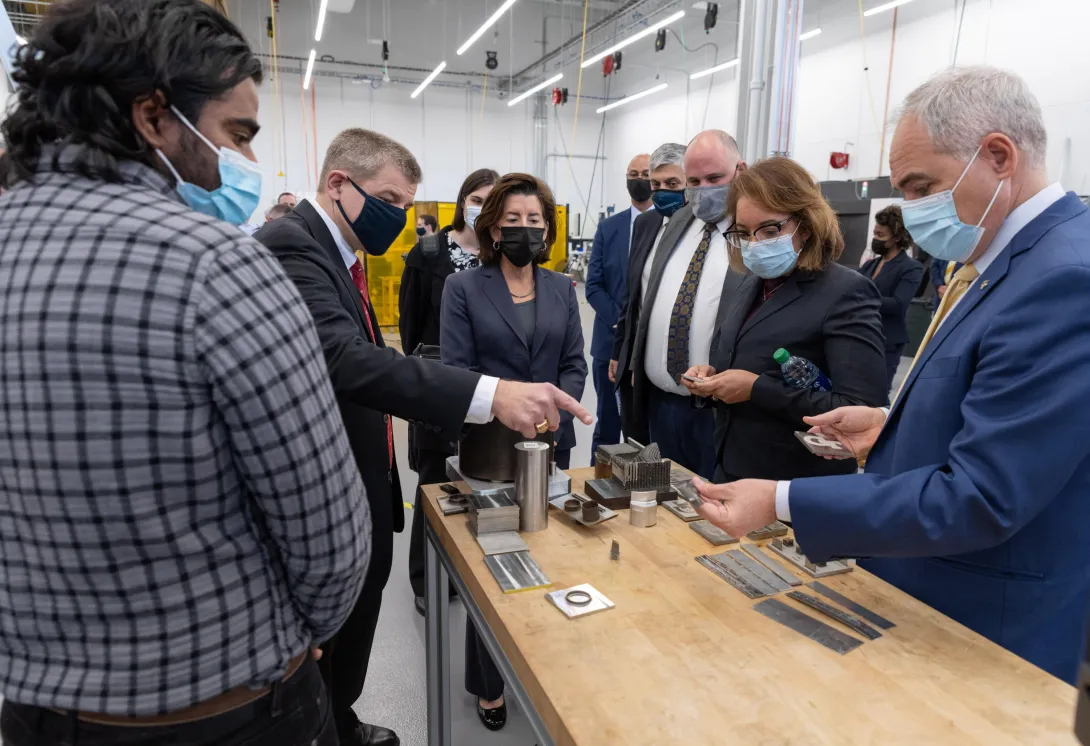
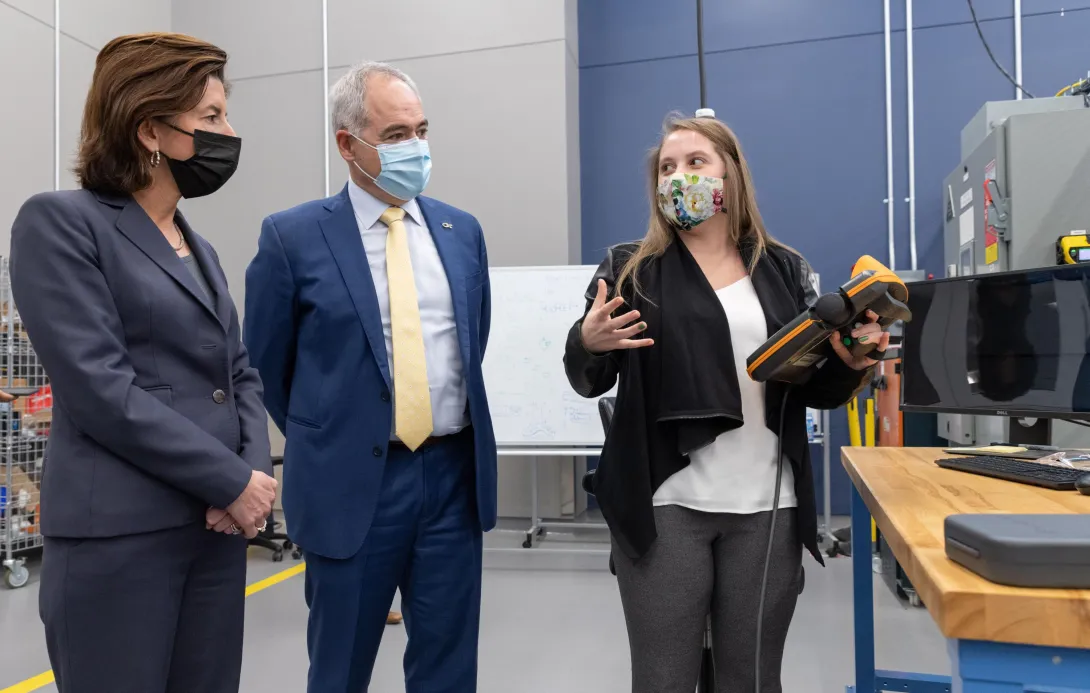
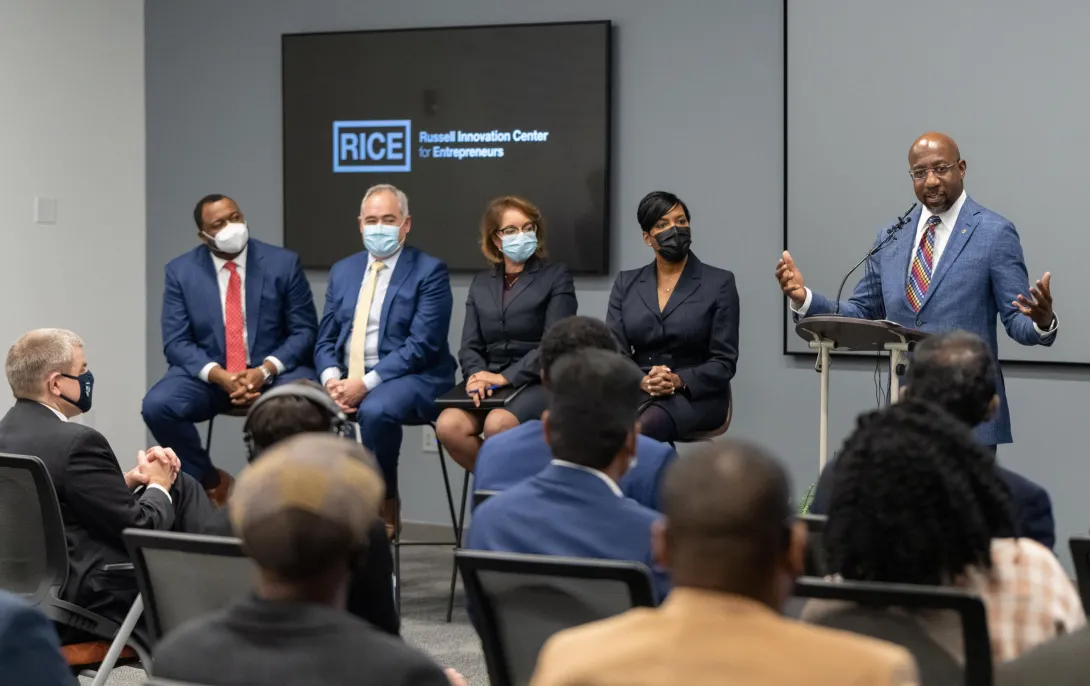
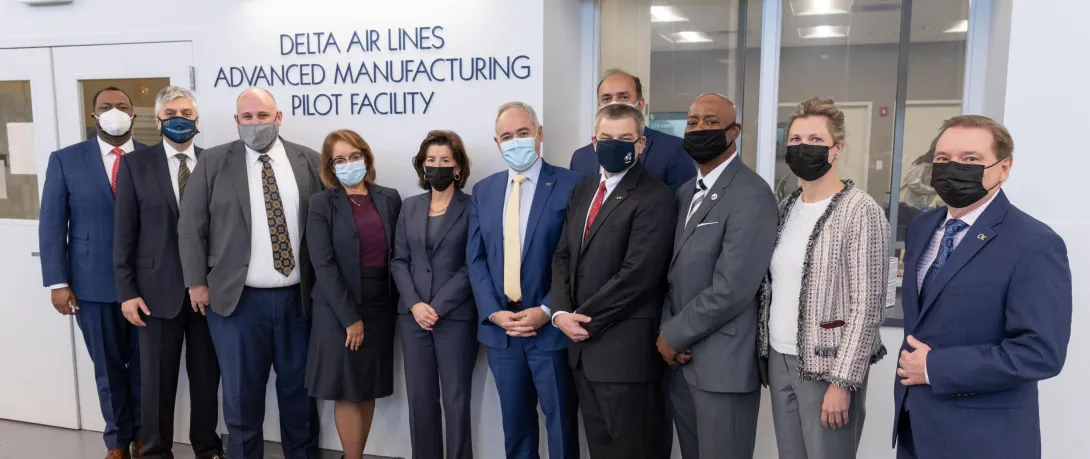
The Georgia Institute of Technology was awarded a grant from the U.S. Department of Commerce’s Economic Development Administration (EDA) as part of its $1 billion Build Back Better Regional Challenge. Georgia Tech is one of 60 entities to be awarded funding to assist communities nationwide in their efforts to accelerate the rebuilding of their economies in the wake of the pandemic.
As a leader in artificial intelligence, manufacturing research, and innovation-led economic development, Georgia Tech will utilize the grant for technical assistance to plan the Georgia Artificial Intelligence Manufacturing Corridor (GA-AIM). Led by Thomas Kurfess and Aaron Stebner in the George W. Woodruff School of Mechanical Engineering and in collaboration with local partners, GA-AIM will fill existing technology gaps, build a technological opportunity framework that includes underrepresented communities and rural Georgia counties, and better secure the state’s manufacturing infrastructure.
Georgia Tech’s partners in the effort include the Russell Innovation Center for Entrepreneurs, Spelman College, the Technical College System of Georgia, and the Georgia Department of Economic Development.
“We are truly honored to be awarded this grant to implement our vision for manufacturing excellence in Georgia with our partners in artificial intelligence research,” said Chaouki T. Abdallah, executive vice president for Research at Georgia Tech. “Alongside these important partners, the grant enables us to collaborate to include diverse backgrounds and perspectives in the process of learning, discovery, and creation, furthering Georgia Tech’s mission to expand access.”
Georgia Tech and its partners will pair artificial intelligence and manufacturing research innovation to better secure the manufacturing ecosystem, expand opportunity to distressed and rural communities and underrepresented groups, and support business growth across the state.
“We are thrilled to help communities work together — in coalitions of government, nonprofits, academia, the private sector, and others — to craft ambitious and regionally unique plans to rebuild their communities,” said Alejandra Y. Castillo, assistant secretary of commerce for the EDA. “These projects will help revitalize local economies and tackle our biggest challenges related to climate change, manufacturing, supply chains, and more. EDA is proud to ignite these plans and help communities nationwide build back better.”
GA-AIM’s partners have created a complementary network of resources that focus on each partner organization’s expertise and mission.
“We have an opportunity to create meaningful impact at the intersection of AI and manufacturing,” said Stebner, who wrote the grant proposal that resulted in the $500,000 grant from EDA.
Kurfess, who serves as the regional economic competitiveness officer for the grant, added, “Bringing together AI and manufacturing will ensure a strong manufacturing base for Georgia that will leverage our well-trained workforce and our strong educational institutions that are participating in this effort. What excites me the most is that AI will augment our workforce, making it more valuable and productive, ensuring job growth for Georgia and the U.S. well into the future.”
The GA-AIM effort takes a multifaceted approach to address its core goals:
Georgia Tech
- Formation of the AI Manufacturing Pilot Facility: Georgia Tech’s Advanced Manufacturing Pilot Facility will be transformed into the AI Manufacturing Pilot Facility. The new facility allows for government pilot trials, cybersecurity games, and workforce training to innovate, transition, and create a workforce for AI manufacturing technologies without exposing the region’s supply chains to risk.
- Center for AI Commercialization: Two of Georgia Tech’s commercialization programs — VentureLab and I-Corps South — will create a center for the commercialization of AI manufacturing technologies into local and regional startups. Those commercialization efforts will occur through a quarterly cohort-based entrepreneurial training program built on the National Science Foundation’s I-Corps curriculum. The center will also provide training for instructors to build a sustainable workforce and will secure investment funding for these startups.
- AI Manufacturing Community Engagement: The Enterprise Innovation Institute, Georgia Tech’s chief economic development arm, will engage in focused outreach and technical assistance to small and mid-sized manufacturers and minority business enterprises through its Georgia Manufacturing Extension Partnership and Georgia Minority Business Development Agency Business Center programs. A third Enterprise Innovation Institute program, the Economic Development Lab, will focus on outreach and engagement in distressed and underserved parts of the state, create workforce development programs and implementation strategies, and attract outside investment.
- AI Manufacturing Rural Supply Chain: The Supply Chain and Logistics Institute will study the impact of automation technologies, build automation solutions tailored for rural manufacturers, and create programs that lower the barrier for rural manufacturers’ access to use the AI Manufacturing Pilot Facility.
- AI InVenture K-12 Experiences: To ensure a technically capable workforce in the coming years, Georgia Tech’s InVenture Prize and the Center for Education Integrating Science, Mathematics, and Computing will expand their emphasis to rural and underserved areas of the state by piloting a rural regional event with a region-specific prize. They will also create supplemental lessons centered on AI and data science that will be part of a K-12 InVenture Prize curriculum website.
Spelman College
- Virtual Reality for AI Workforce Training Innovation: Spelman’s Innovation Lab will develop virtual reality technology for training or retraining the GA-AIM workforce to make workers comfortable with new technologies before deployment in real-world applications.
Russell Innovation Center for Entrepreneurs
- LaunchPad AI Innovation Studio: The Russell Innovation Center for Entrepreneurs will create the 5,000-square-foot LaunchPad AI Innovation Studio to provide prototyping and proof of concept development of physical products. Black entrepreneurs will be given access to equipment, training, and mentoring. LaunchPad AI will also be open to AI InVenture teams from Atlanta’s K-12 public schools, with special programs designed for startup mentoring and seed funding for K-12 entrepreneurs.
Technical College System of Georgia (TCSG)
- AI Manufacturing Technical Workforce Development: As Georgia’s technical college coordinating organization, the TCSG will design, develop, and implement curricula at community colleges that include apprenticeships at AI-MPF and virtual reality modules from Spelman. The TCSG will also provide regional entry points for dual enrollment and traditional students to AI manufacturing technical education at certificate and degree levels. Graduates will have exit points that lead directly to careers in the industry or provide for the continuation of education and higher degree attainment through articulation agreements among GA-AIM members.
With this grant, Tech becomes a finalist for significantly more funding to implement projects that support an industry sector and help communities withstand future economic shocks.
“GA-AIM is in strategic alignment with the EDA’s funding priorities, including manufacturing, workforce development, equity, and technology-based economic development,” said David Bridges, vice president of the Enterprise Innovation Institute at Georgia Tech and co-author of the grant proposal. “With manufacturing employing more than 400,000 people across the state and contributing more than $61 billion in economic activity, it’s critical that we leverage the best ideas and programs through our coalition of partners.”
###
About the Georgia Institute of Technology
The Georgia Institute of Technology, or Georgia Tech, is a top 10 public research university developing leaders who advance technology and improve the human condition. The Institute offers business, computing, design, engineering, liberal arts, and sciences degrees. Its nearly 44,000 students, representing 50 states and 149 countries, study at the main campus in Atlanta, at campuses in France and China, and through distance and online learning. As a leading technological university, Georgia Tech is an engine of economic development for Georgia, the Southeast, and the nation, conducting more than $1 billion in research annually for government, industry, and society.
About the U.S. Economic Development Administration
The mission of the U.S. Economic Development Administration (EDA) is to lead the federal economic development agenda by promoting competitiveness and preparing the nation's regions for growth and success in the worldwide economy. An agency within the U.S. Department of Commerce, EDA makes investments in economically distressed communities in order to create jobs for U.S. workers, promote American innovation, and accelerate long-term sustainable economic growth.
Writer: Péralte C. Paul I peralte.paul@comm.gatech.edu I 404.316.1210
Media contact: Steven Norris | stephen.norris@comm.gatech.edu| 404.281.3343
News Contact
Péralte C. Paul
404.316.1210