
May. 04, 2023
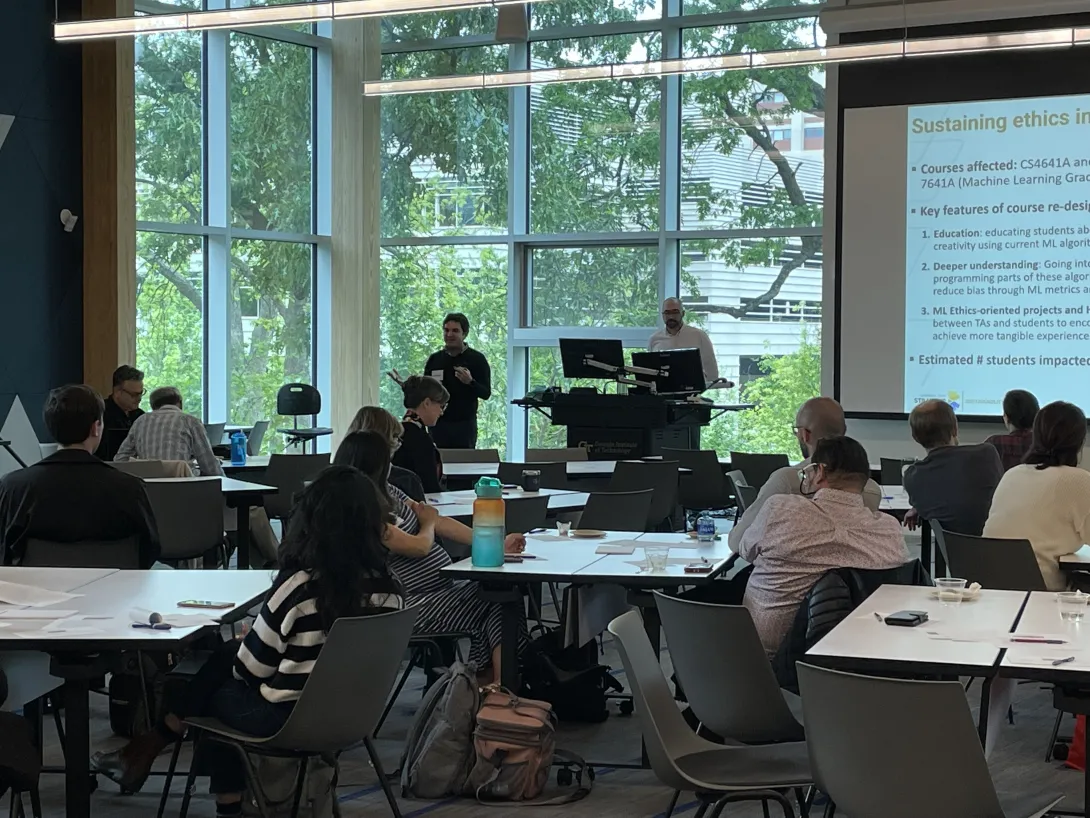
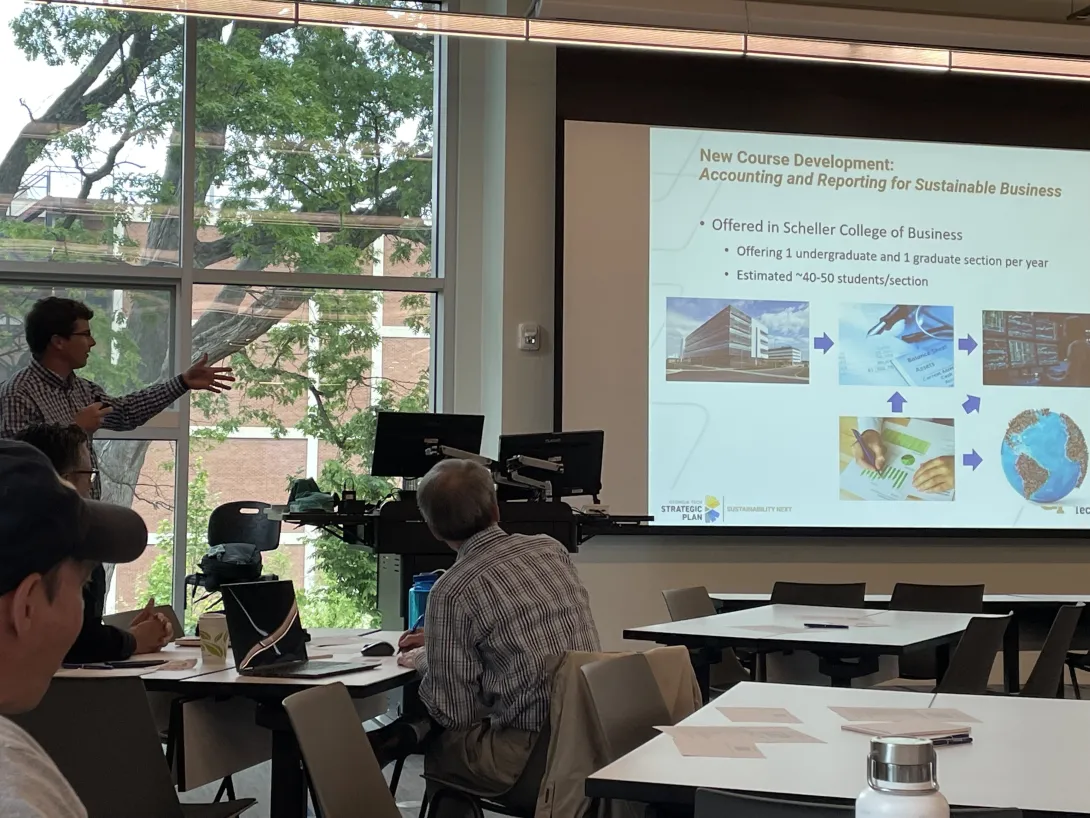
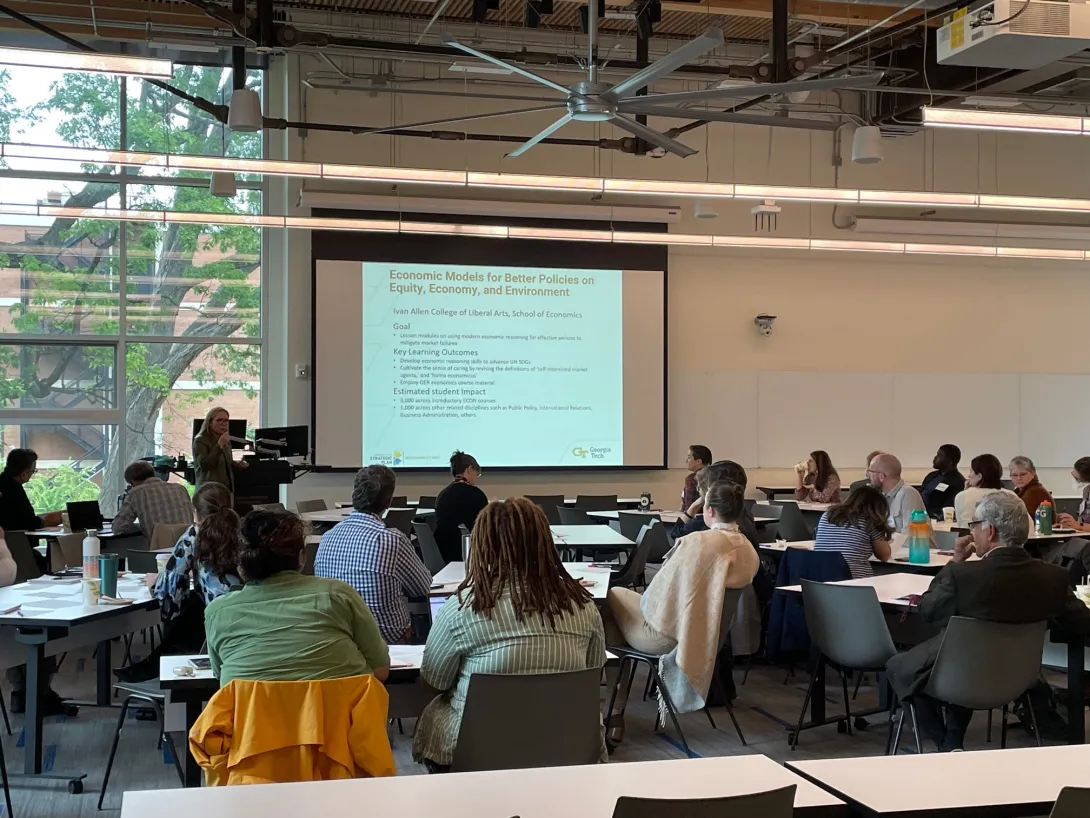
One of the Institute Strategic Plan (ISP) goals is to connect globally and amplify impact by contributing “to global collaborative efforts that advance the U.N. Sustainable Development Goals (SDGs) through our education, research, and service.” In response, Sustainability Next developed a plan to expand SDG concept and skill integration across the undergraduate curriculum. In support of the plan, 21 projects representing all six colleges and 15 schools were presented at the Undergraduate Sustainability Education Jamboree, held on April 26 in the Kendeda Building auditorium. With many winning projects featuring high enrollment and core courses, this first round of sustainability education “seed grants” will significantly expand the reach of Georgia Tech’s sustainability-across-the-curriculum initiatives.
“Our Strategic Plan commitment to bring the United Nations Sustainable Development Goals (SDGs) into our teaching is part of our vision for transformative teaching and learning more broadly,” explains Larry Jacobs, Senior Vice Provost for Education and Learning. “Helping students identify connections between disciplinary concepts and skills and complex societal challenges enhances learning and supports Georgia Tech’s mission to equip students to improve the human condition.”
The Jamboree featured lightning presentations from the award winners, as well as presentations about related initiatives at Georgia Tech to help instructors, students, and staff better understand the landscape of sustainability education innovation on campus. Instructors engaged in course design or re-design through the awards will have opportunities to collaborate with and learn from their peers through a Community of Practice on Transformative Teaching with the SDGs and a SoTL (Scholarship of Teaching and Learning) research group. Many began identifying potential collaborators at the event, as they heard from other award winners. “The afternoon of lightning presentations by fellow faculty was exhilarating,” Sabir Khan, Associate Professor, Schools of Industrial Design and Architecture, shared. “I came away impressed and excited at the range of projects and have already invited a few instructors to join my class in the fall to discuss their approaches to tackling the UN SDGs."
Presenter Kate Williams, Interim Director, Transformative Teaching and Learning, Faculty Initiatives, shared connections between the Sustainability Innovation Awards and Georgia Tech’s Transformative Teaching and Learning (TTL) strategic initiative. “The success of the first round of Sustainability Education Innovation Grants demonstrates our faculty's commitment to creating innovative experiential learning opportunities for students,” Dr. Williams noted.
For more information about future award opportunities or the communities of practice described above, please contact Jennifer Leavey (Assistant Dean for Faculty Mentoring, College of Sciences) or Rebecca Watts Hull (Assistant Director, Faculty Development for Sustainability Education Initiatives, Center for Teaching and Learning).
Review all 21 awarded Undergraduate Sustainability Education Innovation projects.
May. 03, 2023
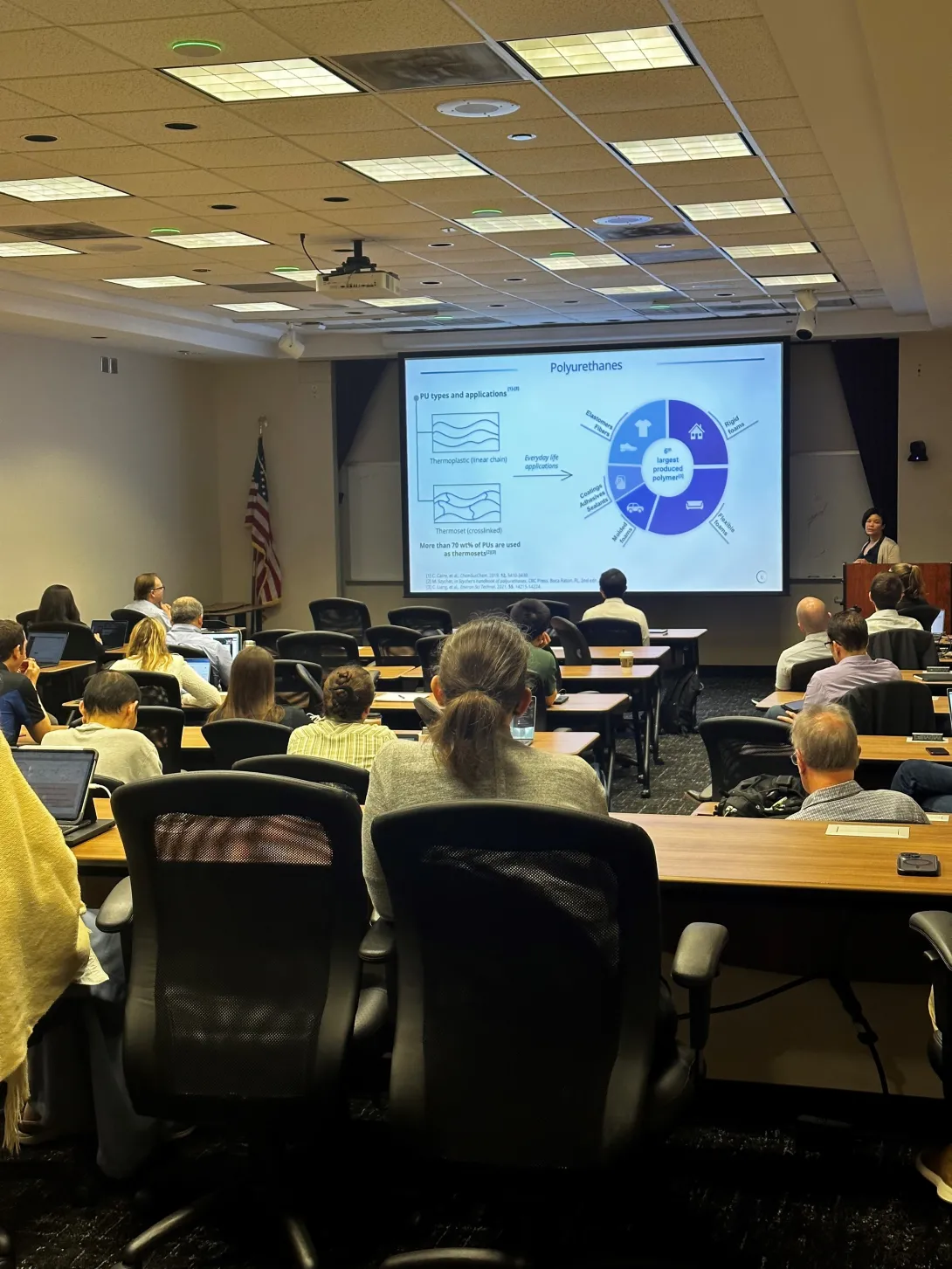
In early April, the Renewable Bioproducts Institute (RBI) along with the Student Polymer Network (SPN) hosted the ninth annual research symposium titled “The Visions for Sustainable Polymers.” The symposium also included SPN's annual poster session at the Molecular Science and Engineering Atrium.
Sustainable polymers are an important component of RBI's Circular Materials research theme. The workshop was planned by Blair Brettmann, assistant professor in the School of Chemical and Biomolecular Engineering, Natalie Stingelin, professor in the School of Chemical and Biomolecular Engineering, Will Gutekunst, associate professor in the School of Chemistry and Biochemistry and Carson Meredith, executive director of Renewable Bioproducts Institute and professor and James Harris Faculty Fellow in the School of Chemical and Biomolecular Engineering and was funded through a Moving Teams Forward seed grant from the EVPR office. The purpose of this seed grant is to develop a community of researchers on campus who focus on the development of new, more sustainable types of plastics and new ways to recycle or upcycle them at the end of life.
The workshop was the culminating event in the Moving Teams Forward seed grant program and involved invited speakers from inside and outside Georgia Tech. Industrial speakers and attendees (Dow, BASF), National Labs (NIST), and faculty from universities across the country participated in the symposium. The speakers represented key thought leaders to connect with and build stronger teams for advancing this field.
News Contact
Priya Devarajan | RBI Communications Manager
May. 03, 2023

Top-down, slow motion view of hands tying a traditional fishing net knot

Image courtesy of Georgia Tech Research Institute.
Diagram showing concept of active space debris removal. The system is launched from earth and maneuvers to intercept a spent rocket fuselage. It then separates into four components with a net stretched between them. The net wraps around the fuselage, capturing it, and the entire system deorbits safely.
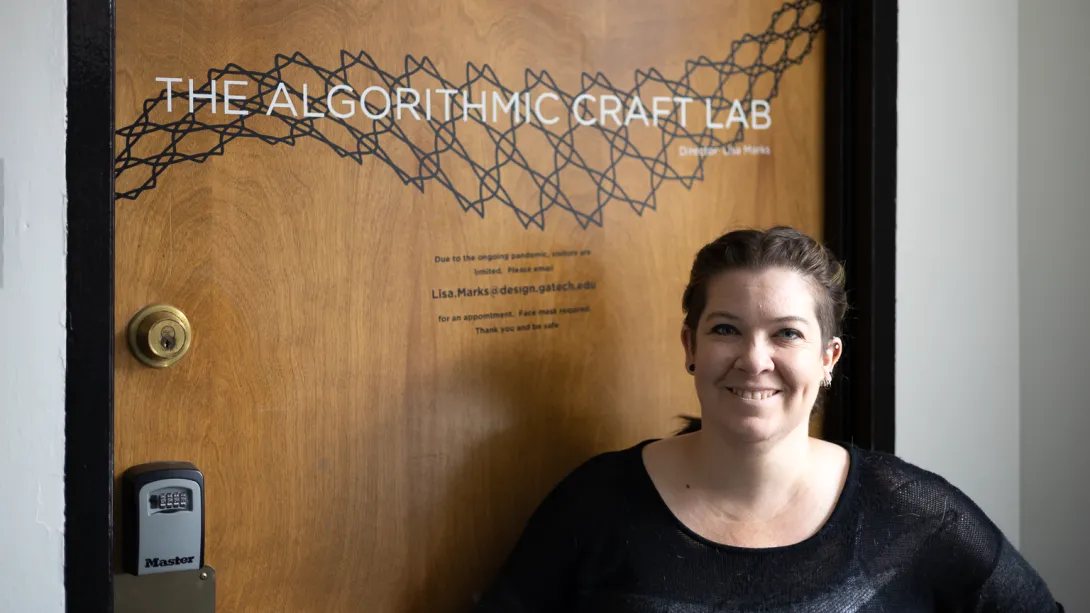
One hand holding a net of thin black cord in the middle. The net is draped over the person's other hand, below.
Lisa Marks is launching the ancient craft of fishing villages into space vehicle design. Her work adapting traditional textile handcraft to modern problems created a unique opportunity for collaboration cleaning up space debris.
According to NASA's Orbital Debris Program Office (OPDO), this debris jeopardizes future space projects. Large objects like rocket bodies and non-functional satellites are the source of fragmentation debris.
The OPDO website says removal of even five of the highest-risk objects per year could stabilize the low Earth orbit debris environment.
A research team with members from the Georgia Tech Research Institute, the Aerospace Systems Design Laboratory, and the Space Systems Design Laboratory has developed a concept using a net to capture and de-orbit large debris.
A mutual connection at Tech's GVU recommended that the team speak to Lisa Marks, assistant professor in the School of Industrial Design, based on her work combining traditional textile with new materials and methods.
Putting Textiles in Space Requires Creative Expertise
“There’s a lot of different projects on space debris happening all around the world,” Marks said, “and there’ve been a few concept papers talking about using a net.”
“But all the drawings of the net are basic concepts, just a square with a few hatches through it. No one has figured out what that net might be.”
Marks researches ways to combine traditional textile handcraft with algorithmic modeling. “I specialize in analyzing the shape of every stitch and how we can use that stitch differently. Can we create new patterns through coding, or make it larger and out of wood?”
“It allows me to think really creatively about how we can use different textiles.”
This innovative, exploratory approach is a natural fit to create a net for a job no has ever done. “There's a lot of technical considerations with this,” Marks said.
“It must pack incredibly small, weigh very little, and still be strong enough to capture and drag a rocket fuselage. There are considerations just for a material to exist in space. It needs to have low UV reactivity, low off gassing.”
“We need to understand every single little aspect of each of these techniques in order to do this.”
Static Nets Catch Fish; Slippery Nets Catch Rockets
Marks is working with Teflon, using the same knots used for fishing nets, but the non-traditional material means the nets work differently than fishing nets, she said. “These knots are made to be static, because you don’t want fish to get through the nets. But because Teflon is so slippery, the knots move around.”
“I think it will help the net’s strength, because the net will deform around irregular shapes before it breaks. What makes it unsuitable for fishing and annoying to work with becomes a huge benefit for what we need it to do.”
Some traditional handcraft techniques are dying out, and Marks sees projects like this as a reason preserving these techniques is important. “We don’t know what problems we’re going to have to solve in the future, and these crafts can be used in really surprising ways.”
“I would not have thought, ‘Netted filet lace, that’s how we’re going to solve a space problem!’ But if we lose this type of lace, we can’t solve space problems with it.”
May. 02, 2023
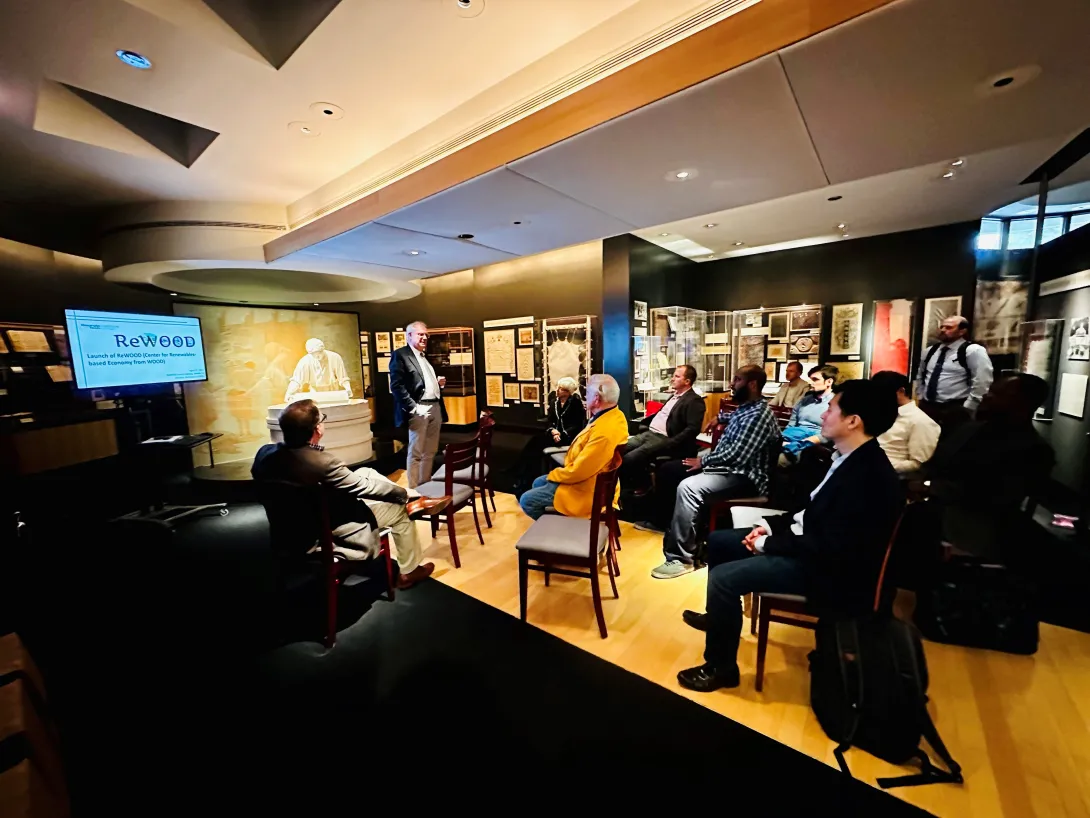
ReWOOD launch at the Renewable Bioproducts Institute on April 27, 2023
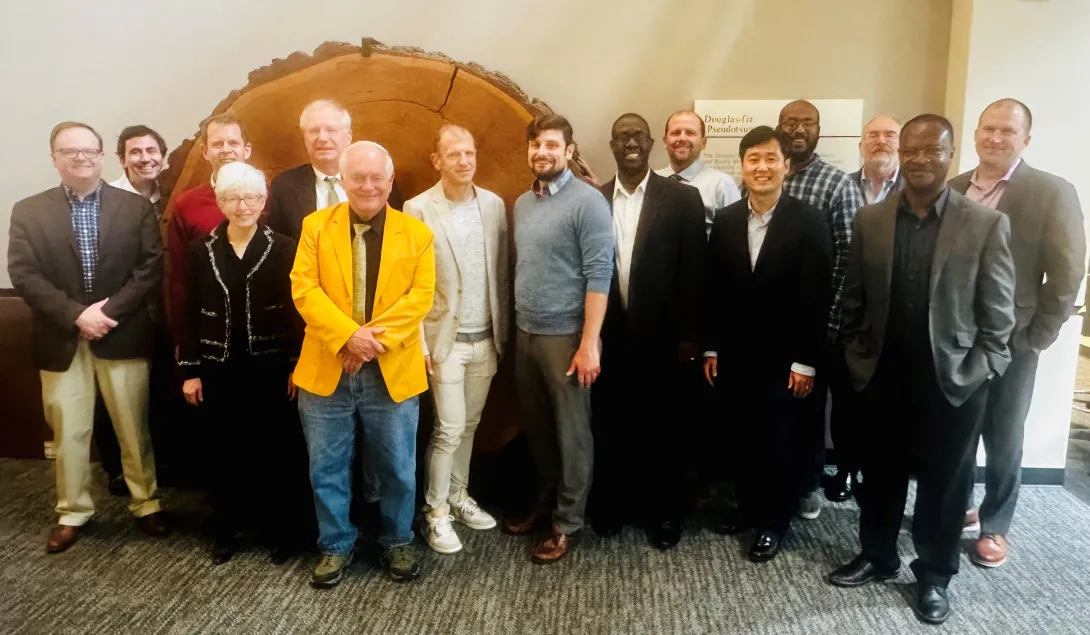
Team of ReWOOD research collaborators on the day of launch
Georgia Tech Launches Wood-Based Renewables Research Center
The Renewable Bioproducts Institute (RBI) at the Georgia Institute of Technology has launched a new science and technology research center called ReWOOD. The ReWOOD launch included a 2-day workshop involving faculty research partners from universities across the Southeast, as well as former Georgia Agriculture Commissioner Gary Black.
ReWOOD, abbreviated from “Renewables-based Economy from WOOD” will focus on a burgeoning field of science called Xylochemistry. Xylochemistry makes use of sustainable plant-based raw materials to develop industrial products ranging from jet fuel to industrial solvents to generic pharmaceutical additives and more. Right now, most of the world production of such materials comes from non-renewable fossil resources or petroleum products. Moving to a renewable source will not only aid in reducing the dependence on fossil fuels but will also help with reducing the overall carbon footprint. ReWOOD is sponsored by RBI through its endowment-funded fellowships and is developing a corporate affiliate program.
“The formation of this internal research center will drive regional momentum for producing carbon neutral chemicals and fuels from wood wastes deriving from the abundant and fast-growing wood in the Southeast,” said Carson Meredith, executive director of RBI. “In fact, the Southeast has a larger percentage of sustainably grown working forests than any other area in the U.S., and Georgia is the number one exporter of forest products in the nation.”
Research on chemical renewables via Xylochemistry has been ongoing at Georgia Tech under a consortium called GT-STANCE (Science & Technology for a Neutral Chemical Economy). GT-STANCE’s researchers have developed seed technologies that aid in the production of wood-based chemical intermediates with potential uses in consumer commodities like pharmaceuticals and plastics. In addition, RBI has made a significant investment of nearly $3 million in building research teams in the related area of lignin conversion in the last five years. The formation of a research center that will coalesce regional thought leadership is the logical next step, as a renewables-based economy has become a national priority with the bioeconomy, climate, and clean energy goals set by the Inflation Reduction Act and the Bipartisan Infrastructure Law.
Raw materials for Xylochemistry could also be sourced from any kind of non-treated wood. For example, wood from demolished construction sites like old homes and wooden buildings provide an excellent opportunity for a circular economy, since this wooden construction waste ends up in landfills now.
Currently ReWOOD has 11 university affiliates that are joining Georgia Tech. In January 2023, faculty from Georgia Tech, the University of Alabama at Tuscaloosa, and Alabama A&M University convened to discuss the plans for a research center on a renewables-based economy from wood to develop renewable biofuels, industrial solvents, pharmaceutical additives, and many other products that culminated in the formation of ReWOOD. Since then, the center has gained the interest of multiple other researchers from the University of Florida, Kennesaw State University, and Clark Atlanta University. In addition, the Mississippi State and Forestry Office and Sandia National Laboratory have become key collaborators within ReWOOD. This collection of expertise includes chemists, engineers, economists, and forest experts, covering a broad range of activities that will include technology, economic, and workforce development, as well as lifecycle and socio-economic analysis. This partnership list will continue to evolve and grow as ReWOOD focuses on specific target research areas and proposals for funding to develop technology and processes in the business sector.
About the Renewable Bioproducts Institute at Georgia Tech
Georgia Tech’s Renewable Bioproducts Institute is one of ten campus interdisciplinary research institutes. RBI champions innovation in converting biomass into value-added products, developing advanced chemical and bio-based refining technologies, and advancing excellence in manufacturing processes. Our three strategic thrusts are circular materials, bio industrial manufacturing, and paper, packaging, and tissue.
RBI serves as a campus conduit for industry-university partnerships and provides a portal to Georgia Tech core laboratories, faculty and students whose work and expertise is focused on biomass and bioproducts.
News Contact
Priya Devarajan | RBI Communications Program Manager
Apr. 25, 2023
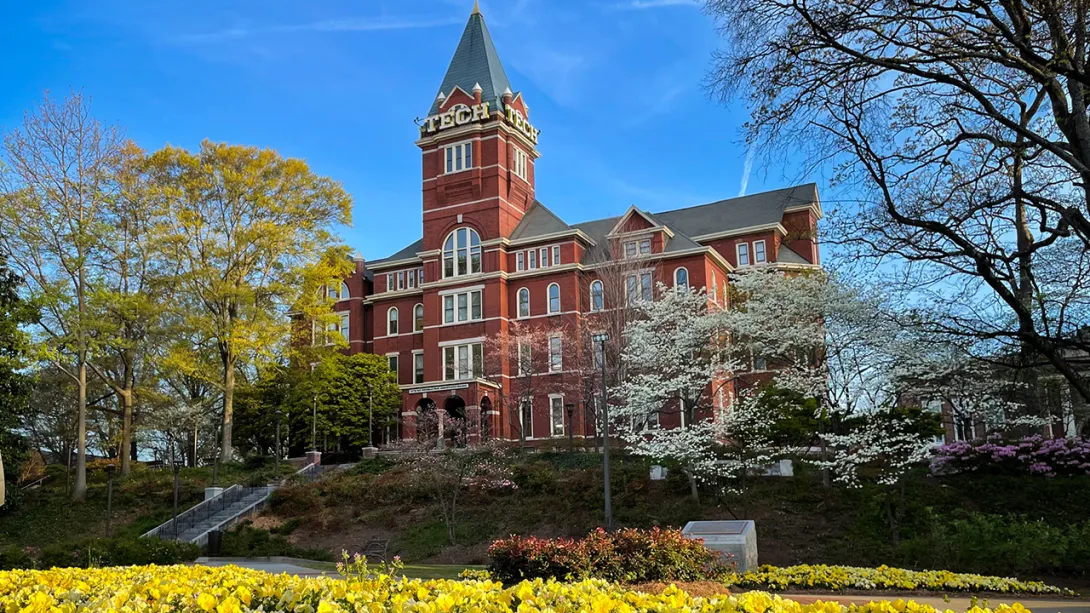
The 2022-23 Micro-Grants Community-Based Research awardees presented their findings at the second annual symposium, held on April 18, 2023, in the auditorium of the Kendeda Building for Innovative Sustainable Design, which is the region’s first Living Building. Ten teams presented to faculty, staff, students, and student family members. The topics were wide ranging, and dealt with both practical and theoretical issues. The work surpassed all expectations for quality and quantity.
Devised by the Kendeda Building Advisory Board and sponsored by the Brook Byers Institute for Sustainable Systems and the Kendeda Building, the Micro-Grants Research Program solicits proposals for very small scale ($50 to $500), short term, sustainability related, research studies to be conducted by members of the Georgia Tech community. Community investigators are encouraged to explore ways in which the Georgia Tech campus can continue to innovate, demonstrate, prove, and promote the adoption of best and next practices in regenerative design and operations. Researchers were also encouraged to use the United Nations Sustainable Development Goals as a framework for research design. All members of the Georgia Tech community were encouraged to apply. The program especially sought proposals from students and staff that had little or no prior research experience.
The program has four objectives:
- to expand scientific thinking and the understanding of the research process amongst those not (yet) directly involved in scientific research;
- to bolster the use of the campus as a living laboratory;
- to give voice to people and communities outside of research that have culturally novel perspectives on problems and their possible solutions, and to create new pathways for partnering with them; and
- to seed novel ideas and nurture nascent investigators.
The 2022-23 awardees and the titles of their projects are:
- Alex Lomis, Devi Patel, and Dr. Jung-Ho Lewe, "Design and Development of a Low-Cost and Highly-Scaleable Occupancy Counter to Optimize the Utilization of HVAC Resources"
- Kaitlyn Tran, Shivani Potdar, and Amanda Janusz, "Bird Safe Campus"
- Ricardo Martinez, "Chiropterans at Georgia Tech"
- Elizabeth Umanah, "Reimagining Eco-Friendly Parking Lot Design Through Simulations"
- Lujain Diab, Ally Kimpling, Jenna Sitta, Marcus Morris, Skylar Ryan, Dr. Jennifer Leavey, and Steve Place, "A Greener Grey: “Ironing” Out Issues in Greywater Systems"
- Jun Wang and Yilun Zha, "Kendeda’s Educational Role in Waste Management and Recycling"
- Siddharth Sivakumarun, "Investigating Capacity for Regenerative Energy through Foot Traffic"
- Alexandra Rodriguez Dalmau and John Fortner, "Recognition of Insect Species in the Georgia Tech campus with Machine Learning"
- Gray Simmons, Kevin Leach, and Dr. Jung-Ho Lewe, "IOT Climate Sensor Development for HVAC Efficiency Analysis"
- Kaylin Cross, Pranav Jothi, Maanas Kumar, Brian Wu, Savannah Howard, and Sheng Dai, "Prototyping Bio-inspired Geothermal Energy Recovery for Space Heating and Cooling"
More details and links to all the presentations are available at this web page.
News Contact
Brent Verrill, Research Communications Program Manager, BBISS
Apr. 13, 2023

As climate change leads to rising sea levels and more powerful storms, coastal communities increasingly are turning to networks of sensors to track water levels. The sensors — which are progressively getting cheaper and more capable — can help officials anticipate flood risks and respond in emergencies.
A tool developed by Georgia Tech researchers can help make the most of those networks, pinpointing the ideal locations for water level sensors to maximize the real-time data available to emergency managers.
In a test case in Chatham County, Georgia, the approach developed by civil engineer Iris Tien reduced 29,000 potential sensor locations to just 381. The idea, then, is that officials can use their local expertise and historical knowledge to pick where to install sensors among those spots.
News Contact
Joshua Stewart
College of Engineering
Apr. 06, 2023
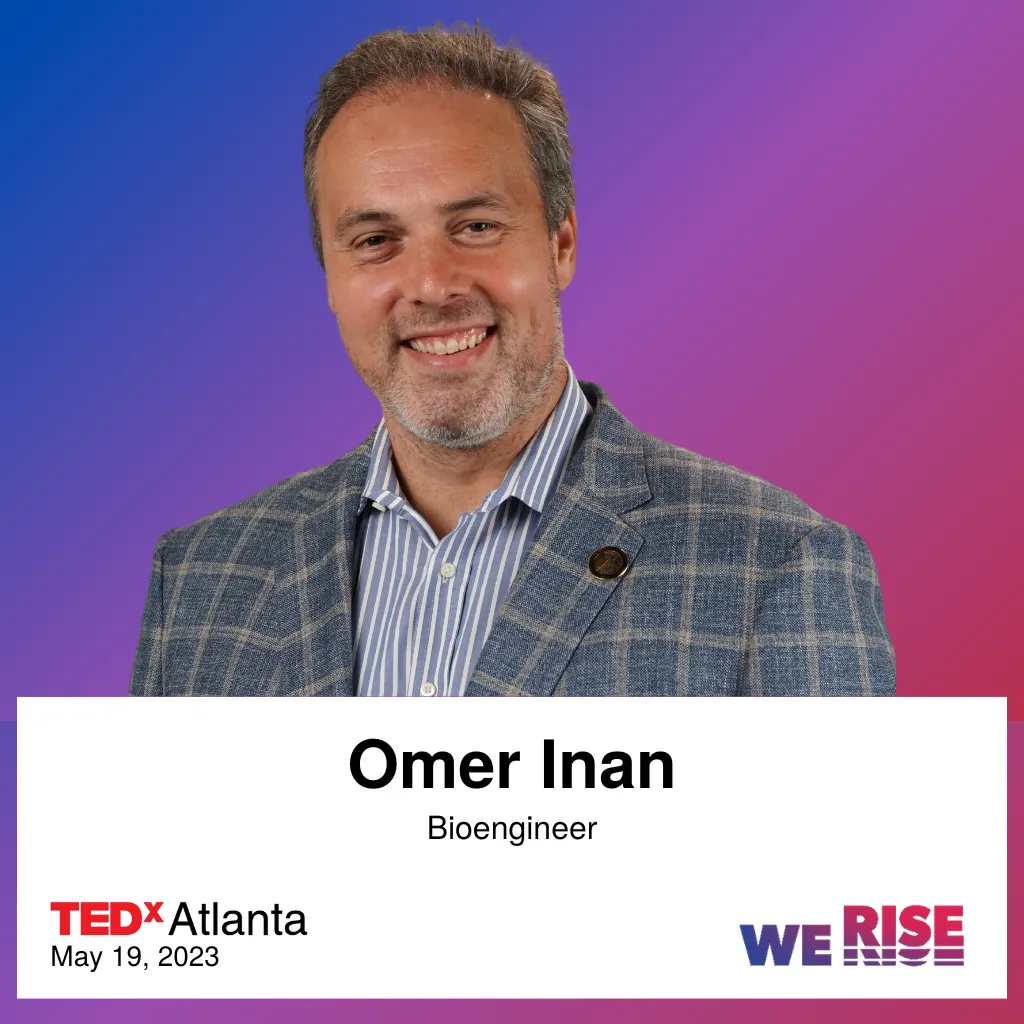
Professor Omer Inan is set to take the stage at the upcoming TEDxAtlanta 2023: We Rise event on May 19.
Professor Omer Inan is set to take the stage at the upcoming TEDxAtlanta 2023: We Rise event on May 19.
As the Linda J. and Mark C. Smith Chair in bioscience and bioengineering in Tech’s School of Electrical and Computer Engineering (ECE), Inan designs clinically relevant medical devices and systems and translates them from the lab to patient care applications. In his talk, Inan will be discussing his groundbreaking research on wearable healthcare technologies and the potential they hold for revolutionizing the field.
Inan is a member of the prestigious Medical and Biological Engineering (AIMBE) College of Fellows (elected in 2022) for his “outstanding contributions to the non-invasive assessment of the mechanical aspects of cardiovascular health and performance using wearable devices.” Additional achievements include an Academy Award for Technical Achievement from The Academy of Motion Picture Arts and Sciences (The Oscars, 2021), the Georgia Power Professor of Excellence for the College of Engineering (2019), and the National Science Foundation Faculty Early Career Development Program award (NSF CAREER, 2018).
TEDxAtlanta 2023: WE RISE brings together an impressive group of participants from diverse backgrounds, experiences, and perspectives. The speakers include entrepreneurs, activists, educators, artists, scientists, and many other changemakers who have risen above challenges to make a positive impact on the world.
The event's participants will share their stories and insights on how they have overcome adversity, embraced innovation, and challenged the status quo to make a difference in their communities and beyond. Through their talks, they will inspire and empower attendees to rise above their own challenges and take action towards creating a better future for all.
TEDxAtlanta 2023: WE RISE will take place on Friday, May 19 from 9 a.m. – 6:30 p.m. at the Rialto Center for the Arts (80 Forsyth Street Northwest Atlanta, GA 30303). Learn more and purchase tickets at tedxatlanta.com.
News Contact
Dan Watson
Apr. 04, 2023
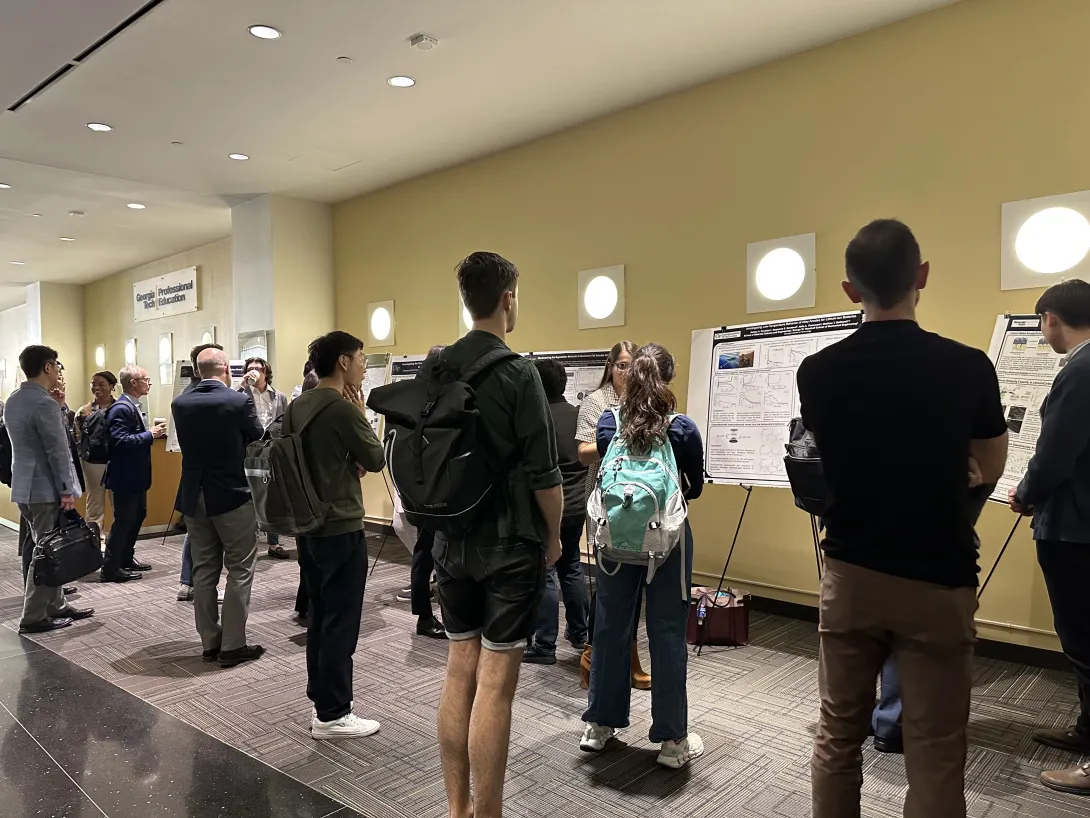
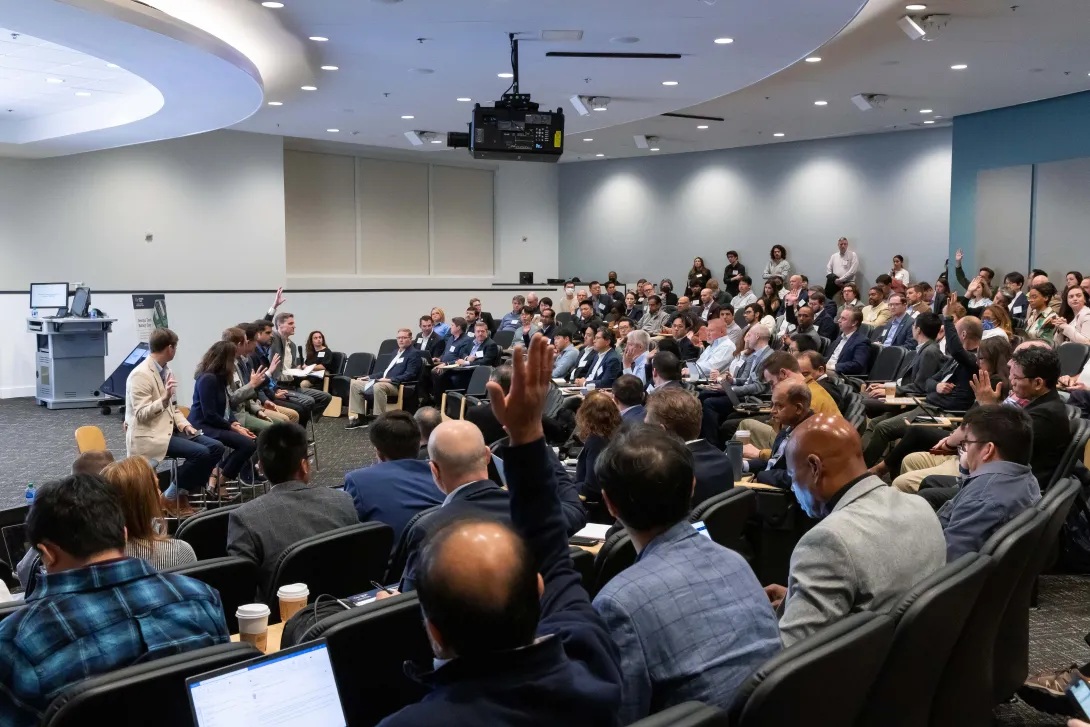
Georgia Tech Battery Day opened with a full house on March 30, 2023, at the Global Learning Center in the heart of Midtown Atlanta. More than 230 energy researchers and industry participants convened to discuss and advance energy storage technologies via lightning talks, panel discussions, student poster sessions, and networking sessions throughout the day. Matt McDowell, associate professor in the Woodruff School of Mechanical Engineering and the School of Materials Science and Engineering as well as the initiative lead for energy storage at the Strategic Energy Institute and the Institute of Materials, started the day with an overview of the relevant research at Georgia Tech. His talk shed light on Georgia becoming the epicenter of the battery belt of the Southeast with recent key industry investments and the robust energy-storage research community present at Georgia Tech.
According to the Metro Atlanta Chamber of Commerce, since 2020, Georgia has had $21 billion invested or announced in EV-related projects with 26,700 jobs created. With investments in alternate energy technologies growing exponentially in the nation, McDowell revealed Georgia Tech is well-positioned to make an impact on the next generation energy storage technologies and extended an open invitation to industry members to partner with researchers. As one of the most research-intensive academic institutions in the nation, Georgia Tech has more than $1.3 billion in research and other sponsored funds and produces the highest number of engineering doctoral graduates in the nation.
“More than half of Georgia Tech's strategic initiatives are focused on improving the efficiency and sustainability of energy storage, supporting clean energy sources, and mitigating climate change," said Chaouki Abdallah, executive vice president for research at Georgia Tech. "As a leader in battery technologies research, we are bringing together engineers, scientists, and researchers in academia and industry to conduct innovative research to address humanity's most urgent and complex challenges, and to advance technology and improve the human condition."
Rich Simmons, director of research and studies at the Strategic Energy Institute moderated the first panel discussion that included industry panelists from Panasonic, Cox Automotive, Bluebird Corp., Delta Airlines and Hyundai Kia. The panelists analyzed the opportunities and challenges in the electric transportation sector and explained their current focus areas in energy storage. The panel affirmed that while EVs have been around for more than three decades, the industry is still in its infancy and there is a huge potential to advance technology in all areas of the EV sector.
The discussion also brought forth important factors like safety, lifecycle, and sustainability in driving innovations in the energy storage sector. The attendees also discussed supply chain issues, a hot topic in almost all sectors of the nation, and the need to develop a diversity of resources for more resilient systems. The industry panelists affirmed a strong interest in partnering on research and development projects as well as gaining access to university talent.
Gleb Yushin, professor in the School of Material Science and Engineering and co-founder of Sila Nanotechnologies Inc., presented his battery research and development success story at Georgia Tech. Sila is a Georgia Tech start-up founded in 2011 and has produced the world’s first commercially available high-silicon-content anode for lithium-ion batteries in 2021. Materials manufactured in its U.S. facilities will power electric vehicles starting with the Mercedes-Benz G-class series in 2023.
The program included lightning talks on cutting-edge research in battery materials, specifically solid-state electrolytes and plastic crystal embedded elastomer electrolytes (PCEEs) by Seung Woo Lee, associate professor in the George W. Woodruff School of Mechanical Engineering. Santiago Grijalva, professor in the School of Electrical and Computer Engineering, discussed the challenges and opportunities for the successful use of energy storage for the grid.
Tequila Harris, initiative lead for Energy and Manufacturing and professor in the George W. Woodruff School of Mechanical Engineering, spoke to energy materials and carbon-neutral applications. Presenting a case for roll-to-roll manufacturing of battery materials, Harris said that the need for quick, high yield manufacturing processes and alternative materials and structures were important considerations for the industry.
Materials, manufacturing, and market opportunities were the topic for the next panel moderated by McDowell and included panelists from Albemarle, Novelis, Solvay, Truist Securities, and Energy Impact Partners. Analyzing the current challenges, the panelists brought up hiring and workforce development, increasing capacity and building the ecosystem, decarbonizing existing processes, and understanding federal policies and regulations.
Lightning talks later in the afternoon by researchers at Georgia Tech touched on the latest developments in the cross-disciplinary research bridging mechanical engineering, chemical engineering, AI manufacturing, and material science in energy storage research. Topics included safe rechargeable batteries with water-based electrolytes (Nian Liu, assistant professor, School of Chemical & Biomolecular Engineering), AI-accelerated manufacturing (Aaron Stebner, associate professor, School of Materials Science and Engineering), battery recycling (Hailong Chen, associate professor, School of Materials Science and Engineering), and parametric life-cycle models for a solid-state battery circular economy (Ilan Stern, research scientist from GTRI).
Another industry panel on grid, infrastructure and communities moderated by Faisal Alamgir, professor in the School of Materials Science and Engineering included panelists from Southern Company, Stryten Energy, and the Metro Atlanta Chamber of Commerce. Improving the grid resiliency and storage capacity; proximity to the energy source; optimizing and implementing new technology in an equitable way; standardization of the evolving business models; economic development and resource building through skilled workforce; educating the consumer; and getting larger portions of the grid with renewable energy were top of mind with the panelists.
“Energy-storage-related R&D efforts at Georgia Tech are extensive and include next-gen battery chemistry development, battery characterization, recycling, and energy generation and distribution,” said McDowell. “There is a tremendous opportunity to leverage the broad expertise we bring to advance energy storage systems. Battery Day has been hugely successful in not only bringing this expertise to the forefront, but also in affirming the need for continued interaction with the companies engaged in this arena. Our mission is to serve as a centralized focal point for research interactions between companies in the battery/EV space and faculty members on campus.”
News Contact
Priya Devarajan || SEI Communications Manager
Mar. 31, 2023
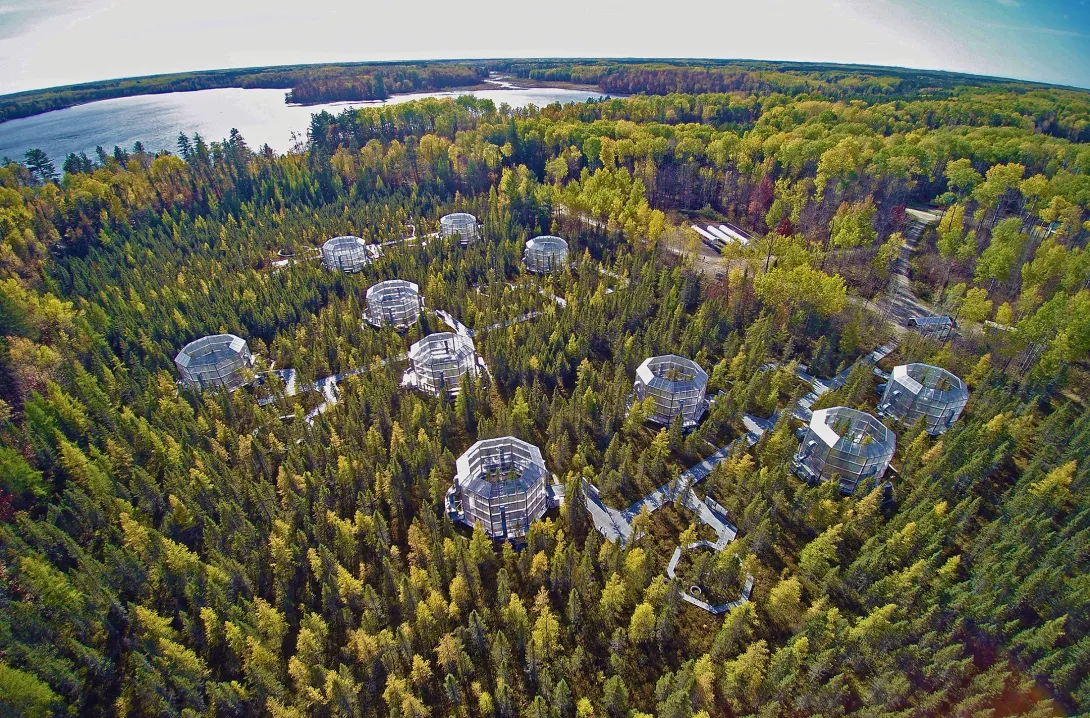
An aerial view of the SPRUCE enclosure.
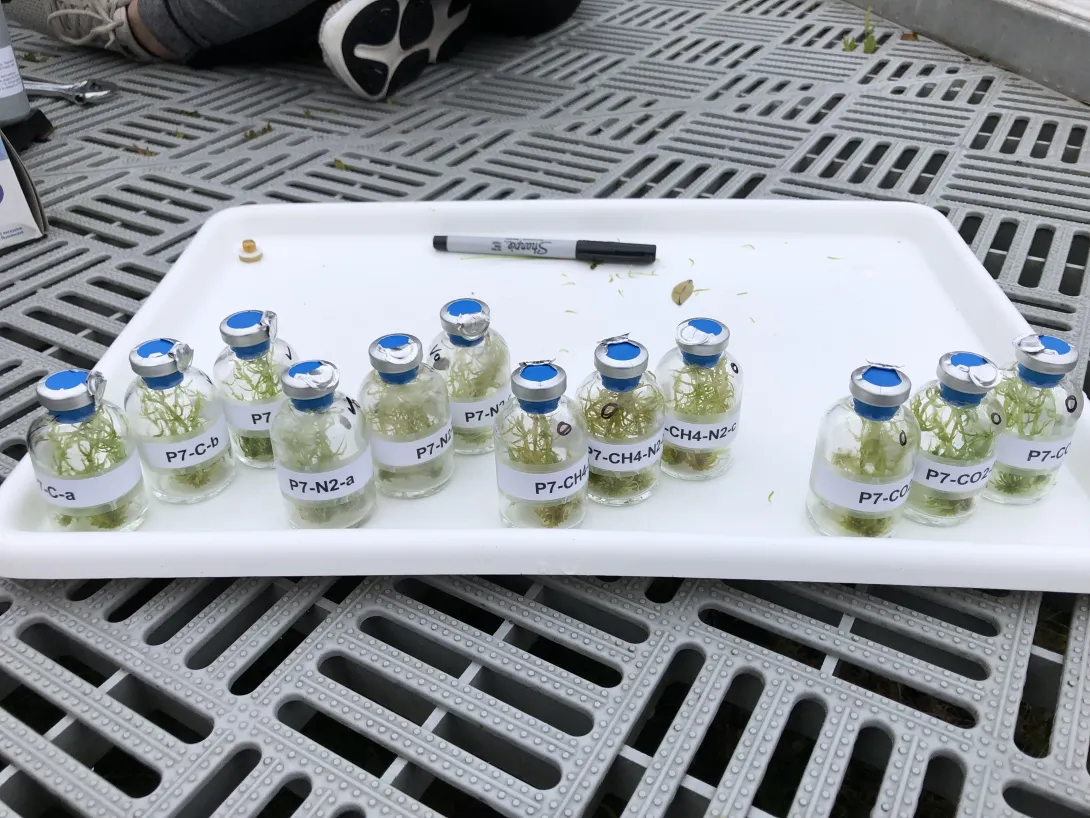
Sphagnum mosses were taken from different SPRUCE enclosures and incubated in glass jars for the study (Photo Jennifer Glass).
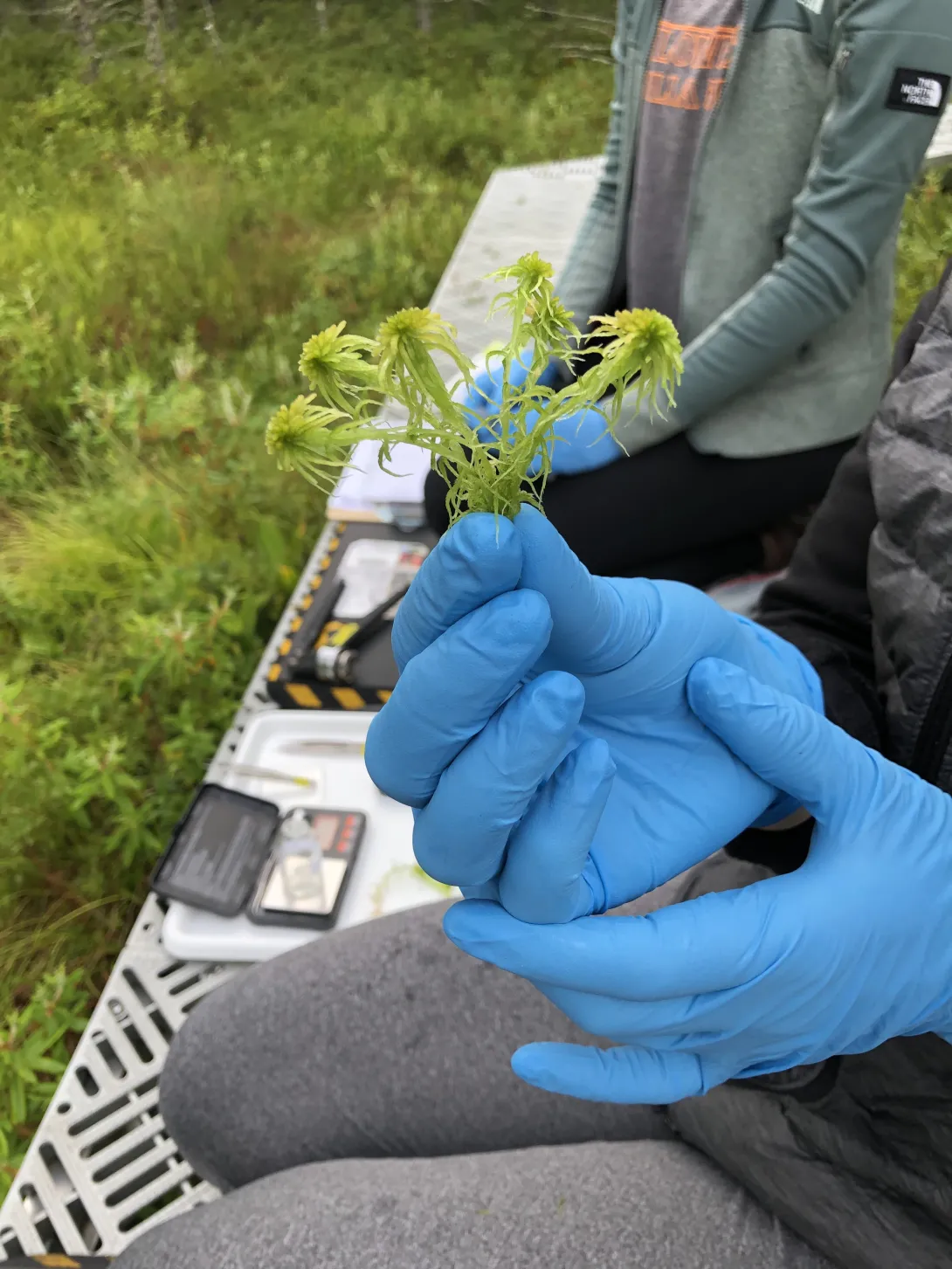
A closeup of a member of the research team holding Sphagnum moss, one of the key drivers of carbon sequestration in peatlands. (Photo Jennifer Glass).
If you’re an avid gardener, you may have considered peat moss — decomposed Sphagnum moss that helps retain moisture in soil — to enhance your home soil mixture. And while the potting medium can help plants thrive, it’s also a key component of peatlands: wetlands characterized by a thick layer of water-saturated, carbon-rich peat beneath living Sphagnum moss, trees, and other plant life.
These ecosystems cover just 3% of Earth’s land area, but “peatlands store over one-third of all soil carbon on the planet,” explains Joel Kostka, professor and associate chair of Research in the School of Biological Sciences at Georgia Tech.
This carbon storage is supported in large part by microbes. Two microbial processes in particular — nitrogen fixation and methane oxidation — strike a delicate balance, working together to give Sphagnum mosses access to critical nutrients in nutrient-depleted peatlands.
The coupling of these two processes is often referred to as the “missing link” of nutrient cycling in peatlands. Yet, how these processes will respond to changing climates along northern latitudes is unclear.
“There are tropical peatlands — but the majority of peatlands are in northern environments.” notes Caitlin Petro, a research scientist who works with Kostka in Biological Sciences at Tech. “And those are going to be hit harder by climate change.”
Kostka and Petro recently led a collaborative study to investigate how this critical type of ecosystem (and the “missing link” of microbial processes that support it) may react to the increased temperature and carbon dioxide levels predicted to come with climate change. The team, which also includes researchers from the Oak Ridge National Laboratory (ORNL), Florida State University, and the University of Tennessee, Knoxville, just published their work in the scientific journal Global Change Biology.
By testing the effects of increasing temperature and carbon dioxide on the growth of Sphagnum moss, its associated microbiome, and overall ecosystem health, Kostka and Petro say computational models will be better equipped to predict the effects of climate change.
“Down the road,” Kostka added, “we hope the results can be used by environmental managers and governments to adaptively manage or geoengineer peatlands to thrive in a warmer world.”
Raising the heat
To see how northern peatlands will react to climate change, the team, which also included School of Earth and Atmospheric Sciences Associate Professor Jennifer Glass, turned to the ORNL Spruce and Peatland Responses Under Changing Environments (SPRUCE) experiment — a unique field lab in northern Minnesota where the team warms peat bogs and experimentally changes the amount of carbon dioxide in the atmosphere.
Starting in 2016, the team exposed different parts of SPRUCE’s experimental peatlands to a gradient of higher temperatures ranging from an increase of 0°C to 9°C, capturing the Intergovernmental Panel on Climate Change models’ predicted 4°C to 6°C increase in northern regions by 2100.
The moss’s reaction was significant. Although nearly 100% of the bog’s surface was covered in moss at the beginning of the experiment, moss coverage dropped with each increase in temperature, plummeting to less than 15% in the warmest conditions.
Critically, the two microbial processes that had previously been consistently linked fell out of sync at higher temperatures.
“Peatlands are extremely nutrient-poor and microbial nitrogen fixation represents a major nitrogen input to the ecosystem,” Kostka explained. Fixing nitrogen is the process of turning atmospheric nitrogen into an organic compound that the moss can use for photosynthesis, while methane oxidation allows the moss to use methane released from decomposing peat as energy. “Methane oxidation acts to fuel nitrogen fixation while scavenging a really important greenhouse gas before it is released to the atmosphere. This study shows that these two processes, which are catalyzed by the Sphagnum microbiome, become disconnected as the moss dies.”
“These processes occurring together are really important for the community,” Petro explained. Yet many microbes that are able to both fix nitrogen and oxidize methane were absent in the mosses collected from higher temperature enclosures. And while elevated carbon dioxide levels appeared to offset some of the changes in nitrogen cycling caused by warming, the decoupling of these processes remained.
“These treatments are altering a fairly well-defined and consistent plant microbiome that we find in many different environments, and that has this consistent function,” Petro explained. “It's like a complete functional shift in the community.”
Though it’s not clear which of these changes — the moss dying or the altered microbial activity — is driving the other, it is clear that with warmer temperatures and higher carbon dioxide levels comes a cascade of unpredictable outcomes for peat bogs.
“In addition to the direct effects of climate warming on ecosystem function,” Petro adds, “it will also introduce all of these off-shooting effects that will impact peatlands in ways that we didn't predict before.”
This work was supported by the National Science Foundation (DEB grant no. 1754756). The SPRUCE project is supported by the U.S. Department of Energy's Office of Science, Biological, and Environmental Research (DOE BER) and the USDA Forest Service.
DOI: https://doi.org/10.1111/gcb.16651
Citation: Petro, C., et al. Climate drivers alter nitrogen availability in surface peat and decouple N2 fixation from CH4 oxidation in the Sphagnum moss microbiome. Global Change Biology. (2023).
Aerial Photo: Hanson, P.J., M.B. Krassovski, and L.A. Hook. 2020. SPRUCE S1 Bog and SPRUCE Experiment Aerial Photographs. Oak Ridge National Laboratory, TES SFA, U.S. Department of Energy, Oak Ridge, Tennessee, U.S.A. https://doi.org/10.3334/CDIAC/spruce.012 (UAV image number 0050 collected on October 4, 2020).
News Contact
Writer: Audra Davidson
Communications Officer II, College of Sciences
Editor: Jess Hunt-Ralston
Director of Communications, College of Sciences
Mar. 21, 2023

Idling at a crossroads no longer, the automotive industry is embracing electrification like never before. With more electric vehicles purchased in 2022 than any year prior, consumers are beginning to follow their lead. Yet, while opportunity abounds, new challenges will require an innovative approach to ensure a sustainable and accessible electric future for all.
With historic investments from major players in the EV space, including Rivian, Kia, and Hyundai, the state of Georgia is uniquely positioned to serve as a leader in this effort. As the state's leading research institute, Georgia Tech is on the cutting edge of the movement.
The transportation sector is the largest greenhouse gas emitter in the U.S. at nearly 30%, with passenger vehicles accounting for around 80% of the sector's total output1 as of 2019. Electric vehicles are widely regarded as a budding solution to reduce emissions, but even as both demand and production continue to increase, EVs currently account for around 1% of the cars on America's roadways.
From the supply chain to the infrastructure needed to support alternative-fuel vehicles alongside consumer hesitancy, achieving the goals set by both the public and private sectors — including the Biden Administration's target of EVs making up at least 50% of new car sales by 2030 — will not be easy. Through research and development, policy, and collaboration, Tech experts are working toward finding solutions that will serve as catalysts during this transitionary period for the environment and the way Americans drive.
News Contact
Steven Gagliano - Communications Officer
Institute Communications