
Nov. 30, 2023
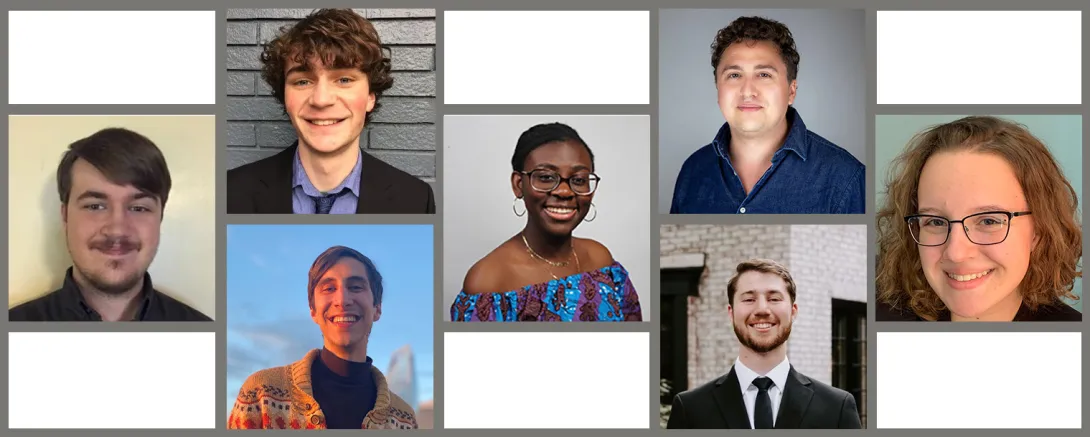
Photo collage of Jordan Hale, Jake Churchill, Henry Kantrow, Betina Arkhurst, Andrew Hill, Jacob Tjards, Emily Marshall
The Strategic Energy Institute (SEI) of Georgia Tech is excited to announce that Bettina Arkhurst is the 2023 recipient of the James G. Campbell Fellowship Award. Arkhurst’s commitment to academics, research, and community service has been recognized by the award committee. She is a Ph.D. candidate advised by Katherine Fu, professor in the George W. Woodruff School of Mechanical Engineering.
Arkhurst holds a bachelor’s degree in mechanical engineering from Massachusetts Institute of Technology and a master’s degree in mechanical engineering from Georgia Tech. Her research seeks to understand how concepts of energy justice can be applied to renewable energy technology design to better consider marginalized and vulnerable populations. She strives to create frameworks and tools for mechanical engineers to apply as they design energy technologies for all communities.
As an energy equity intern at the National Renewable Energy Laboratory, Arkhurst has worked with colleagues to better understand the role of researchers and engineers in the pursuit of a more just clean energy transition. She is also a leader in the Woodruff School’s graduate student mental health committee, which seeks to improve the culture around graduate student mental health and well-being. Additionally, Arkhurst is working with the Georgia Tech Center for Sustainable Communities Research and Education (SCoRE) to develop a course on community engagement and engineering that will launch in Spring 2024.
The Energy, Policy, and Innovation Center (EPICenter) and the Strategic Energy Institute are proud to announce the 2023 Spark Award recipients: Jake Churchill, Jordan R. Hale, Andrew G. Hill, Henry J. Kantrow, Emily Marshall, and Jacob W Tjards. The award honors outstanding leadership in advancing student engagement in energy research.
Churchill is a master’s student in mechanical engineering advised by Akanksha Menon, assistant professor in the Woodruff School. Working with Menon in the Water-Energy Research Lab, his research focuses on coupling reverse osmosis desalination with renewable energy and storage technologies to provide clean, sustainable, and affordable water in the face of growing global water stress. Churchill has led the Georgia Tech Energy Club’s Solar District Cup team for three years, guiding students interested in solar energy careers. He has also been involved with several SEI initiatives, including EPICenter’s high school summer camp, Energy Unplugged. He is currently facilitating a student-led study to quantify the benefits of cleaning photovoltaic panels using the rooftop array at the Carbon Neutral Energy Solutions Lab.
Hale is pursuing a Ph.D. in chemistry, specializing in theoretical and computational chemistry under Joshua Kretchmer, assistant professor in the School of Chemistry and Biochemistry. His current research focus is utilizing various quantum dynamics formalisms and unique computational techniques to identify the microscopic mechanisms of electron transport in perovskite solar cells. Hale has mentored high school students, teaching them the fundamentals of computational chemistry and various programming skills. Additionally, he has been actively engaged with undergraduate students from other universities both in and out of Georgia through the Summer Theoretical and Computational Chemistry workshop.
Hill is a Ph.D. candidate in the Soper Lab in the School of Chemistry and Biochemistry. His research is focused on the activation of strong chemical bonds using Earth-abundant metals for energy conversion and storage. He has taken an active leadership role on campus, in part through service as the president of the Georgia Tech Chemistry Graduate Student Forum.
Marshall is a second-year graduate student working for Alan Doolittle, professor in the School of Electrical and Computer Engineering. She uses specialized molecular beam epitaxy techniques to grow high-quality III-nitride materials for next-generation power, radio frequency, and optoelectronic devices. Her current research focuses on improving the fundamental understanding of the scandium catalytic effect to optimize the growth of scandium aluminum nitride, a material that shows great promise for applications in future power grids. In addition to her research, Marshall is committed to teaching, having volunteered for five semesters serving her fellow students as a peer instructor at the Hive Makerspace and currently training junior members of her lab to grow semiconductors via molecular beam epitaxy. After earning her master’s and Ph.D., she hopes to continue teaching, mentoring, and connecting others across the world in an effort to bring about a brighter future.
Kantrow is a Ph.D. candidate in the School of Chemical and Biomolecular Engineering, co-advised by Natalie Stingelin and Carlos Silva. His research seeks to understand the photo physics of semiconducting polymers operating in dynamic dielectric environments and to provide material design guidelines for solar fuel technologies. He is an active student leader in the Center for Soft Photo-Electrochemical Systems, where he also serves on the energy justice committee. He served as the secretary of the Association for Chemical Engineering Graduate Students (AChEGS) in 2022 and continues to mentor first-year graduate students in AChEGS and through the Pride Peers Program at Georgia Tech.
Tjards is a graduate research assistant at Georgia Tech’s Sustainable Thermal Systems Laboratory. He graduated with a bachelor’s degree in mechanical engineering from Georgia Tech in 2021 before beginning his Ph.D. program, where he is studying energy systems. Tjards’ research is focused on modeling new manufacturing processes of drywall and aluminum to reduce water consumption during production. Additionally, he is working on a new technique for water purification. While in school, he has been a teaching assistant and instructor for the undergraduate mechanical engineering course on energy systems analysis and design (ME 4315). In his free time, Tjards enjoys Formula 1 racing, Georgia Tech baseball games, and woodworking.
News Contact
Priya Devarajan | Research Communications Program Manager, SEI
Nov. 29, 2023
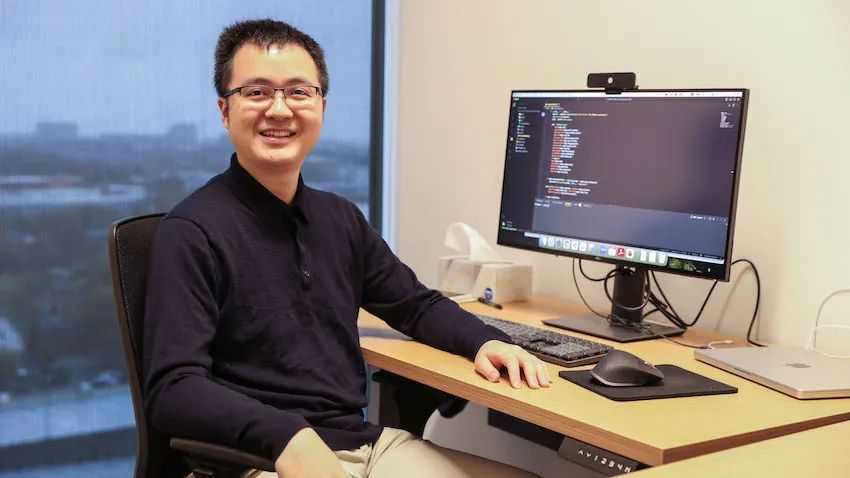
The National Institute of Health (NIH) has awarded Yunan Luo a grant for more than $1.8 million to use artificial intelligence (AI) to advance protein research.
New AI models produced through the grant will lead to new methods for the design and discovery of functional proteins. This could yield novel drugs and vaccines, personalized treatments against diseases, and other advances in biomedicine.
“This project provides a new paradigm to analyze proteins’ sequence-structure-function relationships using machine learning approaches,” said Luo, an assistant professor in Georgia Tech’s School of Computational Science and Engineering (CSE).
“We will develop new, ready-to-use computational models for domain scientists, like biologists and chemists. They can use our machine learning tools to guide scientific discovery in their research.”
Luo’s proposal improves on datasets spearheaded by AlphaFold and other recent breakthroughs. His AI algorithms would integrate these datasets and craft new models for practical application.
One of Luo’s goals is to develop machine learning methods that learn statistical representations from the data. This reveals relationships between proteins’ sequence, structure, and function. Scientists then could characterize how sequence and structure determine the function of a protein.
Next, Luo wants to make accurate and interpretable predictions about protein functions. His plan is to create biology-informed deep learning frameworks. These frameworks could make predictions about a protein’s function from knowledge of its sequence and structure. It can also account for variables like mutations.
In the end, Luo would have the data and tools to assist in the discovery of functional proteins. He will use these to build a computational platform of AI models, algorithms, and frameworks that ‘invent’ proteins. The platform figures the sequence and structure necessary to achieve a designed proteins desired functions and characteristics.
“My students play a very important part in this research because they are the driving force behind various aspects of this project at the intersection of computational science and protein biology,” Luo said.
“I think this project provides a unique opportunity to train our students in CSE to learn the real-world challenges facing scientific and engineering problems, and how to integrate computational methods to solve those problems.”
The $1.8 million grant is funded through the Maximizing Investigators’ Research Award (MIRA). The National Institute of General Medical Sciences (NIGMS) manages the MIRA program. NIGMS is one of 27 institutes and centers under NIH.
MIRA is oriented toward launching the research endeavors of young career faculty. The grant provides researchers with more stability and flexibility through five years of funding. This enhances scientific productivity and improves the chances for important breakthroughs.
Luo becomes the second School of CSE faculty to receive the MIRA grant. NIH awarded the grant to Xiuwei Zhang in 2021. Zhang is the J.Z. Liang Early-Career Assistant Professor in the School of CSE.
[Related: Award-winning Computer Models Propel Research in Cellular Differentiation]
“After NIH, of course, I first thanked my students because they laid the groundwork for what we seek to achieve in our grant proposal,” said Luo.
“I would like to thank my colleague, Xiuwei Zhang, for her mentorship in preparing the proposal. I also thank our school chair, Haesun Park, for her help and support while starting my career.”
News Contact
Bryant Wine, Communications Officer
bryant.wine@cc.gatech.edu
Nov. 27, 2023
The Renewable Bioproducts Institute (RBI) at Georgia Tech benefits from a substantial endowment that is invested to advance the evolving science and technology needs of the bioproducts industry and emerging bioeconomy through graduate research. The endowment over the years has supported more than 1,500 engineers and scientists and a leading body of scientific research. RBI has released the Request For Proposals (RFP) for the annual year 2024-25 fellowships. Proposals are due on Feb. 1, 2024. The RFP document describing the application process and several important changes for this year can be found at 2024-25 RFP Proposals.
The principal mission of RBI is to incubate and develop interdisciplinary teams of researchers that can establish thought leadership through new bioproduct research directions. Our focus is on pre-competitive, use-inspired research with a technical, economic, or policy focus. All supported work needs to address an aspect of bioproducts and the developing bioeconomy. The RBI Fellowship supports this mission by promoting two objectives:
(1) Helping teams of faculty to establish new concepts, publish early results, and develop competitive federal, industry, or foundation proposals in the future.
(2) Training a diverse group of graduate-level professionals who can support the evolving bioproducts R&D workforce.
***NEW PROGRAM CHANGES***
- Along with Graduate Research Assistant (GRA) stipend and tuition support, RBI will provide $1,000 of materials and supplies funding or a $1,000 credit toward the use of RBI’s analytical facilities.
- The fellowship was formerly called the PSE (Paper Science and Engineering Fellowship). It has been renamed as the RBI Fellowship.
- The fellowship minor requirement has been changed from 12 hours to nine hours. The minor will consist of two core courses and one elective, described here. For students outside of the College of Sciences or College of Engineering, an alternative set of courses can be considered.
- Awards can support GRAs from any school within Georgia Tech and can be advised by teams consisting of faculty from any Georgia Tech school, although the relevance of the disciplines included must be clear.
News Contact
Priya Devarajan || RBI Communications Program Manager
Nov. 09, 2023
Researchers have documented for the first time the stresses that build up around solid-state battery electrolytes, helping set the stage for the development of improved and more efficient batteries. Scientists have long thought that stresses can build up around dendrites, thin metallic projects that can ultimately short out solid-electrolyte batteries, but they haven’t been precisely measured.
A team of scientists at Georgia Tech, Brown University, Nanyang Technological University, and MIT have measured the mechanical stresses that develop in dendrites – solving a long-standing hypothesis that high stresses can be developed around dendrites. Dendrites pierce through solid electrolytes, eventually crossing from one electrode to the other and shorting out the solid-state battery cell.
Georgia Tech Professor Christos Athanasiou and the multidisciplinary team used photoelasticity to measure the stress on batteries caused during the battery cycle. In their paper, Operando Measurements of Dendrite-Induced Stresses in Ceramic Electrolytes using Photoelasticity, they managed to overcome challenges associated with measurements of easy to break, very tiny solid electrolyte samples. The samples thickness was about 10 times smaller than the average diameter of human hair.
The team used an old - and almost forgotten - principle of photoelasticity to directly measure the stress fields during cell operation. Photoelasticity’s contactless nature also allows for the stresses to be directly measured and visualized at the dendrite tips. By shining light through the material under a special photoelastic microscope, it revealed intricate stress fields. In this case, the stress revealed from passing light through the electrolyte appeared at the tip of the propagation dendrite.
This advanced experimental setup has set the stage for profound exploration of stresses developed during battery operation across various electrolytes and conditions, revealing critical data on loading conditions and the dynamics of lithium metal penetration events.
This is just one example where creative, yet simple experimentation, can lead to fundamental discoveries. The Daedalus Lab at Georgia Tech, inspired by the ingenuity of its namesake, the mythical Greek inventor, is dedicated to decarbonizing the future through the development and promotion of sustainable materials and structures, utilizing innovative experimental approaches and artificial intelligence.
News Contact
Kelsey Gulledge
Nov. 09, 2023
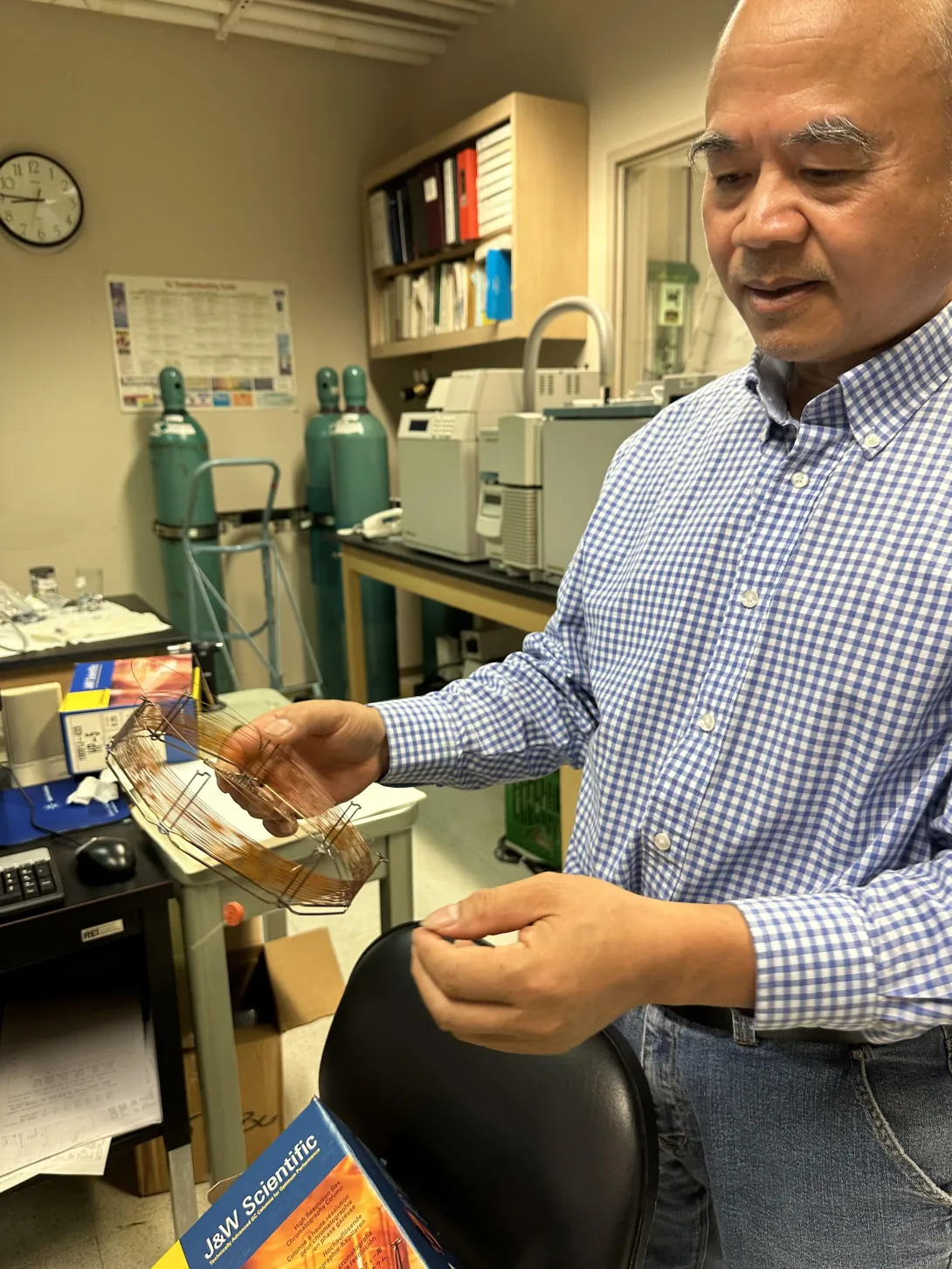
Rallming Yang, Senior Research Scientist and head of the Chemical Analysis Lab explains how FTIR Spectrometer works at the RBI Chemical Analysis Lab
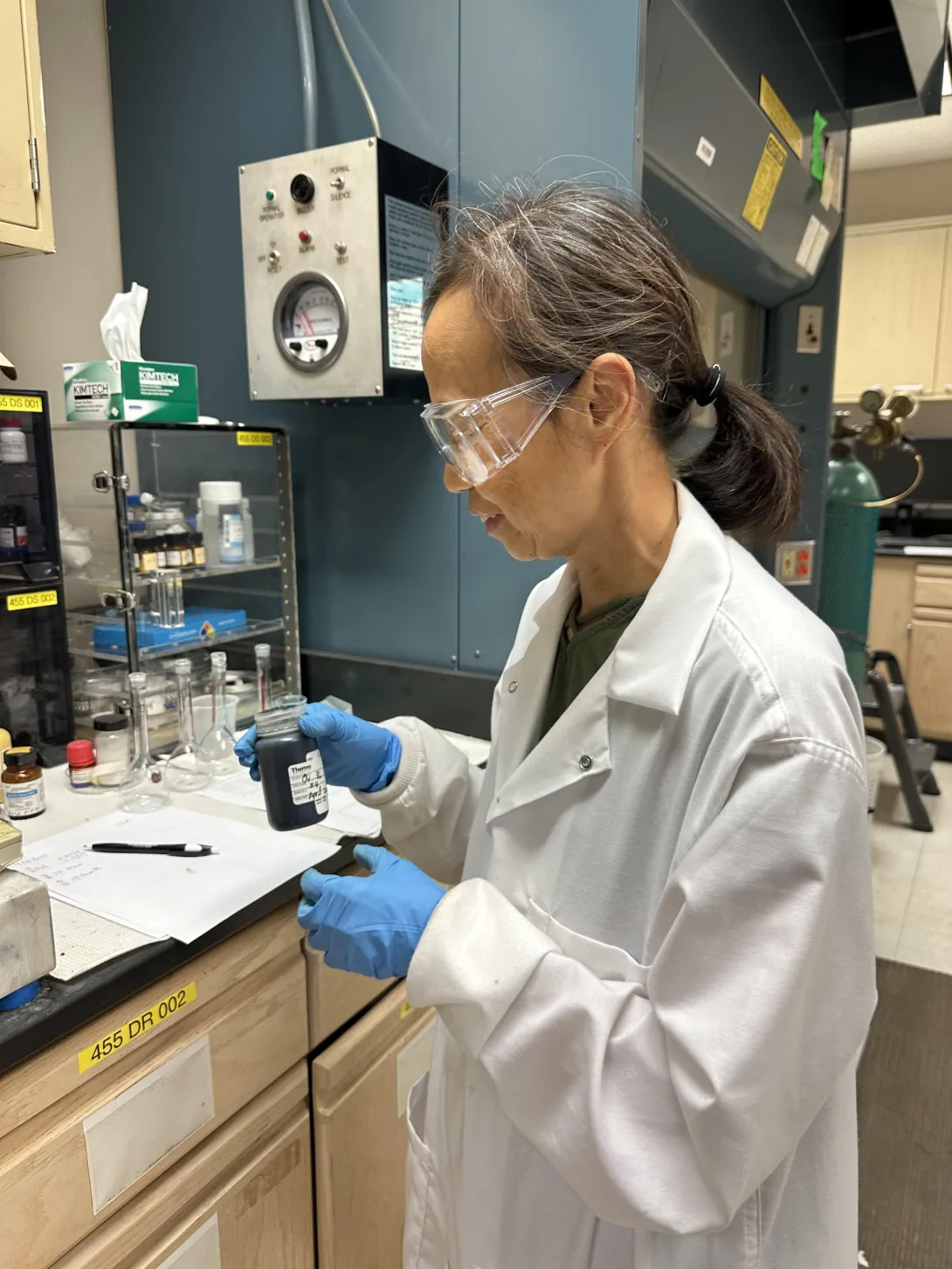
Xiaoyan Zeng, Research Scientist at RBI preparing black liquor for identifying anions
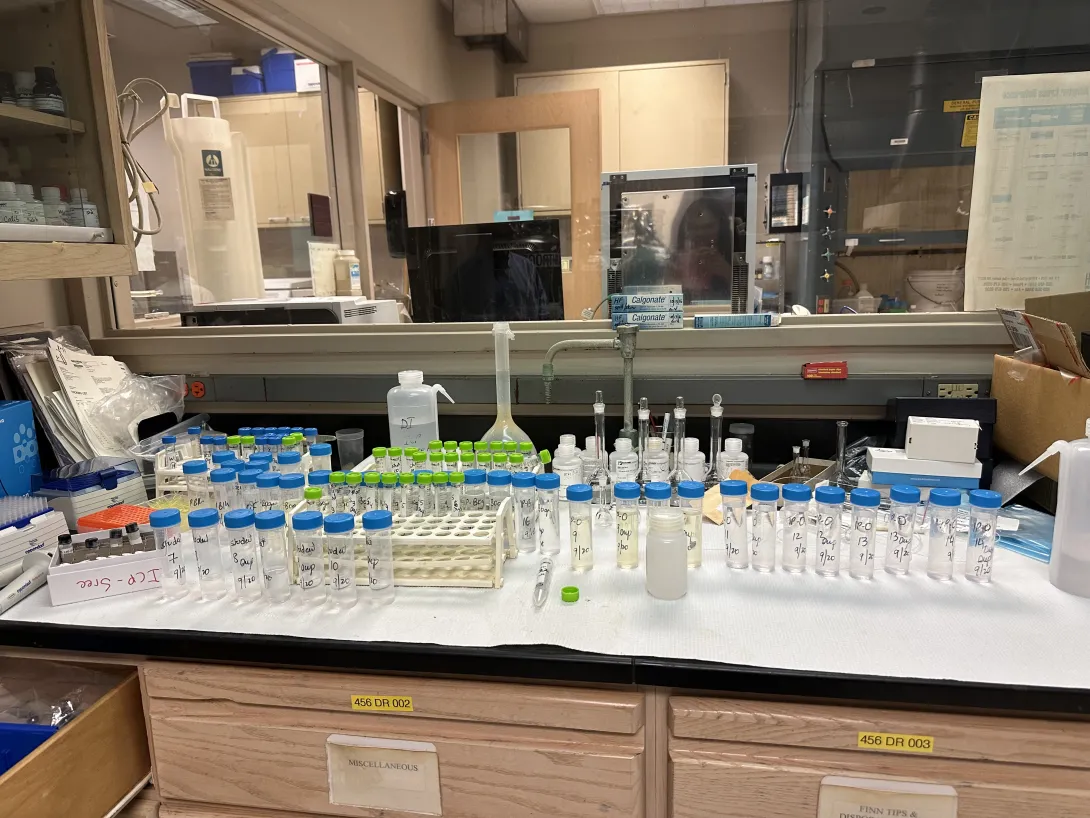
Diluted black liquor ready for testing
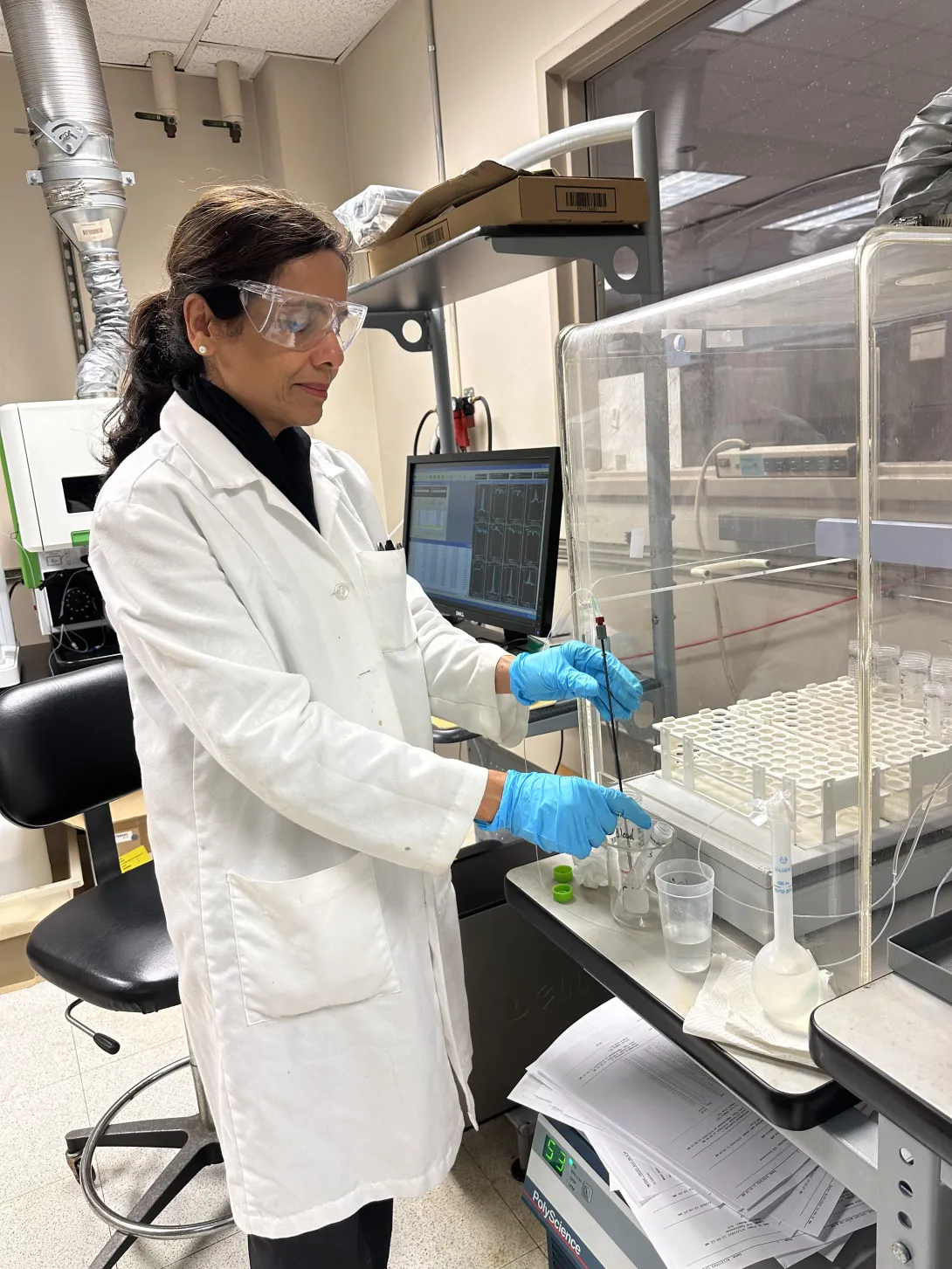
Tabassum Shah, Research Coordinator at RBI, testing black liquor using ICP Emission Spectrometer
Providing research testing services to both internal and external stakeholders is an integral function of the Renewable Bioproducts Institute (RBI). These services include chemical analysis; corrosion; paper, board and box testing; pulp analysis; and pulp recovery analysis. Established over 25 years ago, RBI’s testing services are well-known in the industry for their quality and customer service. RBI is one of the ten interdisciplinary research institutes at Georgia Tech that champions innovation in converting biomass into value-added products, developing advanced chemical and bio-based refining technologies, and advancing excellence in manufacturing processes.
The RBI research testing services is a team of professional scientists and engineers who work together to provide information and offer solutions required by a manufacturers and users of biomass products, as well as Georgia Tech faculty and students engaged in research on campus. The multidisciplinary capabilities of the team make them uniquely qualified to address customers' technical needs in the areas of process and product development, and quality control. Where appropriate, the team involves RBI faculty and other staff experts to arrive at the best possible solution for their customers and users.
In this article, we will focus on a day’s work with the chemical analysis team.Headed by Rallming Yang, senior research scientist in RBI, the team is equipped to follow the Technical Association of the Paper and Pulp industry (TAPPI) standard of testing, which only a small number of labs in the country can do, and has also developed some of its own internal protocols. Yang leads two specific characterization programs within RBI: (1) the pulping and bleaching analysis, paper recycling, and recovery lab, and (2) the chemical analysis lab.
The chemical analysis team is busy year-round with research projects and testing services. In addition, during the Spring semester, the team also provides support to a paper science laboratory course for undergraduate and graduate students. In the recent times, chemical analysis of black liquor from pulp mills has kept the team busy with more than 30 projects completed by the team over three months for various industry customers. Currently, black liquor analysis continues to account for over 50% of the workload of the lab.
Black liquor (BL) is a byproduct of a wood pulping and is released when cellulose fibers are separated from wood chips. BL contains lignin, which is used as a biofuel within the mill, and several other chemicals that are recovered and reused. In most pulp mills, nearly 50-70% of BL is converted into a convenient source of fuel or energy. Due to the important role played by black liquor in a paper mill, it needs to be tested regularly to ensure consistency in composition. The RBI chemical analysis lab gets BL samples from a pulp mill, who contact the lab by email to get their testing request into the queue. The process involved in the testing is very intense and has multiple steps that need to be carefully administered.
In the first step, inorganic elements in BL are identified by digesting it in a precise mixture of acids and filtering the mixture. The filtrate is introduced into an Inductively Coupled Plasma (ICP) Emission Spectrometer that can identify more than 70 different inorganic elements and compounds like sulfur, potassium, sodium, iron, calcium, etc. The next step involves identifying the proportion of anions like sulfate, chloride, thiosulfate. In this step, BL is diluted to a specific level and analyzed using a method called Capillary Ion Electrophoresis (CIE).
The next step involves analyzing BL for organic substances using two methods – gas chromatography mass spectrometry (GC/MS) and Fourier Transform Infrared Spectrometry (FTIR). For organic substances with a lower molecular weight of less than 600 Daltons (Da), GC/MS is employed where the gas chromatography separates the chemical mixture, and the mass spectrometry identifies each of the components.
The final step is to identify organic substances and polymers with higher molecular weights. For example, lignin is one of the main polymers in BL with a molecular weight higher than 600 Da. FTIR is used for testing during this step. Based on vibrations within each molecule, an FTIR spectrum allows identification of molecular groups within lignin. The equipment then uses a computer to identify the substances by comparing the sample spectrum with a built-in library. The RBI team provides detailed lab reports that is used by the pulp mill to adjust their operating parameters for trouble-free operations.
In addition to the chemical analysis of byproducts like black liquor and other chemical compounds, Rallming Yang’s team also conducts studies on pulping and bleaching, repulping, and fiber characterizations.
News Contact
Priya Devarajan || Research Communications Program Manager, RBI
Oct. 30, 2023
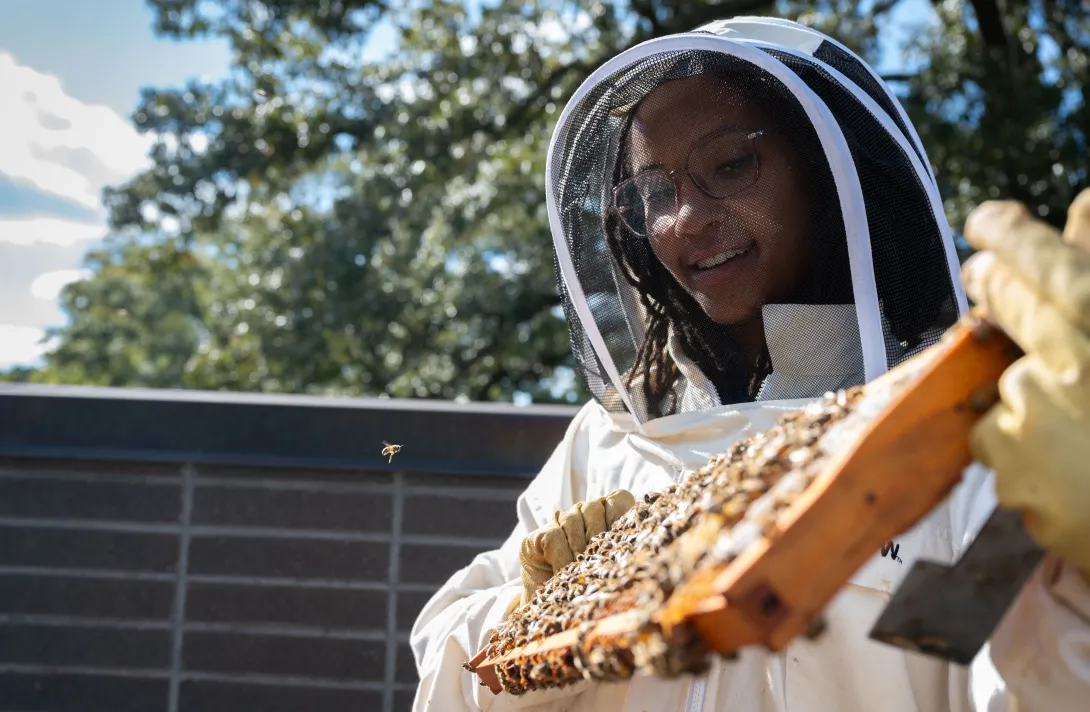
The Urban Honey Bee Project’s new beekeeper in residence is creating art and educating the public with her practice.
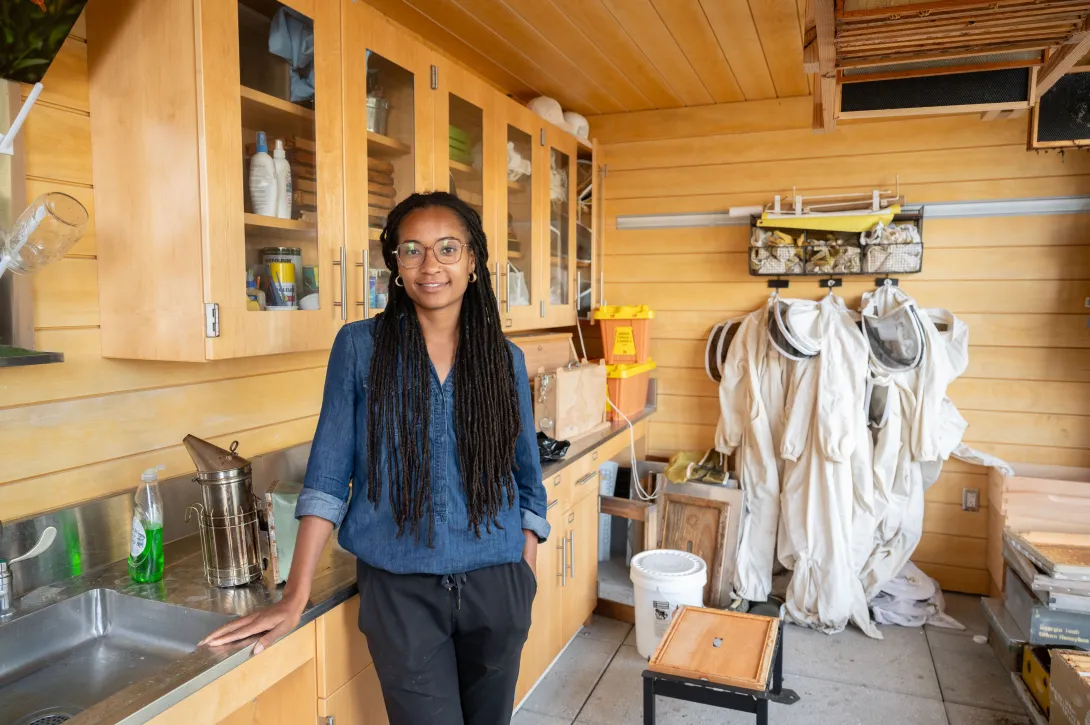
Janelle Dunlap conducts a hive inspection at The Kendeda Building for Innovative Sustainable Design. Photo by Allison Carter.
Hundreds of thousands of honeybees make their home atop The Kendeda Building for Innovative Sustainable Design, and it's up to Janelle Dunlap to make sure the hives thrive.
Dunlap was hired earlier this year as the Urban Honey Bee Project's (UHBP) first-ever beekeeper in residence. Throughout her residency, she'll conduct research into the pollinator's place in our ecosystem and how beekeeping may offer relief to veterans dealing with post-traumatic stress disorder (PTSD), while connecting with the bees through art.
Dunlap had been gardening for over a decade, but in 2016, when she got the urge to find new ways to engage with nature, she recalled a powerful piece of imagery that shaped her childhood — Wu-Tang Clan's music video for “Triumph” and its depiction of the group's members as a powerful swarm of Africanized killer bees.
"The political messaging and tying Africanized killer bees in with the stereotypes and the tropes of African Americans in the media, and the way that that was so poetically tied in, visually stuck with me,” she said. “It was the first time I recognized a political message being articulated through art. For that reason, it stuck with me that bees were a form of strong symbolism tied to resilience."
Living in Charlotte, North Carolina, Dunlap became a certified beekeeper under the Mecklenburg County Beekeepers Association in 2017. She continued practicing as she moved around the country, with stops in Chicago and Denver, eventually landing in Atlanta in 2021. Looking for a way to connect to the local beekeeping community, she attended an April presentation by UHBP Director Jennifer Leavey, who offered Dunlap a chance to get involved at Georgia Tech.
She now handles the inspection of the hives on The Kendeda Building roof, where she monitors for pests and ensures the bees have proper nutrition to sustain their population through the seasons. The UHBP began in 2012 with the goal of educating the Tech community on the importance of these pollinators within the Atlanta ecosystem and beyond — a charge that Dunlap carries on.
Over the next year, she will continue working on her sound art project that examines the frequency at which bees “buzz” and how it, along with the responsibilities of beekeeping, is being used by VA hospitals and programs to ease the effects of PTSD. While the science behind the connection is still being explored, beekeeping was recommended more than a century ago — to soldiers returning home from World War I — according to a CNBC profile of Bees4Vets, a nonprofit based in Nevada.
From the Hive to the Canvas
Whether it was baking sourdough bread or learning a new language, many people, including Dunlap, took the early days of the Covid-19 pandemic to pick up a new hobby. She began a master's program at the School of the Art Institute of Chicago with the goal of using beeswax in encaustic painting, which uses hot wax mixed with pigments. The use of natural materials collected through her beekeeping practice connects Dunlap to her work.
“It's a way of tapping into another level of consciousness. It's a way of articulating the noncommunicable relationship between me and the bees. When there's a language gap between people, we try to fill it in with translation, but without a direct way to translate the language or the sensation that I feel from the bees, this allows me to document my practice in an abstract form,” she said.
By layering the wax and applying heat throughout the process, Dunlap watches the pieces take shape, often with the unpredictability of an active hive, as she says the art “can create itself.” She collects the wax in small amounts, knowing that she can only produce her art if the bees are healthy.
"It's an eco-conscious practice, making sure I don't use more than I need," she explained. “I love the landscape it creates, and it's all about me creating a direct relationship with my medium and knowing that I earned it by developing a relationship with the bees."
As Dunlap continues her year-long residency with the UHBP, she intends to help educate the community, both on campus and around the Atlanta area, in the hopes that more prospective beekeepers will explore their curiosity to unlock the full potential of the practice.
"It's been a practice that keeps unveiling itself to me," she said. "As you get more engaged, you learn there is so much more to it than just the day-to-day hive inspections. There is a lot of beauty to it as well."
Students at Tech have several ways to get involved with research and beekeeping, including the Living Building Science VIP team, the Beekeeping Club, and various classes and workshops hosted by the UHBP.
News Contact
Steven Gagliano - Institute Communications
Oct. 20, 2023

In keeping with a strong strategic focus on AI for the 2023-2024 Academic Year, the Institute for Data Engineering and Science (IDEaS) has announced the winners of its 2023 Seed Grants for Thematic Events in AI and Cyberinfrastructure Resource Grants to support research in AI requiring secure, high-performance computing capabilities. Thematic event awards recipients will receive $8K to support their proposed workshop or series and Cyberinfrastructure winners will receive research support consisting of 600,000 CPU hours on the AMD Genoa Server as well as 36,000 hours of NVIDIA DGX H-100 GPU server usage and 172 TB of secure storage.
Congratulations to the award winners listed below!
Thematic Events in AI Awards
Proposed Workshop: “Foundation of scientific AI (Artificial Intelligence) for Optimization of Complex Systems”
Primary PI: Peng Chen, Assistant Professor, School of Computational Science and Engineering
Proposed Series: “Guest Lecture Seminar Series on Generative Art and Music”
Primary PI: Gil Weinberg, Professor, School of Music
Cyber-Infrastructure Resource Awards
Title: Human-in-the-Loop Musical Audio Source Separation
Topics: Music Informatics, Machine Learning
Primary PI: Alexander Lerch, Associate Professor, School of Music
Co-PIs: Karn Watcharasupat, Music Informatics Group | Yiwei Ding, Music Informatics Group | Pavan Seshadri, Music Informatics Group
Title: Towards A Multi-Species, Multi-Region Foundation Model for Neuroscience
Topics: Data-Centric AI, Neuroscience
Primary PI: Eva Dyer, Assistant Professor, Biomedical Engineering
Title: Multi-point Optimization for Building Sustainable Deep Learning Infrastructure
Topics: Energy Efficient Computing, Deep Learning, AI Systems OPtimization
Primary PI: Divya Mahajan, Assistant Professor, School of Electrical and Computer Engineering, School of Computer Science
Title: Neutrons for Precision Tests of the Standard Model
Topics: Nuclear/Particle Physics, Computational Physics
Primary PI: Aaron Jezghani - OIT-PACE
Title: Continual Pretraining for Egocentric Video
Primary PI: : Zsolt Kira, Assistant Professor, School of Interactive Computing
Co-PI: Shaunak Halbe, Ph.D. Student, Machine Learning
Title: Training More Trustworthy LLMs for Scientific Discovery via Debating and Tool Use
Topics: Trustworthy AI, Large-Language Models, Multi-Agent Systems, AI Optimization
Primary PIs: Chao Zhang, School of Computational Science and Engineering & Bo Dai, College of Computing
Title: Scaling up Foundation AI-based Protein Function Prediction with IDEaS Cyberinfrastructure
Topics: AI, Biology
Primary PI: Yunan Luo, Assistant Professor, School of Computational Science and Engineering
- Christa M. Ernst
News Contact
Christa M. Ernst - Research Communications Program Manager
Robotics | Data Engineering | Neuroengineering
Oct. 20, 2023

The Institute for Data Engineering and Science, in conjunction with several Interdisciplinary Research Institutes (IRIs) at Georgia Tech, have awarded seven teams of researchers from across the Institute a total of $105,000 in seed funding geared to better position Georgia Tech to perform world-class interdisciplinary research in data science and artificial intelligence development and deployment.
The goals of the funded proposals include identifying prominent emerging research directions on the topic of AI, shaping IDEaS future strategy in the initiative area, building an inclusive and active community of Georgia Tech researchers in the field that potentially include external collaborators, and identifying and preparing groundwork for competing in large-scale grant opportunities in AI and its use in other research fields.
Below are the 2023 recipients and the co-sponsoring IRIs:
Proposal Title: "AI for Chemical and Materials Discovery" + “AI in Microscopy Thrust”
PI: Victor Fung, CSE | Vida Jamali, ChBE| Pan Li, ECE | Amirali Aghazadeh Mohandesi, ECE
Award: $20k (co-sponsored by IMat)
Overview: The goal of this initiative is to bring together expertise in machine learning/AI, high-throughput computing, computational chemistry, and experimental materials synthesis and characterization to accelerate material discovery. Computational chemistry and materials simulations are critical for developing new materials and understanding their behavior and performance, as well as aiding in experimental synthesis and characterization. Machine learning and AI play a pivotal role in accelerating material discovery through data-driven surrogate models, as well as high-throughput and automated synthesis and characterization.
Proposal Title: " AI + Quantum Materials”
PI: Zhigang JIang, Physics | Martin Mourigal, Physics
Award: $20k (Co-Sponsored by IMat)
Overview: Zhigang Jiang is currently leading an initiative within IMAT entitled “Quantum responses of topological and magnetic matter” to nurture multi-PI projects. By crosscutting the IMAT initiative with this IDEAS call, we propose to support and feature the applications of AI on predictive and inverse problems in quantum materials. Understanding the limit and capabilities of AI methodologies is a huge barrier of entry for Physics students, because researchers in that field already need heavy training in quantum mechanics, low-temperature physics and chemical synthesis. Our most pressing need is for our AI inclined quantum materials students to find a broader community to engage with and learn. This is the primary problem we aim to solve with this initiative.
PI: Jeffrey Skolnick, Bio Sci | Chao Zhang, CSE
Proposal Title: Harnessing Large Language Models for Targeted and Effective Small Molecule 4 Library Design in Challenging Disease Treatment
Award: $15k (co-sponsored by IBB)
Overview: Our objective is to use large language models (LLMs) in conjunction with AI algorithms to identify effective driver proteins, develop screening algorithms that target appropriate binding sites while avoiding deleterious ones, and consider bioavailability and drug resistance factors. LLMs can rapidly analyze vast amounts of information from literature and bioinformatics tools, generating hypotheses and suggesting molecular modifications. By bridging multiple disciplines such as biology, chemistry, and pharmacology, LLMs can provide valuable insights from diverse sources, assisting researchers in making informed decisions. Our aim is to establish a first-in-class, LLM driven research initiative at Georgia Tech that focuses on designing highly effective small molecule libraries to treat challenging diseases. This initiative will go beyond existing AI approaches to molecule generation, which often only consider simple properties like hydrogen bonding or rely on a limited set of proteins to train the LLM and therefore lack generalizability. As a result, this initiative is expected to consistently produce safe and effective disease-specific molecules.
PI: Yiyi He, School of City & Regional Plan | Jun Rentschler, World Bank
Proposal Title: “AI for Climate Resilient Energy Systems”
Award: $15k (co-sponsored by SEI)
Overview: We are committed to building a team of interdisciplinary & transdisciplinary researchers and practitioners with a shared goal: developing a new framework which model future climatic variations and the interconnected and interdependent energy infrastructure network as complex systems. To achieve this, we will harness the power of cutting-edge climate model outputs, sourced from the Coupled Model Intercomparison Project (CMIP), and integrate approaches from Machine Learning and Deep Learning models. This strategic amalgamation of data and techniques will enable us to gain profound insights into the intricate web of future climate-change-induced extreme weather conditions and their immediate and long-term ramifications on energy infrastructure networks. The seed grant from IDEaS stands as the crucial catalyst for kick-starting this ambitious endeavor. It will empower us to form a collaborative and inclusive community of GT researchers hailing from various domains, including City and Regional Planning, Earth and Atmospheric Science, Computer Science and Electrical Engineering, Civil and Environmental Engineering etc. By drawing upon the wealth of expertise and perspectives from these diverse fields, we aim to foster an environment where innovative ideas and solutions can flourish. In addition to our internal team, we also have plans to collaborate with external partners, including the World Bank, the Stanford Doerr School of Sustainability, and the Berkeley AI Research Initiative, who share our vision of addressing the complex challenges at the intersection of climate and energy infrastructure.
PI: Jian Luo, Civil & Environmental Eng | Yi Deng, EAS
Proposal Title: “Physics-informed Deep Learning for Real-time Forecasting of Urban Flooding”
Award: $15k (co-sponsored by BBISS)
Overview: Our research team envisions a significant trend in the exploration of AI applications for urban flooding hazard forecasting. Georgia Tech possesses a wealth of interdisciplinary expertise, positioning us to make a pioneering contribution to this burgeoning field. We aim to harness the combined strengths of Georgia Tech's experts in civil and environmental engineering, atmospheric and climate science, and data science to chart new territory in this emerging trend. Furthermore, we envision the potential extension of our research efforts towards the development of a real-time hazard forecasting application. This application would incorporate adaptation and mitigation strategies in collaboration with local government agencies, emergency management departments, and researchers in computer engineering and social science studies. Such a holistic approach would address the multifaceted challenges posed by urban flooding. To the best of our knowledge, Georgia Tech currently lacks a dedicated team focused on the fusion of AI and climate/flood research, making this initiative even more pioneering and impactful.
Proposal Title: “AI for Recycling and Circular Economy”
PI: Valerie Thomas, ISyE and PubPoly | Steven Balakirsky, GTRI
Award: $15k (co-sponsored by BBISS)
Overview: Most asset management and recycling use technology that has not changed for decades. The use of bar codes and RFID has provided some benefits, such as for retail returns management. Automated sorting of recyclables using magnets, eddy currents, and laser plastics identification has improved municipal recycling. Yet the overall field has been challenged by not-quite-easy-enough identification of products in use or at end of life. AI approaches, including computer vision, data fusion, and machine learning provide the additional capability to make asset management and product recycling easy enough to be nearly autonomous. Georgia Tech is well suited to lead in the development of this application. With its strength in machine learning, robotics, sustainable business, supply chains and logistics, and technology commercialization, Georgia Tech has the multi-disciplinary capability to make this concept a reality, in research and in commercial application.
Proposal Title: “Data-Driven Platform for Transforming Subjective Assessment into Objective Processes for Artistic Human Performance and Wellness”
PI: Milka Trajkova, Research Scientist/School of Literature, Media, Communication | Brian Magerko, School of Literature, Media, Communication
Award: $15k (co-sponsored by IPaT)
Overview: Artistic human movement at large, stands at the precipice of a data-driven renaissance. By leveraging novel tools, we can usher in a transparent, data-driven, and accessible training environment. The potential ramifications extend beyond dance. As sports analytics have reshaped our understanding of athletic prowess, a similar approach to dance could redefine our comprehension of human movement, with implications spanning healthcare, construction, rehabilitation, and active aging. Georgia Tech, with its prowess in AI, HCI, and biomechanics is primed to lead this exploration. To actualize this vision, we propose the following research questions with ballet as a prime example of one of the most complex types of artistic movements: 1) What kinds of data - real-time kinematic, kinetic, biomechanical, etc. captured through accessible off-the-shelf technologies, are essential for effective AI assessment in ballet education for young adults?; 2) How can we design and develop an end-to-end ML architecture that assesses artistic and technical performance?; 3) What feedback elements (combination of timing, communication mode, feedback nature, polarity, visualization) are most effective for AI- based dance assessment?; and 4) How does AI-assisted feedback enhance physical wellness, artistic performance, and the learning process in young athletes compared to traditional methods?
- Christa M. Ernst
News Contact
Christa M. Ernst | Research Communications Program Manager
Robotics | Data Engineering | Neuroengineering
christa.ernst@research.gatech.edu
Oct. 19, 2023

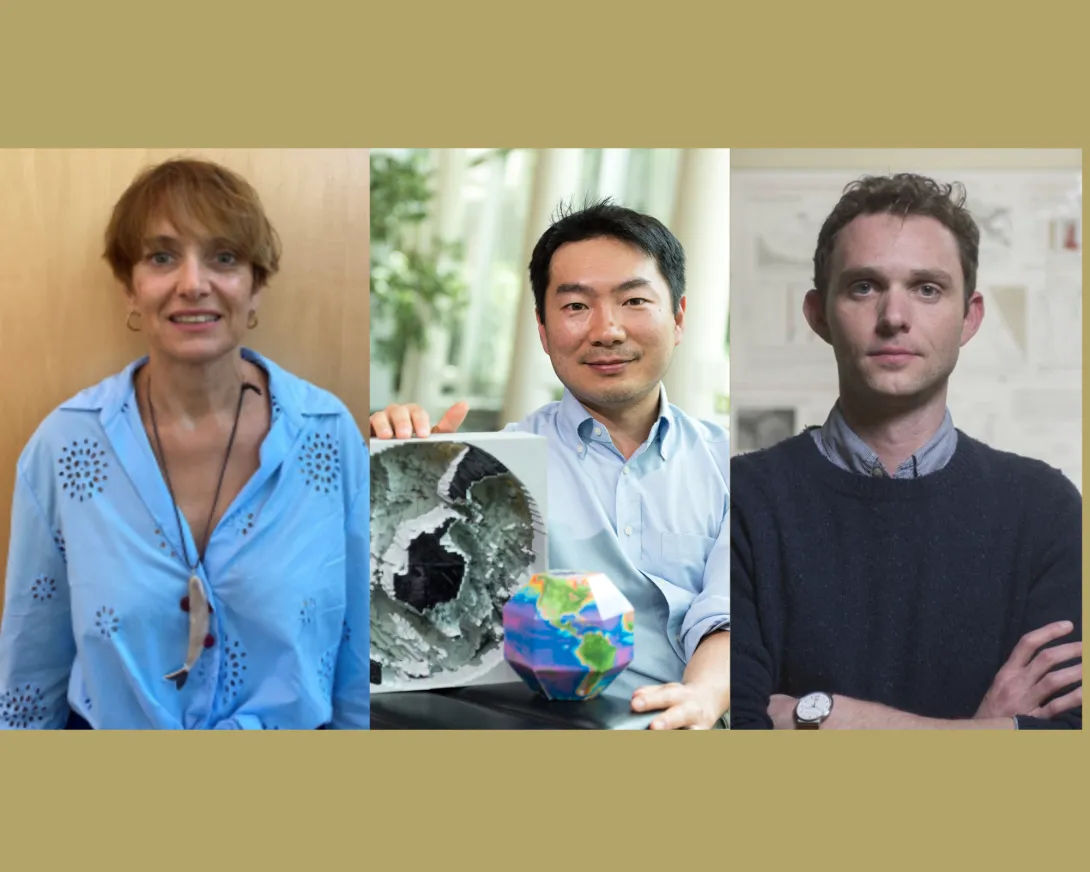
Three Georgia Tech School of Earth and Atmospheric Sciences researchers — Professor and Associate Chair Annalisa Bracco, Professor Taka Ito, and Georgia Power Chair and Associate Professor Chris Reinhard — will join colleagues from Princeton, Texas A&M, and Yale University for an $8 million Department of Energy (DOE) grant that will build an “end-to-end framework” for studying the impact of carbon dioxide removal efforts for land, rivers, and seas.
The proposal is one of 29 DOE Energy Earthshot Initiatives projects recently granted funding, and among several led by and involving Georgia Tech investigators across the Sciences and Engineering.
Overall, DOE is investing $264 million to develop solutions for the scientific challenges underlying the Energy Earthshot goals. The 29 projects also include establishing 11 Energy Earthshot Research Centers led by DOE National Laboratories.
The Energy Earthshots connect the Department of Energy's basic science and energy technology offices to accelerate breakthroughs towards more abundant, affordable, and reliable clean energy solutions — seeking to revolutionize many sectors across the U.S., and relying on fundamental science and innovative technology to be successful.
Carbon Dioxide Removal
The School of Earth and Atmospheric Sciences project, “Carbon Dioxide Removal and High-Performance Computing: Planetary Boundaries of Earth Shots,” is part of the agency’s Science Foundations for the Energy Earthshots program. Its goal is to create a publicly-accessible computer modeling system that will track progress in two key carbon dioxide removal (CDR) processes: enhanced earth weathering, and global ocean alkalinization.
In enhanced earth weathering, carbon dioxide is converted into bicarbonate by spreading minerals like basalt on land, which traps rainwater containing CO2. That gets washed out by rivers into oceans, where it is trapped on the ocean floor. If used at scale, these nature-based climate solutions could remove atmospheric carbon dioxide and alleviate ocean acidification.
The research team notes that there is currently “no end-to-end framework to assess the impacts of enhanced weathering or ocean alkalinity enhancement — which are likely to be pursued at the same time.”
“The proposal is for a three-year effort, but our hope is that the foundation we lay down in that time will represent a major step forward in our ability to track carbon from land to sea,” says Reinhard, the Georgia Power Chair who is a co-investigator on the grant.
“Like many folks interested in better understanding how climate interventions might impact the Earth system across scales, we are in some ways building the plane in midair,” he adds. “We need to develop and validate the individual pieces of the system — soils, rivers, the coastal ocean — but also wire them up and prove from observations on the ground how a fully integrated model works.”
That will involve the use of several existing computer models, along with Georgia Tech’s PACE supercomputers, Professor Ito explains. “We will use these models as a tool to better understand how the added alkalinity, carbon and weathering byproducts from the soils and rivers will eventually affect the cycling of nutrients, alkalinity, carbon and associated ecological processes in the ocean,” Ito adds. “After the model passes the quality check and we have confidence in our output, we can start to ask many questions about assessment of different carbon sequestration approaches or downstream impacts on ecosystem processes.”
Professor Bracco, whose recent research has focused on rising ocean heat levels, says CDR is needed just to keep ocean systems from warming about 2 degrees centigrade (Celsius).
“Ninety percent of the excess heat caused by greenhouse gas emissions is in the oceans,” Bracco shares, “and even if we stop emitting all together tomorrow, that change we imprinted will continue to impact the climate system for many hundreds of years to come. So in terms of ocean heat, CDRs will help in not making the problem worse, but we will not see an immediate cooling effect on ocean temperatures. Stabilizing them, however, would be very important.”
Bracco and co-investigators will study the soil-river-ocean enhanced weathering pipeline “because it’s definitely cheaper and closer to scale-up.” Reverse weathering can also happen on the ocean floor, with new clays chemically formed from ocean and marine sediments, and CO2 is included in that process. “The cost, however, is higher at the moment. Anything that has to be done in the ocean requires ships and oil to begin,” she adds.
Reinhard hopes any tools developed for the DOE project would be used by farmers and other land managers to make informed decisions on how and when to manage their soil, while giving them data on the downstream impacts of those practices.
“One of our key goals will also be to combine our data from our model pipeline with historical observational data from the Mississippi watershed and the Gulf of Mexico,” Reinhard says. “This will give us some powerful new insights into the impacts large-scale agriculture in the U.S. has had over the last half-century, and will hopefully allow us to accurately predict how business-as-usual practices and modified approaches will play out across scales.”
News Contact
Writer: Renay San Miguel
Communications Officer II/Science Writer
College of Sciences
404-894-5209
Editor: Jess Hunt-Ralston
Oct. 18, 2023
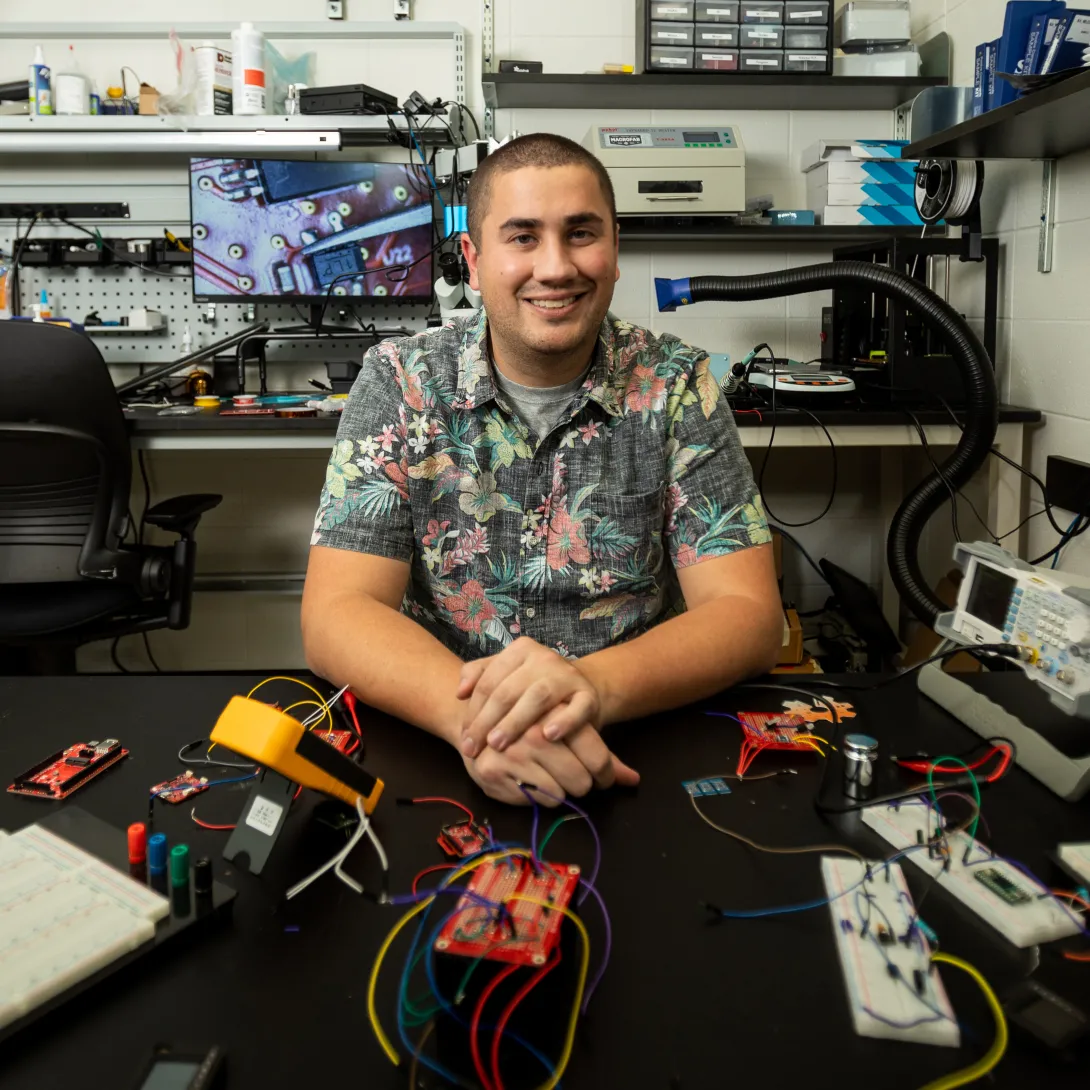
Josiah Hester sits at a desk in an electronics lab at Georgia Tech with an array of prototype projects and test equipment in front of him.
Edge devices, such as wearables, cameras, smartphones, and smart home devices, have become the foundation of our daily interactions with technology. But the exponential growth in the number of these devices comes at a significant environmental cost, currently accounting for more than a third of the 4% of global carbon emissions attributed to information and communication technologies. This ecological impact is projected to worsen as the number of edge devices surges into trillions over the next few decades.
Josiah Hester, associate professor in the College of Computing, along with researchers from Cornell and Harvard Universities, has received a $2 million grant from the newly established Design for Environmental Sustainability in Computing program at the National Science Foundation. The investigators aim to study and mitigate the environmental impact of edge computing devices. Their winning project will make carbon and sustainability a first-order design parameter for future edge computing devices that range from tiny, energy-harvesting Internet of Things devices — often found in manufacturing lines, cars, agriculture, and cities — to higher performance consumer electronics like tablets and smartphones.
As part of the research, investigators will capture a first-of-its-kind dataset on actual emissions and resource usage of complex fabrication processes, build and validate tools for carbon-aware design, and establish an Electronic Sustainability Record for edge devices, similar to nutrition labels for food, or a digital health record, that allows consumers and manufacturers to understand the carbon costs of computing devices and use that in decision-making. The grant proposal was catalyzed through the Brook Byers Institute for Sustainable Systems Initiative Leads program, with additional funds from the Institute for Data Engineering and Science.
“Right now, hardware designers, programmers, and consumers have only a vague idea of the actual carbon cost of the phone, wearable, or smart device they are working with. With rising e-waste and technology’s increasing contributions to climate change, we have to figure out how to do better. This project will lay the foundations for edge devices that can last for decades, or at least have a lifetime commensurate with the carbon cost, potentially reducing e-waste, emissions, and environmental footprint,” said Hester. “Our design tools, new datasets, and carbon models will consider factors like energy, e-waste, and water usage from the manufacturing of computational devices, as well as operational carbon footprint from factors like machine learning and software lifecycles.”
With the grant money, Hester’s team will develop an end-to-end framework that prioritizes environmental impact, while considering user experience, performance, and efficiency when designing edge devices. The framework, which they are calling Delphi, will enable sustainable technological growth by laying out a path for the design of environmentally conscious edge devices with substantially longer lifecycles.
“Eventually, this research could lead to a kind of ‘nutrition label’ for computing devices, like your phone, to empower consumers with data to make more sustainability-friendly purchasing and use decisions,” Hester said. “This could incentivize and enable hardware companies to build lower carbon devices meant to last for many years, versus trading up after a contract renewal. We have a long way to go before this is reality, but this project will lay foundational steps in data collection, model building, and design tools — a sustainable vision of edge computing.”
News Contact
Brent Verrill, Research Communications Program Manager, BBISS