
Feb. 05, 2024
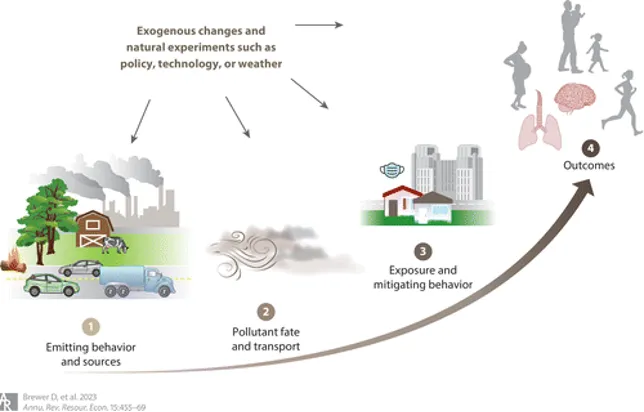
Simple schematic documenting the path of air pollution from emissions to outcomes. This review discusses the challenges of measuring how emissions of pollutants (step 1) disperse through the air (step 2) to become eventual exposures (step 3) and health outcomes (step 4).
Faculty
Dylan Brewer, Daniel Dench, and Laura Taylor
Written by Sharon Murphy
About This Project
The Energy, Policy, and Innovation Center faculty affiliates Dylan Brewer, Daniel Dench, and Interim Director Laura Taylor published an article titled "Advances in Causal Inference at the Intersection of Air Pollution and Health Outcomes." The authors compare the methods used in the epidemiology literature with the causal inference framework used in economics in analyzing the effect of air pollution on health outcomes.
Determining the quality and accuracy of the evidence linking air pollution to human health has been a challenge for research in this area.
Each academic discipline has a unique lens through which they view and solve a problem, which may result in different conclusions being drawn from the same data. While studies that involve randomization across populations can provide evidence and are widely used in medical research, exposures to everyday air pollution cannot be randomized by a researcher.
Many existing studies exploring the health impacts of air pollution rely on establishing correlations between pollutants and health outcomes. However, correlations do not imply causation and can lead to bad policy. In this study, the EPICenter affiliates reviewed methodological contributions made by economists to determine if using statistical methods to the study of the health effects of air pollution can contribute to more robust and reliable findings.
To understand the difficulty researchers face, consider a typical air pollution study that collects health data of residents living near a pollution source, such as a coal-fired power plant. The data would be used to see if there is an increased incidence of adverse health outcomes such as asthma, chronic obstructive pulmonary disease, or cardiopulmonary disease. However, many factors can create a confounding effect on the final results if the researcher doesn’t take them into consideration. For instance, the power plant may have been built in a low-income location, or lower-income households may have moved near the power plant to take advantage of lower rent or property prices. This may conflate the effect of income and air pollution on health.
Simple schematic documenting the path of air pollution from emissions to outcomes. This review discusses the challenges of measuring how emissions of pollutants (step 1) disperse through the air (step 2) to become eventual exposures (step 3) and health outcomes (step 4).
Economists promote the use of natural experiments to overcome confounding factors. Natural experiments mimic familiar laboratory experiments. For instance, in the power plant example, random variation in wind direction would result in some households being randomly more exposed to air pollution, regardless of income. By taking advantage of this randomization, researchers can compare differences in a particular health outcome between those more exposed and less exposed, while overcoming confounding effects such as income, and move one step closer toward improving our understanding of the relationship between air pollution and adverse health outcomes.
The authors conclude by emphasizing the need for creating multidisciplinary teams, including economists, air-quality modelers, and public health and medical researchers. “While one may not think of economists as a natural contributor to this line of research, the analytical framework honed by economists over decades can contribute important expertise to the design of these types of studies,” Taylor concluded, “and result in better evidence for policymakers.”
Read more: https://doi.org/10.1146/annurev-resource-101722-081026
News Contact
Priya Devarajan | SEI Communications Program Manager
Authored by: Sharon Murphy, Strategic Energy Institute
Jan. 29, 2024
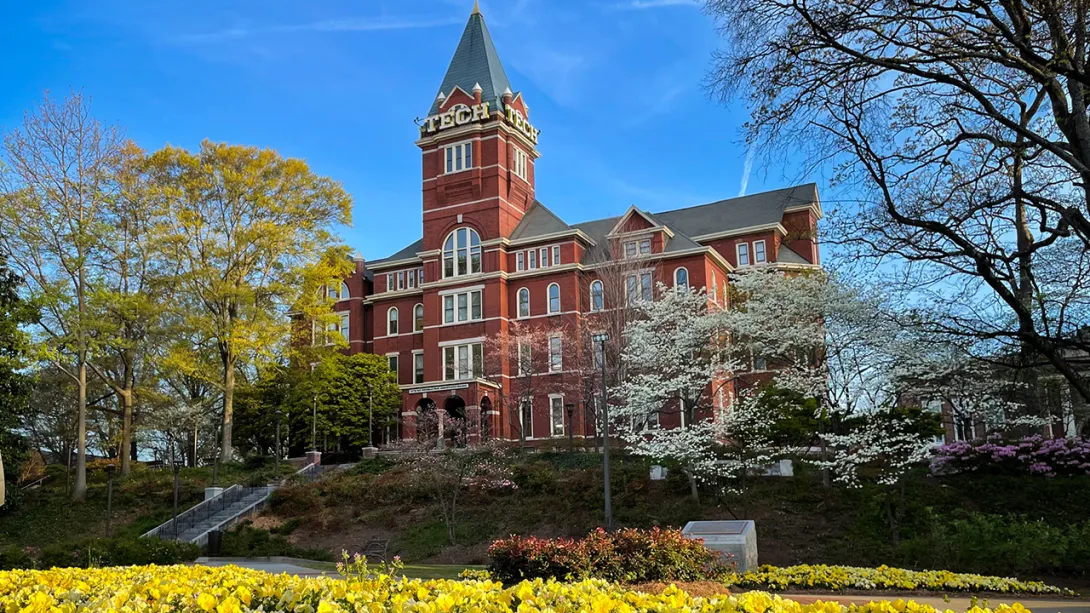
The study of energy is multidimensional and can be approached through disciplines such as economics and public policy, engineering, science, and even architecture and urban planning. The Energy, Policy, and Innovation Center at Georgia Tech (EPICenter) seeks to create bridges between faculty and students whose work may be enhanced through complementary research or knowledge in disciplines across campus and has named the first class of faculty affiliates in the EPICenter program.
Thirteen Georgia Tech faculty have been appointed as EPICenter Affiliates, representing the study of energy through the lenses of economics, public policy, electrical engineering, civil and environmental engineering, and industrial and systems engineering. The affiliates will act as an informal advisory committee to help guide EPICenter and connect Georgia Tech energy researchers to each other and to policy and decision-makers throughout the Southeast.
EPICenter Interim Director Laura Taylor envisions the Faculty Affiliate program to lead to more enrichment opportunities for students, and more awareness of the research intersections of energy technology, economics, and public policy.
About Energy at Georgia Tech
The Georgia Institute of Technology is renowned for its world-class academic programs such as engineering, business, computer science, and city and regional planning. There is a depth of excellence at Georgia Tech that few universities can match thanks in large part to the faculty, many of whom are the foremost experts in their fields. U.S. News & World Report recently ranked Georgia Tech third in the nation for energy and fuels research.
News Contact
Priya Devarajan || Communications Program Manager | SEI
Jan. 26, 2024
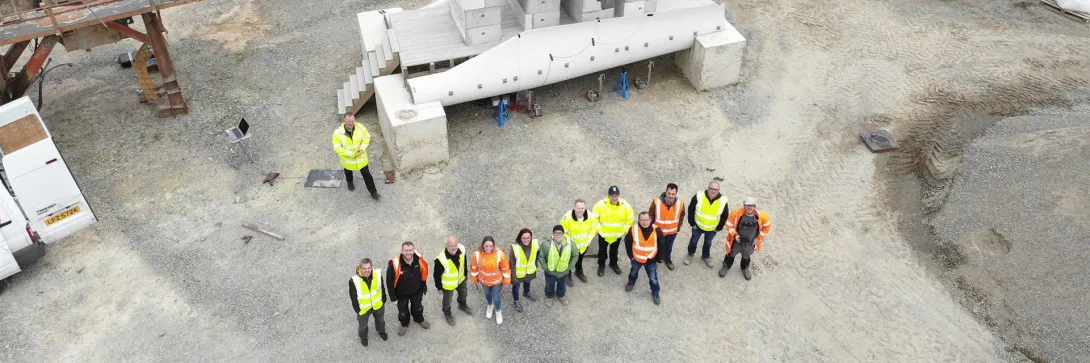
Aerial shot showing members of the Re-Wind Network stand in front of a pedestrian bridge made using decommissioned wind turbine blades
Pioneering a new recycling approach led to a big win for Re-Wind USA, a Georgia Tech research team led by Russell Gentry. The team has won the first phase of the Department of Energy's Wind Turbine Materials Recycling Prize, receiving $75,000 and an invitation to compete in the final phase.
"Our innovation for end-of-service wind turbine blades is both simple and elegant – at its core, our technology captures all the embodied energy in the composite materials in the blade," said Gentry, professor in the School of Architecture.
"The Re-Wind Network has pioneered structural recycling, the only of a number of competing technologies that upcycles the material of the blade and preserves the embodied energy from manufacturing," Gentry said.
News Contact
Wes McRae
Jan. 26, 2024
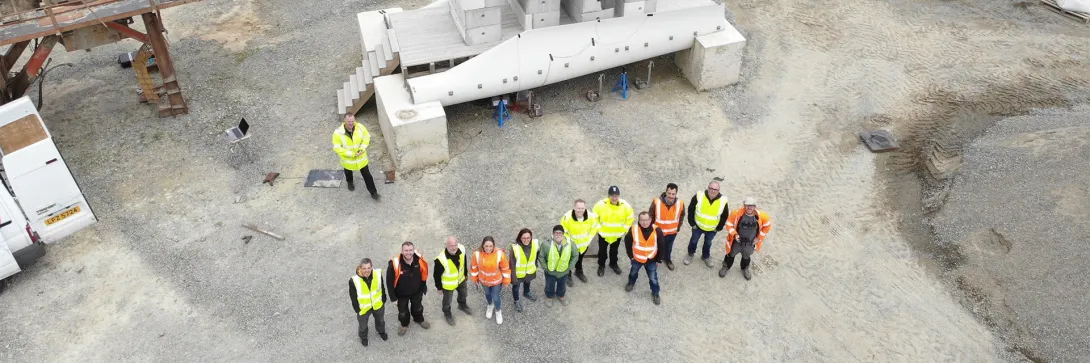
Overhead view of the Re-Wind crew doing structural testing on a decommissioned wind turbine blade bridge on an industrial lot.
Pioneering a new recycling approach led to a big win for Re-Wind USA, a Georgia Tech research team led by Russell Gentry. The team has won the first phase of the Department of Energy's Wind Turbine Materials Recycling Prize, receiving $75,000 and an invitation to compete in the final phase.
"Our innovation for end-of-service wind turbine blades is both simple and elegant – at its core, our technology captures all the embodied energy in the composite materials in the blade," said Gentry, professor in the School of Architecture.
"The Re-Wind Network has pioneered structural recycling, the only of a number of competing technologies that upcycles the material of the blade and preserves the embodied energy from manufacturing," Gentry said.
"Little additional energy is used to remanufacture the blade and the life of the blade, typically 20 years, is extended at least 50 years. This is a win-win solution from an environmental and economic perspective."
Other methods for dealing with decommissioned wind blades involve mechanical grinding and landfilling of subsequent waste, an expensive and energy-intensive process, he said.
Team members include Gentry, Sakshi Kakkad, Cayleigh Nicholson, Mehmet Bermek, and Larry Bank, from the School of Architecture; Gabriel Ackall, Yulizza Henao, and Aeva Silverman, from the School of Civil and Environmental Engineering; and Eric Johansen, a business consultant from Fiberglass Trusses Inc.
The team is part of the Re-Wind Network, a multinational research and development network which develops large-scale infrastructure projects from decommissioned wind turbine blades.
Re-Wind's pedestrian bridges, known as BladeBridges, have already captured media attention. Two more BladeBridges are expected in Atlanta in 2024, Gentry said. Re-Wind has also developed, prototyped, and tested transmission poles made from blade segments. The team's other proposals include culverts, barriers, and floats.
News Contact
Ann Hoevel, Director of Communications, College of Design
Jan. 19, 2024
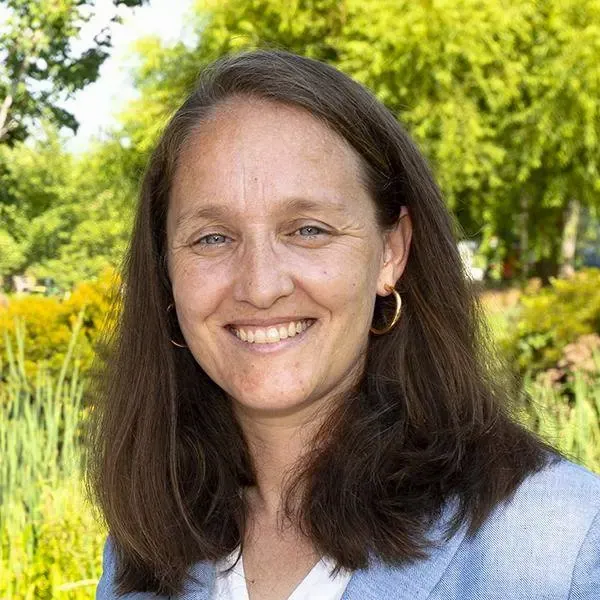
Associate Professor Marta Hatzell has won a 2024 ACS Sustainable Chemistry & Engineering Lectureship Award, which recognizes leading contributions of scientists and engineers active in the general fields of green chemistry, green engineering, and sustainability in the broadest sense of the chemical enterprise.
Hatzell, who holds joint appointments in Georgia Tech's School of Mechanical Engineering and School of Chemical and Biomolecular Engineering, was honored for her multiple contributions that drive the application of electrochemistry to enable critical systems with enhanced circularity.
The ACS Sustainable Chemistry & Engineering Lectureship awards were created to celebrate early to midcareer investigators who completed academic training no more than 10 years prior to nomination. In support of their commitment to nurture and stimulate a global community of outstanding practice. ACS Sustainable Chemistry & Engineering and the ACS Green Chemistry Institute gave three Lectureship Awards to recognize outstanding levels of contribution from The Americas, Europe/Middle East/Africa, and Asia/Pacific.
The award recipients will be honored at a joint plenary session of the 28th Annual Green Chemistry & Engineering Conference in their honor (June 3–5, 2024; https://www.gcande.org/).
News Contact
Brad Dixon, Communications Manager, School of Chemical and Biomolecular Engineering
Jan. 11, 2024

In 1950, Alan Turing asked, “Can machines think?” More than 70 years later, advancements in artificial intelligence are creating exciting possibilities and questions about its potential pitfalls.
A recent executive order issued by President Joe Biden seeks to establish "new standards for AI safety and security" while addressing consumer privacy concerns and promoting innovation. Georgia Tech experts have examined the key elements of the order and offer their thoughts on its scope and what comes next.
A Precautionary Tale
The order calls for the development of standards, tools, and tests to ensure the safe use of AI. From voice scams and phishing campaigns to larger-scale threats, the technology’s potential dangers have been widely documented. But Margaret Kosal, associate professor in the Ivan Allen College of Liberal Arts, says that additional context is often needed to dispel hysteria.
"No one is going to be hooking up AI to launch nuclear weapons, but AI capabilities may enable targeting, or enable the command and control and the decision-making time to be compressed,” she said.
The order will create an AI Safety and Security Board tasked with addressing critical threats. Companies developing foundation models that "pose a serious risk to national security, national economic security, or national public health and safety” will be required to notify the federal government when training the model and required to share the results of all red-team safety tests — a simulated cyberattack to test a system's defenses.
Since the launch of ChatGPT in 2022, a CNBC report details a 1,267% rise in phishing emails. Srijan Kumar, assistant professor in the College of Computing, attributes the increase to the technology's availability and an inability to rein in "bad actors."
He says these scams will only continue to get more sophisticated and personalized. They “can be created by knowing what you might be willing to fall prey to versus what I might fall prey to,” said Kumar, whose systems have influenced misinformation detection on sites like X (formerly Twitter) and Wikipedia. “AI is not going to autonomously do all of those bad things, but this order can ensure there are consequences for people who misuse it.”
A Delicate Balance
Building an AI platform requires large amounts of data regardless of its intended application. Two primary goals of the executive order are protecting privacy and advancing equity.
To protect personal data, the order tasks Congress with evaluating how agencies collect and use commercially available information and address algorithmic discrimination.
Acknowledging that everyone should be allowed to have their voice represented in the outputs of AI data sets, Deven Desai, associate professor in the Scheller College of Business, noted, "There are people who don't want to be part of data sets, which is their right, but this means their voices won't be reflected in the outputs.”
The order also includes sections to address intellectual property concerns among inventors and creators, though legal challenges will likely set new precedents in the years ahead.
When that time comes, Kosal says that defining “theft” in the context of AI becomes the true challenge and that, ultimately, money will play a significant role. "If you spit out a Harry Potter book and read it yourself, nobody will care. It's when you start selling it to make money, and you don't share proceeds with the original people, then it becomes an issue," she said.
What Does AI-Generated Mean?
The order instructs the Department of Commerce to develop guidelines for content authentication and watermarking to label AI-generated content. Desai questions what it means for something to be truly created by AI.
An important distinction lies between using AI to assist a writer in organizing their thoughts and using the technology to generate content. He likens the trend to the music industry in the 1980s.
"Synthesizers really changed people's ability to generate music and, for a while, people thought that was horrible. They can just program the music. They're not. I am still the human responsible for that music, or that article in this case, so what is the point of the label?" he asks.
As AI assistance becomes commonplace in content creation, trusting the source of information is increasingly important. Recently, articles published on Sports Illustrated's website featured AI-generated content provided by a third-party company that had used a machine to write the content and create fake bylines. Sports Illustrated, which may not have known of the problem, ran the material without disclosure to readers. CEO Ross Levinsohn was ousted shortly after the story broke.
“Perhaps if the third party had disclosed its use of AI software, SI would have been able to assess how much AI was used and then chosen not to run the material, or to run it with a disclaimer that AI helped write the material,” Desai said. "Of course, even if they label the content as AI-generated, a reader still won't know exactly how much of the content came from AI or a human.”
AI and the Workforce
As AI systems and models become more sophisticated, workers may become more concerned about being replaced. To counteract these concerns, the order calls for a study to examine AI’s potential impact on labor markets and investments in workforce training efforts.
Kumar compares the rise of AI to similar technological innovations throughout history and sees it as an opportunity for workers and industries to adapt. "It's less a matter of AI replacing workers and more of reskilling people to use the new technology. It's no different from when assembly lines in the auto industry were created."
Promoting Innovation and Competition
The power to harness the full potential of AI has initiated a race to the top. Desai believes that part of the executive order providing resources to smaller developers can help level the playing field.
"There is a possibility here for markets to open up. Current players using models that weren't built with transparency in mind might struggle, but maybe that's OK."
The issue of reliability and transparency comes into focus for Desai, especially as it relates to government usage of AI. The order calls on agencies to "acquire specified AI products and services faster, more cheaply, and more effectively through more rapid and efficient contracting."
When taxpayer dollars are at stake, government can’t afford to trust a technology it doesn’t fully understand — a topic Desai has explored elsewhere. "You can’t just say, ‘We don’t know how it works, but we trust it.’ That’s not going to work. So that’s where there may be a slowdown in the government’s ability to use private sector software if they can’t explain how the thing works and to show that it doesn’t have discriminatory issues.”
What's Next
Promoting and policing the safe use of AI cannot be done independently. Georgia Tech experts agree that participation on a global scale is necessary. To that end, the European Union will unveil its comprehensive EU AI Act, which includes a similar framework to the president's executive order.
Due to the evolving nature of AI, the executive order or the EU's actions will not be all-encompassing. Law often lags behind technology, but Kosal points out that it's crucial to think beyond what currently exists when crafting policy.
Experts also agree that AI cannot be regulated or governed through a single document and that this order is likely the first in a series of policymaking moves. Kosal sees tremendous opportunity with the innovation surrounding AI but hopes the growing fear of its rise does not usher in another AI winter, in which interest and research funding fade.
News Contact
Steven Gagliano - Institute Communications
Dec. 13, 2023

Samuel Litchfield, research engineer at the Cybersecurity, Information Protection, and Hardware Evaluation Research (CIPHER) lab of the Georgia Tech Research Institute (GTRI), leads the Cybersecurity of Critical Infrastructure Research Initiative at the Strategic Energy Institute. Litchfield serves as the associate director of research initiatives at the Institute for Cybersecurity and Resilient Infrastructure Studies (ICARIS), a joint research collaboration between Georgia Tech and the U.S. Department of Energy’s Pacific Northwest National Laboratory whose mission is to deliver the technologies, test beds, and talent necessary to secure the nation’s critical infrastructure.
Litchfield received his bachelor’s and master’s degrees from Georgia Tech in computer engineering. Focused on cybersecurity since 2012, he has worked in cyber-physical system security, network protocol reverse engineering, and large-scale systems vulnerability assessments. Below is a brief Q&A with Litchfield where he discusses his research focus areas and how it influences the cybersecurity initiatives at Georgia Tech.
- What is your field of expertise and at what point in your life did you first become interested in this area?
My field of expertise is cybersecurity of critical infrastructure and embedded systems. I started getting into it first in my undergraduate coursework when I learned about overlaps between control theory, computer architecture, and networking. These overlaps create critical infrastructure.
- What questions or challenges sparked your current energy research? What are the big issues facing your research area right now?
A lot of my day-to-day at work is focused on national security. That comes from both being at GTRI and generally looking at cybersecurity questions.
When you start applying cybersecurity to critical infrastructure, you very quickly run into national security questions like how to keep the lights on and how to keep water flowing and keep people living their lives — basically how to prevent devices or pieces from getting compromised and how to keep these systems moving/working despite people trying to break them. How do we keep the overall infrastructure working in the face of threats even if some elements are compromised? What modifications do we need to make to these sometimes decades-old systems, and what new security primitives can we invent to minimize those modifications? An example is a water system supplying water to your municipality — it is dependent on unobstructed electricity to keep its pumps moving — figuring out how to model those cross-system dependencies is an active area of my research topics as well.
- What interests you the most leading the research initiative on cybersecurity of critical infrastructure? Why is your initiative important to the development of Georgia Tech’s energy research strategy?
In addition to the above questions and figuring out how we approach this sort of research topics, one thing I always find super interesting is coming to a new domain, energy in this case, and figuring out how to use existing domain-specific tools to augment system security, or how those tools might find application in cybersecurity. Aiding PI to PI interactions to get real impacts on systems as a whole and convening researchers whose topic areas don’t traditionally overlap together and identifying projects that can come out of that interaction keeps me going.
Georgia Tech is already a leader in power engineering and cybersecurity separately. Bringing those two large pieces of campus together is going to be truly pivotal for Georgia Tech as an institution. There are other domains with leaders in those fields that we can hopefully bring more to the forefront as we combine them with security.
- What are the broader global and social benefits of the research you and your team conduct on the cybersecurity of critical infrastructure?
There are two basic benefits — one from the United States national security perspective — to keep the infrastructure secure and raise the bar on the effort and cost it takes to compromise systems or use them as a lever in international conflicts. The next one is increasing the security of systems by increasing their resilience for run of the mill things like storms, wildfires, and large climate events. This will become more relevant as climate change increases severe weather events. Another global benefit I could think of is removing energy security from the field of national security levers — see Germany’s natural gas dependence during the Russian invasion of Ukraine.
- What are your plans for engaging a wider Georgia Tech faculty pool with the broader energy community?
Cybersecurity touches on multiple domains and increasing faculty engagement by getting domain experts to talk to security experts is important. Internally, I’m hoping to build an infrastructure security community across schools that’s invested in forming collaborations between areas and subjects that might not traditionally overlap. Externally, I am planning to build a portfolio of events that engages and brings together community members around Georgia, from manufacturers to utility asset owners to external policymakers and regulators.
- What are your hobbies?
Physically, when I'm not sitting at a desk, I like to go climbing in gyms or hike through the Appalachians when it’s not July in Georgia . Outside of that, I do a lot of recreational programming at home, and I play some tabletop games with friends.
- Who has influenced you the most?
My graduate advisor Raheem Beyah set a good example of how to be passionate about my research, both in terms of technical expertise on how to formulate research questions in a tangible and approachable way and engaging with the people doing the research.
Another is one of my current bosses, Anita Pavadore, in terms of raising the bar on the quality of what I do, from interacting with others to executing research.
News Contact
Priya Devarajan || Research Communications Program Manager || SEI || RBI
Dec. 13, 2023

Matthew Realff, professor and David Wang Sr. Fellow in the School of Chemical and Biomolecular Engineering, leads the Circular Carbon Economy Research Initiative in the Strategic Energy Institute and the Next Generation Refineries Research Initiative in the Renewable Bioproducts Institute at Georgia Tech. Realff co-directs the Direct Air Capture Center (DirACC), which coordinates research across the Institute aimed at the removal of carbon dioxide (CO2) from the atmosphere. Realff’s broad research interests are in the areas of process design, simulation, and scheduling. His current research is focused on the design and operation of processes that minimize waste production by recovery of useful products from waste streams, and the design of processes based on biomass inputs. In particular, he is interested in carbon capture processes both from flue gas and dilute capture from air as well as the analysis and design of processes that use biomass.
• What is your field of expertise and at what point in your life did you first become interested in this area?
My background is in chemical engineering with a focus on process design and simulation, which is part of the field of process systems engineering. I have been interested in this general topic since first setting foot on the campus of Imperial College London in 1982, and subsequently pursued it as my Ph.D. topic. I first started thinking about direct air capture of CO2 in 2011 and about circular carbon from CO2 in 2016.
• What questions or challenges sparked your current energy research? What are the big issues facing your research area right now?
I believe that managing CO2 emissions will be the biggest challenge of the next 50 to 100 years. We will need to have negative emissions, as we are emitting too much, and pulling CO2 directly out of the atmosphere will be required because we are going to continue to emit. Creating technological solutions to provide negative emissions is one of the biggest challenges, as they need to be cost-effective and environmentally and socially less damaging than the emissions they capture. The biggest issue facing my research is understanding the phenomena that are involved in direct air capture and translating that understanding into engineered systems that are low-cost, have low environmental impact, and are socially beneficial.
• What interests you the most leading the research initiative on circular carbon economy? Why is your initiative important to the development of Georgia Tech’s energy research strategy?
The circular carbon economy is a systems problem in the broadest sense. This means that we must embrace a multidisciplinary approach to synthesize effective solutions. I want to emphasize the word “effective” here — we must embrace a wide range of measures of performance from energy efficiency to social justice because without improving along many dimensions we will be unlikely to be successful. It is this multidimensional, multidisciplinary research effort that interests me, as I love to find ways to bring people together to synthesize different knowledge into effective solutions. Georgia Tech is a world leader in direct air capture technology — as demonstrated by our new Direct Air Capture Center (DirACC). Our advances in this topic area can provide a base from which to develop approaches to carbon utilization, and other research efforts in electro, bio, and thermo chemical technologies can enable closed pathways using carbon as an energy carrier.
• What are the broader global and social benefits of the research you and your team conduct on circular carbon economy?
One vision for our energy and material systems is to have a much greater local production and consumption of energy using renewable resources. A circular carbon economy based on CO2 from the air; water from local sources including the air; and solar, wind, or biomass-based energy could be local and would have many transactions between local parties. This could serve to not only reduce global emissions but also to provide more opportunities for communities to benefit from the production of energy as opposed to having many transactions that transfer money outside of the community.
• What are your plans for engaging a wider Georgia Tech faculty pool with the broader energy community?
DirACC is one way we hope to connect faculty to the ecosystem of companies that are developing and deploying DAC technology. We hope that the challenges that these companies are articulating can be translated into research topics for the faculty affiliated with the center. The Department of Energy’s efforts to establish the DAC Hubs provides us with other opportunities to engage faculty around social and environmental justice issues associated with deploying energy technologies such as direct air capture. I hope that faculty will see themselves participating in these efforts and reach out to be included in the network of researchers on these topics.
• What are your hobbies?
My main hobby is playing a card game called Magic: The Gathering. I have played this since 1994 and have enjoyed many friendships formed as a dueling wizard. I also enjoy reading, particularly science fiction and steampunk literature, as well as history.
• Who has influenced you the most?
Professor Roger Sargent at Imperial College was one of the founders of the field of process systems engineering. His speech on elevation to the position of professor at Imperial in 1963 has had a profound impact on the direction of my research and educational activities.
News Contact
Priya Devarajan || Research Communications Program Manager SEI || RBI
Dec. 11, 2023
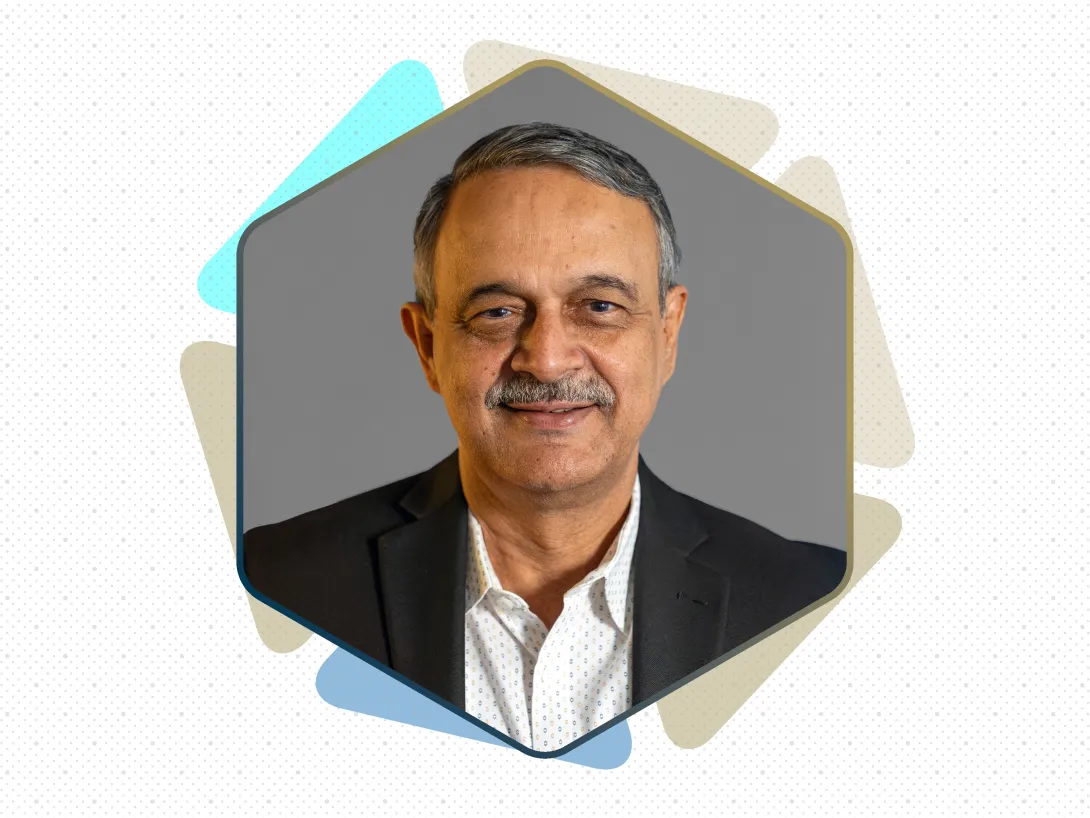
Professor Deepakraj Divan has been named the recipient of the 2024 IEEE Medal in Power Engineering, a distinguished honor presented annually by the Institute of Electrical and Electronics Engineers (IEEE).
The prestigious award recognizes individuals for their, “outstanding contributions to the technology associated with the generation, transmission, distribution, application, and utilization of electric power for the betterment of society.”
Divan, holding the John E Pippin Chair and serving as a Georgia Research Alliance Eminent Scholar in the Georgia Tech School of Electrical and Computer Engineering, is being honored for his significant contributions to advanced power conversion technologies for the modern electric power grid. He will be celebrated during the IEEE Vision, Innovation, and Challenges Summit and Honors Ceremony in Boston on May 3, 2024.
With over 40 years of experience in academia and industry, Divan is a globally recognized authority in power electronics, power systems, smart grids, and distributed control of power systems. He is currently the director of the Center for Distributed Energy at Georgia Tech, leading advanced research and technology development aimed at transforming electricity delivery and utilization.
His extensive portfolio includes over 85 issued and pending patents, as well as 400 refereed publications. Through his research and entrepreneurial endeavors, he has played a pivotal role in advancing power grid monitoring, analytics, and optimization.
He is a member of the of the U.S. National Academy of Engineering, the National Academies Board on Energy and Environmental Systems, and the National Academies (NASEM) Committee on the Future of Electric Power in the United States. Additionally, Divan is a Fellow of IEEE and has previously served as the president of the IEEE Power Electronics Society. He has been honored with the IEEE William E Newell Field Medal and IEEE Hingorani Custom Power Medal.
As the International Chair of the IEEE Empower a Billion Lives (EBL) recurring global competition, Divian actively contributed to the development of scalable energy access solutions. His expertise was recognized at the White House Electrification Summit in 2022, and he has shared insights on electric grids worldwide, with notable appearances including the 2016 Conference of the Parties of the United Nations Framework Convention on Climate Change Conference (or COP 22) meeting in Morocco and the United Nations Global Solutions Summit in 2023.
Divan is an established entrepreneur, having started several companies, including Varentec, which was funded by leading green-tech Venture Capital firm Khosla Ventures and renowned investor Bill Gates. He has founded or seeded several other new ventures including GridBlock, GigaGrid, Soft Switching Technologies, Innovolt, and Smart Wires, which together have raised >$500M in venture funding.
He is the first member of the Georgia Tech faculty to be honored with the IEEE Medal in Power Engineering, an accolade that has been presented since 2010.
News Contact
Dan Watson
Dec. 04, 2023
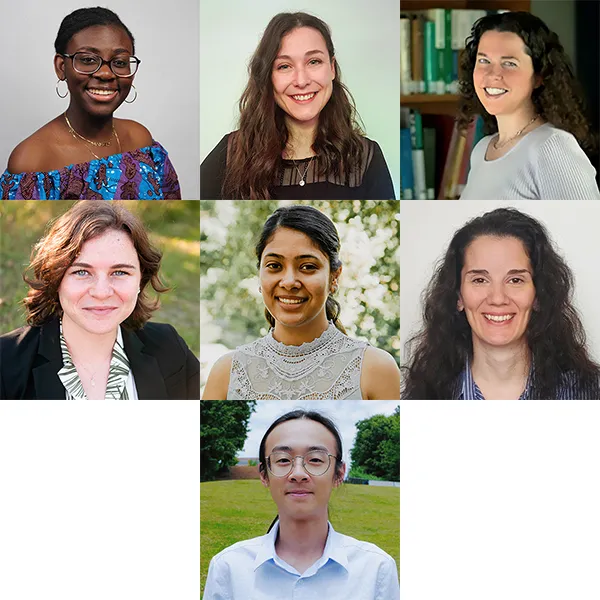
The first cohort of the Brook Byers Institute for Sustainable Systems (BBISS) Graduate Fellows published an article in the open-access, peer-reviewed journal, Elementa: Science of the Anthropocene. The seven Ph.D. students reflected on their two years of working, studying, and training together as an interdisciplinary sustainability research team. In the article, they give their insights into how they benefited from this approach and what steps might be taken to improve graduate level, sustainability-related programs. Further, their paper offers researchers and educators a rare perspective into interdisciplinary research and education from the standpoint of students who are still pursuing their degrees and actively engaged in research for their chosen disciplines.
Citation: McSorley, M, Arkhurst, BK, Hall, M, Zha, Y, Spyrou, IM, Duchesneau, K, Ringania, U, Chang, M. 2023. For graduate students to become leaders in sustainability, we must transcend disciplinary boundaries. Elementa: Science of the Anthropocene 11(1). DOI: https://doi.org/10.1525/elementa.2023.00012
For more information about the Brook Byers Institute for Sustainable Systems Graduate Fellows program, please visit this webpage.
News Contact
Brent Verrill, Research Communications Program Manager, BBISS