
Oct. 14, 2024
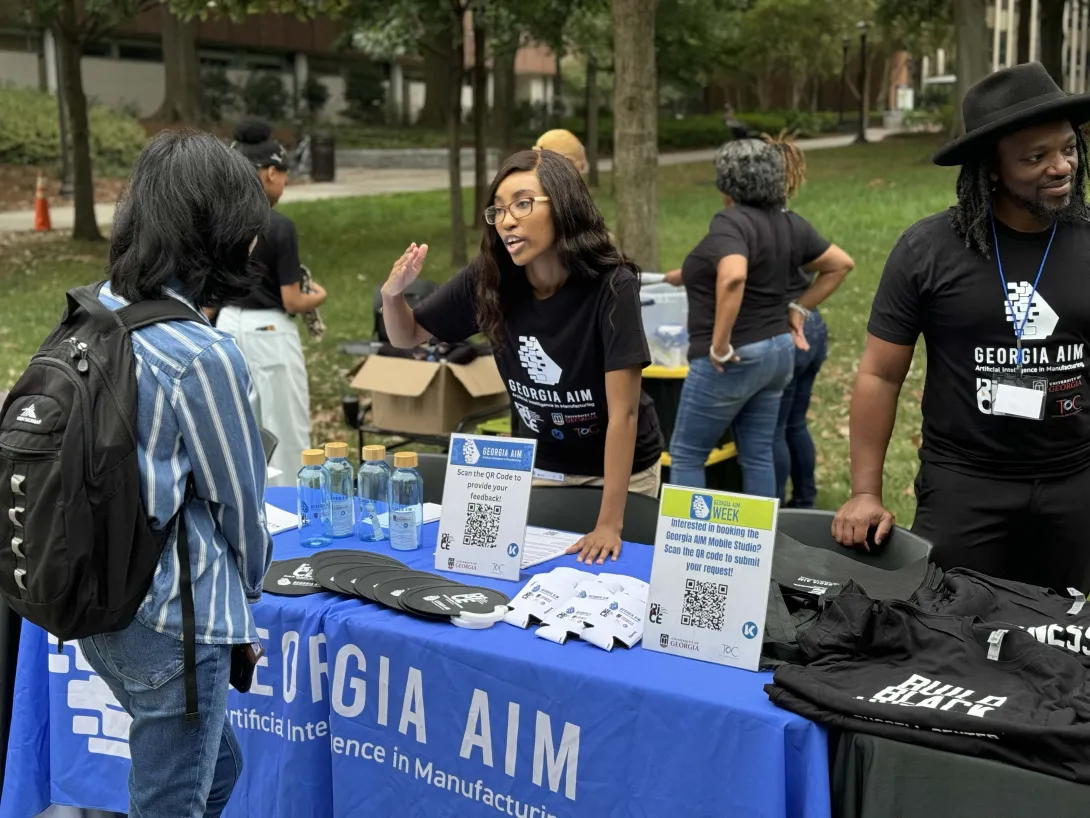
Georgia AIM representatives talk with students on Georgia Tech's campus during the launch event for their new mobile labs.
Gold and white pompoms fluttered while Buzz, the official mascot of the Georgia Institute of Technology, danced to marching band music. But the celebration wasn’t before a football or basketball game — instead, the cheers marked the official launch of Georgia AIM Week, a series of events and a new mobile lab designed to bring technology to all parts of Georgia
Organized by Georgia Artificial Intelligence in Manufacturing (Georgia AIM), Georgia AIM Week kicked off September 30 with a celebration on the Georgia Institute of Technology campus and culminated with another celebration on Friday at the University of Georgia in Athens and aligned with National Manufacturing Day.
In between, the Georgia AIM Mobile Studio made stops at schools and community organizations to showcase a range of technology rooted in AI and smart technology.
“Georgia AIM Week was a statewide opportunity for us to celebrate Manufacturing Day and to launch our Georgia AIM Mobile Studio,” said Donna Ennis, associate vice president, community-based engagement, for Georgia Tech’s Enterprise Innovation Institute and Georgia AIM co-director. “Georgia AIM projects planned events in cities around the state, starting here in Atlanta. Then we headed to Warner Robins, Southwest Georgia, and Athens. We’re excited about the opportunity to bring this technology to our communities and increase access and ideas related to smart technology.”
Georgia AIM is a collaboration across the state to provide the tools and knowledge to empower all communities, particularly those that have been underserved and overlooked in manufacturing. This includes rural communities, women, people of color, and veterans. Georgia AIM projects are located across the state and work within communities to create a diverse AI manufacturing workforce. The federally funded program is a collaborative project administered through Georgia Tech’s Enterprise Innovation Institute and the Georgia Tech Manufacturing Institute.
A cornerstone of Georgia AIM Week was the debut of the Georgia AIM Mobile Studio, a 53-foot custom trailer outfitted with technology that can be used in manufacturing — but also by anyone with an interest in learning about AI and smart technology. Visitors to the mobile studio can experience virtual reality, 3-D printing, drones, robots, sensors, computer vision, and circuits essential to running this new tech.
There’s even a dog — albeit a robotic one — named Nova.
The studio was designed to introduce students to the possibilities of careers in manufacturing and show small businesses some of the cost-effective ways they can incorporate 21st century technology into their manufacturing operations.
“We were awarded about $7.5 million to build this wonderful studio here,” said Kenya Asbill, who works at the Russell Innovation Center for Entrepreneurs (RICE) as the Economic Development Administration project manager for Georgia AIM. “We will be traveling around the state of Georgia to introduce artificial intelligence in manufacturing to our targeted communities, including underserved rural and urban residents.”
Some technology on the Georgia AIM Mobile Studio was designed in consultation with project partners Kitt Labs and Technologists of Color. An additional suite of “technology vignettes” were developed by students at the University of Georgia College of Engineering. RICE and UGA served as project leads for the mobile studio development, and RICE will oversee its deployment across the state in the coming months.
To request a mobile studio visit, please visit the Georgia AIM website.
During Monday’s kickoff, the Georgia Tech cheerleaders and Buzz fired up the crowd before an event that featured remarks by Acting Assistant Secretary of the U.S. EDA Christina Killingsworth; Jay Bailey, president and CEO of RICE; Beshoy Morkos, associate professor of mechanical engineering at the University of Georgia; Aaron Stebner, co-director of Georgia AIM; David Bridges, vice president of Georgia Tech’s Enterprise Innovation Institute; and lightning presentations by Georgia AIM project leads from around the state.
Following the presentations, mobile studio tours were led by Jon Exume, president and executive director, and Mark Lawson, director of technology, for Technologists of Color. The organization works to create a cohesive and thriving community of African Americans in tech.
“I’m particularly excited to witness the launch of the Georgia AIM Mobile Studio. It really will help demystify AI and bring its promise to underserved rural areas across the state,” Killingsworth said. “AI is the defining technology of our generation. It’s transforming the global economy, and it will continue to have tremendous impact on the global workforce. And while AI has the potential to democratize access to information, enhance efficiency, and allow humans to focus on the more complex, creative, and meaningful aspects of work, it also has the power to exacerbate economic disparity. As such, we must work together to embrace the promise of AI while mitigating its risks.”
Other events during Georgia AIM week included the Middle Georgia Innovation Corridor Manufacturing Expo in Warner Robins, West Georgia Manufacturing Day – Student Career Expo in LaGrange, and a visit to Colquitt County High School in Moultrie. The week wrapped on Friday, Oct. 4, at the University of Georgia in Athens with a National Manufacturing Day celebration.
“We’re focused on growing our manufacturing economy,” Ennis said. “We’re also focused on the development and deployment of innovation and talent in the manufacturing industry as it relates to AI and other technologies. Manufacturing is cool. It is a changing industry. We want our students and younger people to understand that this is a career.”
News Contact
Dec. 09, 2024
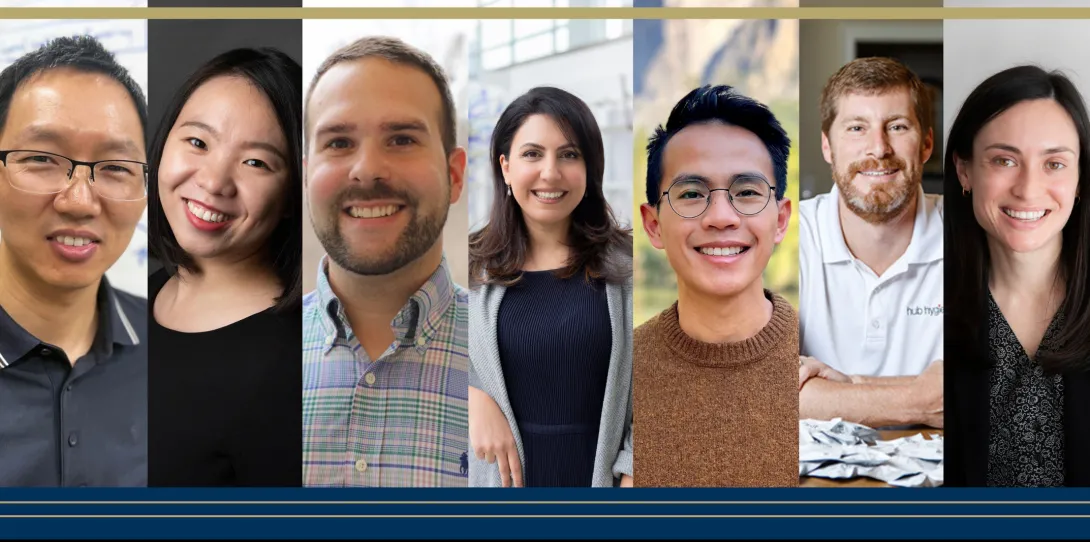
CREATE-X is pleased to announce the next cohort of faculty members selected for the Jim Pope Fellowship for the upcoming academic year. The program provides faculty fellows with funds and education to serve as entrepreneurial instructors, mentors, and advisors to students participating in CREATE-X, Georgia Tech's entrepreneurial learning incubator.
Each fellow receives $15,000 in discretionary funds, which can be used to seek a partial reprieve from teaching for one semester. Fellows also receive mentorship, education on evidence-based entrepreneurship through courses, and opportunities to work with students launching startups.
The new Jim Pope Fellows are:
- Adam McCallum is a translational research advocate for the Wallace H. Coulter Department of Biomedical Engineering at Georgia Tech and Emory University. His work focuses on how metals function in our bodies, utilizing synthetic ligands as chemical tools to explore the biochemistry of metals in biological systems. He collaborates with faculty members, students, and researchers in BME to promote the translation and commercialization of biomedical technologies developed at Georgia Tech and Emory while also encouraging entrepreneurship. Adam earned his Ph.D. in chemistry, with a focus on organic chemistry, from Georgia Tech. He then pursued a postdoctoral fellowship at Emory in Dennis Liotta's lab, where he conducted drug design and discovery research to develop novel therapeutics for various clinical indications.
- Yue Chen is an assistant professor in the Walter H. Coulter Department of Biomedical Engineering at Georgia Tech and Emory University. He also is a member of the Discovery and Developmental Therapeutics Research Program at Winship Cancer Institute. His work addresses building the scientific and technical foundations for various robotic systems and applying them in the medical field. His lab is especially interested in designing, building, modeling, and controlling robots. Among these robots are a commercial robot arm and many custom-made robots, like tube robots, tendon-driven robots, catheters, and soft robots. He received a Ph.D. in mechanical engineering from Vanderbilt University, an M.S. in mechanical engineering from Hong Kong Polytechnic University, and a B.S. in vehicle engineering from Hunan University. This year, he won the National Science Foundation CAREER Award and is developing a continuum robotic system that can efficiently perform procedures like radio frequency ablation while a patient is inside a magnetic resonance imaging scanner.
- Mioy Huynh is an academic professional in the School of Chemistry and Biochemistry who earned his Ph.D. in physical and computational chemistry as an NSF Graduate Research Fellow at the University of Illinois at Urbana-Champaign, where he studied proton-coupled electron transfer reactions. He has taught at Yale University, UCLA, and the Claremont Colleges. Huynh began his professional career in chemistry education as a lecturer and summer instructor at UIUC. After postdoctoral research at Boston University and the University of Wisconsin, he held lecturer positions in general and physical chemistry at Yale, UCLA, and the Claremont Colleges.
- Cici McNamara is an assistant professor in the School of Economics. McNamara studied economics and English for her undergraduate studies, and then graduated from the University of Wisconsin-Madison with a Ph.D. in economics. McNamara’s research interests are in empirical industrial organization. She studies how policies influence the demand and supply of health care and what are the impacts of resulting changes on the market and patient outcomes. She is also a health economist, and her recent work has examined the effects of financial incentives and competition on healthcare market outcomes. Her research on health care consolidation has been integrated into the Vertically Integrated Project, and she was named an AcademyHealth Rising Star in Health Economics in 2023. Among her awards and fellowships, McNamara has also presented her work at numerous conferences and seminars, including the Allied Social Science Associations Annual Meeting, the American Health Economics Conference, and the International Industrial Organization Conference.
- Morvarid Rahmani is an associate professor of operations management in the Scheller College of Business. She received her Ph.D. from the UCLA Anderson School of Management. She also received three master degrees, in industrial engineering, electrical engineering, and economics. Her research focuses on innovation and social sustainability, providing managers with insights to enhance work processes, drive successful innovation, and address social issues. Rahmani recently received the Best Paper Award from the journal Manufacturing & Service Operations Management (M&SOM) for her research on maximizing the social impact of nonprofit organizations on distressed individuals. She has also received the Brady Family Award for Faculty Teaching Excellence at the Scheller College of Business, the CTL/BP Faculty Teaching Excellence Award at Georgia Tech, and CIOS Student Recognition of Excellence in Teaching Award, among other awards. Rahmani is the founding chair of the Technology Innovation and Entrepreneurship (TIE) Special Interest Group (SIG) of the Manufacturing and Service Operations Management (MSOM). She has also served as the Chair of the Technology, Innovation Management and Entrepreneurship (TIMES) Section of INFORMS and as a vice president of the Product Innovation and Technology Management (PITM) College of Production and Operations Management Society (POMS).
- Jud Ready: Ready is a principal research engineer and the deputy director of Innovation Initiatives for the Georgia Tech Institute for Materials. He is also the associate director of External Engagements for the Georgia Tech Institute for Matter and Systems and has been an adjunct professor in the School of Materials Science and Engineering at Georgia Tech for over 20 years. Ready has over 2,200 citations to his three dozen refereed publications and has been invited to over two dozen international conferences. He has 15 patents awarded in the United States, with many others pending. He has also served as an expert witness in criminal and civil cases, provided testimony to the Georgia State House Science and Technology Committee, and served on boards and committees. He has served as PI or co-PI for grants totaling over $20 million from various organizations, including the Army, Navy, Air Force, DARPA, NASA, NSF, NIST, industry, charitable foundations, private citizens, and the state governments of Georgia and Florida. His current research, with an emphasis on aerospace applications, focuses on energy capture, storage, and delivery enabled by nanomaterial design. His research has been included in missions to the International Space Station, low Earth orbit, and heliocentric orbit.
- Fan Zhang is an assistant professor in nuclear and radiological engineering and the George W. Woodruff School of Mechanical Engineering. She received her Ph.D. in nuclear engineering and an M.S. in statistics from the University of Tennessee. Her research focuses on the cybersecurity of nuclear facilities, online monitoring and fault detection using data analytics methods, instrumentation and control, and nuclear systems modeling and simulation. She has developed multiple test beds using both simulators and physical components to investigate various aspects of cybersecurity and process health management. Her research also includes AI/ML, operation optimization, digital twins, predictive maintenance, autonomous controls, robotics, and XR. Zhang is a Georgia Tech College of Engineering Cybersecurity Fellow and has received several prestigious awards. She is the recipient of the 2021 Ted Quinn Early Career Award from the American Nuclear Society for her contributions to instrumentation and control and cybersecurity. In 2022, she was awarded the inaugural Distinguished Early Career Award from the U.S. DOE Office of Nuclear Energy. Additionally, Zhang was recognized as one of UT's 2023 Volunteer 40 Under 40 and is a Grainger Foundation Frontiers of Engineering Alumni.
The Jim Pope Fellowship spans three consecutive semesters. During the fall semester, faculty fellows learn principles of evidence-based entrepreneurship by attending a workshop and shadow teaching one of the CREATE-X courses, Startup Lab, which teaches undergraduates how to examine startup ideas through customer discovery, testing hypotheses, and constructing minimum viable products.
In the spring semester, fellows scope an entrepreneurial project to implement within their home unit, such as creating entrepreneurial assignments within an established course, hosting workshops, or developing a new course that integrates entrepreneurship.
Once the summer semester starts, the cohort works with student startups through CREATE-X Startup Launch, serving as mentors or coaches. After completing the program, fellows spend the next two years leading CREATE-X programs.
Since its creation, the Jim Pope Fellowship has supported 25 fellows, represented 11 Georgia Tech departments, secured $1 million in funding and facilities for makerspaces, and introduced 2,500 students to entrepreneurship.
Faculty members interested in getting involved with CREATE-X can participate as teachers or mentors in various programs such as Startup Lab, CREATE-X Capstone, Idea-to-Prototype, and Startup Launch. Faculty can also apply for the next cohort of the Jim Pope Fellowship when it opens in the spring. For additional information or inquiries, contact the director of CREATE-X, Rahul Saxena, at rahulsaxena@gatech.edu.
News Contact
Breanna Durham
Marketing Strategist
Dec. 02, 2024
In the dynamic world of supply chain and logistics, talent development has emerged as a critical differentiator for organizations seeking to stay competitive. As businesses navigate the complexities of global supply chains, disruptive technologies, and shifting market demands, having a skilled and adaptable workforce isn’t just an advantage—it’s a necessity. Moreover, investing in talent development isn’t only about building capability; it’s also a proven strategy for attracting and retaining top talent in a competitive job market.
At the Georgia Tech Supply Chain and Logistics Institute (SCL) and Georgia Tech Professional Education (GTPE), we understand the challenges organizations face in developing their teams. Whether you’re managing a workforce with a mix of new hires and seasoned professionals, undergoing a major organizational transformation, or striving to stay ahead, talent development must remain at the forefront of your strategy.
Why Organizations Choose Georgia Tech
Organizations turn to us for talent development solutions for several reasons:
A Balance of New and Experienced Professionals: Managing talent means addressing the needs of both emerging professionals who bring fresh energy and experienced workers who provide deep institutional knowledge. Our programs cater to this balance, offering foundational courses for newcomers and advanced training for seasoned leaders.
A Competitive Edge in Attraction and Retention: Offering world-class development opportunities signals to current and prospective employees that your organization values growth. This commitment is especially critical in today’s job market, where career development ranks high on employees’ priorities.
Practical, Immediately Applicable Training: Adult learners need training that works in tandem with their day-to-day responsibilities. Our modular programs are designed for immediate real-world application, ensuring learning outcomes translate directly into workplace improvements.
Scalable Solutions for All Organizations: For growing companies, introducing structure and formal training is often the next step in their evolution. For larger enterprises, we complement internal training programs with flexible, impactful learning options that align with organizational goals.
What Makes Our Offerings Unique
We deliver training solutions tailored to the realities of today’s supply chain and logistics landscape, setting us apart in the industry. Here’s how:
Flexible Delivery Options: From self-paced courses to live and virtual classes, public programs, and custom corporate training, we offer a variety of formats to meet your needs. For example, our hybrid Engineering the Warehouse course combines online lectures with in-person lab sessions to maximize convenience and impact.
Bite-Sized, Modular Learning: Our modular approach allows professionals to access content in manageable segments, enabling learning alongside work demands. For instance, our series on supply chain analytics is broken into short, focused modules that let learners immediately apply concepts like inventory optimization and demand forecasting.
Innovative and Relevant Content: We stay ahead of the curve by addressing emerging industry trends. Our new course on Generative AI in Supply Chain equips professionals to leverage advanced technologies for process optimization and strategic planning.
Industry-Informed Solutions: Collaboration with industry leaders ensures our content addresses real-world challenges. For example, our program on Supply Chain Risk and Resilience integrates insights from Fortune 500 companies to help businesses mitigate disruptions effectively.
Grounded in Research: Every program is informed by leading academic research and designed to reflect the best practices of adult learning, ensuring your team gains knowledge that is both current and actionable.
Preparing for 2025: A Competitive Advantage
As we approach 2025, talent development remains central to addressing the challenges of the supply chain industry. Large enterprises continue to seek solutions to skill gaps and organizational transformation, while small and mid-sized organizations increasingly recognize the need for formalized training. Georgia Tech’s offerings serve as a vital resource, ensuring professionals stay competitive, skilled, and current in an ever-evolving landscape.
Investing in your workforce today not only ensures your organization’s readiness for tomorrow’s challenges but also signals a commitment to your team’s growth and success. At Georgia Tech, we are proud to partner with companies of all sizes, providing a unique blend of flexibility, innovation, and industry relevance that drives results.
Whether you need a program to supplement your internal training, build a comprehensive development strategy, or prepare your team for the future, we’re here to help. Contact us at info@scl.gatech.edu to learn more about how we can support your talent development needs.
Let’s work together to ensure your supply chain workforce is ready to lead in 2025 and beyond.
Sep. 30, 2024
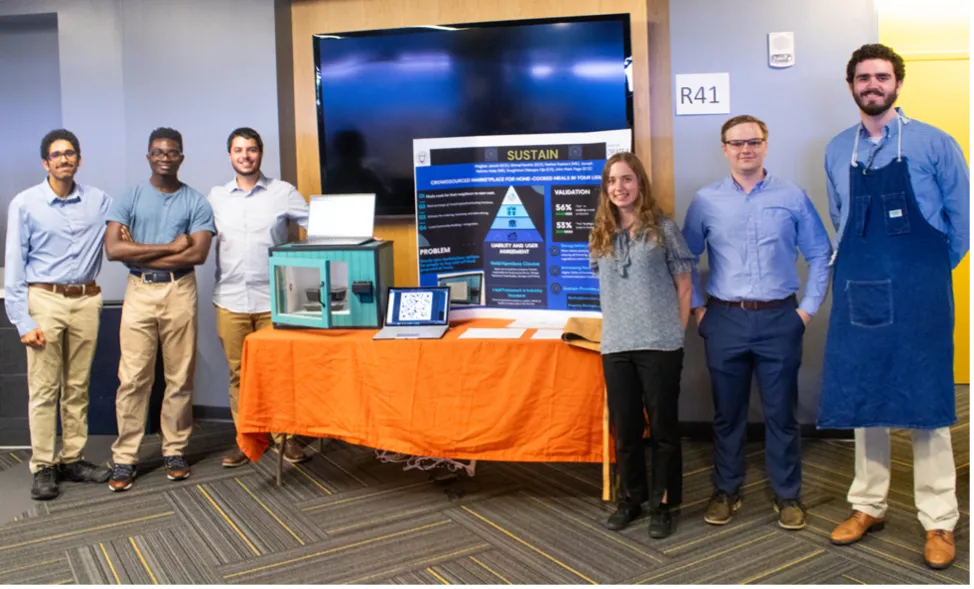
Team Sustain poses with their lock box for home cooked meals at the 2024 Spring Capstone Expo.
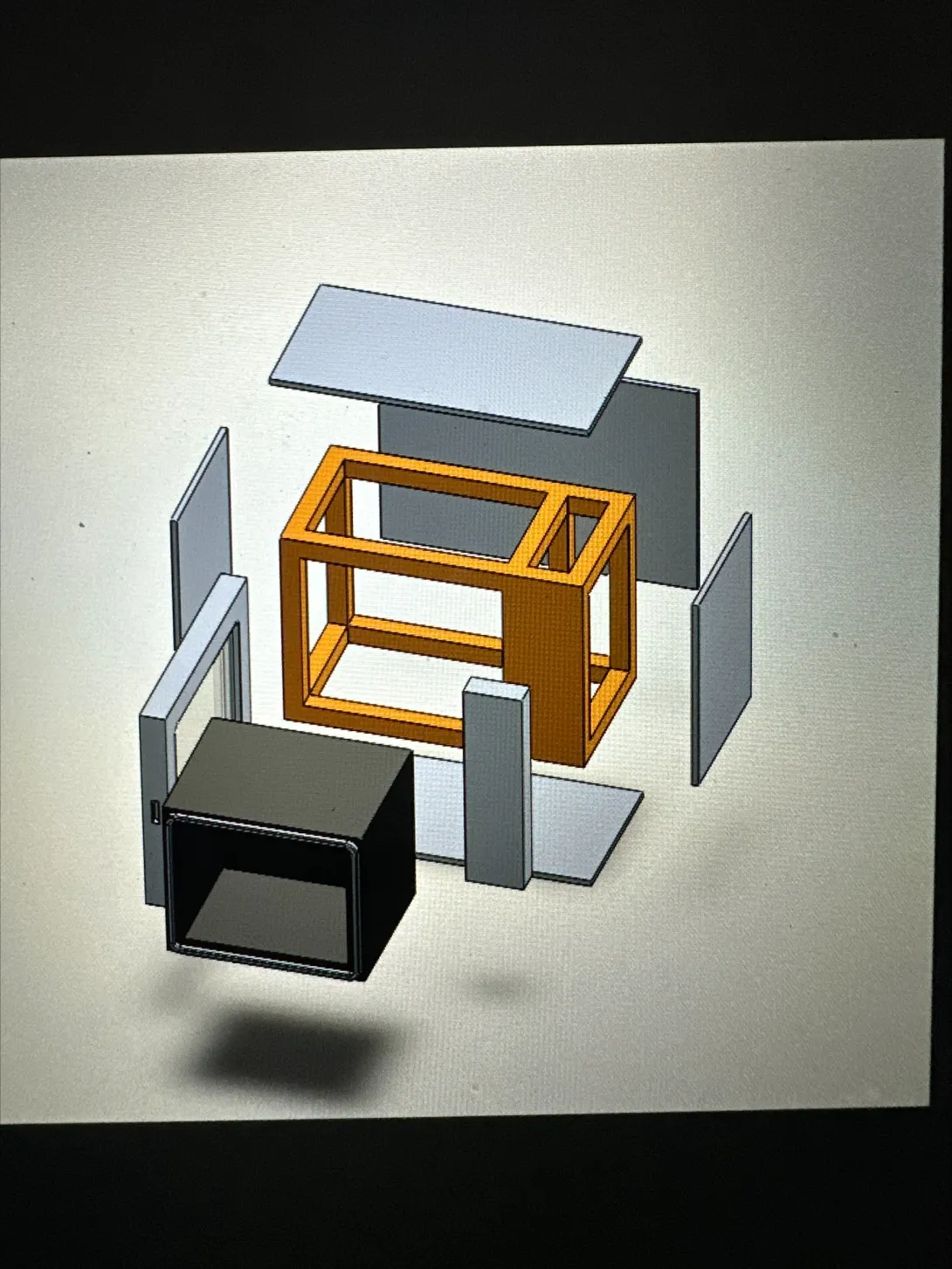
Model image of Team Sustain lock box for home cooked meals
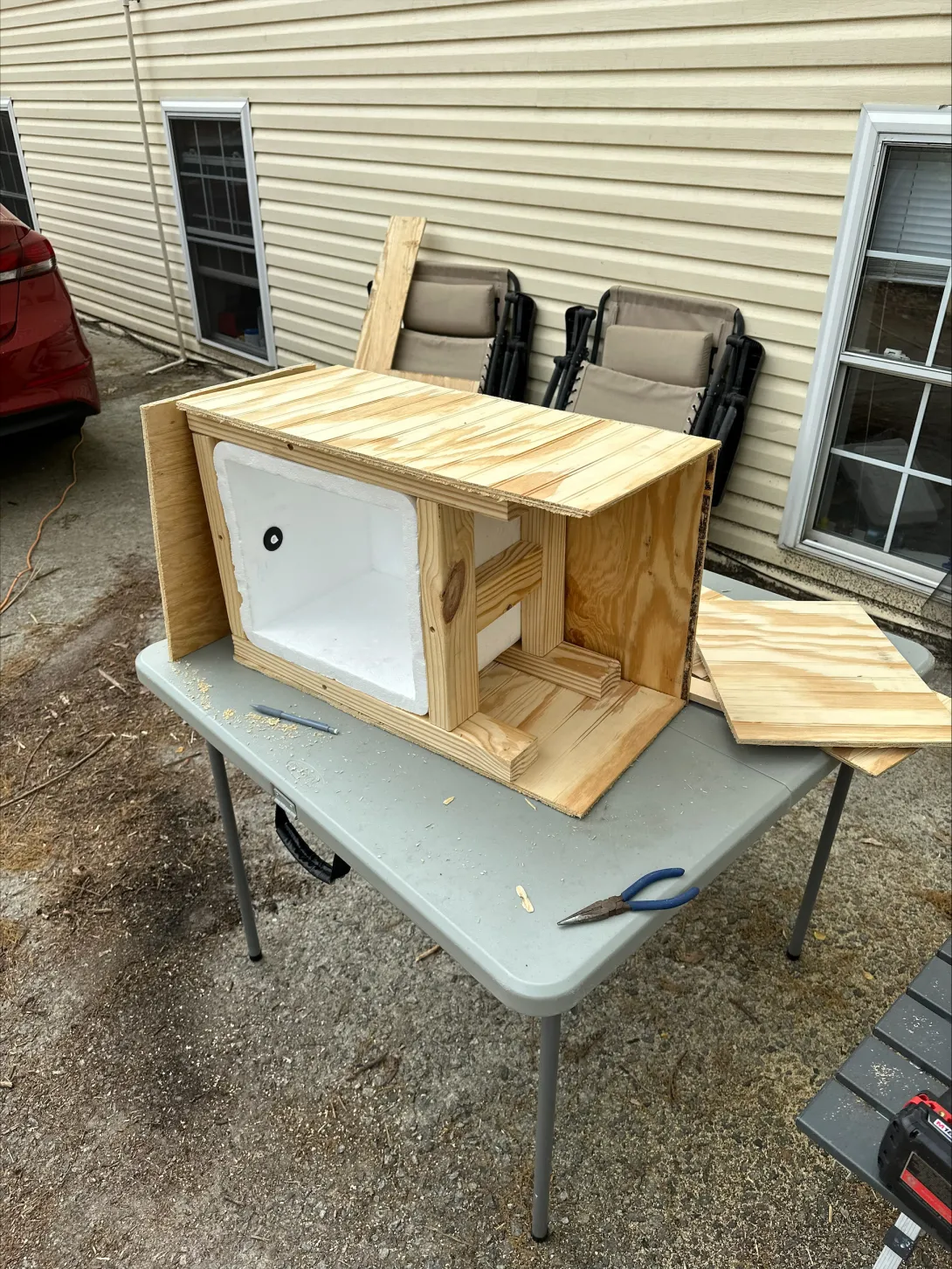
Wooden components make up the initial draft of the lock box for home cooked meals, made by Team Sustain
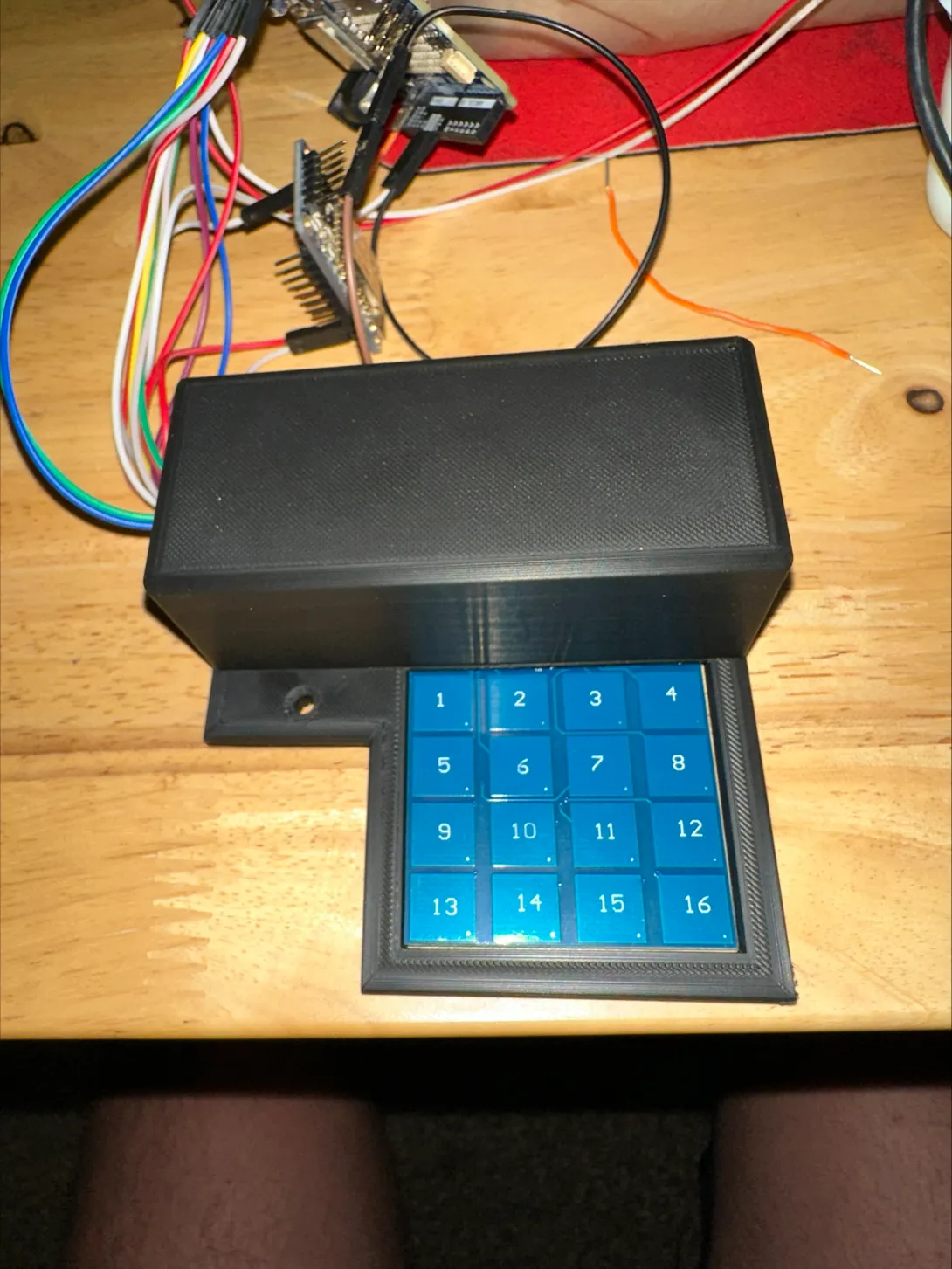
Team Sustain printer with components their lock box for home cooked meals
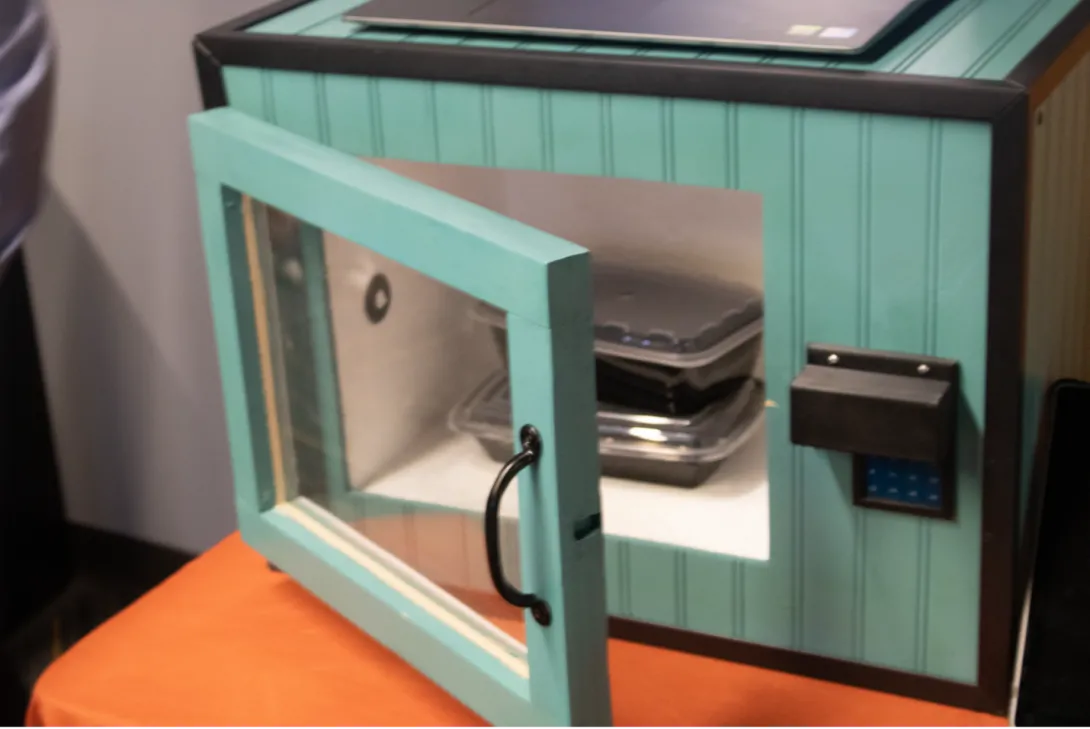
A lock box for home cooked meals is presented at the 2024 Spring Capstone Expo.
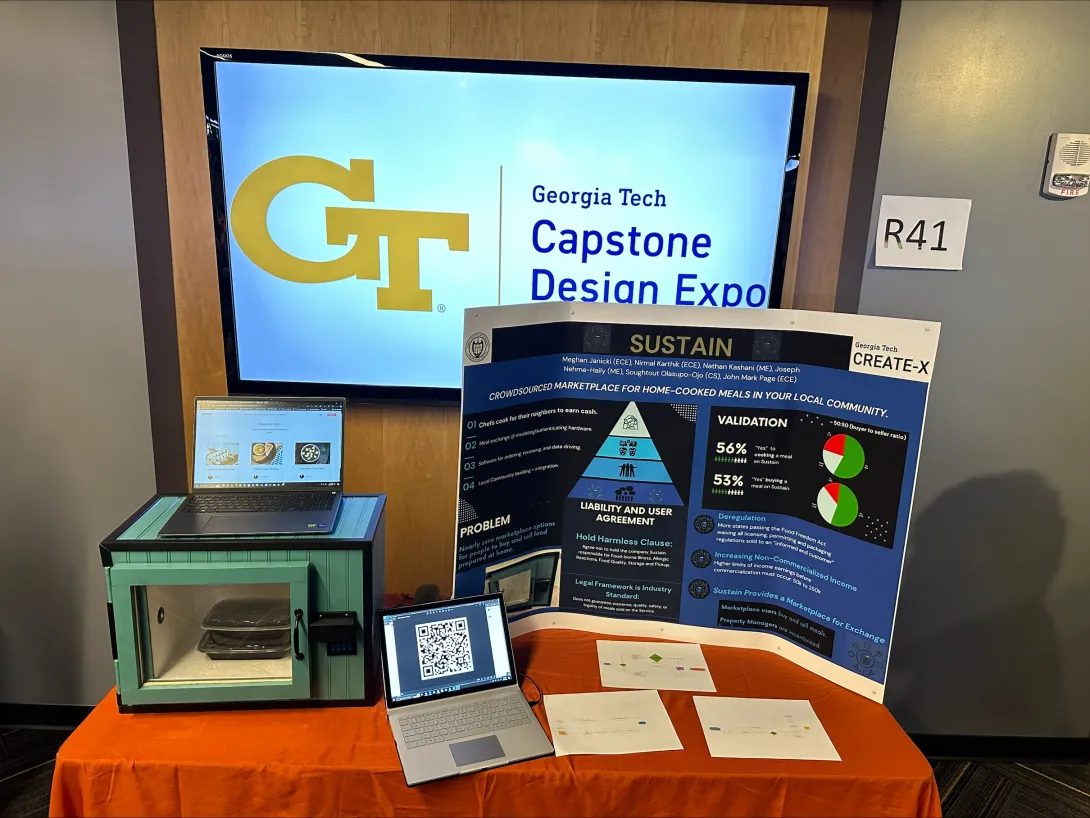
Team Sustain lock box for home cooked meals sits with a tri-fold explainer and a laptop with a QR code at the Spring 2024 Capstone Expo
CREATE-X Capstone Design offers students a unique opportunity to blend their technical skills with entrepreneurial ambitions. In this interdisciplinary program, teams of students identify real-world problems and develop innovative solutions through customer discovery and hands-on experience. Below we spotlight Team Sustain, a group of students who participated in the Spring 2024 Capstone Expo. Their project focused on bringing convenience to home-cooked meals, showcasing the practical application of their engineering and entrepreneurial skills. Read on to learn about their journey, their challenges, and how you can get involved in CREATE-X Capstone Design.
Team Sustain
Sustain offers a way to crowdsource meals and provide home cooks with a cash incentive. The system includes software for ordering, reviewing, and collecting data and hardware for meal exchange.
Nirmal Karthik, electrical and computer engineering
Soughtout Olasupo-Ojo, computer science
Nathan Kashani, mechanical engineering
Meghan Janicki, electrical and computer engineering
Joseph Nehme-Haily, mechanical engineering
John Mark Page, electrical engineering
Why did you all choose this project?
“One of the main things CREATE-X Capstone encourages us to do is customer discovery. Through our discussions, we realized that many people enjoy home-cooked meals but find them inconvenient to prepare. While most things in life are just a click away, home-cooked meals still require a personal touch. CREATE-X challenged us to find a problem and create a solution, so we focused on making home-cooked meals more convenient,” Page said.
Why CREATE-X Capstone?
“After graduation, I wanted to try my hand at entrepreneurship later. I thought CREATE-X was a good way for me to try and learn entrepreneurship skills: how to run a business, what it looks like, the timeline, and so on. Either way, if it went well or badly, I could say with my heart that I have an idea of how to do entrepreneurship,” Olasupo-Ojo said.
“You can go into a big city like Atlanta and actually feel like you can do something to help people. It is a great benefit, as opposed to being in the technical weeds of an engineering project. Mixing them together has been a great experience,” Janicki said.
“CREATE-X empowers students to think independently and explore projects they’re passionate about. We get to drive our projects and businesses, learning skills firsthand rather than just in theory,” Kashani said.
What was your biggest struggle?
“As engineers, we’re classically, especially in school, already given the problem. So, the challenge was figuring out what the problem was, and if our solution really solves the root cause of the problem. We figured out how to find the problem,” Page said.
“Figuring out the idea was our biggest struggle. We delved into markets to find opportunities and ways to help people,” Kashani said.
What has been your favorite part of this experience?
“The team. Make sure you surround yourself with good people, and I think each of us has done that. That’s what I’m proudest about — our team,” Page said.
What advice would you give to someone considering entrepreneurship?
“Develop the skill sets to see problems and be able to think about them. At the beginning of the semester, we were thinking about solar design and building solar design for farms, and now we are in a completely different space. But we’re still applying the same skills and building something up from it that matters. The most important skill is adaptability,” Janicki said.
“Be ready to make mistakes. You won’t get it right the first, second, or even third time. Customer discovery is a continuous process — don’t let setbacks discourage you,” Olasupo-Ojo said.
“Don’t be afraid to get started. If you’re feeling nervous or unsure, there’s only one way to find out, so I’d say go full force into it,” Kashani said.
CREATE-X Capstone Design is open to senior undergraduate students in mechanical engineering, electrical and computer engineering, industrial and systems engineering, and computer science. Course registration is available for the fall and spring semesters, and the current sections are ME4723-X/X01, CS4723-X/X01, ECE4853 X/LX, BME4723-X/X01, and ISYE4106.
CREATE-X also offers other programs like Startup Lab and Idea to Prototype, providing students with a foundational entrepreneurial education. For those interested in launching their own ventures, CREATE-X’s 12-week summer accelerator, Startup Launch, offers mentorship, $5,000 in seed funding, and $150,000 of in-kind services. The priority deadline for the accelerator is Nov. 17. Apply for Startup Launch to maximize your chances of acceptance and receive early feedback.
Making Sustain: The Gallery
News Contact
Breanna Durham
Marketing Strategist
Sep. 03, 2024
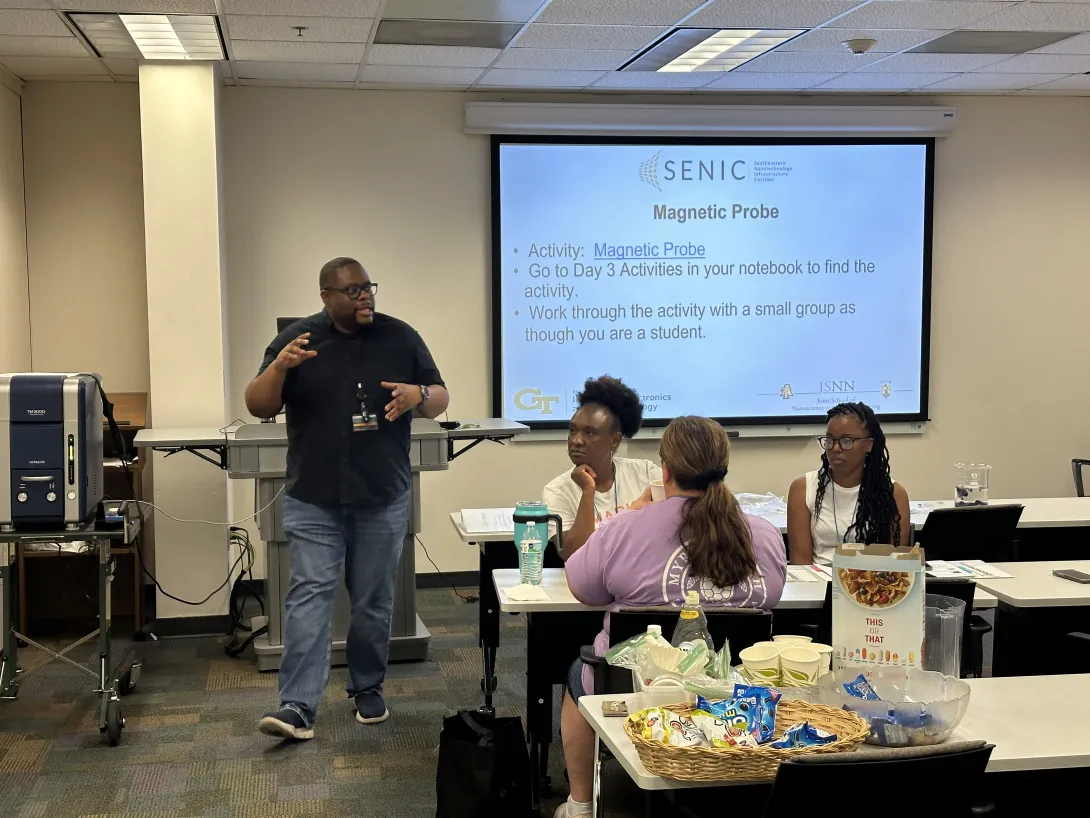
The Institute for Matter and Systems (IMS) has received $700,000 in funding from the National Science Foundation (NSF) for two education and outreach programs.
The awards will support the Research Experience for Undergraduates (REU) and Research Experience for Teachers (RET) programs at Georgia Tech. The REU summer internship program provides undergraduate students from two- and four-year programs the chance to perform cutting-edge research at the forefront of nanoscale science and engineering. The RET program for high school teachers and technical college faculty offers a paid opportunity to experience the excitement of nanotechnology research and to share this experience in their classrooms.
“This NSF funding allows us to be able to do more with the programs,” said Mikkel Thomas, associate director for education and outreach. “These are programs that have existed in the past, but we haven’t had external funding for the last three years. The NSF support allows us to do more — bring more students into the program or increase the RET stipends.”
In addition to the REU and RET programs, IMS offers short courses and workshops focused on professional development, instructional labs for undergraduate and graduate students, a certificate for veterans in microelectronics and nano-manufacturing, and community engagement activities such as the Atlanta Science Festival.
News Contact
Amelia Neumeister | Communications Program Manager
Aug. 28, 2024

Since it began in 2019, Georgia Tech and Emory University’s Computational Neural-Engineering Training Program has funded and trained doctoral students at the intersection of neuroscience, engineering, computation, and clinical experience.
“We saw that there was a new kind of neuroscience that was happening, to both understand the mysteries of the brain and nervous system and to treat related diseases and disorders,” says Garrett Stanley, program co-director, professor, and McCamish Foundation Distinguished Chair in the Walter H. Coulter Department of Biomedical Engineering (BME). “The program was created to fill this gap in training, and to provide a community for like-minded scientists and engineers across these disciplines.”
Combined with support from Georgia Tech and Emory, that community is set to grow with recently renewed and increased funding from the National Institutes of Health (NIH).
“We’re excited to expand the number of students funded and continue to grow our programs,” says Lena Ting, program co-director, professor, and McCamish Foundation Distinguished Chair in BME. “With this funding, we’ll continue to attract the best and brightest students.”
Expanding Access
Through courses, research, professional development, and community outreach, the two-year program provides unprecedented training and community for doctoral students in BME, electrical and computational engineering, neuroscience, machine learning, and beyond.
“Our program is unique in that it combines computation — both how the brain computes and how we can use computational tools to better understand the brain — and engineering of technologies for interfacing with the brain and nervous system,” says Stanley, who also co-directs the Neural Engineering Center with Ting.
Students are also exposed to neurology, rehabilitation, and other related fields through clinical course requirements.
“We teach our students alongside physical therapy and occupational therapy students to solve clinically relevant problems,” explains Ting, who teaches several of the courses. “We think early exposure to such clinical problems can accelerate the translation of basic research to the clinic.”
Originally slated to last five years, funding for the program comes from the T32 program of institutional training grants by the NIH and the National Institute of Biomedical Imaging and Bioengineering. Michael Borich, associate professor in the Emory University School of Medicine, and Chris Rozell, professor and Julian T. Hightower Chair in Georgia Tech’s School of Electrical and Computer Engineering, also serve as directors of the program.
“The NIH T32 funding mechanism is great because it enables universities to create training programs that span different traditional disciplines,” says Stanley. Without the need to create entirely new academic units, training programs like these provide funding for students conducting interdisciplinary research. Since the funding isn’t tied to a specific research group, it also gives students the flexibility to rotate through multiple labs to find the best fit. “In other words, it’s a game changer.”
With NIH funding renewed and expanded by 50%, the program will now have the capacity to fund more trainees.
“I love to see the program grow so more of our students and faculty can benefit,” said Ting. “Thanks to generous funding from Georgia Tech, we will also be able to support international students now, something we couldn’t do in the past.”
In addition to support from the NIH, Emory University School of Medicine, and the joint Georgia Tech-Emory BME Department, the program is further bolstered by support from Georgia Tech’s College of Engineering and the Office of the Executive Vice President for Research.
“While the NIH funding enables us to support the salary and tuition for students,” said Stanley, “local support from Georgia Tech and Emory enables us to not only manage the growing program and provide reporting back to the NIH, but also to provide student-initiated training workshops in emerging technical areas, career development activities, training in neuroethics, and social events that help to bring the community together.”
The community, he said, is the “most exciting and significant part of this. The network of talented people brought together through this program will be valuable and influential for years to come.”
News Contact
Audra Davidson
Communications Manager
Neuro Next Initiative
Aug. 20, 2024
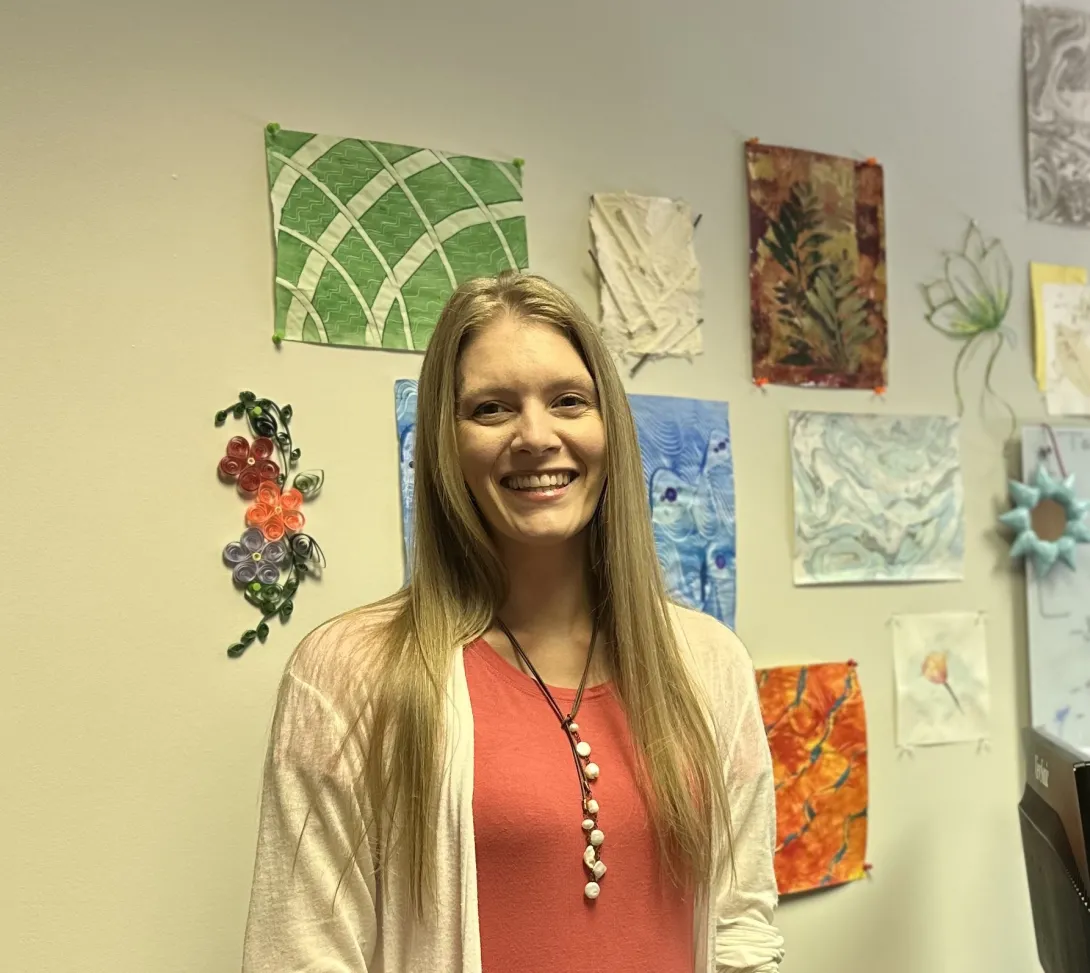
Anna Doll
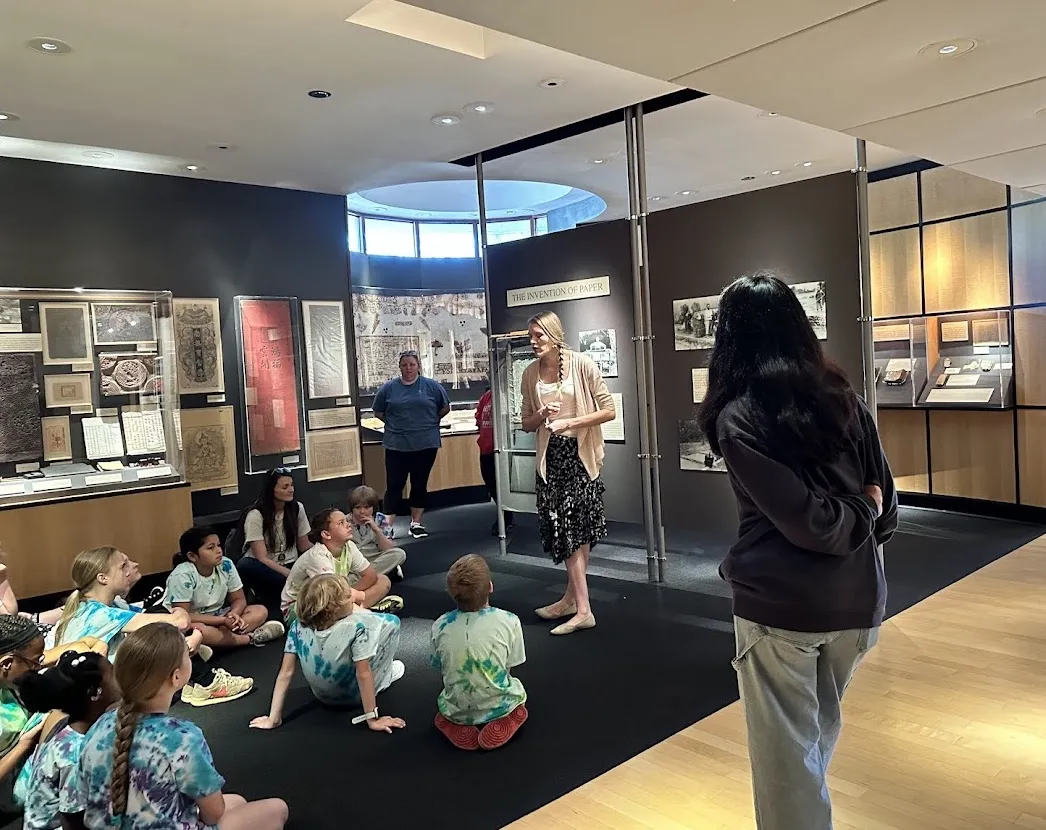
Doll giving a tour of the Robert C. Williams Museum of Papermaking to K-12 Students
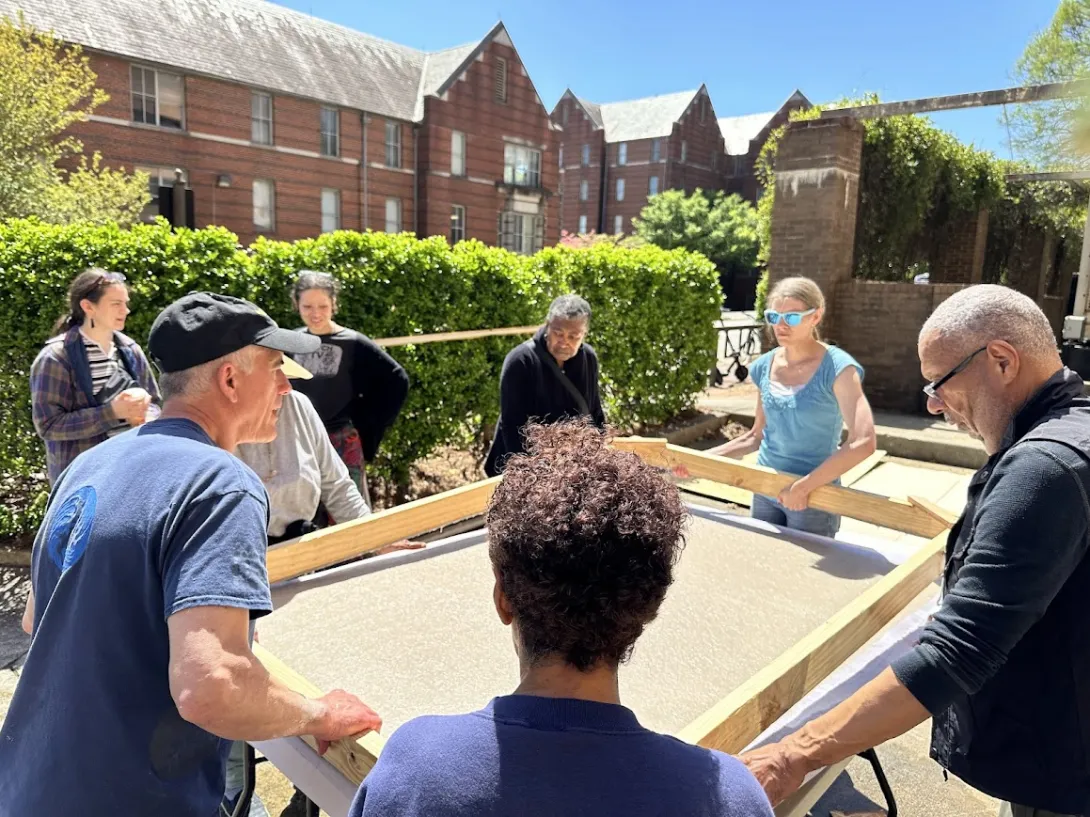
Anna Doll, Tom Balbo and workshop participants during the Big Paper Workshop
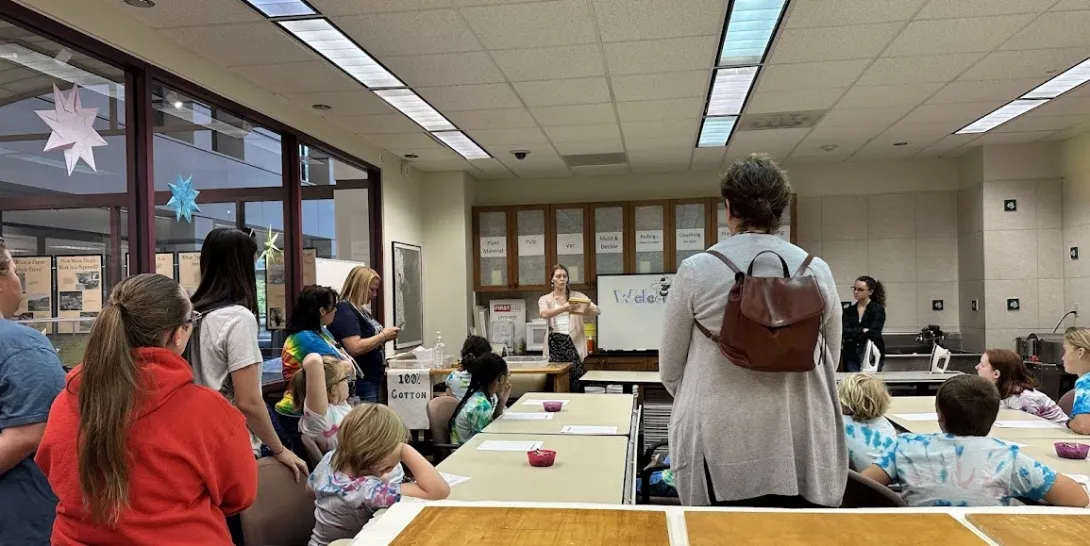
Doll during a paper-making session with K-12 Students
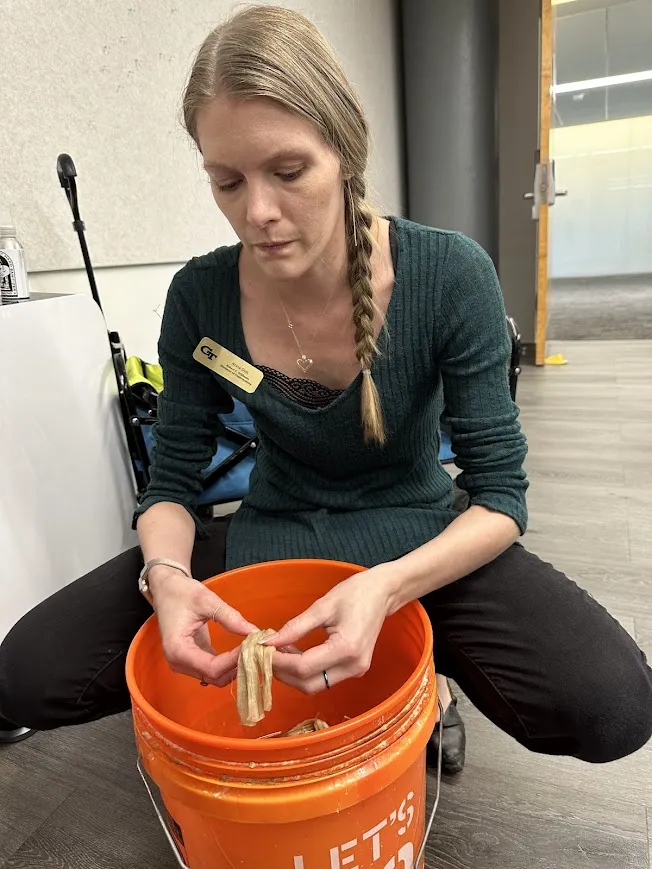
Doll prepping the fiber during Tech's Tactile Thursdays
Anna Doll is the education curator at the Robert C. Williams Museum of Papermaking, located in Georgia Tech’s Renewable Bioproducts Institute. Doll’s day-to-day responsibilities, and the many projects she handles at the museum, bring tremendous value not only to the Georgia Tech community, but also to the papermaking community around the world.
With a degree in art education and a minor in art history, Doll began her career as an elementary school art teacher in Pinellas County, Florida. She then became the director of Museums for the Folk Pottery Museum of Northeast Georgia and the Sautee Nacoochee Cultural Center History Museum and Heritage Site.
In 2019, Doll joined the Robert C. Williams Museum of Papermaking team as its education curator. At the museum, she creates and manages programs that include educational tours, private and public workshops on papermaking, specialized workshops through creative collaborations with artists, collaborations with other campus units for STEAM activities, and community events for kindergarten through senior adult audiences.
"I didn't know a whole lot about papermaking when I first started here," admits Doll, "but I knew how to be an education curator." Her ability to swiftly absorb the history and concept of papermaking and translate it into engaging educational experiences has been instrumental in her success. Below are a few highlights of Doll’s projects.
Museum Tours
Doll’s daily activities include educational tours of the papermaking museum for groups of all ages. The tours range from introducing the papermaking process to elementary and middle school students to sharing the history and heritage of papermaking with adults. In addition, she conducts virtual programs for groups interested in the history of paper and the technological advances of the papermaking process since its invention many centuries ago.
Workshops
Doll is the point of contact for public and private workshop bookings. She also develops the concepts for these sessions, catering to groups with various interests (e.g., Girl Scouts, Boy Scouts, people with disabilities, teachers, artists, college students, and public groups). This spring, Doll’s workshops included Suminagashi, Production Papermaking, Petal Fold Book, Paper Casting, and Magic Box: Jacob’s Ladder.
In addition to conceptualizing and conducting tours and workshops, she designs curricula and other resources involving paper art and science for K-12 teachers to integrate into their art classes.
Big Paper Workshop – Convening Artists, Educators, and Community Members for a Transformative Experience in Papermaking
This spring, Doll and her colleague Jerushia Graham created a communal workshop called “Big Paper.” Offered on multiple days, this project included five college groups from Georgia and Alabama and community groups from metro Atlanta who got to create a large sheet of paper from pulp. Participants beat plant material by hand to prepare the fiber and worked with Tom Balbo, founding director of the Morgan Conservatory, to create a huge 4’x6’ sheet of paper that was mailed back to them once it was dry.
Through her work at the museum, Doll has cultivated relationships with various artists, all of whom collaborate with the museum to conduct workshops and create and showcase art exhibits.
Additional Collaborations Across Campus
Doll partners with other units on campus to create programs. She collaborated with the Georgia Tech Library on a program called “Tech's Tactile Thursdays.” Hosted on the first Thursday of each month, it allows students, faculty, and staff to work on hands-on projects related to paper and provides an opportunity for the largely technology-focused participants to take a break from their routine, relax, and explore their creative side and enhance their well-being.
Doll also has been an active educator at Georgia Tech Science and Engineering Day, which is part of the Atlanta Science Festival. This year, more than 3,000 K-12 students and parents visited Georgia Tech’s campus to engage in hands-on STEAM activities. Representing the museum, Doll worked with families to make prints on a clamshell printing press featuring a custom-designed Buzz image (designed by Doll) on a postcard for the kids to take home. The activity showcased the rich history of the printing press and modern technology with a photopolymer printing plate.
Through these diverse projects and initiatives at the museum, Doll continues to make a difference in the world of papermaking. Looking ahead, she hopes to expand the museum’s educational initiatives as well as the education team and its resources, and she envisions broadening the museum’s reach and impact by offering free programs to schools through grants. She is also working with Georgia Tech faculty and researchers on museum research into the art of nano cellulose and plans to establish a paper and natural dye garden for teaching.
News Contact
Priya Devarajan | RBI Communications Program Manager
May. 02, 2024
The University System of Georgia Board of Regents has approved a new Neuroscience and Neurotechnology Ph.D. Program at Georgia Tech.
The interdisciplinary degree is a joint effort across the Colleges of Sciences, Computing, and Engineering. The program expects to enroll its first graduate students in Fall 2025, pending approval by the Southern Association of Colleges and Schools Commission on Colleges.
The Institute Curriculum Committee has also approved a new Minor in Neuroscience, set to become available in the Georgia Tech 2024-2025 Catalog.
B.S. in Neuroscience
The Ph.D. and Minor offerings build on the recently launched Neuro Next Initiative in Research, and the established Undergraduate Program in Neuroscience, respectively.
Approved by the Board of Regents in 2017, the interdisciplinary B.S. in Neuroscience degree in the College of Sciences enrolled more than 400 undergraduate students in 2022, and has been the fastest growing undergraduate major at Georgia Tech.
The B.S. in Neuroscience is also key to a strong ecosystem of undergraduate neuroscience education across the state, which includes peer programs at Mercer University, Augusta University, Georgia State University, Agnes Scott College, and Emory University.
Ph.D. in Neuroscience and Neurotechnology
The new doctoral degree will provide a path for the rapidly growing pipeline of in-state neuroscience undergraduate students and young alumni — while also welcoming a wider slate of graduate researchers to campus.
The Ph.D. Program’s mission is focused on educating students to advance the field of neuroscience through an interdisciplinary approach, with scientists and engineers of different backgrounds — ultimately integrating neuroscience research and technological development to study all levels of nervous system function.
Biological Sciences Professor Lewis A. Wheaton, who chaired the Ph.D. Program Planning Committee, shares that a cohort model will fuse “experimental and quantitative skill development, creating opportunities for students to work in science and engineering labs to promote collaborations, while also fostering a program and community that’s unique to the state and against national peer offerings.”
Expanding innovation — and impact
Wheaton explains that the new Ph.D. aims to equip graduates for a wide range of employment opportunities and growing specializations, including computational neuroscience, neurorehabilitation, cultural and social neuroscience, neuroimaging, cognitive and behavioral neuroscience, developmental neuroscience, and neurolinguistics.
The new degree will also help meet the country’s growing demand for a neuro-centric workforce. According to the U.S. Bureau of Labor Statistics, job growth for medical scientists (including neuroscientists) tracked around 13% between 2012 and 2022, faster than the average for all tracked occupations.
Wheaton adds that the program will equip neuroscientists to conduct research that can significantly improve lives.
Seeking students
The Planning Committee anticipates a tentative February 1, 2025 application deadline for Fall 2025 enrollments — and encourages students with the following interests to learn more and apply in the coming school year:
- Developing deeper quantitative, computing and/or engineering skills to make scientific discoveries that support innovations in neuroscience
- A clear, comprehensive understanding of the nervous system at all scales from molecular to systems
- Understanding how to use and innovate new tools and approaches to investigate the nervous system at all levels
- Becoming uniquely qualified to translate knowledge across neuroscience and related disciplines to create new knowledge in their professional pursuits
Director search
The participating Colleges will soon conduct a search for a program director, engaging a tenured member of the Georgia Tech faculty to serve as the new program’s administrator. A graduate program committee composed of five faculty members and mentors across the Colleges of Sciences, Computing, and Engineering, will also be created.
During their April 2024 meeting, Regents also announced budget approvals and tuition changes for Georgia's 26 member institutions.
The Ph.D. Program Planning Committee included the following faculty:
- Lewis Wheaton (Committee Chair, Biological Sciences)
- Constantine Dovrolis (Computer Science)
- Christopher Rozell (Electrical and Computer Engineering)
- Eric Schumacher (Psychology)
- Garrett Stanley (Biomedical Engineering)
- David Collard (College of Sciences Office of the Dean)
News Contact
Programs:
- Ph.D. in Neuroscience and Neurotechnology
Contact Professor Lewis Wheaton, Planning Committee Chair - Undergraduate Program in Neuroscience
- Minor in Neuroscience
- Georgia Tech Neuro and Neuro Next
Press Contact:
Jess Hunt-Ralston
Director of Communications
College of Sciences at Georgia Tech
Neuro Next Initiative:
Sarah Peterson
Program Manager
GT Neuro
Audra Davidson
Research Communications Program Manager
Neuro Next Initiative at Georgia Tech
May. 02, 2024
When Amy Bonecutter-Leonard was a second-semester undergraduate at the Georgia Institute of Technology, she applied for a work-study job in the cleanroom at the Microelectronics Research Center (MiRC). There, she learned process techniques for making the same type of electronic chips used in cellphones.
With this new knowledge, she could train and help other students with their research. At the time, Bonecutter-Leonard was a chemical engineering major with no plans to go into microelectronics. Working in the cleanroom changed that.
“I fell in love with microelectronics through exposure to the research and development work performed in the cleanroom,” she said.
What started as a student job led to her taking microelectronics classes — and eventually to a career in the field. “My work-study prepared me with hands-on technical skills I would have never learned from just being in a classroom,” she said. Now, Bonecutter-Leonard works as a microelectronics business chief engineer at defense contractor L3Harris Technologies.
Her story is one of many from the Institute for Electronics and Nanotechnology (IEN, the successor to MiRC), which has been training students from kindergarten to graduate school to be leaders in the microelectronics and nanotechnology space. The goal of IEN’s outreach is to make nanotechnology and microelectronics — such as computer chips and sensors — as accessible as any other science. Ultimately, these efforts will build up the U.S. workforce in the field, ensuring the country remains at the forefront of the technology that powers Americans’ everyday lives.
Building the Workforce
Bolstering the number of workers in the microelectronics industry is imperative to keep the U.S. globally competitive. Right now, 40% of the industry's labor force is older than 50, with practitioners aging out of their careers at a pace new talent cannot match. Additionally, heavy educational barriers to entry, including required degrees and specialized training, prevent more people from pursuing careers in the field. Without dedicated efforts, the entire sector — and the nation — will fall behind.
IEN is working to solve this pipeline problem.
“With the national semiconductor workforce aging, it is important now more than ever that we educate the next generation to move into these jobs,” said Michael Filler, IEN’s interim executive director. “IEN is proud to support the semiconductor industry by providing students with the interdisciplinary skills and hands-on technical training essential for success in this fast-paced, global field.”
Georgia Tech is uniquely positioned to lead this charge with its 28,500 square feet of academic cleanroom space, the largest in the Southeast and among the largest in the U.S. From micro-electro-mechanical systems to electronics fabrication, workers have 100 bays in which to conduct leading-edge research. These cleanrooms are also key teaching and training facilities.
IEN invites anyone from around the world, whether affiliated with the Institute or not, to become a core user of the cleanroom facilities. The center also regularly hosts short courses for external partners — academic, industry, and government — in microfabrication and soft lithography for microfluidics. Over the past three years, more than 700 people went through new-user orientation, and 193 enrolled in the short courses.
Teaching the Next Generation
Making nanotechnology — of which microelectronics is an example — educationally accessible begins before college. Each semester, more than 800 K-12 students participate in IEN’s Introduction to Nanotechnology virtual lesson. Associate Director for Education and Outreach Mikkel Thomas begins his presentations by asking a simple question: What do you know about nanotechnology?
“About 99% of the time, they say that’s what makes Ironman’s suit work,” said Thomas. “That means they’ve learned the wrong lesson — that nanotechnology is a futuristic tech and that you have to be as smart as Tony Stark to work in the field.
“But most people interact with nanotechnology multiple times throughout their day, and they have no idea they're doing it.”
Thomas also emphasizes there is a career path for everyone, even if they don’t plan to get a traditional four-year degree. Part of IEN’s workforce development initiative is to build up the entire pipeline from industry and research lab technicians at the certificate level to postdoctoral researchers.
“It’s important for us to reach kids who don’t know what career options are available in nanotechnology,” Thomas said. “We want them to know that whatever they're interested in, there is a pathway for them.”
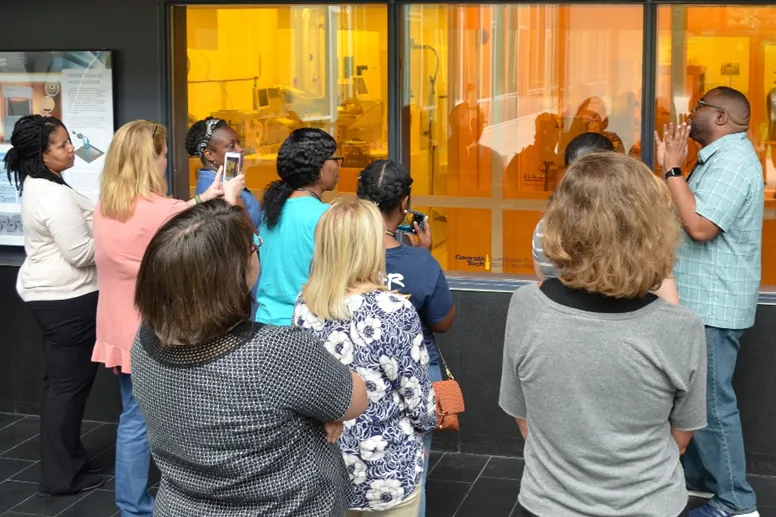
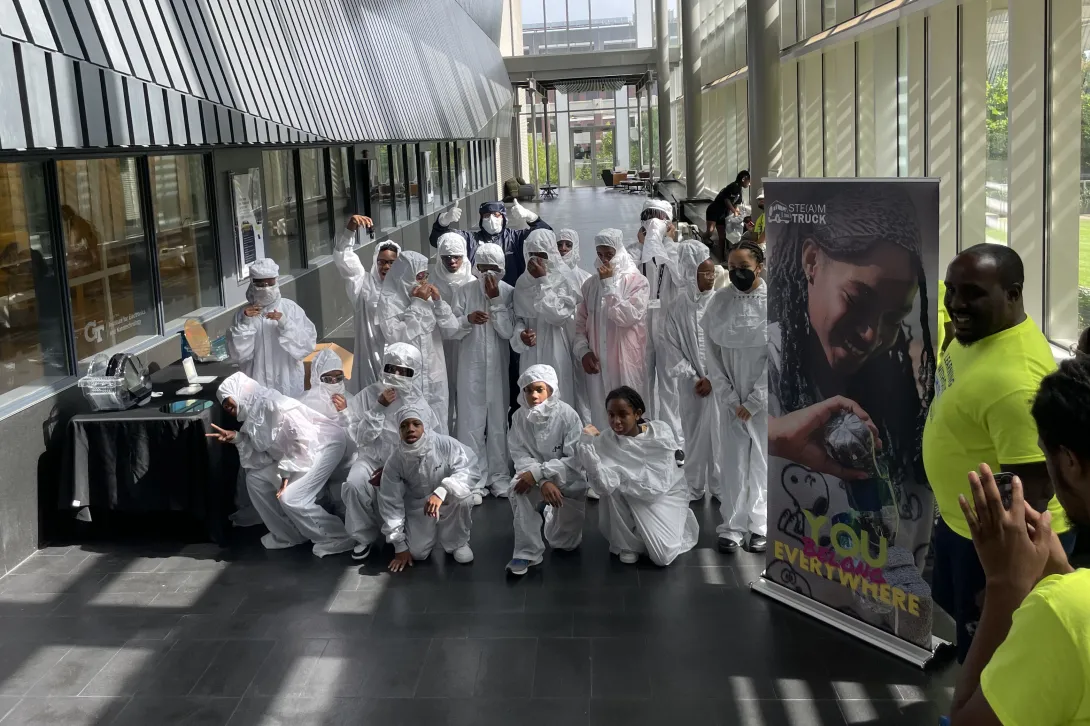
Sixth- through eighth-grade students sparked by this conversation can attend Chip Camp, a three-day STEM summer camp sponsored by Micron. They begin with a day at IEN to learn about thin films, magic sands, ferrofluids, and measuring their height in nanometers. The rest of the camp features hands-on visits to the Materials Characterization Facility (MCF) and the IEN cleanroom, where they can try on the white “bunny suits” technicians wear in the lab.
To further their reach, IEN’s workforce development team collaborates with teachers to bring nanotechnology into classrooms. During the summer, IEN offers the Research Experience for Teachers, a training program for public school and community college teachers to conduct nanotechnology research and learn how to incorporate it into their lessons. Middle school teachers have similar opportunities through the Nanoscience Summer Institute for Middle School Teachers.
Training the Workforce
When these students get to a university like Georgia Tech, IEN hires them for work-study jobs like the one Bonecutter-Leonard had. The hands-on cleanroom training is also vital to graduate students pursuing advanced degrees.
Katie Young earned her Ph.D. in materials science and engineering at Georgia Tech. Learning her way around the IEN cleanroom was essential for her graduate studies.
“My dissertation research involved synthesizing two-dimensional materials — only a single atom thick — for permeation barriers,” she explained. “I often used the cleanroom’s vacuum systems to synthesize and process 2D materials.” Now a research scientist at the Georgia Tech Research Institute, Young still works in the cleanroom on semiconductor device fabrication, building prototype quantum and biological sensors.
IEN opportunities are not limited to graduate research. Annually, about 150 Georgia Tech undergraduate students take microelectronics packaging and devices classes, with labs taught by IEN staff in the teaching cleanroom. These courses include Integrated Circuit Fabrication (ECE 4452), in which students learn to fabricate circuit elements, and the Science and Engineering of Microelectronic Fabrication (ChBE 4050/6050, open to graduate students as well), for students interested in semiconductor materials and fabrication.
Students don’t need to enroll at Georgia Tech to benefit from training, courses, and other opportunities. IEN’s internship program provides technical college students with training to become microelectronics technicians, either through work in the Biocleanroom or in the MCF.
Empowering Future Innovators
IEN also participates in the National Science Foundation Research Experiences for Undergraduates (REU), which provides opportunities for students from underrepresented groups or who attend schools without similar facilities. While enrolled at another university, John Mark Page was introduced to Georgia Tech’s cleanroom through an REU.
“That was my first exposure to any facility of this kind, and it felt like I was looking at the future. Being in a facility that can fabricate devices at or near the atomic level — it was hard to fathom,” Page said. “I had never thought that participating in microelectronics and nanotechnology as a student, especially as an undergraduate, was something I could do.”
As a result of his REU, Page transferred to Georgia Tech — he will graduate this summer with a bachelor’s degree in electrical engineering. He also completed a second REU at the University of North Carolina at Chapel Hill, worked as a student assistant in the IEN cleanroom, and participated in a Vertically Integrated Project (VIP), Chip Scale Power and Energy.
“I was interested in the VIP because it allowed me to spend more time in the cleanroom, familiarizing myself with semiconductor fabrication methods and training on new fabrication equipment,” Page explained. His experiences inspired him to consider a future career in the semiconductor industry.
“It wasn’t only the 10-week experience of the REU that made a lasting impact on me,” he said. “It was also the relationships formed with the people of IEN. The staff there are exceptional representatives of Georgia Tech, and they make IEN a tremendous asset to the future of microelectronics and nanotechnology in the U.S.”
Biya Haile, an ECE Ph.D. student, had a similarly meaningful REU experience. Haile, whose research focuses on creating micro-electro-mechanical systems-based sensors (MEMS), described the REU as “immersive.”
“The REU project enabled me to study chemical micro-sensor technologies, as well as state-of-the-art additive nano-manufacturing techniques, which has contributed to my research,” he said. “I feel lucky that my academic journey has entailed developing new technologies that use nanoscience to solve big problems.”
While Haile is currently focused more on designing and testing rapid processes for fabricating MEMS-based devices, he still occasionally works in the cleanroom on fabrication. He plans to go into the microelectronics industry after graduating.
The Path Ahead
All of IEN’s training and educational offerings align with IEN’s mission to bolster and diversify the microelectronics workforce, according to George White, senior director of strategic partnerships for the Georgia Tech research enterprise. “IEN has been at the forefront of the CHIPS infrastructure buildout, particularly in the area of education and workforce development,” he noted.
IEN’s efforts impact not just Atlanta but the entire country. Georgia Tech’s leadership in microelectronics research trains the innovators and practitioners of the future everywhere and ensures that America stays at the forefront of leading-edge technology. As demand increases for microelectronics, IEN is moving to meet it.
Effective July 1, 2024, the Institute for Electronics and Nanotechnology and the Institute for Materials will evolve into the Institute for Matter and Systems (IMS). This strategic union aims to foster convergent research at Georgia Tech, focusing on the science, technology, and societal underpinnings of cutting-edge materials and devices. Eric Vogel will be the director of IMS, and Michael Filler will be the deputy director.
Apr. 19, 2024

The University System of Georgia (USG) Board of Regents honored 12 Georgia Tech faculty members across campus with Regents’ appointments at its April meeting.
Among those recognized is Georgia Tech Manufacturing Institute (GTMI) Executive Director Thomas Kurfess, who was named Regents' Professor. The highest distinction awarded by the USG, Regents' distinctions recognize faculty members for academic, innovation, and entrepreneurial excellence.
About Kurfess
Thomas Kurfess
Regents’ Professor, George W. Woodruff School of Mechanical Engineering
HUSCO/Ramirez Distinguished Chair in Fluid Power and Motion Control
Kurfess researches advanced manufacturing systems, designing, developing, and optimizing new approaches for complex production systems. He helps lead a $65 million effort to use artificial intelligence in manufacturing and transform Georgia’s industrial economy. The Georgia AI Manufacturing (GA-AIM) Technology Corridor is creating and deploying new AI innovations across all manufacturing sectors while training the necessary talent and workforce.
In addition to his role as executive director of GTMI, Kurfess is the 2023-24 president of the American Society of Mechanical Engineers (ASME).
He served as chief manufacturing officer at Oak Ridge National Laboratory from 2019 to 2021, overseeing strategic planning in advanced manufacturing. Kurfess also previously led the advanced manufacturing team at the White House Office of Science and Technology Policy during the Obama administration from 2012 to 2013.
Kurfess is a member of the National Academy of Engineering and a fellow of the Society of Manufacturing Engineers, ASME, and the American Association for the Advancement of Science.
News Contact
Audra Davidson
Research Communications Program Manager
Institute Communications