
Mar. 18, 2024
Computer science educators will soon gain valuable insights from computational epidemiology courses, like one offered at Georgia Tech.
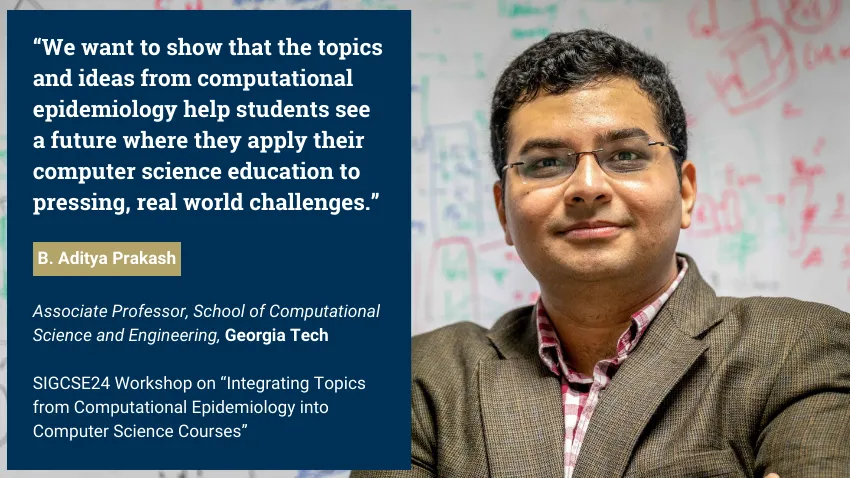
B. Aditya Prakash is part of a research group that will host a workshop on how topics from computational epidemiology can enhance computer science classes.
These lessons would produce computer science graduates with improved skills in data science, modeling, simulation, artificial intelligence (AI), and machine learning (ML).
Because epidemics transcend the sphere of public health, these topics would groom computer scientists versed in issues from social, financial, and political domains.
The group’s virtual workshop takes place on March 20 at the technical symposium for the Special Interest Group on Computer Science Education (SIGCSE). SIGCSE is one of 38 special interest groups of the Association for Computing Machinery (ACM). ACM is the world’s largest scientific and educational computing society.
“We decided to do a tutorial at SIGCSE because we believe that computational epidemiology concepts would be very useful in general computer science courses,” said Prakash, an associate professor in the School of Computational Science and Engineering (CSE).
“We want to give an introduction to concepts, like what computational epidemiology is, and how topics, such as algorithms and simulations, can be integrated into computer science courses.”
Prakash kicks off the workshop with an overview of computational epidemiology. He will use examples from his CSE 8803: Data Science for Epidemiology course to introduce basic concepts.
This overview includes a survey of models used to describe behavior of diseases. Models serve as foundations that run simulations, ultimately testing hypotheses and making predictions regarding disease spread and impact.
Prakash will explain the different kinds of models used in epidemiology, such as traditional mechanistic models and more recent ML and AI based models.
Prakash’s discussion includes modeling used in recent epidemics like Covid-19, Zika, H1N1 bird flu, and Ebola. He will also cover examples from the 19th and 20th centuries to illustrate how epidemiology has advanced using data science and computation.
“I strongly believe that data and computation have a very important role to play in the future of epidemiology and public health is computational,” Prakash said.
“My course and these workshops give that viewpoint, and provide a broad framework of data science and computational thinking that can be useful.”
While humankind has studied disease transmission for millennia, computational epidemiology is a new approach to understanding how diseases can spread throughout communities.
The Covid-19 pandemic helped bring computational epidemiology to the forefront of public awareness. This exposure has led to greater demand for further application from computer science education.
Prakash joins Baltazar Espinoza and Natarajan Meghanathan in the workshop presentation. Espinoza is a research assistant professor at the University of Virginia. Meghanathan is a professor at Jackson State University.
The group is connected through Global Pervasive Computational Epidemiology (GPCE). GPCE is a partnership of 13 institutions aimed at advancing computational foundations, engineering principles, and technologies of computational epidemiology.
The National Science Foundation (NSF) supports GPCE through the Expeditions in Computing program. Prakash himself is principal investigator of other NSF-funded grants in which material from these projects appear in his workshop presentation.
[Related: Researchers to Lead Paradigm Shift in Pandemic Prevention with NSF Grant]
Outreach and broadening participation in computing are tenets of Prakash and GPCE because of how widely epidemics can reach. The SIGCSE workshop is one way that the group employs educational programs to train the next generation of scientists around the globe.
“Algorithms, machine learning, and other topics are fundamental graduate and undergraduate computer science courses nowadays,” Prakash said.
“Using examples like projects, homework questions, and data sets, we want to show that the topics and ideas from computational epidemiology help students see a future where they apply their computer science education to pressing, real world challenges.”
News Contact
Bryant Wine, Communications Officer
bryant.wine@cc.gatech.edu
Feb. 12, 2024
The University of Waterloo and the Board of Regents of the University System of Georgia, representing Georgia Institute of Technology (Georgia Tech), have officially entered a Memorandum of Understanding (MOU) to strengthen academic and research ties between the two institutions. The MOU signifies a commitment to fostering collaborative initiatives in research, education, and other areas of mutual interest. Both universities, recognized for their global impact and innovation, are eager to embark on this journey of cooperation.
Charmaine Dean, Vice-President of Research & International, shared, “The University of Waterloo is pleased to embark on a new collaboration with Georgia Tech, featuring faculty and student exchanges, joint research projects, dual degrees, and conferences. Strengthening ties between our institutions through this collaboration creates a dynamic environment for our faculty and students to foster innovation in many areas of mutual excellence.”
“Georgia Tech is excited to see its NSF AI Institute for Advances in Optimization (AI4OPT), under the leadership of Prof. Pascal Van Hentenryck, partner with experts from the Waterloo Artificial Intelligence Institute of the University of Waterloo. I am really looking forward to the impact that this partnership will have in advancing the fundamental knowledge of AI, in further expanding its applications, and in enabling its wider adoption,” noted Prof. Bernard Kippelen, Vice Provost for International Initiatives at Georgia Tech.
This collaboration is poised to elevate the academic and research landscape of both institutions, promoting global engagement and creating opportunities for students and faculty to thrive in an interconnected world.
News Contact
Breon Martin
Nov. 27, 2023
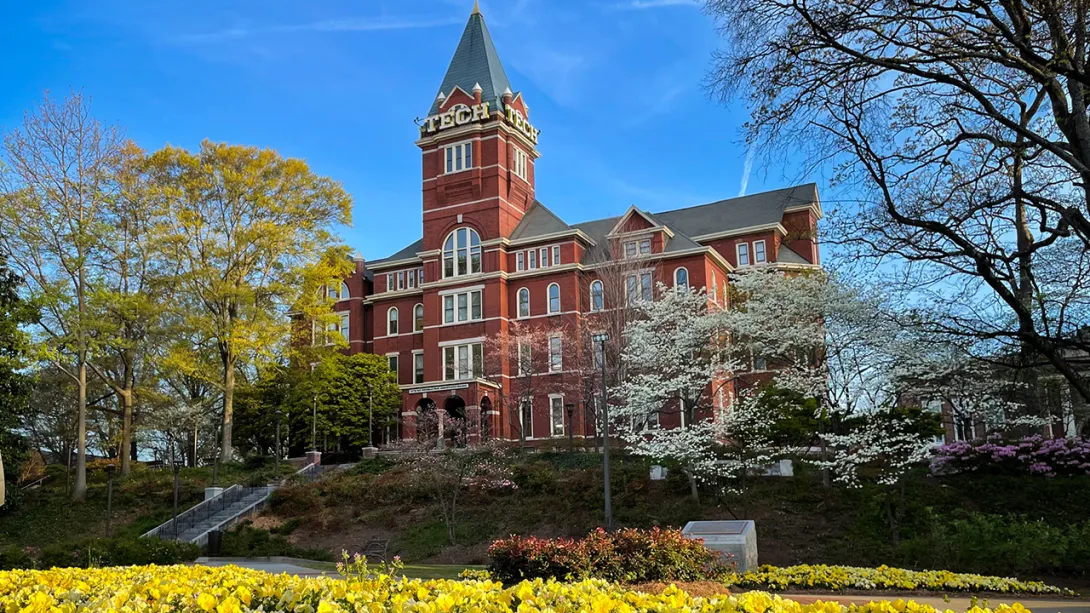
The Renewable Bioproducts Institute (RBI) at Georgia Tech benefits from a substantial endowment that is invested to advance the evolving science and technology needs of the bioproducts industry and emerging bioeconomy through graduate research. The endowment over the years has supported more than 1,500 engineers and scientists and a leading body of scientific research. RBI has released the Request For Proposals (RFP) for the annual year 2024-25 fellowships. Proposals are due on Feb. 1, 2024. The RFP document describing the application process and several important changes for this year can be found at 2024-25 RFP Proposals.
The principal mission of RBI is to incubate and develop interdisciplinary teams of researchers that can establish thought leadership through new bioproduct research directions. Our focus is on pre-competitive, use-inspired research with a technical, economic, or policy focus. All supported work needs to address an aspect of bioproducts and the developing bioeconomy. The RBI Fellowship supports this mission by promoting two objectives:
(1) Helping teams of faculty to establish new concepts, publish early results, and develop competitive federal, industry, or foundation proposals in the future.
(2) Training a diverse group of graduate-level professionals who can support the evolving bioproducts R&D workforce.
***NEW PROGRAM CHANGES***
- Along with Graduate Research Assistant (GRA) stipend and tuition support, RBI will provide $1,000 of materials and supplies funding or a $1,000 credit toward the use of RBI’s analytical facilities.
- The fellowship was formerly called the PSE (Paper Science and Engineering Fellowship). It has been renamed as the RBI Fellowship.
- The fellowship minor requirement has been changed from 12 hours to nine hours. The minor will consist of two core courses and one elective, described here. For students outside of the College of Sciences or College of Engineering, an alternative set of courses can be considered.
- Awards can support GRAs from any school within Georgia Tech and can be advised by teams consisting of faculty from any Georgia Tech school, although the relevance of the disciplines included must be clear.
News Contact
Priya Devarajan || RBI Communications Program Manager
Nov. 03, 2023
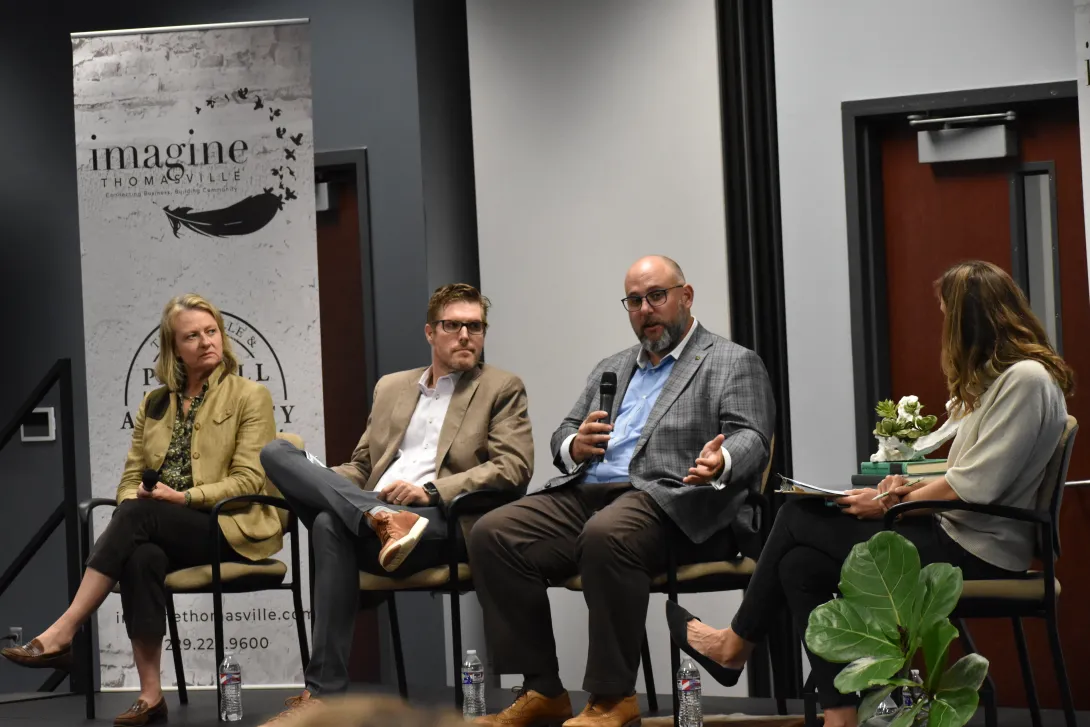
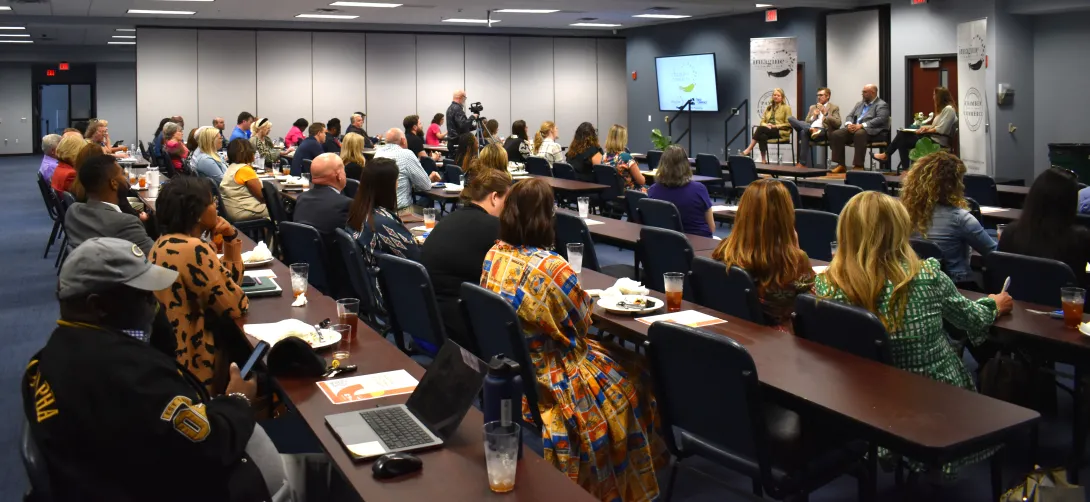
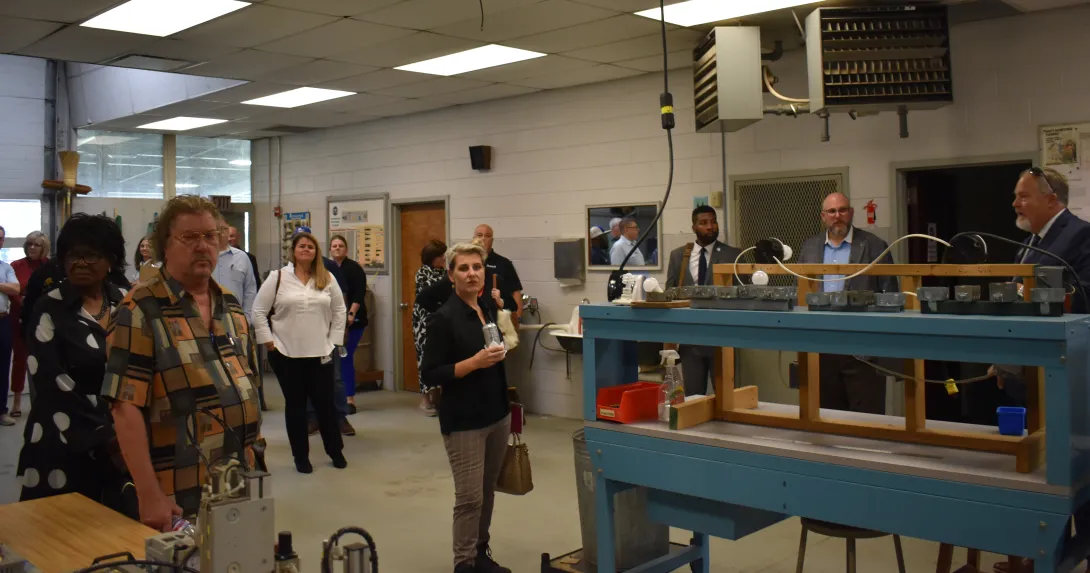
Members of the Georgia Artificial Intelligence in Manufacturing (Georgia AIM) team from the Georgia Institute of Technology met with local partners, manufacturers, and business leaders in Thomasville last week to discuss how investments from the $65 million statewide federal grant can accelerate the transition to automation in manufacturing in South Georgia. The meeting was held at Southern Regional Technical College (SRTC), one of the Georgia AIM partners.
“This grant is an investment in a better and brighter future for communities all across the state including Thomasville,” said Danyelle Larkin, educational outreach manager with the Center for Education Integrating Science, Mathematics, and Computing (CEISMC) at Georgia Tech. “By harnessing the power of AI, we can open up new, better-paying manufacturing jobs while preparing workers and students with the skills they need to succeed in an increasingly high-tech world.”
The meeting highlighted one of the recent developments of the Georgia AIM project: A future lab at Southern Regional Technical College dedicated to manufacturing technology. CEISMC is providing instructional support and curricula, thanks to the program’s expertise in STEM education, while collaborations with other experts at Georgia Tech and the Southwest Georgia community are identifying new technologies and opportunities for jobs in the area.
At the meeting, Aaron Stebner, co-director of Georgia AIM and associate professor of mechanical engineering and materials science and engineering, talked about the potential for AI to revitalize the economy in areas of the country that have struggled for decades.
“The reason a lot of the manufacturers are coming back and growing in the U.S. is because the automation and the AI creates a logistics model that makes it advantageous again to manufacture in the U.S. instead of overseas,” he said. Stebner also talked about how AI is automating many jobs “that humans just don’t want to do anymore and creates more space for the creative jobs that tend to create better internal motivation and higher pay.”
In addition to talking with local manufacturers and touring their facilities, Stebner participated in the Thomasville-Thomas County Chamber Connects panel discussion “Scary Smart: How AI Can Drive Your Business” with Jason Jones, president/CEO of S&L Integrated and Haile McCollum, founder and creative director of Fountaine Maury. The panel was hosted by Katie Chastan of TiskTask, a local workforce development company that is a partner in the Georgia AIM project.
During the meeting, SRTC announced the creation of a new Precision Machining and Manufacturing Lab on its Thomasville campus with an anticipated opening in the fall of 2024. The lab will host two new programs, including Precision Machining & Manufacturing and Manufacturing Engineering Technology. The Georgia AIM grant provided $499,000 in funding for the lab, as well as staffing support.
“A lab for precision manufacturing at Southern Regional Technical College breathes innovation into Thomasville’s existing industry, fueling their growth and ensuring they stay at the cutting edge of technology and competitiveness,” said Shelley Zorn, executive director of the Thomasville Payroll Development Authority.
“The result is a stronger industry base and higher paying jobs for Thomas County citizens and the region,” Zorn said. “It is also a wonderful recruiting tool for new advanced manufacturing partners.”
This could lead to new jobs for the region that reflect the roles that AI automation can create.
“As we heard from the industries gathered at the table, there is a big need for predictive and prescriptive maintenance from our industries,” added Vic Burke, vice president of academic affairs at Southern Regional Technical College. "Our manufacturers are automating more processes, which means fewer low-paying assembly jobs and more higher paying technician jobs.”
--Randy Trammell, CEISMC Communications
Oct. 20, 2023

In keeping with a strong strategic focus on AI for the 2023-2024 Academic Year, the Institute for Data Engineering and Science (IDEaS) has announced the winners of its 2023 Seed Grants for Thematic Events in AI and Cyberinfrastructure Resource Grants to support research in AI requiring secure, high-performance computing capabilities. Thematic event awards recipients will receive $8K to support their proposed workshop or series and Cyberinfrastructure winners will receive research support consisting of 600,000 CPU hours on the AMD Genoa Server as well as 36,000 hours of NVIDIA DGX H-100 GPU server usage and 172 TB of secure storage.
Congratulations to the award winners listed below!
Thematic Events in AI Awards
Proposed Workshop: “Foundation of scientific AI (Artificial Intelligence) for Optimization of Complex Systems”
Primary PI: Peng Chen, Assistant Professor, School of Computational Science and Engineering
Proposed Series: “Guest Lecture Seminar Series on Generative Art and Music”
Primary PI: Gil Weinberg, Professor, School of Music
Cyber-Infrastructure Resource Awards
Title: Human-in-the-Loop Musical Audio Source Separation
Topics: Music Informatics, Machine Learning
Primary PI: Alexander Lerch, Associate Professor, School of Music
Co-PIs: Karn Watcharasupat, Music Informatics Group | Yiwei Ding, Music Informatics Group | Pavan Seshadri, Music Informatics Group
Title: Towards A Multi-Species, Multi-Region Foundation Model for Neuroscience
Topics: Data-Centric AI, Neuroscience
Primary PI: Eva Dyer, Assistant Professor, Biomedical Engineering
Title: Multi-point Optimization for Building Sustainable Deep Learning Infrastructure
Topics: Energy Efficient Computing, Deep Learning, AI Systems OPtimization
Primary PI: Divya Mahajan, Assistant Professor, School of Electrical and Computer Engineering, School of Computer Science
Title: Neutrons for Precision Tests of the Standard Model
Topics: Nuclear/Particle Physics, Computational Physics
Primary PI: Aaron Jezghani - OIT-PACE
Title: Continual Pretraining for Egocentric Video
Primary PI: : Zsolt Kira, Assistant Professor, School of Interactive Computing
Co-PI: Shaunak Halbe, Ph.D. Student, Machine Learning
Title: Training More Trustworthy LLMs for Scientific Discovery via Debating and Tool Use
Topics: Trustworthy AI, Large-Language Models, Multi-Agent Systems, AI Optimization
Primary PIs: Chao Zhang, School of Computational Science and Engineering & Bo Dai, College of Computing
Title: Scaling up Foundation AI-based Protein Function Prediction with IDEaS Cyberinfrastructure
Topics: AI, Biology
Primary PI: Yunan Luo, Assistant Professor, School of Computational Science and Engineering
- Christa M. Ernst
News Contact
Christa M. Ernst - Research Communications Program Manager
Robotics | Data Engineering | Neuroengineering
Oct. 20, 2023

The Institute for Data Engineering and Science, in conjunction with several Interdisciplinary Research Institutes (IRIs) at Georgia Tech, have awarded seven teams of researchers from across the Institute a total of $105,000 in seed funding geared to better position Georgia Tech to perform world-class interdisciplinary research in data science and artificial intelligence development and deployment.
The goals of the funded proposals include identifying prominent emerging research directions on the topic of AI, shaping IDEaS future strategy in the initiative area, building an inclusive and active community of Georgia Tech researchers in the field that potentially include external collaborators, and identifying and preparing groundwork for competing in large-scale grant opportunities in AI and its use in other research fields.
Below are the 2023 recipients and the co-sponsoring IRIs:
Proposal Title: "AI for Chemical and Materials Discovery" + “AI in Microscopy Thrust”
PI: Victor Fung, CSE | Vida Jamali, ChBE| Pan Li, ECE | Amirali Aghazadeh Mohandesi, ECE
Award: $20k (co-sponsored by IMat)
Overview: The goal of this initiative is to bring together expertise in machine learning/AI, high-throughput computing, computational chemistry, and experimental materials synthesis and characterization to accelerate material discovery. Computational chemistry and materials simulations are critical for developing new materials and understanding their behavior and performance, as well as aiding in experimental synthesis and characterization. Machine learning and AI play a pivotal role in accelerating material discovery through data-driven surrogate models, as well as high-throughput and automated synthesis and characterization.
Proposal Title: " AI + Quantum Materials”
PI: Zhigang JIang, Physics | Martin Mourigal, Physics
Award: $20k (Co-Sponsored by IMat)
Overview: Zhigang Jiang is currently leading an initiative within IMAT entitled “Quantum responses of topological and magnetic matter” to nurture multi-PI projects. By crosscutting the IMAT initiative with this IDEAS call, we propose to support and feature the applications of AI on predictive and inverse problems in quantum materials. Understanding the limit and capabilities of AI methodologies is a huge barrier of entry for Physics students, because researchers in that field already need heavy training in quantum mechanics, low-temperature physics and chemical synthesis. Our most pressing need is for our AI inclined quantum materials students to find a broader community to engage with and learn. This is the primary problem we aim to solve with this initiative.
PI: Jeffrey Skolnick, Bio Sci | Chao Zhang, CSE
Proposal Title: Harnessing Large Language Models for Targeted and Effective Small Molecule 4 Library Design in Challenging Disease Treatment
Award: $15k (co-sponsored by IBB)
Overview: Our objective is to use large language models (LLMs) in conjunction with AI algorithms to identify effective driver proteins, develop screening algorithms that target appropriate binding sites while avoiding deleterious ones, and consider bioavailability and drug resistance factors. LLMs can rapidly analyze vast amounts of information from literature and bioinformatics tools, generating hypotheses and suggesting molecular modifications. By bridging multiple disciplines such as biology, chemistry, and pharmacology, LLMs can provide valuable insights from diverse sources, assisting researchers in making informed decisions. Our aim is to establish a first-in-class, LLM driven research initiative at Georgia Tech that focuses on designing highly effective small molecule libraries to treat challenging diseases. This initiative will go beyond existing AI approaches to molecule generation, which often only consider simple properties like hydrogen bonding or rely on a limited set of proteins to train the LLM and therefore lack generalizability. As a result, this initiative is expected to consistently produce safe and effective disease-specific molecules.
PI: Yiyi He, School of City & Regional Plan | Jun Rentschler, World Bank
Proposal Title: “AI for Climate Resilient Energy Systems”
Award: $15k (co-sponsored by SEI)
Overview: We are committed to building a team of interdisciplinary & transdisciplinary researchers and practitioners with a shared goal: developing a new framework which model future climatic variations and the interconnected and interdependent energy infrastructure network as complex systems. To achieve this, we will harness the power of cutting-edge climate model outputs, sourced from the Coupled Model Intercomparison Project (CMIP), and integrate approaches from Machine Learning and Deep Learning models. This strategic amalgamation of data and techniques will enable us to gain profound insights into the intricate web of future climate-change-induced extreme weather conditions and their immediate and long-term ramifications on energy infrastructure networks. The seed grant from IDEaS stands as the crucial catalyst for kick-starting this ambitious endeavor. It will empower us to form a collaborative and inclusive community of GT researchers hailing from various domains, including City and Regional Planning, Earth and Atmospheric Science, Computer Science and Electrical Engineering, Civil and Environmental Engineering etc. By drawing upon the wealth of expertise and perspectives from these diverse fields, we aim to foster an environment where innovative ideas and solutions can flourish. In addition to our internal team, we also have plans to collaborate with external partners, including the World Bank, the Stanford Doerr School of Sustainability, and the Berkeley AI Research Initiative, who share our vision of addressing the complex challenges at the intersection of climate and energy infrastructure.
PI: Jian Luo, Civil & Environmental Eng | Yi Deng, EAS
Proposal Title: “Physics-informed Deep Learning for Real-time Forecasting of Urban Flooding”
Award: $15k (co-sponsored by BBISS)
Overview: Our research team envisions a significant trend in the exploration of AI applications for urban flooding hazard forecasting. Georgia Tech possesses a wealth of interdisciplinary expertise, positioning us to make a pioneering contribution to this burgeoning field. We aim to harness the combined strengths of Georgia Tech's experts in civil and environmental engineering, atmospheric and climate science, and data science to chart new territory in this emerging trend. Furthermore, we envision the potential extension of our research efforts towards the development of a real-time hazard forecasting application. This application would incorporate adaptation and mitigation strategies in collaboration with local government agencies, emergency management departments, and researchers in computer engineering and social science studies. Such a holistic approach would address the multifaceted challenges posed by urban flooding. To the best of our knowledge, Georgia Tech currently lacks a dedicated team focused on the fusion of AI and climate/flood research, making this initiative even more pioneering and impactful.
Proposal Title: “AI for Recycling and Circular Economy”
PI: Valerie Thomas, ISyE and PubPoly | Steven Balakirsky, GTRI
Award: $15k (co-sponsored by BBISS)
Overview: Most asset management and recycling use technology that has not changed for decades. The use of bar codes and RFID has provided some benefits, such as for retail returns management. Automated sorting of recyclables using magnets, eddy currents, and laser plastics identification has improved municipal recycling. Yet the overall field has been challenged by not-quite-easy-enough identification of products in use or at end of life. AI approaches, including computer vision, data fusion, and machine learning provide the additional capability to make asset management and product recycling easy enough to be nearly autonomous. Georgia Tech is well suited to lead in the development of this application. With its strength in machine learning, robotics, sustainable business, supply chains and logistics, and technology commercialization, Georgia Tech has the multi-disciplinary capability to make this concept a reality, in research and in commercial application.
Proposal Title: “Data-Driven Platform for Transforming Subjective Assessment into Objective Processes for Artistic Human Performance and Wellness”
PI: Milka Trajkova, Research Scientist/School of Literature, Media, Communication | Brian Magerko, School of Literature, Media, Communication
Award: $15k (co-sponsored by IPaT)
Overview: Artistic human movement at large, stands at the precipice of a data-driven renaissance. By leveraging novel tools, we can usher in a transparent, data-driven, and accessible training environment. The potential ramifications extend beyond dance. As sports analytics have reshaped our understanding of athletic prowess, a similar approach to dance could redefine our comprehension of human movement, with implications spanning healthcare, construction, rehabilitation, and active aging. Georgia Tech, with its prowess in AI, HCI, and biomechanics is primed to lead this exploration. To actualize this vision, we propose the following research questions with ballet as a prime example of one of the most complex types of artistic movements: 1) What kinds of data - real-time kinematic, kinetic, biomechanical, etc. captured through accessible off-the-shelf technologies, are essential for effective AI assessment in ballet education for young adults?; 2) How can we design and develop an end-to-end ML architecture that assesses artistic and technical performance?; 3) What feedback elements (combination of timing, communication mode, feedback nature, polarity, visualization) are most effective for AI- based dance assessment?; and 4) How does AI-assisted feedback enhance physical wellness, artistic performance, and the learning process in young athletes compared to traditional methods?
- Christa M. Ernst
News Contact
Christa M. Ernst | Research Communications Program Manager
Robotics | Data Engineering | Neuroengineering
christa.ernst@research.gatech.edu
Jun. 12, 2023

A student wearing a "Serve-Learn-Sustain" tee shirt walks along a campus walkway with a Georgia Tech faculty member. Photo Credit Ben Gray, AJC.
The Vice President for Interdisciplinary Research (VPIR) and the Office of Undergraduate Education (OUE) are excited to announce an institutionalization plan for Serve-Learn-Sustain (SLS) that will advance two of Georgia Tech’s Institute Strategic Plan (ISP) initiatives - Sustainability Next and Transformative Teaching and Learning (TTL) - and strengthen our service learning, community engagement, and sustainability ecosystems at Georgia Tech. Established as Georgia Tech’s last Quality Enhancement Plan (QEP), SLS launched in 2016 as a unit in OUE and concluded its official QEP work in 2021. Its work on the QEP earned Georgia Tech a commendation from the Southern Association of Colleges and Schools Commission on Colleges and established a strong foundation to build on moving forward.
Effective July 1, 2023, the current SLS team will establish a new center, the Center for Sustainable Communities Research and Education (CSCRE), under the VPIR. The Brook Byers Institute for Sustainable Systems (BBISS), which is serving as a hub for coordinating Georgia Tech’s Sustainability Next Strategic Plan initiative, will serve as the administrative home for the new center.
CSCRE will collaborate with the sustainability cluster of the Interdisciplinary Research Institutes (IRIs), including BBISS, the Strategic Energy Institute (SEI), and the Renewable Bioproducts Institute (RBI), as well as Infrastructure and Sustainability, another key Sustainability Next hub, to enhance Georgia Tech’s competitiveness in applying for grants that require meaningful community partnerships as a key component of their research and education plans. It will also continue to support sustainable communities education, in close collaboration with the Center for Teaching and Learning (CTL), OUE, and Education and Learning, to assure the continuity of SLS’s signature programs.
Established as Georgia Tech’s last QEP, Serve-Learn-Sustain launched in 2016 as a unit in OUE and concluded its official QEP work in 2021. Georgia Tech earned a commendation from the Southern Association of Colleges and Schools Commission on Colleges in 2021 for the “exceptional execution” of the 2016 QEP, citing, among other things, that the program “inspired a closer dialogue among faculty regarding research and instructional practices, and thus serves as a model of how a QEP can transform an academic culture.”
To continue advancing and scaling undergraduate service learning and community engagement as a high-impact practice, OUE will establish a new service learning team, as a priority that supports the Transformative Teaching and Learning ISP initiative. Institutionalizing the service-learning functions of SLS within OUE and aligning it with other high impact practices - such as undergraduate research, student innovation programs, first-year seminars, co-op and internships, and learning communities - will position these programs to work collectively in support of the development of Georgia Tech’s next QEP, which will begin in 2025.
Thank you to the SLS staff and to everyone who has collaborated with and supported the work that SLS has spearheaded to make Georgia Tech a better place for our students, our faculty and staff, and our surrounding communities. We look forward to continuing to advance this work, together.
News Contact
Brent Verrill, Research Communications Program Manager, BBISS
May. 04, 2023
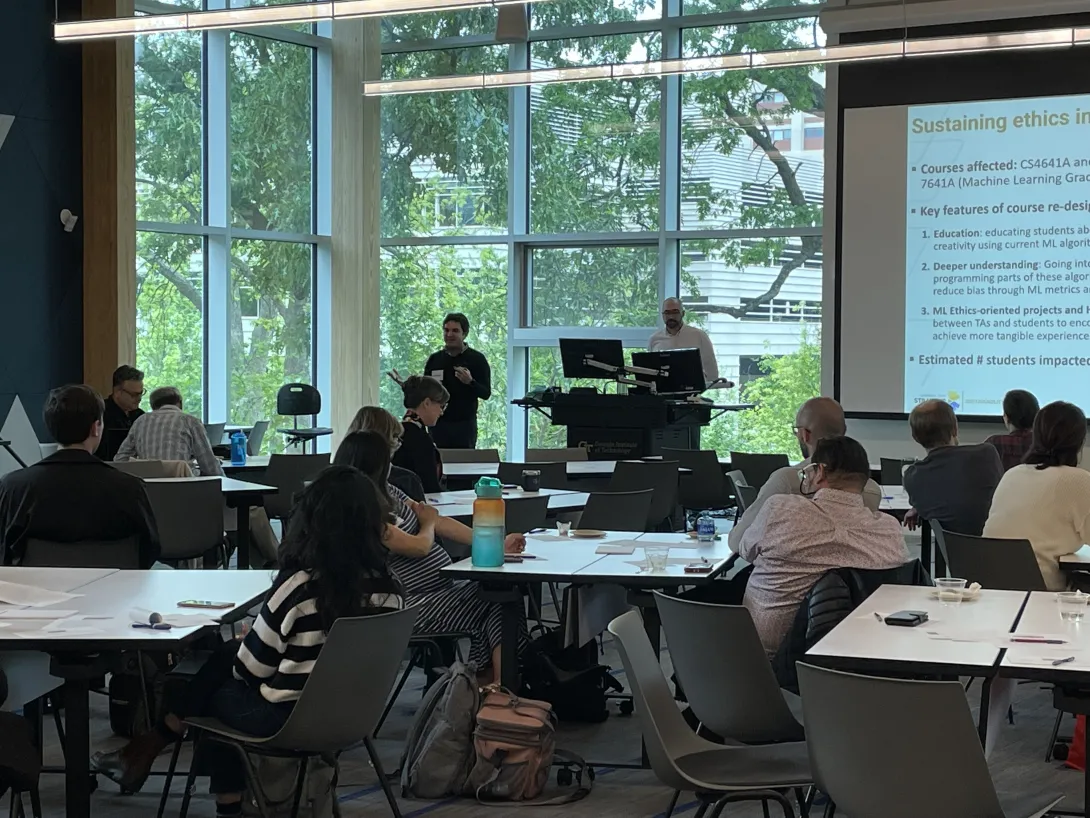
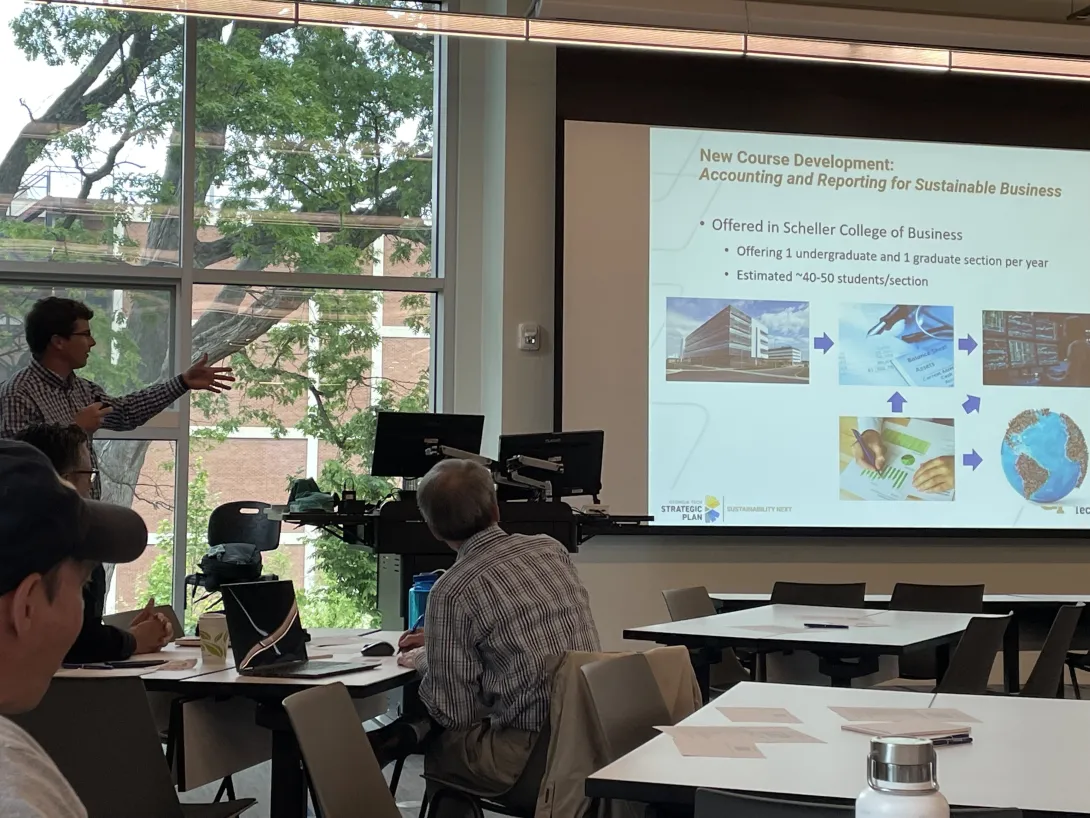
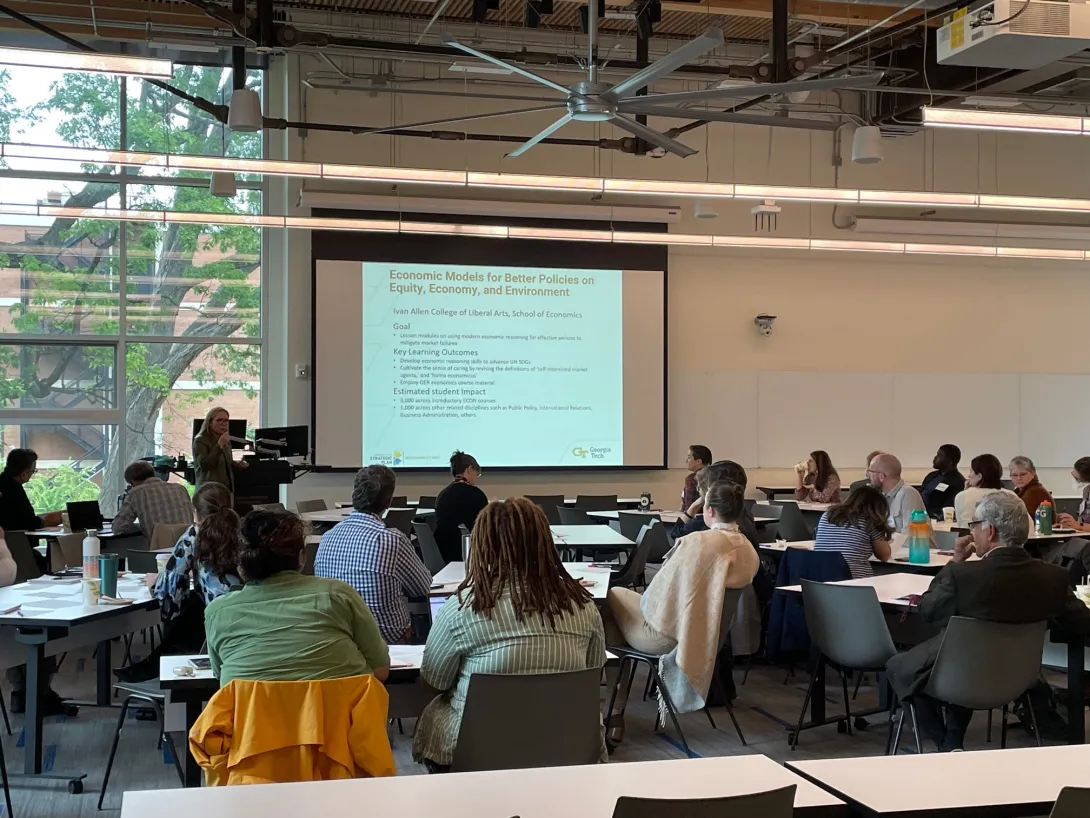
One of the Institute Strategic Plan (ISP) goals is to connect globally and amplify impact by contributing “to global collaborative efforts that advance the U.N. Sustainable Development Goals (SDGs) through our education, research, and service.” In response, Sustainability Next developed a plan to expand SDG concept and skill integration across the undergraduate curriculum. In support of the plan, 21 projects representing all six colleges and 15 schools were presented at the Undergraduate Sustainability Education Jamboree, held on April 26 in the Kendeda Building auditorium. With many winning projects featuring high enrollment and core courses, this first round of sustainability education “seed grants” will significantly expand the reach of Georgia Tech’s sustainability-across-the-curriculum initiatives.
“Our Strategic Plan commitment to bring the United Nations Sustainable Development Goals (SDGs) into our teaching is part of our vision for transformative teaching and learning more broadly,” explains Larry Jacobs, Senior Vice Provost for Education and Learning. “Helping students identify connections between disciplinary concepts and skills and complex societal challenges enhances learning and supports Georgia Tech’s mission to equip students to improve the human condition.”
The Jamboree featured lightning presentations from the award winners, as well as presentations about related initiatives at Georgia Tech to help instructors, students, and staff better understand the landscape of sustainability education innovation on campus. Instructors engaged in course design or re-design through the awards will have opportunities to collaborate with and learn from their peers through a Community of Practice on Transformative Teaching with the SDGs and a SoTL (Scholarship of Teaching and Learning) research group. Many began identifying potential collaborators at the event, as they heard from other award winners. “The afternoon of lightning presentations by fellow faculty was exhilarating,” Sabir Khan, Associate Professor, Schools of Industrial Design and Architecture, shared. “I came away impressed and excited at the range of projects and have already invited a few instructors to join my class in the fall to discuss their approaches to tackling the UN SDGs."
Presenter Kate Williams, Interim Director, Transformative Teaching and Learning, Faculty Initiatives, shared connections between the Sustainability Innovation Awards and Georgia Tech’s Transformative Teaching and Learning (TTL) strategic initiative. “The success of the first round of Sustainability Education Innovation Grants demonstrates our faculty's commitment to creating innovative experiential learning opportunities for students,” Dr. Williams noted.
For more information about future award opportunities or the communities of practice described above, please contact Jennifer Leavey (Assistant Dean for Faculty Mentoring, College of Sciences) or Rebecca Watts Hull (Assistant Director, Faculty Development for Sustainability Education Initiatives, Center for Teaching and Learning).
Review all 21 awarded Undergraduate Sustainability Education Innovation projects.
Apr. 05, 2023
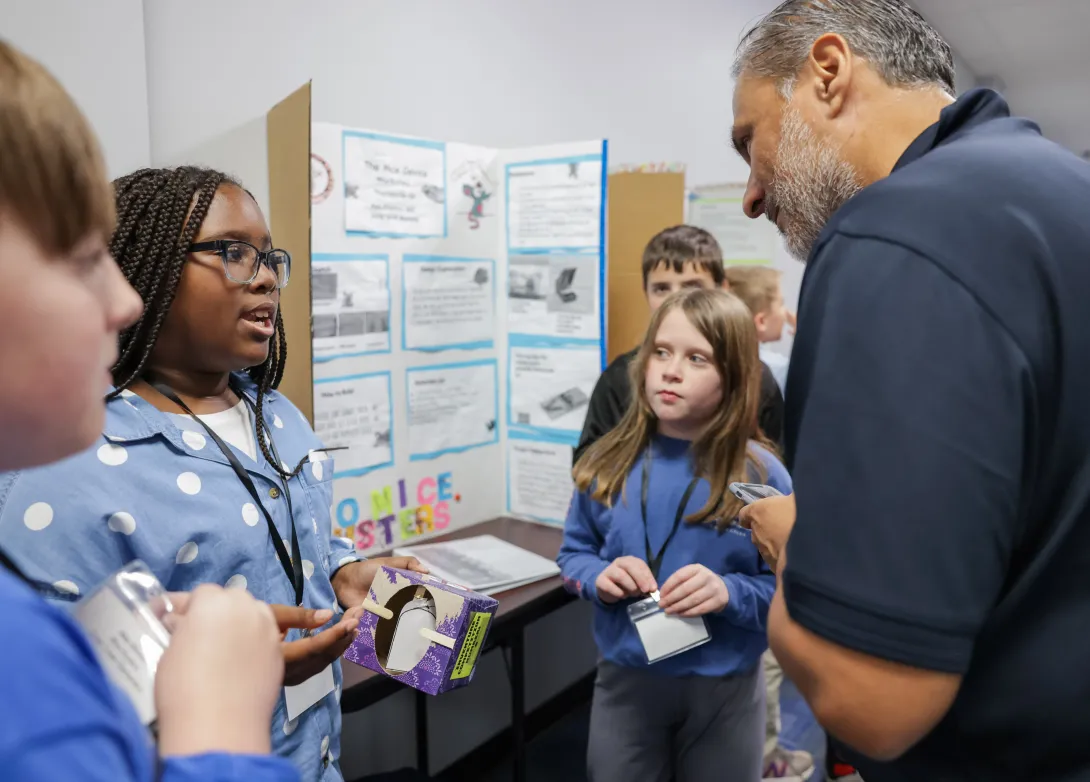
Students in Thomasville, Ga. explain their invention to a competition judge as a part of Georgia Tech’s expanding K-12 InVenture Prize program.
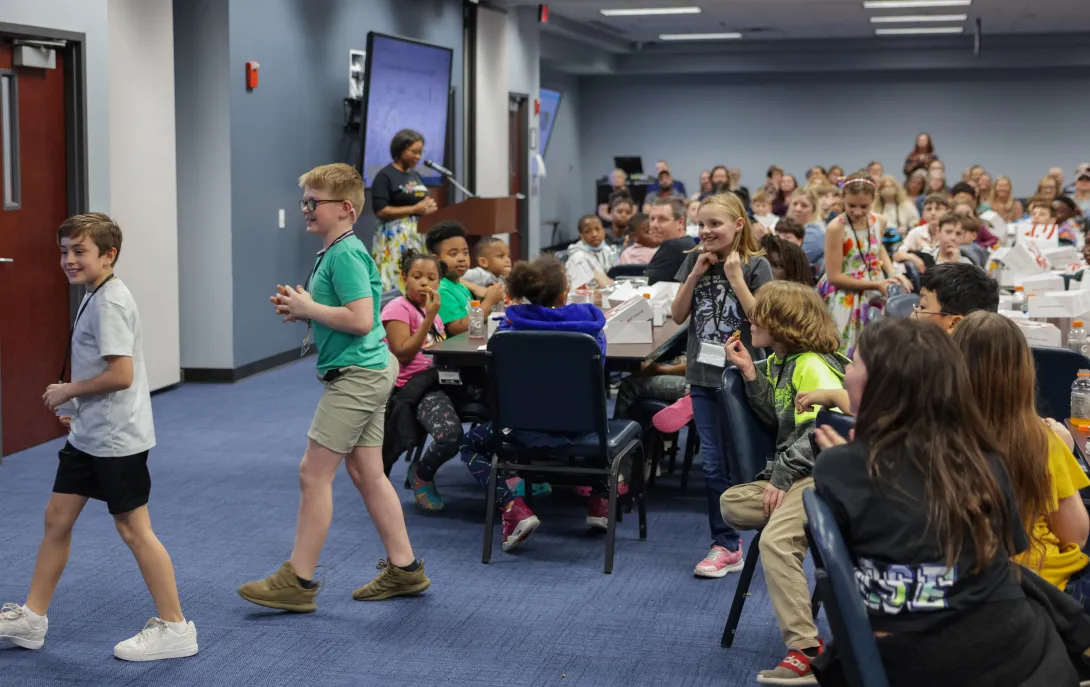
Students in Thomasville, Ga. present their own inventions as a part of Georgia Tech’s expanding K-12 InVenture Prize competition program.
Georgia Institute of Technology’s Center for Education Integrating Science, Mathematics, and Computing (CEISMC) is at the center of a new statewide initiative combining artificial intelligence and manufacturing innovations with transformational workforce development and K-12 outreach. The Georgia Artificial Intelligence Manufacturing Corridor project (Georgia AIM) is supported by a record-shattering $65 million grant Georgia Tech received in September 2022 from the U.S. Department of Commerce’s Economic Development Administration.
Georgia AIM will support a total of nine inter-related projects throughout the state and is designed to increase job and wage opportunities in distressed and rural communities and among historically underrepresented and underserved people. Georgia AIM targets rural residents, women, Black, Indigenous and People of Color (BIPOC), those living with disabilities, and veterans — groups historically underrepresented in manufacturing. Through innovation, collaboration, education, and participation, Georgia AIM will provide the tools and knowledge to empower these communities to participate fully in a diverse AI manufacturing workforce.
“Many people have preconceived notions about manufacturing and may not be able to see how they could possibly connect to it," said Roxanne Moore, Woodruff School of Mechanical Engineering’s senior research engineer and director of CEISMC’s K-12 InVenture Prize program. “What they may not realize is that manufacturing is what brings new ideas to life. AI is rapidly reshaping the manufacturing industry and changing the landscape for job opportunities. The work that we are doing will position Georgia to lead the nation into the future of AI and manufacturing.”
Moore explains that through Georgia AIM, CEISMC will expand its K-12 InVenture Prize invention and entrepreneurship program to collaborate with school districts and businesses in Southwest Georgia, Southeast Georgia and Northeast Georgia. The initiative will expand on existing partnerships Georgia Tech has established with technical colleges and minority-serving institutions.
The project will reach at least 1,000 K-12 students and 100 teachers from underserved areas, with a focus on rural communities via existing programs at Georgia Tech, other nonprofits, the Technical College System of Georgia, the Southwest Georgia Regional Commission, local manufacturers, and K-12 school leaders, Moore said.
“We need to illustrate the powerful relationships between innovation, entrepreneurship, and manufacturing so that students can see how ideas come to life and how they can improve their communities,” said Moore. “It is my hope that these regional ecosystems become a role model for how educational institutions can support each other in expanding access to high-quality STEM experiences for diverse students who typically are not empowered to create their futures.”
As part of Georgia AIM, CEISMC will also expand its offerings through partnerships with the institute’s GoSTEM program to better serve Latino populations. GoSTEM is a collaborative partnership at Georgia Tech between CEISMC and Institute Diversity, Equity and Inclusion (IDEI). Its mission is to promote STEM academic achievement and college attendance among Latino and other cultural and linguistic minority K-12 students. Plans include translating existing invention and entrepreneurship curriculum into Spanish, adding lessons to the curriculum on AI and manufacturing, assisting with the development of regionally focused curricula, and expanding training and events to make them more inclusive.
“Our goal is to make invention education accessible to everyone in the state, especially those who may have been previously left out of the conversation,” said Danyelle Larkin, educational outreach manager with CEISMC. “By going into more rural areas of the state and working to develop multi-lingual curricula that is focused on the needs of the region, we hope to serve as a national model for how to accelerate the transition to automation in manufacturing while diversifying the next generation of AI leadership.
Additional Georgia AIM expansion plans for CEISMC and K-12 InVenture Prize include supporting an existing high school entrepreneurship program in Fitzgerald and working with Albany State University to host teacher workshops, support local schools, and host regional competitions with a focus on inventiveness and the entrepreneurial mindset.
"The overall goal of Georgia AIM is to establish the United States as a leader in AI manufacturing while making sure that these systems complement rather than replace existing workers,” Larkin said. “The work that we are doing in CEISMC plays an integral role in Georgia AIM with our specific expertise in weaving invention education and entrepreneurship into K-12 classrooms and connecting with diverse communities. This huge grant gives us a chance to amplify our work and bring even more people into the AI conversation. It’s about building a better, more equitable future for the people of Georgia.”
—Randy Trammell, CEISMC Communications
Apr. 17, 2017

Devyon wasn't having success landing interviews or getting call backs for job applications. A mentor at the National Urban League encouraged him to apply to Juma, an employment and job training program which helps youth overcome the hardships of poverty and aspire to career success. As part of its social enterprise operations in Atlanta, Juma offers year-round employment to over 140 Atlanta youth at SunTrust Park, Mercedes-Benz Stadium, and State Farm Arena—home of the Braves, Falcons, Hawks, and Dream—as well as the Georgia World Congress Convention Center.
Devyon applied and successfully enrolled in Juma, and found a path to earn money, build his resume, and pave his future. As part of the program, Devyon took Georgia Tech LEAP courses to learn more about supply and logistics and the career paths the field has to offer. His dedication to the job, his willingness to go above what was expected of him and his attention to detail were characteristics that made him stand out to Juma’s Enterprise Managers. After successfully completing Juma’s training program, Devyon secured a job at UPS, a Juma Atlanta job placement partner. Today, Devyon has stable employment and, after successfully passing UPS’ Supervisor Exam, became a Shift Manager.