
Sep. 18, 2023
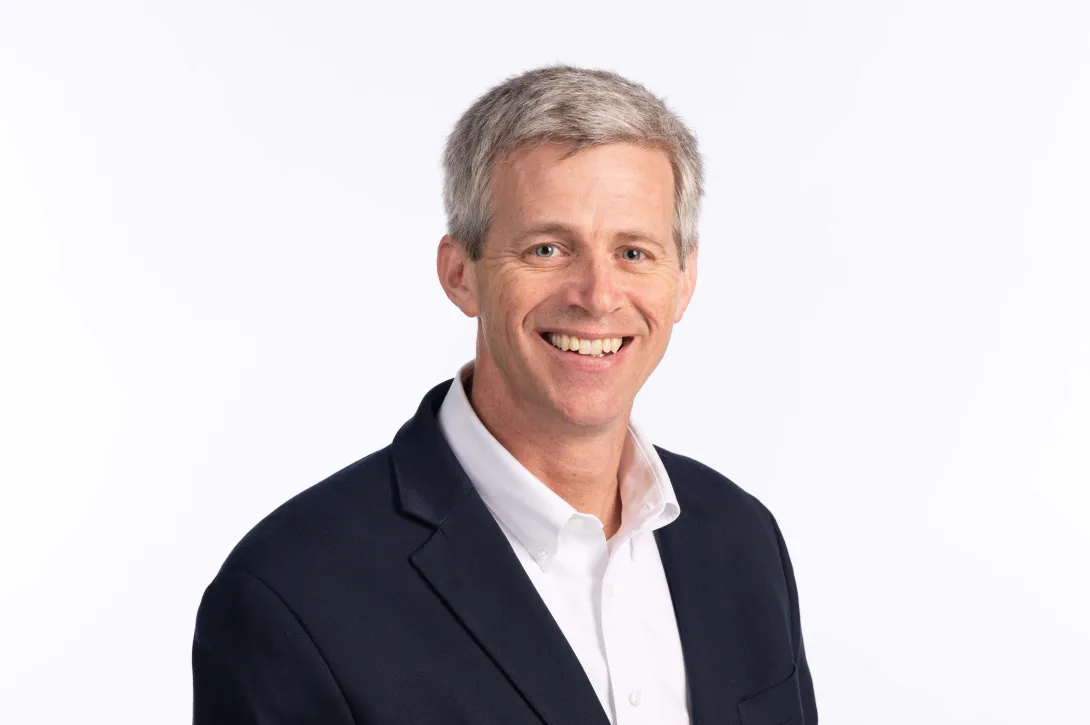
The National Academy of Engineering (NAE) chose Adjunct Professor and alumnus Tim Lieuwen, M.S. ME 1997, Ph.D. ME 1999, to give a keynote address about net zero pathways in the U.S. energy system as part of the 2023 Global Grand Challenges Summit. Lieuwen’s talk, which took place on September 19, surveyed transitions of the three major elements of the energy system — energy sources, energy carriers and storage, and energy users. He discussed how these elements will evolve as the U.S. decarbonizes, including current modeling results for the lowest-cost mix of energy sources and carriers.
Lieuwen is the interim chair of the Daniel Guggenheim School of Aerospace Engineering; Regents’ Professor; the David S. Lewis, Jr. Professor; and the executive director of the Strategic Energy Institute.
News Contact
Jason Maderer (maderer@gatech.edu)
Sep. 03, 2024
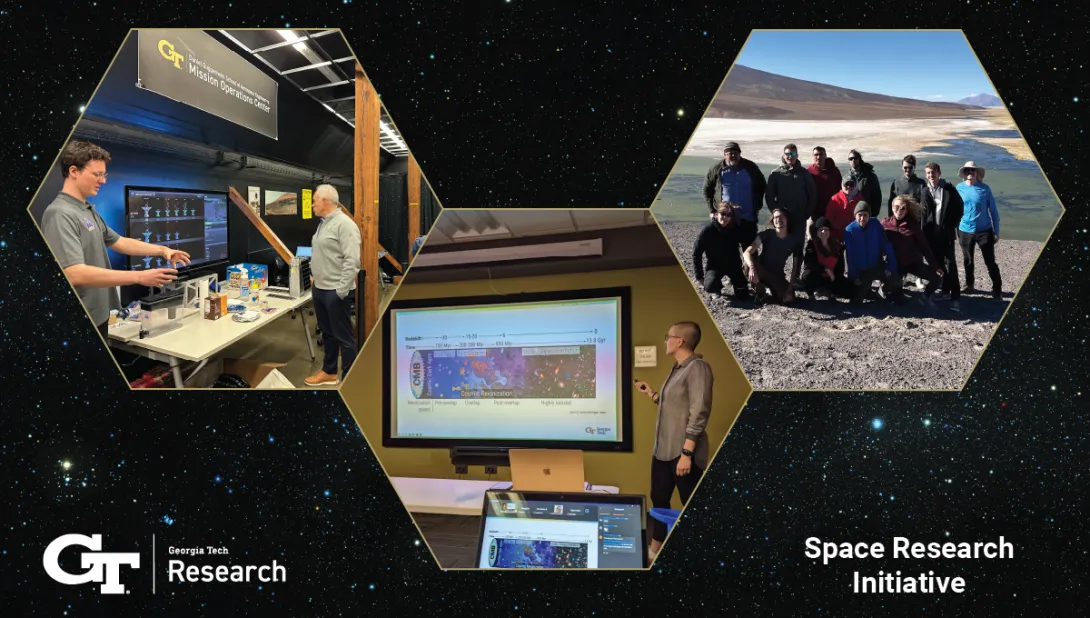
Across Georgia Tech, researchers are exploring the universe — its origins, possible futures, and humanity and Earth’s place in it. These investigations are the efforts of hundreds of astrobiologists, astrophysicists, aerospace engineers, astronomers, and experts in space policy and science fiction — and all of this work is brought together under the Institute’s new Space Research Initiative (SRI).
The SRI is the hub of all things space-related at Georgia Tech. It connects research institutes, labs, facilities, Schools, and Colleges to foster the conversation about space across Georgia and beyond. As a budding Interdisciplinary Research Institute (IRI), the SRI currently encompasses three core centers that contribute distinct interdisciplinary perspectives to space exploration.
Center for Space Technology and Research
The Center for Space Technology and Research (CSTAR) is a hub dedicated to furthering the expansion of Georgia’s aerospace industry, which is already the state’s No. 1 economic driver. The center's team at Georgia Tech conducts cutting-edge research in fields such as astrophysics, Earth science, planetary science, robotics, space policy, space technology, materials science, and space systems engineering.
CSTAR boasts a collaborative network of more than 100 Georgia Tech faculty members and research staff, supported by annual funding exceeding $20 million. Its contribution to space research is highlighted by its active multiyear research grants totaling over $100 million. Each year, CSTAR also contributes to the academic community with around 100 peer-reviewed journal articles and provides mentorship to dozens of graduate and undergraduate students, shaping the next generation of space research.
Members of CSTAR have contributed to a variety of spaceflight projects, from observing the atmosphere of Jupiter, to creating carbon nanotube-based technology on CubeSats, to building an innovative, dual-use antenna that is simultaneously a critical life-saving handrail and a radio emitter inside an airlock on the International Space Station. Several examples of this research will soon be part of a new permanent display in the National Air and Space Museum in Washington, D.C.
“The work done by the Georgia Tech research community in space is phenomenal,” said CSTAR Director Jud Ready. “We have worked on the International Space Station, launched numerous free-flying CubeSats in low Earth orbit, as well as our current crowning achievement, the Lunar Flashlight CubeSat, which is the world’s only heliocentric spacecraft currently owned and operated by an academic institution that recently demonstrated planetary optical navigation techniques for the first time, by any organization — including NASA.” Future missions include materials demonstrations on a lunar lander, as well as additional orbital activities of both the Earth and moon.
“The SRI will increase our reach and impact over and above these prior activities by at least an order of magnitude,” he said. “I am excited for what the future holds for Georgia Tech students, faculty, and research partners as a result of this new organization.”
Director: Jud Ready
Associate Directors: Morris Cohen and Jennifer Glass
Center for Relativistic Astrophysics
The Center for Relativistic Astrophysics (CRA) is housed within the College of Sciences’ School of Physics. The center’s mission is to provide students with education and training in the key research areas of astroparticle physics, theoretical astrophysics, and gravitational wave astrophysics.
CRA researchers study the breadth of space, ranging from the early universe’s large-scale structure to particle interactions. They also study black holes and the merger of compact objects, the potential outcome of the evolution of stellar binary systems, and — closer to home — exoplanets and stars found in the Milky Way. Of particular strength are computational astrophysics and multi-messenger astrophysical studies with neutrinos, photons, and gravitational waves.
In addition, CRA researchers actively participate in major international collaborations, such as the operations and development of existing and future detectors, including the IceCube Neutrino Observatory, the LIGO and LISA gravitational wave observatories, X-ray observatories NuSTAR and Athena, and gamma-ray detectors VERITAS and CTA.
“Bringing together all space research under a single umbrella will be a huge boon to the CRA’s research efforts and visibility,” said John Wise, CRA director. “I am excited about the opportunities the SRI will bring forth within such a collaborative environment, especially the prospect of Georgia Tech leading a space mission that can test the theoretical work performed within the CRA.”
Director: John Wise
Associate Director: Tamara Bogdanović
Astrobiology research at Georgia Tech, which includes experts in biochemistry, physics, aerospace engineering, planetary science, and astronomy, as well as others, seeks to answer these age-old questions: What is the origin of life? Does life exist on other worlds?
Georgia Tech’s astrobiology community includes students, staff, and faculty across campus, the educational curriculum, the Exploring Origins student-run group, an astrobiology fellows program, and keystone events.
Many globally recognized researchers in this field are at Georgia Tech, and their recent discoveries hint at the potential for life on Mars and ocean worlds like Europa. Astrobiology at Tech brings together these faculty with scholars in the humanities and social sciences to share their research with the public and give it a broader cultural context.
The Georgia Tech Astrobiology Graduate Certificate Program, an interdisciplinary initiative across several Schools and Colleges, is designed to broaden student participation in astrobiology. An undergraduate minor is in development. The purpose of these programs is to expand opportunities for both undergraduate and graduate students in the interdisciplinary field of astrobiology.
“One of the main reasons I came to Georgia Tech in 2020 is its vibrant astrobiology program,” said Christopher E. Carr, co-director of Georgia Tech Astrobiology. “It’s a true pleasure to have such amazing colleagues.”
Co-directors: Frances Rivera Hernández and Christopher E. Carr
News Contact
Laurie Haigh
Research Communications
Jul. 31, 2024
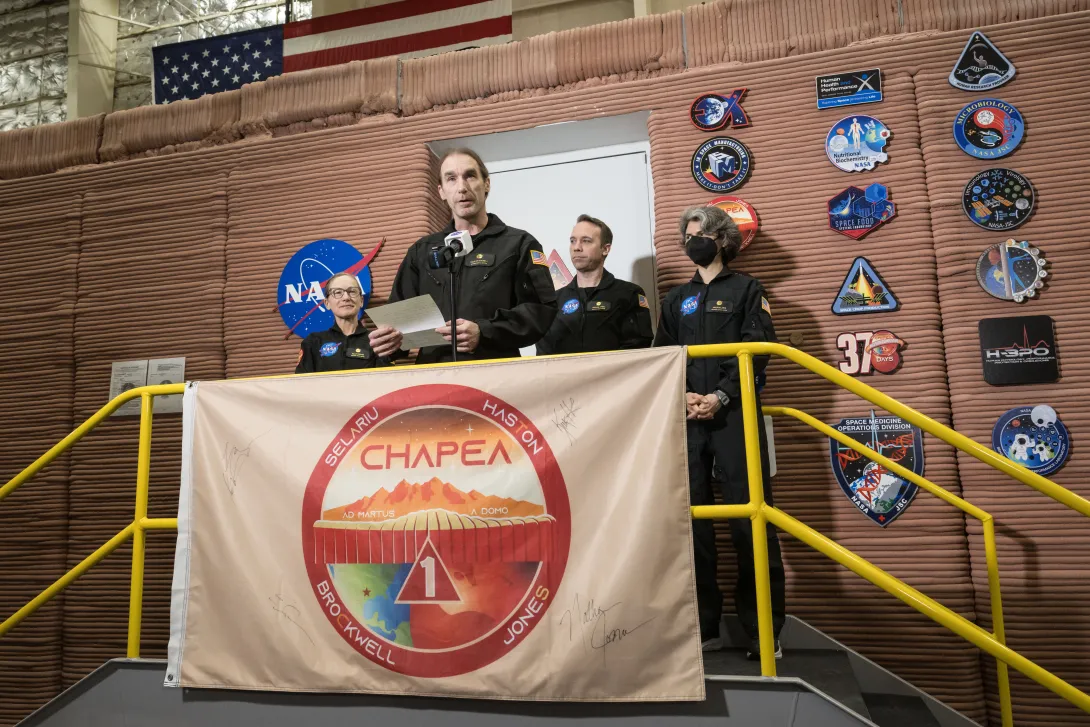
Ross Brockwell exiting the Mars Dune Alpha habitat at NASA's Johnson Space Center in Houston, Texas. Photo credit: NASA/CHAPEA
When the door to the Mars Dune Alpha habitat at NASA's Johnson Space Center in Houston, Texas, closed behind the crew members of the first Crew Health and Performance Exploration Analog (CHAPEA) mission, Georgia Tech graduate Ross Brockwell was transported 152 million simulated miles to the Red Planet.
For the next 378 days, Brockwell, a 1999 civil engineering graduate, and three other crew members participated in the study designed to gain insights into the challenges of deep space exploration and its effects on human health and performance. The crew performed robotic operations, habitat maintenance, agricultural activities, and simulated surface walks in the "sandbox" with the assistance of virtual reality while enduring intentional resource limitations, isolation, and confinement.

A structural engineer by day, he has always dreamed of space travel, and when a fellow Yellow Jacket alerted Brockwell to the application for the CHAPEA mission, he seized the opportunity.
"Sometimes, you get chances in your lifetime, and if I don't get a chance to actually go to Mars, if I can take this chance to help us get there as a planet, I'm honored," he said.
Once inside the 1,700-square-foot habitat, Brockwell's role as the CHAPEA mission's flight engineer focused on infrastructure, building design, and organizational leadership. As much as he learned from his tasks throughout the mission, like anticipating possible failure points and contingency planning, NASA learned even more through physical and cognitive monitoring.
"There was a lot of science, but some of the science was focused on us as the participants — our physiology and our performance — to make the mission as realistic as possible," he said.
Communication is a key element in space travel. Getting a message from Mars back to family and friends or mission control on Earth took 20 minutes on average for the crew inside the habitat, testing their ability to isolate. Without constant communication with the outside world, the crew fostered camaraderie through team activities and celebrated birthdays and holidays together. Brockwell's ingenuity wasn't limited to official tasks; he used a 3D printer to create a bracket for mounting a mini-basketball hoop.
Meals inside the habitat mirrored the shelf-stable food system of the International Space Station. While cultivated crops like tomatoes supplemented their main supply, Brockwell says there is a common misconception about astronaut food.
"I say with all sincerity, it was delicious." His favorite dish was a peanut chicken and wild rice mix, but the crew often got creative by mixing soups and proteins to create new dishes.
Other than the food, the biggest surprise to Brockwell was how quickly the mission was completed.
"I hoped and thought it would be that way, but we proved that a well-comprised crew can have a good time while doing this. There were a lot of clichéd expectations that there would be issues that we just didn't have. I think we demonstrated that a mission like this can be a huge success and an enjoyable, positive experience, not just something to be endured," he said.
Brockwell says that his time at Georgia Tech allowed him to learn the fundamentals of engineering principles and taught him to keep an open mind when exploring how things work. After receiving a master's degree in aeronautics from the California Institute of Technology and completing the CHAPEA mission, he believes systems engineering can aid deep space exploration efforts for the next generation.
"Thinking about the effect of every component on every other component and the emergent properties from complex systems is crucial. I think that systems thinking is going to become increasingly important. Ecology and ecological thinking need to be part of it, especially for aerospace. If you're thinking about deep space exploration, an understanding of ecological principles and closed-loop systems will be key," he said.
At the end of the mission, Brockwell savored the sights and smells of Earth for the first time in over a year, saying that's what he missed the most. But if the opportunity arose to take the 152-million-mile flight to Mars, he'd be on the first ship out.
News Contact
Steven Gagliano - Institute Communications
Jul. 30, 2024

Timothy Lieuwen has been appointed interim executive vice president for Research (EVPR) by Georgia Tech President Ángel Cabrera, effective September 10.
Lieuwen is a Regents’ Professor, the David S. Lewis, Jr. Chair in the Daniel Guggenheim School of Aerospace Engineering, and executive director of the Strategic Energy Institute. His research interests range from clean energy and propulsion systems to energy policy, national security, and regional economic development. He works closely with industry and government to address fundamental problems and identify solutions in the development of clean energy systems and alternative fuels.
A proud Georgia Tech alumnus, Lieuwen (M.S. ME 1997, Ph.D. ME 1999) has had a remarkable academic career. He is a member of the National Academy of Engineering and is a fellow of the American Society of Mechanical Engineers, the American Institute of Aeronautics and Astronautics, the American Physical Society, the Combustion Institute, and the Indian National Academy of Engineering (foreign fellow). He has received numerous awards, including the ASME George Westinghouse Gold Medal and the AIAA Pendray Award. He serves on governing or advisory boards of three Department of Energy national labs: Oak Ridge National Laboratory, Pacific Northwest National Laboratory, and the National Renewable Energy Laboratory and was appointed by the U.S. Secretary of Energy to the National Petroleum Council.
Lieuwen has authored or edited four books on combustion and over 400 scientific publications. He also holds nine patents, several of which are licensed to industry, and is founder of an energy analytics company, Turbine Logic, where he acts as chief technology officer.
In Lieuwen’s appointment announcement, President Cabrera said, “Tim’s extensive experience and knowledge of Georgia Tech makes him uniquely suited to lead our research enterprise as we search for a permanent EVPR. I am grateful for his willingness to serve the Institute during this period of remarkable growth, and I look forward to working with him and the rest of the team.”
News Contact
Shelley Wunder-Smith
Director of Research Communications
Jun. 27, 2024
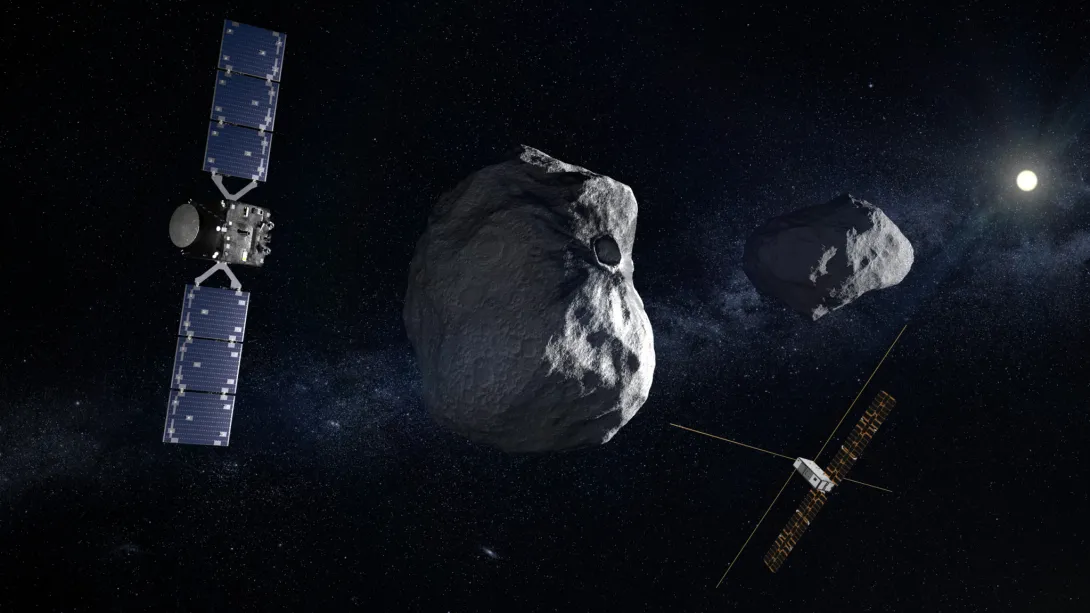
Masatoshi (Toshi) Hirabayashi, an associate professor in the Daniel Guggenheim School of Aerospace Engineering, has been selected by NASA’s Hera Participating Scientist Program (HERA-PSP) to join the European Space Agency’s (ESA) Hera mission. Together, with an international consortium of 11 other scientists, Hirabayashi will perform a multi-faceted, detailed, post-impact study of NASA’s Double Asteroid Redirection Test (DART) mission. The DART mission was led by the Johns Hopkins University’s Applied Physics Laboratory.
The DART mission targeted the binary asteroid system where Dimorphos (the smaller secondary) orbits Didymos (the larger primary), to intentionally cause a spacecraft crash on Dimorphos. The collision, which occurred on September 26, 2022, was the first to demonstrate asteroid deflection by changing the asteroid's motion in space through kinetic impact. Astronomers monitored this event using ground- and space-based telescopes like the Hubble Telescope (HST). A recent Nature article, “Ejecta, From the DART-Produced Active Asteroid Dimorphos,” on which Hirabayashi is a co-author, documented HST’s detailed observations of the intense dust ejection generated by the impact.
The Hera mission, launching in October 2024, will analyze the post-DART impact conditions of Didymos and Dimorphos by performing remote sensing observations and employing two CubeSats from its parent spacecraft, Hera. Hera will arrive at the asteroid in 2026. The Planetary Science Journal article, “The ESA Hera Mission: Detailed Characterization of the DART Impact Outcome and the Binary Asteroid Didymos, highlights the project's developments.
Planetary defense is the primary reason for studying near-Earth asteroids (NEAs), particularly potentially hazardous objects (PHOs). While Didymos does not threaten the Earth, scientists want to prepare for the possibility that PHOs could hit the planet. Hera mission researchers can learn valuable information about the system's impact behavior.
Hirabayashi, a co-investigator for the DART mission, said, “I was thrilled to apply my experience in the DART mission, and I’m honored to now be part of the Hera mission.”
Specifically, Hirabayashi will analyze the mutual motion of the two asteroids in the Didymos binary system and provide detailed forecasts of the asteroids’ locations and velocities. During this investigation, he will use Georgia Tech’s high-performance computing system, Partnership for an Advanced Computing Environment (PACE). His results will also be used to quantify the system's post-DART impact behavior and develop new knowledge about planetary defense.
“Dinosaurs were completely wiped out by an asteroid about 66 million years ago. There are many possible threats, and we need the capability to defend the Earth properly,” Hirabayashi explained. “Such capability includes performing detailed potential risk assessment in a limited time span and, if necessary, deflecting and disrupting PHOs with proper measurements.”
Hirabayashi joined Georgia Tech in August 2023. His research concentration is in space operations, celestial mechanics, planetary science, and design and navigation. He works across the campus to explore lunar science at Georgia Tech’s Center for Lunar Environment and Volatile Exploration, one of the NASA/SSERVI nodes led by Thom Orlando in the College of Science’s School of Chemistry and Biochemistry.
News Contact
Monique Waddell
Apr. 30, 2024
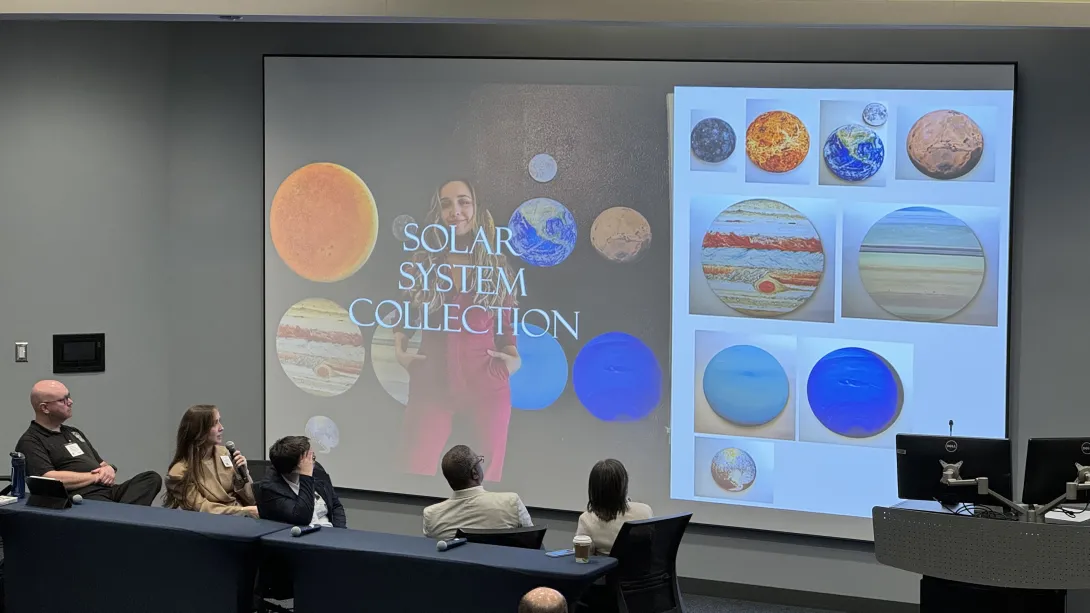
April 12 is a significant date in the history of exploration, as it marks the first space flight of a human, Yuri Gagarin, in 1961. This year on April 12, the Georgia Tech Space Research Initiative (Space RI) hosted an event highlighting the Institute’s interdisciplinary space research. The Yuri’s Day Symposium was Space RI’s first public event.
A multidisciplinary initiative, the Space RI brings together faculty, researchers, and students from across campus who share a passion for space exploration. Their combined research explores a broad array of space-related topics, all considered from a human perspective.
“Launching Georgia Tech’s Space Research Initiative reinforces our commitment to advancing our understanding of space and our universe,” said Executive Vice President for Research Chaouki Abdallah. “It is also a testament to Georgia Tech's unwavering dedication to pushing the limits of what is possible and to fostering innovations that benefit humankind.”
The symposium was organized by Glenn Lightsey, interim executive director of the Space RI, and the Space RI steering committee, which consists of representatives from the Georgia Tech Research Institute (GTRI) and the Colleges of Engineering, Computing, and Sciences, the Ivan Allen College of Liberal Arts, and the Scheller College of Business. The day began with remarks from Research leadership and an overview of the Space RI and its mission. “This is an exciting time for space exploration at Georgia Tech and across the world,” Lightsey said. “Space research is a critical part of solving our world’s most challenging problems and improving life for everyone on Earth.”
Space research and exploration yield many societal benefits that improve life on Earth and even foster economic growth. These advances include rapidly evolving technologies, improvements in medicine, and the development of enhanced materials — such as self-healing materials and those designed for extreme environments. Additionally, space research provides essential tools, data, and insights for climate scientists.
Sessions and panels throughout the day covered space science, space media, NASA’s Moon to Mars program, GTRI’s space research program, commercial space initiatives, and space in popular culture. A.C. Charania, NASA’s chief technologist and a Georgia Tech alumnus, delivered the keynote address. He shared insights into his work at NASA and Moon to Mars.
Following the symposium, the Space RI hosted a “star party” at the Georgia Tech Observatory. People of all ages gathered at the event, where they could use the observatory’s telescope to observe the moon, Jupiter, and the Orion Nebula, an immense cloud of dust and gas from which new stars are born.
“It was a clear night, and we were able to view the lunar terminator — the boundary where the sun is setting on the moon — which accentuates craters and mountains,” said Lightsey. “It was exciting to officially launch our initiative on a day when the world celebrated space exploration and the star party was a fantastic way to end our event.”
In July 2025, the Space RI will transition into one of Georgia Tech’s Interdisciplinary Research Institutes. Learn more about the initiative at space.gatech.edu.
Sign up to receive space news and event updates from the Space RI.
News Contact
Laurie Haigh
Research Communications
Mar. 14, 2024

In January, Georgia Tech researchers were awarded three grants as a part of the Department of Energy’s Industrial Efficiency and Decarbonization multi-topic funding. The awards include 49 high-impact, applied research, development, and pilot-scale technology validation and demonstration projects that will reduce energy usage and greenhouse gas emissions in conjunction with cross-sector industrial decarbonization approaches.
The Georgia Tech funding includes a project, in the topic area of Decarbonizing Forest Products, on innovative refining, paper forming, and drying to eliminate CO2 emissions from paper machines. Funded at $3.1 million, the project is led by Carson Meredith, professor and James Harris Faculty Fellow in the School of Chemical and Biomolecular Engineering and executive director of the Renewable Bioproducts Institute (RBI). Collaborators include co-PI Cyrus Aidun, professor of mechanical engineering; Patritsia Stathatou, research scientist at RBI; and Aruna Weerasakura, senior research engineer. External collaborators include Fort Valley State University, the National Renewable Energy Laboratory, and several RBI member companies.
Meredith’s project focuses on decarbonization in energy-intensive drying, paper forming, and pulping processes and will combine recent deflocculation breakthroughs in fiber refining with low-water, multiphase paper forming. The innovations will facilitate the cost-effective implementation of advanced electrical drying technologies in the paper industry. By taking advantage of the increasing fraction of non-fossil electricity in the U.S., electrified drying, if implemented partially (50%), has the potential to reduce the generation of non-biogenic emissions by over 10 million metric tons of CO2e annually.
"I am excited because the new project will utilize the multiphase forming laboratory that is under construction in the Paper Tricentennial Building, representing the first major expansion in lab space there since the 1990s,” said Meredith.
Valerie Thomas, the Anderson-Interface Chair of Natural Systems and professor of industrial and systems engineering and public policy, is a co-PI in a $1.45 million project titled “Mild Co-Solvent Pulping to Decarbonize the Paper and Forest Products Sector,“ led by the University of California, Riverside.
Thomas’ project, also under the topic area of Decarbonizing Forest Products, aims to enhance Co-solvent Enhanced Lignocellulosic Fractionation (CELF) technology into a more environmentally sustainable alternative to traditional kraft pulping. CELF technology will be applied to optimize the production of dissolving pulp used in the manufacturing of extruded textile fibers and will also produce dissolving lignin as a by-product that can serve as a natural resin binder or a renewable ingredient for producing industrial adhesives and binders. This technology has the potential to reduce carbon intensity by 50 – 75% and operating costs by 10 – 20%.
Tim Lieuwen, David S. Lewis Jr. Chair and professor in aerospace engineering and executive director of the Strategic Energy Institute, is co-PI along with Vishal Acharya, principal research engineer and Benjamin Emerson, principal research engineer at Georgia Tech in a $3.25 million project titled “Omnivore Combustion System,” led by GTI Energy, an Illinois-based technology company.
Lieuwen’s project, under the topic area of Low-Carbon Fuels Utilization R&D, will design and demonstrate a scaled, adaptable omnivore combustion system (OCS) that can accommodate a continuously varying blend of low-carbon fuels with ultra-low nitrous oxide emissions, including natural gas-hydrogen blends, syngas, and biogas. The project will demonstrate a full-scale OCS for at least 100 hours and will focus on three aspects — improving performance, operation stability and safety, and fuel flexibility — and can potentially be used for industrial furnace applications in high carbon-emitting industries.
“The industrial sector is large in both its significance for our economy and its negative climate impacts, and each of these projects addresses significant challenges for the decarbonization of this critical sector,” Lieuwen said.
The projects are part of DOE’s Technologies for Industrial Emissions Reduction Development (TIEReD) Program, which invests in fundamental science, research, development, and initial pilot-scale demonstrations projects to decarbonize the industrial sector — currently responsible for a third of the nation’s greenhouse gas emissions.
News Contact
Priya Devarajan || Research Programs Communications Manager || RBI || SEI
Jan. 26, 2024
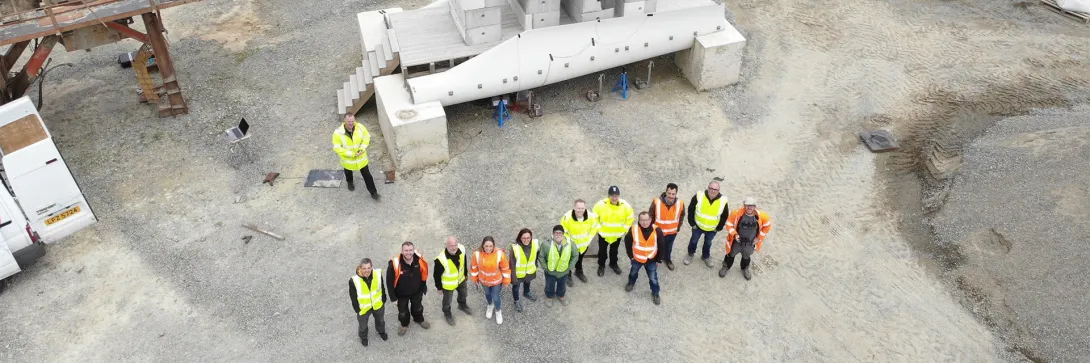
Overhead view of the Re-Wind crew doing structural testing on a decommissioned wind turbine blade bridge on an industrial lot.
Pioneering a new recycling approach led to a big win for Re-Wind USA, a Georgia Tech research team led by Russell Gentry. The team has won the first phase of the Department of Energy's Wind Turbine Materials Recycling Prize, receiving $75,000 and an invitation to compete in the final phase.
"Our innovation for end-of-service wind turbine blades is both simple and elegant – at its core, our technology captures all the embodied energy in the composite materials in the blade," said Gentry, professor in the School of Architecture.
"The Re-Wind Network has pioneered structural recycling, the only of a number of competing technologies that upcycles the material of the blade and preserves the embodied energy from manufacturing," Gentry said.
"Little additional energy is used to remanufacture the blade and the life of the blade, typically 20 years, is extended at least 50 years. This is a win-win solution from an environmental and economic perspective."
Other methods for dealing with decommissioned wind blades involve mechanical grinding and landfilling of subsequent waste, an expensive and energy-intensive process, he said.
Team members include Gentry, Sakshi Kakkad, Cayleigh Nicholson, Mehmet Bermek, and Larry Bank, from the School of Architecture; Gabriel Ackall, Yulizza Henao, and Aeva Silverman, from the School of Civil and Environmental Engineering; and Eric Johansen, a business consultant from Fiberglass Trusses Inc.
The team is part of the Re-Wind Network, a multinational research and development network which develops large-scale infrastructure projects from decommissioned wind turbine blades.
Re-Wind's pedestrian bridges, known as BladeBridges, have already captured media attention. Two more BladeBridges are expected in Atlanta in 2024, Gentry said. Re-Wind has also developed, prototyped, and tested transmission poles made from blade segments. The team's other proposals include culverts, barriers, and floats.
News Contact
Ann Hoevel, Director of Communications, College of Design
Nov. 09, 2023
Researchers have documented for the first time the stresses that build up around solid-state battery electrolytes, helping set the stage for the development of improved and more efficient batteries. Scientists have long thought that stresses can build up around dendrites, thin metallic projects that can ultimately short out solid-electrolyte batteries, but they haven’t been precisely measured.
A team of scientists at Georgia Tech, Brown University, Nanyang Technological University, and MIT have measured the mechanical stresses that develop in dendrites – solving a long-standing hypothesis that high stresses can be developed around dendrites. Dendrites pierce through solid electrolytes, eventually crossing from one electrode to the other and shorting out the solid-state battery cell.
Georgia Tech Professor Christos Athanasiou and the multidisciplinary team used photoelasticity to measure the stress on batteries caused during the battery cycle. In their paper, Operando Measurements of Dendrite-Induced Stresses in Ceramic Electrolytes using Photoelasticity, they managed to overcome challenges associated with measurements of easy to break, very tiny solid electrolyte samples. The samples thickness was about 10 times smaller than the average diameter of human hair.
The team used an old - and almost forgotten - principle of photoelasticity to directly measure the stress fields during cell operation. Photoelasticity’s contactless nature also allows for the stresses to be directly measured and visualized at the dendrite tips. By shining light through the material under a special photoelastic microscope, it revealed intricate stress fields. In this case, the stress revealed from passing light through the electrolyte appeared at the tip of the propagation dendrite.
This advanced experimental setup has set the stage for profound exploration of stresses developed during battery operation across various electrolytes and conditions, revealing critical data on loading conditions and the dynamics of lithium metal penetration events.
This is just one example where creative, yet simple experimentation, can lead to fundamental discoveries. The Daedalus Lab at Georgia Tech, inspired by the ingenuity of its namesake, the mythical Greek inventor, is dedicated to decarbonizing the future through the development and promotion of sustainable materials and structures, utilizing innovative experimental approaches and artificial intelligence.
News Contact
Kelsey Gulledge
May. 03, 2023
Top-down, slow motion view of hands tying a traditional fishing net knot
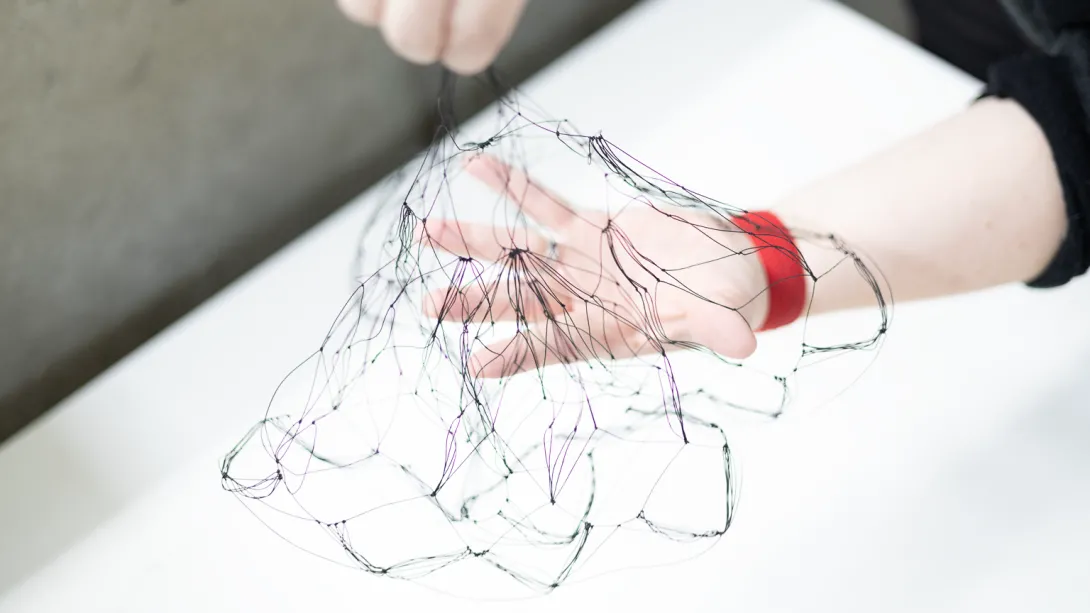
Image courtesy of Georgia Tech Research Institute.
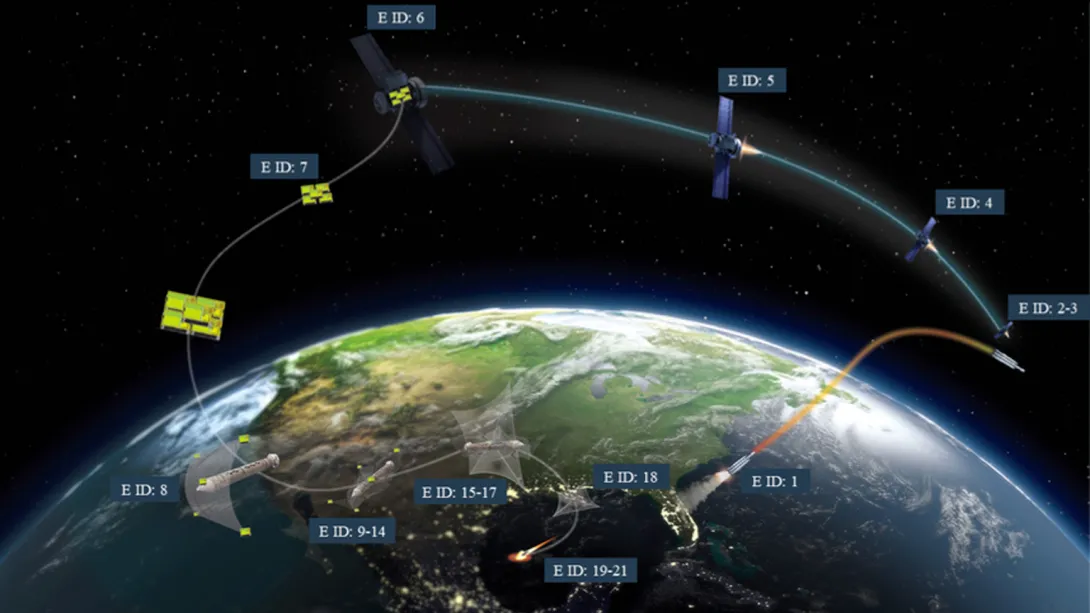
Diagram showing concept of active space debris removal. The system is launched from earth and maneuvers to intercept a spent rocket fuselage. It then separates into four components with a net stretched between them. The net wraps around the fuselage, capturing it, and the entire system deorbits safely.
One hand holding a net of thin black cord in the middle. The net is draped over the person's other hand, below.
Lisa Marks is launching the ancient craft of fishing villages into space vehicle design. Her work adapting traditional textile handcraft to modern problems created a unique opportunity for collaboration cleaning up space debris.
According to NASA's Orbital Debris Program Office (OPDO), this debris jeopardizes future space projects. Large objects like rocket bodies and non-functional satellites are the source of fragmentation debris.
The OPDO website says removal of even five of the highest-risk objects per year could stabilize the low Earth orbit debris environment.
A research team with members from the Georgia Tech Research Institute, the Aerospace Systems Design Laboratory, and the Space Systems Design Laboratory has developed a concept using a net to capture and de-orbit large debris.
A mutual connection at Tech's GVU recommended that the team speak to Lisa Marks, assistant professor in the School of Industrial Design, based on her work combining traditional textile with new materials and methods.
Putting Textiles in Space Requires Creative Expertise
“There’s a lot of different projects on space debris happening all around the world,” Marks said, “and there’ve been a few concept papers talking about using a net.”
“But all the drawings of the net are basic concepts, just a square with a few hatches through it. No one has figured out what that net might be.”
Marks researches ways to combine traditional textile handcraft with algorithmic modeling. “I specialize in analyzing the shape of every stitch and how we can use that stitch differently. Can we create new patterns through coding, or make it larger and out of wood?”
“It allows me to think really creatively about how we can use different textiles.”
This innovative, exploratory approach is a natural fit to create a net for a job no has ever done. “There's a lot of technical considerations with this,” Marks said.
“It must pack incredibly small, weigh very little, and still be strong enough to capture and drag a rocket fuselage. There are considerations just for a material to exist in space. It needs to have low UV reactivity, low off gassing.”
“We need to understand every single little aspect of each of these techniques in order to do this.”
Static Nets Catch Fish; Slippery Nets Catch Rockets
Marks is working with Teflon, using the same knots used for fishing nets, but the non-traditional material means the nets work differently than fishing nets, she said. “These knots are made to be static, because you don’t want fish to get through the nets. But because Teflon is so slippery, the knots move around.”
“I think it will help the net’s strength, because the net will deform around irregular shapes before it breaks. What makes it unsuitable for fishing and annoying to work with becomes a huge benefit for what we need it to do.”
Some traditional handcraft techniques are dying out, and Marks sees projects like this as a reason preserving these techniques is important. “We don’t know what problems we’re going to have to solve in the future, and these crafts can be used in really surprising ways.”
“I would not have thought, ‘Netted filet lace, that’s how we’re going to solve a space problem!’ But if we lose this type of lace, we can’t solve space problems with it.”