
Aug. 05, 2022
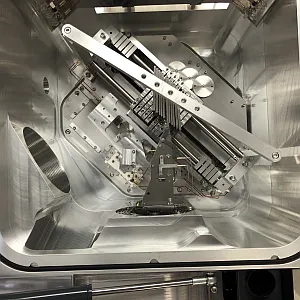
The Materials Characterization Facility (MCF) at Georgia Tech has installed a new inorganic m spectrometry facility. The facility includes two new inductively couple plasma mass spectrometry (ICP-MS) systems: a Thermo iCAP RQ quadrupole ICP-MS for streamlined and high-throughput determinations of elemental concentrations and a Thermo Neoma multicollector ICP-MS with collision cell technology for the precise determinations of isotope ratios within a given sample.
Each instrument can measure elemental variability in both dissolved aqueous samples as well as solids/minerals via laser ablation microsampling from a Teledyne Iridia laser ablation system. Together the system can measure isotopes at precision in elemental systems from Li and U.
Planned applications include: (1) high-resolution measurements of Ca, Sr, Ba, Mg, and B elemental and isotopic variability in seawater and marine and terrestrial carbonates for paleoclimate reconstructions, (2) (U-Th)/Pb dating and Hf isotope measurements to study the origin of critical mineral deposits, with a potential engineering application and the development of novel methods for increasing precision/accuracy and minimizing sample consumption during routine analyses of water quality and environmental contamination.
The MCF welcomes users interested in these and other potential applications of this new facility to their scientific and engineering research to contact David Tavakoli (atavakoli6@gatech.edu).
News Contact
David Tavakoli (atavakoli6@gatech.edu).
Jul. 18, 2022
The American Society of Mechanical Engineers (ASME) has honored Georgia Tech aerospace engineering professor George Kardomateas with the Spirit of St. Louis Medal for exemplary work in the progress of aeronautics and astronautics. He is in great company as Daniel Guggenheim, Neil A. Armstrong, John E. Northrup, John W. Young (AE 1952), George W. Lewis, Charles S. Draper, Robert G. Lowey, Michael Collins, and the late Dewey Hodges have also received this premier medal. ASME will present Kardomateas with the medal at the International Mechanical Engineering Congress & Exposition in Columbus, Ohio, October 30-November 3, 2022.
Kardomateas has spent over thirty years improving aircrafts from a structural standpoint. More specifically he investigates ways to ensure that aerospace structures retain their structural integrity. He focuses on the special part of mechanics called fracture mechanics, which studies the conditions for the initiation and propagation of cracks and debonds. “Fracture mechanics and damage tolerance have been very successful in that, nowadays, airplanes don’t usually come down because of structural failure,” explained Kardomateas.
He credits his lifelong scientific triumphs to his education in the United States and Greece, his collaboration with past and present colleagues at Georgia Tech, and the academic system in America. “The environment at Georgia Tech fosters collaboration and innovation. The higher education system provides opportunities through the collegial network in scientific forums where ideas can be exchanged with those inside and outside of your institution.” Former AE School professors, including the late Bob Carlson, and George Simitses, inspired him as colleagues and also acted as mentors to him.
Kardomateas earned a diploma from the National Technical University of Athens in Greece and both his master’s and doctoral degrees from the Massachusetts Institute of Technology. In 1989, he joined the School of Aerospace Engineering's faculty at the Georgia Tech. He has authored three books, An Introduction to Fatigue in Metals and Composites, Structural and Failure Mechanics of Sandwich Composites, and Mechanics of Failure Mechanisms in Structures. He is also the editor of six volumes on the topic of failure mechanics of composite and sandwich structures, an associate editor of the Handbook of Damage Mechanics: Nano to Macro Scale for Materials and Structures, as well as the author of about 200 papers published in refereed journals or as parts of books.
In addition to his work at Georgia Tech, he has served the discipline in several capacities. The ASME Fellow has operated as an Associate Editor of the Journal of Applied Mechanics, and the AIAA Journal, as a Contributing Editor of the International Journal of Non-Linear Mechanics and as a guest editor of the International Journal of Solids and Structures and the Journal of Mechanics of Materials and Structures. In addition, he has served as the technical chair of the 2014 ASME Congress, general chair of the 2015 ASME Congress, and the steering committee chair of the 2017 ASME Congress. He was the elected chairman of the Applied Mechanics Division Composites Committee and the program representative of the Aerospace Division Structures and Materials Committee. Kardomateas has also served in many other panels and committees including as the Chair of the Daniel Guggenheim Medal Award Board, and on the Organizing Committee of the sixth, seventh, tenth and eleventh Institute for Advanced Composites Manufacturing’s International Conferences on Sandwich Structures; he has also served on external evaluation committees for many academic programs.
Currently, the medal winner is working on his next book that focuses on the fracture and fatigue of metallic and composite aerospace structures, which will include his latest research advances in the field.
News Contact
Monique Waddell
Mar. 25, 2021

Catastrophic collapse of materials and structures is the inevitable consequence of a chain reaction of locally confined damage – from solid ceramics that snap after the development of a small crack to metal space trusses that give way after the warping of a single strut.
In a study published this week in Advanced Materials, engineers at the Georgia Institute of Technology and the University of California, Irvine (UCI) describe the creation of a new class of mechanical metamaterials that delocalize deformations to prevent failure.
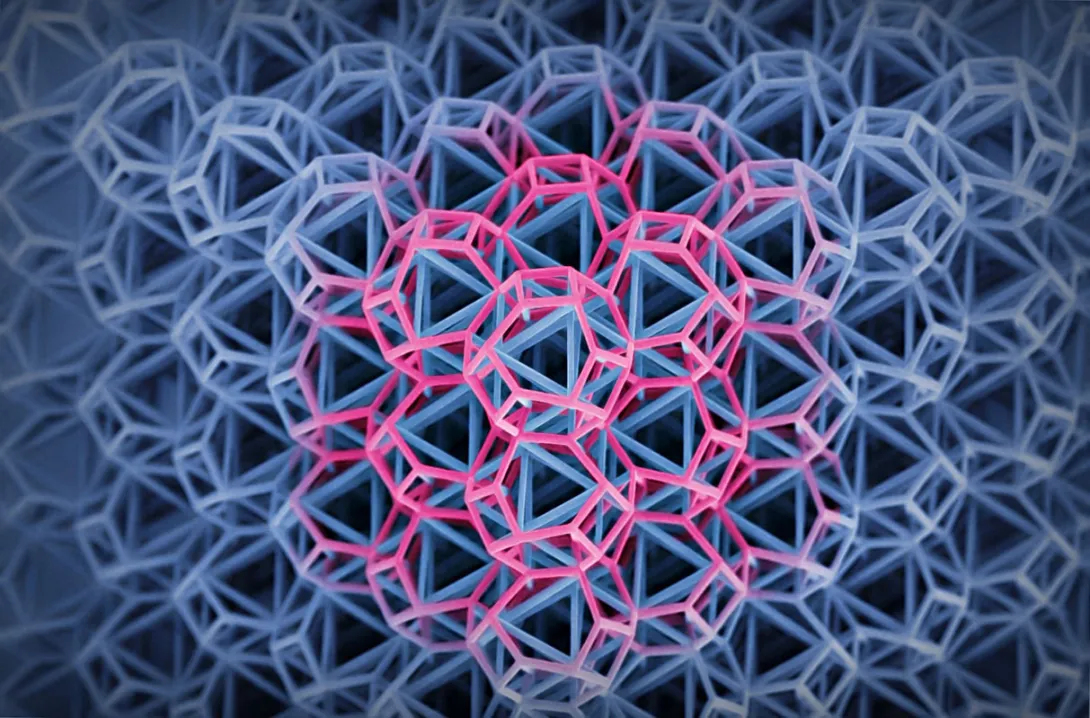
The team turned to tensegrity, a century-old design principle in which isolated rigid bars are integrated into a flexible mesh of tethers to produce very lightweight, self-tensioning truss structures.
Professor Julian Rimoli, faculty member in the School fo Aerospace Enginering and the Georgia Tech Manufacturing Institute, and his team were developing structural configurations for planetary landers when they discovered that tensegrity-based vehicles could withstand severe deformation – or buckling – of its individual components without collapsing, something never observed in other structural solutions.
“This gave us the idea of creating metamaterials that exploit the same principle, which led us to the discovery of the first-ever 3D tensegrity metamaterial,” explained Rimoli, aerospace engineering professor and co-author of the study.
Starting with 950 nanometer-diameter members, the team used a sophisticated direct laser writing technique to generate elementary cells sized between 10 and 20 microns. These were built up into eight-unit supercells that could be assembled with others to make a continuous structure.
The researchers then conducted computational modeling and laboratory experiments and observed that the constructs exhibited uniquely homogenous deformation behavior free from localized overstress or underuse.
The team showed that the new metamaterials feature a 25-fold enhancement in deformability and an orders-of-magnitude increase in energy absorption over state-of-the-art lattice arrangements.
“Tensegrity structures have been studied for decades, particularly in the context of architectural design, and they have recently been found in a number of biological systems,” said senior co-author Lorenzo Valdevit, a UCI professor of materials science and engineering who directs the Architected Materials Group.
“Proper periodic tensegrity lattices were theoretically conceptualized only a few years ago by our co-author Julian Rimoli, but through this project we have achieved the first physical implementation and performance demonstration of these metamaterials.”
Made possible by novel additive manufacturing techniques, extremely lightweight yet strong and rigid conventional structures based on micrometer-scale trusses and lattices have been of keen interest to engineers for their potential to replace heavier, solid substances in aircraft, wind turbine blades and a host of other applications.
Though possessing many desirable qualities, these advanced materials can – like any load-bearing structure – still be susceptible to catastrophic destruction if overloaded.
“In familiar nano-architected materials, failure usually starts with a highly localized deformation,” said first author Jens Bauer, a UCI research scientist in mechanical and aerospace engineering. “Shear bands, surface cracks, and buckling of walls and struts in one area can cause a chain reaction leading to the collapse of an entire structure.”
He explained that truss lattices begin to collapse when compressive members buckle, since those in tension cannot. Typically, these parts are interconnected at common nodes, meaning that once one fails, damage can quickly spread throughout the entire structure.
In contrast, the compressive members of tensegrity architectures form closed loops, isolated from one another and only connected by tensile members. Therefore, instability of compressive members can only propagate through tensile load paths, which – provided they do not rupture – cannot experience instability. Push down on a tensegrity system and the whole structure compresses uniformly, preventing localized damage that would otherwise cause catastrophic failure.
Tensegrity Metamaterial
According to Valdevit, who’s also a professor of mechanical and aerospace engineering at UCI, tensegrity metamaterials demonstrate an unprecedented combination of failure resistance, extreme energy absorption, deformability and strength, outperforming all other types of state-of-the-art lightweight architectures.
“This study provides important groundwork for design of superior engineering systems, from reusable impact protection systems to adaptive load-bearing structures,” he said.
This research was made possible by funding from NASA and the National Science Foundation, as well as research conducted by Georgia Tech aerospace engineering graduate student, Julie Kraus and Cameron Crook, a UCI graduate student in materials science and engineering.
News Contact
Apr. 13, 2020

Georgia Tech Arts is still seeking projects for the 2021 ACCelerate: ACC Smithsonian
Creativity and Innovation Festival in Washington, DC. All Georgia Tech students, faculty, and staff are invited to apply by May 1, 2020.
Even if you do not have a finished project exploring the intersection of science,
engineering, art, design, and technology, we encourage you to speak with Es
Famojure at esther.famojure@arts.gatech.edu about your concepts.
Learn about Georgia Tech's 2019 participants for some inspiration.
The festival brings together all institutions included in the Atlantic Coast Conference to
celebrate creativity and innovation with a specific focus on science, engineering, arts, and
design. It will be held April 9 -11, 2021 at the Smithsonian National Museum of American
History.
Submit your project for consideration by May 1, 2020 to be considered.
News Contact
Es Famojure
esther.famojure@arts.gatech.edu