
Sep. 16, 2025
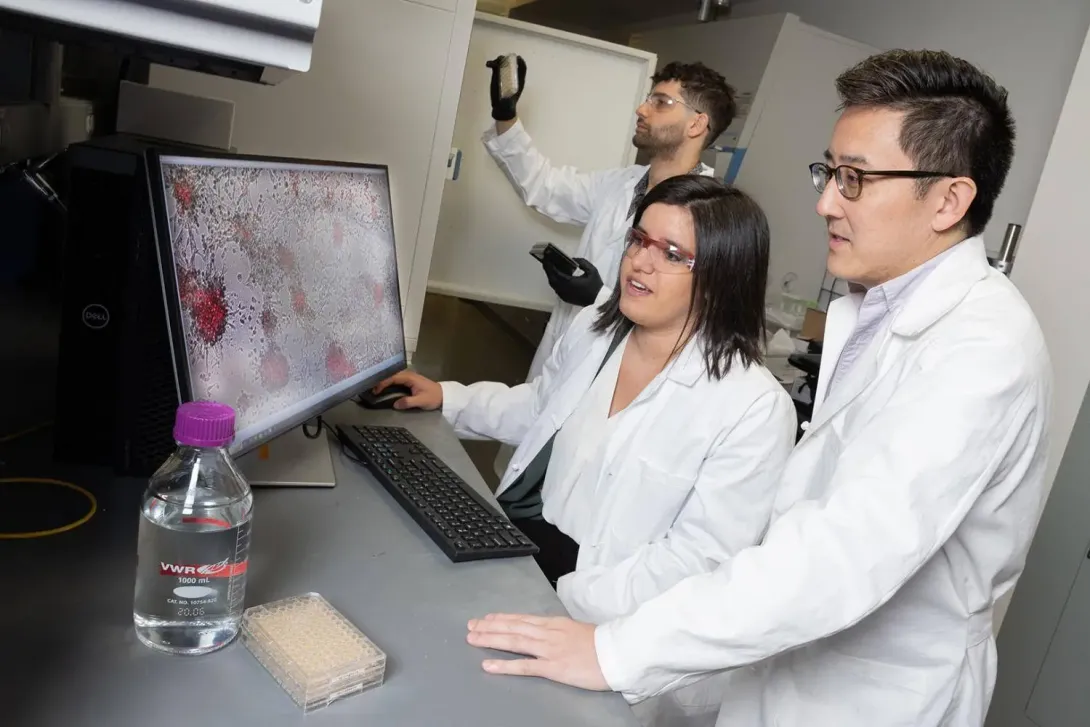
Scientists at Georgia Tech have teamed up with researchers at Johns Hopkins Medicine and Columbia University to better understand how certain types of air pollution increase the risk of developing dementia.
Their findings, published this month in the journal Science, help explain how small particle pollution — think industrial emissions and car exhaust, wildfires and burning wood for heat and cooking — can lead to Lewy body dementia, a devastating disease that causes toxic clumps of protein to destroy nerve cells in the brain.
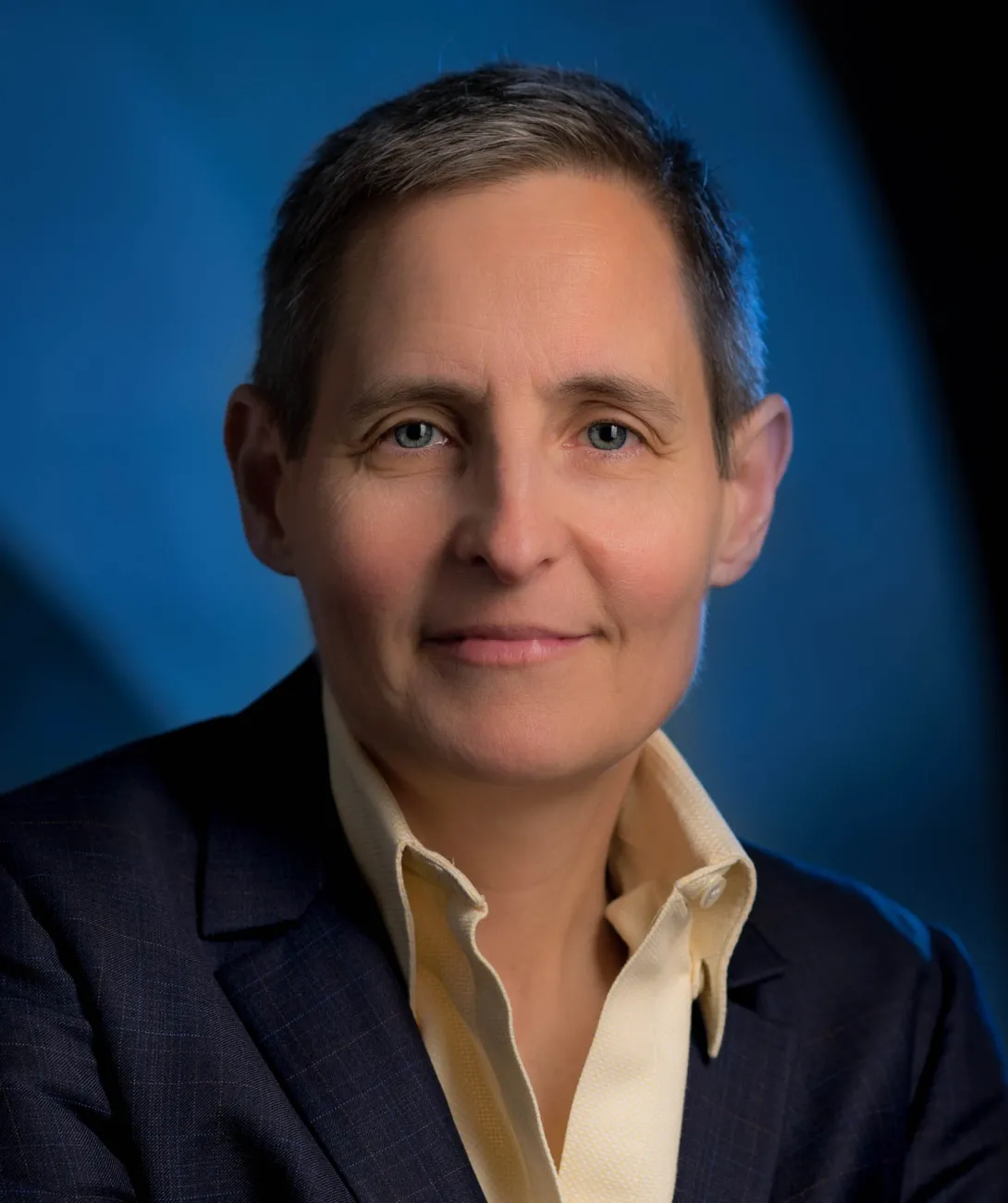
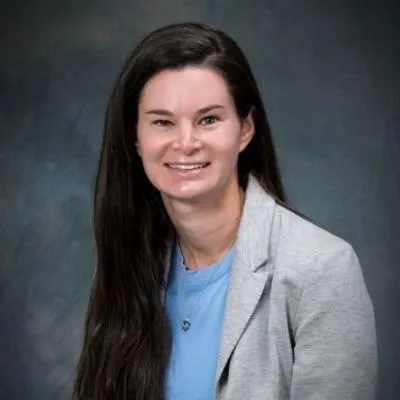
"Epidemiological studies have suggested a strong link between air pollution and dementia, but what sets this study apart is that we also provide a convincing biological mechanism,” says Pengfei Liu, assistant professor School of Earth and Atmospheric Sciences and one of the study’s co-authors. “This collaborative work shows that fine particulate matter from different geographic regions consistently triggers a specific stain of misfolded protein that drives Lewy body dementia."
The work has “profound implications” for helping scientists and policy makers better understand measures to prevent this type of dementia, which is among the most common forms of the disease and affects millions of people around the world.
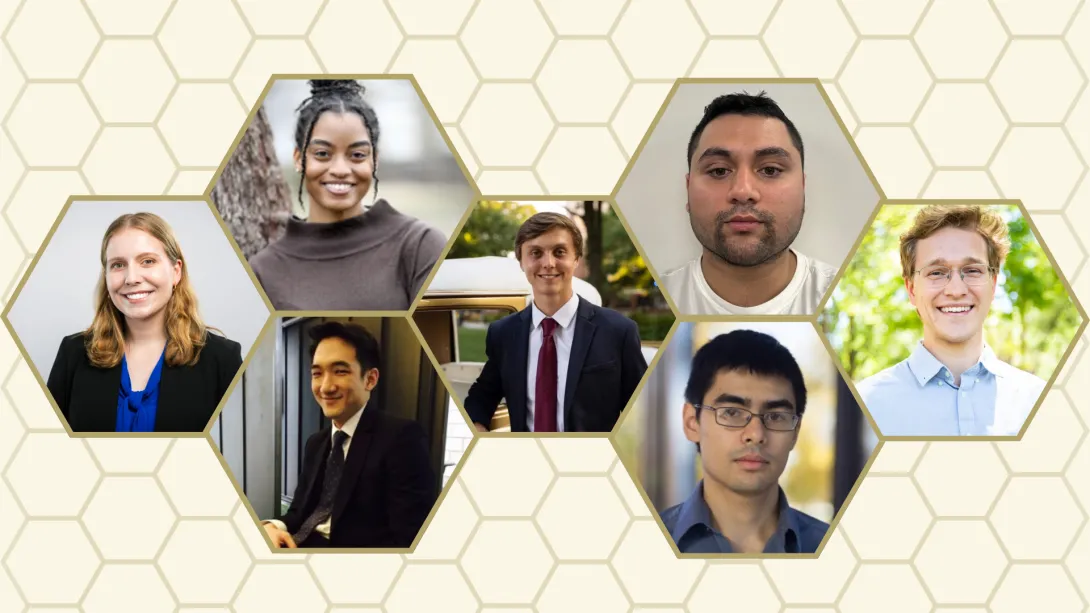
Along with Liu, the research team from Georgia Tech includes Rodney Weber, professor in the School of Earth and Atmospheric Sciences; Minhan Park, a postdoctoral research fellow co-advised by Liu and Weber; Bin Bai, a graduate student in Liu’s lab; and Ma Cristine Faye Denna, a graduate student in Weber’s lab.
“Figuring out how exposure to atmospheric aerosols might be linked to dementia, and what mechanisms are involved, is a complex and challenging problem — and as this study shows, it takes a large team with many different areas of expertise,” Weber adds.
Learn more:
- Science: Lewy body dementia promotion by air pollutants
- Johns Hopkins Medicine newsroom
- Columbia University newsroom
- Press: The Guardian
News Contact
Jess Hunt-Ralston
Director of Communications
College of Sciences at Georgia Tech
Sep. 16, 2025
Between a third and half of all soil carbon on Earth is stored in peatlands, says Tom and Marie Patton Distinguished Professor Joel Kostka. These wetlands — formed from layers and layers of decaying plant matter — span from the Arctic to the tropics, supporting biodiversity and regulating global climate.
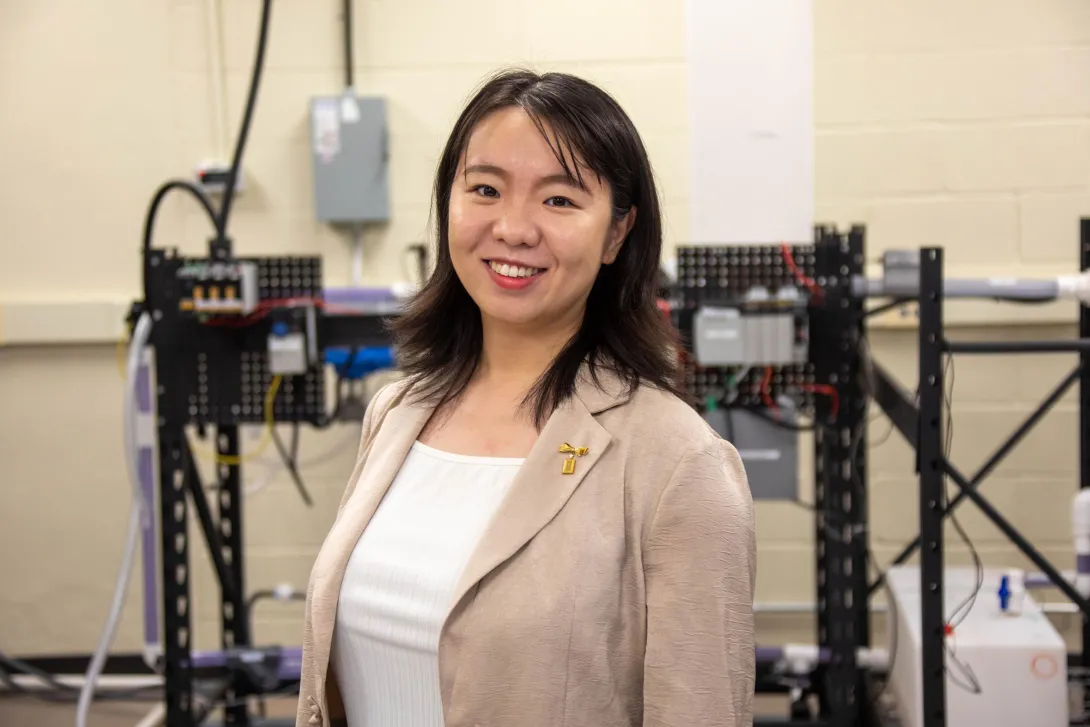
“Peatlands are essential carbon stores, but as temperatures warm, this carbon is in danger of being released as carbon dioxide and methane,” says Kostka, who is also the associate chair for Research in the School of Biological Sciences and the director of Georgia Tech for Georgia’s Tomorrow. Understanding the ratio of carbon dioxide to methane is critical, he adds, because while both are greenhouse gasses, methane is significantly more potent.
Kostka is the corresponding author of a new study unearthing how and why peatlands are producing carbon dioxide and methane.
The research, “Northern peatland microbial communities exhibit resistance to warming and acquire electron acceptors from soil organic matter,” was published this summer in Nature Communications, and was led by co-first authors Borja Aldeguer-Riquelme, a postdoctoral research associate in the Environmental Microbial Genomics Laboratory, and Katherine Duchesneau, a Ph.D. student in the School of Biological Sciences.
The study builds on a decade of research at the Oak Ridge National Lab’s Spruce and Peatland Responses Under Changing Environments (SPRUCE) experiment, a long-term research project in Minnesota that allows researchers to warm whole sections of wetland from tree top to bog bottom.
“Over the past 10 years, we’ve shown that warming in this large-scale climate experiment increases greenhouse gas production,” Kostka says. “But while warming makes the bog produce more methane, we still observe a lot more CO2 production than methane. In this paper, we take a critical step towards discovering why — and describing the mechanisms that determine which gases are released and in what amounts.”
Methane mystery
The subdued methane production in peatlands has been a long-standing mystery. In water-saturated wetlands, oxygen is scarce, but microbes still need to respire — a type of ‘breathing’ that allows them to produce energy for metabolic function. Without oxygen, microbes use nitrate, sulfate, or metals to respire — still releasing carbon dioxide in the process. However, if these ingredients aren’t present, microbes ‘breathe’ in a way that releases methane.
Since nitrate, sulfate, and metals are relatively rare in peatlands, methane production should be the most likely pathway, but surprisingly, observations show the opposite. “In both fieldwork and lab experiments, peatlands produce much more carbon dioxide than methane,” Kostka explains. “It’s puzzling because the soil conditions should help methane production dominate.”
To solve this mystery, the team leveraged a suite of cutting-edge genetic tools called “omics” — metagenomics (studying DNA), metatranscriptomics (studying RNA), and metabolomics (a technique used to study the “leftovers” of metabolism), providing a detailed look under the hood of the microbial “engine” that cycles organic matter in wetlands. It also gave a new window into the diversity of soil microbes in wetlands: 80 percent of the organisms identified in the study were new at the genus level.
‘Omics’ innovations
Over the course of several years, the team collected samples from a peatland enclosed in an experimental chamber that was slowly warmed, then analyzed the samples using omics to see how they changed. Initially, they hypothesized that warming the soil would cause microbial communities to change quickly. “Microbes can evolve and grow rapidly,” Kostka says. “But that didn’t happen.”
The DNA-based methods showed that while the microbial communities stayed largely stable, the bog did release more greenhouse gasses as it warmed. To assess the metabolic potential of the microbes, Duchesneau and Aldeguer-Riquelme constructed microbial genomes, investigating how they were decomposing the organic matter in peatlands and cycling carbon.
“We found that microbial activity increases with warming, but the growth response of microbial communities lags behind these changes in physiological or metabolic activity,” Kostka says. He cautions that this doesn’t necessarily mean that wetland communities won’t change as climates warm — just that these shifts might come behind metabolic ones.
A diversity of discoveries
And the methane? The team believes that microbes may be breaking down organic matter to access the key ingredients for producing carbon dioxide — nitrate, sulfate, and metals — though more research is currently underway to investigate this.
“Doing this type of integrated omics research in soil systems is still incredibly difficult,” Kostka says. The challenge is multifaceted: the research leverages years of experiments, long-term datasets, advanced laboratory techniques, and fieldwork innovations.
At SPRUCE, experimental chambers are about 1,000 square feet. While it’s an impressive experimental setup, researchers still must be careful: “We need to take soil samples for many years, so if we take too many, there’d be no soil left!” Kostka explains. “Part of our research involves developing better, non-destructive sampling techniques.”
The other challenge lies in what makes these peatlands so unique: it’s very hard to detect small changes because of the sheer diversity of organisms present. “Every time we conduct this type of research, we learn more about these incredible systems,” he says. “There’s always something new.”
DOI: https://doi.org/10.1038/s41467-025-61664-7
Funding: The Office of Biological and Environmental Research, Terrestrial Ecosystem Science Program and Genomic Science programs, under the US Department of Energy (DOE); the Environmental Molecular Sciences Laboratory, a DOE Office of Science User Facility sponsored by the Biological and Environmental Research program. The SPRUCE experiment is funded by the Biological and Environmental Research program in the U.S. Department of Energy’s Office of Science.
News Contact
Written by Selena Langner
Sep. 16, 2025
The Strategic Energy Institute (SEI) at Georgia Tech concluded its third cohort of Energy Faculty Fellows in August, welcoming a diverse group of researchers for a 10-week summer fellowship. The program is designed to advance energy innovation and collaboration by supporting cross-institutional partnerships and facilitating dialogue on regional, national, and global energy priorities.
The program intends to build research partnerships between Georgia Tech and other academic institutions — specifically, emerging research institutions including R2 universities, minority-serving institutions, historically Black colleges and universities, and primarily undergraduate institutions.
“The Energy Faculty Fellows program is a key part of our five-year strategy to expand collaboration and strengthen workforce development in energy research,” said Christine Conwell, SEI’s interim executive director. “The cross-institutional collaborations foster broader engagement across the energy sector and help connect diverse research communities to meet the demands of the evolving energy landscape.”
During the fellowship, participants engage in joint research with their Georgia Tech hosts and their research teams, gaining hands-on experience and insights. These experiences not only enrich their immediate projects but also contribute to strengthening research systems at their home institutions.
The program continues to advance workforce development in the energy sector by involving undergraduate researchers in its core activities. Students work closely with fellows on applied research, enabling them to explore potential career paths and evaluate their interest in contributing to the future of energy innovation.
Here is the 2025 cohort of SEI’s Energy Faculty Fellows, in their own words.
Fellow: Jamal Mamkhezri, Associate Professor of Economics, New Mexico State University
Host: Laura Taylor, Professor, School of Economics, and Director, Energy Policy and Innovation Center, Georgia Tech
Over the past 10 weeks, I have worked closely with my host, Laura Taylor, and a talented group of students on projects that spanned a wide range of energy topics — from peer-to-peer energy trading and battery storage in wholesale markets to the impacts of energy prices on retail spending, EV charging infrastructure, electricity outages and crime, and the potential of small modular reactors. My own research during this period focused on two key areas: analyzing the impact of data center expansion on wholesale electricity prices and evaluating how utility-scale solar projects influence property and farmland values across the Southeast.
The biggest takeaway from this experience has been the power of interdisciplinary collaboration, combining economics, policy, and engineering perspectives with students and faculty. It sparked richer questions and solutions than what I would have developed on my own.
To my peers back home: Embrace cross-disciplinary hubs like SEI to elevate your research and connections.
Fellow: Judy Jenkins, Professor of Chemistry, Eastern Kentucky University
Host: Erin Ratcliff, Professor, School of Chemistry and Biochemistry, School of Materials Science and Engineering, Georgia Tech
I started the fellowship with two goals — to collaborate with Erin Ratcliff and her group while at Georgia Tech, and to build the foundation for continued collaboration after I return to Eastern Kentucky University. These goals have been realized, and so much more. The Ratcliff group and the whole SEI team welcomed me into the Georgia Tech energy community and supported this partnership every step of the way.
I particularly enjoyed getting to work alongside graduate students and postdocs in the Ratcliff group. While they were much more familiar with the chemical system of interest, I had more experience in some of the techniques. Together we made a great team! Getting to spend 10 weeks with them helped me move from general ideas for collaboration to a much more specific and nuanced understanding of the ways we can work together going forward.
Outside of the lab, I appreciated the way the SEI team introduced us to their initiatives more broadly. I have a much better understanding of the scope of the Institute and the ways different people are working together.
Fellow: Cody Gonzalez, Assistant Professor of Mechanical Engineering, University of Texas at San Antonio
Hosts: Nazanin Bassiri-Gharb, Harris Saunders Jr. Chair and Professor, George W. Woodruff School of Mechanical Engineering; and Hailong Chen, Associate Professor, George W. Woodruff School of Mechanical Engineering, Georgia Tech
Undergraduate Student: Rebecca Lima, University of Texas at San Antonio
During my fellowship, I collaborated with Nazanin Bassiri-Gharb and Hailong Chen on two research fronts: lead zirconate antiferroelectrics and stress-potential coupling in solid-state batteries.
Rebecca Lima, an undergraduate student from my university, was able to join the research through the SURE program and was able to achieve highly oriented lead zirconate films with promising applications in energy storage and actuation, with help from Nazanin’s Ph.D. student, Milan Haddad.
In Chen’s lab, alongside postdoctoral researcher Zhantao Liu, we advanced solid-state cell characterization for improved capacity and self-sensing. Lima also led a battery coating workshop as a knowledge exchange between Georgia Tech and UTSA.
During the 10 weeks, I also began discussions with Tequila Harris on studying how manufacturing methods affect battery anode coatings, with plans to use her pilot-scale, roll-to-roll facility for future testing and collaboration.
Working in the Advanced Research Institute (ARI) in The Kendeda Building with Shannon Yee provided critical support and equipment for electrochemical cell characterization. Through networking within Kendeda, I also got an opportunity to participate in weekly brainstorming sessions on topics like clean water and robotics.
Looking ahead, I plan to integrate Bassiri-Gharb’s expertise in antiferroelectric synthesis and piezo force microscopy with my background in electrochemical cell fabrication to pursue electrochemical strain microscopy. This will enable direct strain measurement from ionic currents, advancing high-capacity batteries and ultra-dense electrochemical actuators for precision applications like telescope mirror alignment.
I'm grateful to my colleagues at UTSA for encouraging me to apply and sharing their positive experiences at Georgia Tech. My time here has been incredibly rewarding — working alongside outstanding collaborators has strengthened my research and expanded both my network and ideas. The Energy Faculty Fellows program has already led to new proposals and co-authored papers, and I’ve encouraged others to apply. Collaborating across disciplines — from materials science and electrochemistry to advanced manufacturing — has opened up exciting opportunities to tackle real-world challenges in energy and beyond.
Fellow: Hossein Taheri, Associate Professor of Manufacturing Engineering, Georgia Southern University.
Host: Jin-Yeon Kim, Senior Research Scientist, Georgia Tech Research Institute
Over the past 10 weeks, I collaborated with my Georgia Tech host Jin Yeon Kim on two key research projects. The first evaluated advanced nondestructive testing (NDT) methods — like PAUT and MCT — for assessing quality in metal additive manufacturing. The second explored acoustic-based NDT techniques to assess the operational health of lithium-ion batteries, particularly in electric vehicle applications. As demand for battery-powered technologies grows, ensuring safe and reliable operation through in-situ monitoring is critical. These efforts have laid a strong foundation for future proposals and joint publications.
The biggest takeaway has been the value of cross-institutional collaboration in advancing interdisciplinary research. Working with researchers at Georgia Tech deepened my technical expertise and showed how partnerships can accelerate innovation.
To my peers at Georgia Southern: Seek out collaborations beyond your institution. They can lead to new ideas, stronger research impact, and more opportunities for funding, publication, and student development. Collaboration is not only beneficial but is essential for addressing today’s engineering challenges.
News Contact
Priya Devarajan || SEI Communications Program Manager
Sep. 04, 2025
The National Science Foundation (NSF) has awarded School of Materials Science and Engineering (MSE) Professor & Regents’ Entrepreneur Rampi Ramprasad a $2 million grant to advance research at the intersection of artificial intelligence (AI) and polymer science. He and a multidisciplinary team of Georgia Tech researchers will design next-generation polymer-based packaging materials that can easily be recycled or biodegraded at the end of their use. The project addresses one of the most pressing challenges in global sustainability: plastic waste.
Read more on the Georgia Tech Materials Science and Engineering Newspage
Aug. 15, 2025
The Strategic Energy Institute and the Energy Policy and Innovation Center at Georgia Tech are pleased to announce that applications are now open for two graduate student fellowships this fall.
The James G. Campbell Fellowship is designed to support Georgia Tech graduate students conducting research in the field of renewable energy and provides a $1,500 award.
The annual SPARK award is given to current Georgia Tech graduate students who have demonstrated outstanding leadership in advancing student engagement with energy research and with evidence of broader impacts and service or leadership. The number of SPARK awards is variable, depending on funding.
To be eligible, student applicants must be U.S. citizens or permanent residents and currently writing a thesis or dissertation focused on renewable energy.
The application deadline is Sept. 4, 2025.
Applicants must submit the following materials to the Energy Comments Mailbox of the Strategic Energy Institute:
- A brief cover letter (one to two paragraphs) explaining their motivation for studying their academic discipline and what they hope to accomplish in the field.
- Their full name, GTID number, anticipated graduation date, and field of research.
- A current resume.
- In addition, a one-page letter of nomination from a faculty member must be submitted separately to the same mailbox. Graduate students are strongly encouraged to begin the process of securing this nomination letter as early as possible.
These fellowships offer a valuable opportunity to gain recognition and support for work in renewable energy. All eligible graduate students are encouraged to apply and take the next step in advancing their academic and professional goals.
News Contact
Priya Devarajan || SEI Communications Program Manager
Aug. 14, 2025
This study examines how short-term variability in wind power—known as wind intermittency—affects real-time electricity system imbalances in U.S. regional power markets. The authors, Victoria Godwin and Matthew E. Oliver of the Georgia Institute of Technology and EPIcenter affiliates, analyze data from four major system operators: Bonneville Power Administration (BPA), New York ISO (NYISO), Southwest Power Pool (SPP), and PJM Interconnection. They focus on Area Control Error (ACE), a real-time metric used by grid operators to measure the mismatch between electricity supply and demand, adjusted for frequency deviations. Maintaining ACE near zero is essential for grid stability.
The authors find that a doubling of hourly wind generation variance increases average hourly ACE by 2% in BPA, 3.7% in NYISO, and 11.4% in SPP—equivalent to 1.2 MW, 1.8 MW, and 9.35 MW increases in system imbalance, respectively. PJM shows no significant effect, likely due to less granular data. They also show that sudden increases in wind generation are more likely to cause oversupply (positive ACE), while sudden drops lead to undersupply (negative ACE), confirming asymmetric operational impacts.
Read Full Story on the EPIcenter Website
News Contact
Gilbert Gonzalez || EPIcenter
Media Contact: Priya Devarajan | Strategic Energy Institute
Aug. 19, 2025
Overly acidic soils can mean the difference between feeding a region and famine. Each crop needs the right soil pH to thrive, and acidic conditions, produced primarily by industrial emissions and application of fertilizers, can harm growing conditions. It has recently been estimated that sub-Saharan Africa, for example, loses billions of dollars annually in crop yield because of poor agricultural conditions. But there is a possible solution — and it could even help the Earth’s climate.
For centuries, farmers have neutralized soil acidity with a practice called liming. It involves mixing crushed calcium- or magnesium-rich rocks, known as limestone, into the soil to balance pH. But liming has long been an assumed tradeoff in which removing acid also meant increasing carbon emissions into the atmosphere.
New research from Georgia Tech shows that the opposite may be true. Agricultural liming can actually reduce atmospheric carbon dioxide and improve crop yield.
“The current thinking about liming is that farmers must choose between doing something that could benefit them economically or reducing their greenhouse gas emissions,” said Chris Reinhard, an associate professor in the School of Earth and Atmospheric Sciences. “But this is often a false choice. They can do both.”
The researchers published a new framework for the potential role of liming in food security and greenhouse gas mitigation in August in the paper, “Using Carbonates for Carbon Removal,” in Nature Water.
Collecting Carbon Data
The framework is based in part on ongoing work Reinhard and his collaborators are pursuing on the impacts of agricultural liming in the Upper Midwest’s Corn Belt for a Department of Energy study. With funding from the Grantham Foundation, they’re now turning their attention to local farms in southern Georgia and North Carolina.
For each farm, the researchers measure data that most farmers would collect already, like soil pH and nutrients. But the team also tracks more specialized measurements, including trace elements and greenhouse gas fluxes in the soil. All this data is matched to a high-resolution, machine learning grid of the farm’s geography to determine exactly which crops might benefit.
The researchers are using the data to build a computer model that predicts how carbon dioxide and other greenhouse gases will move through any particular soil system. Liming won’t universally absorb carbon dioxide — or if it does, there may be an occasional time delay between carbon emissions and absorption — which is why the researchers factor soil, crop rotation, climate, and other management practices into their calculations.
“Our goal is to develop a way that farmers can monitor and plan cheaply, and largely through techniques they are already using, so we don't have to send out a whole team to gather data,” Reinhard said. “We are trying to develop a predictive model architecture for planning agricultural practice across scales, but it’s important that the techniques required on the field are actually feasible for farmers.”
This data could be pivotal for farmers, and it could also help policymakers as they address farming subsidies and foreign aid funding. Globally, food-insecure regions like sub-Saharan Africa could become more self-sufficient with more liming. Farmers in parts of the U.S. could also improve their yields and, in effect, their profits, if they limed more fields.
The added benefit of lowering carbon could get even more farmers on board, and there is extensive exploration and implementation of agricultural practices already on voluntary and governmental carbon markets. Carbon dioxide is only one greenhouse gas that liming can lower; researchers are also exploring how liming can reduce methane and nitrous oxide — the latter of which is a key climate impact of human agriculture and is often considered a “hard-to-abate” emission.
Liming may be a centuries-old practice, but its applications are potentially much wider than initially believed. In the future, farming may be part of the answer to reducing carbon emissions, instead of part of the problem.
News Contact
Tess Malone, Senior Research Writer/Editor
tess.malone@gatech.edu
Aug. 05, 2025
This summer, the Strategic Energy Institute (SEI) and the Energy Policy and Innovation Center (EPIcenter) hosted Energy Unplugged, an education and outreach program focused on science, technology, engineering, art, and mathematics (STEAM). The annual summer camp is organized through the Center for Education Integrating Science, Mathematics, and Computing (CEISMC), a unit of the College of Lifetime Learning at Georgia Tech. As one of Tech’s most sought-after programs for high school students, the weeklong summer camp continues to spark interest in energy innovation and develop foundational skills in science.
“Energy Unplugged introduces high school students to Georgia Tech’s vibrant innovation ecosystem, engaging young minds in shaping a more forward-thinking energy future,” said Christine Conwell, interim executive director of SEI.
Rich Simmons, SEI’s director of Research and Studies and a George W. Woodruff School of Mechanical Engineering faculty instructor, has led the camp’s curriculum since 2019. Under his leadership, students engage in applied learning experiences that introduce energy efficiency principles, foster creative thinking, and encourage real-world decision-making.
“Energy Unplugged features interactive activities and field trips which provide students tangible exposure to working energy facilities and STEM careers,” Simmons said. “As an integral part of our education and outreach efforts, the camp continues to inspire the next generation to think critically about energy and its impact on their communities and the world.”
“Collaborating with SEI on Energy Unplugged allows us to amplify CEISMC’s mission of expanding access to high-quality STEM experiences,” said Sirocus Barnes, director of Expanded Learning Programs at CEISMC. “By connecting students with real-world energy challenges and Georgia Tech’s research ecosystem, we’re helping them envision themselves as future innovators and problem-solvers.”
The week began with a hands-on workshop where students constructed mousetrap-powered cars, applying core physics concepts and the mechanics of energy conversion. In another activity, students raced remote-controlled cars to highlight the importance of swift decision-making while accounting for external variables. These experiments offered students a dynamic understanding of the relationship between energy and physics. Camp participants also explored electricity use in everyday life by experimenting with solar charging setups, learning how devices like cellphones can be powered through solar energy.
One participant, a rising high school senior, noted the program's differentiation from the typical classroom model: “We had a lot of experiences that aren’t typically offered in high school, which gave me a greater understanding of physics.”
The camp also featured site visits, including a tour of The Kendeda Building for Innovative Sustainable Design — the first building in the Southeast to meet the standards of the Living Building Challenge. Students explored the building’s facilities, including its rooftop garden and photovoltaic canopy. Additional field trips included tours of Oglethorpe’s Georgia System Operations plant and the Morgan Falls hydroelectric power plant, which offered students firsthand exposure to how energy is generated and managed across the state.
To conclude the week, students collaborated in teams on a mini design challenge: devising a sustainable taco business. They were tasked with cooking beans efficiently using either a slow cooker or a pressure cooker and learning how to balance time, energy use, and customer satisfaction. This final project reinforced lessons in energy trade-offs and problem-solving. Teams presented their findings to an audience of parents, faculty, and staff — a memorable opportunity that allowed them to develop public speaking and technical presentation skills as well.
“The presentation on the last day of camp encourages students to use their creativity in different ways to form new solutions and ideas,” said Jake Churchill, graduate student and former camp counselor, “which provides great exposure to an open-minded, nonlinear approach to engineering — and a great teacher, Rich Simmons.”
Contributed by: Katie Strickland
News Contact
Priya Devarajan || SEI Communications Program Manager
Aug. 01, 2025
This June, New York City’s government and utility urged households to conserve electricity during an extreme heat wave with temperatures reaching 100 degrees F. People were asked to set air conditioners to 76 degrees, to avoid using more than one air conditioning unit, and to delay using electricity-hungry appliances during peak cooling hours.
The big concern is that when every air conditioning unit is running at full blast, electricity demand can exceed total generating capacity and force the utility to implement rolling blackouts. These rolling blackouts avoid a total system failure but leave people without access to cooling and other electronics as temperatures reach dangerous levels.
As temperatures peak in the United States during the coming weeks, utilities and city governments may follow suit with similar requests for voluntary conservation. Voluntary requests for conservation in the United States are part of the standard energy emergency playbook and go back at least to President Carter’s request for Americans to reduce heating temperatures during the 1977 energy crisis.
So, do voluntary conservation requests work to save energy and prevent blackouts?
News Contact
Written by: Dylan Brewer, Faculty Affiliate, EPIcenter & Assistant Professor, School of Economics, Georgia Tech
Jul. 31, 2025
For more than 15 years, Georgia Tech has provided the City of Atlanta with the foundational data and insight that shape how the city tracks, understands, and plans for changes in its tree canopy. The latest cycle of this research — delivered through the Center for Urban Resilience and Analytics (CURA) — continues that legacy by offering a high-resolution, citywide canopy assessment using satellite imagery and field validation.
The assessment, funded by the city’s Tree Recompense Fund, uses advanced remote sensing tools such as WorldView-2 satellite data and a random forest classification model to categorize land into three land cover types. These include tree canopy, non-tree vegetation (grass, shrubs, and low lying vegetation) and non-vegetation (water, pervious surface). The methodology delivers a detailed spatial picture of land cover across the city.
“This is simply a tool in their planning arsenal,” said Anthony Giarrusso, who has led every canopy study since 2008. “Before they did any of this work in 2008, everything was anecdotal. It was reactionary.”
The new study is not advocacy — it’s information. Giarrusso emphasized that while researchers stay neutral in the politics of urban growth and conservation, their work equips city leaders with science-based knowledge to make more effective zoning and planning decisions.
In addition to mapping existing conditions, the Georgia Tech team developed the Potential Planting Index (PPI), a scalable tool that identifies where tree planting is physically possible based on current land cover. The tool quantifies the difference between tree canopy and non-tree vegetation, indicating zones with restoration potential.
Another key insight is the challenge of interpreting canopy change without understanding land use patterns. “It gives you a false sense of stability if you don’t understand the underlying land use,” said Giarrusso. “You might see canopy regrowth on paper, but that land could be cleared again tomorrow.” He explained that this false signal is particularly common in stalled development sites: “We saw a lot of properties where trees had regrown after initial clearing, but it was temporary and monoculture, low quality canopy. Several of those areas were cleared again for construction later.”
Giarrusso pointed to these “loss-gain-loss” cycles as one of the more misleading aspects of tree canopy analysis without strong land use context. “Some of them were pipe farms — land cleared for development with infrastructure like water and sewer lines installed, but then construction never happened. So trees grow back, and you get a canopy gain that doesn’t last and is nowhere near the quality of the trees originally cleared.”
He stressed that policymakers need to consider the permanence of canopy when using the data. “If it’s just going to be cleared again in two years, it’s not really a gain. That’s why long-term tracking and land use analysis together are so important.”
The city has incorporated these tools into broader planning efforts, including zoning reform and tree ordinance revisions. The research supports recommendations such as restricting full lot clearing in certain zoning categories and adjusting setback or lot coverage limits to better preserve existing canopy.
Giarrusso underscored the urgency of protecting larger, intact forested tracts. “If you can see it from space and it’s still forest — save it,” he said. “Once it’s cleared, you don’t get it back.”
Pagination
- Previous page
- Page 4
- Next page