

Jul. 17, 2025
Graphical Illustration of a futuristic car

From the humble beginnings of the three-wheeled Benz Patent-Motorwagen in 1886, the automobile has been a continuous story of technological progress. Each era has seen cars push the boundaries of innovation, evolving from early mechanical systems into sophisticated, computer-driven machines.

We’re now in a new generation of automobiles, where roadways are increasingly shared by electric vehicles (EVs) and autonomous vehicles (AVs). 

EVs are projected to dominate global car sales by 2030, according to an RMI report. Meanwhile, AVs are gradually entering the mainstream, with 37 percent of new passenger cars expected to be equipped with advanced driver-assistance technologies by 2035, according to McKinsey & Company.

Georgia Tech School of Electrical and Computer Engineering (ECE) researchers are at the forefront of advanced automotive technologies, working on everything from electric engines and computer vision, to modernizing the power grid to support EV charging.

Given current advancements and future possibilities, ECE is helping bring the future car into view, though many surprises and uncertainties remain. Learn what's on the horizon on the ECE Newspage.

News Contact

Zachary Winiecki (zwiniecki3@gatech.edu)

Jul. 20, 2025
This travel case holds a toolkit containing equipment for inspecting nuclear facilities

This travel case holds a toolkit containing equipment for inspecting nuclear facilities. Dean Calma/IAEA, CC BY

What happens when a country seeks to develop a peaceful nuclear energy program? Every peaceful program starts with a promise not to build a nuclear weapon. Then, the global community verifies that stated intent via the Treaty on the Non-Proliferation of Nuclear Weapons.

Once a country signs the treaty, the world’s nuclear watchdog, the International Atomic Energy Agency, provides continuous and technical proof that the country’s nuclear program is peaceful.

The IAEA ensures that countries operate their programs within the limits of nonproliferation agreements: low enrichment and no reactor misuse. Part of the agreement allows the IAEA to inspect nuclear-related sites, including unannounced surprise visits.

These are not just log reviews. Inspectors know what should and should not be there. When the IAEA is not on site, cameras, tamper-revealing seals on equipment and real-time radiation monitors are working full-time to gather or verify inside information about the program’s activities.

Safeguards Toolkit

The IAEA safeguards toolkit is designed to detect proliferation activities early. Much of the work is fairly technical. The safeguards toolkit combines physical surveillance, material tracking, data analytics and scientific sampling. Inspectors are chemists, physicists and nuclear engineers. They count spent fuel rods in a cooling pond. They check tamper seals on centrifuges. Often, the inspectors walk miles through hallways and corridors carrying heavy equipment.

That’s how the world learned in April 2021 about Iran pushing uranium enrichment from reactor-fuel-grade to near-weapons-grade levels. IAEA inspectors were able to verify that Iran was feeding uranium into a series of centrifuges designed to enrich the uranium from 5%, used for energy programs, to 60%, which is a step toward the 90% level used in nuclear weapons.

Around the facilities, whether for uranium enrichment or plutonium processing, closed-circuit surveillance cameras monitor for undeclared materials or post-work activities. Seals around the facilities provide evidence that uranium gas cylinders have not been tampered with or that centrifuges operate at the declared levels. Beyond seals, online enrichment monitors allow inspectors to look inside of centrifuges for any changes in the declared enrichment process.

Seals verify whether nuclear equipment or materials have been used between onsite inspections.

When the inspectors are on-site, they collect environmental swipes: samples of nuclear materials on surfaces, in dust or in the air. These can reveal if uranium has been enriched to levels beyond those allowed by the agreement. Or if plutonium, which is not used in nuclear power plants, is being produced in a reactor. Swipes are precise. They can identify enrichment levels from a particle smaller than a speck of dust. But they take time, days or weeks. Inspectors analyze the samples at the IAEA’s laboratories using sophisticated equipment called mass spectrometers.

In addition to physical samples, IAEA inspectors look at the logs of material inventories. They look for diversion of uranium or plutonium from normal process lines, just like accountants trace the flow of finances, except that their verification is supported by the ever-watching online monitors and radiation sensors. They also count items of interest and weigh them for additional verification of the logs.

Beyond accounting for materials, IAEA inspectors verify that the facility matches the declared design. For example, if a country is expanding centrifuge halls to increase its enrichment capabilities, that’s a red flag. Changes to the layout of material processing laboratories near nuclear reactors could be a sign that the program is preparing to produce unauthorized plutonium.

Losing Access

Iran announced on June 28, 2025, that it has ended its cooperation with the IAEA. It removed the monitoring devices, including surveillance cameras, from centrifuge halls. This move followed the news by the IAEA that Iran’s enrichment activities are well outside of allowed levels. Iran now operates sophisticated uranium centrifuges, like models IR-6 and IR-9.

Removing IAEA access means that the international community loses insight into how quickly Iran’s program can accumulate weapon-grade uranium, or how much it has produced. Also lost is information about whether the facility is undergoing changes for proliferation purposes. These processes are difficult to detect with external surveillance, like satellites, alone.

a satellite view of a complex of buidlings on a desert landscape
A satellite view of Iran’s Arak Nuclear Complex, which has a reactor capable of producing plutonium. Satellite image (c) 2025 Maxar Technologies via Getty Images

An alternative to the uranium enrichment path for producing nuclear weapons material is plutonium. Plutonium can’t be mined, it has to be produced in a nuclear reactor. Iran built a reactor capable of producing plutonium, the IR-40 Heavy Water Research Reactor at the Arak Nuclear Complex.

Iran modified the Arak reactor under the now-defunct Joint Comprehensive Plan of Action to make plutonium production less likely. During the June 2025 missile attacks, Israel targeted Arak’s facilities with the aim of eliminating the possibility of plutonium production.

With IAEA access suspended, it won’t be possible to see what happens inside the facility. Can the reactor be used for plutonium production? Although a lengthier process than the uranium enrichment path, plutonium provides a parallel path to uranium enrichment for developing nuclear weapons.

Continuity of Knowledge

North Korea expelled IAEA inspectors in 2009. Within a few years, they restarted activities related to uranium enrichment and plutonium production in the Yongbyon reactor. The international community’s information about North Korea’s weapons program now relies solely on external methods: satellite images, radioactive particles like xenon – airborne fingerprints of nuclear activities – and seismic data.

What is lost is the continuity of the knowledge, a chain of verification over time. Once the seals are broken or cameras are removed, that chain is lost, and so is confidence about what is happening at the facilities.

When it comes to IAEA inspections, there is no single tool that paints the whole picture. Surveillance plus sampling plus accounting provide validation and confidence. Losing even one weakens the system in the long term.

The existing safeguards regime is meant to detect violations. The countries that sign the nonproliferation treaty know that they are always watched, and that plays a deterrence role. The inspectors can’t just resume the verification activities after some time if access is lost. Future access won’t necessarily enable inspectors to clarify what happened during the gap.The Conversation


This article is republished from The Conversation under a Creative Commons license. Read the original article.

News Contact

Author:

Anna Erickson, professor of Nuclear and Radiological Engineering, Georgia Institute of Technology


Media Contact:

Shelley Wunder-Smith
shelley.wunder-smith@research.gatech.edu

Jul. 22, 2025
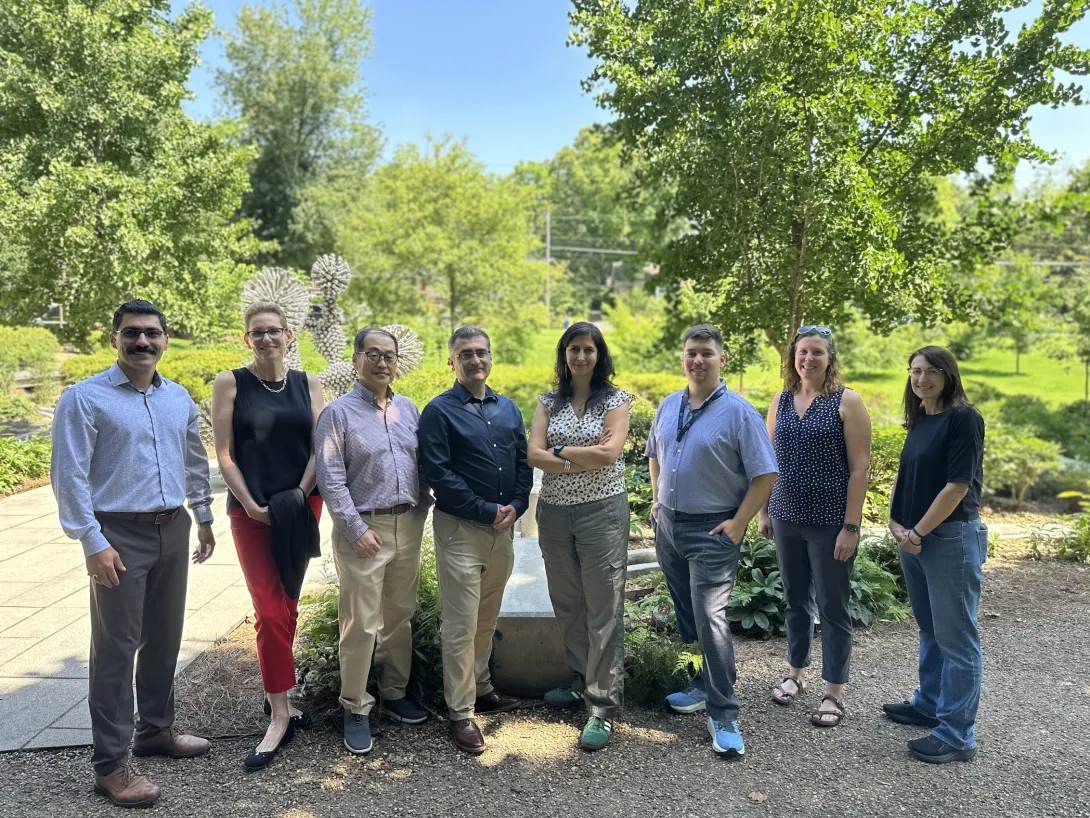
Energy and national security cohort meeting participants including the seed grant teams and the SEI and GTRI team

Attendees of the Energy and National Security Cohort Meeting, featuring seed grant teams along with members from SEI and GTRI

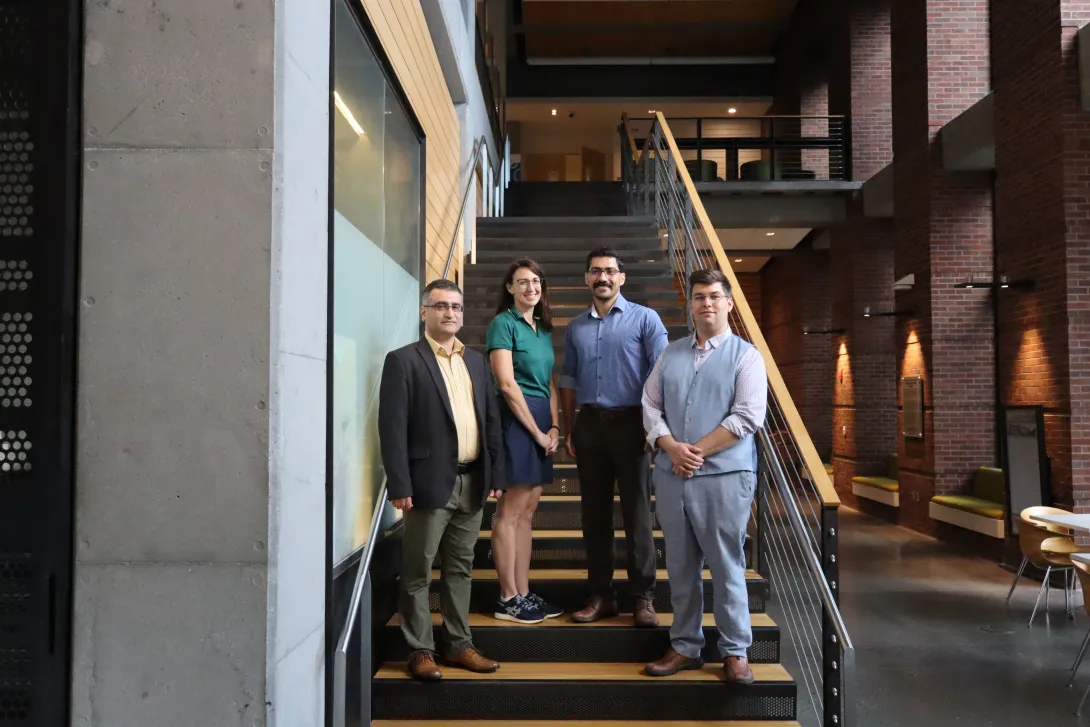
Gary McMurray, GTRI Division Chief for Intelligent Sustainable Technologies Division, Rich Simmons, SEI Director of Research and Studies, William H. Robinson, GTRI Deputy Director of Research, Christine Conwell, SEI Interim Executive Director, and John Tien, SEI Distinguished External Fellow at the Energy and National Security Cohort Meeting

Gary McMurray, GTRI Division Chief for Intelligent Sustainable Technologies Division, Rich Simmons, SEI Director of Research and Studies, William H. Robinson, GTRI Deputy Director of Research and Interim CTO, Christine Conwell, SEI Interim Executive Director, and John Tien, SEI Distinguished External Fellow at the Energy and National Security Cohort Meeting

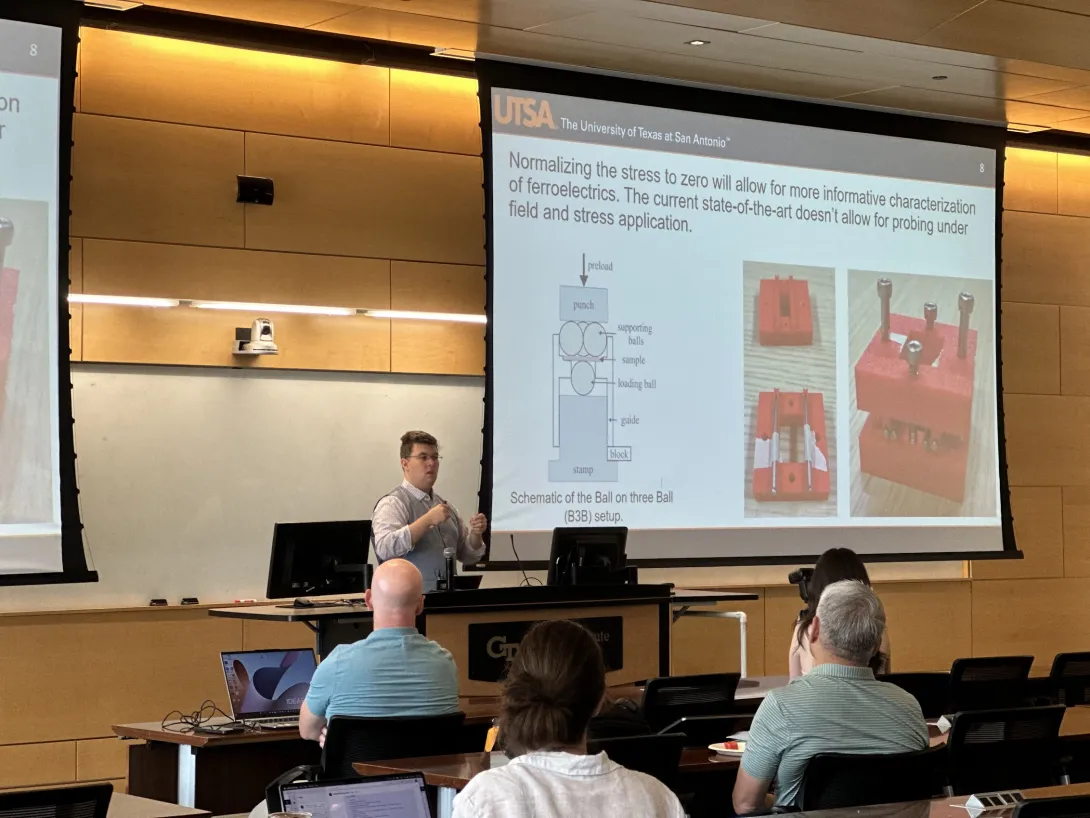
John Tien, SEI Distinguished External Fellow sharing remarks at the Energy and National Security Cohort Meeting

John Tien, SEI Distinguished External Fellow sharing remarks at the meeting.

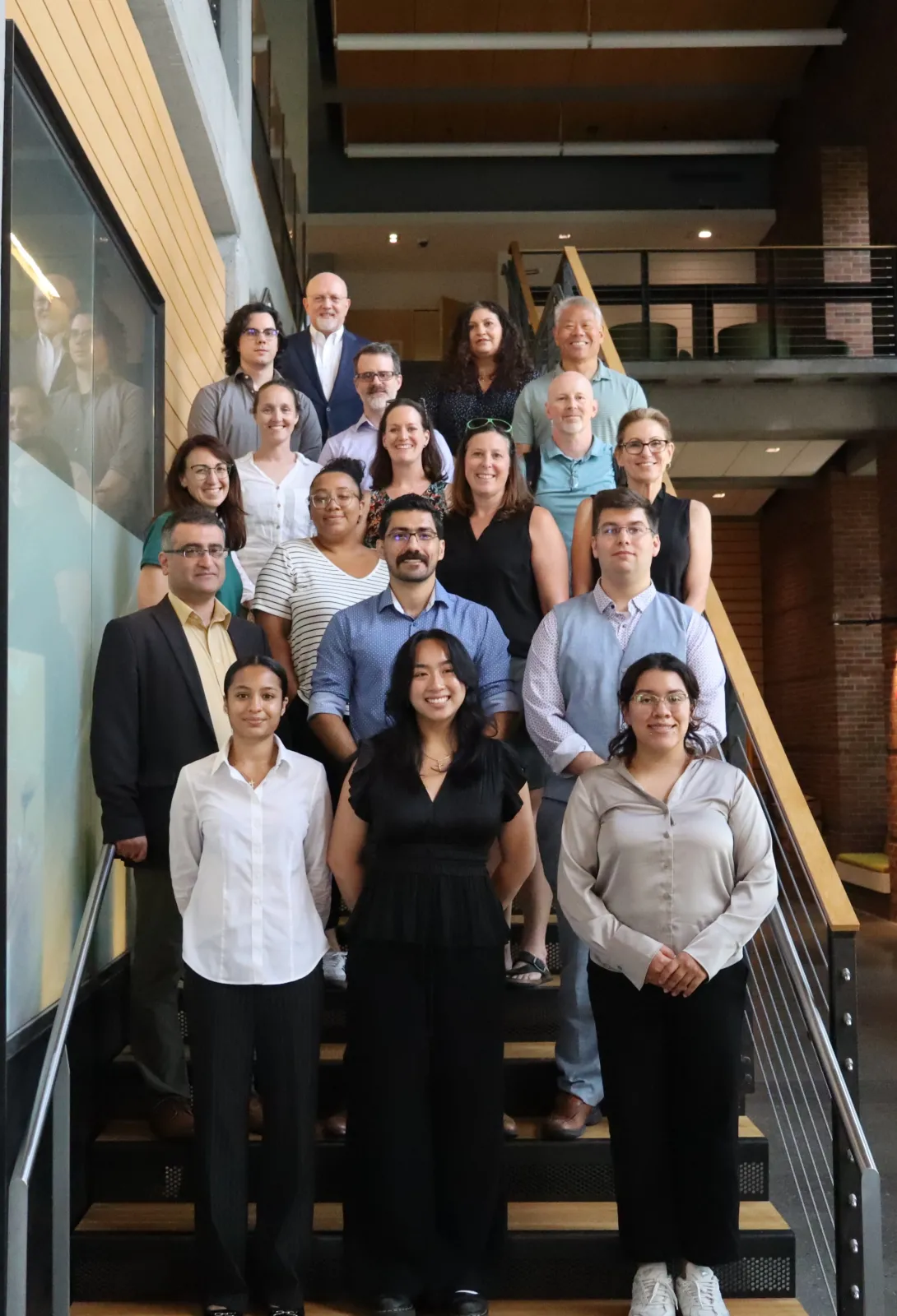
Energy and National Security Cohort Meeting Participants

Participants of the June 13 Energy and National Security Cohort Meeting hosted by SEI and GTRI

In June, the Strategic Energy Institute (SEI) hosted the Energy and National Security Summer Cohort Meeting that convened seed grant awardees from the Energy and National Security Initiative. A partnership between SEI and the Georgia Tech Research Institute (GTRI), the initiative provides research support through a seed grant program that launched last summer.

“As national security needs rapidly evolve, Georgia Tech is leveraging its research ecosystem and seed funding programs to accelerate the development of transformational technologies and strategies that strengthen national resilience,” said Christine Conwell, interim executive director of SEI. “We designed this seed grant program to tackle pressing national security priorities of today, such as threats to the grid, nuclear security, supply chain resilience, and renewable integration.”

The event began with an introduction from John Tien, SEI distinguished external fellow, professor of the practice, and former deputy secretary for the Department of Homeland Security, who addressed the evolving and multifaceted challenges facing energy, national security, and policy today. Tien’s talk emphasized the importance of early, strategic research investments in driving sustainable progress and long-term solutions. 

The seed grant awardees then presented the initial progress of their research projects through lightning talks and a Q&A session. The research projects included:

  • Energy Infrastructure Security and Risk Assessment Through Interactive Wargaming.
  • Evaluating Energy Storage Materials, Supplies, and Systems in the Context of National Security Requirements.
  • Nanostructured Sensors for Monitoring of Nuclear Fuel Cycle.
  • Resilient Critical Infrastructures via Provable Secure Control Algorithms.
  • Robust Energy Systems Planning by Way of Novel Systems Engineering (RESPoNSE).
  • SPARC: Severe-Weather Predictive Analytics and Resilient Communication.
  • The Strategic Mineral Economy: Challenges and Opportunities for Critical Resources.

“That critical intersection between energy and national security is where both risk and opportunity lie. To mitigate those risks and take advantage of the opportunities, our project teams have developed research topic areas that align with the U.S. Department of Energy's nine pillars for American energy dominance and security, as well as ongoing U.S. Department of Defense priorities,” said Tien.

The meeting showcased Georgia Tech’s collaborative and forward-looking research at the intersection of energy and national security, aimed at shaping a more secure and resilient energy future. 

Written by: Katie Strickland & Priya Devarajan

News Contact

Priya Devarajan || SEI Communications Program Manager

Jul. 10, 2025
Oglethorpe Power’s George Mathai and Shane Tolbert, Green Power EMC’s distributed energy resources manager, discussing the roles of various generation sources and the benefits of a diverse portfolio

Oglethorpe Power’s George Mathai and Shane Tolbert, Green Power EMC’s distributed energy resources manager, discussing the roles of various generation sources and the benefits of a diverse portfolio with the campers.

Energy Unplugged Camp Participants During a Field Trip to Oglethorpe Power, Green Power EMC and Georgia Systems Operations Corporation

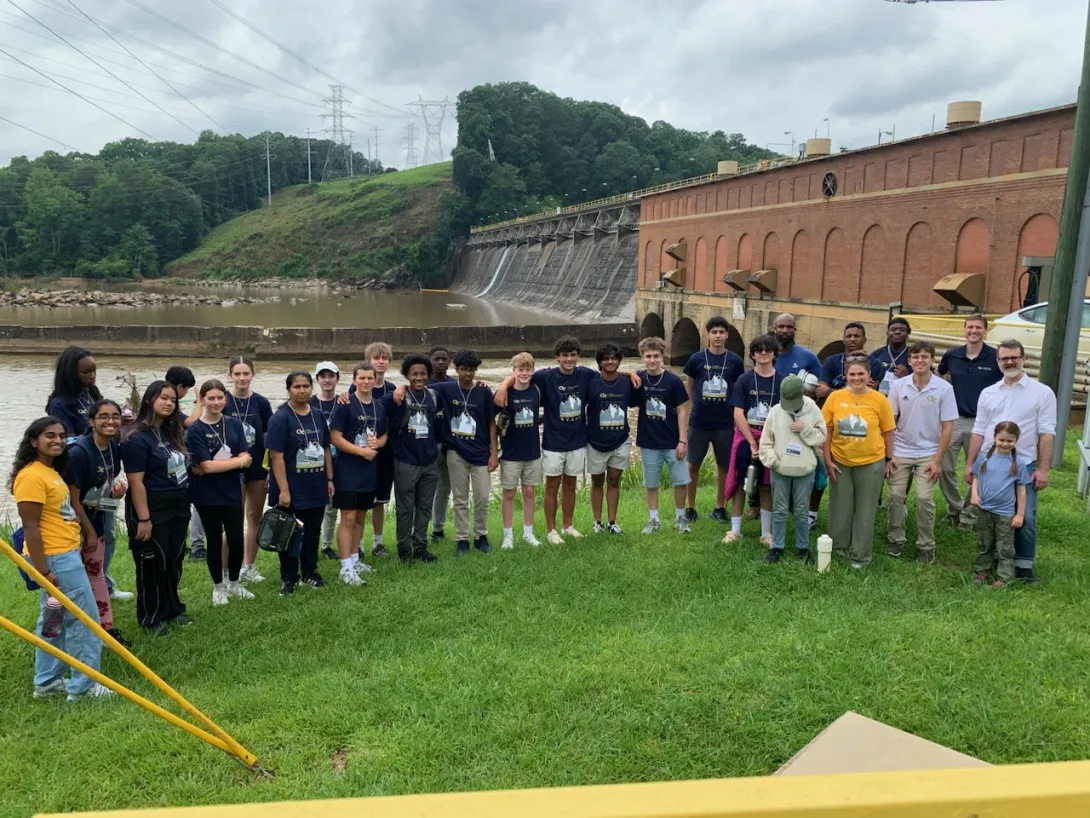
High school students, who participated in the Energy Unplugged Summer Camp at Georgia Tech during a field trip to Oglethorpe Power, Green Power EMC and Georgia Systems Operations Corporation in June 2025.

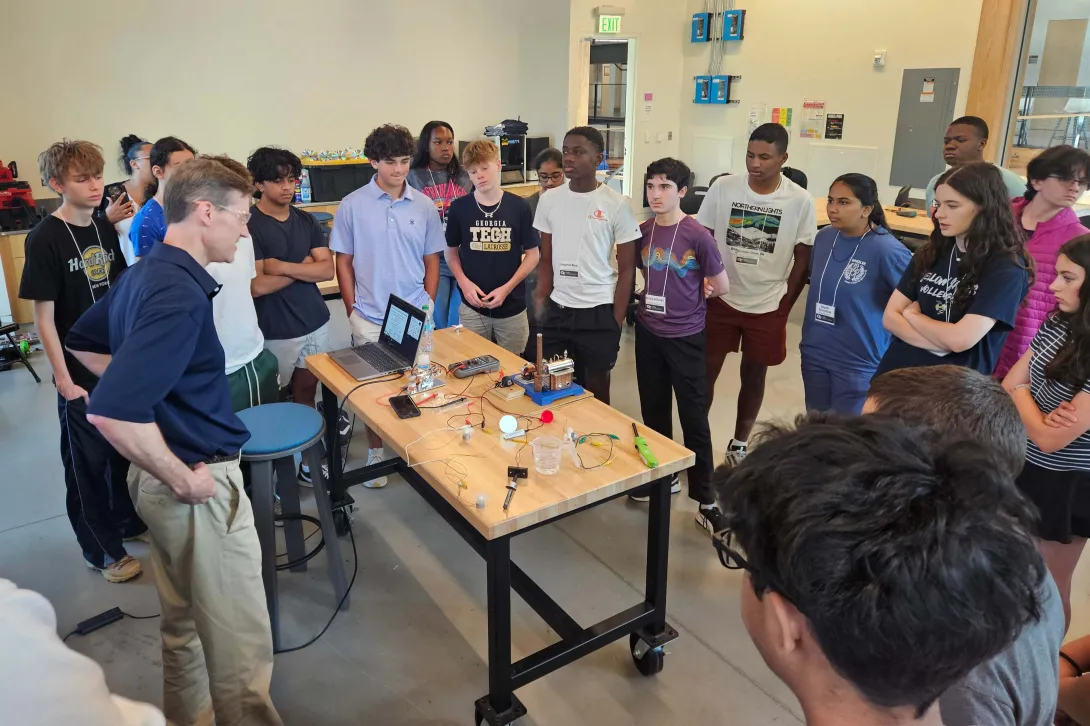
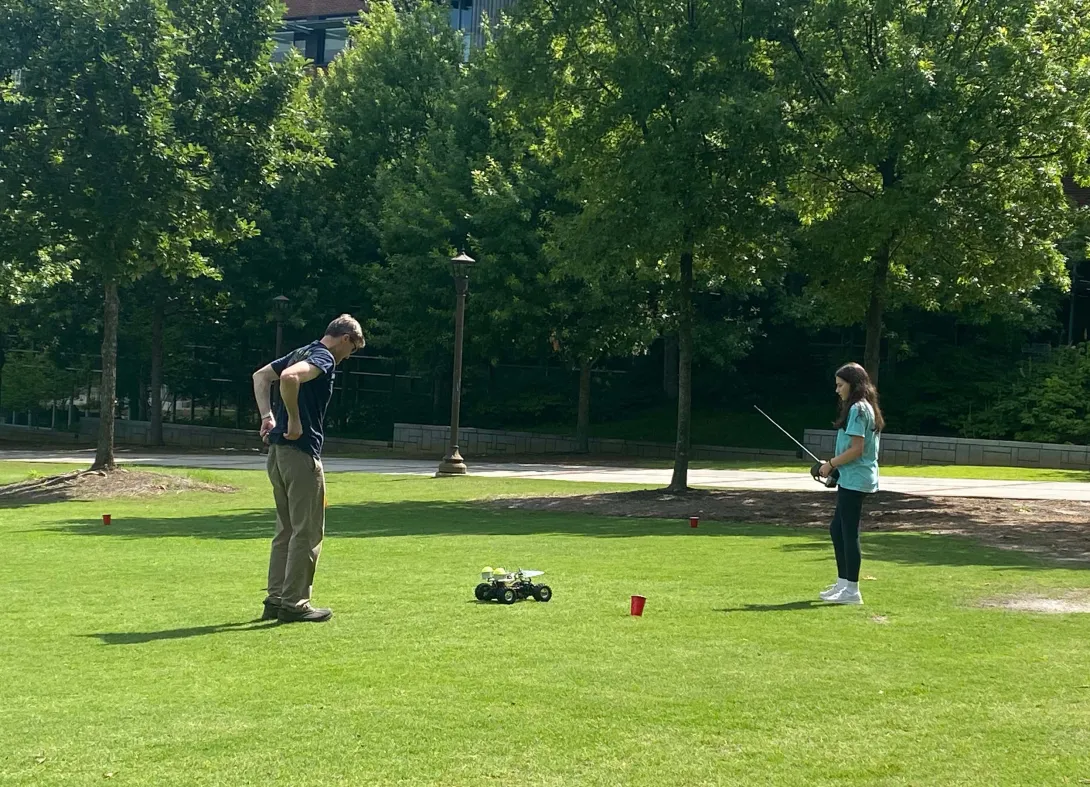
In June, Georgia Tech’s Strategic Energy Institute (SEI) and the Energy Policy and Innovation Center hosted Energy Unplugged, a weeklong summer camp focused on science, technology, engineering, art, and mathematics (STEAM) for high school students. 

Led by SEI’s director of Research and Studies and principal research engineer, Richard Simmons, the camp introduced students to energy fundamentals and highlighted STEAM-related careers and undergraduate pathways valuable in today’s workforce. The curriculum included energy resources, energy production and consumption, conversion and delivery, electric circuits, battery storage, environmental impacts, and data analytics. 

As a featured part of this year’s program, students visited the headquarters of Oglethorpe PowerGreen Power EMC, and Georgia System Operations Corporation in Tucker, Georgia. The companies are owned by and serve 38 of Georgia’s not-for-profit electric membership cooperatives (EMCs), which provide retail electricity to approximately 4.7 million of Georgia’s more than 11 million residents. 

“As electricity demand continues to rise, so does the need to grow a skilled and capable workforce for the future. We are proud to partner with Georgia Tech on this inspiring program, supporting the growth and development of the next generation of leaders who will help power Georgia’s future,” said George Mathai, Oglethorpe Power performance and reliability engineer.

The site visit included a tour of Georgia System Operations’ generation and transmission control centers and presentations by Oglethorpe Power and Green Power EMC experts.

The tour began in the generation control center, where students observed operators continuously monitoring demand to make real-time decisions to increase or decrease electricity generation. Students learned that Georgia System Operations dispatches a wide array of energy sources and generation technologies to ensure a stable, reliable, secure, and efficient power grid. 

The group then visited the transmission control center, where a series of massive screens showed the web of transmission lines across the state. Students learned that the transmission system relies on extremely high-voltage lines to minimize loss across long distances. The voltages are then stepped down as they approach population centers at sub-stations, so they are suitable for use by residences, businesses, and industrial facilities. The operators in the transmission center monitor the grid for disturbances and respond to alarms, maintaining the integrity of the state’s power infrastructure. 

The tour offered a behind-the-scenes look at how electricity generation and transmission are integrated and managed across the state. 

Over lunch, Oglethorpe Power’s George Mathai and Shane Tolbert, Green Power EMC’s distributed energy resources manager, led discussions highlighting the roles of various generation sources and the benefits of a diverse portfolio in balancing cost, reliability, sustainable resources, and environmental impact. 

“Learning about how Oglethorpe Power, Green Power EMC, and Georgia System Operations work together was a highlight of the Energy Unplugged camp, as it reinforced many of the tabletop demonstrations and hands-on activities we had conducted in the days leading up to the visit. When students then get a chance to visualize energy production, conversion, and delivery concepts at full scale, lots of light bulbs start clicking on,” Simmons said.

Jointly contributed by:
Oglethorpe Power Corporation 
Georgia Tech Strategic Energy Institute (Destin Smyth)

News Contact

Priya Devarajan, Communications Program Manager, 
Georgia Tech Strategic Energy Institute

Blair Romero, Director, Corporate Communications
Oglethorpe Power Corporation

Jul. 09, 2025
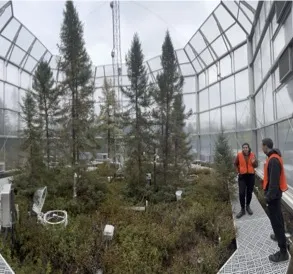
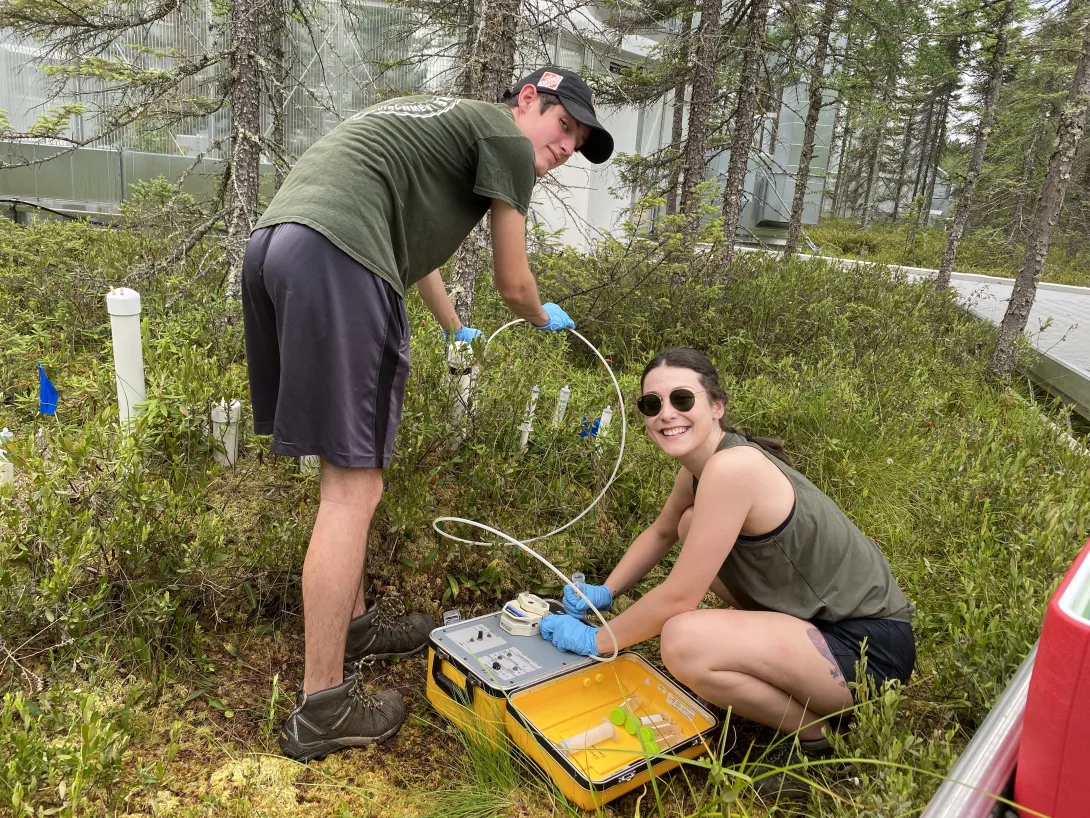
A male and female researcher working with a metal piece of equipment outdoors with trees and grass in the background

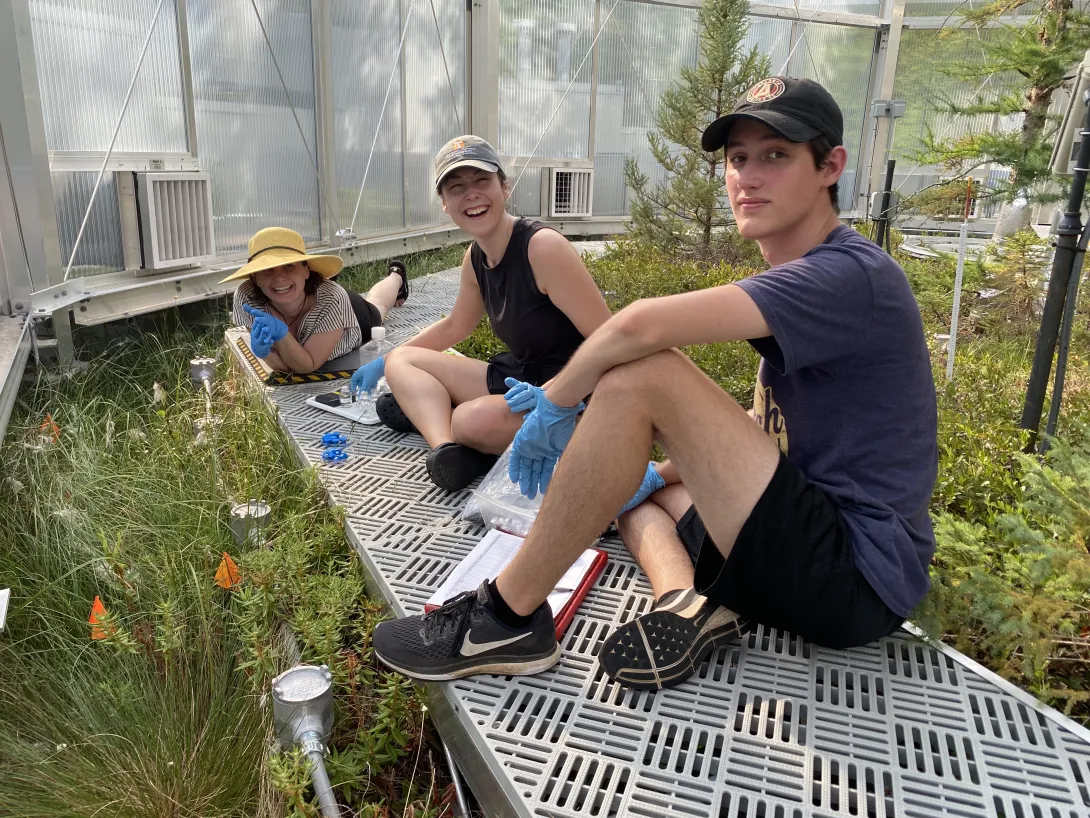
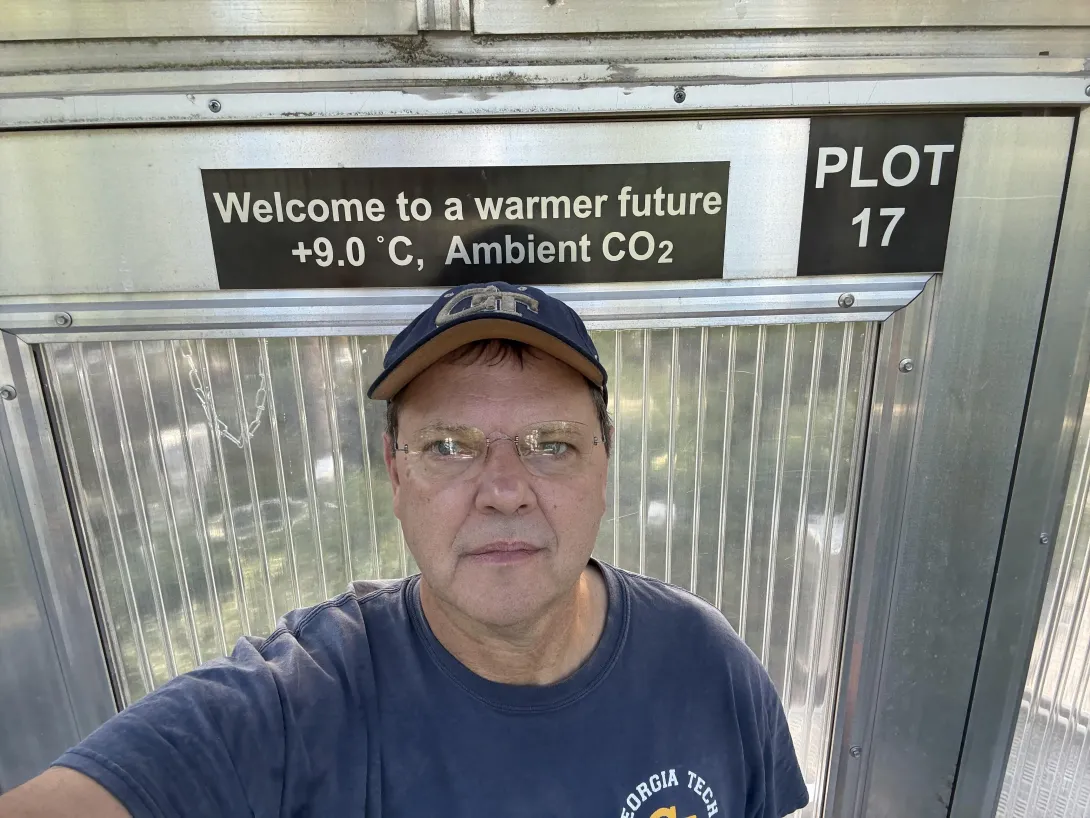
Wildfires have spread across the planet for millennia, but they are increasing as the climate warms. Decimated forests, depleted crops, and destroyed buildings are the hallmark of wildfire devastation. Another is the effect on air quality and even the entire climate system. Researchers at Georgia Tech offer solutions for not only surviving — but also benefiting from — fire.

Read more »

Jun. 24, 2025
The PIN Summer Interns at the opening ceremony

The PIN Summer Interns at the opening ceremony

The Partnership for Inclusive Innovation launched the sixth annual PIN Summer Intern (PSI) program in May with an event at Fort Valley State University’s location in Warner Robins, Georgia. The program is shaping up to be the biggest yet.

This summer, 103 students are working on 51 projects across 27 communities in Georgia, Alabama, Virginia, and Texas. Selected from nearly 700 applicants — a 73% increase over last year — these students are tackling real-world challenges ranging from AI applications in North Georgia to Native American initiatives in Whigham, Georgia, and Bracketville, Texas.

By pairing students from different years, majors and institutions, the PSI program gives the next generation of innovators hands-on experience addressing complex challenges while delivering practical solutions to communities across the region.

A collaboration with the Southeast Crescent Regional Commission (SCRC) has funded 17 projects in several counties in Middle and South Georgia and is a large part of the program’s expansion this year. The opportunity to make an impact across a broad swath of Georgia is part of why the SCRC was interested in working with PIN, said SCRC Executive Director Christopher McKinney.

Read Full Story on EI2 Newspage

News Contact

Karen Kirkpatrick (karen.kirkpatrick@innovate.gatech.edu)

Jun. 24, 2025
Fan Zhang, Assistant Professor of Mechanical Engineering at Georgia Tech Receives National Engineering Achievement Award from ANS

Fan Zhang, Assistant Professor of Mechanical Engineering at Georgia Tech Receives National Engineering Achievement Award from ANS.

Fan Zhang, assistant professor in the George W. Woodruff School of Mechanical Engineering, has received the 2025 Landis Young Member Engineering Achievement Award from the American Nuclear Society (ANS).

The award recognizes young members for outstanding achievements in which engineering knowledge is effectively applied to yield an engineering concept, design, safety improvement, method of analysis, or product utilized in nuclear power research and development or commercial application.

Zhang was selected by the ANS Honors and Awards Committee for her pioneering contributions to nuclear cybersecurity through innovative machine learning (ML) approaches, development of patent-pending technology, and efforts to establish Georgia Tech as a leader in the field. The award also recognizes her collaboration with the International Atomic Energy Agency and her groundbreaking research on robot-assisted nuclear power plant monitoring, which improves safety and efficiency and demonstrates exceptional impact on global nuclear security.

Zhang serves as the director of the Intelligence for Advanced Nuclear (iFAN) Lab at Georgia Tech. Her research primarily focuses on nuclear cybersecurity, online monitoring, fault detection, digital twins, AI/ML, and robotics. Her work on robot-assisted nuclear power plant monitoring, which combines these cross-cutting areas, could significantly reduce human worker presence in harsh and potentially hazardous environments and improve the efficiency of plant operation. The work was supported by the inaugural Department of Energy Office of Nuclear Energy Distinguished Early Career Award.

Read Full Story on the ME Newspage

News Contact

Ashley Ritchie.

Jul. 01, 2025
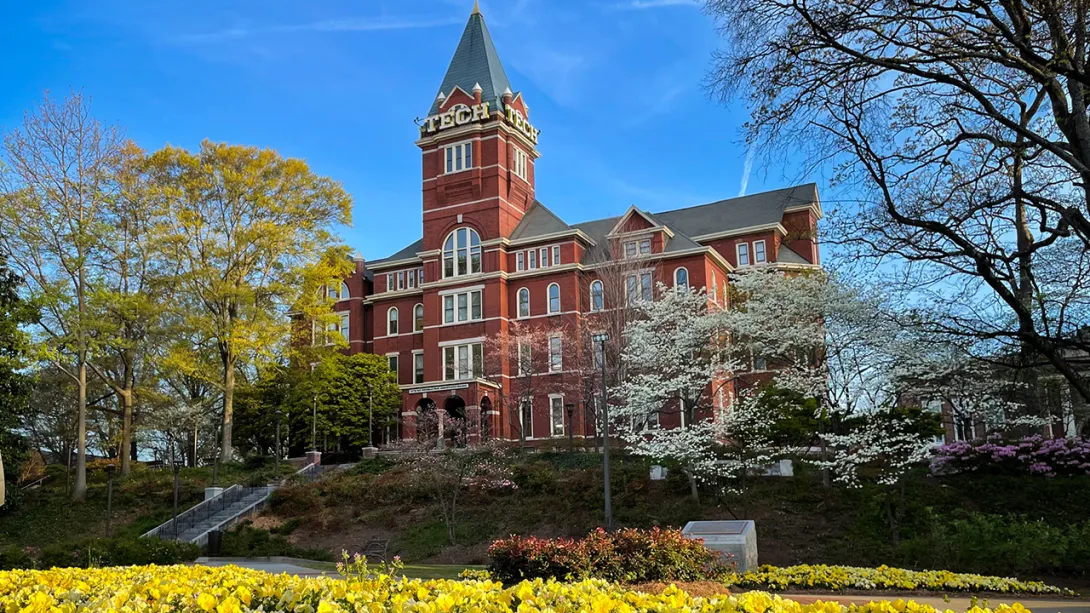
Tech Tower

Georgia Tech has launched two new Interdisciplinary Research Institutes (IRIs): The Institute for Neuroscience, Neurotechnology, and Society (INNS) and the Space Research Institute (SRI). 

The new institutes focus on expanding breakthroughs in neuroscience and space, two areas where research and federal funding are anticipated to remain strong. Both fields are poised to influence research in everything from healthcare and ethics to exploration and innovation. This expansion of Georgia Tech’s research enterprise represents the Institute’s commitment to research that will shape the future.

“At Georgia Tech, innovation flourishes where disciplines converge. With the launch of the Space Research Institute and the Institute for Neuroscience, Neurotechnology, and Society, we’re uniting experts across fields to take on some of humanity’s most profound questions. Even as we are tightening our belts in anticipation of potential federal R&D budget actions, we also are investing in areas where non-federal funding sources will grow and where big impacts are possible,” said Executive Vice President for Research Tim Lieuwen. "These institutes are about advancing knowledge — and using it to improve lives, inspire future generations, and help shape a better future for us all.”

Both INNS and SRI grew out of faculty-led initiatives shaped by a strategic planning process and campus-wide collaboration. Their evolution into formal institutes underscores the strength and momentum of Georgia Tech’s interdisciplinary research enterprise. 

Georgia Tech’s 11 IRIs support collaboration between researchers and students across the Institute’s seven colleges, the Georgia Tech Research Institute (GTRI), national laboratories, and corporate entities to tackle critical topics of strategic significance for the Institute as well as for local, state, national, and international communities.

"IRIs bring together Georgia Tech researchers making them more competitive and successful in solving research challenges, especially across disciplinary boundaries,” said Julia Kubanek, vice president of interdisciplinary research. “We're making these new investments in neuro- and space-related fields to publicly showcase impactful discoveries and developments led by Georgia Tech faculty, attract new partners and collaborators, and pursue alternative funding strategies at a time of federal funding uncertainty."

The Space Research Institute

The Space Research Institute will connect faculty, students, and staff who share a passion for space exploration and discovery. They will investigate a wide variety of space-related topics, exploring how space influences and intersects with the human experience. The SRI fosters a collaborative community including scientific, engineering, cultural, and commercial research that pursues broadly integrated, innovative projects.


SRI is the hub for all things space-related at Georgia Tech. It connects the Institute’s schools, colleges, research institutes, and labs to lead conversations about space in the state of Georgia and the world. Working in partnership with academics, business partners, philanthropists, students, and governments, Georgia Tech is committed to staying at the forefront of space-related innovation.   


The SRI will build upon the collaborative work of the Space Research Initiative, the first step in formalizing Georgia Tech’s broad interdisciplinary space research community. The Initiative brought together researchers from across campus and was guided by input from Georgia Tech stakeholders and external partners. It was led by an executive committee including Glenn Lightsey, John W. Young Chair Professor in the Daniel Guggenheim School of Aerospace Engineering; Mariel Borowitz, associate professor in the Sam Nunn School of International Affairs; and Jennifer Glass, associate professor in the School of Earth and Atmospheric Sciences. Beginning July 1, W. Jud Ready, a principal research engineer in GTRI’s Electro-Optical Systems Laboratory, will serve as the inaugural executive director of the Space Research Institute.

To receive the latest updates on space research and innovation at Georgia Tech, join the SRI mailing list

The Institute for Neuroscience, Neurotechnology, and Society

The Institute for Neuroscience, Neurotechnology, and Society (INNS) is dedicated to advancing neuroscience and neurotechnology to improve society through discovery, innovation, and engagement. INNS brings together researchers from neuroscience, engineering, computing, ethics, public policy, and the humanities to explore the brain and nervous system while addressing the societal and ethical dimensions of neuro-related research.

INNS builds on a foundation established over a decade ago, which first led to the GT-Neuro Initiative and later evolved into the Neuro Next Initiative. Over the past two years, this effort has culminated in the development of a comprehensive plan for an IRI, guided by an executive committee composed of faculty and staff from across Georgia Tech. The committee included Simon Sponberg, Dunn Family Associate Professor in the School of Physics and the School of Biological Sciences; Christopher Rozell, Julian T. Hightower Chaired Professor in the School of Electrical and Computer Engineering; Jennifer Singh, associate professor in the School of History and Sociology; and Sarah Peterson, Neuro Next Initiative program manager. Their leadership shaped the vision for a research community both scientifically ambitious and socially responsive.

INNS will serve as a dynamic hub for interdisciplinary collaboration across the full spectrum of brain-related research — from biological foundations to behavior and cognition, and from fundamental research to medical innovations that advance human flourishing. Research areas will encompass the foundations of human intelligence and movement, bio-inspired design and neurotechnology development, and the ethical dimensions of a neuro-connected future. 

By integrating technical innovation with human-centered inquiry, INNS is committed to ensuring that advances in neuroscience and neurotechnology are developed and applied ethically and responsibly. Through fostering innovation, cultivating interdisciplinary expertise, and engaging with the public, the institute seeks to shape a future where advancements in neuroscience and neurotechnology serve the greater good. INNS also aims to deepen Georgia Tech’s collaborations with clinical, academic, and industry partners, creating new pathways for translational research and real-world impact.

An internal search for INNS’s inaugural executive director is in the final stages, with an announcement expected soon.

Join our mailing list to receive the latest updates on everything neuro at Georgia Tech.

News Contact

Laurie Haigh
Research Communications

Jun. 30, 2025
Jud Ready

Effective July 1, W. Jud Ready will serve as the inaugural executive director of Georgia Tech’s new Space Research Institute (SRI), which will officially launch on the same date. 

The SRI builds upon Georgia Tech’s long and distinguished history in space research and exploration. By uniting experts across disciplines — from aerospace engineering to planetary science, astrophysics, robotics, policy, the arts, and origin of life explorations — the SRI aims to create a resilient ecosystem for space research that can adapt and thrive, even in an era of fiscal uncertainty. It is composed of faculty, staff, and students whose collaborative research spans a broad spectrum of space-related topics, all deeply connected to advancing our understanding of space and its impact on the human experience.

“The launch of the SRI comes at a pivotal moment for the scientific community,” said Vice President of Interdisciplinary Research Julia Kubanek. “As the federal government proposes major cuts to funding agencies, our interdisciplinary research institutes are striving to support faculty and make them more competitive across disciplinary boundaries. This institute will publicly showcase impactful research led by Georgia Tech faculty, attract new collaborators, and pursue alternative funding strategies via philanthropic and industry partners.”

The Space Research Institute will consist of an interdisciplinary community of faculty across Georgia Tech’s schools, colleges, and the Georgia Tech Research Institute (GTRI). 

“It is an honor to be appointed executive director of the Space Research Institute,” said Ready. “My plan is to provide internal and external space researchers with access to Georgia Tech’s world class facilities and turbocharge the space activities already underway. We’re committed to empowering our existing community while forging new partnerships that will expand our reach and impact across the global space ecosystem.”

Ready, a principal research engineer in GTRI’s Electro-Optical Systems Laboratory, is the first GTRI faculty member to serve in a long-term capacity as an IRI executive director. Prior to his appointment, he served as associate director of external engagement for the Georgia Tech Institute for Matter and Systems and director of the Georgia Tech Center for Space Technology and Research (CSTAR). He is also an adjunct professor in the School of Materials Science and Engineering at Georgia Tech.

Before joining the Georgia Tech faculty, Ready worked for General Dynamics and MicroCoating Technologies. Throughout his career, he has served as PI or co-PI for grants totaling more than $25M awarded by the Army, Navy, Air Force, DARPA, NASA, NSF, NIST, DOE, other federal sponsors, industry, charitable foundations, private citizens, and the States of Georgia and Florida. His current research focuses primarily on energy capture, storage, and delivery enabled by nanomaterial design. His research has been included on three missions to the International Space Station, two others to low earth orbit, and one perpetually in heliocentric orbit (Lunar Flashlight). His future space missions include MISSE-21 to the International Space Station and SSTEF-1 to the Lunar surface. A half dozen solar cells from his past missions to the International Space Station will be included in the permanent At Home in Space exhibit opening on the Smithsonian National Air and Space Museum's 50th Anniversary.

Ready has received numerous awards and honors for his work. His most recent awards include the Class of 1934 Outstanding Innovative Use of Education Technology award in 2025 and the Outstanding Achievement in Research Program Development award in 2023, both from Georgia Tech. He also received the One GTRI Collaboration Award in 2022, which he was awarded during GTRI’s annual Distinguished Performance Awards celebration.

Additional articles of interest:

10 Questions with Jud Ready
Space Station Testing Will Evaluate Photovoltaic Materials


News Contact

Laurie Haigh
Research Communications

Jun. 09, 2025
Richard Simmons (Georgia Tech Strategic Energy Institute and SETRI co-facilitator) (right) moderates a panel on charging infrastructure featuring (from left) Tom DelViscio (Duke Energy) Emily Belding (IONNA) and Ben Rogers (Electrada). [

Richard Simmons (Georgia Tech Strategic Energy Institute and SETRI co-facilitator) (right) moderates a panel on charging infrastructure featuring (from left) Tom DelViscio (Duke Energy) Emily Belding (IONNA) and Ben Rogers (Electrada). [

More than 70 people convened at Duke University and virtually on April 3 to highlight successes, challenges and opportunities across research, industry and policy on regional electric mobility in the Southeast.

The April 2025 Southeast Electric Transportation Regional Initiative (SETRI) meeting provided an information-sharing forum for a multisector group of electric mobility organizations from across the region. SETRI is a collaborative network connecting, informing and advancing transportation electrification in the Southeast. The event was hosted by the Duke University Nicholas Institute for Energy, Environment & Sustainability and Georgia Tech Strategic Energy Institute, in collaboration with SETRI partner organizations.

“Bringing this multisector community together is important to share ideas on how to best advance electric mobility—a key emerging industry in the southeastern United States and important strategy for reducing transportation emissions,” said Trey Gowdy, Nicholas Institute research lead and SETRI co-facilitator.

Throughout the morning, speakers shared insights about the electric vehicle (EV) landscape in North Carolina and throughout the Southeast, the state of the EV market and manufacturing, charging infrastructure, consumer education and local engagement and more. The event also featured a poster session, networking and an electric vehicle display.

SETRI organizers announced during the meeting that the Southeast Portal for Electric Transportation Opportunities has shared more than 500 opportunities since launching two years ago. The portal lists active funding sources, comment solicitations, research opportunities, events and other timely information related to transportation electrification in the region.

“A focus of the SETRI network has been to deepen connections within our region, with the aim of accelerating progress between utilities, charging companies, investors, NGOs and universities. It was great to be in Durham after our session in Atlanta last year,” said Richard Simmons, principal research engineer at the Georgia Tech Strategic Energy Institute and SETRI co-facilitator.

Read Full Story on the Duke Nicholas Institute for Energy, Environment and Sustainability Newspage

News Contact

Priya Devarajan || Research Communications Program Manager, SEI

Subscribe to SEI Energy