





Nov. 20, 2025
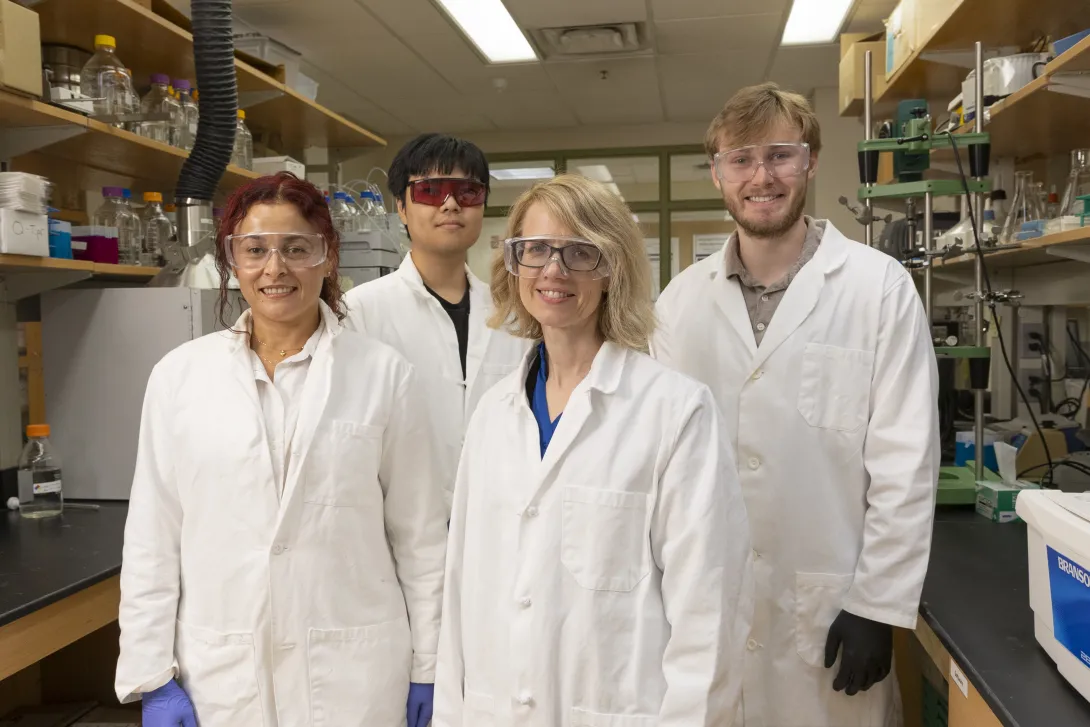
Three Georgia Tech researchers working together in the lab on cancer research

Georgia Institute of Technology has been ranked 7th in the world in the 2026 Times Higher Education Interdisciplinary Science Rankings, in association with Schmidt Science Fellows. This designation underscores Georgia Tech’s leadership in research that solves global challenges. 

“Interdisciplinary research is at the heart of Georgia Tech’s mission,” said Tim Lieuwen, executive vice president for Research. “Our faculty, students, and research teams work across disciplines to create transformative solutions in areas such as healthcare, energy, advanced manufacturing, and artificial intelligence. This ranking reflects the strength of our collaborative culture and the impact of our research on society.” 

As a top R1 research university, Georgia Tech is shaping the future of basic and applied research by pursuing inventive solutions to the world’s most pressing problems. Whether discovering cancer treatments or developing new methods to power our communities, work at the Institute focuses on improving the human condition.  

Teams from all seven Georgia Tech colleges, 11 interdisciplinary research institutes, the Georgia Tech Research Institute, Enterprise Innovation Institute, and hundreds of research labs and centers work together to transform ideas into real results.

News Contact

Angela Ayers

Nov. 10, 2025
Fan Zhang, Assistant Professor of Mechanical Engineering at Georgia Tech

Fan Zhang, Assistant Professor of Mechanical Engineering at Georgia Tech

Fan Zhang, an assistant professor in the George W. Woodruff School of Mechanical Engineering’s Nuclear and Radiological Engineering and Medical Physics (NREMP) program, has been named to the American Nuclear Society’s (ANS) 40 Under 40 list.

The list, published in the November issue of Nuclear News magazine, recognizes early career professionals who have made significant contributions to the nuclear field and are poised to shape its future. The 40 honorees are featured in a special section highlighting their accomplishments, leadership, and impact on the industry.

Zhang said the ANS recognition is both meaningful and motivating.

“It’s a humbling reminder that the work I’m passionate about—making nuclear systems safer, more efficient, and more secure—matters to the broader community,” she said. “It motivates me to give back and keep mentoring and inspiring the next generation and make a global impact.”

Zhang directs the Intelligence for Advanced Nuclear (iFAN) Lab, where her research primarily focuses on nuclear cybersecurity, robotics, anomaly detection, digital twin, machine learning and artificial intelligence.

“We create solutions to make nuclear systems safer, more efficient and secure,” she said.

Read Full Story on the ME Newspage

News Contact

Tracie Troha
Communications Officer, Georgia Tech

Nov. 13, 2025
Artificial intelligence doesn’t just consume energy via data centers and hardware. It also increases productivity, which comes with its own energy and emissions costs.

Artificial intelligence doesn’t just consume energy via data centers and hardware. It also increases productivity, which comes with its own energy and emissions costs.

A new study from Georgia Tech’s Jimmy and Rosalynn Carter School of Public Policy is one of the first to estimate how changes in productivity due to AI will affect energy consumption.

The paper, written by Anthony Harding and co-author Juan Moreno-Cruz at the University of Waterloo, suggests that greater productivity due to AI will result in a 0.03% annual increase in energy use in the United States and a 0.02% increase in CO2 emissions. That’s about equal to the yearly electricity use of a mid-sized U.S. city.

“If AI is as transformational as some expect it to be, it makes it even more important to think about the knock-on effects throughout the economy, beyond just the demands of the technology itself,” Harding said. “U.S. energy demand has stabilized since the mid-2000s. There is potential for AI to disrupt this, but there is also large uncertainty.”

Read More on the IAC Webpage

Nov. 01, 2025
Collage of 2025 James G. Campbell and Spark Award Recipients

From the Left: Anna Raymaker, Talia Thomas, John Kim, Kristian Lockyear, Daksh Adhikari, Alex Magalhaes, and Douglas Lars Nelson.

The Strategic Energy Institute and the Energy, Policy, and Innovation Center at the Georgia Institute of Technology have announced the recipients of this year’s James G. Campbell Fellowship and Spark Awards.

Kristian Lockyear, a doctoral student in the Sustainable Systems Thermal Lab, received the Campbell Fellowship, which recognizes a Georgia Tech graduate student conducting outstanding research in renewable energy systems. Candidates are nominated by their advisors for exceptional academic achievement in the field.

Lockyear’s research, advised by Professor Srinivas Garimella in the George W. Woodruff School of Mechanical Engineering, centers on developing a biomass-powered adsorption cooling system to address food supply shortages in the cold chain and enable vaccine delivery to remote regions. He also holds a bachelor’s degree in chemical and biomolecular engineering from Georgia Tech and is committed to advancing sustainable cooling technologies that improve access in developing areas and promote global energy equity.

The Spark Award honors Georgia Tech graduate students who have demonstrated exceptional leadership in advancing student engagement with energy research, along with a strong record of service and broader impact. This year’s recipients are Daksh Adhikari, John Kim, Douglas Lars Nelson, Alex Magalhaes, Anna Raymaker, and Talia Thomas. “This year saw one of the largest pools of applications for the annual awards,” said Jordann Britt, SEI’s program coordinator, who led the selection process. “Awardees were thoughtfully chosen based on research excellence, a strong record of service, and projects demonstrating broader impact on advancing renewable energy. Through these scholarships, we hope to encourage and support students as they grow into future leaders in the energy industry.”

Daksh Adhikari is a second-year doctoral student in mechanical engineering working in the MiNDS Lab. His research focuses on increasing the adoption of two-phase thermal management techniques in artificial intelligence data centers to reduce water consumption. Adhikari is developing machine learning-based control systems to manage the unstable regions inherent in two-phase cooling processes. Outside of the lab, he enjoys playing guitar and exploring scientific topics related to space.

John Kim is a doctoral candidate in public policy, advised by Professor Daniel Matisoff. His research examines the distributional effects of environmental and energy infrastructure challenges, with a focus on grid resilience, public safety, and environmental justice. Kim’s broader research agenda includes analyzing inequities in power grid restoration, the economic impacts of EPA Superfund cleanups, and the socioeconomic drivers of electric vehicle adoption.

Douglas Lars Nelson is a fifth-year doctoral candidate at the School of Materials Science and Engineering, advised by Professor Matthew McDowell. His research uses advanced characterization techniques to quantify degradation in next-generation battery materials, contributing to the development of safer, high-energy batteries. Nelson earned his undergraduate degree in materials science and engineering from Clemson University.

Alex Magalhaes is a master’s student in computational science and engineering, advised by Professor Qi Tang. His research centers on developing scalable, high-fidelity numerical algorithms to simulate plasma confinement and equilibrium in nuclear fusion reactors. Magalhaes holds a bachelor’s degree in physics from Wesleyan University and previously worked as a data scientist at Quantiphi. He plans to pursue a doctorate in computational plasma physics. In his free time, he enjoys rock climbing, which he’s done at Yosemite and Grand Teton National Park.

Anna Raymaker is a doctoral student in the School of Electrical and Computer Engineering, advised by Professor Saman Zonouz. Her research focuses on securing critical infrastructure by identifying and mitigating cyber risks in systems, such as maritime networks and distributed energy resources. Raymaker leads a U.S. Department of Energy-aligned initiative to locate exposed solar inverters worldwide and assess their impact on operational power grids. She currently serves as president of the Graduate Student Association for the School of Cybersecurity and Privacy.

Talia Thomas is a doctoral candidate in mechanical engineering working in the McDowell Lab. Her research focuses on sustainable carbon materials for next-generation lithium- and sodium-ion batteries by using biomass precursors such as lignin and cellulose to develop high-performance anodes. Thomas also integrates life cycle and techno-economic assessments to evaluate scalability and environmental impact. She is an active leader in the graduate community, organizing initiatives that promote inclusion and student engagement. Before graduate school, she worked as a maintenance engineer at Dow and as a chemistry research associate at Zymergen.


Written by: Katie Strickland.

News Contact

Priya Devarajan || SEI Communications Program Manager

Nov. 06, 2025
Wind power near Dodge City, Kan. Halbergman/iStock/Getty Images Plus

Wind power near Dodge City, Kan. Halbergman/iStock/Getty Images Plus

Countries around the world have been discussing the need to rein in climate change for three decades, yet global greenhouse gas emissions – and global temperatures with them – keep rising.

When it seems like we’re getting nowhere, it’s useful to step back and examine the progress that has been made.

Let’s take a look at the United States, historically the world’s largest greenhouse gas emitter. Over those three decades, the U.S. population soared by 28% and the economy, as measured by gross domestic product adjusted for inflation, more than doubled.

Yet U.S. emissions from many of the activities that produce greenhouse gases – transportation, industry, agriculture, heating and cooling of buildings – have remained about the same over the past 30 years. Transportation is a bit up; industry a bit down. And electricity, once the nation’s largest source of greenhouse gas emissions, has seen its emissions drop significantly.

Overall, the U.S. is still among the countries with the highest per capita emissions, so there’s room for improvement, and its emissions haven’t fallen enough to put the country on track to meet its pledges under the 10-year-old Paris climate agreement. But U.S. emissions are down about 15% over the past 10 years.

Here’s how that happened:

US Electricity Emissions Have Fallen

U.S. electricity use has been rising lately with the shift toward more electrification of cars and heating and cooling and expansion of data centers, yet greenhouse gas emissions from electricity are down by almost 30% since 1995.

One of the main reasons for this big drop is that Americans are using less coal and more natural gas to make electricity.

Both coal and natural gas are fossil fuels. Both release carbon dioxide to the atmosphere when they are burned to make electricity, and that carbon dioxide traps heat, raising global temperatures. But power plants can make electricity more efficiently using natural gas compared with coal, so it produces less emissions per unit of power.


Why did the U.S. start using more natural gas?

Research and technological innovation in fracking and horizontal drilling have allowed companies to extract more oil and gas at lower cost, making it cheaper to produce electricity from natural gas rather than coal.

As a result, utilities have built more natural gas power plants – especially super-efficient combined cycle gas power plants, which produce power from gas turbines and also capture waste heat from those turbines to generate more power. More coal plants have been shutting down or running less.

Because natural gas is a more efficient fuel than coal, it has been a win for climate in comparison, even though it’s a fossil fuel. The U.S. has reduced emissions from electricity as a result.

Significant improvements in energy efficiency, from appliances to lighting, have also played a role. Even though tech gadgets seem to be recharging everywhere all the time today, household electricity use, per person, plateaued over the first two decades of the 2000s after rising continuously since the 1940s.

Costs for Renewable Electricity, Batteries Fall

U.S. renewable electricity generation, including wind, solar and hydro power, has nearly tripled since 1995, helping to further reduce emissions from electricity generation.

Costs for solar and wind power have fallen so much that they are now cheaper than coal and competitive with natural gas. Fourteen states, including most of the Great Plains, now get at least 30% of their power from solar, wind and battery storage.

While wind power has been cost competitive with fossil fuels for at least 20 years, solar photovoltaic power has only been competitive with fossil fuels for about 10 years. So expect deployment of solar PV to continue to increase, both in the U.S. and internationally, even as U.S. federal subsidies disappear.

Both wind and solar provide intermittent power: The sun does not always shine, and the wind does not always blow. There are a number of ways utilities are dealing with this. One way is to use demand management, offering lower prices for power during off-peak periods or discounts for companies that can cut their power use during high demand. Virtual power plants aggregate several kinds of distributed energy resources – solar panels on homes, batteries and even smart thermostats – to manage power supply and demand. The U.S. had an estimated 37.5 gigawatts of virtual power plants in 2024, equivalent to about 37.5 nuclear power reactors.

Charts show cost decline compared with fossil fuels.

Globally, the costs of solar, onshore wind and EV batteries fell quickly over the first two decades of the 2000s. IPCC 6th Assessment Report

Another energy management method is battery storage, which is just now beginning to take off. Battery costs have come down enough in the past few years to make utility-scale battery storage cost-effective.

What About Driving?

In the U.S., gasoline consumption has remained roughly constant but fuel efficiency has generally improved over the decades.

Sales of electric vehicle, which could cut emissions more, have been slow, however. Some of this could be due to the success of fracking: U.S. petroleum production has increased, and gasoline and diesel prices have remained relatively low.

People in other countries are switching to electric vehicles more rapidly than in the U.S. as the cost of EVs has fallen. Chinese consumers can buy an entry-level EV for under US$10,000 in China with the help of government subsidies, and the country leads the world in EV sales.

In 2024, people in the U.S. bought 1.6 million EVs, and global sales reached 17 million, up 25% from the year before.

The Unknowns Ahead: What About Data Centers?

The construction of new data centers, in part to serve the explosive growth of artificial intelligence, is drawing a lot of attention to future energy demand and to the uncertainty ahead.

Data centers are increasing electricity demand in some locations, such as northern Virginia, Dallas, Phoenix, Chicago and Atlanta. The future electricity demand growth from data centers is still unclear, though, meaning the effects of data centers on electric rates and power system emissions are also uncertain.

However, AI is not the only reason to watch for increased electricity demand: The U.S. can expect growing electricity demand for industrial processes and electric vehicles, as well as the overall transition from using oil and gas for heating and appliances to using electricity that continues across the country.The Conversation


This article is republished from The Conversation under a Creative Commons license. Read the original article.


News Contact

Author:

Valerie Thomas, Professor of Industrial Engineering, Georgia Institute of Technology

Media Contact:

Shelley Wunder-Smith
shelley.wunder-smith@research.gatech.edu

Oct. 24, 2025
Portrait of Ann Dunkin

Ann Dunkin

Ann Dunkin joined the Georgia Tech Strategic Energy Institute (SEI) as a distinguished external fellow in April. Before that, she served as the chief information officer at the U.S. Department of Energy, where she managed the department’s information technology portfolio and modernization; oversaw its cybersecurity efforts; led technology innovation and digital transformation; and enabled collaboration across the agency. Dunkin also served in former President Barack Obama’s administration as chief information officer of the U.S. Environmental Protection Agency. 

Other previous roles include chief strategy and innovation officer at Dell Technologies; chief information officer for the County of Santa Clara, California; chief technology officer for Palo Alto Unified School District in California; and leadership positions at Hewlett Packard focused on engineering, research and development, IT, manufacturing engineering, software quality, and operations. 

Dunkin is a published author, most recently of the book Industrial Digital Transformation, and a frequent speaker on topics such as government technology modernization, digital transformation, and organizational development. She received the 2022 Capital CIO Large Enterprise ORBIE Award and has earned numerous honors, including Washington, D.C.’s Top 50 Women in Technology for 2015 and 2016; Computerworld’s Premier 100 Technology Leaders for 2016; StateScoop’s Top 50 Women in Technology list for 2017; FedScoop’s Golden Gov Executive of the Year in 2016 and 2021; and FedScoop’s Best Bosses in Federal IT 2022.  

Dunkin holds a master of science degree and a bachelor of industrial engineering degree, both from Georgia Tech. She is a licensed professional engineer in California and Washington state. In 2018, she was inducted into Georgia Tech’s Academy of Distinguished Engineering Alumni. 

Below is a short Q&A with Dunkin reflecting on how the Institute influenced her career.

  • How did your Georgia Tech education shape your approach to leadership and innovation throughout your career?

    My Georgia Tech education instilled the core ideas and values that we see in our graduates today, and that made me successful in my career. You can’t graduate from Georgia Tech without learning how to be part of a team and to lead through influence, which may be the hardest part of leadership. It’s far easier, although less effective, to lead through authority. In addition, the concept of grit has informed my approach to my roles — that my team and I will work hard together to find solutions to difficult challenges and that no challenge is too hard if we set our minds to accomplishing it. This may seem like an unusual connection to innovation, but it’s not. A lot of people think that innovation is about a light bulb going off in your head with a great idea. Sure, that happens sometimes. But the idea is only the spark of innovation. Innovation is about the hard work to turn an idea into reality — and that’s why it takes grit. You have to do the work and not be discouraged by setbacks.  

  • What does it mean to you to return to Georgia Tech as a distinguished external fellow?

    First, coming back to Georgia Tech feels like the ultimate full circle moment. It’s an honor to be invited back as a distinguished external fellow and a distinguished professor of the practice. It shows that the leadership team at Georgia Tech, one of the best engineering institutions in the world, respects the work that I’ve done in my career. Second, this is an exciting opportunity to shift gears in my career, continue to do interesting work, and contribute at a high level. I’m excited to be here and look forward to what we’re going to accomplish together. 

  • What aspect of your collaboration with the SEI are you most passionate about?

    There are so many things that it’s hard to identify just one. The SEI is at the center of the future of energy, working to solve difficult problems to ensure that we have abundant, affordable, clean energy. During my time at the Energy Department, I developed a strong interest in energy technology, including next-generation nuclear, fusion, and battery technologies. I’m also interested in grid resilience, particularly permitting, planning, and cybersecurity. I hope to help the SEI deepen collaboration with the Energy Department’s labs and to engage other partners as well.

  • How do you see the SEI influencing the energy landscape of our nation?

    The SEI has the ability to influence at a level that exceeds its size. It can drive collaboration between Georgia Tech, national labs, and the private sector on critical issues in the energy sector from research to implementation. I like that the SEI embraces its role as a convener, bringing all the parties together to make something happen.

News Contact

Priya Devarajan || Research Communications Program Manager
Georgia Tech Strategic Energy Institute

Oct. 10, 2025
The high impact between the metal balls in a ball mill reactor and the polymer surface is sufficient to momentarily liquefy the polymer and facilitate chemical reactions.

The high impact between the metal balls in a ball mill reactor and the polymer surface is sufficient to momentarily liquefy the polymer and facilitate chemical reactions.

Kinga Golabek

Kinga Gołąbek

Professor Carsten Sievers

Prof. Carsten Sievers

While plastics help enable modern standards of living, their accumulation in landfills and the overall environment continues to grow as a global concern.

Polyethylene terephthalate (PET) is one of the world’s most widely used plastics, with tens of millions of tons produced annually in the production of bottles, food packaging, and clothing fibers. The durability that makes PET so useful also means that it is more difficult to recycle efficiently.

Now, researchers have developed a method to break down PET using mechanical forces instead of heat or harsh chemicals. Published in the journal Chem, their findings demonstrate how a “mechanochemical” method — chemical reactions driven by mechanical forces such as collisions — can rapidly convert PET back into its basic building blocks, opening a path toward faster, cleaner recycling.

Led by postdoctoral researcher Kinga Gołąbek and Professor Carsten Sievers of Georgia Tech’s School of Chemical and Biomolecular Engineering, the research team hit solid pieces of PET with metal balls with the same force they would experience in a machine called a ball mill. This can make the PET react with other solid chemicals such as sodium hydroxide (NaOH), generating enough energy to break the plastic’s chemical bonds at room temperature, without the need for hazardous solvents.

“We’re showing that mechanical impacts can help decompose plastics into their original molecules in a controllable and efficient way,” Sievers said. “This could transform the recycling of plastics into a more sustainable process.”

Mapping the Impact

In demonstrating the process, the researchers used controlled single-impact experiments along with advanced computer simulations to map how energy from collisions distributes across the plastic and triggers chemical and structural transformations. 

These experiments showed changes in structure and chemistry of PET in tiny zones that experience different pressures and heat. By mapping these transformations, the team gained new insights into how mechanical energy can trigger rapid, efficient chemical reactions.

“This understanding could help engineers design industrial-scale recycling systems that are faster, cleaner, and more energy-efficient,” Gołąbek said.

Breaking Down Plastic

Each collision created a tiny crater, with the center absorbing the most energy. In this zone, the plastic stretched, cracked, and even softened slightly, creating ideal conditions for chemical reactions with sodium hydroxide.

High-resolution imaging and spectroscopy revealed that the normally ordered polymer chains became disordered in the crater center, while some chains broke into smaller fragments, increasing the surface area exposed to the reactant. Even without sodium hydroxide, mechanical impact alone caused minor chain breaking, showing that mechanical force itself can trigger chemical change.

The study also showed the importance of the amount of energy delivered by each impact. Low-energy collisions only slightly disturb PET, but stronger impacts cause cracks and plastic deformation, exposing new surfaces that can react with sodium hydroxide for rapid chemical breakdown. 

“Understanding this energy threshold allows engineers to optimize mechanochemical recycling, maximizing efficiency while minimizing unnecessary energy use,” Sievers explained.

Closing the Loop on Plastic Waste

These findings point toward a future where plastics can be fully recycled back into their original building blocks, rather than being downcycled or discarded. By harnessing mechanical energy instead of heat or harsh chemicals, recycling could become faster, cleaner, and more energy-efficient.

“This approach could help close the loop on plastic waste,” Sievers said. “We could imagine recycling systems where everyday plastics are processed mechanochemically, giving waste new life repeatedly and reducing environmental impact.”

The team now plans to test real-world waste streams and explore whether similar methods can work for other difficult-to-recycle plastics, bringing mechanochemical recycling closer to industrial use.

“With millions of tons of PET produced every year, improving recycling efficiency could significantly reduce plastic pollution and help protect ecosystems worldwide,” Gołąbek said.

CITATION: Kinga Gołąbek, Yuchen Chang, Lauren R. Mellinger, Mariana V. Rodrigues, Cauê de Souza Coutinho Nogueira, Fabio B. Passos, Yutao Xing, Aline Ribeiro Passos, Mohammed H. Saffarini, Austin B. Isner, David S. Sholl, Carsten Sievers, “Spatially-resolved reaction environments in mechanochemical upcycling of polymers,” Chem, 2025.

News Contact

Brad Dixon, braddixon@gatech.edu

Oct. 01, 2025
A view of Greenland's ice sheet from the NASA/USGS Landsat 8 satellite showing meltwater lakes on a glacier. (Credit: NASA)

A view of Greenland's ice sheet from the NASA/USGS Landsat 8 satellite showing meltwater lakes on a glacier. (Credit: NASA)

Georgia Tech researchers have developed a mathematical formula to predict the size of lakes that form on melting ice sheets — discovering their depth and span are linked to the topography of the ice sheet itself. 

The team leveraged physics, model simulations, and satellite imagery to develop simple mathematical equations that can easily be integrated into existing climate models. It’s a first-of-it’s-kind tool that is already improving climate models.

“Melt lakes play an important role in ice sheet stability, but previously, there were no constraints on what we would expect their maximum size to be in Antarctica,” says study lead Danielle Grau, a Ph.D. student in the School of Earth and Atmospheric Sciences. “I was intrigued by the idea of quantifying how much of a role we could expect them to play in the future.”

The paper, “Predicting mean depth and area fraction of Antarctic supraglacial melt lakes with physics-based parameterizations,” was published in Nature Communications. In addition to Grau, the research team includes School of Earth and Atmospheric Sciences Professor Alexander Robel, who is Grau’s advisor, and Azeez Hussain (PHYS 2025).

Their predictions show that the majority of these lakes will be less than a meter deep and span up to 40% of the ice sheet surface area.

“Many models don’t include any data about lakes on the surface of ice sheets, while others simulate these melt lakes growing until the ice collapses,” Robel says. “Our results show that the reality is somewhere in between — and that the maximum size of these lakes can be predicted using these new equations. This gives us real, concrete numbers to use in climate models.”

From summer project to satellite discovery 

Grau first started working on the project as an undergraduate student when she applied for a Summer Research Experiences for Undergraduates program hosted by the School of Earth and Atmospheric Sciences.

Inspired by terrestrial lake research, Grau and Robel investigated the “self-affinity” of the Antarctic ice sheet — a property associated with surface roughness across various scales. For example, a landscape like Badlands National Park, with many rolling hills of a wide range of sizes, would have a different self-affinity than a flat prairie with three large volcanoes.

“A previous study had used this property to predict the size of terrestrial lakes and ponds, and we were curious if we could use a similar approach for supraglacial lakes in Antarctica,” Grau says. “Establishing that the Antarctic ice sheet also has this property was the first step in pursuing this research in more depth.” 

The mathematics of melt

Grau continued the investigation as a Ph.D. student in Robel’s lab. Together, they unraveled the physics of how meltwater moves across the ice surface, designing a ‘glacier in a computer’ that mimics meltwater accumulation and movement across various topographies.

“We designed an algorithm and integrated it into a model that the GT Ice & Climate Group has used in the past,” Grau says. “From that, we were able to see how lakes would form on different surfaces across thousands of scenarios. This was the foundation for the mathematical equations I developed, which can predict the lake depth and lake surface area based on the self-affinity property.”

To check their results, Grau enlisted the help of Hussain — then an undergraduate in the School of Physics — to examine satellite data from the Landsat satellite program (which captures detailed photography of the Earth’s surface from space) to measure existing supraglacial lakes and surface topography. 

“It was exciting to see how our predictions lined up with what we were seeing in the satellite imagery,” Robel explains. “This shows that our solution is a concrete avenue for climate models to realistically incorporate supraglacial lakes.”

Grau is already working to incorporate the team’s equations into an atmospheric model used by NASA in addition to an ice sheet model developed by the NASA Jet Propulsion Laboratory and Dartmouth College. 

“By turning complicated models and satellite data into simple predictive equations, we’re giving climate models a new lens to see the future,” she says. “It’s a small piece of the puzzle,  but one that helps us understand how ice sheets respond to a warming world.”


Funding: NASA Modeling, Analysis, and Prediction Program

DOI: https://doi.org/10.1038/s41467-025-61798-8 

News Contact

Written by Selena Langner

Sep. 26, 2025
NOAA Iridescent Clouds

Iridescent clouds before sunset / Source: NOAA

Yuhang Wang

School of Earth and Atmospheric Sciences Professor Yuhang Wang and his team co-authored the study, “Chemically Induced Decline in Wintertime SO Emission Control Efficacy,” which was published in Environmental Science & Technology Letters.

Fanghe Zhao

Ph.D. student Fanghe Zhao

Shengjun Xi
Ph.D. student Shengjun Xi

Researchers at Georgia Tech have analyzed the seasonal differences of sulfate aerosols — a major pollutant in the United States — to examine the long-term impact from sulfur dioxide (SO₂) emission reductions since the enactment of the Clean Air Act amendments in 1990. 

School of Earth and Atmospheric Sciences Professor Yuhang Wang and his team studied the factors affecting SO₂ and sulfate concentrations during winter and summer in the “Rust Belt” — from New York through the Midwest — and the Southeast regions of the U.S. over two decades (2004 to 2023). Supported by the National Science Foundation and Georgia Tech’s Brook Byers Institute for Sustainable Systems, the team also developed an ensemble machine learning approach to project seasonal patterns until 2050. 

“Power plants, particularly those burning coal and oil, are a major source of SO₂ emissions in these regions,” says Wang, who co-authored, with Ph.D. students Fanghe Zhao and Shengjun Xi, the study recently published in Environmental Science & Technology Letters

Seasonal differences in atmospheric chemistry 

In the U.S., the chemistry in the atmosphere varies among the seasons. During summer, solar radiation from ample sunlight activates oxidant reactions that produce hydrogen peroxide (HO) in the atmosphere. The supply of HO is determined by the amount of emitted air pollution, and once in the atmosphere, HO can oxidize SO₂ quickly into sulfate aerosols in the aqueous phase. 

Sulfate aerosols from the oxidation of SO₂ contribute to the formation of particulate matter less than 2.5 micrometers in diameter (PM2.5). Particulate sulfate poses significant environmental and public health risks, including air pollution, acid rain, and circulatory and respiratory issues. 

“The supply of HO in summer is eight times greater than in winter — a huge difference — which means sulfate concentrations are generally higher in summer and a reduction in SO₂ emissions leads to a proportional decrease in sulfate concentrations,” explains Wang. “When SO₂ emissions exceed the available supply of HO in winter, the reduction in sulfate concentrations can be much smaller because of a ‘chemical damping’ effect that causes sulfate levels to decline more slowly than SO₂ emissions.” 

Narrowing the disparities between seasonal sulfate levels 

The study’s two-decade observations revealed distinct patterns in the reduction of SO₂ emissions and sulfate concentrations during winter and summer. 

While SO₂ emissions significantly decreased in both seasons­ over time — primarily from the Clean Air Act and more power plants transitioning from coal to natural gas — the reduction of sulfate concentrations initially showed large seasonal differences. However, over the past decade, the disparity between winter and summer sulfate levels narrowed as SO₂ emissions decreased.

According to Wang, the seasonal disparity of sulfate was caused by changing chemical regimes in winter over time. Although the lower supply of HO remained stable in winter, SO₂ wintertime emissions were higher from 2004 to 2013, then dropped below the level of HO after 2013 — reaching parity with the levels of reduced SO₂ emissions in the summer. 

“When you have this complexity of atmospheric chemistry, there is a non-linear effect in winter — as SO₂ emissions decreased, sulfate aerosol production efficiency increased until 2013, then flattened as of today. The reduction in sulfate aerosols initially lagged behind the decrease in SO₂ emissions but eventually caught up as a result of sustained air quality control efforts,” says Wang. “Conversely, there is a simple, linear effect in summer — the more SO₂ emissions, the more sulfate aerosols in the atmosphere — and if you reduce one, the other is reduced by the same proportion.”

Decades-long full impact 

From now until 2050, the researchers’ machine learning projections indicate a continuing decrease of winter and summer sulfate levels, which are currently around 20 percent, as SO₂ emission controls achieve comparable efficacy across the seasons. 

“We’re now seeing the full impact from the Clean Air Act,” concludes Wang, “and the nation’s sustained effort in pollution reduction is key to improving air quality and health outcomes.”

News Contact

Jess Hunt-Ralston
Director of Communications
College of Sciences at Georgia Tech

Writer: Annette Filliat

Editor: Lindsay Vidal 

Sep. 17, 2025
A flare burns natural gas at an oil well on Aug. 26, 2021, in Watford City, N.D.

A flare burns natural gas at an oil well on Aug. 26, 2021, in Watford City, N.D. AP Photo/Matthew Brown

Some major oil companies such as Shell and BP that once were touted as leading the way in clean energy investments are now pulling back from those projects to refocus on oil and gas production. Others, such as Exxon Mobil and Chevron, have concentrated on oil and gas but announced recent investments in carbon capture projects, as well as in lithium and graphite production for electric vehicle batteries.

National oil companies have also been investing in renewable energy. For example, Saudi Aramco has invested in clean energy while at the same time asserting that it’s unrealistic to phase out oil and gas entirely.

But the larger question is why oil companies would invest in clean energy at all, especially at a time when many federal clean energy incentives are being eliminated and climate science is being dismantled, at least in the United States.

Some answers depend on whom you ask. More traditional petroleum industry followers would urge the companies to keep focused on their core fossil fuel businesses to meet growing energy demand and corresponding near-term shareholder returns. Other shareholders and stakeholders concerned about sustainability and the climate – including an increasing number of companies with sustainability goals – would likely point out the business opportunities for clean energy to meet global needs.

Other answers depend on the particular company itself. Very small producers have different business plans than very large private and public companies. Geography and regional policies can also play a key role. And government-owned companies such as Saudi Aramco, Gazprom and the China National Petroleum Corp. control the majority of the world’s oil and gas resources with revenues that support their national economies.

Despite the relatively modest scale of investment in clean energy by oil and gas companies so far, there are several business reasons oil companies would increase their investments in clean energy over time.

The oil and gas industry has provided energy that has helped create much of modern society and technology, though those advances have also come with significant environmental and social costs. My own experience in the oil industry gave me insight into how at least some of these companies try to reconcile this tension and to make strategic portfolio decisions regarding what “green” technologies to invest in. Now the managing director and a professor of the practice at the Ray C. Anderson Center for Sustainable Business at Georgia Tech, I seek ways to eliminate the boundaries and identify mutually reinforcing innovations among business interests and environmental concerns.

People march holding signs objecting to fossil fuels.

Protesters call for companies and international organizations to reduce their spending on fossil fuels. Kent Nishimura/Getty Images
 

Diversification and Financial Drivers

Just like financial advisers tell you to diversify your 401(k) investments, companies do so to weather different kinds of volatility, from commodity prices to political instability. Oil and gas markets are notoriously cyclical, so investments in clean energy can hedge against these shifts for companies and investors alike.

Clean energy can also provide opportunities for new revenue. Many customers want to buy clean energy, and oil companies want to be positioned to cash in as this transition occurs. By developing employees’ expertise and investing in emerging technologies, they can be ready for commercial opportunities in biofuels, renewable natural gas, hydrogen and other pathways that may overlap with their existing, core business competencies.

Fossil fuel companies have also found what other companies have: Clean energy can reduce costs. Some oil companies not only invest in energy efficiency for their buildings but use solar or wind to power their wells. And adding renewable energy to their activities can also lower the cost of investing in these companies.

Public Pressure

All companies, including those in oil and gas, are under growing pressure to address climate change, from the public, from other companies with whom they do business and from government regulators – at least outside the U.S. For example, campaigns seeking to reduce investment in fossil fuels are increasing along with climate-related lawsuits. Government policies focused on both mitigating carbon emissions and enhancing energy independence are also making headway in some locations.

In response, many oil companies are reducing their own operational emissions and setting targets to offset or eliminate emissions from products that they sell – though many observers question the viability of these commitments. Other companies are investing in emerging technologies such as hydrogen and methods to remove carbon dioxide from the atmosphere

Some companies, such as BP and Equinor, have previously even gone so far as rebranding themselves and acquiring clean energy businesses. But those efforts have also been criticized as “greenwashing,” taking actions for public relations value rather than real results.

A net containing fish is pulled aboard a fishing vessel.

Fishing, like energy production, does not have to be done in ways that damage the environment. Thomas Barwick/DigitalVision via Getty Images
 

How Far Can This Go?

It is even possible for a fossil fuel company to reinvent itself as a clean energy operation. Denmark’s Orsted – formerly known as Danish Oil and Natural Gas – transitioned from fossil fuels to become a global leader in offshore wind. The company, whose majority owner is the Danish government, made the shift, however, with the help of significant public and political support.

But most large oil companies aren’t likely to completely reinvent themselves anytime soon. Making that change requires leadership, investor pressure, customer demand and shifts in government policy, such as putting a price or tax on carbon emissions.

To show students in my sustainability classes how companies’ choices affect both the environment and the industry as a whole, I use the MIT Fishbanks simulation. Students run fictional fishing companies competing for profit. Even when they know the fish population is finite, they overfish, leading to the collapse of the fishery and its businesses. Short-term profits cause long-term disaster for the fishery and the businesses that depend on it.

The metaphor for oil and gas is clear: As fossil fuels continue to be extracted and burned, they release planet-warming emissions, harming the planet as a whole. They also pose substantial business risks to the oil and gas industry itself.

Yet students in a recent class showed me that a more collective way of thinking may be possible. Teams voluntarily reduced their fishing levels to preserve long-term business and environmental sustainability, and they even cooperated with their competitors. They did so without in-game regulatory threats, shareholder or customer complaints, or lawsuits.

Their shared understanding that the future of their own fishing companies was at stake makes me hopeful that this type of leadership may take hold in real companies and the energy system as a whole. But the question remains about how fast that change can happen, amid the accelerating global demand for more energy along with the increasing urgency and severity of climate change and its effects.The Conversation


This article is republished from The Conversation under a Creative Commons license. Read the original article.

News Contact

Author:

Michael Oxman, Professor of the Practice of Sustainable Business, Georgia Institute of Technology

Media Contact:

Shelley Wunder-Smith
shelley.wunder-smith@research.gatech.edu

Subscribe to SEI Energy