Oct. 13, 2025
A brown basilisk missing both its entire left forearm and part of its right hind limb. Brian Hillen

A brown basilisk missing both its entire left forearm and part of its right hind limb. Brian Hillen

We are lizard biologists, and to do our work we need to catch lizards – never an easy task with such fast, agile creatures.

Years ago, one of us was in the Bahamas chasing a typically uncooperative lizard across dense and narrow branches, frustrated that its nimble agility was thwarting efforts to catch it. Only when finally captured did we discover this wily brown anole was missing its entire left hind leg. This astonishing observation set our research down an unexpected path.

That chance encounter led us to collaborate with over 60 colleagues worldwide to document what we suspected might be a broader phenomenon. Our research uncovered 122 cases of limb loss across 58 lizard species and revealed that these “three-legged pirates” – the rare survivors of traumatic injuries – can run just as fast, maintain healthy body weight, reproduce successfully and live surprisingly long lives.

To be clear, most lizards probably do not survive such devastating injuries. What we’re documenting are the exceptional cases that defy our expectations about how natural selection works.

A hefty green lizard with a noticeable mark where it's left 'arm' would have been poses on a tree branch

A four-horned chameleon missing its entire left forelimb in Cameroon appeared healthy when observed in the wild, despite the specialized gripping requirements of chameleons. Christopher Anderson

This discovery is startling because lizard limbs represent one of biology’s most studied examples of evolutionary adaptation. For decades, scientists have demonstrated that even tiny differences in leg length between individual lizards can mean the difference between life and death – affecting their ability to escape predators, catch prey and find mates.

Since subtle variations matter so much, biologists have long assumed that losing an entire limb should be catastrophic.

Yet our global survey tells a different story about these remarkable survivors. Working with colleagues across six continents, we found limb-damaged lizards across nearly all major lizard families, from tiny geckos to massive iguanas.

These animals had clearly healed from whatever trauma caused their injuries – likely accidents or the failed attempts of a predator to eat them. Perhaps most remarkably, we documented surviving limb loss even in chameleons, tree-climbing specialists whose movements seem to require perfect limb coordination.

Thriving, Not Just Surviving

The body condition of these lizards was most surprising. Rather than appearing malnourished, many limb-damaged lizards were actually heavier than expected for their size, suggesting they were successfully finding food despite their handicap. Some were actively reproducing, with females found carrying eggs and males observed successfully mating.

4 side by side X-ray images in black and white of small lizards each missing a limb

Limb damage can be fairly common in some lizard populations, such as these X-rays of brown anoles (Anolis sagrei) from the Bahamas. Jason Kolbe/Jonathan Losos

These findings force us to reconsider some basic assumptions about how evolution might work in wild populations. Charles Darwin envisioned natural selection as an omnipresent force, “daily and hourly scrutinizing” every feature.

But perhaps selection is more episodic than constant. Maybe sometimes limb length matters tremendously, while during other times – such as when food is abundant and predators are scarce – limb length matters less and three-legged lizards can flourish.

These lizard survivors showcase the incredible solutions that millions of years of evolution have built into their biology. Rather than being passive victims of their injuries, these lizards may survive by actively choosing safer habitats or hunting strategies, using smart behavior to avoid situations where their disability would be a disadvantage.

Biological Engineering in Action

Our research combines old-fashioned natural history observations with cutting-edge, biomechanical analysis.

We use high-speed cameras and computer software that can track movement frame by frame to analyze running mechanics invisible to the naked eye. This combination of field biology and laboratory precision allows us to understand not just that these lizards survive, but how they accomplish this remarkable feat.

When we tested the three-legged lizards’ athletic performance, the results defied expectations. Some animals were clearly impaired in their sprinting capabilities, but others actually ran faster than fully-limbed individuals of the same size across a 2-meter dash during our “Lizard Olympics.”

Researchers used computer software that automatically tracks movement patterns to analyze high-speed videos of lizards sprinting, such as this brown anole missing half of its right back leg. Christopher Anderson

High-speed video analysis revealed their secret: The speedy survivors compensate through creative biomechanical solutions. One brown anole missing half its hind limb dramatically increased its body undulation during sprinting, using exaggerated snakelike movements to compensate for the missing leg.

By documenting the unexpected – the seemingly impossible survivors – we’re reminded that nature still holds surprises that can fundamentally change how we think about life itself.The Conversation


This article is republished from The Conversation under a Creative Commons license. Read the original article.
News Contact

Authors:

James T. Stroud, assistant professor of Ecology and Evolution, Georgia Institute of Technology 

Jonathan Losos, William H. Danforth Distinguished University Professor, Washington University in St. Louis

Media Contact:

Shelley Wunder-Smith
shelley.wunder-smith@research.gatech.edu

Oct. 07, 2025
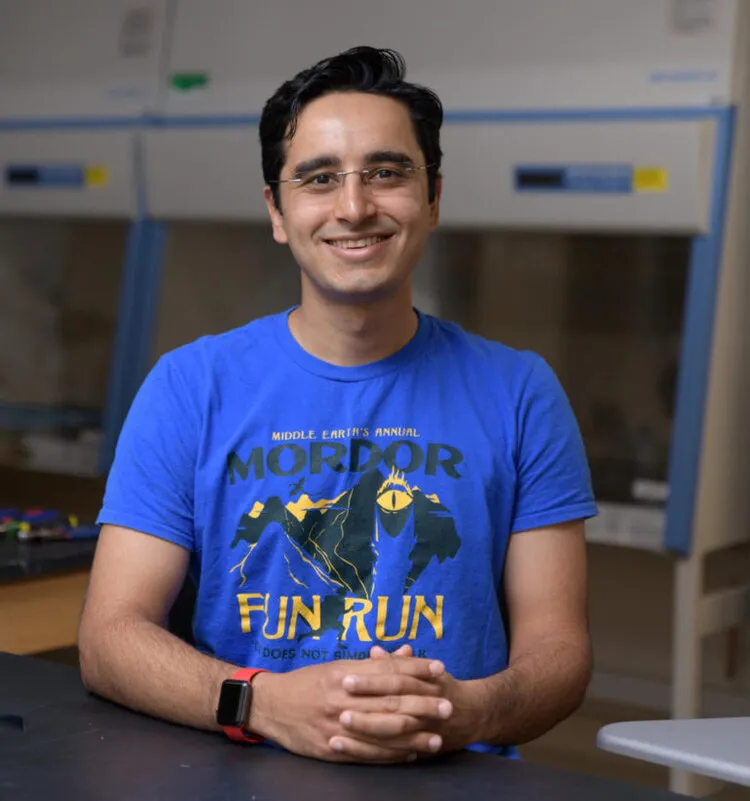
Mark Styczynski in lab

Imagine if building new medicines or sustainable materials were as straightforward as snapping together LEGO® bricks. That’s the goal of a new project led by the Georgia Institute of Technology that could help transform the future of biomanufacturing.

The project, headed by Professor Mark Styczynski in Georgia Tech’s School of Chemical and Biomolecular Engineering (ChBE@GT), recently received a $9.2 million grant from the National Science Foundation Directorate for Technology, Innovation and Partnerships (NSF TIP) to accelerate the adoption of cell-free systems in biomanufacturing.

Promising Technology

Biotechnology has largely relied on living cells for production of products such as medicines, fragrances, or renewable fuels. But working with living cells can be complex and expensive.

Cell-free systems, by contrast, strip biology down to its essential parts, the enzymes and molecules that carry out life’s chemical reactions. This can simplify and speed up biomanufacturing, making it easier to scale.

The challenge, Styczynski explained, is that most cell-free projects still require custom-built setups. “Right now, engineering biology is like reinventing the wheel for every application,” he said. “You have to figure out how all the parts fit together each time. We want to change that by making ready-to-use modules that work right out of the box.”

Styczynski’s project, called Meta-PURE (PUrified Recombinant Elements), will create eight standardized modules, each designed for a key function in cell-free systems, such as generating energy, producing proteins, or assembling complex molecules.

“Like interchangeable puzzle pieces, these modules can be mixed and matched to support different applications,” Styczynski said.

Demonstrating Uses

His team will demonstrate the system’s versatility by producing santalene (a plant-derived fragrance used widely in consumer products), GamS protein (a tool that can improve cell-free processes), and a bacteriophage (a virus that can be safely used in research and the development of new therapeutic treatments).

These examples highlight the technology’s potential across industries ranging from pharmaceuticals and agriculture to chemicals and sustainable materials.

“We want to make these tools so that someone in industry can create their molecule or product more quickly and efficiently, and get it out the door,” Styczynski said. 

“Right now, cell-free systems are mostly limited to high-value products because the cost is too high. The goal is to drive costs down and productivity up, so we can move closer to commodity chemicals like biofuels or monomers for polymers, not just niche applications. One of our partners recently developed a butanol process that shows where this can go,” he said.

NSF Initiative

Styczynski’s team is one of four recently awarded an inaugural investment of $32.4 million to help grow the U.S. bioeconomy. The initiative is called the NSF Advancing Cell-Free Systems Toward Increased Range of Use-Inspired Applications (NSF CFIRE).

“NSF is resolute in our commitment to advancing breakthroughs in biotechnology, advanced manufacturing, and other key technologies of significance to the U.S. economy,” said Erwin Gianchandani, assistant director for NSF TIP. “The novel approaches from these four CFIRE teams will speed up and expand the adoption of cell-free systems across a variety of industries and ensure America’s competitive position in the global bioeconomy.”

Collaborative Effort

While ChBE@GT is the lead, Meta-PURE is a broad collaboration with partners across academia, industry, and government. Co-principal investigators include Paul Opgenorth, co-founder and vice president of development at the biotech firm eXoZymes; Nicholas R. Sandoval, associate professor of Tulane University’s Department of Chemical and Biomolecular Engineering; and Anton Jackson-Smith, founder of the biotech startup b.next.

Meta-PURE will also train graduate students and postdocs in partnership with industry, government, and other universities, helping prepare trainees to be the future of a highly interdisciplinary U.S. bioeconomy. The team will also engage the scientific community on the implementation of metrics and standards in cell-free biotechnology to better facilitate broad adoption and interoperability of not just the results of the Meta-PURE project, but of cell-free efforts more broadly. 


News Contact

Brad Dixon, braddixon@gatech.edu

Sep. 23, 2025
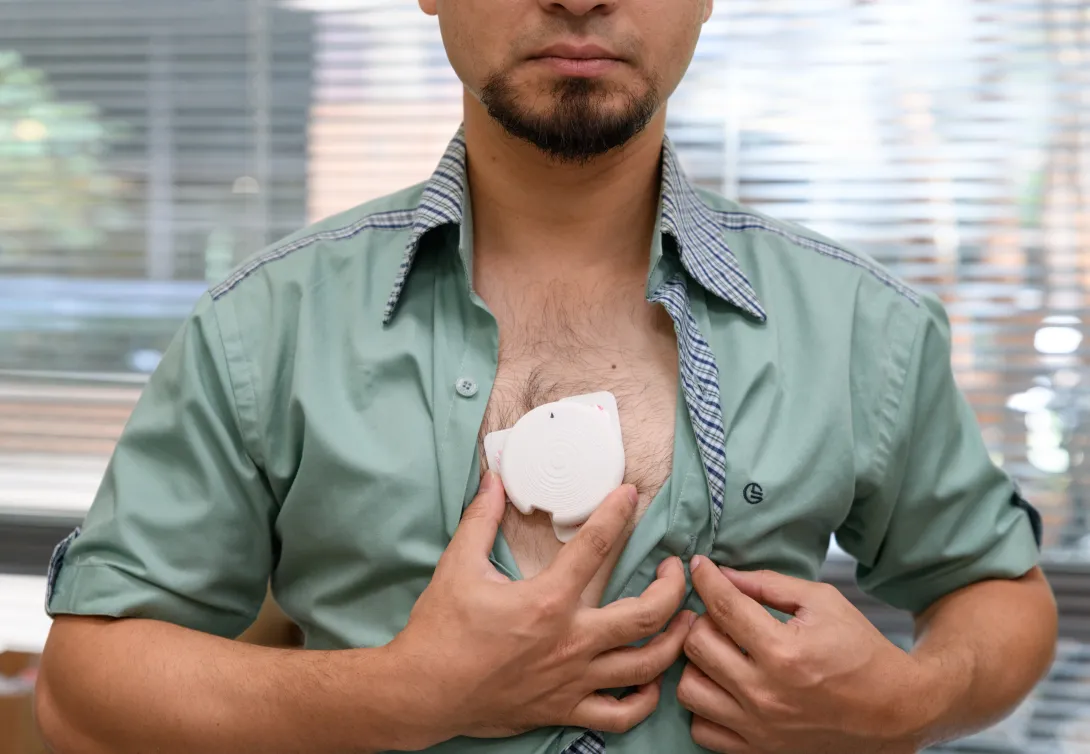
man baring chest an holding a patch against his skin

Heart failure remains one of the most challenging conditions to monitor outside the clinic. Patients may experience changes in symptoms, such as fatigue or shortness of breath, between visits, yet many current devices provide limited data, leaving physicians without continuous insight into heart function.

“Despite advances in digital health, continuous monitoring of the heart’s mechanical function has remained difficult outside clinical settings,” said Omer Inan, researcher and entrepreneur at Georgia Tech. “Patients and physicians have long needed a tool that provides deeper, real-time insights into heart performance without invasive procedures. We decided to tackle that problem head-on with a wearable device.”

Read more »

Sep. 24, 2025
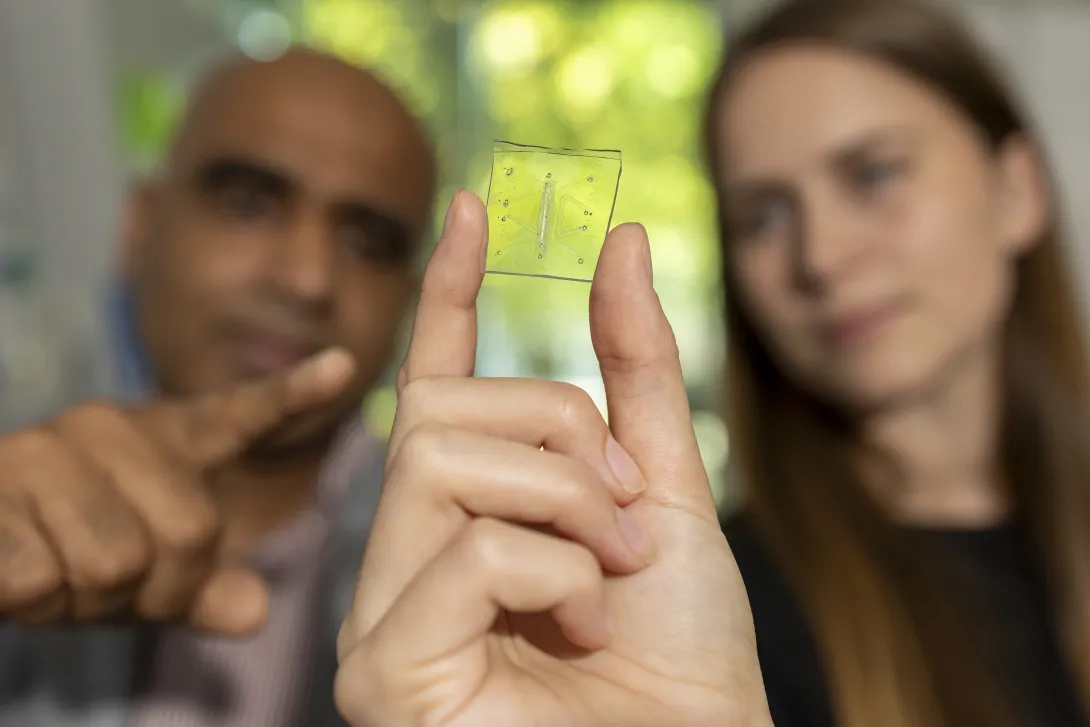
Researchers show off a lung-on-a-chip that has an immune system. Long term, this technology could lead to highly personalized medicine

Ankur Singh and Rachel Ringquist point to the microscopic lung-on-a-chip that has a built-in immune system.

On a clear polymer chip, soft and pliable like a gummy bear, a microscopic lung comes alive — expanding, circulating, and, for the first time, protecting itself like a living organ. 

For Ankur Singh, director of Georgia Tech’s Center for Immunoengineering, watching immune cells rush through the chip took his breath away. Singh co-directed the study with longtime collaborator Krishnendu “Krish” Roy, former Regents Professor and director of the NSF Center for Cell Manufacturing Technologies at Tech and now the Bruce and Bridgitt Evans dean of engineering and University Distinguished Professor at Vanderbilt University. Rachel Ringquist, Roy’s graduate student, and now a postdoctoral fellow with Singh, led the work as part of her doctoral dissertation. 

“That was the ‘wow’ moment,” Singh said. “It was the first time we felt we had something close to a real human lung.”

Lung-on-a-chip platforms provide researchers a window into organ behavior. They are about the size of a postage stamp, etched with tiny channels and lined with living human cells. Roy and Singh’s innovation was adding a working immune system — the missing piece that turns a chip into a true model of how the lung fights disease.

Now, researchers can watch how lungs respond to threats, how inflammation spreads, and how healing begins.
 

The Human Stakes

For millions of people struggling with lung disease, everyday life can feel nearly impossible, whether it’s climbing stairs, carrying groceries, or even laughing too hard. Doctors and scientists have attempted for decades to unlock what really happens inside fragile lungs.

"This unique lung-on-a-chip model opens new, preclinical pathways of discovery that will allow researchers to better understand the interplay of immune responses to severe viral infections and evaluate critical antiviral treatments,” said Roy.

For Singh, the Carl Ring Family Professor in the George W. Woodruff School of Mechanical Engineering with a joint appointment in the Wallace H. Coulter Department of Biomedical Engineering, this research is deeply personal. He lost an uncle when an infection overwhelmed his cancer-weakened immune system.

“That experience stays with you,” Singh reflected. “It made me want to build systems that could predict and prevent outcomes like that, so fewer families go through what mine did. I think about my uncle all the time. If work like this means fewer families lose someone they love, then it’s worth everything.”

That motivation pushed his team to reimagine what a lung-on-a-chip could do, setting the stage for the breakthroughs that followed.
 

When the Lung Fought Back

The turning point came when Roy’s and Singh’s team peered through a microscope and saw something no one had ever witnessed on a chip: blood and immune cells coursing through tiny vessel-like structures, behaving just as they do in a living lung.

For years, researchers had struggled to add immunity to organ-on-a-chip systems. Immune cells often died quickly or failed to circulate and interact with tissue the way they do in people. the team solved that problem, creating a chip where immune cells could survive and coordinate a defense.

“It was an amazing breakthrough moment,” Singh said.

The true test came when the team introduced a severe influenza virus infection. The lung mounted an immune response that closely mirrored what doctors see in patients. Immune cells rushed to the site of infection, inflammation spread through tissue, and defenses activated in response.

“That was when we realized this wasn’t just a model,” Singh said. “It was capturing the real biology of disease.”

Singh and Roy’s research is published in the journal Nature Biomedical Engineering.
 

A More Human Approach

For decades, lung research has relied on animal models. But mice don’t get asthma like children. Their bodies don’t mount the same defenses.

“Five mice in a cage may respond the same way, but five humans won’t,” Singh explained. “Our chip can reflect that difference. That’s what makes it more accurate, and why it could dramatically reduce the need for animal models.”

Krish Roy emphasized its potential.

“The Food and Drug Administration’s strategic vision on reducing animal testing and developing predictive non-animal models aligns perfectly with our work. This device goes further than ever before in modeling human severe influenza and providing unprecedented insights into the complex lung immune response,” he said.


Fighting More Than the Flu

What began with influenza now expands to a wider range of diseases. Roy and Singh believes the platform can be used to study asthma, cystic fibrosis, lung cancer, and tuberculosis. The researchers are also working to integrate immune organs, showing how the lung coordinates with the body’s defenses.

The long-term vision is personalized medicine: chips built from a patient’s own cells to predict which therapy will work best. Scaling, clinical validation, and regulatory approval will take years, but Singh is undeterred.

“Imagine knowing which treatment will help you before you ever take it,” Singh said. “That’s where we’re headed.”

Where we’re headed, the future doesn’t wait for illness. Instead, it anticipates it, intercepts it, and rewrites the outcome.


Georgia Tech postdoctoral researcher Rachel Ringquist was the first author leading the study.

This research was supported by Wellcome Leap, with additional funding from the National Institutes of Health, Carl Ring Family Endowment, and the Marcus Foundation.


Ringquist, R., Bhatia, E., Chatterjee, P. et al. An immune-competent lung-on-a-chip for modelling the human severe influenza infection response. Nature Biomedical Engineering, September 2025 Vol.9 No.9

DOI: https://doi.org/10.1038/s41551-025-01491-9

News Contact

Michelle Azriel Sr. Writer-Editor

Sep. 16, 2025
Saad Bhamla

Saad Bhamla, associate professor in Georgia Tech's School of Chemical and Biomolecular Engineering

Saad Bhamla of Georgia Tech’s School of Chemical and Biomolecular Engineering (ChBE) is a member of a global cohort of eight scientists and engineers who were named Schmidt Polymaths. They will each receive up to $2.5 million over five years to pursue research in new disciplines or using new methodologies, Schmidt Sciences announced today.

As Schmidt Polymaths, the researchers pursue new approaches compared to previous work. The new cohort of polymaths will answer questions like how to expand access to healthcare with low-cost technologies, what happens to our chromosomes when we age and how to create more accurate computer simulations of climate. 

Bhamla, associate professor in ChBE@GT, is the first Schmidt Polymath from Georgia Tech. He will develop low-cost technologies to tackle planetary-scale challenges, including AI-enabled point-of-care diagnostics in low-resource environments, and he will also engineer autonomous morphing machines that adapt, evolve and learn like living systems.

The eight selected scientists represent the fifth cohort of the highly selective Schmidt Polymaths program. Awardees must have been tenured—or achieved similar status—within the previous three years. Previous cohorts have used the award to design new sensor devices, perform experiments at atomic resolutions, analyze trees of life with faster and more efficient algorithms, discover new mathematical formulas assisted by AI, and more. 

Drawn from universities worldwide and selected through a competitive application process, Schmidt Polymaths are required to demonstrate past ability and future potential to pursue early-stage, novel research that would otherwise be challenging to fund—even without the current dramatic declines in U.S. funding for science. 

“Our world is one deeply interconnected system---but to study it more deeply, we’ve divided it into increasingly narrow categories,” said Wendy Schmidt, who co-founded Schmidt Sciences with her husband Eric. “Schmidt Polymaths see the bigger picture, pursue answers beyond boundaries and expand the edges of what’s possible.  Their work can help steer  us all toward a healthier  future, for people and the planet.”

About Schmidt Sciences

Schmidt Sciences is a nonprofit organization founded in 2024 by Eric and Wendy Schmidt that works to accelerate scientific knowledge and breakthroughs with the most promising, advanced tools to support a thriving planet. The organization prioritizes research in areas poised for impact including AI and advanced computing, astrophysics, biosciences, climate, and space—as well as supporting researchers in a variety of disciplines through its science systems program.

RELATED: Forbes featured Bhamla in the article: Saad Bhamla Is A Polymath

News Contact

Brad Dixon, braddixon@gatech.edu

Aug. 21, 2025
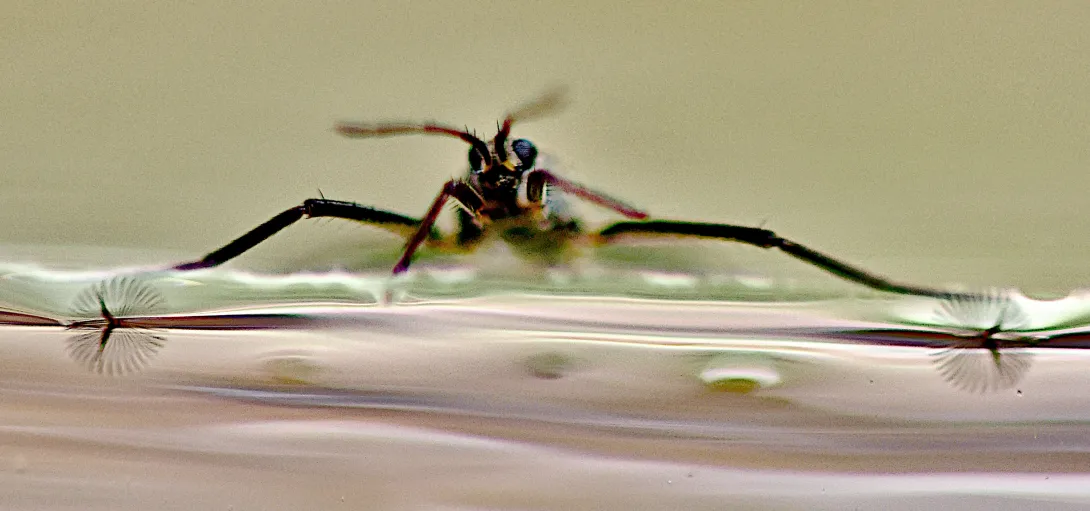
a water bug standing on water

A new study explains how tiny water bugs use fan-like propellers to zip across streams at speeds up to 120 body lengths per second. The researchers then created a similar fan structure and used it to propel and maneuver an insect-sized robot.

The discovery offers new possibilities for designing small machines that could operate during floods or other challenging situations.

Instead of relying on their muscles, the insects about the size of a grain of rice use the water’s surface tension and elastic forces to morph the ribbon-shaped fans on the end of their legs to slice the water surface and change directions. 

Once they understood the mechanism, the team built a self-deployable, one-milligram fan and installed it into an insect-sized robot capable of accelerating, braking, and maneuvering right and left.

The study is featured on the cover of the journal Science. 

Read the entire story and see the robot in action on the College of Engineering website. 

News Contact

Jason Maderer
College of Engineering
maderer@gatech.edu

Aug. 15, 2025
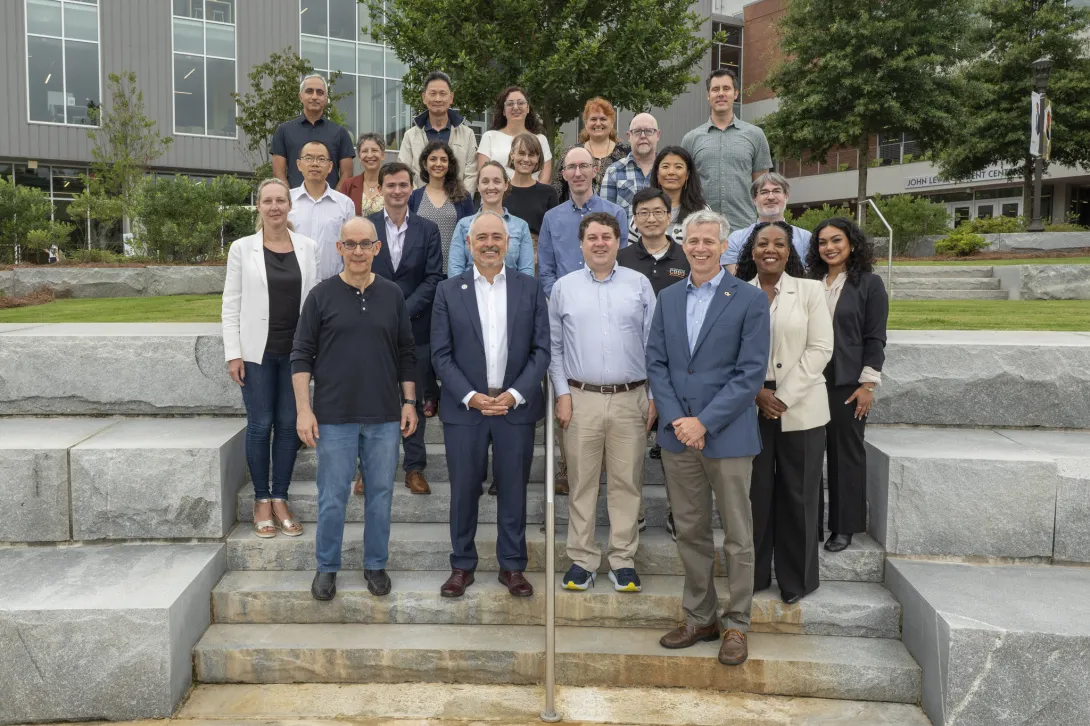
Inaugural cohort of Georgia Tech's Research Leadership Academy

The inaugural cohort of Georgia Tech’s Research Leadership Academy (RLA), a distinguished group of researchers selected from a highly competitive pool of applicants across campus, has been announced.

These outstanding faculty members were chosen for their exceptional research accomplishments, demonstrated leadership, and ability to drive high-impact, interdisciplinary initiatives. Representing a wide range of academic disciplines, they embody the depth, innovation, and collaborative spirit that define Georgia Tech’s research community.

Over the next year, this inaugural cohort will engage in a dynamic, immersive program designed to cultivate strategic research leadership through mentorship, experiential learning, and cross-campus dialogue. Their work through the RLA will not only strengthen Georgia Tech’s research enterprise but also help shape its trajectory for years to come.

Please join us in celebrating and congratulating these remarkable scholars as they embark on this exciting journey. 

  • Steve Diggle – Institute for Bioengineering and Bioscience; School of Biological Sciences
  • Marta Hatzell – Institute for Matter and Systems; Renewable Bioproducts Institute; Strategic Energy Institute; George W. Woodruff School of Mechanical Engineering
  • Ada Gavrilovska - Institute for Data Engineering and Science; School of Computer Science
  • Margaret Kosal – Institute for Bioengineering and Bioscience; Strategic Energy Institute; Institute for Matter and Systems; Sam Nunn School of International Affairs
  • Sheng Dai – Institute for Bioengineering and Bioscience; Strategic Energy Institute; School of Civil and Environmental Engineering
  • Yuguo Tao – George W. Woodruff School of Mechanical Engineering; Nuclear and Radiological Engineering; and Medical Physics
  • Chris Wiese – Institute for Bioengineering and Bioscience; Institute for Data Engineering and Science; Institute for People and Technology; School of Psychology
  • Mathieu Dahan – Institute for People and Technology, H. Milton Stewart School of Industrial and Systems Engineering
  • Thackery Brown – School of Psychology
  • Charlotte Alexander – Tech AI, Scheller College of Business; Law and Ethics
  • Jeff Young – Institute for Data Engineering and Science; Partnership for Advanced Computing Environments; Office of Information Technology
  • Meltem Alemdar – Center for Education Integrating Science, Mathematics, and Computing
  • Kamran Paynabar – Georgia Tech Manufacturing Institute; Institute for Data Engineering and Science; Renewable Bioproducts Institute; H. Milton Stewart School of Industrial and Systems Engineering
  • John A. Christian – Daniel Guggenheim School of Aerospace Engineering
  • Farzaneh Najafi – Institute for Bioengineering and Bioscience; School of Biological Sciences
  • Dave Flaherty – Strategic Energy Institute; School of Chemical and Biomolecular Engineering
  • Eunhwa Yang - Institute for Matter and Systems; Strategic Energy Institute; School of Building Construction
  • James Tsai – Strategic Energy Institute; School of Civil and Environmental Engineering
  • Jennifer Hirsch – Brook Byers Institute for Sustainable Systems; Center for Sustainable Communities Research and Education; Strategic Energy Institute
Jan. 13, 2025
Anirudh Sivakumar (right) and Gabe Kwong led development of new gene-free biosensors for cancer detection.

Anirudh Sivakumar (right) and Gabe Kwong led development of new gene-free biosensors for cancer detection.

Georgia Tech researchers have developed biosensors with advanced sleuthing skills and the technology may revolutionize cancer detection and monitoring. 

The tiny detectives can identify key biological markers using logical reasoning inspired by the “AND” function in computers — like, when you need your username and password to log in. And unlike traditional biosensors comprised of genetic materials — cells, bits of DNA — these are made of manufactured molecules.

These new biosensors are more precise and simpler to manufacture, reducing the number of false positives and making them more practical for clinical use. And because the sensors are cell-free, there’s a reduced risk for immunogenic side effects.

“We think the accuracy and simplicity of our biosensors will lead to accessible, personalized, and effective treatments, ultimately saving lives,” said Gabe Kwong, associate professor and Robert A. Milton Endowed Chair in the Wallace H. Coulter Department of Biomedical Engineering, who led the study, published this month in Nature Nanotechnology. 

Breaking With Tradition

The researchers set out to address the limitations in current biosensors for cancer, like the ones designed for CAR-T cells to allow them to recognize tumor cells. These advanced biosensors are made of genetic material, and there is growing interest to reduce the potential for off-target toxicity by using Boolean “AND-gate” computer logic. That means they’re designed to release a signal only when two specific conditions are met.

“Traditionally, these biosensors involve genetic engineering using cell-based systems, which is a complex, time-consuming, and expensive process,” said Kwong.

So, his team developed biosensors made of iron oxide nanoparticles and special molecules called cyclic peptides. Synthesizing nanomaterials and peptides is a simpler, less costly process than genetic engineering, according to Kwong, “which means we can likely achieve large-scale, economical production of high-precision biosensors.”

Unlocking the AND-gate

Biosensors detect cancer signals and track treatment progress by turning biological signals into readable outputs for doctors. With AND-gate logic, two distinct inputs are required for an output. 

Accordingly, the researchers engineered cyclic peptides — small amino acid chains — to respond only when they encounter two specific types of enzymes, proteases called granzyme B (secreted by the immune system) and matrix metalloproteinase (from cancer cells). The peptides generate a signal when both proteases are present and active.

Think of a high-security lock that needs two unique keys to open. In this scenario, the peptides are the lock, activating the sensor signal only when cancer is present and being confronted by the immune system. 

“Our peptides allow for greater accuracy in detecting cancer activity,” said the study’s lead author, Anirudh Sivakumar, a postdoctoral researcher in Kwong’s Laboratory for Synthetic Immunity. “It’s very specific, which is important for knowing when immune cells are targeting and killing tumor cells.”

Super Specific

In animal studies, the biosensors successfully distinguished between tumors that responded to a common cancer treatment called immune checkpoint blockade therapy — ICBT, which enhances the immune system — from tumors that resisted treatment. 

During these tests, the sensors also demonstrated their ability to avoid false signals from other, unrelated health issues, such as when the immune system confronted a flu infection in the lungs, away from the tumor.

“This level of specificity can be game changing,” Kwong said. “Imagine being able to identify which patients are responding to the therapy early in their treatment. That would save time and improve patient outcomes.”

The first step toward this simpler, precise form of cancer diagnostics began with an ambitious but humble ($50,000) seed grant from the Petit Institute for Bioengineering and Bioscience five years ago for a collaboration between Kwong’s lab and the lab of M.G. Finn, professor and chair in the School of Chemistry and Biochemistry.

It evolved into a multi-institutional project supported by grants from the National Science Foundation and National Institutes of Health that included researchers from the University of California-Riverside, as well as Georgia Tech faculty researchers Finn and Peng Qiu, associate professor in the Coulter Department.

“The progression of the research, from an initial seed grant all the way to animal studies, was very smooth,” Kwong said. “Ultimately, a collaborative, multidisciplinary effort turned our early vision into something that could have a great impact in healthcare.”


Citation: Anirudh Sivakumar, Hathaichanok Phuengkham, Hitha Rajesh, Quoc D. Mac, Leonard C. Rogers, Aaron D. Silva Trenkle, Swapnil Subhash Bawage, Robert Hincapie, Zhonghan Li, Sofia Vainikos, Inho Lee, Min Xue, Peng Qiu, M. G. Finn, Gabriel A. Kwong. “AND-gated protease-activated nanosensors for programmable detection of anti-tumour immunity.” Nature Nanotechnology (January 2025).  https://doi.org/10.1038/s41565-024-01834-8

Funding: This research was supported in part by National Institutes of Health (NIH) grants 5U01CA265711, 5R01CA237210, 1DP2HD091793, and 5DP1CA280832.

News Contact

Jerry Grillo

Dec. 06, 2024
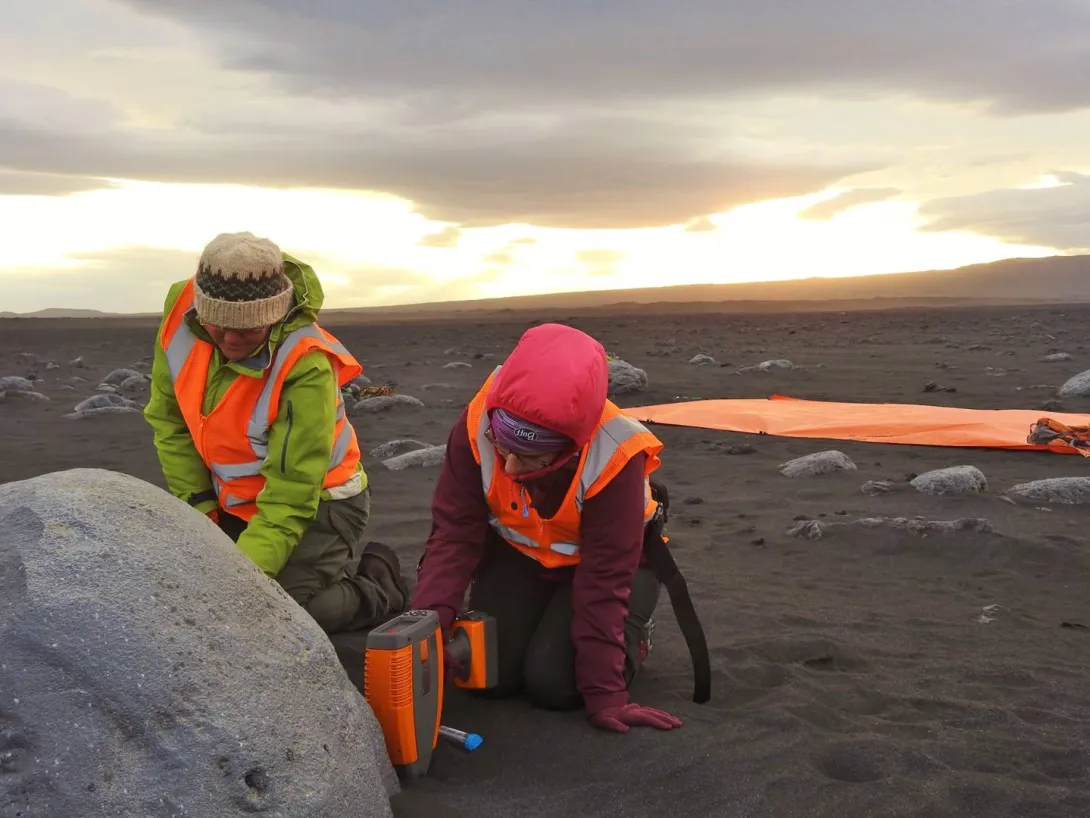
Students using handheld portable chemical analysis instrumentation analogous to those used on Mars.

Students using handheld portable chemical analysis instrumentation analogous to those used on Mars.

The surface is covered with fine ash. The lava fields stretch for miles, punctuated only by basalt mountains. But life could be found here if you look hard enough.

This barren land isn't Mars or Pluto, but volcanic deserts in Iceland. The environment is so comparable to Mars' arid landscape that researchers can use it as an analog. From Earth, they can extrapolate how planets in our galaxy and beyond could sustain life and what tools humans might need to make homes on these planets.

Georgia Tech researchers explore everywhere from Oregon's mountaintops to Arizona's deserts to better understand space — and life on this planet.

Aug. 30, 2024
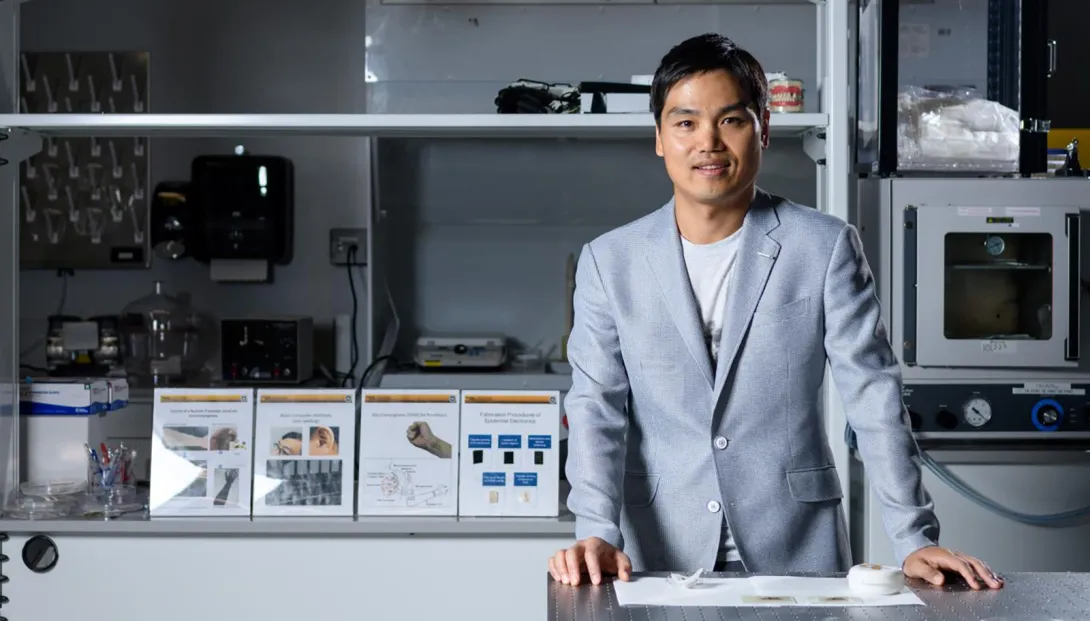
W. Hong Yeo is leading a $3 million  NSF research training program to develop a new generation of engineers focused on creating sustainable medical devices.

W. Hong Yeo is leading a $3 million NSF research training program to develop a new generation of engineers focused on creating sustainable medical devices.

Georgia Tech researcher W. Hong Yeo has been awarded a $3 million grant to help develop a new generation of engineers and scientists in the field of sustainable medical devices. 

“The workforce that will emerge from this program will tackle a global challenge through sustainable innovations in device design and manufacturing,” said Yeo, Woodruff Faculty Fellow and associate professor in the George W. Woodruff School of Mechanical Engineering and the Wallace H. Coulter Department of Biomedical Engineering at Georgia Tech and Emory University.

The funding, from the National Science Foundation (NSF) Research Training (NRT) program, will address the environmental impacts resulting from the mass production of medical devices, including the increase in material waste and greenhouse gas emissions.

Under Yeo’s leadership, the Georgia Tech team comprises multidisciplinary faculty: Andrés García (bioengineering), HyunJoo Oh (industrial design and interactive computing), Lewis Wheaton (biology), and Josiah Hester (sustainable computing). Together, they’ll train 100 graduate students, including 25 NSF-funded trainees, who will develop reuseable, reliable medical devices for a range of uses. 

“We plan to educate students on how to develop medical devices using biocompatible and biodegradable materials and green manufacturing processes using low-cost printing technologies,” said Yeo. “These wearable and implantable devices will enhance disease diagnosis, therapeutics, rehabilitation, and health monitoring.”

Students in the program will be challenged by a comprehensive, multidisciplinary curriculum, with deep dives into bioengineering, public policy, physiology, industrial design, interactive computing, and medicine. And they’ll get real-world experience through collaborations with clinicians and medical product developers, working to create devices that meet the needs of patients and care providers.

The Georgia Tech NRT program aims to attract students from various backgrounds, fostering a diverse, inclusive environment in the classroom — and ultimately in the workforce.

The program will also introduce a new Ph.D. concentration in smart medical devices as part of Georgia Tech's bioengineering program, and a new M.S. program in the sustainable development of medical devices. Yeo also envisions an academic impact that extends beyond the Tech campus.

Collectively, this NRT program's curriculum, combining methods from multiple domains, will help establish best practices in many higher education institutions for developing reliable and personalized medical devices for healthcare,” he said. “We’d like to broaden students' perspectives, move past the current technology-first mindset, and reflect the needs of patients and healthcare providers through sustainable technological solutions.” 

News Contact

Jerry Grillo

Subscribe to Parker H. Petit Institute for Bioengineering and Bioscience (IBB)