
Jun. 12, 2023
What started as a simple errand to deposit a check at a bank drive-through became the kind of “aha” moment found mostly in books and movies.
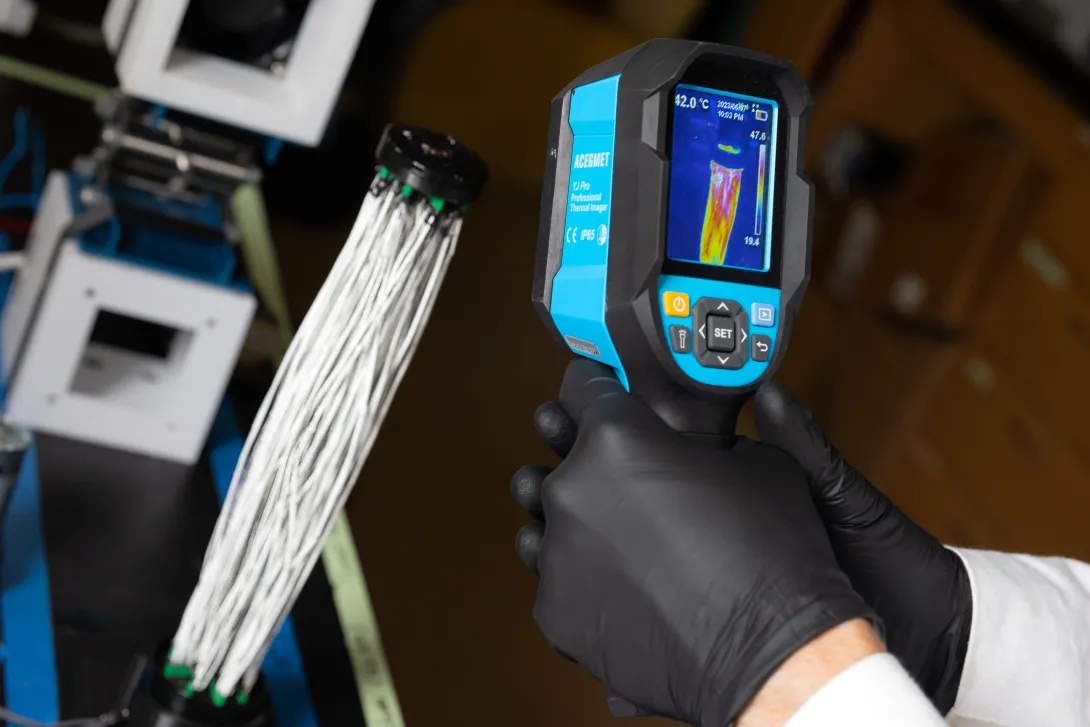
Georgia Tech researchers had been working on an idea to simplify traditional direct air capture (DAC) systems. Their approach used ambient wind flow to draw air across a new kind of coated carbon fiber to grab CO2. That would eliminate the loud fans used in many systems. And the carbon fiber strands could be quickly heated to release the captured carbon dioxide with minimal heat loss, boosting efficiency.
But they were struggling with how to deploy these new sorbent-coated carbon fibers for maximum effect.
“I had to go deposit a check at the bank, and I went through the drive-through. They had the old pneumatic tubes that come down to transport documents,” said Ryan Lively, Thomas C. DeLoach Professor in Georgia Tech’s School of Chemical and Biomolecular Engineering (ChBE). “There are not many times you have a light bulb moment in your career, but I saw the tubes and I realized, we could put the fibers in something like a bank teller tube canister.
“That’s pretty much what we did, and it worked.”
News Contact
Joshua Stewart
College of Engineering
May. 10, 2023
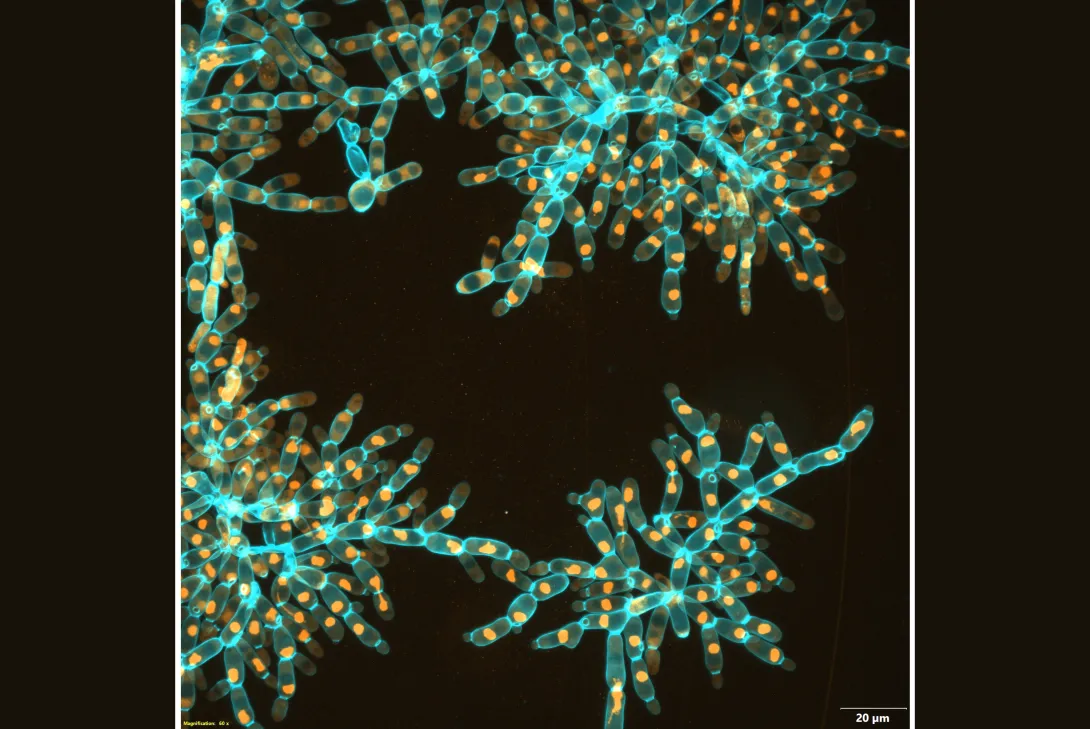
Macroscopic snowflake yeast with elongated cells fracture into modules, retaining the same underlying branched growth form of their microscopic ancestor.
The world would look very different without multicellular organisms – take away the plants, animals, fungi, and seaweed, and Earth starts to look like a wetter, greener version of Mars. But precisely how multicellular organisms evolved from single-celled ancestors remains poorly understood. The transition happened hundreds of millions of years ago, and early multicellular species are largely lost to extinction.
To investigate how multicellular life evolves from scratch, researchers from the Georgia Institute of Technology decided to take evolution into their own hands. Led by William Ratcliff, associate professor in the School of Biological Sciences and director of the Interdisciplinary Graduate Program in Quantitative Biosciences, a team of researchers has initiated the first long-term evolution experiment aimed at evolving new kinds of multicellular organisms from single-celled ancestors in the lab.
Over 3,000 generations of laboratory evolution, the researchers watched as their model organism, “snowflake yeast,” began to adapt as multicellular individuals. In research published in Nature, the team shows how snowflake yeast evolved to be physically stronger and more than 20,000 times larger than their ancestor. This type of biophysical evolution is a pre-requisite for the kind of large multicellular life that can be seen with the naked eye. Their study is the first major report on the ongoing Multicellularity Long-Term Evolution Experiment (MuLTEE), which the team hopes to run for decades.
“Conceptually, what we want to understand is how simple groups of cells evolve into organisms, with specialization, coordinated growth, emergent multicellular behaviors, and life cycles – the stuff that differentiates a pile of pond scum from an organism that is capable of sustained evolution,” Ratcliff said. “Understanding that process is a major goal of our field.”
The Multicellularity Long-Term Evolution Experiment
Ozan Bozdag, a research scientist and former postdoctoral researcher in Ratcliff’s group and first author on the paper, initiated the MuLTEE in 2018, starting with single-celled snowflake yeast. Bozdag grew the yeast in shaking incubators and each day selected for both faster growth and larger group size.
The team selected on organism size because all multicellular lineages started out small and simple, and many evolved to be larger and more robust over time. The ability to grow large, tough bodies is thought to play a role in increasing complexity, as it requires new biophysical innovations. However, this hypothesis had never been directly tested in the lab.
Over about 3,000 generations of evolution, their yeast evolved to form groups that were more than 20,000 times larger than their ancestor. They went from being invisible to the naked eye to the size of fruit flies, containing over half a million cells. The individual snowflake yeast evolved novel material properties: while they started off weaker than gelatin, they evolved to be as strong and tough as wood.
New Biophysical Adaptations
In investigating how the snowflake yeast adapted to become larger, the researchers observed that the yeast cells themselves became elongated, reducing the density of cells packed into the group. This cell elongation slowed down the accumulation of cell-to-cell stress that would normally cause the clusters to fracture, allowing the groups to get larger. But this fact alone should have only resulted in small increases in size and multicellular toughness.
To uncover the precise biophysical mechanisms that allowed growth to macroscopic size, the researchers needed to look inside the yeast clusters to see how the cells interacted physically. Normal light microscopes were unable to penetrate the large, densely packed groups, so the researchers used a scanning electron microscope to image thousands of ultrathin slices of the yeast, which gave them their internal structure.
“We discovered that there was a totally new physical mechanism that allowed the groups to grow to this very, very large size,” Bozdag said. “The branches of the yeast had become entangled – the cluster cells evolved vine-like behavior, wrapping around each other and strengthening the entire structure.”
By simply selecting on organismal size, the researchers figured out how to leverage the biomechanical mechanism of entanglement, which ended up making the yeast about 10,000 times tougher as a material.
“Entanglement has previously been studied in totally different systems, mostly in polymers,” said Peter Yunker, associate professor in the School of Physics and a co-author on the paper. “But here we’re seeing entanglement through an entirely different mechanism — the growth of cells rather than just through their movement.”
Observing the entanglement was a turning point in the researchers’ understanding of how simple multicellular groups evolve. As a brand-new multicellular organism, snowflake yeast lacks the sophisticated developmental mechanisms that characterize modern multicellular organisms. But after just 3,000 generations of laboratory evolution, the yeast figured out how to drive and co-opt cellular entanglement as a developmental mechanism.
Preliminary investigations of other multicellular fungi show that they also form highly entangled multicellular bodies, suggesting that entanglement is a widespread and important multicellular trait in this branch of multicellular life.
“I’m really excited to have a model system where we can evolve early multicellular life over thousands of generations, harnessing the awesome power of modern science,” Ratcliff said. “In principle, we can understand everything that is happening, from the evolutionary cell biology to the biophysical traits which are directly under selection.”
For a long time, humans have worked with biology to evolve new things – from the corn we eat to domesticated dogs, chickens, and show pigeons. According to Ratcliff, what their team is doing is not so different.
“By putting our finger on the scale of a single-celled organism’s evolution, we can figure out how they evolved into progressively more complex and integrated multicellular organisms, and can study that process along the way,” he said. “We hope that this is just the first chapter in a long story of multicellular discovery as we continue to evolve snowflake yeast in the MuLTEE.”
Citation: Bozdag GO, Zamani-Dahaj SA, Day TC, Kahn PC, Burnetti AJ, Lac DT, Tong K, Conlin PL, Balwani AH, Dyer EL, Yunker PJ. De novo evolution of macroscopic multicellularity. Nature, 2023.
DOI: 10.1038/s41586-023-06052-1
News Contact
Catherine Barzler, Senior Research Writer/Editor
May. 05, 2023
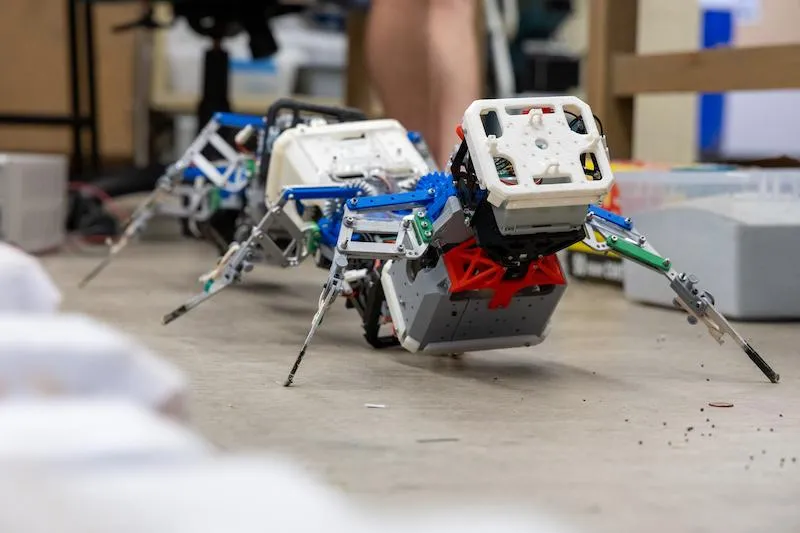
Centipedes are known for their wiggly walk. With tens to hundreds of legs, they can traverse any terrain without stopping.
“When you see a scurrying centipede, you're basically seeing an animal that inhabits a world that is very different than our world of movement,” said Daniel Goldman, the Dunn Family Professor in the School of Physics. “Our movement is largely dominated by inertia. If I swing my leg, I land on my foot and I move forward. But in the world of centipedes, if they stop wiggling their body parts and limbs, they basically stop moving instantly.”
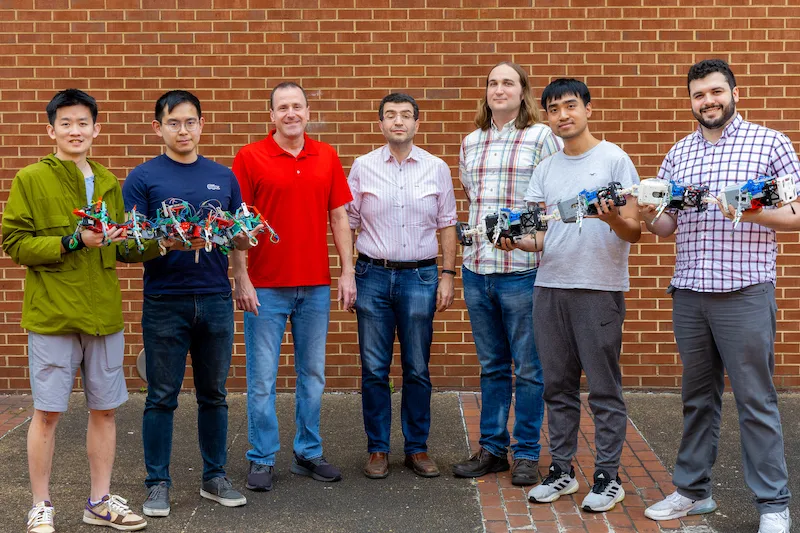
Intrigued to see if the many limbs could be helpful for locomotion in this world, a team of physicists, engineers, and mathematicians at the Georgia Institute of Technology are using this style of movement to their advantage. They developed a new theory of multilegged locomotion and created many-legged robotic models, discovering the robot with redundant legs could move across uneven surfaces without any additional sensing or control technology as the theory predicted.
These robots can move over complex, bumpy terrain — and there is potential to use them for agriculture, space exploration, and even search and rescue.
The researchers presented their work in the papers, “Multilegged Matter Transport: A Framework for Locomotion on Noisy Landscapes,” in Science in May and “Self-Propulsion via Slipping: Frictional Swimming in Multilegged Locomotors,” in Proceedings of the National Academy of Sciences in March.
A Leg Up
For the Science paper, the researchers were motivated by mathematician Claude Shannon’s communication theory, which demonstrates how to reliably transmit signals over distance, to understand why a multilegged robot was so successful at locomotion. The theory of communication suggests that one way to ensure a message gets from point A to point B on a noisy line isn’t to send it as an analog signal, but to break it into discrete digital units and repeat these units with an appropriate code.
“We were inspired by this theory, and we tried to see if redundancy could be helpful in matter transportation,” said Baxi Chong, a physics postdoctoral researcher. “So, we started this project to see what would happen if we had more legs on the robot: four, six, eight legs, and even 16 legs.”
A team led by Chong, including School of Mathematics postdoctoral fellow Daniel Irvine and Professor Greg Blekherman, developed a theory that proposes that adding leg pairs to the robot increases its ability to move robustly over challenging surfaces — a concept they call spatial redundancy. This redundancy makes the robot’s legs successful on their own without the need for sensors to interpret the environment. If one leg falters, the abundance of legs keeps it moving regardless. In effect, the robot becomes a reliable system to transport itself and even a load from A to B on difficult or “noisy” landscapes. The concept is comparable to how punctuality can be guaranteed on wheeled transport if the track or rail is smooth enough but without having to engineer the environment to create this punctuality.
“With an advanced bipedal robot, many sensors are typically required to control it in real time,” Chong said. “But in applications such as search and rescue, exploring Mars, or even micro robots, there is a need to drive a robot with limited sensing. There are many reasons for such sensor-free initiative. The sensors can be expensive and fragile, or the environments can change so fast that it doesn’t allow enough sensor-controller response time.”
To test this, Juntao He, a Ph.D. student in robotics, conducted a series of experiments where he and Daniel Soto, a master’s graduate in the George W. Woodruff School of Mechanical Engineering, built terrains to mimic an inconsistent natural environment. He then tested the robot by increasing its number of legs by two each time, starting with six and eventually expanding to 16. As the leg count increased, the robot could more agilely move across the terrain, even without sensors, as the theory predicted. Eventually, they tested the robot outdoors on real terrain, where it was able to traverse in a variety of environments.
“It's truly impressive to witness the multilegged robot's proficiency in navigating both lab-based terrains and outdoor environments,” Juntao said. “While bipedal and quadrupedal robots heavily rely on sensors to traverse complex terrain, our multilegged robot utilizes leg redundancy and can accomplish similar tasks with open-loop control.”
Next Steps
The researchers are already applying their discoveries to farming. Goldman has co-founded a company that aspires to use these robots to weed farmland where weedkillers are ineffective.
“They’re kind of like a Roomba but outside for complex ground,” Goldman said. “A Roomba works because it has wheels that function well on flat ground. Until the development of our framework, we couldn’t confidently predict locomotor reliability on bumpy, rocky, debris-ridden terrain. We now have the beginnings of such a scheme, which could be used to ensure that our robots traverse a crop field in a certain amount of time.”
The researchers also want to refine the robot. They know why the centipede robot framework is functional, but now they’re determining the optimal number of legs to achieve motion without sensing in a way that is cost-effective yet still retains the benefits.
“In this paper, we asked, ‘How do you predict the minimum number of legs to achieve such tasks?’” Chong said. “Currently we only prove that the minimum number exists, but we don't know that exact number of legs needed. Further, we need to better understand the tradeoff between energy, speed, power, and robustness in such a complex system.”
CITATION:
Baxi Chong et al., Multilegged matter transport: A framework for locomotion on noisy landscapes.Science380,509-515(2023).DOI:10.1126/science.ade4985
News Contact
Tess Malone, Senior Research Writer/Editor
Mar. 31, 2023
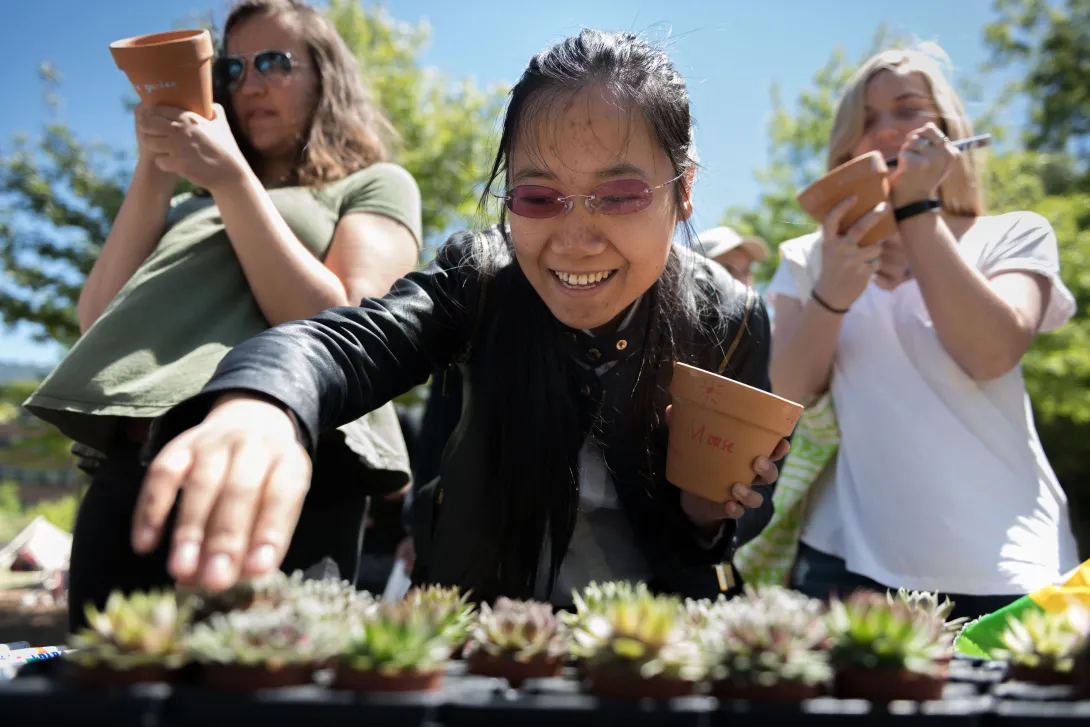
On April 22, communities across the U.S. and countries around the globe will come together in observance of Earth Day. Georgia Tech takes the opportunity to educate and celebrate the importance of protecting the environment a step further with Earth Month.
Events throughout the month allow students, faculty, and staff to familiarize themselves with sustainability efforts being put forward by the Institute and practices they can incorporate into their daily routines.
The global theme for Earth Day 2023 — the 53rd iteration of the event — and Tech’s month-long rendition is “invest in our planet.”
“The Earth Month lineup highlights the numerous ways that community members can embrace this theme,’” said Abby Bower, sustainability program support coordinator. “Today, the planet faces daunting challenges, but we all have the opportunity to pitch in to solve them. Georgia Tech has many great organizations, departments, and individuals dedicating their time and resources to making a better world, and we are excited to highlight them all month long.”
During Earth Month, you can participate in service opportunities, attend educational events, weigh in on ways Georgia Tech can meet our climate goals, and more.
Tech Beautification Day
April 1, 8:30 a.m. – 12:30 p.m., The Kendeda Building for Innovative Sustainable Design
The kickoff event for Earth Month, organized by the undergraduate Student Government Association and Georgia Tech Greek Week, will see hundreds of volunteers completing projects all over campus. After a welcome breakfast, groups of eight to 10 will be assigned a task with the goal of keeping the Georgia Tech campus as picturesque as ever. With assistance from Georgia Tech Landscaping, projects include planting flowers, trees, and shrubs; pulling weeds; and spreading pine straw. A primary goal of this year’s event is to plant 200 native azaleas.
For registration and additional information, click here.
Earth Day Clothing Swap at The Kendeda Revolving Closet
April 3 -7, 9 a.m. – 4 p.m., Basement of The Kendeda Building
Sustainable fashion is a pillar of this year’s global event. According to earthday.org, 87% of the 150 billion garments produced by the fashion industry each year eventually end up in landfills, and just 1% of discarded clothing is recycled. This weeklong event is a chance to donate gently used, clean clothes and recycle torn clothes and textiles.
Earth Day Bird Walk
April 5, 8:30 a.m. – 10 a.m., The Kendeda Building
The 400-acre Tech campus is home to diverse wildlife populations, including many species of birds. Learn more about the region’s birds from an expert guide during the Bird Walk organized by The Kendeda Building and Georgia Audubon Society. The reintroduction of native plants around Kendeda has created a habitat for birds, and the adjoining EcoCommons is part of a wildlife sanctuary certified by the Georgia Audubon, making Tech the first main campus in the state to receive the designation.
For registration and additional information, click here.
Southern Energy Conference
April 7, 9:30 a.m. – 2 p.m., Bill Moore Student Success Center
With the theme of “building blocks for a zero-carbon future,” the Energy Club will host the conference featuring keynote speakers, company demos, and panels discussing the technology and economics behind the future of the energy sector. Students are invited to compete in the Energy Research Poster Competition with cash prizes on the line.
For registration and additional information, click here.
EcoReps Earth Month Celebration
April 11, 1 – 3 p.m., West Village Dining Commons
Hosted by the 2022-23 EcoReps, this event is a celebration of all things sustainability in Housing and Residence Life, highlighting recent successes such as the Energy Competition, the ECGO app, and its growing composting program.
For additional information, click here.
Earth Month Bike Ride
April 11, 4:30 – 6 p.m., Meet on the Front Lawn of the Campus Recreation Center (CRC)
Hosted by the CRC, the leisurely 7-mile, no-drop ride promotes an alternate form of transportation and a healthy lifestyle. The ride will begin with a welcome from noted bike enthusiast President Ángel Cabrera and provide an overview of infrastructure projects that are making campus increasingly rider-friendly from Institute Landscape Architect Jason Gregory.
Registration and completion of a waiver are required. Riders are strongly encouraged to wear a helmet. Tech students, faculty, and staff can get a free helmet by completing the online Ride Smart Bike/Scooter Safety class.
For registration information, click here.
Propel ATL City Cycling Class - Georgia Tech Community
April 13, 4 – 5 p.m.
Propel Atlanta invites the Georgia Tech community to learn the rules of cycling during this instructional group ride. Participants will practice skills in a safe and supportive environment.
After getting the hang of the basics with a few drills, the 45-minute ride of 3 to 4 gentle miles will begin. Riders will experience Atlanta’s existing bicycle facilities, such as two-directional protected and single-directional bike lanes and sharrows, and learn to ride safely on streets without bike lanes by exercising their legal right to “take the lane.”
For registration information, click here.
Brook Byers Institute for Sustainable Systems Seminar Series: Anjali Thomas
April 13, 3 – 4 p.m., Economic Development Building (BBISS Suite 118)/Online
In the first of two seminars in this series, Anjali Thomas, associate professor and director of the Nunn School Program in Global Development, explores how “bureaucratic hurdles and identity politics shape water access in urban India.”
For additional information, click here.
Earth Day Org Fair and Celebration
April 18, 11 a.m. – 1 p.m., The Kendeda Building
Student organizations, academic departments, and groups around Atlanta will have tables set up in The Kendeda Building atrium and patio to promote a sustainable and environmentally conscious community. Enjoy free King of Pops, and bring a t-shirt, tote bag, or other item to be screen-printed with Earth Day designs. The Office of Sustainability will also have recovered shirts that can be used.
For additional information, click here.
Climate Action Plan Student Engagement Workshop
April 20, 5 – 6 p.m., Room 102, Clough Undergraduate Learning Commons
With a goal of reaching carbon neutrality by 2050, Georgia Tech is developing and implementing a comprehensive, cross-cutting Climate Action Plan. Students are invited to learn more about the plan and offer their thoughts on how the Institute can meet its climate goals during this engaging workshop hosted by the Office of Sustainability.
For additional information, click here.
Community Garden Ribbon Cutting
April 21, 2 – 3 p.m., Community Garden (Instructional Center Lawn)
Located along the Experiential Walkway, this event invites the Georgia Tech community to check out the newly renovated Community Garden and learn how to get involved.
For additional information, click here.
Film Screening: Making Pandemics at the Global Media Fest
April 23, 2 – 5 p.m., John Lewis Student Center
The French department in the School of Modern Languages will host a screening of Making Pandemics, a film that “seeks to understand the causes of this epidemic of pandemics” over the past four decades. The screening is free and open to the public.
Following the film, a panel of guest speakers will discuss its findings.
For more information, click here.
Sustainable-X Hangout
April 26, 3 – 4 p.m., Center for Sustainable Business Suite/Online
A partnership between the Ray C. Anderson Center for Sustainable Business and CREATE-X, Sustainable-X is a Sustainability Next Institute Strategic Plan project. With events occurring on the fourth Wednesday of every month, this session will examine social and environmental entrepreneurship and how to access resources for projects.
Brook Byers Institute for Sustainable Systems: Jenny McGuire
April 27, 3 – 4 p.m., Economic Development Building (BBISS Suite 118)/Online
Continuing the series hosted by the Brook Byers Institute for Sustainable Systems, Jenny McGuire, an associate professor in the School of Earth and Atmospheric Sciences, will host a seminar focused on “conserving the fabric of life given the complexities of global change.”
For additional information, click here.
Explore the Earth Month calendar for a comprehensive event lineup and updates. Campus groups, departments, and organizations interested in adding their sustainability-focused event to the Earth Month Calendar can submit this form or email Abby Bower.
Mar. 23, 2023
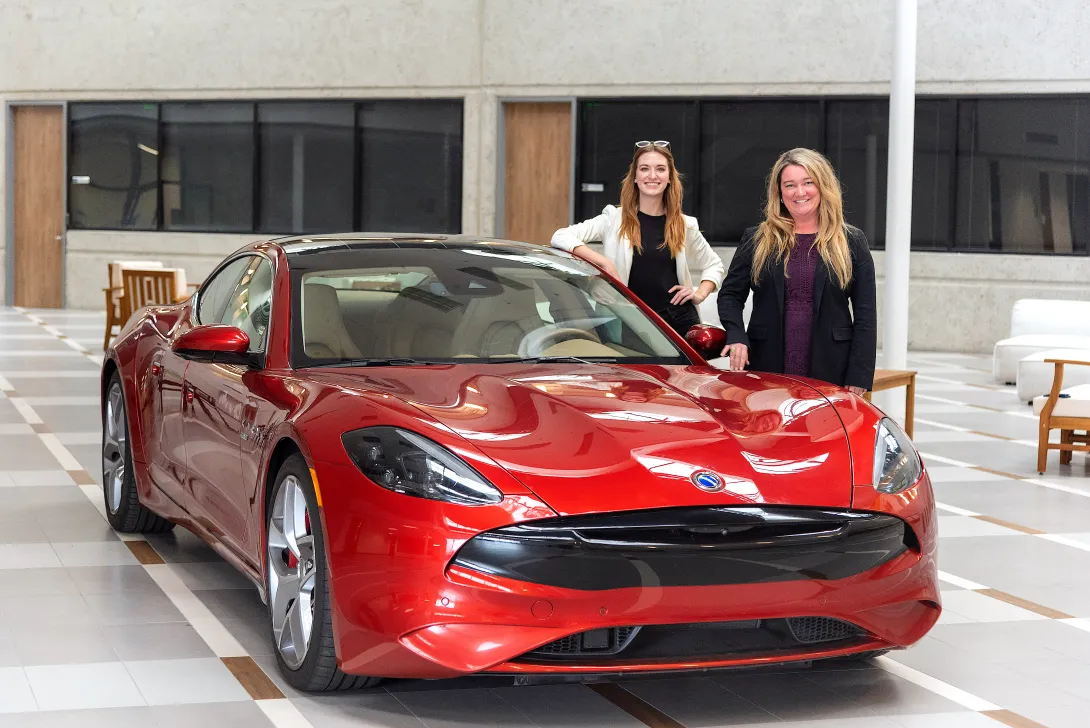
Jenn Voelker and Julia Vorpahl at the Karma Automotive headquarters in Irvine, California. Photo submitted.
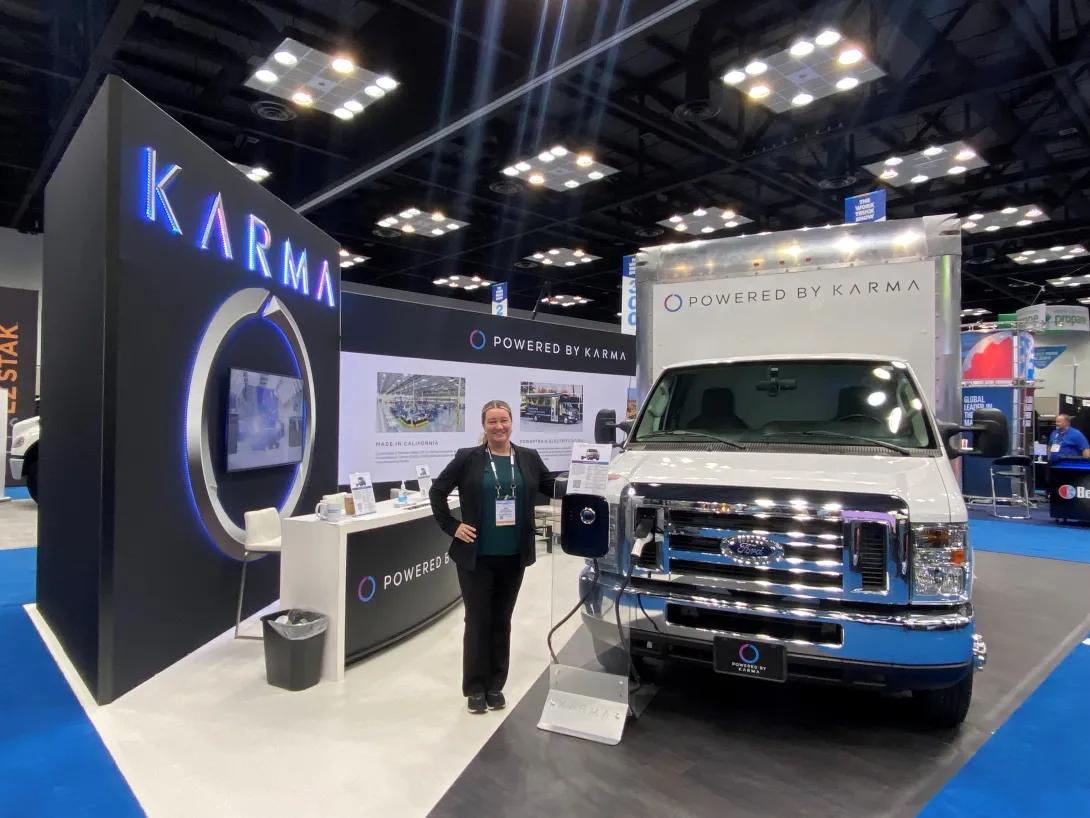
Jenn Voelker showcasing Karma's commercial product line at an auto show.
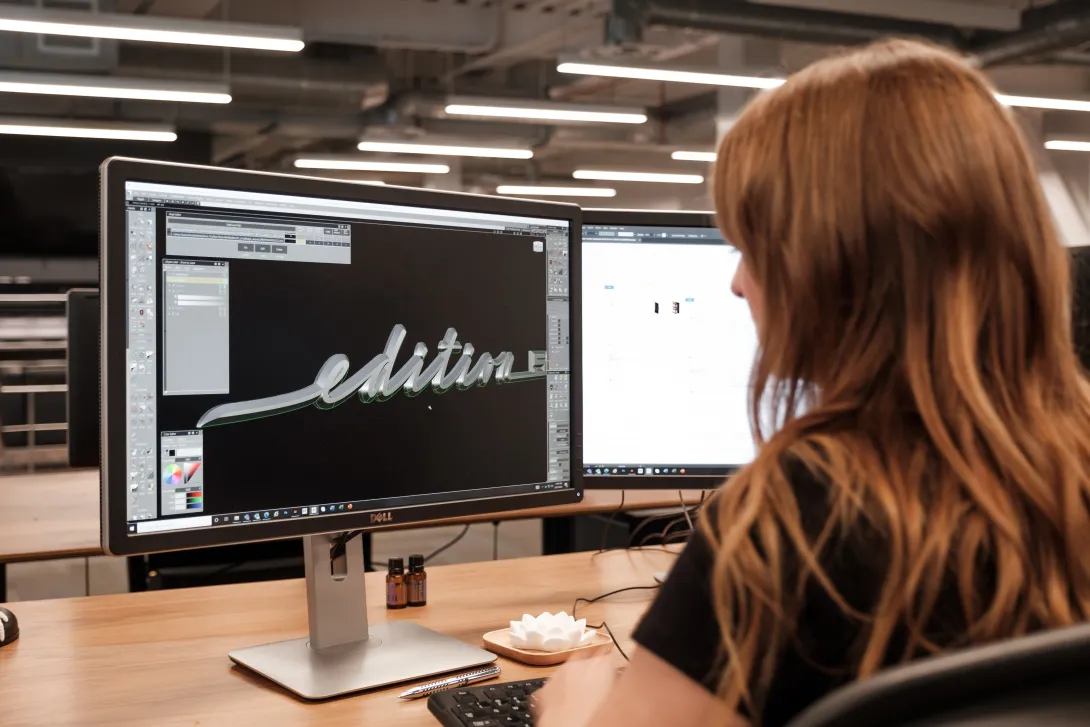
Julia Vorpahl working on a project in the Karma design studio.
Women make up just 24% of the automotive industry, but Georgia Tech graduates Jenn Voelker and Julia Vorpahl haven't let statistics stop them from paving their own way in a male-dominated field.
Both Voelker and Vorpahl work for Karma Automotive, a luxury electric vehicle manufacturer based in California. Beginning with their time at Tech, they've never let gender bias stop them from pursuing their passion.
"It's math," Vorpahl, a visualization and digital design modeler at Karma, said. "You either get the question right, or you get the question wrong. I think that attitude really helps when you get into a professional environment. It teaches you to have tougher skin where if you are the best for that job, you will get the job. That's what Georgia Tech instilled."
Vorpahl grew up in the industry watching her family operate what is now the oldest independently owned Mercedes-Benz dealer in metro Atlanta after her grandfather, an engine designer for the German automaker, came to America and opened the shop in 1967. She arrived at Georgia Tech unsure if she'd follow in her family's footsteps, but ultimately, she landed an internship at Daimler, the nation's largest commercial vehicle manufacturer.
While other interns came in with a background in automotive design, Vorpahl’s willingness to learn and tireless work ethic landed her a full-time job as the only woman in the company's design studio.
During her three years at Daimler before accepting her position at Karma in 2022, she'd occasionally make the drive from Portland, Oregon, back to Georgia. Along the way, she crossed paths with truckers, who often expressed surprise that Vorpahl was among those behind the scenes designing their rigs. She often heard questions like “Why do you work there?” or “How did you end up there?”
And her response was simple. "Women like cars, too.”
That rang true through Voelker's childhood as well. When the senior director of program management for Karma arrived in Atlanta for her first year at Georgia Tech, she knew she'd found a place that could help her turn an aptitude for math and science, and a fervor for cars, into a career.
"Best move I ever made," Voelker said on her decision to enroll at Tech, although it wasn't just the Institute's stellar reputation that lured her from her home state of New Hampshire. "I visited campus in February. There was 6 feet of snow on the ground and then I came to Atlanta, and the flowers were blooming."
After changing her major from mechanical engineering to industrial design, Voelker got her foot in the door through an internship with Masterack, a commercial cargo vehicle equipment manufacturer based in Atlanta. She attended Tech at a time when women made up around 27% of the undergraduate population, so when she entered the workforce, she wasn't fazed. "It never bothered me. I have always felt like I fit right in, especially when it's the right school, the right class, or the right company where everybody appreciates learning from each other and working together towards a common goal," she said.
In fact, her experience on North Avenue taught her to always keep learning and never give up, a piece of advice she now passes along to other women entering the industry.
"Don’t be afraid to give your opinion in meetings, speak up and use all of the knowledge that you've learned over the years toward whatever project you're working on," said Voelker, who worked her way up the ladder at Masterack for 18 years before seeking a new challenge at Karma. “That's one thing that I haven't backed down on. If I have a strong opinion about something, I have no fear of saying it.”
Vorpahl and Voelker each commended Karma for their dedication to promoting hard-working women and a culture that fosters diversity — a principle that Vorpahl especially values after completing two study abroad programs at the University of Singapore and the University of Strathclyde.
“One of the biggest advantages was seeing how people from different countries approach design and how different schools approach design. You don’t want a bunch of people who all think exactly the same way. Otherwise, we’d all be driving around in the exact same vehicle,” she said.
Leading Karma’s commercial vehicle product line, Voelker noted that she has continued to see more women in leadership positions and at industry conferences, and she hopes that momentum carries over to the next generation. Highlighting the importance of igniting both young girls’ and boys' interest in STEM, Voelker recently spoke to a local second grade class to share her experiences.
"I've been really fortunate to have had some great mentors over my career, so I love to pay it forward to the younger generation," she said. "They were so excited, and I hope that stays with them and excites them to learn more about engineering."
In addition to providing an example to young women of how to succeed in a competitive industry, Vorpahl also hopes to share the technical aspects of what she's learned in the field with her alma mater and offer future graduates a roadmap to a career in automotive design.
"The students would thrive in this industry because it is so nitpicky, and Tech minds would just love it," she said. "There's not really a direct path from the Georgia Tech studios into car studios, so I'm hoping that I can show them that path."
Voelker and Vorpahl are bonded by their employer and their alma mater, but it’s their shared passion for seeing their hard work hit the pavement that continues to drive them.
Mar. 21, 2023
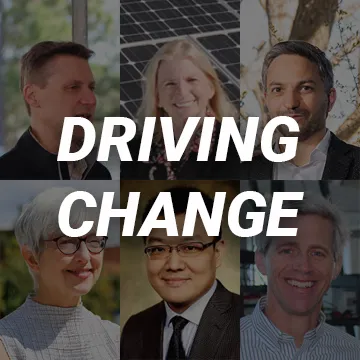
Idling at a crossroads no longer, the automotive industry is embracing electrification like never before. With more electric vehicles purchased in 2022 than any year prior, consumers are beginning to follow their lead. Yet, while opportunity abounds, new challenges will require an innovative approach to ensure a sustainable and accessible electric future for all.
With historic investments from major players in the EV space, including Rivian, Kia, and Hyundai, the state of Georgia is uniquely positioned to serve as a leader in this effort. As the state's leading research institute, Georgia Tech is on the cutting edge of the movement.
The transportation sector is the largest greenhouse gas emitter in the U.S. at nearly 30%, with passenger vehicles accounting for around 80% of the sector's total output1 as of 2019. Electric vehicles are widely regarded as a budding solution to reduce emissions, but even as both demand and production continue to increase, EVs currently account for around 1% of the cars on America's roadways.
From the supply chain to the infrastructure needed to support alternative-fuel vehicles alongside consumer hesitancy, achieving the goals set by both the public and private sectors — including the Biden Administration's target of EVs making up at least 50% of new car sales by 2030 — will not be easy. Through research and development, policy, and collaboration, Tech experts are working toward finding solutions that will serve as catalysts during this transitionary period for the environment and the way Americans drive.
News Contact
Steven Gagliano - Communications Officer
Institute Communications
Mar. 03, 2023
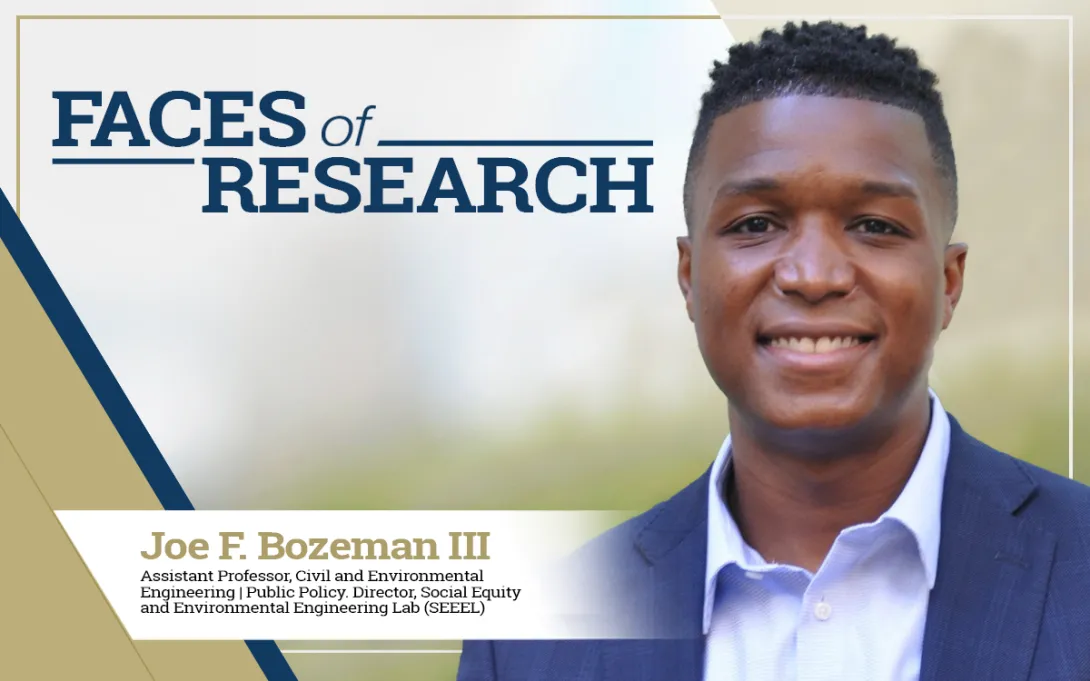
Through its interdisciplinary research, service-based learning, and innovative coursework, Georgia Tech’s School of Civil and Environmental Engineering is a leader in systems-level thinking and technological innovation at the interface of built, natural, information, and social systems. The school aims to not only define the challenges and complex problems facing humanity and the environment, but to catalyze the solutions to solve them.
This installment of the Faces of Research Q&A series is with Joe F. Bozeman III, assistant professor in the School of Civil and Environmental Engineering, the School of Public Policy, and director of the Social Equity and Environmental Engineering Lab (SEEEL).
What is your field of expertise and why did you choose it?
I research and develop equitable climate change adaptation and mitigation strategies anchored in environmental engineering practice. My current focus areas are urbanization, food-energy-water, and circularity (e.g., circular materials and the circular economy). I chose this path because I felt that I could merge my lived experiences, having come from humble beginnings, with the technical aspects of engineering and public policy to realize more equitable infrastructure and policy outcomes.
What makes Georgia Tech research institutes unique?
Georgia Tech’s research institutes have an existing system which allows for collaboration across scientific disciplines and with real community members. This is something that I think is uniquely beneficial for folks like me. That is, for my research to have real-world impact, I need access to faculty and community collaborators who share an equity-centered mindset.
What impact is your research having on the world?
It has been wonderful to see my research enter broader community and academic spaces through mainstream media, scientific publications, regulatory deliberation, and even art. For instance, my work on U.S. food-consumption impacts — for example, greenhouse gas emissions, land, and water impact that come from what we eat — across sociodemographic subgroups (Black, Latinx, white, and socioeconomic status) was featured in a range of media outlets including NPR, the New York Post, Popular Science, Free Speech TV, and political radio programs. Other aspects of my research have established international research priorities for cities, or urban systems, and even inform some of the music you may have heard on network TV and streaming services. My lab, the Social Equity and Environmental Engineering Lab (SEEEL), is exploring other ways to merge equity, engineering, and art in meaningful ways.
What is the most challenging aspect of your research?
For SEEEL activities, acquiring and fairly distributing money, and time resources is the most challenging part. The concept of integrating systemic equity into existing engineering practices is new. This is exciting in many ways. However, it also presents challenges when it comes to developing standards around flexible funding access, community-based research and development, and establishing criteria to evaluate how well systemic equity is being achieved in various domains (e.g., within research labs, within governmental bodies, and for actual community members). Through these types of efforts, I hope to play a role in regaining some of the public’s trust in academia.
If you weren't a researcher, what would you be?
If I weren’t a researcher, I probably would have continued as a music sound engineer, producer, and performer. As I previously mentioned, I hope to leverage my experience in the arts to help translate some of the technical engineering findings into content that all of us can easily digest (e.g., songs, video, film, and physical art). I’d even go as far as to say that I think there is room to make the technical engineering findings, in their original form, more accessible to the broader public. This has compelled SEEEL to master the art of effective writing and presentation delivery.
What was the first thing you remember wanting to be when you were a kid?
As a kid, I first wanted to be a NBA player. Ironically, I listed becoming an engineer as a very close second. Back then, I believe I thought of engineering as a means to video game and sound design.
News Contact
Péralte C. Paul
404.316.1210
peralte.paul@comm.gatech.edu
Feb. 16, 2023
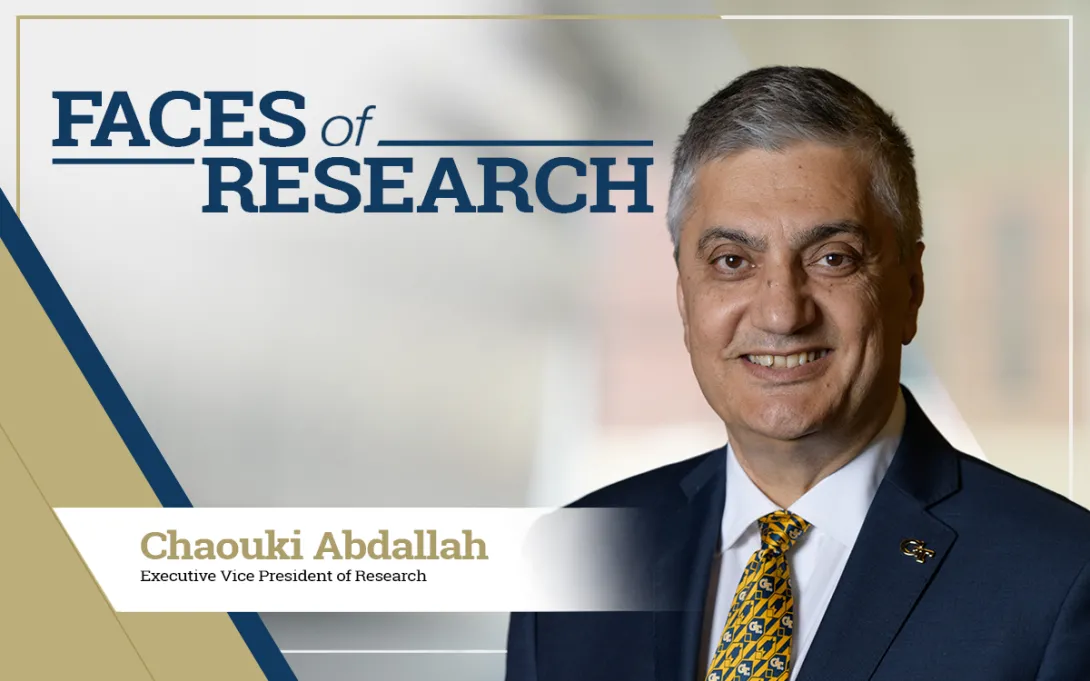
The $1.1 billion Research enterprise at Georgia Tech is the embodiment of a commitment the advancement of technology and betterment of the human condition. Georgia Tech's Research enterprise through offerings such as the Enterprise Innovation Institute, the Georgia Tech Research Institute, Commercialization, and Interdisciplinary Research Institutes, to solve the most pressing challenges in a host of sectors, including computing, engineering, design, the sciences, liberal arts, and business.
This installment of the Faces of Research Q&A series is with Chaouki T. Abdallah, Executive Vice President for Research at Georgia Tech.
What is your field of expertise and why did you choose it?
My field of expertise is Systems Theory, and my degrees are all in Electrical Engineering. I chose it because it was heavily mathematical but can also be applied across multiple fields (aerospace, chemical, mechanical, electrical, biology, etc.).
What makes Georgia Tech research institutes unique?
Our IRIs (Interdisciplinary Research Institutes) connect research across colleges but what makes them even more impactful is their intra-connectivity. Problems that are even too big for one IRI, are being solved by researchers across multiple ones.
What impact is your research having on the world?
My own research impact has been mostly through my students. However, I did use my research in systems and network science to study and improve the complexity of college curricula, leading to 150% improvement in the four-year graduation rate and tens of millions of dollars in savings for students.
What is the most profound advice you ever received?
Pick the hill you’re willing to die on.
What is something you wished you knew as a budding researcher that everyone considering research as a career should know?
The joy of knowing something is eclipsed by the joy of explaining it to others.
What song or album best describes you?
"With a Little Help From My Friends" by The Beatles.
News Contact
Péralte C. Paul
404.316.1210
peralte.paul@comm.gatech.edu
Jan. 23, 2023
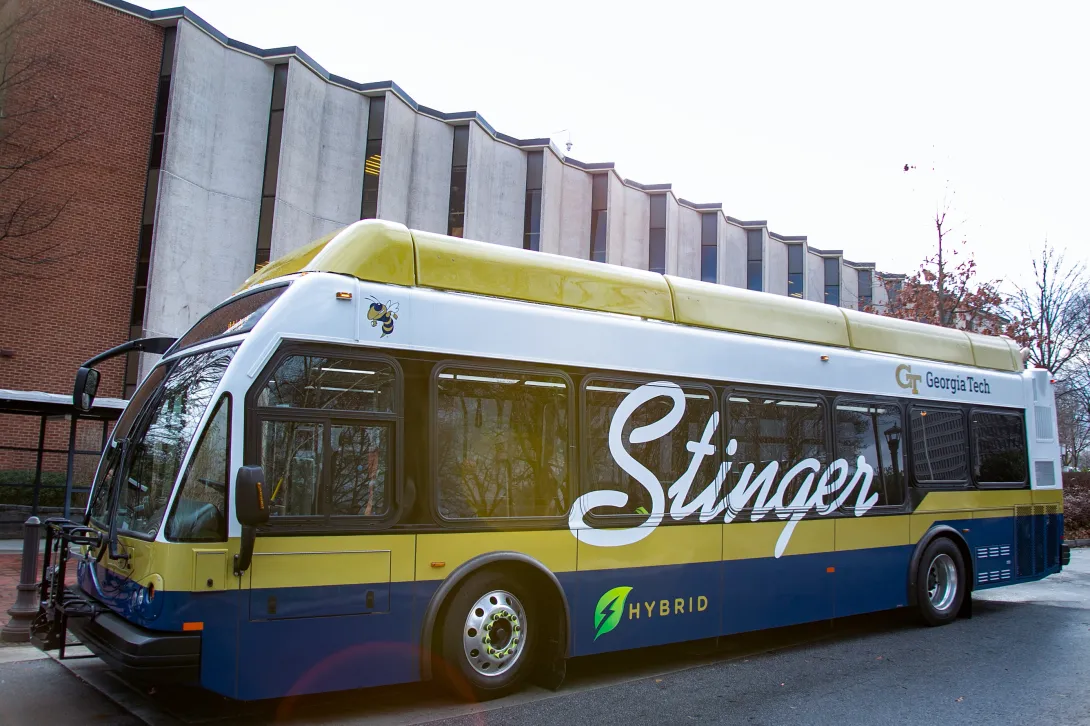
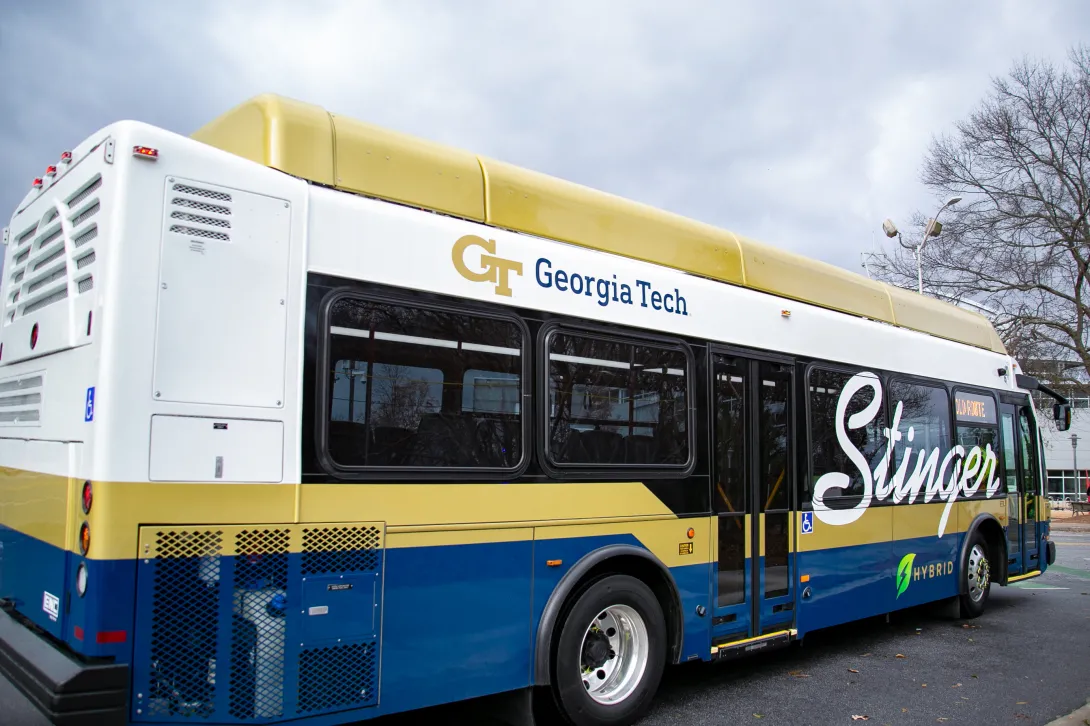
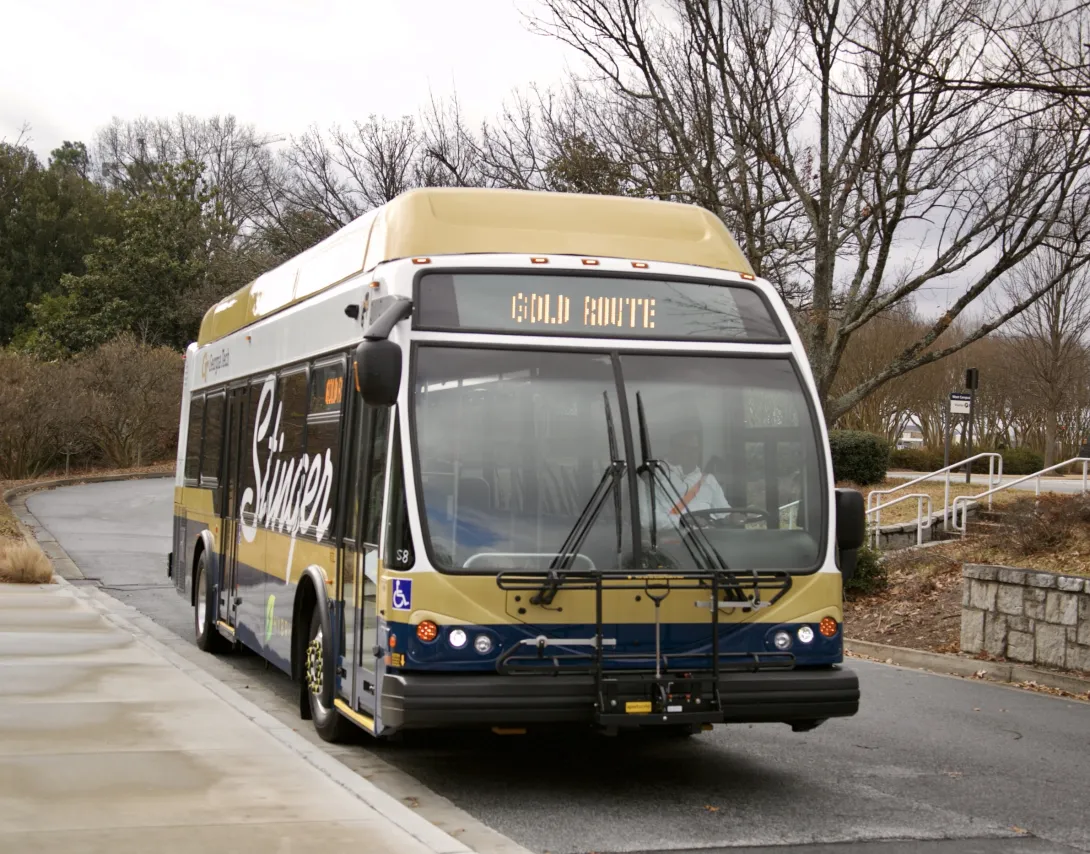
The Division of Student Engagement and Well-Being is excited to welcome a new hybrid Stinger bus to campus. The EZ Rider II was unveiled this week and added to the Gold Route as Georgia Tech Parking and Transportation Services (PTS) takes another step toward decreasing its carbon footprint by reducing greenhouse gas emissions.
According to senior director of PTS, Sherry Davidson, “Our transportation team took a hard look at how we could build the future that we all wanted to see. The result was changing the way in which we operate. Moving to hybrid improves sustainability while maintaining fiscal responsibility.”
PTS is continually looking for ways to reduce its environmental impact, and this new bus is a significant step in that direction. One of the key advantages is its zero-emission electric mode, which allows the bus to operate fully electric for about 20% of the route. This not only helps to improve air quality but also reduces noise pollution.
“Hybrid” means that this new bus can switch between electric and gasoline power as needed, reducing emissions and increasing fuel efficiency. It also features advanced technologies such as regenerative braking, which captures energy normally lost during braking and uses it to recharge the bus's batteries. This not only improves fuel economy but also extends the life of the bus's braking system.
This new bus will also allow PTS to improve the customer experience and the efficiency of the overall transportation system. It also features automated passenger counters, automated stop announcements, and bike racks, and its low floor ramp will improve accessibility and ease of boarding for passengers.
This new addition to the Gold Route is the first of nine hybrid buses to come to the Georgia Tech campus. The remaining fleet will arrive in April.
Jan. 20, 2023
Inclusivity and understanding past policies and their effects on underserved and marginalized communities must be part of urban planning, design, and public policy efforts for cities.
An international coalition of researchers — led by Georgia Tech — have determined that advancements and innovations in urban research and design must incorporate serious analysis and collaborations with scientists, public policy experts, local leaders, and citizens. To address environmental issues and infrastructure challenges cities face, the coalition identified three core focus areas with research priorities for long-term urban sustainability and viability. Those focus areas should be components of any urban planning, design, and sustainability initiative.
The researchers found that the core focus areas included social justice and equity, circularity, and a concept called “digital twins.” The team — which consists of 13 co-authors and scholars based in the U.S., Asia, and Europe — also provided guidance and future research directions for how to address these focus areas. They detailed their findings in the Journal of Industrial Ecology, published in January 2023.
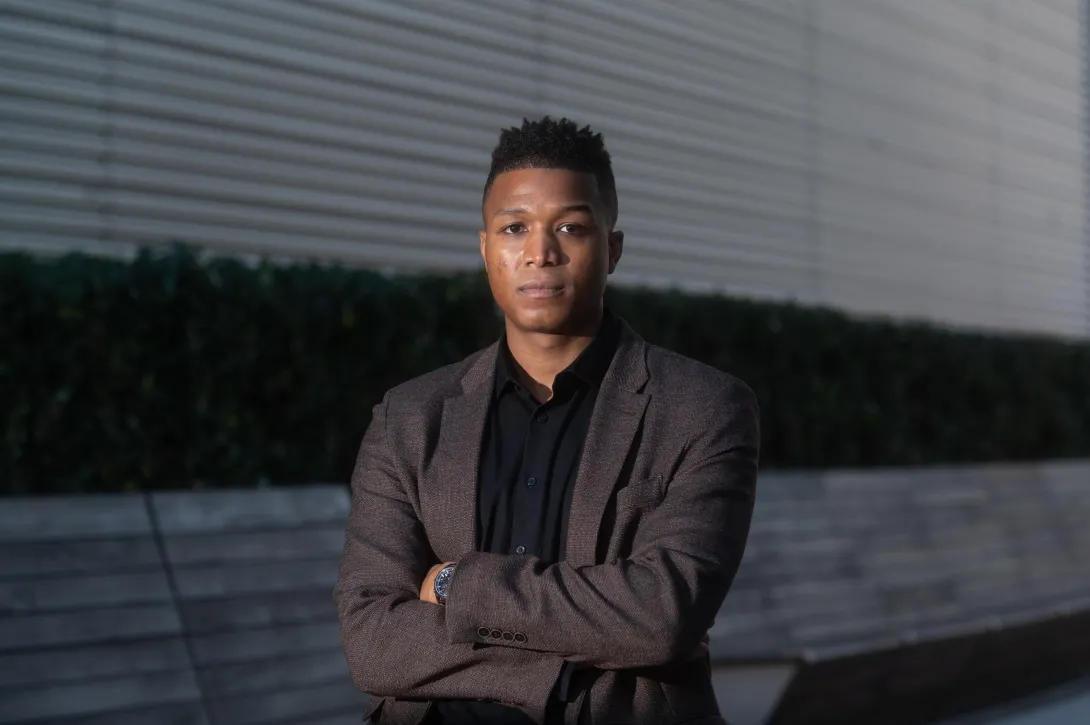
“Climate change has certainly increased the amount and intensity of extreme weather events and because of that, it makes our decision making today critical to the manner in which our economy and our day to day lives can operate,” said Joe F. Bozeman III, the lead author and an assistant professor in Georgia Tech’s School of Civil and Environmental Engineering. He is also the director of Tech’s Social Equity & Environmental Engineering Lab and has a courtesy appointment in the School of Public Policy. “Our quality of life can be negatively affected if we don't make good decisions today.”
Three core areas of focus to achieve urban sustainability
The researchers’ first core focus area, justice and equity, addresses innovations and trends that disproportionately benefit middle and high-income communities. Trends like IoT, “smart cities,” and the urban “green movement” are part of a broader push by cities to become more sustainable and resilient. But communities of color and low-income neighborhoods — the same areas often home to environmental contaminations, infrastructure challenges, and other hazards — have often been overlooked.
The researchers’ findings showed a consistent trend with marginalized communities across several countries, including Canada, the Netherlands, India, and South Africa. They call for mandatory equity analyses which incorporate the experiences and perspectives of these marginalized communities, and, more importantly, ensure members of those communities are actively engaged in decision-making processes.
“Planning, professional, and community stakeholders,” the researchers write in the paper, “should recognize that working together gets cities closer to harmonizing the technological and social dimensions of sustainability.”
The second focus area, circularity, addresses resource consumption of staple commodities including food, water, and energy; the waste and emissions they generate; and the opportunities to increase conservation of those resources by boosting efficiencies.
“What we mean by circularity is basic reuse, remanufacturing, and recycling efforts across the entire urban system — which not only includes cities and under resourced areas within those cities — but also rural communities that supply and take resources from those city hubs,” Bozeman said. The idea is aligned with the circular economy concept which addresses the need to move away from the resource-wasteful and unsustainable cycle of taking, making, and throwing away.
Instead, the researchers argue, cities should look for ways to improve efficiency and maximize local resource use. That has potential benefits not only for urban areas, but rural communities, too. One example, Bozeman said, is the Lifecycle Building Center in Atlanta. It takes old building supplies and sells them locally for reuse.
“By doing that, they’re at the beginning stages of creating an economic system, a regional engine where we share resources between cities and rural areas,” he said. “We can start creating an economic framework, not only where both sides can make money and get what they need, but something that can actually turn into a sustainable economic engine without having to rely on another state or another country's import or export economic pressures.”
To strengthen circularity and make it more robust, the researchers call for more expansive metrics beyond measuring recycling rates and zero waste efforts, to include other parts of the supply chain that may yield new ideas and solutions.
The third focus area, digital twins, addresses the development of automated technologies in smart buildings and infrastructure, such as traffic lights to respond to weather and other environmental factors.
“Let's say there's a heavy rain event and that the rainwater is being stored into retainment,” said Bozeman. “An automated system can open another valve where we can store that water into a secondary support system, so there's less flooding, and that can happen automatically, if we utilize the concept of digital twins.”
Creating a new urban planning model
The research came about as part of the mission of the Sustainable Urban Systems Section of the International Society for Industrial Ecology, which aims to be a conduit for scientists, engineers, policymakers, and others who want to marry environmental concerns and economic activity. Bozeman is a board member of the Sustainable Urban Systems Section.
“In that role, part of we do is set a vision and foundation for how other researchers should operate within the city and urban system space,” he said.
For urban sustainability, engineers and policy makers must come to the table and make collective decisions around social justice and equity, circularity, and the digital twins concepts.
“I think we're at a really critical decision point when it comes to engineers and others being able to do work that is forward looking and human sensitive,” said Bozeman. “Good decision making involves addressing social justice and equity and understanding its root causes, which will enable cities to create solutions that integrate cultural dynamics.”
CITATION: Joe F. Bozeman III, Shauhrat S. Chopra, Philip James, Sajjad Muhammad, Hua Cai, Kangkang Tong, Maya Carrasquillo, Harold Rickenbacker, Destenie Nock, Weslynne Ashton, Oliver Heidrich, Sybil Derrible, Melissa Bilec. “Three research priorities for just and sustainable urban systems: Now is the time to refocus.” (Journal of Industrial Ecology, January 2023)
News Contact
Péralte C. Paul
peralte.paul@comm.gatech.edu
404.316.1210