
Feb. 24, 2025

Four million Americans suffer from glaucoma, an incurable eye disease that slowly degrades peripheral vision and eventually leads to blindness. Researchers at Georgia Tech have discovered a potential way to stop this degradation and possibly save people’s vision before it’s too late.
Raquel Lieberman, a professor in the School of Chemistry and Biochemistry and the Parker H. Petit Institute for Bioengineering and Bioscience, and her lab team have discovered two new antibodies with promise to treat glaucoma. The antibodies can break down the protein myocilin, which, when it malfunctions, can cause glaucoma.
Lieberman’s group recently published this research in the Proceedings of the National Academy of Sciences: Nexus.
Protein Problems
Myocilin is just one of hundreds of thousands of proteins that make up the human body. In the eye, an especially delicate balance of proteins and fluid enables sight. The aqueous humor, a clear fluid, bathes the lens that helps focus light into the retina. In a healthy eye, the fluid drains regularly, but if something prevents the fluid from circulating, it increases pressure.
“Your eyeball is kind of like a basketball,” explained Lieberman. “If you want it to work optimally, it has to be pressurized.”
Lieberman’s team has learned that if myocilin mutates, it clumps up and prevents aqueous humor from draining, increasing eye pressure. If left unmanaged, glaucoma and — eventually — blindness will occur.
Antibody Answer
Lieberman’s lab characterized two new antibodies that each, in their unique way, can destroy myocilin gone rogue. One binds in a way that does not prevent myocilin from clumping; the other prevents the protein from aggregating. Both effectively break down myocilin so it no longer blocks the aqueous humor from flowing.
“These exciting results provide proof of concept that targeted antibodies for mutant myocilin aggregation could be therapeutic,” said Alice Ma, a Ph.D. graduate who worked on the research. “This represents a new paradigm for treating other diseases associated with protein clumping, like Alzheimer’s. These studies hold the potential to save the eyesight of millions of glaucoma patients.”
The findings have been the culmination of nearly two decades of research with Lieberman’s close collaborator, University of Texas at Austin chemical engineering Professor Jennifer Maynard, whose group helped discover the two antibodies that responded to the mutation. Lieberman’s group then worked to understand how the antibodies functioned, determining the two that most successfully broke down the protein.
“This study builds on 10 years of work that explains how myocilin folds to how to break it down,” Lieberman said. “I am at a very fortunate place in my career where this fundamental research coalesces into what we could use clinically.”
Treatment Transformation
Lieberman hopes the antibodies can help treat glaucoma patients, particularly those with early onset glaucoma, often children. She now has a research collaboration with Rebecca Neustein, a physician at Emory University who treats these young patients.
“She doesn't have much hope to give her patients for curing glaucoma,” Lieberman said. “So she was very excited that we could do some genotyping and figure out who these antibodies can help.”
Lieberman’s research offers a clearer future for millions suffering from glaucoma and those at risk of developing the disease. By leveraging antibodies to target and break down malfunctioning myocilin, this discovery not only paves the way for new treatments for glaucoma but also opens doors for addressing other protein-aggregation diseases like Alzheimer’s, Parkinson’s, and even Type 2 diabetes.
Funding: National Institutes of Health
Animation by Raul Perez
News Contact
Tess Malone, Senior Research Writer/Editor
tess.malone@gatech.edu
Feb. 18, 2025
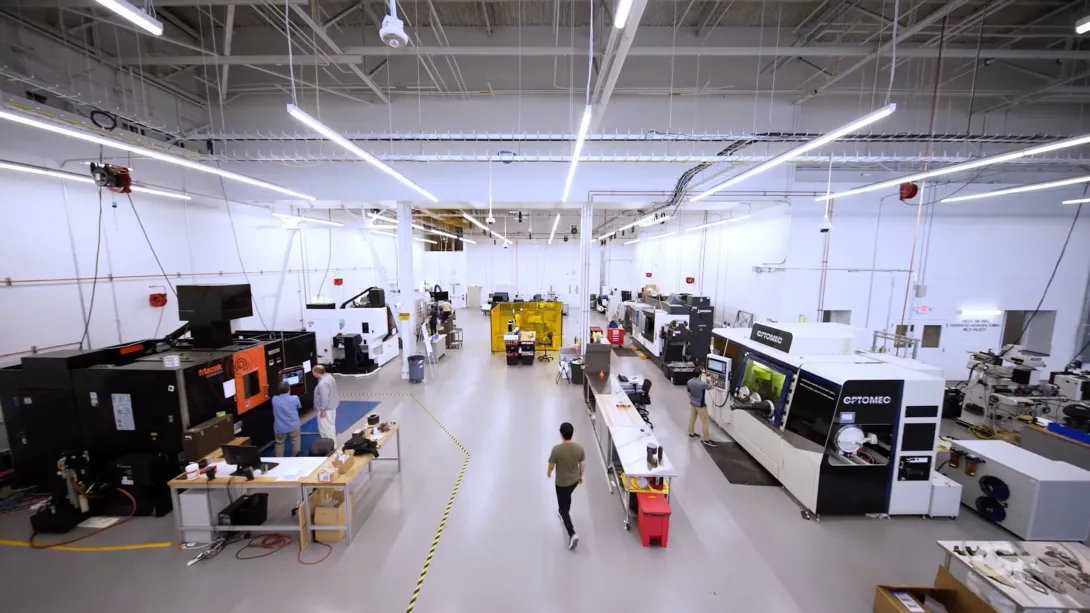
When Air Force veteran Michael Trigger began looking for a new career in 2022, he became fascinated by artificial intelligence (AI). Trigger, who left the military in 1989 and then worked in telecommunications, corrections, and professional trucking, learned about an AI-enhanced robotics manufacturing program at the VECTR Center. This training facility in Warner Robins, Georgia, helps veterans transition into new careers. In 2024, he enrolled and learned how to program and operate robots.
As part of the class, Trigger made several trips to the Georgia Tech Manufacturing Institute (GTMI). When the faculty asked if anyone wanted an internship, Trigger raised his hand.
“Coming to Georgia Tech allowed me to clarify what I wanted to do,” he said. “I’ve always been in service-based jobs, but I was interested in additive manufacturing,” or 3D printing.
For five months every weekday, Trigger drove from his home in Macon to Georgia Tech’s campus for his internship. The paid internship took place at Tech’s Advanced Manufacturing Pilot Facility (AMPF). This 20,000-square-foot, reconfigurable facility serves as the research and development arm of GTMI, functioning as a teaching laboratory, technology test bed, and workforce development space for manufacturing innovations.
During his time there, Trigger focused on computer-aided manufacturing and met with faculty and students to learn about their research. The internship wasn’t convenient, but it was worth it.
“From our campus visits, I understood the mission of AMPF, so the fact they offered me this opportunity was huge for me,” he said. “The internship had a big impact on my life in terms of the technical and soft skills I gained.”
Building the Workforce
Launching new careers is just one of AMPF’s goals in testing new manufacturing and growing the future U.S. workforce. Since 2022, AMPF has improved the manufacturing process at all parts of the talent pipeline — from giving corporate researchers space to test and adopt AI automation technologies to training and upskilling their employees. Collectively, GTMI and AMPF’s efforts have led to a stronger, bigger network of manufacturers that other companies and the U.S. government can rely on.
“We are going to need to manufacture more in the U.S. — from computer chips to cars — so we want to create jobs and fill them,” said Tom Kurfess, GTMI’s executive director. “We need more people working in the manufacturing sector, and we've got to make these jobs better and make people more efficient in them.”
AI is one way to boost efficiency, but artificial intelligence won’t cut humans out of the process entirely. Rather, people will be integral to monitoring the systems and advancing them. As AI becomes more widely adopted, a college degree won’t necessarily be required to work in the AI field.
“Our workforce is going to need the next generation of employees to be amenable to retraining as the technology updates,” said Aaron Stebner, a co-director of the Georgia Artificial Intelligence Manufacturing program (AIM). A statewide program, Georgia AIM helps fund AMPF and sponsored Trigger’s internship. “Education is going to be more of a lifelong learning process, and Georgia Tech can be at the forefront of that.”
While GTMI already integrates AI into many processes, it remains committed to staying ahead of the curve with the latest technologies that could boost manufacturing. The facility is in the process of an expansion that will nearly triple its size and make AMPF the leading facility for demonstrating what a hyperconnected and AI-driven manufacturing enterprise looks like. This will enable GTMI to build and sustain these educational pipelines, which is key to its work.
“We’re developing the workforce for the future, not of the future,” explained Donna Ennis, a co-director of Georgia AIM. “It’s AI today, but it could be something else five years from now. We are focused on creating a highly skilled, resilient workforce.”
Part of Georgia AIM’s role is creating the pipelines that people like Trigger can follow. From bringing a mobile lab to technical colleges to hosting robotics competitions at schools, these efforts span the state of Georgia and touch populations from “K to gray.”
“Kids don’t say they want to be a manufacturer when they grow up, but that’s because they don’t know it’s a viable career path,” Ennis said. “We’re making manufacturing cool again.”
Creating Corporate Connection
To create these job opportunities, GTMI is also partnering with corporations. Companies can join a consortium to access the AMPF research facilities and collaborate with researchers. Any size or type of company can take advantage of AMPF facilities — from corporations including AT&T and Siemens to small startups like Alegna, which licenses and commercializes Navy research.
“The ability to manufacture domestically is critical, not only for national security purposes, but also to keep the U.S. economically competitive,” said Steven Ferguson, a principal research scientist and executive director for the GT Manufacturing 4.0 Consortium. “Having the AMPF puts Georgia Tech within the innovation epicenter for these areas and will help us reshore manufacturing.”
The benefit of such an arrangement is twofold. Companies can work with the newest manufacturing technologies and make their own advances, and Georgia Tech builds a network of manufacturers across the state and world that students can work with. For example, AT&T uses the AMPF to test sensors for expanding personal 5G networks, and George W. Woodruff School of Mechanical Engineering Professor Carolyn Seepersad has Ph.D. students funded by a Siemens partnership through AMPF.
Trigger was able to connect and collaborate with some of these corporations and researchers during his internship. “I told them about my interest in machine learning because I wanted to see how they were integrating machine learning into their research projects,” he said. “All of them invited me to come by to observe and be part of the research.”
Starting a New Path
Because of his research collaborations during his AMPF internship, Trigger now has a new focus. “The internship clarified for me that AI is where everybody is going,” he explained. He wants to be at the forefront of AI manufacturing and hopes to pursue a certificate in machine learning next.
While he knows he still has much to learn, AMPF gave Trigger a foot in the door and confidence about the future. He — and other veterans like him — will help build the workforce that propels America forward in manufacturing.
News Contact
Tess Malone, Senior Research Writer/Editor
tess.malone@gatech.edu
Jan. 28, 2025

As you move your computer mouse around the screen or scroll on your phone to read these words, you’re using technology Russell Dupuis helped enable. Same for when you turn on an LED light bulb or scan groceries at the self-checkout.
The underlying technologies for those common devices are compound semiconductors manufactured using techniques Dupuis first demonstrated nearly 50 years ago. His work made it possible to mass produce and commercialize these semiconductors for LEDs, lasers, solar cells, and more.
Now his contributions have been recognized with the Japan Prize, one of a few internationally recognized awards regarded by much of the scientific community as second only to the Nobel Prize.
“Professor Russell Dupuis’ breakthrough led to the commercialization of compound semiconductor production. It has become the foundation upon which our modern information society is built,” the Japan Prize Foundation wrote in announcing Dupuis’ selection.
News Contact
Joshua Stewart
College of Engineering
Jan. 16, 2025

Two Georgia Tech professors have earned the Presidential Early Career Award for Scientists and Engineers, the highest honor bestowed by the U.S. government on early-career engineers and scientists.
Juan-Pablo Correa-Baena, associate professor and Goizueta Early Career Faculty Chair in the School of Materials Science and Engineering, and Josiah Hester, associate professor in the School of Interactive Computing, are among this year’s nearly 400 honorees.
Correa-Baena is recognized for his solar cell and semiconductor research with the U.S. Department of Energy. His research group focuses on understanding the relationship between chemistry, crystallographic structure, and properties of new, low-cost semiconducting materials used for optical and electronic applications. His team also works on advanced techniques for characterizing these very small materials and their interactions.
“I wanted to research something that would benefit society while also using chemistry, physics, and involved materials discovery to inform that. That is why I work on solar cells — because this area of research is so important,” said Correa-Baena.
Correa-Baena leads a solar energy materials research initiative for Georgia Tech’s Institute for Matter and Systems and the Strategic Energy Institute. He also has a secondary appointment in the School of Chemistry and Biochemistry.
“My career goal has always been to execute high-quality research,” he said. “Receiving this award is a testament to the work our lab is doing, my student and faculty collaborators at Georgia Tech, and simply being in the right place at the right time.”
Read more about Correa-Baena’s work.
Hester said his nomination was based on the National Science Foundation Faculty Early Career Development Program award he received in 2022 as an assistant professor at Northwestern University.
“For me, I always thought this was an unachievable, unassailable type of thing because of the reputation of the folks in computing who’ve won previously,” Hester said. “It was always a far-reaching goal. I was shocked. It’s something you would never in a million years think you would win.”
Hester is known for pioneering research in a new subfield of sustainable computing dedicated to creating battery-free devices powered by solar energy, kinetic energy, and radio waves. He co-led a team that developed the first battery-free handheld gaming device.
Last year, he co-authored an article published in the Association of Computing Machinery’s in-house journal, the Communications of the ACM, in which he coined the term “Internet of Batteryless Things.”
The Presidential Early Career Award for Scientists and Engineers was established by President Bill Clinton in 1996. It honors individuals for their contributions to science and technology and promotes awareness of STEM careers. The award also supports the missions of participating agencies and strengthens the link between research and societal impact. This year’s winners will be invited to visit the White House later this year.
Jan. 07, 2025
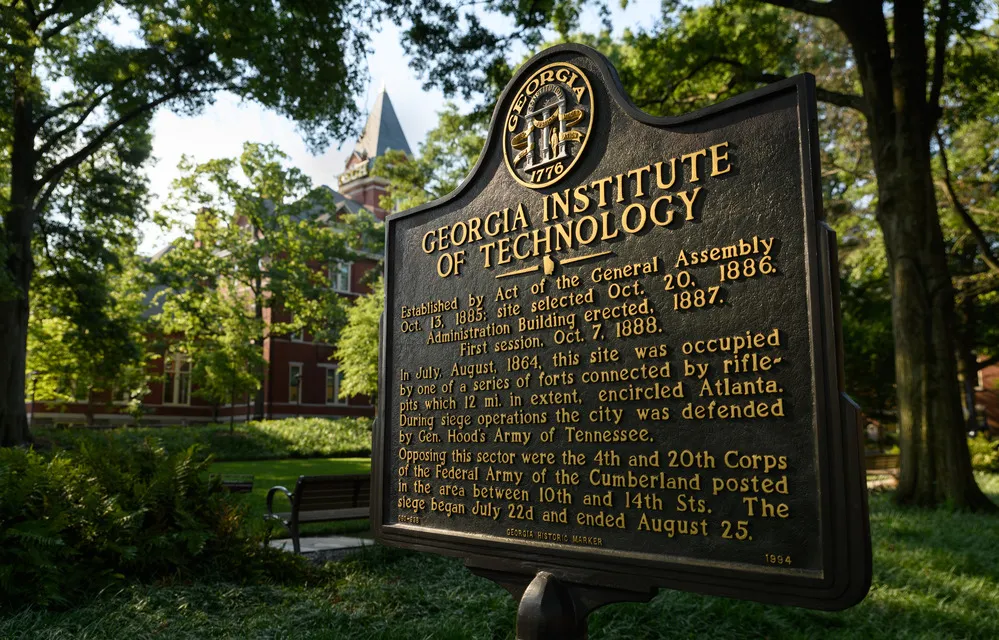
Georgia Tech’s Executive Vice President for Research search committee has selected three finalists. Each candidate will visit campus and present a seminar sharing their broad vision for the Institute's research enterprise.
The seminars are open to all faculty, students, and staff across the campus community. Interested individuals can attend in person or register to participate via Zoom (pre-registration is required).
All seminars will take place at 11 a.m. on the following dates:
- Candidate 1: Monday, January 13, Scholars Event Theater, Price Gilbert 1280 (register for webinar)
- Candidate 2: Tuesday, January 21, Bill Moore Student Success Center, Press Rooms A&B (register for webinar)
- Candidate 3: Monday, January 27, Scholars Event Theater, Price Gilbert 1280 (register for webinar)
Each candidate’s bio and curriculum vitae, along with further details, will be accessible through the EVPR search site 48 hours prior to each visit. Georgia Tech credentials are required to access all materials. Information is being made available in this manner to protect the confidentiality of the finalists. Following each candidate’s visit, is the campus community is invited to share their comments via a survey that will be posted on the candidate’s webpage
The search committee is chaired by Susan Lozier, dean of the College of Sciences. Search committee members include a mix of faculty and staff representing colleges and units across campus. Georgia Tech has retained the services of the executive search firm WittKieffer for the search.
News Contact
Shelley Wunder-Smith | shelley.wunder-smith@research.gatech.edu
Director of Research Communications
Dec. 19, 2024
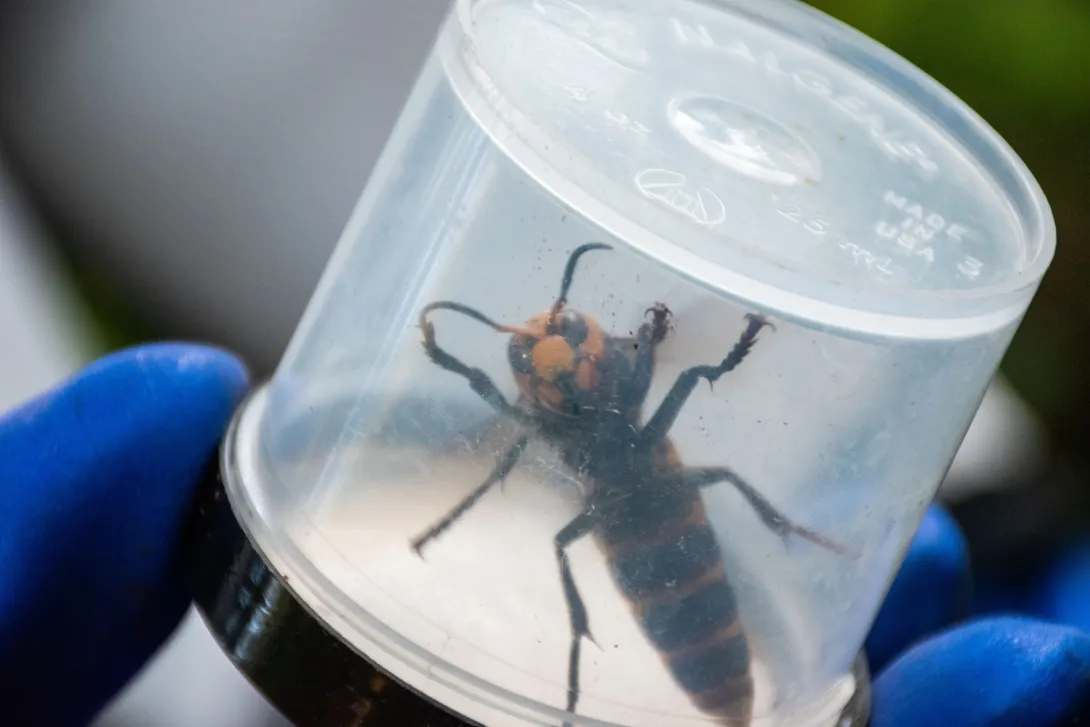
Five years after the headline-grabbing “murder hornet” (Vespa mandarinia, renamed the northern giant hornet in 2022) was first spotted in Washington state, the U.S. has declared the invasive species eradicated.
The Washington State Department of Agriculture and the U.S. Department of Agriculture made the announcement Wednesday. It follows three years without a confirmed detection of the hornet. Four nests were destroyed in 2020 and 2021.
While the number of nests was low, Professor Mike Goodisman, whose lab studies social insects and invasive species, explains that had the number grown, eradication would have been increasingly unlikely due to the potential exponential growth of the population.
"Each nest is started by a new queen. One new queen can start a new nest, but the colony she produces can produce 100 new nests. Because of how they reproduce, it could grow from 100 to 10,000 the year after that, and then from 10,000 to one million."
Goodisman says that social insects are more difficult to eradicate. However, traps and tracking methods allowed officials to contain the population in the Pacific Northwest. While the murder hornet is not the only invasive hornet species in North America, its threat to the already-declining honeybee population spurred action. Murder hornets can clear out a honeybee hive in 90 minutes, and Goodisman says the brutality of these attacks earned the northern giant hornet their nickname and is instantly recognizable.
"When murder hornets attack a honeybee colony, you'll find hundreds to thousands of decapitated honeybees," he said, adding that although murder hornets eat a variety of insects, they "have a taste for honeybees."
In the murder hornet's native Asia, the honeybee population has developed a defense mechanism to swarm and surround the attacking hornet, but North American honeybees are defenseless. This elevates the threat of a possible invasion, with the potential for a widespread impact on our food supply.
"A threat to the honeybee population would be a commercial disaster," Goodisman said. "Honeybees are critical in agriculture for pollinating a great variety of the foods we eat, and if we don't have these pollinators, then we wouldn't have many of the foods — fruits especially — that we are used to."
The eradication of the hornet is a significant achievement, but Goodisman says it's not a foregone conclusion that they will not reemerge. Because social insects, like murder hornets, can hibernate in various materials, cargo ships and other commercial transportation can unknowingly bring invasive species worldwide. He explains that officials will continue to set traps and employ additional tracking methods to ensure the population remains eradicated in the U.S.
If murder hornets come back, humans are not at immediate risk. Like the bald-faced hornet and the true hornet, which live in Georgia, murder hornets typically leave humans alone unless provoked, Goodisman says, but their larger-than-normal stingers cause more pain and are more harmful to small animals.
News Contact
Steven Gagliano - Institute Communications
Dec. 13, 2024
The National Science Foundation has released the results of its annual Higher Education Research and Development Survey (HERD), and Georgia Tech has once again moved up again in the rankings.
The survey of U.S. university research and development expenditures places Georgia Tech as No. 16, up from No. 17 last year, and No. 1 among universities without a medical school. The Institute ranks No. 3 for federally funded research, up from No. 5, and is No. 7 for all externally funded research, up from No. 9.
“Georgia Tech's continued ascension in research rankings is a testament to the exceptional dedication and collaboration of our faculty, staff, and research sponsors,” said Tim Lieuwen, interim executive vice president for Research. “This trajectory, particularly our rise in federally and externally funded research, amplifies the confidence our partners have in Georgia Tech tackle society’s biggest challenges.”
The annual survey compiles R&D expenditure data from U.S. colleges and universities with more than $150,000 in research expenditures during a fiscal year. For fiscal year 2023 (July 1, 2022 – June 30, 2023), that included 914 institutions. Overall, U.S. higher-education R&D spending rose by 11.2%, exceeding $108 billion in fiscal year 2023. This is the largest increase since 2003.
Georgia Tech’s R&D spending of $1.45 billion in fiscal year 2023 reflects an impressive 17.9% increase — $219 million more — from the previous year for the entire research enterprise, which includes the Georgia Tech Research Institute (GTRI). GTRI remains the largest contributor to Georgia Tech’s growth and continues to play a major role in the Institute’s research enterprise and in national defense research.
Additionally, Georgia Tech’s R&D expenditures contributed a monumental $1.45 billion to the state of Georgia’s economy, along with continued growth in commercialization efforts that bring technologies out of the lab and into to the world.
Lieuwen said, “I am proud of these standings and even more excited about the possibilities ahead as we continue to drive innovation that benefits our state, the nation, and the world.”
About Georgia Tech’s Office of the Executive Vice President for Research
The Office of the Executive Vice President for Research (EVPR) directs Georgia Tech’s $1.37 billion (FY 2024) portfolio of research, development, and sponsored activities. This includes leadership of the Georgia Tech Research Institute (GTRI), the Enterprise Innovation Institute, nine interdisciplinary research institutes (IRIs) plus research centers, and related research administrative support units: commercialization, corporate engagement, research development and operations, and research administration. Georgia Tech routinely ranks among the top U.S. universities in volume of research conducted.
News Contact
Shelley Wunder-Smith | shelley.wunder-smith@research.gatech.edu
Director of Research Communications
Nov. 07, 2024

Members of Georgia AIM’s governance team stand for a photo with Cassia Baker, a cybersecurity expert with the Georgia Manufacturing Extension Partnership (left), and David Bridges, executive vice president of Georgia Tech’s Enterprise Innovation Institute (second from right), which oversees the projects.
Georgia AIM (Artificial Intelligence in Manufacturing) was recently awarded the 'Tech for Good' award from the Technology Association of Georgia (TAG), the state’s largest tech organization.
The accolade was presented at the annual TAG Technology Awards ceremony on Nov. 6 at Atlanta’s Fox Theatre. The TAG Technology Awards promote inclusive technology throughout Georgia, and any state company, organization, or leader is eligible to apply.
Tech for Good, one of TAG’s five award categories, honors a program or project that uses technology to promote inclusiveness and equity by serving Georgia communities and individuals who are underrepresented in the tech space.
Georgia AIM is comprised of 16 projects across the state that connect smart technology to manufacturing through K-12 education, workforce development, and manufacturer outreach. The federally funded program is a collaborative project administered through Georgia Tech’s Enterprise Innovation Institute and the Georgia Tech Manufacturing Institute.
TAG is a Georgia AIM partner and provides workforce development programs that train people and assist them in making successful transitions into tech careers.
Donna Ennis, Georgia AIM’s co-director, accepted the award on behalf of the organization.
“Georgia AIM’s mission is to equitably develop and deploy talent and innovation for AI in manufacturing, and the Tech for Good Award reinforces our focus on revolutionizing the manufacturing economy for Georgia and the entire country,” Ennis said in her acceptance speech.
She cited the organization’s many coalition members across the state: the Technical College System of Georgia; Spelman College; the Georgia AIM Mobile Studio team at the Russell Innovation Center for Entrepreneurs and the University of Georgia; the Southwest Georgia Regional Commission; the Georgia Cyber Innovation & Training Center; and TAG and Georgia AIM’s partners in the Middle Georgia Innovation corridor, including 21st Century Partnership and the Houston Development Authority.
Ennis also acknowledged the U.S. Economic Development Administration for funding the project and helping to bring it to fruition. “But most of all,” she said, “I want to thank our manufacturers and communities across Georgia who are at the forefront of creating a new economy through AI in manufacturing. It is a privilege to assist you on this journey of technology and discovery.”
News Contact
Oct. 30, 2024

From left, Georgia Tech's Nakia Melecio, Keith McGreggor, and Raghupathy "Siva" Sivakumar, are the NSF I-Corps Southeast Hub director, faculty lead, and principal investigator, respectively.
The National Science Foundation (NSF) awarded a syndicate of eight Southeast universities — with Georgia Tech as the lead — a $15 million grant to support the development of a regional innovation ecosystem that addresses underrepresentation and increases entrepreneurship and technology-oriented workforce development.
The NSF Innovation Corps (I-Corps) Southeast Hub is a five-year project based on the I-Corps model, which assists academics in moving their research from the lab to the market.
Led by Georgia Tech’s Office of Commercialization and Enterprise Innovation Institute, the NSF I-Corps Southeast Hub encompasses four states — Georgia, Florida, South Carolina, and Alabama.
Its member schools include:
- Clemson University
- Morehouse College
- University of Alabama
- University of Central Florida
- University of Florida
- University of Miami
- University of South Florida
In January 2025, when the NSF I-Corps Southeast Hub officially launches, the consortium of schools will expand to include the University of Puerto Rico. Additionally, through Morehouse College’s activation, Spelman College and the Morehouse School of Medicine will also participate in supporting the project.
With a combined economic output of more than $3.2 trillion, the NSF I-Corps Southeast Hub region represents more than 11% of the entire U.S. economy. As a region, those states and Puerto Rico have a larger economic output than France, Italy, or Canada.
“This is a great opportunity for us to engage in regional collaboration to drive innovation across the Southeast to strengthen our regional economy and that of Puerto Rico,” said the Enterprise Innovation Institute’s Nakia Melecio, director of the NSF I-Corps Southeast Hub. As director, Melecio will oversee strategic management, data collection, and overall operations.
Additionally, Melecio serves as a national faculty instructor for the NSF I-Corps program.
“This also allows us to collectively tackle some of the common challenges all four of our states face, especially when it comes to being intentionally inclusive in reaching out to communities that historically haven’t always been invited to participate,” he said.
That means bringing solutions to market that not only solve problems but are intentional about including researchers from Black and Hispanic-serving institutions, Melecio said.
Keith McGreggor, director of Georgia Tech’s VentureLab, is the faculty lead charged with designing the curriculum and instruction for the NSF I-Corps Southeast Hub’s partners.
McGreggor has extensive I-Corps experience. In 2012, Georgia Tech was among the first institutions in the country selected to teach the I-Corps curriculum, which aims to further research commercialization. McGreggor served as the lead instructor for I-Corps-related efforts and led training efforts across the Southeast, as well as for teams in Puerto Rico, Mexico, and the Republic of Ireland.
Raghupathy “Siva” Sivakumar, Georgia Tech’s vice president of Commercialization and chief commercialization officer, is the project’s principal investigator.
The NSF I-Corps Southeast Hub is one of three announced by the NSF. The others are in the Northwest and New England regions, led by the University of California, Berkeley, and the Massachusetts Institute of Technology, respectively. The three I-Corps Hubs are part of the NSF’s planned expansion of its National Innovation Network, which now includes 128 colleges and universities across 48 states.
As designed, the NSF I-Corps Southeast Hub will leverage its partner institutions’ strengths to break down barriers to researchers’ pace of lab-to-market commercialization.
"Our Hub member institutions have successfully commercialized transformative technologies across critical sectors, including advanced manufacturing, renewable energy, cybersecurity, and biomedical fields,” said Sivakumar. “We aim to achieve two key objectives: first, to establish and expand a scalable model that effectively translates research into viable commercial ventures; and second, to address pressing societal needs.
"This includes not only delivering innovative solutions but also cultivating a diverse pipeline of researchers and innovators, thereby enhancing interest in STEM fields — science, technology, engineering, and mathematics.”
U.S. Rep. Nikema Williams, D-Atlanta, is a proponent of the Hub’s STEM component.
“As a biology major-turned-congresswoman, I know firsthand that STEM education and research open doors far beyond the lab or classroom.,” Williams said. “This National Science Foundation grant means Georgia Tech will be leading the way in equipping researchers and grad students to turn their discoveries into real-world impact — as innovators, entrepreneurs, and business leaders.
“I’m especially excited about the partnership with Morehouse College and other minority-serving institutions through this Hub, expanding pathways to innovation and entrepreneurship for historically marginalized communities and creating one more tool to close the racial wealth gap.”
That STEM aspect, coupled with supporting the growth of a regional ecosystem, will speed commercialization, increase higher education-industry collaborations, and boost the network of diverse entrepreneurs and startup founders, said David Bridges, vice president of the Enterprise Innovation Institute.
“This multi-university, regional approach is a successful model because it has been proven that bringing a diversity of stakeholders together leads to unique solutions to very difficult problems,” he said. “And while the Southeast faces different challenges that vary from state to state and Puerto Rico has its own needs, they call for a more comprehensive approach to solving them. Adopting a region-oriented focus allows us to understand what these needs are, customize tailored solutions, and keep not just our hub but our nation economically competitive.”
News Contact
Péralte C. Paul
peralte@gatech.edu
404.316.1210
Oct. 16, 2024
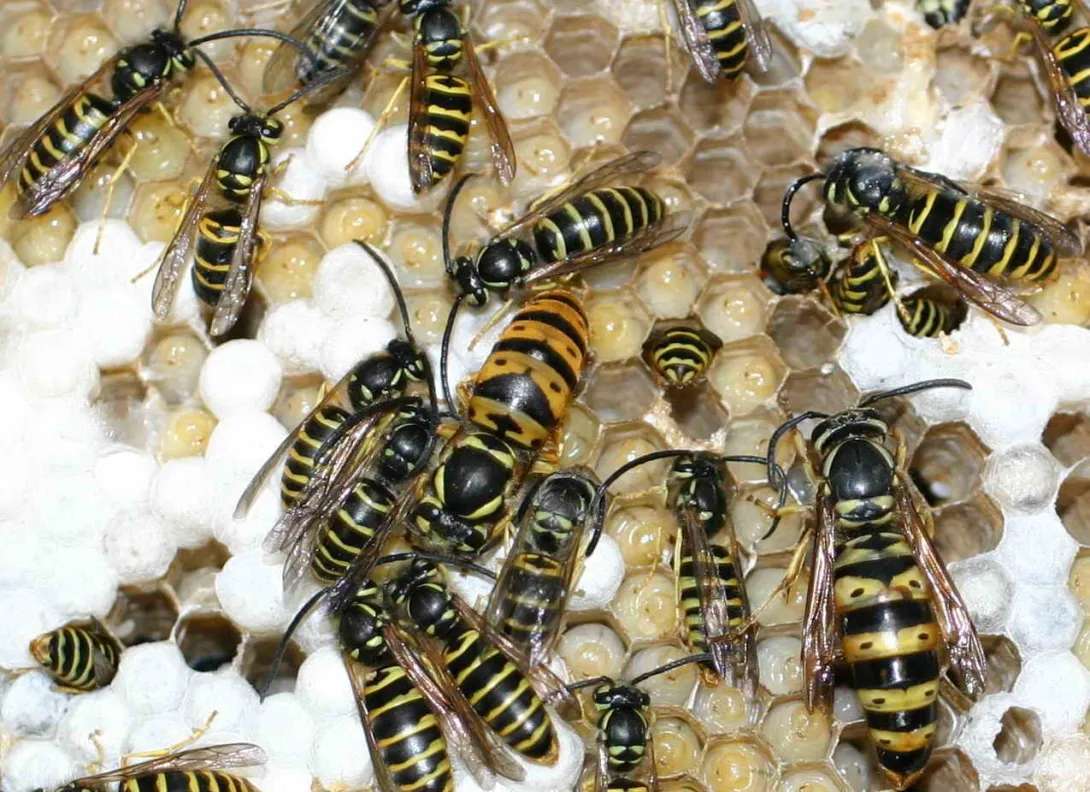
The most recognizable yellow jacket at Georgia Tech is made of fabric and foam, but Professor Mike Goodisman and a team of researchers revealed a far more complex cellular structure by successfully sequencing the genome of two local species of yellow jacket wasps — Vespula squamosa (the southern yellow jacket) and Vespula maculifrons (the eastern yellow jacket).
Having the genome sequences of yellow jacket wasps expands biologists' understanding of the behaviors and evolution of social insects, including the intricacies of the caste system made up of queens, males, and workers.
"The genome is fundamental for a lot of questions that we ask," Goodisman said.
The research, published in Annals of the Entomological Society of America, identifies rates of gene evolution among the different species, which Goodisman says could offer explanations for the various roles each wasp plays in their colonies as well as their ability to adapt and thrive in different environments. Variations in the genomes will also help scientists dissect the interactions between the two local species.
Southern and eastern yellow jacket queens produce all caste members in the colony, and while mated queens from both species hibernate in the winter following the decline of their colonies, V. squamosa will stay in hibernation slightly longer. Southern queens then actively seek out established eastern yellow jacket nests, kill the resident queen, and take over her colony. Goodisman and his research team hope the genome provides insight into the southern queens’ parasitic behavior.
The typical colony will survive six to eight months, but in certain climates, colonies can outlast the winter months to become "supercolonies." These larger colonies take on multiple queens as they grow to the size of a couch or a car. Goodisman's team will use the genome to look for clues as to how these supercolonies thrive for multiple years and how natural selection operates in the two species.
Throughout the study, Goodisman relied on the Georgia Tech community's shared interest in the social insect to gather the necessary samples. Through ads in The Whistle and other campus publications, he collected yellow jacket wasps’ nests from faculty, staff, and alumni, in addition to samples from around the region. DNA was extracted from individual wasp samples and then sent to the University of Georgia for DNA sequencing. The resulting genomes, which are about 200 million base pairs in length, were then jointly analyzed by scientists at Georgia Tech and the University of Georgia.
“When you get the data back, you get these long sequences of the building blocks of DNA. Part of the game is putting that together like a puzzle, and then we analyze the sequence to figure out what it means,” he said.
With the genome sequenced, the team can then compare the local species to each other and all species of yellow jacket wasps worldwide. Unlike honeybees, yellow jacket wasps are not considered significant pollinators, but because their diet consists of insects and carrion, Goodisman explains that understanding their place in the ecosystems they inhabit is equally important.
He is enthused to be on a campus that shares his interest in the group of social insects known as Hymenoptera. That interest led him to study insects like fruit flies at Cornell University and fire ants at the University of Georgia before beginning his postdoctoral research on other members of the Hymenoptera order.
Now, when discussing his research with members of the Georgia Tech community, he finds himself answering one question more than any other. His response is always the same. "Because of the stinger, Buzz is anatomically female."
And while he can't definitively say which species of yellow jacket the mascot would be, Goodisman said Buzz's feisty nature would lean toward the more aggressive and charismatic southern yellow jacket, V. squamosa.
News Contact
Steven Gagliano - Institute Communications