
Oct. 27, 2025
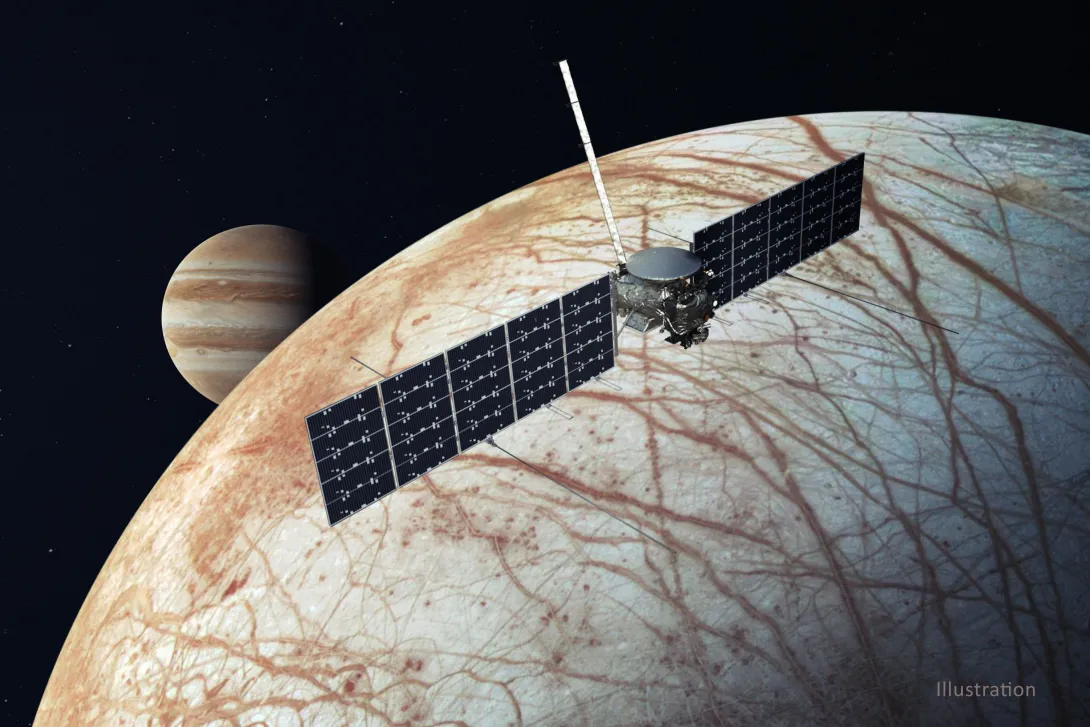
In four years, National Aeronautics and Space Administration (NASA)’s Europa Clipper mission will arrive in Jupiter’s orbit to investigate whether the planet’s icy moon, Europa, could support life. In the interim, researchers like Sven Simon, a professor in the Schools of Earth and Atmospheric Sciences and Physics, are working to uncover critical information to support the rapid analysis of measurements from the mission.
Simon’s research team has been awarded $1.4 million through NASA’s Precursor Science Investigations for Europa (PSI-E) program. Their project is one of seven selected to provide essential insights that, according to the program announcement, “will maximize the science return during the radiation-limited lifetime of the Europa Clipper.”
Simon also serves as the institutional lead co-investigator of a second $1.4 million project, led by researchers at the University of California, Berkeley, which seeks to decipher how Europa's atmosphere and ionosphere contribute to the magnetic field near the moon. This project was selected during the same call for proposals.
“The research award is a fantastic opportunity to contribute to a mission centered on Europa’s complex plasma and electromagnetic environment,” says Simon, referencing the Georgia-Tech led proposal. “Our project combines foundational plasma physics from our School of Physics and geophysical knowledge from our School of Earth and Atmospheric Sciences to understand how the magnetic field near Europa is affected by the plasma populating Jupiter’s environment.”
The research team includes Earth and Atmospheric Sciences Ph.D. students Ariel Tello Fallau and Charles Michael Haynes. Neil Baker, a Ph.D. student in the School of Physics, is contributing to the Berkeley-led PSI-E project that also includes Georgia Tech alumnus Lucas Liuzzo (Ph.D. EAS 2018), now an assistant research scientist at the University of California, Berkeley’s Space Sciences Laboratory.
Groundwork for discovery
With a radius of only 1,560 kilometers, Europa is one of Jupiter’s four largest moons, known as the Galilean moons, discovered by Italian astronomer Galileo Galilei in the 1600s.
More than two decades ago, data from NASA’s Galileo mission — specifically magnetic field measurements collected far above Europa’s surface — pointed to the existence of a global subsurface ocean. This ocean, which may contain more liquid water than all of the Earth’s oceans combined, has made Europa a prime candidate in the search for life beyond Planet Earth.
“Finding evidence of a saltwater ocean lurking beneath Europa’s surface was a serendipitous discovery during the Galileo mission,” Simon explains. “NASA’s Europa Clipper mission picks up where the Galileo mission left off.”
Launched in October 2024, the Europa Clipper space probe is expected to reach Jupiter’s orbit in 2030. That gives Simon and his team only a few years to complete their analysis.
“Our research is doing the preparatory work to determine what and where we can measure further magnetic evidence of the ocean beneath Europa’s surface,” says Simon. “When the spacecraft arrives, we will find out whether our predictions are correct.”
Using advanced computer simulations, the team aims to better understand the magnetic fields near Europa. Part of these fields is generated by electric currents in the moon’s saltwater ocean; the other part is created by fast-moving flows of plasma — ionized matter that fills much of space — as it interacts with Europa’s atmosphere and surface.
“Our project focuses on how the magnetic fields from plasma flow patterns compete with the magnetic signal from Europa’s ocean,” says Simon. “We want to determine which part of the magnetic field near Europa originates from the ocean and which part is a disruptive effect from the plasma.”
Deciphering these magnetic signals will provide essential context for interpreting Europa Clipper’s measurements, helping to not only confirm the ocean’s existence but also reveal details about its structure.
News Contact
Writer: Lindsay C. Vidal
Oct. 22, 2025
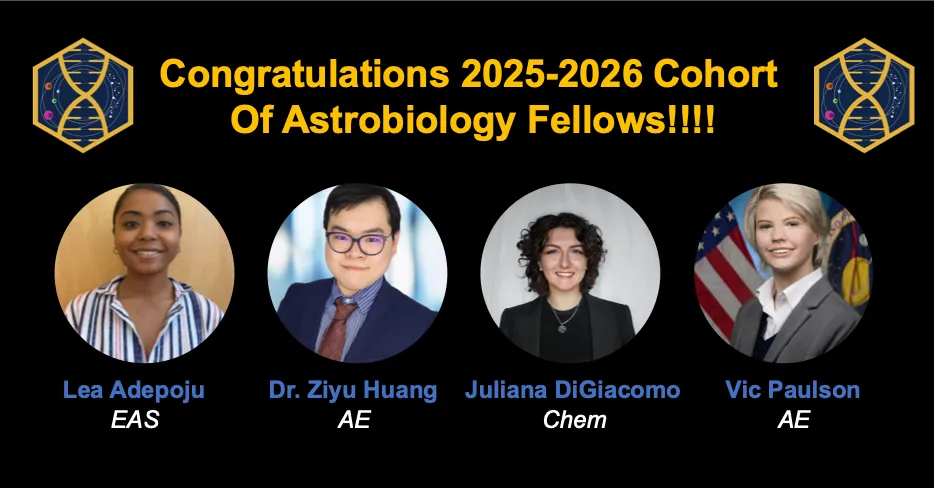
At Georgia Tech, four researchers are investigating the origin of life and where else it might exist from four very different perspectives. This fall, the astrobiology fellowship program named the 2025–26 astrobiology fellows to pursue this age-old debate: Lea Adepoju from the School of Earth and Atmospheric Sciences, Juliana DiGiacomo from the School of Chemistry and Biochemistry, and Ziyu Huang and Lauren Paulson from the Daniel Guggenheim School of Aerospace Engineering.
This year’s cohort reflects the interdisciplinary spirit at the heart of astrobiology. From atmospheric science to aerospace engineering to chemistry, each fellow brings a distinct perspective to two of astrobiology’s biggest questions: where life originated from and what it might look like beyond Earth.
“What drew me to apply is the opportunity to give back to the astrobiology community at Georgia Tech, while also promoting awareness of astrobiology in other fields and providing access to the latest findings,” said Adepoju.
Supported by the Georgia Tech College of Sciences Betsy Middleton and John Clark Sutherland Dean’s Chair, the astrobiology fellowship program recognizes graduate students and postdocs who demonstrate leadership, community-building, and a passion for astrobiology. Each fellow receives a $4,000 award and takes on the responsibility of organizing events and outreach that strengthen the astrobiology community at Tech.
For Ph.D. candidate Juliana DiGiacomo, the search begins with the Earth’s chemical origins. Working in Professor Loren Williams’ lab, she studies long-term chemical evolution: a process that may have catalyzed the earliest molecules of life into existence on prebiotic Earth, a period billions of years before life as we know it emerged.
DiGiacomo recreates the conditions of prebiotic Earth by cycling simple molecules through wet and dry phases, a daily rhythm that could have been common then. “We’ve seen how a simple ‘primordial soup’ can result in kinetic trapping of high-energy bonds relevant to life,” she said, describing her experiments.
Lea Adepoju, an earth and atmospheric sciences Ph.D. candidate, looks for traces of life in an entirely different direction: deep beneath the sea. She studies microbial communities in benthic basins, asking how they alter methane signatures. “The aim of this study is to elucidate the key signatures that would improve our understanding of methane-based biosignatures that might be found on ocean worlds,” she said.
If we can read these signals of life here, she suggests, perhaps we could have a better understanding of signals in other worlds where oceans hide beneath the surface. “I would like them to wonder where else life could have existed somewhere else in our solar system or beyond,” said Adepoju. “Could it really be possible that Earth was the only planet that ‘got lucky’?”
For aerospace engineering postdoctoral fellow Ziyu Huang, the question is what happens next. Once signals of life appear, can they sustain themselves long enough for life to evolve?
With a background in computational chemistry and space environment modeling, Huang studies how plasma, solar wind, and micrometeoroids affect the shape and chemistry of moons and exoplanets. These processes matter because they determine whether worlds can hold onto or lose important volatile elements like water and carbon, which are essential for life and habitability.
“You start to wonder what kinds of wild chemistry might be happening out there,” he said, pointing to planets like K2-18 b or the TRAPPIST-1 system. “Oceans hidden under thick skies, strange reactions recycling water and organics, or even entirely new pathways to habitability —thinking about these possibilities reminds us that life could thrive in ways and places far beyond what Earth has taught us to expect.”
For Lauren Paulson, a third-year Ph.D. student, the connection to astrobiology began unexpectedly. Early in her Ph.D., she was assigned to lead a student team designing a non-terrestrial aircraft, a vehicle meant to fly in the atmosphere of another world. “I knew the engineering, but not astrobiology,” Paulson said. “So, I signed up for the astrobiology seminar and started attending every ExplOrigins meeting I could. Those experiences opened up an entirely new way of thinking about exploration, one that united systems engineering with questions about the origin and persistence of life.”
Now just one class away from completing the astrobiology graduate certificate, Paulson focuses on sustainable space technologies and in-situ resource utilization, modeling how local materials, like lunar ice or Martian regolith, can support future missions and reduce reliance on Earth-based resupply. “It’s the engineering side of astrobiology,” she explained. “Designing the systems that make life detection — and eventually habitation — possible.”
Beyond the Lab
But for the fellows, the year ahead is not just about research, but also about leadership and community. “I’m most excited to help connect communities that don’t always realize how much they have in common, especially engineering students who might not yet see how their work relates to astrobiology,” said Paulson. “I’d love to organize events that make the field feel more accessible and interdisciplinary, and to highlight how systems thinking, mission design, and sustainability are deeply intertwined with the search for life beyond Earth.”
Over the coming year, Adepoju, Huang, DiGiacomo, and Paulson will co-organize the fall social event with an invited speaker and the spring ExplOrigins Colloquium. They will also design their own service project — whether it’s leading discussions, mentoring undergraduates, or outreach to high school teachers.
Beyond science, they also hope to spark curiosity by bringing more people into the astrobiology conversation. “Life on Earth emerged almost immediately after the planet cooled just enough to support it,” DiGiacomo said. “That fact alone suggests that life, given the right conditions, may not be rare at all; it might even be inevitable. I’d hope to inspire someone to wonder: If life could take hold so rapidly here, how many other worlds might be home to life as well?”
For more information about the Astrobiology program, visit the program’s site or reach out through their contact page.
News Contact
space@research.gatech.edu
Oct. 09, 2025
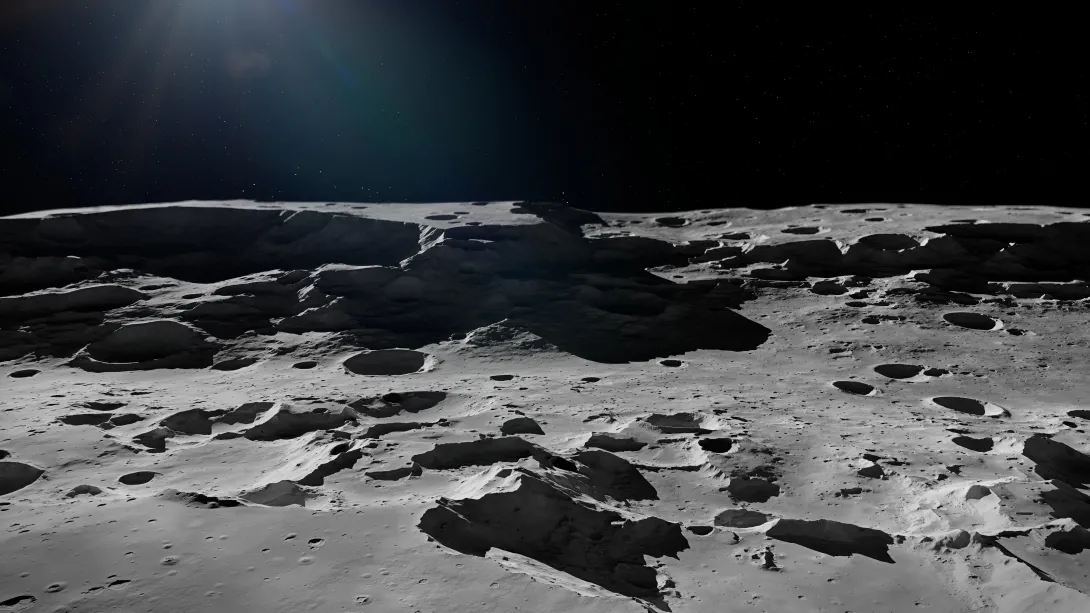
A NASA-funded research team at Georgia Tech has developed a new method to extract water from the Moon’s icy polar regions using concentrated sunlight—turning one of the Moon’s biggest challenges into an energy advantage.
Led by Thom Orlando, with co-author Peter Loutzenhiser lending his solar energy expertise, the researchers are experimenting with heliostats—solar concentrating mirrors—to beam concentrated solar radiation down into the Moon’s shadowed craters. There, the heat can release water vapor from the frozen regolith, providing hydrogen and oxygen for propulsion fuels.
“We envision mounting these heliostats on the rim of the crater and then fixing them in such a way that they beam the solar irradiation down,” Loutzenhiser said. “The concentrations would be much greater than on Earth due to no attenuation, as the Moon has little to no atmosphere.”
The team’s experimental results, published in Acta Astronautica, offer a practical path toward sustainable lunar resource use and future space exploration.
Read the full article
Oct. 14, 2025
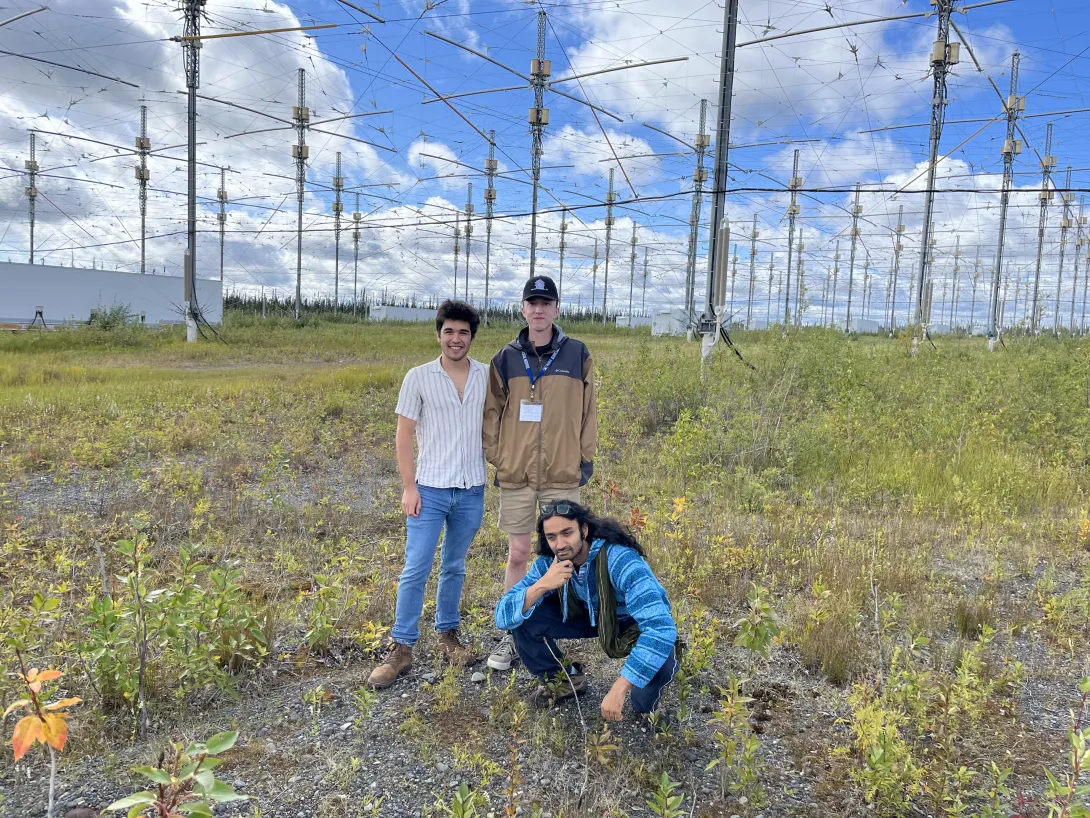
Home to some of the best geophysical research facilities in the country, Alaska is a premier destination for scientific exploration. It’s become a popular destination for Georgia Tech students and researchers, especially those in Professor Morris Cohen’s Low Frequency Radio Lab.
School of Electrical and Computer Engineering (ECE) Ph.D. students Gus Richter, Malhar Tamhane, and Felipe Sandoval are the latest to make the trip to the “Last Frontier” as they work to push the boundaries of atmospheric research. The trio participated in the 2025 Polar Aeronomy and Radio Science (PARS) summer school program held in August at the University of Alaska Fairbanks and the High-frequency Active Auroral Research Program (HAARP).
Read the full story on the School of Electrical and Computer Engineering's website.
News Contact
Zachary Winiecki
Oct. 01, 2025
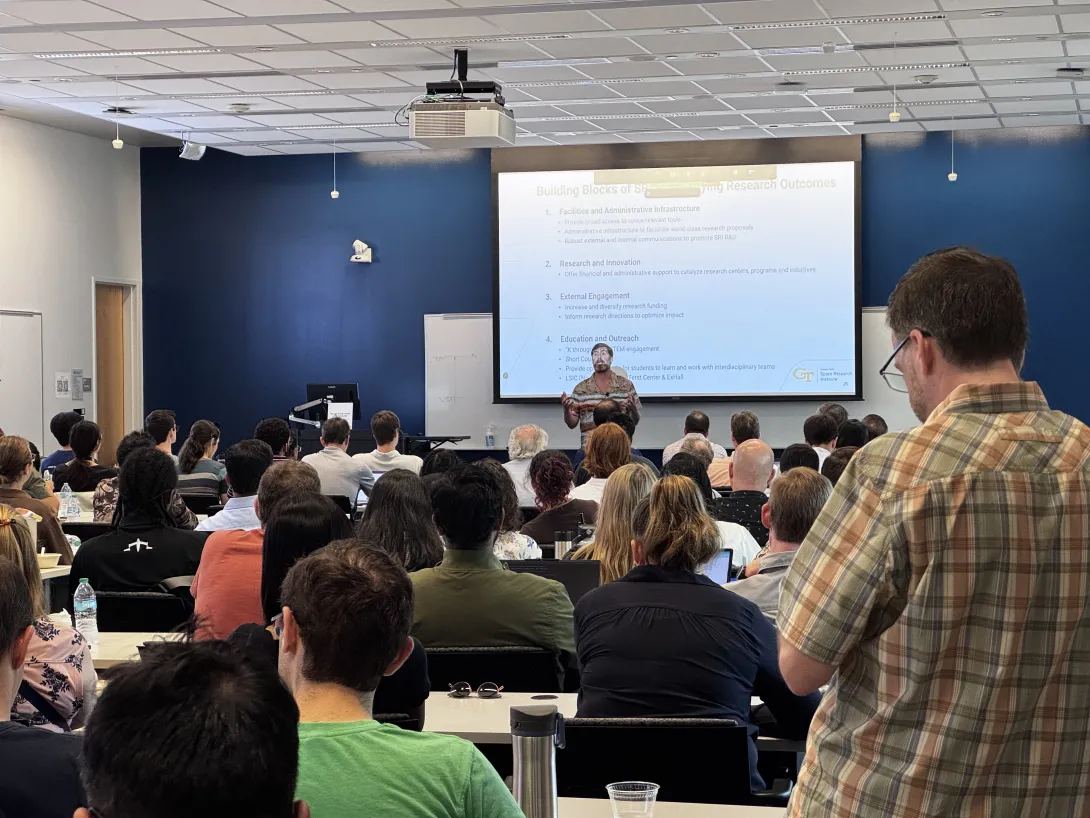
On September 5, more than 130 space researchers gathered for the Space Research Institute’s (SRI) inaugural meeting, held in the Marcus Nanotechnology Building. The event drew a standing-room-only crowd, with attendees from across all of Georgia Tech’s colleges. This marked the SRI’s first major convening since its launch on July 1, offering a platform to discuss its vision and bring Georgia Tech’s space research efforts into closer conversation.
That vision builds on work already reshaping the field. Across campus, Georgia Tech researchers are imaging black holes with unprecedented clarity, flying CubeSats in heliocentric orbits that now trail closer to Venus than Earth to test optical navigation. They are also sending solar cells to the International Space Station, exploring Jupiter, and, this fall, bringing the Lunar Surface Innovation Consortium Fall meeting to campus.
“That breadth is what makes Georgia Tech’s space community so strong,” said Julia Kubanek, vice president for interdisciplinary research. “We have experts in aerospace and biology, in materials and planetary science, in public policy and even researchers who study space through fiction — all taking on some of the most complex challenges of our time. SRI gives us a framework to support that work more deliberately, connecting researchers across colleges and disciplines and aligning with Georgia Tech’s broader vision for research, education, and innovation.”
Jud Ready, director of SRI, opened the session with an overview of the SRI’s goals and near-term plans. He emphasized how SRI will play a role in advancing several of Georgia Tech’s four big bets, including expanding research impact, increasing educational access, bringing value to students and strengthening the Institute’s role as a national hub for innovation.
At the center of that effort is also the newly announced Centers, Programs, and Initiatives (CPI) program, which aims to support faculty pursuing shared research directions.
“Georgia Tech has people already working on everything from sensors and propulsion systems to space policy, design, and sustainability," said Ready. “We’re geared towards linking that work early and giving teams the resources to go after the really big questions.”
Ready noted that the meeting would be the first of many community-building events hosted by SRI in the coming year, aimed at fostering dialogue and identifying opportunities for collective work.
“Most people don’t recognize that they use space in their everyday lives nearly every second of every day. The opportunities for space-based education, R&D, and commercialization are literally infinite,” said Ready. “It’s exciting to be at Georgia Tech where we play a key role in pushing the frontiers of space, and what that could mean for this generation and future ones.”
Faculty interested in future events or proposal opportunities can visit space.gatech.edu or sign up for the SRI mailing list. To view the meeting recording, click here.
News Contact
space@research.gatech.edu
Sep. 29, 2025
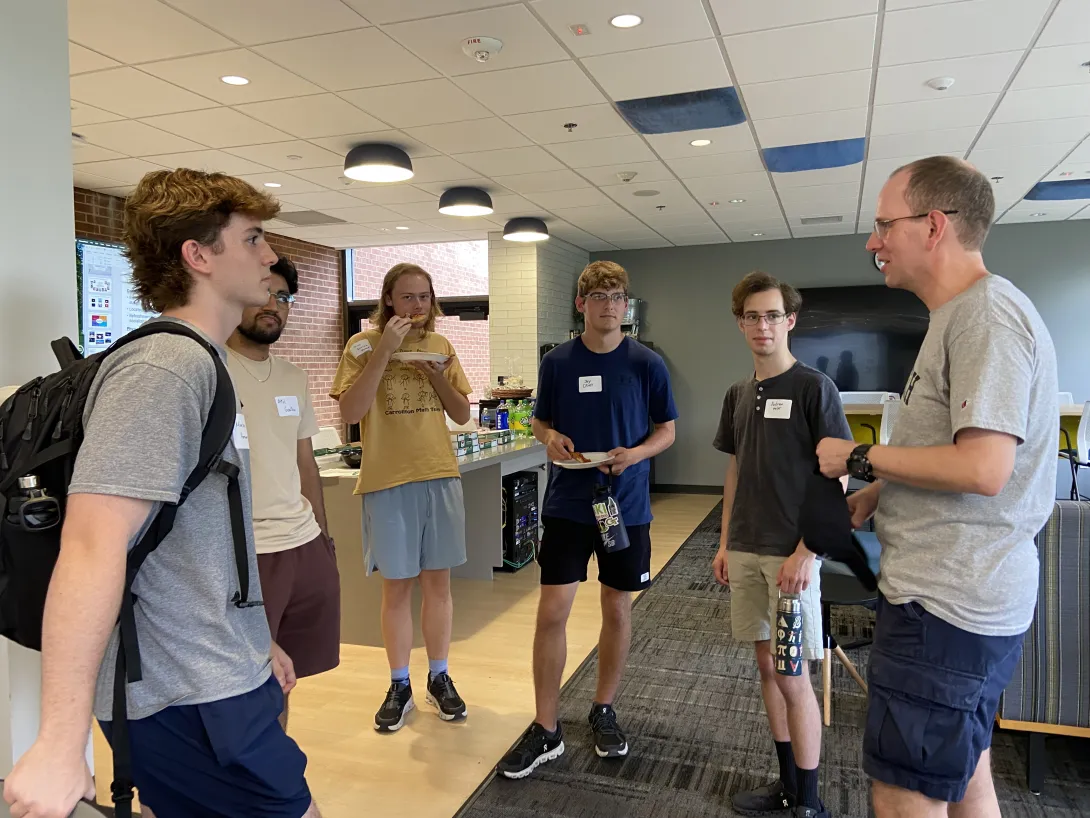
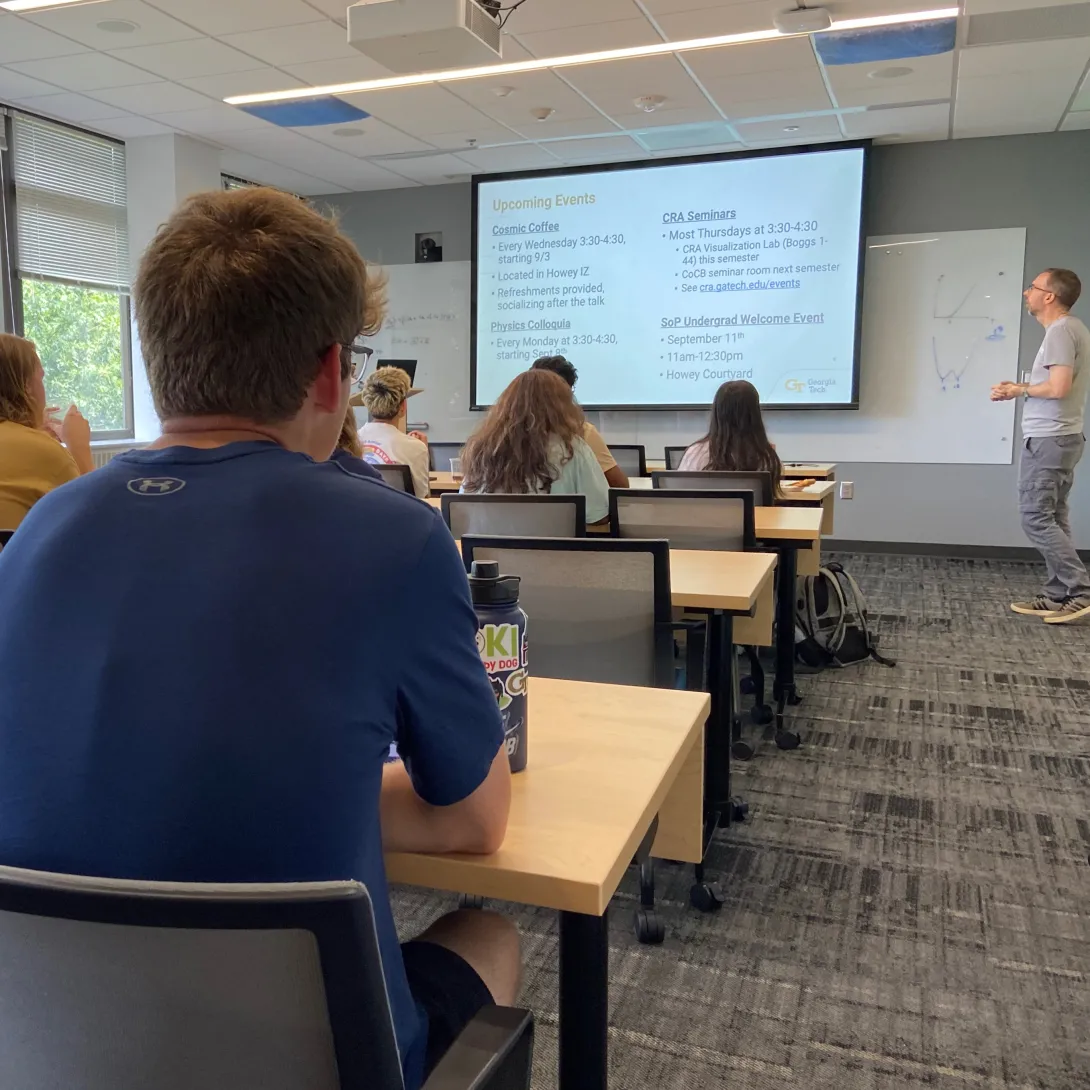


One of Georgia Tech’s newest undergraduate degree offerings — a B.S. in Astrophysics — welcomed its first students in August.
The astrophysics program, which includes both a major and a minor, introduces students to the fundamental physical processes and laws that govern the cosmos. This foundational curriculum is complemented by training in computational and data analysis techniques.
“Our new undergraduate program is forward-facing, focusing on the future of astronomy and astrophysics as well as how big data and computing are driving innovation and discovery,” says Program Director David Ballantyne, associate chair for Academic Programs and professor in the School of Physics.
Designed for students interested in research or non-research career paths, the B.S. in Astrophysics was created in response to growing student demand for courses and research opportunities in the field.
“Astrophysics is a great major at Georgia Tech because it teaches the critical thinking and technical skills students need not just for astrophysics but also for a wide variety of STEM-related careers,” adds Paul Sell, program advisor, senior academic professional in the School of Physics, and director of the Georgia Tech Observatory.
More than two dozen students have already declared the astrophysics major or minor; these numbers are expected to grow as more students learn about the program.
Third-year student Ishita Chintala switched her major from general physics to astrophysics in order to move closer to her childhood dream of working in the space industry.
“Astrophysics brings a certain kind of magic into my life; a kind of magic that helps me not only understand the world around me, but also helps me understand my place in the universe,” she explains.
Students enrolled in the program will have the opportunity to engage directly with the work taking place at the Center for Relativistic Astrophysics (CRA). Established in 2008, the CRA includes more than a dozen faculty and research scientists with expertise spanning high-energy astrophysics, extrasolar planets, gravitational-wave astronomy, and astroparticle physics.
Access to undergraduate research opportunities, including those offered by CRA faculty, is one reason for Marshall Honaker’s enthusiasm about the major.
“I’m most excited about getting hands-on research experience and taking advanced astrophysics classes that dive deeper into topics like cosmology and stellar evolution, especially at Georgia Tech,” says Honaker, a first-year student from Warner Robins, Georgia. He aims to pursue a research career to increase our understanding of the universe.
Andrew Heller, a first-year student from Tucker, Georgia, chose the astrophysics major because of his curiosity about and desire to advance our knowledge of everything beyond Planet Earth.
“As an astrophysics major, I'm very interested in participating in multi-messenger astronomy,” says Heller, referring to a key research focus of the CRA. “The ability to discover different things about an event or object by studying it with different wavelengths or particles is super exciting!”
Undergraduate students interested in declaring the astrophysics major or minor should follow the standard major change or the minor addition/change process.
News Contact
Writer: Lindsay C. Vidal
Sep. 19, 2025
Georgia Tech’s Jaden Wang (Zhuochen Wang) has been awarded a NASA Space Technology Graduate Research Opportunity (NSTGRO). The grant supports graduate students who “show significant potential to contribute to NASA’s goal of creating innovative new space technologies for our nation’s science, exploration, and economic future.”
Wang, who is a Ph.D. student in the School of Mathematics and a master’s student in the Daniel Guggenheim School of Aerospace Engineering, will focus on developing mathematically-backed landing solutions for spacecraft.
“I first became interested in powered descent problems during my Fall 2024 internship with NASA’s Human Landing System at Marshall Space Flight Center,” he says. “With my mathematical background in optimization and topology, and my passion for space exploration, I saw this research topic as a perfect fit when my co-advisor Dr. Panagiotis Tsiotras suggested it.”
Wang is co-advised by School of Mathematics Professor and Hubbard Research Fellow John Etnyre alongside Panagiotis Tsiotras, who holds the David and Andrew Lewis Endowed Chair in the Daniel Guggenheim School of Aerospace Engineering and is also associate director at the Institute for Robotics and Intelligent Machines.
In addition to his Georgia Tech advisors, Wang will collaborate with a NASA Subject Matter Expert, who will connect him with the larger technical community. He will perform part of the research as a visiting technologist at multiple NASA centers, giving him the opportunity to work with leading engineers and scientists and share his research results directly with the NASA community.
From abstractions to space exploration
“NASA’s upcoming missions to the Moon, Mars, and beyond need technology that allows spacecraft to land precisely at their intended sites,” says Wang. “My research will focus on the last stage of landing, called powered descent. This stage powers up engines, which guide the spacecraft into a safe landing using a pre-designed trajectory that autopilot follows.”
This means that researchers need to figure out the correct thrust, direction, and timing to reach a landing spot — all while navigating a landing that uses as little fuel as possible.
“A common approach is to treat this as an optimization problem: minimizing fuel consumption with rigid-body physics as constraints to determine the best thrust profile,” Wang explains. “This can work well, but it has drawbacks. It assumes that there is no uncertainty in the system (for example, that the thrust of the engines is applied perfectly) and it simplifies the motion of the spacecraft by treating it as though it’s traveling through flat space instead of on a true curved geometry. Both shortcuts introduce errors — our research aims to address these gaps.”
To improve landing precision, Wang will develop a curved-space geometric mathematical model, which takes into account the curved-space geometry of spacecraft motion rather than assuming flat space. To find a fuel-efficient landing trajectory, Wang will develop the model around optimal covariance steering, a stochastic control problem that both minimizes fuel costs while keeping the uncertainty of the spacecraft's exact landing spot within a safe amount.
It’s a problem that leverages his experience in theoretical math and his background in aerospace engineering. “I’m incredibly honored that NASA finds this research exciting and is supporting my pursuit of it,” he says. “There are so many fascinating engineering problems that could benefit from deeper theoretical scrutiny, especially using abstract machineries not typically covered in an engineering curriculum. I hope this inspires more theoretical researchers and graduate students to explore bridging these gaps.”
News Contact
Written by Selena Langner
Sep. 15, 2025
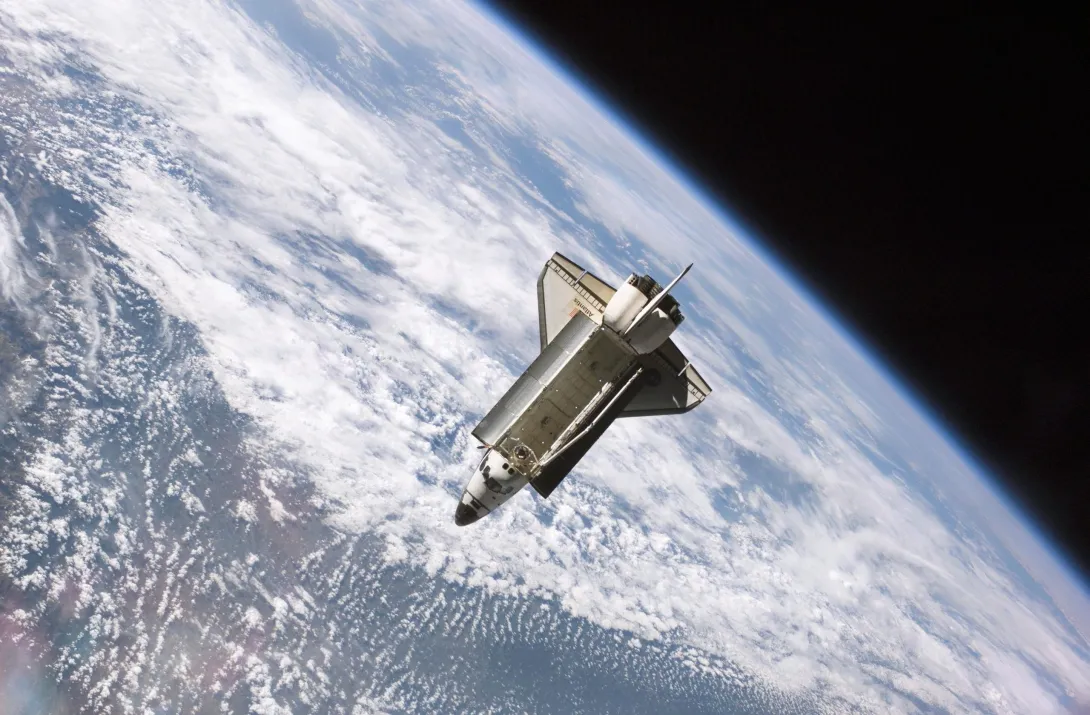
Georgia Tech’s Office of Commercialization announces a gift from CreationsVC of $375,000 to accelerate the development of space-related and space-adjacent startup companies based on Georgia Tech intellectual property.
Georgia Tech’s Office of Commercialization’s new Quadrant-i unit focuses on the commercialization of Georgia Tech intellectual property. In combination with Georgia Tech’s consistently top-ranked Daniel Guggenheim School of Aerospace Engineering and its newly formed interdisciplinary Space Research Institute (SRI), Quadrant-i is positioned to dramatically boost the output of space-related spin-offs into a burgeoning Atlanta startup ecosystem. A strategic gift from CreationsVC will support these efforts by creating a pilot program that provides funding for the startup projects of five CreationsVC Fellows per year for three years.
CreationsVC is a venture capital firm that specializes in investing in space tech, AI, and related technologies. CreationsVC sponsors Creation-Space, an Israeli-based global innovation hub that is fostering innovation to enable humanity’s expansion beyond Earth. Steve Braverman, who heads CreationsVC, said the gift is focused on "identifying innovative technologies that support research on life in space, combined with a focus on climate efficiency. This will help improve both expansion of space-centric industry as well as efforts that address challenges on Earth.”
Braverman said he was attracted to Georgia Tech’s focus on entrepreneurship and its track record in aerospace innovation. “I am impressed with the depth and breadth of technical expertise and energized by the passionate commitment of faculty and students to see their innovations have real-world impact. This gift is intended to supercharge efforts over the next three years to launch several startups that can grow quickly and have impact in Atlanta and Israel.”
Quadrant-i has worked closely with the SRI in its formation and made space commercialization an important and embedded pillar of the new activity. “We are thrilled to work with Steve and the CreationsVC team in identifying and accelerating nascent technologies that will have dual-use value propositions in space, climate, and AI applications,” said Quadrant-i’s director Jonathan Goldman. “We have a fantastic well of innovation from our faculty and graduate students and an amazing fountain of entrepreneurial talent from our CREATE-X program for our undergrads. We are excited to see this relationship blossom.”
News Contact
Anne Stanford
anne.stanford@dev.gatech.edu
Jul. 09, 2025

W. Jud Ready, Ph.D.
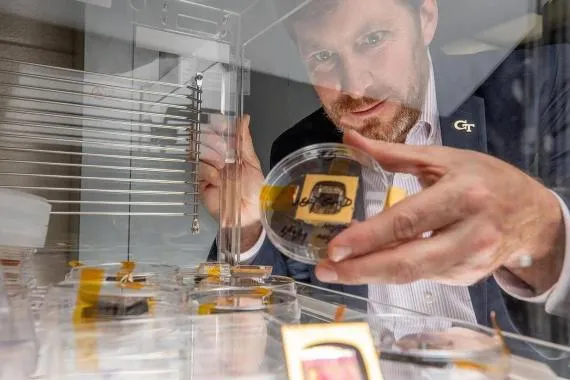
Jud Ready holds a sample of a perovskite solar cell, along with other samples similar to those launched to the International Space Station.
W. Jud Ready, Ph.D., a longtime leader in space-related research at the Georgia Tech Research Institute (GTRI) for more than two decades, has been appointed as the inaugural executive director of Georgia Tech’s newly established Space Research Institute (SRI). With his extensive background in engineered materials and proven track record in managing groundbreaking research projects, Georgia Tech’s space innovation leadership is ready to “blast off."
SRI will become the center of all things space-related at the Institute. It will work in partnership with academics, business partners, philanthropists, students, and governments.
Ready says the role of SRI is “to amplify the space-based research environment that we have had for decades at Georgia Tech by providing dedicated facility, communications, collaboration, and financial resources, as well as assistance on large-scale proposals.”
The existence of SRI is directly tied to one of Georgia Tech’s “Big Bets,” outlined in the Institute’s current Strategic Plan: “Double the Scale and Amplify the Impact of Our Research Enterprise.”
GTRI to Play a Prominent Role With SRI
“GTRI has an unfair advantage in so many areas: we've got great capabilities, great people, great equipment, great connections across the United States as well as the globe,” said Ready. “To be able to take curiosity-driven fundamental research and turn it into a widget, whether that widget is a radar or a spacecraft or whatever it may be, GTRI is good at that.”
“We're not a commercial entity, so we're not trying to make thousands, hundreds, or even dozens of a device or a system. We're very good at one-off prototypes, and that's what space research is. We're not trying to build a constellation of 1,000s of ‘Starlink’ satellites. We are trying to create sensors, systems, spacecraft, constellations -- whatever it takes – to solve problems, whether they're national security problems, scientific problems, economic problems, communication problems -- there are many uses for spacecraft.”
Ready’s vision for SRI emphasizes leveraging and enhancing the robust infrastructure already in place at GT and GTRI, including C-SHAFT (Center for Space Hardware Assembly, Fabrication and Testing). As he articulated during his vision presentation, before being named to the executive director role, he views GTRI facilities such as thermal vacuum chambers and ground station networks as strategic assets that provide Georgia Tech with a significant competitive edge in space research and exploration.
Ready’s leadership will emphasize bridging the robust academic and research elements within Georgia Tech to include all Colleges and GTRI. By strengthening the collaborative relationship among all arms of the Institute, Ready seeks to enhance Georgia Tech’s institutional capacity for securing competitive federal, industry and philanthropic funding. He plans to strategically use GTRI’s contract vehicles, such as its University Affiliated Research Center (UARC) agreements, to streamline funding processes, thereby advancing GTRI’s and Georgia Tech’s collective research enterprise.
Under Ready’s direction, educational and outreach initiatives will also expand significantly. Ready says he intends to draw on previous Georgia Tech successes, such as the Symposium on Space Innovations and championing “K through gray” educational programs. He intends to integrate educational activities that involve both academic and research personnel from across Georgia Tech and GTRI. These efforts aim to support the existing cadre of space engineering professionals, as well as cultivate a new generation of engineers and scientists equipped with the skills and experiences necessary for leadership in space technology.
Q&A with Jud Ready, SRI Executive Director
Q: What are your initial, big priorities for SRI?
Ready: We're looking for partnerships internally at Georgia Tech, within GTRI, in Georgia, and externally. Whether governmental, philanthropic, or industrial sponsorships, that's what we're seeking. We want SRI to help faculty, students, small businesses, major corporations, and the USA in general succeed in space.
Q: How soon and how aggressively will you pursue funding and sponsorships?
Ready: "Immediately. We've already got proposals pending. We'll continue pursuing federal funding, corporate funding, and philanthropic efforts. Space access has become much cheaper, opening new funding avenues."
Q: Will SRI take over existing projects such as Lunar Flashlight (a CubeSat integrated and tested by GTRI and operated by Georgia Tech) or MISSE (a NASA mission series in which GTRI is heavily involved)?
Ready: "No, SRI won’t take over someone's research projects. SRI will not be a principal investigator. It enables individual principal investigators, providing necessary resources, whether they're at GTRI, GT, or industry."
Q: Does SRI have a physical space, lab space, cleanrooms, etc.?
Ready: "The administrative offices are in the Coda building. But the resources we have at Georgia Tech and GTRI aren't moving. We have cleanrooms and testing facilities at Baker and Cobb County, antennas for communication, and eventually, we'll have a new building near Coca-Cola Tower.”
Q: Given the long-term nature of space research, do you have a short-term plan for SRI?
Ready: "I've certainly got a 90-day plan. We'll have something going on every month this fall. We’ll release an RFP for our CPI (centers, programs, initiatives) process around Labor Day. The LSIC fall meeting is at Georgia Tech on November 5-6. We're also organizing a networking event and a star-watching party for homecoming in October."
Q: Will you maintain your existing appointments at Georgia Tech and GTRI?
Ready: "Yes, I'm still 50/50. Technically, 49% SRI and 51% GTRI, so I didn't have to reorganize my reporting chain. I’ve dialed back my teaching a notch and only plan to teach my Material Science and Engineering of Sports class (MSE3300) next spring, but I will also be teaching my Vertically Integrated Project (VIP) class in the fall. And, of course, advising several graduate students along the way."
Q: Is there more to Jud Ready than just space research?
Ready: "I haven’t stopped thinking about space since Skylab. But yes, I like things more than space. I'm also a scout leader. I enjoy camping, fishing, sailing, and sports, especially, even though, historically, I’ve been exceptionally mediocre at them."
Georgia Tech’s 11 IRIs support collaboration between researchers and students across the Institute’s seven colleges, the Georgia Tech Research Institute (GTRI), national laboratories, and corporate entities to tackle critical topics of strategic significance for the Institute as well as for local, state, national, and international communities.
Aug. 27, 2025
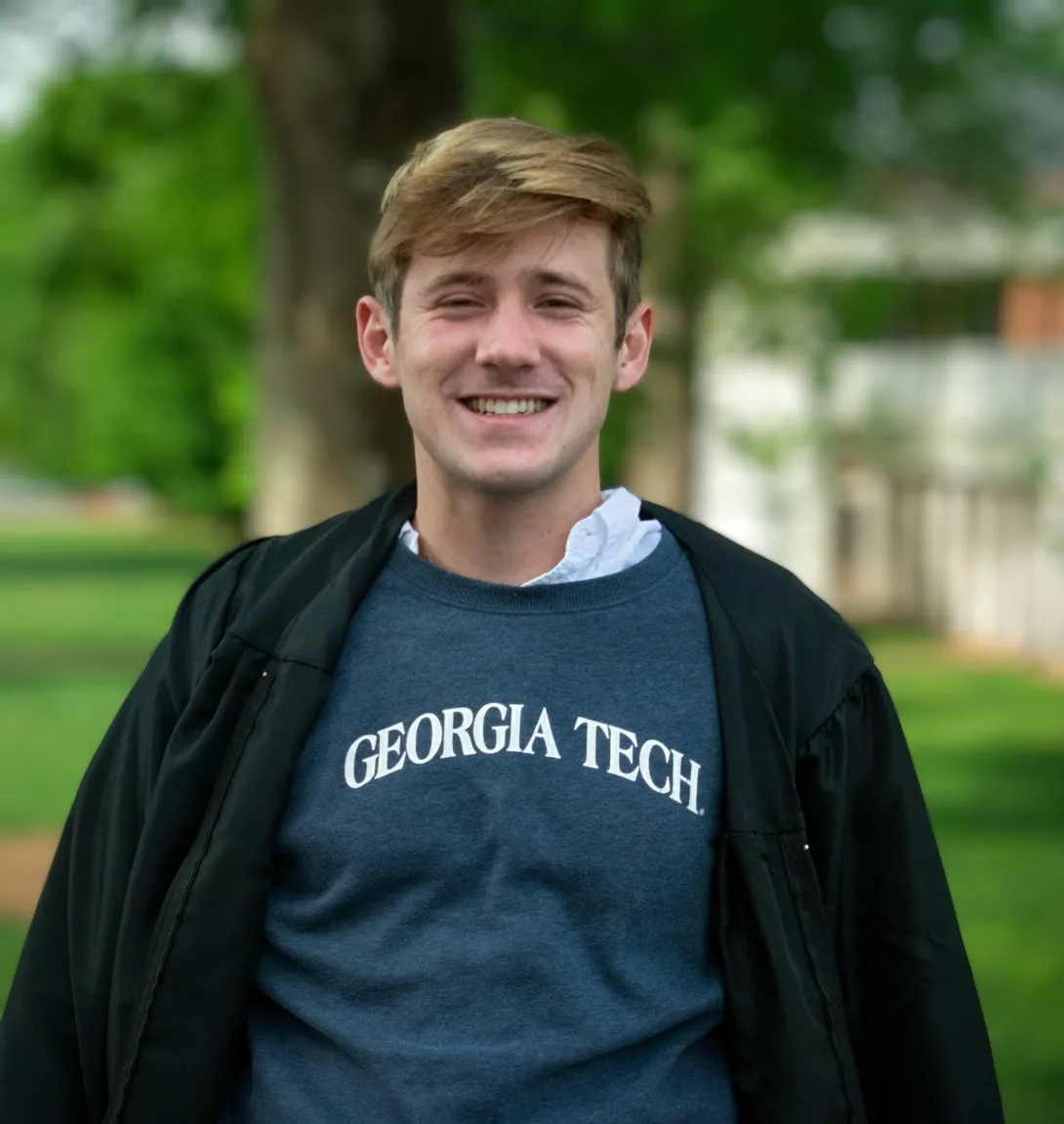

J. Cole Faggert, a Ph.D. student in the School of Physics, has received a NASA FINESST (Future Investigators in NASA Earth and Space Science and Technology) Award to study supermassive black holes and the physics of their plasma flows. His research proposal was one of 24 selected from more than 450 astrophysics submissions this year.
“It’s amazing to be recognized for this research,” says Faggert. “I am grateful to my research group for helping me prepare the proposal and inspiring my ideas.”
Through the FINESST program, NASA’s Science Mission Directorate provides three-year grants for “graduate student-designed and performed research projects that contribute to its science, technology, and exploration goals,” according to the program’s website.
Faggert will serve as the future investigator of the award and will be advised by Feryal Özel, chair and professor in the School of Physics.
“I am very proud that Cole has been selected for the FINESST Fellowship, one of the most competitive graduate awards in the country,” says Özel, who is the principal investigator of the research. “This fellowship will support groundbreaking research on multi-wavelength imaging of black holes — an area central to advancing our understanding of black holes and galaxies. It is especially exciting that this work also contributes directly to the development of our space-based mission at Georgia Tech.”
A key aspect of Faggert’s proposal is its multi-frequency approach, which generates and analyzes images of supermassive black holes using different radio wavelengths. When combined and compared, these multi-frequency observations allow scientists to learn about black holes and explore fundamental physical concepts such as gravity and plasma behavior.
“One of the coolest things about studying cosmic objects like black holes is that you have to work with the information you have,” explains Faggert. “But when you combine several avenues of information, like in multi-frequency radio imaging, you can gain a better understanding of phenomena and under conditions that can’t be replicated on Earth.”
This research aligns with current trends in astrophysics that focus on advanced imaging techniques to broaden the data available on the structure, formation, and behavior of black holes and other celestial objects. According to Faggert, this information can then be contrasted with theoretical simulations, providing insights into fundamental physics and the nature of the universe.
Receiving the FINESST Award is particularly meaningful for Faggert, given his longstanding interest in space and his previous exposure to NASA’s Wallops Flight Facility and Langley Research Center through the Virginia Aerospace Science and Technology Scholars program.
“Being associated with NASA holds a special place in my heart. Over the years, my focus has shifted from designing space missions to studying the science those missions make possible. It is definitely rewarding to come full circle and be recognized by NASA for this research,” he adds.