
Feb. 26, 2026
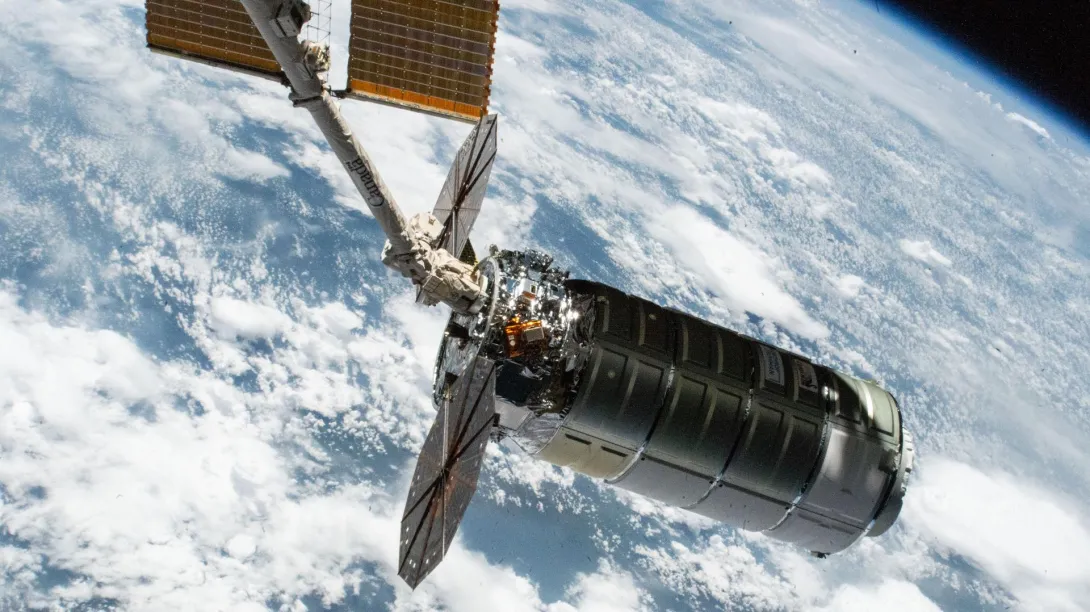
Northrop Grumman's Cygnus XL cargo craft approaches the International Space Station

Photo courtesy of NASA

Georgia Tech’s faculty startup engine Quadrant-i, together with the Space Research Institute (SRI), launched the first cohort of the CreationsVC Space Fellows Program. Funded by space technology venture capital firm CreationsVC, the program enables faculty to explore promising early-stage innovations and their potential for future commercial impact. 

“This first set of CreationsVC Fellows offers an exciting cross-section of innovative hardware and software technologies built on Georgia Tech’s legacy of space exploration, hardware development, and product commercialization,” said Jud Ready, SRI executive director. 

In the first year of the three-year program, CreationsVC provides $125,000 to promote and accelerate innovations that have both space and terrestrial applications. The series offers participants training focused on customer discovery, engaging and compelling storytelling, value proposition design and quantification, and lean/agile project/product management.

“CreationsVC is centered on a deep appreciation for innovation and big thinking,” said Steve Braverman, co-founder and managing partner of CreationsVC. “We felt this was the right time to align our efforts in sourcing and supporting dual-value technologies that will have an impact on both Earth and space.” 

The six startups tackle real-world space research problems like supply chain management, how artificial intelligence works in space, and navigation.

“We are excited CreationsVC is providing us with an opportunity to try new approaches to accelerate deep tech development,” said Jonathan Goldman, Quadrant-i’s director. “These are the toughest kinds of startups to build, and we look forward to the learning we will gain from forcing our innovators out of their comfort zones to embrace some new and valuable skills.”

Meet the cohort:
 

Company: CIMTech.ai
 

Founders: Shimeng Yu, James Read

School: School of Electrical and Computer Engineering (ECE)

Objective: To develop energy-efficient, radiation-tolerant artificial intelligence processors using a persistent type of ferroelectric memory. The startup aims to improve applications requiring high power efficiency, such as battery-powered devices and space-based systems.

Why Q-i: “The advantage of Q-i is in helping technical founders turn their research into products that solve customers’ problems,” noted James Read. “For us, that means talking with potential customers and hearing their pain points directly from the source. Now we’re use that information to build a convincing narrative around our startup’s value for stakeholders and investors.” 

Company: SkyCT
 

Founders: Morris Cohen, Matthew Strong

School: ECE

Objective: To provide up-to-date mapping of the electrical properties of the upper atmosphere, with applications to GPS-free navigation, long-range communication, and satellite and launch vehicle viability. The startup uses the radio energy released by lightning strikes to create this map. 

Why Q-i: “This weird region about 50 miles up from Earth’s surface is both really hard to track and measure, and also impacts a surprising array of applications,” said Cohen. “It’s sometimes called the `ignorosphere’ because of how difficult it is to measure, and it’s time we change that.” 

Company: Penumbra Autonomy
 

Founders: Panagiotis Tsiotras, Juan Diego Florez-Castillo, Iason Velentzas 

School: Daniel Guggenheim School of Aerospace Engineering (AE)

Objective: To commercialize algorithms that help spacecraft maneuver when they have limited information on their environment. The algorithms use state-of-the-art computer vision and localization techniques. This could benefit manufacturing, assembly, and refueling in orbit, as well as enable monitoring, situational awareness, and debris removal. 

Why Q-i: “The program offers a conduit to entrepreneurship opportunities and spinoff companies in the space domain by providing guidance and commercialization ‘know-how,’” said Panagiotis Tsiotras. 

Company: TerraMorph


Founders: Yashwanth Kumar Nakka, Sadhana Kumar, Vincent Griffo, Sachin Kelkar

School: AE

Objective: To create an autonomous rover platform with adaptive, reconfigurable mobility. The rover will implement software and sensing algorithms to automatically detect terrain type and improve traction and energy usage. This could be used on the moon or Mars, or even terrestrial search and rescue. 

Why Q-i: “TerraMorph was developed to address fundamental challenges in mobility and autonomy across uncertain terrain,  but successfully translating that work into impact requires creative guidance, critical feedback, and experienced perspectives beyond the lab,” said Yashwanth Kumar Nakka. “Q-i’s culture of leading by example and fostering strong, ethical teams aligns closely with how we want to build TerraMorph: iteratively, thoughtfully, and with a focus on real-world deployment.” 

Company: OpenWerks
 

Founders:  Shreyes Melkote, Mike Yan

School: George W. Woodruff School of Mechanical Engineering

Objective: To deliver real-time manufacturing supply chain visibility for the space and national security industries. OpenWerks technology aims to dramatically reduce current sourcing cycles from eight months down to weeks by connecting corporate buyers directly with verified supplier manufacturing capability and capacity data. 

Why Q-i: “From the very beginning, principals at VentureLab and  Q-i offered a clear pathway to translate academic research into a viable business,” said Mike Yan. “Their reputation for guiding Georgia Tech startups through both business and technology derisking, combined with their comprehensive ecosystem of programs and coaches, made them the natural partner for our entrepreneurial journey.”

Company: 8Seven8
 

Founders: Chandra Raman

School: School of Physics

Objective: To manufacture quantum hardware in Georgia. 8Seven8 aims to put high-precision atomic clocks and gyroscopes on a chip for applications ranging from aircraft navigation to industrial automation.  

Why Q-i: “They have mentored me and my students through the commercialization process, providing opportunities such as the Space Fellows Cohort,” Chandra Raman said. “One of my former students, Alexandra Crawford, gained valuable business experience through a Q-i entrepreneur’s assistantship, and is now working at 8Seven8 full-time. They have also guided me through the process of obtaining funding through the Georgia Research Alliance for our commercialization effort.”

News Contact

Tess Malone
Senior Research Writer/Editor
Georgia Tech

Feb. 20, 2026
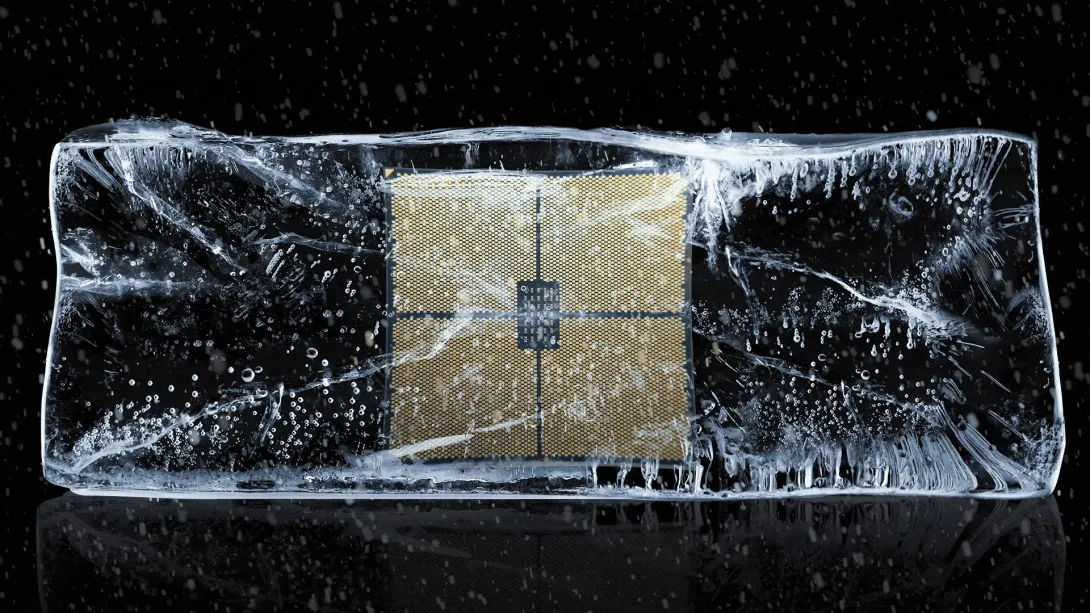
Tech in the Cold

While Italy’s 2026 Winter Olympics draw the world’s attention to snow and ice, Georgia Tech researchers are also confronting cold at its most extreme.

Some labs in the School of Electrical and Computer Engineering (ECE) use liquid nitrogen and liquid helium to chill cryogenic test systems to as low as 4 Kelvins (K), or -452.47 degrees Fahrenheit (F), temperatures that rival the coldest regions of deep space.

At this point, materials and electronic devices stop behaving in familiar ways, which is exactly why ECE researchers use these extreme conditions to explore and develop new semiconductor technologies.

“Electronics are very temperature dependent,” Professor John Cressler said, whose lab houses some of these cryogenic test systems. “Whether you see it or not, every electronic you buy has a tested temperature spec associated with it.”

Current commercially sold devices, including most cell phones, are made to run between 32 F and 85 F. Researchers in ECE test across a far wider range, as they develop technology with extraterrestrial and quantum computing applications in mind.

Other ECE teams work in natural extremes, carrying instruments into polar regions where cold creates challenges that no lab can fully replicate.

Just as cold pushes athletes in different ways, it guides ECE research down its own distinct paths.

Read the full story on the School of Electrical and Computer Engineering's website.

News Contact

Zachary Winiecki

Feb. 11, 2026
Original illustrations from the 1930 serialized publication of the stories that would eventually be published as The Martian Trilogy following their recovery by School of Literature, Media, and Communication researchers. Hugo Award winning graphic novelist and illustrator John Jennings enhanced the illustrations for the book.

In 1930, a newspaper syndicate published a serialized science fiction story set on Mars. A seminal early space opera written in a style that might have been familiar to contemporary readers of H.G. Wells, “100 Years Hence” may have been seen by more than half a million people. That’s an astonishing number in an era when the audience for the most popular science fiction pulp magazines —  and even many early sci-fi novels  — was only a fraction of that size.

Still, the story quickly faded into obscurity — the victim of the perishable nature of its medium, a mysterious writer’s voice that suddenly went silent just a few years later, and the earliest curators of a burgeoning genre who, it turns out, were looking elsewhere for their rising stars.

Instead of becoming a cornerstone in a genre that has dominated pop culture for generations, author John P. Moore’s story remained unseen for nearly a century in the archives of the Illustrated Features Section, a weekly cultural supplement bundled with prominent Black newspapers such as the Pittsburgh CourierChicago Defender, and the Afro-American.

It took a new generation of scholars — faculty and students from Georgia Tech’s Science Fiction Lab located in the School of Literature, Media, and Communication — and a partnership with the legendary genre outlet Amazing Stories to help recover and reintroduce Moore’s writings to contemporary audiences, highlighting that early Black science fiction of that era wasn’t only a response to the political and cultural climate of the day. It was also a smash commercial success.

“The significance of this recovery to the genre lies in the fact that we can no longer say modern Black science fiction arose solely as a response to white science fiction,” said Amazing Stories publisher emeritus Steve Davidson, who has published the stories as a book called The Martian Trilogy.

“It offers the opportunity to say that Black science fiction existed all along in parallel. It was addressing the same issues and, in some cases, had a better circulation than the white publications.”

Read more »

Jan. 05, 2026
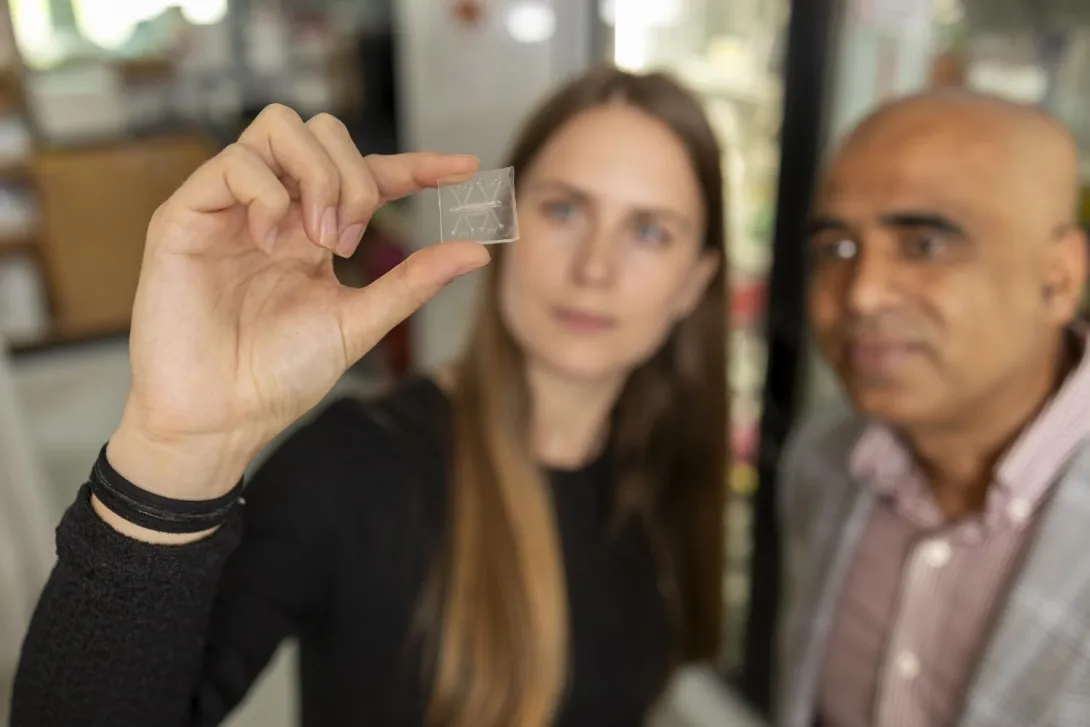
Two Georgia Tech researchers looking at a biomedical chip.

University research drives U.S. innovation, and Georgia Institute of Technology is leading the way.  

The latest Higher Education Research and Development (HERD) Survey from the National Science Foundation (NSF) places Georgia Tech as No. 2 nationally for federally sponsored research expenditures in 2024. This is Georgia Tech’s highest-ever ranking from the NSF HERD survey and a 70% increase over the Institute's 2019 numbers.  

In total expenditures from all externally funded dollars (including the federal government, foundations, industry, etc.), Georgia Tech is ranked at No. 6.  

Tech remains ranked No. 1 among universities without a medical school — a major accomplishment, as medical schools account for a quarter of all research expenditures nationally. 

“Georgia Tech’s rise to No. 2 in federally sponsored research expenditures reflects the extraordinary talent and commitment of our faculty, staff, students, and partners. This achievement demonstrates the confidence federal agencies have in our ability to deliver transformative research that addresses the nation’s most critical challenges,” said Tim Lieuwen, executive vice president for Research.   

Overall, the state of Georgia maintained its No. 8 position in university research and development, and for the first time, the state topped the $4 billion mark in research expenditures. Georgia Tech provides $1.5 billion, the largest state university contribution. In the last five years, federal funding for higher education research in the state of Georgia has grown an astounding 46% — 10 points higher than the U.S. rate. 

Lieuwen said, “Georgia Tech is proud to lead the state in research contributions, helping Georgia surpass the $4 billion mark for the first time. Our work doesn’t just advance knowledge — it saves lives, creates jobs, and strengthens national security. This growth reflects our commitment to drive innovation that benefits Georgia, our country, and the world.” 

About the NSF HERD Survey 

The NSF HERD Survey is an annual census of U.S. colleges and universities that expended at least $150,000 in separately accounted for research and development (R&D) in the fiscal year. The survey collects information on R&D expenditures by field of research and source of funds and also gathers information on types of research, expenses, and headcounts of R&D personnel. 

About Georgia Tech's Research Enterprise 

The research enterprise at Georgia Tech is led by the Executive Vice President for Research, Tim Lieuwen, and directs a portfolio of research, development, and sponsored activities. This includes leadership of the Georgia Tech Research Institute (GTRI), the Enterprise Innovation Institute, 11 interdisciplinary research institutes (IRIs), Office of Commercialization, Office of Corporate Engagement, plus research centers, and related research administrative support units. Georgia Tech routinely ranks among the top U.S. universities in volume of research conducted.

News Contact

Angela Ayers
Assistant Vice President of Research Communications
Georgia Tech

Dec. 10, 2025
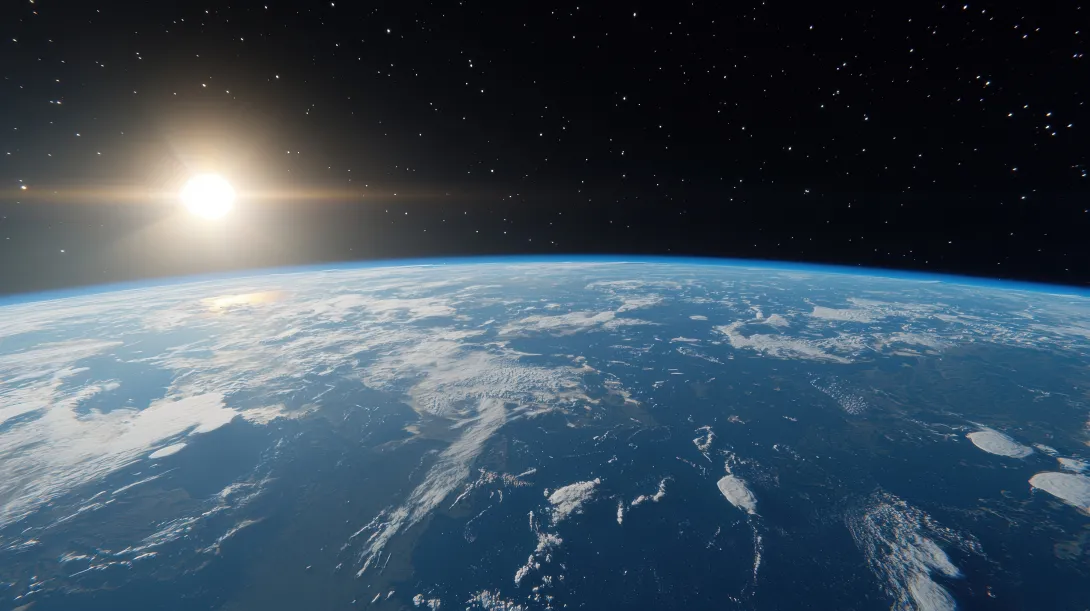
Picture of Earth from Space

Most breakthroughs in space don’t begin as fully formed missions. They begin as questions that are still early, exploratory or simply too uncertain and interdisciplinary for traditional funding paths. 

At Georgia Tech, the Space Research Institute (SRI) brings together space research efforts across campus to answer those questions. 

This year, SRI announced the inaugural recipients of its new Centers, Programs and Initiatives (CPI) seed grant program, with awards to fund 17 research centers, programs and initiatives spanning five colleges and 11 schools across Georgia Tech.  

“This first cohort represents the breadth and ambition of space research at Georgia Tech,” said Jud Ready, executive director of the Space Research Institute. “Our goal is to support researchers across the whole arc, from pressure-testing early ideas to helping more mature efforts reach the next stage of technology readiness and development.” 

Structured across three progressive tiers—Centers, Programs, and Initiatives—the CPI Seed Grant program is open to all faculty and staff from any Georgia Tech college or affiliated organization, including the Georgia Tech Research Institute (GTRI) and the Enterprise Innovation Institute (EI²). Launched this year and planned as an annual program across all three tiers, it is designed to meet teams where they are and to help promising ideas gain the collaboration networks needed to scale into major research efforts. 

This year’s awardees explore topics across the spectrum of modern space research, covering satellite-based cloud computing, analog space missions, supermassive black hole binaries, radar-equipped rovers for lunar exploration, climate sensing, human performance beyond Earth, and a dozen other space-related research areas at Georgia Tech.  

Together, the projects map onto SRI’s core themes: making space more accessible; living beyond Earth; assured access to space; how space helps us understand our place in the universe; policy, international affairs, and commercialization. 

During their funding period, CPI teams are expected to demonstrate excellence across three core areas: advancing scientific and technological innovation, developing talent, and pursuing work with clear societal or economic relevance. That may take many forms, from publications, prototypes, and interdisciplinary mentorship opportunities to training students and postdocs in space-related skills, to laying the groundwork for commercialization, or addressing challenges such as climate change or disaster mitigation. 

Each team will use its funding differently—supporting workshops on campus, conference travel, prototyping, experimentation, or visits with collaborators or sponsors —but all share a common trajectory. The CPI program is designed to nurture teams into viable, externally funded, multi-investigator research efforts, providing the momentum needed to compete for major national and international awards.  

With these 17 seed grants, SRI is creating pathways for ideas that begin on campus to shape missions, technologies, and scientific discoveries beyond it. 

Faculty and staff interested in getting involved can attend the January 28 SRI luncheon, where each awardee will briefly present their work and recruit collaborators. 

The Fall 2025 SRI CPI Seed Grant recipients are: 

Research Centers 

Research Programs 

Compartments in Biological Systems: From Condensates to Communities | Frank Rosenzweig, School of Biological Sciences 

Research Initiatives 

Using Art to Highlight Failure as Progress in Space Exploration | Joyce Shi Sim, School of Earth and Atmospheric Sciences 

Flow Instabilities and Fluid Dynamics for Space Applications |  Suhas S. Jain, George W. Woodruff School of Mechanical Engineering; Mohammad Mohaghar, School of Civil and Environmental Engineering; and Don Webster, School of Civil and Environmental Engineering 

Extreme-Environment Autonomous Microsystems | John Cressler, Farrokh Ayazi, Nima Ghalichechian, and Jane Gu, School of Electrical and Computer Engineering; and Joshua Kovitz, Georgia Tech Research Institute 

Southeast Analog Initiative at Georgia Tech | Christopher Carr, Daniel Guggenheim School of Aerospace Engineering 

RESCUE: Remote Environmental Sensing for Climate, Urban, and Ecological Systems | Lilian Dove, School of Earth and Atmospheric Sciences; and Rounaq Basu, School of City and Regional Planning 

SPRITE: Building a MIDEX Astrophysics Mission at Georgia Tech | Feryal Özel, School of Physics 

Bioastronautics Initiative | Christopher E. Carr, School of Aerospace Engineering, School of Earth and Atmospheric Sciences; Thom Orlando, School of Chemistry and Biochemistry; and Álvaro Romero-Calvo, School of Aerospace Engineering 

Toward a Georgia Tech NSF Expedition on Computing in Space | Ada Gavrilovska, School of Computer Science; and Saman Zonouz, School of Cybersecurity and Privacy 

FulminoSat: A CubeSat Formation Concept for Ionospheric Measurement through Multi-Modal Transient Signal Detection | Michael Peterson, Megan Birch, and Levi Boggs, Georgia Tech Research Institute; and Morris Cohen, School of Electrical and Computer Engineering 

Precise Characterization of Dust Grains for Lunar Surface Operations | Álvaro Romero-Calvo, School of Aerospace Engineering; and Michael Chapman, School of Physics  

Space Domain Awareness Research and Education | Douglas Hope, Georgia Tech Research Institute (GTRI) 

Development of a Radar Payload for Exploring Lunar and Martian Surfaces Using Rovers and Quadrotors | Indujaa Ganesh, School of Earth and Atmospheric Sciences; and Yashwanth Kumar Nakka, Daniel Guggenheim School of Aerospace Engineering 

Dec. 09, 2025
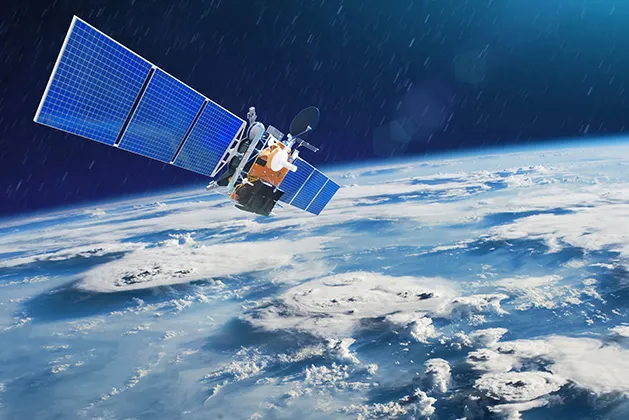
Satellite with large blue solar panels orbiting above Earth, showing cloud formations and the planet's curvature against a dark space background

Satellites keep our world connected — enabling everything from accurate weather forecasts to seamless video calls. At Georgia Tech’s Space Research Institute, researchers are advancing the science and shaping global policies that ensure these vital systems remain safely in orbit.

When we check the weather forecast, that information comes from satellites. When we FaceTime a friend, that call could come via satellites. From cellphone networks to national security systems, satellites are vital to our connected globe. Yet regulating how satellites function across borders is almost as complicated as the technology that launches them into space. Researchers in Georgia Tech’s Space Research Institute are shaping how satellites operate, both scientifically and politically.

Read more »

Dec. 01, 2025
2025 Gordon Bell Prize Rocket Simulation
Spencer Bryngelson and Florian Schäfer at SC25
Spencer Bryngelson Frontier Hackathon

Spaceflight is becoming safer, more frequent, and more sustainable thanks to the largest computational fluid flow simulation ever ran on Earth.

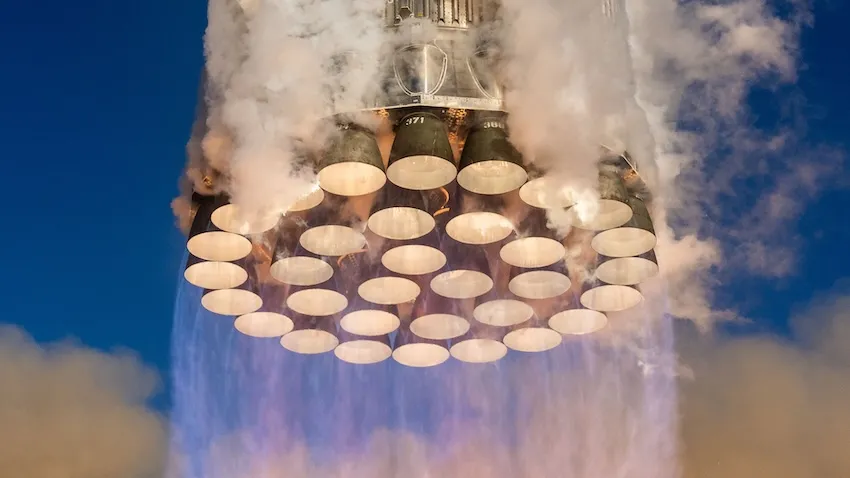
Inspired by SpaceX’s Super Heavy booster, a team led by Georgia Tech’s Spencer Bryngelson and New York University’s Florian Schäfer modeled the turbulent interactions of a 33-engine rocket. Their experiment set new records, running the largest ever fluid dynamics simulation by a factor of 20 and the fastest by over a factor of four.

The team ran its custom software on the world’s two fastest supercomputers, as well as the eighth fastest, to construct such a massive model.

Applications from the simulation reach beyond rocket science. The same computing methods can model fluid mechanics in aerospace, medicine, energy, and other fields. At the same time, the work advances understanding of the current limits and future potential of computing. 

The team finished as runners-up for the 2025 Gordon Bell Prize for its impactful, multi-domain research. Referred to as the Nobel Prize of supercomputing, the award was presented at the world’s top conference for high-performance computing (HPC) research.

“Fluid dynamics problems of this style, with shocks, turbulence, different interacting fluids, and so on, are a scientific mainstay that marshals our largest supercomputers,” said Bryngelson, an assistant professor with the School of Computational Science and Engineering (CSE).

“Larger and faster simulations that enable solutions to long-standing scientific problems, like the rocket propulsion problem, are always needed. With our work, perhaps we took a big dent out of that issue.”

The Super Heavy booster reflects the space industry’s move toward reusable multi-engine first-stage rockets that are easier to transport and more economical overall. 

However, this shift creates research and testing challenges for new designs.

Each of Super Heavy’s 33 thrusters expels propellant at ten times the speed of sound. As individual engines reach extreme temperatures, pressures, and densities, their combined interactions with the airframe make such violent physics even more unpredictable.

Frequent physical experiments would be expensive and risky, so scientists rely on computer models to supplement the engineering process. 

Bryngelson’s flagship Multicomponent Flow Code (MFC) software anchored the experiment. MFC is an open-source computer program that simulates fluid dynamic models. Bryngelson’s lab has been modifying MFC since 2022 to run on more powerful computers and solve larger problems. 

In computing terms, this MFC-enhanced model simulated fluid flow resolution at 200 trillion grid points and one quadrillion degrees of freedom. These metrics exceeded previous record-setting benchmarks that tallied 10 trillion and 30 trillion grid points.

This means MFC simulations provide greater detail and capture smaller-scale features than previous approaches. The rocket simulation also ran four times faster and achieved 5.7 times the energy efficiency of comparable methods.   

Integrating information geometric regularization (IGR) into MFC played a key role in attaining these results. This new approach improved the simulation’s computational efficiency and overcame the challenge of shock dynamics.

In fluid mechanics, shock waves occur when objects move faster than the speed of sound. Along with hampering the performance of airframes and propulsion systems, shocks have historically been difficult to simulate.

Computational scientists have used empirical models based on artificial viscosity to account for shocks. Although these approaches mimic the physical effects of shock waves at the microscopic scale, they struggle to effectively capture the large-scale features of the flow. 

Information geometry uses curved spaces to study concepts of statistics and information. IGR uses these tools to modify the underlying geometry in fluid dynamics equations. When traveling in the modified geometry, fluid in the model preserves the shocks in a more natural way. 

“When regularizing shocks to much larger scales relevant in these numerical simulations, conventional methods smear out important fine-scale details,” said Schäfer, an assistant professor at NYU’s Courant Institute of Mathematical Sciences.

“IGR introduces ideas from abstract math to CFD that allow creating modified paths that approach the singularity without ever reaching it. In the resulting fluid flow, shocks never become too spiky in simulations, but the fine-scale details do not smear out either.” 

Simulating a model this large required the Georgia Tech researchers to run MFC on El Capitan and Frontier, the world's two fastest supercomputers. 

The systems are two of four exascale machines in existence. This means they can solve at least one quintillion (“1” followed by 18 zeros) calculations per second. If a person completed a simple math calculation every second, it would take that person about 30 billion years to reach one quintillion operations.

Frontier is housed at Oak Ridge National Laboratory and debuted as the world’s first exascale supercomputer in 2022. El Capitan surpassed Frontier when Lawrence Livermore National Laboratory launched it in 2024.

To prepare MFC for performance on these machines, Bryngelson’s lab followed a methodical approach spanning years of hardware acquisition and software engineering. 

In 2022, Bryngelson attained an AMD MI210 GPU accelerator. Optimizing MFC on the component played a critical step toward preparing the software for exascale machines.

AMD hardware underpins both El Capitan and Frontier. The MI300A GPU powers El Capitan while Frontier uses the MI250X GPU. 

After configuring MFC on the MI210 GPU, Bryngelson’s lab ran the software on Frontier for the first time during a 2023 hackathon. This confirmed the code was ready for full-scale deployment on exascale supercomputers based on AMD hardware. 

In addition to El Capitan and Frontier, the simulation ran on Alps, the world’s eight-fastest supercomputer based at the Swiss National Supercomputing Centre. It is the largest available system that features the NVIDIA GH200 Grace Hopper Superchip.

Like with AMD GPUs, Bryngelson acquired four GH200s in 2024 and began configuring MFC to the latest hardware innovation powering New Age supercomputers. Later that year, the Jülich Research Centre accepted Bryngelson’s group into an early access program to test JUPITER, a developing supercomputer based on the NVIDIA superchip.

The group earned a certificate for scaling efficiency and node performance on the way toward validating that their code worked on the GH200. The early access project proved successful for JUPITER, which launched in 2025 as Europe’s fastest supercomputer and fourth fastest in the world.

“Getting the level of hands-on experience with world-leading supercomputers and computing resources at Georgia Tech through this project has been a fantastic opportunity for a grad student,” said CSE Ph.D. student Ben Wilfong.

“To leverage these machines, I learned more advanced programming techniques that I’m glad to have in my tool belt for future projects. I also enjoyed the opportunity to work closely with and learn from industry experts from NVIDIA, AMD, and HPE/Cray.”

El Capitan, Frontier, JUPITER, and Alps maintained their rankings at the 2025 International Conference for High Performance Computing Networking, Storage and Analysis (SC25). Of note, the TOP500 announced at SC25 that JUPITER surpassed the exaflop threshold. 

The SC Conference Series is one of two venues where the TOP500 announces updated supercomputer rankings every June and November. The TOP500 ranks and details the 500 most powerful supercomputers in the world. 

The SC Conference Series serves as the venue where the Association for Computing Machinery (ACM) presents the Gordon Bell Prize. The annual award recognizes achievement in HPC research and application. The Tech-led team was among eight finalists for this year’s award.

Along with Bryngelson, Georgia Tech members included Ph.D. students Anand Radhakrishnan and Wilfong, postdoctoral researcher Daniel Vickers, alumnus Henry Le Berre (CS 2025), and undergraduate student Tanush Prathi.

Schäfer’s partnership with the group stems from his previous role as an assistant professor at Georgia Tech from 2021 to 2025. 

Collaborators on the project included Nikolaos Tselepidis and Benedikt Dorschner from NVIDIA, Reuben Budiardja from ORNL, Brian Cornille from AMD, and Stephen Abbot from HPE. All were co-authors of the paper and named finalists for the Gordon Bell Prize. 

“I’m elated that we have been nominated for such a prestigious award. It wouldn't have been possible without the combined and diligent efforts of our team,” Radhakrishnan said. 

“I’m looking forward to presenting our work at SC25 and connecting with other researchers and fellow finalists while showcasing seminal work in the field of computing.”

News Contact

Bryant Wine, Communications Officer
bryant.wine@cc.gatech.edu

Nov. 26, 2025
Jacob Adler (left) and Sharissa Thompson (right) conducting research.

Jacob Adler (left) and Sharissa Thompson (right) conducting research.

This research is shared jointly with the Arizona State University newsroom.

The surface and atmosphere of Mars have seen many changes over its 4.5-billion-year history. While the planet's current atmosphere is very thin (about 0.6% of Earth's), it was once thick enough to sustain liquid water.

According to new research published in Communications Earth & Environment, these atmospheric changes could play a key role in how we interpret sediment deposits on the planet.

“We found that the changing pressure resulting from atmospheric changes would have produced sediment-rich water flows with varying shapes over time,” says co-author and Georgia Tech Assistant Professor Frances Rivera-Hernández, adding that since Mars’ present-day atmosphere is very thin, the associated low pressures would produce behaviors not seen on Earth. 

“Earth’s thicker atmosphere means that there are higher pressures on our planet, which produce very different behaviors,” she explains. “This means that Earth analogs may not be reliable for interpreting some Martian sedimentary landscapes.”

“At low present-day pressures, Mars mud would boil and levitate if the surface temperature was warm, or freeze and flow more like lava if the temperature was cold,” adds study lead Jacob Adler, who began working on the project while a postdoctoral researcher in Rivera-Hernández’s PLANETAS Lab at Georgia Tech, and continued the study in his current role as an assistant research professor in Arizona State University's School of Earth and Space Exploration

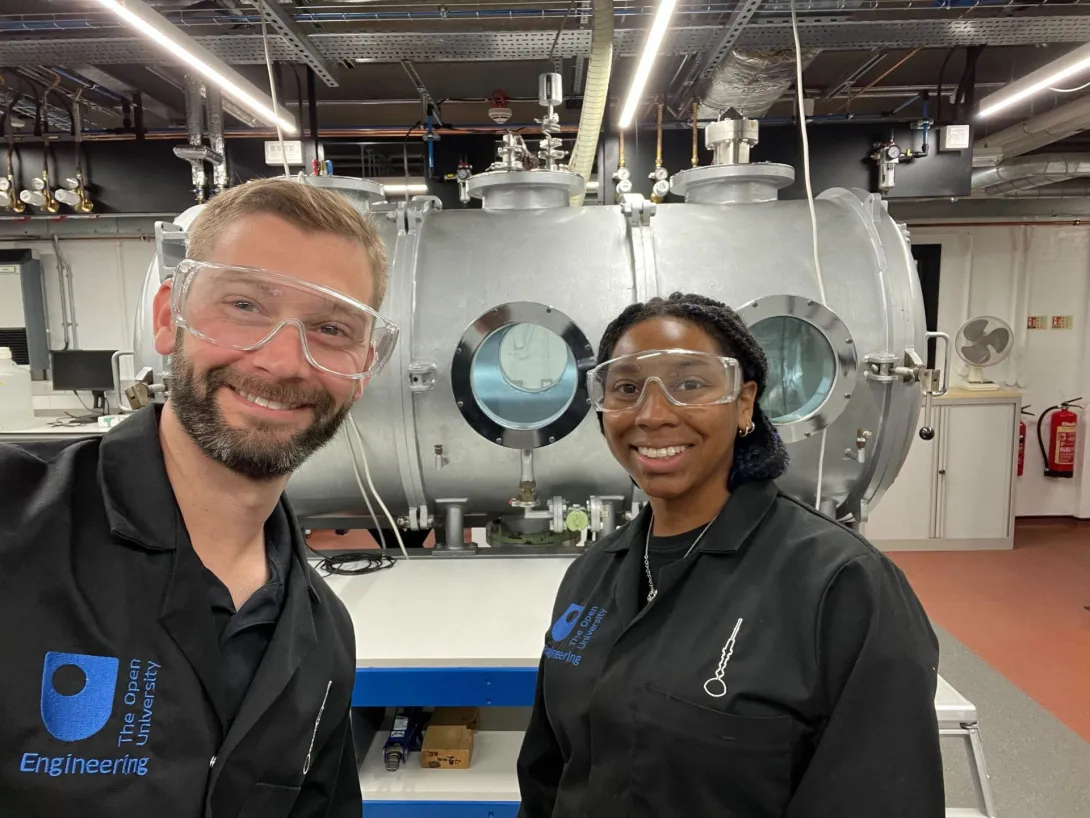
The team also included Georgia Tech Ph.D. student and current PLANETAS Lab member Sharissa Thompson, along with researchers from the Open University and Czech Academy of Sciences.

“This study adds a critical layer of nuance to analogue research,” says Rivera-Hernández. “By comparing our lab results to real Martian landforms, we can better reconstruct Mars’ past climate — leading to increasingly successful research in the future.”

Making Martian mud

In order to recreate past conditions on the red planet, the team conducted over 70 experiments in a Mars simulation chamber, testing how flowing water-sediment mixtures would be affected by the varying pressures and temperatures throughout the planet’s history.

Thompson, who specializes in understanding these types of mixtures, played a key role in interpreting the results. “As part of my Ph.D. work at Georgia Tech, I uncover how and why flow shapes evolve as pressure changes, which helped us understand how these flows could have shifted with changing pressures on Mars over time,” she says. “I’m thrilled to have contributed to the innovative flow experiments this study conducted.”

The experiments revealed that at higher atmospheric pressures, water and mud would have similar flow physics (rheology) as on Earth, indicating that some of the oldest sedimentary features on the surface should appear similar to Earth environments. In these scenarios, surface conditions may also have been more habitable for life.

On the other hand, as Mars started to lose most of its atmosphere, the dominant physics in sediment flow experiments changed to freezing and boiling. The team found that at the lower pressures Mars has experienced after the Noachian, the rheology and deposit shapes (morphology) were not at all Earth-like.

“When we mapped out where on Mars, we would expect this different behavior, we found that this opposite behavior could happen at the same time at different locations on the planet,” Adler shares. “The small-scale climate variations across Mars’ topography are enough to see these opposing effects.”

Decoding Mars' past

The research suggests that studying the specific shapes of features like sediment flows, debris flows and mudflows could help scientists better estimate climate conditions. It also highlights how laboratory experiments are a critical part of planetary science activities, as they can help scientists better interpret remote sensing and modeling results.

"By finding matching morphologies of what we see on Mars and what we see in these lab experiments, we might be able to better time-stamp the paleoclimate record,” Adler explains.

"We’ve sent rover missions to Mars largely because we find compelling remote sensing evidence of deposits formed by water or mud that could indicate a habitable environment,” he adds. “We are often eager to compare what we find to Earth analogs, but these are not always suitable for comparison. This study shows there is still much we can learn about Mars by conducting experiments under Mars conditions.”


Funding: NASA

DOI: https://doi.org/10.1038/s43247-025-02879-w 

Nov. 20, 2025
Three Georgia Tech researchers working together in the lab on cancer research

Georgia Institute of Technology has been ranked 7th in the world in the 2026 Times Higher Education Interdisciplinary Science Rankings, in association with Schmidt Science Fellows. This designation underscores Georgia Tech’s leadership in research that solves global challenges. 

“Interdisciplinary research is at the heart of Georgia Tech’s mission,” said Tim Lieuwen, executive vice president for Research. “Our faculty, students, and research teams work across disciplines to create transformative solutions in areas such as healthcare, energy, advanced manufacturing, and artificial intelligence. This ranking reflects the strength of our collaborative culture and the impact of our research on society.” 

As a top R1 research university, Georgia Tech is shaping the future of basic and applied research by pursuing inventive solutions to the world’s most pressing problems. Whether discovering cancer treatments or developing new methods to power our communities, work at the Institute focuses on improving the human condition.  

Teams from all seven Georgia Tech colleges, 11 interdisciplinary research institutes, the Georgia Tech Research Institute, Enterprise Innovation Institute, and hundreds of research labs and centers work together to transform ideas into real results.

News Contact

Angela Ayers

Nov. 13, 2025
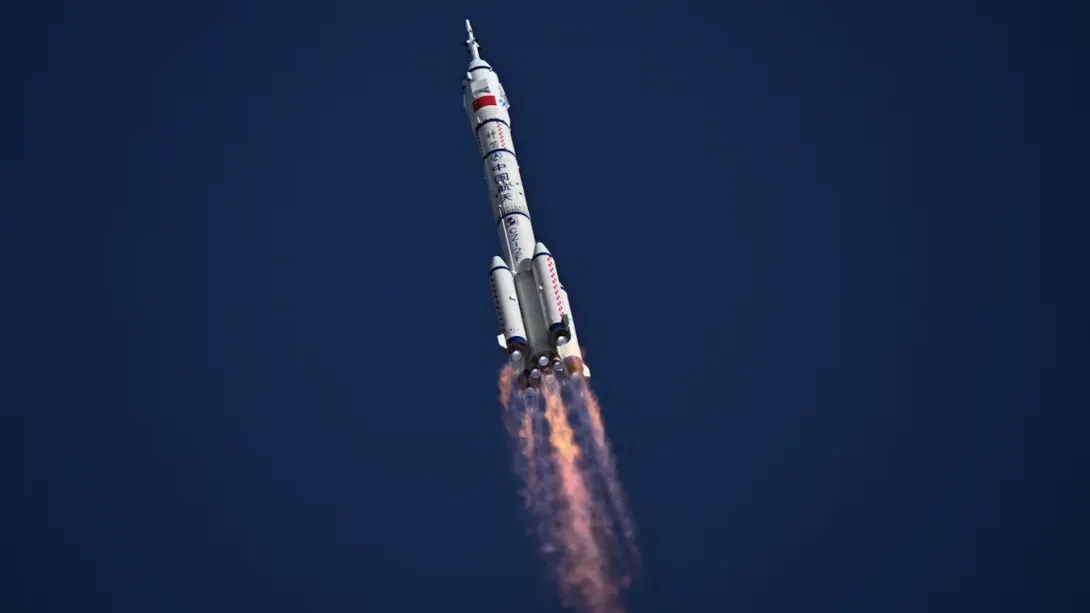
 China’s Shenzhou-20 spacecraft – shown here hitching a ride on a Long March-2F carrier rocket – was hit by a piece of space debris. Pedro Pardo/AFP via Getty Images

China’s Shenzhou-20 spacecraft – shown here hitching a ride on a Long March-2F carrier rocket – was hit by a piece of space debris. Pedro Pardo/AFP via Getty Images

China’s Shenzhou-20 spacecraft took a hit from a piece of space debris floating through orbit, causing Chinese officials to delay the spacecraft’s return from its Tiangong space station in early November 2025.

In addition to stranding the three Chinese astronauts – called taikonauts – who were set to return to Earth, this incident highlights the increasing risks posed to China and the broader international community by the growing amount of space debris.

I study China’s space program. My research suggests that national pride plays an important role in China’s growing space ambitions. As China continues to invest in expensive space capabilities, it will also likely become increasingly sensitive to losing them. The rise in space debris may create incentives for Chinese officials to cooperate with the United States on measures that reduce the risk of collisions.

Space Debris – a Growing Issue

Space debris is creating growing problems for space operations. It includes any artificial objects in orbit not operating as satellites or spacecraft. It ranges in size from a fleck of paint to large rocket bodies roughly the size of a school bus.

In the most commonly used orbit – low Earth orbit – this debris can move at speeds of roughly 18,000 mph, almost seven times the speed of a bullet. At such high speeds, even tiny pieces of space debris can be highly destructive, to the point that this debris might continue to multiply until one day it makes certain critical orbits unusable. When space debris collides with other objects and fragments, they can break into smaller pieces, generating even more debris.

It’s somewhat ironic that China’s spacecraft took a hit from space junk. The country is responsible for creating the majority of space debris. In 2007, China blew up a defunct Fengyun-1c weather satellite to test an anti-satellite weapon. It generated the most space debris in history – over 3,000 pieces are still orbiting today.

This short clip shows the increase in space debris in orbit around Earth.

On several occasions, the International Space Station has had to maneuver to narrowly avoid being struck by debris from this test, including as recently as 2021.

Anti-Satellite Weapons

Why would China, or any other country, want to develop an anti-satellite weapon? Satellites provide significant benefits to militaries. They help with reconnaissance and intelligence, allow for the precise targeting and guidance of long-range munitions, support communication over large distances and supply weather data, to name just a few uses.

These advantages were showcased during the first Gulf War, often called the “first space war.” The United States used space technologies to quickly and decisively defeat the Iraqi military within weeks, and with far fewer casualties than expected. The Gulf War had a profound impact on Chinese military thinking, with analysts in the People’s Liberation Army recognizing the importance of space technologies in modern warfare.

Whereas the United States has been and remains highly dependent on space capabilities, China has historically been less dependent on them. This means that China has traditionally had far less to lose from striking satellites in orbit and comparatively more to gain from disabling an adversary’s satellites.

Since the 1990s, China has invested in technologies that can jam, disable or outright destroy another country’s satellites. This effort has been driven by a desire to counter what it sees as a key vulnerability of the U.S. military – its heavy reliance on space capabilities.

Yet much has changed since China’s first anti-satellite test in 2007.

China has gradually narrowed the gap with the United States in space capabilities and is now one of the most powerful spacefaring nations on Earth. As a result, China now has more at stake if it were to lose access to space.

Space debris is becoming a serious threat to Chinese interests in space. In 2022, for example, reports emerged that debris from Russia’s 2021 ASAT test came dangerously close to a Chinese satellite. Similarly, in 2021 China filed a claim at the United Nations that China’s Tiangong space station had to perform avoidance maneuvers due to “close encounters” with Starlink satellites. And now, in November 2025, China’s Shenzhou-20 spacecraft has actually been struck by space debris.

Recognizing the Problem

It is too early to gauge how seriously Chinese officials view the threat of space debris. However, the high-profile nature of this recent incident may alert China’s public and officials to the risks posed by space debris.

China’s space station, its astronauts and its satellites are important to the Chinese Communist Party. If space debris permanently destroyed parts or all of China’s space station, or even killed a Chinese astronaut, it would likely lead to significant public outcry.

China’s space station is a project over three decades in the making and is the crown jewel of its space program. The Tiangong is set to become the only space station in orbit if the United States proceeds with its plans to deorbit the ISS in 2030.

A space station, which looks like several connected cylinders with solar panels coming off them, orbiting the planet Earth.

An illustration of China’s Tiangong space station. alejomiranda/iStock via Getty Images

Just as an owner of an expensive Lamborghini may become increasingly worried about dangerous road conditions that may damage their prized possession, Chinese officials may become anxious about China’s ability to operate its space station should space junk continue to clutter low Earth orbit.

Even if space debris does not damage China’s space station, it still poses a risk to Chinese satellites. And low Earth orbit is likely to become only more crowded, as SpaceX has announced plans to add up to 40,000 Starlink satellites in orbit, and China plans to add tens of thousands more satellites in low Earth orbit through its Guowang and Qianfan satellite megaconstellations.

China’s growing vulnerability to space debris creates an area of mutual concern where the United States and China may be able to work together to avoid future accidents.

Three astronauts walking down a street lined with crowds in stands waving Chinese flags.

China’s human spaceflight program is a point of national pride. Greg Baker/AFP via Getty Images

Risk-reduction measures could include the two countries notifying each other about potential collisions. China and the United States could also open discussions around how to safely operate satellites or remove them from orbit when they’re no longer useful.

It remains to be seen what lessons Chinese decision-makers draw from this recent episode. But the problem of space debris is not going away.The Conversation


This article is republished from The Conversation under a Creative Commons license. Read the original article.

News Contact

Author
, assistant professor of international affairs, Georgia Institute of Technology

Georgia Institute of Technology Media Contact
Shelley Wunder-Smith, shelley.wunder-smith@research.gatech.edu 

Subscribe to Space Research Initiative