
Aug. 04, 2025

Charles Anderson, a rising senior in the School of Electrical and Computer Engineering, and Matthew Fernandez, from the George W. Woodruff School of Mechanical Engineering, have been named 2025 Astronaut Scholars by the Astronaut Scholarship Foundation (ASF). They are among 74 students selected from 51 universities nationwide to receive this prestigious honor.
Now in its 40th year, the Astronaut Scholarship supports exceptional undergraduates who are dedicated to pursuing research-oriented careers in STEM (science, technology, engineering, and mathematics). Recipients receive up to $15,000 for academic expenses, a trip to ASF’s Innovators Symposium & Gala, and access to a lifelong network of astronauts, alumni, and supporters.
Charles Anderson
Charles Anderson
Anderson, an electrical engineering major, conducts research in the Bhamla Lab under Associate Professor Saad Bhamla in the School of Chemical and Biomolecular Engineering. His current project, the Evapinator, is a low-cost, portable technology designed to preserve biological samples without ultra-cold freezers or lyophilization. It offers rapid preservation within one to two hours, achieving recovery rates comparable to traditional methods.
Through this work, Anderson is advancing biomedical engineering and global health, and he is eager to explore further research avenues that create accessible solutions for underserved populations.
Matthew Fernandez
Fernandez, a 2024 Astronaut Scholar and mechanical engineering major, is continuing as an Astronaut Scholar this year and is also a recipient of the Godbold Scholarship and the Provost Scholarship. He is minoring in robotics and has worked on developing compliant limbless systems to create a robot with efficient underwater locomotion techniques.
Fernandez plans to pursue a Ph.D. in Robotics after graduating from Georgia Tech and aims to use bio-inspired robotics to enable multi-modal locomotion and the navigation of previously untouched environments.
“This award underscores the innovative work Charles and Matthew are doing at Georgia Tech,” said Georgia Brunner, Prestigious Fellowships Advisor in the Office of Undergraduate Education and Student Success. “We are proud to support their journeys and see them thrive among the ASF community.”
Georgia Tech students and alumni interested in applying for prestigious fellowships are encouraged to contact Georgia Brunner at fellowshipsadvising@gatech.edu or visit the prestigious fellowships website.
News Contact
Georgia Brunner
fellowshipsadvising@gatech.edu
Jul. 30, 2025
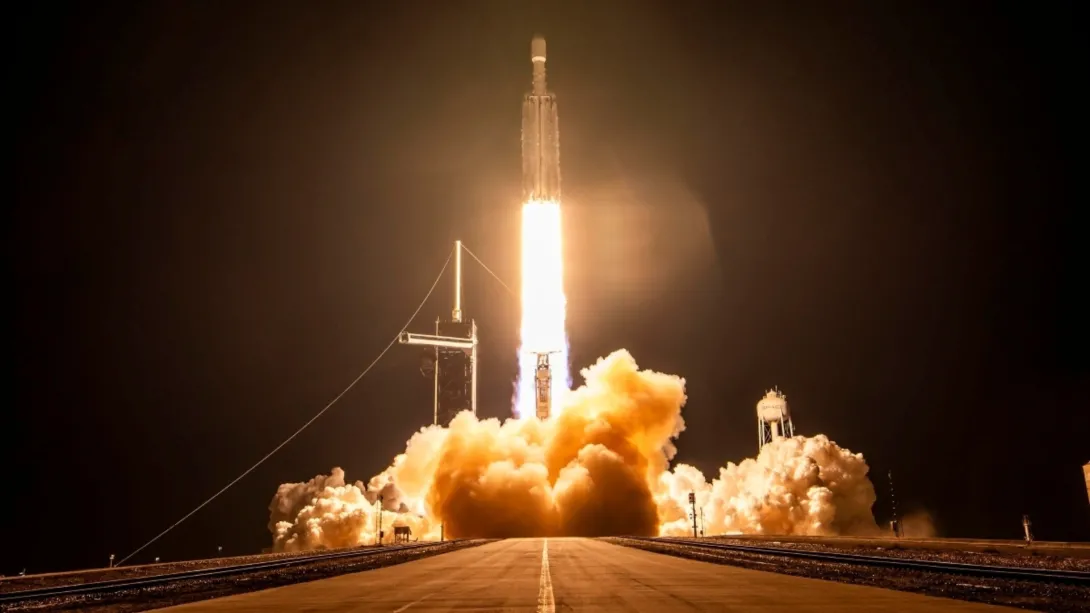
Powered by 27 Merlin engines, generating more than five million pounds of combined thrust, a SpaceX Falcon Heavy rocket lifts off from Launch Complex (LC)-39A at NASA’s Kennedy Space Center, Dec. 28, 2023 at 8:07 p.m. EST, carrying the U.S. Space Force (USSF)-52 mission into Earth orbit. (Image Credit: U.S. Space Force)
On June 25, 2024, China’s Chang’e 6 mission safely returned to Earth, becoming the first mission in the world to retrieve lunar samples from the far side of the moon. This feat represents one of many national and commercial efforts targeting the Lunar South Pole to explore a region that is believed to be rich in water ice, receives high levels of sunlight, and which may contain other strategically valuable rare earth materials such as titanium, aluminum, iron, and magnesium. As such, the Chang’e 6 mission represents the first of what will likely be many future missions.
Countries and companies seek to gain access to what is increasingly viewed as prime real estate for future space operations that may enable future scientific discovery and allow for significant commercial gain. However, this increase of lunar activities may very well spark an international crisis due to the absence of clearly defined rules and norms related to the moon. As more state actors and private firms develop plans and capabilities to establish a presence on the moon, the window for addressing these challenges prior to a crisis is closing. The United States and its allies should seek to engage China, Russia, and other spacefaring nations in an inclusive dialogue and put procedures in place to share information on potential norms and best practices, technical criteria, mechanisms, and procedures for engaging in lunar activities. This dialogue should incorporate information and experience from commercial actors involved in lunar activity, and it should remain flexible as we continue to learn about the lunar environment.
While China’s Chang’e 6 is remarkable for its scientific value, this mission also carries with it a reminder of the looming challenges surrounding geopolitical competition in lunar space. This competition raises a host of questions: Who can use and claim ownership to lunar resources? What rules and procedures should be established to avoid armed conflict between spacefaring actors? The answers to the questions have clear policy implications. Without a clear legal framework or norms, competition among commercial and national actors could trigger conflict in and among spacefaring actors.
Stress-Testing the Existing Space Governance Framework
To explore these critical issues — together with our colleagues Svetla Ben Itzhak, Gregory Miller, and James Clay Moltz — we led a tabletop exercise that envisioned a plausible crisis in 2029. This exercise, which included American regional and space experts with non-governmental and government experience, presented the following scenario: An Indian private company, Chandra Ltd., lands near Shackleton Crater and declares a 50-kilometer “safety zone” around its operations. This exercise was designed to intentionally invoke the language of “safety zones” articulated in the U.S.-led Artemis Accords, and which has been criticized by both Russia and China. Moreover, the exercise introduced a twist: By using a fictional Indian space company, it became clear that the language of the Artemis Accords created challenges not only for China and Russia but also for the United States. In the scenario, two other commercial entities, one American and one Chinese, had previously announced plans to land in the same region that had been covered within the Indian space company’s designated safety zone.
This fictional crisis was designed to stress-test the existing space governance framework and examine how a multi-stakeholder environment might respond. What we found was instructive: Clear rules did not emerge from the crisis. Instead, the focus was on the process of developing rules that were inclusive, fair, and adaptable. Moreover, the exercise raised important questions about the role of private actors in shaping lunar governance and suggested the importance of third parties with greater perceived neutrality in developing guidelines for preventing future conflict. More broadly, these findings suggest, as we highlight in our recent paper, that while there is flexibility and willingness to cooperate on developing a new lunar governance framework, states might not yet have well-formed views for negotiations. States are just learning about this evolving environment in which the strength of the norms around governance is unclear.
The Heart of the Matter: Safety Zones in a Legal Gray Area
The Artemis Accords, a non-binding set of principles developed by the United States and its partners and signed by over 50 countries to enhance the governance of civil exploration and the use of outer space, encourage the use of safety zones to promote transparency and reduce the risk of harmful interference with the activities of other actors. However, the accords do not specify the process of how to use a safety zone or how even to define one, beyond general guidance to leverage commonly accepted scientific and engineering principles. The concept of safety zones has proved controversial to other major spacefaring actors such as China and Russia, with some Chinese analysts characterizing it as a form of colonization and Roscosmos director Gen. Dmitry Rogozin likening it to the U.S. invasion of Iraq. Hyperbole aside, the contention is that a country could make de facto territorial claims, restricting the access of other actors to strategically valuable sites, under the guise of safeguarding scientific operations. At an even more fundamental level, the foundational Outer Space Treaty, upon which the Artemis Accords is grounded, requires parties to avoid harmful interference with others’ activities and leaves key terms such as “due regard” undefined.
This ambiguity leaves room for diverging interpretations. In our scenario, the U.S. team, which was divided into military and civil-commercial teams, viewed the safety zone as a useful, albeit imperfect, deconfliction tool. The U.S. team, however, worried that overly broad or unilateral declarations could amount to de facto territorial claims, thereby undermining the Outer Space Treaty. Participants representing India defended the declaration as a necessary operational step, arguing it was technical in nature and consistent with international norms. They asserted that Chandra Ltd.’s actions reinforced the Artemis Accords. In sharp contrast, the Chinese and Russian teams rejected the safety zone, arguing that such claims lack legal standing subject to review within an inclusive international environment and body. This position adopted in a fictional tabletop exercise mirrors Russia and China’s real-world opposition to the Artemis Accords. In the exercise, the Russian and Chinese teams were concerned not just about the size of the zone but about the precedent it set and the absence of a multilateral process to govern it. They saw Chandra Ltd.’s actions as an example of how a commercial company could exploit a governance structure to benefit the United States.
Commercial Actors at the Forefront — and Under Scrutiny
The exercise also shed light on challenges surrounding the role of private actors in lunar governance. While participants playing the roles of American and Indian representatives tended to see commercial actors as essential stakeholders — capable, innovative, and already embedded in state policy — the Chinese and Russian teams rejected their authority to establish operational norms. For them, the notion that a private company could constrain the activities of other states or companies, even under the guise of safety, was both legally and politically unacceptable.
As private missions increase in number and complexity, and as governments rely on commercial partners to achieve national objectives, this legal gray zone is becoming increasingly muddled and unstable. This reflects not only the exponential growth role of the commercial sector, which now accounts for the most launches worldwide, led by SpaceX, but also a broader challenge in the evolving field of space law. Under Article VI of the Outer Space Treaty, states are responsible for the activities of non-governmental entities. However, the treaty does not define the scope of that supervision or what constitutes adequate authorization and continuing oversight. Geopolitical competition among the United States, Russia, and China raises the stakes even further. At a broader level, Russian President Vladimir Putin’s opposition and threats to Starlink’s operation in Ukraine was one of the first major events to question the relationship between commercial actors and national assets, raising questions about whether a country could be held responsible for the actions taken by private companies.
One of the most important findings from the tabletop exercise was that absent shared procedures, space norms will be shaped by precedent rather than principle. In world politics, there is no central authority to enforce law and thus compliance is more closely related to the costs of defying power, politics, and peer pressure. These dynamics form the basis of customary international law and mean that states will oppose a behavior that could establish legal norms unfavorable to their interests. Thus, if activities that become precedent contradict principle and go unchallenged, these activities can redefine what is considered lawful.
The exercise also exposed a political dimension to commercial activity: It matters who makes the first move. The outcome of this exercise may have been very different, as many participants acknowledged, if the declarant had been a U.S., Russian, or Chinese company. India’s perceived status as a relatively neutral space actor muted some reactions, as the only major competitor represented was China.
Takeaways
Our exercise serves as a cautionary tale: The United States and other leading spacefaring nations should create mechanisms and procedures in real time to avoid conflict and escalation. The tabletop exercise highlighted the importance of developing widely accepted technical criteria for safety zones and establishing both national and international procedures for proposing, deconflicting, and registering them. Preventing conflict related to activities on the moon will depend on the perceived legitimacy of these procedures. Stakeholders could create these procedures under the U.N. Committee on the Peaceful Uses of Outer Space working groups or another neutral forum to define the operational parameters of safety zones, including size, duration, purpose, and notification protocols. Another proposal was for an international registry of lunar activities, including planned landings, infrastructure, and declared zones — akin to how the International Telecommunication Union manages orbital slots and spectrum. These are issues that could potentially be considered within the Action Team for Lunar Activities Consultation formed earlier this year within the U.N. Committee for the Peaceful Uses of Outer Space.
Notably, many participants supported a phased approach to lunar governance: First, encourage consensus among like-minded actors (such as Artemis Accords signatories), and second, broaden the dialogue to include states outside that coalition. In our exercise, participants identified the United Arab Emirates as a promising convening power, able to host discussions with both developing and major spacefaring nations. This suggestion is similar to calls from other analysts for the United States to partner with “capable mid-tier partners” that are increasingly influential players in space.
Our exercise reinforced an important lesson. The perceived legitimacy of rules in space, as on Earth, is tied to the perceived fairness and transparency of the procedures used to create them. With no agreed-upon process for resolving lunar conflicts, underlying mistrust can exacerbate tensions between great powers with advanced space programs and those countries with developing space programs. The need for a rules-based order that also integrates commercial entities has never been higher. One such venue could be the U.N. Office for Outer Space Affairs Action Team on Lunar Activities Consultation. This Action Team could be a useful venue as it allows for information sharing and expert level input, including the perspectives of a range of public and private stakeholders, under the auspices of the United Nations.
With increasing activity at the Lunar South Pole, the window for building this process is closing. If international governance procedures are not in place, we will be left to manage conflict with less credibility and fewer tools.
Mariel Borowitz, Ph.D. is an associate professor in the Sam Nunn School of International Affairs at the Georgia Institute of Technology, director of the Georgia Tech Center for Space Policy and International Relations, and head of the Nunn School Program on International Affairs, Science, and Technology.
Lincoln Hines, Ph.D., is an assistant professor in the Sam Nunn School of International Affairs at the Georgia Institute of Technology. He is also a faculty affiliate at the Nunn School’s Center for Space Policy and International Relations and a 2025–2026 Wilson China Fellow at the Wilson Center.
Lawrence Rubin, Ph.D., is an associate professor in the Sam Nunn School of International Affairs at the Georgia Institute of Technology and an associate fellow at the International Institute for Strategic Studies.
Image: U.S. Space Force
This article is republished from War on the Rocks. Read the original article.
News Contact
Authors:
Mariel Borowitz, Lincoln Hines, and Lawrence Rubin
Michael Pearson, Ivan Allen College of Liberal Arts
Jul. 18, 2025
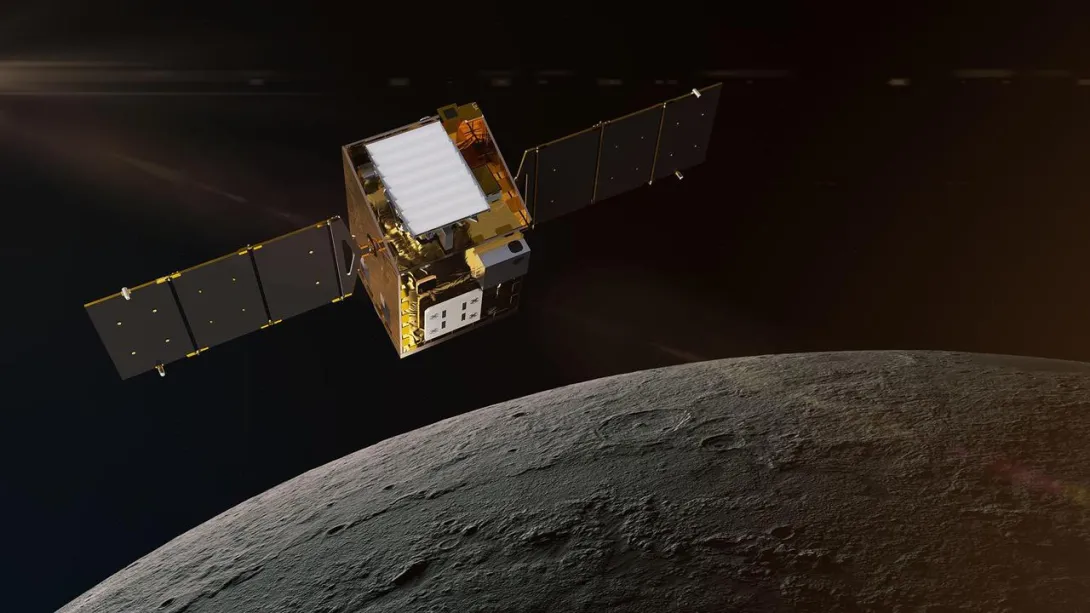
As more satellites launch into space, the satellite industry has sounded the alarm about the danger of collisions in low Earth orbit (LEO). What is less understood is what might happen as more missions head to a more targeted destination: the moon.
According to The Planetary Society, more than 30 missions are slated to launch to the moon between 2024 and 2030, backed by the U.S., China, Japan, India, and various private corporations. That compares to over 40 missions to the moon between 1959 and 1979 and a scant three missions between 1980 and 2000.
A multidisciplinary team at Georgia Tech has found that while collision probabilities in orbits around the moon are very low compared to Earth orbit, spacecraft in lunar orbit will likely need to conduct multiple costly collision avoidance maneuvers each year. The Journal of Spacecraft and Rockets published the Georgia Tech collision-avoidance study in March.
“The number of close approaches in lunar orbit is higher than some might expect, given that there are only tens of satellites, rather than the thousands in low Earth orbit,” says paper co-author Mariel Borowitz, associate professor in the Sam Nunn School of International Affairs in the Ivan Allen College of Liberal Arts.
Borowitz and other researchers attribute these risky approaches in part to spacecraft often choosing a limited number of favorable orbits and the difficulty of monitoring the exact location of spacecraft that are more than 200,000 miles away.
“There is significant uncertainty about the exact location of objects around the moon. This, combined with the high cost associated with lunar missions, means that operators often undertake maneuvers even when the probability is very low — up to one in 10 million,” Borowitz explains.
The Georgia Tech research is the first published study showing short- and long-term collision risks in cislunar orbits. Using a series of Monte Carlo simulations, the researchers modeled the probability of various outcomes in a process that cannot be easily predicted because of random variables.
“Our analysis suggests that satellite operators must perform up to four maneuvers annually for each satellite for a fleet of 50 satellites in low lunar orbit (LLO),” said one of the study’s authors, Brian Gunter, associate professor in the Daniel Guggenheim School of Aerospace Engineering.
He noted that with only 10 satellites in LLO, a satellite might still need a yearly maneuver. This is supported by what current cislunar operators have reported.
Favored Orbits
Most close encounters are expected to occur near the moon’s equator, an intersection point between the orbit planes of commonly used “frozen” and low lunar orbits, which are preferred by many operators. Other possible regions of congestion can occur at the Lagrangian points, or regions where the gravitational forces of Earth and the moon balance out. Stable orbits in these regions have names such as Halo and Lyapunov orbits.
“Lagrangian points are an interesting place to put a satellite because it can maintain its orbit for long periods with very little maneuvering and thrusting. Frozen orbits, too. Anywhere outside these special areas, you have to spend a lot of fuel to maintain an orbit,” he said.
Gunter and other researchers worry that if operators aren’t coordinated about how they plan lunar missions, opportunities for collision will increase in these popular orbits.
“The close approaches were much more common than I would have intuitively anticipated,” says lead study author Stef Crum.
The 2024 graduate of Georgia Tech’s aerospace engineering doctoral program notes that, considering the small number of satellites in lunar orbit, the need for multiple maneuvers was “really surprising.”
Crum, who is also co-founder of Reditus Space, a startup he founded in 2024 to provide reusable orbital re-entry services, adds that the cislunar environment is so challenging because “it’s incredibly vast.”
His research also examines ways to improve object monitoring in cislunar space. Maintaining continuous custody of these objects is difficult because a target’s position must be monitored over the entire duration of its trajectory.
“That wasn’t feasible for translunar orbits, given the vast volume of cislunar orbit, which stretches multiple millions of kilometers in three dimensions,” he says.
By estimating a satellite’s orbit using observed data and constraining the presumed location and direction of the satellite, rather than continuous tracking (a process known as continuous custody), Crum greatly simplified the process.
“You no longer need thousands of satellites or a set of enormous satellites to cover all potential trajectories,” he explains. “Instead, one or a few satellites are required, and operators can lose custody for a time as long as the connection is reacquired later.”
Since the team started their study, there has been a lot of interest in the moon and cislunar activity — both NASA and China’s National Space Administration are planning to send humans to the moon. In the last two years, India, Japan, the U.S., China, Russia, and four private companies have attempted missions to the moon.
Why the Moon
Spacefaring nations’ intense interest in exploring the lunar surface comes as no surprise given that the moon offers a variety of resources, including solar power, water, oxygen, and metals like iron, titanium, and uranium. It also contains Helium-3, a potential fuel for nuclear fusion, and rare earth metals vital for modern technology. With the recent discovery of water ice, it could be a plentiful source for rocket fuel that can be created from liquifying oxygen and hydrogen needed to launch deep space missions to destinations like Mars. In February, Georgia Tech announced that researchers have developed new algorithms to help Intuitive Machines’ lunar lander find water ice on the moon.
Commercial space companies like Axiom Space and Redwire Space, as well as space agencies, are actively building lunar infrastructure, from satellite constellations to orbital platforms to support communication, navigation, scientific research, and eventually space tourism.
A key project involves the Lunar Gateway, a joint venture of NASA and international space agencies like ESA, JAXA, and CSA, as well as commercial partners. Humanity’s first space station around the moon will serve as a central hub for human exploration of the moon and is considered a stepping stone for future deep space missions.
Getting Ahead of a Gold Rush to the Moon
All this activity underscores the urgency to get out in front of potential crowding issues — something that hasn’t occurred in LEO, where near-miss collisions, or conjunctions, are frequent. LEO, which is 100 to 1,200 miles above the Earth’s surface, is host to more than 14,000 satellites and 120 million pieces of debris from launches, collisions, and wear and tear, reports Reuters.
“Using the near-Earth environment as an example, the space object population has gone from approximately 6,000 active satellites in the early 2020s to an anticipated 60,000 satellites in the coming decade if the projected number of large satellite constellations currently in the works gets deployed. That poses many challenges in terms of how we can manage that sustainably,” observed Gunter. “If something similar happens in the lunar environment, say if Artemis (NASA’s program to establish the first long-term presence on the moon) is successful and a lunar base is established, and there is discovery of volatiles or water deposits, it could initiate a kind of gold rush effect that might accelerate the number of actors in cislunar space.”
For this reason, Borowitz argues for the need to begin working on coordination, either in the planning of the orbits for future missions or by sharing information about the location of objects operating in lunar orbit. She pointed out that spacecraft outfitted for moon missions are expensive, making a collision highly costly. Also, debris from such a scenario would spread in an unpredictable way, which could be problematic for other objects.
Gunter agreed, noting, “If we’re not careful, we could be putting a lot of things in this same path. We must ensure we build out the cislunar orbital environment in a smart way, where we’re not intentionally putting spacecraft in the same orbital spaces. If we do that, everyone should be able to get what they want and not be in each other’s way.”
Borowitz says some coordination efforts are underway with the UN Committee on the Peaceful Uses of Outer Space and the creation of an action team on lunar activities; however, international diplomacy is a time-consuming process, and it can be a challenge to keep pace with advancements in technology.
She contends that the Georgia Tech study could provide baseline data that “could be helpful for international coordination efforts, helping to ensure that countries better understand potential future risks.”
Gunter and Borowitz say that follow-on research for the team could involve looking into the Lunar Gateway orbit and other special orbits to see how crowded that space will likely get, and then do an end-to-end simulation of these orbits to determine the most effective way to build them out to avoid collision risks. Ultimately, they intend to develop guidelines to help ensure that future space actors headed to the moon can operate safely.
Jul. 15, 2025

The Laser Interferometer Gravitational-Wave Observatory (LIGO)’s LIGO-Virgo-KAGRA (LVK) collaboration has detected an extremely unusual binary black hole merger — a phenomenon that occurs when two black holes are pulled into each other's orbit and combine. Announced yesterday in a California Institute of Technology press release, the binary black hole merger, GW231123, is the largest ever detected with gravitational waves.
Before merging, both black holes were spinning exceptionally fast, and their masses fell into a range that should be very rare — or impossible.
“Most models don't predict black holes this big can be made by supernovas, and our data indicates that they were spinning at a rate close to the limit of what’s theoretically possible,” says Margaret Millhouse, a research scientist in the School of Physics who played a key role in the research. “Where could they have come from? It raises interesting questions.”
A binary black hole merger absorbs characteristics from both of the contributors, she adds. “As a result, this is not only the most massive binary black hole ever seen but also the fastest-spinning binary black hole confidently detected with gravitational waves.”
“GW231123 is a record-breaking event,” says School of Physics Professor Laura Cadonati, who has been a member of the LIGO Scientific Collaboration since 2002. “LIGO has been observing the cosmos for 10 years now. This discovery underscores that there is still so much that this instrument can help us learn.”
A Cosmic View
The findings challenge current theories on how smaller black holes form, says School of Physics Assistant Professor and LIGO collaborator Surabhi Sachdev. Smaller black holes are the result of supernovae: dying and collapsing stars. During that collapse, explosions can tear apart or eject part of the star’s mass — limiting the size of the black hole that forms.
“Black holes from supernovae can weigh up to about 60 times the mass of our Sun,” she says. “The black holes in this merger were likely the mass of hundreds of suns.”
Because of its size, GW231123 also allowed the team to study the merger in unprecedented detail. “LIGO has observed scores of black hole mergers,” says Cadonati. “Of these, GW231123 has provided us with the clearest view of the ‘grand finale’ of a merger thus far. This adds a new clue to solve the puzzle that are black holes, including their origins and properties.”
“While we saw that our expectations matched the data, the extreme nature of this event pushed our models to their limits,” Millhouse adds. “A massive, highly spinning system like this will be of interest to researchers who study how binary black holes form.”
Decoding a Split-Second Signal
Millhouse and School of Physics Postdoctoral Fellow Prathamesh Joshi used Einstein’s equations for general relativity to confirm LIGO’s detections.
To find black holes, LIGO measures distortions in spacetime — ripples that are created when two black holes collide. These patterns in gravitational waves can be used to find the signature signal of black hole collisions.
“In this case, the signal lasted for just one-tenth of a second, but it was very clear,” says Joshi. "Previously, we designed a special study to detect these interesting signals, which accounted for all the unusual properties of such massive systems — and it paid off!”
“To ensure it wasn’t noise, the Georgia Tech team first reconstructed the signal in a model-agnostic way,” Millhouse adds. “We then compared those reconstructions to a model that uses Einstein's equations of general relativity, and both reconstructions looked very similar, which helped confirm that this highly unusual phenomenon was a genuine detection.”
Sachdev says that seeing the signal at both LIGO Observatories — placed in Hanford, Washington and Livingston, Louisiana — was also critical. “These short signals are very hard to detect, and this signal is so unlike any of the other binary black holes that we've seen before,” she says. “Without both detectors, we would have missed it.”
A Decade of Discovery
While the team has yet to determine how the original black holes formed, one theory is that they may have resulted from mergers themselves. “This could have been a chain of mergers,” Sachdev explains. “This tells us that they could have existed in a very dense environment like a nuclear star cluster or an active galactic nucleus.” Their spins provide another clue as spinning is a characteristic usually seen in black holes resulting from a merge.
The team adds that GW231123 could provide clues on how larger black holes are formed — including the mysterious supermassive black holes at the center of galaxies.
“Gravitational wave science is almost a decade old, and we're still making fundamental discoveries,” says Millhouse. “It’s exciting that LIGO is continuing to detect new phenomena, and this is at the edge of what we've seen thus far. There's still so much we can learn.”
The team expects to update their catalogue of black holes in August 2025, which will provide another window into how this exceptionally heavy black hole might fit into the universe, and what we can continue to learn from it.
Funding: The LIGO Laboratory is supported by the U.S. National Science Foundation and operated jointly by Caltech and MIT.
Jul. 11, 2025
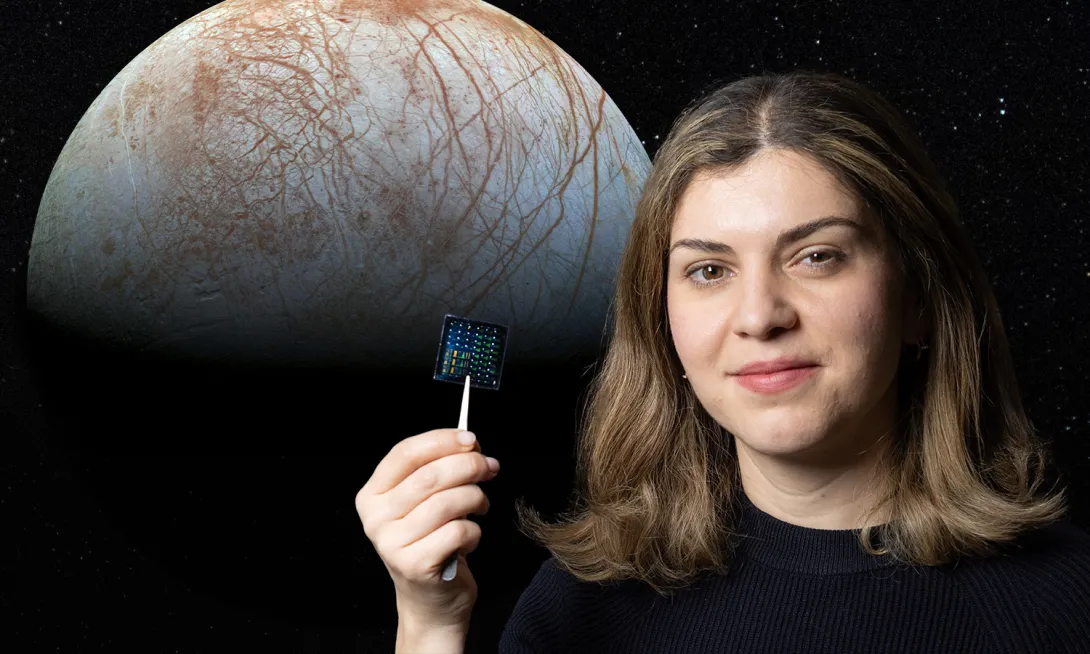
Right now, about 70 million miles away, a Ramblin’ Wreck from Georgia Tech streaks through the cosmos. It’s a briefcase-sized spacecraft called Lunar Flashlight that was assembled in a Georgia Tech Research Institute (GTRI) cleanroom in 2021, then launched aboard a SpaceX rocket in 2022.
The plan was to send Lunar Flashlight to the moon, where the spacecraft would shoot lasers at its south pole in a search for frozen water. Mission control for the flight was on Georgia Tech’s campus, where students in the Daniel Guggenheim School of Aerospace Engineering (AE) sat in the figurative driver’s seat. They worked for several months in 2023 to coax the craft toward its intended orbit in coordination with NASA’s Jet Propulsion Lab (JPL).
A faulty propulsion system kept the CubeSat from reaching its goal. Disappointing, to be sure, but it opened a new series of opportunities for the student controllers. When it was clear Lunar Flashlight wouldn’t reach the moon and instead settle into an orbit of the sun, JPL turned over ownership to Georgia Tech. It’s now the only higher education institution that has controlled an interplanetary spacecraft.
Lunar Flashlight’s initial orbit, planned destination, and current whereabouts mirrors much of the College of Engineering’s research in space technology. Some faculty are focused on projects in low earth orbit (LEO). Others have an eye on the moon. A third group is looking well beyond our small area of the solar system.
No matter the distance, though, each of these Georgia Tech engineers is working toward a new era of exploration and scientific discovery.
News Contact
Jason Maderer
College of Engineering
Jul. 03, 2025

As strange as it sounds, the key to understanding life’s origins might lie in artificial intelligence. At least, according to a new approached being pursued by researchers at Georgia Tech.
School of Electrical and Computer Engineering (ECE) Assistant Professor Amirali Aghazadeh and Ph.D. student Daniel Saeedi have developed AstroAgents, an AI system that analyzes mass spectrometry data — detailed chemical compositions from meteorites and Earth soil samples — to generate novel hypotheses about the origins of life on the planet.
What sets AstroAgents apart is its use of agentic AI. Unlike traditional AI systems that perform fixed tasks, this agentic system is designed to pursue a scientific goal. It draws from astrobiology literature, interprets complex data, and proposes original ideas that researchers can investigate further.
Their paper, recently featured in the journal "Nature", is opening new possibilities for how scientists explore questions that have remained unanswered for decades.
In a special Q&A, Aghazadeh and Saeedi explain how AstroAgents analyzes space chemistry, what it’s revealing about the possible origins of life on Earth, and what they hope to explore next.
News Contact
Dan Watson
Jul. 01, 2025
Georgia Tech has launched two new Interdisciplinary Research Institutes (IRIs): The Institute for Neuroscience, Neurotechnology, and Society (INNS) and the Space Research Institute (SRI).
The new institutes focus on expanding breakthroughs in neuroscience and space, two areas where research and federal funding are anticipated to remain strong. Both fields are poised to influence research in everything from healthcare and ethics to exploration and innovation. This expansion of Georgia Tech’s research enterprise represents the Institute’s commitment to research that will shape the future.
“At Georgia Tech, innovation flourishes where disciplines converge. With the launch of the Space Research Institute and the Institute for Neuroscience, Neurotechnology, and Society, we’re uniting experts across fields to take on some of humanity’s most profound questions. Even as we are tightening our belts in anticipation of potential federal R&D budget actions, we also are investing in areas where non-federal funding sources will grow and where big impacts are possible,” said Executive Vice President for Research Tim Lieuwen. "These institutes are about advancing knowledge — and using it to improve lives, inspire future generations, and help shape a better future for us all.”
Both INNS and SRI grew out of faculty-led initiatives shaped by a strategic planning process and campus-wide collaboration. Their evolution into formal institutes underscores the strength and momentum of Georgia Tech’s interdisciplinary research enterprise.
Georgia Tech’s 11 IRIs support collaboration between researchers and students across the Institute’s seven colleges, the Georgia Tech Research Institute (GTRI), national laboratories, and corporate entities to tackle critical topics of strategic significance for the Institute as well as for local, state, national, and international communities.
"IRIs bring together Georgia Tech researchers making them more competitive and successful in solving research challenges, especially across disciplinary boundaries,” said Julia Kubanek, vice president of interdisciplinary research. “We're making these new investments in neuro- and space-related fields to publicly showcase impactful discoveries and developments led by Georgia Tech faculty, attract new partners and collaborators, and pursue alternative funding strategies at a time of federal funding uncertainty."
The Space Research Institute
The Space Research Institute will connect faculty, students, and staff who share a passion for space exploration and discovery. They will investigate a wide variety of space-related topics, exploring how space influences and intersects with the human experience. The SRI fosters a collaborative community including scientific, engineering, cultural, and commercial research that pursues broadly integrated, innovative projects.
SRI is the hub for all things space-related at Georgia Tech. It connects the Institute’s schools, colleges, research institutes, and labs to lead conversations about space in the state of Georgia and the world. Working in partnership with academics, business partners, philanthropists, students, and governments, Georgia Tech is committed to staying at the forefront of space-related innovation.
The SRI will build upon the collaborative work of the Space Research Initiative, the first step in formalizing Georgia Tech’s broad interdisciplinary space research community. The Initiative brought together researchers from across campus and was guided by input from Georgia Tech stakeholders and external partners. It was led by an executive committee including Glenn Lightsey, John W. Young Chair Professor in the Daniel Guggenheim School of Aerospace Engineering; Mariel Borowitz, associate professor in the Sam Nunn School of International Affairs; and Jennifer Glass, associate professor in the School of Earth and Atmospheric Sciences. Beginning July 1, W. Jud Ready, a principal research engineer in GTRI’s Electro-Optical Systems Laboratory, will serve as the inaugural executive director of the Space Research Institute.
To receive the latest updates on space research and innovation at Georgia Tech, join the SRI mailing list.
The Institute for Neuroscience, Neurotechnology, and Society
The Institute for Neuroscience, Neurotechnology, and Society (INNS) is dedicated to advancing neuroscience and neurotechnology to improve society through discovery, innovation, and engagement. INNS brings together researchers from neuroscience, engineering, computing, ethics, public policy, and the humanities to explore the brain and nervous system while addressing the societal and ethical dimensions of neuro-related research.
INNS builds on a foundation established over a decade ago, which first led to the GT-Neuro Initiative and later evolved into the Neuro Next Initiative. Over the past two years, this effort has culminated in the development of a comprehensive plan for an IRI, guided by an executive committee composed of faculty and staff from across Georgia Tech. The committee included Simon Sponberg, Dunn Family Associate Professor in the School of Physics and the School of Biological Sciences; Christopher Rozell, Julian T. Hightower Chaired Professor in the School of Electrical and Computer Engineering; Jennifer Singh, associate professor in the School of History and Sociology; and Sarah Peterson, Neuro Next Initiative program manager. Their leadership shaped the vision for a research community both scientifically ambitious and socially responsive.
INNS will serve as a dynamic hub for interdisciplinary collaboration across the full spectrum of brain-related research — from biological foundations to behavior and cognition, and from fundamental research to medical innovations that advance human flourishing. Research areas will encompass the foundations of human intelligence and movement, bio-inspired design and neurotechnology development, and the ethical dimensions of a neuro-connected future.
By integrating technical innovation with human-centered inquiry, INNS is committed to ensuring that advances in neuroscience and neurotechnology are developed and applied ethically and responsibly. Through fostering innovation, cultivating interdisciplinary expertise, and engaging with the public, the institute seeks to shape a future where advancements in neuroscience and neurotechnology serve the greater good. INNS also aims to deepen Georgia Tech’s collaborations with clinical, academic, and industry partners, creating new pathways for translational research and real-world impact.
An internal search for INNS’s inaugural executive director is in the final stages, with an announcement expected soon.
Join our mailing list to receive the latest updates on everything neuro at Georgia Tech.
News Contact
Laurie Haigh
Research Communications
Jun. 30, 2025
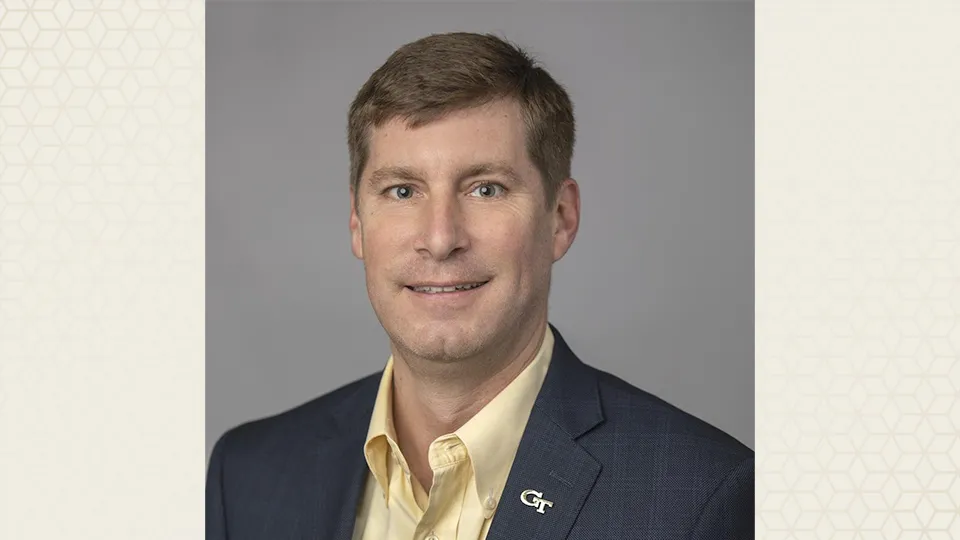
Effective July 1, W. Jud Ready will serve as the inaugural executive director of Georgia Tech’s new Space Research Institute (SRI), which will officially launch on the same date.
The SRI builds upon Georgia Tech’s long and distinguished history in space research and exploration. By uniting experts across disciplines — from aerospace engineering to planetary science, astrophysics, robotics, policy, the arts, and origin of life explorations — the SRI aims to create a resilient ecosystem for space research that can adapt and thrive, even in an era of fiscal uncertainty. It is composed of faculty, staff, and students whose collaborative research spans a broad spectrum of space-related topics, all deeply connected to advancing our understanding of space and its impact on the human experience.
“The launch of the SRI comes at a pivotal moment for the scientific community,” said Vice President of Interdisciplinary Research Julia Kubanek. “As the federal government proposes major cuts to funding agencies, our interdisciplinary research institutes are striving to support faculty and make them more competitive across disciplinary boundaries. This institute will publicly showcase impactful research led by Georgia Tech faculty, attract new collaborators, and pursue alternative funding strategies via philanthropic and industry partners.”
The Space Research Institute will consist of an interdisciplinary community of faculty across Georgia Tech’s schools, colleges, and the Georgia Tech Research Institute (GTRI).
“It is an honor to be appointed executive director of the Space Research Institute,” said Ready. “My plan is to provide internal and external space researchers with access to Georgia Tech’s world class facilities and turbocharge the space activities already underway. We’re committed to empowering our existing community while forging new partnerships that will expand our reach and impact across the global space ecosystem.”
Ready, a principal research engineer in GTRI’s Electro-Optical Systems Laboratory, is the first GTRI faculty member to serve in a long-term capacity as an IRI executive director. Prior to his appointment, he served as associate director of external engagement for the Georgia Tech Institute for Matter and Systems and director of the Georgia Tech Center for Space Technology and Research (CSTAR). He is also an adjunct professor in the School of Materials Science and Engineering at Georgia Tech.
Before joining the Georgia Tech faculty, Ready worked for General Dynamics and MicroCoating Technologies. Throughout his career, he has served as PI or co-PI for grants totaling more than $25M awarded by the Army, Navy, Air Force, DARPA, NASA, NSF, NIST, DOE, other federal sponsors, industry, charitable foundations, private citizens, and the States of Georgia and Florida. His current research focuses primarily on energy capture, storage, and delivery enabled by nanomaterial design. His research has been included on three missions to the International Space Station, two others to low earth orbit, and one perpetually in heliocentric orbit (Lunar Flashlight). His future space missions include MISSE-21 to the International Space Station and SSTEF-1 to the Lunar surface. A half dozen solar cells from his past missions to the International Space Station will be included in the permanent At Home in Space exhibit opening on the Smithsonian National Air and Space Museum's 50th Anniversary.
Ready has received numerous awards and honors for his work. His most recent awards include the Class of 1934 Outstanding Innovative Use of Education Technology award in 2025 and the Outstanding Achievement in Research Program Development award in 2023, both from Georgia Tech. He also received the One GTRI Collaboration Award in 2022, which he was awarded during GTRI’s annual Distinguished Performance Awards celebration.
Additional articles of interest:
10 Questions with Jud Ready
Space Station Testing Will Evaluate Photovoltaic Materials
News Contact
Laurie Haigh
Research Communications
Jun. 24, 2025
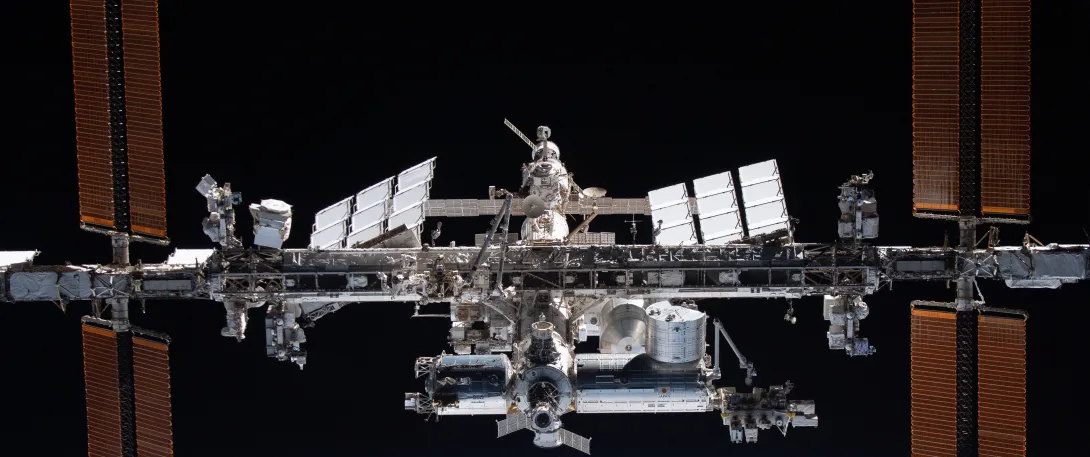
Solar cells account for approximately six percent of the electricity used on Earth; however, in space, they play a significantly larger role, with nearly all satellites relying on advanced solar cells for their power. That’s why Georgia Tech researchers will soon send 18 photovoltaic cells to the International Space Station for a study of how space conditions affect the devices’ operation over time.
“The main goal here is to improve power generation in space,” said Jud Ready, principal research engineer at the Georgia Tech Research Institute (GTRI) and Executive Director of Georgia Tech's Space Research Institute. “The limiting factor on the performance of a spacecraft is usually how much power you can produce. Power, size, weight, complexity, cost – all of these are tied closely to the electrical generation of the solar panels.”
News Contact
Media Inquiries: gtri.media@gtri.gatech.edu
Writer: John Toon (john.toon@gtri.gatech.edu)
GTRI Communications
Georgia Tech Research Institute
Atlanta, Georgia USA
Jun. 25, 2025
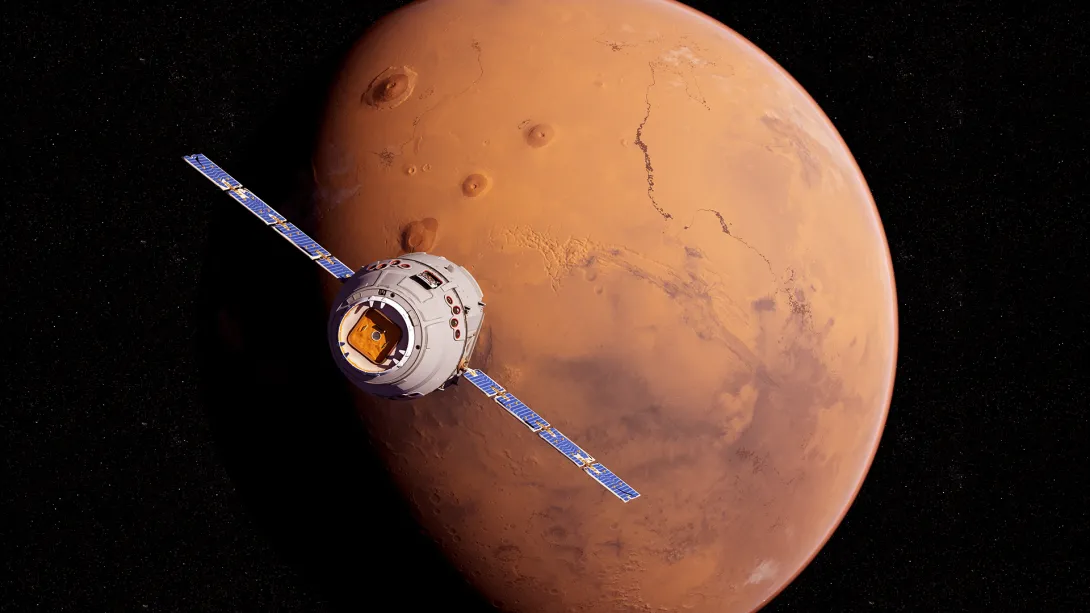

More than half a century after the United States won the race to the moon, the White House is setting its sights on a new frontier: Mars. In a move reminiscent of the Apollo era, the administration has proposed landing Americans on the red planet by the end of 2026 — a bold initiative that has reignited national ambition and drawn comparisons to the space race of the 20th century.
At Georgia Tech, researchers are already considering the mission’s implications, from engineering challenges to international diplomacy. While the White House has framed the mission as a demonstration of American leadership, experts say its success will depend on collaboration — across disciplines, sectors, and borders.
“This is more than a space race,” said Christos Athanasiou, an assistant professor in the Daniel Guggenheim School of Aerospace Engineering. “Mars isn’t just the next step for space exploration — it’s a stress test for everything we’ve learned about sustainability, resilience, and engineering under uncertainty.”
Engineering for the Red Planet
For Athanasiou, the Mars mission is a test of human ingenuity, creativity, and endurance. Unlike the moon, Mars is months away by spacecraft, with no quick return option. That distance introduces a host of engineering challenges that must be solved before a single boot touches Martian soil.
“Ensuring astronaut safety on such a long-duration mission requires us to understand how the Earth materials we will be using in our mission behave in extraterrestrial conditions,” he said.
In his recent TEDx talk, Athanasiou emphasized that the mission must also consider its environmental impact. Mars may be barren, but it is not immune to contamination. Athanasiou believes that strategies used for environmental remediation on Earth — such as waste recycling, habitat sustainability, and pollution control — can be adapted to protect the Martian environment.
“If we can build structures that survive Mars using recycled materials, AI, and Earth-born ingenuity, we’ll unlock entirely new ways to live — both out there and back here,” he said.
Reading the Martian Landscape
James Wray, a professor in the School of Earth and Atmospheric Sciences, has spent years analyzing Mars’ surface using data from orbiters and rovers. He sees the planet as both a scientific treasure trove and a logistical puzzle.
“Mars has vast lava plains, dust storms, and steep canyons that pose real risks to human settlement,” Wray said.
But beneath the challenges lies opportunity. Mars is home to significant deposits of water ice, especially near the poles and just below the surface in some mid-latitude regions. That water could be used not only for drinking but also for producing oxygen and rocket fuel — critical resources for long-term habitation and return missions.
“The presence of water ice near the surface is a game changer. It could support life, and more importantly, it could support us,” Wray said.
He also noted that Mars’ thin atmosphere — just 1% the density of Earth’s — complicates everything from landing spacecraft to shielding astronauts from cosmic radiation. “We’ve learned a lot from robotic missions. Now it’s time to apply that knowledge to human exploration.”
Diplomacy Beyond Earth
Lincoln Hines, an assistant professor in the Sam Nunn School of International Affairs, says that the Mars mission could have significant diplomatic implications. “The Mars mission has little to no bearing on space security; it has no military value,” he said. However, he noted that international cooperation could still play a valuable role in reducing the financial burden of such a costly endeavor.
Hines warned that shifting U.S. priorities from the moon to Mars could strain the international partnerships built through the Artemis program. He explained that some countries may view the Mars initiative as a distraction from the more immediate and economically promising lunar goals. Political instability in the U.S., he added, could further erode trust in its long-term commitments. “Countries may lose faith that the United States is a reliable partner to cooperate with for its lunar program if Mars seems to be the new priority,” he said.
He also pointed to existing legal frameworks like the Outer Space Treaty, which prohibits sovereign claims on celestial bodies, and the Rescue Agreement, which obliges nations to assist astronauts in distress. While these agreements provide a foundation, Hines emphasized that they don’t fully address the complexities of future Mars missions.
Establishing international norms for Mars exploration, he said, will be challenging. “Norms are really hard to develop,” Hines explained, noting that countries often hesitate to commit to rules without assurance that others will do the same. Still, he suggested that Mars — with its limited material value — might offer a rare opportunity for cooperation, if nations are willing to engage in good faith.
News Contact
Siobhan Rodriguez
Senior Media Relations Representative
Institute Communications