
May. 02, 2023

ReWOOD launch at the Renewable Bioproducts Institute on April 27, 2023
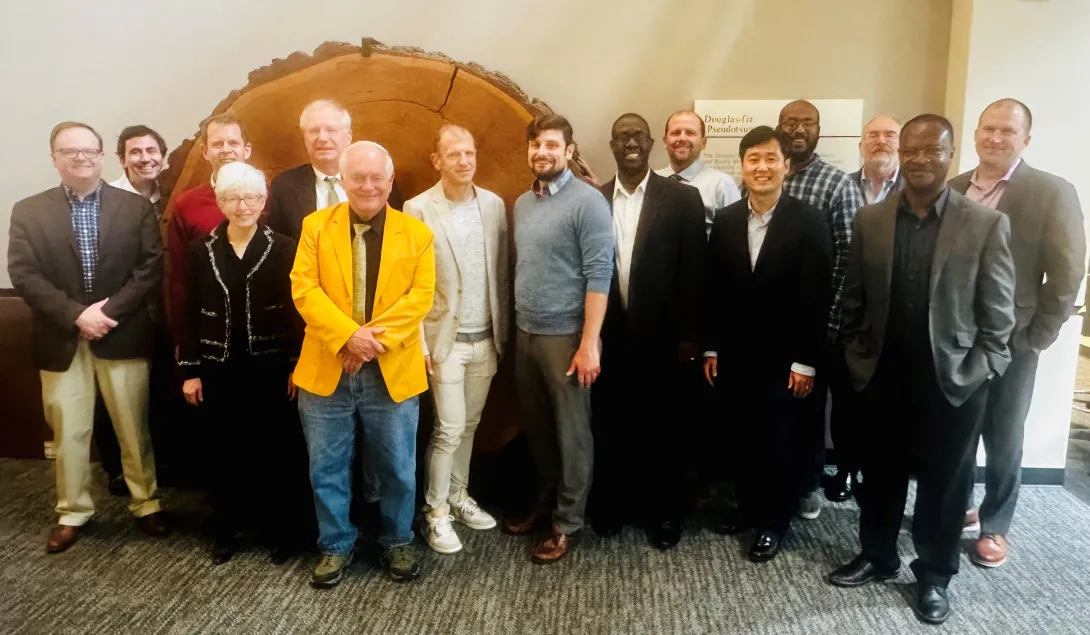
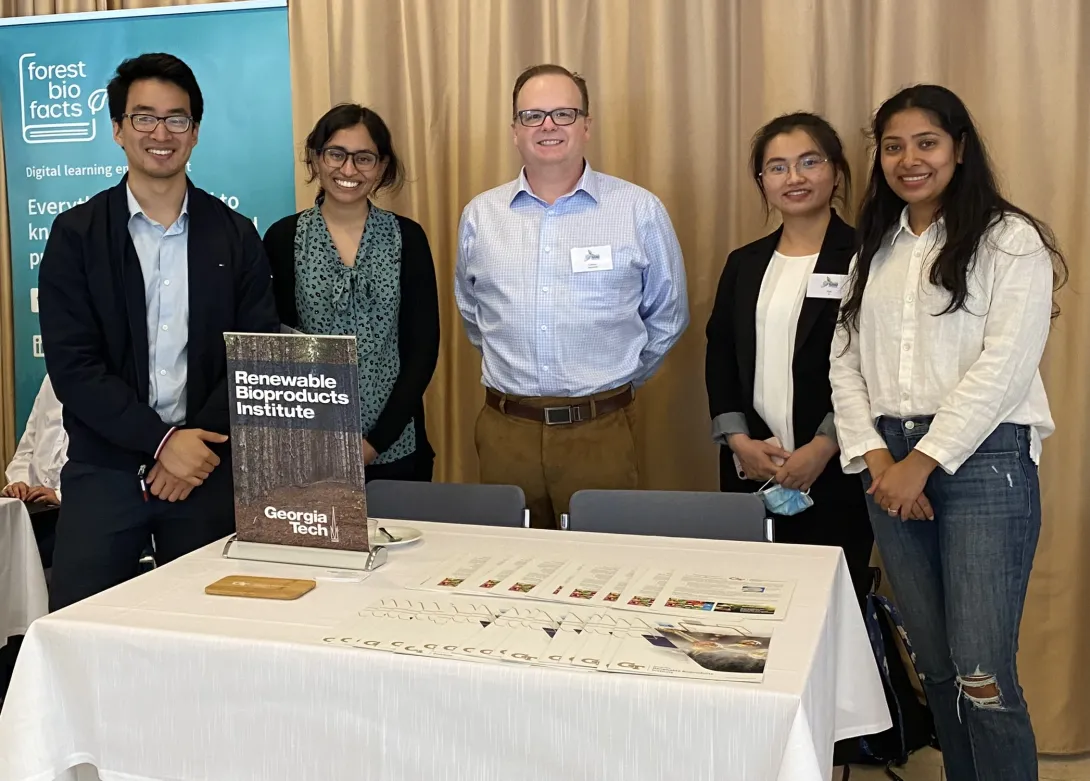
Team of ReWOOD research collaborators on the day of launch
Georgia Tech Launches Wood-Based Renewables Research Center
The Renewable Bioproducts Institute (RBI) at the Georgia Institute of Technology has launched a new science and technology research center called ReWOOD. The ReWOOD launch included a 2-day workshop involving faculty research partners from universities across the Southeast, as well as former Georgia Agriculture Commissioner Gary Black.
ReWOOD, abbreviated from “Renewables-based Economy from WOOD” will focus on a burgeoning field of science called Xylochemistry. Xylochemistry makes use of sustainable plant-based raw materials to develop industrial products ranging from jet fuel to industrial solvents to generic pharmaceutical additives and more. Right now, most of the world production of such materials comes from non-renewable fossil resources or petroleum products. Moving to a renewable source will not only aid in reducing the dependence on fossil fuels but will also help with reducing the overall carbon footprint. ReWOOD is sponsored by RBI through its endowment-funded fellowships and is developing a corporate affiliate program.
“The formation of this internal research center will drive regional momentum for producing carbon neutral chemicals and fuels from wood wastes deriving from the abundant and fast-growing wood in the Southeast,” said Carson Meredith, executive director of RBI. “In fact, the Southeast has a larger percentage of sustainably grown working forests than any other area in the U.S., and Georgia is the number one exporter of forest products in the nation.”
Research on chemical renewables via Xylochemistry has been ongoing at Georgia Tech under a consortium called GT-STANCE (Science & Technology for a Neutral Chemical Economy). GT-STANCE’s researchers have developed seed technologies that aid in the production of wood-based chemical intermediates with potential uses in consumer commodities like pharmaceuticals and plastics. In addition, RBI has made a significant investment of nearly $3 million in building research teams in the related area of lignin conversion in the last five years. The formation of a research center that will coalesce regional thought leadership is the logical next step, as a renewables-based economy has become a national priority with the bioeconomy, climate, and clean energy goals set by the Inflation Reduction Act and the Bipartisan Infrastructure Law.
Raw materials for Xylochemistry could also be sourced from any kind of non-treated wood. For example, wood from demolished construction sites like old homes and wooden buildings provide an excellent opportunity for a circular economy, since this wooden construction waste ends up in landfills now.
Currently ReWOOD has 11 university affiliates that are joining Georgia Tech. In January 2023, faculty from Georgia Tech, the University of Alabama at Tuscaloosa, and Alabama A&M University convened to discuss the plans for a research center on a renewables-based economy from wood to develop renewable biofuels, industrial solvents, pharmaceutical additives, and many other products that culminated in the formation of ReWOOD. Since then, the center has gained the interest of multiple other researchers from the University of Florida, Kennesaw State University, and Clark Atlanta University. In addition, the Mississippi State and Forestry Office and Sandia National Laboratory have become key collaborators within ReWOOD. This collection of expertise includes chemists, engineers, economists, and forest experts, covering a broad range of activities that will include technology, economic, and workforce development, as well as lifecycle and socio-economic analysis. This partnership list will continue to evolve and grow as ReWOOD focuses on specific target research areas and proposals for funding to develop technology and processes in the business sector.
About the Renewable Bioproducts Institute at Georgia Tech
Georgia Tech’s Renewable Bioproducts Institute is one of ten campus interdisciplinary research institutes. RBI champions innovation in converting biomass into value-added products, developing advanced chemical and bio-based refining technologies, and advancing excellence in manufacturing processes. Our three strategic thrusts are circular materials, bio industrial manufacturing, and paper, packaging, and tissue.
RBI serves as a campus conduit for industry-university partnerships and provides a portal to Georgia Tech core laboratories, faculty and students whose work and expertise is focused on biomass and bioproducts.
News Contact
Priya Devarajan | RBI Communications Program Manager
Apr. 20, 2023
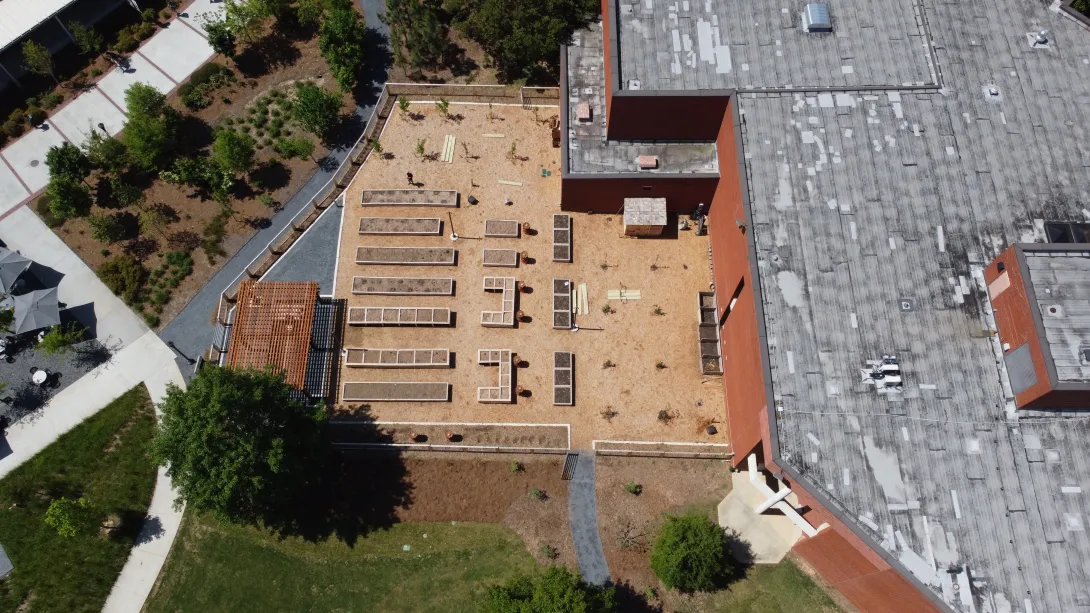
Bird's eye view of the expanded Community Garden
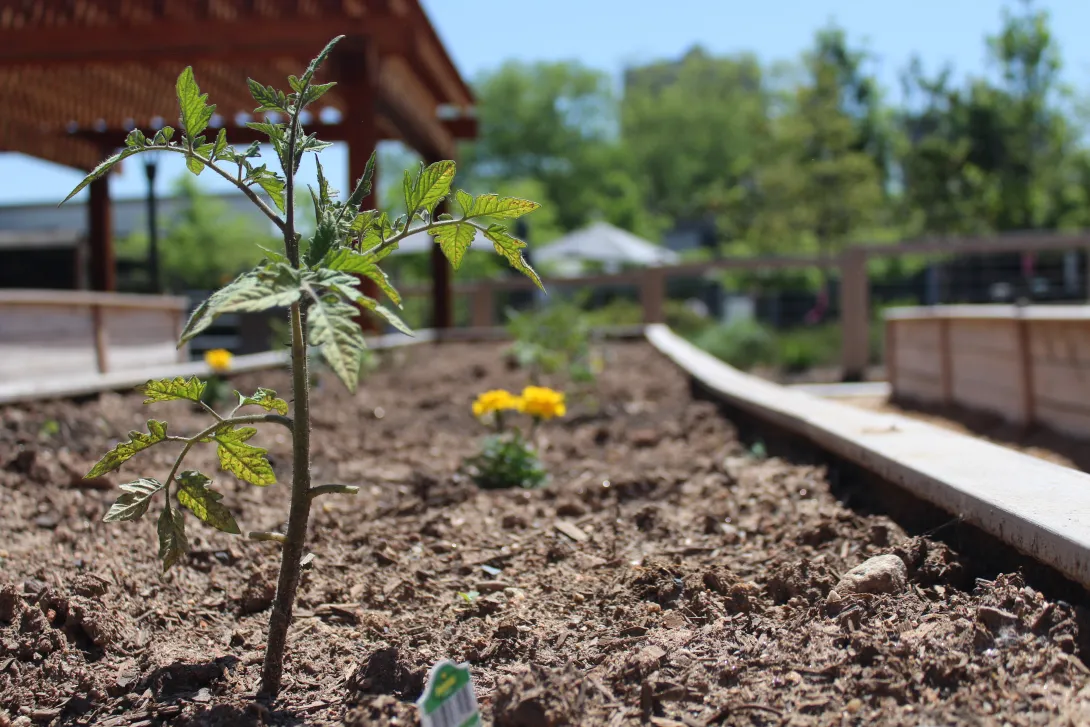
Tomato plants in the new community garden.
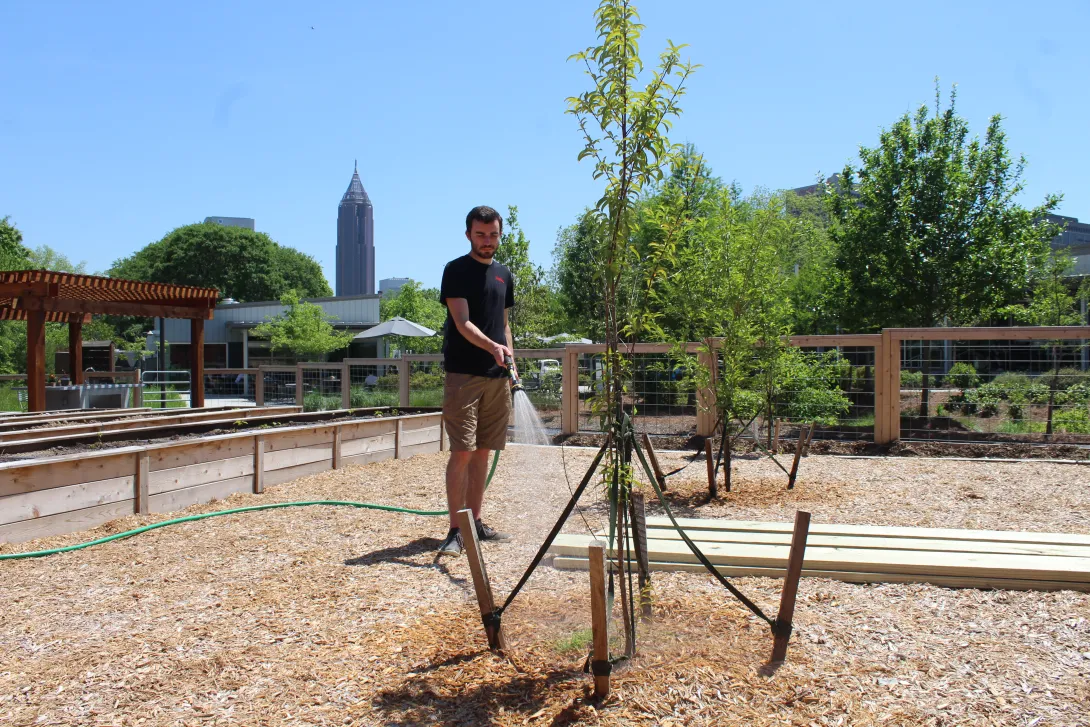
Elias Winterscheidt waters trees in the Community Garden
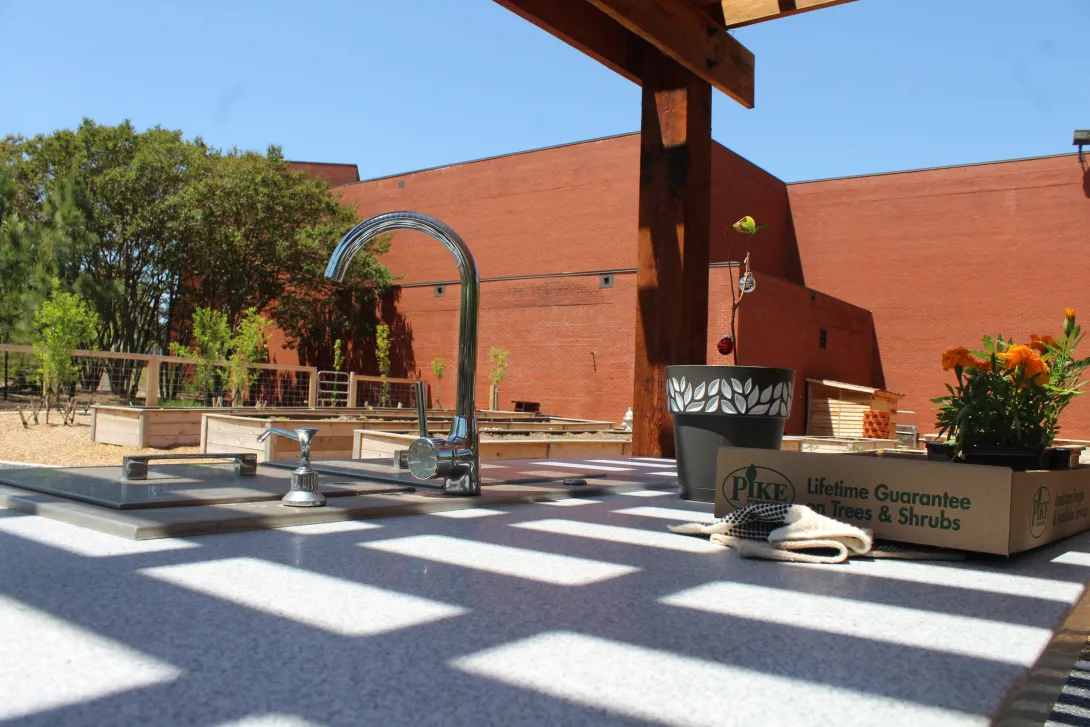
Demo kitchen inside the Community Garden
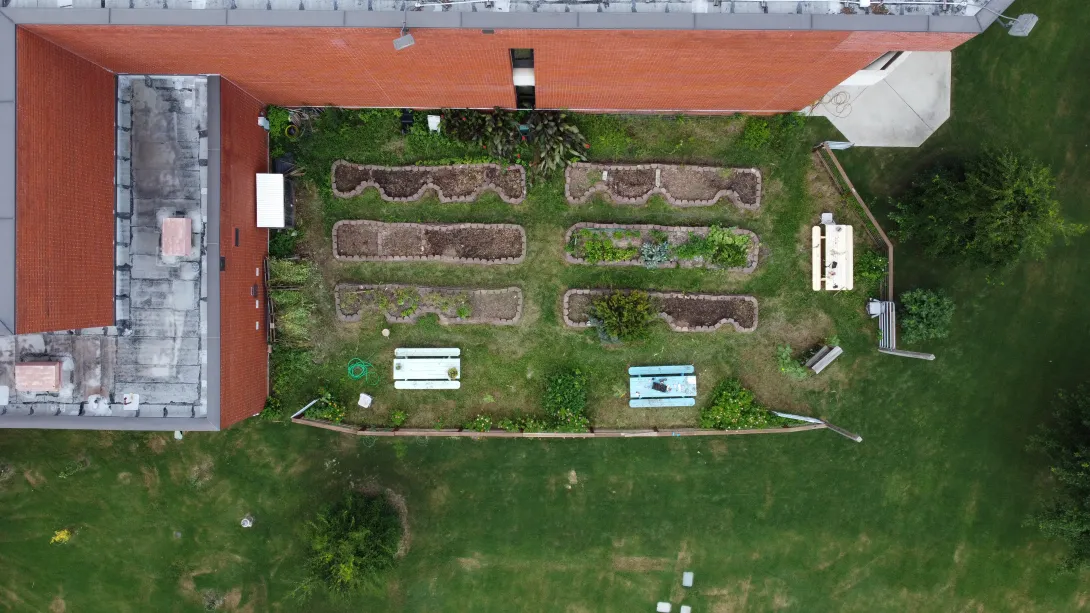
The Community Garden prior to its expansion.
As Georgia Tech continues to celebrate Earth Month, Friday's ribbon-cutting ceremony for the newly expanded Community Garden represents another step in the Institute's commitment to a sustainable future.
First opened in 2012 with six small planting beds, the garden has received a complete transformation over the past decade. With the latest project, which began in July 2022, essentially doubling its square footage, the garden now touts 21 fruit trees and nine large beds that are free and open to students. Two additional medium and nine small beds are available for lease for the Tech community. A new shed for gardening tools has been constructed alongside a brand-new demo kitchen to feature the garden's produce in healthy recipes. With the inclusion of slate-chip pathways and high-density mulch, the garden is now fully ADA accessible — a primary goal of the expansion effort.
Elias Winterscheidt was drawn to the garden while touring the Tech campus in 2019. With prior planting experience, he immediately got involved with Students Organizing for Sustainability (SOS), taking over as the Community Garden director in April 2021. Over the past three semesters before construction began, the garden donated 50 pounds of produce to Klemis Kitchen — Georgia Tech's on-campus food bank — in addition to the produce harvested by 500 volunteers during that time.
Winterscheidt anticipates the growth of the garden community continuing, with hopes of doubling both donations to Klemis Kitchen and the number of volunteers.
SOS got a head start on its goal at the outset of Earth Month, when Winterscheidt and a group of volunteers planted the first seeds in the expanded garden during a pair of community workdays. Sweet potatoes, tomatoes, strawberries, and various seeds are already in the ground, but plenty more fruits, vegetables, and herbs will be added soon.
In addition to a passion for gardening, Winterscheidt arrived at Tech at a time when many students were seeking ways to get outside during the pandemic. A lasting effect of the interruption has been an increase in the number of virtual events, but the garden provides the perfect opportunity to interact with nature and with other people.
"We're trying to get people to come outside. Our goal is to get Georgia Tech students away from their computers, away from their homework, and to de-stress and get their hands in the soil," he said, adding that the workdays give students a chance to interact with others from different majors and backgrounds. "Come for a few hours, chat with people, and after two hours, you feel refreshed. It's a kind of group therapy."
Community workdays in the garden are typically held on Saturday mornings, depending on the weather.
Beginning with summer programming, SOS will partner with the Wellness Empowerment Center to highlight the mental and physical health benefits of gardening. They will also be emphasizing sustainability. The Community Garden is entirely permaculture friendly, meaning it's a pesticide-free environment, and seeds are planted with purpose.
"We're mimicking nature in how we plant things," Winterscheidt explained. “Rather than spraying with pesticide, I can plant a basil plant that will deter hornworms from our tomatoes. Rather than spraying with herbicides, we can pluck all the weeds off individually. It takes a lot longer, but it's much better for our soil. Rather than growing for maximum output, we're growing in a way that benefits our soil the most."
While largely student-run, the garden does require constant upkeep, so in years past, the summer months could be challenging. However, with the expansion, Tamsin Leavy has been brought on as staff member to support the garden year-round.
"Like any garden or farm space, you don't want to lose all your hard work to the elements or other pests that can quickly annihilate a crop. We have put a lot of effort into this space and are looking forward to watching it grow. No pun intended," Leavy said. "It would be devastating to lose it to the harsh Georgia summer sun, so we will all be working together to keep our garden growing."
Volunteer opportunities remain plentiful over the summer, and in the absence of a large contingent of students, Malte Weiland, senior sustainability project manager for Campus Services, welcomes Tech faculty and staff to lend a hand. He encouraged all Tech employees to reach out to assist the team in maintaining the space and even urges entire departments to inquire about outings that can serve as wellness and team-building exercises.
For those looking to get involved with the garden or learn more about its expansion, Friday's ribbon-cutting ceremony will begin at 2 p.m.
“We all hope that the garden will continue to be a community gathering space where not just horticultural and agricultural education can happen, but anything adjacent to it — discussion on composting, urban gardens, or food justice issues. And day-to-day, for Tech students, I hope it can be a space where they are comfortable, where they can come to smell the flowers, put their hands in the dirt — even if it's just for a few minutes between classes to de-stress and reconnect to the earth," Leavy said.
The Community Market is another resource that brings sustainably sourced food to the Tech community every Wednesday from 10 a.m. to 2 p.m. along Tech Walkway. The Office of Sustainability will wrap up the spring semester market at the end of April, but selective summer dates will be announced soon. When the market returns in the fall, Weiland said that vendors and patrons can expect several updates, including a market map, and students will be able to make purchases using dining dollars on their BuzzCards.
Jan. 06, 2023

Savannah River National Laboratory (SRNL) and Georgia Institute of Technology (Georgia Tech) recently selected Martha Grover, PhD, for a joint appointment.
Grover is a professor and the associate chair for graduate studies at Georgia Tech’s School of Chemical and Bimolecular Engineering. Her research interests include feedback control of colloidal crystallization for photonic materials; chemical evolution in the origins of life; modeling and control of pharmaceutical and nuclear waste crystallization; and process-structure-property relationships in polymer organic electronics.
SRNL intends to collaborate with Grover to utilize her expertise and experience to:
- Facilitate research and development activities pertaining to in-situ analysis of process streams for DOE tank waste treatment programs, including application of instruments and calibration techniques.
- Analyze SRNL data generated during testing of in-situ instruments in non-radioactive simulants of high-level waste.
- Expand and develop relationships within Georgia Tech to facilitate further collaboration
- Develop the next generation of outstanding engineering talent with interest to pursue research career opportunities in the national laboratory system
“Dr. Grover’s efforts contribute directly to SRNL’s strategic goal of providing applied science and engineering for the Department of Energy (DOE) Office of Environmental Management’s active cleanup sites and Office of Legacy Management’s post-closure management sites,” said SRNL Deputy Lab Director, Science and Technology, Sue Clark, PhD. “Dr. Grover will strengthen SRNL’s core competency of accelerating remediation, minimizing waste, and reducing risk by supporting process stream characterization associated with treatment of DOE tank waste.”
In addition to her primary research, Grover focuses on creating an even more inclusive community, exploring issues relevant to women, underrepresented minorities, and international students. She co-leads the GT-Equal (Graduate Training for Equality in Underrepresented Academic Leadership) Program and, in 2020, was named a National Science Foundation Organizational Change for Gender Equity in STEM Academic Professions (ADVANCE) Professor. Georgia Tech’s ADVANCE Program builds and sustains an inter-college network of professors who are world-class researchers and role models to support the community and advancement of women and minorities in academia. Georgia Tech’s School of Chemical and Biomolecular Engineering also was one of two institutions selected nationwide to be inaugural sites for the American Chemical Society’s Bridge Program, which aims to increase the number of underrepresented minority students who receive doctoral degrees in chemical sciences.
The Joint Appointment Program at SRNL provides university faculty opportunities to engage in the laboratory’s research and development that address the nation’s challenges in energy, science, national security, and environmental stewardship. Together, SRNL staff and joint appointees help ensure America’s security and prosperity through transformative science and technology solutions. Joint appointees serve as a bridge between their university, SRNL researchers and students.
Savannah River National Laboratory is a United States Department of Energy multi-program research and development center that’s managed and operated by Battelle Savannah River Alliance, LLC (BSRA). SRNL puts science to work to protect the nation by providing practical, cost-effective solutions to the nation’s environmental, nuclear security, nuclear materials management, and energy manufacturing challenges (https://srnl.doe.gov/).
Aug. 31, 2022
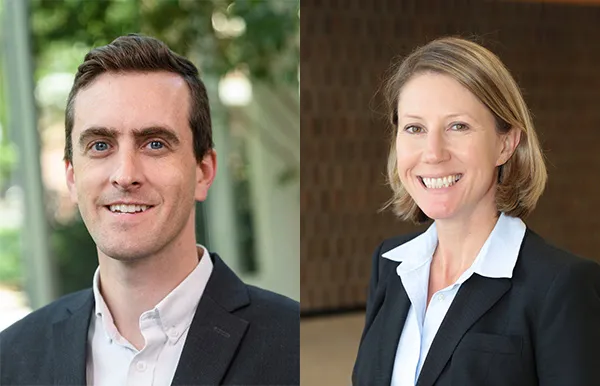
Georgia Tech’s School of Chemical and Biomolecular Engineering has been renewed by the U.S. Department of Energy (DOE) for a third round of funding ($13.2 million over four years) for its Energy Frontier Research Center (EFRC) to study materials used in clean energy technologies.
This multi-institution EFRC, known as the Center for Understanding & Controlling Accelerated and Gradual Evolution of Materials for Energy (UNCAGE-ME), has advanced understanding of how acid gases interact with energy-related materials since its inception in 2014. The Center, with Georgia Tech as the lead participating institution, was first renewed for four years of funding in 2018.
“The selection for a third phase of funding is unusual, and speaks to the impact of the research already reported by the center in its first two phases,” said Christopher Jones, the John F. Brock III School Chair in Chemical & Biomolecular Engineering. “I believe this is attributable to the strong leadership provided by our current and former directors, Ryan Lively and Krista Walton. An additional constant throughout all three phases of the center has been strong collaboration between Georgia Tech, Oak Ridge National Laboratory, Lehigh University, and the University of Alabama.”
In the next four-year phase, UNCAGE-ME will leverage capabilities developed over the last eight years to address basic science questions associated with the evolution of materials to be used in clean energy technologies, including systems designed to capture and convert CO2 from the air into useful chemicals.
“Two of the most basic commodity chemicals in the clean energy economy will be H2 and CO2. A special emphasis has been given to these two molecules with DOE’s Energy Earthshots that were announced in November 2021 – the Hydrogen Shot and the Carbon Negative Shot” said Ryan Lively, a professor in Georgia Tech’s School of Chemical and Biomolecular Engineering and the director of UNCAGE-ME.
“These are all-hands-on-deck calls for innovations in technologies and approaches that will reduce the cost of clean hydrogen by 80% to $1 per 1 kg in one decade and remove CO2 from the atmosphere and durably store it at meaningful scales for less than $100/net metric ton of CO2-equivalent,” said Krista Walton, professor in ChBE as well as the inaugural director of UNCAGE-ME. Walton is also a faculty member in the Renewable Bioproducts Institute at Georgia Tech.
To help reach these goals, UNCAGE-ME will employ an interdisciplinary, matrixed research structure that combines novel materials synthesis, in situ characterization techniques, molecular modeling, and data science approaches to achieve an unprecedented level of design, prediction, and control over (electro)catalysts, sorbents, and membranes.
From 2014 to 2022, the UNCAGE-ME’s research accomplishments (appearing in more than 200 publications) provided detailed descriptions of the impact of acid gas exposure on metal-oxides, metal-organic frameworks, carbons, supported amines, porous organic cages, and other materials. This fundamental knowledge base directly supports the mission of the DOE’s Basic Energy Sciences program to provide the foundational science to guide the development of new energy technologies under realistic process environments.
“The College of Engineering is proud to continue leading this important initiative for an additional four years,” said Raheem Beyah, dean of the College of Engineering and Southern Company Chair. “This second renewal from DOE is a testament to Krista and Ryan’s leadership, as well as the vision and innovation of a science team comprised of Georgia Tech researchers and our collaborators around the nation.”
In addition to Georgia Tech, the partner institutions for UNCAGE-ME include Oak Ridge National Laboratory, the University of Alabama, University of Florida, University of California Riverside, Lehigh University, Sandia National Laboratory, and the University of Michigan.
Julia Kubanek, professor and vice president for interdisciplinary research at Georgia tech, said it takes partnership across the Institute to support faculty in developing complex centers such as UNCAGE-ME.
“Research centers like this one benefit from collaborations among faculty experts and grants administrator staff in our schools and colleges, contracting officials in Research Administration, plus two other sets of critical partners: the Office of Research Development, which supports complex proposal preparation, and the interdisciplinary research institutes IRIs,” Kubanek said.
“The IRIs gather information from our Office of Federal Relations and host workshops to help faculty prepare and form teams. In this case, the Strategic Energy Institute, Institute for Materials, and Renewable Bioproducts Institute were all involved in ensuring that faculty had advance notice of this competition and could make the most of expert advice,” she said.
News Contact
Aug. 08, 2022
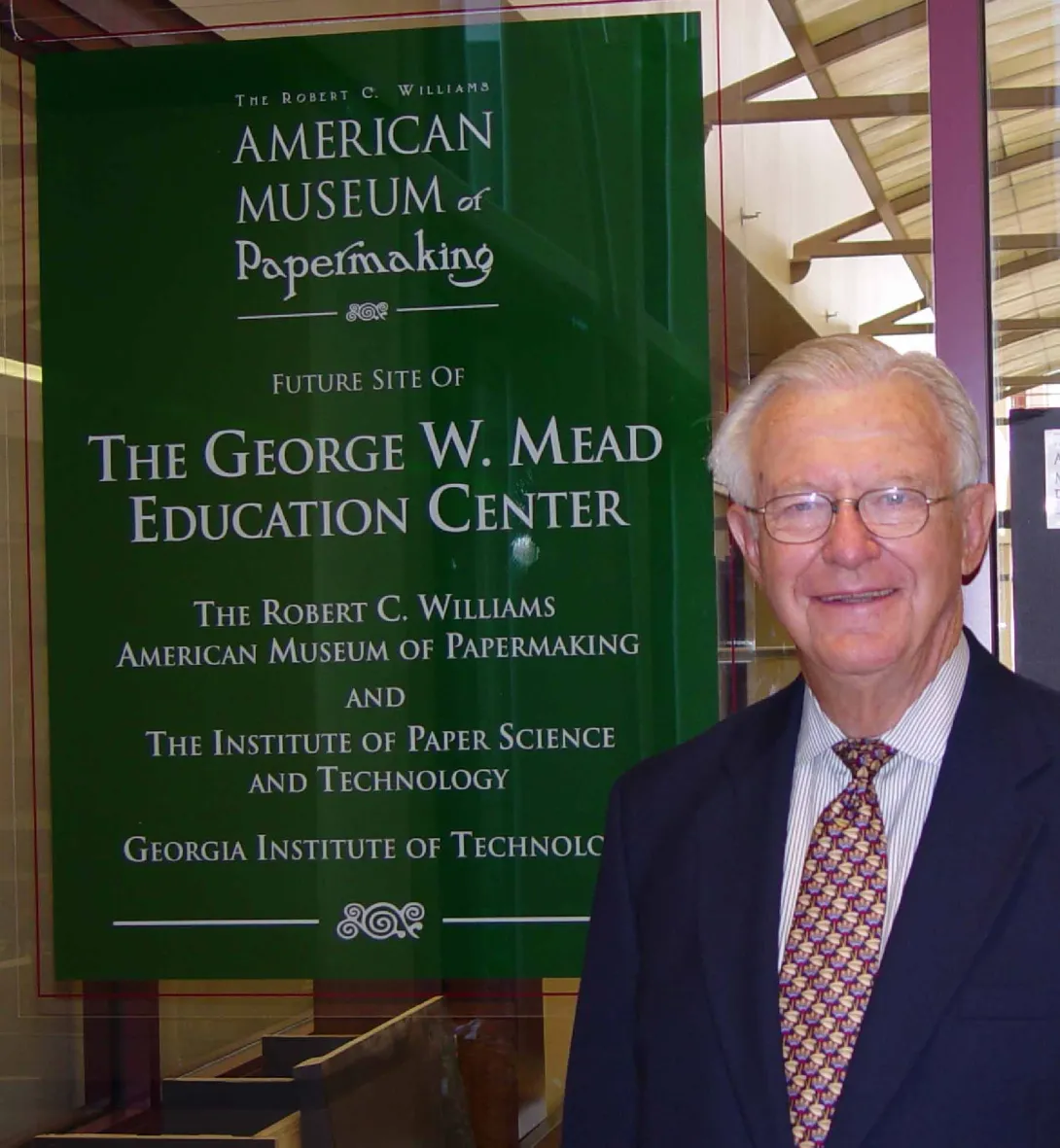

George W. Mead II passed away on July 29, 2022, at the age of 94. He was a long-time supporter of the Robert C. Williams Museum of Papermaking and the Institute of Paper Chemistry (now the Renewable Bioproducts Institute). He graduated from the Institute of Paper Chemistry in 1952, and supported the Institute as a board member and advocate for the paper industry. Through the Mead Witter Foundation, led by George Mead, the Paper Museum was able to establish classroom space in the early 2000s for hands-on experiences, and the George Mead Education Center, which serves as additional exhibition space focused on the industrialization of paper. This support enabled the museum to provide more in-depth experiences for school groups, and develop more intensive programs.
In an interview for the 75th Anniversary of the Institute, Mead said, “I’ve enjoyed my relationship with the Institute tremendously. I’m proud of it and I hope to see it continue to thrive in its own way. It’s been a huge contributor to the industry and a huge contributor to my own success and, as such, I feel obligated to continue my support.” He went on to say, “Our industry was pretty technologically inept when the Institute was first formed. While I don’t think the Institute or its graduates can take the credit for having created the technolical upsurge that has taken place since 1928 or so, the fact is that it couldn’t have taken place without the Institute graduates out there to implement it, to help put it into place. The Institute’s influence on the industry is probably as great as any institution could have possibly had.” He served as Board Chair of the Institute in 1989 – 1990, when the Institute moved to Atlanta from Appleton, Wisconsin. Mead received an honorary doctorate from the Institute of Paper Science and Technology in 2004.
Mead was born October 11, 1927 in Milwaukee, Wisconsin. His great-grandfather, J. D. Witter was a cofounder of Consolidated Water Power and Paper Co. His grandfather, George W. Mead I, and father, Stanton Mead, both served as president of the company. In 1966, George Mead II became president of the company. Mead was named Man of the Year in 1986 by the Paper Industry Management Association, and in 1998 he was inducted into the Papermakers International Hall of Fame. He served as the director of the American Forest and Paper Association, director and chairman for the National Council for Air and Stream Improvement, and was a director of the Technical Association of the Pulp and Paper Industry.
Mead’s philanthropy included the Mead Witter Foundation, which has given over $100 million in support of education, environmental causes, civic organizations, and local scholarships. He also supported the Mead Wildlife Area, a 33,000 acre preserve in Wisconsin. He was active in his community, from the library to the hospital association to the Rotary Club.
Mead is survived by his wife, Susan Feith, three children, two stepchildren, four grandchildren, four step-grandchildren, and four great-grandchildren.
The Robert C. Williams Museum of Papermaking extends condolences to the family and to his community on his passing.
News Contact
Virginia Howell
404-894-5726
virginia.howell@rbi.gatech.edu
Aug. 05, 2022
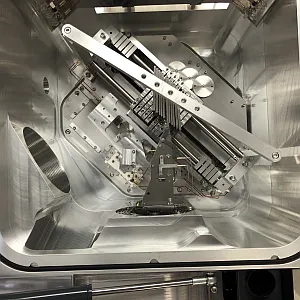
The Materials Characterization Facility (MCF) at Georgia Tech has installed a new inorganic m spectrometry facility. The facility includes two new inductively couple plasma mass spectrometry (ICP-MS) systems: a Thermo iCAP RQ quadrupole ICP-MS for streamlined and high-throughput determinations of elemental concentrations and a Thermo Neoma multicollector ICP-MS with collision cell technology for the precise determinations of isotope ratios within a given sample.
Each instrument can measure elemental variability in both dissolved aqueous samples as well as solids/minerals via laser ablation microsampling from a Teledyne Iridia laser ablation system. Together the system can measure isotopes at precision in elemental systems from Li and U.
Planned applications include: (1) high-resolution measurements of Ca, Sr, Ba, Mg, and B elemental and isotopic variability in seawater and marine and terrestrial carbonates for paleoclimate reconstructions, (2) (U-Th)/Pb dating and Hf isotope measurements to study the origin of critical mineral deposits, with a potential engineering application and the development of novel methods for increasing precision/accuracy and minimizing sample consumption during routine analyses of water quality and environmental contamination.
The MCF welcomes users interested in these and other potential applications of this new facility to their scientific and engineering research to contact David Tavakoli (atavakoli6@gatech.edu).
News Contact
David Tavakoli (atavakoli6@gatech.edu).
Aug. 05, 2022
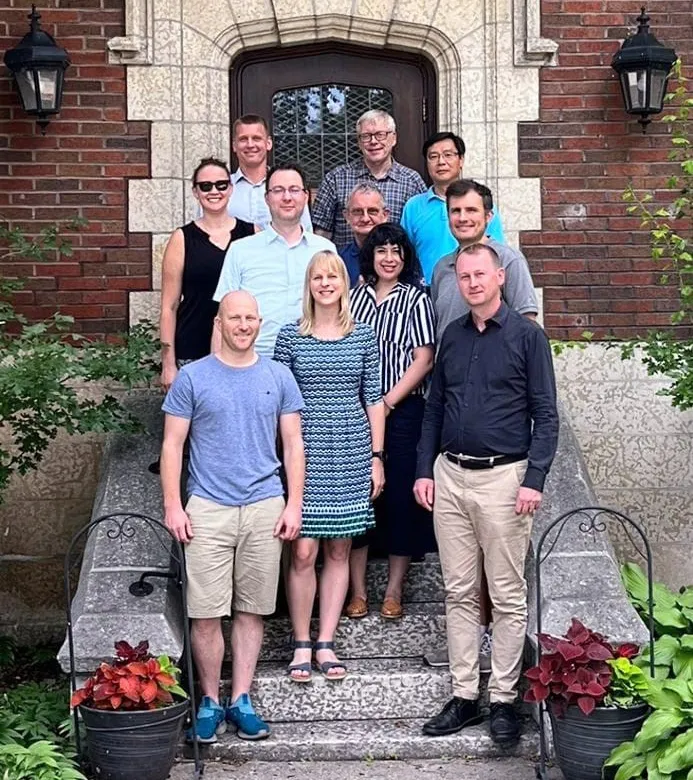
Blair Brettmann, faculty member of the Renewable Bioproducts Institute (pictured left in sunglasses), participated in the IUPAC (International Union of Pure and Applied Chemistry) Subcommittee on Polymer Terminology sessions in Winnipeg, Canada.
She is part of international teams working to define terminology and plan nomenclature recommendations in polymer science. These recommendations enable cross-culture communication, clarity in scientific publications and collaborations and specific language for use in policy, intellectual property, and other drivers in science.
Blair Brettman is an assistant professor in the School of Chemical and Biomolecular Engineering and School of Materials Science and Engineering at Georgia Tech.
News Contact
Jul. 29, 2022

The Renewable Bioproducts Institute (RBI) at Georgia Tech is excited to welcome three additions to its membership-based industrial advisory board: Pactiv Evergreen, Rayonier Advanced Materials, and Grasim Industries.
According to associate director Chris Luettgen, “these companies add to our board by providing expanded industrial expertise in laminated food packaging and dissolving pulp manufacturing.”
One of the companies joining recently is Pactiv Evergreen, a leading manufacturer of fresh food and beverage packaging in North America. Luettgen also facilitated the entry of RYAM (Rayonier Advanced Materials), who joined the advisory board in early spring semester 2022. RYAM produces high purity fluff and dissolving pulps for personal care and other products.
Finally, we welcome Grasim Industries, part of the India-based Aditya Birla Group of companies that also includes Novelis. Grasim is a leading producer of market and dissolving pulps as well as viscose and rayon. Grasim is joining the advisory board under a new trial membership program, which allows companies a 1-year period to experience the benefits of membership prior to making a longer-term commitment.
According to executive director Carson Meredith, “through this trial member program we hope to expand the range and breadth of participating companies.” RBI is excited to include these companies in guiding our research vision and programming. The full list of participating companies and member benefits can be found here: https://research.gatech.edu/rbi/members.
News Contact
Jul. 22, 2022
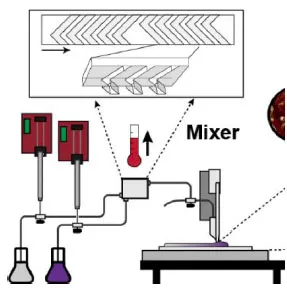
A team under Martha Grover, Elsa Reichmanis, and Carson Meredith recently published a paper in Chemistry of Materials titled "Composition Gradient High-Throughput Polymer Libraries Enabled by Passive Mixing and Elevated Temperature Operability." Grad student Aaron Liu (pictured) and Ezgi Dogan-Guner (Ph.D. 2021) are co-first authors, while RahulVenkatesh, Miguel Gonzalez, and Mike McBride (Ph.D. 2019) are also listed as co-authors.
ABSTRACT: The development of high-throughput experimentation (HTE) methods to efficiently screen multiparameter spaces is key to accelerating the discovery of high-performance multicomponent materials (e.g., polymer blends, colloids, etc.) for sensors, separations, energy, coatings, and other thin-film applications relevant to society. Although the generation and characterization of gradient thin-film library samples is a common approach to enable materials HTE, the ability to study many systems is impeded by the need to overcome unfavorable solubilities and viscosities among other processing challenges under ambient conditions. In this protocol, a solution coating system capable of operating temperatures over 110 degrees C is designed and demonstrated for the deposition of composition gradient polymer libraries. The system is equipped with a custom, solvent-resistant passive mixer module suitable for high-temperature mixing of polymer solutions at ambient pressure. Residence time distribution modeling was employed to predict the coating conditions necessary to generate composition gradient films using a poly(3-hexylthiophene) and poly(styrene) model system. Poly(propylene) and poly(styrene) blends were selected as a first demonstration of high-temperature gradient film coating: the blend represents a polymer system where gradient films are traditionally difficult to generate via existing coating approaches due to solubility constraints under ambient conditions. The methodology developed here is expected to widen the range of solution processed materials that can be explored via high-throughput laboratory sampling and provides an avenue for efficiently screening multiparameter materials spaces and/or populating the large data sets required to enable data-driven materials science.
The full paper can be found in July 14, 2022, Chemistry of Materials.
News Contact
Jun. 30, 2022
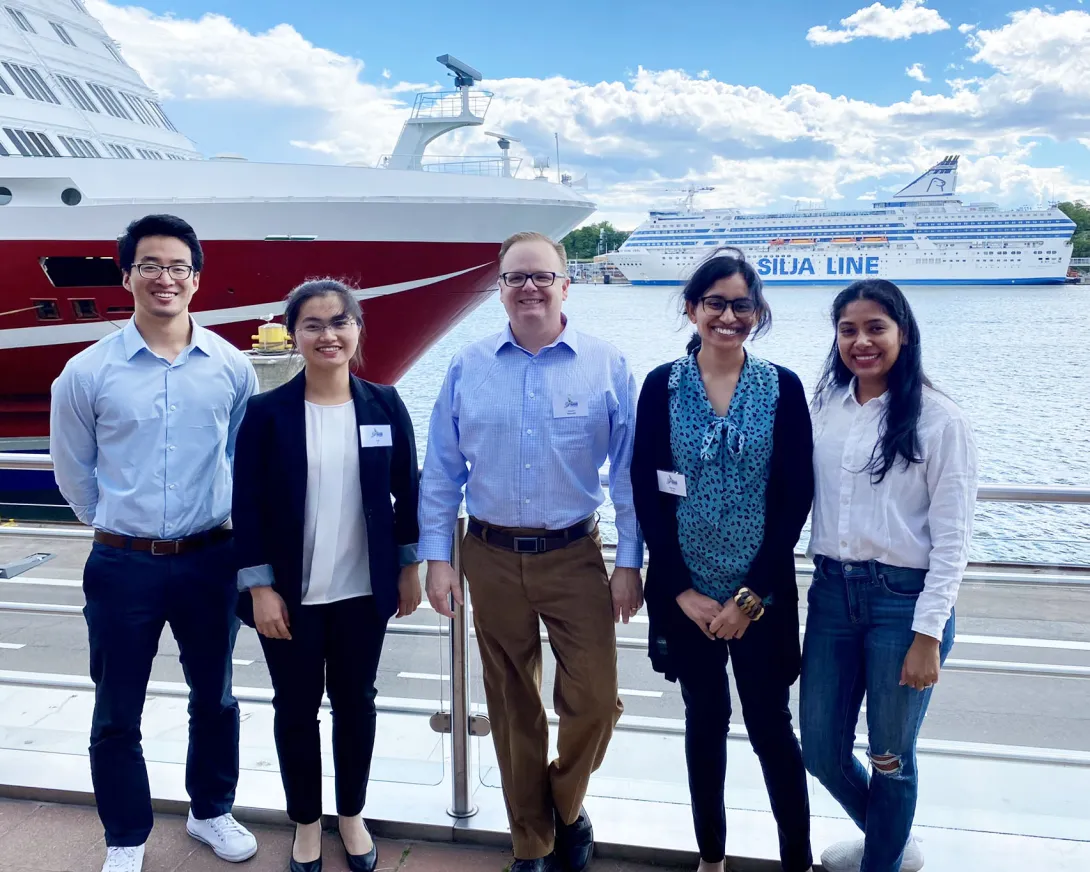
This summer, a faculty and student group from the Renewable Bioproducts Institute (RBI) at Georgia Tech attended TAPPI’s International Conference on Nanotechnology for Renewable Materials (TAPPI Nano) in Helsinki, Finland from June 13-17. This is a leading conference that attracts professionals, researchers, and corporations conducting research or using nanotechnology focused on renewable materials.
On average, the event draws more than 400 academics, industry leaders, and researchers from more than 25 countries around the world. This year's event featured more than 100 technical presentations, four keynote speakers, end-user panels, and poster presentations. The conference is designed to help attendees gain insights into the latest advancements in research and actual application in today’s newest renewable material products.
“Nanotechnologies are now being used commercially in renewable products in the paper and pulp industries,” said Carson Meredith, executive director of RBI. “In that industry, nanomaterials are being used mainly as an additive—such as for corrugated packaging. They are finding that small amounts of these additives can reduce the amount of fiber needed. New additives can also be used to acquire unique combinations of properties such as higher strength with less weight or help to color paper white with more environmentally friendly methods..”
Nanotechnology in the renewable bioproducts industry is enabling large-scale financial savings and helping to conserve resources when making paper products according to Meredith who is also a professor and the James Harris Faculty Fellow in the School of Chemical and Biomolecular Engineering.
Georgia Tech faculty and student presenters listed in the conference agenda included:
Talks at TAPPI Nano2022
- Session 12. Nanocellulose for Stronger or Lighter Glass Fiber Polyester Composites - Kyriaki Kalaitzidou
- Session 23. Consumer Gatekeeping in Sustainable Materials Streams - Nasreen Khan
- Session 25. Dewatering of Cellulose Nanofibrils Using Ultrasound - Udita Ringania
- Session 32. Minimizing Oxygen Permeability of Cellulose/Chitin Nanomaterials as Multilayer Coatings by Tuning Chitin Deacetylation - Yue Ji
Posters at TAPPI Nano2022
- Zero-angle Depolarized Dynamic Light Scattering for Characterization of Cellulose Nanomaterials - Li Zhang
- The Influence of Polyelectrolyte Complex Phase Behavior on Water Retention Values of Cellulose Nanofibers - Nasreen Khan
- Dewatering of Cellulose Nanofibrils Using Ultrasound - Udita Ringania
Kyriaki Kalaitzidou is an assistant professor in the Woodruff School of Mechanical Engineering and strategic coordinator for circular materials for RBI. The four doctoral students presenting included Yue Ji, Nasreen Khan, and Udita Ringania from the School of Chemical and Biomolecular Engineering; and Li Zhang from the School of Materials Science and Engineering.
TAPPI, formed in 1915, is the leading association for the worldwide pulp, paper, packaging, tissue, and converting industries.
News Contact
Walter Rich