
May. 25, 2022
Abstract: Although cellulose nanomaterials have promising properties and performance in a wide application space, one hinderance to their wide scale industrial application has been associated with their economics of dewatering and drying and the ability to redisperse them back into suspension without introducing agglomerates or lose of yield. The present work investigates the dewatering of aqueous suspensions of cellulose nanofibrils (CNFs) using ultrasound as a potentially low-cost, non-thermal, and scalable alternative to traditional heat-based drying methods such as spray drying. Specifically, we use vibrating mesh transducers to develop a direct-contact mode ultrasonic dewatering platform to remove water from CNF suspensions in a continuous manner. We demonstrate that the degree of dewatering is modulated by the number of transducers, their spatial configuration, and the flow rate of the CNF suspension. Water removal of up to 72 wt.% is achieved, corresponding to a final CNF concentration of 11 wt.% in 30 min using a two-transducer configuration. To evaluate the redispersibility of the dewatered CNF material, we use a microscopic analysis to quantify the morphology of the redispersed CNF suspension. By developing a custom software pipeline to automate image analysis, we compare the histograms of the dimensions of the redispersed dewatered fibrils with the original CNF samples and observe no significant difference, suggesting that no agglomeration is induced due to ultrasonic dewatering. We also perform SEM analysis to evaluate the nanoscale morphology of these fibrils showing a width range of 20 nm–4 um. We estimate that this ultrasound dewatering technique is also energy-efficient, consuming up to 36% less energy than the enthalpy of evaporation per kilogram of water. Together with the inexpensive cost of transducers ( $1), the potential for scaling up in parallel flow configurations, and excellent redispersion of the dewatered CNFs, our work offers a proof-of-concept of a sustainable CNF dewatering system, that addresses the shortcomings of existing techniques.
The complete published paper can be found in the May 24 issue of Cellulose.
News Contact
Walter Rich
May. 02, 2022

Georgia Tech inventors (Carson Meredith, Sven Holger Behrens, and Yi Zhang) have identified a method that utilizes surfactant-free, oil-tolerant capillary foams consisting of a combination of colloidal particles, oil, water, and gas. This method allows the recovery of off-shore oil spills that allows the subsequent recovery of the oil.
A collection device allows the infusion of air and the addition of colloidal particles. As the oil and water is processed through the device, a capillary foam gel is formed. The foam cells are stabilized synergistically by oil and (readily available, inexpensive) solid particles of appropriate wettability, without the need for any surfactants. Networks of oil-bridged solid particles inside the aqueous lamella of capillary foams confer upon the foam a tunable viscosity. The accumulated foam can be mechanically removed from the water surface (either by skimming, scooping, or pumping), and transported to another location where a de-foaming agent can be added to “decompose” the capillary foam into its component parts (water, recovered oil, and stabilizing particles).
Read Full Feature
News Contact
Walter Rich
Apr. 25, 2022

Five faculty members in Georgia Tech’s School of Chemical and Biomolecular Engineering (ChBE) shared the 2022 Curriculum Innovation Award presented by Tech’s Center for Teaching and Learning for the development of the Online Graduate Certificate in Data Science for the Chemical Industry (DSCI).
The winning faculty team included ChBE Professors Fani Boukouvala, Martha Grover, Andrew J. Medford, Carson Meredith, and David Sholl. This award includes a prize of $3,000, which they will share.
Launched in Fall 2020, the Online Graduate Certificate in DSCI is the only credential of its kind, preparing chemical engineers with the skills and expertise they need for the future of work.
As chemical, energy, and manufacturing companies worldwide race to take advantage of big data trends in what has become known as Industry 4.0, a key need for that sector is strong domain knowledge in chemical engineering coupled with skills in data science.
Zak Kuiper, data scientist for the Mosaic Company, said that the DSCI program is “the first to the table in answering a need which most of the chemical industry is just now realizing they have. It has allowed me to develop as a professional significantly quicker than I would have otherwise and has shaped how our organization has focused on the area of Data Science.”
Designed to be completed in one-to-two years, the certificate (offered in partnership with Georgia Tech Professional Education) consists of six hours of core courses (Data Analytics for Chemical Engineers and Data-driven Process Systems Engineering) on foundational data science methods, with a strong emphasis on applications in the chemical process industry. An additional six hours of electives provide the opportunity to focus on a specific area of interest and can be selected from within Georgia Tech’s prestigious online master's degree in analytics.
Companies including 3M and Dow Chemical have partnered with Georgia Tech to enroll their employees in the DSCI program to provide skills in the emerging field of data science and data analytics. At the same time, the courses are also available to resident Georgia Tech graduate students, as well as senior undergraduate students, who take the courses for credit toward their degrees.
Writing in support of DSCI's nomination for the Curriculum Innovation Award, 3M officials Cristina Thomas and Chris Jacobs, said, "We value this program so highly that 3M Corporate R&D has granted full ‘internal’ scholarships to 11 employees to date and plan to award more for the coming school year with full support from their managers."
The certificate is built upon two core courses (Data Analytics for Chemical Engineers, and Data-driven Process Systems Engineering)
Christopher Jones, the John F. Brock III School Chair of ChBE, said the certificate program is “not only a fabulous educational innovation, it is also a crucial thought-leadership platform, one where we are far ahead of the curve, offering programmatic innovations that other institutions are just starting to imagine. I am tremendously proud of our DSCI team – we are fortunate to have them as members of our community.”
Jackson Dean, BS ChBE 2021, a data science associate (pharmaceutical supply chain) for GlaxoSmithKline, said, “I found success in these courses due to the thoughtful design of each course, which fostered a high level of engagement….The combination of lecture videos and instructor-created code demo notebooks to act as the primary course material meant that I had multiple ways of learning the material.”
Dean added: “The curriculum of this certificate program directly addresses this need of creating data-fluent chemical engineers – teaching skills such as data management/cleaning, building machine learning models, and data visualization.”
The application deadline for Fall 2022 is May 1, 2022. Learn more.
News Contact
Walter Rich
Apr. 13, 2022
By Frida Carrera
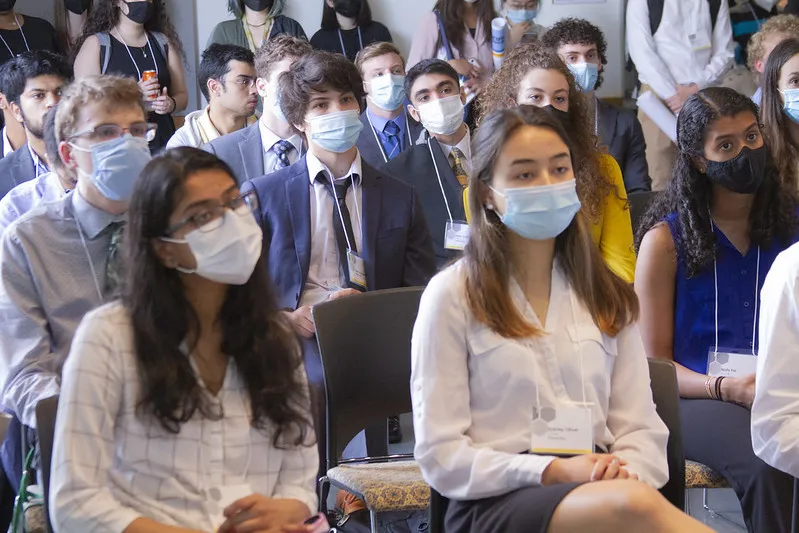
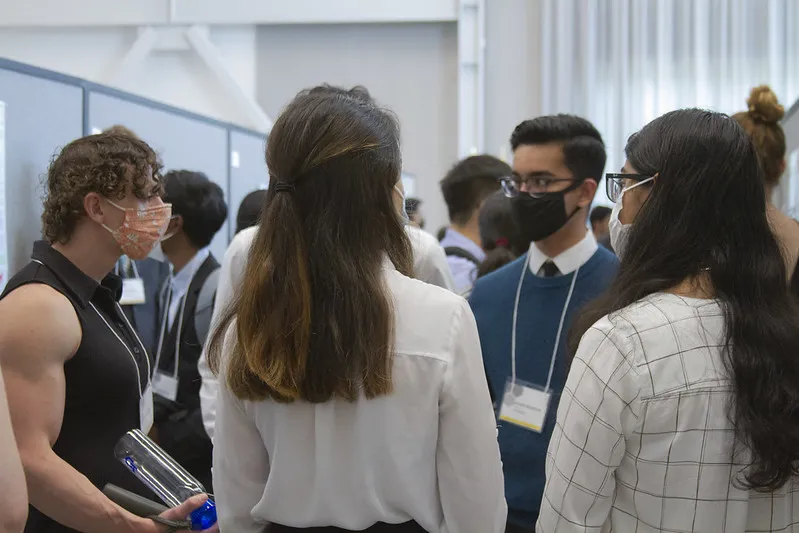
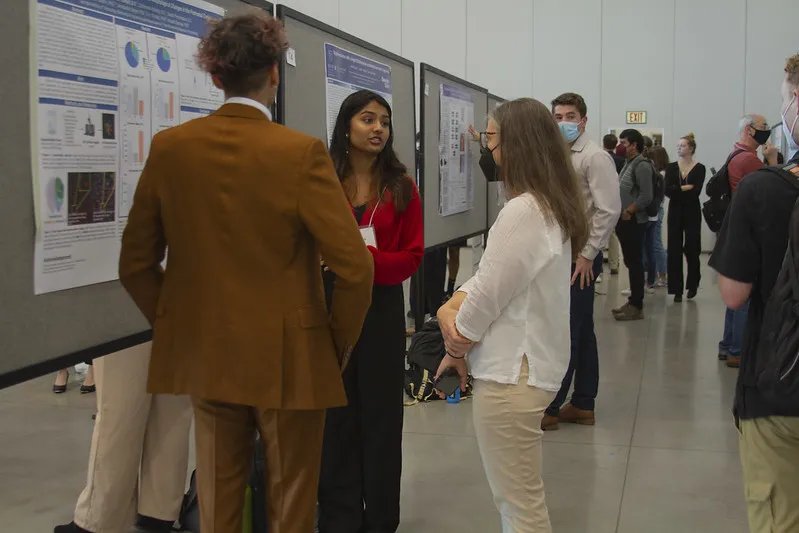
On Wednesday, April 13th 2022, the Undergraduate Research Opportunities Program (UROP) hosted the 16th annual Spring Undergraduate Research Symposium. UROP’s annual symposium is Georgia Tech’s largest undergraduate research colloquium and allows students to present their research and gain valuable skills and presentation experience. Each year the symposium also presents awards to the top poster and oral presentation from each college and honors the Outstanding Undergraduate Researcher (OUR) from each college. And with over 40 oral presentations and nearly 90 poster presentations, this year’s symposium proved to be another success for UROP and Georgia Tech.
This year the symposium was held in Exhibition Hall and opened with an introduction and keynote address to students, faculty, and other non-presenters. Shortly after, the event moved into the poster presentations segment where undergraduate students displayed their research to judges, faculty, and other attendees. The oral presentations followed soon after and gave student researchers the opportunity to go more in-depth with their research and findings and answer any questions the judges and attendees had. To end the event, sponsoring colleges and departments recognized Outstanding Undergraduate Researchers from their respective colleges. Additionally, the symposium judges were tasked with selecting the top student researchers having exceptional poster and oral presentations.
Any Georgia Tech undergraduate student interested in presenting their research is encouraged to apply for future symposiums and to build on research presentation skills, connect with other undergraduate researchers and faculty, and the chance to be recognized with awards by members of the Georgia Tech research community. UROP also hosts other research-related events and workshops throughout the school year to assist undergraduate students interested in research and build on their passions!
To view the list of awardees and pictures from the event visit: https://symposium.urop.gatech.edu/awards/
To learn more about undergraduate research at Georgia Tech visit: https://urop.gatech.edu/
Mar. 17, 2022



By Frida Carrera
During the summer of 2021, computer science student Neil Sanghavi and computer science recent grad Ahan Shah, both from Fairfax, VA, reconnected to catch up with one another and discuss the projects they were working on. In doing so they discovered a mutual resolve to create something using innovative technology and solve a problem relating to intellectual property, specifically patents. Both Neil and Ahan had just started to get into crypto trading and realized that NFT technology had more to offer than its collectible aspect. Here the idea of PatentX was created: to use NFT technology to provide utility in an antiquated space that lacked efficiency.
“It is estimated that we have $1 trillion in unused IP in the United States currently. Additionally, it is reported that there is $25.6 billion worth of patent monetization available today. This is why we created PatentX, a blockchain-backed marketplace to facilitate intellectual property transactions. We built this to make sure the little man innovators and entrepreneurs have an outlet to monetize and connect their patents with the world. Not only that, we are creating tools for large businesses, law firms, venture capitals to manage all of their IP on the blockchain that can handle transactions in seconds.”
Neil and Ahan describe their product launch process as a great learning experience and are firm believers that there can never be too much help. They are currently supported by DXPartners and have received help from various mentors and blockchain professionals. They have been able to traverse obstacles and learn about the marketing, finance, and business aspects behind building a startup despite coming from a technical background.
Their vision for PatentX is to disrupt the traditional way intellectual property is being transacted and to become the World’s Next Web3 Patent Office. PatentX will be releasing an NFT collection of the most historic patent innovations this early March and encourage interested individuals to stay tuned for their launch.
To learn more about PatentX visit their social media:
Twitter: @PatentXNFT
Instagram: @PatentX.io
To learn more about student innovation at Georgia Tech visit: https://innovation.cae.gatech.edu/
Mar. 28, 2022
By Frida Carrera
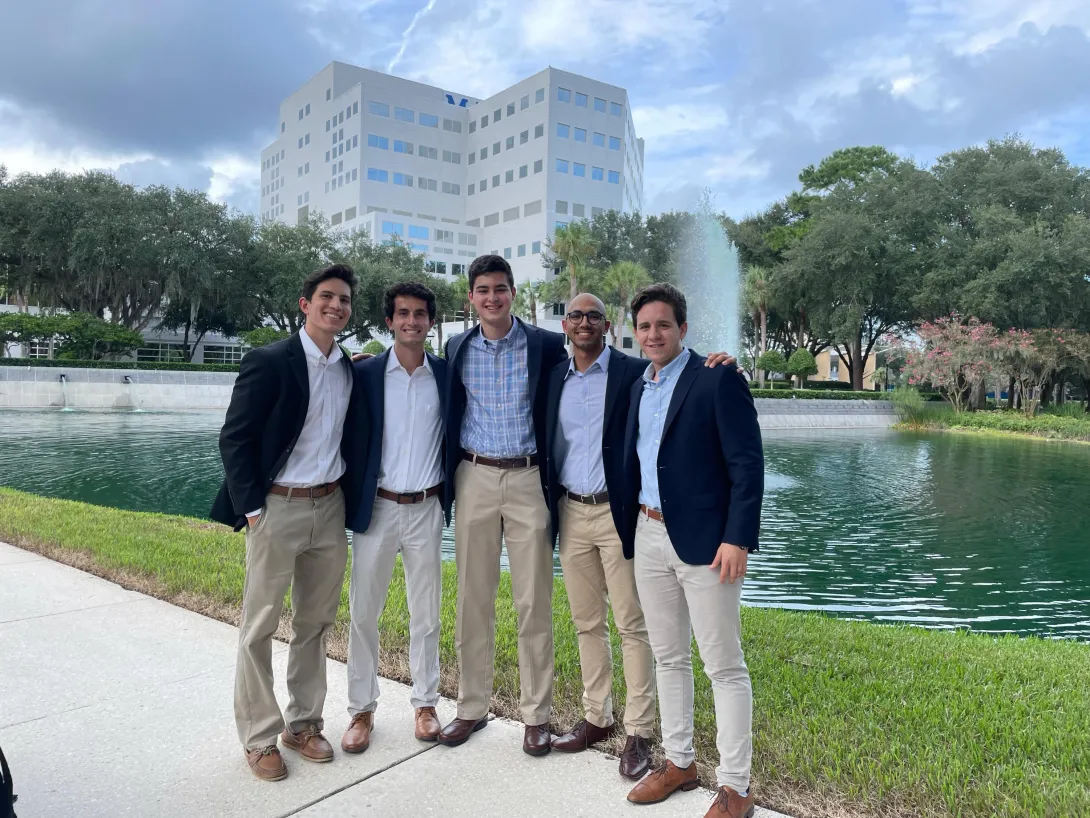
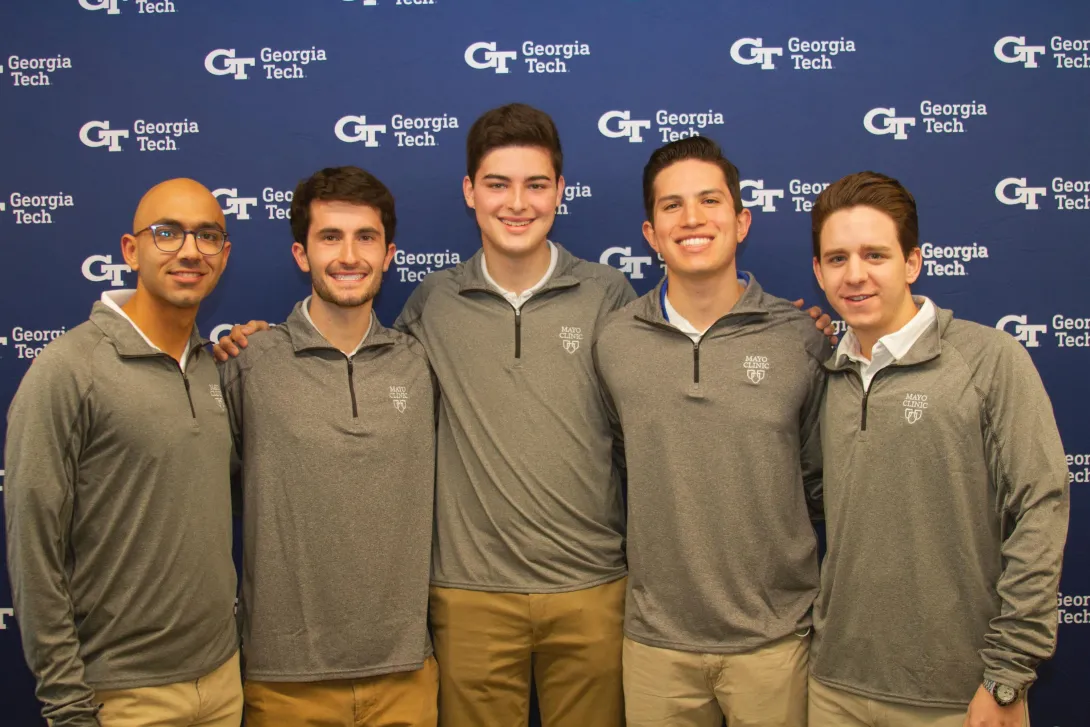
On April 2, 2022, Team carSEAL will represent Georgia Tech in the 6th annual ACC InVenture Prize Competition hosted this year by Florida State University. Team members Shovan Bhatia, Joshua Cruz, Nicholas Lima, Derek Prusener, and Giancarlo Riccobono will compete against other teams in the ACC Conference for a chance to win up to $30,000 in prizes.
carSEAL began with five biomedical engineering students collaborating on a capstone project. After being accepted into the highly sought-after Mayo Clinic Capstone Project, they received mentorship from Dr. Rabih Tawk, a world-renowned neurosurgeon. With his guidance, they learned that surgeons currently lack the tools to close the carotid artery after endovascular procedures. Through a pragmatic approach, the team developed 100+ conceptual designs and iterations. After numerous discussions with attending surgeons across the nation and preliminary testing, they developed carSEAL – a vascular closure device for the carotid artery.
So far, the team has found the InVenture Prize process to be exhilarating.
“Through each round of this process, we have seen incredible teams working on impactful projects and it is exciting to be surrounded by such brilliant minds from numerous backgrounds. It has been especially rewarding working with so many supportive advisors from Georgia Tech, who have been through the startup process and have freely offered their expertise. Along each step of this process, we have learned something new to refine our pitch and ensure we are presenting our most competitive self at the ACC.”
Currently, aside from preparing for the ACC InVenture Prize, the carSEAL team is performing benchtop lab testing to evaluate its efficacy in animal models. Soon after, the team will be moving to pre-clinical studies on their path to obtaining FDA clearance before carSEAL is commercialized. Winning the ACC InVenture Prize would help them gain more traction and gather sufficient funds to help them with this process.
“I am extremely proud of our team’s achievements in the short 6 months that we have worked together. carSEAL has gained a lot of traction already and we are excited to see how far we can take this, hopefully bringing carSEAL to clinical practice within a few years,” Bhatia stated.
The Georgia Tech community can support carSEAL in the competition by voting for them for the People’s Choice Awards by visiting: https://accinventureprize.com/peoples-choice-voting. Online voting begins March 28.
To learn more about the ACC InVenture Prize visit https://accinventureprize.com.
Mar. 01, 2022
By Frida Carrera
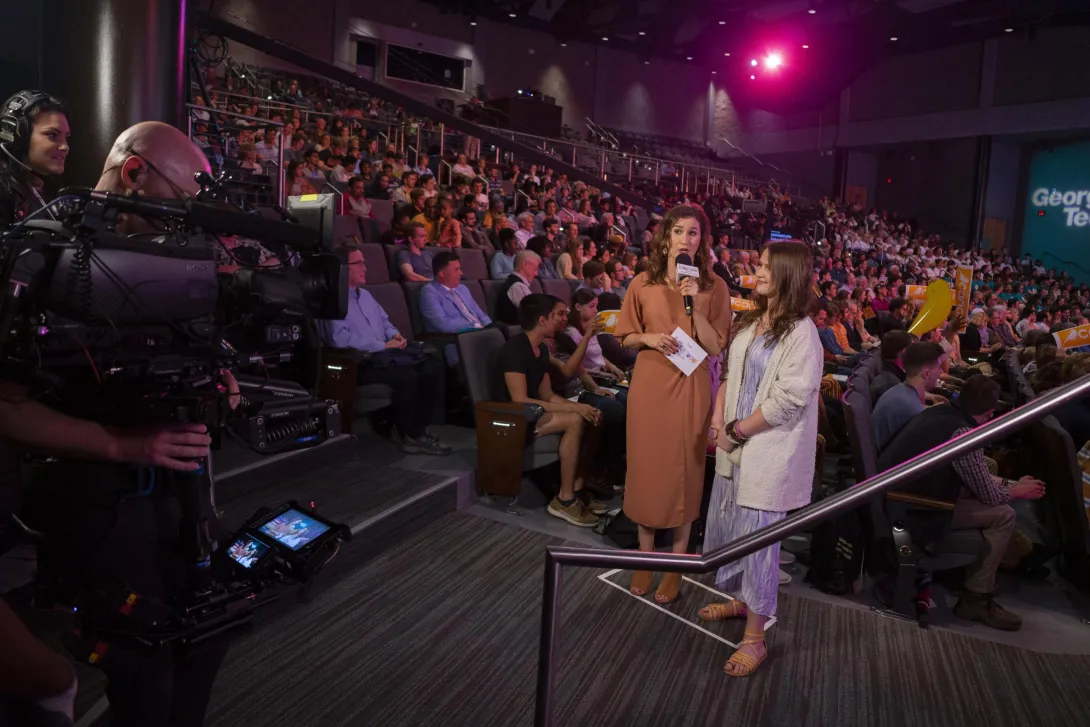
After almost a year of preparation, practice, and refinement, Georgia Tech’s annual InVenture Prize is down to six finalists competing in the final round on March 16th. In this televised round, the final teams will pitch their inventions to a panel of judges and compete for the top prize of $20,000, assistance in patent-filing, and a spot in CREATE-X’s Startup Launch program.
In its 14th year, the InVenture Prize competition features different innovations created by Georgia Tech students from all disciplines and backgrounds. For months prior to the final round, the finalists received coaching and assistance from mentors and coaches on building their prototypes, developing business models, and rehearsing their pitches to investors. The final six teams were chosen from previous preliminary and semifinal rounds that included a broad range of competitors.
The finals of the InVenture Prize will air live from Georgia Tech’s Ferst Center for the Arts at 7:30 p.m. on March 16th on Georgia Public Broadcasting.
The 2022 finalist teams are:
The Foambuster: The Foambuster is a unique handheld tool that allows construction contractors to drastically cut down on the mess, hassle, and money spent that comes with installing exterior insulation.
Edward Diller, Mechanical Engineering, Los Angeles, CA
Davis Waln, Mechanical Engineering, Atlanta, GA
Christophe Senghor, Mechanical Engineering, Peachtree City, GA
Katelyn Sand, Mechanical Engineering, Westlake Village, CA
Jaime Paris Meseguer, Mechanical Engineering, Spain
Magic Crop: An application that uses the power of Artificial Intelligence and the rule of thirds to format any number of inputted pictures into the perfect headshot within seconds and without ever sending any images to the cloud or to a third-party server.
Megan Dass, Computer Science, Woodbridge, VA
Reflex: Emergency Medical Drone Response System to deliver life-saving medical equipment.
Nevin Gilbert, Computer Science, Boulder, CO
Usman Jamal, Computer Science, Tucker, GA
Sola: Sola provides a data-driven supplemental insurance plan which covers immediate out-of-pocket expenses for US homeowners following losses from tornadoes.
Brayden Drury, Mechanical Engineering, Park City, Utah
Wesley Pergament, Mechanical Engineering, Old Westbury, NY
StrideLink: Accessible gait analysis wearable for remote monitoring of walking asymmetry.
Marzeah (Zea) Khorramabadi, Computer Engineering, Birmingham, AL
Cassandra (Cassie) McIltrot, Biomedical Engineering, Sykesville, MD
Neel Narvekar, Computer Engineering, Arcadia, CA
Tony Wineman, Electrical Engineering, Woodstock, GA
Tabnam: AI-powered shopping assistant that leverages the knowledge of user experience data.
SooHoon Choi, Computer Science, South Korea
Daksh Gupta, Computer Science, Noida, India
Robert (Davis) Liddell, Computer Science, Lutherville, MD
Ethan Perry, Computer Science, Wellesley, MA
To request tickets for the event visit: https://inventureprize.gatech.edu/form/inventure-prize-ticket-request-f
To learn more about InVenture Prize visit: https://inventureprize.gatech.edu/
Dec. 10, 2021
By Frida Carrera
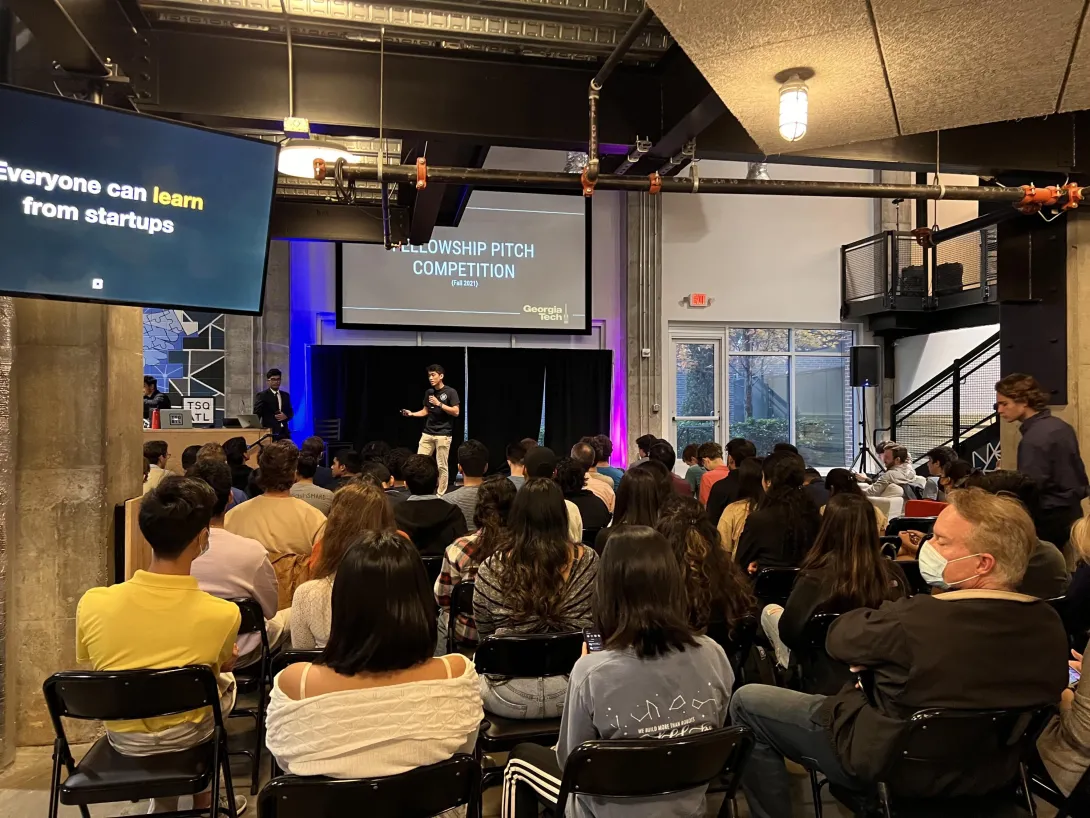
On December 3, 2021, Startup Exchange presented the Fall 2021 Fellowship Pitch Competition sponsored by the Georgia Tech Student Innovation Program, Office of Undergraduate Education. The event took place at ATL Social Club in Tech Square, a major startup hub situated on Georgia Tech’s campus and perfect for those eager for innovation at GT. The event also welcomed partner companies and recruiters such as NCR and Stord.
At this pitch-style event, six founder teams presented their innovative pitches and competed for first, second, and third place, each with a cash prize to aid in the advancement of their ideas. The first and second place winners of the competition were determined by three guest judges: Kathryn Petralia, co-founder of Kabbage and Drum; Thomas Suarez, co-founder of Teleport and Thiel Fellow; and Evan Jarecki, serial entrepreneur and BM at Startup Atlanta. The event commenced with a brief introduction by Startup Exchange executive board members, followed by presentations from the 6 teams including Fino, InSite, Jargon, and Tokenstack. After hearing each team’s pitch, the judges had time to deliberate and select the top two winners while the audience voted for the People’s Choice winner. Meanwhile, attendees were also able to hear from the partner companies and network while enjoying free perks such as food and beverages.
“There are students everywhere across campus really starting on their start-ups and pursuing their dreams. Atlanta is a growing city and Georgia Tech is the perfect hub for that. These teams, we’re introducing them to entrepreneurship and giving those resources and intro-connections. By doing so, we’re inspiring them in a way. It’s just a great learning experience for them,” explained Startup Exchange’s Director of Fellowship Revanth Tiruveedhi.
Following the intermission, the judges presented the first-place award of $750 to Jargon, a browser extension that points out red flags in user contract agreements, as pitched by team members Kaleb Rasmussen and Devansh Khunteta. Second place of $500 was awarded to Eartheal by team members Colin Burnett, Philip Colt, Neal Austensen, and Brandon Sherrard. People's Choice of $250 was awarded to Tokenstack by team members Nitin Paul, Samrat Sahoo, Yatharth Bhargava, and Mohit Sahoo. The event then closed with remarks by Startup Exchange’s board members and photos with the participants.
To learn more about student innovation at Georgia Tech visit https://innovation.gatech.edu/
Apr. 05, 2021
By Jessica Barber
On April 21, 2021, biomedical engineering student Michael Pullen will serve as Georgia Tech’s representative in the fifth annual ACC InVenture Prize. Here he will compete with teams from twelve other universities for the chance to take home $30,000 in prizes.
Pullen’s invention first took root when he experienced the struggle of getting turf burn while playing football. While most players seek protection through regular compression sleeves, this often leads to decreased grip, more fumbles, and difficulty in maneuvering plays.
While working in sports medicine with the Atlanta Falcons, Pullen found a way to directly avoid this problem. LZRD Sleeve is a compressive sleeve that integrates gripping and moisture-wicking technology to deliver protection and control without sacrificing mobility nor comfort.
Since then, LZRD Sleeve has secured its place in non-athletic arenas. A year ago, the world of sports halted due to COVID-19 shutdowns. It was then that Pullen sought other applications for his innovative sleeve — LZRD Sleeve has expanded its market to delivery drivers, gardeners, and maintenance workers seeking better performance and protection from harm.
LZRD Sleeve is now being used by the largest U.S. courier service, and it has also been featured in Neil DeGrasse Tyson’s podcast StarTalk. On the same hand, Pullen has been in contact with a whopping five Fortune 500 companies. He ultimately hopes that InVenture Prize will show that with hard work, nothing is impossible.
“Never in a million years would I have thought I would be representing Georgia Tech in the ACC InVenture Prize. Getting out of your comfort zone and trying new things is important, and by winning, I hope to set an example so that others might do the same,” Pullen stated.
Overall, winning the ACC InVenture Prize would allow LZRD Sleeve to expand even further through capital investments, uptakes in production, and coverage of associated legal fees.
The Georgia Tech community is encouraged to show Pullen its support through voting for the People’s Choice Award of $5,000. Voting is open from 8 a.m. on Monday, April 5 until midnight on Tuesday, April 6.
To vote, please text GATech to win the ACC InVenture Prize People’s Choice Award to 415-965-7445.
Winners will be announced on Wednesday, April 21 at 7 p.m. on PBS stations throughout the ACC region.
More information about LZRD Sleeve can be found at lzrdtech.com.
News Contact
Recha Reid
Office of Undergraduate Education
Feb. 22, 2021

The U.S. pulp and paper industry uses large quantities of water to produce cellulose pulp from trees. The water leaving the pulping process contains a number of organic byproducts and inorganic chemicals. To reuse the water and the chemicals, paper mills rely on steam-fed evaporators that boil up the water and separate it from the chemicals.
Water separation by evaporators is effective but uses large amounts of energy. That’s significant given that the United States currently is the world’s second-largest producer of paper and paperboard. The country’s approximately 100 paper mills are estimated to use about 0.2 quads (a quad is a quadrillion BTUs) of energy per year for water recycling, making it one of the most energy-intensive chemical processes. All industrial energy consumption in the United States in 2019 totaled 26.4 quads, according to Lawrence Livermore National Laboratory.

An alternative is to deploy energy-efficient filtration membranes to recycle pulping wastewater. But conventional polymer membranes — commercially available for the past several decades — cannot withstand operation in the harsh conditions and high chemical concentrations found in pulping wastewater and many other industrial applications.
Georgia Institute of Technology researchers have found a method to engineer membranes made from graphene oxide (GO), a chemically resistant material based on carbon, so they can work effectively in industrial applications.
“GO has remarkable characteristics that allow water to get through it much faster than through conventional membranes,” said Sankar Nair, professor, Simmons Faculty Fellow, and associate chair for Industry Outreach in the Georgia Tech School of Chemical and Biomolecular Engineering. “But a longstanding question has been how to make GO membranes work in realistic conditions with high chemical concentrations so that they could become industrially relevant.”
Using new fabrication techniques, the researchers can control the microstructure of GO membranes in a way that allows them to continue filtering out water effectively even at higher chemical concentrations.
The research, supported by the U.S. Department of Energy-RAPID Institute, an industrial consortium of forest product companies, and Georgia Tech’s Renewable Bioproducts Institute, was reported recently in the journal Nature Sustainability. Many industries that use large amounts of water in their production processes may stand to benefit from using these GO nanofiltration membranes.
Nair, his colleagues Meisha Shofner and Scott Sinquefield, and their research team began this work five years ago. They knew that GO membranes had long been recognized for their great potential in desalination, but only in a lab setting. “No one had credibly demonstrated that these membranes can perform in realistic industrial water streams and operating conditions,” Nair said. “New types of GO structures were needed that displayed high filtration performance and mechanical stability while retaining the excellent chemical stability associated with GO materials.”
To create such new structures, the team conceived the idea of sandwiching large aromatic dye molecules in between GO sheets. Researchers Zhongzhen Wang, Chen Ma, and Chunyan Xu found that these molecules strongly bound themselves to the GO sheets in multiple ways, including stacking one molecule on another. The result was the creation of “gallery” spaces between the GO sheets, with the dye molecules acting as “pillars.” Water molecules easily filter through the narrow spaces between the pillars, while chemicals present in the water are selectively blocked based on their size and shape. The researchers could tune the membrane microstructure vertically and laterally, allowing them to control both the height of the gallery and the amount of space between the pillars.
The team then tested the GO nanofiltration membranes with multiple water streams containing dissolved chemicals and showed the capability of the membranes to reject chemicals by size and shape, even at high concentrations. Ultimately, they scaled up their new GO membranes to sheets that are up to 4 feet in length and demonstrated their operation for more than 750 hours in a real feed stream derived from a paper mill.
Nair expressed excitement for the potential of GO membrane nanofiltration to generate cost savings in paper mill energy usage, which could improve the industry’s sustainability. “These membranes can save the paper industry more than 30% in energy costs of water separation,” he said.
Georgia Tech continues to work with its industrial partners to apply the GO membrane technology for pulp and paper applications.
This work is supported by the U.S. Department of Energy (DOE) Rapid Advancement in Process Intensification Deployment (RAPID) Institute (#DE-EE007888-5-5), an industrial consortium comprising Georgia-Pacific, International Paper, SAPPI, and WestRock, and the Georgia Tech Renewable Bioproducts Institute. Any opinions, findings, and conclusions or recommendations expressed in this material are those of the authors and do not necessarily reflect the views of the sponsoring organizations.
CITATION: Zhongzhen Wang, et al., “Graphene Oxide Nanofiltration Membranes for Desalination under Realistic Conditions.” (Nature Sustainability, 2021) https://doi.org/10.1038/s41893-020-00674-3.
News Contact
Anne Wainscott-Sargent
Research News
(404-435-5784)