
Jun. 13, 2023

Georgia Tech’s newest interdisciplinary degree program, the Environmental Science B.S. degree (ENVS), developed jointly by faculty of the School of Earth and Atmospheric Sciences and the School of Biological Sciences, has launched and is now enrolling students.
The ENVS degree will provide a strong foundation in the basic sciences, requiring core content in mathematics, physics, chemistry, biology, earth sciences, and environmental policy. Flexible electives in upper-level coursework will allow students to customize their program of study to their interest and career goals.
A launch event for the degree program will take place at the Kendeda Building on the afternoon of Friday, August 25, 2023.
“The new degree will prepare students to be future leaders who are well-versed on how the Earth's systems can be influenced by human activity and contribute to human well-being,” says Greg Huey, professor and chair of the School of Earth and Atmospheric Sciences. “Graduates will be positioned to be leaders in industry, academia, education, and communication to create innovative solutions to the most significant environmental challenges of our time.”
Two faculty members in the School of Earth and Atmospheric Sciences (EAS) and a faculty member in the School of Biological Sciences will serve as inaugural leadership: Jennifer Glass, associate professor, is program director; Samantha Wilson, academic professional, is director of Undergraduate Studies; and Linda Green, senior academic professional in the School of Biological Sciences, is director of Experiential Learning.
The foundational science classes in this new degree will be complemented by courses in Public Policy and City Planning, including Geographical Information Systems (GIS) and Environmental Policy and Politics, before opening up and providing students with flexibility in course options to better fit their career paths and interests.
“Past EAS students have been interested in careers related to environmental consulting, environmental law, and continuing their studies in graduate school,” Wilson says. “The variety of environmental career paths was the driver behind allowing students to diversify their options within the degree.”
“This degree will give Georgia Tech students a unique opportunity to customize their environmental science program of study to their interests and career goals in science, policy, public service, non-profit, government, industry, academia, or beyond,” adds Glass. “We are committed to building an academic community in ENVS that values student leadership, ethics, justice, accessibility, and belonging.”
Hands-on learning opportunities will include field station experiences and field trip excursions, study abroad programs, and internships, Green says. “This major sustains the Institute’s strategic plan to lead by example, champion innovation, and connect globally — particularly in an area so critical as addressing Earth’s environmental issues.”
Glass added that the Schools of Chemistry, Biological Sciences, and Earth and Atmospheric Sciences are currently revamping several classes to meet United Nations Sustainable Development Goals (SDGs). Students will advance to be global leaders of environmental solutions that draw upon the U.N. Sustainable Development Goals and incorporate awareness of cultural relevance.
“We can’t wait for August to celebrate the ENVS launch with our incoming and current students,” Glass says.
More information on the Environment Science (ENVS) degree:
General information: jennifer.glass@eas.gatech.edu
Curriculum and enrollment: samantha.wilson@eas.gatech.edu
Co-curricular initiatives: linda.green@gatech.edu
Learn more: Three new EAS undergraduate degrees
Beginning Summer 2023, prospective and current Georgia Tech students will have three new Bachelor of Science degrees to choose from in the School of Earth and Atmospheric Sciences. The expanded undergraduate offerings target a wider range of job and research opportunities — from academia to analytics, NASA to NOAA, meteorology to marine science, climate and earth science, to policy, law, consulting, sustainability, and beyond.
The Board of Regents of the University System of Georgia has approved two new specific degrees within the School: Atmospheric and Ocean Sciences (AOS) and Solid Earth and Planetary Sciences (SEP). Regents also approved Environmental Science (ENVS) as an interdisciplinary College of Sciences degree between the School of Earth and Atmospheric Sciences and the School of Biological Sciences. The existing Earth and Atmospheric Sciences B.S. degree will sunset in two years for new students. Learn more.
News Contact
Writer: Renay San Miguel
Communications Officer II/Science Writer
College of Sciences
404-894-5209
Editor: Jess Hunt-Ralston
Jun. 07, 2023
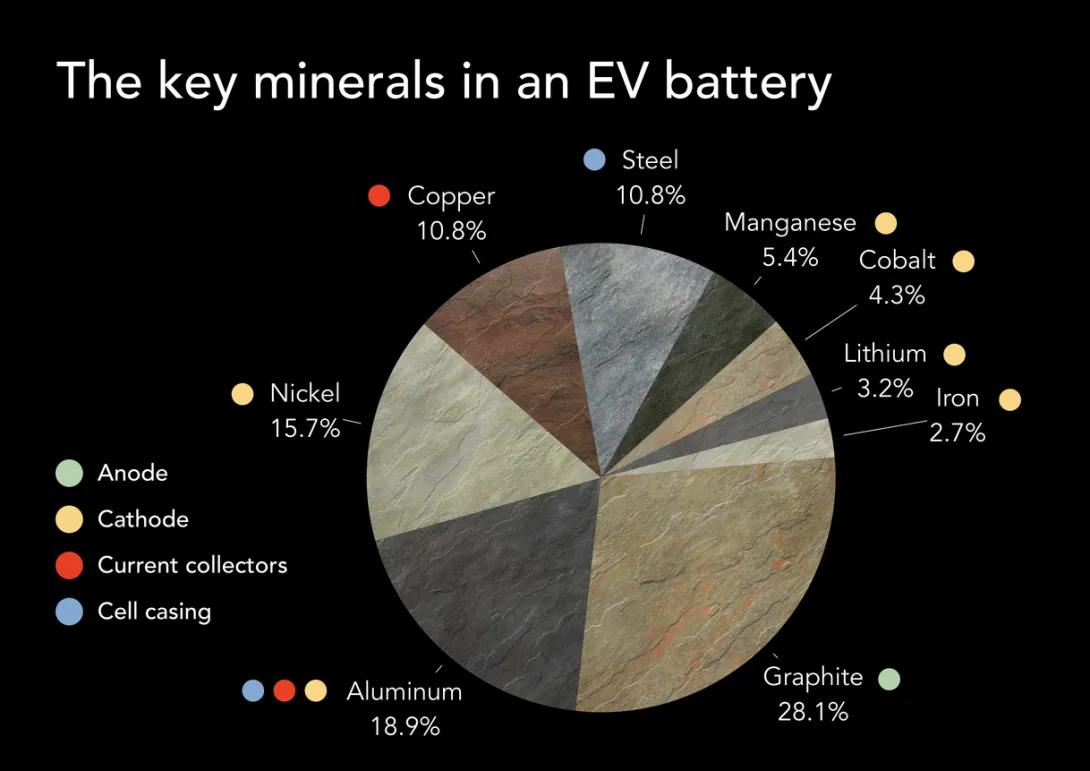
GTRI's EV battery recycling efforts are crucial because many of the key minerals found in lithium-ion batteries are sourced from geopolitically sensitive regions across the globe (Photo Credit: iStock).
Amid the surge in demand for lithium-ion batteries, which power everything from smartphones to electric vehicles (EVs), there is a greater need to properly recycle them. The Georgia Tech Research Institute (GTRI) is working to optimize Georgia’s EV battery supply chain by developing cost- and energy-efficient methods to recover materials from spent batteries so that more of them can be reused – and pose fewer environmental risks.
Georgia is quickly emerging as a hub for the electronic transportation industry. According to data from the Georgia Department of Economic Development, since 2018, 35 EV-related projects have contributed $23 billion in investments in the state.
South Korea-based Hyundai Motor Group recently broke ground on its first fully dedicated EV manufacturing facility in Savannah’s Bryan County. The company has also teamed up with LG Energy Solution to invest $4.3 billion in building an EV battery cell manufacturing plant at the same location.
EV manufacturer and automotive technology company Rivian, which is based on Irvine, Calif., has announced a $5 billion investment in its second U.S. plant located east of Atlanta in Morgan and Walton Counties.
Hyundai’s new facility is expected to reach full production capacity at the end of 2025, with 30 gigawatt hours (GWh) of energy anticipated to support the production of 300,000 EVs. Rivian, meanwhile, anticipates its Georgia plant will employ over 7,500 workers while producing up to 400,000 vehicles each year.
“This level of industry engagement in Georgia is unprecedented,” said Kevin Caravati, a GTRI principal research scientist, who is supporting this project. “The Hyundai plant, for example, could create tens of thousands of jobs in a very rural part of Georgia, which would be a step in the right direction for the entire state.”
The lithium-ion batteries that power EVs are seen as desirable over other battery technologies because of their high energy density, which allows electric cars to travel longer distances on a single charge. These types of batteries also have a low self-discharge rate, which means that the stored energy remains available for an extended period of time even when the vehicle is not in use.
However, these batteries can easily turn into fire hazards – especially at the end of their life cycle. Very few batteries ever end up being recycled and those that do get recycled are often mishandled.
“Currently, there are no recycling standards in place, which poses challenges for the entire supply chain,” said Milad Navaei, a GTRI senior research engineer, who is leading this project. “Our goal is to create circular economy for batteries in Georgia where we can reduce our dependence on raw materials that often come from overseas and can be very expensive.”
Lithium-ion batteries use metals including lithium, nickel, manganese, and cobalt that are mined in locations such as Africa’s Democratic Republic of the Congo, Chile and Argentina. During the production process, the metals are combined with other materials to form the two key components of a battery cell – the cathode and the anode. Inside a battery, the cathode, which has a negative charge, and anode, which has a positive charge, interact to generate electrons that power the electronic device. Most lithium-ion batteries are currently made in China.
Navaei noted that geopolitical sensitivities and lingering supply chain challenges in many of these regions makes GTRI’s work all the more crucial.
GTRI’s research consists of two parts: One, develop more advanced analytics capabilities for fleet management companies to monitor the health and performance of EV batteries, and two, optimize the recovery of raw materials from batteries at the end of their useful life.
“The battery is the most important part of an EV, and it’s critical to know the battery’s state of health (SoH), which is the ratio of the present capacity to the initial capacity,” said Navaei. “Our goal is to utilize technologies such as the Internet of Things (IoT) to monitor the SoH of these batteries and estimate the life cycle, which heavily depends on the usage and the type of battery for its safe and reliable implementation in the next life application.”
GTRI aims to integrate these technologies into companies’ existing inventory management systems to streamline process management and reporting.
For the second part of the research, GTRI is utilizing a statistical technique known as parametric modeling to aggregate data about known behaviors and characteristics of EV batteries to help companies make more informed decisions about properly depowering them and repurposing their raw materials with minimal environmental impact.
“Developing a robust system-modeling approach to support our energy research is a primary focus of ours,” said GTRI Principal Research Scientist Ilan Stern, who is also supporting the project. “Since our ultimate goal is to utilize domestic sources in our supply chain, really the only way to do that is by building out strong recycling models to account for the fact that these companies are working with finite materials and many of them are coming from conflict zones.”
GTRI is working with a number of industry partners on this project, including many companies that participated in Georgia Tech Battery Day earlier this year. At the event, over 230 energy researchers and industry participants convened to discuss emerging opportunities in energy storage research. Some of the companies represented at the event included Hyundai Kia, Delta Airlines, Cox Automotive and Panasonic.
Writer: Anna Akins
Photo Credit: iStock
GTRI Communications
Georgia Tech Research Institute
Atlanta, Georgia
The Georgia Tech Research Institute (GTRI) is the nonprofit, applied research division of the Georgia Institute of Technology (Georgia Tech). Founded in 1934 as the Engineering Experiment Station, GTRI has grown to more than 2,900 employees, supporting eight laboratories in over 20 locations around the country and performing more than $800 million of problem-solving research annually for government and industry. GTRI's renowned researchers combine science, engineering, economics, policy, and technical expertise to solve complex problems for the U.S. federal government, state, and industry.
News Contact
(Interim) Director of Communications
Michelle Gowdy
Michelle.Gowdy@gtri.gatech.edu
404-407-8060
May. 15, 2023

James X. Zhong Manis, who is pursuing his Ph.D. in Physical Chemistry at Georgia Tech, will get a chance to conduct his thesis research at a Department of Energy national laboratory at Stanford University, thanks to his selection to the DOE Office of Science Graduate Student Research (SCGSR) program.
The goal of the SCGSR program is to prepare graduate students for science, technology, engineering, or mathematics (STEM) careers critically important to the DOE Office of Science mission. The agency provides graduate thesis research opportunities through extended residency at DOE national laboratories.
“I am so excited and feel extremely lucky to have this opportunity to continue my research with DOE help,” Manis said. “I am thankful for everyone’s help to get me where I am, especially my principal investigator Thomas Orlando, our lab senior research scientist Brant Jones, my collaborating DOE scientist Thorsten Weber, and also everyone else in my research group. I am so thrilled to be working with world class scientists on cutting edge equipment.”
Manis is one of 87 awardees from 58 different universities who will conduct research at 16 DOE national laboratories. The research projects proposed by the new awardees are aligned with the priority mission areas of the DOE Office of Science that have a high need for workforce development.
“The SCGSR program provides a way for graduate students to enrich their scientific research by engaging with researchers at DOE National Labs, learning from world class scientists, and using state-of-the-art equipment and facilities,” notes Asmeret Asefaw Berhe, Director of the DOE Office of Science. “In addition, they get valuable opportunities to network and observe firsthand what it’s like to have a scientific career. I can’t wait to see what these young researchers do in the future. I know they will meet upcoming scientific challenges in new and innovative ways.”
Manis, who also earned a Bachelor of Science degree from the Wallace H. Coulter Department of Biomedical Engineering in 2018, will join the DOE’s Gas Phase Chemical Physics program at the Stanford Linear Accelerator Center (SLAC) at Stanford University. The Center supports research on fundamental gas-phase chemical processes important in energy applications.
SCGSR awardees work on research projects of significant importance to the Office of Science mission that address critical energy, environmental, and nuclear challenges at national and international scales. Projects in this new cohort span eight different DOE Office of Science research programs.
Manis’ project falls into the Basic Energy Sciences category. “I am interested in understanding the low energy electron interaction with biomolecules, which is a potential way of causing DNA damage,” he said. “The research I will conduct at the SLAC National Accelerator Laboratory is to first help in commissioning the DREAM (Dynamic REAction Microscope) end station in the TMO (time-resolved atomic, molecular and optical science) instrument hub.
“I have never visited SLAC before, but I am extremely excited to work there,” Manis added. “It’s going to be a change of pace collaborating with another group of scientists, and I can’t wait to start.”
News Contact
Writer: Renay San Miguel
Communications Officer II/Science Writer
College of Sciences
404-894-5209
May. 08, 2023
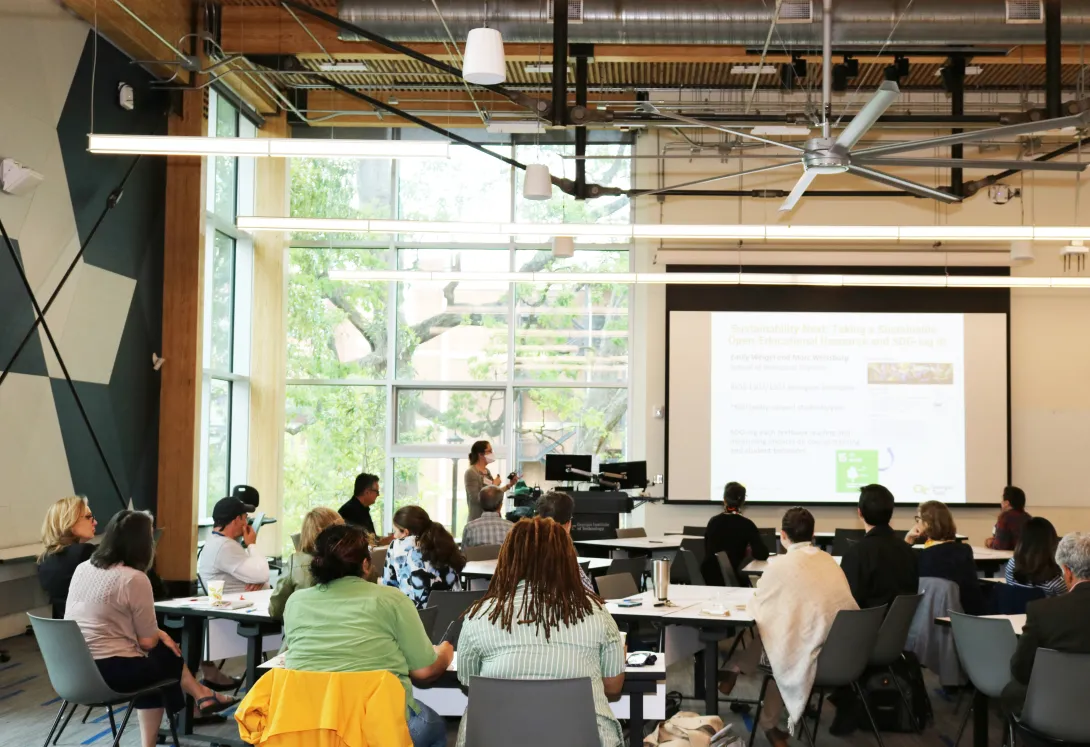
Georgia Tech researchers give presentations on their Undergraduate Sustainability Education Innovation Grants during a recent "Jamboree" in the Kendeda Building. (Photo Jess Hunt-Ralston)

Six proposals from the College of Sciences will redesign existing courses and begin new ones to help students contribute to a sustainable world have been approved for Undergraduate Sustainability Education Innovation Grants. The proposals tie into the United Nations’ 17 Sustainable Development Goals (UN SDGs).
A total of 21 projects from all six Georgia Tech colleges will reach an estimated 22,500 students. The collaborative effort is focused on a key goal of the Institute’s Sustainability Next Task Force: to produce graduates who are committed to making a positive difference in their communities, their organizations, and the world.
“The overall goal is that all of our students understand the societal context for their work, as well as the scientific, environmental, economic, and social aspects of sustainability,” says Jennifer Leavey, assistant dean for Faculty Mentoring for the College of Sciences and co-chair of Sustainability Next.
Leavey and Rebecca Watts-Hull, assistant director of Faculty Development for Sustainability Education in the Center for Teaching and Learning, served as liaisons for the Undergraduate Sustainability Education Committee, which judged the proposals.
Leavey also coordinates College of Sciences educational programs related to science and sustainability, including the Georgia Tech Urban Honey Bee Project and the Living Building Science Vertically Integrated Project Team.
Leavey said the UN SDGs — which ask world citizens and their governments to consider ambitious solutions to longstanding problems such as hunger, poverty, climate damage, inequality, and lack of quality healthcare — are clear and compelling. “These are things we want for a better world,” she shared. “Every field has some connection to them. And it's just a very easy framework to get behind and understand. I would love it if all Georgia Tech graduates could leave feeling well versed in that understanding, and how their work connects to it.”
The Sustainable Education Committee chose projects that impacted the greatest number of students, including classes that are required for all Georgia Tech undergraduates.
Learn more about the College of Sciences’ six selected proposals:
Laboratory-Based Project on the Chemistry of Alternative Energy Sources
- CHEM 1211L, Chemical Principles I, Laboratory
- Deborah Santos, academic professional, School of Chemistry and Biochemistry
- 1000+ students impacted (majority first-year)
- “I hope that the students would have a better understanding of why they hear about these technologies as possible alternatives, and what obstacles there are to actual widespread implementation,” Santos said. “Maybe students will consider how they might play a role in overcoming those obstacles.”
Sustainability Next: Taking a Sustainable Open-Educational Resource And SDG-ing It
- Bios 1107/1207, Biological Principles
- Emily Weigel, senior academic professional, and Marc Weissburg, professor, School of Biological Sciences
- Approximately 650 early career students per year
- “I will take the textbook and each day link it to an SDG, so that when they come into class, we'll talk about the topics in the context of SDGs,” Weigel said. “By being a little bit more explicit about it, it's our goal that when they go from this intro course to later courses in their curriculum, they're primed to think about SDGs, and then they recognize the connections that are there.”
Georgia Climate Project
- EAS 4813 — This is a new course within the School of Earth and Atmospheric Sciences’ new interdisciplinary Environmental Science (ENVS) undergraduate degree program with the School of Biological Sciences, and part of a partnership with the Georgia Climate Project, a state-wide consortium of universities, colleges and partners working to improve understanding of climate impacts and solutions in Georgia.
- Zachary Handlos, senior academic professional, School of Earth and Atmospheric Sciences
- 10-20 students impacted per year
- “This course would provide students an opportunity to participate in hands-on learning within the context of ‘real-world’ sustainability-related projects in partnership with the Georgia Climate Project, complementing topics and coursework covered in Samantha Wilson’s EAS 4803: EAS & Policy course,” Handlos said. “Work includes participation in climate change, sustainability, and climate equity and justice research, as well as the creation and dissemination of tools and resources.”
Urban Atlanta’s Water and Atmospheric Signatures
- EAS 1600: Introduction to Environmental Science (EAS Majors) Laboratory: Urban Atlanta Atmospheric Measurements, combined with another Lab course, Urban Water Quality Measurements and Microbial Ecology Exploration using Proctor Creek Watershed
- Jennifer Glass, associate professor, and Shelby Ellis, lecturer, School of Earth and Atmospheric Sciences
- 20-40 students per year, EAS majors only
- “Through field trips, students will investigate current climate change-induced conditions in urban Atlanta, with students collecting real time weather and watershed data-measurements to learn more about SDGs surrounding urban sustainable cities and clean water,” Ellis said. “In this reconfigured learning environment, we hope to foster student momentum on becoming educational leaders in their local community on climate justice, while gaining an understanding that there are attainable climate actions that can be taken now to combat climate change.” ”
Developing and Enhancing Experiential Learning in a New EAS Course
- EAS 4803: EAS & Policy, offered in new Environmental Science (ENVS), Solid Earth & Planetary Science (SEP), and Atmospheric and Oceanic Science (AOS) undergraduate degree programs in College of Sciences
- Samantha Wilson, academic professional, School of Earth and Atmospheric Sciences
- 25 students during spring semesters in even-numbered years
- “The course is designed to introduce students to the scientific background of topics such as water, hydrocarbons, air, and earthquakes before discussing related policies and persistent issues,” Wilson said. “Through discussions on each topic that involve science and policy, students can work towards understanding why current policies exist the way they do and how they can be improved.” The course will also involve guest speakers, and is meant to be taken before Handlos’ EAS 4813 course.
Course Redesign to Implement Project-Based Learning for Social Change
- APPH 1040, Foundations of Health
- Teresa Snow, senior academic professional, School of Biological Sciences
- Approximately 200 students per year
- “It is my hope that working towards solutions to complex societal health issues will create a sense of empowerment for our students that counteracts feelings of helplessness,” Snow said. “A cross-disciplinary approach, which is the focus of this project, will provide a better understanding of the process of large-scale social change, a critical requirement for achieving the third SDG, which is to ensure healthy lives and promote well-being for all ages. Breaking down the social barriers to good health will benefit everyone.”
On April 27, the Undergraduate Sustainability Education Committee hosted a Jamboree, which featured faculty from each Georgia Tech college that won grants — making brief presentations, and engaging in networking discussions.
“For the College of Sciences, it's really exciting to see the connection between different disciplines,” Leavey said. “We’ve been doing work on climate and the environment for a long time, but to see the connection with sustainability work at other colleges at Georgia Tech is very gratifying.”
News Contact
Writer: Renay San Miguel
Communications Officer II/Science Writer
College of Sciences
404-894-5209
May. 04, 2023
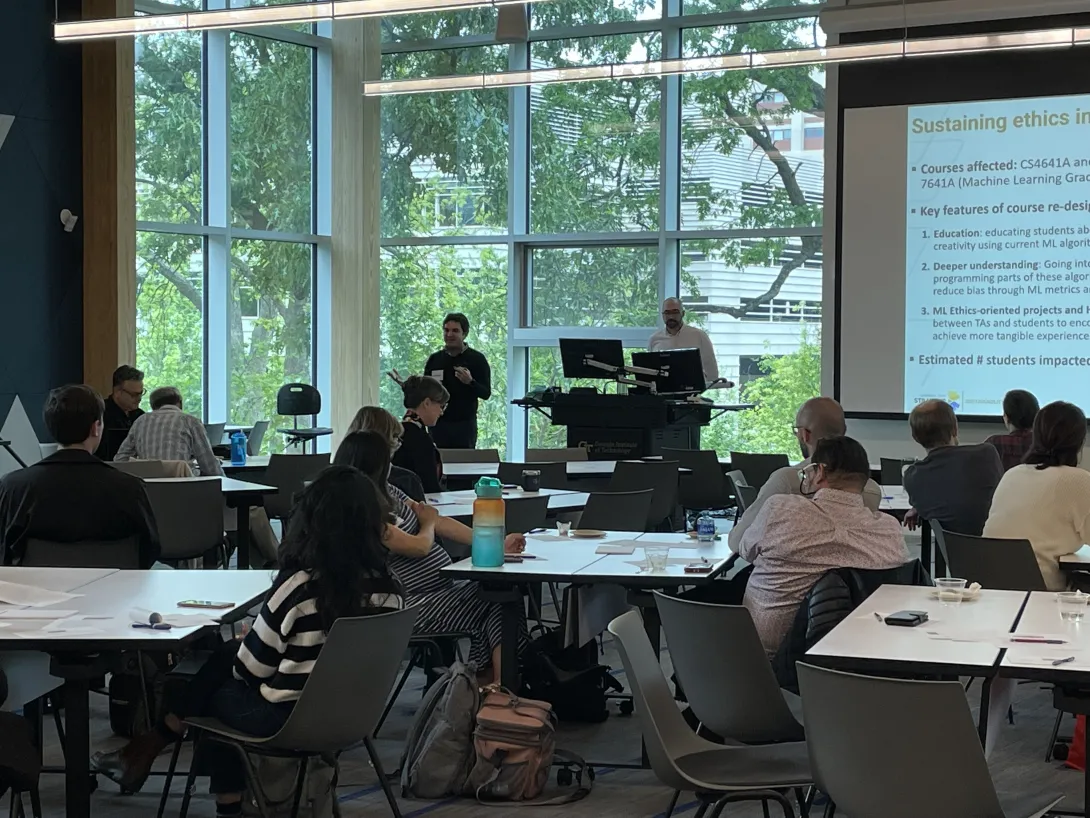
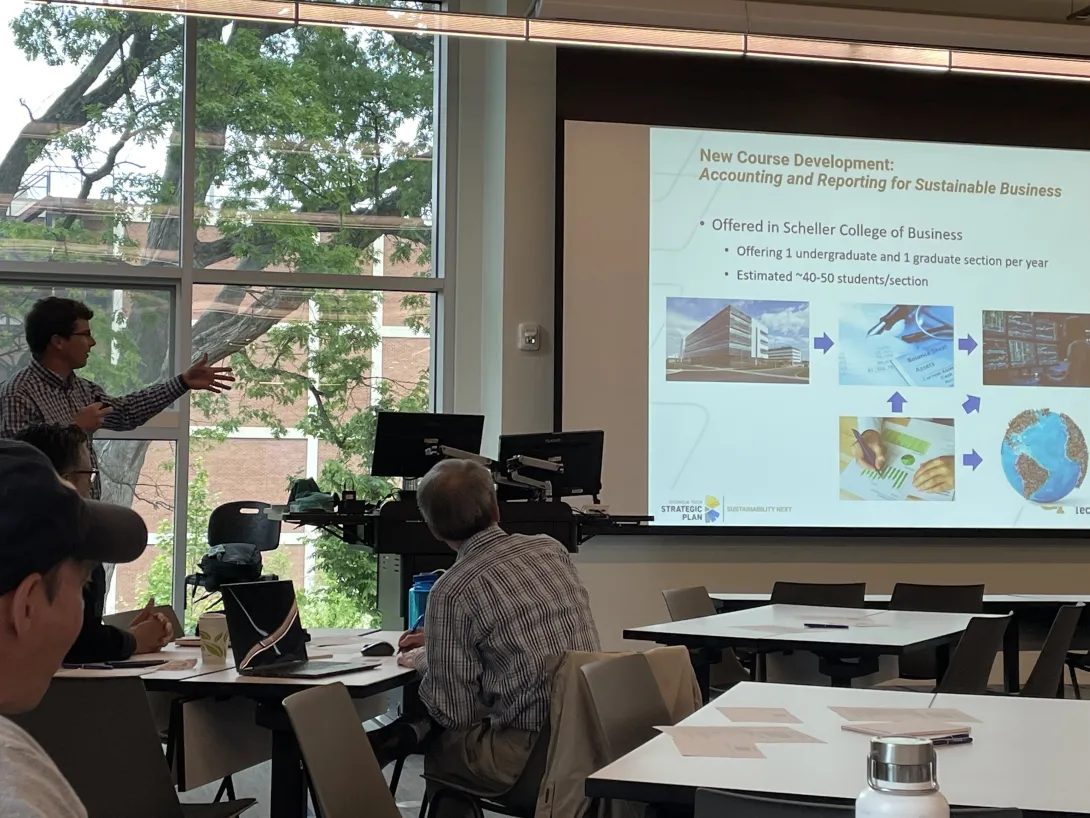
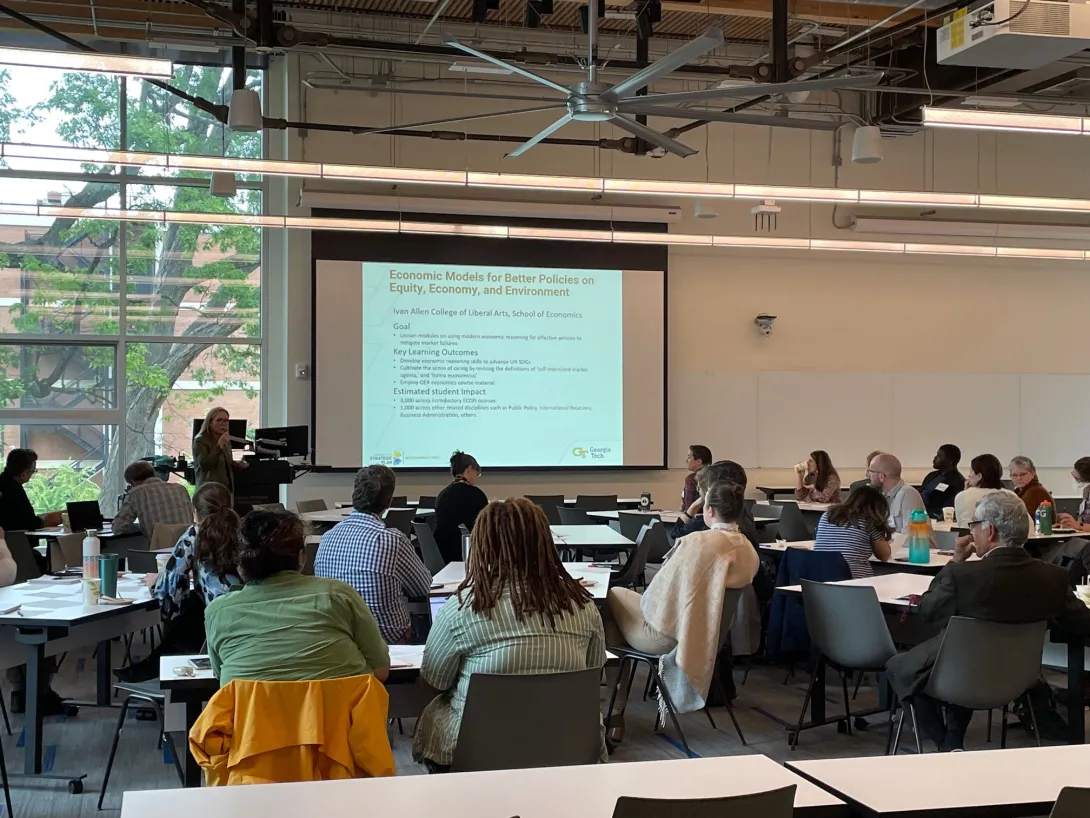
One of the Institute Strategic Plan (ISP) goals is to connect globally and amplify impact by contributing “to global collaborative efforts that advance the U.N. Sustainable Development Goals (SDGs) through our education, research, and service.” In response, Sustainability Next developed a plan to expand SDG concept and skill integration across the undergraduate curriculum. In support of the plan, 21 projects representing all six colleges and 15 schools were presented at the Undergraduate Sustainability Education Jamboree, held on April 26 in the Kendeda Building auditorium. With many winning projects featuring high enrollment and core courses, this first round of sustainability education “seed grants” will significantly expand the reach of Georgia Tech’s sustainability-across-the-curriculum initiatives.
“Our Strategic Plan commitment to bring the United Nations Sustainable Development Goals (SDGs) into our teaching is part of our vision for transformative teaching and learning more broadly,” explains Larry Jacobs, Senior Vice Provost for Education and Learning. “Helping students identify connections between disciplinary concepts and skills and complex societal challenges enhances learning and supports Georgia Tech’s mission to equip students to improve the human condition.”
The Jamboree featured lightning presentations from the award winners, as well as presentations about related initiatives at Georgia Tech to help instructors, students, and staff better understand the landscape of sustainability education innovation on campus. Instructors engaged in course design or re-design through the awards will have opportunities to collaborate with and learn from their peers through a Community of Practice on Transformative Teaching with the SDGs and a SoTL (Scholarship of Teaching and Learning) research group. Many began identifying potential collaborators at the event, as they heard from other award winners. “The afternoon of lightning presentations by fellow faculty was exhilarating,” Sabir Khan, Associate Professor, Schools of Industrial Design and Architecture, shared. “I came away impressed and excited at the range of projects and have already invited a few instructors to join my class in the fall to discuss their approaches to tackling the UN SDGs."
Presenter Kate Williams, Interim Director, Transformative Teaching and Learning, Faculty Initiatives, shared connections between the Sustainability Innovation Awards and Georgia Tech’s Transformative Teaching and Learning (TTL) strategic initiative. “The success of the first round of Sustainability Education Innovation Grants demonstrates our faculty's commitment to creating innovative experiential learning opportunities for students,” Dr. Williams noted.
For more information about future award opportunities or the communities of practice described above, please contact Jennifer Leavey (Assistant Dean for Faculty Mentoring, College of Sciences) or Rebecca Watts Hull (Assistant Director, Faculty Development for Sustainability Education Initiatives, Center for Teaching and Learning).
Review all 21 awarded Undergraduate Sustainability Education Innovation projects.
Apr. 05, 2023
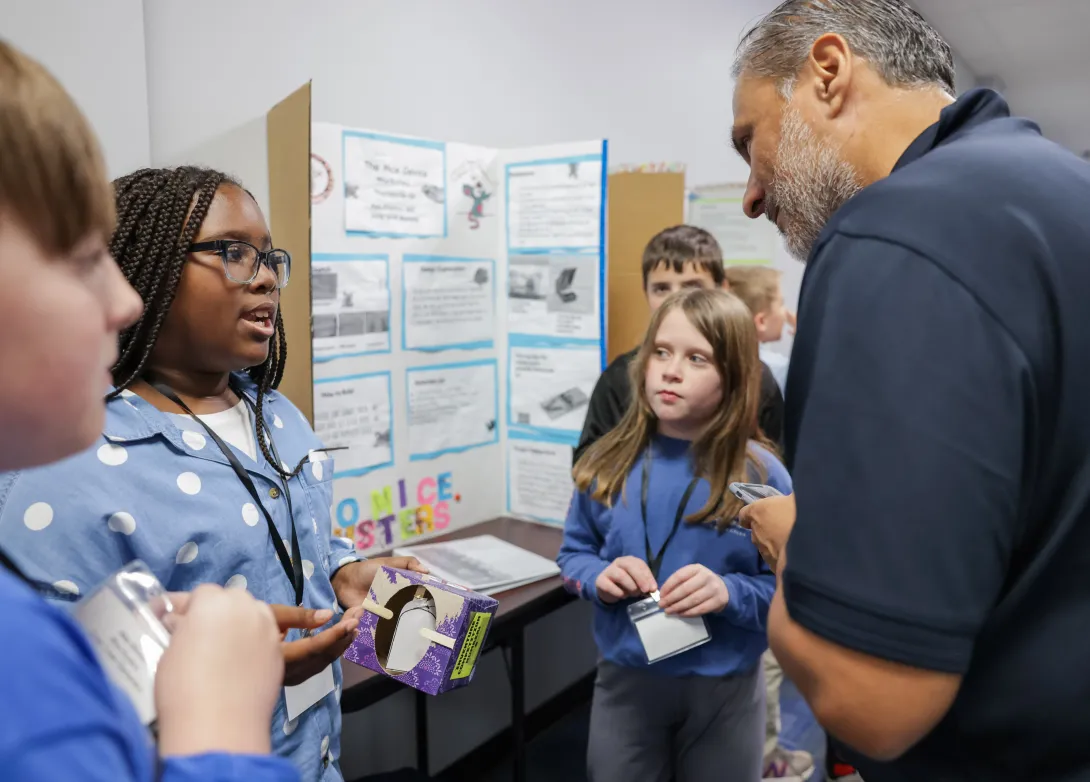
Students in Thomasville, Ga. explain their invention to a competition judge as a part of Georgia Tech’s expanding K-12 InVenture Prize program.
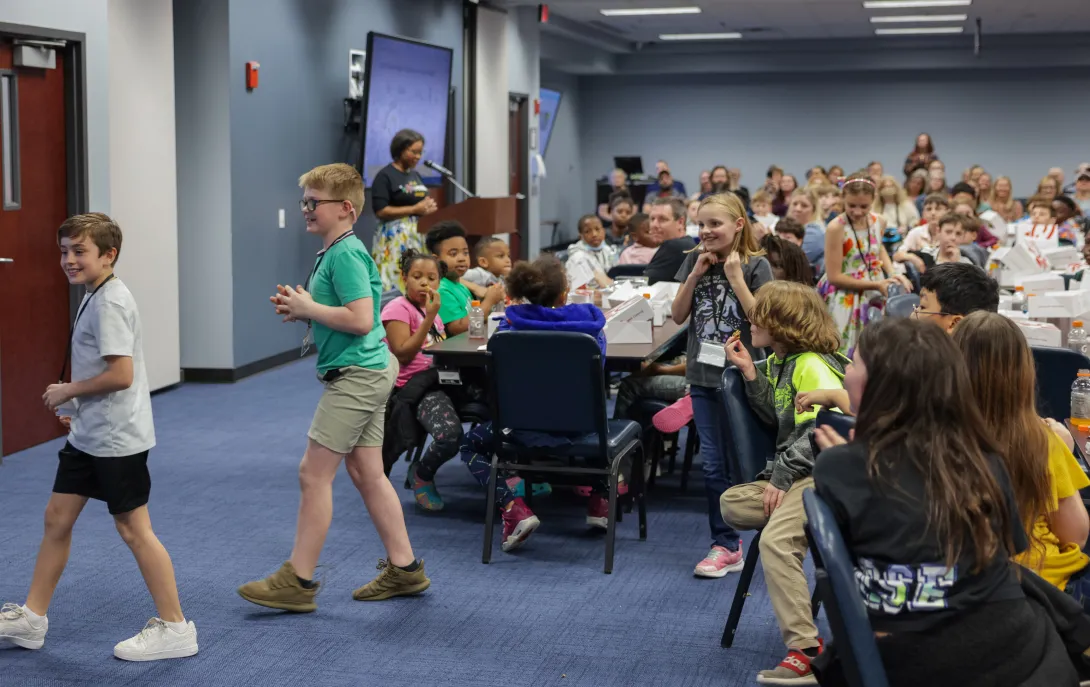
Students in Thomasville, Ga. present their own inventions as a part of Georgia Tech’s expanding K-12 InVenture Prize competition program.
Georgia Institute of Technology’s Center for Education Integrating Science, Mathematics, and Computing (CEISMC) is at the center of a new statewide initiative combining artificial intelligence and manufacturing innovations with transformational workforce development and K-12 outreach. The Georgia Artificial Intelligence Manufacturing Corridor project (Georgia AIM) is supported by a record-shattering $65 million grant Georgia Tech received in September 2022 from the U.S. Department of Commerce’s Economic Development Administration.
Georgia AIM will support a total of nine inter-related projects throughout the state and is designed to increase job and wage opportunities in distressed and rural communities and among historically underrepresented and underserved people. Georgia AIM targets rural residents, women, Black, Indigenous and People of Color (BIPOC), those living with disabilities, and veterans — groups historically underrepresented in manufacturing. Through innovation, collaboration, education, and participation, Georgia AIM will provide the tools and knowledge to empower these communities to participate fully in a diverse AI manufacturing workforce.
“Many people have preconceived notions about manufacturing and may not be able to see how they could possibly connect to it," said Roxanne Moore, Woodruff School of Mechanical Engineering’s senior research engineer and director of CEISMC’s K-12 InVenture Prize program. “What they may not realize is that manufacturing is what brings new ideas to life. AI is rapidly reshaping the manufacturing industry and changing the landscape for job opportunities. The work that we are doing will position Georgia to lead the nation into the future of AI and manufacturing.”
Moore explains that through Georgia AIM, CEISMC will expand its K-12 InVenture Prize invention and entrepreneurship program to collaborate with school districts and businesses in Southwest Georgia, Southeast Georgia and Northeast Georgia. The initiative will expand on existing partnerships Georgia Tech has established with technical colleges and minority-serving institutions.
The project will reach at least 1,000 K-12 students and 100 teachers from underserved areas, with a focus on rural communities via existing programs at Georgia Tech, other nonprofits, the Technical College System of Georgia, the Southwest Georgia Regional Commission, local manufacturers, and K-12 school leaders, Moore said.
“We need to illustrate the powerful relationships between innovation, entrepreneurship, and manufacturing so that students can see how ideas come to life and how they can improve their communities,” said Moore. “It is my hope that these regional ecosystems become a role model for how educational institutions can support each other in expanding access to high-quality STEM experiences for diverse students who typically are not empowered to create their futures.”
As part of Georgia AIM, CEISMC will also expand its offerings through partnerships with the institute’s GoSTEM program to better serve Latino populations. GoSTEM is a collaborative partnership at Georgia Tech between CEISMC and Institute Diversity, Equity and Inclusion (IDEI). Its mission is to promote STEM academic achievement and college attendance among Latino and other cultural and linguistic minority K-12 students. Plans include translating existing invention and entrepreneurship curriculum into Spanish, adding lessons to the curriculum on AI and manufacturing, assisting with the development of regionally focused curricula, and expanding training and events to make them more inclusive.
“Our goal is to make invention education accessible to everyone in the state, especially those who may have been previously left out of the conversation,” said Danyelle Larkin, educational outreach manager with CEISMC. “By going into more rural areas of the state and working to develop multi-lingual curricula that is focused on the needs of the region, we hope to serve as a national model for how to accelerate the transition to automation in manufacturing while diversifying the next generation of AI leadership.
Additional Georgia AIM expansion plans for CEISMC and K-12 InVenture Prize include supporting an existing high school entrepreneurship program in Fitzgerald and working with Albany State University to host teacher workshops, support local schools, and host regional competitions with a focus on inventiveness and the entrepreneurial mindset.
"The overall goal of Georgia AIM is to establish the United States as a leader in AI manufacturing while making sure that these systems complement rather than replace existing workers,” Larkin said. “The work that we are doing in CEISMC plays an integral role in Georgia AIM with our specific expertise in weaving invention education and entrepreneurship into K-12 classrooms and connecting with diverse communities. This huge grant gives us a chance to amplify our work and bring even more people into the AI conversation. It’s about building a better, more equitable future for the people of Georgia.”
—Randy Trammell, CEISMC Communications
Mar. 21, 2023
Idling at a crossroads no longer, the automotive industry is embracing electrification like never before. With more electric vehicles purchased in 2022 than any year prior, consumers are beginning to follow their lead. Yet, while opportunity abounds, new challenges will require an innovative approach to ensure a sustainable and accessible electric future for all.
With historic investments from major players in the EV space, including Rivian, Kia, and Hyundai, the state of Georgia is uniquely positioned to serve as a leader in this effort. As the state's leading research institute, Georgia Tech is on the cutting edge of the movement.
The transportation sector is the largest greenhouse gas emitter in the U.S. at nearly 30%, with passenger vehicles accounting for around 80% of the sector's total output1 as of 2019. Electric vehicles are widely regarded as a budding solution to reduce emissions, but even as both demand and production continue to increase, EVs currently account for around 1% of the cars on America's roadways.
From the supply chain to the infrastructure needed to support alternative-fuel vehicles alongside consumer hesitancy, achieving the goals set by both the public and private sectors — including the Biden Administration's target of EVs making up at least 50% of new car sales by 2030 — will not be easy. Through research and development, policy, and collaboration, Tech experts are working toward finding solutions that will serve as catalysts during this transitionary period for the environment and the way Americans drive.
News Contact
Steven Gagliano - Communications Officer
Institute Communications
Jan. 20, 2023
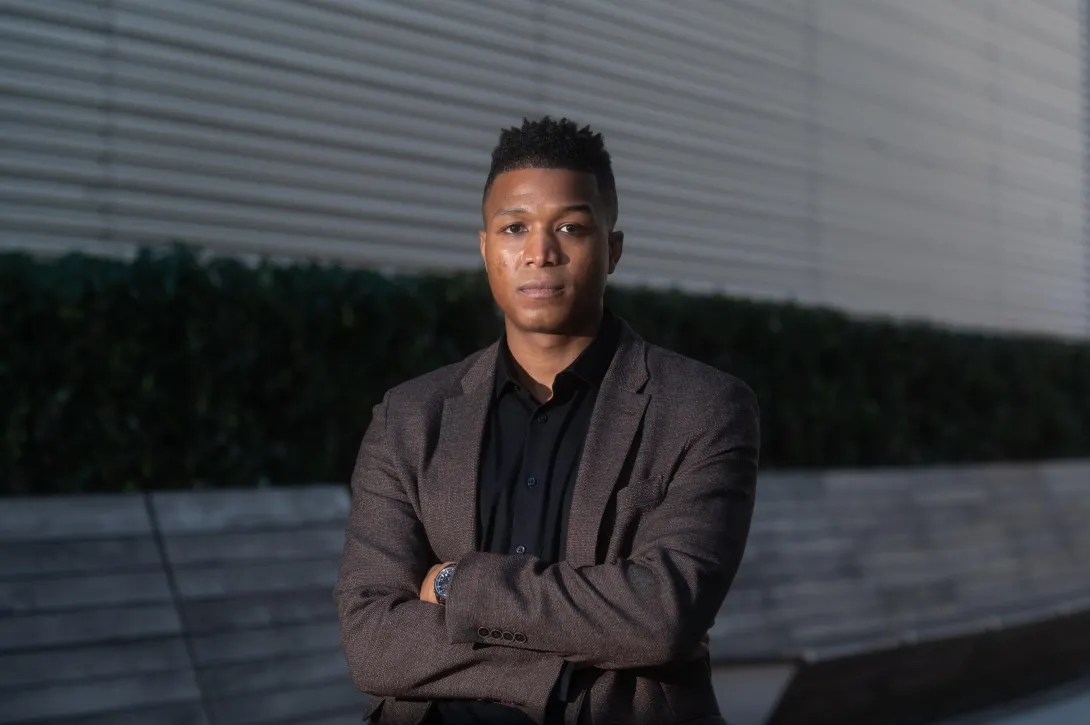
Inclusivity and understanding past policies and their effects on underserved and marginalized communities must be part of urban planning, design, and public policy efforts for cities.
An international coalition of researchers — led by Georgia Tech — have determined that advancements and innovations in urban research and design must incorporate serious analysis and collaborations with scientists, public policy experts, local leaders, and citizens. To address environmental issues and infrastructure challenges cities face, the coalition identified three core focus areas with research priorities for long-term urban sustainability and viability. Those focus areas should be components of any urban planning, design, and sustainability initiative.
The researchers found that the core focus areas included social justice and equity, circularity, and a concept called “digital twins.” The team — which consists of 13 co-authors and scholars based in the U.S., Asia, and Europe — also provided guidance and future research directions for how to address these focus areas. They detailed their findings in the Journal of Industrial Ecology, published in January 2023.
“Climate change has certainly increased the amount and intensity of extreme weather events and because of that, it makes our decision making today critical to the manner in which our economy and our day to day lives can operate,” said Joe F. Bozeman III, the lead author and an assistant professor in Georgia Tech’s School of Civil and Environmental Engineering. He is also the director of Tech’s Social Equity & Environmental Engineering Lab and has a courtesy appointment in the School of Public Policy. “Our quality of life can be negatively affected if we don't make good decisions today.”
Three core areas of focus to achieve urban sustainability
The researchers’ first core focus area, justice and equity, addresses innovations and trends that disproportionately benefit middle and high-income communities. Trends like IoT, “smart cities,” and the urban “green movement” are part of a broader push by cities to become more sustainable and resilient. But communities of color and low-income neighborhoods — the same areas often home to environmental contaminations, infrastructure challenges, and other hazards — have often been overlooked.
The researchers’ findings showed a consistent trend with marginalized communities across several countries, including Canada, the Netherlands, India, and South Africa. They call for mandatory equity analyses which incorporate the experiences and perspectives of these marginalized communities, and, more importantly, ensure members of those communities are actively engaged in decision-making processes.
“Planning, professional, and community stakeholders,” the researchers write in the paper, “should recognize that working together gets cities closer to harmonizing the technological and social dimensions of sustainability.”
The second focus area, circularity, addresses resource consumption of staple commodities including food, water, and energy; the waste and emissions they generate; and the opportunities to increase conservation of those resources by boosting efficiencies.
“What we mean by circularity is basic reuse, remanufacturing, and recycling efforts across the entire urban system — which not only includes cities and under resourced areas within those cities — but also rural communities that supply and take resources from those city hubs,” Bozeman said. The idea is aligned with the circular economy concept which addresses the need to move away from the resource-wasteful and unsustainable cycle of taking, making, and throwing away.
Instead, the researchers argue, cities should look for ways to improve efficiency and maximize local resource use. That has potential benefits not only for urban areas, but rural communities, too. One example, Bozeman said, is the Lifecycle Building Center in Atlanta. It takes old building supplies and sells them locally for reuse.
“By doing that, they’re at the beginning stages of creating an economic system, a regional engine where we share resources between cities and rural areas,” he said. “We can start creating an economic framework, not only where both sides can make money and get what they need, but something that can actually turn into a sustainable economic engine without having to rely on another state or another country's import or export economic pressures.”
To strengthen circularity and make it more robust, the researchers call for more expansive metrics beyond measuring recycling rates and zero waste efforts, to include other parts of the supply chain that may yield new ideas and solutions.
The third focus area, digital twins, addresses the development of automated technologies in smart buildings and infrastructure, such as traffic lights to respond to weather and other environmental factors.
“Let's say there's a heavy rain event and that the rainwater is being stored into retainment,” said Bozeman. “An automated system can open another valve where we can store that water into a secondary support system, so there's less flooding, and that can happen automatically, if we utilize the concept of digital twins.”
Creating a new urban planning model
The research came about as part of the mission of the Sustainable Urban Systems Section of the International Society for Industrial Ecology, which aims to be a conduit for scientists, engineers, policymakers, and others who want to marry environmental concerns and economic activity. Bozeman is a board member of the Sustainable Urban Systems Section.
“In that role, part of we do is set a vision and foundation for how other researchers should operate within the city and urban system space,” he said.
For urban sustainability, engineers and policy makers must come to the table and make collective decisions around social justice and equity, circularity, and the digital twins concepts.
“I think we're at a really critical decision point when it comes to engineers and others being able to do work that is forward looking and human sensitive,” said Bozeman. “Good decision making involves addressing social justice and equity and understanding its root causes, which will enable cities to create solutions that integrate cultural dynamics.”
CITATION: Joe F. Bozeman III, Shauhrat S. Chopra, Philip James, Sajjad Muhammad, Hua Cai, Kangkang Tong, Maya Carrasquillo, Harold Rickenbacker, Destenie Nock, Weslynne Ashton, Oliver Heidrich, Sybil Derrible, Melissa Bilec. “Three research priorities for just and sustainable urban systems: Now is the time to refocus.” (Journal of Industrial Ecology, January 2023)
News Contact
Péralte C. Paul
peralte.paul@comm.gatech.edu
404.316.1210
Jan. 19, 2023
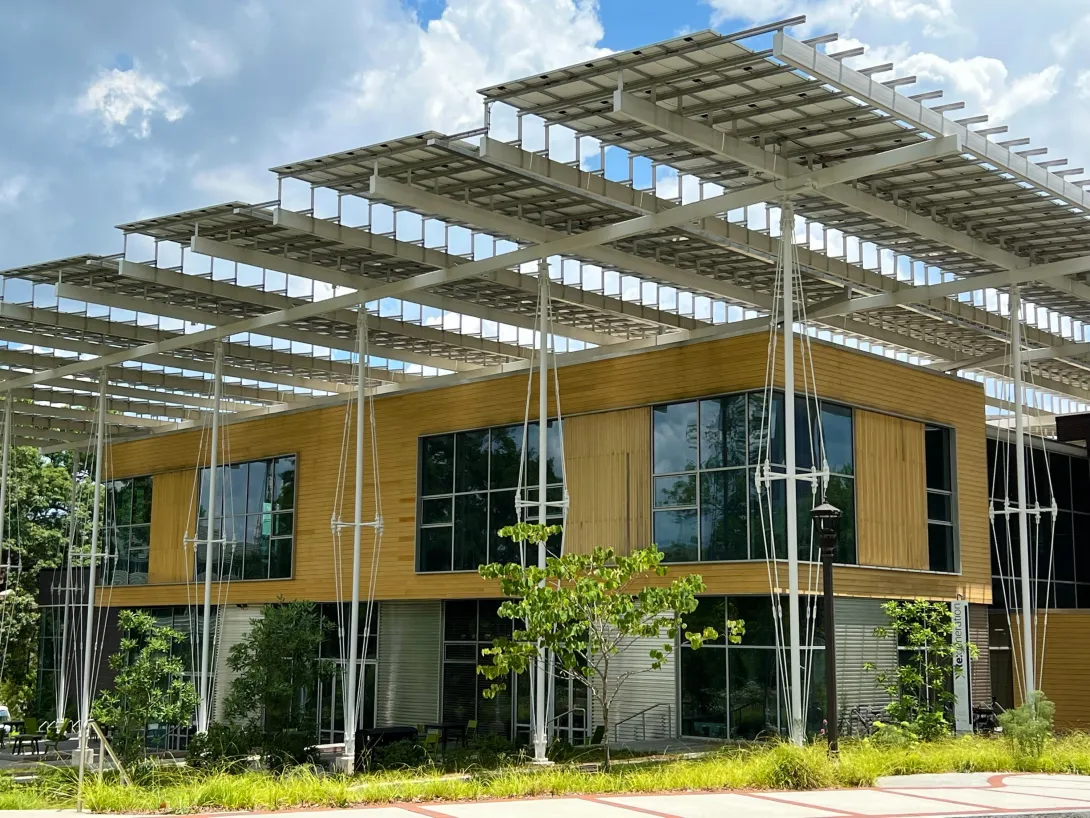
Whether they know it or not, most city dwellers have probably been inside a so-called “green” building. Plaques boasting various types of environmental or energy certifications — known as ecolabels — often hang prominently in their lobbies. They’re visible, but how can we know if ecolabels have a real impact or are mostly about showing off?
Daniel Matisoff, professor of public policy at Georgia Tech, illuminates the role and impact of green building ecolabels in his book, Ecolabels, Innovation, and Green Market Transformation: Learning to LEED, which traces the curve of ecolabel adoption in the building market, revealing how ecolabels have transformed the economy and construction industry to achieve green market transformation. Co-authored by Douglas Noonan, professor of public policy at Indiana University-Purdue University Indianapolis, it is the first book to comprehensively assess the green building movement. The book was published by Cambridge University Press in October 2022.
Green building ecolabels, simply stated, are marks or designations that indicate environmental performance and sustainability certifications. Matisoff and Noonan investigated prominent ecolabels, such as LEED, and examined how they work, exploring the theory and economics behind them. They also studied factors and initiatives that drive the adoption of green building ecolabels, breaking down the green building movement step-by-step.
“A central premise of the book is that early adopters, whether they are creating a demonstration project — such as Georgia Tech’s own Kendeda Building — or adopting an ecolabel early on produce positive information spillovers that help accelerate adoption of green technologies,” Matisoff said.
According to the authors, early adopters do this by moving both supply and demand curves for new energy and environmental technologies. When early adopters employ and experiment with new green building technologies, they help build supply chains, lowering costs for others interested in adopting the technologies. Undertaking green building projects also proves the market performance of new energy and environmental technologies, thereby reducing uncertainty and increasing demand by making them more visible and widely available.
“Early adopters often build pilot and demonstration projects largely for a marketing or reputational benefit, but then that provides positive information spillover to the market,” Matisoff said. “For example, once contractors become familiar with new energy and environmental technologies, they can recommend them to clients for new building projects.”
By looking at data, Matisoff found that there has been a rapid uptake of buildings using the LEED label. But the question that remained was, what does it ultimately accomplish? To answer that question, Matisoff and Noonan looked at several case studies. One such case study is The Kendeda Building for Innovative Sustainable Design, a certified “Living Building,” at Georgia Tech.
The Kendeda Building: Tossing a Pebble in a Pond
The goal of The Kendeda Building was to create a facility that would transform the building and construction industry in the Southeast. Matisoff considered that a testable hypothesis. The Kendeda building inspired Matisoff and his collaborators to dig into 30 years of LEED data to look at the effect of pilot and demonstration projects. They found that if you have a demonstration project in a particular geographic location, it doubles the probability that another green building is going to be built that has similar technologies.
For example, an electrical contracting company working on Kendeda noted that being forced to work with high density poly-ethylene (HDPE) piping — a sustainable alternative to using PVC piping for electrical conduit — led them to realize that HDPE was cheaper and easier to work with, in addition to being a more ecofriendly alternative. The contractor intends to switch to HDPE piping in future projects.
“We at Georgia Tech, by building the Living Building, are providing all this information to the marketplace,” Matisoff said. “And the hope is that other universities or institutions may see this building and say, ‘Hey, we want one of those.’”
Moving Forward
Lessons in Matisoff’s book include how to harness information spillover in addition to more traditional price tools such as subsidies, taxes, and cap-and-trade emissions policies. The authors highlight the importance of leveraging private actors to provide information to the market and suggest that policymakers think carefully about how to incentivize early adopters into the green building market, beyond just prices.
While recent legislation has created a lot of price incentives, subsidies, and tax breaks designed to encourage people to make greener choices, Matisoff’s work emphasizes that, especially at early stages, prices probably aren't enough.
“It's unlikely that there's enough momentum in the policy space to get to where we need to be to address climate change,” Matisoff said. “We hope the book will help us think more carefully about how we leverage information and learning to accelerate the uptake of advanced energy and environmental technologies to facilitate green market transformation.”
Matisoff also hopes the comprehensive study will show the roughly 100,000 certified green building professionals around the world that their efforts have been worth it.
“We wanted to tell a story, especially to green building professionals, about what they’ve accomplished over the past few decades, and the impact their work will have for years to come.”
News Contact
Catherine Barzler, Senior Research Writer and Editor
Jan. 10, 2023

Artificial intelligence is already making headlines in the new year with the box office success of the movie M3GAN. Along with a TikTok dance craze and lots of laughs, the over-the-top horror movie/dark comedy about an AI-powered robot that runs amok is also inspiring discussion about the growing presence and impact of artificial intelligence in everyday life.
From the movie house to the warehouse to your house, AI seems like it's everywhere. That's because with a steady stream of new research and innovative applications reaching into nearly every industry and business sector, it is everywhere. Nevertheless, AI still holds enormous potential as the field continues to evolve.
To get a sense of what this evolution could look like in 2023, we turned to a small group of Ph.D. students from the College of Computing community that are currently pushing foundational and applied AI research forward in a broad spectrum of disciplines and fields.
The students shared their opinions on where AI might be headed in the new year, what some of the big tech stories could be, and why ethics in AI are so critically important.
Where will artificial intelligence and machine learning have the most impact in 2023?
"Artificial intelligence and machine learning will continue to have a huge impact on manufacturing and warehouses with labor shortages and worker turnover continuing to be a concern as more manufacturing and operations jobs are brought back to the United States from overseas. Additionally, AI/ML will continue to help ensure that manufacturing and warehouse facilities are operating as efficiently as possible from energy and material savings to worker safety and parts quality." – Zoe Klesmith Alexander, computational science and engineering Ph.D. student
"Right now, deep learning is on a trajectory to transform the creation space. Artwork and images, videos, data representation and storytelling, co-authoring, and summarizing documents... It's gotten really good." – Ben Hoover, machine learning Ph.D. student
"I think machine learning and AI will keep playing a huge role in how the world and society will be shaped over the next decade in many ways. It will make many other fields more efficient through ML and AI tools we are developing. In 2023, I think ML and AI will have the most impact on social media platforms, helping reduce hate speech, rumor spread, etc." – Agam A. Shah, machine learning Ph.D. student
"One of the big impacts this year may be driverless cars being in your neighborhood. Otherwise, it will be a slow steady drip of GPT3 and other OpenAI models suffusing all applications, making programmers much faster, making journalists faster, making academic articles and lit reviews much faster. We're at a 4th grader level, and I hope by the end of this year we'll be at the 6th grader level. Also, indoor turn-by-turn navigation will be everywhere in 2023 as well." – Brandon Biggs, human-centered computing Ph.D. student
What will be some of the big tech stories in 2023?
"ChatGPT and the GitHub Copilot lawsuit will keep making it into the news and cause more controversies. In general, AI ethics will become more important and get more focus as the technology keeps advancing." – Fabian Fleischer, cybersecurity, and privacy Ph.D. student
"Driverless car fleets will be coming to a city near you. A new battery technology will allow phones to keep their charge for a week. Meta realizes virtual reality (VR) head-mounted displays are for a limited market and uses headphones and phones to provide VR experiences." – Brandon Biggs
What’s an issue or industry that you think could benefit from a computing solution?
"Our reinterpretation of modern deep learning as energy-based associative memories has the potential to transform any industry that relies on foundation models -- giant architectures that require models that are "self-supervised" (learn on their own from data)." – Ben Hoover
"Inclusion in everything. Over 90 percent of websites on the internet have elements that are inaccessible to 25 percent of the world's population who have disabilities. Inclusive design will be the most important area where technology can be redesigned and created to have multiple sensory modalities and be properly programmed." – Brandon Biggs
"Currently, financial markets are far from efficient because they do not fully incorporate information available in large unstructured text data. With the latest development in natural language processing techniques, we can better understand the economy and therefore price financial markets better." – Agam A. Shah
There’s been increasing recognition of the vital role ethics should play in artificial intelligence. How do you see this issue evolving in the next year?
"Specifically in my research, I think explainable AI (XAI) is very important, especially if non-experts in ML will be using black-box ML solutions in a factory. It will be important for humans to trust and to understand the models especially if the models are being using to monitor quality on a safety-critical part.
"Additionally, using XAI for human interaction with robots that utilize deep learning to make decisions will be increasingly important as technologies like collaborative robots (cobots) are integrated into factories. I think in my area of research that it is always important to use automation to aid humans in jobs that are safe for humans to do and not to replace them." – Zoe Klesmith Alexander
"Big data is pretty much at its peak. Deep data, where your Alexa knows everything about you, or your phone knows everything about you, and rather than saying 'other people who watched this show liked this show,' it's going to say, 'I know you liked these shows, I think you'll like this show because of these reasons, one of which is because other people who liked all these other shows liked this show.' The ethical element will be how much of this data should these models use, and are people going to build a personal dataset that they can share with other apps, or is each app going to need to build their own dataset? The ethical question is who owns this data." – Brandon Biggs
"I think ethics will become more and more important going forward. We are making huge breakthroughs in machine learning and artificial intelligence, but the systems we are creating are producing racist, sexist, and stereotypical results. For example, a recent system, Galactica, developed by Facebook (Meta) is powerful. It can produce research articles by just simply providing it with the title. It comes with some serious ethical concerns, in some cases, it produces racist, sexist text. So, as we will keep developing better models and making success in parallel, we need to always keep in mind the ethical implications of these models." – Agam A. Shah
What research are you working on that you think people should know about or will have impact in 2023?
"Part of my research focuses on data-driven modeling of additive manufacturing processes to better control dimensional quality of the final part. Another part of my research focuses on detecting anomalies in real-time using computer vision and machine learning for both warehouses and manufacturing processes." – Zoe Klesmith Alexander
"Right now, deep learning is built on feed-forward mathematical operations that have little resemblance to the brain. I am working on a physics inspired approach to deep learning built around recurrent networks and energy functions. These architectures have the same mathematical foundation as the famous, biologically plausible Hopfield Network." – Ben Hoover
"I am currently working on two projects which, in my opinion, will have an impact in 2023. In one project, we are measuring the exposure of public firms to ongoing inflation. We are also understanding how inflation affects different firms differently based on the pricing power of the firm. As inflation is the highest in the last 40 years, our study is highly relevant now and in the coming years till we get inflation back in control.
"The second work is related to the first work in some ways. As inflation is rising, to control the inflation Federal Reserve Bank is tightening its monetary policy. In our second work, we are measuring the stance of monetary policy (measuring hawkish vs dovish stance) of the Fed using state-of-the-art NLP models to see its impact in various financial markets (Treasury market, Stock market, Crypto market, etc.)" – Agam A. Shah
News Contact
Ben Snedeker, Comms. Mgr. II
albert.snedeker@cc.gatech.edu