
May. 11, 2023
A team of researchers from Georgia Tech, Emory University, Morehouse School of Medicine, University of Georgia, the Center for Global Health Innovation, and the Technical College System of Georgia has been awarded $1 million over the course of two years from the U.S. National Science Foundation's Regional Innovation Engines, or NSF Engines, program. They are among the more than 40 unique teams to receive one of the first-ever NSF Engines Development Awards, which aim to help partners collaborate to create economic, societal, and technological opportunities for their regions.
The team, “Advancing Health Equity and Diagnostic Technologies (GA) Development,” will use the award to support key institutional, corporate, government, education, and community partners to create an innovative ecosystem that will inspire, develop, and translate affordable and widely available point-of-care (POC) medical technologies to advance health equity throughout the southeast.
“The Southeastern U.S. has the lowest life expectancy in the nation, and there are significant health disparities along economic, educational, racial, and geographic divisions,” said Wilbur Lam, Georgia Tech professor, principal investigator, and innovation lead. “The team will work to build an ecosystem of partners to drive use-inspired research and technology translation in the area of POC diagnostics and wearables with strong community engagement to help address these areas and advance health equity.”
The NSF Engines program is a transformational investment for the nation, ensuring the U.S. remains in the vanguard of competitiveness for decades to come.
"These NSF Engines Development Awards lay the foundation for emerging hubs of innovation and potential future NSF Engines," said NSF Director Sethuraman Panchanathan. "These awardees are part of the fabric of NSF's vision to create opportunities everywhere and enable innovation anywhere. They will build robust regional partnerships rooted in scientific and technological innovation in every part of our nation. Through these planning awards, NSF is seeding the future for in-place innovation in communities and to grow their regional economies through research and partnerships. This will unleash ideas, talent, pathways and resources to create vibrant innovation ecosystems all across our nation."
Led by Lam, the team aims to build an ecosystem to drive use-inspired research and technology translation for health equity and leverage relationships with underserved Georgia communities to inspire a technology roadmap and adopt new technologies. An annual event and comprehensive roadmap will drive sustainable technology translation, workforce development, and systemic education.
The awardees span a broad range of states and regions, reaching geographic areas that have not fully benefited from the technology boom of the past decades. These NSF Engines Development Awards will help organizations create connections and develop their local innovation ecosystems within two years to prepare strong proposals for becoming future NSF Engines, which will each have the opportunity to receive up to $160 million.
Launched by NSF's new Directorate for Technology, Innovation and Partnerships and authorized by the "CHIPS and Science Act of 2022," the NSF Engines program uniquely harnesses the nation's science and technology research and development enterprise and regional-level resources. NSF Engines aspire to catalyze robust partnerships to positively impact regional economies, accelerate technology development, address societal challenges, advance national competitiveness and create local, high-wage jobs.
View a map of the NSF Engines Development Awards. More information can be found on the NSF Engines program website.
NSF MEDIA REQUESTS: media@nsf.gov
GEORGIA TECH MEDIA REQUESTS: georgia.parmelee@gatech.edu
May. 02, 2023
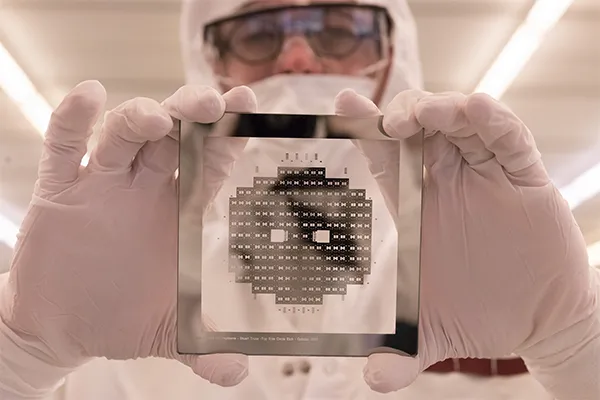

Semiconductors, or microchips, are vital to life in the modern world. They’re used in the microwave you heated your breakfast in this morning, the car you drove to work, the mobile phone you shouldn’t use while driving, the bank ATM you visited, and the screened device you’re reading this story on.
They’re in our TVs, refrigerators, and washing machines, helping us live comfortable lives. They also help us stay alive as part of the medical network, used in pacemakers, blood pressure monitors, and MRI machines, among other things. Also, our national economic and defense systems rely on them. Basically, semiconductors control and manage the flow of information in the machinery that keeps the world going.
And right now, at Georgia Tech, researchers are working to innovate chip technology to ensure that U.S. semiconductor development is globally competitive, reliable, sustainable, and resilient, today and in the future.
“If you look at semiconductors, or the whole area of computing, it spans across Georgia Tech — across many different schools and disciplines,” said Arijit Raychudhury, professor and Steve W. Chaddick Chair in the School of Electrical and Computer Engineering (ECE). “Starting with physics and chemistry, where we essentially learn how different types of materials will react, to materials science and engineering, to electrical engineering and computer engineering, to computer science.”
It's a diverse, multidisciplinary enterprise from bottom to top, Raychudhury noted. And there is still plenty of room at the bottom, as theoretical physicist Richard P. Feynman famously said more than 60 years ago, predicting that one day we’d be making things at the atomic level. We are. It’s a familiar realm to Victor Fung and his lab, where they are designing new materials for semiconductors from the ground up, atom by atom.
“We are interested in exploring how to translate the latest advances in AI and machine learning to aid in accelerating computational materials simulations and materials discovery,” said Fung, assistant professor in the School of Computational Science. “We’ve been developing methods which can accurately predict a wide range of materials’ properties, to greatly facilitate high-throughput materials screening.”
Fung’s lab is using AI to discover previously unstudied materials with the electronic properties to build into chips. This approach to creating “designer” semiconductors would be significantly faster and cover more of the materials space than current methods.
Improving the Landscape
Smaller, more efficient, and more powerful are all part of the constantly evolving landscape in semiconductor research and development. It’s a very expensive landscape. While many chips are about the size of a fingernail, they are among the most complex human-made objects on Earth. Just building a semiconductor fabrication factory costs billions of dollars.
For a chemical engineer like Michael Filler, that sounds like opportunity.
“Chemical engineers think about how we produce products on a massive scale,” said Filler, associate professor in the School of Chemical and Biomolecular Engineering and associate director of the Institute for Electronics and Nanotechnology (IEN).
Filler, whose research involves the growing of semiconductor components, like transistors, from seed particles, is aiming to help democratize the process of chip development, bringing down the cost substantially while maintaining performance. In a not too distant future, that could mean an individual at home printing a chip on a machine similar to a 3D printer.
“Imagine a laser printer that can literally spit out custom electronics in a matter of minutes,” Filler said. “We’re big believers in the individual’s ability to be creative and know what they want to build for their applications. Ultimately, we’re interested in giving makers and prototypers opportunities to customize electronics.”
He’s in the right place for the far-reaching research he has in mind, adding, “We are so blessed with great facilities at Georgia Tech. It would be hard to imagine working somewhere else, because very few places have the diversity and quality of tooling we have here.”
IEN, which facilitates much of the semiconductor research at Georgia Tech, is based in the Marcus Nanotechnology Building, with its state-of-the-art micro/nano fabrication facilities such as the shared cleanroom space and a laser machine lab for micromachining.
But it is the range of expertise and creativity among faculty and students who are making IEN and Georgia Tech a thought leader in semiconductor research. This is evidenced by Tech’s recent grant of $65.7 million from the Semiconductor Research Corporation and the Defense Research Projects Agency to launch two new interdisciplinary research centers.
Events like Georgia Tech Chip Day (May 2) and Nanowire Week, an international gathering happening in Atlanta in October, also speak to Tech’s growing influence in this area.
Answering the Call
The Covid-19 pandemic clarified just how difficult it can be to make more chips. A shortage of semiconductors affected the supply of phones, computers, and other commonly used items during the global shutdown. Increased demand, depleted reserves, and too few manufacturing plants and workers significantly crippled the supply chain.
“The high degree of geographic concentration in certain parts of the semiconductor supply chain has recently created a heightened risk of supply interruptions,” said Chip White, Schneider National Chair in Transportation and Logistics and professor in the H. Milton Stewart School of Industrial and Systems Engineering (ISyE). “Such interruptions and resulting wild fluctuations in semiconductor demand can threaten the nation’s public health, defense, and economic security.”
With that in mind, translational supply chain research is going on in several places on campus, White said, including the Supply Chain and Logistics Institute and the NSF AI Research Institute for Advances in Optimization. White and his colleagues are developing software platforms for stress testing manufacturing supply chains. The goal is to identify vulnerabilities and risk mitigation procedures to design and operate next generation supply chains for critical industries such as the semiconductor industry, to improve global competitiveness and strike a balance between market forces and national security.
In an effort to address and feed the next generation demand for chips, the Biden administration recently launched a massive effort to outcompete China in semiconductor manufacturing, offering $39 billion in funding incentives for companies seeking to build plants in the U.S.
Another related area of importance in the ongoing development of semiconductors is growing the workforce of the future, and that includes a new wave of researchers. This is a role that Jennifer Hasler takes seriously.
“I have a strong interest and belief in mentoring,” said Hasler, ECE professor and founder of the Integrated Computational Electronics lab at Georgia Tech. She’s proven, theoretically at least, that the technology already exists to build a silicon-based version of the human cerebral cortex (which would cost billions of dollars to design and build), but one of her favorite roles is working with new, young faculty.
“It’s a personal thing for me, but it’s one of the coolest things I’m involved in,” she said. “When they come to Georgia Tech, they see how big this place is, bigger than a company. I like to say to them, ‘Let’s calm down, take a breath, you’re good, so let’s go make some cool stuff. Let’s get some momentum going.’”
For Raychowdhury, director of the new Center for the Co-Design of Cognitive Systems (part of the JUMP 2.0 program), developing the skilled workforce of the future means answering the call of the nation.
“This is one of the largest ECE departments in the country, with many, many talented students,” he said. “And given the need and shortage of skilled professionals in this particular area, I think it’s critical for us to create that kind of pipeline.” Last year, ECE undergraduate students started taking a new, two-semester course, sponsored by Apple, in which they actually build microprocessors from scratch.
“This is completely new,” Raychowdhury said. “It’s expensive to offer this course, but we plan to keep doing it and we’re in conversations with other companies that want to invest in workforce development. So, in addition to doing fantastic research, we want to be sensitive to the needs of the country and a new generation.”
News Contact
Writer: Jerry Grillo
Apr. 28, 2023
One of the National Academy of Engineering’s Grand Challenges for Engineering is to engineer better medicines. To help address this challenge, W. Hong Yeo leads the Materials for Biomedical Systems research initiative for the Georgia Tech Institute for Materials (IMat). The goal of the initiative is to enhance human health via multidisciplinary materials research.
“The existing healthcare challenges are so complicated and demanding, so the collaboration between academia, industry, and national labs is imperative, and synergistic multidisciplinary research is required,” explained Yeo, who is also an associate professor and Woodruff Faculty Fellow in the Woodruff School of Mechanical Engineering and holds a courtesy appointment in the Coulter Department of Biomedical Engineering.
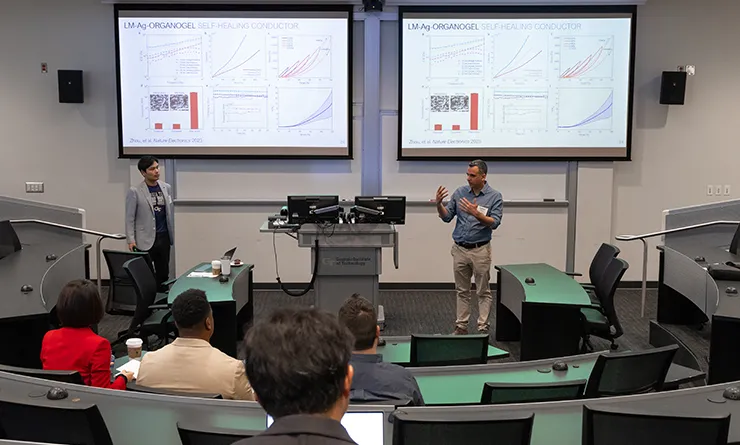
To further this initiative, Yeo and Emory University’s Young Jang organized the Materials for Biomedical Systems (MBS) Day at Georgia Tech. The workshop was held on March 30 at the Georgia Tech Global Learning Center and attracted researchers and industry representatives from a variety of disciplines.
The focus of the morning session was on soft materials and biomaterials for medical systems. It began with a talk on Organogels x EGaIn for Soft & Self-Healing Bioelectronics from Carmel Majidi, a professor of mechanical engineering at Carnegie Mellon University. Additional speakers in the morning session included ProgenaCare Global’s Allison Ramey-Ward, Seoul National University’s Young Bin Choy, and Korea Advanced Institute of Science & Technology’s Jae-Woong Jeong. The morning concluded with a panel discussion, regarding the translation of biomaterials technologies to system developments and commercialization, moderated by the University of Pittsburgh’s Youngjae Chun.
The afternoon session of the day was focused on stem cells and regenerative medicine. It began with a talk on Bioengineered Hydrogels for Regenerative Medicine from Andrés García, executive director of the Petit Institute for Bioengineering and Bioscience (IBB) and Regents’ Professor at Georgia Tech. Additional speakers in this session included Sung-Jin Park from Emory/Georgia Tech, William Hynes from Lawrence Livermore National Laboratory, Ki Dong Park from Ajou University, Ho-Wook Jun from the University of Alabama at Birmingham, and Johnna Temenoff from Emory University/Georgia Tech. The session concluded with a panel discussion moderated by Johnny Lam from the Food and Drug Administration.
“I am so thankful for all of the participants, sponsors, and organizers who made such an amazing workshop that generated innovative ideas and new collaboration opportunities from across the field,” said Yeo. “We also discussed immediate commercialization paths and regulatory importance in developing biomaterials and medical systems. We will continue offering networking and research-sharing opportunities to facilitate knowledge exchange through this MBS initiative.”
After the workshop, multiple students participated in a poster contest to showcase their research in biomaterials and medical systems and network with attendees. MBS Day was co-sponsored by IMat and IBB.
News Contact
Laurie Haigh
Research Communications
Apr. 06, 2023
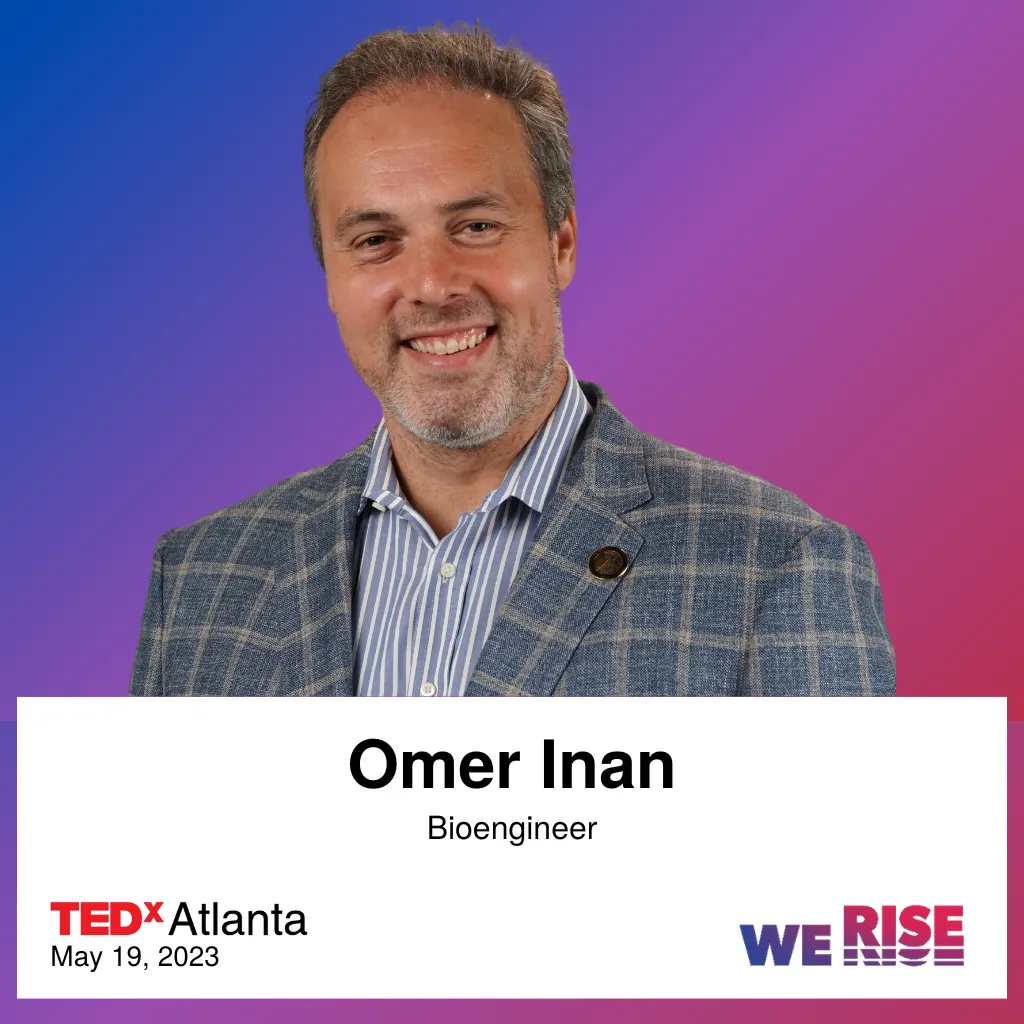
Professor Omer Inan is set to take the stage at the upcoming TEDxAtlanta 2023: We Rise event on May 19.
Professor Omer Inan is set to take the stage at the upcoming TEDxAtlanta 2023: We Rise event on May 19.
As the Linda J. and Mark C. Smith Chair in bioscience and bioengineering in Tech’s School of Electrical and Computer Engineering (ECE), Inan designs clinically relevant medical devices and systems and translates them from the lab to patient care applications. In his talk, Inan will be discussing his groundbreaking research on wearable healthcare technologies and the potential they hold for revolutionizing the field.
Inan is a member of the prestigious Medical and Biological Engineering (AIMBE) College of Fellows (elected in 2022) for his “outstanding contributions to the non-invasive assessment of the mechanical aspects of cardiovascular health and performance using wearable devices.” Additional achievements include an Academy Award for Technical Achievement from The Academy of Motion Picture Arts and Sciences (The Oscars, 2021), the Georgia Power Professor of Excellence for the College of Engineering (2019), and the National Science Foundation Faculty Early Career Development Program award (NSF CAREER, 2018).
TEDxAtlanta 2023: WE RISE brings together an impressive group of participants from diverse backgrounds, experiences, and perspectives. The speakers include entrepreneurs, activists, educators, artists, scientists, and many other changemakers who have risen above challenges to make a positive impact on the world.
The event's participants will share their stories and insights on how they have overcome adversity, embraced innovation, and challenged the status quo to make a difference in their communities and beyond. Through their talks, they will inspire and empower attendees to rise above their own challenges and take action towards creating a better future for all.
TEDxAtlanta 2023: WE RISE will take place on Friday, May 19 from 9 a.m. – 6:30 p.m. at the Rialto Center for the Arts (80 Forsyth Street Northwest Atlanta, GA 30303). Learn more and purchase tickets at tedxatlanta.com.
News Contact
Dan Watson
Apr. 04, 2023
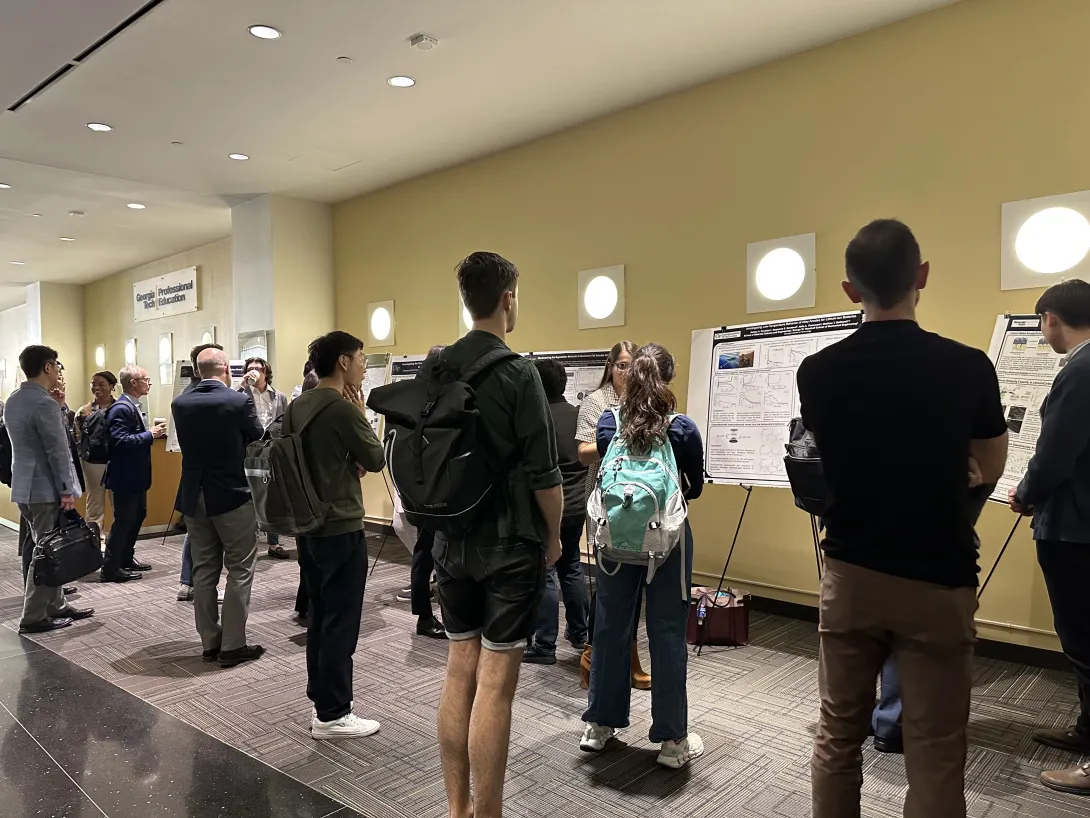
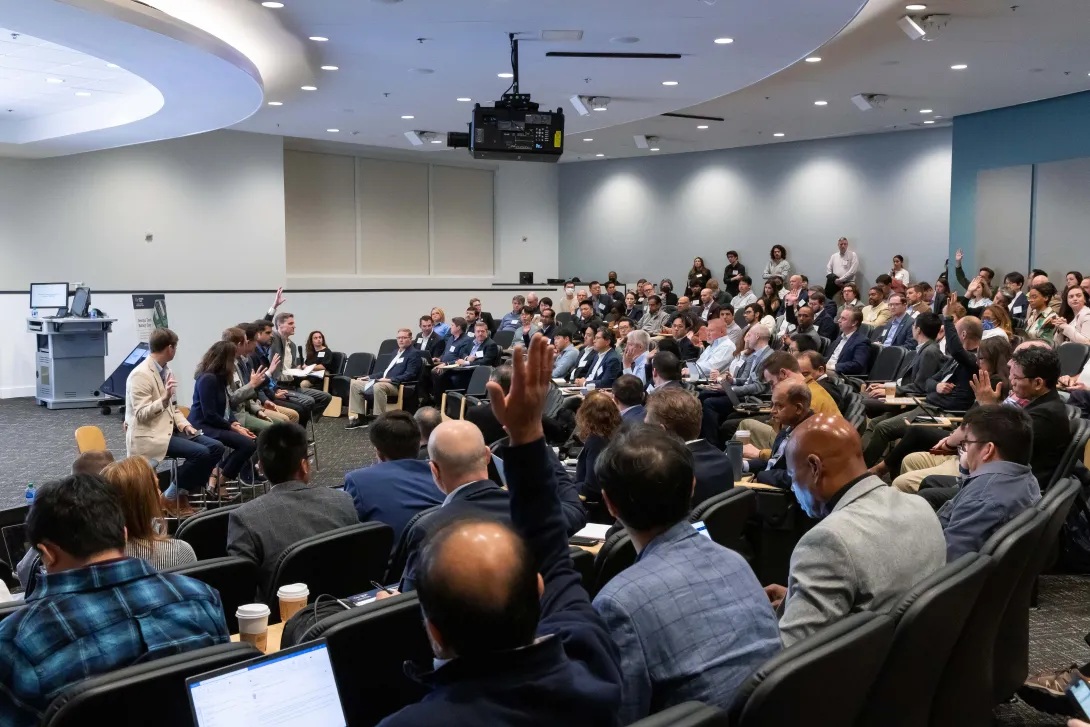
Georgia Tech Battery Day opened with a full house on March 30, 2023, at the Global Learning Center in the heart of Midtown Atlanta. More than 230 energy researchers and industry participants convened to discuss and advance energy storage technologies via lightning talks, panel discussions, student poster sessions, and networking sessions throughout the day. Matt McDowell, associate professor in the Woodruff School of Mechanical Engineering and the School of Materials Science and Engineering as well as the initiative lead for energy storage at the Strategic Energy Institute and the Institute of Materials, started the day with an overview of the relevant research at Georgia Tech. His talk shed light on Georgia becoming the epicenter of the battery belt of the Southeast with recent key industry investments and the robust energy-storage research community present at Georgia Tech.
According to the Metro Atlanta Chamber of Commerce, since 2020, Georgia has had $21 billion invested or announced in EV-related projects with 26,700 jobs created. With investments in alternate energy technologies growing exponentially in the nation, McDowell revealed Georgia Tech is well-positioned to make an impact on the next generation energy storage technologies and extended an open invitation to industry members to partner with researchers. As one of the most research-intensive academic institutions in the nation, Georgia Tech has more than $1.3 billion in research and other sponsored funds and produces the highest number of engineering doctoral graduates in the nation.
“More than half of Georgia Tech's strategic initiatives are focused on improving the efficiency and sustainability of energy storage, supporting clean energy sources, and mitigating climate change," said Chaouki Abdallah, executive vice president for research at Georgia Tech. "As a leader in battery technologies research, we are bringing together engineers, scientists, and researchers in academia and industry to conduct innovative research to address humanity's most urgent and complex challenges, and to advance technology and improve the human condition."
Rich Simmons, director of research and studies at the Strategic Energy Institute moderated the first panel discussion that included industry panelists from Panasonic, Cox Automotive, Bluebird Corp., Delta Airlines and Hyundai Kia. The panelists analyzed the opportunities and challenges in the electric transportation sector and explained their current focus areas in energy storage. The panel affirmed that while EVs have been around for more than three decades, the industry is still in its infancy and there is a huge potential to advance technology in all areas of the EV sector.
The discussion also brought forth important factors like safety, lifecycle, and sustainability in driving innovations in the energy storage sector. The attendees also discussed supply chain issues, a hot topic in almost all sectors of the nation, and the need to develop a diversity of resources for more resilient systems. The industry panelists affirmed a strong interest in partnering on research and development projects as well as gaining access to university talent.
Gleb Yushin, professor in the School of Material Science and Engineering and co-founder of Sila Nanotechnologies Inc., presented his battery research and development success story at Georgia Tech. Sila is a Georgia Tech start-up founded in 2011 and has produced the world’s first commercially available high-silicon-content anode for lithium-ion batteries in 2021. Materials manufactured in its U.S. facilities will power electric vehicles starting with the Mercedes-Benz G-class series in 2023.
The program included lightning talks on cutting-edge research in battery materials, specifically solid-state electrolytes and plastic crystal embedded elastomer electrolytes (PCEEs) by Seung Woo Lee, associate professor in the George W. Woodruff School of Mechanical Engineering. Santiago Grijalva, professor in the School of Electrical and Computer Engineering, discussed the challenges and opportunities for the successful use of energy storage for the grid.
Tequila Harris, initiative lead for Energy and Manufacturing and professor in the George W. Woodruff School of Mechanical Engineering, spoke to energy materials and carbon-neutral applications. Presenting a case for roll-to-roll manufacturing of battery materials, Harris said that the need for quick, high yield manufacturing processes and alternative materials and structures were important considerations for the industry.
Materials, manufacturing, and market opportunities were the topic for the next panel moderated by McDowell and included panelists from Albemarle, Novelis, Solvay, Truist Securities, and Energy Impact Partners. Analyzing the current challenges, the panelists brought up hiring and workforce development, increasing capacity and building the ecosystem, decarbonizing existing processes, and understanding federal policies and regulations.
Lightning talks later in the afternoon by researchers at Georgia Tech touched on the latest developments in the cross-disciplinary research bridging mechanical engineering, chemical engineering, AI manufacturing, and material science in energy storage research. Topics included safe rechargeable batteries with water-based electrolytes (Nian Liu, assistant professor, School of Chemical & Biomolecular Engineering), AI-accelerated manufacturing (Aaron Stebner, associate professor, School of Materials Science and Engineering), battery recycling (Hailong Chen, associate professor, School of Materials Science and Engineering), and parametric life-cycle models for a solid-state battery circular economy (Ilan Stern, research scientist from GTRI).
Another industry panel on grid, infrastructure and communities moderated by Faisal Alamgir, professor in the School of Materials Science and Engineering included panelists from Southern Company, Stryten Energy, and the Metro Atlanta Chamber of Commerce. Improving the grid resiliency and storage capacity; proximity to the energy source; optimizing and implementing new technology in an equitable way; standardization of the evolving business models; economic development and resource building through skilled workforce; educating the consumer; and getting larger portions of the grid with renewable energy were top of mind with the panelists.
“Energy-storage-related R&D efforts at Georgia Tech are extensive and include next-gen battery chemistry development, battery characterization, recycling, and energy generation and distribution,” said McDowell. “There is a tremendous opportunity to leverage the broad expertise we bring to advance energy storage systems. Battery Day has been hugely successful in not only bringing this expertise to the forefront, but also in affirming the need for continued interaction with the companies engaged in this arena. Our mission is to serve as a centralized focal point for research interactions between companies in the battery/EV space and faculty members on campus.”
News Contact
Priya Devarajan || SEI Communications Manager
Mar. 21, 2023

Idling at a crossroads no longer, the automotive industry is embracing electrification like never before. With more electric vehicles purchased in 2022 than any year prior, consumers are beginning to follow their lead. Yet, while opportunity abounds, new challenges will require an innovative approach to ensure a sustainable and accessible electric future for all.
With historic investments from major players in the EV space, including Rivian, Kia, and Hyundai, the state of Georgia is uniquely positioned to serve as a leader in this effort. As the state's leading research institute, Georgia Tech is on the cutting edge of the movement.
The transportation sector is the largest greenhouse gas emitter in the U.S. at nearly 30%, with passenger vehicles accounting for around 80% of the sector's total output1 as of 2019. Electric vehicles are widely regarded as a budding solution to reduce emissions, but even as both demand and production continue to increase, EVs currently account for around 1% of the cars on America's roadways.
From the supply chain to the infrastructure needed to support alternative-fuel vehicles alongside consumer hesitancy, achieving the goals set by both the public and private sectors — including the Biden Administration's target of EVs making up at least 50% of new car sales by 2030 — will not be easy. Through research and development, policy, and collaboration, Tech experts are working toward finding solutions that will serve as catalysts during this transitionary period for the environment and the way Americans drive.
News Contact
Steven Gagliano - Communications Officer
Institute Communications
Feb. 23, 2023
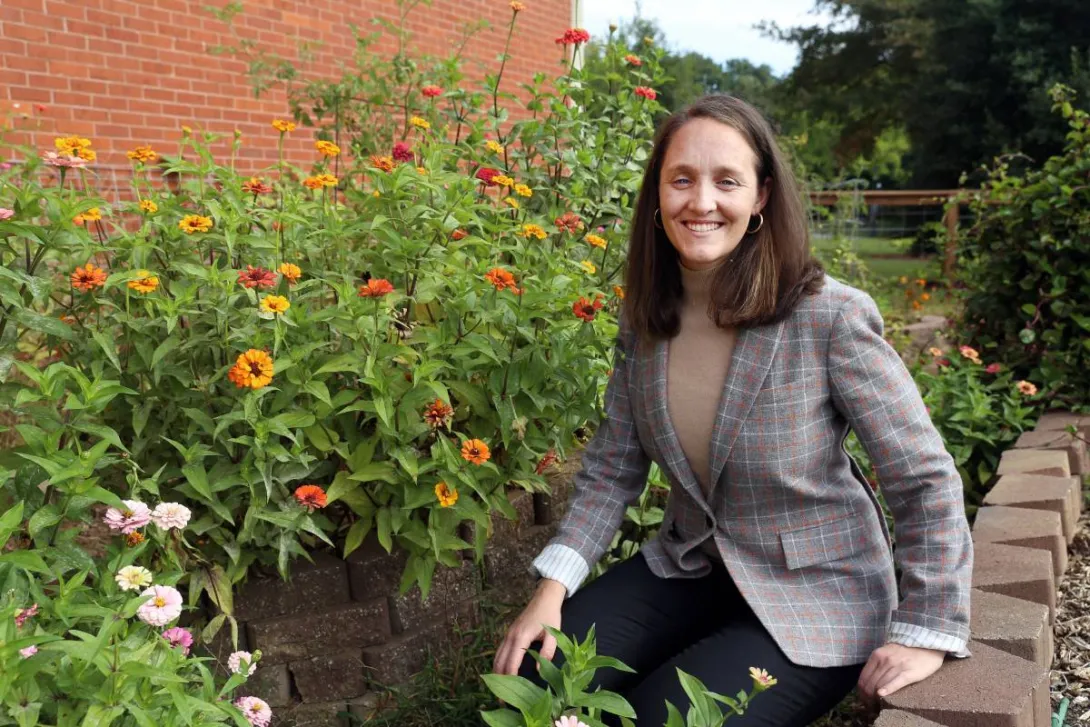
Marta Hatzell leads the Materials and Interfaces for Catalysis and Separations research initiative for the Institute for Materials at Georgia Tech. In this role, she works to bring together faculty who are working on materials-related issues aimed at decarbonizing industrial separations and catalysis, identifying the bottlenecks for new materials, and assessing their long-term impacts. Hatzell also leads the Industrial Decarbonization and Clean Catalysis initiative in the Strategic Energy Institute and is an associate professor in the Woodruff School of Mechanical Engineering.
In this brief Q&A, Hatzell discusses her research focus, how it relates to materials research, and the global impact of this initiative.
What is your field of expertise and at what point in your life did you first become interested in this area?
My field of research focuses on electrochemical materials for separations and catalysis. As an undergraduate I became very interested in the energy transition. At that point in time, it was clear that there was a need to move to a more electrified power and transportation sector, but it was unclear how to address decarbonization in the industrial sector. That is when I became interested in electrochemistry, electrochemical materials, and electrochemical engineering, as these skill sets seemed crucial to the energy transition. I've been working in this area ever since! At Georgia Tech, my group is interested in decarbonizing hard-to-abate industries like chemical manufacturing, electrofuels, desalination, and industrial separations.
What questions or challenges sparked your current materials research?
With all the new technologies and processes being designed around electrochemistry, there are so many open questions about what materials can be used for separations and catalysis. Materials for modern-day industrial separations and catalysis have been largely optimized. However, as we move toward new electrified technologies, we can rethink how we design materials and systems.
Why is your initiative important to the development of Georgia Tech’s Materials research strategy?
Decarbonizing chemical manufacturing is incredibly important for the globe to meet Net Zero carbon emissions and mitigate issues related to climate change. And, at the heart of this transition is the discovery and design of new materials. We need materials that have high activity and selectivity, are durable, and are cost-effective in order to implement these new processes in the industrial sector.
What are the broader global and social benefits of the research you and your team conduct?
We work on a number of catalytic and separations-based processes. One in particular that has global and societal benefits is the synthesis of ammonia for synthetic fertilizers. Today, half of the world's population depends on synthetic fertilizers, and nearly 100% of these fertilizers are made using one catalytic process. Unfortunately, this current process emits a significant amount of CO2, and therefore we are looking at electrified catalytic processes which can decrease or eliminate this carbon footprint.
What are your plans for engaging a wider GT faculty pool with IMat research?
With so many talented researchers on campus, we are always looking for new ways to bring faculty together to engage in larger efforts. Thus, our primary plans focus on efforts that bring faculty together. We are currently in the process of planning workshops and seminars to bring together faculty who have interests in catalysis and reaction engineering.
News Contact
Laurie Haigh
Research Communications
Jan. 06, 2023

Savannah River National Laboratory (SRNL) and Georgia Institute of Technology (Georgia Tech) recently selected Martha Grover, PhD, for a joint appointment.
Grover is a professor and the associate chair for graduate studies at Georgia Tech’s School of Chemical and Bimolecular Engineering. Her research interests include feedback control of colloidal crystallization for photonic materials; chemical evolution in the origins of life; modeling and control of pharmaceutical and nuclear waste crystallization; and process-structure-property relationships in polymer organic electronics.
SRNL intends to collaborate with Grover to utilize her expertise and experience to:
- Facilitate research and development activities pertaining to in-situ analysis of process streams for DOE tank waste treatment programs, including application of instruments and calibration techniques.
- Analyze SRNL data generated during testing of in-situ instruments in non-radioactive simulants of high-level waste.
- Expand and develop relationships within Georgia Tech to facilitate further collaboration
- Develop the next generation of outstanding engineering talent with interest to pursue research career opportunities in the national laboratory system
“Dr. Grover’s efforts contribute directly to SRNL’s strategic goal of providing applied science and engineering for the Department of Energy (DOE) Office of Environmental Management’s active cleanup sites and Office of Legacy Management’s post-closure management sites,” said SRNL Deputy Lab Director, Science and Technology, Sue Clark, PhD. “Dr. Grover will strengthen SRNL’s core competency of accelerating remediation, minimizing waste, and reducing risk by supporting process stream characterization associated with treatment of DOE tank waste.”
In addition to her primary research, Grover focuses on creating an even more inclusive community, exploring issues relevant to women, underrepresented minorities, and international students. She co-leads the GT-Equal (Graduate Training for Equality in Underrepresented Academic Leadership) Program and, in 2020, was named a National Science Foundation Organizational Change for Gender Equity in STEM Academic Professions (ADVANCE) Professor. Georgia Tech’s ADVANCE Program builds and sustains an inter-college network of professors who are world-class researchers and role models to support the community and advancement of women and minorities in academia. Georgia Tech’s School of Chemical and Biomolecular Engineering also was one of two institutions selected nationwide to be inaugural sites for the American Chemical Society’s Bridge Program, which aims to increase the number of underrepresented minority students who receive doctoral degrees in chemical sciences.
The Joint Appointment Program at SRNL provides university faculty opportunities to engage in the laboratory’s research and development that address the nation’s challenges in energy, science, national security, and environmental stewardship. Together, SRNL staff and joint appointees help ensure America’s security and prosperity through transformative science and technology solutions. Joint appointees serve as a bridge between their university, SRNL researchers and students.
Savannah River National Laboratory is a United States Department of Energy multi-program research and development center that’s managed and operated by Battelle Savannah River Alliance, LLC (BSRA). SRNL puts science to work to protect the nation by providing practical, cost-effective solutions to the nation’s environmental, nuclear security, nuclear materials management, and energy manufacturing challenges (https://srnl.doe.gov/).
Jan. 19, 2023
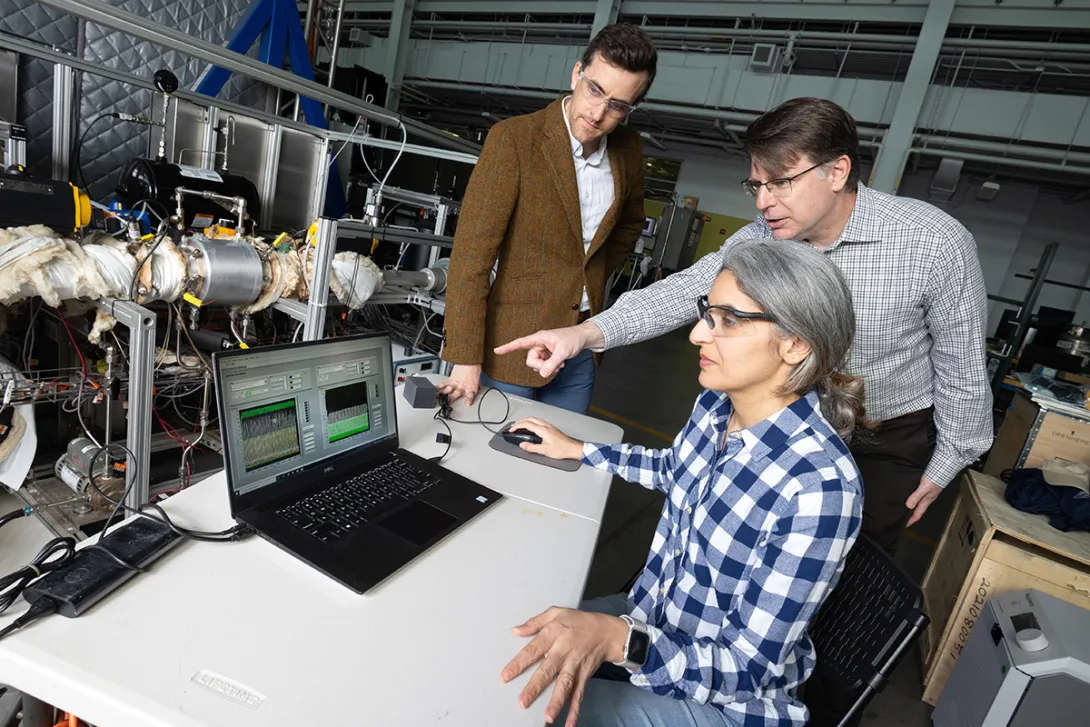
In 2015, nearly 200 countries agreed: they would reduce their emissions of carbon dioxide and other greenhouse gases to limit warming of the earth’s atmosphere to well below 2 degrees Celsius.
The Paris Agreement actually aims for 1.5 degrees above pre-industrial levels to avoid potential catastrophic changes to our climate. But it’s become increasingly clear to climate scientists and policymakers that just reducing emissions is not enough.
“We now know that we probably should have stopped putting massive amounts of CO2 in the air 10, 20, 30 years ago to prevent the climate from getting above 2 degrees C,” said Chris Jones, a chemical engineer at Georgia Tech. “Now we've waited so long to reduce our emissions that we need to develop technologies that are referred to as negative emissions technologies that remove CO2 from the atmosphere.”
Jones was one of a handful of scientists who co-authored a landmark National Academies report in 2018 that outlined a variety of approaches to negative emissions. Agricultural practices and forest management are options — essentially using nature’s ability to grab carbon dioxide out of the air and lock it away in plants and soil. But Jones said we’ll need quicker and more direct approaches.
“We could plant billions of trees to do this, but there's not enough available land. And the trees don't grow fast enough for us to do this quickly enough to slow global warming at the rate required,” said Jones, John F. Brock III School Chair in the School of Chemical and Biomolecular Engineering (ChBE). “That's where direct air capture comes in: It's a chemical engineering way of designing a process that takes CO2 out of the air.”
News Contact
Joshua Stewart
College of Engineering
Dec. 13, 2022

In the decade since Professor Gleb Yushin’s battery materials startup participated in Georgia Tech’s Advanced Technology Development Center, investments in the company have rolled in — along with the first customers.
Now the U.S. Department of Energy (DOE) is getting on board with Yushin’s Georgia Tech startup as part of federal efforts to reinvigorate tech manufacturing in the United States.
DOE awarded Sila Nanotechnologies $100 million this fall to support the company’s new factory in Moses Lake, Washington, and help Sila hire and train up to 300 workers for the facility. It was one of 21 projects funded in domestic battery materials processing and manufacturing.
“It’s our mission to help move America away from being energy dependent and become a leader in the energy transformation,” said Yushin, the company’s chief technology officer and a faculty member in the Georgia Tech School of Materials Science and Engineering. “With this funding, Sila will deliver proven, clean energy technology and world-scale manufacturing to revitalize the industry and gain independence.”
Birthed from Yushin’s research on lithium-ion batteries, Sila manufactures next-generation materials and a silicon anode technology that boosts battery energy density by 20%. The silicon anodes are a drop-in replacement for graphite anodes in lithium-ion batteries. The new facility is projected to produce enough capacity to power 200,000 electric vehicles by 2026. Sila has inked a deal with Mercedes-Benz to use the company’s technology, starting with G-Class vehicles.
News Contact
Joshua Stewart
College of Engineering