
Apr. 16, 2024
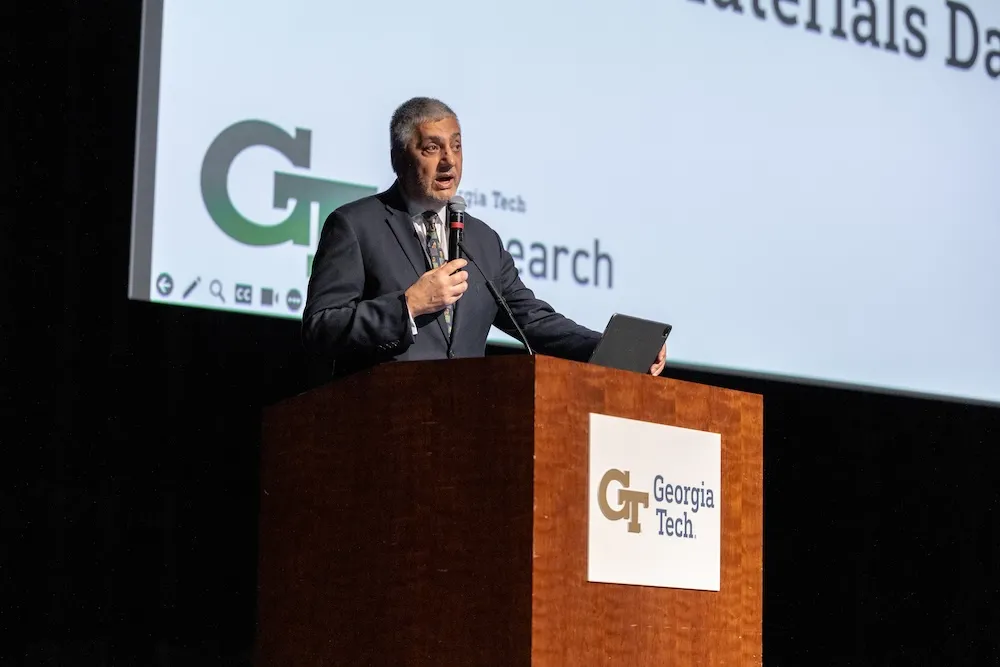
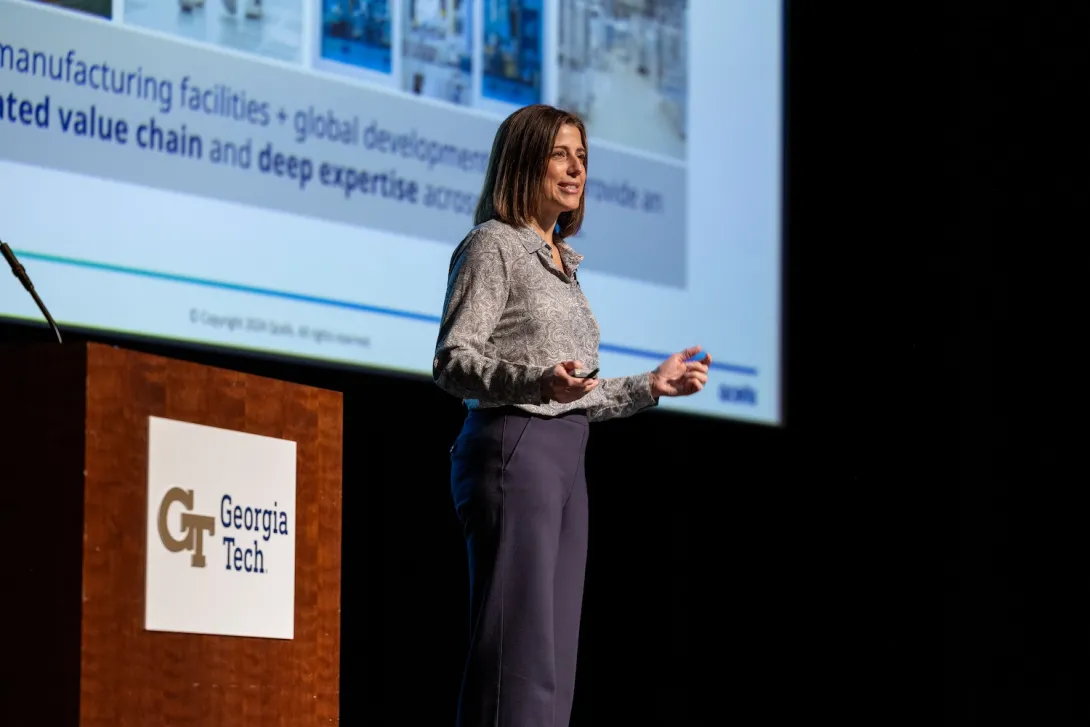
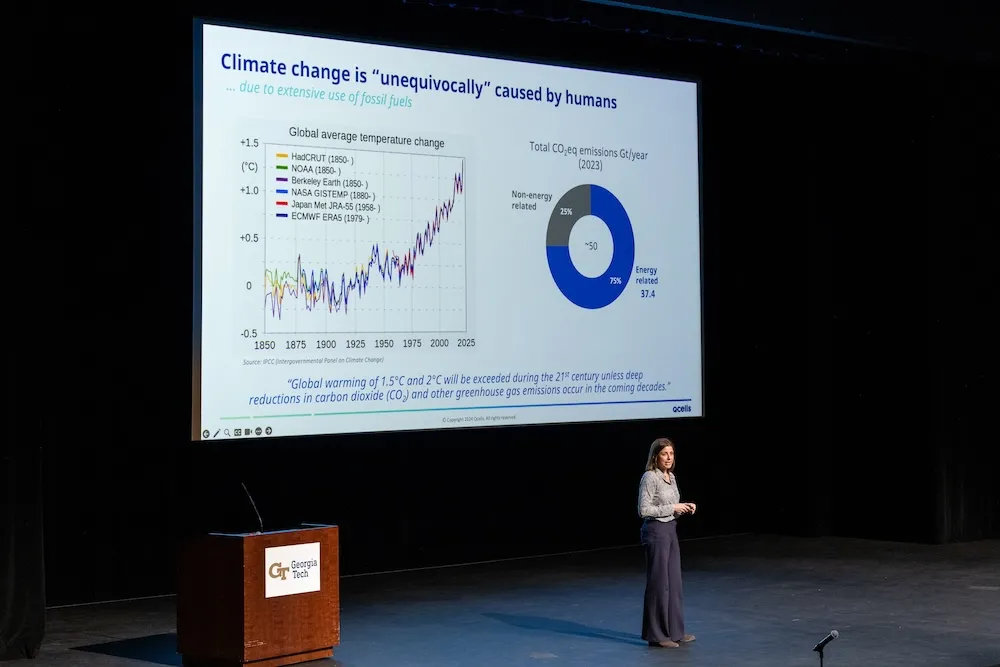
More than 400 people participated in Energy Materials Day on March 27, as researchers and industry leaders came together to discuss and advance energy materials technologies such as solar energy, carbon-neutral fuels, and batteries.
Energy materials are the things — natural, manufactured, or both — that aid the use of energy. They also play a key role in developing cleaner, more efficient energy solutions.
Energy Materials Day was co-hosted by Georgia Tech’s Strategic Energy Institute (SEI), the Institute for Materials (IMat), and the Georgia Tech Advanced Battery Center. The event evolved out of last year’s Georgia Tech Battery Day.
“As an engine of innovation in science and technology, Georgia Tech has incredible opportunities and the responsibility to conduct research to benefit society,” said Chaouki Abdallah, executive vice president for Research at Georgia Tech. “We call this ‘research that matters.’”
Events like Energy Materials Day are part of an ongoing, long-range effort to position Georgia Tech, and Georgia, as a go-to location for modern energy companies. Tech was recently ranked by U.S. News & World Report as the top public university for energy research. Abdallah also outlined why Georgia Tech, with more than 1,000 researchers across campus working in the energy space, is a natural fit for events that foster collaboration between the public and private sectors.
“Right here, right now, we have the opportunity to harness our collective powers, our collective knowledge, our collective resources to become a global engine of innovation,” he said.
Plenary speaker Danielle Merfeld, global chief technology officer at QCells, highlighted opportunities for the current and future clean energy infrastructure in the United States.
"At the heart of our discussions today [are these questions]: What is new technology, and how do you make it ... and make it at scale, in an affordable, accessible, and reliable way?” she said.
"... [The] good news is this country has taken a very deliberate step toward creating the most robust industrial policy we've had in decades. ... This is driving opportunity and creating the foundation for manufacturing. So, [we can] use that industrial base of making and consuming power [and] decarbonize the electric grid by 2035...."
“Events like this are so important to forwarding progress in research and industry,” said Eric Vogel, IMat’s executive director. “It’s important to bring together professionals throughout the industry to keep these lines of communication open.”
The day was divided into three tracks: battery materials and technologies, photovoltaics and the grid, and materials for carbon-neutral fuel production. Attendees were encouraged to listen to talks from all three areas. Each track included academic speakers who shared their research and private-sector speakers who described how technological advancements are affecting the industry.
“With its rich history in energy research, Georgia Tech remains a leader in addressing global energy challenges,” said Tim Lieuwen, executive director of SEI. “The success of Energy Materials Day is encouraging, and I eagerly anticipate continuing these discussions in 2025.”
News Contact
Amelia Neumeister
Research Communications Program Manager
Apr. 02, 2024
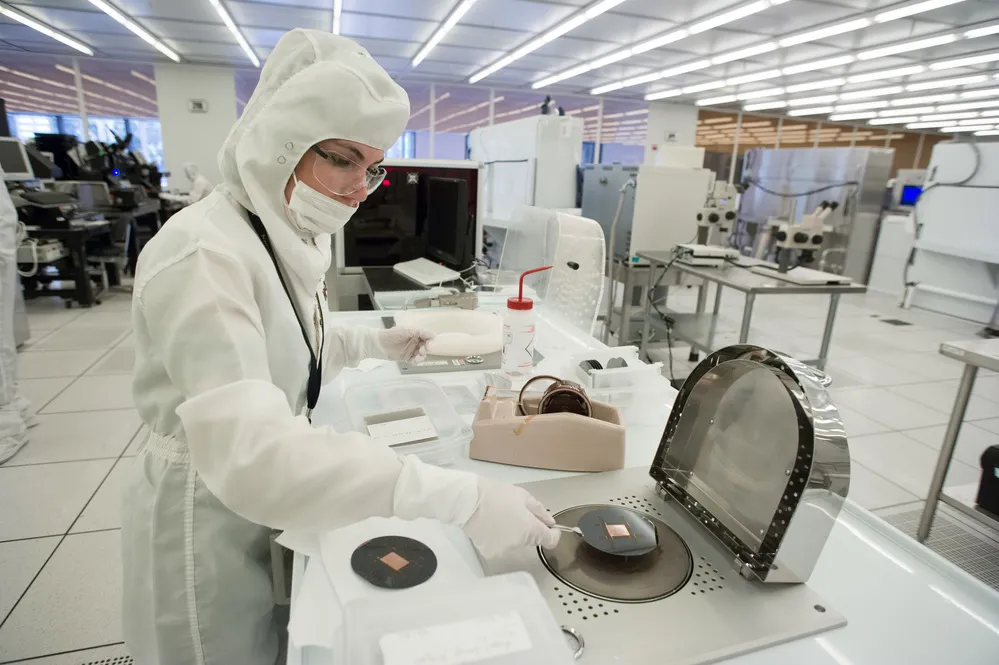
A research scientist from the Institute for Electronics and Nanotechnology (IEN) works in a clean room at the Marcus Nanotechnology Building. Research faculty are the non-tenure track faculty who carry out crucial research in labs, centers, and departments across campus. (Credit: Rob Felt)
Georgia Tech is supporting career growth for its research faculty, who do critical work at the heart of the research enterprise.
The word faculty is often synonymous with tenure-track professors — the individuals who teach courses and run major labs with their surnames in the title. But while groundbreaking discoveries regularly happen at Georgia Tech, the people doing the day-in, day-out research aren’t always visible.
Research faculty are non-tenure track faculty who carry out crucial research in labs, centers, and departments across campus. They are the lifeblood of research enterprises at major universities like Georgia Tech, but their work often occurs behind the scenes.
To support these essential employees, Georgia Tech launched an initiative to recognize and develop research faculty, who comprise 60% of the nearly 4,400 total faculty currently employed at the Institute. It is part of the second phase of Research Next, the strategic plan for Georgia Tech’s research enterprise.
Maribeth Coleman, interim assistant vice provost for Research Faculty, and Michelle Rinehart, vice provost for Faculty, were appointed as co-chairs of a Research Next implementation team tasked with finding ways to recognize, support, and retain research faculty. Building on years of effort and collaboration with campus partners, the group took on several projects to improve the research faculty experience and environment at Georgia Tech.
“Research faculty are critical members of the Georgia Tech community, and their contributions to our billion-dollar research enterprise and the state’s economic development cannot be overstated,” Rinehart said. “We wanted to understand what it’s like for research faculty as they come on board at Georgia Tech, what the hiring process is like, and how we as an Institute can more effectively mentor and develop research faculty in terms of advancing in their careers.”
At the outset, the implementation team identified and examined several facets of the research faculty experience. They reviewed policies in the faculty handbook, giving special attention to existing guidance for promotion and career growth for research faculty.
Promotion guidelines are generally clear for tenure-track faculty. Research faculty, on the other hand, are often not actively encouraged to seek promotion, and may not even know that promotion is an option, according to Rinehart and Coleman. One issue is that funding for research faculty often comes from external research dollars. At least nine months of a tenure-track faculty member’s salary, however, comes from the state budget.
“When you’re constantly having to bring in all of your own salary, as research faculty do, it can be a stressful experience,” Coleman said. “It can also mean you’re more isolated, because you’re focused on bringing in those research dollars that will help you keep your position. But we want research faculty to know that we want them to build their careers here.”
To address these issues, the team developed reference materials and workshops for research faculty seeking promotion. The workshops are offered on a regular basis, and resources and recordings are available on the Georgia Tech faculty website. The team also created educational materials for promotion committees, often composed of tenure-track faculty who are unfamiliar with the research faculty experience.
“We saw a need for better consistency across campus with regards to guidance for research faculty promotion committees,” Rinehart said. “Tenure-track faculty need guidance on not just how to properly hire research faculty, but also in how to mentor and retain them.”
According to Coleman and Rinehart, the implementation team’s most significant achievement was the launch of a research faculty mentoring network. The mentoring network connects junior research faculty mentees with senior research faculty mentors who have grown their careers at Georgia Tech.
“When new tenure-track faculty arrive, they are usually assigned a mentor within their School or department, but that method doesn’t generally work for research faculty,” Coleman said. “There may not be a large research faculty community in their unit, and research faculty roles and responsibilities vary significantly from person to person. For this reason, the mentoring network is meant to foster cross-pollination and build community across units.”
The mentoring network is a collaboration with MentorTech, a program run by Georgia Tech Professional Education. The program is ongoing, and enrollment is always open.
To foster inclusivity and belonging, the team established an orientation program for research faculty, modeled after the tenure-track faculty orientation. The Provost’s Office hosted the inaugural research faculty orientation in Fall 2023. Because research faculty are hired throughout the year, the team decided the orientation should take place semiannually. The second orientation took place on March 13.
In addition to the workshops, mentor network, and orientations, the implementation team also launched a program to welcome research faculty in a personal way. When a new research faculty member is hired, another more senior research faculty member is assigned to welcome them in person, provide them with important information for getting oriented to campus, tell them about relevant professional opportunities, and give them Georgia Tech-branded swag.
“All of this work is about recognizing that research faculty are a tremendously valuable part of our community,” Rinehart said. “They also really enhance our reputation internationally.”
According to Coleman, research faculty can sometimes be viewed as disposable, because of their support from grants that may be limited in time and scope. But she believes that line of thinking is a disservice to both the individual and the Institute.
“It’s important that we recognize the value of research faculty, nurture them, and retain them long term,” she said. “We need to make it possible for people to spend their careers here, as I have, and help make sure research faculty positions at Georgia Tech can be both viable and fulfilling long-term careers.”
To read more about Georgia Tech's strategic research initiatives, visit the Research Next website.
Mar. 21, 2024

Jud Ready, a principal research engineer at the Georgia Tech Research Institute (GTRI), has been selected to join the National Academy of Inventors’ (NAI) 2024 Class of Senior Members – a group of 124 academic inventors from NAI’s Member Institutions who have made significant contributions to innovation and technology.
Holding a dual appointment as Deputy Director of Innovation Initiatives for Georgia Tech’s Institute for Materials, one of Tech’s 10 Interdisciplinary Research Institutes (IRI) focused on advancing materials research and innovation, and with over two decades of experience as an adjunct professor in Tech’s School of Materials Science & Engineering, Ready has established himself as a leader in materials science and engineering.
Read the full story
News Contact
Michelle Gowdy
(Interim) Director of Communications, GTRi
Mar. 21, 2024
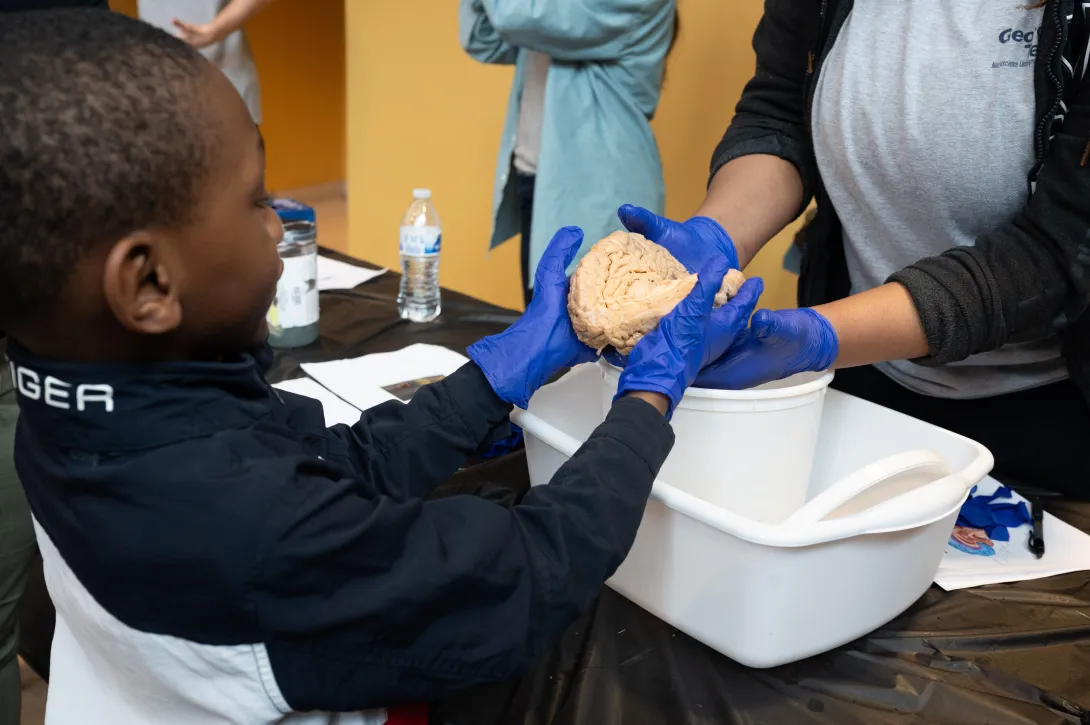
A young investigator holds a human brain. (Credit: Joya Chapman)
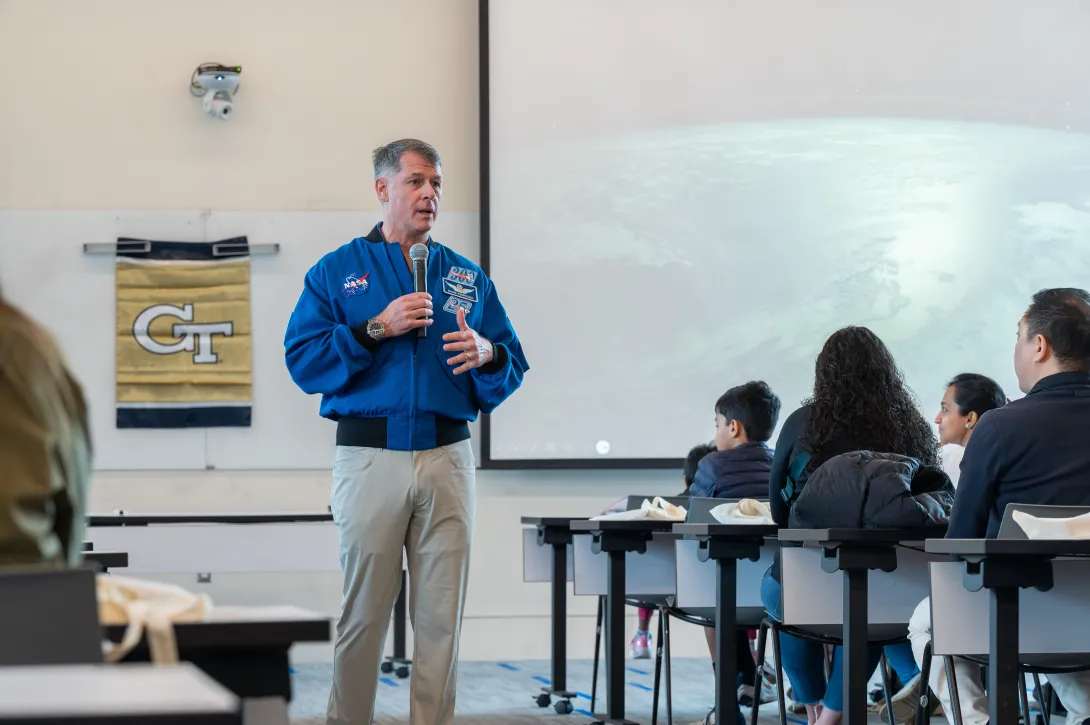
Former astronaut and Tech Alumnus Shane Kimbrough described what it was like to live and work in space to a packed crowd at Science and Engineering Day. (Credit: Joya Chapman)
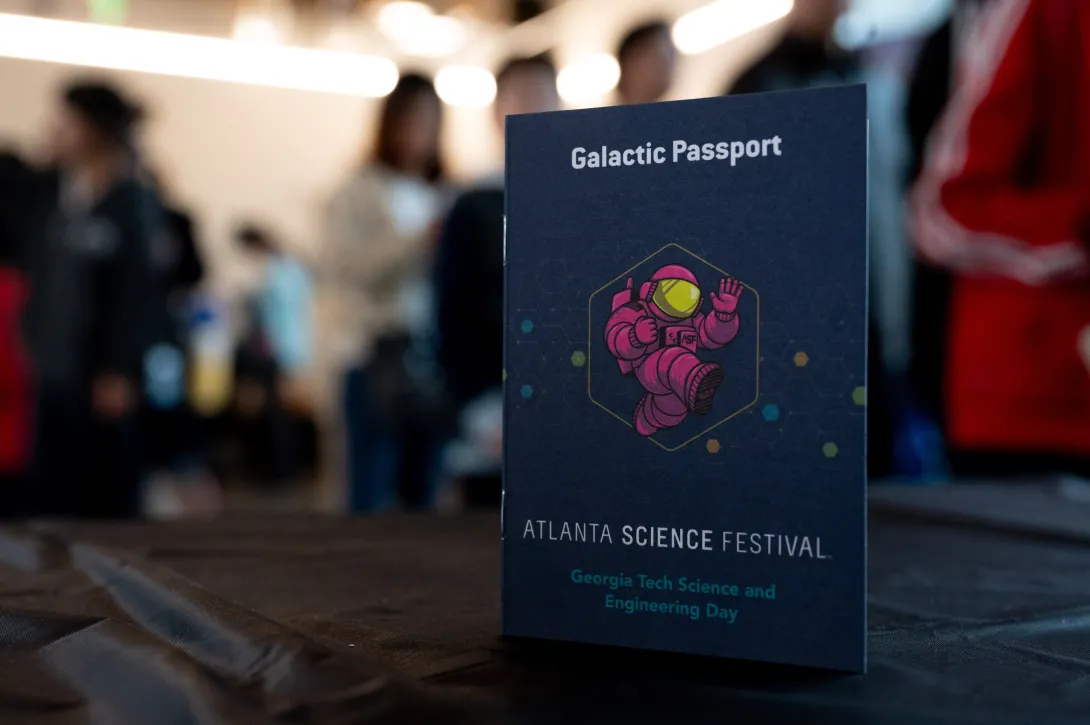
The Atlanta Science Festival Galactic Passport that visitors used to navigate their explorations around Georgia Tech's campus (Credit: Joya Chapman)
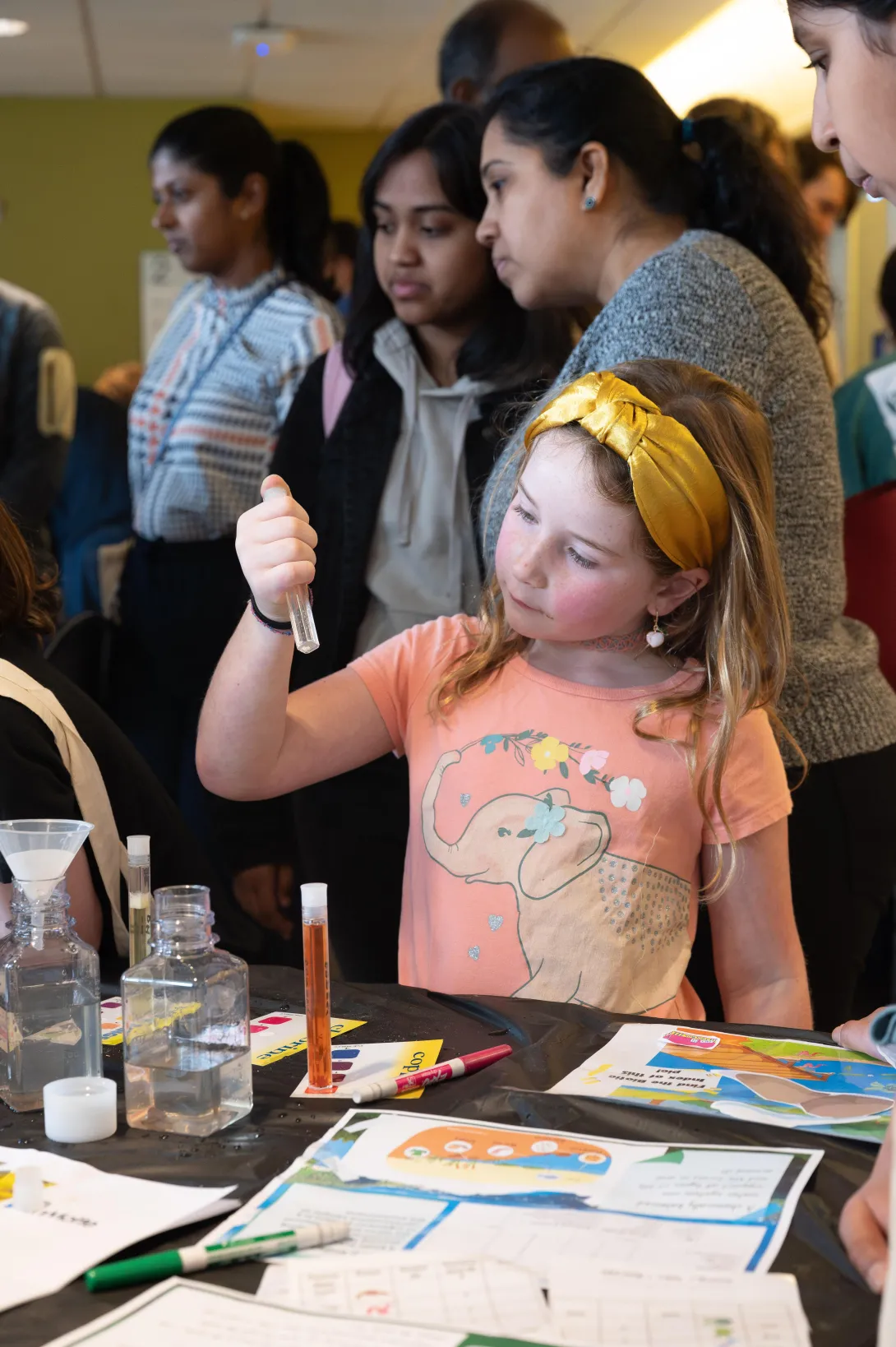
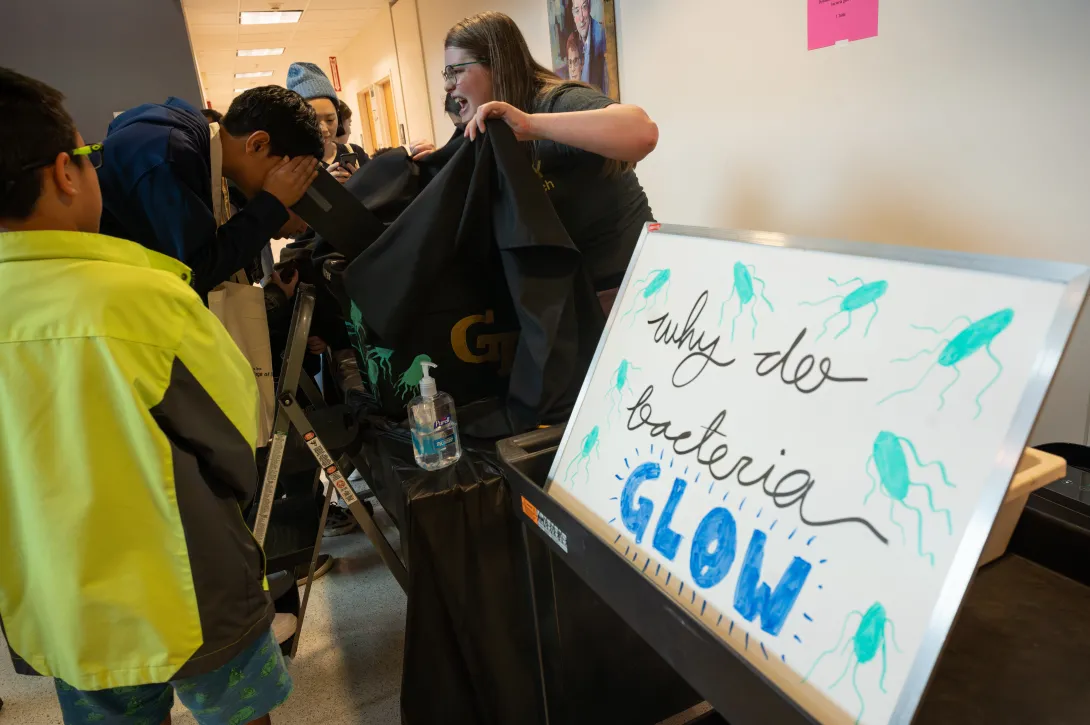
A budding scientist examines bioluminescent bacteria under a microscope. (Credit: Joya Chapman)
Georgia Tech opened the 11th annual Atlanta Science Festival (ASF) with record attendance for Science and Engineering Day. Despite the drizzly weather, about 4,000 people of all ages from throughout metro Atlanta — more than double the number of attendees in 2023 — visited campus on Saturday, March 9, 2024, for the space-themed event. They explored more than 45 exhibitions and hands-on activities related to art, robotics, nanotechnology, chemical and systems engineering, and biology, as well as other STEAM areas.
Visitors began their investigations at “Earth” (the Kendeda Building for Innovative Sustainable Design), where they picked up a galactic passport specially designed to guide them from building to building — each designated with the name of a planet — and the demonstrations housed within.
At “Mars” (Marcus Nanotechnology Building), attendees measured their height in nanometers, experimented with fruit batteries, and took a window-tour of the largest cleanroom in the Southeast, where semiconductors are developed. Inside “Venus” (Parker H. Petit Biotech Building), budding scientists examined bioluminescent bacteria under a microscope and made Play-Doh models of the human brain. When visiting “Saturn” (Ford Environmental Sciences and Technology Building), visitors studied density by making DIY lava lamps and inspected human brain specimens the way a pathologist would.
“Getting to hold a human brain was cool,” said a 12-year-old participant from Alpharetta. “And I also liked comparing it to the brains of a pig and a mouse.”
Other activities included math games and puzzles, the opportunity to build an artificial hand and a gallery display of research-inspired artwork. Georgia Tech faculty, students, and staff hosted all the demonstrations and served as volunteers who helped Science and Engineering Day guests navigate campus and the demonstration sites.
For many participants, the undoubted highlight was the chance to hear a presentation by former NASA astronaut and Georgia Tech alumnus Shane Kimbrough, MS OR 1998. Kimbrough spent 388 days in space over three missions and served as commander of the International Space Station (ISS) in 2016. He captivated the standing-room-only crowd with photos and descriptions of his time living and working aboard the ISS and answered questions from the kids in the audience.
“It’s really exciting to see all the activities around campus today … we’re inspiring the next generation of scientists and explorers for our country,” Kimbrough said afterward.
The event was a resounding success for Georgia Tech and the Atlanta Science Fair.
Lauren Overton-Kirk, who organized the event for the Institute, said, "Georgia Tech Science and Engineering Day 2024 was so wonderful to share with the community. What started years ago as a day for young scientific exploration became an all-ages, space-themed scientific spectacular. You could feel the passion for learning fill the campus in a way only Georgia Tech could do.”
Both the Georgia Tech and the Atlanta Science Festival teams are looking forward to next year’s Science and Engineering Day.
“As one of the founding organizations of the Atlanta Science Festival, Georgia Tech has been deeply invested in sharing the Institute’s innovations with the community,” said Meisa Salaita, ASF co-director. “And that investment was deeply evident on March 9th as they opened their doors to kick off the 11th annual Science Festival. Their students and faculty came out with enthusiasm to showcase science to the public. We couldn't be more thrilled with this partnership — and the many ways Tech has helped us show our community that Atlanta is a science city.”
News Contact
Shelley Wunder-Smith, Institute Communications
Mar. 12, 2024

Muhannad Bakir has been named director of the Institute for Electronics and Nanotechnology’s 3D Systems Packaging Research Center (PRC).
"We’re thrilled to have Professor Bakir joining us as the new director,” said Michael Filler, IEN’s interim executive director. “His wealth of experience and pioneering work in advanced packaging make him an excellent fit to lead the PRC into an exciting new era of innovation and technological impact.”
Originating as a National Science Foundation Engineering Research Center in 1993, the PRC is a national leader in the advanced packaging of microelectronics. Advanced packaging in microelectronics refers to innovative techniques for merging and interconnecting multiple components within a single electronic entity. This enables more powerful, efficient, and versatile microelectronic systems, driving innovation across various industries. The Center conducts research and education in all aspects of electronics packaging, including design, materials, process, assembly, thermal management, and system integration. Its work is driven by a wide range of applications, such as high-performance computing, artificial intelligence, automotive systems, wireless communications, and space exploration.
“I am honored for the opportunity to lead the PRC and look forward to working with the campus community and our industry, government, and academic partners on a research agenda that tackles the multifaceted challenges in advanced packaging and heterogeneous integration,” said Bakir.
As director, Bakir will guide the PRC into the future of advanced packaging through his vision and expertise. He is responsible for ensuring that the PRC's world-class facilities support the emerging needs of advanced packaging of microelectronics and supports members of the campus community who uses these facilities.
“We are excited to lead the science and engineering that culminates in system level prototyping and demonstrators for AI, mm-wave, photonic systems, and beyond,” he said.
Bakir, who also serves as the Dan Fielder Professor in the School of Electrical and Computer Engineering and leads the Integrated 3D Systems Group, brings a wealth of experience to his new role as PRC director. He and his research group have received more than 30 paper and presentation awards including seven from the IEEE Electronic Components and Technology Conference, four from the IEEE International Interconnect Technology Conference, and one from the IEEE Custom Integrated Circuits Conference. His group was also awarded the 2014 and 2017 Best Papers of the IEEE Transactions on Components Packaging and Manufacturing Technology.
Bakir is the recipient of the 2013 Intel Early Career Faculty Honor Award, 2012 DARPA Young Faculty Award, 2011 IEEE CPMT Society Outstanding Young Engineer Award, and was an Invited Participant in the 2012 National Academy of Engineering Frontiers of Engineering Symposium. He is the co-recipient of the 2018 IEEE Electronics Packaging Society Exceptional Technical Achievement Award “for contributions to 2.5D and 3D IC heterogeneous integration, with a focus on interconnect technologies.” He is also the co-recipient of the 2018 McKnight Foundation Technological Innovations in Neuroscience Awards. In 2020, Bakir received the Georgia Tech Outstanding Doctoral Thesis Advisor Award.
He serves as a senior area editor for the IEEE Transactions on Components, Packaging and Manufacturing Technology and was previously an Editor for IEEE Transactions on Electron Devices. He has also served as a distinguished lecturer for IEEE EPS.
News Contact
Amelia Neumeister
Research Communications Program Manager
Mar. 04, 2024
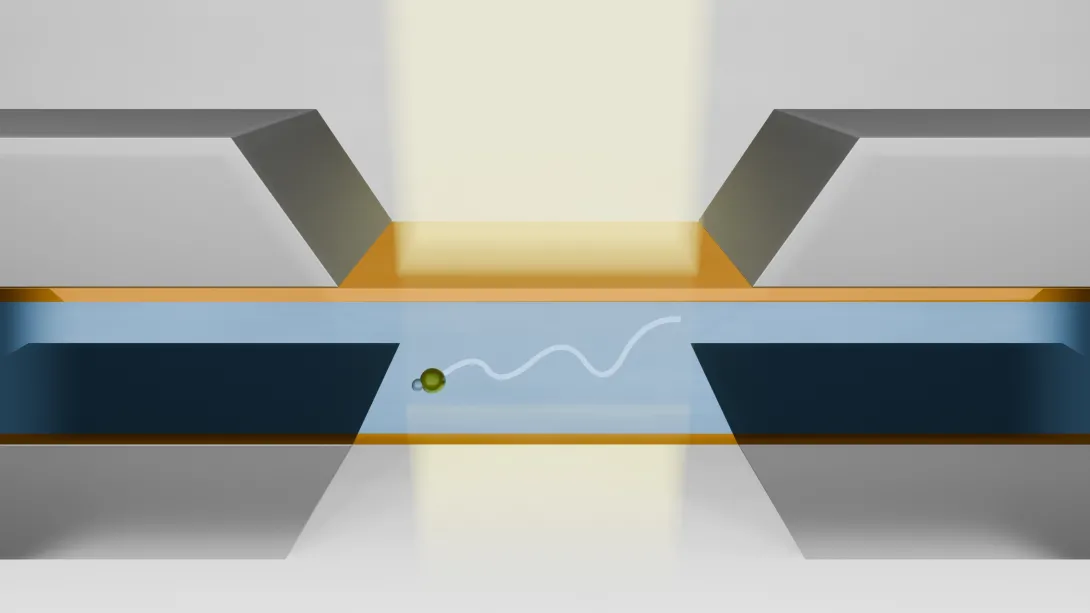
The Institute for Electronics and Nanotechnology (IEN) at Georgia Tech has announced the 2023 IEN Exponential Electronics (IEN-EX) Seed Grant winner, Vida Jamali, Assistant Professor in the School of Chemical and Biomolecular Engineering at Georgia tech.
The primary purpose of this program is to give early-stage research and development to create revolutionary electronic systems.
IEN-EX provides seed funding for Georgia Tech researchers to pursue “1000x” ideas within electronics or that bridge electronics with other technical domains. “1000x” ideas are those with the potential to improve one or more well-defined, but often overlooked or underappreciated performance metrics by at least 1000x.
In this brief Q&A, Jamali discusses her research focus, how it relates to electronics research, and the impact of this initiative.
- What is your field of expertise and at what point in your life did you first become interested in this area? In situ liquid phase transmission electron microscopy. I started learning about this tool when I was a postdoc to develop it as a single particle tracking method.
- Briefly explain your research: My research is focused on investigating the dynamics of nanoscale objects in their native liquid environment, from synthetic colloidal nanomachines to biological macromolecules, using liquid phase transmission electron microscopy. We develop experimental and computational tools to visualize and characterize dynamic behavior (equilibrium and non-equilibrium) at small length scales and in real-time.
- Who are the PIs: Me and Amirali Aghazadeh, Assistant Professor in the School of Electrical and Computer Engineering.
- What questions or challenges sparked your current research? Is it possible to use an electron microscope and capture the dynamics of nanoscale materials in time as they move and interact with each other and respond to their surrounding environment with a high spatiotemporal resolution?
- How is your research working to create revolutionary electronic systems? We design and develop a new nanoelectronic coded aperture device that once integrated into transmission electron microscopes can increase resolution exponentially.
- What are the broader global and social benefits of the research you and your team conduct? Once realized this technology opens a new window into dynamic phenomena at a scale inaccessible before. This unprecedented level of information will significantly advance areas from drug discovery impacting human health to achieving single crystalline materials for the semiconductor industry.
- How will this funding support your research? This funding will support graduate students who will be realizing this idea
News Contact
Amelia Neumeister
Research Communications Program Manager
Feb. 28, 2024
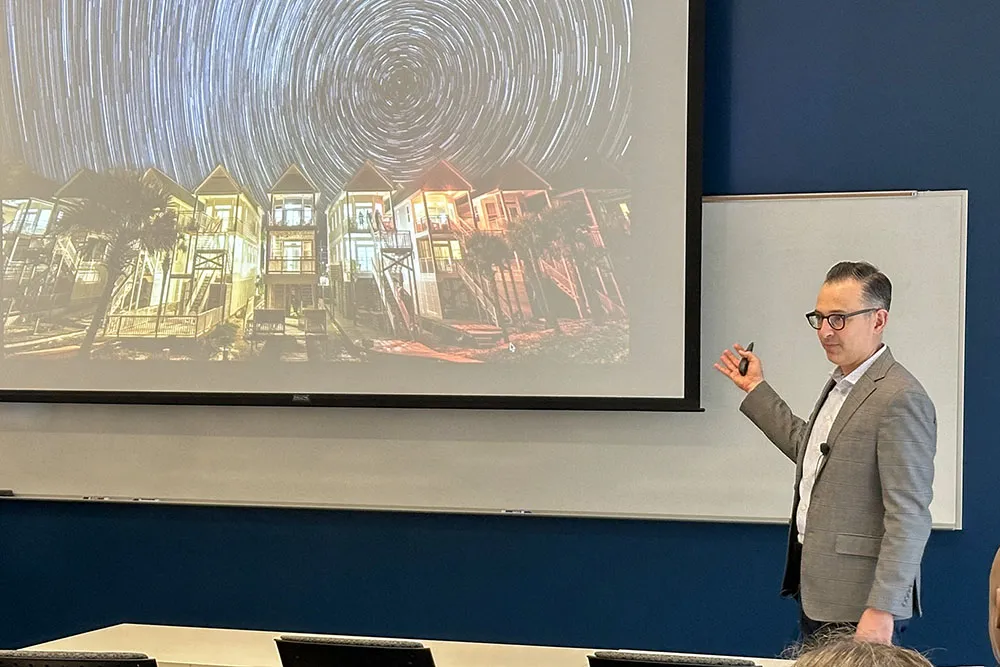
The Oliver Brand Memorial Technical Symposium was held on Feb. 22 at the Georgia Institute of Technology in honor of the technical achievements of Professor Oliver Brand.
The event brought together students, faculty, and professionals in the microelectromechanical systems research community to celebrate Brand’s contributions to the field and explore cutting-edge research.
“As a fellow academic, looking at his contributions, they’re remarkable,” said Mike Filler, interim executive director of the Institute for Electronics and Nanotechnology (IEN). “But then what put it over the top was his humanity. He supported every member of the community; he believed in people and had their best interests in mind.”
The seven speakers included research colleagues, graduate students and technical staff who worked closely with Brand throughout his career. They reminisced about Brand and discussed the research and technical achievements they collaborated on with him.
Brand spent more than 20 years as a member of the Georgia Tech faculty. In addition to leading IEN, he was a professor in the School of Electrical and Computer Engineering, director of the Coordinating Office for the NSF-funded National Nanotechnology Coordinated Infrastructure (NNCI), and director of the Southeastern Nanotechnology Infrastructure Corridor, one of the 16 NNCI sites.
Brand united researchers in the fields of electronics and nanotechnology, fostering collaboration and expanding IEN to include more than 200 faculty members. In addition to his respected work in the field of microelectromechanical systems, he is remembered for his kindness, dedication, and unwavering support toward all who knew him.
News Contact
Amelia Neumeister
Research Communications Program Manager
Feb. 21, 2024

Energy is everywhere, affecting everything, all the time. And it can be manipulated and converted into the kind of energy that we depend on as a civilization. But transforming this ambient energy (the result of gyrating atoms and molecules) into something we can plug into and use when we need it requires specific materials.
These energy materials — some natural, some manufactured, some a combination — facilitate the conversion or transmission of energy. They also play an essential role in how we store energy, how we reduce power consumption, and how we develop cleaner, efficient energy solutions.
“Advanced materials and clean energy technologies are tightly connected, and at Georgia Tech we’ve been making major investments in people and facilities in batteries, solar energy, and hydrogen, for several decades,” said Tim Lieuwen, the David S. Lewis Jr. Chair and professor of aerospace engineering, and executive director of Georgia Tech’s Strategic Energy Institute (SEI).
That research synergy is the underpinning of Georgia Tech Energy Materials Day (March 27), a gathering of people from academia, government, and industry, co-hosted by SEI, the Institute for Materials (IMat), and the Georgia Tech Advanced Battery Center. This event aims to build on the momentum created by Georgia Tech Battery Day, held in March 2023, which drew more than 230 energy researchers and industry representatives.
“We thought it would be a good idea to expand on the Battery Day idea and showcase a wide range of research and expertise in other areas, such as solar energy and clean fuels, in addition to what we’re doing in batteries and energy storage,” said Matt McDowell, associate professor in the George W. Woodruff School of Mechanical Engineering and the School of Materials Science and Engineering (MSE), and co-director, with Gleb Yushin, of the Advanced Battery Center.
Energy Materials Day will bring together experts from academia, government, and industry to discuss and accelerate research in three key areas: battery materials and technologies, photovoltaics and the grid, and materials for carbon-neutral fuel production, “all of which are crucial for driving the clean energy transition,” noted Eric Vogel, executive director of IMat and the Hightower Professor of Materials Science and Engineering.
“Georgia Tech is leading the charge in research in these three areas,” he said. “And we’re excited to unite so many experts to spark the important discussions that will help us advance our nation’s path to net-zero emissions.”
Building an Energy Hub
Energy Materials Day is part of an ongoing, long-range effort to position Georgia Tech, and Georgia, as a go-to location for modern energy companies. So far, the message seems to be landing. Georgia has had more than $28 billion invested or announced in electric vehicle-related projects since 2020. And Georgia Tech was recently ranked by U.S. News & World Report as the top public university for energy research.
Georgia has become a major player in solar energy, also, with the announcement last year of a $2.5 billion plant being developed by Korean solar company Hanwha Qcells, taking advantage of President Biden’s climate policies. Qcells’ global chief technology officer, Danielle Merfeld, a member of SEI’s External Advisory Board, will be the keynote speaker for Energy Materials Day.
“Growing these industry relationships, building trust through collaborations with industry — these have been strong motivations in our efforts to create a hub here in Atlanta,” said Yushin, professor in MSE and co-founder of Sila Nanotechnologies, a battery materials startup valued at more than $3 billion.
McDowell and Yushin are leading the battery initiative for Energy Materials Day and they’ll be among 12 experts making presentations on battery materials and technologies, including six from Georgia Tech and four from industry. In addition to the formal sessions and presentations, there will also be an opportunity for networking.
“I think Georgia Tech has a responsibility to help grow a manufacturing ecosystem,” McDowell said. “We have the research and educational experience and expertise that companies need, and we’re working to coordinate our efforts with industry.”
Marta Hatzell, associate professor of mechanical engineering and chemical and biomolecular engineering, is leading the carbon-neutral fuel production portion of the event, while Juan-Pablo Correa-Baena, assistant professor in MSE, is leading the photovoltaics initiative.
They’ll be joined by a host of experts from Georgia Tech and institutes across the country, “some of the top thought leaders in their fields,” said Correa-Baena, whose lab has spent years optimizing a semiconductor material for solar energy conversion.
“Over the past decade, we have been working to achieve high efficiencies in solar panels based on a new, low-cost material called halide perovskites,” he said. His lab recently discovered how to prevent the chemical interactions that can degrade it. “It’s kind of a miracle material, and we want to increase its lifespan, make it more robust and commercially relevant.”
While Correa-Baena is working to revolutionize solar energy, Hatzell’s lab is designing materials to clean up the manufacturing of clean fuels.
“We’re interested in decarbonizing the industrial sector, through the production of carbon-neutral fuels,” said Hatzell, whose lab is designing new materials to make clean ammonia and hydrogen, both of which have the potential to play a major role in a carbon-free fuel system, without using fossil fuels as the feedstock. “We’re also working on a collaborative project focusing on assessing the economics of clean ammonia on a larger, global scale.”
The hope for Energy Materials Day is that other collaborations will be fostered as industry’s needs and the research enterprise collide in one place — Georgia Tech’s Exhibition Hall — over one day. The event is part of what Yushin called “the snowball effect.”
“You attract a new company to the region, and then another,” he said. “If we want to boost domestic production and supply chains, we must roll like a snowball gathering momentum. Education is a significant part of that effect. To build this new technology and new facilities for a new industry, you need trained, talented engineers. And we’ve got plenty of those. Georgia Tech can become the single point of contact, helping companies solve the technical challenges in a new age of clean energy.”
News Contact
Feb. 15, 2024
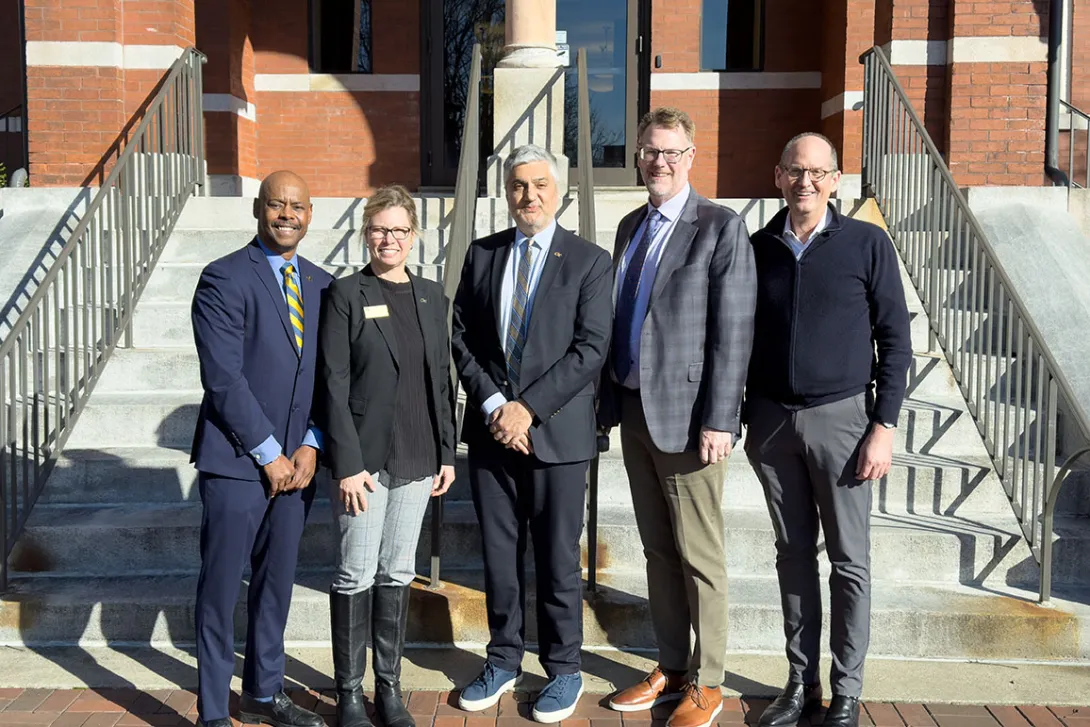
The Georgia Institute of Technology today announced the signing of a master research agreement with Micron Technology, a global leader in memory and storage solutions. Under the new agreement, the two organizations will expand their collaborative efforts in providing students with experiential research opportunities and expanding access to engineering education.
“We are proud to join forces with Georgia Tech, home to some of the nation’s top programs, to expand students’ opportunities in STEM education,” said Scott DeBoer, executive vice president of Technology and Products at Micron. “This collaboration will help push the boundaries in memory technology innovation and ensure we prepare the workforce of the future.”
“We believe that when academia and industry converge, the best ideas flourish into game-changing innovations,” said Chaouki T. Abdallah, executive vice president for Research at Georgia Tech. “The synergy between Micron and Georgia Tech has already been tremendously fruitful, and we are so excited for the boundless opportunities on our shared horizon.”
“The signing of the master research agreement represents a significant step towards increasing additional collaboration pathways between Micron and GT including the joint pursuit of major federal funding activities, technology transfer, student internships and technology transfer,” said George White, senior director of Strategic Partnerships at Georgia Tech.
The first project under the agreement is already underway. Saibal Mukhopadhyay, professor in the School of Electrical and Computer Engineering, is leading the research efforts titled “Configurable Processing-In-Memory.” This cutting-edge research will enable memory devices to work faster and more efficiently.
News Contact
Amelia Neumeister
Research Communications Program Manager
Jan. 26, 2024

Overhead view of the Re-Wind crew doing structural testing on a decommissioned wind turbine blade bridge on an industrial lot.
Pioneering a new recycling approach led to a big win for Re-Wind USA, a Georgia Tech research team led by Russell Gentry. The team has won the first phase of the Department of Energy's Wind Turbine Materials Recycling Prize, receiving $75,000 and an invitation to compete in the final phase.
"Our innovation for end-of-service wind turbine blades is both simple and elegant – at its core, our technology captures all the embodied energy in the composite materials in the blade," said Gentry, professor in the School of Architecture.
"The Re-Wind Network has pioneered structural recycling, the only of a number of competing technologies that upcycles the material of the blade and preserves the embodied energy from manufacturing," Gentry said.
"Little additional energy is used to remanufacture the blade and the life of the blade, typically 20 years, is extended at least 50 years. This is a win-win solution from an environmental and economic perspective."
Other methods for dealing with decommissioned wind blades involve mechanical grinding and landfilling of subsequent waste, an expensive and energy-intensive process, he said.
Team members include Gentry, Sakshi Kakkad, Cayleigh Nicholson, Mehmet Bermek, and Larry Bank, from the School of Architecture; Gabriel Ackall, Yulizza Henao, and Aeva Silverman, from the School of Civil and Environmental Engineering; and Eric Johansen, a business consultant from Fiberglass Trusses Inc.
The team is part of the Re-Wind Network, a multinational research and development network which develops large-scale infrastructure projects from decommissioned wind turbine blades.
Re-Wind's pedestrian bridges, known as BladeBridges, have already captured media attention. Two more BladeBridges are expected in Atlanta in 2024, Gentry said. Re-Wind has also developed, prototyped, and tested transmission poles made from blade segments. The team's other proposals include culverts, barriers, and floats.
News Contact
Ann Hoevel, Director of Communications, College of Design